Last week’s Economist (highlights)
Posted: October 31, 2020 Filed under: business Leave a comment
- A Royal Marine describes an encounter with Somali pirates:
The pirates misread the troops’ intentions, and thought they were about to be abandoned at sea; a few jumped into the water while the rest attacked Mr Tennant’s team.
Temporary chaos and confusion gave way to swift action:
His team acted that way, Mr Tennant argues, because they were used to working with each other and they had wargamed what might go wrong. In contrast, the pirates were suffering from fear, stress and fatigue and acted on gut instinct. “If you haven’t gone through the decision-making process in advance, then gut instinct tends to kick in,” Mr Tennant says.
I recall hearing once that you should actually practice moving your fingers on the phone to the buttons 9-1-1.
- A profile of NextEra:
It is already the world’s top generator of wind and solar electricity… It was quick to take advantage of generous tax credits to build wind farms across the Midwest.
- From a piece on millennial investors:
When most boomers began saving a handful of investment firms loomed large, offering high-fee mutual funds. But electronic trading makes it much easier and cheaper to buy and sell directly. The cost of investing $100 on a stock exchanged has fallen from $6 in 1975 to less than a thousandth of a penny today.
- Consideration of Peter Turchin’s idea of “elite overproduction:
“The next decade is likely to be a period of growing instability in the United States and western Europe, he asserted, pointing in part to ‘overproduction of young graduates with advances degrees.’
Is that a supply problem or a demand problem? I’d expect The Economist to offer an answer. A price signalling breakdown for sure.
- There’s a whole piece about the Great Barrington Declaration. Great Barrington, Massachusetts seems to get itself in the news a decent amount. W. E. B. Dubois, alternating current, Alice’s Restaurant. I remember hearing of a rare tornado there in more modern times.
From the Declaration’s website:
Who initiated the Declaration?
Dr Kulldorff invited Dr Bhattacharya and Dr Gupta to Massachusetts to record a video outlining an alternative to the current COVID-19 strategy. While meeting, the three spontaneously decided to also write a short Declaration to summarize the thinking.
Why was the Declaration signed in Great Barrington?
The Declaration was written and signed at the American Institute for Economic Research, located in Great Barrington, Massachusetts. The Institute kindly offered to help with the video recording, providing a location, equipment and a camera man pro bono.
When you hear about an institute for economic research, look for the agenda of the rich far-right donors.
- Studies of the unintended consequences of wildlife fences:
Pangolins curl up into a ball when endangered, in order to protect their soft underbellies. This is generally a wise move, but not when it causes them to embrace the wire of an electrified fence.
- Review of Rod Dreher’s Live Not By Lies.
Visiting Russia, Mr Dreher learns how honest Soviet citizens tried to avoid having much to do with the system. Geology was a popular discipline among scientists, as it let researchers spend a good portion of their lives in far-fling and unsullied places.
From a piece on what Biden would mean for Britain:
Bill Clinton was annoyed with John Major because Conservative activists publicized his dope-smoking at Oxford.
(Shouldn’t we encourage prospective politicians to smoke dope? It might take them off the path of ambitious grasping, or at least chill them out a hair).
- Similar topic, different article:
in 2018, ABCD, a German-marketing firm, estimated that Delhi and Mumbai are among the top six cannabis-consuming cities in th world, together burning more than 70 tonnes each year.
Alberto Bonadona, an economist in Bolivia:
There is no lithium industry. What we have is salt for a good barbecue.
What is Amazon? by Zack Kanter
Posted: October 30, 2020 Filed under: business Leave a commentFirst, what is Wal-Mart?
Few people outside of Walmart realize Walmart’s historical scope of innovation. It built the largest private satellite communications network, enabling unprecedented coordination at enormous scale. Computerized point of sale systems, a massive trucking fleet to enable best-in-class logistics, innovations in EDI, the Sam’s Club format. The list goes on. But all of these innovations were really just developed in order to optimize what was a very simple formula: that is, the selection, pricing, and inventory of SKUs in, say, a 30,000-200,000 square foot store.
there are enough of these guys
Posted: October 30, 2020 Filed under: business Leave a comment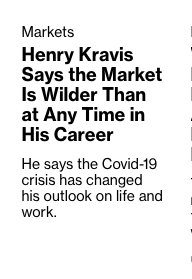
that you can always find one of them to say anything. (that one from Bloomberg but could’ve been Wall Street J)
Also, new (to me) term:

That from Joe Wallace in WSJ.
Stock market narratives
Posted: October 26, 2020 Filed under: business Leave a comment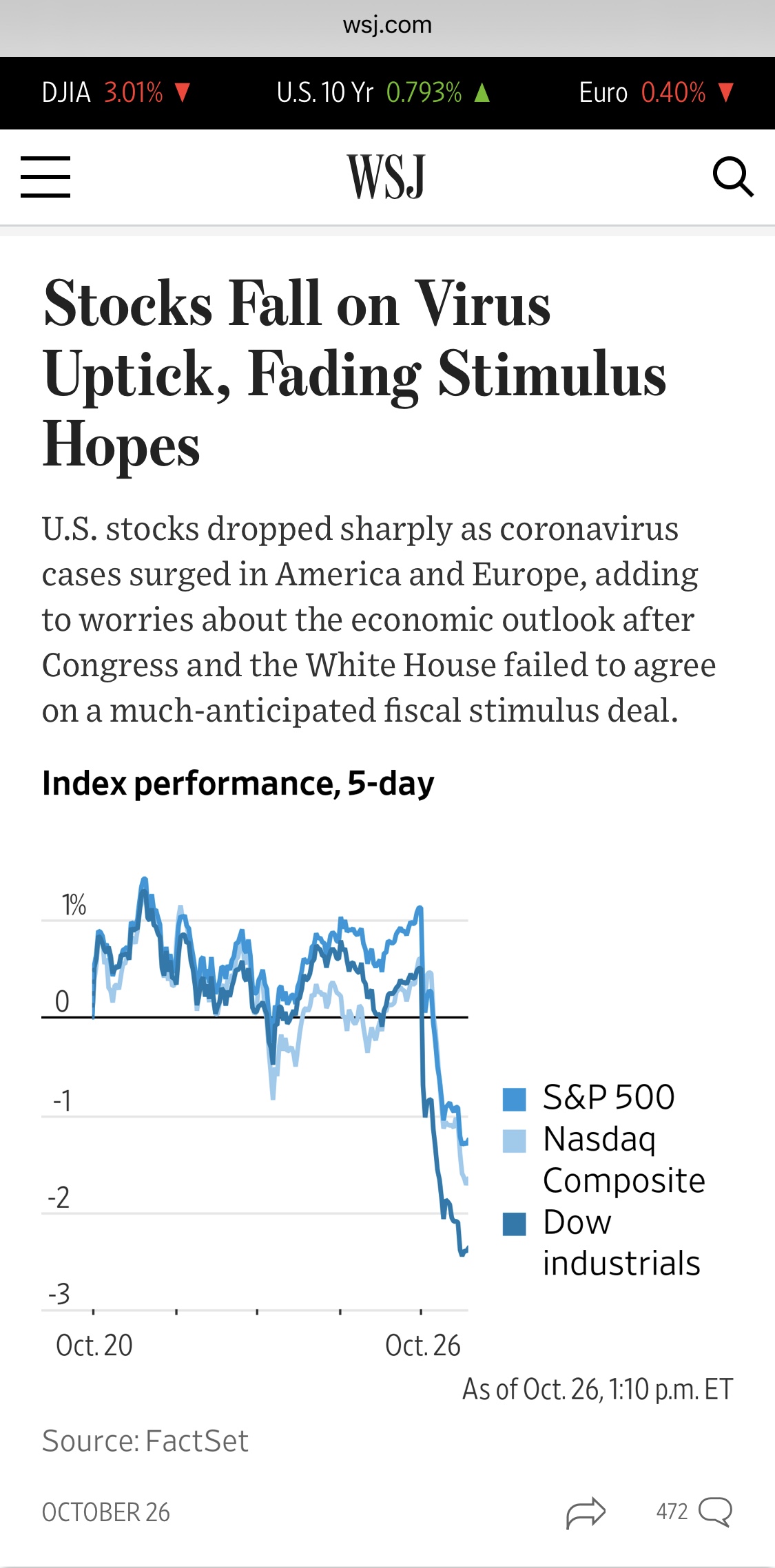
The invention of narratives to explain why there are more total sellers than buyers in particular stock indices can seem to me like an act as creative and fanciful as astrology or reading meaning from sheep entrails.
Maybe “the stock market” is down because people are starting to realize the holidays will be a bummer, or the election picture feels less clear than it did a week ago, or weather has turned in gloomy ways, or the elections in Chile and Bolivia indicate the left is on the march and the right is in retreat, or it’s foggy in New York City today, or instability in general is in the air when the President storms out of his 60 Minutes interview and the other guy is hardly at the top of his game.
Or just because October is spooky, to markets and in general.
Maybe it’s down because it’s been overinflated for a long time, and it doesn’t take much to make it turn. The market is a herd. Herds can turn on a sudden startle, on almost nothing, as Larry McMurtry tells us:
Long ago, when I was a young cowboy, I witnessed a herd reaction in a real herd – about one hundred cattle that some cowboys and I were moving from one pasture to another along a small asphalt farm-to-market road. It was mid-afternoon in mid-summer. Men, horses, and cattle were all drowsy, the herd just barely plodding along, until one cow happened to drag her hoof on the rough asphalt, making a loud rasping sound. In an instant that sleepy herd was in full flight, and our horses too. A single sound on a summer afternoon produced a short but violent stampede. The cattle and horses ran full-out for perhaps one hundred yards. It was the only stampede I was ever in, and a dragging hoof caused it.
Maybe the vibe is just off.
I’m not saying this headline is wrong, just that it might be. Words like “on” or “amidst” can be made to do more work than they ought to. The idea stock market study or business analysis is a hard science is silly. There’s absolutely room to consider the role of unquantifiable vibes. You might as fairly say Stocks Fall On Gloomy Animal Spirits.
Further, the human need to put a story on events is unstoppable. Narrative investing is kind of becoming a thing, but I still feel there’s a flawed sense that you can make a science of it.
Intrigued by what was on TV in 1940
Posted: October 20, 2020 Filed under: business, TV Leave a comment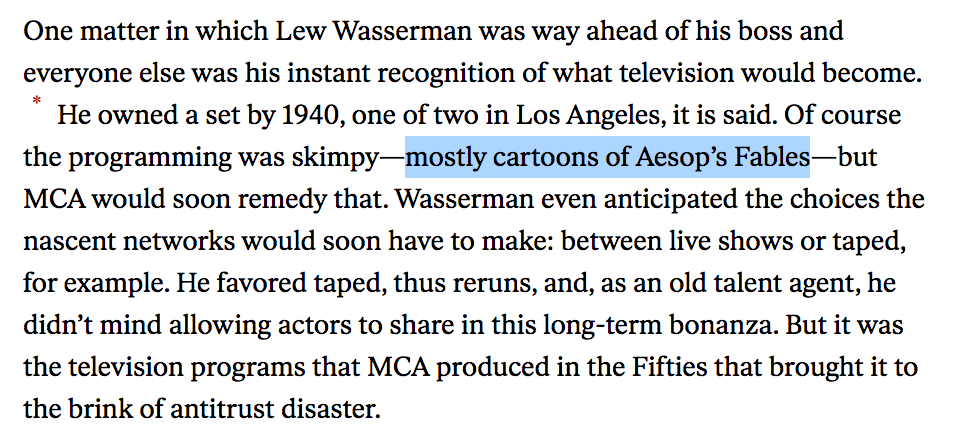
From Larry McMurtry’s review of Connie Bruck’s bio of Lew Wasserman, in the newly unlocked NYRofB archives.
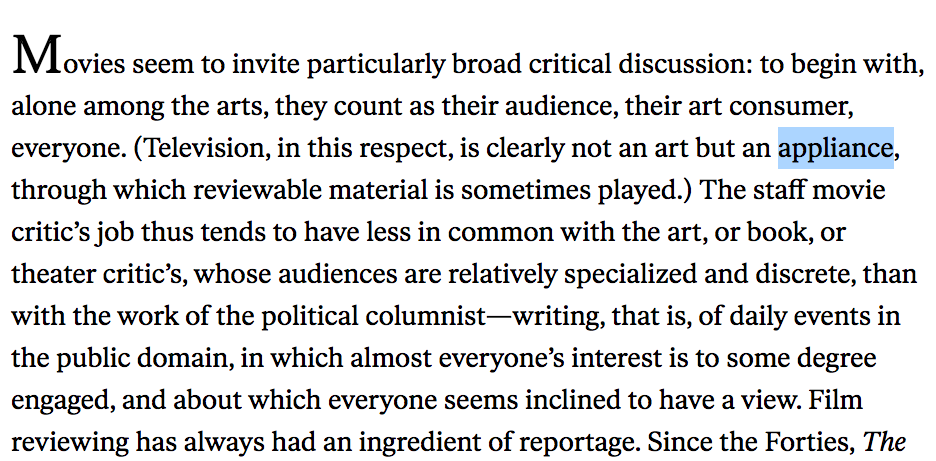
From those same archives, Renata Adler’s savage attack on Pauline Kael drops a parenthetical on TV:
Marilyn Monroe’s best ever
Posted: October 18, 2020 Filed under: Hollywood, sexuality Leave a commentThey trade sex stories. Capote tells of a homosexual fling he had with Errol Flynn. Marilyn: “It’s not as if you told me anything new. I’ve always known Errol zigzagged. I have a masseur, he’s practically my sister, and he was Tyrone Power’s masseur, and he told me all about the things Errol and Ty Power were doing…. So let’s hear your best experience. Along those lines.”
Capote: “The best? The most memorable? Suppose you answer the question first.”
Marilyn: “And I drive hard bargains! Ha! (Swallowing champagne) Joe’s not bad. He can hit home runs. If that’s all it takes, we’d still be married. I still love him, though. He’s genuine.”
Capote: “Husbands don’t count. Not in this game.”
Marilyn (nibbling her nail, really thinking): “Well, I met a man, he’s related to Gary Cooper somehow. A stockbroker, and nothing much to look at– sixty-five, and he wears those very thick glasses. Thick as jellyfish. I can’t say what it was, but–”
Capote: “You can stop right there. I’ve heard all about him from other girls… He’s Rocky Cooper’s stepfather. He’s supposed to be sensational.”
Marilyn: “He is. Okay, smart-ass. Your turn.”
That, from Truman Capote’s Music for Chameleons, quoted in this fantastic post about Marilyn’s social networks by the always interesting Randall Collins, frequent Helytimes subject.
Who was this mysterious man?

Veronica “Rocky” Cooper. From her Wikipedia:
Veronica Balfe was born to Veronica Gibbons and Harry Balfe, Jr. Following her parents’ divorce, she lived in Paris with her mother. Balfe did not see her father for many years, but kept in touch with her grandfather, who owned a ranch in California. Balfe saw her father a few years before his death in the 1950s. Her mother married Paul Shields, a successful Wall Street financier.
An avid sportswoman, Balfe was known to her friends by the nickname, “Rocky.” [1]

Aside from that and this, the man seems to slip through the internet. But what else do you need to know, really?
Always the possibility that Truman Capote made all this up for whatever reason.
Trader Joe
Posted: October 14, 2020 Filed under: business Leave a comment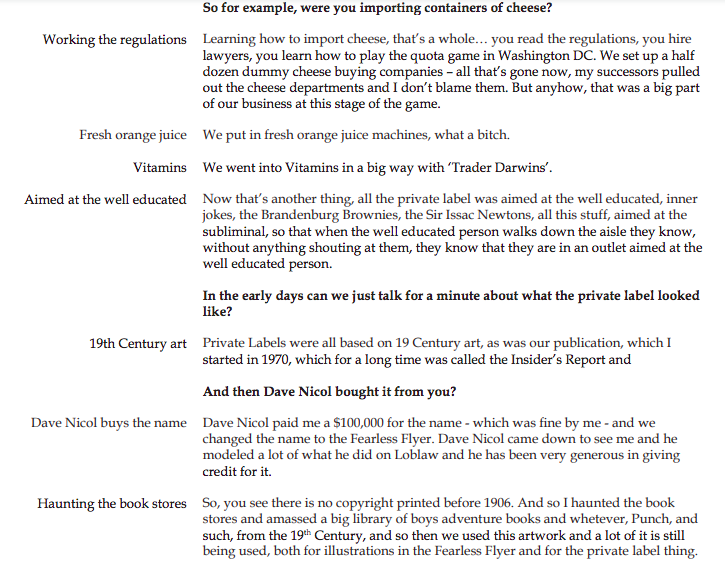
Great interview with Joe Coloumbe, Trader Joe himself, from Coriolis Research (ht somebody or another on Twitter.
They have all kinds of great reports over there by the way. Should I grow mungbeans in Northwest Queensland??
Rich people paying for elections
Posted: October 13, 2020 Filed under: Uncategorized Leave a comment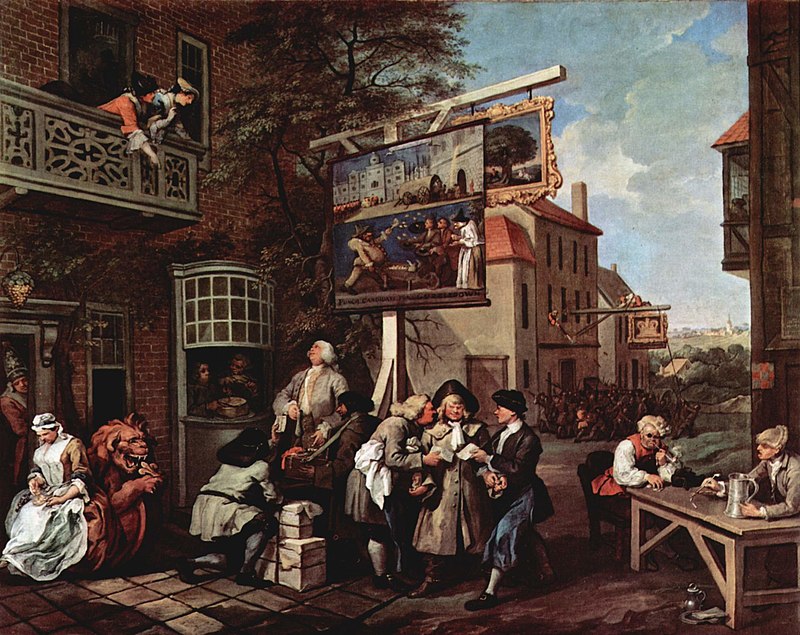
This is “good” in a way I guess, but this isn’t supposed to be how this works:
CASH SPLASH — “Mark Zuckerberg and Priscilla Chan donate $100 million more to election administrators, despite conservative pushback,” by WaPo’s Michael Scherer: “Facebook chief executive Mark Zuckerberg and his wife, Priscilla Chan, announced Tuesday an additional $100 million in donations to local governments to pay for polling place rentals, poll workers, personal protective equipment and other election administration costs over the coming weeks.
“The donation, which follows a previous gift of $300 million for state and local governments to help fund U.S. elections, comes in the face of a lawsuits from a conservative legal group seeking to block the use of private funds for the state and local administration of elections, an expense that has historically been paid for by governments. But Zuckerberg has been unmoved by legal threats, arguing in a Facebook post expected to go live Tuesday that his decision to fund election administration does not have a partisan political motive.” WaPo
Via Politico. Shouldn’t states and local areas tax appropriately to have the money needed to run elections, rather than rely on the largesse of billionaires? Troubled. Are we veering to more of a straight-up oligarchy/democracy hybrid?
Absalom, Absalom
Posted: October 9, 2020 Filed under: Uncategorized Leave a comment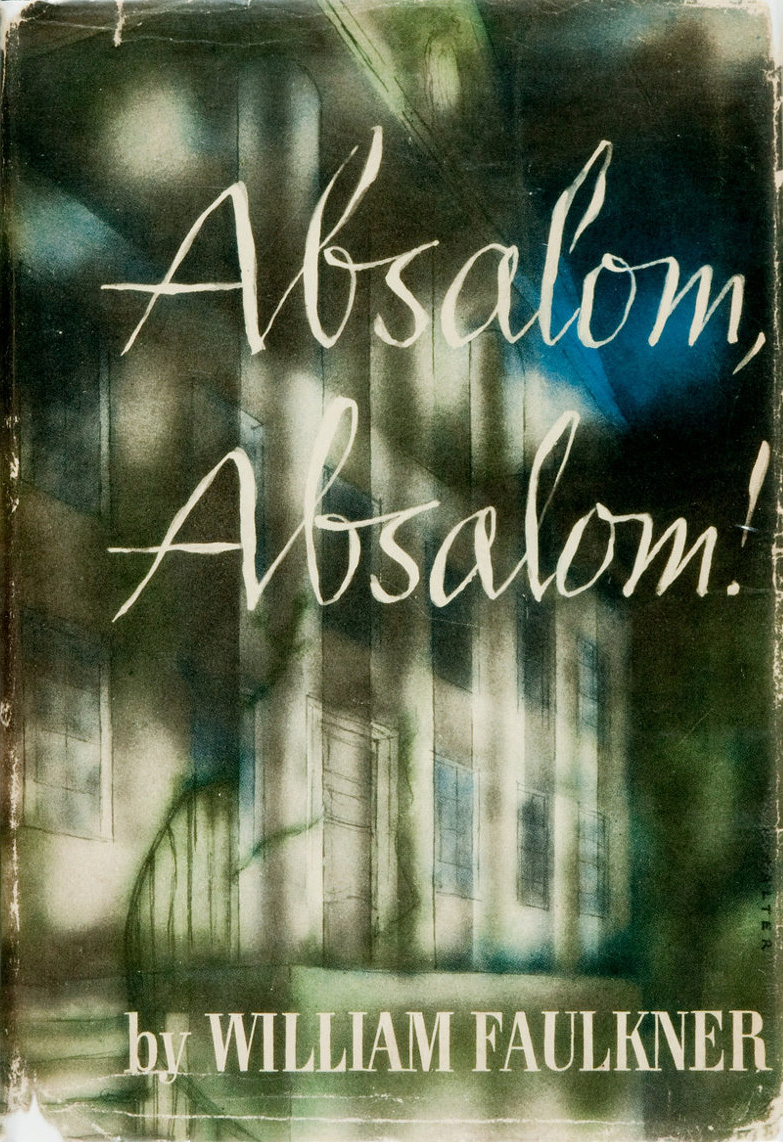
Finally finished this one. How about this part, about New Orleans:
I can imagine him, with his puritan heritage – that heritage peculiarly Anglo-Saxon – of fierce proud mysticism and that ability to be ashamed of ignorance and inexperience, in that city foreign and paradoxical, with its atmosphere at once fatal and languorous, at once feminine and steel-hard – this grim humorless yokel out of a granite heritage where even the houses, let alone clothing and conduct, are built in the image of a jealous and sadistic Jehovah, put suddenly down in a place whose denizens had created their All-Powerful and His supporting hierarchy-chorus of beautiful saints and handsome angels in the image of their houses and personal ornaments and voluptuous lives.
The Civil War approaches:
And who knows? there was the War now; who knows but what the fatality and the fatality’s victim’s did not both think, hope, that the War would settle the matter, leave free one of the two irreconciliables, since it would not be the first time that youth has taken catastrophe as a direct act of Providence for the sole purpose of solving a personal problem which youth itself could not solve.
The cover of my 1987 edition:
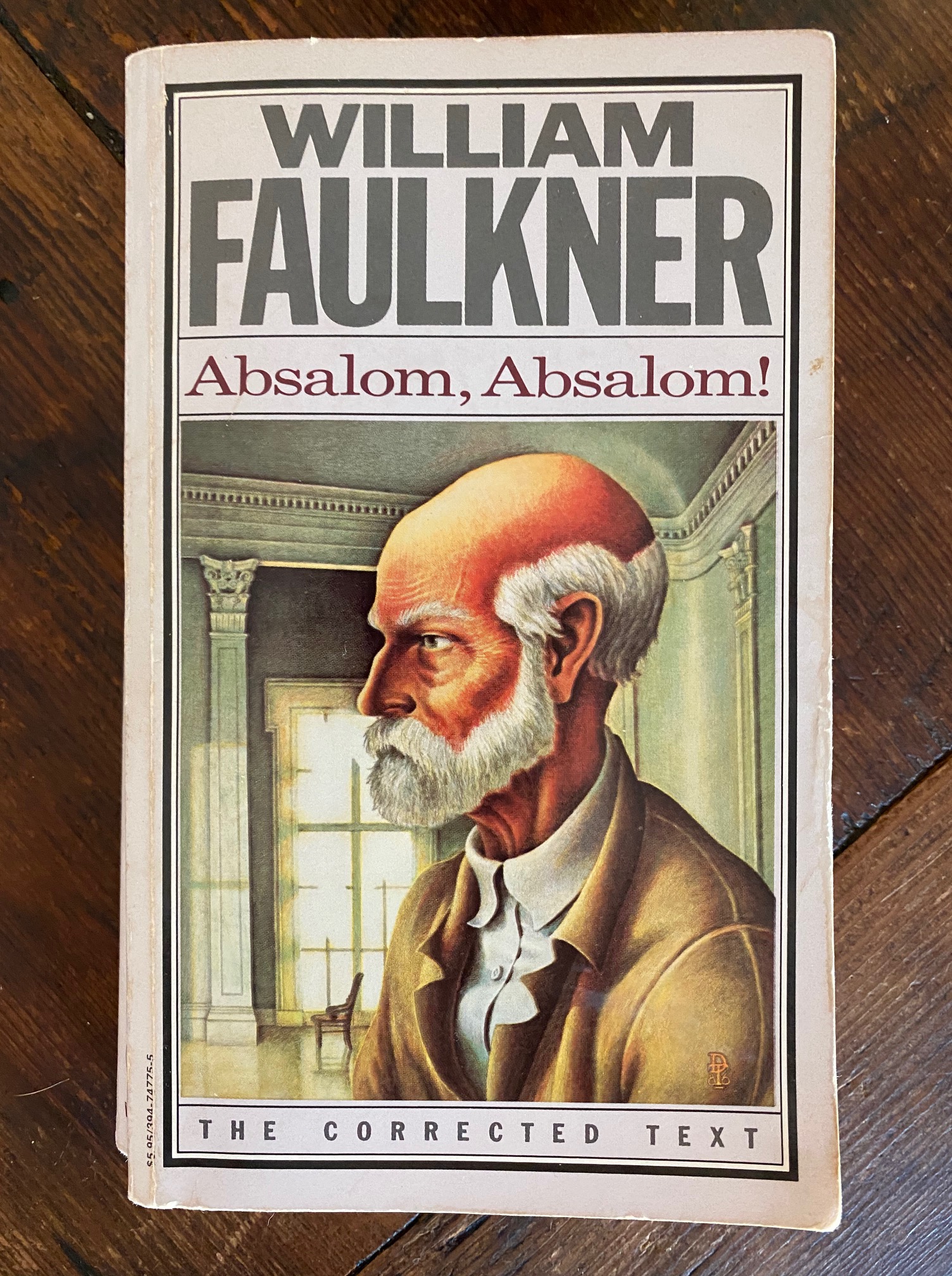
MW tells me he doesn’t approve, because Sutpen’s beard is supposed to be red (I myself didn’t clock that in the text, which probably requires a couple readings).
The barebones plot of this book: ambitious youth sets out to make his fortune, rises through courage and violence, through will hacks out an empire for himself, is dest on its own could make for a pretty sexy TV miniseries or something: ambition, pride, violence, incest. But the way it’s told, with the story embedded in retellings of retellings, and sentences that fold upon themselves for six or seven pages isn’t too breezy. From Wikipedia:
The 1983 Guinness Book of World Records says the “Longest Sentence in Literature” is a sentence from Absalom, Absalom! containing 1,288 words.[8] The sentence can be found in Chapter 6; it begins with the words “Just exactly like father”, and ends with “the eye could not see from any point”. The passage is entirely italicized and incomplete.
Strange analogy but some of the verbal pyrotechnics of this book sort of reminded me of the FX show Dave.
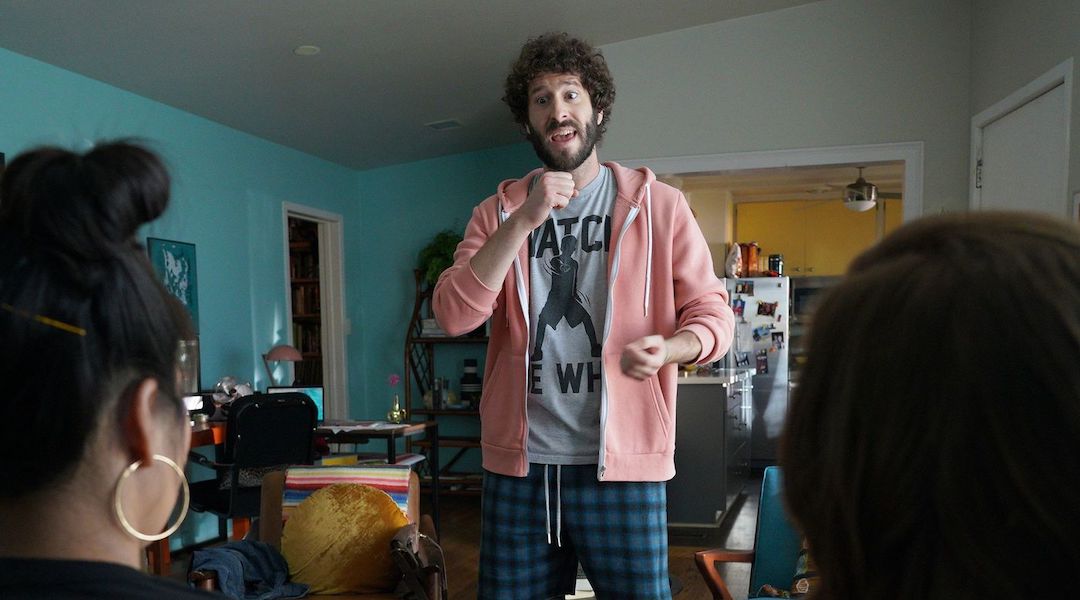
when Dave busts out one of his long raps. Indisputably impressive feat of language and cognition but… to what end? A stunning demonstration of what a person might be capable of, itself maybe a worthy achievement, but do I need to pretend that it made me feel anything other than kind of numbed? At what point are we just showing off, or just pounding the reader’s head in?
I don’t think Faulkner would necessarily appreciate that comparison.
Shelby Foote, in one of his interviews, tells us that Faulkner had hopes this would be a bestseller:

I wonder if more people last year read Absalom, Absalom or Gone With The Wind.
The story of David’s rebellious son Absalom is recounted in the Bible and the subject of a popular (?) Sacred Harp song.
Cocoanut milk
Posted: October 8, 2020 Filed under: Uncategorized Leave a comment
I’ve been adding a dash of cocoanut milk to my cold brew in the mornings. Recommend! Just when you think, “there can’t be a new milk to play with!”
Time for a walk?
Posted: October 8, 2020 Filed under: Uncategorized Leave a comment
from:

Important to remember: Bruce Chatwin made stuff up all the time.

The Kun Lung mountains are no joke:
Imagine
Posted: October 3, 2020 Filed under: Uncategorized Leave a comment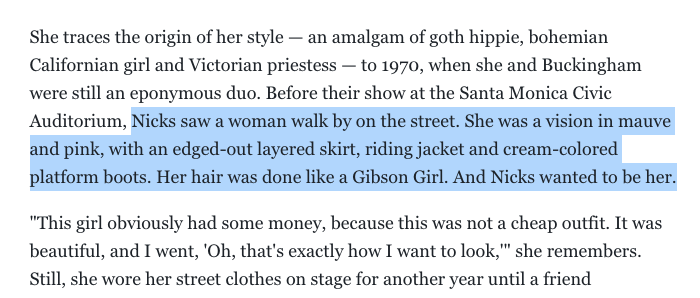
Imagine being the anonymous stranger who inspired Stevie Nicks’ whole style. From an LA Times/Yahoo profile by Amy Kaufman.

Cheyenne Chiefs Receiving Their Young Men
Posted: September 28, 2020 Filed under: art history, Indians Leave a comment
Artist unknown, 1881, from the Bethel Moore Custer Ledger, one of many amazing works over at Plains Indian Ledger Art.
Bethel Moore Custer was, apparently, not related to the “other” Custer.
Crown Journeys series
Posted: September 27, 2020 Filed under: travel, writing Leave a comment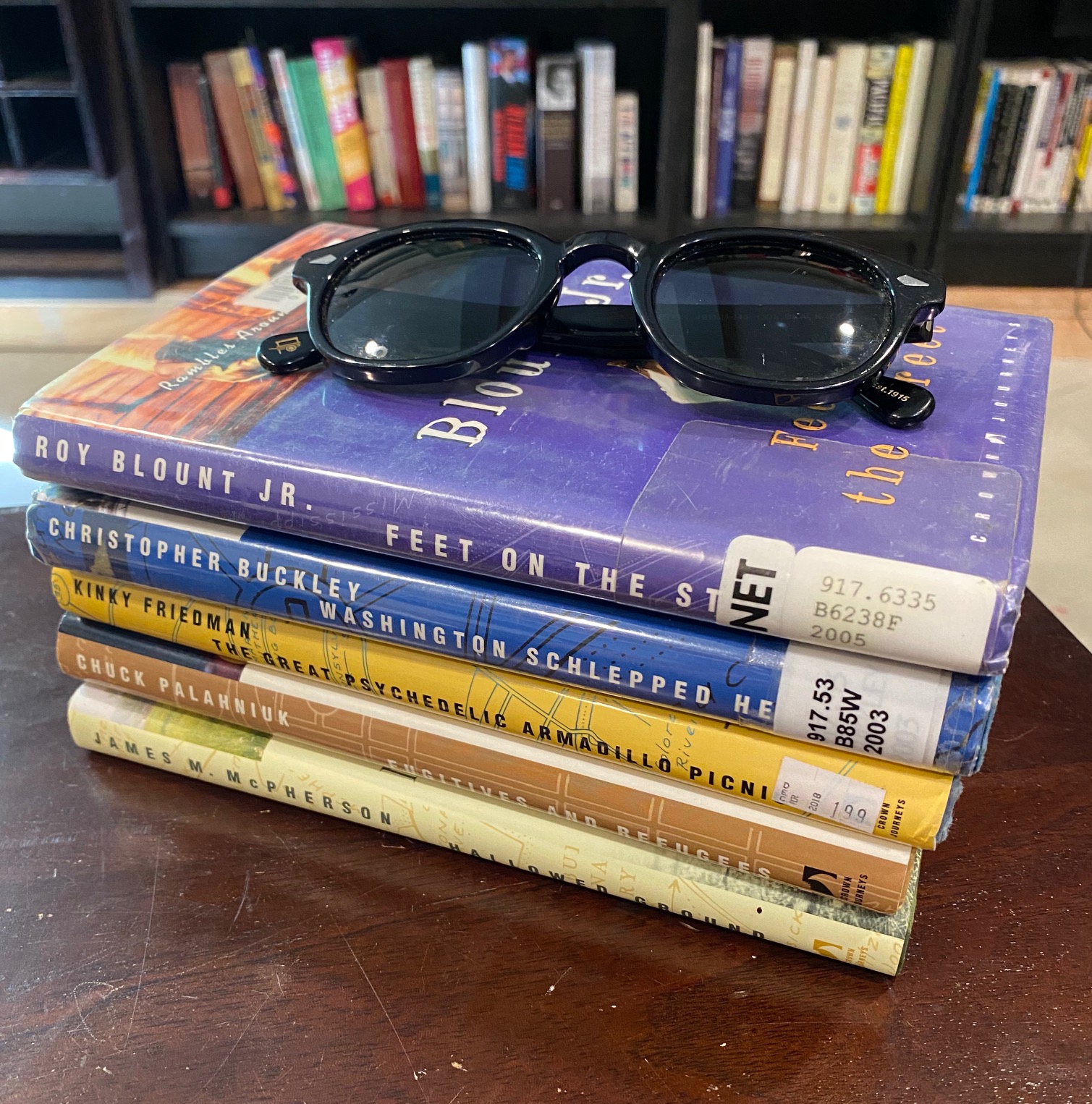
sunglasses for scale
I was listening to Chuck Palahniuk on Bret Easton Ellis podcast (is this the second post in a row where I mention this podcast? It’s not for everybody but I’m into it!)
You know, if somebody had given David Foster Wallace or Sylvia Plath fourteen issues of Spider-Man to do, they’d both still be alive
says Palahniuk early in the episode. An outrageous claim. But hey, I guess outrageous claims were what I was signing up for. Would ❤️ to read a Sylvia Plath Spider-man series.
Palahniuk isn’t a writer I’ve read much of, gross out, extremist fiction not being my kinda milkshake. But when Palahniuk mentioned that he’d written a travel book about Portland, that got my attention. Travel books I’m into. So I got Palahniuk’s travel book, fugitives and refugees: A Walk In Portland, Oregon, which it turns out is part of a series Crown put out, Crown Journeys, where writers do a walking tour – sometimes pretty literally, sometimes in quotes – of a place they know well.
Turns out I’d read one of these already, Frank Conroy’s Time and Tide: A Walk Through Nantucket. I’d read that a few years back during a weeklong stay on Nantucket, but I remember nothing from it. The book about Nantucket I like is Charles Olson’s Call Me Ishmael, where I learned there was a neighborhood on Nantucket called New Guinea, full of people of color of various kinds. Nantucket’s worth a post of her own someday.
Stuck homebound, I got a bunch of these Crown Journeys books. An appealing quality of them is their size, just right to stuff in a bag:
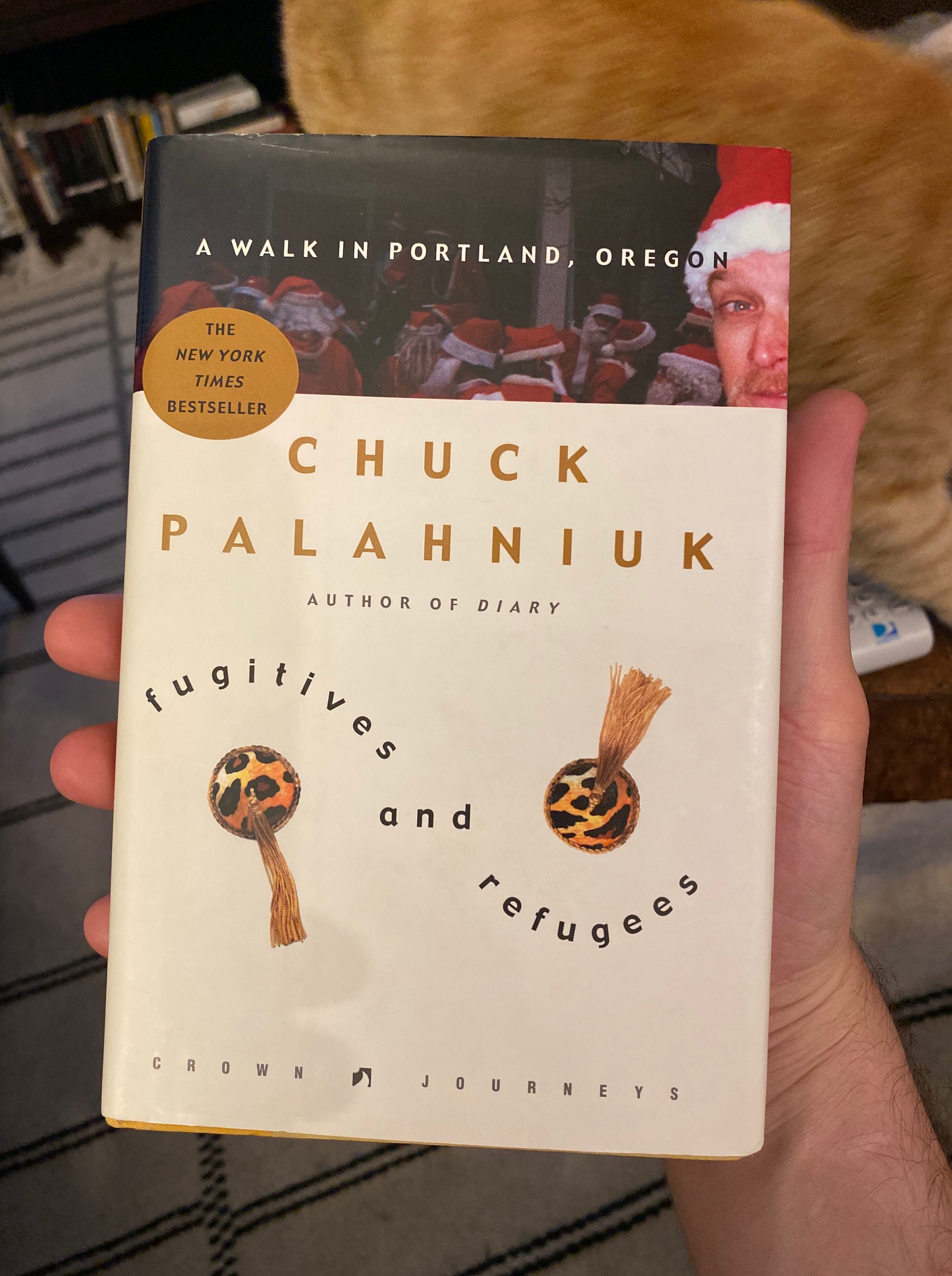
Let’s start with Palahniuk’s. It’s a travel guide plus a memoir, the voice is strong and he shows, even rubs your face in, the weirdness of that town, the grubbiness and beauty all swished up together.
Katherine’s theory is that everyone looking to make a new life migrates west, across America to the Pacific Ocean. Once there, the cheapest city where they can life is Portland. This gives us the most cracked of the crackpots. The misfits among misfits.
The memory and madness:
Days, I’m working as a messenger, delivering advertising proofs form the Oregonian newspaper. Nights, I wash dishes at Jonah’s seafood restaurant. My roommates come home, and we throw food at each other. One night, cherry pie, big sticky red handfuls of it. We’re eighteen years old. Legal adults. So we’re stoned and drinking champagne every night, microwaving our escargot. Living it up.
Palahniuk is clearly more into the sex trade, underground (literal and figurative) side of the town, but he covers the gardens too, along with the Self Cleaning House and Stark’s Vacuum Cleaner Museum and the standout landmarks, along with a semi-autobiography full of vivid, intense incidents, like a beating and a moment with the mother of a dying hospital patient.
Although this book was published in 2003, reading it gives insight into why Portland is the arena of choice for “antifa” and far-night political violence LARPers and a fracture zone of America 2020.
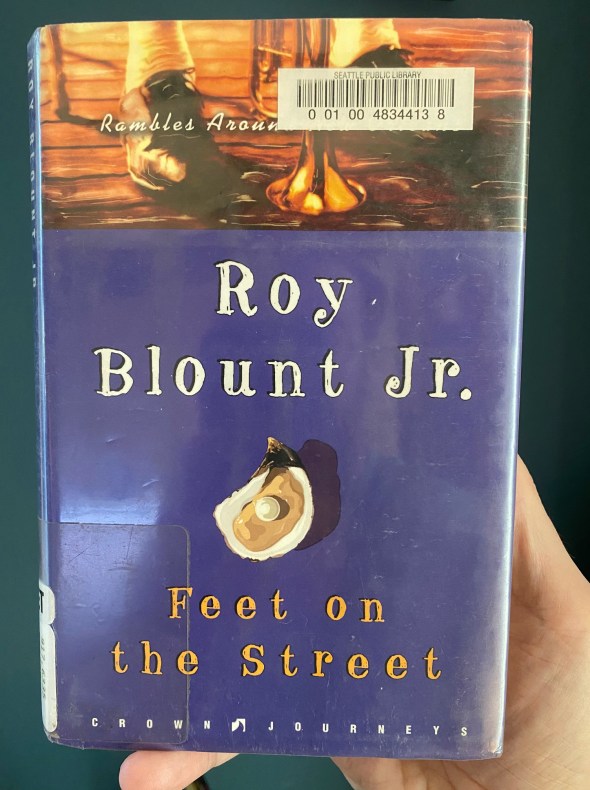
The Seattle Public Library’s loss is my gain.
Next up, Roy Blount Jr.’s Feet On The Street: Rambles Around New Orleans.
This one’s the best organized, divided into seven rambles: Orientation, Wetness, Oysters, Color, Food, Desire, Friends. It’s full of jokes and stories and anecdote. Of all the Crown Journeys I read, this one’s unsurprisingly the most focused on food. How can you not want a “roast beef sandwich with debris” from Mothers, or a pan-fried trout topped with “muddy water” sauce: chicken broth, garlic, anchovies, and gutted jalapeños and sprinkled with parmesan cheese.”
Blout’s book is full of autobiography too, quoting from letters he wrote as a young man, describing nights and dinners, what New Orleans meant to him as a young man and what he found on frequent returns.
I’ll bet I have been up in N. O. at every hour in every season,
he says, a cool claim.
Towards the end of the book, Blount Jr. turns kind of reflective, ruminating with some regret on an incident of insensitivity, somewhere between misunderstanding and even cruelty, towards a homosexual friend that ended badly. There’s an air of regret to it, and maybe that’s part of New Orleans, too. Feet On The Street might work best of all of these, as a book. I’ve read a lot of guides to New Orleans and this one’s a fine addition to the canon.
Blount’s a figure who doesn’t seem to quite exist as much any more, the sort of literary semi-comedian raconteur, where books are just one expression of a humorous personality. Christopher Buckley’s another guy like that.
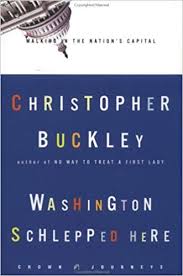
Washington Schlepped Here is, in my opinion, the worst titled of these books. It’s a pun, first of all, but second, George Washington simply never “schlepped.” Didn’t happen. He was not a schlepper. Buckley spends a paragraph or two dealing with the title, although he seems quite pleased with it. “Pleased with himself” might be the most accurate criticism you could make of Christopher Buckley, but it’s hard not to be a little won over by his privileged charm.
Buckley’s Washington is strictly the Washington of our nation’s capital. You won’t find anything in here about the majority black population of that city. How can you write a book about Washington that doesn’t mention Ben’s Chili Bowl? E. J. Applewhite’s Washington Itself, which Buckley quotes from copiously, is a richer one volume guide to the city. But there’s a Yale-grade wit to Buckley, I won’t deny it.
I’ll let you prowl about. There’s a lot to see: the Old Senate Chamber, Statuary Hall, the Crypt, the Old Supreme Court Chamber, the Hall of Columns, along with enough murals, portraits, busts and bas reliefs to keep you going “Huh” for hours.”
Buckley takes the walking tour conceit the most seriously of any of the writers. There’s a bummer element hanging over this book, as Buckley keeps pointing out how post-9/11 security procedures and jersey barriers have made wandering the capital city less free that in it used to be. There’s a bit of filler to this one, too, as if Buckley’s sort of just taking the Wikipedia page to certain buildings and adding a few quips. A few pages are devoted to musing on specific works in specific Mall art museums. Several of the jokes rely casual shared stereotypes about politics, like that Republicans like martinis, that now feel like they’re from another universe (the book was published in 2003).
The best parts of this one come from Jeanne Fogle’s book Proximity to Power and Tony Pitch’s walking tour, both centered on Lafayette Square, which bring to life people who lived here. Places are only so interesting. It’s people that get your attention.
James M. McPherson’s Hallowed Ground: A Walk at Gettysburg is just terrific. A concise, powerful tour of the battlefield, rich in detail and incident, you’re clearly in the hands of a master storyteller who knows his stuff deeply. One of McPherson’s gifts is to take us not just to the battle as it happened, but to the battlefield as it’s remembered and preserved. McPherson talks about the way the woodlands on the battlefield would’ve been more thinned out in 1863, who could see what from where, how small features of geography shaped those three days. On the artillery barrage that preceded Pickett’s Charge:
Confederate gunners failed to realize the inaccuracy of their fire because the smoke from all these guns hung in the calm, humid air and obscured their view. Several explanations for this Confederate overshooting have been offered. One theory is that as the gun barrels heated up, the powder exploded with greater force. Another is that the recoil scarred the ground, lowering the carriage trails and elevating the barrels ever so slight. The most ingenious explanation grows out of an explosion at the Richmond arsenal in March that took it out of production for several weeks. The Army of Northern Virginia had to depend on arsenals farther south for production of many of the shells for the invasion of Pennsylvania. Confederate gunners did not realize that fuses on these shells burned more slowly than those from the Richmond arsenal; thus the shells whose fused they tried to time for explosion above front-line Union troops, showering them with lethal shrapnel, exploded a split second too late, after the shells had passed over.
On such things does history turn? McPherson tells us details like that Company F of the Twenty-Sixth North Carolina included four sets of twins, every one of whom was killed or wounded in the battle.
I’ve been to Gettysburg twice, and was pretty familiar with the shape of the events and landscape. But I’d wager this book would provide a pretty clear and readable introduction to the battle, even if you didn’t know very much about it. Certainly it’s much easier to comprehend than Shelby Foote’s Stars In The Courses, another short volume about Gettysburg, which has a poetry to it, but good luck using it to decipher what happened where.
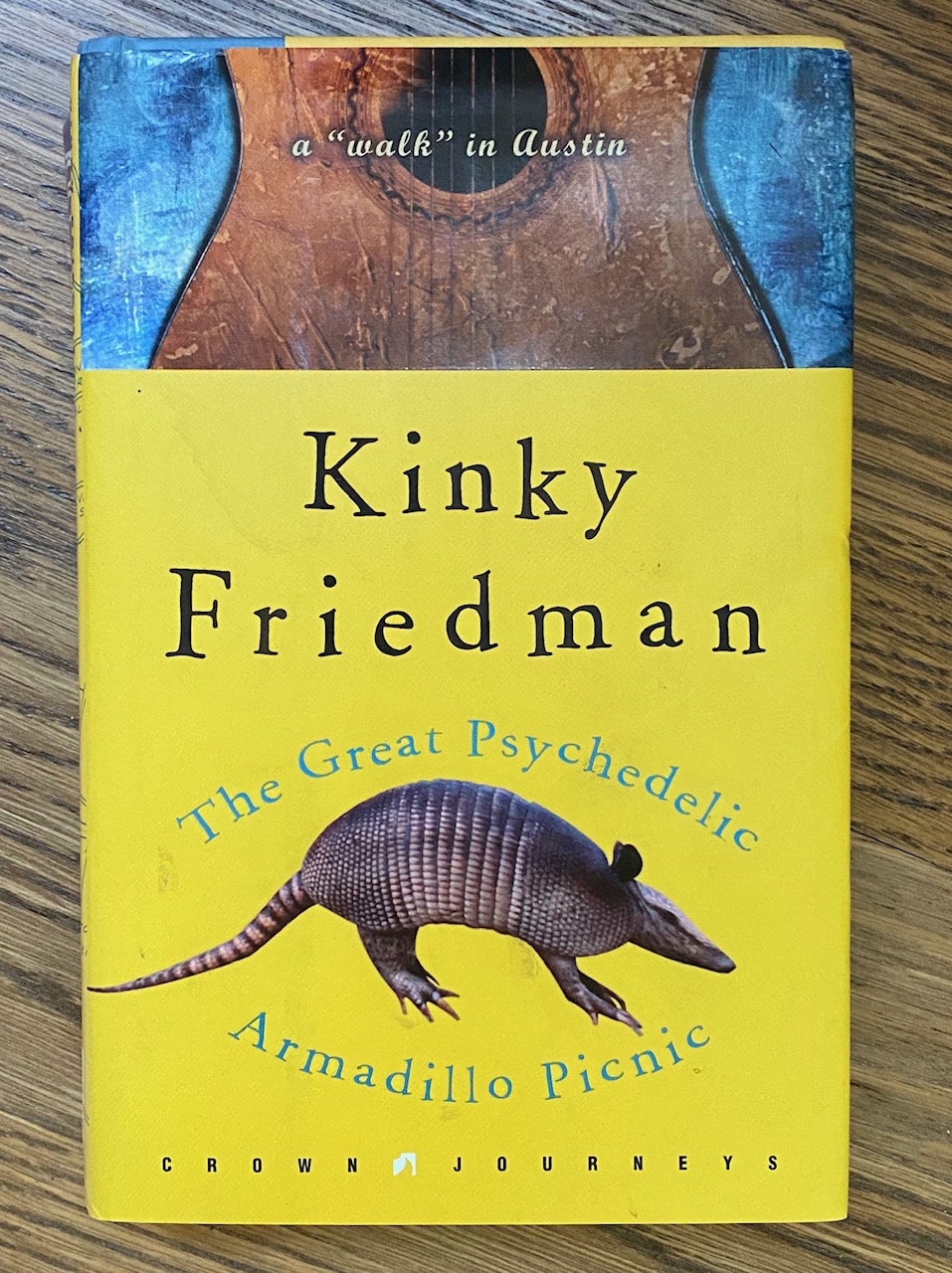
Kinky is not a word that I love, and comedy music makes me uncomfortable. So I’ve never gotten too into Kinky Friedman. But The Great Psychedelic Armadillo Picnic: a “walk” in Austin is pretty companionable. Kinky is friends with George W. Bush, and has nothing bad to say about him (this one was published in 2004, so pre Iraq catastrophe).
There are a couple of notable omissions in this book. The coolest part of Austin to me is Rainey Street, but that section’s conversion of porched houses into bars may post-date this work. There’s also nothing about the Texas State Cemetery, which I believe is unique in the United States and tells you quite a bit about the values of Texas. Maybe worth a book of its own. Also, without explanation, Friedman tosses off that he’s never been inside the Texas Capitol Building, which is the centerpiece of Austin.
Is Austin the place of all these that has changed the most in the last twenty years?
Still, you’re on a fun ramble with a personality who’s committed to entertaining. A thin volume, thick with schtick. I really liked Kinky’s introduction to Texas history, and the stuff about the ’70s music scene. If you think calling a ghost an “Apparition-American” is funny, you’ll enjoy this book. Really, any small book about Austin in this time of home-bounditude would’ve been appreciated by me.
Compact, entertaining guides to places, by writers who really have a voice – there should be more books like this. I ate these up like cookies. Surely Boston, Los Angeles/Hollywood, Seattle, San Francisco, Savannah, Nashville, Philadelphia, Kansas City, Honolulu, Charleston could all use books like this. Brooklyn?
Hell I’d even read one about San Diego.
I’d like to write a book like this myself someday. It might be interesting to try a travel book on a smaller scale than the whole world or all of Central and South America.
Mile Marker Zero: The Moveable Feast of Key West by William McKeen
Posted: September 24, 2020 Filed under: America Since 1945, Florida, Hemingway, writing Leave a comment
This is a book about a scene, and the scene was Key West in the late ’60s-’70s, centered on Thomas McGuane, Jim Harrison, Hunter Thompson, Jimmy Buffett, and some lesser known but memorable characters. I tried to think of other books about scenes, and came up with Easy Riders, Raging Bulls by Peter Biskind, and maybe Astral Weeks: A Secret History of 1968 by Ryan H. Walsh, about Van Morrison’s Boston. Then of course there’s Hemingway’s A Moveable Feast, referenced here in the subtitle, a mean-spirited but often beautiful book about 1920s Paris.
I was drawn to this book after I heard Walter Kirn talking about it on Bret Easton Ellis podcast (McGuane is Kirn’s ex-father-in-law, which must be one of life’s more interesting relationships). I’ve been drawn lately to books about the actual practicalities of the writing life. How do other writers do it? How do they organize their day? What time do they get to work? What do they eat and drink? How do they avoid distraction?
From this book we learn that Jim Harrison worked until 5pm, not 4:59 but 5pm, after which he cut loose. McGuane was more disciplined, even hermitish for a time (while still getting plenty of fishing done) but eventually temptation took over, he started partying with the boys, eventually was given the chance to direct the movie from his novel 92 In The Shade. That’s when things got really crazy. The movie was not a big success.

“The Sixties” (the craziest excesses bled well into the ’70s) musta really been something.
On page one of this book I felt there was an error:

That’s not the line. The line (from the Poetry Foundation) is:
The best laid schemes o’ Mice an’ MenGang aft agley,
Part of what these writers found special about Key West, beyond the Hemingway and Tennessee Williams legends, was it just wasn’t a regular, straight and narrow place. Being a writer is a queer job, someone’s liable to wonder what it is you do all day. In Key West, that wasn’t a problem.

Key West was so irregular and libertine that you could get away with the apparent layaboutism of the writer’s life.
Some years ago I was writing a TV pilot I’d pitched called Florida Courthouse. I went down to Florida to do some research, and people kept telling me about Key West, making it sound like Florida’s Florida. Down I went on that fantastic drive where you feel like you’re flying, over Pigeon Key, surely one of the cooler drives in the USA if not the world.
The town I found at the end of the road was truly different. Louche, kind of disgusting, and there was an element of tourists chasing a Buffett fantasy. Some of the people I encountered seemed like untrustworthy semi-pirates, and some put themselves way out to help a stranger. You’re literally and figuratively way out there, halfway to Havana. The old houses, the chickens wandering, the cemetery, the heat and the shore and the breeze and the old fort and the general sense of license and liberty has an intoxicating quality. There was a slight element of forced fun, and trying to capture some spirit that may have existed mostly in legend. McKeen captures that aspect in his book:

Like McGuane, I found the mornings in Key West to be the best attraction. Quiet, promising, unbothered, potentially productive. Then in the afternoon you could go out and see what trouble was to be found. Somebody introduced me to a former sheriff of Key West, who helped me understand his philosophy of law enforcement: “look, you can’t put that much law on people if it’s not in their hearts.”
I enjoyed my time there in this salty beachside min-New Orleans and hope to return some day, although I don’t really think I’m a Key West person in my heart. I went looking for photos from that trip, and one I found was of the Audubon House.

After finishing this book I was recounting some of the stories to my wife and we put on Jimmy Buffett radio, and that led of course to drinking a bunch of margaritas and I woke up hungover.
I rate this book: four and a half margaritas.
The illusion of choice
Posted: September 19, 2020 Filed under: America Since 1945, business Leave a comment
Cool graphic, from “Monopolies are Distorting the Stock Market” by Kai Wu of Sparkline Capital
Founding Documents
Posted: September 16, 2020 Filed under: America Since 1945, business Leave a comment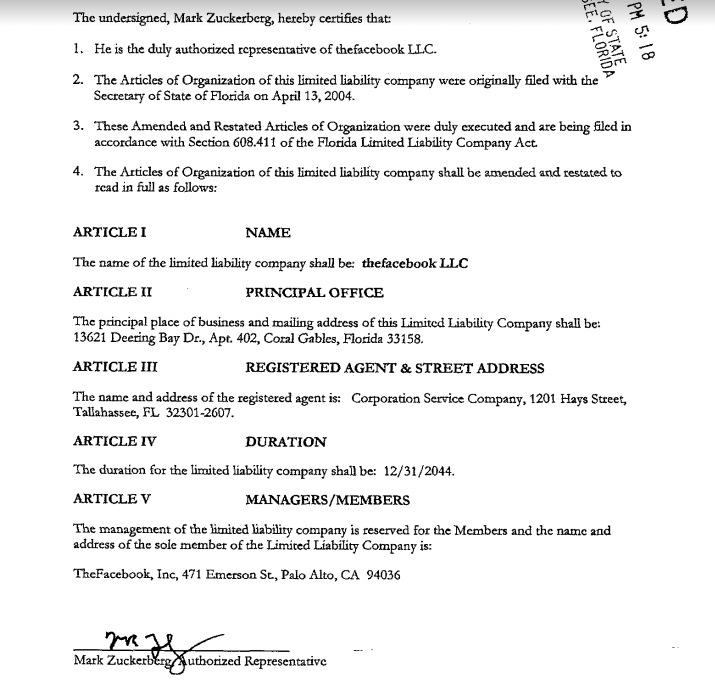
Note to readers: from time to time we accept submissions written by correspondents about topics they’re passionate about that fit into our frame of going to the source. Reader Billy Ouska sent us a writeup of something he’s passionate about, the founding documents of Facebook, and we’re proud to present it here. If you’d like to write for us, send us a pitch! – SH, editor.
The Social Network (now available to stream on Netflix) tells the story of the creation of Facebook through portrayals of the legal battles over its ownership. In a pivotal scene, cofounder Eduardo Saverin flies out to Facebook headquarters to sign some seemingly innocuous legal documents. Of course, the cut to Mark Zuckerberg watching furtively from afar tells the viewer that something is up. We later discover that Saverin has signed off on corporate restructuring that will significantly dilute his equity in the company, leading to the lawsuit whose depositions serve as a narrative device for the film. (Moral of the story: know what you’re signing! If you don’t, hire a lawyer! If there’s a lawyer in the room, ask him, “do you represent me?” If he says no, get your own guy! If he says yes, make him put it in writing!)
We learn that Facebook was originally formed as a Florida limited liability company and that, through legal maneuvering, another Facebook entity was created in Delaware that acquired its Florida counterpart, giving it the ability to restructure ownership. I’m not here to delve into the legal tricks that were played; other corners of the internet have already done so. Instead, I’m here to talk about something even less interesting: entity formation documents!
Formation documents (what you file with a state to create a corporation or limited liability company) are almost always available to the public. If you know the state where the entity was created, you can easily find its initial records. So, after entering “Florida entity search” into your search engine of choice, you’ll get here. With some persistence, you should be able to find information on whatever company you’re looking for, like the initial Articles of Organization of thefacebook LLC:
Maybe it’s just me, but seeing a copy of these Articles feels almost historic, and maybe a bit inspirational. Facebook is now worth hundreds of billions of dollars, but only sixteen years ago it was so green that its owners listed in a public document what look like their home addresses—no, even better, their parents’ home addresses—because they didn’t yet have an office. Mark’s address even has a typo: Dobbs Ferry is in New York, not Massachusetts. (Or, was this not a typo but rather the first of many times in which Zuckerberg would intentionally flout governmental authorities?!)
Even better is that the amended Articles of Organization are also available for viewing.
I don’t want to pull you even further into the weeds of corporate law (thanks for even making it this far!), but what I find cool here is that the amended Articles include an attachment laying out the reorganization that is signed by the man himself. Another slice of history! Think of how much impact, both positive and negative, that Facebook has had on the planet: the media industry, the outcome of the elections, the way we communicate. So much of that can be traced back to this document (and a thousand others not available for public viewing). Did Zuckerberg have any idea? Did he pause and contemplate before signing this? Did he scribble his signature without reading it, like Saverin would later do? If you squint hard enough, it can be fun to imagine the answers to these questions.
It looks like the first Articles of Organization were sent to the Florida secretary of state via fax. So, after it was run through the fax machine, the original was probably put in a file cabinet by the Organizer (Business Filings Incorporated) or thrown out. I’m guessing the amended Articles of Organization were prepared by a Palo Alto law firm, signed in Palo Alto, and then faxed or emailed to a third party in Tallahassee, which filed the documents with the Florida secretary of state. I would guess that the original in Palo Alto made its way into a client file somewhere.Even I, a noted corporate records enthusiast, don’t think that these documents need or deserve the reverence afforded to the Constitution. But I do think there is value in making them public record. Every once in a while, they give a peek behind the curtain into the workings of the corporate world, which could probably benefit from some more transparency.(PS: every state lets you access corporate records like these from the comfort of your home, though some states will require the creation of an account and/or the payment of a nominal fee to search. Just imagine what you could find!)
The Killing of Crazy Horse by Thomas Powers
Posted: September 12, 2020 Filed under: Custer, history, Indians, the American West Leave a comment
This book is fantastic. I read this like a thriller. I bought it when it came out, mainly just out of respect to the project itself. Powers took this strange and tragic incident that happened in 1877 at a dusty fort in northwestern Nebraska and produced a thick, apparently exhaustive, densely annotated book.
Crazy Horse, out of options, was persuaded to come into Camp Robinson, where it soon became clear he was going to be locked up. When he saw that he was being led into the guardhouse, he resisted, and in the struggle that followed he was stabbed. That night he died. That’s the gist of the story, what else is there to say, really?
Well, from time to time I’d open this book up and read a bit of it and always I found something curious or engaging that I wanted to know more about. Finally, summer vacation, I just decided to start at the beginning and read the whole thing.
The Little Bighorn event had my attention from when I first heard about it. Cowboys vs Indians. The setting: “a dusty Montana hillside.” A cavalry unit, wiped out to the last man. Custer, the boasting blowhard, his luck had never run out, and then it did. No survivor to tell the tale (with the exception of the alleged lone horse survivor, Comanche). The shock when the survivors of Reno’s stand a few miles away rode among the bodies days after (“how white they look!”).
The classic in this field is Son of the Morning Star, by Evan S. Connell.

How cool was Evan S.? source.
Maybe my favorite book. Connell doesn’t just tell us what happened, he follows the threads of how we might know what happened. The difficulty and ridiculousness of reconciling these accounts from often drunk, bitter, confused or otherwise untrustworthy characters of the American West.
But Powers has a great deal to add to the story. Take for example the awls of the Cheyenne. If you’ve read much about the Little Bighorn, you’ve heard that after the battle, some Cheyenne women recognized Custer’s body. They punctured his ears with what’re sometimes described as sewing needles, so he’d hear better in the next life. Here’s Powers, not just adding detail but evoking a way of life:
Every Cheyenne woman routinely carried on her person a sewing awl in a leather sheath decorated with beads or porcupine quills. The awl was used daily, for sewing clothing or lodge covers, and perhaps most frequently for keeping moccasins in repair. The moccasin soles were made of the heavy skin from a buffalo’s neck; this was the same material used for shields and it was prepared the same way – not tanned, but dried into rawhide. Pushing an awl through this hide required strength. “The making and keeping in repair of moccasins was a ceaseless task,” noted Lieutenant Clark in his notes for a book on the Indian sign language. “The last thing each day for the women was to look over the moccasins and see that each member of the family was supplied for the ensuing day.” In the many photos of the Plains Indians women taken during the nineteenth and early twentieth century their hands are notable for thickness and strength.
In the early days the awls of the Plains Indians consisted of a five- or six-inch sliver of bone, polished to a fine, slender point at one end for piercing leather, and rounded at the other to fit into the palm of the hand for pushing through tough animal hides. In later times Indian women acquired awls of steel from traders. It will be recalled that Custer’s wife, Elizabeth, had once worried that Mo-nah-se-tah would pull out a knife concealed about her person and stab her husband to death.
The Custer fight was just one occasion when Crazy Horse showed his kind of genius for cavalry battle. It looms over this story.
In a New Yorker capsule review of this book, it’s claimed:
Powers, who admits to a childhood passion for Indians, lovingly details spells and incantations—the importance of burning an offering in the proper way, even during a surprise attack; the right time to make use of a small bag of totems—but gives little insight into the larger meaning of these gestures.
This is totally ridiculous. One of the great strengths of Powers book is the care he takes with Sioux religion:
To speak of ultimate things like dying, death, and the spirit realm beyond this world, the Sioux used a kind of poetry of indeterminacy. They explained what they could and consigned the rest to a category of things humans cannot know, or had perhaps forgotten. There was no single correct way to explain these matters, and the hardest of all was to explain the wakan. Anything wakan was said to be sacred or powerful. The Oglala shaman Napsu (Finger) told a white doctor, “Anything that has a birth must have a death. The Wakan has no birth and it has no death.”
Powers never fails to help us see Crazy Horse in the context and worldview in which he saw himself.
This is a book where even the footnotes are interesting:


Now, be warned, this is a serious book. At one point I was reading it for about four hours a day and it still took me more than a week. I’m not sure this is a book for the general reader, although I’d be curious how it reads to someone who wasn’t very familiar with the Plains Indian Wars. If you’re such a reader, and you give it a try, write us!
Just the names alone: Crazy Horse’s father, who became Worm. No Water, They Are Afraid of Her, Grabber, Plenty Lice, Whirlwind, Rattle Blanket Woman.
Via an ad on Drudge Report we learn that Bill O’Reilly has a book out called Killing Crazy Horse. I doubt it will top this one. I associate O’Reilly with dishonesty and bullying, whereas Powers demonstrates in his book an integrity and devotion to taking care with the material.
Powers’ book led me to this one:

which is reigniting a passion for Ledger Art.
This is the death song Crazy Horse is said to have sung after he was wounded:

You gotta be careful or you’ll spend your whole life thinking about this stuff. People have done it!
Conversations with Faulkner
Posted: September 7, 2020 Filed under: America Since 1945, Hollywood, Mississippi, writing, writing advice from other people Leave a comment
Alcohol was his salve against a modern world he saw as a conspiracy of mediocrity on its ruling levels. Life was most bearable, he repeated, at its simplest: fishing, hunting, talking biggity in a cane chair on a board sidewalk, or horse-trading, gossiping.
Bill spoke rarely about writing, but when he did he said he had no method, no formula. He started with some local event, a well-known face, a sudden reaction to a joke or an incident. “And just let the story carry itself. I walk along behind and write down what happens.”
Origin story:
Q: Sir, I would like to know exactly what it was that inspired you to become a writer.
A: Well, I probably was born with the liking for inventing stories. I took it up in 1920. I lived in New Orleans, I was working for a bootlegger. He had a launch that I would take down the Pontchartrain into the gulf to an island where the run, the green rum, would be brought up from Cuba and buried, and we would dig it up and bring it back to New Orleans, and he would make scotch or gin or whatever he wanted. He had the bottles labeled and everything. And I would get a hundred dollars a trip for that, and I didn’t need much money, so I would get along until I ran out of money again. And I met Sherwood Anderson by chance, and we took to each other from the first. I’d meet him in the afternoon, we would walk and he would talk and I would listen. In the evening we would go somewhere to a speakeasy and drink, and he would talk and I would listen. The next morning he would say, “Well I have to work in the morning,” so I wouldn’t see him until the next afternoon. And I thought if that’s the sort of life writers lead, that’s the life for me. So I wrote a book and, as soon as I started, I found out it was fun. And I hand’t seen him and Mrs. Anderson for some time until I met her on the street, and she said, “Are you mad at us?” and I said, “No, ma’am, I’m writing a book,” and she said, “Good Lord!” I saw her again, still having fun writing the book, and she said, “Do you want Sherwood to see your book when you finish it?” and I said, “Well, I hadn’t thought about it.” She said, “Well, he will make a trade with you; if he don’t have to read that book, he will tell his publisher to take it.” I said, “Done!” So I finished the book and he told Liveright to take it and Liveright took it. And that was how I became a writer – that was the mechanics of it.
Stephen Longstreet reports on Faulkner in Hollywood, specifically To Have and Have Not:
Several other writers contributed, but Bill turned out the most pages, even if they were not all used. This made Bill a problem child.
The unofficial Writers’ Guild strawboss on the lot came to me.
“Faulkner is turning out too many pages. He sits up all night sometimes writing and turns in fifty to sixty pages in the morning. Try and speak to him.”
 Helytimes


#/media/File:Comanche.jpg)