MONTREAL, Oct. 27— In an eruption of national pride, tens of thousands of Canadians poured into Montreal from across Canada today to call for unity and to urge Quebec to remain part of their country.
Gem from Last Chance U coach
Posted: September 27, 2016 Filed under: advice, how to live, New England Leave a comment
Fair’s where you kiss a pig and give it a blue ribbon.
Massachusetts alt version: fair’s where you go to see a giant pumpkin.

Photo from the 2013 Topsfield Fair via Alex1961 on Flickr
Nazi Meth
Posted: September 27, 2016 Filed under: writing, WW2 Leave a commentIncredible article in the Guardian about Norman Ohler’s book Blitzed: Drugs in the Third Reich:

First, there were injections of animal hormones for this most notorious of vegetarians, and then a whole series of ever stronger medications until, at last, he began giving him a “wonder drug” called Eukodal, a designer opiate and close cousin of heroin whose chief characteristic was its potential to induce a euphoric state in the patient (today it is known as oxycodone). It wasn’t long before Hitler was receiving injections of Eukodal several times a day. Eventually he would combine it with twice daily doses of the high grade cocaine he had originally been prescribed for a problem with his ears, following an explosion in the Wolf’s Lair, his bunker on the eastern front.
More:
You think it [nazism] was orderly. But it was complete chaos. I suppose working on Blitzed has helped me understand that at least. Meth kept people in the system without their having to think about it.
(The point about Nazi Germany being in fact a bureaucratic shambles is well made by Lee Sandlin in “Losing The War.”)
Norman Ohler himself sounds deeply interesting:

The German writer Norman Ohler lives on the top floor of a 19th-century apartment building on the south bank of the river Spree in Kreuzberg, Berlin. Visiting him there is a vertiginous experience. For one thing, he works – and likes to entertain visitors – in what he calls his “writing tower”, a flimsy-seeming, glass-walled turret perched right on the very edge of the roof. (Look down, if you dare, and you will see his little boat moored far below.) For another, there is the fact that from this vantage point it is possible to discern two Berlins, one thrusting and breezy, the other spectral and grey.
Experience vs. Incompetence
Posted: September 26, 2016 Filed under: America Since 1945, politics, presidents Leave a comment Recommend investing the considerable mental energy required to read this Tyler Cowen post, entitled “Are lies better than hypocracy? with special reference to some current events.” An excerpt:
You are more worried about the hypocrite when you see bigger decisions and announcements down the road than what is being faced now. You are more worried about the hypocrite when you fear disappointment, and have experienced disappointment repeatedly in the past. You are more worried about the hypocrite when you fear it is all lies anyway. Lies, in a way, give you a chance to try out “the liar relationship,” whereas hypocrisy does not. You thus fear that hypocrisy may lead to a worse outcome down the road or at the very least more anxiety along the way.
But note: for a more institutional and distanced principal-agent relationship, it is often incorrect, and indeed dangerous, to rely on your intuitions from personalized principal-agent problems.
When it comes to how the agent speaks to allies and enemies, you almost always should prefer hypocrisy to bald-faced lies. The history and practice of diplomacy show this. Allies and enemies, especially from other cultures, don’t know how to process the lies the way you can process the blatant lies of your children, friends, and spouse. They will think some of these lies are mere hypocrisy and that can greatly increase uncertainty and maybe lead to open conflict. North Korea aside, the prevailing international equilibrium is “hypocrisy only,” and those are the signals everyone has decades of experience in reading.
SUNDAY TAKE: is this the election of 1828?
Posted: September 25, 2016 Filed under: movies, presidents Leave a comment
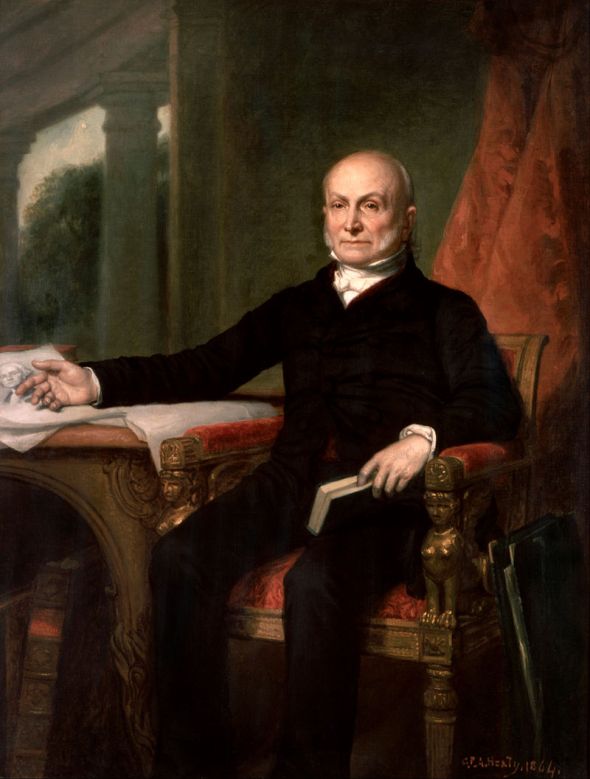 John Quincy Adams
Smug.
Establishment.
Dad was president.
Former Secretary of State.
Front row kid as Chris Arande says.
Against:

Andrew Jackson
Blustery.
Outsider.
Slave trader.
Pretty much a murderer.
Prone to fits of wild anger.
Considered by the JQAs of the world to be impossibly vulgar.
Some ways in which Jackson was better than Trump:
- Jackson was a legitimate self-made man
- Jackson had done something of service to his country (Battle of New Orleans)
(What to make of the Seminole War?

Having a hell of a time finding the source of this image, which Wiki says is “Marines battle Seminole Indians in the Florida War–1835-1842.” — Department of Defense, U.S. Marine Corps (Photo #: 306073-A)
The result?

Jackson won.
Some of things he did were
- deport 45,000 Indians
- more or less shut down the national bank
- paid off the national debt
- preside over an economic panic

READERS: what do you think? Comments are open.
First got this idea from a questioner in New Zealand, who (I believe) admired Jackson.
1828 could’ve also been compared to the the Gore Bush election of 2000 (with Martin Van Buren as Karl Rove)
I’ve got to consult:

Is Trump like Jackson? WORSE? BETTER??
Is JQA like Hillary?
JQA was later in Amistad with Matthew McConaughey.

Norm
Posted: September 23, 2016 Filed under: comedy Leave a comment
Talking in Vulture about being backstage at Fallon with Trump:
Did you meet him?
Well, what happened was, after the show, he came out and was just standing there. So I said, “Mr. Trump, a picture?” And he said, “You betcha. Just give me a minute.” Then he turns and walks down the hall, all the way to the other end, and gets on the elevator. “Just give me a minute,” and then he leaves the building. It was hilarious, like a Buster Keaton movie or something.
Thinking very strongly about driving to the desert or the redwoods alone while listening to Norm’s audiobook.
Also: is the essence of comedy noises or physical?
I saw Louis C.K.’s stand-up show a few days ago, and he had this section where he was talking about how doing stereotypically “black” or “Chinese” voices was racist, but the voices were still funny. And I was wondering how many people in the audience were making that distinction, too.
I don’t know what other people think about this stuff, but Louis and I talk a lot and he really thinks that the essence of comedy is noises. I would say the essence of comedy is physical, but he thinks it’s sounds. So there I think he’s right, that the sound he’s making is funnier than the observation.
Chipotle food safety
Posted: September 22, 2016 Filed under: celebrity, food Leave a comment
Do you trust Chipotle again? What if I told you Cyclops’ dad was their head of food safety?
Chipotle began looking around for a food safety expert to hire. The company landed on Dr. Marsden, a soft-spoken man who had recently retired from teaching at Kansas State University. (He is also the father of the actor James Marsden, best known as Cyclops in the “X Men” film series.)
via the NYT via our Rhode Island office.
DISCLOSURE Helytimes is a CMG shareholder and encourages you to eat Chipotle!

The Records Of A Weather-Exposed Skeleton
Posted: September 22, 2016 Filed under: Wonder Trail Leave a commentNow this:

is a name for a travel book.
from:

Pretty sure Trump is not a Muslim
Posted: September 21, 2016 Filed under: Islam Leave a comment
from Thomas Cleary’s translation of the Koran / Qur’an, Surah 2 (The Cow), 38.
The Wheelchair President
Posted: September 21, 2016 Filed under: America Since 1945, presidents 1 Comment
This is what a documentary about FDR would be called in a Simpsons episode.
Pitt
Posted: September 20, 2016 Filed under: America Since 1945, celebrity, the California Condition Leave a comment

“It’s very difficult to cast a movie star as an ordinary person, and Brad can really only play extraordinary people. The other thing about Brad is he’s someone you never really feel like you know on screen. I don’t think, in any movie of his I’ve ever seen, I’ve identified with him, in the sense that he retains that sort of essential mystery like those old-time movie stars where you don’t really feel like you know him. And that seemed to be a really good thing for Jesse.”
from this interview with Assassination of Jesse James director Andrew Dominik.

SUNDAY TAKES!
Posted: September 18, 2016 Filed under: art history, Australia, marine biology, painting, pictures, presidents, writing Leave a commentHere are some takes and items for your Sunday enjoyment!
The coach on Netflix doc series Last Chance U:

The most compelling, complex character on “TV” right now
Sales:
In an old folder of articles I found this one, about Peter Thiel’s Zero To One
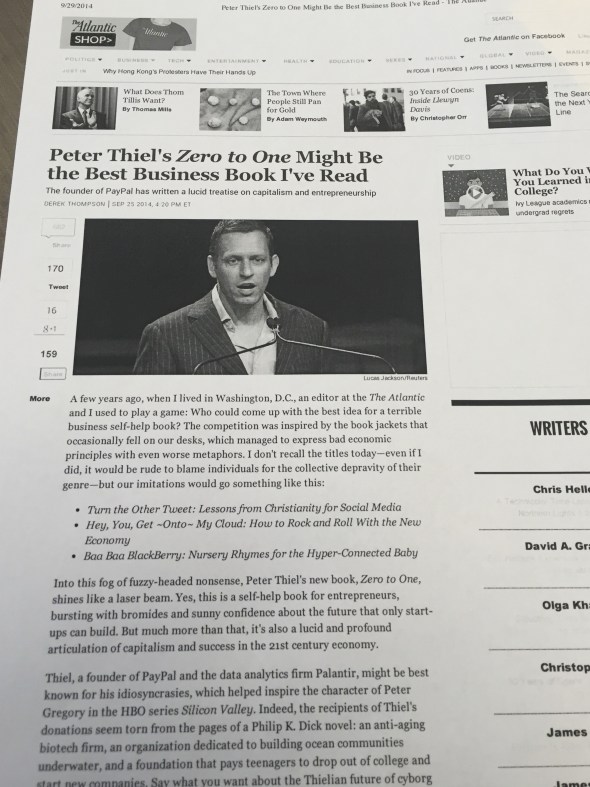
Thiel and his ideas are interesting to me. I’m open to the Vali/OwenE take that he might just be a kinda smart guy who got lucky and thinks he’s a genius. He definitely should not be on the Supreme Court.
I loved Zero To One, but Thiel’s support for Trump makes him seem like a much darker and more troubling figure than I felt he was when I was reading it.
Two interesting points in the article that had new meaning in light of Thiel being a Trump guy:

Is that something like what Trump did (old grouchy white men? white American nationalists? you’d think they’d be served by a lot of political competitors but maybe there was a hole in the market)? What about this?:

Unfortunately, Trump is good at sales and Hillary Clinton is kind of bad at sales.
Sometimes this campaign we get a reminder of how good at sales Bill Clinton is. Here is Bill talking about the Clinton Foundation. This clip is used by GOP and conservative sites as I guess kind of scummy because Clinton compares himself to Robin Hood:
Maybe comparing yourself to Robin Hood is a little much, but when I hear Bill explain the Clinton Foundation as asking for money from people who have a lot of it and giving it to people who don’t have any, it makes it sound a lot better.
Does anyone effectively refute the claim that almost 10 million more people in more than 70 countries have access to life-saving medicines through the Clinton Health Access Initiative?
Silence Of The Lambs

Not topical or relevant at all but for forever I’ve had in my phone a bunch of screenshots of this movie, one of the most gripping movies ever. Saw it on TV some months ago and was struck by how much of it is just a closeup of a person’s face. How unsettling/compelling!

Baltimore can be quite a fun town if you have the right guide
This guy:

This jumped out at me
In a not otherwise “sexy” article about English literary critic William Empson’s book The Face Of The Buddha:

William Empson:

Millennials
Enjoyed the caption on this one, from National Geographic’s Instagram:

Mediocrities

Thomas Frank, profiled in the Politico 50 list:

Frank went to University of Kansas, University of Virginia, and University of Chicago. Can he be trusted?
Doing some reading about AquAdvantage salmon, a genetically modified animal

- Am I ugly?
A growth hormone-regulating gene from a Pacific Chinook salmon, with a promoter from an ocean pout, was added to the Atlantic salmon’s 40,000 genes. This gene enables it to grow year-round instead of only during spring and summer. The purpose of the modifications is to increase the speed at which the fish grows without affecting its ultimate size or other qualities. The fish grows to market size in 16 to 18 months rather than three years.
Asked Anonymous Investor to take a look at the financials of the AquaBounty company.
I haven’t looked into the science, but if their salmon is all that they claim, AquaBounty should have a big pricing advantage. Because their fish grow so much faster than a normal salmon, they should be much cheaper to produce, and sell — undercutting their competitors.
This reminds of the tiny speculative biotech companies I invest in. There’s no money coming in, only money being burned. But you’re hoping someday for a big FDA approval that will open sluices of torrential cash. In this case, the FDA approval has come But the primary problem (they have a few) is that major buyers like Kroger and Target vowed not to carry the product. My guess is the company will eventually make inroads, just as Monsanto, Syngenta, etc, have in the past. But it might take a long time. Big money usually wins in the end. And the hippies, as always, will go whining back to their yurts.
AquaBounty is selling for around 64 million dollars. Not a bad price for a what looks like a pretty decent lottery ticket.
Not sure why AquaBounty only trades in London. The volume is extremely thin. This is a stock not on many people’s radar.
I do know that AquaBounty is controlled by Intrexon (the same company trying to battle Zika via their patented breed of mosquitos). They own over 50% of AquaBounty. Intrexon trades here under the ticker XON. It’s a 3 billion dollar company. (A year ago it was worth more than 6 billion). Intrexon does a lot of interesting Monsanto-type things, and the stock is sort of a darling of Wall Street. But lately doubt has crept into the story. Intrexon has been slow in providing evidence for many of it’s scientific claims. The company says they don’t want to divulge their trade secrets by releasing too much data. Skeptics speculate that they’re not disclosing much, because, they believe, much of the science probably doesn’t work.
Interesting. Here’s what Intrexon (NYSE: XON) has been up to:

“I couldn’t be more pleased with the birth of these adorable kittens,” noted Blake Russell, President of ViaGen Pets. “As the largest global provider of genetic preservation services for companion animals, we look forward to expanding the life-enriching connections that people form with their pets. Our goal is to bring this opportunity to all pet owners and their families.”
Sure. Anonymous Investor adds:
In the salmon world, AquAdvantage salmon are considered “ugly”. In a test 95% of salmon chose to mate with wild salmon over AquaBounty salmon.
Reginald
American Dad co-showrunner Brian Boyle has a very fine set of glasses with the AD characters on them.

One fan’s opinion? the show should do more with Reginald.

Reginald
The Flemish Giant
Somebody at work mentioned that the biggest kind of rabbit is called a Flemish giant.

Well worth the image search.
Boston accents:

A good, clear discussion of an often misunderstood issue from this classic
On the subject of Boston:

In Australia this kind of coconut frosted cake is known as Boston bun. Everyone was baffled when I told them I’d never heard of it.
A Boston bun is a large spiced bun with a thick layer of coconut icing, prevalent in Australia and New Zealand. Traditionally the bun contained sieved potato, and modern versions sometimes contain raisins. It is often served sliced, to accompany a cup of tea. The origin of the name is unknown.
In New Zealand they’re often called a Sally Lunn, especially in the North Island
Still reeling

from good times in Australia. A bizarro version of the United States, upside down and weirdly (to a USA observer) developed in all kinds of ways. For instance, Australia people talk about “the deep north” as like a joke on the way we talk about the “deep south.”
Important to remember that on the other side of the equator, you have to flip countries upside down to think about them. Their south is our north. If you think about that pointy part of Queensland as Florida, the Northern Territory as Texas, Tasmania as Newfoundland or Nova Scotia, Melbourne as Boston and Sydney as New York, you’re still way off but getting somewhere.

Ok but flip Australia upside down in your mind.
Huge thanks to the many people of New Zealand and Australia who helped me out. Puts me in mind of this week’s scripture, Matthew 25:35.
Bummed to miss
Had to come back to the USA before the Brisbane Writers’ Festival, so I missed Lionel Shriver of We Need To Talk About Kevin fame apparently light it up with a wild speech about cultural appropriation (attacking what seems to me to be a ridiculous straw man?)
I can’t find a photo of her wearing a sombrero, as she is alleged to have done. Did she really refer to herself as a “renowned iconoclast”?
Which Australian state library is the best?
I enjoy Melbourne’s State Library of Victoria so much:

photo by Wiki user Brian Jenkins
I mean how can you not admire that they have Ned Kelly’s armor on display?:

Some great illustrations on Ned’s wiki page:

“A strange apparition”: when Kelly appeared out of the mist-shrouded bush, clad in armour, bewildered policemen took him to be a ghost, a bunyip, and “Old Nick himself”.
a bunyip:

Let’s take a virtual look at Australia’s other state libraries:
Tasmania:

Hmm.
Would a better state library be a step towards helping Tasmania’s insane illiteracy rate?
New South Wales:


Impressive. Classic if slightly dull exterior, solid interior, I rate it a 9 (out of 11).
Queensland:


A big swing on the exterior, the interior kind of interesting but also kind of a like a weird mall. I’ll give it a 7.
Northern Territory:

No independent library building, it’s housed in the Parliament House which is kind of cool. DNQ for the rating system.
Western Australia:


Trash exterior, interior so weird as to be kind of interesting. 8.
The old version, once housed in Hackett Hall, appears to have been pretty cool:

South Australia:

Ok…

Aw yeah! 11/11.
Short Books
Australia/New Zealand publishing is so good at short books. I read a bunch of short books while traveling.

This one began as speech Flanagan gave, focusing on his disgust for the abuses, catastrophes, and inhumanity at Australia’s offshore detention centers for asylum seekers, but also about a general disappointment in political and cultural life:
Conformists par excellence, capable of only agreeing with power however or wherever it manifests itself, they are the ones least capable of dealing with the many new challenges we face precisely because those challenges demand the very qualities the new class lacks: courage, independence of thought and a belief in something larger than its own future.
The new class, understanding only self-interest, believing only in the possibilities of its own cynicism, committed to nothing more than its own perpetuation, seeks to ride the tiger by agreeing with all the tiger’s desires, believing it and not the tiger will endure, until the tiger decides it’s time to feed, as the mining corporations did with Kevin Rudd, as News Limited is now with Julia Gillard.
He goes on about the alternative:


If I may make a crude summary Flanagan’s argument could be he wishes Australia remembered Matthew 25:35 a little more.
Flanagan and I once shared a publisher, and I’m told his books are masterpieces, especially Narrow Road To The Deep North.
Also good, and more lighthearted if at times equally scorching:

Here’s a taste, where Pieper is digressing about a dog he adopted:
Took a page out of Vali’s book and wrote Mr. Pieper a short and simple fan letter complimenting him on his book. He wrote a gracious note back. Gotta do this more often.
I can’t write to the great New Zealand short story writer Katherine Mansfield because she’s dead:

If I could, I would compliment her on “The Garden Party.” This story starts out so boring and stodgy and Victorian I really thought I was in for it. But it pays off. Spoiler alert this is the last page:

What life was she couldn’t explain. No matter. He quite understood.
‘Isn’t it, darling?’ said Laurie.
Southbank
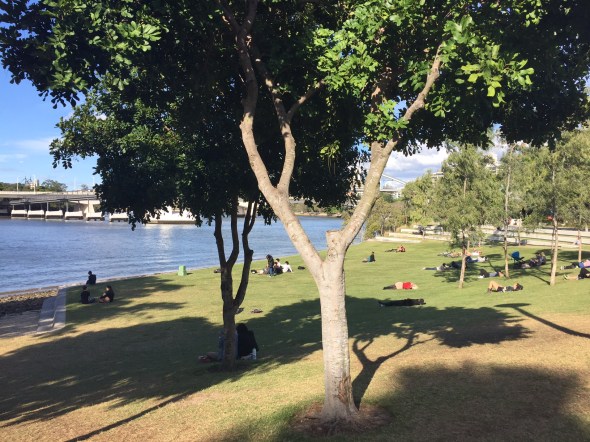
This scene, on Brisbane’s Southbank, really reminded me of this one, in Paris a hundredsome years ago:

Richard Bell

Impressed by this massive painting at the Milani Gallery in Brisbane by Australian indigenous artist Richard Bell.
(The price in Australian dollars is 55,000.)
Bell caused controversy in April 2011 after revealing that he selected the winner of the prestigious Sir John Sulman Prize through the toss of a coin.
Diary Of An Oxygen Thief by Anonymous
Posted: September 17, 2016 Filed under: books Leave a comment
- this book was recommended to me in a cool way
- 5% chance it was recommended to me by the author
- 8% chance the author was present at the recommending
- it’s the right length for a book
- it’s the right size for a book
- it’s compelling
- there’s a coolness to it
and
- it did send a chill down my spine.
Reminded me of another dark and mysterious book:

The first page of DoaOT gives a good sense of where we’re headed:

Intrigued by this article about the author’s campaign to promote the book which he originally self-published in Amsterdam in 2006:
Intent on building underground buzz for the book, the author focused on promotional efforts that would make people google the book’s title. From his limited sales in bookshops he felt confident that he could land readers by getting the book’s cover (which features a picture of a snowman whose carrot nose has been repositioned to look like a penis) seen, and its title shared.
With this in mind, the author went out into the streets of New York and put up posters. Some featured profane statements and the book’s title; others simply displayed the book’s cover. The posters of the book’s cover were placed side by side on scaffolding, in the wheat-pasting tradition, to mimic ads promoting bands and albums that often dot urban landscapes. To draw readers in another way, the author created a fake profile on a popular dating website—he declined to say which one—with photos of a beautiful woman. The profile directed potential suitors to read a book called Diary of an Oxygen Thief. “I gave the impression that, if they were to read this book, they might have more of an amorous chance with me,” he said. Again, as with the posters, the goal was to get people to plug the book’s title into their Web browsers.
Now I’ve done my part.
Feejee mermaid
Posted: September 16, 2016 Filed under: animals, Boston, marine biology, New England, the ocean Leave a comment
To go on display! But back in Massachusetts. Is is worth a trip?
The original object was exhibited by P.T. Barnum in Barnum’s American Museum in New York in 1842 and then disappeared. It was assumed that it had been destroyed in one of Barnum’s many fires that destroyed his collections…
There is controversy today on whether the Fiji mermaid actually disappeared in the fire or not. Many claim to have the original exhibit, but Harvard University’s Peabody Museum of Archaeology and Ethnology, has the most proof that their exhibit is the actual original. It does not look completely the same, but it does have the same flat nose and bared teeth. The thought that the fires could have altered the appearance of the mermaid are reason for it not looking completely like it did in Barnum’s possession.
Well, if I can’t make it to Cambridge I can always make my own:
A guide to constructing a Fiji mermaid appeared in the November 2009 issue of Fortean Times magazine, in an article written by special effects expert and stop-motion animator Alan Friswell. Rather than building the figure with fish and monkey parts, Friswell used papier mache and modelling putty, sealed with wallpaper paste, and with doll’s hair glued to the scalp.
No / Leave / Trump
Posted: September 15, 2016 Filed under: America Since 1945, Canada, politics, presidents Leave a comment
I thought the UK Remain camp would win in the Brexit vote, because I could remember following the 1995 Quebec separation referendum. (What teen boy isn’t mesmerized by Canadian politics?) Canadian Tanya Krywiak remembers:
It was a night many will never forget. Twenty years ago, on Monday, October 30, 1995,citizens across Quebec went to the polls to decide the future of their province — and Canada.
The 1995 Quebec vote seems like an apt analogy to Brexit. Really close, emotional, a kind of impractical vote that came to pass due to political posturing. And then:
An astounding 93.5 per cent of those eligible turned up to vote either yes or no to sovereignty. At 10:20 p.m., the “no” side was declared the winner with 50.58 per cent.
Quebec voted, just barely, to remain in Canada.

At the time the narrow win for No was partly chalked up to the huge Unity rally and similar rallies across Canada:
The Unity Rally was a rally held on October 27, 1995, in downtown Montreal, where an estimated 100,000 Canadians from in and outside Quebec came to celebrate a united Canada, and plead with Quebecers to vote “No” in the Quebec independence referendum, 1995 (held three days after the rally). Held at the Place du Canada, it was Canada’s biggest political rally until 2012.
Highlighting the celebrate a united Canada part. Because maybe that’s what the Remain people in the UK failed to do.
The Canadian Unity Rally was a celebration, it was for something, even just a feeling and a song. It countered an emotional argument with an emotional argument.
There was something exciting and satisfying about exiting the EU. Did the Remain people offer anything to celebrate?
In fairness there’s not a ton there. I mean the EU’s flag sucks:

Sucks
There’s no good song, either. (There’s the “Anthem of Europe” I guess).
Compare that to the 1995 Unity rally. From the NY Times:
150,000 Rally To Ask Quebec Not to Secede
By CLYDE H. FARNSWORTH
Published: October 28, 1995
At the Place du Canada in downtown Montreal, a crowd estimated at 150,000 waved the maple leaf flag of Canada and the fleurs-de-lis flag of Quebec and sang the national anthem, hoping to convince the Quebecers to vote No on Monday in their referendum on whether their province should secede from Canada.
Take this to the most visceral level. In the Trump vs. Hillary election, if you’re undecided, which side feels more emotionally satisfying?
Voting for Obama was emotionally satisfying, a celebration:
Role Play: you are Hillary’s top advisor (or Hillary herself). How do make a vote for Hillary feel like something more emotionally satisfying than anti-Trump? A celebration of what’s best about the USA?
Feel like she did a decent job of this with the help of both Obamas at the DNC:

How big are places compared to other places?
Posted: September 9, 2016 Filed under: Australia, maps, New Zealand, the California Condition, the ocean, the world around us Leave a comment
Traveling across the South Island of New Zealand by train, I was trying to work out for myself how big exactly the country is.

It looked big
With the help of OverlapMaps, here’s a comparison of New Zealand to California:

The total land area of New Zealand, says Google, is 103,483 mi²
In US state terms, that makes it just smaller than Colorado, at 104,185 mi².


Colorado has about 1 million more people.
Colorado: 5.356 million (2014)
New Zealand: 4.5 million
Pop wise New Zealand is about the size of Kentucky or Louisiana.

The folks at Brilliant Maps do fantastic work in this field. Here are some of my favorites:
Los Angeles and other cities overlaid on The Netherlands:

Not sure I totally understand what’s going on here.


Map by Chris Stephens, from naturalearthdata.com

Created by: reddit user Tom1099
US in China by population:

How the US population fits into China by reddit user jackblack2323
OR:
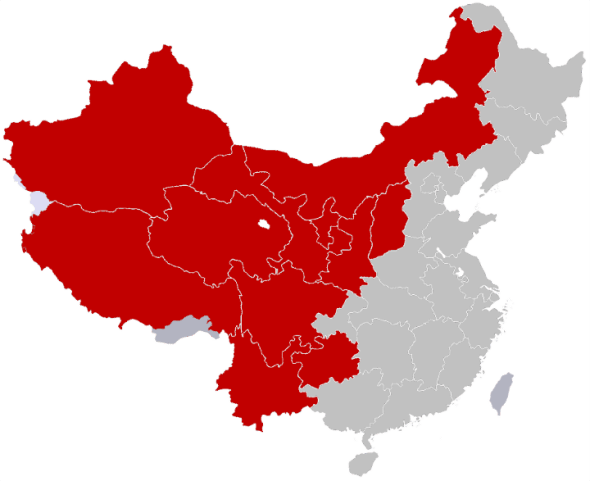
Map by reddit user gotrees

The relative size of the 24 largest islands in the world, map by reddit user evening_raga
And The Circle:

Map created by reddit user valeriepieris
Here’s one more for you, from OverlandMaps:

Australia’s population is 23.13 million or so, so it’s about three million people bigger than Florida (20.2 mill) and smaller than Texas (27.46 mill). Whole lotta room down there. About as many people as Illinois and Pennsylvania put together, in a land area (2.97 million square miles) that’s about as big as 51 Illinoises.

one of Australia’s more densely populated areas.
When Will You Marry?
Posted: September 8, 2016 Filed under: art history, Boston, MFA Boston, museum, New England, painting, pictures, Tahiti Leave a comment
What a title for a painting. Heard of this Gaugin painting in an article about Qatar’s art scene. Reportedly some Qataris bought it for $300 mill. Says Wiki, back in 1893:
Gauguin placed this painting on consignment at the exhibition at a price of 1,500 francs, the highest price he assigned and shared by only one other painting, but had no takers.
Gaugin didn’t always crush it with his titles (Study of A Nude, etc) but sometimes he nailed it. Here is Where Are You Going?

(sometimes less interestingly called Woman Holding A Fruit)
Of course best of all, Where Do We Come From? What Are We? Where Are We Going? at the good ol’ Boston MFA.

Charles Morice two years later tried to raise a public subscription to purchase the painting for the nation. To assist this endeavour, Gauguin wrote a detailed description of the work concluding with the messianic remark that he spoke in parables: “Seeing they see not, hearing they hear not”. The subscription nevertheless failed.
You can read about Geoff Dyer’s frustrating experiences with these paintings and Gaugin and Tahiti in:
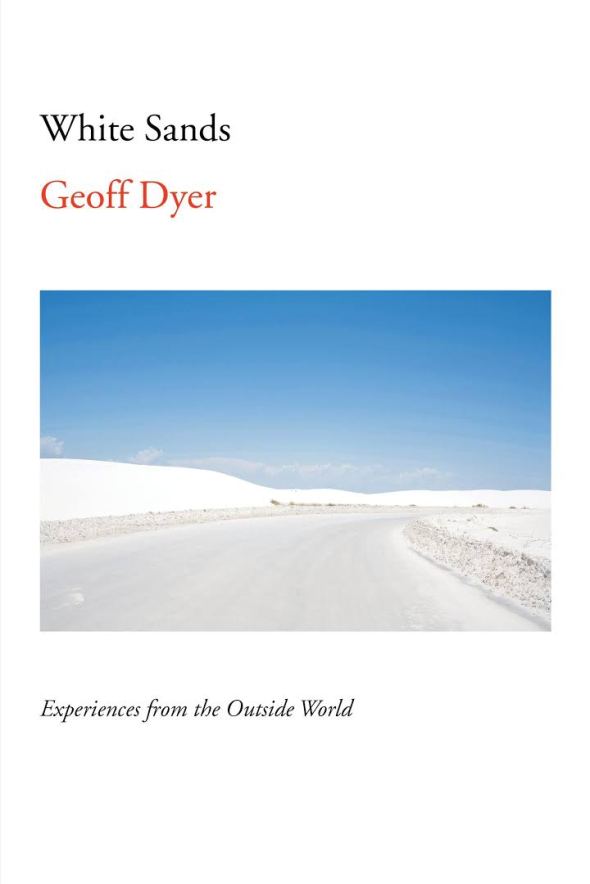
I was bummed I missed that dude at the Melbourne Writers’ Festival, bet we could’ve had some laughs.
Ngiao Marsh
Posted: September 1, 2016 Filed under: heroes, women, writing Leave a comment
In New Zealand I got invited to participate in the Great New Zealand Crime Debate, which was a blast. I was on a team with Christchurch lawyer Kathryn Dalziel and sociologist Jarrod Gilbert, who got badly beaten several times while writing this book:
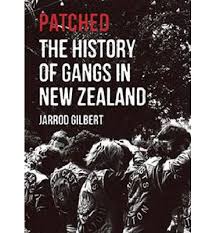
My job it turned out was to roast the members of the other team, namely New Zealand broadcaster Paula Penfold (who was lovely and a good sport):

Anyway, afterwards they had the Ngiao Marsh Crime Awards. Who was Ngiao Marsh?

She was a New Zealand writer of detective stories, mostly starring Roderick Alleyn. Some of the covers of her books are great:


Says Wiki:
Marsh never married and had no children. She enjoyed close companionships with women, including her lifelong friend Sylvia Fox, but denied being lesbian, according to biographer Joanne Drayton. ‘I think Ngaio Marsh wanted the freedom of being who she was in a world, especially in a New Zealand that was still very conformist in its judgments of what constituted ‘decent jokers, good Sheilas, and ‘weirdos’’,’ Roy Vaughan wrote after meeting her on a P&O Liner.
It sounds like her mysteries, which revolve around poison on darts and that kind of thing, are exactly what Raymond Chandler was ranting against in his essay “The Simple Art Of Murder“:
This, the classic detective story, has learned nothing and forgotten nothing. It is the story you will find almost any week in the big shiny magazines, handsomely illustrated, and paying due deference to virginal love and the right kind of luxury goods. Perhaps the tempo has become a trifle faster, and the dialogue a little more glib. There are more frozen daiquiris and stingers ordered, and fewer glasses of crusty old port; more clothes by Vogue, and décors by the House Beautiful, more chic, but not more truth. We spend more time in Miami hotels and Cape Cod summer colonies and go not so often down by the old gray sundial in the Elizabethan garden. But fundamentally it is the same careful grouping of suspects, the same utterly incomprehensible trick of how somebody stabbed Mrs. Pottington Postlethwaite III with the solid platinum poignard just as she flatted on the top note of the Bell Song from Lakmé in the presence of fifteen ill-assorted guests; the same ingenue in fur-trimmed pajamas screaming in the night to make the company pop in and out of doors and ball up the timetable; the same moody silence next day as they sit around sipping Singapore slings and sneering at each other, while the flat-feet crawl to and fro under the Persian rugs, with their derby hats on.

Chandler calls for something a little harder edged:
The realist in murder writes of a world in which gangsters can rule nations and almost rule cities, in which hotels and apartment houses and celebrated restaurants are owned by men who made their money out of brothels, in which a screen star can be the fingerman for a mob, and the nice man down the hall is a boss of the numbers racket; a world where a judge with a cellar full of bootleg liquor can send a man to jail for having a pint in his pocket, where the mayor of your town may have condoned murder as an instrument of moneymaking, where no man can walk down a dark street in safety because law and order are things we talk about but refrain from practising; a world where you may witness a hold-up in broad daylight and see who did it, but you will fade quickly back into the crowd rather than tell anyone, because the hold-up men may have friends with long guns, or the police may not like your testimony, and in any case the shyster for the defense will be allowed to abuse and vilify you in open court, before a jury of selected morons, without any but the most perfunctory interference from a political judge.
It is not a very fragrant world, but it is the world you live in, and certain writers with tough minds and a cool spirit of detachment can make very interesting and even amusing patterns out of it. It is not funny that a man should be killed, but it is sometimes funny that he should be killed for so little, and that his death should be the coin of what we call civilization. All this still is not quite enough.
In everything that can be called art there is a quality of redemption. It may be pure tragedy, if it is high tragedy, and it may be pity and irony, and it may be the raucous laughter of the strong man. But down these mean streets a man must go who is not himself mean, who is neither tarnished nor afraid. The detective in this kind of story must be such a man. He is the hero, he is everything. He must be a complete man and a common man and yet an unusual man. He must be, to use a rather weathered phrase, a man of honor, by instinct, by inevitability, without thought of it, and certainly without saying it. He must be the best man in his world and a good enough man for any world. I do not care much about his private life; he is neither a eunuch nor a satyr; I think he might seduce a duchess and I am quite sure he would not spoil a virgin; if he is a man of honor in one thing, he is that in all things. He is a relatively poor man, or he would not be a detective at all. He is a common man or he could not go among common people. He has a sense of character, or he would not know his job. He will take no man’s money dishonestly and no man’s insolence without a due and dispassionate revenge. He is a lonely man and his pride is that you will treat him as a proud man or be very sorry you ever saw him. He talks as the man of his age talks, that is, with rude wit, a lively sense of the grotesque, a disgust for sham, and a contempt for pettiness. The story is his adventure in search of a hidden truth, and it would be no adventure if it did not happen to a man fit for adventure. He has a range of awareness that startles you, but it belongs to him by right, because it belongs to the world he lives in.
If there were enough like him, I think the world would be a very safe place to live in, and yet not too dull to be worth living in.
Wow. The world’s big enough for both kinds of mystery I guess.
This year’s award was won by Paul Cleave:

For his book Trust No One:

Cape Flattery
Posted: August 25, 2016 Filed under: New Zealand Leave a comment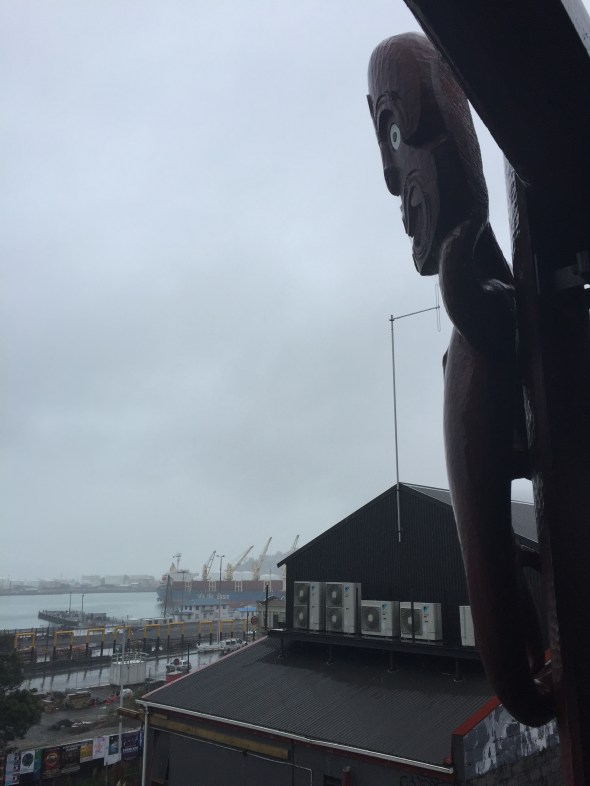
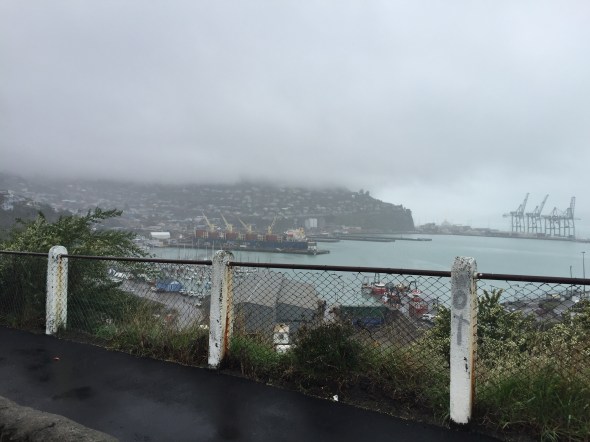
Stormy day in Lyttelton, New Zealand.
Named, apparently, after George Lyttelton:
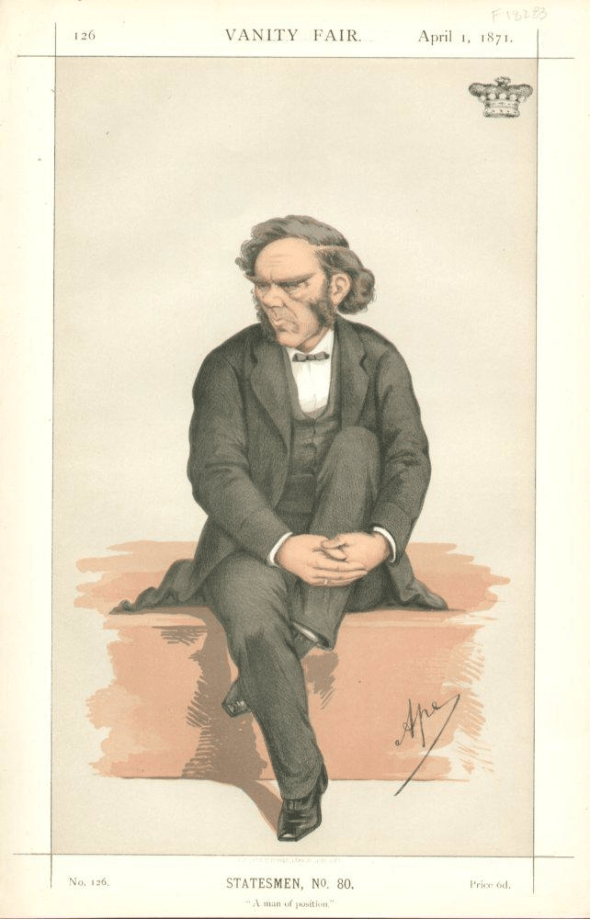
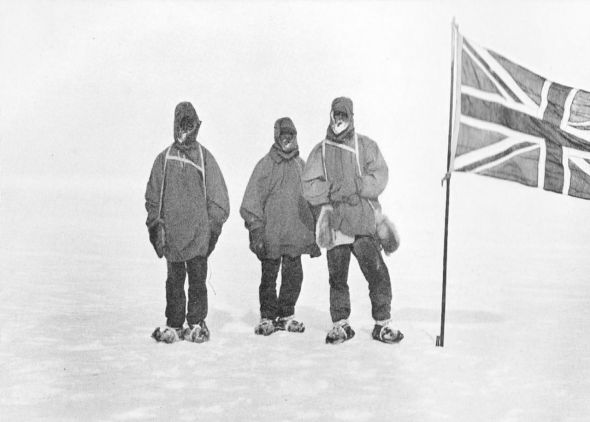
Shackleton left from Lyttelton on his first Antarctic expedition:
On this day, there was a ship in the harbor called Cape Flattery:
I had to look up where Cape Flattery is:
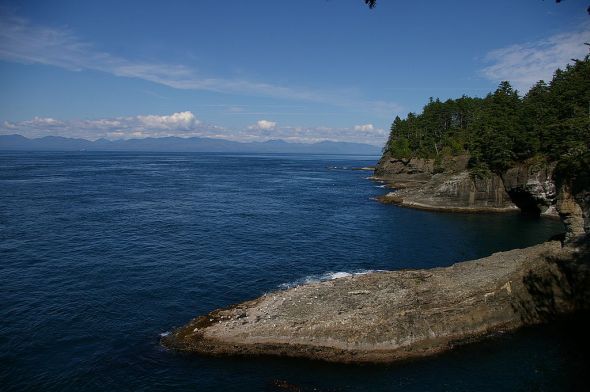
Cape Flattery is the northwesternmost point of the contiguous United States.
Cape Flattery is the oldest permanently named feature in Washington state, being described and named by James Cook on March 22, 1778. Cook wrote: “… there appeared to be a small opening which flattered us with the hopes of finding an harbour … On this account I called the point of land to the north of it Cape Flattery.
I learn that beloved 1930s movie characters Ma and Pa Kettle live on Cape Flattery:
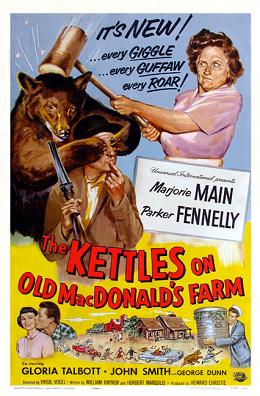
Ma (Phoebe Kettle, played by Marjorie Main) is a robust and raucous country woman with a potato sack figure.
Wikipedia helpfully links to the article on potato sack:

Bureau of American Ethnology
Posted: August 22, 2016 Filed under: the American West Leave a comment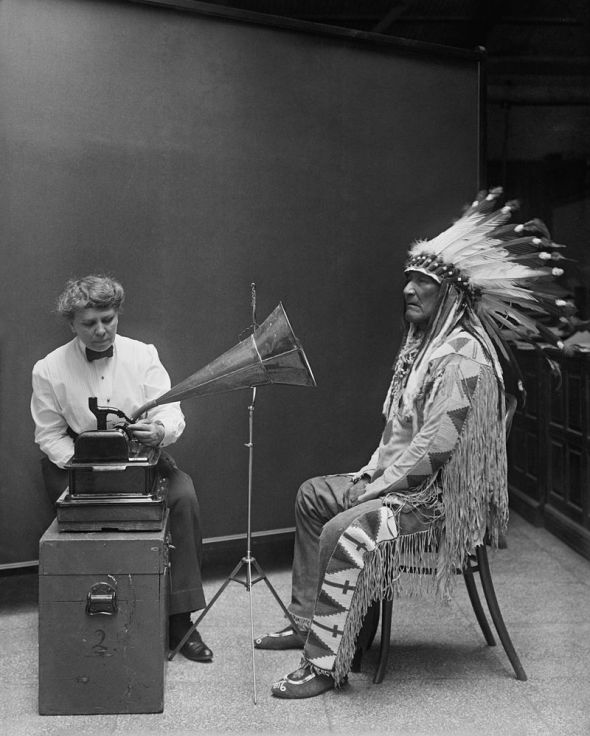
The picture on the Wikipedia page for the Bureau of American Ethnology is perfect at conveying what exactly was the deal with the Bureau of American Ethnology.
Further Investigations into New Zealand politics
Posted: August 21, 2016 Filed under: New Zealand Leave a comment
I was interviewed on the phone with someone from this great website in New Zealand. (A stressful interview because I was late to meet Nick Wegener at Callendar’s, let’s hope I didn’t embarrass myself!) I mentioned I’d been reading up on New Zealand’s prime minister John Key. She suggested I look into John Key’s son, who is a DJ who drives around in a Ferrari apparently.

Max Key.
Here are some photos of him, and here is his song:
 Helytimes
