I don’t think this is a good name.
Posted: January 15, 2014 Filed under: the California Condition Leave a comment
Reading this Dana Goodyear article about valley fever:
“The impact of valley fever on its endemic populations is equal to the impact of polio or chicken pox before the vaccines,” John Galgiani, an infectious-disease physician who directs the Valley Fever Center for Excellence, at the University of Arizona in Tucson, says. “But chicken pox and polio were worldwide.”

Holy shit!
Posted: January 13, 2014 Filed under: Africa Leave a comment
Archaeologists Identify Tomb of Sobekhotep I!
Egyptologists have been pumped for this moment ever since the discovery of the Kahun Papyri.

That’s of course in the collection of Flinders Petrie.

He described Egypt as “a house on fire, so rapid was the destruction” and felt his duty to be that of a “salvage man, to get all I could, as quickly as possible and then, when I was 60, I would sit and write it all.”
And what happened to Flinders’ head, you wonder?
When he died in 1942, Petrie donated his head (and thus his brain) to the Royal College of Surgeons of London while his body was interred in the Protestant Cemetery on Mt. Zion. World War II was then at its height, and the head was delayed in transit. After being stored in a jar in the college basement, its label fell off and no one knew who the head belonged to.[10] It was identified however, and is now stored, but not displayed, at the Royal College of Surgeons of London.
Was Flinders related to Australia explorer Captain Matthew Flinders, you wonder? Yes, is the answer, he was his grandson.
Please please Wikipedia tell me Flinders was an unambiguous hero I can get behind without reservations:
Petrie remains a controversial figure for his pro-eugenics views and opinions on other social topics…
Petrie was a dedicated follower of eugenics, believing that there was no such thing as cultural or social innovation in human society, but rather that all social change is the result of biological change, such as migration and foreign conquest resulting in interbreeding. Petrie claimed that his “Dynastic Race”, in which he never ceased to believe, was a “fine” Caucasian race that entered Egypt from the south in latepredynastic times, conquered the “inferior” and “exhausted” “mulatto” race then inhabiting Egypt, and slowly introduced the finer Dynastic civilization as they interbred with the inferior indigenous people. Petrie, who was also affiliated with a variety of far right-wing groups and anti-democratic thought in England and was a dedicated believer in the superiority of the Northern peoples over the Latinate and Southern peoples, derided Budge’s belief that the ancient Egyptians were an African people with roots in eastern Africa as impossible and “unscientific”, as did his followers.
Oh well. I doubt Sobekhotep was a peach either.
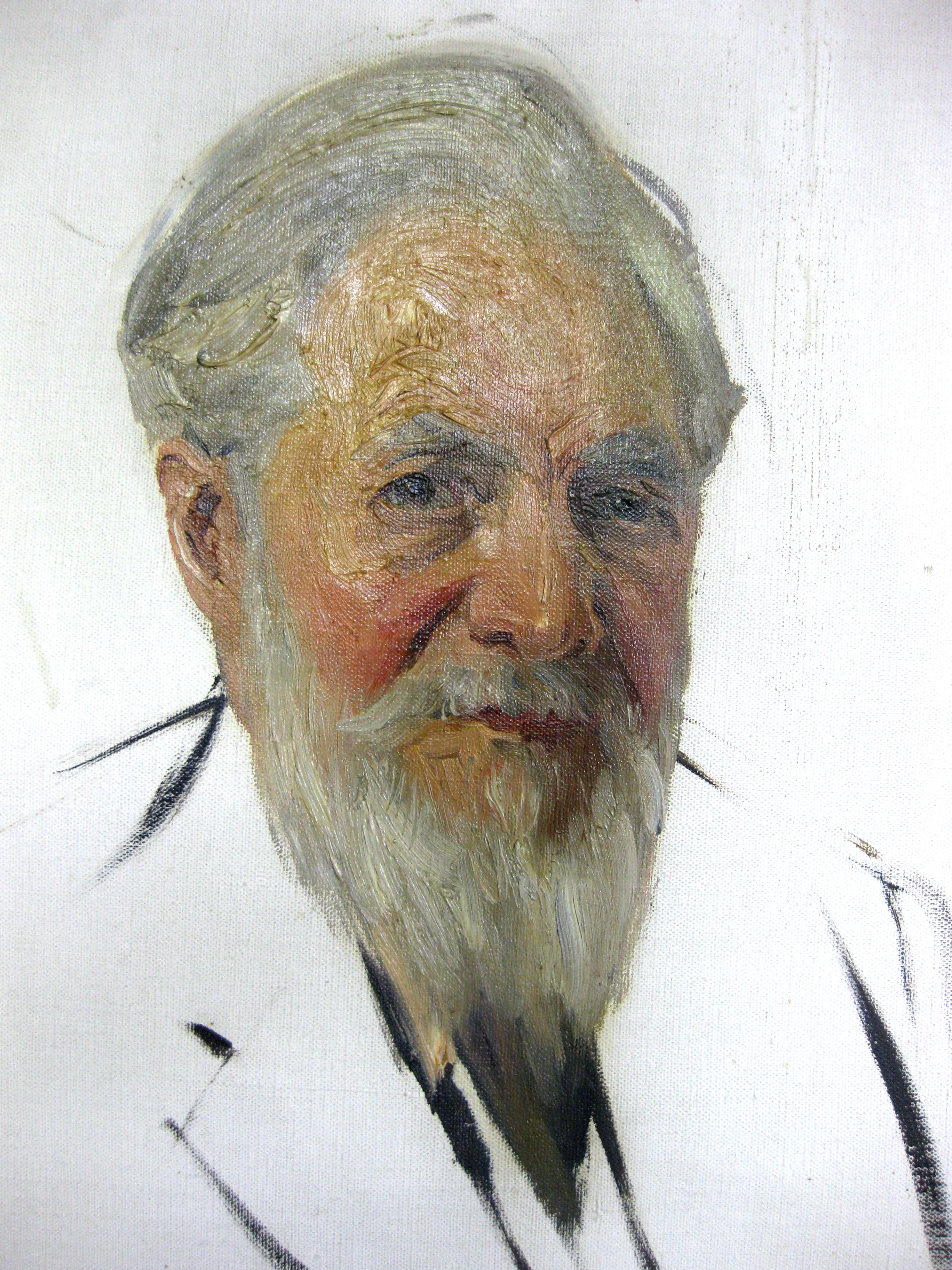

“There’s gonna be a lotta days when you lay your guts on the line and come away empty-handed”
Posted: January 9, 2014 Filed under: advice Leave a commentGood advice.
(h/t HelyTimes correspondent “Rob C.” in Auburn)
Timeless Art?
Posted: January 8, 2014 Filed under: music Leave a commentIf you haven’t watched this in awhile, I think you will find it’s still good:
from Seinfeld’s Reddit AMA
Posted: January 6, 2014 Filed under: comedy Leave a comment
Die.
Or:
[–]HallucinoJER 232 points 11 hours ago*Hello Jerry, then again since we’re not friends (yet) I’ll call you Mr. Seinfeld.
When you were a kid, what was your ultimate “one day if I’m rich I will…” fantasy?
Did you fulfill it yet?
First of all, I love being called Mr. Seinfeld. In fact, all my children call me that. It’s funny that you should ask this, because this was something I loved to do as a kid with my friends was sit on my stoop and think “what would we do when we were rich” when we were kids in Long Island. And I remember thinking “The greatest thing you could do if you were rich would be to have a go-kart track.”
I don’t have one. I do have a long driveway in my house in Long Island, and sometimes I ride on it on a scooter. And that makes me feel like Richie Rich.
Richie Rich, that comic book, made me anxious. Just the whole thing was kind of weird, it brought out strange, uncomfortable emotions of envy, and you know, sadness. He had parents, but it was one of the most depraved comic books of all. I wonder if it still exists, it can’t possibly still exist.
Everly Brothers
Posted: January 4, 2014 Filed under: America Leave a comment
(tune in for the first forty seconds at least for a good lesson in evolutionary biology)

Bedwetters vs. Thumbsuckers
Posted: December 22, 2013 Filed under: heroes Leave a comment
 From NY Times mag profile of McCain by Mark Leibovich:
He invites me to an actual arena that night: in Glendale, Ariz., where the Calgary Flames of the N.H.L. were in town to play the Phoenix Coyotes. This is not the most fabled rivalry in sports, but McCain says he will watch any sporting event (“I’d pay to see the Bedwetters play the Thumbsuckers”). He is a big fan of the Coyotes. There are supposedly other Phoenix Coyote fans, too, though not many of them come to home games. McCain’s 25-year-old son, Jimmy, drives us to the arena. Cindy McCain is in the front seat, and I’m in back with the senator, who is desperate to hear the pregame show on the radio. Silence makes him nervous. He keeps barking out call numbers to Cindy, but no luck. He checks the Coyotes app to find information about the show (McCain talks incessantly about his new Coyotes app), and Cindy continues to hunt around the radio dial, except when she is bracing herself for a crash, which happens on three separate occasions during Jimmy’s gun-and-slam death ride through the greater Phoenix sprawl. When we arrive, miraculously without incident, the McCains engage in a spirited debate about which parking lot to use. Jimmy takes a few wrong turns; Cindy tells him to slow down and asks why he’s going this way or that way, until finally Jimmy snaps and says, “Mom, you make it seem like which parking-lot entrance is the most important thing in the world!” In fact, it’s not, he tells her. “I had a woman almost OD in front of me at a strip club this afternoon. Now that’s something serious.”
“Why were you in a strip club this afternoon?” Cindy asks. Jimmy says he was making a delivery for the family beer distributorship. The woman will be fine, Jimmy reports. His father chuckles in the back.
The arena is ringed with palm trees popping out of the concrete and named for a company I’ve never heard of. Twenty minutes before face-off, the concourse is as placid as Penn Station on a Sunday morning. The celebrity politician walks a few feet ahead of the rest of us. He carries himself with a full and rightful expectation that people will recognize him, and he greets anyone that meets his glance. “Thank you for your service, senator,” many say. He gets this a lot, he says, “usually right before they unload on me.”
In the elevator, we meet a big, handsome guy in a suit who looks like a hockey player and, sure enough, turns out to be an inactive member of the Flames. McCain asks him where he’s from. Minnesota. “Where are you from?” he asks McCain. “Oh, I’m sort of from all over,” McCain tells him. When the player gets off the elevator and I mention to McCain that the guy had no idea who he was, the senator seems slightly amused and even a bit disoriented. “It happens sometimes,” he says.
The seats are about half filled, and the arena is quiet enough during the game to hear the players shouting to each other. Fans are periodically instructed to howl like Coyotes, which McCain does in the same way he greets Wolf Blitzer. The home-team Bedwetters beat the visiting Thumbsuckers 4-2, and McCain heads home happy, except when Cindy can’t find the postgame show on the radio, and Jimmy is nearly killing us again.
Not sure what the point of this profile is except that McCain loves life? Certainly entertaining anyway. This was interesting:
In his book about five Naval Academy graduates, “The Nightingale’s Song,”* the journalist Robert Timberg described what McCain looked like after two months of imprisonment — weighing less than 100 pounds, with collapsed cheeks and atrophied limbs. “His eyes, I’ll never forget,” McCain’s cellmate, Bud Day, told Timberg. “They were bug-eyed like you see in those pictures from the Jewish concentration camps. His eyes were real popeyed like that.”
Day, a decorated fighter pilot, died in July at age 88. “He was the bravest man I ever knew,” McCain said after his death. He and Day had notable disagreements over the years: Day was part of the Swift Boat Veterans for Truth, who campaigned against John Kerry in the 2004 presidential campaign. McCain condemned the group for their attacks against Kerry. “Like a lot of heroes, everything was black and white with Bud,” he told me. “That’s how you survive.”
In captivity, McCain said many of his fellow P.O.W.s would search for omens that their release was imminent. “People would say, ‘Hey, there’s a carrot in my soup, so that must mean we’re going home,’ ” he said. “Bud used to say to them: ‘Right, guys. We’ll be going home one day, but it sure as hell won’t be because we found a carrot in the damn soup.’
* highly recommended.
The human desire to give a shit is not defeatable.
Posted: December 20, 2013 Filed under: writing Leave a comment
from Craig Mazin and John August’s podcast (Mike is guest Mike Birbiglia):
Craig: You’ve lost your defenses and you’re expecting to laugh again. So, nobody sees it coming, you know? I remember talking to David Zucker and Jerry Zucker about the first time they screened the movie Airplane! for a test audience. And in their minds everything was jokes. They were just obsessed with how the jokes would play. And they were just thrown on their heels when at the end of the movie the plan finally lands and the audience bursts into applause.
Mike: Oh, that’s amazing.
Craig: Because they cared that the plane would land. You know? And they just thought, “It doesn’t matter. We’ve told them in every possible way this is not a real plane.” It is to them. It matters. And so the human desire to give a shit is not defeatable.
Saving Mr. Banks
Posted: December 19, 2013 Filed under: film, the California Condition 1 Comment
* Man, I thought this was a deeply, deeply interesting movie.
* Everybody in the movie does a great job. It is a well-made movie, the story’s really artfully told. I’s not like I remember Mary Poppins super well, but they lay that stuff in just right. I straight up enjoyed this movie.
* But: part of what I liked about it was the thrilling feeling that it was so unbelievably shameless. John Lee Hancock directed this movie, he directed The Blind Side, which was perfectly, amazingly shameless. Or was it not that shameless, is the world really like this and I’m just jaded/cynical and I need movies like this to bring me back to the fullness of humanity??
* What’s at the heart of this movie? What is this movie saying about cynicism, honesty, manipulation, entertainment? There’s Paul Giamatti talking about his handicapped daughter? Is this a play on being a shamelessly cornball movie? Does it matter? Isn’t the argument of this movie that putting something like that into your movie for the purpose of bending your emotions and giving you hope is ok? Is the moral that if you let down your cynicism for one second you’ll find yourself moved, and that feeling, that person, is your truer, better self? But how can the ends of that message come across if the means is truly shameless manipulation?
* How much is it on me, the audience, to agree to not be cynical, and how much is it on them, the storytellers, to not then manipulate me? What’s the deal we make when we suspend disbelief and what counts as a betrayal of that deal?
* At one point Walt Disney (Tom Hanks) looks at P. L. Travers (Emma Thompson) but it’s shot so he’s nearly looking to camera, to the audience. “Trust me,” he says. What are we to make of a movie made by Disney (the company) where the story of the movie is Disney (the man) making the case for manipulative entertainment to a reluctant audience? Where there’s a scene of a cold, repressed woman reduced to tears in a movie theater by the power of a movie?
* Saving Mr. Banks exists at some intersection where cynicism and idealism cross over each other again. If Disney makes a movie that runs right at some of the issues that make cynics so knee-jerk scornful of “Disney,” isn’t that kind of interesting and cool? Even if (of course) the ultimate product is in the end pretty pro-Disney? Or is it just nth level propaganda? Does it matter, if it’s fun and moving to watch?
* now look I’m not comparing anyone to Nazis or anything: but a thing that has stuck with me since I learned it is the idea that Goebbels was continually stunned and amazed at how much better and more effective the American “propaganda” movies that were coming out of a non-state directed Hollywood were than the products of Germany’s completely controlled machine, big example being Mrs. Miniver.

* I don’t want to deal with the idea of possible sexism in Saving Mr. Banks, but I mean the story of this movie is an uptight old woman is seduced by a powerful and calming man and when she finally submits herself to him after a lengthy courtship she experiences an extreme emotional release (right?)
* MORE!: the moviemakers monkeyed with the history at least a little bit, but how much? This article, “Saving Mr. Banks Is A Corporate, Borderline Sexist Spoonful of Lies” from LA Weekly (which I only learned about when the co-screenwriter got in a Twitter spat with the reviewer) would suggest quite a bit. This New Yorker article from 2005, though, suggests it’s hard to know, that maybe P. L. Travers played it a lot of different ways depending on who she was talking to. (that article, btw, written by Caitlin Flanagan, whose thoughts on nanny issues are always good to stir up the Internet).
How much does this matter? Isn’t part of the argument of this movie something about “the goal of entertaining and creating hope through entertainment can supersede other concerns,” or something? I dunno. Surely the people who made this movie looked into it more than your average reviewer and made their own set of ethical choices about how faithful they had to be to reality. If the manipulation of reality for narrative makes us queasy why and at what point does it make us queasy? How far are you allowed to go on these kinds of things?
I mean, a movie is a lie, that’s not really Walt Disney and it’s not really 1961. How much are you allowed to lie, though? I mean we all agree some accuracy is important, see Wikipedia:
To accurately convey Walt Disney’s Midwestern dialect, Tom Hanks listened to archival recordings of Disney in his car and practised the voice while reading newspapers.[37][38] Hanks also grew his own mustache for the role, which underwent heavy scrutiny—with the filmmakers going so far as to matching the same dimensions as Disney’s.[39][40]
Do we like hearing these things because it suggests the moviemakers are showing respect for the truth, and respect for us the audience by doing this work? Does it matter only when the real-life person is as famous/sacred at Walt Disney? Are critics like Amy Nicholson in LA Weekly mad the way we’re mad when we catch someone lying to us? Because it suggests the liar doesn’t respect us and thinks they can get away with it?

* An Australian person once claimed to me that it’s a well-known thing among Australians that Australians are known to get emotional when they come to Los Angeles. The person who claimed this to me said it was a combination of the flora, eucalypts and stuff, reminding them of home, plus Los Angeles is often the last stop on a long trip and they’re tired and on their way home. An odd claim maybe but then it was spontaneously confirmed to me by a whole other Australian. Saving Mr. Banks hints at this theme a little bit, I guess, but even that gets weirder when you learn the Australian scenes were shot in California.
* Real-life P. L. Travers is pretty interesting. Here’s some teasers from her Paris Review interview:
INTERVIEWER
Does Mary Poppins’s teaching—if one can call it that—resemble that of Christ in his parables?
TRAVERS
My Zen master, because I’ve studied Zen for a long time, told me that every one (and all the stories weren’t written then) of the Mary Poppins stories is in essence a Zen story. And someone else, who is a bit of a Don Juan, told me that every one of the stories is a moment of tremendous sexual passion, because it begins with such tension and then it is reconciled and resolved in a way that is gloriously sensual.
or here she is talking about her time with the Navajo:
I’d never been out West and I went to stay on the Navajo reservation at Administration House, which is at Window Rock beyond Gallup…
One day the head of Administration House asked me if I would give a talk to the Indians. And I said, “How could I talk to them, these ancient people? It is they who could tell me things.” He said, “Try.” So they came into what I suppose was a clubhouse, a big place with a stage, and I stood on the stage and the place was full of Indians. I told them about England, because she was at war then, and all that was happening. I said that for me England was the place “Where the Sun Rises” because, you see, England is east of where I was. I said, “Over large water.” And I told them about the children who were being evacuated from the cities and some of the experiences of the children. I put it as mythologically as I could, just very simple sayings.
At the end there was dead silence. I turned to the man who had introduced me and said, “I’m sorry. I failed, I haven’t got across.” And he said, “You wait. You don’t know them as well as I do.” And every Indian in that big hall came up and took me silently by the hand, one after another. That was their way of expressing feeling with me.
I never knew such depths of silence, internally and externally, as I experienced in the Navajo desert. One night I was taken at full moon away into the desert where they were having a meeting before they had their dancing. There were crowds of Indians there, about two thousand under the moon. And before the proceedings began there was no sound in the desert amongst those people except the occasional cry of a baby or the rattle of a horse’s harness or the crackling of fire under a pot—those natural sounds that really don’t take anything from the silence.
They waited it seemed to me hours before the first man got up to speak. Naturally, I didn’t understand what they were saying. But I listened to the speeches and I enjoyed the silences all night long. And when the night was far spent, they began to dance. Not in the usual dances of the corn dance; they had their ordinary clothes on and were dancing two-and-two, going around and around a fire, a man and a woman. And I was told that if you’re asked to dance by a man and you don’t want to dance, you give him a silver coin. So one Indian did come up, but I went with him. I couldn’t do the dance, even though it wasn’t a very intricate dance; it was more a little short step round and round, just these two people together. So we two strangers danced around the fire. It was very moving to me. And we came back to the House in the early morning.
* Oh! What about the part in the movie where P. L. Travers’ dad says of her poetry “it’s not exactly Yeats, is it?” Well real-life P.L. grew up to know Yeats. Is that anything? I dunno, probably not.
* What if this is a story about a pretty good con artist/manipulator (Travers) going up against the best who ever lived (Disney), and when she realizes how meagre her gifts are compared to his she becomes spiteful and petulant (Salieri-in-Amadeus style)?
* They mention in the movie that Robert Sherman got shot. Apparently he was in on the liberation of Dachau. A Jewish guy liberates a death camp and comes home and writes the cheeriest songs anyone’s ever heard? I mean, that’s a whole other interesting movie.
P. L. Travers as a young actress:

We Spent It All On Kites
Posted: December 11, 2013 Filed under: writing 1 Comment
Ann Summa for The New York Times
Haven’t read The Flamethrowers by Rachel Kushner yet despite strong recs from Pittsburgh office and elsewhere.
How about this, from this NY Mag profile?
In Eugene, Oregon, where the Kushners lived in a painted school bus like Ken Kesey’s, Rachel walked to her “totally hippie preschool” unaccompanied. Hard at work on their Ph.D.’s, the Kushners often left her and her brother at home alone, once for days with no sitter. “They left money in a jar,” Kushner says. “We spent it all on kites, and then we didn’t have any money to buy food.”
And:
Eugene “was a sweet little town,” Kushner says now, “but it was the seventies. I feel like there was a certain kind of evil lurking around the edges.” She and Smith are raising their own 6-year-old son very differently. “We actually take him to school and make his lunch. We dress him in clothes.”

Counting Puffins
Posted: December 10, 2013 Filed under: animals Leave a comment
from The Big Picture.
Q’s About INSIDE LLEWYN DAVIS
Posted: December 9, 2013 Filed under: film, Irish traditional music, music, New York Leave a comment
Question ONE:
* Is

as wonderful as

?
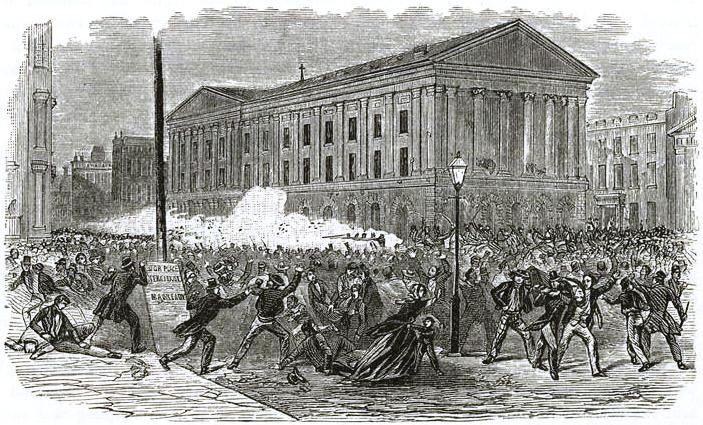
Look, I don’t want to turn this into another Astor Place riots, but I think there’s a healthy American vs. UK rivalry to start here.
Question 2:
The biggest Dylan fan I know says: “every time Dylan does something, ten years later it’s revealed to be genius.” Is the same true of the Coen Bros?
Even if I didn’t really like one of their movies, they are so good I assume that I’m wrong. I liked this one though, even though it was so so sad.
Listen to Carey Mulligan, Justin Timberlake, and Oscar Isaac sing 500 Miles. Best I can tell they all did their own singing.
Question 3:
Who wrote “500 Miles”?

This song is usually attributed to Hedy West, who put together “fragments of a melody she had heard her uncle sing to her back in Georgia.”
Her father, Don West, was a southern poet and coal mine labor organizer in the 1930s; his bitter experiences included seeing a close friend machine-gunned on the street by company goons in the presence of a young daughter.
Question 4:
What is the meaning of this movie?
I’ll tell you one message I felt strongly: “pursuing great art requires great sacrifice. It’s tragic if the art falls short. You don’t get the sacrifice back. Maybe the sacrifice itself is still noble but it’s an awfully lonesome road.”
Also this could be seen as a movie about a man being punished by God for abandoning a cat.
This was a movie where the hero literally does NOT save the cat.

Question 5:
The two best units of art that emerged from Jewish Minnesota have to be the Coen Brothers and Bob Dylan, right? Both deeply fascinated with “the old, weird, America.” Is there anything to that?
Question 6:
What would Minnesotan F. Scott Fitzgerald make of this movie?
I saw it just around the corner from where F. Scott Fitzgerald died.
Question 7:
Will the movie revive interest in The Clancy Brothers?

Question 8:
Why is Justin Timberlake so good at playing lame characters?

Is it because he has moved in his life so far beyond the idea of coolness?
Consider this testimonial by Joe Jonas. Timberlake, who at least in his choices appears very smart, was at an equivalent point of fame and self-awareness TEN YEARS AGO.
Question 9:
How the fuck is some guy in a magazine or a newspaper supposed to review a movie like this?? Obviously everything you’d think of the Coen Brothers already thought of times 1000!!
That’s what I thought as I walked out.
Sometimes Anthony Lane cheeses me off but his review of this movie helped me think about it.
(Some photo sources. Are photos of movie stars on the Internet just public property we can repost? I dunno, but 85% of all HelyTimes profits goes directly to charity)
Eulogy for Madiba
Posted: December 7, 2013 Filed under: Africa 1 Comment
Thursday I went to meet somebody for lunch at a restaurant here in Los Angeles. I got there a little early, it was a sunny day, and this restaurant has a very pleasant outdoor bar. So I sat down at the bar and ordered an iced tea.
The bartender was a friendly dude. We joked around a little. When he came back with my iced tea I was staring at my phone.
“Would you like to hear some world news?” I said.
“Fire away.”
“Well, Nelson Mandela died.”
He thought about this.
“Hasta luego, brother,” the bartender said.
He went back to work for a bit.
I kept reading my phone. A little while later he came back.
“What else are they saying about Mandela?”
“Well, it says here he was 95.”
“Huh,” said the bartender. “So he kicked it for a long time.”
(photo: “Long lines of people outside the polling station in the black township of Soweto, a southwest suburb of Johannesburg, South Africa, on April 27, 1994. Photograph by Denis Farrell/AP.”)
“It’s just like any other line of work only different.”
Posted: December 4, 2013 Filed under: America 3 Comments
Saw on Drudge or someplace this article about Bob Dylan being charged with “inciting hatred” in France.
The offending remarks, which “sparked a complaint from the Council of Croats in France (CRICCF),” were given in an interview to Rolling Stone over a year ago, an interview I completely missed.
This is massive insurance/late to the party to many HelyTimes readers, but the whole interview is just astounding. Here are the offending remarks, in their context:
Some of us have seen your calling as somebody who has done his best to pay witness to the world, and the history that made that world.
History’s a funny thing, isn’t it? History can be changed. The past can be changed and distorted and used for propaganda purposes. Things we’ve been told happened might not have happened at all. And things that we were told that didn’t happen actually might have happened. Newspapers do it all the time; history books do it all the time. Everybody changes the past in their own way. It’s habitual, you know? We always see things the way they really weren’t, or we see them the way we want to see them. We can’t change the present or the future. We can only change the past, and we do it all the time.There’s that old wisdom “History is written by the victors.”
Absolutely. And then there’s Henry Ford. He didn’t have much use for history at all.But you have a use for it. In Chronicles, you wrote about your interest in Civil War history. You said that the spirit of division in that time made a template for what you’ve written about in your music. You wrote about reading the accounts from that time. Reading, say, Grant’s remembrances is different than reading Shelby Foote’s history of the Civil War.
The reports are hardly the same. Shelby Foote is looking down from a high mountain, and Grant is actually down there in it. Shelby Foote wasn’t there. Neither were any of those guys who fight Civil War re-enactments. Grant was there, but he was off leading his army. He only wrote about it all once it was over. If you want to know what it was about, read the daily newspapers from that time from both the North and South. You’ll see things that you won’t believe. There is just too much to go into here, but it’s nothing like what you read in the history books. It’s way more deadly and hateful.There doesn’t seem to be anything heroic or honorable about it at all. It was suicidal. Four years of looting and plunder and murder done the American way. It’s amazing what you see in those newspaper articles. Places like the Pittsburgh Gazette, where they were warning workers that if the Southern states have their way, they are going to overthrow our factories and use slave labor in place of our workers and put an end to our way of life. There’s all kinds of stuff like that, and that’s even before the first shot was fired.
But there were also claims and rumors from the South about the North . . .
There’s a lot of that, too, about states’ rights and loyalty to our state. But that didn’t make any sense. The Southern states already had rights. Sometimes more than the Northern states. The North just wanted them to stop slavery, not even put an end to it – just stop exporting it. They weren’t trying to take the slaves away. They just wanted to keep slavery from spreading. That’s the only right that was being contested. Slavery didn’t provide a working wage for people. If that economic system was allowed to spread, then people in the North were going to take up arms. There was a lot of fear about slavery spreading.Do you see any parallels between the 1860s and present-day America?
Mmm, I don’t know how to put it. It’s like . . . the United States burned and destroyed itself for the sake of slavery. The USA wouldn’t give it up. It had to be grinded out. The whole system had to be ripped out with force. A lot of killing. What, like, 500,000 people? A lot of destruction to end slavery. And that’s what it really was all about.This country is just too fucked up about color. It’s a distraction. People at each other’s throats just because they are of a different color. It’s the height of insanity, and it will hold any nation back – or any neighborhood back. Or any anything back. Blacks know that some whites didn’t want to give up slavery – that if they had their way, they would still be under the yoke, and they can’t pretend they don’t know that. If you got a slave master or Klan in your blood, blacks can sense that. That stuff lingers to this day. Just like Jews can sense Nazi blood and the Serbs can sense Croatian blood.
It’s doubtful that America’s ever going to get rid of that stigmatization. It’s a country founded on the backs of slaves. You know what I mean? Because it goes way back. It’s the root cause. If slavery had been given up in a more peaceful way, America would be far ahead today. Whoever invented the idea “lost cause . . . .” There’s nothing heroic about any lost cause. No such thing, though there are people who still believe it.
Here is another part of the interview that is also amazing:
[Dylan suddenly seems excited.] Let me show you something. I want to show you something. You might be interested in this. You might take this someplace. You might want to rephrase your questions, or think of new ones [laughs]. Let me show you this. [Gets up and walks to another table.]
You want me to come with you?
No, no, no, I got it right here. I thought this might interest you. [Brings a weathered paperback to the table!] See this book? Ever heard of this guy? [Shows me Hell’s Angel: The Life and Times of Sonny Barger and the Hell’s Angels Motorcycle Club, by Sonny Barger.]Yeah, sure.
He’s a Hell’s Angel.He was “the” Hell’s Angel.
Look who wrote this book. [Points at coauthors’ names, Keith Zimmerman and Kent Zimmerman.] Do those names ring a bell? Do they look familiar? Do they? You wonder, “What’s that got to do with me?” But they do look familiar, don’t they? And there’s two of them there. Aren’t there two? One’s not enough? Right? [Dylan’s now seated, smiling.]I’m going to refer to this place here. [Opens the book to a dog-eared page.] Read it out loud here. Just read it out loud into your tape recorder.
“One of the early presidents of the Berdoo Hell’s Angels was Bobby Zimmerman. On our way home from the 1964 Bass Lake Run, Bobby was riding in his customary spot – front left – when his muffler fell off his bike. Thinking he could go back and retrieve it, Bobby whipped a quick U-turn from the front of the pack. At that same moment, a Richmond Hell’s Angel named Jack Egan was hauling ass from the back of the pack toward the front. Egan was on the wrong side of the road, passing a long line of speeding bikes, just as Bobby whipped his U-turn. Jack broadsided poor Bobby and instantly killed him. We dragged Bobby’s lifeless body to the side of the road. There was nothing we could do but to send somebody on to town for help.” Poor Bobby.
Yeah, poor Bobby. You know what this is called? It’s called transfiguration. Have you ever heard of it?
Yes.
Well, you’re looking at somebody.That . . . has been transfigured?
Yeah, absolutely. I’m not like you, am I? I’m not like him, either. I’m not like too many others. I’m only like another person who’s been transfigured. How many people like that or like me do you know?By transfiguration, you mean it in the sense of being transformed? Or do you mean transmigration, when a soul passes into a different body?
Transmigration is not what we are talking about. This is something else. I had a motorcycle accident in 1966.1 already explained to you about new and old. Right? Now, you can put this together any way you want. You can work on it any way you want. Transfiguration: You can go and learn about it from the Catholic Church, you can learn about it in some old mystical books, but it’s a real concept. It’s happened throughout the ages. Nobody knows who it’s happened to, or why. But you get real proof of it here and there. It’s not like something you can dream up and think. It’s not like conjuring up a reality or like reincarnation – or like when you might think you’re somebody from the past but have no proof. It’s not anything to do with the past or the future.So when you ask some of your questions, you’re asking them to a person who’s long dead. You’re asking them to a person that doesn’t exist. But people make that mistake about me all the time. I’ve lived through a lot. Have you ever heard of a book called No Man Knows My History? It’s about Joseph Smith, the Mormon prophet. The title could refer to me.
Transfiguration is what allows you to crawl out from under the chaos and fly above it. That’s how I can still do what I do and write the songs I sing and just keep on moving.
When you say I’m talking to a person that’s dead, do you mean the motorcyclist Bobby Zimmerman, or do you mean Bob Dylan?
Bob Dylan’s here! You’re talking to him.Then your transfiguration is . . .
It is whatever it is. I couldn’t go back and find Bobby in a million years. Neither could you or anybody else on the face of the Earth. He’s gone. If I could, I would go back. I’d like to go back. At this point in time, I would love to go back and find him, put out my hand. And tell him he’s got a friend. But I can’t. He’s gone. He doesn’t exist.OK, so when you speak of transfiguration . . .
I only know what I told you. You’ll have to go and do the work yourself to find out what it’s about.I’m trying to determine whom you’ve been transfigured from, or as.
I just showed you. Go read the book.That’s who you have in mind? What could the connection to that Bobby Zimmerman be other than name?
I don’t have it in mind. I didn’t write that book. I didn’t make it up. I didn’t dream that. I’m not telling you I had a dream last night. Remember the song “Last Night I Had the Strangest Dream”? I didn’t write that, either.I’m showing you a book that’s been written and published. I mean, look at all the connecting things: motorcycles, Bobby Zimmerman, Keith and Kent Zimmerman, 1964, 1966. And there’s more to it than even that. If you went to find this guy’s family, you’d find a whole bunch more that connected. I’m just explaining it to you. Go to the grave site.
Gee whiz.
Why is it that when people talk about me they have to go crazy? What the fuck is the matter with them?
Here’s Mount Tabor in Israel where Jesus got transfigured:

(Civil War photo from the website Florida Memory)
Did you hope or imagine that the election of President Obama would signal a shift, or that it was in fact a sea change?
I don’t have any opinion on that. You have to change your heart if you want to change.Since his election, there’s been a great reaction by some against him They did the same to Bush, didn’t they? They did the same thing to Clinton, too, and Jimmy Carter before that. Look what they did to Kennedy. Anybody who’s going to take that job is going to be in for a rough time.
Don’t you think some of the reaction has stemmed from that kind of racial resonance you were talking about?
I don’t know. I don’t know, but I don’t think that’s the same thing. I have no idea what they are saying for or against him. I really don’t. I don’t know how deep it goes or how shallow it is.You are aware that he’s been branded as un-American or a socialist —
You can’t pay any attention to that kind of stuff, as if you’ve never heard those kind of words before. Eisenhower was accused of being un-American. And wasn’t Nixon a socialist? Look what he did in China. They’ll say bad things about the next guy, too.So you don’t think some of the reaction against Obama has been in reaction to the event that a black man has become president of the United States?
Do you want me to repeat what I just said, word for word? What are you talking about? People loved the guy when he was elected. So what are we talking about? People changing their minds? Well, who are these people that changed their minds? Talk to them. What are they changing their minds for? What’d they vote for him for? They should’ve voted for somebody else if they didn’t think they were going to like him.The point I’m making is that perhaps lingering American resentments about race are resonant in the opposition to President Obama, which has not been a quiet opposition.
You mean in the press? I don’t know anybody personally that’s saying this stuff that you’re just saying. The press says all kinds of stuff. I don’t know what they would be saying. Or why they would be saying it. You can’t believe what you read in the press anyway.Do you vote?
Uh . . .Should we do that? Should we vote?
Yeah, why not vote? I respect the voting process. Everybody ought to have the right to vote. We live in a democracy. What do you want me to say? Voting is a good thing.I was curious if you vote.
[Smiling] Huh?What’s your estimation of President Obama been when you’ve met him?
What do I think of him? I like him. But you’re asking the wrong person. You know who you should be asking that to? You should be asking his wife what she thinks of him. She’s the only one that matters.Look, I only met him a few times. I mean, what do you want me to say? He loves music. He’s personable. He dresses good. What the fuck do you want me to say?
Fantastic Man
Posted: December 2, 2013 Filed under: art history Leave a comment In Stockholm I kept seeing this magazine until finally I had to learn “who is this fantastic man?”
Jeremy Deller is an English artist.
Deller staged The Battle of Orgreave in 2001, bringing together almost 1,000 people in a public re-enactment of a violent confrontation from the 1984 Miners’ Strike.
Here’s a documentary about it, I only watched part of it but it was pretty riveting.
Around 56:00 is an example of Margaret Thatcher’s hypnotic, eerie radio voice. I wonder why I haven’t read more about the importance or non-importance of radio in British politics at that time. I guess because I’m really busy.
ATTENTION BLACK FRIDAY SHOPPERS
Posted: November 27, 2013 Filed under: books Leave a comment if someone finds a copy of this at a decent price, I want!
What do kids want?
Posted: November 25, 2013 Filed under: family Leave a commentBOOKS!
And MY Christmas shopping is done.
My little niece Deirdre already has a pretty rad aesthetic going. Very much into this scene:

Seamus on the other hand has been having some trouble at school. Luckily I found a book that should help.
 This year we want to make Giuseppe really feel like part of the family. I know he’s sometimes a high-strung kid so I got him:

Caddie and I always have fun doing a little project together over the holidays, so I got her:
 Caddie’s crazy about the Cape Horners and Down-Easters. Think she’ll also be into the new knits:

Ian’s my most intense nephew – the kid is like a mini-Kierkegaard. I think he’ll be into:
 On the other hand, I know Amy’s been kinda stressing a little lately so I picked her up:

 Not as easy as it sounds, unfortunately.
Tim is quite mature for his age, but you don’t want to weird a kid out. He’s been asking me a lot about Zola lately so I grabbed him:

I don’t think he’s read Nana yet, let alone got into the debates about which is the real original, but who knows.
Phil loves ancient Rome so I picked up:

Hope I am not jumping him ahead in the Testament of Man series. I KNOW he’s finished Children of Dune but not Heretics Of Dune so duh I got him:

Ezra kind of freaks me out, actually. He’s kind of a junior Machiavelli or something. But, whatever, I guess you can just help him along, so I got him:
 I just hope he directs his ambition in a healthy way.
As for Fred? Kid needs a positive male role model in his life.

Mailbag
Posted: November 22, 2013 Filed under: mailbag Leave a comment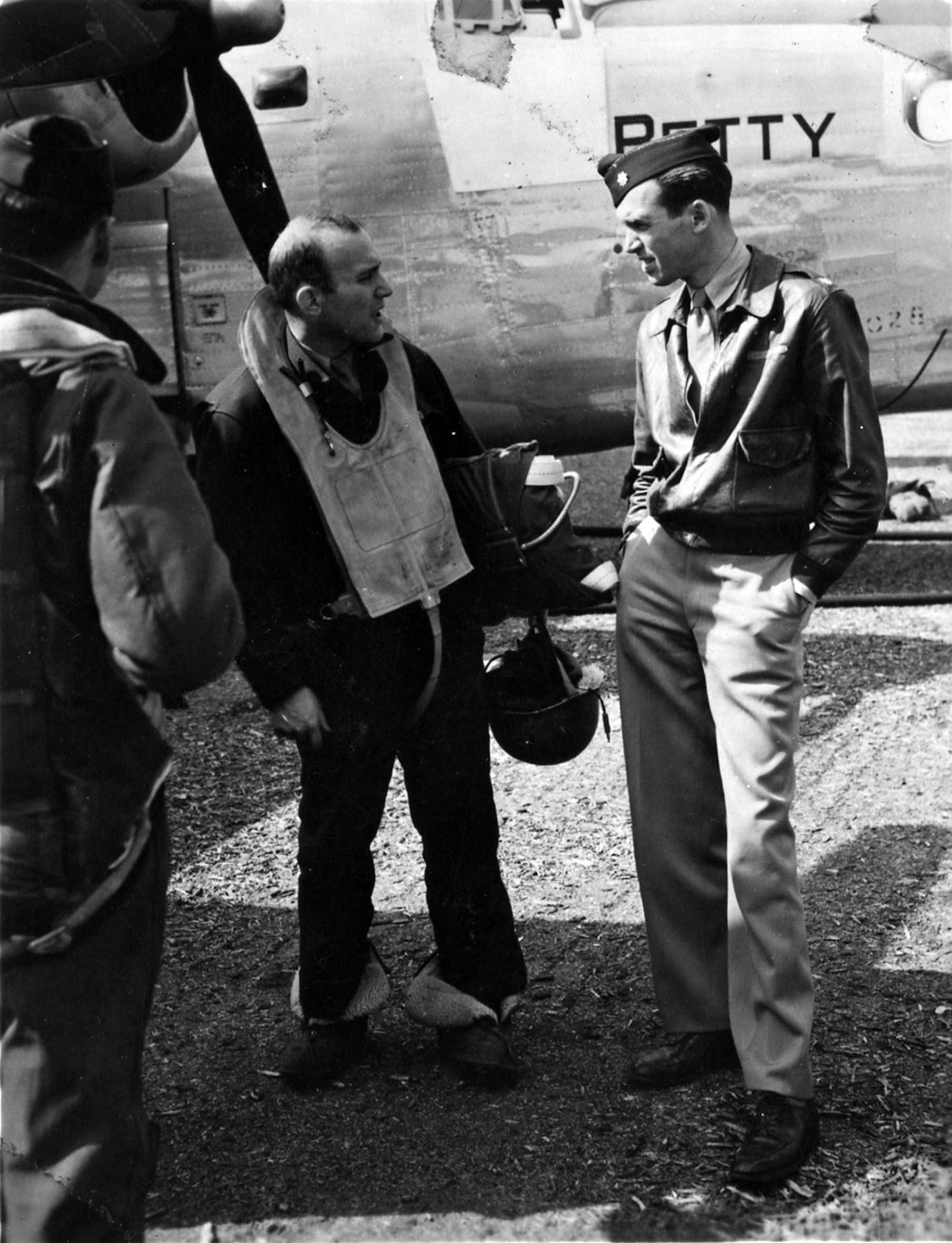
Carla in Texas writes:
Dear Helytimes, I found your blog because I have a news alert set for my hometown of Balmorhea, Texas (go Bears!). I am a retired educator with the BISD now living the sweet life AKA retirement. Had to write after I LOL’d about your description of Ron’s lizard & reptile show, Ron is a very sweet man an admired eccentric we all love him in our community .
Bone to PICK with you: you are way off on Vertigo. I first saw it when I was ten and it scared the DAYLIGHTS out of me. AS for sexy WRONG AGAIN that movie gets me horny as hell. [TMI, Carla?] Not Kim Novak — JAMES STEWART. Are you kidding? He we a bomber pilot who flew over 200 missions. [20 says wikipedia].
You are right though about Midge.
Keep writin’,
Carla
Thanks Carla, and thank you for reading.
Please address all letters for the HelyTimes mailbag to helphely at gmail dot com.
 Helytimes