McPeak vs Earthman
Posted: December 5, 2017 Filed under: America Since 1945, war Leave a comment
Have we entered a new way of war in which air power isn’t as important? That this is America’s asymmetric challenge and air power isn’t as wanted?
If so, how do we overcome that? How do we get past that, the fact that our adversaries have figured out how we fight?
Merrill McPeak: Well, it’s not so much that the adversaries figured out how we fight.
That’s dead easy. Everybody can see it. I mean, we don’t make any mystery of it.
What we’ve done is taken the risk out of the kind of operations that we do now with officers.
I mean, we’ve got stealth airplanes. So I’m sitting in a stealth airplane and I’m on super-cruise. In the F-22, you’re cruising at 1.7 to 1.8 (mach) in a stealthy machine.
Who’s going to touch you?
I mean, I never felt vulnerable when I was flying an airplane. Period. Not against any kind of earthman.
Got a lot out of this looooong interview with former Air Force chief of staff and Ken Burns & Lynn Novick’s Vietnam War star Merrill McPeak in the San Diego Union Tribune, (ht Tom Ricks of course).

McPeak on Boyd, whom we have discussed:
So they got the argument a little bit wrong. But then along comes Boyd with the OODA Loop and some philosophy kind of concepts and people said, ‘Wow, a fighter pilot with a brain!’
They tended to listen to him when in many respects he was a failed officer and even a failed human being in some ways.
Carl Prine: There’s an entire cottage industry built around him now.
Merrill McPeak: I was at Nellis the night he jumped out of an F-100. I was a student there and he was an instructor in the Weapons School. He had a bet that he could get anybody from his 6 o’clock to his 12 o’clock in 40 seconds, or whatever it was.
He tried his special little trick and the airplane quit on him. It overstretched the hydraulic system, the plumbing, the flight controls, and the airplane went crazy and he had to jump out.
Here he is coming back to Nellis and they went out to pick him up in a chopper. And he’s dragging his parachute back to Nellis. He didn’t look so good that night.
The general likes Mozart:
Carl Prine: I had this image of you, as a general, appreciating the grand, comprehensive, overwhelming symphony and yet you prefer the smaller pieces? The elegant and tiny works?
Merrill McPeak: Well, you know the big G minor symphony? Ta-ta-ta-ta-ta-ta-ta-ta-ta-ta, ta-ta-ta-ta-ta-ta-ta-ta-ta. That’s the famous one, the 40. It’s in there with Jupiter and the later symphonies.
But Symphony 25 has that crystal clear quality to it. If it were a stream, you could look clear through it to the bottom.
There’s something magical about it.
April Ryan
Posted: November 22, 2017 Filed under: America Since 1945, presidents Leave a comment
Ice cold response to demeaning patronizing by Sarah Huckabee Sanders.
Ryan has been a member of the White House press corps for American Urban Radio Networks since January 1997 and has long been the only black female reporter among the White House correspondents.

Is it ok to have this calendar up in my office?
Posted: November 20, 2017 Filed under: America Since 1945, surfing, the California Condition Leave a comment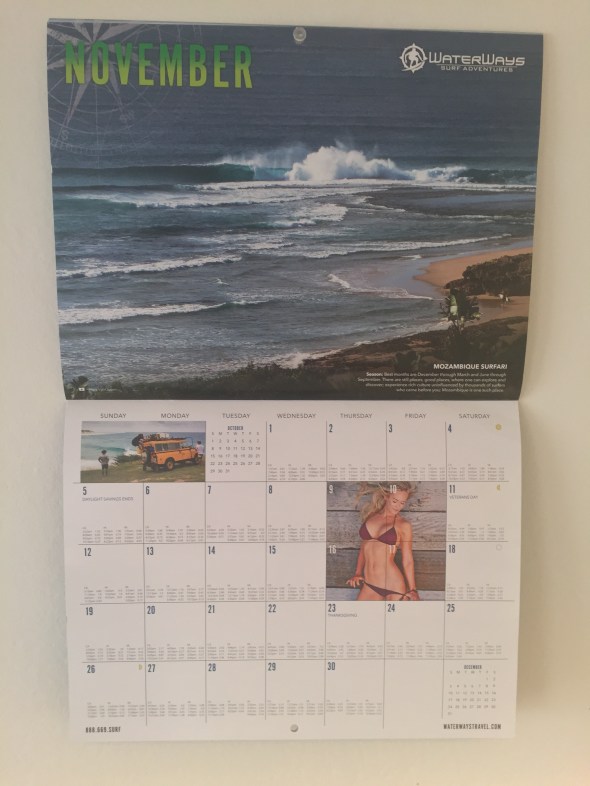
got it for free at Laguna Beach Surf and Sport.

Asked a female colleague her opinion, she didn’t care, but how much can we weigh that? here it is in some more context.

Another surf shop in Laguna is Thalia

Thalia as we all know is the muse of comedy

Thalia by Nattier
Here’s today’s surf report from Thalia via magicseaweed:

Is it interesting?
Posted: November 13, 2017 Filed under: America Since 1945, politics Leave a comment
source
that William F. Buckley and Ayn Rand kind of look alike?

The story of Profumo
Posted: November 12, 2017 Filed under: America Since 1945, heroes Leave a comment
Shortly after his resignation Profumo began to work as a volunteer cleaning toilets at Toynbee Hall, a charity based in the East End of London, and continued to work there for the rest of his life. Peter Hitchens has written that Profumo “vanished into London’s East End for 40 years, doing quiet good works”. Profumo “had to be persuaded to lay down his mop and lend a hand running the place”, eventually becoming Toynbee Hall’s chief fundraiser, and used his political skills and contacts to raise large sums of money. All this work was done as a volunteer, since Profumo was able to live on his inherited wealth. His wife, the actress Valerie Hobson, also devoted herself to charity until her death in 1998. In the eyes of most commentators, Profumo’s charity work redeemed his reputation. His friend, social reform campaigner Lord Longford said he “felt more admiration [for Profumo] than [for] all the men I’ve known in my lifetime”.
Profumo’s dedication and dignity won him enormous admiration from people in all walks of life. The author Peter Hennessy, a fellow trustee at a charitable foundation associated with Toynbee Hall, described him as “one of the nicest and most exemplary people I have met in public or political life; full of the old, decent Tory virtues”. Margaret Thatcher called him “one of our national heroes”. “Everybody here worships him”, a helper at Toynbee Hall was once quoted as saying. “We think he’s a bloody saint.”

World’s biggest Jeep
Posted: November 7, 2017 Filed under: America Since 1945, Middle East Leave a comment

That’s owned by Hamad bin Hamdan Al-Nahyan of Abu Dhabi. He also once carved his name in kilometer-long letters on his own island:

(It’s since been erased.)
Bases in the desert
Posted: November 6, 2017 Filed under: America Since 1945 Leave a comment(vid taken by me during a demonstration on a tour of Fort Irwin)
From 1942-1991 the US Army, Navy, Air Force and Marines built enormous bases in the desert.

Partly this was to train for the coming war in North Africa.

Indio, California. A half-ton jeep rolling over the desert at the desert training center June 1942.
Farm Security Administration Office of War Information/Library of Congress. Source.
Fort Irwin, built in 1940, deactivated 1971, returned to active status 1981.

China Lake Naval Weapons Center, which is, to use the tiredest comparison in American geography, bigger than Rhode Island.

Marine Corps Air Ground Combat Center Twenty Nine Palms, growing and growing since 1949

Edwards AFB. Those are just some of the ones in California alone.
We built the bases, and then we found reasons to have wars in the desert.
Is that interesting?
Melancholy
Posted: November 5, 2017 Filed under: America Since 1945, presidents Leave a comment
Put it to the test; leave a king entirely alone quite at leisure, with nothing to satisfy his senses, no care to occupy the mind, with complete leisure to think about himself, and you will see that a king without diversion is a very wretched man. Therefore such a thing is carefully avoided, and the persons of kings are invariably attended by a great number of people concerned to see that diversion comes after affairs of state, watching over their leisure hours to provide pleasures and sport so that there should never be an empty moment. In other words they are surrounded by people who are incredibly careful to see that the king should never be alone and able to think about himself, because they know that, king though he is, he will be miserable if he does think about it.”
from Pascal’s Pensées, quoted by Laszlo Foldenyi in his book about melancholy, quoted by Dan Wang!
Considering John Kelly
Posted: October 31, 2017 Filed under: America Since 1945, art history, heroes, history, statues 2 Comments
Compelled by John Kelly, Boston Marine turned Trump babysitter / White House chief of staff.
John Kelly, like Robert E. Lee, is brave, self-sacrificing, dignified, and wrong.
It’s possible to be noble and admirable and honorable and really wrong. Like, a force for wrongness.
Watched his entire press conference re: presidential respect for fallen soldiers. Found it very moving. He mentions walking for hours in Arlington National Cemetery to collect his thoughts. Maybe he should send the president.

In one of the infinite amazing connections of American history Arlington National Cemetery was built on the grounds of Lee’s wife’s house.
INTERVIEWER
What about General Robert E. Lee?
FOOTE
The single greatest mistake of the war by any general on either side was made by Robert E. Lee at Gettysburg, when he sent Pickett’s and Pettigrew’s divisions across that open field, nearly a mile wide, against guns placed on a high ridge and troops down below them, with skirmishers out front. There was no chance it would succeed. Longstreet told him that beforehand and Lee proceeded to prove him right. Having made this greatest of all mistakes, Lee rode out on the field and met those men coming back across the field— casualties were well over fifty percent—and said, It’s all my fault. He said it then on the field; he said it afterwards, after he’d gotten across the Potomac; he said it in his official report a month later. He said, I may have asked more of my men than men should be asked to give. He’s a noble man, noble beyond comparison.
(from the Paris Review interview with Shelby Foote)

Henry Lee, Robert E.’s father
Why did people love Robert E. Lee so much? He was handsome, for one thing. Here’s Elizabeth Brown Pryor going off in her Six Encounters With Lincoln:

“Matinee-idol looks.”
They liked Lee too because he reminded of them of George Washington.

Is this interesting?: two of the most prominent American slaveholders, Washington and Lee, only owned slaves because they’d married rich women.
Lee’s wife was Martha Washington’s great granddaughter.

Anyway: whatever, it’s time for some new statues!

John Kelly made his most recent remarks about Lee on The Ingraham Angle on Fox News.
During that appearance, Kelly says something not true, that the events in the indictment came from well before Manafort knew Donald Trump. Not true, if we believe Slate’s helpful timeline. Manafort and Trump have known each other since the ’80s.
Didn’t Manafort live in Trump Tower off the money he made as a lobbyist for dictators?

Kelly also says that the part about where got wrong what Fredrica Wilson said at the FBI dedication, that part “we should just let that go.”
Also brooooo! What is American history up to the Civil War but a history of compromises?

Happened to read an interview in PRISM, a publication of the Center For Complex Operations, with John Kelly yesterday. He’s talking about his career leading the Southern Command, ie Central and South America.

This was not my experience talking to Latin Americans. More than one South American has pointed out to me that in their countries, “the troops” are not assumed to be good guys or on your side.
Didn’t love this:

We need more Marine generals like Smedley Butler:

I wish John Kelly would also remember the time Henry Lee put himself in harm’s way to defend the freedom of the press.
During the civil unrest in Baltimore, Maryland in 1812, Lee received grave injuries while helping to resist an attack on his friend, Alexander Contee Hanson, editor of the Baltimore newspaper, The Federal Republican on July 27, 1812.
Hanson was attacked by a Democratic-Republican mob because his paper opposed the War of 1812. Lee and Hanson and two dozen other Federalists had taken refuge in the offices of the paper. The group surrendered to Baltimore city officials the next day and were jailed.
Laborer George Woolslager led a mob that forced its way into the jail, removed the Federalists, beating and torturing them over the next three hours. All were severely injured, and one Federalist, James Lingan, died.
Lee suffered extensive internal injuries as well as head and face wounds, and even his speech was affected. His observed symptoms were consistent with what is now called post-traumatic stress disorder.
Need to learn more about this!
Maybe a statue of James Lingan, outside Prospect House?:

source: wiki, photo by AgnosticPreachersKid
One last bit from Shelby Foote:

Bud, history always has bias! You don’t think this guy
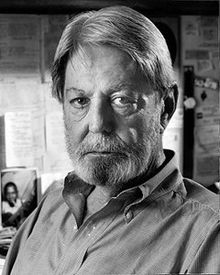
thought Lee was cool, if only because they looked alike?


Does Ta-Nahesi Coates get tired of having to say the same stuff over and over?:

“History’s history,” says John Kelly on The Ingraham Angle. Is it?
Personally, when I think about John Kelly’s life, I’m prepared to cut him some slack, but man. I can’t say he “gets it.”
Thomas Ricks, as always, has the take:
 A must read.
The comment of Kelly’s that hasn’t gotten the attention it deserves is when he half-jokingly suggests (around 26:41)
that they’re gonna replace the Washington Monument with Andy Warhol.

Did not know
Posted: October 26, 2017 Filed under: America Since 1945, music, women Leave a comment
That one Jody Miller, no relation to Roger Miller, did a response to his song “King Of The Road” entitled “Queen Of The House.”
Critics on critics on critics
Posted: October 17, 2017 Filed under: America Since 1945, art history, books, writing Leave a comment
This review in the New York Times, by Vivan Gornick of Adam Gopnik’s “At The Strangers’ Gate” caught my attention.
Critics have taken aim on Adam Gopnik before. To which New Yorker editor David Remnick says:
‘The day any of these people write anything even remotely as fine and intelligent as Adam Gopnik will be a cold day in hell.'”
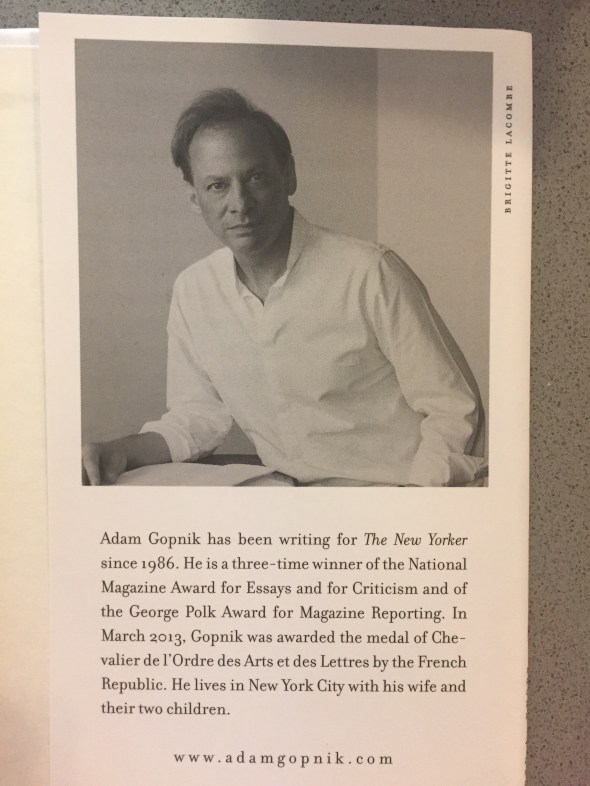
The key to this memoir might be when the author reveals he graduated high school at age fourteen. He’s a boy genius.
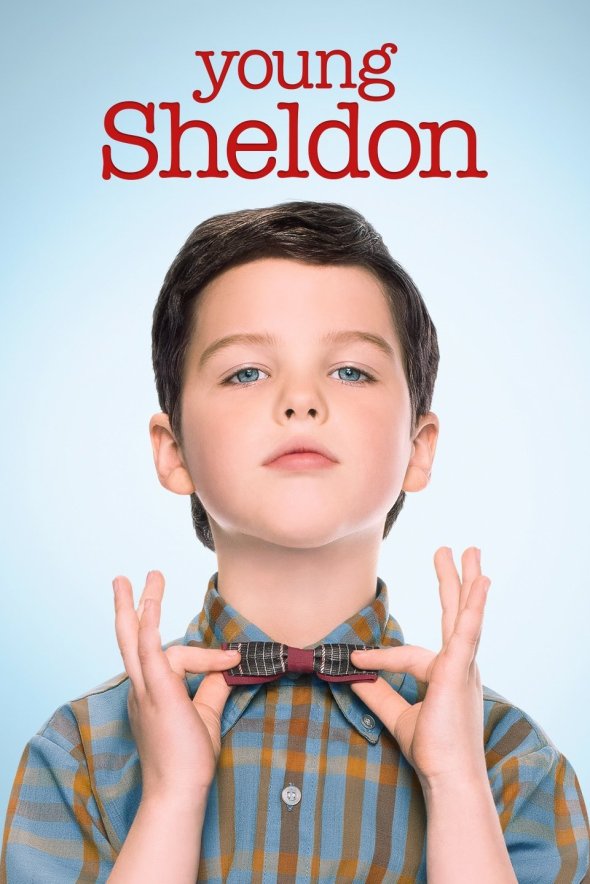
This is kind of Young Sheldon the book.

The book has some good stories in it. Adam Gopnik tells about how a guy who came to one of his lectures on Van Gogh. This guy had an axe to grind and it was this: why did Vincent never paint his brother Theo?

My favorite part of the book was Gopnik’s discussion of Jeff Koons. Gopnik is illuminating on the topic of Jeff Koons. Here is Koons talking to Gopnik at a party.

(I added the potato because while it may not be strictly legal to electronically reproduce pages of books, if I include them in an original work of art, that’s gotta be allowed, right?)

Harrowing
Posted: October 6, 2017 Filed under: America Since 1945, words Leave a comment
Ken Burns & Lynne Novick’s The Vietnam War I felt was “harrowing.”


What does the word harrowing mean?

source:
In farming this is a harrow.
A device consisting of a heavy framework having several disks or teeth in a row, which is dragged across ploughed land to smooth or break up the soil, to remove weeds or cover seeds;
A harrowing documentary feels like it’s doing this to you?
A harrowing experience is painful, but it breaks up your clods.
The etymology drifts back into the mists of Old Norse before dissolving away into Proto-Indo-European and Old Persian, but it may have something to do with “harvest”
Icelandic
Etymology
From Proto-Germanic*harjōną (see also East Frisian ferheerje, German verheeren(“to harry, devastate”)) Swedish härja(“ravage, harry”)), from Proto-Germanic*harjaz(“army”) (see also Old English here, West Frisian hear, Dutch heer, German Heer), from Proto-Indo-European*koryos (compare Middle Irish cuire(“army”), Lithuanian kãrias(“army; war”), Old Church Slavonic кара(kara, “strife”), Ancient Greek κοίρανος(koíranos, “chief, commander”), Old Persian [script needed](kāra, “army”)).
As a boy, Winston Churchill went to a school called Harrow:

which he found to be a harrowing experience. Churchill had many harrowing experiences. He was in combat, for one. That’s a famous harrow. Having polio is harrowing.

UNITED STATES – SEPTEMBER 27: President Franklin D. Roosevelt leaves his home at 49 East 65th Street for a short visit to his family estate at Hyde Park, north of New York City. This photograph is unusual in that FDR’s leg braces are clearly visible. (Photo by Martin Mcevilly/NY Daily News Archive via Getty Images)
Childbirth has got to be harrowing, as is growing up on the frontier.

You wouldn’t wish any harrowing experiences on anybody, but it seems like all great leaders had been through a harrowing or two.
Raven Maps
Posted: October 4, 2017 Filed under: America Since 1945, maps Leave a comment
I’ve spoken before of my love of Raven Maps. Shoutout to Professor McHugh for putting me onto them.

Recently I had some correspondence with them. With their permission I share it with you.
Name: Steve Hely
Their Questions or Comments: Hi! Big fan of your maps, have bought several. I was interested in learning some cartography basics so I can make a topo map of a small (five square miles) area of the world I inhabit and love. Do you have or know of any resources for learning these skills! Thanks!
(That’s what I wrote, on their form).
Raven Maps replies:
Steve Hely,
Well, that’s a good question. The old techniques have long-since been reduced to algorithms and interred in software. All maps are now produced digitally, but I assume you want to just enjoy learning your area in the way that mapping it allows? You don’t need to become a GIS / Cartography tech for that.My suggestion: get the printed USGS 1:24,000 scale 1:7.5′ map of your area (perversely, an area you are interested in often turns out to be at the edge of two, or at the corners of two or three, in that case get all the sheets you need), or print them out from an on-line digital source); get tracing paper (or polyester drafting film), and start tracing the features you are particularly interested in– and just keep at it. Many iterations, probably many dozens. That’s OK, tracing paper is cheap. Colored pencils cost more but you won’t need all that many. Remember that every completed map has a great many more layers and classes of features than you probably care about, and probably does not show the ones you DO care about– and that’s where the fun starts, as you figure out what to leave off, how heavy / what color the lines are, how to identify the features you care about, and so on.For an area of 5 miles on a side, differences in projection (among various source maps, which you will probably start consulting) will be only a very minor problem, you can probably ignore. Scale differences can be corrected at your local FedEx copy shop.And always, keep on hand some sample map you especially like, so that you can see how that map handled the particular issue you are wondering how to solve. (There’s a reason you see aspiring painters closely studying the classics in museums– first, learn how THEY did it.)Hope this helps,Stuart AllanRaven Maps

I mean the USGS website is sick. What a beautiful thing we the taxpayers have made.
Shady Grove
Posted: October 3, 2017 Filed under: America Since 1945, music Leave a commentIn honor of the late great Tom Petty I invite you not to forget Mudcrutch, and post this Helytimes classic from April 2015
In my foolish youth I thought Tom Petty was kind of a joke, until Bob Dylan in Chronicles woke me up hard.
Bob also has words of respect for Jerry Garcia:
What an eerie tune. Wikipedia is unusually quiet on this one.
Many verses exist, most of them describing the speaker’s love for a woman called Shady Grove. There are also various choruses, which refer to the speaker traveling somewhere (to Harlan, to a place called Shady Grove, or simply “away”)
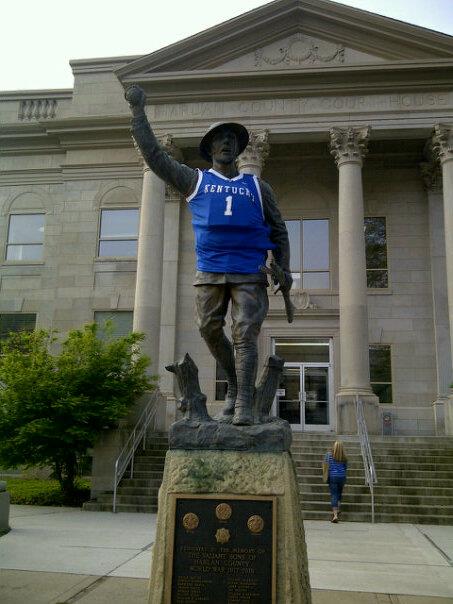
Harlan
The folks at mudcat.org take on the problem:
| Subject: Origins: ‘Shady Grove’ a mondegreen ? From: GUEST,Jake Date: 15 Aug 10 – 11:23 PMMulling (for the thousandth time) over the incongruity of ‘Shady Grove’ which is nothing about trees protecting the singer from the sun, but seems to be a woman’s name, it occurred to me in a flash of insight, that of course it must have started as a song about a Woman or girl named “Sadie” with the surname “Grove”, ie, “Sadie Grove”, and was corrupted by the usual vagaries of oral transmission, etc, etc. Searching this forum and the web generally provides no support for this conjecture, however. |
| Subject: RE: Origins: ‘Shady Grove’ a mondegreen ? From: MGM·Lion Date: 15 Aug 10 – 11:32 PMI have always shared this confusion: Shady Grove seems to be the woman’s name, but also the name of the place or location in which she lives, sometimes incongruously both at the same time. The fact that it’s one of those myriad songs [Going Down Town; Bowling Green …] which share pretty much the same set of ‘floaters’ doesn’t help.~Michael~ |
| Subject: RE: Origins: ‘Shady Grove’ a mondegreen ? From: Hamish Date: 16 Aug 10 – 03:18 AM”Wish I was in Shady Grove” takes on a new meaning.”When I was in Shady Grove I heard them pretty birds sing” (and the earth moved, no doubt). |
| Subject: RE: Origins: ‘Shady Grove’ a mondegreen ? From: GUEST,Lynn W Date: 16 Aug 10 – 04:11 AMThere is a comment on Wikipedia that the melody is similar to Matty Groves. Any connection, I wonder? |
| Subject: RE: Origins: ‘Shady Grove’ a mondegreen ? From: Jack Campin Date: 16 Aug 10 – 05:19 AMWikipedia has got it backwards. The folk-revival version of “Matty Groves” took its tune from “Shady Grove”. |
That’s as far down this hole as I can go at the moment.
I’d be shocked if any Helytimes readers hadn’t wikipedia’d The Child Ballads.
If demographizing the known Helytimes readership, I’d say “it’s people, mostly people I know, who have Wikipedia’d The Child Ballads.”
Still, why not a refresher on some best ofs?
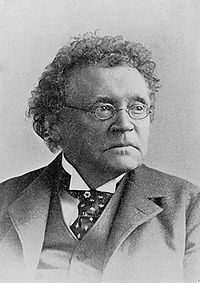
Although shy and diffident on account of his working-class origins, he was soon recognized as “the best writer, best speaker, best mathematician, the most accomplished person in knowledge of general literature” and he became extremely popular with his classmates.
Child became the Boylston Professor of Rhetoric and Oratory when he we was 26. Says an admirer, writing in the 1970s:
Child well understood how indispensable good writing and good speaking are to civilization, or as many would now prefer to say, to society. For him, writing and speaking were not only the practical means by which men share useful information, but also the means whereby they formulate and share values, including the higher order of values that give meaning to life and purpose to human activities of all sorts. Concerned as he thus so greatly was with rhetoric, oratory, and the motives of those mental disciplines, Child was inevitably drawn into pondering the essential differences between speech and writing, and to searching for the origins of thoughtful expression in English.
(Yes! That’s the good reason for being into this I’ve been looking for.)
Sometimes I picture Child backpacking around from pub to pub learning these things. Mostly, though, he got them from manuscripts.
Don’t you worry, he could cut loose sometimes:
he also gave a sedulous but conservative hearing to popular versions still surviving.
Child engaged
in extensive international correspondence on the subject with colleagues abroad, primarily with the Danish literary historian and ethnographer Svend Grundtvig, whose monumental twelve-volume compilation of Danish ballads, Danmarks gamle Folkeviser, vols. 1–12 (Copenhagen, 1853), was the model for Child’s resulting canonical five-volume edition of some 305 English and Scottish ballads and their numerous variants.
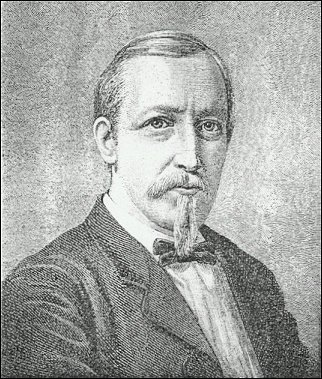
Svend.
Child is buried in the Sedgwick Pie.

Is Kyra Sedgwick eligible for the Sedgwick Pie? Seems like she might be. Also seems a bit rude to ask a wonderful and very alive actress and mother if she’s given any thought to her grave.
Famously (? I guess, I never read the biography) not included:

Reader Catherine in New Hampshire writes
Posted: September 22, 2017 Filed under: America Since 1945, politics Leave a comment
source: US Forest Service flickr
Dear Helytimes,
Have you abandoned your commitment to keeping us informed about public lands under Trump? I’m baffled by the present situation and would like some help!
Frustrated,
Catherine
Reader,
I get it, I’m sorry. The truth is I myself am baffled by what’s happening. I’ve been slowly informing myself by reading:

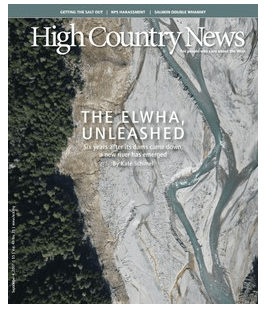
They’re doing such good reporting on these issues. Also their classifieds are great:

This roundup of their stories on the latest developments is great:

I found this post on Mojave Desert Land Trust’s Instagram to be a good summary, too:
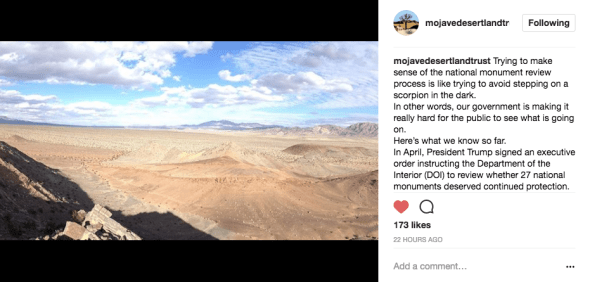
Trying to make sense of the national monument review process is like trying to avoid stepping on a scorpion in the dark.
In other words, our government is making it really hard for the public to see what is going on.
Here’s what we know so far.
In April, President Trump signed an executive order instructing the Department of the Interior (DOI) to review whether 27 national monuments deserved continued protection.
From May to July, the public was allowed to submit comments about this review. All of you spoke up to defend our Mojave monuments! Nearly three million Americans joined you in submitting public comments, 98% of which were in favor of keeping or expanding protections.
August 24th, DOI Secretary Zinke submitted his recommendations to the White House…and refused to release them to the public.
Since then, the public has waited for any information. And our Desert Defenders have continued to raise our voices about why our monuments deserve continued protection!
This Sunday, The Washington Post published a leaked version of Secretary Zinke’s report. Although this was supposed to be the DOI’s finalized review, it was titled as a draft and only contained vague recommendations for ten monuments.
It would need further revision by Zinke to become a final report. There was no mention of the other 17 monuments officially under review, including Mojave Trails and Sand to Snow. Nor was there word on Castle Mountains, which Rep. Cook asked Secretary Zinke to cut, although it wasn’t part of the original review.
Ultimately, no monument was declared safe. And the report’s omission of 17 monuments leaves them open to untold threats down the line, like executive orders or management plan reviews.
What the leaked report does make clear is that the Trump administration is preparing for an unparalleled attack on protected public lands that could result in widespread loss of wildlife habitat and economic harm to local businesses.
This entire process is unprecedented — and tomorrow, we’ll let you know what’s next.
#DesertDefenders #StopCadiz#nationalmonuments #mojavetrails #desert#mojavedesert #antiquitiesact
Seems like — and this may shock some of you – the Trump administration is hindered in executing wrongheaded and malicious policies by stupidity, clumsiness, disorganization and lack of any clear ideas, principles or goals short of being obnoxious and servicing the interests of GOP donors!
Welp, on the plus side, reading High Country News and learning about the Mojave Desert Land Trust has given me faith that lots of good people who care passionately are fighting to steward public land in effective and intelligent ways.
Fascinated by: Ray Dalio
Posted: September 10, 2017 Filed under: America Since 1945, business, comedy Leave a comment
Ray Dalio, billionaire founder of Bridgewater Associates, one of the world’s largest hedge funds.
That’s a 30 minute video he made about how the economy works, nbd.
A brilliant person with an atypical mind who lays out their worldview in a kind of manifesto can pretty much always get my attention.
Three of his Dalio’s beliefs:
- “algorithmic decision-making is coming at you fast”
- evolution is good
- to achieve success you must face and accept harsh realities
You can read his Principles online. Soon they are coming out in book form, I’ve pre-ordered. Here’s a sample, from the Principles website, which is www.principles.com:
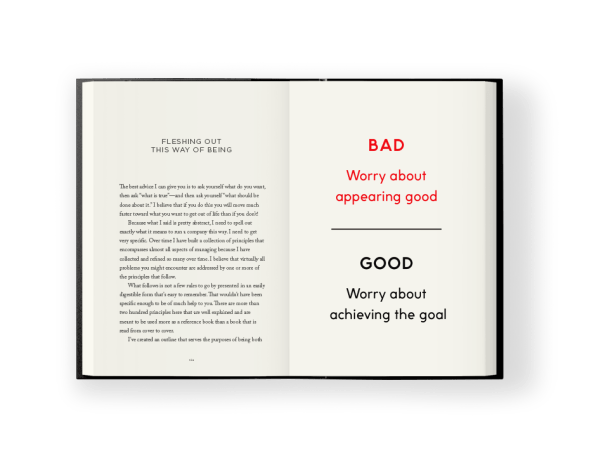
A lot to think about in Ray Dalio’s Principles.
BUT: let’s limit our discussion today to one moment in his TED Talk above. We’re going to talk about a joke and the audience reaction to it.
You’ll have to watch about one minute of the talk. Start at 14:30.
Dalio is describing a complex system where everyone in his company rates each other and is radically transparent with each other. Everyone can rate each other, in different areas. Even a lowly employee can rate Ray, creating charts like this:

At 14:46 he says that because of this, at Bridgewater there is no politics.
Which: Ray Dalio is 100x smarter than me, but I’ll bet ten dollars there are indeed politics at Bridgewater Associates, probably insane, high-order, wildly weird politics.
Anyway.
At 15:13 Ray Dalio makes a joke. This being his TED talk, no doubt a joke he had practiced. Radical transparency, he says, doesn’t apply to everything.
You don’t have to tell somebody their bald spot is growing or their baby’s ugly.
People laugh a little bit. Dalio continues.
I’m talking about the important things.
People laugh a LOT.
Dalio seems even thrown by how much the audience laughs at the second part, not the intended punchline.
Why?
The audience laughs because Dalio is missing the point.
Dalio inadvertently reveals he doesn’t know what the important things are to most people.
What are “the important things?” Making sound investment decisions? Tweaking the algorithm properly? Workplace communication?
Whatever, yes, in theory.
But really? No. To most humans whether your bald spot is growing and whether your baby is ugly are the important things. It would hurt way worse to be told either of those than that you’re ineffectively communicating in the meeting. That pain is a measure of importance.
The audience is expressing laughter / disbelief at the fact Dalio assumes workplace discussion is more important than stuff like whether your baby is ugly.
Perhaps Ray Dalio doesn’t get it because he’s trained himself not to feel that kind of sensitivity. That’s one of the points of Principles, to train your mind to get that nonsense out of the way. It’s served him very well as an investor.
But it’s a little robotic, and a little detached, and a little inhuman.
If I worked for Dalio, I suspect I’d rate him low in the category of “empathy / compassion / understanding for what matters to people / sensitivity.”
But then, are those categories even in the algorithm?
Oh btw James Comey used to work for Ray Dalio, and also Dalio recently recommended allocating 5-10% of assets to gold.
speaking of
algorithm

source: Wiki user Fulvio Spada
looked it up at Online Etymology, my new fave site.
algorithm (n.)
1690s, “Arabic system of computation,” from French algorithme, refashioned (under mistaken connection with Greek arithmos “number”) from Old French algorisme “the Arabic numeral system” (13c.), from Medieval Latin algorismus, a mangled transliteration of Arabic al-Khwarizmi “native of Khwarazm” (modern Khiva in Uzbekistan), surname of the mathematician whose works introduced sophisticated mathematics to the West (see algebra). The earlier form in Middle English was algorism (early 13c.), from Old French. Meaning broadened to any method of computation; from mid-20c. especially with reference to computing.
The man from Khwarizmi.

Wiki:
Few details of al-Khwārizmī’s life are known with certainty.
He worked in Baghdad as a scholar at the House of Wisdom established by Caliph al-Ma’mūn, where he studied the sciences and mathematics, which included the translation of Greek and Sanskrit scientific manuscripts.
Good picture
Posted: September 8, 2017 Filed under: America Since 1945, Texas Leave a comment
Found this picture on Thomas Ricks’ blog. USA! USA!
170831-N-KL846-150 VIDOR, Texas (Aug. 31, 2017) Naval Aircrewman (Helicopter) 2nd Class Jansen Schamp, a native of Denver, Colorado and assigned to the Dragon Whales of Helicopter Sea Combat Squadron (HSC) 28, rescues two dogs at Pine Forrest Elementary School, a shelter that required evacuation after flood waters from Hurricane Harvey reached its grounds. The mission resulted in the rescue of seven adults, seven children and four dogs. (U.S. Navy Video by Mass Communication Specialist 1st Class Christopher Lindahl/Released)
Reminded of a claim that Goebbels was forever frustrated the Nazis couldn’t make propaganda as good as what the USA churned out.
Worth signing up or whatever you need to do to read Ricks’ blog.
Here’s a good post about the situation in Afghanistan.
Here’s a good one about “15 assumptions about the behavior of North Korea’s Kim family regime”
And his reliefs and suspensions specials never fail to have one or two that would probably make a compelling movie. At a secret Air Force base in Tunisia, a beloved commander lets his guys drink as much as they want and forms a dangerous relationship with a teenage subordinate.
John Ashberry
Posted: September 7, 2017 Filed under: America Since 1945, writing Leave a comment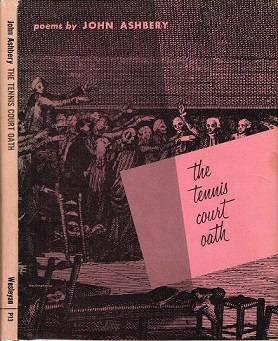
I’d rather read John Ashberry’s obituary than any of his poems. This is because like most people I prefer story to poetry.
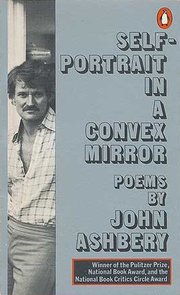
He once wrote poems in French and then translated them back into English in order to avoid customary word associations. (The poems are called, of course, “French Poems.”)

In an interview with The Times in 1999, Mr. Ashbery recalled that he and some childhood playmates “had a mythical kingdom in the woods.”
“Then my younger brother died just around the beginning of World War II,” he added. “The group dispersed for various reasons, and things were never as happy or romantic as they’d been, and my brother was no longer there.” He continued, “I think I’ve always been trying to get back to this mystical kingdom.”
McCain
Posted: August 21, 2017 Filed under: America Since 1945, heroes Leave a comment

Happened to be reading this this weekend.
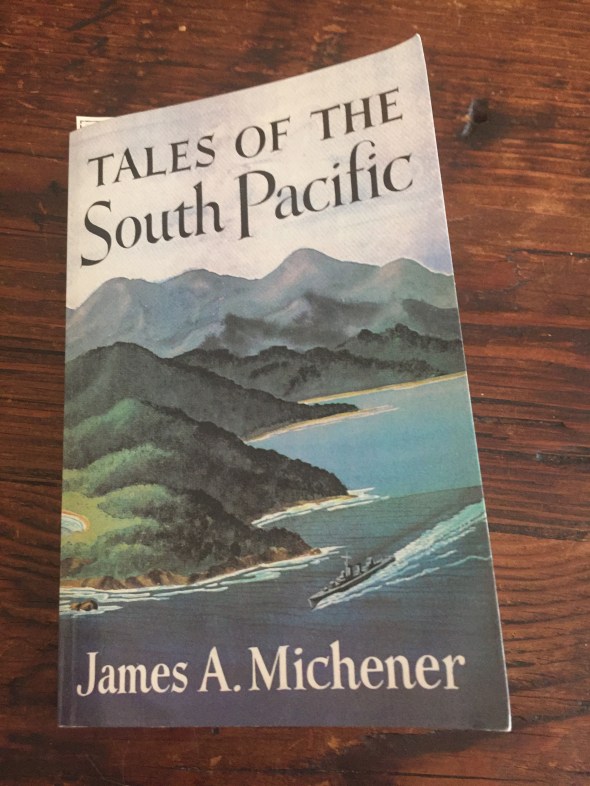
Michener says:

The ugly old aviator:
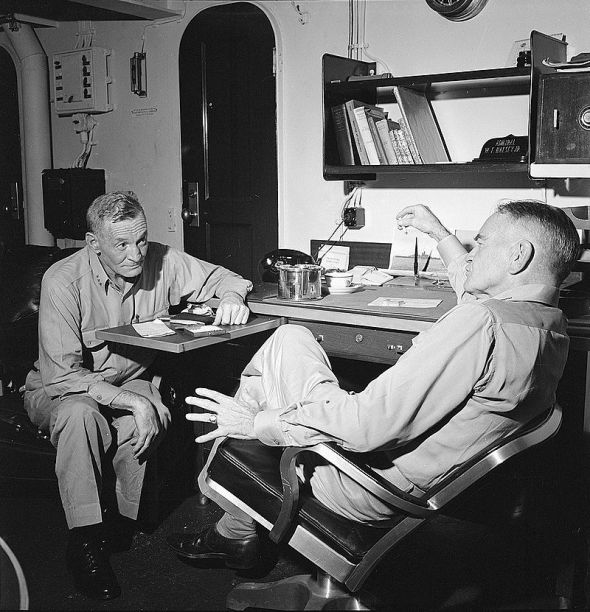
Dropped dead four days after the Japanese surrender.
What can we learn from Lee?
Posted: August 16, 2017 Filed under: America Since 1945 Leave a comment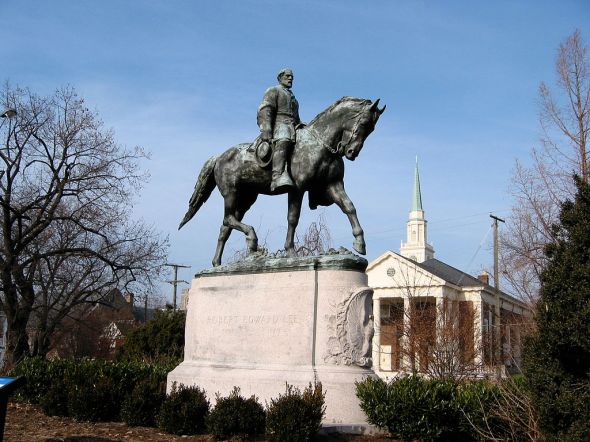
source, wiki photo by Cville Dog
Lots of conversations about history, how we should remember our history, etc. Amateur historians love arguing about Lee, how can you not, he is interesting.
Robert E. Lee had many noble personal qualities, as did many officers in Hitler’s army.
If there’s anything to learn from him, might it not be that a man of principle and dignity can end up on the outrageously wrong side of the most important moral issue of his time?
Nobody should judge John Kelly without reading this Washington Post profile of him by Greg Jaffe.
About 12 hours later, the elder Kelly e-mailed his extended family in Boston, preparing them for the possibility that Robert might be maimed or killed. Kelly knew that Robert went out on almost every patrol with his men through mine-filled fields. One of the Marines at Bethesda told him that Robert was “living on luck.”
“I write you all to just let you know he’s in the thick of it and to keep him in your thoughts,” Kelly typed. “We are doing a Novena a minute down here and there is no end in sight.”
On Oct. 31, Kelly sent a second e-mail to his eldest sister, the family matriarch. “I am sweating bullets,” he confided. “Pray. Pray. Pray. He’s such a good boy . . . and Marine.”
This is painful to watch:
What a dilemma: the American people have elected a mean angry fool, do I try and do what I can to contain him or resign knowing he might do more damage without me around?
What’s the point of a statue of Lee if not to learn from him?
From this take on Lee by Roy Blount Jr. in Smithsonian mag:
We may think we know Lee because we have a mental image: gray. Not only the uniform, the mythic horse, the hair and beard, but the resignation with which he accepted dreary burdens that offered “neither pleasure nor advantage”: in particular, the Confederacy, a cause of which he took a dim view until he went to war for it. He did not see right and wrong in tones of gray, and yet his moralizing could generate a fog, as in a letter from the front to his invalid wife: “You must endeavour to enjoy the pleasure of doing good. That is all that makes life valuable.” All right. But then he adds: “When I measure my own by that standard I am filled with confusion and despair.”
 Helytimes


#/media/File:Prospect_House,_Georgetown.jpg)
.jpg)
#/media/File:TheTennisCourtOath.jpg)
