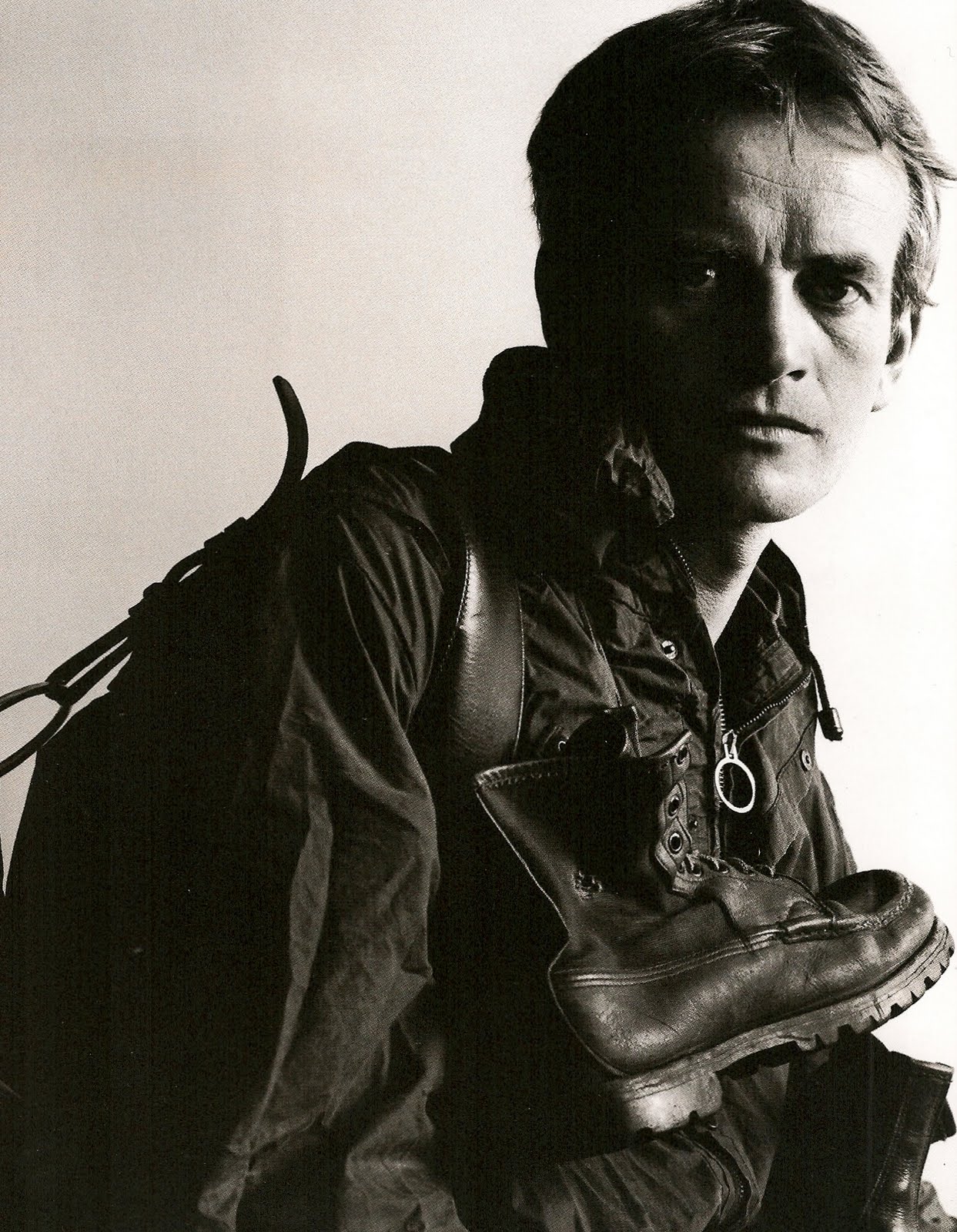
Damn.
Posted: April 5, 2012 Filed under: everyone's a critic, film, SDB Leave a comment
I wish SDB were around to talk to me about Hunger Games. I would definitely be exhausted long before he was even warmed up.
I read 1/2 of the Hunger Games book. For that half, the book was “better” than the movie because there was much more backstory about Katniss and Peeta.
The book seemed to take place in a real, recognizable world. I did not feel this way in the movie. But if the movie were on that level of reality it would be too horrifying to make one billion dollars.
I thought the movie was shot kind of poorly. The forest never looked awesome enough. Maybe they should’ve gotten Debra Granik, who directed Winter’s Bone.

My favorite character was the Game Maker.

A complicated villain.
(photo from People Magazine’s website, where it is used to illustrate an article about “Why Wes Bentley’s ‘Hunger Games’ Beard Drew Stares Off Set.” The answer is because “while the beard’s futuristic design certainly fit in with the film’s stylized setting, it was less suited to rural North Carolina, where the cast and crew shot.”)
The Boston Globe’s Big Picture Blog
Posted: April 5, 2012 Filed under: photography, pictures, the world around us Leave a comment

“Hello Stranger” (1977)
Posted: April 4, 2012 Filed under: Fate, music 1 Comment
from the heroes at Art Decade I learned of Emmylou Harris and Nicolette Larson covering The Carter Family:
What became of Nicolette Larson, I wonder, whose voice is certainly too pretty for this world?:
Larson died on December 16, 1997 in Los Angeles as a result of complications arising from cerebral edema triggered by liver failure. According to her friend Astrid Young, Larson had been showing symptoms of depression and her fatal seizure “was in no small way related to her chronic use of Valium and Tylenol PM”
(album cover lifted from a French blog)
“In Shark’s life there had been no literary romance.”
Posted: April 4, 2012 Filed under: books, California, love, Steinbeck, Steinbeck Leave a comment
In Shark’s life there had been no literary romance. At nineteen he took Katherine Mullock to three dances because she was available. This started the machine of precedent and he married her because her family and all of the neighbors expected it. Katherine was not pretty, but she had the firm freshness of a new weed, and the bridling vigor of a young mare. After her marriage she lost her vigor and her freshness as a flower does once it has received pollen. Her face sagged, her hips broadened, and she entered into her second destiny, that of work.
In his treatment of her, Shark was neither tender nor cruel. He governed her with the same gentle inflexibility he used on horses. Cruelty would have seemed to him as foolish as indulgence. He never talked to her as to human, never spoke of his hopes or thoughts or failures, of his paper wealth nor of the peach crop. Katherine would have been puzzled and worried if he had. Her life was sufficiently complicated without the added burden of another’s thoughts and problems.

Coup In Mali, 2
Posted: April 3, 2012 Filed under: adventures, Mali, science, the world around us, UNESCO Leave a comment
Had a vague idea that I might go to Dogon country in Mali, ever since I read about it in Lonely Planet’s list of the world’s ten best treks. Now seems like an especially bad time to go, better stick to the Haute Route. But still, in my reading, came across this interesting or perhaps stupid discussion of whether the Dogon people have advanced astronomical knowledge. (My verdict? WHAT? Definitely not.)

Moses Shown The Promised Land (1801)
Posted: April 3, 2012 Filed under: art, Benjamin West, Met, painting, pictures Leave a commentMet’s Artwork of the Day drills it (to use a term frequently thrown around in Rob Lowe’s autobiography) today:

Benjamin West.
The family later moved to Newtown Square, Pennsylvania, where his father was the proprietor of the Square Tavern, still standing in that town.
So it is! Regrettably it doesn’t look like you can have a drink there anymore. LAME.

An alert reader in our LIC office
Posted: April 3, 2012 Filed under: Uncategorized 2 CommentsPoints out Tyler Cowen’s review of “Mirror, Mirror,” published here in its entirety.
*Mirror, Mirror* (paging Leo Strauss)
Not often does Hollywood put out movies romanticizing tyrannicide and the assassination of foreign leaders of friendly countries, in this case India. Julia Roberts is the wicked Queen, witch, and false pretender, but actually the stand-in for Indira Gandhi, with an uncanny resemblance of look and dress in the final scene (I wonder if anyone told her?). This movie presents a romanticized and idealized version of how her assassination should have proceeded and should have been processed, namely in a triumphal manner with no reprisals but rather celebration and joyous union and love. As the plot proceeds, you will find all sorts of markers of Sikh theology, including numerous references to daggers, hair, mirrors, water, immersions, submersions, bodily penetrations, transformations, the temple at Amritsar, dwarves who enlarge themselves, and the notion of woman as princess, among many others; director Tarsem Singh knows this material better than I do (read up on Sikh theology before you go, if you haven’t already). The silly critics complained that the plot didn’t make sense, but from the half dozen or so reviews I read they didn’t even begin to understand the movie.
Without wishing to take sides on either the politics or the religion, I found this a daring and remarkable film. The sad thing is that no one is paying attention.
The movie’s trailer is here.
The Jolly Flatboatmen (1846)
Posted: April 3, 2012 Filed under: art, George Caleb Bingham, heroes, people, pictures Leave a comment
George Caleb Bingham was, among other things, the first chief of police in Kansas City. I’d like to visit his house next time I’m in Arrow Rock, Missouri.
This painting is apparently in the collection of Detroit industrialist Richard Manoogian. Manoogian’s father was a refugee from the Armenian genocide. Arriving in America at age 19, he worked as a machinist before founding the Masco Screw Company.
Manoogian’s redesign and production of the Delta faucet, which allowed one-handed use, resulted in best-selling status for the plumbing fixture and generated substantial profits for his business wealth. In 1995 his company had $3 billion dollars in sales and had 38 percent of the domestic market for faucets.
A Delta faucet:

Pacific-Union Club Punch
Posted: April 2, 2012 Filed under: California, how to live, people, San Francisco 1 CommentThis is the Pacific-Union Club, at the top of Nob Hill in San Francisco:

Are you going to tell me you can walk by that building and not think, “I want to make their famous punch!”
For a party of ten. Into a large punch-bowl place ten tablespoonfuls of bar sugar and ten tablespoonfuls of freshly squeezed lime or lemon juice. Add two jiggers of Curaçao and dissolve the whole in about a quart of effervescent water. Add two quarts of champagne and one bottle of good cognac. Stir thoroughly, ice, decorate and serve in thin glassware.
READER: be sure to use regular, orange Curacao, not blue curacao, or your punch will be a revolting green color.
That recipe is from William “Cocktail” Boothby’s 1908 book, The World’s Cocktails and How To Make Them. Let’s take a look at Boothby’s resume, just to make sure he’s for real:
- Minstrel performer.
- Bartender in New York, Chicago, Philadelphia, New Orleans, and Kansas City.
- Bartender at Byron Hot Springs.
- Bartender (or in his terms “presiding deity”) at Hotel Rafael, San Rafael, California, in “the gay days when Baron von Schroeder was making history over there”.
- Bartender at the Silver Palace, San Francisco
- Bartender at the Palace Hotel, San Francisco.
- Saloon owner.
- Assemblyman in California in 1895. The 1908 edition of The World’s Drinks & How To Mix Them begins “To the liquor dealers of San Francisco who unanimously assisted in my election to the Legislature by an unprecedented majority.”
- Soda drink counter supervisor, Olympic Club, during Prohibition
Possible Ancestor?
Posted: April 2, 2012 Filed under: heroes, people Leave a commentAn alert relation links us to the Southeast Missourian’s history of one Edward Hely, who established a rock-crushing plant in Cape Girardeau in 1902.

Is there anything manlier than crushing rocks?
(photo from The Southeast Missourian)
Joke about Boston, from Van Wyck Brooks
Posted: March 30, 2012 Filed under: books, Boston, New England, Van Wyck Brooks Leave a comment
From The Flowering of New England:
One of [Boston publisher James T.] Fields’s jokes was about the Boston man who read Shakespeare late in life but found him far beyond his expectation. “There are not twenty men in Boston who could have written those plays,” he said.
VWB also tells us about John Bartlett, who was just a guy in Cambridge you went to when you needed to know who said something, until he finally went ahead and published his Familiar Quotations.
The Civil Wars
Posted: March 30, 2012 Filed under: everyone's a critic, music Leave a commentThe Civil Wars won the Grammy for Best Country Duo/Group Performance and for Best Folk Album of 2012. I’d never heard of them until then. I’ll be impressed if you can get through one of their videos without getting massively douched out:
The duo’s web site says that the name of their band, The Civil Wars, and their thematic direction, is best summed up in the lyrics of the song “Poison & Wine”. It is about the good, the bad, and the ugly of married life.
Van Wyck Brooks on: Emerson
Posted: March 30, 2012 Filed under: books, Boston, heroes, New England Leave a comment
More excellence from The Flowering of New England
…generations later, when people spoke of Emerson’s “education,” they put the word in quotation-marks – it was not that he did not know his Greek and Latin, but that he was never systematic. He had read, both then and later, for “lustres” mainly. He had drifted first to Florida and then to Europe, and finally settled at Concord…As for the lectures that Emerson was giving in Boston, on great men, history, the present age, the famous lawyer, Jeremiah Mason, when he was asked if he could understand them, replied, “No, but my daughters can.”
To the outer eye, at least, Emerson’s life was an aimless jumble. He had ignored all the obvious chances, rejected the palpable prizes, followed none of the rules of common sense. Was he pursuing some star of his own? No one else could see it. In later years, looking back, Emerson’s friends, remembering him, thought of those quiet brown colts, unrecognized even by the trainers, that outstrip all the others on the race-course. He had had few doubts himself. He had edged along sideways towards everything that was good in his life, but he felt that he was born for victory…
Bruce Chatwin
Posted: March 26, 2012 Filed under: adventures, books, bruce chatwin, travel, writing Leave a comment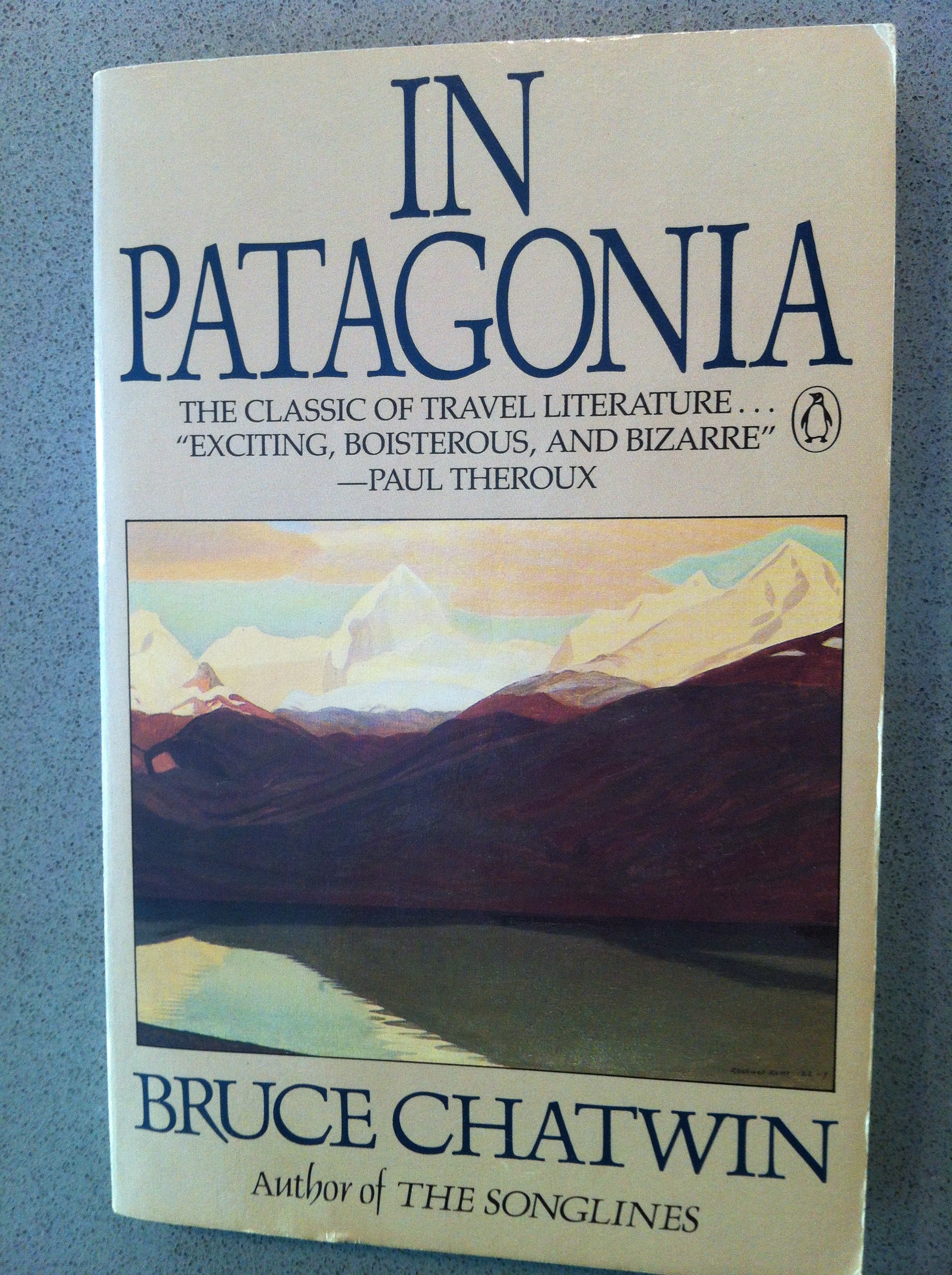
He definitely had bigtime Mike Daisey problems. No way he’d be as famous if he weren’t so photogenic. But still. This is the entire chapter 69 from “In Patagonia”:
The “Englishman” took me to the races. It was the sunniest day of summer. The Strait was a flat, calm blue and we could see the double white crown of Mount Sarmiento. The stands had a coat of fresh white paint and were full of generals and admirals and young officers.
“Day at the races, eh? Nothing like a good race-meeting. Come along with me now. Come along. Must introduce you to the Intendente.”
But the Intendente took no notice. He was busy talking to the owner of Highland Flier and Highland Princess. So we talked to a naval captain who stared out to sea.
“Ever hear the one about the Queen of Spain,” the Englishman asked, trying to liven up the conversation. “Never heard the one about the Queen of Spain? I’ll try and remember it:
A moment of pleasure
Nine months of pain
Three months of leisure
Then at it again.
“You are speaking of the Spanish Royal Family?” The Captain inclined his head.
The “Englishman” said he read history at Oxford.
The Nicholas Shakespeare biography is well-worth a flipthrough. When Chatwin was diagnosed with HIV he claimed, among other things, that he had an extremely rare disease he caught from being bitten by a Chinese bat.
Story about Aaron Sorkin and pacing
Posted: March 26, 2012 Filed under: film, screenwriting, writing 3 CommentsCraig [Mazin]: There is a great story recently from The Social Network, because Sorkin writes very — the dialogue is designed to be delivered at an insane pace. And he turned the script in and everybody was kind of freaking out. And he recorded that great opening sequence with Mark Zuckerberg being dumped by his girlfriend.
He recorded it the way, at the pace he thought it should be, and supposedly — this sounds true to me — Fincher basically timed everything per Sorkin. And on the day, he would sit there and his script supervisor had a stopwatch, and if they didn’t hit it, they did it again. [laughs] It had to be at that pace.
So, the one minute per page rule is something that, some standard needs to be there, but… — Like I said, if you know that it is supposed to go faster, just make sure everybody knows beforehand.
– from John August and Craig Mazin’s podcast. So helpful of them to provide a transcript.
Scott Prior
Posted: March 24, 2012 Filed under: art, Boston, MFA Boston, museum, New England, painting, pictures 1 Comment
This guy is good at painting, right? Am I crazy?
His “Nanny and Rose” used to hang in the lobby of the MFA and whenever I saw it as a kid I was like, oh that guy must be the best painter in the world.

But nobody ever talks about him.
Images from his website.
Theodosius Is Shown The Cave Of The Seven Sleepers
Posted: March 23, 2012 Filed under: art, Christianity, Islam, museum, pictures, religion 1 Comment
What? You’ve never heard of the Seven Sleepers of Ephesus? Remember? The persecutions of Decius? Instead of submitting to his authority they went into a cave to pray? Remember? And they fell asleep? Decius sealed the cave? Then two centuries later Theodosius decides to open the cave, to use as a cattle pen? They’re still alive? One of them tries to spend his coins with the face of Decius? When the sleepers see crosses they’re like, “oh? all of you worship Christ? how wonderful the Lord has proved to be.” People lose it? When the bishop heard about it he dropped dead?
Did you just, what, did you just sleep through CCD?
Oh, you’re Muslim? NICE TRY STILL A BIG DEAL IN THE Q’URAN TOO! They would’ve made pictures if the Q’uran didn’t also ban images of humans.
(photo from The Cloisters, great place to learn about a lot of “off center” medieval Christianity)
Coup in Mali
Posted: March 23, 2012 Filed under: Mali, music Leave a commentI hope Amadou and Mariam are ok
Luke Kelly’s Hair
Posted: March 23, 2012 Filed under: hair, heroes, how to live, Ireland, Irish traditional music, music Leave a commentOK, wikipedia, gimme the tragedy:
On 30 June 1980 during a concert in the Cork Opera House Luke Kelly collapsed on the stage. He had already suffered for some time from headaches and forgetfulness, which however had been ascribed to his alcohol consumption. He was diagnosed with a brain tumor.
The subject of the song, btw?:
[Kelly] was dragged from his bed and hanged by British soldiers who decapitated his corpse and kicked his head through the streets shortly after the fall of Wexford on 21 June 1798.
 Helytimes