the workings of capitalism
Posted: August 11, 2018 Filed under: America Since 1945, business Leave a comment

found that blunt history, which sounds like it would fit in a socio-anarchist pamphlet, in

Old Tweets
Posted: August 9, 2018 Filed under: writing Leave a comment
Man I went through my old Tweets, and none of them were racist or anything, but they were terrible!
If you don’t look back on your old writing without disgust you’re not growing, so healthy enough I guess. But you’d think for something I spent so much time doing I’d’ve come up with some better ones.
Here are the only ones I felt like might be worth saving, putting them here as much for myself as for my small but influential readership.
When I don’t like writing it’s usually because it’s too writingy.
The Biblical story of Joseph interpreting Pharaoh’s dream: first case of a Jewish psychiatrist?
If there were a restaurant in LA that sold angel meat, Jonathan Gold would eat there.
Today’s surprising Supreme Court Fact: Ruth Bader Ginsburg was a high school cheerleader.
Whenever I’m in New York, I visit this little shop know, down in the Flatiron, and have my shoes professionally tied.
Addition to Hely’s Great Things: When an old person says “blankety-blank” instead of swears.
An airport? A state forest? An interchange? All fine things to have named after you. But only Melba has a peach thing AND a toast.
One thing I’d like to see is a giant eating baked potatoes, one after another, like grapes.
Ate a piece of gum today that was in stick form, instead of hard, candied pill form. It was like visiting Old Sturbridge Village.
If I’m gonna see a play, by the end the stage better be a MESS.
What real-life show is “Game of Thrones” the porn parody of?
The taste of a drop of air conditioner water landing in your mouth. #mynewyork
There’s only one political issue I’m deeply passionate about: colonizing the moon with convicts. I’m opposed.
Let’s argue! I’ll start! All jazz is perfect.
my favorite cob food? corn, no brainer
It’s unreasonable of Don Cheadle to expect the other members of Ocean’s Eleven will understand his ludicrous slang.
Most of my money ($660) comes from my 1992 dance hit “It’s OK To Dress Up (When You’re The Birthday Girl)”
I think I could sell idiots salted coffee.
“Fine, FINE, we’ll just name ANOTHER one after John Muir, then we can all go home.” – another tense meeting at the US Forest Service.
In this age of baby carrots it’s such a power move to eat a regular carrot.
If you’re into immutable laws you pretty much have to go with physics, right?
TRIVIA: What is the most spilled beverage in the world? Give up? It’s water. (Trick question because I was counting waterfalls.)
Vali rolled with it admirably when he came back to our seats at the Arclight and found me telling the history of IKEA to a stranger.
Was bowling invented so teens of different genders could examine each other’s butts?
“I like your shirt!” = “I noticed your shirt!”
LA etiquette: it’s rude to point out that someone’s production company has never produced anything.
The most important ingredient in any recipe is money.
Movie pitch: Fuckboi Academy
Nothing pisses me off more than when some fuckface in my Instagram is having a nice vacation
My best hope for Olympic glory would be as the falling down guy someone helps in a true display of sportsmanship
What did the TV writer say when he arrived in Hell? “How’re the hours?”
You know what sounds terrible but is actually perfectly nice? The stall in the bathroom of the Yucca Valley Walmart, where I wrote this.
in my Quora digest
Posted: August 8, 2018 Filed under: Islam, religion, the California Condition Leave a comment
Droog
Posted: August 6, 2018 Filed under: drugs, war Leave a comment
learned the origin of the word “drugs” from:
an intense book! 
Meanwhile, in the Hi-Desert Star
Posted: August 6, 2018 Filed under: the California Condition Leave a comment
message
Posted: August 5, 2018 Filed under: America Since 1945, New England, politics Leave a comment
sent by Rhode Island desk
The source
Posted: August 5, 2018 Filed under: Christianity, religion Leave a comment

Most scholars seem to agree that Mark, Luke, and Matthew used a common source, a sayings source. A list or record of Jesus sayings. This now lost source is called Q, from the German Quelle, meaning source.

The stories about John Belushi in this book were written down at about the same time distance as the stories about Jesus in the Gospel of Mark.
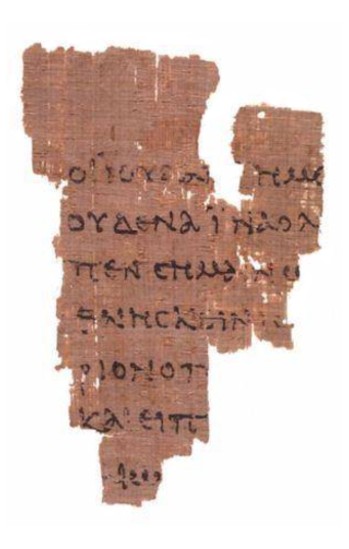
Though the oldest written fragments of the Gospels are on papyrus from 100-200 CE, most scholars seem to agree Mark was written around 70 AD.
Richard Bauckham, author of this book:

and this one:

makes a strong case, I believe, that one of Mark’s main sources was Peter. Directly or indirectly, who knows. But in Mark we’re getting something like Peter’s version. Peter himself is a character in the story. Mark tells stories only Peter (or only Peter and a few others) could have known.

“Get behind me Satan!”
There are times in Mark when Jesus is angry and frustrated with Peter. In a way Mark tells Peter’s version of a story of a complicated bromance with Jesus.
How much was Mark getting his stuff from Peter? Or other eyewitnesses to Jesus? Here is a lowkey fiery debate on this topic. Gets very hot around 19:54 as these guys try to jab each other over how many people were literate in Palestine two thousand years ago. (Hard not to root for the American tbh.)
Luke alone has receipts:
Many have undertaken to draw up an account of the things that have been fulfilled among us, just as they were handed down to us by those who from the first were eyewitnesses and servants of the word. With this in mind, since I myself have carefully investigated everything from the beginning, I too decided to write an orderly account for you, most excellent Theophilus, so that you may know the certainty of the things you have been taught.

It feels infuriating that Paul says that the time he’s writing 1 Corinthians (15:6) there are 251 at least (?) eyewitnesses still alive who saw Jesus after the crucifixion:
New International Version
After that, he appeared to more than five hundred of the brothers and sisters at the same time, most of whom are still living, though some have fallen asleep.New Living Translation
After that, he was seen by more than 500 of his followers at one time, most of whom are still alive, though some have died.
and yet Paul doesn’t bother interviewing any of them! Paul was a better philosopher than a reporter I guess.
Going back to the source is a passion here at Helytimes.
Let’s sort out once and for all what Michelin stars mean
Posted: August 4, 2018 Filed under: food Leave a comment
source:
Barstow Woolly Sunflower
Posted: August 4, 2018 Filed under: desert, the California Condition Leave a comment
gotta check this out one of these days.

Munger on grubstake
Posted: August 3, 2018 Filed under: business Leave a comment
“The first $100,000 is a bitch, but you gotta do it. I don’t care what you have to do—if it means walking everywhere and not eating anything that wasn’t purchased with a coupon, find a way to get your hands on $100,000. After that, you can ease off the gas a little bit.”
found that Munger quote in this long but interesting post about Jim O’Shaughnessy on 25iq by Tren Griffin.
There’s a trick of capitalism, which is if you have capital, it’s not that hard to multiply it into more capital. The hard part is getting capital in the first place. Charlie Munger acknowledges that yes, that is a challenge, there’s no easy solution.
If you prefer Oprah to Munger, 25iq has a roundup on her lessons as well!

Den Haag
Posted: August 1, 2018 Filed under: netherlands Leave a comment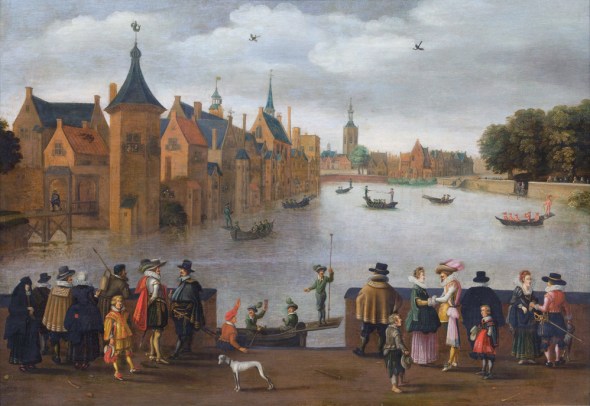
Begun to learn about The Hague, the name of which in Dutch means (I guess) “The Hedge”:
Little is known about the origin of The Hague. There are no contemporary documents describing it, and later sources are often of dubious reliability. What is certain is that The Hague was founded by the last counts of the House of Holland. Floris IV already owned two residences in the area, but presumably purchased a third court situated by the present-day Hofvijver in 1229, previously owned by a woman called Meilendis. Presumably, Floris IV intended to rebuild the court into a large castle, but he died in a tournament in 1234, before anything was built.
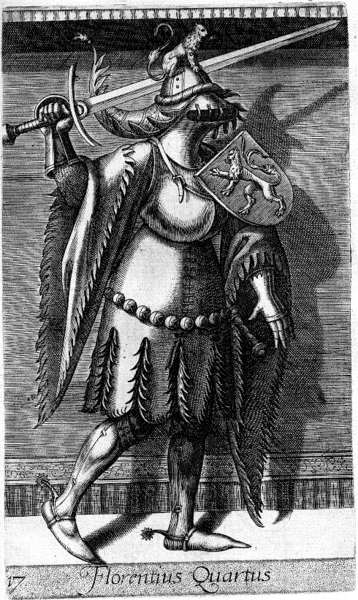
Floris IV:
He married before 6 December 1224 Matilde of Brabant, the sister of his stepmother, daughter of Duke Henry I of Brabant and Mathilde of Flanders also referred to as Maud of Boulogne and Alsace.
What is moral?
Posted: July 31, 2018 Filed under: writing Leave a comment
Goya, Death of the Picador
How do we decide what’s good or bad, right or wrong?
A interesting question obvs. One every person answers for themselves somehow.
But how many of us can articulate our answer?
Would you come up with something like “not harming anyone else”? Living with honor and honesty and compassion?
Really, I doubt most of us bother to articulate a moral philosophy or definition of morals. We sorta just go with what feels right or wrong.
Right?
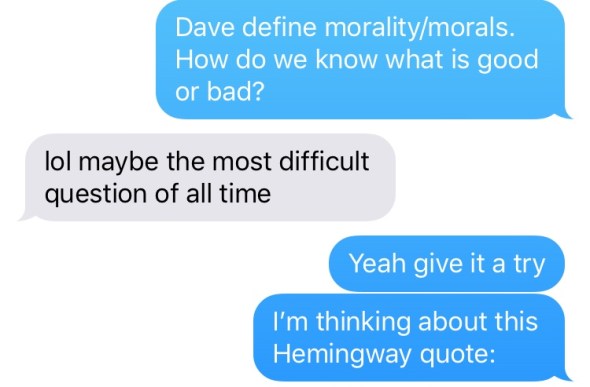
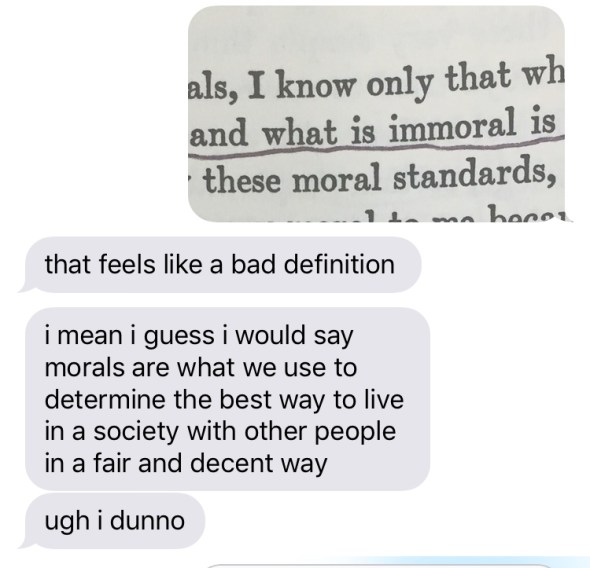
About morals, I know only that what is moral is what you feel good after and what is immoral is what you feel bad after.
This is a quote attributed to Hemingway.
One thing I think is wrong is quote sites that don’t include the source or context for the quote.
(Brainy Quotes has the nerve to suggest how you can cite Brainy Quotes itself as the source.)
As always, hunting the source proves enriching. Hemingway said this in chapter one of his book Death In The Afternoon.
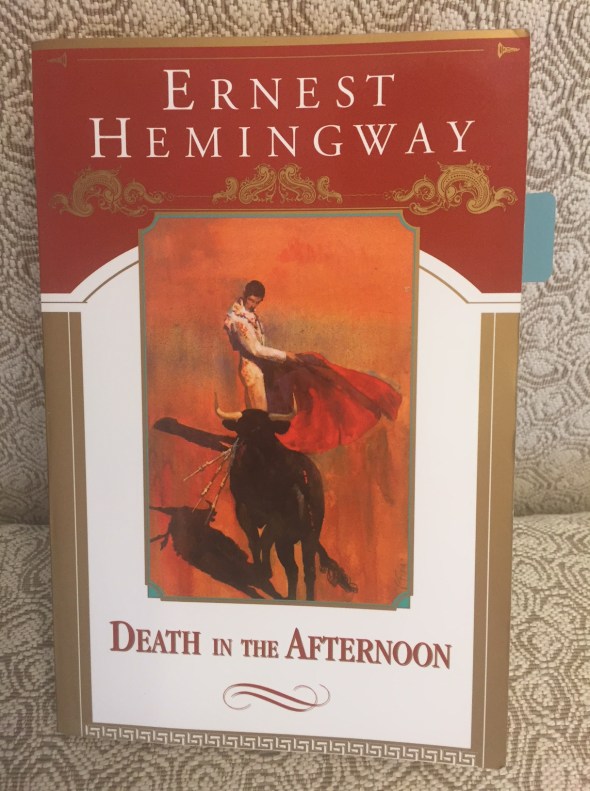
Back up just a few pages. Here’s how Hemingway starts the book:
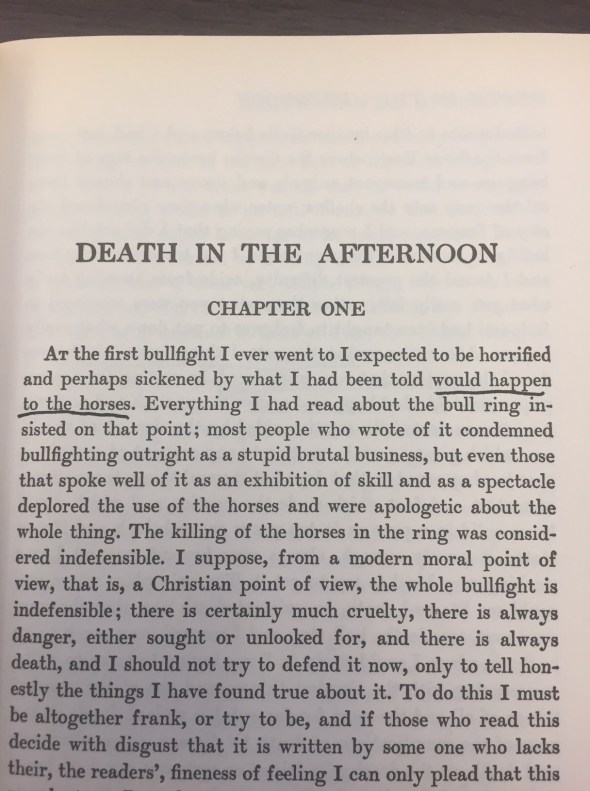
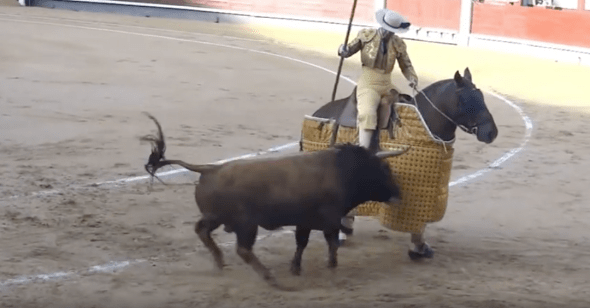
In Hemingway’s day, what was most repugnant about bullfighting was the suffering of horses.
Horses (this is described in the book) would get gored and have their entrails hanging out and trailing like grotesque ribbons.
At what bullfights remain this problem has been mostly eliminated, I believe, by armoring the horses. At the only bullfight I ever saw in person, the horses were unharmed, though nine bulls were killed, one of them especially tortured because of the incompetence of the matador (lit. “killer”). (This video is upsetting if you don’t like seeing bulls hurt, but you can see how horses are now protected.)
Hemingway continues, justifying why he got into bullfighting even though he likes horses:
I was trying to write then, and I found the greatest difficulty, aside from knowing truly what you really felt, rather than what you were supposed to feel, and had been taught to feel, was to put down what really happened in action; what the actual things were which produced the emotion that you experienced.
A theme Hemingway came back to frequently.
He mentions Goya’s Los Desastros de la Guerra.
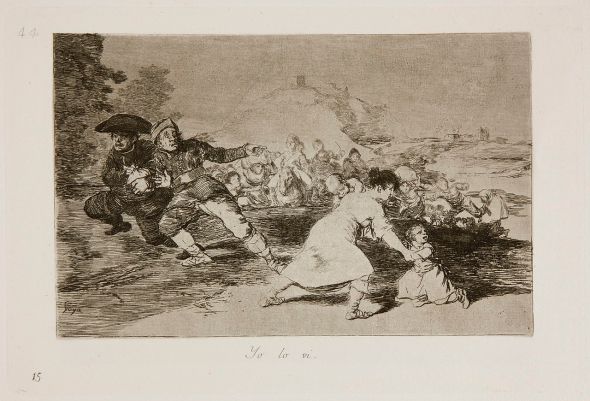
Plate 44: Yo lo vi (I saw this)
Hemingway continues:
So I went to Spain to see bullfights and to try to write about them for myself. I thought they would be simple and barbarous and cruel and that I would not like them, but that I would see certain definite action which would give me the feeling of life and death that I was working for. I found the definite action ; but the bullfight was so far from simple and I liked it so much that it was much too complicated for my then equipment for writing to deal with and, aside from four very short sketches, I was not able to write anything about it for five years — and I wish I would have waited ten. However, if I had waited long enough I probably never would have written anything at all since there is a tendency when you really begin to learn something about a thing not to want to write about it but rather to keep on learning about it always and at no time, unless you are very egotistical, which, of course, accounts for many books, will you be able to say: now I know all about this and will write about it. Certainly I don not say that now ‘ every year I know there is more to learn, but I know some things which may be interesting now, and I may be away from the bullfights for a long time and I might as well write what I know about them now. Also it might be good to have a book about bullfighting in English and a serious book on such an unmoral subject may have some value.
So far, about morals, I know only that what is moral is what you feel good after and what is immoral is what you feel bad after and judged by these moral standards, which I do not defend, the bullfight is very moral to me because I feel very fine while it is going on and have a feeling of life and death and mortality and immortality, and after it is over I feel very sad but very fine. Also, I do not mind the horses; not in principle, but in fact I do not mind them.
Just thought is was interesting, this succinct definition of morality came in the context of why it shouldn’t bother us to see horses mangled during the ritual killing of bulls.
Mission: Impossible: Fallout
Posted: July 30, 2018 Filed under: film, movies 1 Comment
Question about this film, if you’ve seen it:
(and don’t get me wrong, I had a good time)
why was a high-altitude parachute jump the best way to get into Paris?
Never listened to a corporate earnings call
Posted: July 30, 2018 Filed under: business, the California Condition Leave a comment
but there’s a first for everything. I am pretty curious about the Tesla call, Weds Aug 1 at 2:30 PDT
Steak fries well done and a virgin pina colada
Posted: July 30, 2018 Filed under: food Leave a comment
Christine Baskets room service order on a Baskets ep, catchin’ up.
The wild man and his “wildies”
Posted: July 29, 2018 Filed under: comedy, movies Leave a comment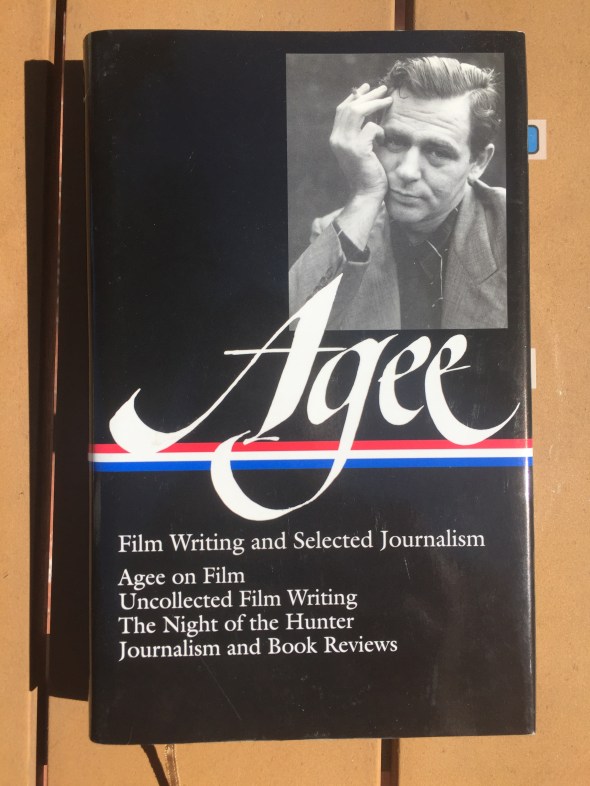
From Comedy’s Greatest Era (1949):
Sennett used to hire a “wild man” to sit in on his gag conferences, whose whole job was to think up “wildies.” Usually he was an all but brainless, speechless man, scarcely able to communicate his idea; but he had a totally uninhibited imagination. He might say nothing for an hour; then he’d mutter “You take . . . ” and all the relatively rational others would shut up and wait. “You take this cloud . . .” he would get out, sketching vague shapes in the air. Often he could get no further; but thanks to some kind of thought-transference, saner men would take this cloud and make something of it. The wild man seems in fact to have functioned as the group’s subconscious mind, the source of all creative energy. His ideas were so weird and amorphous that Sennett can no longer remember a one of them, or even how it turned out after rational processing. But a fair equivalent might be on of the best comic sequences in a Laurel and Hardy picture. It is simple enough – simple and real, in fact, as a nightmare. Laurel and Hardy are trying to move a piano across a narrow suspension bridge. The bridge is slung over a sickening chasm, between a couple of Alps. Midway they meet a gorilla.
Agee speaks of the side-splitting laughter that would erupt in silent movie houses, and how you just can’t get that level of laughter from “talkies,” no matter how funny.
the best of comedies these days hand out plenty of titters and once in a while it is possible to achieve a yowl without overstraining
but nothing like what the “ideally good gags” of the silent days would provoke.
Wasn’t sure I understood what levels of laughter in the movie theater Agee was talking about until I saw the Jackass movies:

Schumpeter
Posted: July 29, 2018 Filed under: business Leave a comment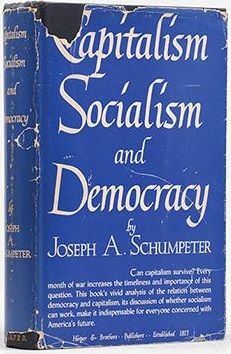
This process of Creative Destruction is the essential fact about capitalism. It is what capitalism consists in and what every capitalist concern has got to live in.
The Economist has a column named after Joseph Schumpeter and it’s been giving me a lot of ideas. Who was Schumpeter?
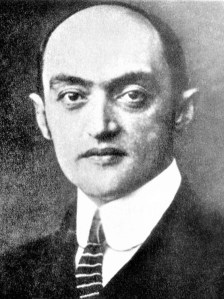
Schumpeter claimed that he had set himself three goals in life: to be the greatest economist in the world, to be the best horseman in all of Austria and the greatest lover in all of Vienna. He said he had reached two of his goals, but he never said which two, although he is reported to have said that there were too many fine horsemen in Austria for him to succeed in all his aspirations.
On what would happen:
Schumpeter’s most popular book in English is probably Capitalism, Socialism and Democracy. While he agrees with Karl Marx that capitalism will collapse and be replaced by socialism, Schumpeter predicts a different way this will come about. While Marx predicted that capitalism would be overthrown by a violent proletarian revolution, which actually occurred in the least capitalist countries, Schumpeter believed that capitalism would gradually weaken by itself and eventually collapse. Specifically, the success of capitalism would lead to corporatism and to values hostile to capitalism, especially among intellectuals. “Intellectuals” are a social class in a position to critique societal matters for which they are not directly responsible and to stand up for the interests of other classes. Intellectuals tend to have a negative outlook of capitalism, even while relying on it for prestige, because their professions rely on antagonism toward it. The growing number of people with higher education is a great advantage of capitalism, according to Schumpeter. Yet, unemployment and a lack of fulfilling work will cause intellectual critique, discontent and protests. Parliaments will increasingly elect social democratic parties, and democratic majorities will vote for restrictions on entrepreneurship. Increasing workers’ self-management, industrial democracy and regulatory institutions would evolve non-politically into “liberal capitalism”. Thus, the intellectual and social climate needed for thriving entrepreneurship will be replaced by some form of “laborism”. This will exacerbate “creative destruction” (a borrowed phrase to denote an endogenous replacement of old ways of doing things by new ways), which will ultimately undermine and destroy the capitalist structure.
Schumpeter emphasizes throughout this book that he is analyzing trends, not engaging in political advocacy.
Any day now!
Schumpeter was interested in the wave theories of Nikolai Kondratiev, a Soviet economist who ended up executed.
He is best known for proposing the theory that Western capitalist economies have long term (50 to 60 years) cycles of boom followed by depression. These business cycles are now called “Kondratiev waves“.
I can’t claim to understand Kondratiev, but the idea that waves are a good metaphor for the cycles of capitalism seems like a start.

Nassim Nicholas Taleb on lions
Posted: July 28, 2018 Filed under: Africa, business Leave a comment
The Fooled By Randomness author and deadlifter describes going to Africa and seeing lots of giraffes and impalas but only one lion:
It turned out that I had squarely made the error that I warn against, of mistaking the lurid for the empirical: there are very, very few predators compared to what one can call collaborative animals. The camp in the wild reserve was next to a watering hole, and in the afternoon it got crowded with hundreds of animals of different species who apparently got along rather well with one another. But of the thousands of animals that I spotted cumulatively, the image of the lion in a state of majestic calm dominates my memory. It may make sense from a risk-management point of view to overestimate the role of the lion — but not in our interpretation of world affairs.
If the “law of the jungle” means anything, it means collaboration for the most part, with a few perceptional distortions caused by our otherwise well-functioning risk management intuitions. Even predators end up in some type of arrangement with their prey.
The origin of algorithm
Posted: July 28, 2018 Filed under: business, Islam Leave a comment
The word “algorithm” comes up a lot these days. We’ve spoken before about the origin of this word, in the name of Muhammad ibn Musa al-Khwarizmi, author of The Compendious Book on Calculation by Completion and Balancing.
written around 820 CE in the city of Baghdad.

The man from Khwarizm.

source: Wiki user Fulvio Spada
The Khwarazam region today doesn’t look too great.

I’m talking about live the life.
Posted: July 27, 2018 Filed under: the California Condition Leave a commentJonathan Gold talking to Ann Friedman:
JG: [Laughs.] There’s a taqueria in Santa Barbara I like that… most of what they serve revolves around a stewed cow’s head. You can order it by name or you can point to the part of the cow’s head that you’d like your taco to be made of. It’s pretty bland, but then you put salsa, cilantro, and onion and stuff on it, and it’s pretty good. There’s a couple of places in East L.A. that do that, but there you have to order it by name.
AF: Like, it wouldn’t be on the menu?
JG: It would be on the menu, but you wouldn’t be able to point at a whole cow’s head and say what you want.
AF: Ah, the visual.
JG: That’s one of the great things about L.A. You can decide that you want to eat essentially as if you live in Guadalajara, or you can decide you want to eat essentially as if you are in Chengdu. There are enough places around that you could probably manage it. I’m not just talking for a meal, I’m talking about live the life.
 Helytimes
_(6739724025).jpg)