When people had one name
Posted: July 19, 2018 Filed under: history Leave a comment
Thinkin’ about the New Testament bros: Mark, John, James, etc when I came across this from Bob Dylan.
Those songs are just in my genes, and I couldn’t stop them comin’ out. In a reincarnative kind of way, maybe. The songs have got some kind of a pedigree to them. But that pedigree stuff, that only works so far. You can go back to the ten-hundreds, and people only had one name. Nobody’s gonna tell you they’re going to go back further than when people had one name.
(Bob Dylan interview with Jonathan Lethem in Rolling Stone.)
The question, silently: do you really know where you are at this point in time and space and in reality and in existence?
Posted: July 19, 2018 Filed under: America Since 1945, moon Leave a comment(not great image quality there but the audio! from one of my favs:

(avail on FilmStruck streaming, possibly Netflix as well)
Montenegro in the news
Posted: July 18, 2018 Filed under: politics, writing Leave a comment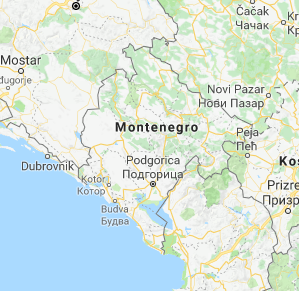
Montenegro in the news:

made me think of:

Gatsby is finally telling his backstory to Nick:
“Then came the war, old sport. It was a great relief and I tried very hard to die but I seemed to bear an enchanted life. I accepted a commission as first lieutenant when it began. In the Argonne Forest I took two machine-gun detachments so far forward that there was a half mile gap on either side of us where the infantry couldn’t advance. We stayed there two days and two nights, a hundred and thirty men with sixteen Lewis guns, and when the infantry came up at last they found the insignia of three German divisions among the piles of dead. I was promoted to be a major and every Allied government gave me a decoration–even Montenegro, little Montenegro down on the Adriatic Sea!”
Little Montenegro! He lifted up the words and nodded at them–with his smile. The smile comprehended Montenegro’s troubled history and sympathized with the brave struggles of the Montenegrin people. It appreciated fully the chain of national circumstances which had elicited this tribute from Montenegro’s warm little heart. My incredulity was submerged in fascination now; it was like skimming hastily through a dozen magazines. He reached in his pocket and a piece of metal, slung on a ribbon, fell into my palm. “That’s the one from Montenegro.” To my astonishment, the thing had an authentic look.
“Orderi di Danilo,” ran the circular legend, “Montenegro, Nicolas Rex.”
“Turn it.”
“Major Jay Gatsby,” I read, “For Valour Extraordinary.”
#teammontenegro
Becoming over time becomes being
Posted: July 16, 2018 Filed under: business, California, war Leave a comment
“The goal is to become HBO faster than HBO can become us,” Netflix’s chief content officer, Ted Sarandos, once famously said.
(source is this Vanity Fair article). The ancient sages and strategists would’ve enjoyed that one. The intersection of becoming and fighting.
The supreme art of war is to subdue the enemy without fighting
Sun Tzu said. Maybe. Can’t vouch for the translation. Elsewhere rendered as:
To subdue the enemy without fighting is the acme of skill.
or:
to defeat the enemy without battle is the whole of my art
Summits with Russia
Posted: July 16, 2018 Filed under: America Since 1945, presidents Leave a comment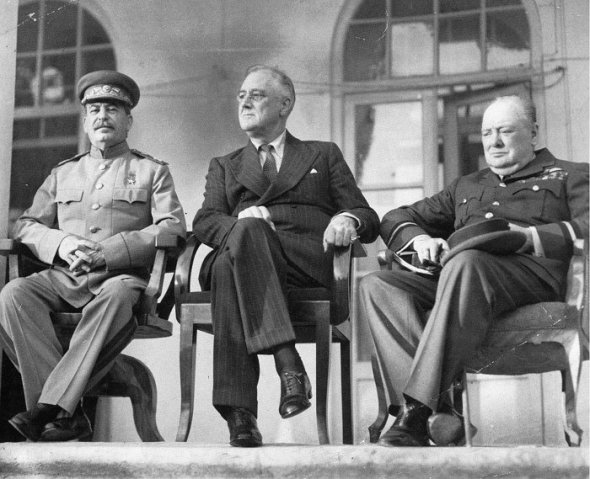
Tehran, 1943. FDR and Stalin joke (?) around with Churchill about the idea of executing German officers:
When they had disposed of Germany, Stalin threw off care; he was, the Ambassador said, in superb form, pulling the P.M.’s [Winston Churchill’s] leg all the evening. I asked the Ambassador:
“Was Stalin’s ragging a cat-like instinct to play with a mouse, or was he just in great spirits now that he had gained his end?”
He did not answer. The P. M. had not, he said, tumbled to Stalin’s game. The Ambassador was full of Stalin’s talk.
Stalin: “Fifty thousand Germans must be killed. Their General Staff must go.”
P.M. (rising and pacing the room): “I will not be a party to any butchery in cold blood. What happens in hot blood is another matter.”
Stalin: “Fifty thousand must be shot.”
The P.M. got very red in the face.
P.M.: “I would rather be taken out now and shot then disgrace my country.”
The President, said the Ambassador, then joined in the fun.
Roosevelt: “I have a compromise to propose. Not fifty thousand, but only forty-nine thousand should be shot.”
The Prime Minister got up and left the room. Stalin followed him, telling him he was only joking. They came back together. Stalin had a broad grin on his face.
The Ambassador is Sir Archibald Clark Kerr, quoted in:
San Cristóbal
Posted: July 14, 2018 Filed under: America Since 1945, Mexico Leave a comment
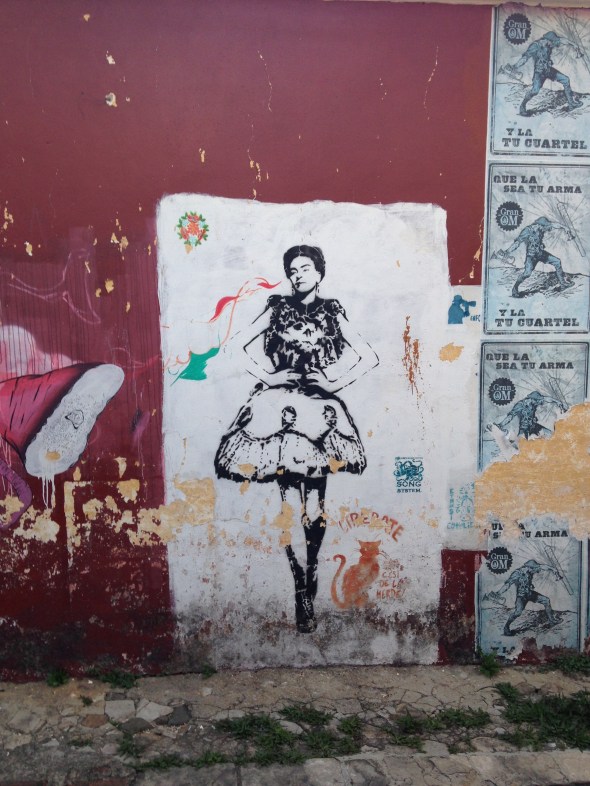
took this one myself.
Visited the town of San Cristóbal while writing this book:

Now I read in the New York Times piece by Oscar Lopez and Andrew Jacobs that the residents don’t have enough water, and so instead are drinking Coke.
Why don’t they have enough water?
Because of the Coke factory.
Buffeted by the dual crises of the diabetes epidemic and the chronic water shortage, residents of San Cristóbal have identified what they believe is the singular culprit: the hulking Coca-Cola factory on the edge of town.
The plant has permits to extract more than 300,000 gallons of water a day as part of a decades-old deal with the federal government that critics say is overly favorable to the plant’s owners.
Bill Clinton in his post presidency used to speak of working with Coca-Cola, which has one of the world’s most effective distribution networks, to bring health care and medicine to remote places in Africa. Thought that was kind of a cool idea, neoliberalism at its best, you know? There was a positive story to tell there, but you gotta wonder who is really steering in the relationship of Coke and politicians.
If you want to read about San Cristóbal and San Juan Chamula and the nearby towns of Chiapas, get my book. A special place, grateful I got to go there.
Woody Guthrie’s birthday
Posted: July 14, 2018 Filed under: America, music Leave a comment

“Woody Guthrie’s childhood home as is appeared in 1979,” from Wikipedia:

source. Walter Smellings, Historic American Buildings Survey.
Man, you go to read Woody Guthrie’s wikipedia page, and next thing you know you’re looking at a photo of a 1911 lynching (warning: upsetting but are we obliged as citizens to look?)
Even the story of the photo of the lynching is haunting:
James Allen, an Atlanta antiques collector, spent years looking for postcards of lynchings for his Without Sanctuary: Lynching Photography in America (2000). “Hundreds of flea markets later,” he wrote, “a trader pulled me aside and in conspiratorial tones offered to sell me a real photo postcard. It was Laura Nelson hanging from a bridge, caught so pitiful and tattered and beyond retrieving—like a paper kite sagged on a utility wire.”
The book accompanied an exhibition of 60 lynching postcards from 1880 to 1960, Witness: Photographs of Lynchings from the Collection of James Allen, which opened at the Roth Horowitz Gallery in New York in January 2000. Allen argued that lynching photographers were more than passive spectators. They positioned and lit the corpses as if they were game birds, he wrote, and the postcards became an important part of the act, emphasizing its political nature.
Allen’s publication of the images encountered a mixed reception. Julia Hotton, a black museum curator in New York, said that, with older blacks especially: “If they hear a white man with a Southern accent is collecting these photos, they get a little skittish.”
All kinds of wild questions considered in this 2000 LA Times / J. R. Moehringer profile of Allen:
The man’s story enhances the beauty of the shack, Allen believes, and its value. The man’s story makes the shack more than a work of folk art; it’s a sort of monument. When Allen sells the shack, along with some furniture and art done by the old man, the asking price will be just under $100,000.
How about Bryan Stevenson’s project?
How did I get here again?
Oh right.
Learning about Woody Guthrie.

Nanette and Domino’s Pizza and Taxonomies
Posted: July 13, 2018 Filed under: America Since 1945, business Leave a comment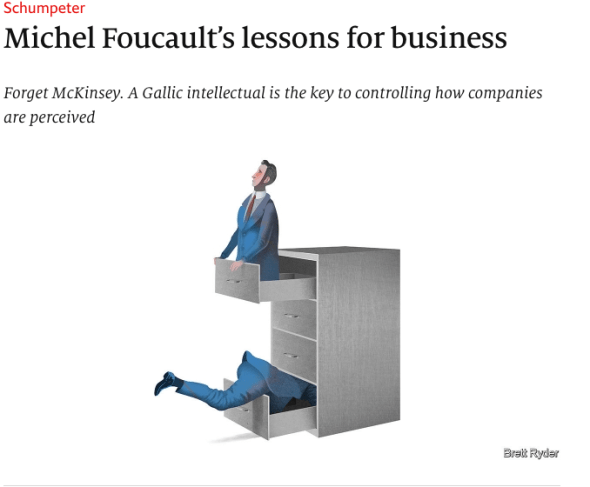
Really interested in this Schumpeter column in a recent issue of The Economist:
NOT many businesspeople study post-war French philosophy, but they could certainly learn from it. Michel Foucault, who died in 1984, argued that how you structure information is a source of power. A few of America’s most celebrated bosses, including Jeff Bezos and Warren Buffett, understand this implicitly, adroitly manipulating how outsiders see their firms. It is one of the most important but least understood skills in business.
Foucault was obsessed with taxonomies, or how humans split the world into arbitrary mental categories in order “to tame the wild profusion of existing things”. When we flip these around, “we apprehend in one great leap…the exotic charm of another system of thought”. Imagine, for example, a supermarket organised by products’ vintage. Lettuces, haddock, custard and the New York Times would be grouped in an aisle called “items produced yesterday”. Scotch, string, cans of dog food and the discounted Celine Dion DVDs would be in the “made in 2008” aisle.
I’m always into it when CEOs have a bold claim on what kind of company they are, redefining their own classification. Here are some examples:


Or in Ugly Delicious when Dave Chang says Domino’s is a technology company:

Was thinking about how important taxonomy is. Take, for instance, Nanette:
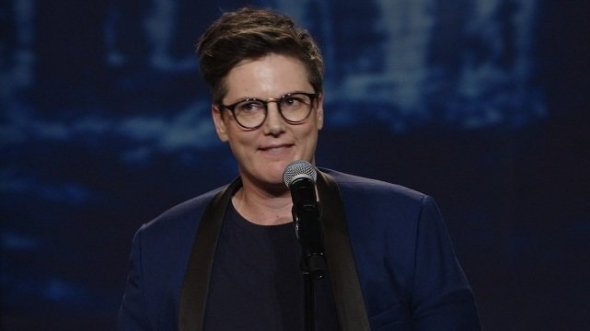
How much of the staggered, overpowered reaction to this special comes from approaching it in the taxonomy “standup comedy” / “Netflix comedy special” and then having that classification broken/subverted?
Would it have a different effect if you experienced it in the category “Edinburgh Fringe Festival-style personal show,” an overlapping but different taxonomy?
What about how the Emmys has the categories “comedy” and “drama,” when it seems to me the cool nominees in both categories tend to blur and push the limits of those definitions?
Another example of taxonomic power from Charles C. Mann’s Reddit AMA:
I am so grateful for the W&P book. Thank you for exploring these issues. I work in Oil and Gas and I’m very concerned about that unfortunate byproduct climate change. I’m also tired of being the bad guy at dinner parties. Is responsible oil and gas development a contradiction in terms? I’m wondering if you could sketch a possible social imaginary in which people like me have a beneficial role in contributing to our needed energy switch, while at the same time, you know, maybe keeping my job for a few years???
My son is in the energy business, too. He worries about this.
I always tell him, there is no reason to be the “bad guy” at parties. First, fossil fuels have contributed immensely to human well-being—there’s just no question about that. And, until we learned about climate change, there was little reason to doubt they had, on balance, a good ecological role. I live in a cold place (Massachusetts) that requires heating for people to survive. It would be a wasteland if people were still heating with wood. Wood heat denuded the entire NE, causing massive erosion and soil loss. Fossil fuels had in this case profound positive effects.
Now… climate change is a different matter.
Broadly speaking, it seems to me that there are two kind of fossil fuel companies, those which have decided they are energy companies, and those which have decided they are oil and gas companies. The former are adapting to the new reality, heavily investing in alternative energy and working to innovate; the latter are fighting progress. (I hope you are lucky enough to work for one of the former!) The former will continue to be indispensable to modern society. Note that almost all of the essential development of solar panels–what transformed them from laboratory curiosities at Bell Labs to a workable product–was done by oil and gas companies, which needed to power offshore oil platforms. Until China entered the market, Big Oil made the overwhelming majority of solar panels. Some companies will continue in that tradition and eventually build and maybe operate huge renewable facilities, especially with technologies like offshore wind.
What about the latter type of company? They will become, eventually and grudgingly, suppliers of raw materials for other industries–oil, gas, coal tar, etc., are essential modern raw materials. That’s a smaller role, but not one to be ashamed of. Still, I’d rather be working inside one of the first type, working to push the transition to renewables, which is what my son is doing.
Readers, what do you think about taxonomies?
Henry Adams to young FDR
Posted: July 13, 2018 Filed under: America Since 1945, politics Leave a comment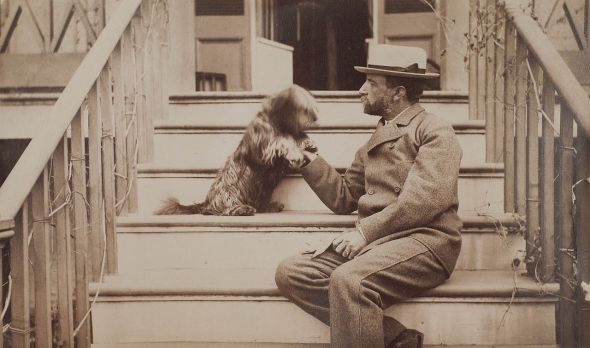
Henry Adams with dog Marquis from Wikipedia
Young man, I have lived in this house many years and seen the occupants of that White House across the square come and go, and nothing that you minor officials or the occupants of that house can do will affect the history of the world for long.
Believe he said this to FDR when Frank was assistant secretary of the Navy. Quote from Old Money by Nelson Aldrich.
Checking in on: UK politics
Posted: July 12, 2018 Filed under: politics Leave a commentIf you enjoy English weirdness as I do jump to 8:17 here to watch the insane reaction Emily Thornberry, PM for Islington South and Finsbury gets for her joke:
Glenn D. Fogel, CEO and the significance or not of headset mics
Posted: July 12, 2018 Filed under: business Leave a commentGot interested recently in Bookings Holdings (BKNG) when I learned the company that owns Booking.com is the seventh largest internet company in the world (and largest in the category “travel”).
An early step if you are curious about a company is to do a Google image search of the CEO.
Let’s run this test for Glenn D. Fogel, CEO of Booking Holdings.
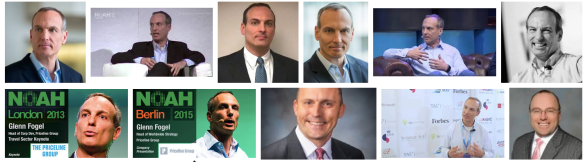
On first two rows of first page: one two three photos where Glenn Fogle is wearing a TED talk style headset mic.
Is this:
- the sign of a successful CEO in a booming field in 2018?
- possible mark of a true TED talk era huckster?
There may be more options than that, such as “both.”
What about Booking.com CEO Gillian Tans?
Tans was ranked by the organization Inspiring Fifty on their 50 Most Inspirational Women in Dutch Technology list.
Succession
Posted: July 11, 2018 Filed under: TV, writing Leave a comment
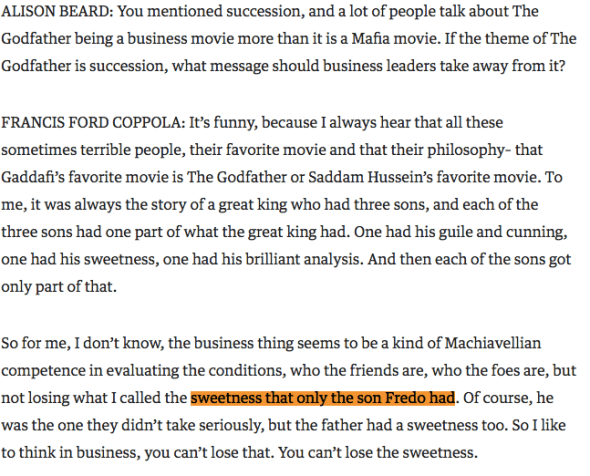
Watching (and enjoying) HBO’s Succession. Reminded me of something I heard Francis Ford Coppola say in an interview (with Harvard Business Review of all places) about how he tries to write down the theme of a project in one word on a notecard.
ALISON BEARD: And when you get stuck creatively, if you don’t know where a script should go or how a movie should end, how do you get yourself unstuck?
FRANCIS FORD COPPOLA: Well, if my intuition and asking the question just what feels better to me doesn’t give it to me, I have a little exercise where any project I work on, I have what the theme is in a word or two. Like on The Conversation, it was privacy. On The Godfather, it was succession. So I always have that word, and I encourage my children to do the same, to break it all down beyond everything else. Don’t tell me it’s a coming-of-age story, because that’s not specific. What, specifically, is it?
And if you have that word, then when you reach an impasse, you just say, well, what is the theme related to the decision? Should it be this or should it be that? Then I say, well, what does the theme tell me? And usually, if you go back to that word, it will suggest to you which way to go and break the roadblock.
Is succession the one-word theme of Succession?
How about this part:

Beloved Woman of Justice
Posted: July 11, 2018 Filed under: America Since 1945, art history Leave a comment
Cool statue I came upon in Knoxville, TN a few months back. 
Let them overturn Roe.
Posted: July 10, 2018 Filed under: America Since 1945, politics Leave a commentThis is my hot take for today:
Let’s assume you agree with me and think women in the United States should have access to abortion when they need it.
Letting Roe v Wade get overturned could be a positive outcome that would help this cause in the long term.
What would happen if Roe were overturned tomorrow? Well, in California, New York, Massachusetts, Vermont, Alaska, etc, I’m estimating about 29 states, I’m guessing: nothing.
In another 30 or so states, legislators might try to make abortion illegal. This would become an important, contentious issue in state elections. I believe this would drive voter turnout and galvanize women voters in particular.
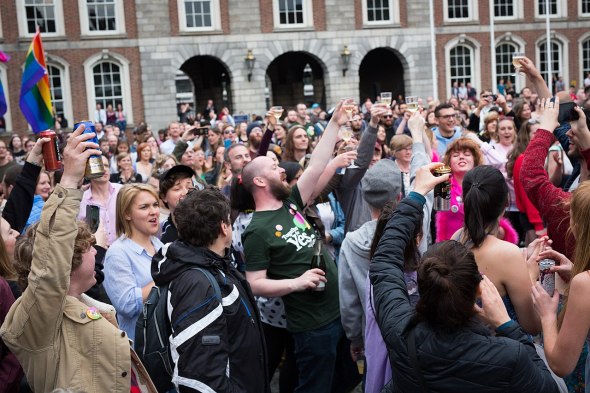
We might look to Ireland as an example of what could happen. The issue of repealing the Eighth Amendment, which banned abortion, came up for a vote. An electrified, involved, young electorate turned up. Turnout was 64%, and Yes – the “pro choice” side – won with 66.40% of the vote (source).
I think this was healthy and democratic for Ireland.
Wouldn’t similar debates and votes, or mini versions in legislative elections in the states where abortion would be a contentious issue, be healthy and good for the country?
Or, better yet, have a women’s rights amendment to the Constitution. That would be great too.
Where in the Constitution is there a right to an abortion? It’s not in there. We might like it to be in there, but it’s not. The Roe decision didn’t find it in the Ninth Amendment:
The enumeration in the Constitution, of certain rights, shall not be construed to deny or disparage others retained by the people.[1]
In fact, if I understand right, the majority in Roe went out of their way to say they didn’t find it there:
The Court declined to adopt the district court’s Ninth Amendment rationale, and instead asserted that the “right of privacy, whether it be founded in the Fourteenth Amendment‘s concept of personal liberty and restrictions upon state action, as we feel it is, or, as the district court determined, in the Ninth Amendment’s reservation of rights to the people, is broad enough to encompass a woman’s decision whether or not to terminate her pregnancy.”[38] Douglas, in his concurring opinion in the companion case, Doe, stated more emphatically, “The Ninth Amendment obviously does not create federally enforceable rights.
The majority in Roe found the right in the Fourteenth Amendment, which is ridiculous. Not at all the intent of that amendment. At that point you’re making up stuff.
Roe v. Wade is one of the few Supreme Court decisions I’ve read and… it feels flimsy. It feels like a wire and string solution to get to a result the court wanted.
The Roe decision is cheating. It’s like the referee giving your team extra points because he wants you to win. That might get you the result you want. But it’s not good for the game.
Let the states fight it out! Let conservative legislators be forced to show how they’re gonna enforce making abortion illegal. Let them fight it every election cycle.
(lol bc I’m obviously out of my depth, ran this one by our legal counsel, MMW, for comment:
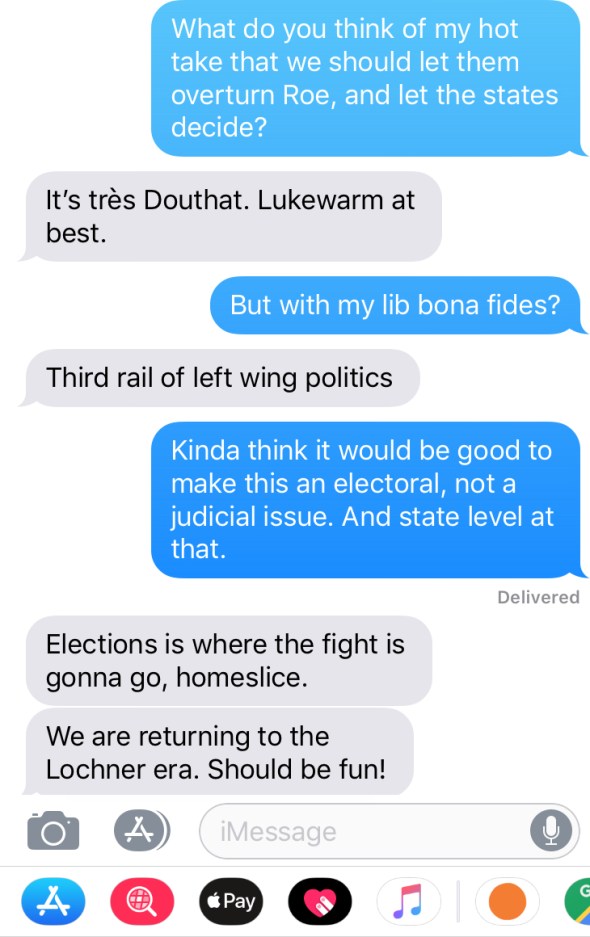
Had to look up the Lochner era.
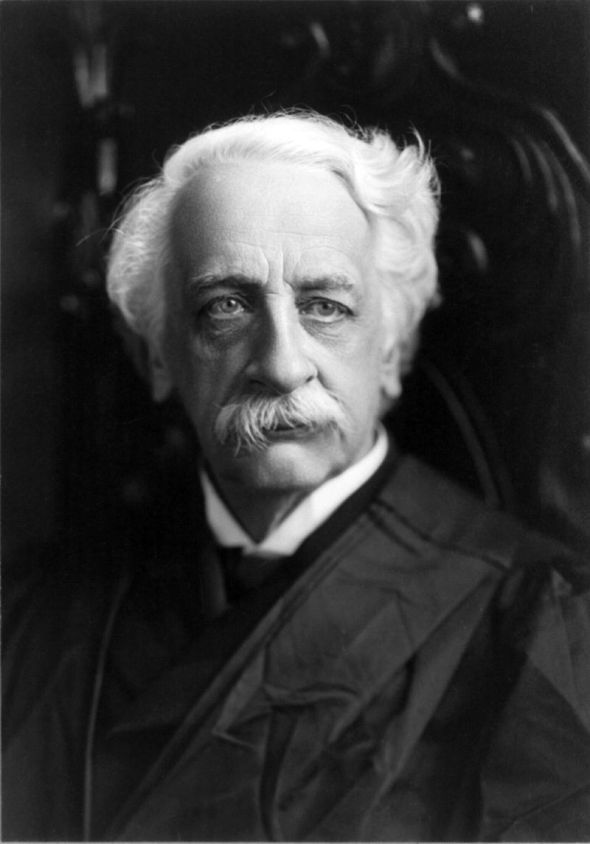
Hi, I’m Rufus Wheeler Peckham.
Particular grace at the Constitutional Convention
Posted: July 4, 2018 Filed under: heroes, history Leave a comment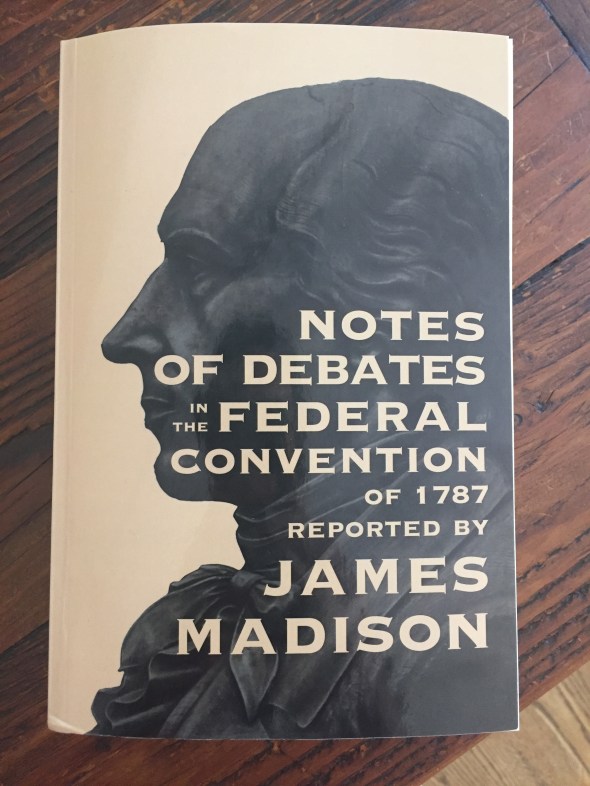
Picture it: Philadelphia, Friday, May 25, 1787.
The convention is getting started. First job is to choose a president. Mr. Robert Morris of Pennsylvania nominates George Washington of Virginia.
Mr Jn RUTLIDGE seconded the motion; expressing his confidence that the choice would be unanimous, and observing that the presence of Genl Washington forbade any observations on the occasion which might be otherwise be proper.
General Washington was accordingly unanimously elected by ballot, and conducted to the chair by Mr R. Morris and Mr. Rutlidge; from which in a very emphatic manner he thanked the Convention for the honor they had conferred on him, reminded them of the novelty of the scene of business in which he was to act, lamented his want of better qualifications, and claimed the indulgence of the House towards the involuntary errors which his inexperience might occasion.
That’s George Washington, the guy who had just defeated the British Empire, who held the Continental Army together over seven horrible years on the strength of his own character. He begins this job with an expression of humility. An apology for any involuntary errors.
Then Madison adds, in a parenthetical:

Particular grace.
Happy Fourth of July everybody!
Warren Buffett on why Coke is so good
Posted: July 2, 2018 Filed under: America Since 1945, business 2 Commentsjump to 6:42:
(h/t Naval Ravikant. )
Ended up watching this whole Buffett Q&A. If you watch other Buffett talks he does tend to repeat himself. This one is good.
Interesting to me how much Buffett talks about two companies, See’s and Coca-Cola, that have an emotional connection to the consumer. The results of that might be in the balance sheet, but the reason is beyond numbers. A genius of Buffett to combine cold technical investment analysis with being, like, the ultimate late 20th century American consumer.
As for Coke, the only new drink I know of that people drink five or six of a day is:

The history books
Posted: July 2, 2018 Filed under: politics Leave a comment
sometimes you see the lesser villains of this current political period hit with “you’re gonna look bad in the history books!”
This seems very silly to me. Paul Ryan’s not gonna be in the history books! Not any popular ones anyway. He might be deep in the more exhaustive ones, but who cares? Who was the Speaker of the House during the Civil War? World War II? (“You’re legacy will be as controversial as Galusha Grow’s and Schuyler Colfax’s!“)
Maybe he longed for the history books once, but it feels to me that Paul Ryan made a choice to whimper away to what he imagines will be a high paying lobbying life.
Wouldn’t it be better to say, “during your lifetime your face will remind us of embarrassment and cowardice and no one will pay you to talk.”
I do respect the earnest, history buff energy of the taunt “you’re gonna be real ashamed when you read the history books, pal.”
I just think it gives too much respect to Paul Ryan’s motivations.
Observations from the Big March
Posted: July 1, 2018 Filed under: the California Condition Leave a comment
- Many signs called for Abolish ICE. I myself don’t know enough about ICE and its functions. Agree I don’t like the vibe at the moment. Not enthused about letting the current prez start any new forces? What about “re-vibe ICE”?
- Not a sign guy but if I were maybe I’d go with “return to a loosey-goosy, live and let live style of border enforcement that reflects reality and shared humanity.”
- One of the few speakers I heard most of was from the American Indian Movement. She focused on the raping and misery aspects of California’s mission history and the history of Los Angeles. While there’s an important place for that history to be considered, I felt this was a bummer approach, and contrary to the goal of gathering, organizing, mobilizing, and inspiring large numbers of people. Though I myself had nothing to do with the raping of California’s native people, and retroactively disapprove of it, hard not to feel a little bit judged for enjoying the California which has emerged. Legislating the crimes of two hundred years ago can be cathartic, but I’m afraid the villains at this point have largely escaped justice. The goal here is to get a lot of people together and united, right?
- Way too many speakers. That’s probably a problem as old as public protest.
- Didn’t see Garcetti but watched his speech later.
Lame. The current Democratic officeholders seem very unsure of where they stand on anything. Give me confident assurance of anything over hedging and options traders. Where is LA’s Alexandra Ocasio-Cortez?

Why do we not have an even younger, cooler, and more stylish socialist? This is LA, baby!
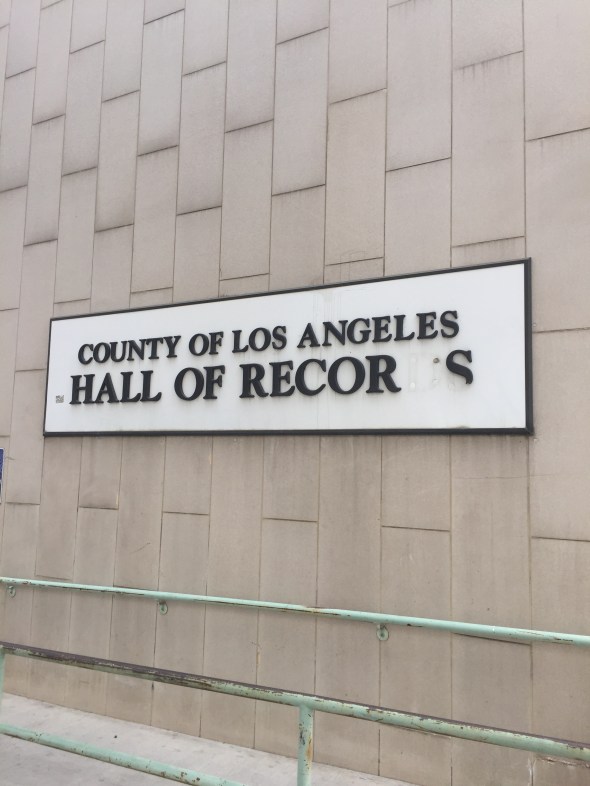
dawg you gotta fix this
- Damn, Maxine Waters:
If you shoot me, you better shoot straight. There’s nothing like a wounded animal,” she said.
- Downtown LA is coming up, but man. There are not enough shelters and safe spaces for LA’s population of homeless, semi-homeless, and deranged outsiders. More green parks where a person could get some shade would be a good start.
- One second after I’d been thinking, “smart move to have lots of American flags here,” heard someone loudly say (paraphrase) “uh, the American flag is part of the problem. Good thing there’s 5,000 of them here!” Though I’m disgusted at recent desecration of the American flag, I think, more often than not, the American flag has been a positive symbol.
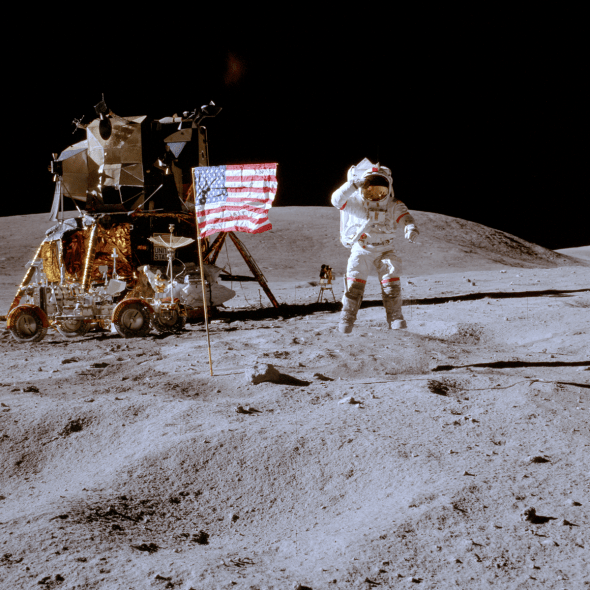
NASA/Charlie Duke. C’mon guys, let’s focus on the positive.
(is the USA the only country where the anthem is a song about how beautiful the flag is?)
 Helytimes


