April 19
Posted: April 19, 2020 Filed under: America, Boston, New England Leave a comment
We can never let a Patriots’ Day go by without reflecting on the events of April 19, 1775. How did this happen?
The people of countryside Massachusetts at that time were probably the freest and the least taxed people in the British Empire. What were they so mad about?
From my hometown of Needham, MA, almost every able bodied man went out. What motivated people that morning to grab guns and shoot at their own army?
Lately I’ve been reading Rick Atkinson’s book on the first years of the American Revolution. It’s interesting that Atkinson titled his book this, because as he himself notes:
Popular lore later credited him with a stirring battle cry – “The British are coming!” – but a witness quoted him as warning, more prosaically, “the regulars are coming out.”
The word would’ve gotten out anyway, because of information sent by light in binary code: one if by land, two if by sea. (it was two).

Atkinson does a great job of laying out how tensions and feelings and fears and resentments escalated to this point. George III and his Prime Minister Lord North (they’d grown up together, it’s possible they were half-brothers) miscalculated, misunderstood, overreacted.
North held a constituency in Banbury with fewer than two dozen eligible voters, who routinely reelected him after being plied with punch and cheese, and who were then rewarded with a haunch of venison.
The image of a stern father disciplining a disobedient child seemed to guide George III/North government thinking. Violently putting down rebellions was nothing new, even within the island of Britain. Crushing Scottish revolt had been a big part of George III’s uncle’s career, for example.
From the British side, the disobedience did seem pretty flagrant, the Boston Tea Party being a particularly outrageous and inciting example, from a city known to be full of criminals and assholes. The London government responded with the “Coercive Acts.”
With this disobedient child, the punishment didn’t go over well. The mood had gotten very, very tense in Boston when the April 19 expedition was launched.
Everything about it went wrong. Everybody was late, troops were reorganized under new commanders. Orders were screwed up, the mission was unclear. It was a show of force? A search and destroy? Both? The experience for the soldiers in on it was awful: started out cold and wet, ended up lucky if you were alive and unmangled.
What the Lexington militia was up to when they formed up opposite the arriving Redcoats is unclear. Did they intend to have a battle? Doesn’t seem like it, why would they line up in the middle of a field? There’d already been an alarm, and then a weird break where a lot of the guys went to the next door tavern and had a few.
Were they intending just kind of an armed protest and demonstration (as is common in the United States to this day)?

A lot of the guys in the Massachusetts militias had fought alongside the British army in the wars against the French and Indians. Captain Parker of Lexington had been at Louisburg and Quebec. How much was old simmering resentment of the colonial experience serving with professional British military officers a part of all this?
One way or another, a shot went off, and then it got out of hand very fast. When it was over eight Lexington guys were dead.
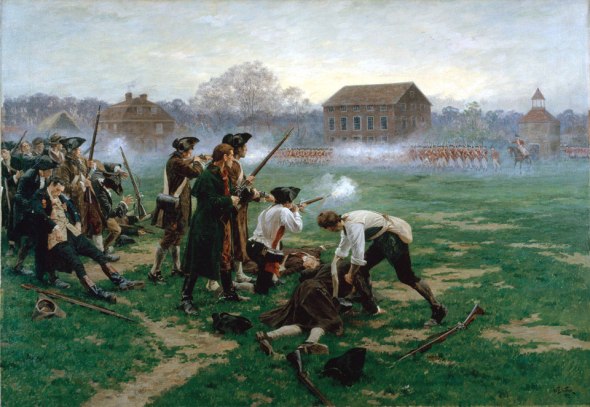
The painting above is by William Barnes Wollen, he painted it in 1910. Wollen was a painter of military and battle scenes. He’d been in South Africa during the Boer War, so maybe he knew what an invading army getting shot at by locals was like.
Amos Doolittle was on the scene a few days after the events, interviewed participants, walked the grounds, and rendered the scene like this.

But Doolittle had propaganda motives.
After the massacre at Lexington the British got back into formation and kept moving.

They ran into another fight at Concord Bridge.

Information and misinformation and rumor became a part of the day. The story spread that the British were burning Concord, maybe murdering people.

By now minutemen from all over were blasting away. It must’ve been horrific. Atkinson tells us that the British “Brown Bess” musket fired a lead slug that was nearly .75 of an inch in diameter (compare to, say, a Magnum .45, .45 of an inch).
How would history have been different if the British column had been completely wiped out, like Custer’s last stand? It almost happened. The expedition was saved by the timely arrival of reinforcements with two cannons.
The column avoided an ambush at Harvard Square, but several soldiers died in another gunfight near the future Beech and Elm Streets while three rebels who had built a redoubt at Watson’s Corner were encircled and bayoneted. William Marcy, described as “A simple-minded youth” who thought he was watching a parade, was shot dead while sitting on a wall, cheering.
They were able to get back across the river and into Boston, minus 73 killed, 53 missing, 174 wounded. A bad day in Massachusetts.
This event looms large in the American imagination: the gun-totin’ freedom lovers fighting off the government intrusion. But the more you read about it the more it sounds like just a catastrophe for everyone involved.
Back in Needham the Rev. West reported:
In the evening we had intelligence that several of the Needham inhabitants were among the slain, and in the morning it was confirmed that five had fallen in the action and several others had been wounded. It is remarkable that the five who fell all of them had families, and several of them very numerous families so that there were about forty widows and fatherless children made in consequence of their death. I visited these families immediately, and with a sympathetic sense of their affliction I gave to some the first intelligence they had of the dreadful event, the death of a Husband and a Parent.

The details.
Animal Crossing
Posted: April 13, 2020 Filed under: music Leave a commentI’ve never played Animal Crossing, but my wife is playing, and I can hear the sounds from the next room or down the couch. The sounds are so soothing and pleasant. Since the NES days, Nintendo always managed to produce nice, soothing sounds. Some games are exceptions, but when I think of the sounds of Super Mario, or Tetris on GameBoy, or Mario Kart on N64, and now Animal Crossing, I’m impressed at Nintendo’s ability to generate fun, calming sounds. I believe that’s an under-appreciated part of Nintendo’s appeal and success.
Books I’ve been meaning to review for Helytimes
Posted: April 12, 2020 Filed under: books, music, railroads Leave a commentThere’s a big stack of books over here I’ve been meaning to write up.
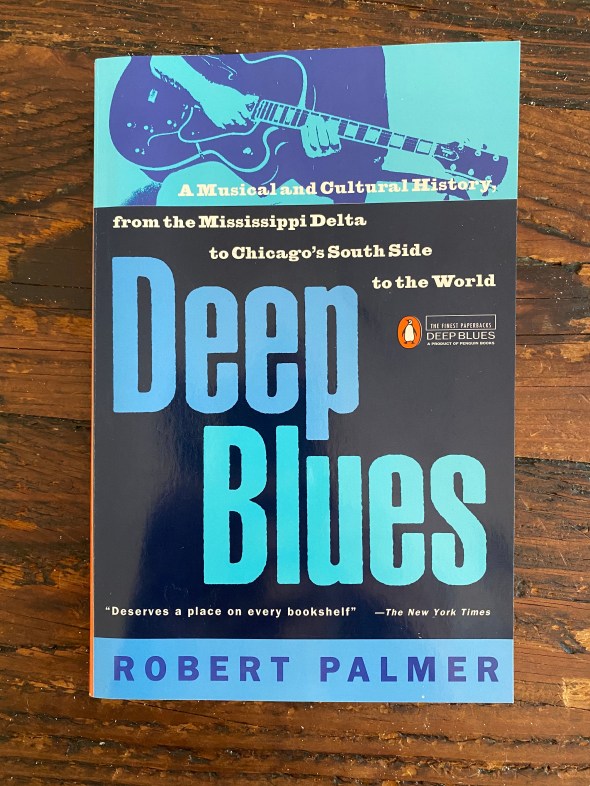
This book is super good. Full of vivid detail.
Drums were banned everywhere in North America except French Louisian by the middle of the eighteenth century, and so were horns, which are made from wood or animal horns and played in hocketing ensembles in the slave coast and Congo-Angola regions.
There are excerpts from a long interview with Jim Dockery, of Dockery Farms. Stories retold and remembered. Sonny Payne tells of the Helena, Arkansas based radio show King Biscuit Time:
These are well-to-do white women listening. I listen, every day when I’m doing the show, for the simple reason that there’s something there. They’re trying to tell you something, and if you think hard enough and listen hard enough, you will understand what it’s all about.
The story this book tells is really about how blues music went from its origin point, where the Southern cross the Dog in the Mississippi Delta, to Chicago and then by record to the UK, where Eric Clapton and Jimmy Page and the Rolling Stones heard it and picked up on it. Along the way there’s so much juicy richness about race and America and music and history and everything. Palmer takes us to a meeting in Chicago where they tried to encourage black migrants to come back to Mississippi.

This book is almost like a response to the fetishizing or the legend-building surrounding the Mississippi Delta and blues music. Says Wald:
If someone had suggested to the major blues stars that they were old-fashioned folk musicians carrying on a culture handed down from slavery times, most would probably have been insulted.
I didn’t know that Mississippi was dry until 1966.
It is startling to thank that all of the evolution from the first Bessie Smith record to the first Rolling Stones record took only forty years. When Skip James and John Hurt appeared at the Newport Folk Festival, they were greeted as emissaries from an ancient, vanished world, but it was only three decades since they had first entered a recording studio – that is, they were about as ancient as disco is to us today.
One point both these books make is that the Mississippi Delta at this time was actually kind of a dynamic region, crisscrossed with railroads, you could quit your job and move and get another one.
Wald tells of an anthropological team from Fisk University and the Library of Congress that visited the Delta in 1941 and 1942. They reported:
There are no memories of slavery in the delta. This section of the delta has little history prior to the revolution of 1861
The research team asked people what their favorite song was. What a question! (My Country Tis of Thee and The Star-Spangled Banner among the answers).

Gotta love a book where this is a footnote.
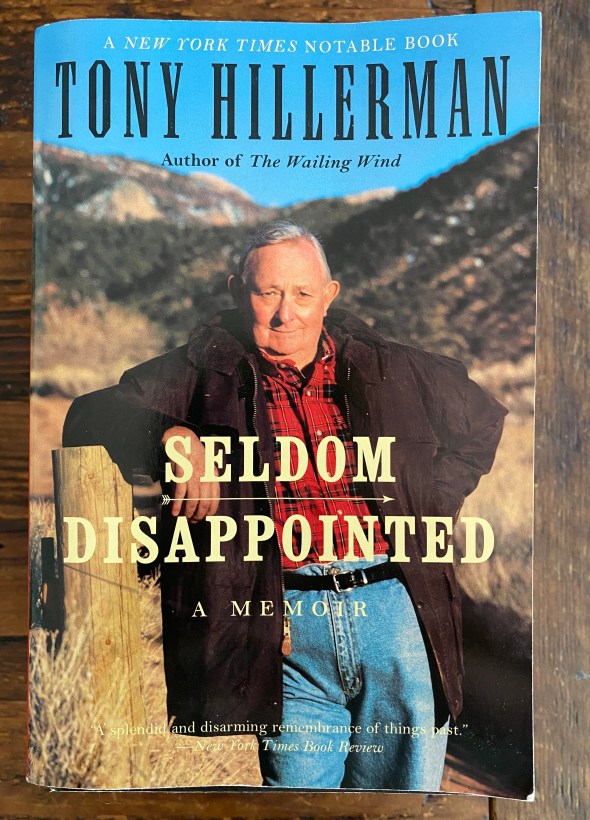
When I was a kid you couldn’t go to a library book sale or a book store without seeing some paperback Tony Hillerman mysteries, about the Navajo Tribal Police. I never got into books like that, not sure why. But when it comes to New Mexico writers, Tony Hillerman is a name to reckon with. (And there are a lot of New Mexico writers, just see The Spell of New Mexico, edited by Tony Hillerman).
So, as I was gonna be in New Mexico, I got Tony Hillerman’s memoir.
Man. Tony Hillerman was a combat infantryman in World War II. Before he was twenty or so he’d fought his way through the Vosges, killed German boys yards away from him, gone on night raids and been shelled in the dead of winter. Finally he stepped on a landmine, and his war ended in a military hospital. There was a guy in the hospital, a tank gunner, who was called “Jug” because of the way his injuries had mangled his face. Jug considered himself lucky compared to what happened to Colonel Delaney.
All this happened to Tony Hillerman when he was a teenager, before he’d ever really had a girlfriend.
When he got back home, he got a job driving a truck in the New Mexico oil fields. In the Chaco Canyon country, he happened to come across some Navajos on horseback. They were going to an “Enemy Way” ceremony, a ritual for those returned from war.
The healing power and religious idea of this ceremony impressed Tony Hillerman. It was just what he needed. (It sounds like the kind of ceremony Karl Marlantes describes the need for in his book).
Hillerman became a newspaperman in New Mexico, and the rest of the book is mostly funny and interesting stories about that life, and his family, and his decision to attempt some mystery books. On a writing class he taught at UNM:
my premise was that power to persuade lies in the ability to make people see – sometimes literally – the situation as the writer sees it. Instead of telling readers the city should improve its maintenance programs, walk them down the street with you and show them those same details that drew you to that conclusion – the roaches around the drains, the trash collecting on the fences, and so forth. Based on that argument, I’d send them forth.
A good book by a man who seems tough and tender, humble and wise, I read most of it on an overnight train ride.
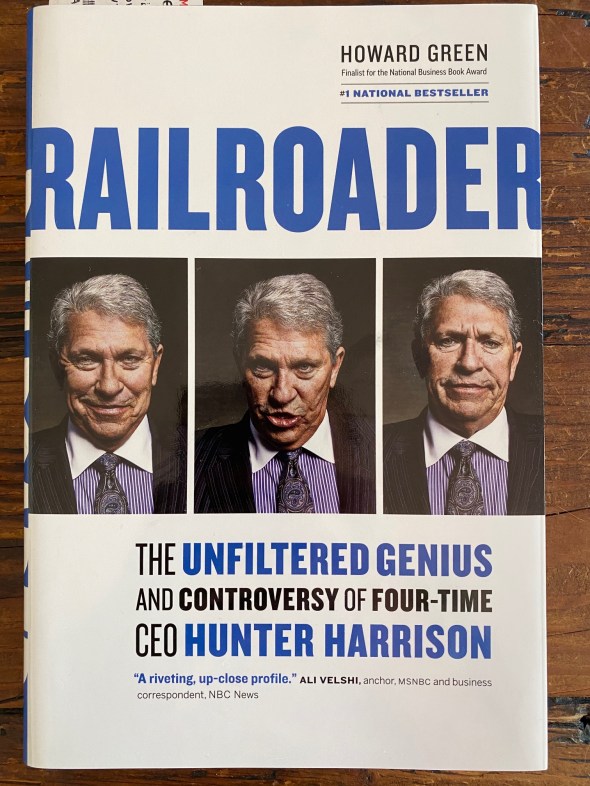
Speaking of trains, how about Hunter Harrison? A first ballot Hall of Famer for sure if the Hall of Fame is “railroad CEOs.” Hell they’ll probably name the hall after him. Hunter Harrison from the time he was a teenager only ever worked for one kind of company: railroad company.
Harrison’s thing was “Precision Scheduled Railroading,” which apparently revolutionized a kind of sleepy industry.
Harrison created approximately $50 billion in shareholder value in his time as a CEO.
says the book jacket, telling you something about how we’re keeping score. Harrison was an absolute fanatic about railroading. He ran Canadian National, Canadian Pacific, and died on the job running CSX.
I’m not sure if I’ll finish this book, it’s interesting and I’m learning a lot, but I’m just not sure I’m that interested in this guy. So far the part that sticks out in my mind is Harrison’s semi-mentor, Thompson.
Thompson was William F. Thompson – a.k.a. “Pisser Bill”
says the book. I thought the nickname might be kind of a metaphor or something, but no, a few pages later Pisser Bill was at the trainyard and saw something he didn’t like so he pissed all over the place.
This book was worth the price for that alone.
Forest roads
Posted: April 11, 2020 Filed under: the California Condition Leave a comment
If anyone needs to borrow this one you can. Picked up in San Luis Obispo.

Tigertail (2020)
Posted: April 10, 2020 Filed under: film, movies 1 Comment
If you are a Helytimes reader who hasn’t heard about Tigertail, Alan Yang’s directorial debut, which is NOW on Netflix, Heaven help you. Very proud of my former roomie on this tremendous achievement, will be watching tonight.
Good Friday
Posted: April 10, 2020 Filed under: art history Leave a comment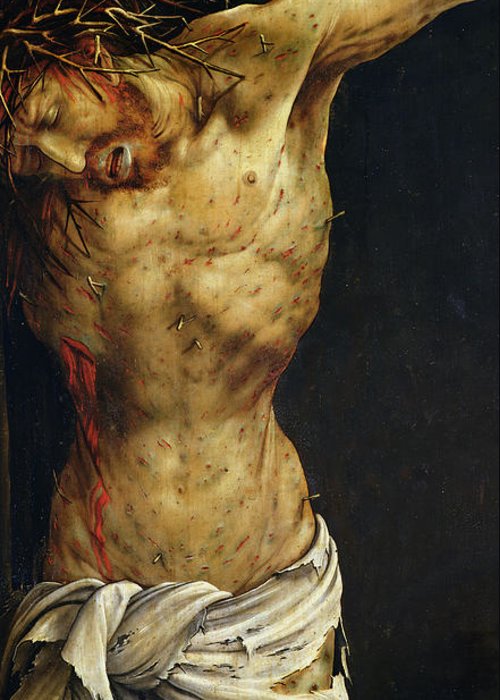
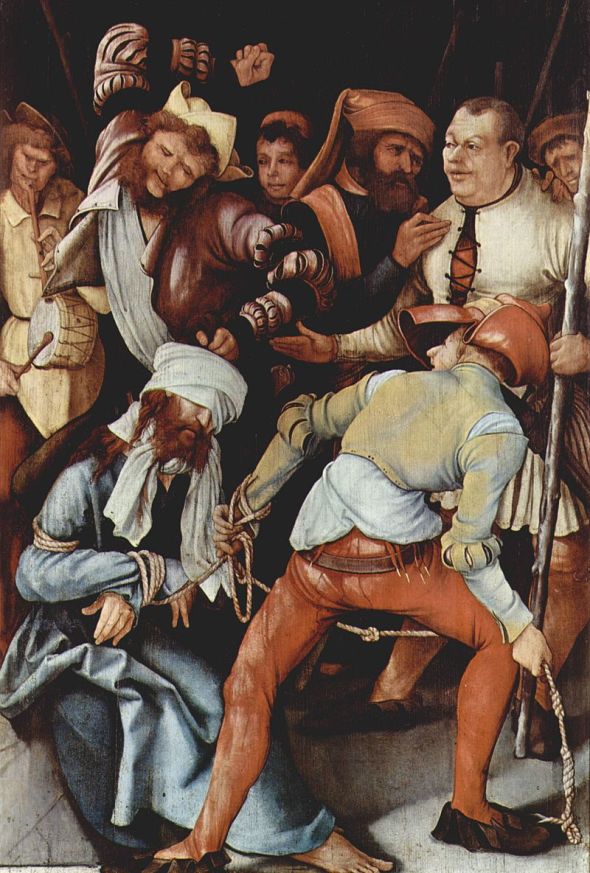
For the first three centuries after his death, this Renaissance artist [Matthias Grünewald] did not attract much attention. But around 1900 the French writer Joris-Karl Huysmans made a passionate plea for the relevance and modernity of Grünewald. In his description of the altar at Isenheim, Huysmans called attention to Grünewald’s shocking insistence on the physical details of Christ’s suffering, alerting its beholder to the disgusting marks of torture and the signs of dying and decomposing flesh (figs. 1a and 1b). Such a Christ, Huysmans observed, is no longer the well-groomed, handsome man who has been venerated by the rich and powerful throughout the ages. Grünewald’s Christ is rather the “God of the Poor. The one who chose the company of those in misery and of those who had been rejected, of all those for whose ugliness and need the world could only feel contempt.”3 And it was exactly this approach to pain and suffering highlighted by Huysmans that subsequently became a point of reference for many artists who invoked Grünewald’s work, especially when they cited the triptych from the Isenheim altarpiece or The Mockery of Christ (fig. 2)from the Alte Pinakothek in Munich
source for all that.
Does anybody else get this ad?
Posted: April 7, 2020 Filed under: food Leave a comment
It’s always for James Suckling! Literally the last thing I need a class in is appreciating wine more. I’m already at a high level of appreciating, I appreciate it a ton, probably too much.
Imagine being like “hmm I hate wine, maybe I’ll pay $80 to learn how to like it from the computer!”
Although Suckling is a noted supporter of Bordeaux wine, as illustrated by his blog response to a Bordeaux-critical article by Eric Asimov,[27][28] he also has affinity for Italian wines, having stated that he feels Italian grape varieties such as Sangiovese, Aglianico, and Nebbiolo are thoroughly unique.[26] Conversely he has on occasion spoken dismissively of New World wines, applying the term “jam juice”.[13]
Get outta here with that, Suckling!
The goal: being in power
Posted: April 6, 2020 Filed under: America Since 1945, politics Leave a comment
Baffled by politics in the last four years or so, I’ve been thinking quite a bit about this Bagehot column in The Economist from 21 Dec 2019.
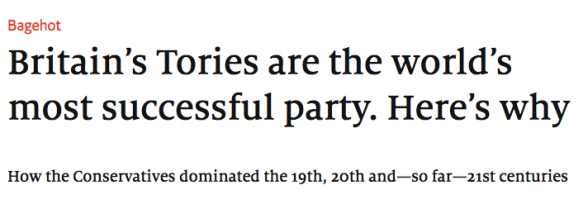
It’s probably behind a paywall for non-subscribers, but I’ll try and give the jist. In the 20th and (so far) 21st centuries the UK Conservatives have been in power for longer than any other party. Why?
It’s because the Conservative Party views their job as being in power. That’s it. That’s their meaning and their purpose. The Conservative Party is not guided by any principles or beliefs or philosophies. It may pretend to be, individual members may be, that might be part of the whole stew, but the job of the party is to be in power.
Evelyn Waugh once complained that the Tories had never succeeded in turning the clock back for a single minute. But this is exactly why they have been so successful. The party has demonstrated a genius for anticipating what Harold Macmillan once called “the winds of change”, and harnessing those winds to its own purposes.
They keep their eyes on the mission:
The Conservatives have always been quick to dump people or principles when they become obstacles to the successful pursuit of power. Theresa May immediately sacked her two chief advisers, Fiona Hill and Nick Timothy, after the party’s poor performance in 2017, whereas Jeremy Corbyn is still clinging on to Karie Murphy and Seumas Milne after Labour’s devastating failure last week.
Mr. Johnson keeps with this tradition:
He succeeded in this where Mrs May failed because he possessed the other great Tory weapons. He has been willing to sacrifice anything in the pursuit of office. Beneath the bumbling exterior lies a ruthless, power-seeking machine. His withdrawal of the whip from 21 colleagues (some of them close friends) in September made Macmillan’s “night of the long knives” in 1962 look tame.
When I try to think about American politics, it helps to imagine that the Republican Party understands its job: getting power, keeping power, staying in power. The issues are irrelevant as long as they serve this goal. That’s why various attacks about the absolute hypocrisy of “pro life”ideas, or pretend deficit hawkishness, or “small government” –> enormous bailouts whenever necessary, etc etc just don’t stick or have any meaning. You’re falling for the game if you fall for that.
Now, what the point of the Democratic Party is I’m not sure. It might be “losing nobly,” or something, as evidenced by the career of this longtime Democratic operative and summed up by this speech. Or maybe it’s “not appearing too extreme.” Or “making people feel ok about themselves.” In any case, it’s not as focused a mission, and it’s not gonna be as successful until it gets figured out.
Maybe the Democrats need to remember what Hillary Clinton and Barack Obama’s supposed mentor, Saul Alinsky, put bluntly:
Horwitt says that, when Alinsky would ask new students why they wanted to organize, they would invariably respond with selfless bromides about wanting to help others. Alinsky would then scream back at them that there was a one-word answer: “You want to organize for power!“
Source on that.
The quar
Posted: April 5, 2020 Filed under: America Since 1945 Leave a comment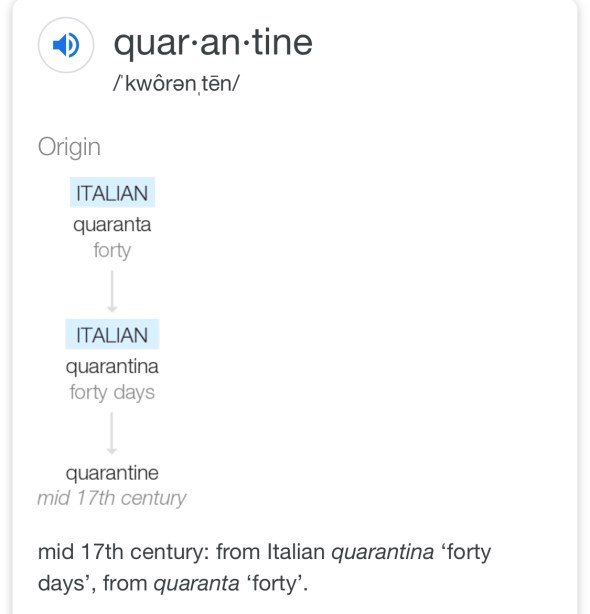
Says Science Friday:
Officials in the Venetian-controlled port city of Ragusa (now Dubrovnik, Croatia) passed a law establishing trentino, or a 30-day period of isolation for ships arriving from plague-affected areas. No one from Ragusa was allowed to visit those ships under trentino, and if someone broke the law, they too would be isolated for the mandatory 30 days. The law caught on. Over the next 80 years, Marseilles, Pisa, and various other cities adopted similar measures.
Within a century, cities extended the isolation period from 30 to 40 days, and the term changed from trentino to quarantino—the root of the English word quarantine that we use today.
By my count today, Sunday, is day 22.
Halftime?

It took me this long to lock into some good habits and practices. The first weeks were decadent and messy. A key rule for me: must something positive before I’m allowed to pick up at my phone and chug horrific news and takes.
Some changes and observations from Hunker Down Times:
- really appreciating and being careful with my use of paper products. Paper towels. Used to be really free with the paper towels, I hope I’m learning paper towel discipline that will last. In years to come, perhaps some psychology will be done on why people seemed to be so focused on toilet paper. Freudian?
- interesting how many ski resorts had outbreaks, which were then spread back home by the skiiers. Iscgl, Austria (and other Austrian ski resorts) may have been responsible for 40% of cases in Norway? Aspen and Sun Valley were hotspots as well.
- Part of the Zoom revolution. Why is Zoom so good when Facetime and Skype I bristle at? I don’t know. Easy to use I guess, not forcing me to link it with my Facebook or whatnot. Zoom, in my opinion, is really good for work but bad for socializing. We’ve been achieving great results – efficient with time, focused – with four or so person Zoom work meetings. But a Zoom hang feels oppressive. There’s no breaking off into and reforming from small groups, the organic flow that drives a larger social gathering.
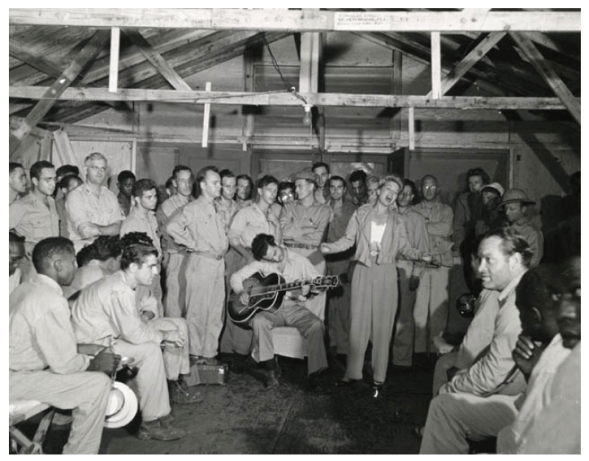
- Before this all happened, I’d had some conversations re: a possible movie about Bob Hope. Why did they love Bob Hope enough to name the airport after him? By the time I was alive Bob Hope was beyong a relic. A lot of aspects of his personal character were unpleasant. He was cheap, mean, selfish, self-absorbed, an off-the-charts womanizer and #MeToo bad guy. His later USO tours were really just an elaborate way to avoid his wife and score poon and work in front of an easy audience when no one was paying. His comedy doesn’t stand up. But during ‘rona times, I’m understanding (a bit) why Bob Hope was so important at the time.
If anyone could consistently make me laugh right now I’d be into it.
If anyone could consistently make me laugh right now I’d be into it.
- Loving the DJ sets of D-Nice. (We watch by screenmirroring Instagram story onto Apple TV?). Dancing and plagues go together. What about the tarantella, which you were supposed to dance to cure yourself of a tarantula bite?
In the Italian province of Taranto, Apulia, the bite of a locally common type of wolf spider, named “tarantula” after the region, was popularly believed to be highly venomous and to lead to a hysterical condition known as tarantism. This became known as the Tarantella. R. Lowe Thompson proposed that the dance is a survival from a “Dianic or Dionysiac cult”, driven underground. John Compton later proposed that the Roman Senate had suppressed these ancient Bacchanalian rites. In 186 BC the tarantella went underground, reappearing under the guise of emergency therapy for bite victims.
What was going on with the dancing plague of 1518?

When I read about it it sounds like maybe we’re misunderstanding anti-dance party propaganda?
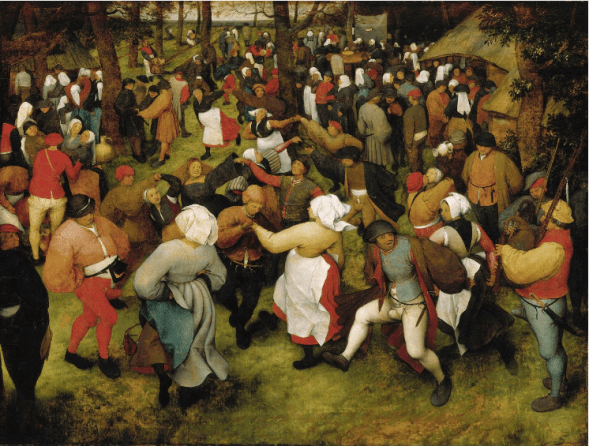
Bruegel was a good dance painter:
- I liked the Queen’s speech:
I hope in the years to come everyone will be able to take pride in how they responded to this challenge.
And those who come after us will say the Britons of this generation were as strong as any.
That the attributes of self-discipline, of quiet good-humoured resolve and of fellow-feeling still characterise this country.
The pride in who we are is not a part of our past, it defines our present and our future.
I like when leaders comprehend that tone, cheer, humor, is part of the job. All the greats knew that. If your guy has a nasty, sarcastic, unpleasant tone, you’ve got the wrong guy.
-
In other news, I found this to be a cool friendship:

Hope all Helytimes readers are keeping it chill.
Fire In The Lake
Posted: April 2, 2020 Filed under: America Since 1945, Vietnam Leave a comment
The photos of refrigerated trucks ready for bodies in New York City reminded me of this memorable passage in Fire In The Lake by Frances Fitzgerald:

The sight of the coffins reassured the soldiers because it showed them not only that the Front cared about their future, but that it could fulfill its promises. The provision of the coffins was, after all, a logistical triumph, and, as such, a sign that the Front had the power to reweave the society and restore its continuity through past, present and future.
Seeing refrigerated morgue trucks on the news does not reassure me, nor does it convince me that the authorities can fulfill their promises!
Dark stuff, we’ll return to more whimsical subject matter soon, we know no one is coming to Helytimes to get bummed out!
House on Hely Road
Posted: March 30, 2020 Filed under: Africa Leave a comment
Can’t abandon my mandate to be the #1 source of Hely news on the Internet. There’s a lovely house on 24 Hely Road in Port Elizabeth, South Africa for sale. 2.2 mill rands (about $122,602 USD?)
Not the Van Gogh painting I would’ve stolen
Posted: March 30, 2020 Filed under: art history Leave a comment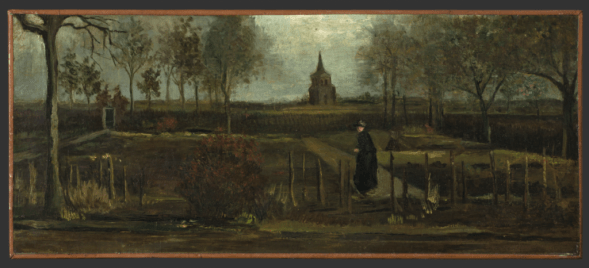
A bit dreary? But you take what you can get I guess!
Plague Lit
Posted: March 29, 2020 Filed under: books Leave a comment
Have only gotten through the introduction to this one, big daddy of ’em all. Am now on the cusp of chapter One (“I – Man The Hunter”).
Disease and parasitism play a pervasive role in all of life. A successful search for food on the part of one organism becomes for its host a nasty infection or disease. All animals depend on other living things for food, and human beings are no exception. Problems of finding food and the changing ways human communities have done so are familiar enough in economic histories. The problems of avoiding becoming food for some other organism are less familiar, largely because from very early times human beings ceased to have much to fear from large-bodied animal predators like lions or wolves. Nevertheless, one can properly think of most human lives as caught in a precarious equilibrium between the microparasitism of disease organisms and the macroparasitism of large-bodied predators, chief among which have been other human beings.
Later, when food production became a way of life for some human communities, a modulated macroparasitism became possible. A conquerer could seize food from those who produced it, and by consuming it himself become a parasite of a new sort on those who did the work… Early civilizations, in fact, were built upon the possibility of taking only a part of the harvest from subjected communities, leaving enough behind to allow the plundered community to survive indefinitely, year after year.

In 1685 he joined the rebel army of the Duke of Monmouth, the illegitimate son of Charles II… the revolt failed, but Defoe managed to escape unscathed and unidentified – riding to greet the new King William III and Queen Mary II in 1688, becoming a sort of informal adviser to them. Then things get rocky.
Defoe was already a prolific and well-known author by the time he wrote A Journal of the Plague Year. At the age of sixty-two he had had careers as a merchant, a spy, a political journalist, a religious and social satirist, a poet, a travel writer, an economist, an author of conduct books, and a novelist.
I have heard also of some, who on the Death of their Relations, have grown stupid with the insupportable Sorrow, and of one in particular; who was so absolutely overcome with the Pressure upon his Spirirts, that by Degrees, his Head sunk into his Body, so between his Shoulders, that the Crown of his Head was very little seen above the Bones of his Shoulders; and by Degrees, loseing both Voice and Sense, his Face looking forward, lay against his Collar-Bone; and cou’d not be kept up any otherwise, unless held up by the Hands of other People; and the poor Man never came to himself again, but languished near a Year in that Condition and Died
Anthony Burgess in his 1966 introduction, included in this edition:
This is what it reads like and is meant to read like – a rapid, colloquial, sometimes clumsy setting-down of reminiscences of a great historical event… in reality it is a rather cunning work of art, a confidence trick of the imagination.

OK here we go! The summer of 1348, ten young people flee Florence, go to the countryside, and tell one hundred stories, some of them funny, some of them sexy.
Trying to learn storytelling a few years ago, I dove into this one, but now I couldn’t find my copy. This book is impressive for the sheer number of storytelling twists and plots:

but this go, can’t say I found it all that compelling.
Not to put it down, this is obviously an incredible achievement.
At the end Boccaccio has an epilogue that’s like a pre-attack on any possible criticisms. Maybe more books should have that.
My favorite story remains the tenth story of the third day, about a virgin who is taught by a monk how to put the Devil back in Hell.

Don’t have a copy of this one in my house. It sounds good!
Joseph Grand: Joseph Grand is a fifty-year-old clerk for the city government. He is tall and thin. Poorly paid, he lives an austere life, but he is capable of deep affection. In his spare time, Grand polishes up his Latin, and he is also writing a book, but he is such a perfectionist that he continually rewrites the first sentence and can get no further.
Hope to get to it eventually, but right now looking for something more amusing.
When I remember this era, will surely associate the early period more with Tiger King on Netflix.
Spreading the virus
Posted: March 27, 2020 Filed under: America Since 1945 Leave a comment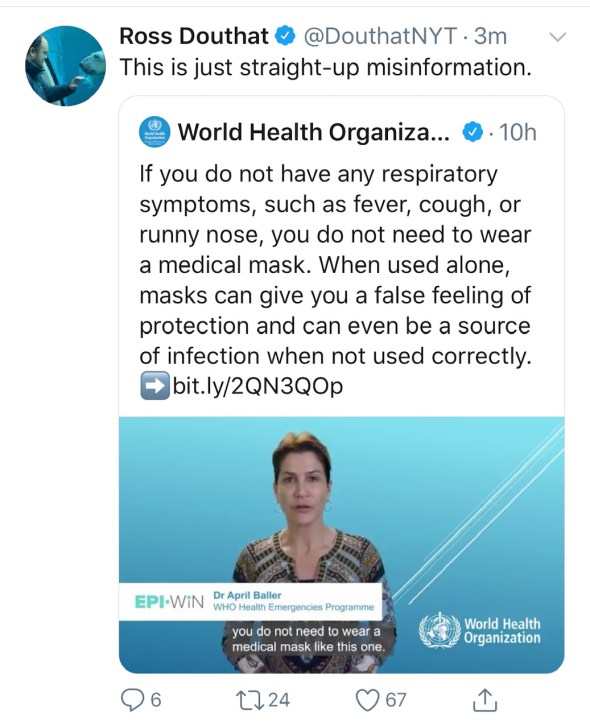
There’s a phenomenon on social media I’ve been meaning to discuss on Helytimes, but I don’t know how to bring it up without being guilty of what I’m talking about. Maybe it doesn’t matter. It’s this: sharing something that’s bad.
This is incredibly common on Twitter. It might be the main driving engine on Twitter. “Dunking on” stuff might be the most common category. of this. You see something you don’t like, or that’s bad, or wrong, and you make fun of it. But in doing so, you are also of course spreading it further. Here’s an example:

Here’s another one:

One more:

I don’t mean to pick on these people, these are all pretty innocent examples (and I’ve done the same or worse), but you see what I’m talking about. It’s when you go, look at this shit! It sucks!
And I’m like well maybe I wouldn’t have even seen the shit if you didn’t tell me about it.
Sometime around 2014 or so I heard someone point out that Twitter has outsized power because every journalist is on it. Non-stop. It almost just a chat room for journalists (and media people). Journalists are drawn to spread the news, good and bad. Spreading the news is their job and I hope their passion. But what if what you’re spreading is bad, or unhelpful?
Probably the answer is just to get off Twitter, but I’m addicted to the news. It’s very addicting! I’m trying to work on not spreading anything bad, even if it’s funny or entertaining or exciting or, maybe most tempting of all, outrageous.
cause a scene
Posted: March 26, 2020 Filed under: politics Leave a comment
You’re the Speaker of the House, you’re eighty years old, two trillion dollars on the line, and the problem is someone might “cause a scene.”
The idea of “causing a scene worth thinking about!
Diné
Posted: March 13, 2020 Filed under: America, language, native america Leave a comment
Sapir’s special focus among American languages was in the Athabaskan languages, a family which especially fascinated him. In a private letter, he wrote: “Dene is probably the son-of-a-bitchiest language in America to actually know…most fascinating of all languages ever invented.”
I’ve been doing some work to learn:
- how it was that Navajo got to be classified as an Athabaskan language and
- what linguistic evidence exists for the northern origins of the Navajo.
This is a good journey, but challenging.
Sometimes it leads me to stuff like this:

which: ok, how much can we trust these linguists? Are we sure we’re on solid ground here?
The big categorizing of native American languages was done by Albert Gallatin in the 1830s.

Could he have been wrong? People were wrong a lot back then.
Well, after looking it with an amateur’s enthusiasm, I feel more trusting.
I feel confident Navajo/Diné is connected to languages of what’s now Alaska, British Columbia, and nearby turf.
Navajo / Diné speakers can be understood by speakers of other Athabaskan languages, and most of the words in Navajo seem to have Athabaskan origin.
Edward Sapir wrote a paper about internal evidence within the Navajo language for a northern origin to this people.

Sapir was wrong* about some things, but no one seems to doubt he was a pretty serious linguist.
How about Michael E. Krauss?

After completing a dissertation on Gaelic languages Krauss arrived in Alaska in 1960 to teach French at the University of Alaska.
Krauss’ largest contribution to language documentation is his work on Eyak, which began in 1961. Eyak was then already the most endangered of the Alaskan languages, and Krauss’ work is all the more notable considering that it represents what today might be considered salvage linguistics. While some Eyak data had been previously available, they were overlooked by previous scholars, including Edward Sapir. However, Eyak proved to be a crucial missing link for historical linguistics, being equally closely related to neighboring Ahtna and to distant Navajo. With good Eyak data it became possible to establish the existence of the Athabaskan–Eyak–Tlingit language family, though phonological evidence for links to Haida remained elusive.
If anyone makes any progress on native American language classifications while under precautionary self-quarantine, let us know
* I’m just teasing poor Sapir here, I don’t think it’s fair to “blame” him exactly for the “Sapir-Whorf hypothesis,” which maybe isn’t even wrong, and as far as I can tell it was Whorf not Sapir who misunderstood Hopi
fast and decisive adjustments
Posted: March 12, 2020 Filed under: America Since 1945, business Leave a comment
This struck home, read it in a Sequoia Capital memo someone Twittered.
Also in the category of: clear writing from people in the world of VC/tech financing, an anecdote retold by Morgan Housel
The Battle of Stalingrad was the largest battle in history. With it came equally superlative stories of how people dealt with risk.
One came in late 1942, when a German tank unit sat in reserve on grasslands outside the city. When tanks were desperately needed on the front lines, something happened that surprised everyone: Almost none of the them worked.
Out of 104 tanks in the unit, fewer than 20 were operable. Engineers quickly found the issue, which, if I didn’t read this in a reputable history book, would defy belief. Historian William Craig writes: “During the weeks of inactivity behind the front lines, field mice had nested inside the vehicles and eaten away insulation covering the electrical systems.”
The Germans had the most sophisticated equipment in the world. Yet there they were, defeated by mice.
Primary tensions
Posted: March 3, 2020 Filed under: America Since 1945, Kennedy-Nixon Leave a comment
It’s the night of the West Virginia primary, May 10, 1960. Candidate John Kennedy, and Ben Bradlee, then Washington Bureau chief for Newsweek, cut the tension by going to see a porno:

(You can see the trailer here, it does seem like soft stuff by our standards)
Good luck out there voters, I hope your favorite candidate wins!
Joe Biden on Meet The Press
Posted: March 1, 2020 Filed under: America Since 1945, news Leave a comment
Instead of their opinions and guesses, I wish political commentators would offer simple facts, observations, like: Joe Biden doesn’t complete about 23*% of the sentences his starts.
A typical example of a Biden not completed sentence is like half a statistic or something followed by “I mean look” and a jump to a new thought.
Starting a new sentence whenever you’re lost is probably a great tactic if you find you get confused, lose the thread, or make frequent meanderings into language territory you can’t always get out of.
I’m aware Joe Biden has struggled with a stutter, and respect his struggle with it, you can see that in this Meet The Press appearance, that may partially explain this fact but doesn’t make it not a fact.
As for Mike Pence’s on Meet The Press, the less said the better. Rare cheers for Chuck Todd for pinning him down on naming names of what specific Democrats are “politicizing” the crisis. Pence came up with “the New York Times” (referencing I believe Gail Collins’ column).
One thought I’ve had about politics is there’s a wide gap in how important people think politics is or should be. I get a sense that, say, young Bernie voters tend to think “this is life or death! Politics means people’s lives!” while among a Trump-type voter you often get a sense of “whatever, it’s a stupid puppet show.”
After the 2008 election, when I looked back on how much time I’d spent like refreshing blogs and stuff, I resolved not to get too sucked into like following the events and commentary, but it’s a great temptation.
*actually counted and tried to make a fair estimate, what is wrong with me.
The Man Who Skied Down Everest (1975)
Posted: February 22, 2020 Filed under: adventures, mountains Leave a comment
Was scanning a list of Oscar winners for best documentary features the other day, and came across this one. 1975’s winner. Free on Amazon Prime. Or the whole thing is on YouTube.
A beautiful film in many ways, maybe a little slow-paced for today’s documentary viewer. Wasn’t sure how I felt about the ethics of this expedition. It seemed, at its heart, a little pointless compared to the dangers it courted? Not just to the expedition members, but to the 700 paid Sherpas and other porters. But maybe I’m just looking for an excuse to justify why I haven’t skied down Everest. I’m no Yuchiro Miura, that’s for sure.
A surprising number of readers of Helytimes found their way here looking for lists of mountaineering movies. A category where even the bad ones are good.
 Helytimes


