




Mr. Yang admitted that in the 1980s and early ’90s, before emigrating to Australia and then moving to New Zealand to teach at a university, he studied and taught at two Chinese educational institutions run by the People’s Liberation Army, China’s armed forces.
Uma’s example
Posted: November 16, 2017 Filed under: actors, buddhism, heroes Leave a comment
into Uma’s example of not speaking in anger and waiting to be ready to speak on stuff.
feel like Twitter Internet etc. has made everyone feel like they need to have a Take on everything instantly. I enjoy a good Take a much as anybody. But feel like I can’t remember the last time I heard someone say “I need to reflect on this before I comment.”
Remembering that Uma’s father is a scholar of Buddhism.

The Man From Onion Valley. source.
The Revolution eats its children
Posted: November 16, 2017 Filed under: art history 2 Comments
[Jaques Mallet du Pan] is known for coining the adage “like Saturn, the Revolution devours its children,” which originally appeared as “A l’exemple de Saturne, la révolution dévore ses enfants” in his widely circulated 1793 essay Considérations sur la nature de la Révolution de France, et sur les causes qui en prolongent la durée.
Goya’s painting above. Wikipedia tells me Goya had this painting in his dining room.
Rubens on same theme:

Don’t be a Søren
Posted: November 15, 2017 Filed under: how to live Leave a comment
Good lil bit in this Aeon article by Julian Baggini about Kierkegaard:

Will a painting by George W. Bush increase or decrease in value?
Posted: November 14, 2017 Filed under: art history, presidents 1 CommentVote by corresponding with Helytimes, please make only clear, considered arguments.
From The Hill, 2013 re a W. Christmas ornament for sale:
The former White House resident, 67, told Jay Leno in a Tuesday “Tonight Show” appearance that he takes weekly painting lessons, telling an instructor, “There’s a Rembrandt trapped in this body — your job is to find it.”
So hard to wrap your head around that someone (most presidents?) can be simultaneously a psychopath and a goofball.
Cultural revolution in the films of Zhang Yimou
Posted: November 14, 2017 Filed under: China, movies Leave a comment
At a time in my life when I had a lot of time and a physical DVD Netflix account I started watching the films of Zhang Yimou.
These movies are great. The plots are crazy, but compelling. There are other ways to tell stories besides the save the cat way.

(save the cat lol there’s a famine killing forty million people!)
A woman married to the brutal and infertile owner of a dye mill in rural China conceives a boy with her husband’s nephew but is forced to raise her son as her husband’s heir without revealing his parentage in this circular tragedy.
for example
Plus just trying to discern the basic premises the characters assume or the worldview of the movie assumes adds a whole other level
Been thinking about these movies in the context of a much, much, much more minor cultural revolution I perceive in the USA and especially Hollywood/the media, where people are like examining themselves and confessing to their political crimes.
Zhang was born in Xi’an, the capital of Shaanxi province. Zhang’s father, a dermatologist, had been an officer in the National Revolutionary Army under Chiang Kai-shek during the Chinese Civil War; an uncle, and an elder brother had followed the Nationalist forces to Taiwan after their 1949 defeat. As a result, Zhang faced difficulties in his early life.
During the Cultural Revolution of the 1960s and 1970s, Zhang left his school studies and went to work, first as a farm labourer for 3 years, and later at a cotton textile mill for 7 years in the city of Xianyang. During this time he took up painting and amateur still photography, selling his own blood to buy his first camera.[10]
Nice Try Hall Of Fame
Posted: November 13, 2017 Filed under: Hollywood Leave a comment
when Harvey Weinstein’s then-lawyer Lisa Bloom said he’s “an old dinosaur learning new ways”

Is it interesting?
Posted: November 13, 2017 Filed under: America Since 1945, politics Leave a comment
source
that William F. Buckley and Ayn Rand kind of look alike?
Hemingway Writing Advice
Posted: November 13, 2017 Filed under: Florida, Hemingway, writing, writing advice from other people 2 Comments
one of the descendants of Hemingway’s messed-up, inbred, extra-toe cats in Key West
In a 1935 Esquire piece, Hemingway, already playing the preening dickhead, gives some writing advice that I think is clear-eyed and well-expressed.

Writing room in Hem house in Key West
The setup is a young man has come to visit him in Key West, and Hemingway has given him the nickname Maestro because he played the violin.
MICE: How can a writer train himself?
Y.C.: Watch what happens today. If we get into a fish see exact it is that everyone does. If you get a kick out of it while he is jumping remember back until you see exactly what the action was that gave you that emotion. Whether it was the rising of the line from the water and the way it tightened like a fiddle string until drops started from it, or the way he smashed and threw water when he jumped. Remember what the noises were and what was said. Find what gave you the emotion, what the action was that gave you the excitement. Then write it down making it clear so the reader will see it too and have the same feeling you had. Thatʼs a five finger exercise. Mice: All right.
Y.C.: Then get in somebody elseʼs head for a change If I bawl you out try to figure out what Iʼm thinking about as well as how you feel about it. If Carlos curses Juan think what both their sides of it are. Donʼt just think who is right. As a man things are as they should or shouldnʼt be. As a man you know who is right and who is wrong. You have to make decisions and enforce them. As a writer you should not judge. You should understand.
Mice: All right.
Y.C.: Listen now. When people talk listen completely. Donʼt be thinking what youʼre going to say. Most people never listen. Nor do they observe. You should be able to go into a room and when you come out know everything that you saw there and not only that. If that room gave you any feeling you should know exactly what it was that gave you that feeling. Try that for practice. When youʼre in town stand outside the theatre and see how people differ in the way they get out of taxis or motor cars. There are a thousand ways to practice. And always think of other people.
Mice: Do you think I will be a writer?
Y.C.: How the hell should I know? Maybe youʼve got no talent. Maybe you canʼt feel for other people. Youʼve got some good stories if you can write them. Mice: How can I tell?
Y.C.: Write. If you work at it five years and you find youʼre no good you can just as well shoot yourself then as now.
Mice: I wouldnʼt shoot myself.
Y.C.: Come around then and Iʼll shoot you.
Mice: Thanks.
This article is behind a paywall at Esquire but I found it reprinted on the website of Diana Drake, who has story by credit on the film What Women Want.
The story of Profumo
Posted: November 12, 2017 Filed under: America Since 1945, heroes Leave a commentIn the early 1960s Michael Profumo was the British minister of defense. He was also banging a party girl who was also banging a Russian spy.
at like big swinging sex parties.
He had to resign, disgraced. But he handled it well. Wife stuck by him. Spent the next forty years cleaning toilets and working in East End soup kitchens.
Shortly after his resignation Profumo began to work as a volunteer cleaning toilets at Toynbee Hall, a charity based in the East End of London, and continued to work there for the rest of his life. Peter Hitchens has written that Profumo “vanished into London’s East End for 40 years, doing quiet good works”. Profumo “had to be persuaded to lay down his mop and lend a hand running the place”, eventually becoming Toynbee Hall’s chief fundraiser, and used his political skills and contacts to raise large sums of money. All this work was done as a volunteer, since Profumo was able to live on his inherited wealth. His wife, the actress Valerie Hobson, also devoted herself to charity until her death in 1998. In the eyes of most commentators, Profumo’s charity work redeemed his reputation. His friend, social reform campaigner Lord Longford said he “felt more admiration [for Profumo] than [for] all the men I’ve known in my lifetime”.
Right before he died the Queen invited him to dinner and had him sit next to her.
Like forty years of solid, humble repentance.
From his obituary:
Profumo’s dedication and dignity won him enormous admiration from people in all walks of life. The author Peter Hennessy, a fellow trustee at a charitable foundation associated with Toynbee Hall, described him as “one of the nicest and most exemplary people I have met in public or political life; full of the old, decent Tory virtues”. Margaret Thatcher called him “one of our national heroes”. “Everybody here worships him”, a helper at Toynbee Hall was once quoted as saying. “We think he’s a bloody saint.”
The scum of the earth
Posted: November 10, 2017 Filed under: war Leave a comment
(c) English Heritage, The Wellington Collection, Apsley House; Supplied by The Public Catalogue Foundation
A French army is composed very differently from ours. The conscription calls out a share of every class — no matter whether your son or my son — all must march; but our friends — I may say it in this room — are the very scum of the earth. People talk of their enlisting from their fine military feeling — all stuff — no such thing. Some of our men enlist from having got bastard children — some for minor offences — many more for drink; but you can hardly conceive such a set brought together, and it really is wonderful that we should have made them the fine fellows they are.
Christopher Plummer played Wellington in the 1970 movie Waterloo, an expensive flop:
Final costs were over £12 million (GBP) (equivalent to about U.S. $38.3 million in 1970), making Waterloo one of the most expensive movies ever made, for its time. Had the movie been filmed in the West, costs might have been as much as three times this. Mosfilm contributed more than £4 million of the costs, nearly 17,000 soldiers of the Soviet Army, including a full brigade of Soviet cavalry, and a host of engineers and labourers to prepare the battlefield in the rolling farmland outside Uzhhorod, Ukraine (then part of the Soviet Union).
To recreate the battlefield authentically, the Soviets bulldozed away two hills, laid five miles of roads, transplanted 5,000 trees, sowed fields of rye, barley and wildflowers and reconstructed four historic buildings. To create the mud, more than six miles of underground irrigation piping was specially laid. Most of the battle scenes were filmed using five Panavision cameras simultaneously – from ground level, from 100-foot towers, from a helicopter, and from an overhead railway built right across the location.
Happened to tape the film onto a VHS off Boston’s TV 38 in my boyhood and thought it was pretty good.

is a very compelling book on the topic. Another great one by Howarth.

Wellington said a bunch of cool quotes:
As quoted in A History of Warfare (1968) by Bernard Montgomery, 1st Viscount Montgomery of Alamein: “Sir Winston Churchill once told me of a reply made by the Duke of Wellington, in his last years, when a friend asked him: “If you had your life over again, is there any way in which you could have done better?” The old Duke replied: “Yes, I should have given more praise.”
The phrase “scum of the earth” turns up in some translations of 1 Corinthians 4:13.
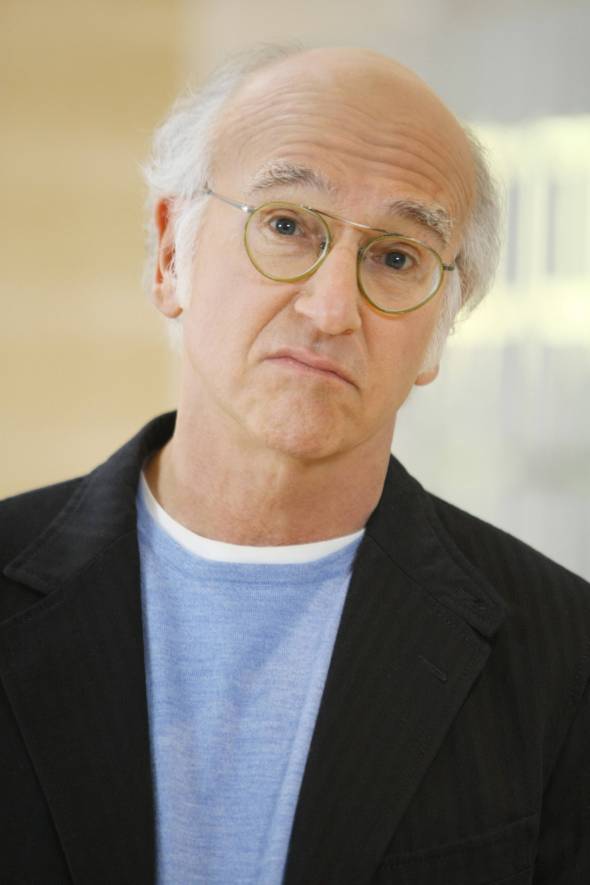
On this Veterans’ Day I like to remember unlikely veterans like Larry David:
He wrote a funny essay about his experience in the Army Reserve here. And:
He was drafted into the United States Army in 1970. He trained as a medic and was stationed in West Germany. After being honorably discharged he used the benefits of the G.I. Bill to enroll in the California Institute of the Arts, and received a BAdegree in drama from The Evergreen State College in 1975.
Thomas Ricks of course has a Veteran’s Day guest post worth reading.
Albums
Posted: November 10, 2017 Filed under: music, the California Condition Leave a commentThis album was recorded in Ireland:
from wiki:
Although the band liked the demo, it was difficult for them to record the song. Bassist Adam Clayton said, “At the time it sounded like a foreign language, whereas now we understand how it works”. The arrangement, with two time signature shifts and frequent chord changes, was rehearsed many times, but the group struggled to get a performance they liked. According to co-producer Daniel Lanois, “that was the science project song. I remember having this massive schoolhouse blackboard, as we call them. I was holding a pointer, like a college professor, walking the band through the chord changes like a fucking nerd. It was ridiculous.” Co-producer Brian Eno estimates that half of the album sessions were spent trying to record a suitable version of “Where the Streets Have No Name”. The band worked on a single take for weeks, but as Eno explained, that particular version had a lot of problems with it and the group continued trying to fix it up. Through all of their work, they had gradually replaced each instrument take until nothing remained from the original performance.
So much time had been spent on “screwdriver work” that Eno thought it would be best to start from scratch. His idea was to “stage an accident” and have the song’s tapes erased. He said that this was not to force abandonment of the song, but rather that it would be more effective to start again with a fresh performance. At one point, Eno had the tapes cued up and ready to be recorded over, but this erasure never took place; according to engineer Flood, fellow engineer Pat McCarthy returned to the control room and upon seeing Eno ready to erase the tapes, dropped the tray of tea he was carrying and physically restrained Eno.
This album was recored in Joshua Tree, CA:
Weighing the heart against a feather
Posted: November 8, 2017 Filed under: how to live Leave a comment
find the image of having your heart weighed against a feather after you die very powerful.
How do you do on the 42 Negative Confessions?:
The following are translations by E. A. Wallis Budge.
42 Negative Confessions (Papyrus of Ani)
From the Papyrus of Ani.
-
I have not committed sin.
-
I have not committed robbery with violence.
-
I have not stolen.
-
I have not slain men and women.
-
I have not stolen grain.
-
I have not purloined offerings.
-
I have not stolen the property of the gods.
-
I have not uttered lies.
-
I have not carried away food.
-
I have not uttered curses.
-
I have not committed adultery.
-
I have made none to weep.
-
I have not eaten the heart [i.e., I have not grieved uselessly, or felt remorse].
-
I have not attacked any man.
-
I am not a man of deceit.
-
I have not stolen cultivated land.
-
I have not been an eavesdropper.
-
I have slandered [no man].
-
I have not been angry without just cause.
-
I have not debauched the wife of any man.
-
I have not debauched the wife of [any] man. (repeats the previous affirmation but addressed to a different god).
-
I have not polluted myself.
-
I have terrorized none.
-
I have not transgressed [the Law].
-
I have not been wroth.
-
I have not shut my ears to the words of truth.
-
I have not blasphemed.
-
I am not a man of violence.
-
I am not a stirrer up of strife (or a disturber of the peace).
-
I have not acted (or judged) with undue haste.
-
I have not pried into matters.
-
I have not multiplied my words in speaking.
-
I have wronged none, I have done no evil.
-
I have not worked witchcraft against the King (or blasphemed against the King).
-
I have never stopped [the flow of] water.
-
I have never raised my voice (spoken arrogantly, or in anger).
-
I have not cursed (or blasphemed) God.
-
I have not acted with evil rage.
-
I have not stolen the bread of the gods.
-
I have not carried away the khenfu cakes from the spirits of the dead.
-
I have not snatched away the bread of the child, nor treated with contempt the god of my city.
-
I have not slain the cattle belonging to the god.
Definite no from me on 31. I’m always prying into matters! Something for me to work on.
I wonder how E. A. Wallis Budge himself would do on this quiz:
Dispatch from Down Under
Posted: November 7, 2017 Filed under: Australia, New Zealand Leave a comment
Asked our correspondent Barcelona Jim in Sydney to sum up of what’s up down there. He writes:
Australasian Politics has had a dose of Trump style mix ups, send ups, controversies, ejections and elections and chaotic decisions in this last week.
In a short period that involves New Zealand as much as it involves scandals, the new Prime Minister of NZ was told by the media she had won the election whilst painting her back fence in her track pants.

Ardern got straight to work, looking seeming bored when receiving a congratulatory call from President Trump, but had an enjoyable conversation with a journalist phoning her team to ask the correct pronunciation of “Ardern” – only to get straight through to the PM herself to have a genial chat.Meanwhile – Australia is in an uproar about a long forgotten amendment to our constitution, Article 22.This states that members of parliament cannot hold dual citizenship.Beginning with a right-wing party calling out a left-wing member the news achieved enough attention to call the deputy PM of Australia, Barnaby Joyce, along with several others into question.
(Barnaby seems like a real prize pig)
In a decision handed out yesterday by the high court of Australia, Barnaby and four other senators are foisted out, leaving the opposing party with no longer a majority.Meanwhile the previously mentioned party organised a federal police raid on the opposing party’s Australian Worker’s Union, but was tipped off by media leading to a Federal Investigation and a resigning of at least one staffer and possibly a leading member.Many members, senators, leaders of parliament are in a current flutter of back-stabbing, investigations, constitutional rediscovery.If this sounds confusing… It is.Best of wishes to Mueller.
Asked for a follow up with a summary of the Manus issue:

Meanwhile, in New Zealand:
Charlotte Graham in the New York Times reports that a former member of the Chinese Communist Party got elected to Parliament:

He said he had not named the Chinese military institutions on his application for New Zealand citizenship, and had instead listed “partner institutions” as his employers, because that was what the Chinese “system” had told him to do.
Mr. Yang conceded that he had taught English to spies, but said he had never been a spy himself, was no longer a member of the Communist Party, and had been contracted and paid only as a so-called civilian officer.
Mr. Yang has not been officially investigated in New Zealand or charged with espionage.
But Nicholas Eftimiades, a former officer with the Central Intelligence Agency with extensive experience on China matters, said the title of civilian officer was a fluid one in China.
Mr. Eftimiades, now a lecturer at Penn State Harrisburg in Pennsylvania, said officers moved seamlessly between military and civilian assignments to include Chinese army units and work in the defense industry, think tanks and universities.
Is China getting its spies elected to parliaments? Gotta respect the move if so.
Will World War III be an Info Wars?

Has it already begun?
And:

Plus you must follow Australia’s Parliament House on Twitter:

That’s what’s happening in Australasia

where the constellations change but the mind stays the same.
World’s biggest Jeep
Posted: November 7, 2017 Filed under: America Since 1945, Middle East Leave a comment

That’s owned by Hamad bin Hamdan Al-Nahyan of Abu Dhabi. He also once carved his name in kilometer-long letters on his own island:

(It’s since been erased.)
Bases in the desert
Posted: November 6, 2017 Filed under: America Since 1945 Leave a comment(vid taken by me during a demonstration on a tour of Fort Irwin)
From 1942-1991 the US Army, Navy, Air Force and Marines built enormous bases in the desert.

Partly this was to train for the coming war in North Africa.

Indio, California. A half-ton jeep rolling over the desert at the desert training center June 1942.
Farm Security Administration Office of War Information/Library of Congress. Source.
Fort Irwin, built in 1940, deactivated 1971, returned to active status 1981.

China Lake Naval Weapons Center, which is, to use the tiredest comparison in American geography, bigger than Rhode Island.

Marine Corps Air Ground Combat Center Twenty Nine Palms, growing and growing since 1949

Edwards AFB. Those are just some of the ones in California alone.
We built the bases, and then we found reasons to have wars in the desert.
Is that interesting?
Melancholy
Posted: November 5, 2017 Filed under: America Since 1945, presidents Leave a comment
Put it to the test; leave a king entirely alone quite at leisure, with nothing to satisfy his senses, no care to occupy the mind, with complete leisure to think about himself, and you will see that a king without diversion is a very wretched man. Therefore such a thing is carefully avoided, and the persons of kings are invariably attended by a great number of people concerned to see that diversion comes after affairs of state, watching over their leisure hours to provide pleasures and sport so that there should never be an empty moment. In other words they are surrounded by people who are incredibly careful to see that the king should never be alone and able to think about himself, because they know that, king though he is, he will be miserable if he does think about it.”
from Pascal’s Pensées, quoted by Laszlo Foldenyi in his book about melancholy, quoted by Dan Wang!
Mama Irene Mural
Posted: November 4, 2017 Filed under: the California Condition Leave a comment
The street art in my neighborhood is good.

There’s always something wild at the Taschen store.

This one I walk by all the time, and I got to wondering, who is Mama Irene?
Some local Latina community leader? Is she wearing gardening clothes? A pioneering urban farmer?
Seen here with my colleague Ted for scale:

Turns out, this is the mother of EDM impresario and Electric Daisy Carnival founder Pasquale Rotella:

from EDM.com
The mural was unveiled after Mama Irene’s funeral at nearby Hollywood Forever cemetery. It was commissioned by Kaskade.

Raddon is married and has three children. He is a member of The Church of Jesus Christ of Latter-day Saints.[30]
Mystery of the Joshua Tree Missing Hikers
Posted: November 3, 2017 Filed under: the California Condition Leave a comment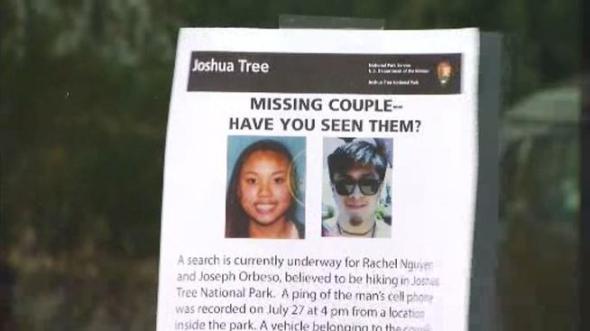
Early on Thursday, July 27, these two people entered Joshua Tree National Park.
At 4:50 pm that day, there was a ping from the guy’s cell phone that put them in the park.
That was a darn hot day in the park:

On Friday, July 28, says The Hi Desert Star, the person who took care of the Air BnB where they were supposed to be checked out found their stuff. So they started a search.
Their car was found near the Maze Loop trailhead, one of the closest trails to the West Entrance of the park:
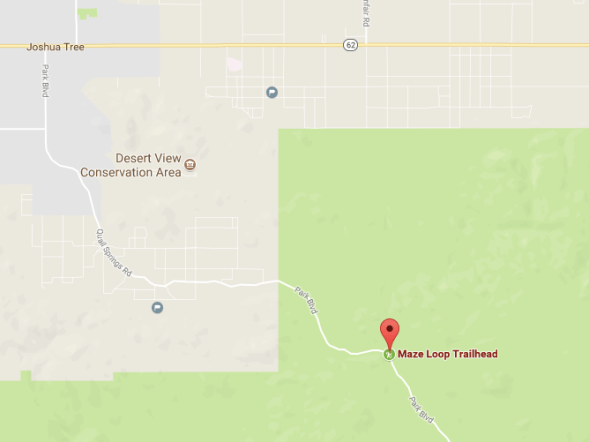
With terrain:
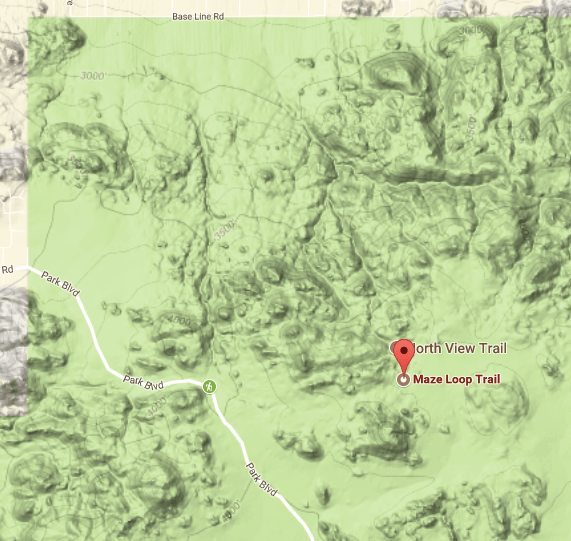

Here it is on Tom Harrison’s map: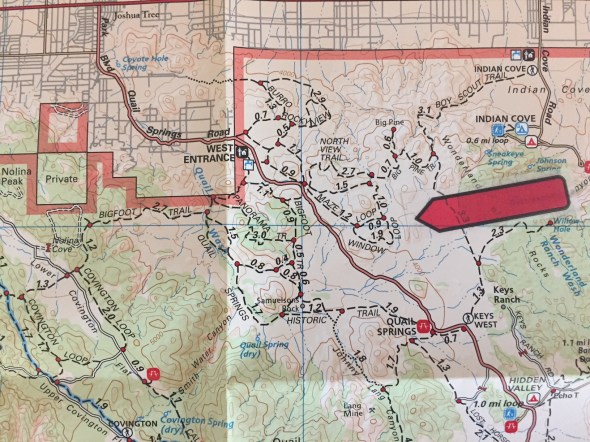
For perspective, here is the whole park, which is, in our nation’s tiredest comparison, almost as big as Rhode Island: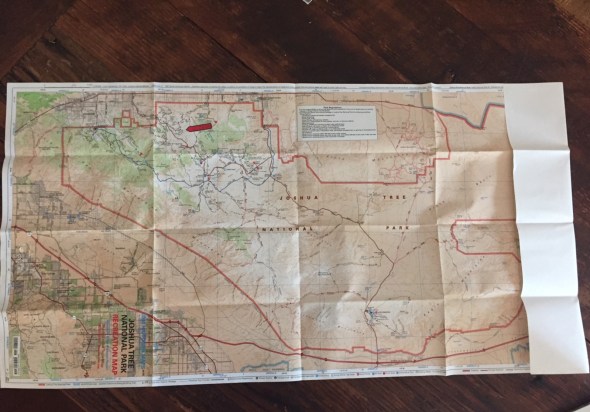
All the more tragic to think these folks weren’t too far from a road. The Maze Loop looks like this:

It’s trippy and weird and spooky and cool:

The trail is pretty well marked but it’s easy to get lost if it’s a hundred degrees and you’re out of water.
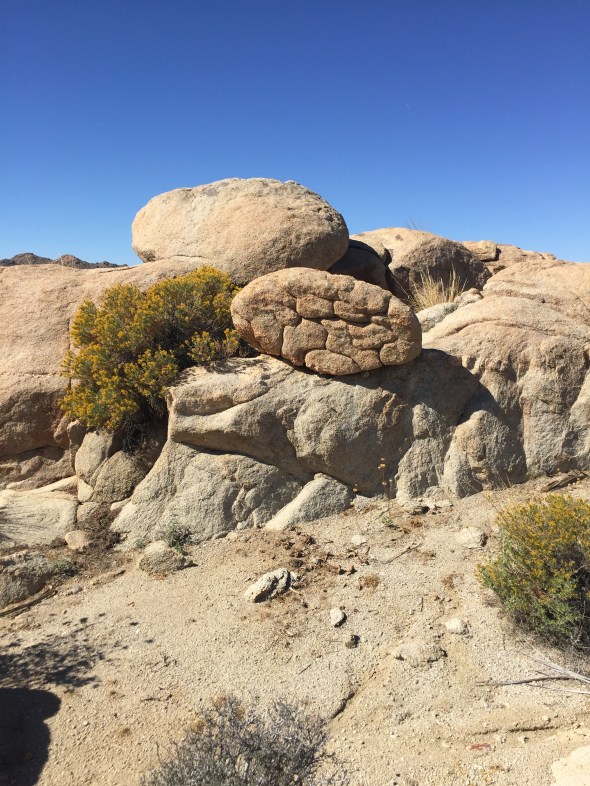
All day that Saturday, July 29, there were helicopters over the park.
Walking along the northern edge of the park that evening I ran into a search and rescue team, who told me the troubling tale of the missing hikers. They had crossed up from the trailhead looking for these folks. They’d found a water bottle, weren’t sure it was related.
There was strange weather in the desert around this time. On Sunday July 30 a monsoon blew through:
An interesting detail that emerged, again from the Hi Desert Star, that the young man had been out to the park a few weeks before, on “a scouting trip,” with a friend who could now not be found because he was in Japan.
“Interesting,” I thought.
Perhaps someday they would be found alive like this lost couple.
Time passed.
The search was downgraded from “search and rescue” to “search and recovery.”
But the persistent searchers, including the missing man’s father, kept at it.
On Sunday, Oct. 15:
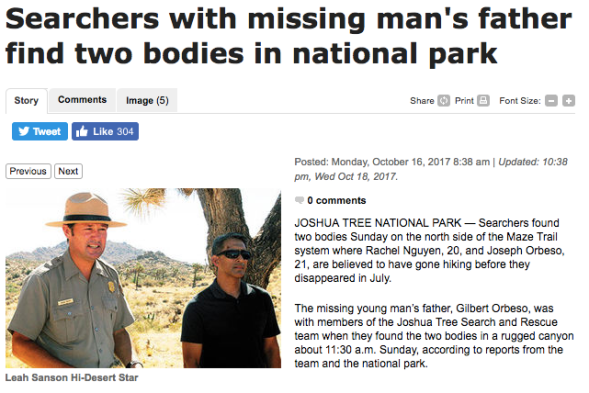
The cause of death was a twist: gunshot wounds.
A curious case.
The absolute source I would want to get on this story would be Desert Oracle, and wouldn’t you know it, Desert Oracle radio came in with a strong take. Let me encourage you to listen to Desert Oracle, Episode 12, to which I award a spontaneous Helytimes Prize for Best Podcast Episode, California Division, 2017.
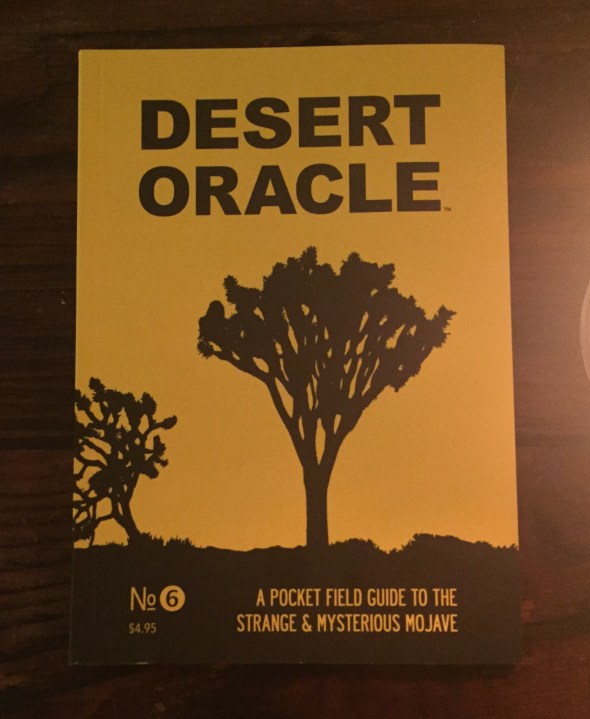
You can subscribe to Desert Oracle print quarterly here, and at $25, you’re crazy not to.
Water Dreaming at Kalipinya
Posted: November 2, 2017 Filed under: art history, Australia Leave a comment
Says the 2001 NYTimes obituary of painter Johnny Warangkua Tjupurrula:
He died a penniless alcoholic. In 1997 one of his paintings, ”Water Dreaming at Kalipinya,” which he had sold in 1972 for $75, changed hands at a Sotheby’s auction in Melbourne for $263,145, setting a record for any Aboriginal work of art. Mr. Tjupurrula’s request for 4 percent of the sale price was refused by both seller and buyer.
Not cool! From a 2010 Smithsonian article by Arthur Lubow:
The Wilkersons’ costliest board was the 1972 painting Water Dreaming at Kalipinypa, a dazzling patchwork of stippled, dotted and crosshatched shapes, bought in 2000 for some $220,000—more than twice the price it had been auctioned for only three years earlier. The painting was done by Johnny Warangkula Tjupurrula, an original member of the Papunya cooperative and one of its most celebrated. Sadly, the artist himself had long been overlooked; in 1997, an Australian journalist found Warangkula, by then old and homeless, sleeping along with other Aboriginal people in a dry riverbed near Alice Springs. Though he reportedly received less than $150 for his best-known painting, the publicity surrounding the 1997 sale revived his career somewhat and he soon resumed painting. Warangkula died in a nursing home in 2001.
Here’s his 1972 painting Potato Dreaming:


 Helytimes

.jpg)


