Best mayor name
Posted: June 1, 2017 Filed under: Canada Leave a comment
It’s got to go to Victoria, British Columbia’s Lisa Helps.

Mayor Lisa Helps has a very cool city she’s entrusted with. 
a constituent
Design of Big Wheel Burger by our buds at Caste Projects

More about Victoria can be found in A Trip To Canada.
Denis Johnson, Walt Whitman
Posted: May 29, 2017 Filed under: America Since 1945, heroes, writing Leave a comment
We’ve been thinking a lot about the glow of some of your poems, the visionary language seeping through parts of Angels, and the electric way in which the border between Fuckhead’s consciousness and the outside world is always being dissolved throughout Jesus’ Son. Could you talk a bit more about Whitman’s influence in your poetry and prose?
I’m not sure I could trace the lines of his influence on my language, particularly, or the way his work affects the strategies in my work, or anything like that. His expansive spirit, his generosity, his eagerness to love – those are the things that influence me, not just as a writer, but as a person. His introduction to LEAVES OF GRASS I take as a sort of personal manifesto, especially the passage:
This is what you shall do: Love the earth and sun and the animals, despise riches, give alms to every one that asks, stand up for the stupid and crazy, devote your income and labor to others, hate tyrants, argue not concerning God, have patience and indulgence toward the people, take off your hat to nothing known or unknown or to any man or number of men, go freely with powerful uneducated persons and with the young and with the mothers of families, read these leaves in the open air every season of every year of your life, re-examine all you have been told at school or church or in any book, dismiss whatever insults your own soul, and your very flesh shall be a great poem and have the richest fluency not only in its words but in the silent lines of its lips and face and between the lashes of your eyes and in every motion and joint of your body. . . .
found in this interview with Denis Johnson. Oddly or presciently or synchronistically enough I’d been looking for Denis Johnson materials as I did ever so often. How did this guy know this stuff? was what I was looking for as usual.
 so good!

May I please recommend to you you have actor Will Patton read you the audiobook of:

I loved the experience so much I got into the full unabridged 23+ hours of:

Will Patton is such a gifted, subtle performer of audiobooks.

from a profile in AudioFile
Let’s give the last word to DJ:
I love McDonald’s double cheeseburgers and I don’t care if they’re made of pink slime and ammonia, I eat them all the time because they’re delicious.

Today’s I Ching
Posted: May 25, 2017 Filed under: China, mysticism, religion 1 Comment
In some translations springtime is rendered as Long June
from:

the only book I’ll ever need?!
if I want to learn more about China I can pick up this month’s Westways:

Lol did somebody pitch Westways “how about a story about China?”
WESTWAYS EDITOR: what angle?
PITCHER: Everything from cities to cuisine! All the facets!
EDITOR: All?!
PITCHER: Well, many facets.
EDITOR: Is there enough there?
PITCHER: I think so. Did you know it is a 5,000 year old civilization?
EDITOR: Wow! OK let’s also have a piece on Iceland and car racing for amateurs and I think we’re good!
Morrissey / Noonan
Posted: May 23, 2017 Filed under: America Since 1945, politics Leave a comment
Compare what Morrissey said on Facebook (via Vulture) to this Peggy Noonan piece from February:
There are the protected and the unprotected. The protected make public policy. The unprotected live in it. The unprotected are starting to push back, powerfully.
The protected are the accomplished, the secure, the successful—those who have power or access to it. They are protected from much of the roughness of the world. More to the point, they are protected from the world they have created. Again, they make public policy and have for some time.
Anne R. Dick
Posted: May 22, 2017 Filed under: America Since 1945, writing Leave a comment
Obit worth reading in the NY Times:
Bored with science fiction and unable to interest publishers in his mainstream novels, Dick quit writing to help his new wife in her jewelry business. He liked that even less, and so he pretended to work on a new novel. To make it look realistic, he said in a 1976 interview with Science Fiction Review, he had to start typing.
What emerged was “The Man in the High Castle.” It was dedicated, cryptically and not altogether favorably, to his wife, “without whose silence this book would never have been written.” (In the 1970s, Dick changed the dedication, dropping Anne Dick entirely.)
Ms. Dick said she saw only the pilot of the Amazon series, finding the Nazis a little too threatening.
If you are interested in hearing some ideas that flutter between profound and totally bonkers might I suggest:


How paranoia is natural:

How about this?:

Just a guy with a fragile mind hanging out reading Gestapo documents in German up at UC Berkeley:
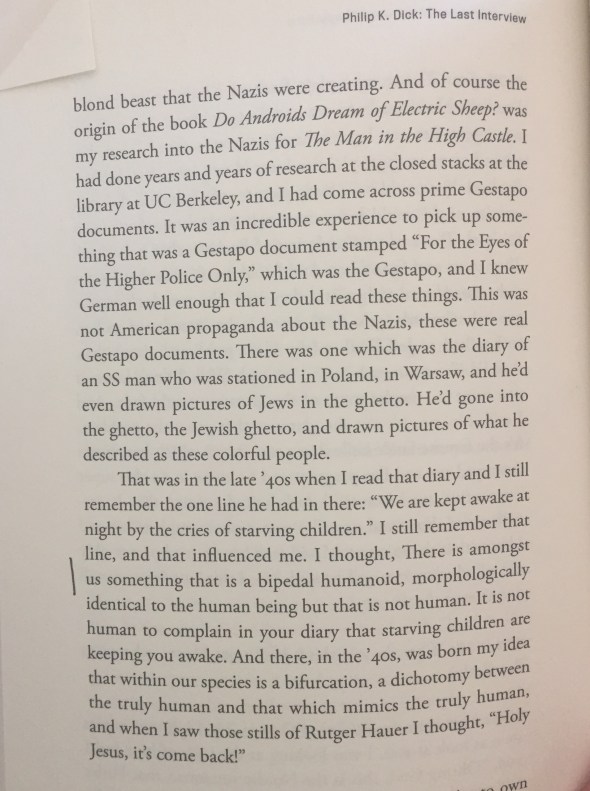

In Sweden there’s a fashion brand called Filippa K and I thought it would be funny for someone to do a mashup Filippa K Dick.

But who has the time.
Dreaming The Beatles / The Love You Make
Posted: May 20, 2017 Filed under: music 2 Comments
Devoured this book after reading Tyler Cowen’s endorsement. Here are two samples:

And:
How freaking interesting are the Beatles?! Even their names. John and Paul.

If you had a Catholic boyhood like I did and Paul did how can it not have some meaning that these guys are named John and Paul?!

from this Globalnews.ca article about a John Lennon letter
The world these guys came out of!

Postwar England. source: the Daily Mail
Mentioned reading Dreaming The Beatles to my buddy, who looked at me like I was an adorable if foolish schoolchild and suggested I get serious and read The Love You Make, written by Peter Brown, who was Brian Epstein’s assistant.

My God, this book! Incredible tale! Brian Epstein:

from wiki:
Koch, Eric / Anefo – [1] Dutch National Archives, The Hague, Fotocollectie Algemeen Nederlands Persbureau (ANeFo), 1945-1989

Both books talk about how phenomenon of being the Beatles almost overwhelmed the Beatles, and everyone around them. At its best it felt something like living in a yellow submarine with all your friends aboard, suggests Sheffield.
At its worst it seems so oppressive and scary it nearly / did kill them. At least once the Beatles were almost crushed to death in their car from the pressure of fans.

Started listening on Spotify to all the Beatles albums, in order.

I would say the biggest leap that hits me is when you get to the third song on this one. You’re listening to like two hours of very solid pop music, and then you get to You’ve Got To Hide Your Love Away.
Then, you get to this:
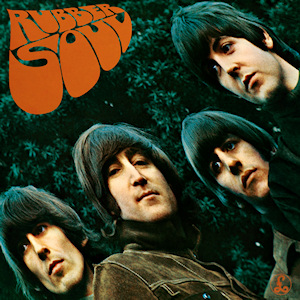
from Wiki:
This is the cover art for the album Rubber Soul by the artist The Beatles. The cover art copyright is believed to belong to the label, Parlophone/EMI, or the graphic artist(s), Robert Freeman/David Julian Beard. Resampled from digital copy included on The Beatles USB Box Set
and we’re on another planet.
On their first album the Beatles covered this:
Hard to find some Beatles songs on YouTube. The hash that was made of the Beatles’ finances and rights is a whole interesting story on its own. Epstein meant the best for the Beatles, can he be blamed for not realizing that lunchbox and doll rights would be worth millions?
The predators that descended on the Beatles later are a dark parade. When Allen Klein heard on the radio that Brian Epstein had died at 32 of a drug overdose, his reaction was to snap his fingers and say “I got em!”
The Beatles were taxed at something like 94%. Various tax avoidance schemes like investing in “related businesses” were somewhat doomed by John’s, especially, disgust at the idea of becoming anything like a businessman.
A publicly traded company, Northern Songs, owned the Lennon-McCartney songs for awhile:
During 1965 it was decided to make Northern Songs a public company to save on capital gains tax. 1,250,000 shares were traded on the London Stock Exchange, which were worth 17 pence each ($0.28), but were offered at 66 pence ($1.09) each. Although the trade was scoffed at by various financial institutions, it was expected that the application lists would not remain open for more than 60 seconds, which is exactly what happened, as the lists were oversubscribed. After the offer was closed, Lennon and McCartney owned 15% each, worth £195,200 ($320,000), NEMS a 7.5% interest, and James and Silver (who served as Northern Songs’ chairmen), controlling 37.5%, with Harrison and Starr sharing 1.6%. The remaining shares were owned by various financial institutions.
At some point Paul bought up more shares without telling John, a bit of sneakiness which Peter Brown treats very harshly. Peter Brown is, in my opinion, a little too brutal on Paul, but then again he was there and I wasn’t. It does seem like all the Beatles could be rather heartless to Brian Epstein, who meant a lot to Peter Brown.
To me, a degree of forgiveness comes in when you think that everything we think of as The Beatles happened to these guys by age thirty. When they were recording the White Album, George Harrison was twenty five. How would you be at twenty-five if you’d been world famous since you were eighteen?

I find this photo at the Telegraph, credited to Rex
None of them were from stable homes. Ringo’s childhood, in particular, was like some cruel Roald Dahl story. (OK fine it was Dickensian). At age six he’d regularly be left at home all night alone while his mom was at work. Says Brown:
At the age of six, only a year after starting St. Silas’s Junior School, Ritchie developed what was thought to be a simple stomachache. But when the pain lasted through the night he was finally taken to the hospital in an ambulance. It was too late; his appendix had already burst and periontis had set in. He remained in a coma for ten weeks, and with various complications including falling out of his hospital bed on his seventh birthday, he spent a solid year in the hospital. By the time he was back in school he was so far behind the other children he couldn’t read or write, and what little he learned from that point on was taught to him by a sympathetic neighborhood girl.
Later:
One rainy morning a big black car came to fetch him in the Dingle and took him away to the Heswall Children’s Hospital, a huge, gray children’s sanitorium in the Wirral. There he was put to bed, where he remained for the next two years.
Ringo is underappreciated, in my view. I’m not qualified to speak to his drumming, which was believed by Paul at least as well as some producers to be not too great. Ringo was treated rather cruelly by the other Beatles but without his good-natured willingness to play diplomat and either forgive or ignore slights and insults it seems clear the Beatles probably would’ve collapsed.
Now it’s time to declare what I consider to be the single most beautiful Beatles song and I declare it to be:
I may be projecting but I believe in the runup to the White Album you can feel a competition of insane excellence between John and Paul. With Blackbird the competition is over. In my opinion some subsequent tension between Paul and John had to do with John’s belief that it was semi-criminal a guy who could write Blackbird would also write some of the stuff Paul McCartney later put out. Thus what was best and greatest about Paul was, to John, tangled up with what was most frustrating about him, as can so often happen with lovers and friends.
Robert Mueller
Posted: May 19, 2017 Filed under: Uncategorized Leave a comment
Reading up on him on Wikipedia:
He went on to study at Princeton University (receiving an A.B. in 1966), where he continued to play lacrosse; he has cited his teammate David Spencer Hackett’s death in the Vietnam War as an influence on his decision to pursue military service. Hackett was a Marine Corps First Lieutenant in the infantry and was killed in 1967 by small arms fire.
Mueller earned an M.A. in international relations from New York University in 1967 and a Juris Doctor from the University of Virginia School of Law in 1973, where he served on the Virginia Law Review.
Mueller enlisted in the United States Marine Corps in 1968, attending officer candidate school, Army Ranger School and Army jump school. He then served as an officer leading a rifle platoon of the 3rd Marine Division during the Vietnam War; he eventually became aide-de-camp to 3rd Marine Division’s commanding general. He received the Bronze Star, two Commendation Medals, the Purple Heart and the Vietnamese Cross of Gallantry.
If my friend was killed in Vietnam I don’t think my reaction would be I should go to Vietnam.
Impressive man.
Robert Caro’s two hour audiobook
Posted: May 19, 2017 Filed under: America Since 1945, New York, politics, presidents, Texas Leave a comment
Strong endorse to an audio only, 1 hour 42 minute semi-memoir by Robert Caro, boiling down the central ideas of The Power Broker and the LBJ series. If you’ve read every single extant interview with Robert Caro, as I have, some of its repetitive but I loved it and loved listening to Caro’s weird New York accent.

Two details: he tells how James Rowe, an aide to FDR, told him that FDR was such a genius about politics that when he discussed it almost no one could even understand him. But Lyndon Johnson understood everything.

James Rowe, from the LOC
Caro tells that when LBJ ran for Congress the first time, he promised to bring electricity. Women had to haul water from the well with a rope. A full bucket of water was heavy. Women would become bent, a Hill Country term for stooped over. LBJ campaigned saying, if you vote for me, you won’t be bent. You won’t look at forty the way your mother looked at forty.

from the Austin American Statesman collection at the LBJ Library. The woman’s name is Mrs. Mattie Malone.
Democracy plaything
Posted: May 19, 2017 Filed under: China, politics Leave a comment
Indeed, it has long been in the Chinese government’s interest to sow cynicism among its citizens about the mechanisms of democracy. The current Administration and its steady stream of blunders have made Beijing’s task appreciably less difficult.
From this New Yorker thing by Jiayang Fan.
Some years ago at a dinner in Shanghai a smart person gave me his a somewhat jaded take on what would happen if China got democracy. He described how some huckster demagogue from TV would get elected and be terrible.

Peggy Noonan worth reading as usual. She got me to subscribe to the WSJ:
Here’s an idea.
It would be good if top Hill Republicans went en masse to the president and said: “Stop it. Clean up your act. Shut your mouth. Do your job. Stop tweeting. Stop seething. Stop wasting time. You lost the thread and don’t even know what you were elected to do anymore. Get a grip. Grow up and look at the terrain, see it for what it is. We have limited time. Every day you undercut yourself, you undercut us. More important, you keep from happening the good policy things we could have done together. If you don’t grow up fast, you’ll wind up abandoned and alone. Act like a president or leave the presidency.”
As Ms. Noonan points out that’s unlikely to be effective for long but it’s something positive.
A Trip To Japan
Posted: May 19, 2017 Filed under: Japan Leave a comment
cool
one please!

Randy Messenger endorsed ramen set. 
A horse race
Let’s go to the mall
in the temple courtyard
Tourists
With this man as your guide? Who could fail
Yes boat.

By the harbor
Feeling homesick, visited Cape Cod
Everything’s cool
The vibe here. 
The lonely squash.

Burnt cedar fades as it ages.
This cat from a Murakami story. 
Rice
Tree lovers
All aboard.
Career. Woman.
Posted: May 10, 2017 Filed under: actors, comedy, Japan Leave a comment
Asked an Osaka resident what was going on in Japanese comedy these days, and he directed me to Buruzon Chiemi.
E. B. White in the Paris Review
Posted: April 26, 2017 Filed under: advice, writing Leave a comment
Found here, what a great interview:
INTERVIEWER
You have wondered at Kenneth Roberts’s working methods—his stamina and discipline. You said you often went to zoos rather than write. Can you say something of discipline and the writer?
WHITE
Kenneth Roberts wrote historical novels. He knew just what he wanted to do and where he was going. He rose in the morning and went to work, methodically and industriously. This has not been true of me. The things I have managed to write have been varied and spotty—a mishmash. Except for certain routine chores, I never knew in the morning how the day was going to develop. I was like a hunter, hoping to catch sight of a rabbit. There are two faces to discipline. If a man (who writes) feels like going to a zoo, he should by all means go to a zoo. He might even be lucky, as I once was when I paid a call at the Bronx Zoo and found myself attending the birth of twin fawns. It was a fine sight, and I lost no time writing a piece about it. The other face of discipline is that, zoo or no zoo, diversion or no diversion, in the end a man must sit down and get the words on paper, and against great odds. This takes stamina and resolution. Having got them on paper, he must still have the discipline to discard them if they fail to measure up; he must view them with a jaundiced eye and do the whole thing over as many times as is necessary to achieve excellence, or as close to excellence as he can get. This varies from one time to maybe twenty.
The whole thing is good. White describes how he came to draw the above New Yorker cover, his only one. And he talks about the diaries of Francis Kilbert, which sure do sound interesting. (Jump to “4. Relations With Girls”)

Meanwhile, out in the desert
Posted: April 26, 2017 Filed under: the California Condition Leave a comment
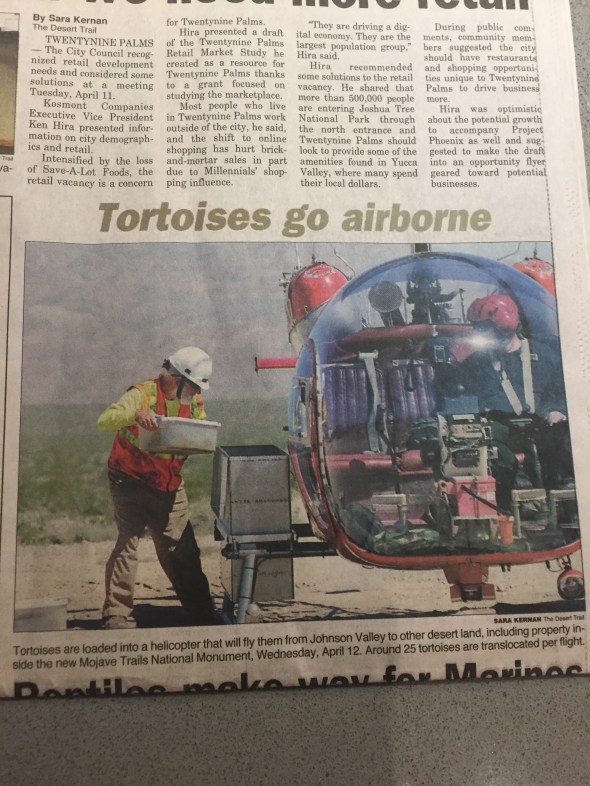
The top story in both the Hi-Desert Star and The Desert Trail is the removal of 1,100 desert tortoises from the Marine Corps base to safer lands.


Was Defense Secretary Mattis personally briefed on the operation?

It may seem silly but the story made me feel good.
find happy homes guys.

All I Gotta Do Is Act Naturally
Posted: April 24, 2017 Filed under: actors, the California Condition Leave a comment
When I first got to California a real curiosity was Bakersfield and the Bakersfield Sound.

from wiki’s article on the Kern River Oilfield. Photo by Antantrus
What the hell was going on up there in Bakersfield? There were four Basque restaurants in town.

Buck Owens was the king of the Bakersfield sound, he had the Crystal Palace. He died before I got to see him. From Wiki:
The Los Angeles Times interviewed longtime Owens spokesman (and Buckaroos keyboard player) Jim Shaw, who said Owens “had come to the club early and had a chicken fried steak dinner and bragged that it’s his favorite meal.”
bragged?
Afterward, Owens told band members that he wasn’t feeling well and was going to skip that night’s performance. Shaw said a group of fans introduced themselves while Owens was preparing to drive home; when they told him that they had traveled from Oregon to hear him perform, Owens changed his mind and took the stage anyway.
Shaw recalled Owens telling the audience, “If somebody’s come all that way, I’m gonna do the show and give it my best shot. I might groan and squeak, but I’ll see what I can do.” Shaw added, “So, he had his favorite meal, played a show and died in his sleep. We thought, that’s not too bad.”
The alpha song of the Bakersfield sound has to be Act Naturally. The Beatles had Ringo sing it:
I’ve probably listened to the Buck Owens version between 50 and 100 times. It continues to reveal itself. How about the the paradox of acting naturally.
Only very very good actors are capable of truly acting naturally.

Otani Oniji II as Yakko Edobei in the Play “Koinyabo Somewake Tazuna”
Saraku, Toshusai (worked 1794-1795)
Polychrome woodblock print with mica ground
h. 15 in. w. 9-7/8 in.
from the Met.
Did Otani Onjii act naturally?
Whole acting schools are devoted to teaching people how to act naturally.

Why do people have so much trouble acting naturally?

If you’re in Bakersfield get an ice cream sundae at Dewar’s.

To My House Guest:
Posted: April 22, 2017 Filed under: TV 1 Comment
If you found a note on a scrap of paper in my house that said “Maybe I can stop masturbating” on it I promise it was related to an upcoming work of television comedy.

Enjoy VEEP on Sundays at 10:30pm and then on HBO Go forever!
Will and Ariel Durant
Posted: April 22, 2017 Filed under: heroes, history, the California Condition Leave a comment
One of the local branches of the LA Public Library, the one on Sunset across from Wendy’s, is named after Will and Ariel Durant.
David Brooks grows wistful as he considers the Will and Ariel Durant project:
Between 1935 and 1975, Will and Ariel Durant published a series of volumes that together were known as “The Story of Civilization.” They basically told human history (mostly Western history) as an accumulation of great ideas and innovations, from the Egyptians, through Athens, Magna Carta, the Age of Faith, the Renaissance and the Declaration of the Rights of Man. The series was phenomenally successful, selling over two million copies.
I’ve taken a look at the first volume of the series,

and was astounded, amused, and delighted by what I found there. Here’s an example.

When Will met Ariel Durant, her name was Ida, she was fourteen, and she was his student.
She was 15 at her marriage on Oct. 31, 1913, and came to the ceremony with her roller skates slung over her shoulder. Her husband was just about to turn 28. He called her Ariel, after the the imp in Shakespeare’s ”The Tempest,” and she later had her name legally changed.
(from Will’s NYT obituary). In Our Oriental Civilization, Will makes the case for himself:

It’s pretty funny that we named the library after a pair of lovers whose romance would get the man arrested today.
On the other hand, that’s the kind of paradox of historical and civilizational change that Will Durant took so much joy in teaching about.

More from the NYT:
Dr. Durant consistently took a generally optimistic view of civilization, despite a growing belief that ”the world situation is all fouled up.”
”Civilization is a stream with banks,” he said in his precise voice. ”The stream is sometimes filled with blood from people killing, stealing, shouting and doing the things historians usually record, while on the banks, unnoticed, people build homes, make love, raise children, sing songs, write poetry and even whittle statues.
”The story of civilization is the story of what happened on the banks. Historians are pessimists because they ignore the banks for the river.”
Will and Ariel, from Wikipedia:


April 19. Patriots Day.
Posted: April 19, 2017 Filed under: America, history, New England, painting, pictures Leave a comment
Worth remembering that the American Revolution started when the federal government sent troops to take away people’s guns and ammunition.

More men from Needham died on April 19, 1775, I believe, than from any other town except Lexington:

The detail in that footnote! What she remembers, the old blind woman: how many of the soldiers had thrown away their coats! It was under the will of this venerable lady that he first received a legacy!
History gets so much more interesting when you get into how do we know this? what is the source? who claims this? who saw it happen?
The Needham Public Library.
Amos Doolittle wasn’t there but he showed up a few weeks later:

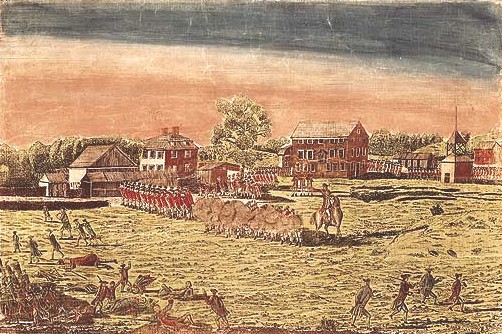
My favorite book on this topic is:

Tourtellot is really kind of funny when he rips into his least favorite patriot, vain old John Hancock:

that illustration up top from:

a British book – is there a pro-Redcoat bias?
TAKE: vote yes on WGA strike authorization
Posted: April 18, 2017 Filed under: America Since 1945, the California Condition Leave a comment
The Writers’ Guild is weird. For one thing, some of the members are owners or bosses. Writers who become showrunners and share in the profits of a show can have an owner’s interest. Another: writers have agents who negotiate for them.
Some writers make lots and lots of money. Others are unemployed, or at least unemployed as writers. It’s not really a union, it’s a guild, like a medieval guild, an association of craftspeople who work a certain trade.

Why is Staalmesters translated as “Syndics”? Rembrandt’s Syndics of the Drapers’ Guild. The Sampling Officials sounds cooler.
Or maybe something like London’s livery companies?:

A writers union going on strike can seem silly when you picture a union like this:

and a strike like this:

I find this on the Post-Bulletin: Steve Martell, Charles Brown, and an unidentified third man stand on the picket line on the morning of August 17, 1985, outside the Hormel Foods plant in Austin, Minnesota. Did Trump steal that style of hat consciously?
and writers like this:

But, if you’re in the Writers Guild, and you’re a Helytimes reader, I think you should vote yes on the strike authorization.
If you’re not in the Writers’ Guild, here are the facts, as I misremember them:
- TV writers are making less and less money but working the same amount of time. As shows have smaller orders of episodes, ten instead of twenty-two, writers are still working the same amount of days, but since many of us get paid per episode, we’re getting paid less for the same or more amount of days working.
- The studios are making enormous profits.*
- The studios sort of owe it to us to maintain our healthcare and pension plans, due to deals that were made over the years, and they’re saying they’re not going to do that.
Like all workers, we’re getting squeezed as much as possible by companies whose mandate is to be as profitable as possible for shareholders.
Workers can and should use every tool they can to fight for as much as they can. Our guild’s leaders are negotiating and have asked us to vote to authorize a strike, so they can bargain as effectively as possible.

Gunawan Kartapranata provided Wikipedia’s photo for the article on Bargaining
That’s pretty much my take. I hope it doesn’t happen. It will be very painful and hurt a lot of people. It shuts down production, which means grips, PAs, electricians, etc. are all out of work too. And actors, lots of whom have really struggled to get a shot and are going to continue to struggle.
I think the studios should just give us what we asked for. Disney is one of the studios we’re negotiating with. They have a market cap of $178 billion. I appreciate that Bob Iger has his strategic challenges with ESPN and so on but it seems wise and reasonable to me to say “fine let’s give the creators of our highly profitable content their not ridiculous demands and continue generating money from some of the world’s most popular entertainment, TV shows and movies.”

During the last strike my dad sent me his book of AFL-CIO songs
If we do go on strike, I think we shouldn’t picket. That was unhelpful. There should be some human shows of solidarity, but daily picketing got to be a weird ritual, some kind of bizarre martyrdom that in the end made us look more ridiculous. I am proud to say I feel like I did my duty, but I preferred my days answering the phones at Strike Headquarters to making small talk with Tom Bergeron while I held a sign outside CBS. Although that was fun too.

We discussed Rap Around. Source.
A dissenting opinion from a writer with always interesting takes:
The idea of a WGA strike in these times, when freedom of expression is a far more fundamental issue than small differences between comparatively large amounts of money, is stunningly tone deaf and offensive.
That’s on a moral level.
On a strategic level, strikes are only effective when one side has both desperation and leverage. The WGA has neither.
I voted for the WGA strike in 2008. I regret it. The tangible benefits to the lives of working writers have never been explained in any relevant or understandable terms. The tangible losses to writers’ lives were painfully clear.
This is a bad idea masquerading as the right thing to do. On every level, it is not.
The issues at stake in the last strike were complex. I thought it was important for writers to get some kind of residual for streaming content. Whether it was necessary or well-executed, I’m not informed enough to answer. There was a layer of silliness to it for sure.
I do feel some energy like “one strike is fine, but two in this short a time is awful much.”
I kind of get that? But: the WGA is sort of the first union down the chain. We’re on the frontier here, that’s why we keep having to fight.
So, that’s my take.
* I saw the number $51 billion thrown around. I have no idea where that came from. Does it include, for instance, Disney’s theme park division? It’s hard to assess how much profit the studios are making. The AMPTP represents over 350 companies. I’m sure some of them are doing terribly!
But, here are some numbers for the bigger companies, from a 2015 Forbes magazine rundown by Natalie Robehmed:
Once the theatrical run of a film is over, studios make money from home video, video on demand, and through syndicating hit TV shows, as 21st Century Fox was able to do with Modern Family. Rupert Murdoch’s 21st Century Fox clocked the second highest profit of the publicly traded studios, earning $1.5 billion in 2014. It measured revenue of $10.3 billion, largely from betting big on books that turned into box office hits hits such as Gone Girl and The Fault in Our Stars.
Undeterred by the failed Comcast/Time Warner merger, NBCUniversal outdid itself and recorded its most profitable year ever. The studio notched $711 million in profit on $5 billion in revenue – the second best ratio in Hollywood.
Warner Bros.’ films grossed a collective $4 billion in 2014, but the studio pocketed $1.2 billion in profit from $12.5 billion in revenue. This was up 23% on 2013’s tally. The studio weathered its fair share of flops: Transcendence, Blended and Winter’s Tale all failed to perform. Its pockets were fattened by the last Hobbit movie, plus popcorn cruncher The Lego Movie which has a sequel in the works. The studio is also expanding its $5 billion television business internationally, paying $267 million for production company Eyeworks which operates in 15 countries
etc. There is poor baby Paramount:
The title of least profitable studio goes to the Viacom-owned Paramount. Despite an increase in its films’ performance at the international box office, the filmed entertainment division tallied just $219 million on revenues of $3.7 billion. This was a decrease from 2013, when profit surged thanks to selling distribution rights for Marvel movies to Disney.


Hit me up if you disagree, find factual errors, want to express a contrary view!
Star Axis
Posted: April 18, 2017 Filed under: architecture, art history Leave a comment

When completed it will be eleven stories high and one-fifth of a mile long. (Star Axis by Charles Ross, not Vali)
Star Axis was begun in 1971. The Star Tunnel is the central element of Star Axis. It frames our north star, Polaris. The Star Tunnel is precisely aligned with the earth’s axis. Within it a stairway rises 10 stories toward a circular opening at the top that frames all of the orbits of Polaris throughout the ages. As you climb the stairway toward the circular opening you see larger and larger views of the sky. The view from each stair frames an orbit of Polaris for a particular time in the 26,000 year cycle called precession. The smallest orbit of Polaris, viewed from the bottom stair, is about the size of a dime held at arms length. The largest orbit of Polaris, viewed from the top stair, encompasses your entire field of vision.

 Helytimes
_van_het_Amsterdamse_lakenbereidersgilde_-_Google_Art_Project.jpg)