Seinfeld –> Trump?
Posted: November 15, 2016 Filed under: politics Leave a comment

Read this Bloomberg profile by Joshua Green of the president-elect’s “chief strategist and senior counselor,” Steve Bannon:
And then, serendipitously, Bannon wound up in the entertainment business himself. Westinghouse Electric, a client, was looking to unload Castle Rock Entertainment, which had a big TV and movie presence, including Billy Crystal’s films. Bannon reeled in an eager buyer: Ted Turner. “Turner was going to build this huge studio,” he says, “so we were negotiating the deal at the St. Regis hotel in New York. As often happened with Turner, when it came time to actually close the deal, Ted was short of cash. … Westinghouse just wanted out. We told them, ‘You ought to take this deal. It’s a great deal.’ And they go, ‘If this is such a great deal, why don’t you defer some of your cash fee and keep an ownership stake in a package of TV rights?’ ” In lieu of a full adviser’s fee, the firm accepted a stake in five shows, including one in its third season regarded as the runt of the litter: Seinfeld. “We calculated what it would get us if it made it to syndication,” says Bannon. “We were wrong by a factor of five.”
This has been reported elsewhere. Nearly unbelievable. Tried to do the digging and found out the other four shows. Best I could find:
That’s where Bannon popped up. He had left Goldman Sachs to start Bannon & Co., a boutique banking firm specializing in media companies. His firm was representing Westinghouse, and when Turner didn’t have the cash to close both deals, he offered as partial payment the right to participate in some of Castle Rock’s TV shows. Most were unremarkable titles that even insiders can’t quite recall (though some say The Ed Begley Jr. Show and Julie Brown: The Show were included). There also was Seinfeld, which was struggling to find an audience even in its third season. Bannon advised Westinghouse to accept Turner’s terms. Westinghouse executives countered that if Bannon was so confident, he should also accept participation rights instead of a portion of his bank’s $3 million fee. Bannon took the chance. Neither Seinfeld, Horn, Reiner nor anyone at Castle Rock were even aware of the arrangement.

Amazing!
What lessons are in this profile?
But this “conspiracy,” at least under Bannon, has mutated into something different from what Clinton described: It’s as eager to go after establishment Republicans such as Boehner or Jeb Bush as Democrats like Clinton.
Engineered Weiner downfall?:
Tipped to Weiner’s proclivity for sexting with female admirers, Bannon says, the site paid trackers to follow his Twitter account 24 hours a day and eventually intercepted a crotch shot Weiner inadvertently made public. The ensuing scandal culminated in the surreal scene, carried live on television, of Andrew Breitbart hijacking Weiner’s press conference and fielding questions from astonished reporters.
Let us be careful about punditry with oversold conclusions:
For Bannon, the Clinton Cash uproar validated a personal theory, informed by his Goldman Sachs experience, about how conservatives can influence the media and why they failed the last time a Clinton was running for the White House. “In the 1990s,” he told me, “conservative media couldn’t take down [Bill] Clinton because most of what they produced was punditry and opinion, and they always oversold the conclusion: ‘It’s clearly impeachable!’ So they wound up talking to themselves in an echo chamber.”
Interesting lessons:
In response, Bannon developed two related insights. “One of the things Goldman teaches you is, don’t be the first guy through the door because you’re going to get all the arrows. If it’s junk bonds, let Michael Milken lead the way,” he says. “Goldman would never lead in any product. Find a business partner.” His other insight was that the reporters staffing the investigative units of major newspapers aren’t the liberal ideologues of conservative fever dreams but kindred souls who could be recruited into his larger enterprise. “What you realize hanging out with investigative reporters is that, while they may be personally liberal, they don’t let that get in the way of a good story,” he says. “And if you bring them a real story built on facts, they’re f—ing badasses, and they’re fair.”
Used the media outlets of his opponents to his advantage:
“It seems to me,” says Brock of Bannon and his team, “what they were able to do in this deal with the Times is the same strategy, but more sophisticated and potentially more effective and damaging because of the reputation of the Times. If you were trying to create doubt and qualms about [Hillary Clinton] among progressives, theTimes is the place to do it.” He pauses. “Looking at it from their point of view, theTimes is the perfect host body for the virus.”
The takeover boom:
Bannon landed in Goldman’s New York office at the height of the hostile takeover boom. “Everything in the Midwest was being raided by Milken,” he says. “It was like a firestorm.” Goldman didn’t do hostile takeovers, instead specializing in raid defense for companies targeted by the likes of Drexel Burnham and First Boston. The first few years, he worked every day except Christmas and loved it: “The camaraderie was amazing. It was like being in the Navy, in the wardroom of a ship.” Later, he worked on a series of leveraged buyouts, including a deal for Calumet Coach that involved Bain Capital and an up-and-comer named Mitt Romney.
Two big things were going on at Goldman Sachs in the late ’80s. The globalization of world capital markets meant that size suddenly mattered. Everyone realized that the firm, then a private partnership, would have to go public. Bankers also could see that the Glass-Steagall Act separating commercial and investment banking was going to fall, setting off a flurry of acquisitions. Specialists would command a premium. Bannon shipped out to Los Angeles to specialize in media and entertainment. “A lot of people were coming from outside buying media companies,” he says. “There was huge consolidation.”
The narrative:
Breitbart’s genius was that he grasped better than anyone else what the early 20th century press barons understood—that most readers don’t approach the news as a clinical exercise in absorbing facts, but experience it viscerally as an ongoing drama, with distinct story lines, heroes, and villains. Breitbart excelled at creating these narratives, an editorial approach that’s lived on. “When we do an editorial call, I don’t even bring anything I feel like is only a one-off story, even if it’d be the best story on the site,” says Alex Marlow, the site’s editor in chief. “Our whole mindset is looking for these rolling narratives.” He rattles off the most popular ones, which Breitbart News covers intensively from a posture of aggrieved persecution. “The big ones won’t surprise you,” he says. “Immigration, ISIS, race riots, and what we call ‘the collapse of traditional values.’ But I’d say Hillary Clinton is tops.”
Wow:
Schweizer grew disillusioned with Washington and became radicalized against what he perceived to be a bipartisan culture of corruption. “To me, Washington, D.C., is a little bit like professional wrestling,” he told me. “When I was growing up in Seattle, I’d turn on Channel 13, the public-access station, and watch wrestling. At first I thought, ‘Man, these guys hate each other because they’re beating the crap out of each other.’ But I eventually realized they’re actually business partners.”
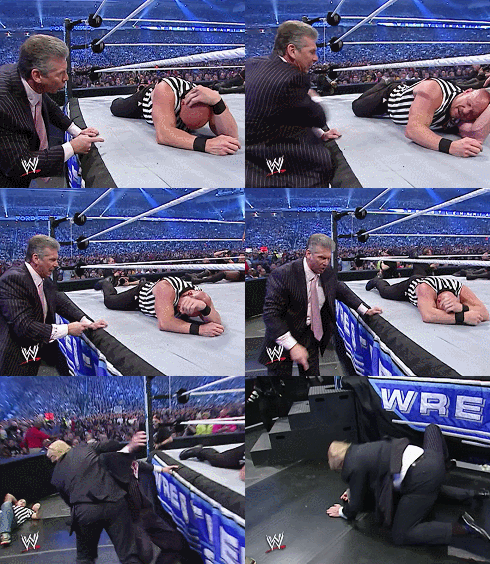
Mission… accomplished? How about this:
Hillary Clinton’s story, they believed, was too sprawling and familiar to tackle in its entirety. So they’d focus only on the last decade, the least familiar period, and especially on the millions of dollars flowing into the Clinton Foundation. Bannon calls this approach “periodicity.”
Ewwwwww:
“The modern economics of the newsroom don’t support big investigative reporting staffs,” says Bannon. “You wouldn’t get a Watergate, a Pentagon Papers today, because nobody can afford to let a reporter spend seven months on a story. We can. We’re working as a support function.”
UPDATE:
More insight from this Hollywood Reporter article:
The Democratic Party betrayed its working-man roots, just as Hillary Clinton betrayed the long-time Clinton connection — Bill Clinton’s connection — to the working man. “The Clinton strength,” he says, “was to play to people without a college education. High school people. That’s how you win elections.”
And:
To say that he sees this donor class — which in his telling is also “ascendant America,” e.g. the elites, as well as “the metrosexual bubble” that encompasses cosmopolitan sensibilities to be found as far and wide as Shanghai, London’s Chelsea, Hollywood and the Upper West Side — as a world apart, is an understatement. In his view, there’s hardly a connection between this world and its opposite — fly-over America, left-behind America, downwardly mobile America — hardly a common language. This is partly why he regards the liberal characterization of himself as socially vile, as the politically incorrect devil incarnate, as laughable — and why he is stoutly unapologetic. They —liberals and media — don’t understand what he is saying, or why, or to whom. Breitbart, with its casual provocations — lists of its varied incitements (among them: the conservative writer David Horowitz referred to conservative pundit Brill Kristol as a “renegade Jew,” and the site delighting in headlines the likes of “Trannies 49Xs Higher HIV Rate” and “Birth Control Makes Women Unattractive and Crazy”) were in hot exchange after the election among appalled Democrats — is as obtuse to the liberal-donor-globalist class as Lena Dunham might be to the out-of-work workingman class. And this, in the Bannon view, is all part of the profound misunderstanding that led liberals to believe that Donald Trump’s mouth would doom him, instead of elect him.
Plus:
“The globalists gutted the American working class and created a middle class in Asia. The issue now is about Americans looking to not get f—ed over. If we deliver—” by “we” he means the Trump White House “—we’ll get 60 percent of the white vote, and 40 percent of the black and Hispanic vote and we’ll govern for 50 years. That’s what the Democrats missed, they were talking to these people with companies with a $9 billion market cap employing nine people. It’s not reality. They lost sight of what the world is about.”
Much of this is the same kind of stuff which can be found in this book:
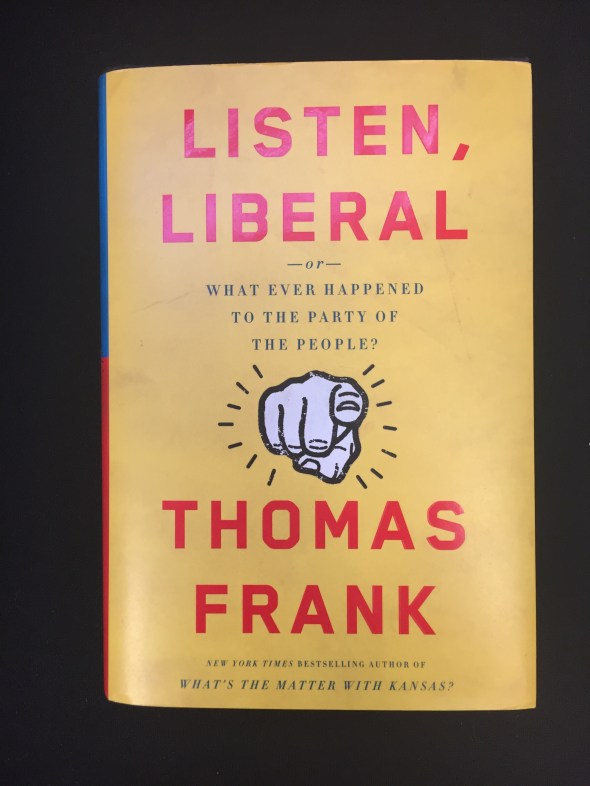
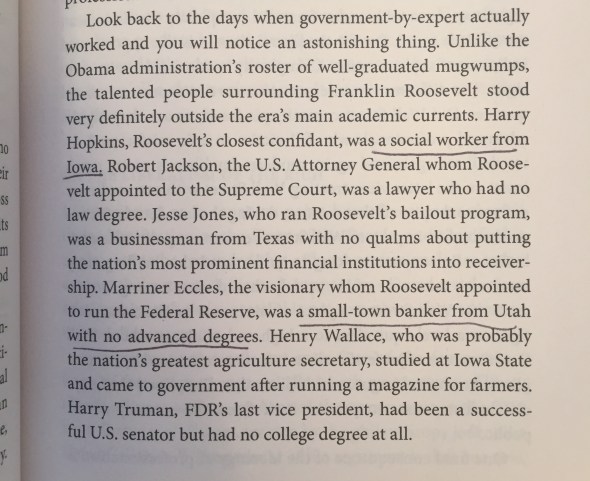
A good detail from it:
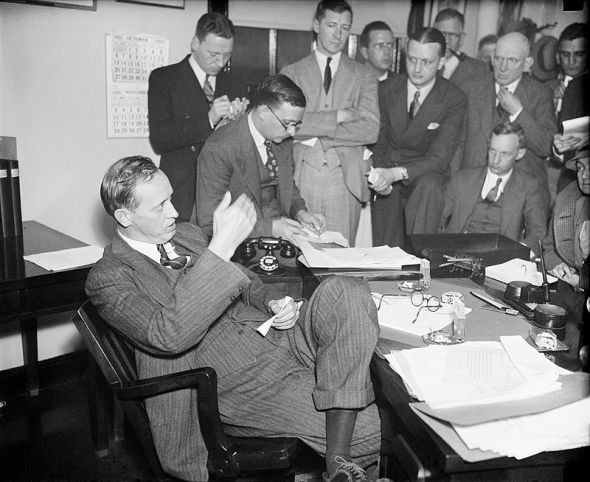
The closing note from that HR Bannon profile, btw:
“I am,” he says, with relish, “Thomas Cromwell in the court of the Tudors.”
How did it end for Cromwell, I can’t remember?

Back soon!
Posted: November 13, 2016 Filed under: Wonder Trail Leave a comment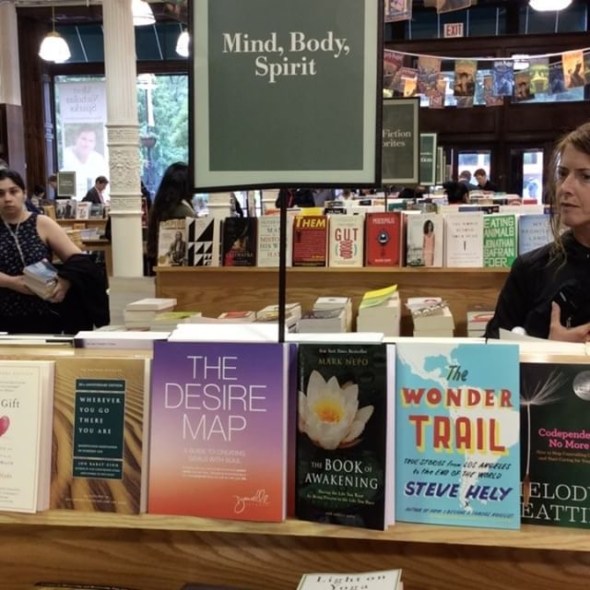
go visit a bookstore, here’s local indie ones
Helytimes in on hiatus once again as we consider the work ahead.
This country’s always asked for work from its citizens, take these guys (by which I mean women and men) for instance:

fix airplanes!

make sandwiches!
Our hiatuses last an average of two days.

Move to Australia? Sounds good, love to visit, but we better help out here.
Meantime, why not support an indie bookstore? Those bastions of democracy. Or fine, support Washington Post owner Jeff Bezos.
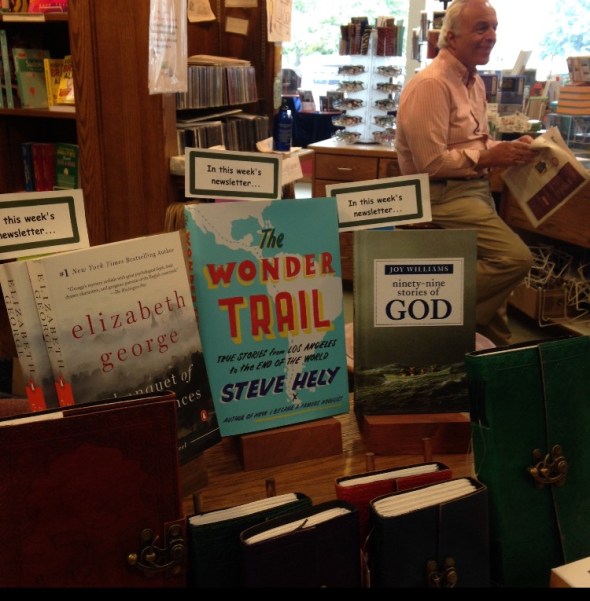
Damn, featured in the newsletter? Damn.
- being curious about the world
- the people south of us and how they got that way
- survivals in the face of the catastrophes in history.
Small note
Posted: November 11, 2016 Filed under: politics, presidents Leave a comment
in the wilderness
After seeing Horrible Trump at the RNC, I was in a terrible mood, you can hear it in my voice in the episode of Great Debates we recorded right after.
Talked about it afterwards in Great Debates News, and I get upset anew when I remember what I thought then:
Here’s the simplest and worst thing I can say about a Trump rally: you’re way more likely to say “I hate you” to somebody afterwards.
Can already feel this feeling happening again, to me and to people around me. This is a nasty guy and hearing him and seeing him makes you feel nasty. For myself, gonna try hard to not get worse, ruder.
Need to think on some new judo.
DEFEAT INTO VICTORY
Posted: November 11, 2016 Filed under: defeatintovictory Leave a comment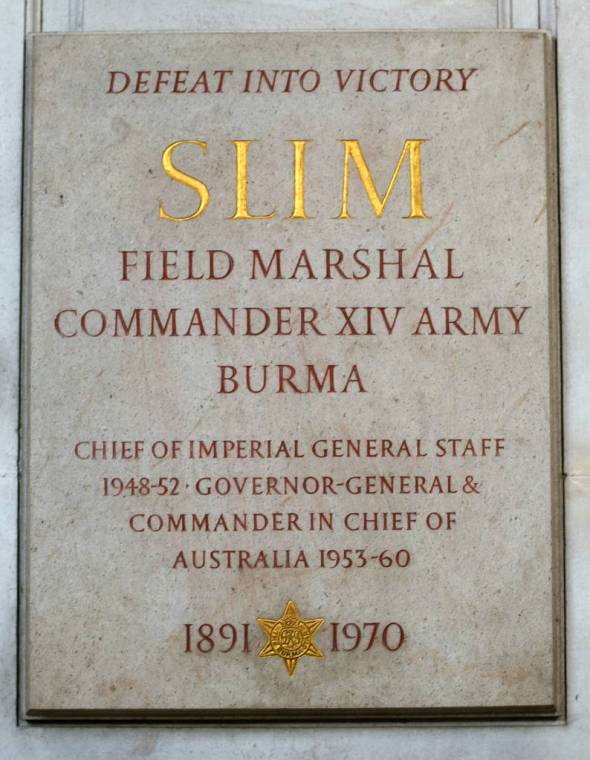
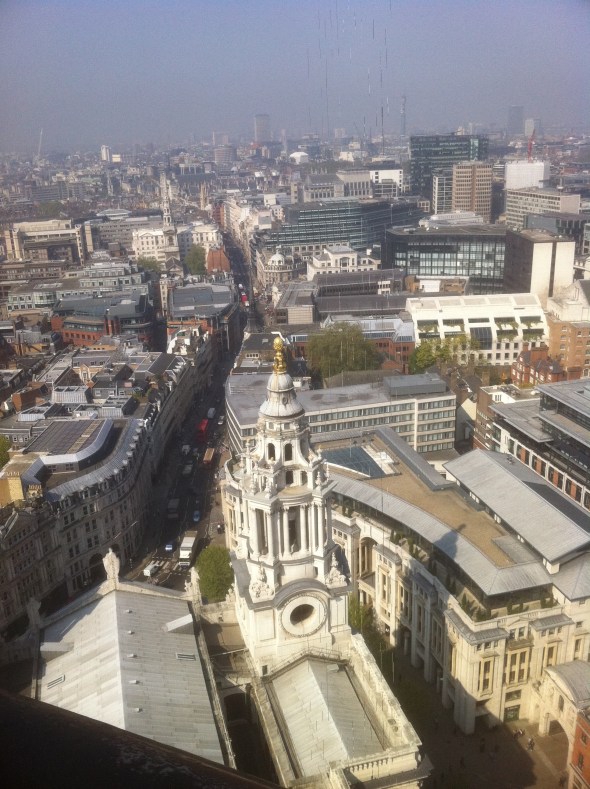
Struck once on a visit to London by the power of the monument to Viscount Slim, at St. Paul’s:
Slim’s book gets a good place on my shelf:
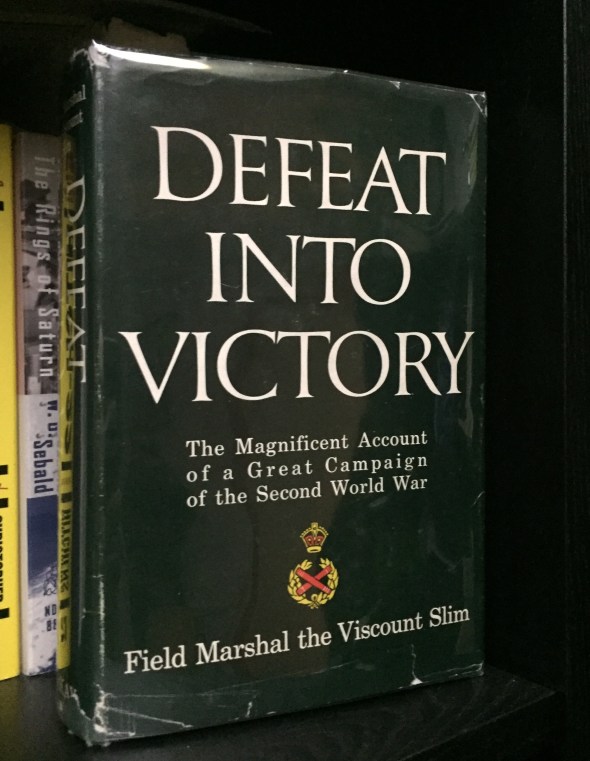
Because I want a daily reminder of his attitude:
George MacDonald Fraser, later author of The Flashman Papers series of novels, then a nineteen-year-old lance corporal, recalled:
But the biggest boost to morale was the burly man who came to talk to the assembled battalion … it was unforgettable. Slim was like that: the only man I’ve ever seen who had a force that came out of him… British soldiers don’t love their commanders much less worship them; Fourteenth Army trusted Slim and thought of him as one of themselves, and perhaps his real secret was that the feeling was mutual.
Let us remember things have been dark before. When it comes to the pinch human beings are heroic, said Orwell (worth checking out the context).
O Pioneers!
Posted: November 10, 2016 Filed under: America, history, nature, the American West, writing Leave a comment
Just finished reading:
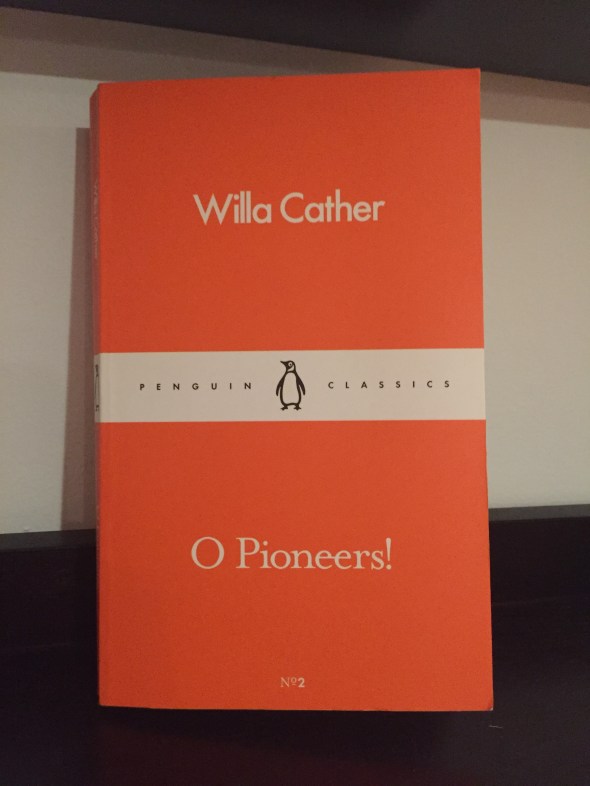
A strange thing to read, maybe. Here is the story of how I came to read it.
Some years ago, filming the finale of The Office on Dwight Schrute’s farm:

I looked around at the inland Malibu landscape and got to wondering if there could be a show about the pioneers: people who arrived on empty* land and built their lives there.

So as research I picked up the first book I thought of:
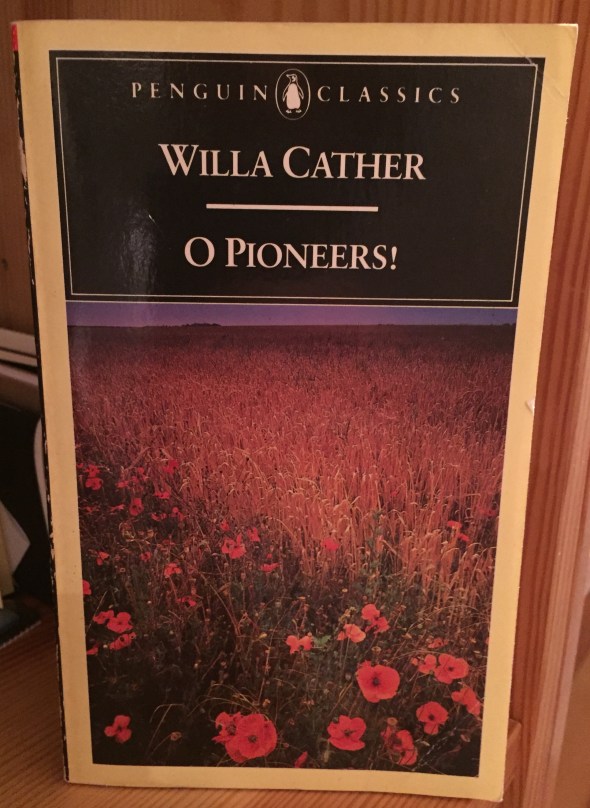
Didn’t finish it. Got distracted before I got off the third page, probably at first by my phone and then by my life.
A true Save The Cat
On the first page of O Pioneers!, there is a true Save The Cat situation.
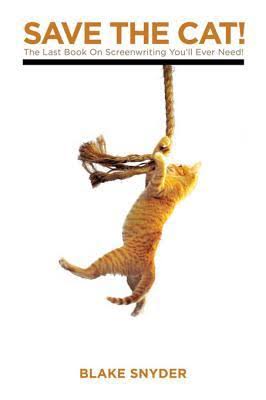
We’re in the middle of a blizzard, and Little Emil’s cat has gone up a telegraph pole, and he’s afraid it’ll freeze:

Reunited
Down in Australia in August, I saw the cool Penguin Classics edition:

and picked it up thinking, eh what the hell I should find out what happened to that cat.
Well, I found out, and I found out what happened to Emil and his sister Alexandra for the next forty years.
I believe an error was made in choosing this quote for the front page:
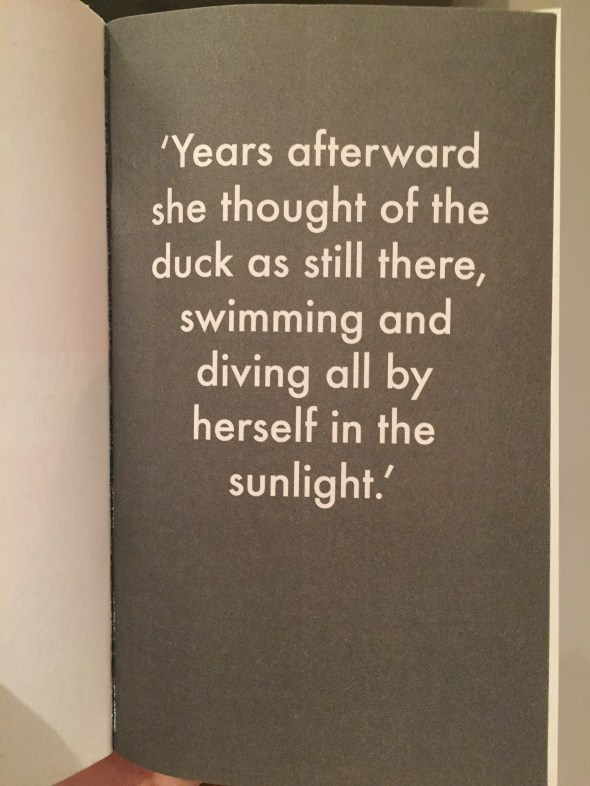
It isn’t the most interesting one from the book. I might’ve chosen this:
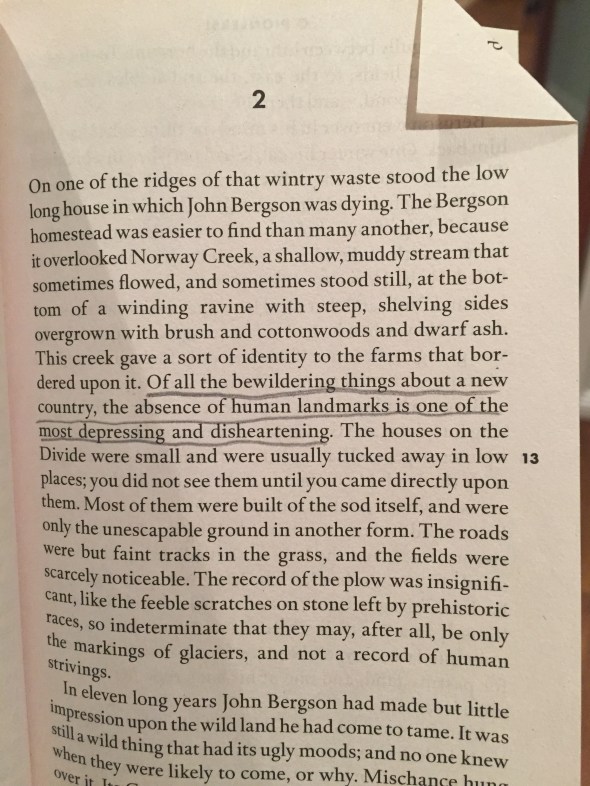
Or this:
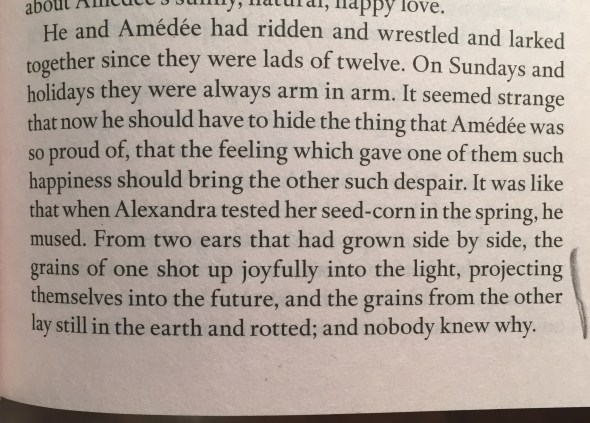
Or even, if we’re going re: ducks, this:
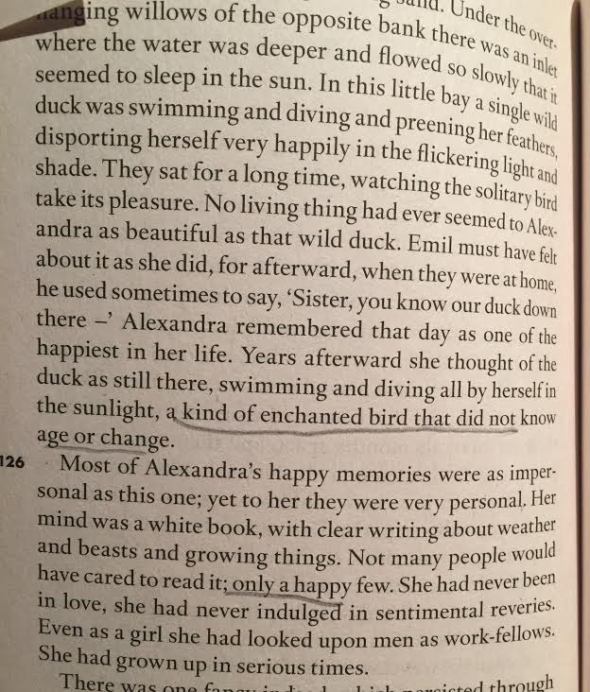
Or this:
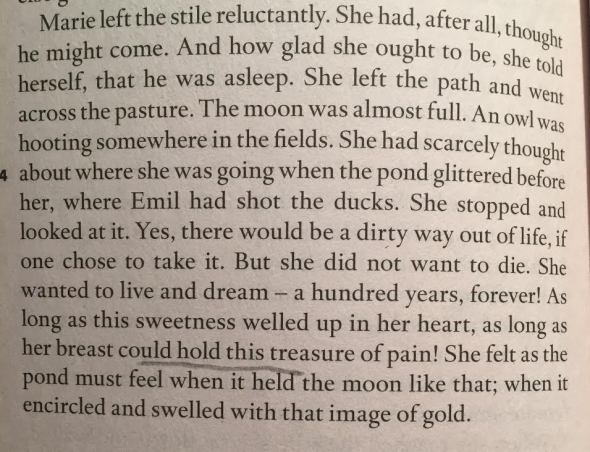
This quote made me think of the news:
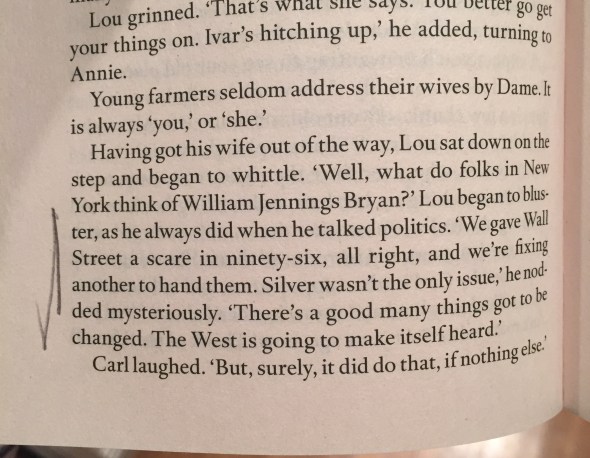
Also can’t say that the epigraph is especially sexy:
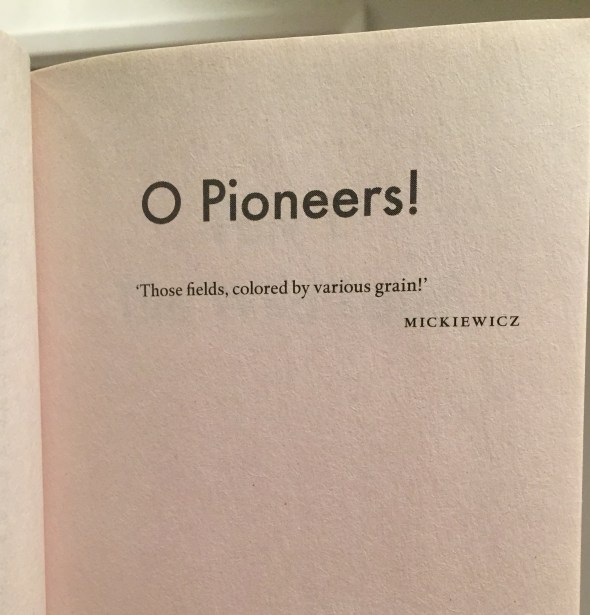
Perhaps it’s better in the original Polish.
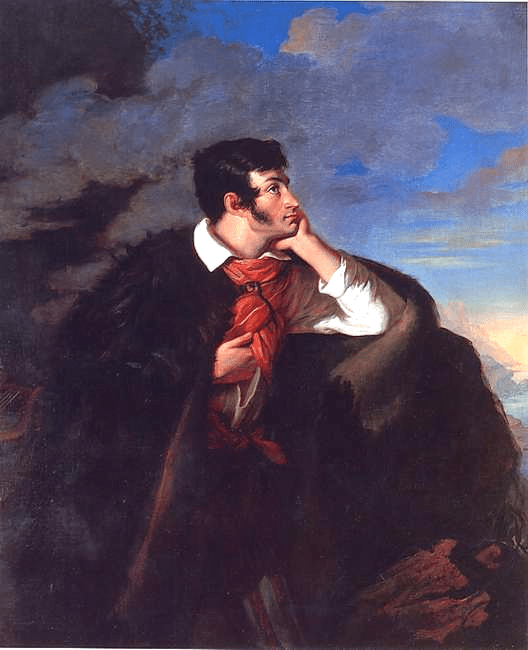
Mickiewicz is bae?
But still I pressed on, and in the end, I gotta give it up to O Pioneers!
The life of Willa Cather
Willa Cather must’ve been quite something. She was born in Gore, Virginia, but as a girl she was brought to Red Cloud, Nebraska:

where she made a real impression:

Was Willa Cather a lesbian?
Willa Cather shot out of Nebraska like a rocket.
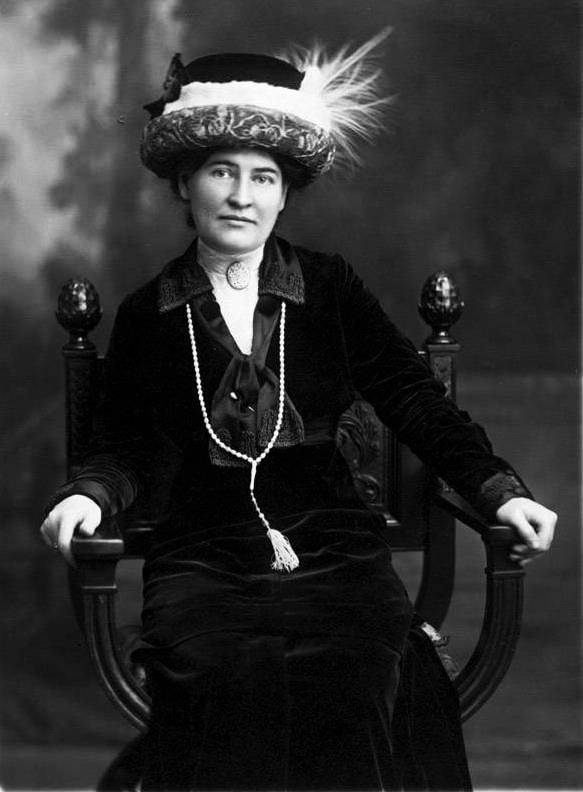
The closest relationships in her life were with women, and she lived with one Edith Lewis:
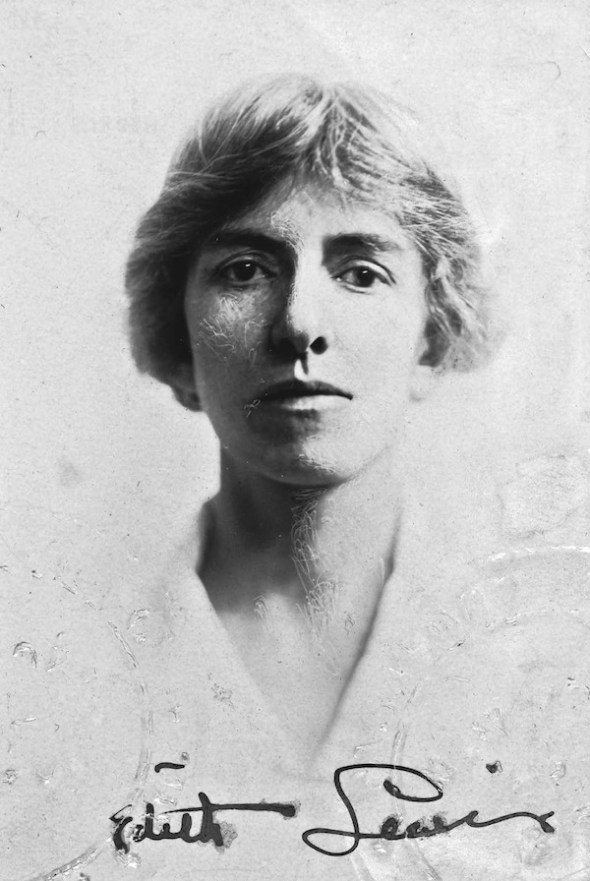
for close to thirty years. Some biographers hesitate to call her a lesbian, though, saying she never identified herself that way.
Willa Cather Memorial Prairie
Willa died in 1947. She has a memorial prairie named after her, it’s the number 2 thing to do in Red Cloud, NE after her house:

it’s cool to have your own prairie
Willa on writing
O Pioneers! still holds up. I found myself moved by it, and it’s short. Cather has a way of summing up loneliness, heartache, longing, compassion, in a few short lines.
I went ahead and got Willa’s collected essays on writing.
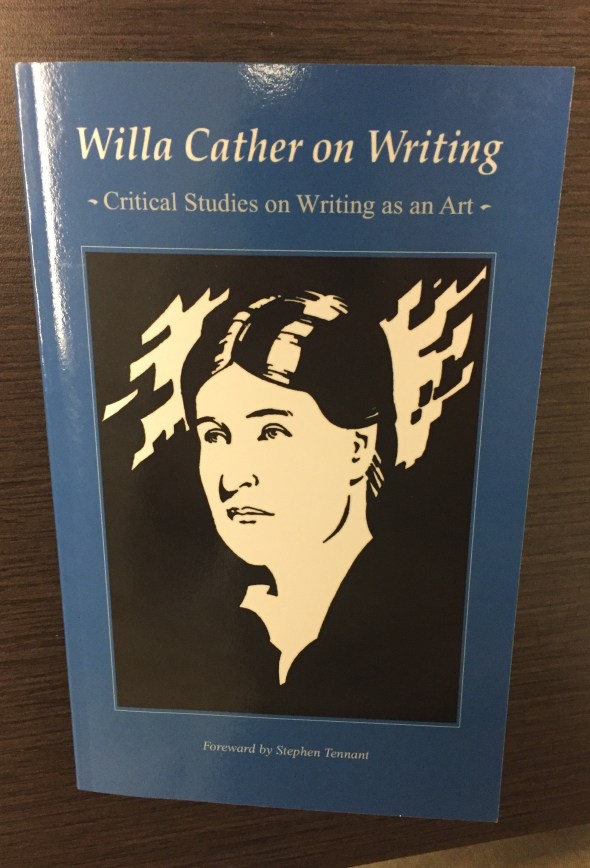
Here she tells how she came to write O Pioneers!, her second book: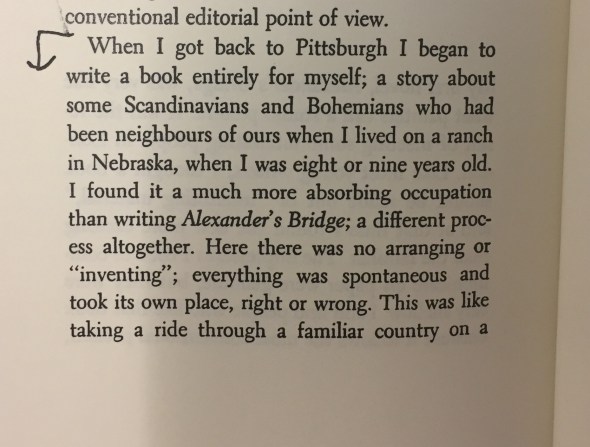
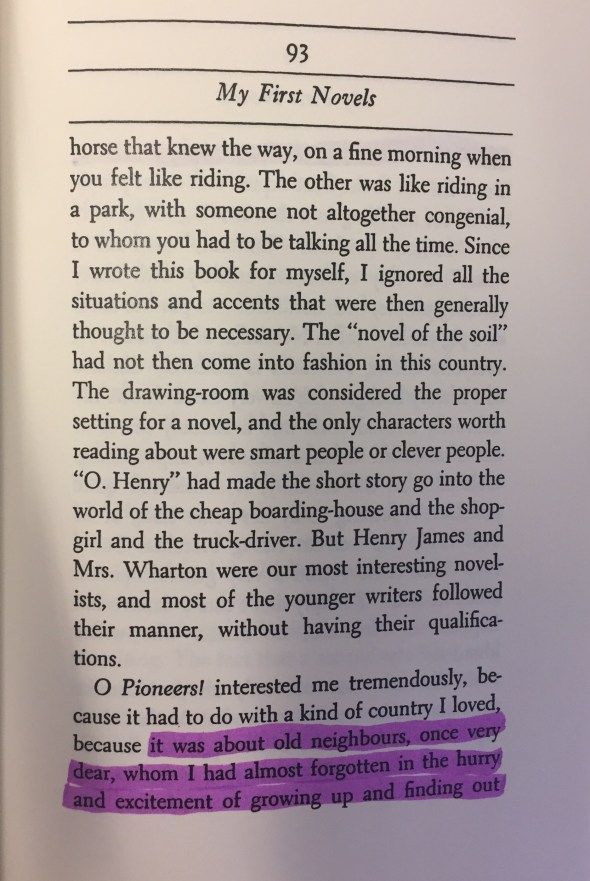
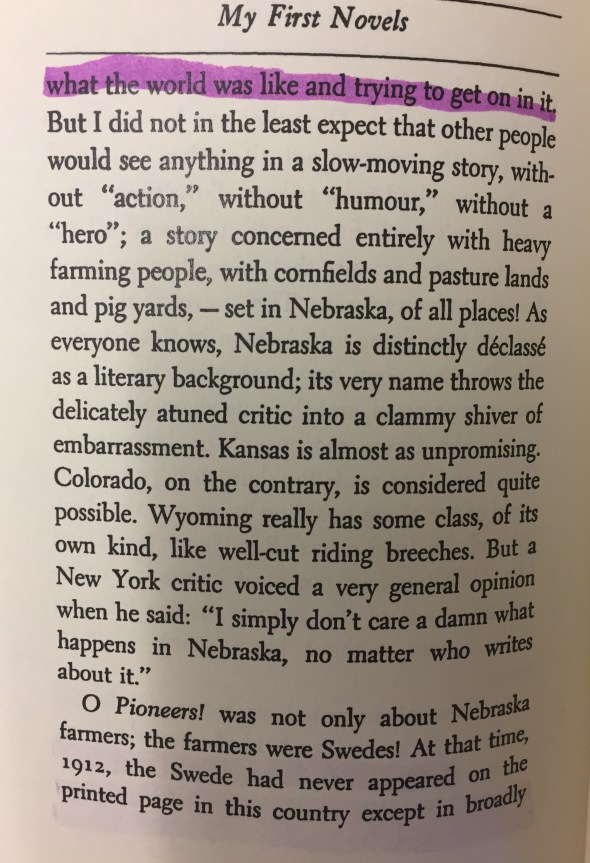
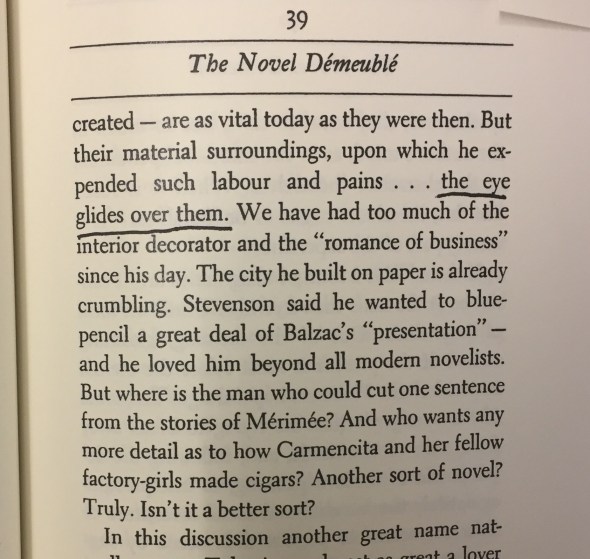
She wrote in some opposition to the detail-filled writing of Balzac:
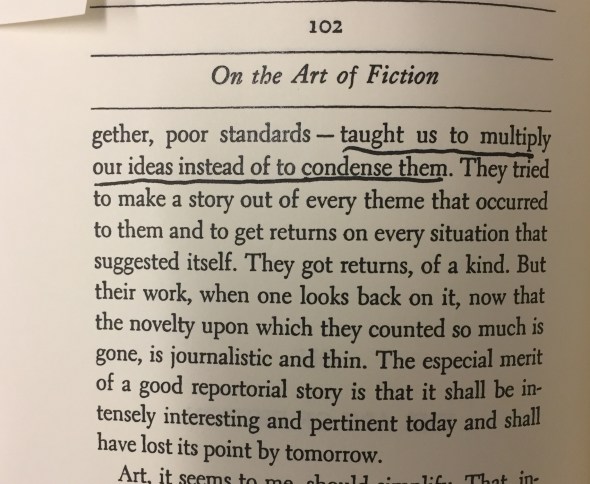
Interesting point here:
Red Cloud, Nebraska
Here’s a picture of downtown Red Cloud from Google Maps:

About as solid a Trump country as you will find: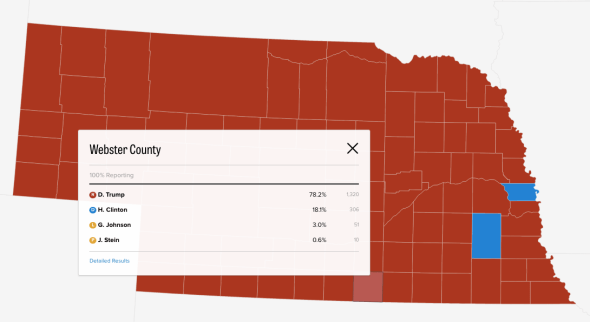
As of 2000 the median income for a household in the city was $26,389, and the median income for a family was $34,038. Males had a median income of $26,364 versus $17,232 for females. The per capita income for the city was $14,772. About 8.4% of families and 13.3% of the population were below the poverty line, including 20.9% of those under age 18 and 10.1% of those age 65 or over.
Brave Companions
David McCullough has something moving to say about Red Cloud and Willa and her other famous book:
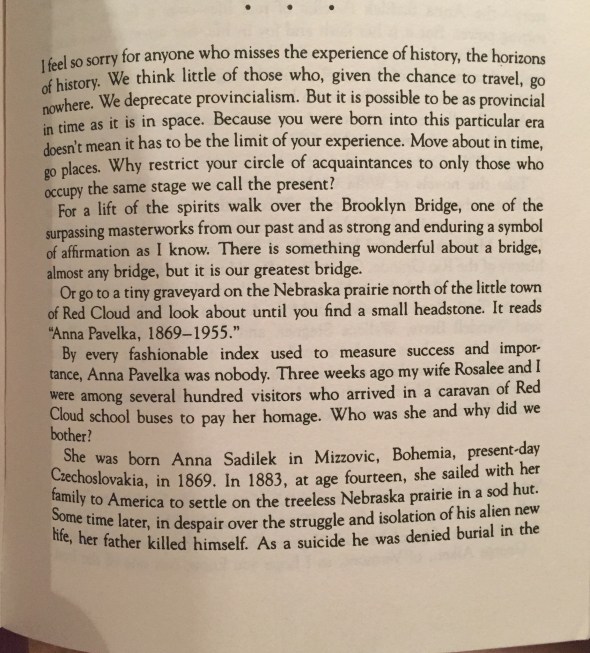
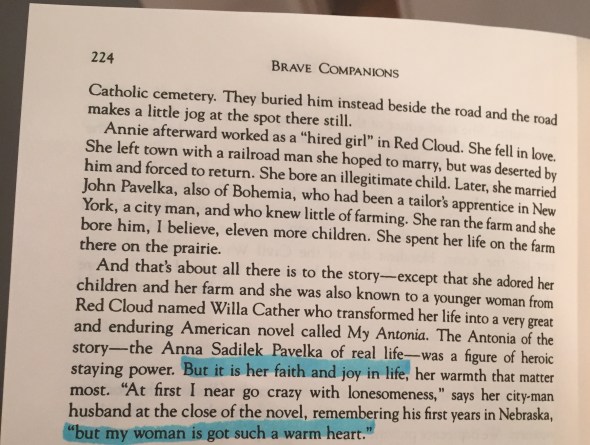
from:

I found O Pioneers! very moving and powerful, let me share with you why:
Warning: O Pioneers! spoiler
Skip this if you intend to read the book with suspense in mind.
But I doubt you will. I found this the most moving passage, and worth all the reading. Let me set it up for you:
Emil, he of the lost cat on page 2, grows up under the guidance of his older sister, Alexandra. She’s really the focus of our story. Carl, the local boy who saves the cat, is in love with her, but he can’t really take it out on the plains, so he goes off, and leaves her behind. She’s left to care for her brothers.
Emil, youngest brother, does great. He goes on to college at the University of Nebraska, while Alexandra stays to watch over the farm. All the while Emil’s been in love with a neighbor girl, Marie. She marries another man, though.
Still, Emil and Marie are in love. Eventually Marie’s husband, Frank Shabata, finds his wife and Emil together. In a crazed rage he murders Marie and Emil both.
Alexandra, alone at age forty, is heartbroken, left adrift at the death of her brother. But still, she feels sympathy for Frank Shabata, who’s been sent to prison in Lincoln for his crime.
Alexandra, lost and in pain, decides to go visit Frank in prison. In afternoon/dusk, after arriving in Lincoln, she wanders the campus of the university, thinking of her murdered brother. Desperate for any kind of connection, she runs into a student:
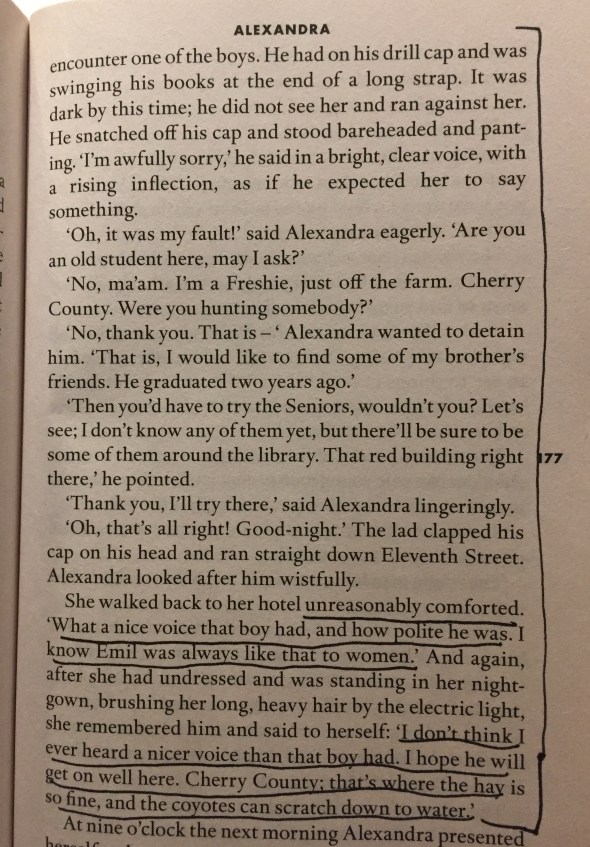
Walt Whitman Reads: America
or
The Whitman Recording
The title of O Pioneers! comes from a poem by Walt Whitman.
Some years ago, a recording of Walt Whitman’s voice, said to have been recorded onto an Edison wax cylinder around 1889 or 1890, was rediscovered.
In these times when it seems maybe we lost our way, nationally, it made me feel good to hear this. Forty-six seconds long:
Yeeeeeeesh.
Posted: November 9, 2016 Filed under: America Since 1945 Leave a comment
Need this lady in my political life at this moment.
Was it worse to experience this in horrific car crash realtime on the West Coast or to go to bed and wake up to it on the East Coast?



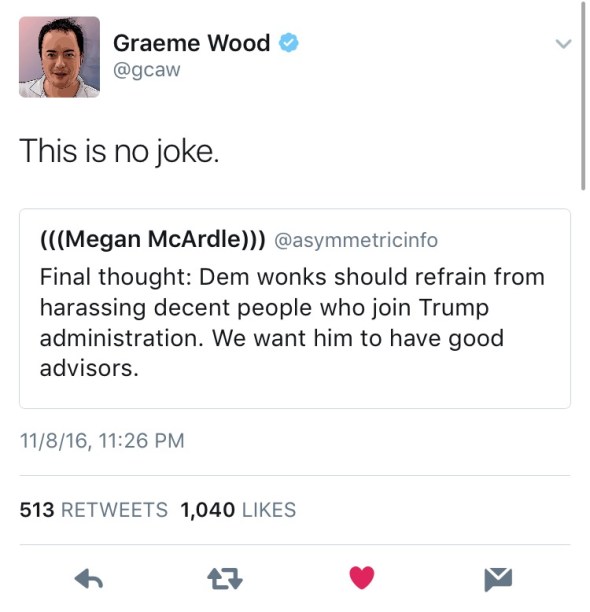
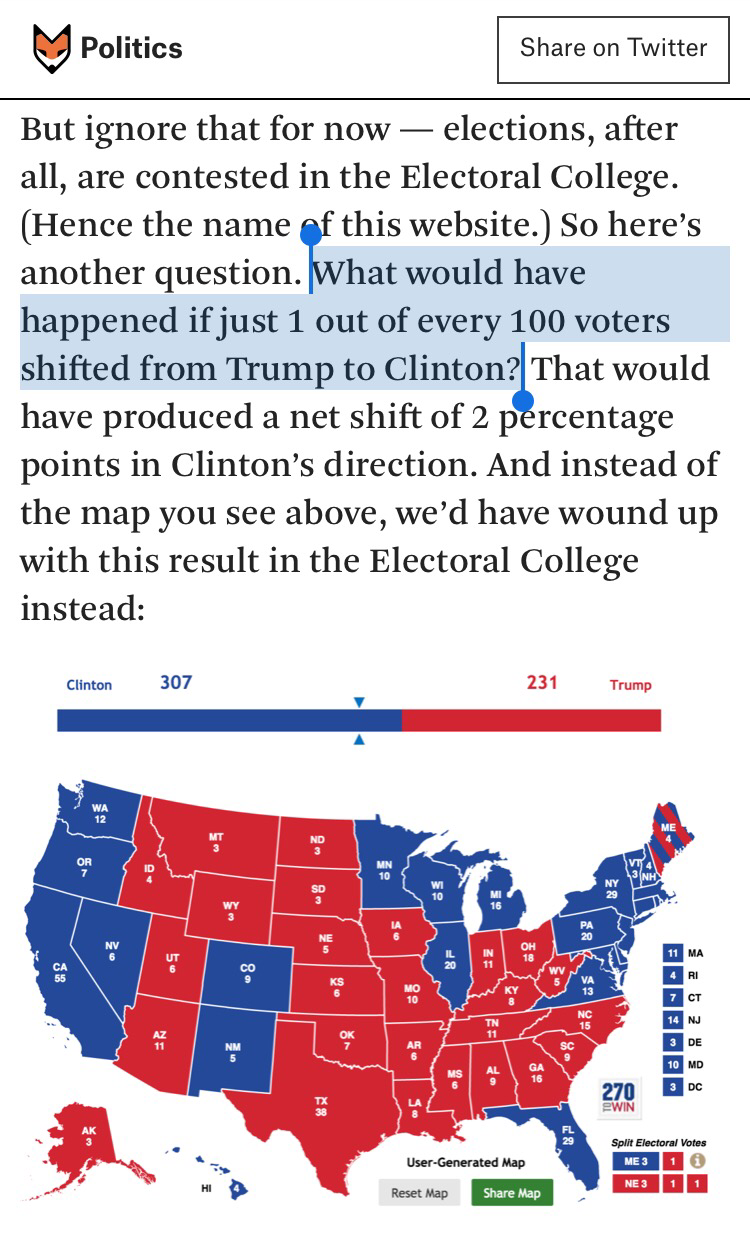
You can take this bit from Nate Silver and find it a depressing what if or a somewhat hopeful sign of how small actions can affect significant change:
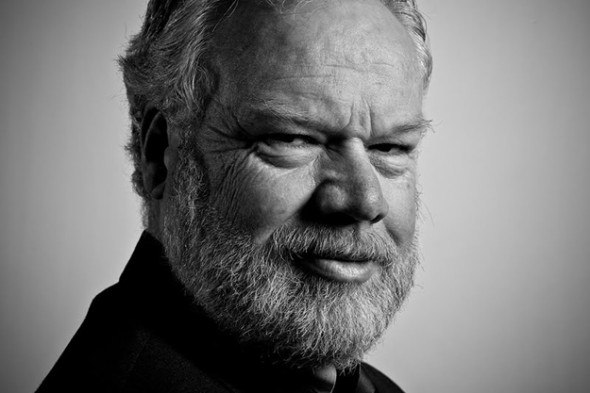
Most perceptive, insightful thing I read this whole durned election was in Cracked.com, by “David Wong,” about the rural vs. urban divide.

photo of TC found here
If there is any common theme to my predictions, it stems from Trump’s history in franchising his name and putting relatively little capital into many of his business deals. I think his natural instinct will be to look for some quick symbolic victories to satisfy supporters, and then pursue mass popularity with a lot of government benefits, debt and free-lunch thinking. I don’t think the Trump presidency will be recognizable as traditionally conservative or right-wing.
I also expect U.S. trade relations to worsen significantly, as I’ve already discussed in an online conversation with Robert Zoellick. I foresee Trump renegotiating the North American Free Trade Agreement, mostly picking on Mexico. Mexico would end up having to pay some kind of fee, either directly or indirectly, for continuing access to the U.S. market. That way, Trump could in fact make Mexico “pay for the wall.” It is no surprise that the peso plummeted as the tide started to turn in Trump’s favor Tuesday night.
Thomas Ricks on Trump and Defense:
Second, it will be interesting to see how Trump gets along with the generals he has condemned as losers and Obama cronies. Being the chairman of the Joint Chiefs of Staff will be one of the toughest jobs around. Second toughest: Being the legal advisor to the chairman. Imagine the exchanges:
President Trump: “That’s an order.”
General: “Sir, my JAG tells me that’s an illegal order.”
President Trump: “OK, your JAG is fired. Now find someone who will help me, not throw obstacles in my way.”
Trump also might find nettlesome the generals who say things like, “OK, if we do that, what happens after that? What’s the next step?” The Obama administration didn’t like that when General Mattis did in that in discussions of Iran, and Trump will like it even less.
Distraction, diversion, tales of sub-wall countries and the politics of dictatorships can be found in this:

Available at Amazon or your local indie bookstore.
Election Day
Posted: November 8, 2016 Filed under: politics Leave a comment
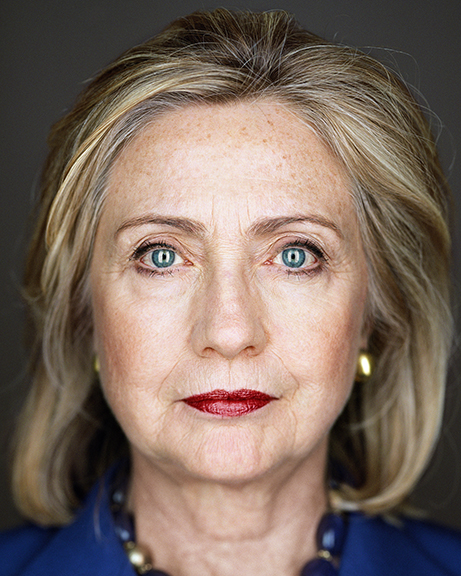
portrait of Hillary by Martin Schoeller
Election coverage can be found here.
Two of the more popular posts in this site’s history are Fred Trump and American historical figure who reminds me of Trump
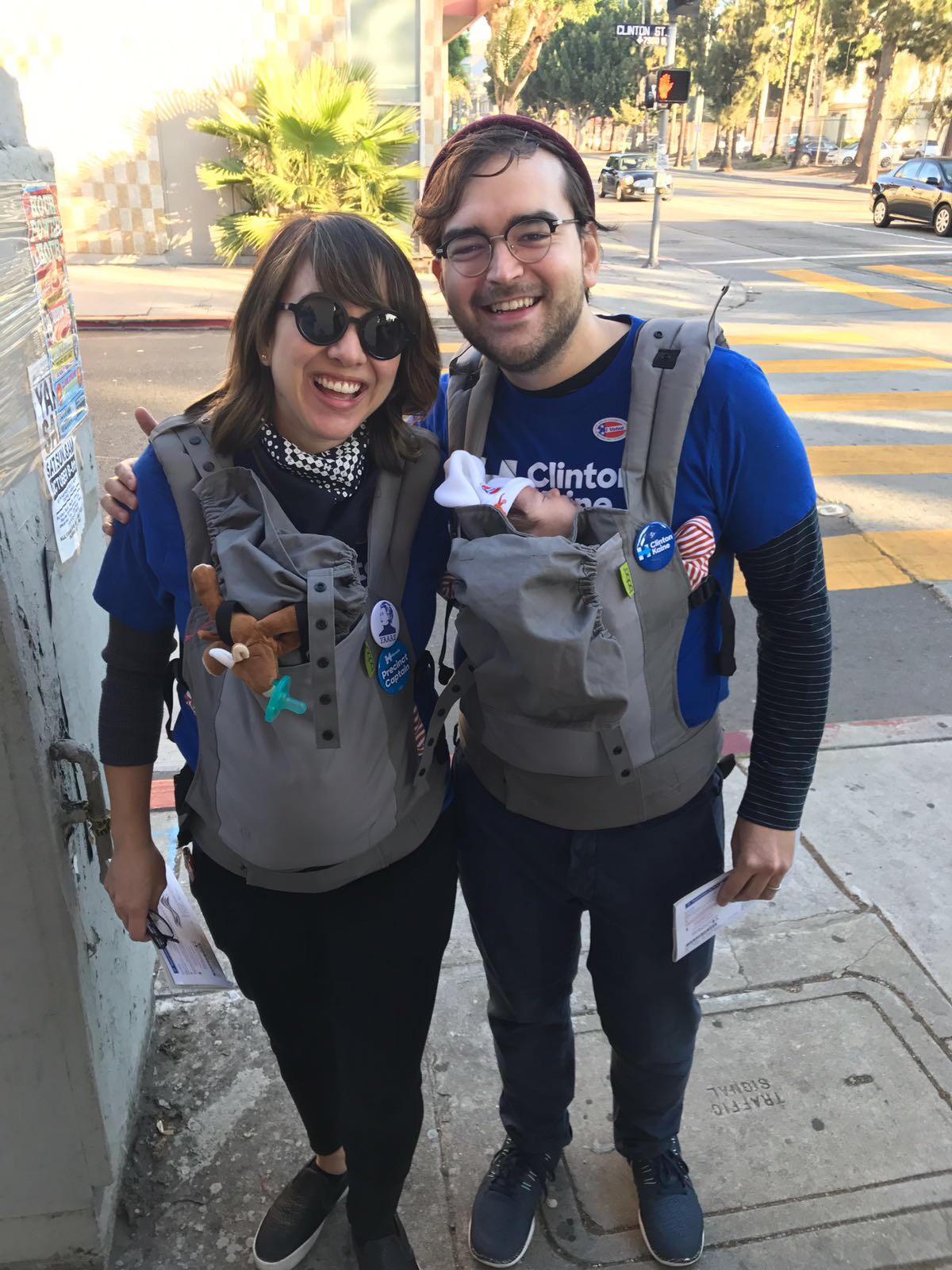
Ran into four all-star Americans at the polls:
Kevin Drum voting guide if you live in California. (Interesting to note that Mother Jones herself didn’t want women to vote:
Jones was ideologically separated from many of the other female activists of the pre-Nineteenth Amendment days due to her aversion to female suffrage. She was quoted as saying that “you don’t need the vote to raise hell!”[14] Her opposition to women taking an active role in politics was based on her belief that the neglect of motherhood was a primary cause of juvenile delinquency.
)
Is it ridiculous or cool that a California voter has to make themselves a sheet like this:
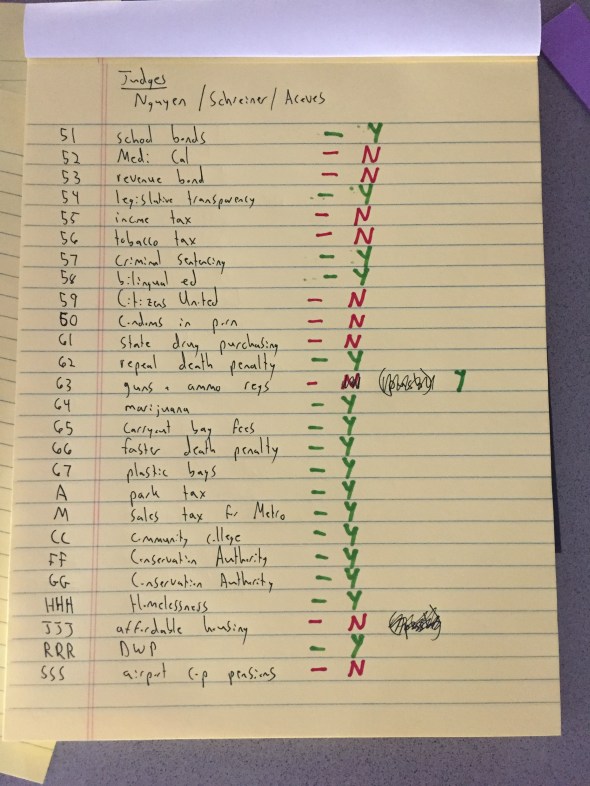
I say: ridiculous! Tempted to vote no on 63 because this seems like a legislative issue, as do many of these.
Would love to hear it if I’m wrong! helphely at gmail or the comments.
If you’re looking for something to read while rechecking Nate Silver, let us suggest:
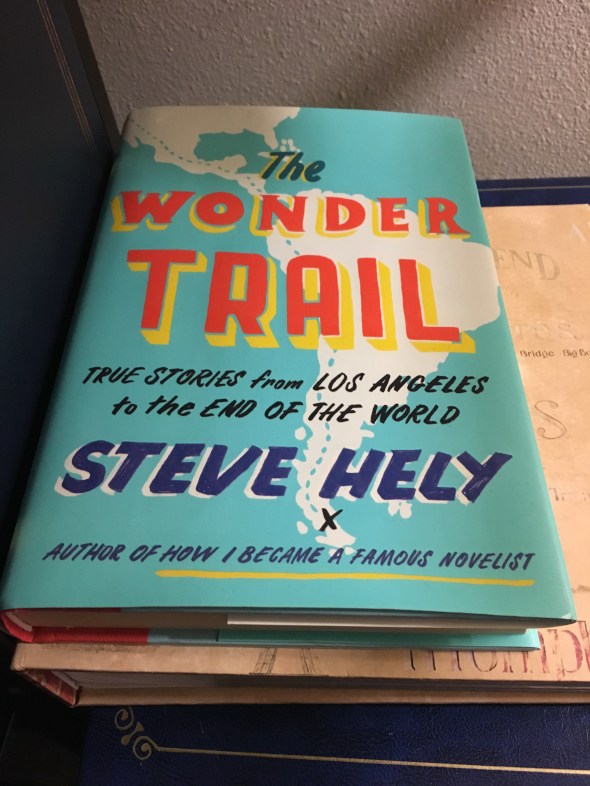
Available at Amazon or your local indie bookstore.
Big books
Posted: November 6, 2016 Filed under: Wonder Trail, writing Leave a comment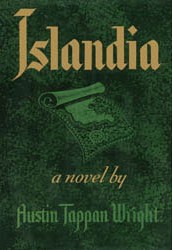
Pretty into two articles this week about enormous imaginative projects.
First up was this New Yorker thing by Charles Finch on Islandia:
In 1931, a legal scholar named Austin Tappan Wright died in a car accident in Las Vegas, New Mexico, not far from Santa Fe. He was forty-eight. His father had been one of the preëminent academics of the previous century—“A History of All Nations from the Earliest Times,” for which he served as editor, runs to more than twenty volumes—and his mother, Mary Tappan Wright, was a famous novelist, a progenitor of what we now think of as the campus novel. Wright’s own career was more quietly successful. Before his death, he taught at Penn, Stanford, and Michigan, and published articles on maritime law, their scope profoundly, almost rebukingly more modest than that of his father’s work—“Supervening Impossibility of Performing Conditions in Admiralty,” for example, or “Private Carriers and the Harter Act.”
After his unexpected death, Wright’s wife and daughter had the task of going through his papers. They were unprepared for what they discovered there.
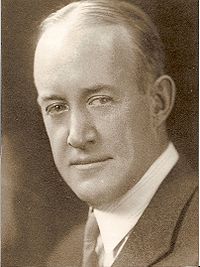
Cool story:
In an afterword to the novel, Wright’s daughter recalls that when her father spoke to his wife from a telephone booth, he would remove his hat. This small gesture explains “Islandia,” to me: Wright was part of that great age of anonymous managerial Harvard men who assumed their expected places in society while also maintaining the most intense imaginable internal worlds—Wallace Stevens, T. S. Eliot, Charles Ives if you expand the range to include Yale.
(Ugh, must we include Yale?)

A map of the Karain Semi-Continent based on Austin Tappan Wright’s 1942 Utopian novel Islandia. Created by Johnny Pez on 30 March 2006. from wiki.
Also wild was this New Yorker thing by Esther Yi about German writer Arno Schmidt and the effort to translate his 1300 page book:
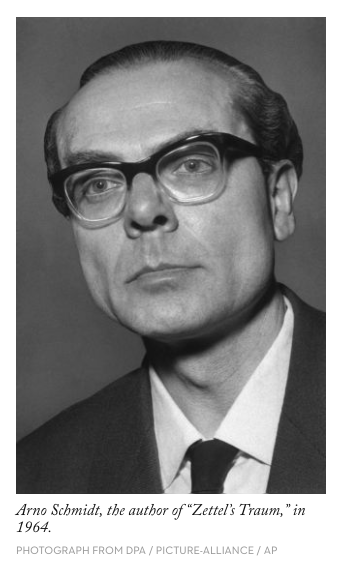
“Zettel’s Traum” is both Schmidt’s most famous book and his least read, and for the same reason:
because it’s thirteen hundred pages long?
it is dedicated almost entirely to applying a Freudian theory of language to the works of Poe. (This was familiar ground: Schmidt spent years translating Poe, in collaboration with Hans Wollschläger.) Dan argues that words are composed of units of sound, or “etyms,” that reveal an author or speaker’s unconscious thoughts. To say “whole” is to think “hole,” for instance. With his ear cocked to sexual harmonics, Dan finds in Poe an impotent man who is possessed by the erotic and, unable to express his sexuality in bed, resorts to voyeurism, notably of what people do on the toilet.
Huh.
“One could not tell if this was amazing, or if this was something for crazy people,” Susanne Fischer, the head of the Arno Schmidt Foundation, which manages the writer’s literary estate, told me.
There was a method to Schmidt’s madness:
Each night, at 2 a.m., he would begin writing in the upstairs room, from which even his cats were barred (not least because the one he called Conte Fosco, after a Wilkie Collins character, had urinated on his prized edition of James Fenimore Cooper). He compiled roughly a hundred and twenty thousand scraps of paper, or Zettel, in shallow wooden boxes, which he spread out on his desk. On each Zettel, there was written a bit of dialogue or sexual wordplay (“Im=pussy=bell’–!”) or a literary quote rerouted through his one-track mind (“the fleshy man=drake’s stem. / That shrieks, when torn at night”). After twenty-five thousand hours of knitting the pieces together, Schmidt handed the manuscript to his publisher in a large cardboard box tied with a curtain sash.
For a less hefty read might I recommend:

Available at Amazon or your local indie bookstore.
good poem
Posted: November 5, 2016 Filed under: baseball, the California Condition Leave a comment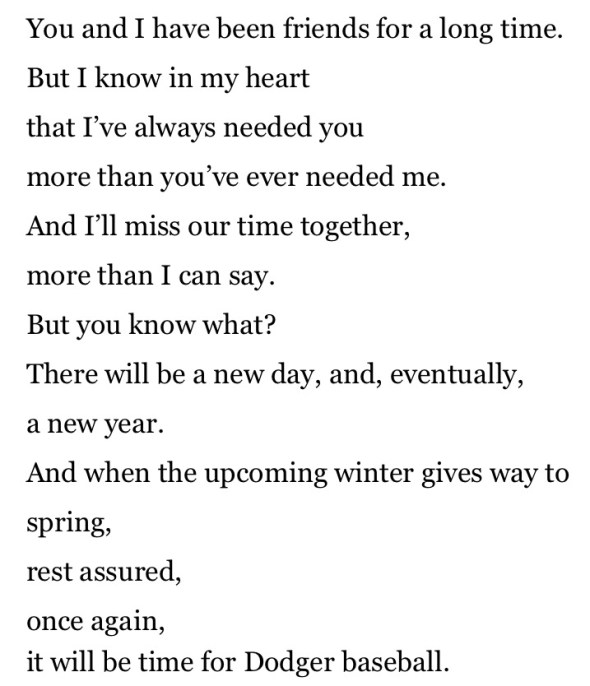
by:
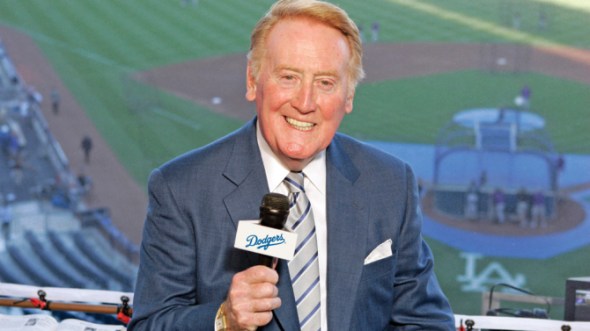
Back again soon!
Posted: November 1, 2016 Filed under: Uncategorized Leave a comment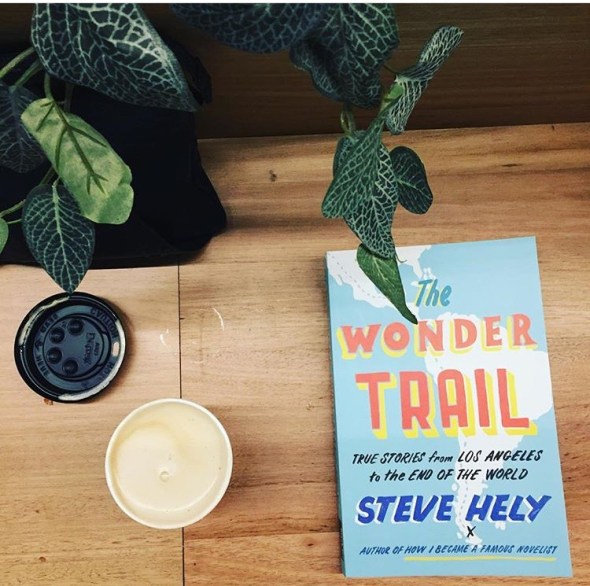
thanks to reader Jess K. in Australia for this one
So glad you enjoy what you find here. We’re on a brief hiatus but look forward to a return.
If you haven’t already, try my book: available at Amazon or your local indie bookstore. You’ll enjoy it.
If you’ve read my book, do send me a picture of it in some cool setting, on your shelf or next to some good coffee or your favorite houseplant. I’ve been collecting and compiling these photos, they’re a joy.
Riches await in the archives, on such topics as:
and:

Adios for now!
Back Soon!
Posted: October 31, 2016 Filed under: Wonder Trail Leave a comment
So glad you enjoy what you find here, we’re on a brief hiatus but look forward to a return.
If you haven’t already, try my book, available at Amazon or your local indie bookstore. You’ll enjoy it.
If you’ve read my book, do send me a picture of it in some cool setting, on your shelf or next to some good coffee or your favorite houseplant. I’ve been collecting and compiling these photos, they’re a joy.
Riches await in the archives, on such topics as America Since 1945, Wonder Trail, and the California Condition.
see you soon!
Trump at Gettysburg
Posted: October 30, 2016 Filed under: heroes, history, presidents Leave a comment
Pickett’s Charge from a position on the Confederate line looking toward the Union lines, Ziegler’s Grove on the left, clump of trees on right, painting by Edwin Forbes

Disgusted afresh with this one, from NY Mag: “Final Days: Trump’s advisers are working hard to plan their own futures while riding out the roller-coaster end of the campaign.” by Gabriel Sherman.
I mean, this is what happened at Gettysburg:

An American president should not visit that place without some sober thought about how it came to be that 7,058 people murdered each other there in three days (perhaps our worst ever mass shooting?)
Starting to seem like Trump has never read

Or even Shelby:

Has he not at least had Sam Waterstone read him the Gettysburg Address?:
The whole point of the Gettysburg Address, he might’ve reminded himself, was that we can’t let all this horror have no meaning, we must use it to remind ourselves of how we got here, what is good about us, what values we must work for.
UGH! I’m with Ken Burns.
Also what about this:

I know everybody deserves a lawyer, but is it not a tad revolting that Ailes lawyer is Dukakis’ former campaign manager?

Maybe there’s more to the story, but this seems, from my distance, like an easy example of a valueless incestuous intertwined gaggle of political and media elites who care about nothing but staying in the game.
I’m sure in defeat Trump will have all the dignity of Lee:

He was engaged in rallying and in encouraging the broken troops, and was riding about a little in front of the wood, quite alone–the whole of his Staff being engaged in a similar manner further to the rear. His face, which is always placid and cheeful, did not show signs of the slightest disappointment, care, or annoyance; a he was addressing to every soldier he met a few words of encouragement, such as, “All this will come right in the end: we’ll talk it over afterwards; but, in the mean time, all good men must rally. We want all good and true men just now,” &c. He spoke to all the wounded men that passed him, and the slightly wounded he exhorted “to bind up their hurts and take up a musket” in this emergency. Very few failed to answer his appeal, and I saw many badly wounded men take off their hats and cheer him. He said to me, “This has been a sad day for us, Colonel–a sad day; but we can’t expect always to gain victories.” He was also kind enough to advise me to get into some more sheltered position, as the shells were bursting round us with considerable frequency.
from the account of Fremantle, who was there, a version less dramatic than this one:
Magnum, Everyman
Posted: October 29, 2016 Filed under: America Since 1945, TV Leave a comment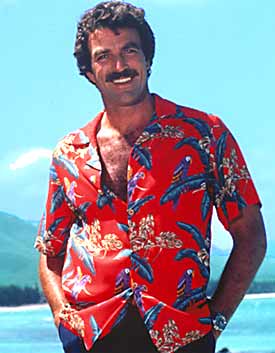
from Wiki as I prep a Halloween costume.
In real life more going for Robin Masters, “the celebrated-but-never-seen author of several dozen lurid novels.”
A recurrent theme throughout the last two seasons, starting in the episode “Paper War”, involves Magnum’s sneaking suspicion that Higgins is actually Robin Masters since he opens Robin’s mail, calls Robin’s Ferrari “his car”, etc. This suspicion is never proved or disproved, although in at least one episode – “Déjà-Vu” S06E02 – Higgins is shown alone in a room, picking up the ringing phone and talking to Robin Masters, indicating they are two different persons.
Huell
Posted: October 25, 2016 Filed under: the California Condition Leave a commentCaught a few minutes of the late great Huell Howser, up to Pismo to learn about clams.
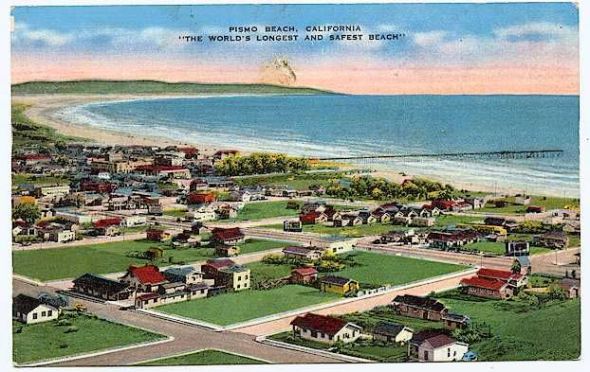
found here
Fo
Posted: October 24, 2016 Filed under: comedy, Nobel, Uncategorized, writing Leave a comment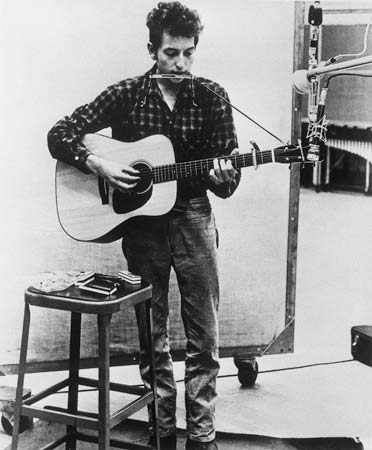
People are mad that Dylan won the Nobel Prize for Literature? Why? Because he does music, which is not the same as literature? What is the difference? More sounds? Instruments are allowed? Hmm.
Anyway, have heard no mention in the convo about the time a literal clown won the Nobel Prize.
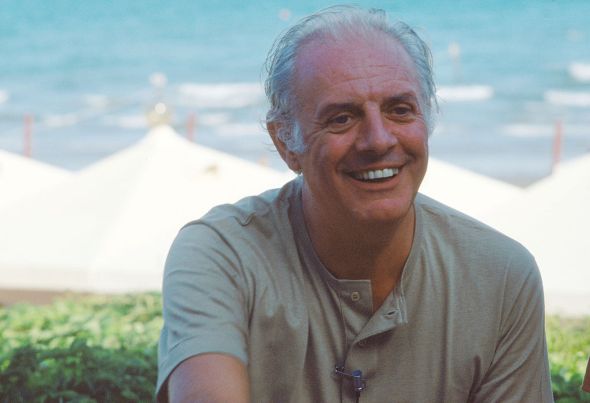
Gorupdebesanez – Own work Il drammaturgo e attore Dario Fo alla Mostra del cinema di Venezia
OK fine Dario Fo was a playwright but what he did was more than just write words down, right?
Mr. Fo attributed the State Department’s change of heart to the intervention of President Ronald Reagan, a former actor. It was, Mr. Fo said dryly, “the gesture of a colleague.”
Was reminded because heard he died. Dario Fo obituary.
12 Takes on the Al Smith Dinner
Posted: October 23, 2016 Filed under: America Since 1945, comedy, New York, politics Leave a comment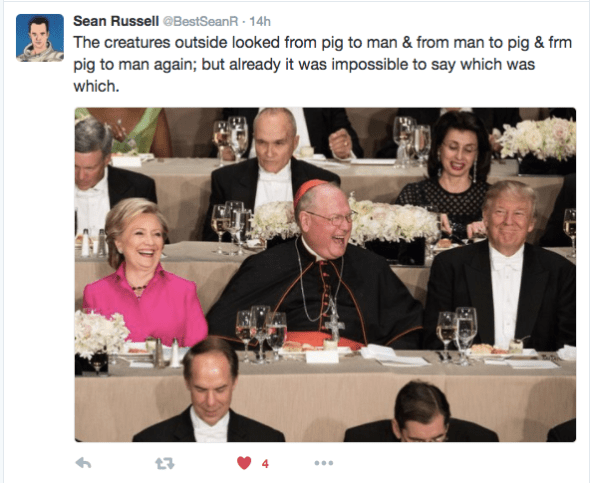
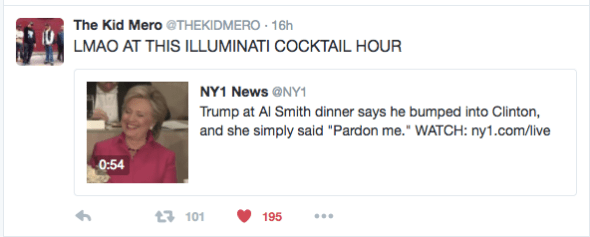
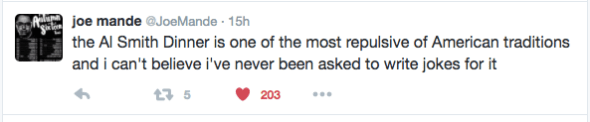
Hearing all these points about The Al Smith Dinner.
There is something grotesque about a white-tie banquet with the wealthy and powerful laughing about how they’re all on the same team. On the flip side, there’s something great about the wealth and powerful laughing about how they’re all on the same team if the team has some common, positive values.
The Al Smith Foundation raises money for the sick, the poor, and the orphans of New York. It honors a great, cheerful, positive public figure who rose up from poverty to run for president despite religious prejudice.
The dinner is an old-fashioned truce. Swallowing the noxious flavor of eating with your opponent is how societies can function and remain peaceful.
History offers many stories about how deeply fucked up things get when someone violates the tradition of a ceremonial truce:

People who jockey for political power should have to sit there and be made to at least pretend to be humble.
IMO this is a great tradition even if only for giving us this wonderful gif of Mitt Romney ironing himself.

Through a friend from my Catholic childhood, I got to go and sit up in the rafters a couple times. McCain, who must’ve known he was about to lose, gave one of the best performances I’ve ever seen.
Obama smashed too, of course.
Perhaps the two funniest candidates in American history?
Made it to the Romney/Obama one as well.
I remember a guy younger than me in the crowd was pumped, felt sure Romney was gonna win.
Watched this year’s on C-Span. Man, it was gnarly. Here are some takes:
- The #1 thing holding Donald Trump back is that he’s too sensitive. If he had a thicker skin, if he could laugh off attacks on himself, believe he could’ve won. Hillary was right about the “baited with a tweet” thing. If he had one ounce of Reagan’s ability to laugh something off Trump could’ve pulled it off.
- Al Smith’s nickname was The Happy Warrior.

Pic found here
Which candidate can be said to be more Happy Warrior? Thought Hillary did a good job of Happy Warrioring at the second debate, under very tough conditions:

and it worked for her!
- Much of the preliminary business of the Al Smith Dinner is talking about how much money has been raised for charity. As you listen to that, it’s hard not to be revolted by Trump’s total scumminess on charity. My perception was the room grew angrier and angrier at Trump as they heard this, and so were primed against him by the time he got up there. A politician is one thing, but a rich guy who gives nothing to charity? That sucks. That’s the complete opposite of the values of this dinner.
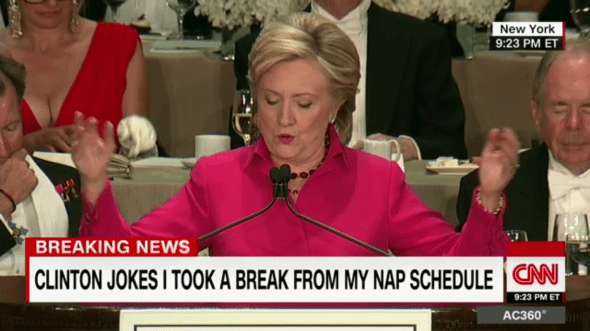
- For someone on the verge of achieving a lifelong dream she’s worked impossibly hard for, Hillary seems miserable. What is the lesson there? Is it campaign fatigue and going to bed every night with a knot in the pit of her stomach? Is it the regular reminders that a lot of people, probably a majority, just kind of don’t like her? There’s something real devil’s bargainy in the cruel twists that seem to meet Hillary’s ambitions.
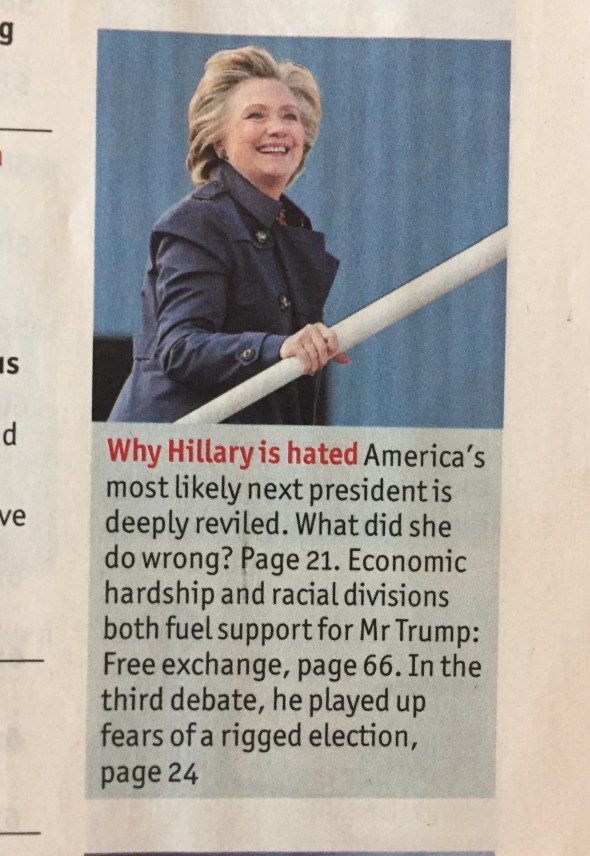
Deeply reviled.
(should admit I am 100% in the tank for Hillary. Even her soldiering on in the face of all this I admire. Will the rest of the media admit as much?)
- This event must be as close as possible to a pure nightmare for Donald. New York’s elites laughing and booing at him. In front of him and behind his back. Read anything by or about Trump: his greatest fear/source of rage is being mocked by Manhattan.

This headline would’ve appeared to Trump if he summoned the vision serpent. We are caught in a snobs vs slob death spiral. A sharp commentator points out there was a real Nelson Muntz aspect to Donald at this dinner:

Is Nelson in his way a sympathetic character? Trump’s father was a nasty piece of work, has there ever been a bully who wasn’t bullied?
- Hillary had some great jokes but she is not great at comic delivery. Then again, who’s the best over-70 year old joke deliverer? (Gotta thank Medina for asking that one). My first picks: Mel Brooks or Bill Cosby.
- Katie Dunn’s parents would only let Al Smith marry their daughter when he promised he would never become a professional actor (per Caro’s The Power Broker, p. 117). In those days you went into politics because everybody liked you.

Katie and Al
- There’s a lot terrible about the Catholic Church, but in my experience growing up around the Catholic church I saw a lot more attention to and help for the sick, the old, the poor, the dying, the disabled, the mentally ill and the homeless than I’ve seen outside of it.
In Al Smith’s day the Catholic Church provided a social welfare system for the poor and the unfortunate and the immigrant. Other churches did the same thing. Think how many hospitals are named after saints. As far as I understand it the Mormon church still does. The Catholic Church in America is in a managed decline.
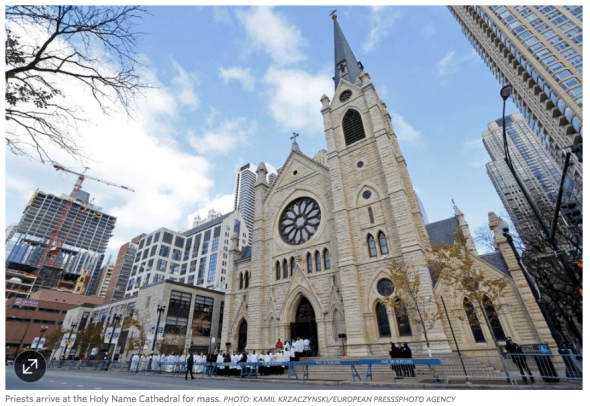
Now for Sale in Chicago: Prime Catholic Church Real Estate: Experts estimate site near Windy City’s Holy Name Cathedral could be worth $100 million. from the Wall Street J.
What will fill the social welfare vacuum? Who will take care of the poor, the sick, the immigrant, they dying? Who should?
Sometimes it seems like the domestic political argument in America is between two answers: “the government” and “nobody/family/somebody’ll handle it/I don’t know but not the government.”
Bill Clinton and George Bush both succeeded at least in pretending to find happy compromises, “the third way,” “compassionate conservatism,” etc. For awhile I felt like Paul Ryan was doing a decent job of at least pretending, too. But man when Trump came along he went the sniveling way. Is he more dangerous and more vile than Trump?
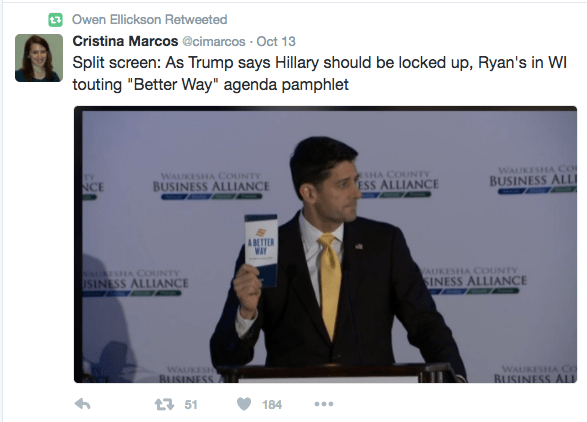
- “They’re laughing at us” might be Donald’s campaign theme. From The Washington Post:

It’s a horrible feeling to be laughed at and it takes dignity to rise above it. Watching him at the Al Smith dinner, in a way I almost felt bad for him. If I could give Donald Trump advice I would tell him to relax and return to being a clown version of a rich guy. It was a good job and he was well-compensated. But he doesn’t listen.
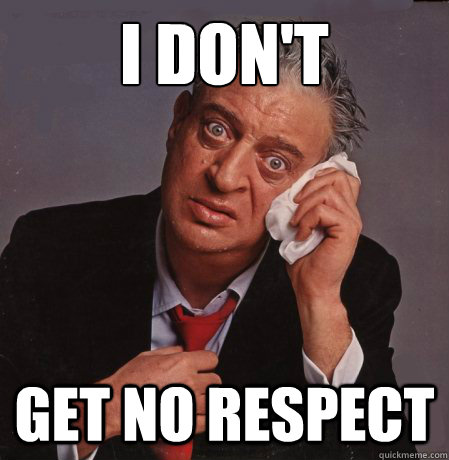
In a way DT feels like a dangerous, bitter, vile version of this guy:
- Al Smith’s father was an immigrant. Not from Ireland though, from Italy. (Ferraro = blacksmith = smith). His mother’s parents were immigrants from Ireland. A frustrating thing about this election is we couldn’t have a serious talk about immigration. How much should we have? From where? Infinite? If not infinite how do we sort out who can come?
Weird vote in Colombia
Posted: October 21, 2016 Filed under: Uncategorized Leave a commentLast month there was a weird and surprising vote in Colombia. I’ve been learning myself about it, and let me share the story as I understand it:

click for source

from the BBC’s helpful Q&A about Farc
Nasty would be a mild word for this fight.
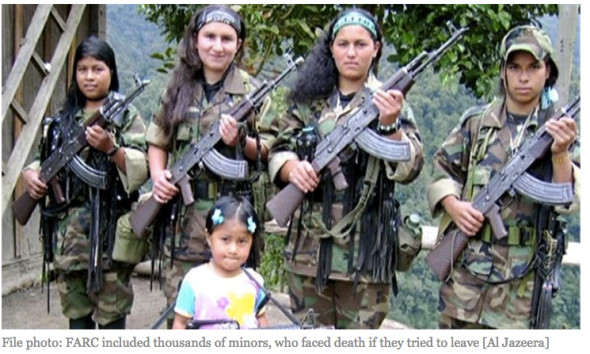
If you’re new to Colombian history it’s easy to lump this 52 year war in with the period known as La Violencia, but no, La Violencia was a whole separate ten year time, starting in 1948, in which maybe 200,000 people died.
Here’s how we got to the vote. The last president of Colombia, Álvaro Uribe, was what you might call “aggressive” in his tactics towards FARC.
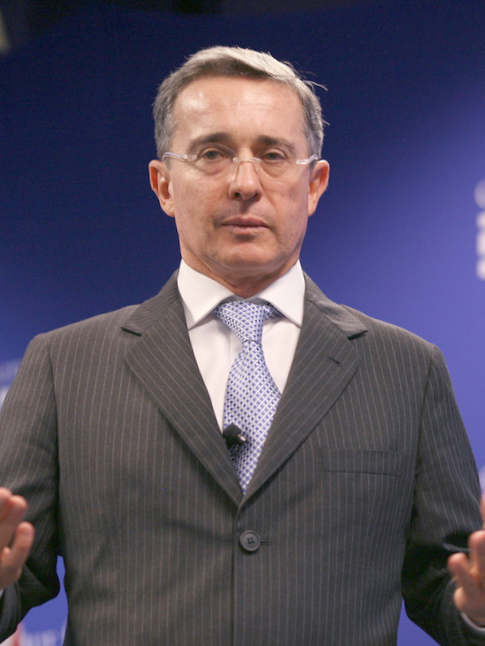
Makes sense: FARC killed his dad. His efforts severely diminished FARC if not knocked it to the ropes.
Uribe oversaw, for example, Operation Jaque, that freed Ingrid Betancourt from her FARC captors.
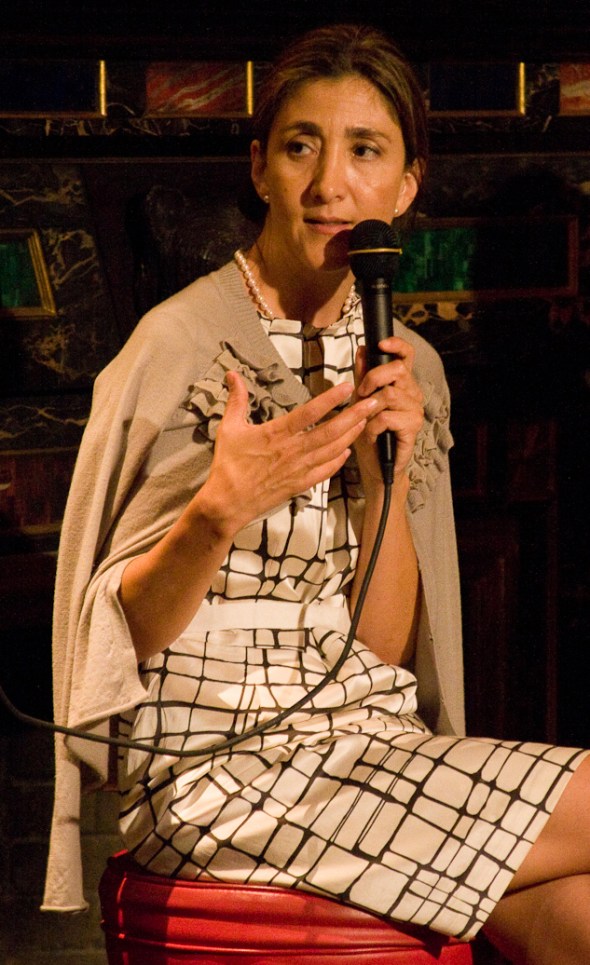
Wiki, Justin Hoch
Colombia entered the Korean War when Laureano Gómez was elected as President. It was the only Latin American country to join the war in a direct military role as an ally of the United States. Particularly important was the resistance of the Colombian troops at Old Baldy.

Camera Operator: SFC. CHARLES M. ROBERTS – DOD ID: HA-SN-98-07069 (old version)
Personnel of the Korean service corps unload logs from an M-39 Armored Utility Vehicle at the RHE 2nd US Inf Div supply point on “Old Baldy” near Chorwon, Korea. Logs are for use in the construction of bunkers. A second M-39 is in the background. Korea, 1 Oct 1952.
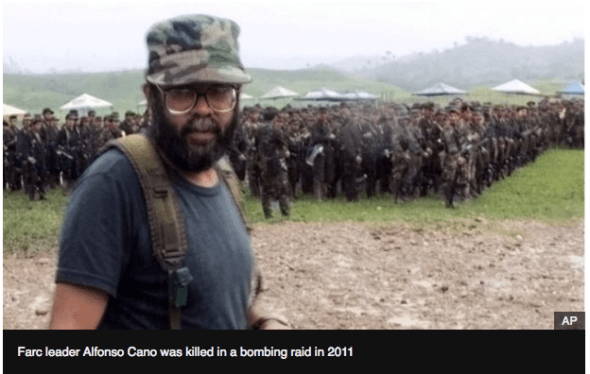

First secretly, then publicly, his guys negotiated with FARC in Havana. The two sides reached an agreement that would end what Santos called the last armed conflict in the Western Hemisphere.
The guy leading FARC is called Timochenko:

from wiki.
According to the United States Department of State, Timoleon Jimenez has set the FARC’s cocaine policies directing and controlling the production, manufacture, and distribution of hundreds of tons of cocaine to the United States and the world, including the “taxation” of the illegal drug trade in Colombia to raise funds for the FARC and the murder of hundreds of people who violated or interfered with the FARC’s cocaine policies
Santos and Timochenko shook hands at a meeting in Havana in June.
All that had to happen to ratify the accord was that Colombia’s people vote on it. Guess what happened?:

Don’t know where CNN got this number, The Economist says 13m people voted. Anyway, low turnout in a country of 47 million, partly because there was a hurricane.
Perhaps many NO voters thought it was bullshit that FARC murderers would get to be in parliament and wouldn’t be punished much for their various cruelties. Says The Economist:
People who live in areas where the FARC has recently been active mostly backed the deal. “We are the ones who’ve had to live with bullets flying around us,” says Freddy Rendón, a cattle rancher in Uribe, a town in Meta, in central Colombia, where Yes won 93.5% of the vote. Those who live in more peaceful parts, including cities, voted No.
After the votes were counted, everybody was apparently surprised and nobody knew what would happen next.
Then, in a funny twist, Santos won the Nobel Peace Prize.

Maybe to give the whole project a peaceward shove from Norway. Some cynics suggested Santos was a little too thirsty for the prize. That’s a little vain perhaps but is it so wrong? There is something funny about how much humans like prizes.
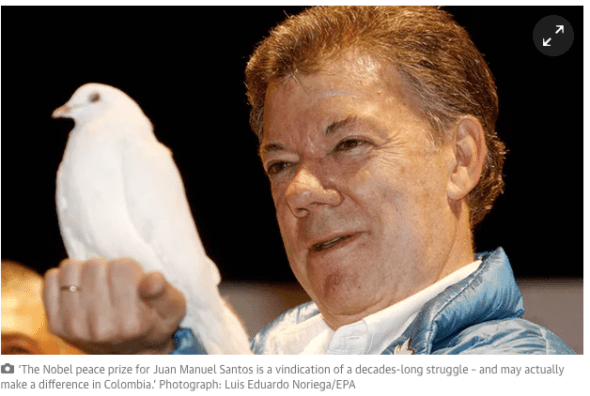
Santos with a bird from The Guardian, click for link.
Me? I’m rooting for peace in Colombia, a country I very much enjoyed visiting.

Popayán, Colombia, in a photo taken by Helytimes.
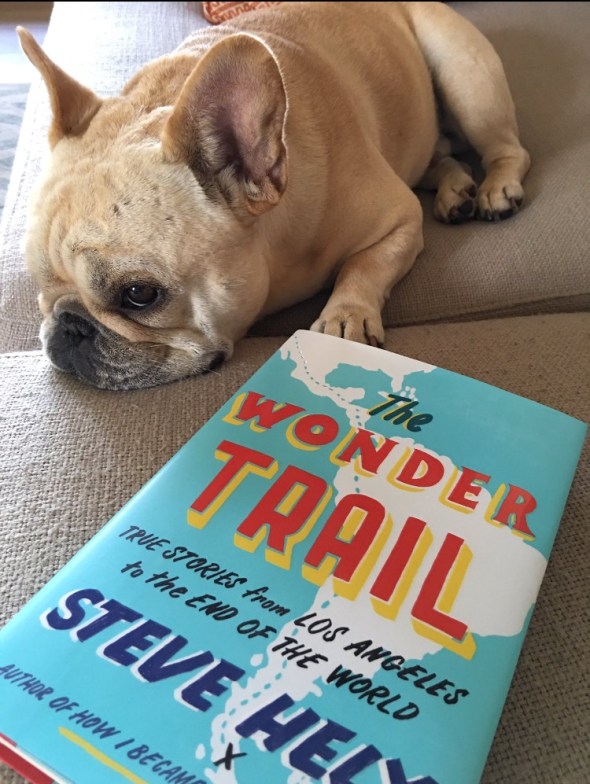
Only if you like tales of fun and adventure.
Amazon or your local indie bookstore. Pick one up at South Congress Books in Austin, TX for example.

I think you’ll enjoy it.

Colombia.
Who is this?
Posted: October 19, 2016 Filed under: America Since 1945, politics, presidents Leave a comment.jpg)
I’ll give you a hint. She is running for Vice-President of the United States.
It’s Mindy Finn! Alert reader Dave sends this our way. Ms. Finn used to work at Twitter, she’s a former reporter for the Waterbury, CT Republican-American, she’s a mother of two and she’s either 34 or 35.
Here’s a ready for primetime interview with her:
She’s running with former CIA operative Evan McMullin. I gotta say, I’m won over a bit by the homespun nature of this campaign and I wish them well.
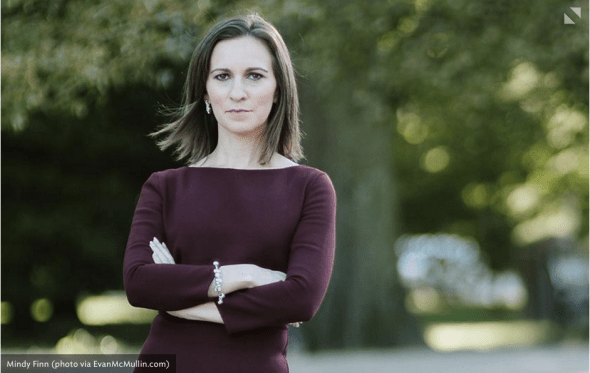
She reports she was shocked for “a couple minutes” when she was asked to join the ticket.
Remember this?
Posted: October 19, 2016 Filed under: America Since 1945 Leave a comment
first posted here ten months ago. What a ride.
Stressful job
Posted: October 18, 2016 Filed under: New England, sports Leave a comment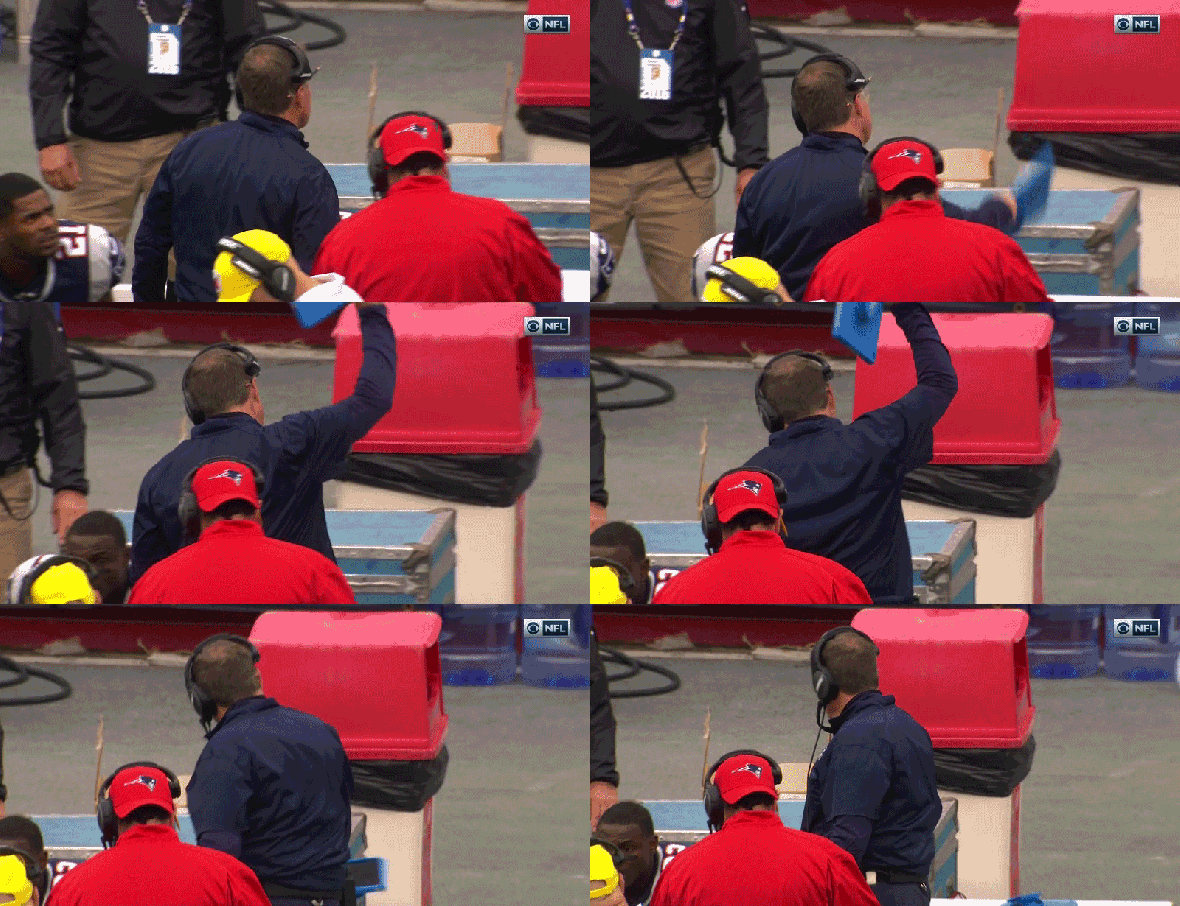
Bill Belichick’s IT guy. Lucky Coach says he is happy with Dan Famosi.
 Helytimes

