Not the Van Gogh painting I would’ve stolen
Posted: March 30, 2020 Filed under: art history Leave a comment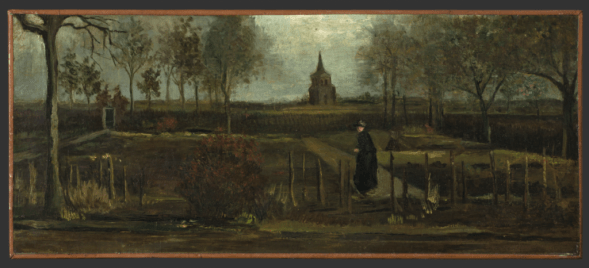
A bit dreary? But you take what you can get I guess!

The Supernova pictograph
Posted: January 22, 2020 Filed under: art history, New Mexico 2 Comments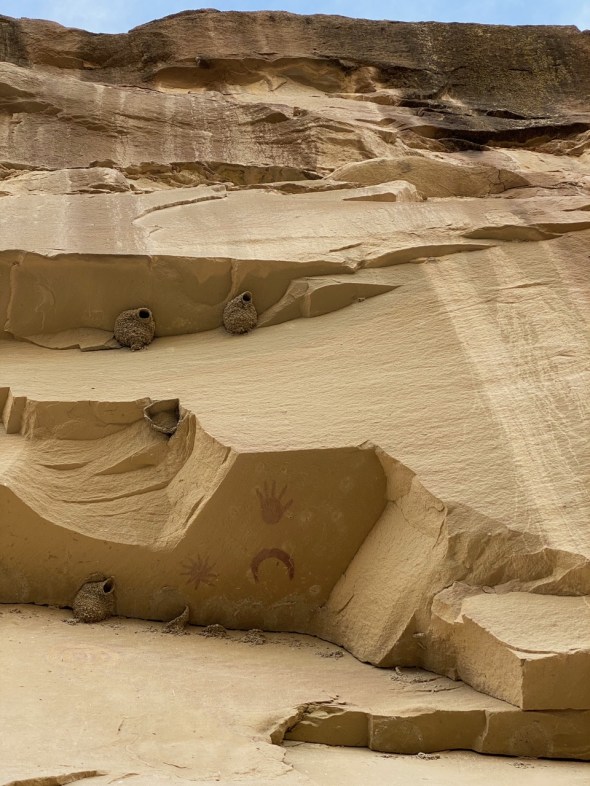
Regular readers of this website will know I’ve expressed some reservations about whether the Peñasco Blanco pictograph actually depicts a supernova from the year 1054 AD. It’s an exciting theory. For background, here’s what Timothy Pauketat has to say about it in his excellent book on Cahokia:
On that morning, recorded by a Chinese astrologer as July 4, a brilliant new luminary appeared in the sky. It was a “guest star,” a supernova, a visitor in the constellation Taurus, visible today with a high-powered telescope as the Crab Nebula. One of only fifty supernovas ever recorded – only three in our own Milky Way galaxy* – this nuclear detonation was the last gasp of a dying star. The inaudible explosion discharged a billion times more energy than the small star had previously emitted, and that morning a brilliant beacon – four times brighter than Venus – appeared in the daylight adjacent to a crescent moon…
Whatever i might have meant to the native peoples, a New Mexican Mimbres valley potter commemorated the celestial event by painting a pot with a star ad the foot of a crescent-shaped rabbit, a representation of the rabbit many indigenous North Americans believed resided in the moon. Ancient rock art in Arizona also appears to illustrate the supernova, as do petrogylphs in Missouri, which show the moon and supernova astride rabbit tracks. And in Chaco Canyon, New Mexico, a map of the night sky in July 1054 was painted on the sandstone cliffs above a palatial-sized, multi-story Great House called Peñasco Blanco, under construction at about the same time in the middle of the eleventh century. The pictograph shows the exploding star next to a crescent moon and a human hand, the later possibly representing a group of stars still known among Plains Indians today as the Hand constellation. Also in Chaco Canyon, construction began around this time on a massive new kiva, an underground ceremonial building, now called Casa Rinconada, just south of the largest Great House, Pueblo Bonito.
There was a “big bang” culturally in North America around 1000 AD, and it is interesting that around that same time, there were two supernovas, bright new stars in the sky.
Recently I had the opportunity to have a look at the so-called Supernova Pictograph in its location in Chaco Canyon, New Mex. Seeing it myself provoked some thought.
One observation is that there’s a huge amount of rock art in Chaco Canyon. I consider myself kind of a petroglyph enthusiast, but even for a passionate fan, there’s a lot. You’ll actually get pretty bored of looking at petroglyphs. Much of the rock art in the canyon is striking and weird.
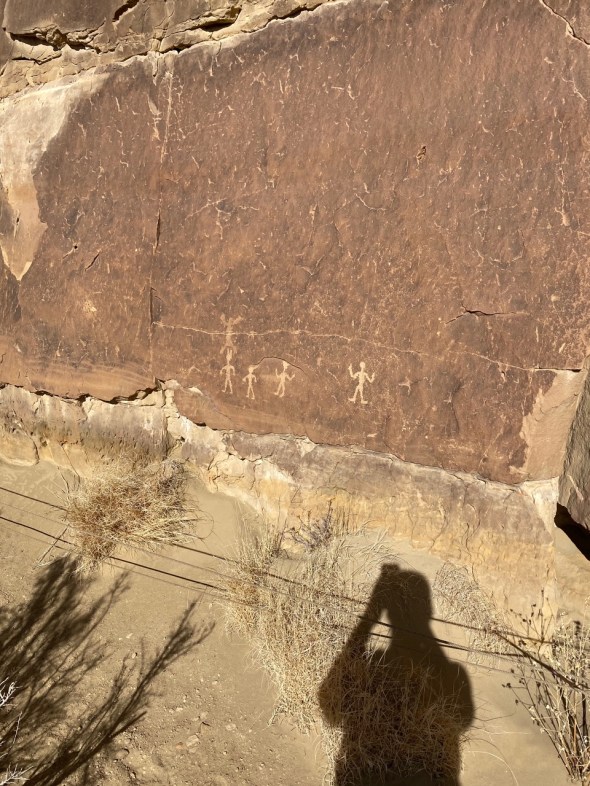
Some of it feels pretty crude and amateur, or could be attributed to later visitors.
But the Super-Nova / Peñasco Blanco pictograph really stands out, both in vividness and in the drama of its location.
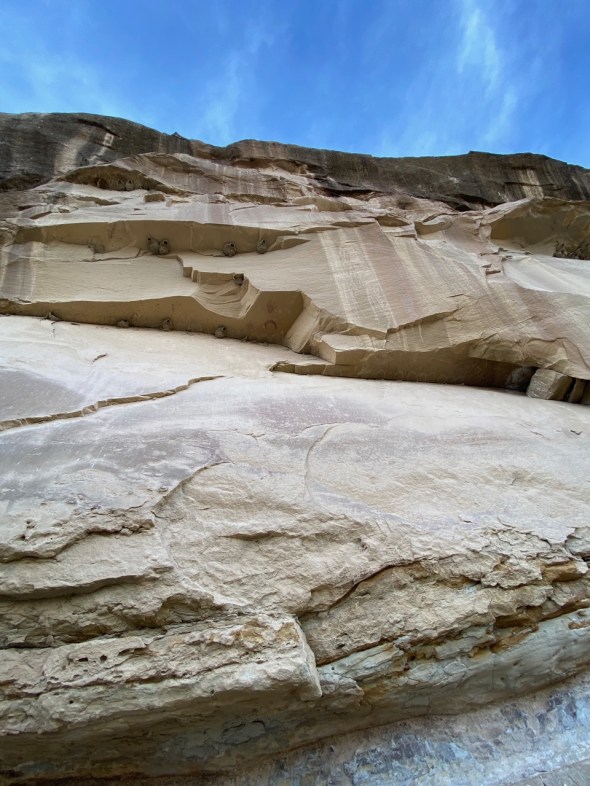
It’s almost upside down. Was it painted Sistine Chapel style?
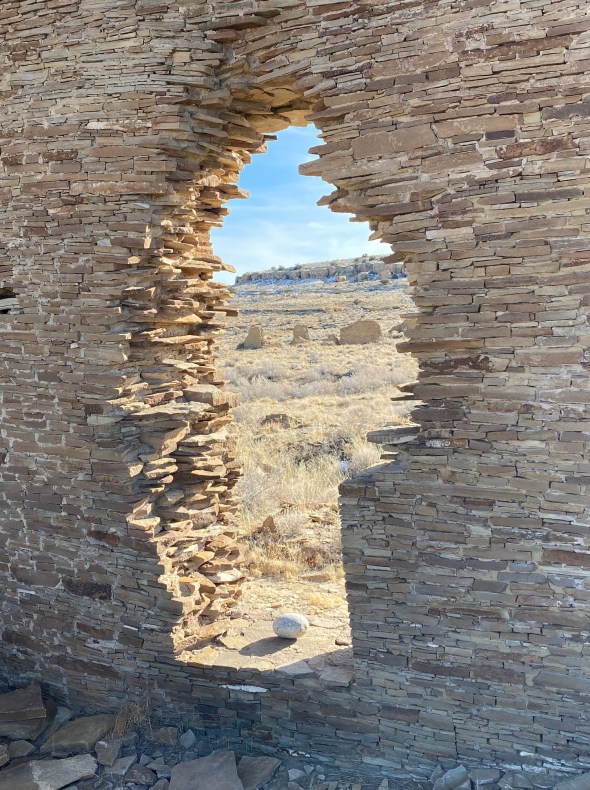
The pictoglyph is on what I guess? could be a very old trail, that leads up from Chaco Wash to a mesa where the Peñasco Blanco “great house” sits. The Peñasco Blanco site is huge:

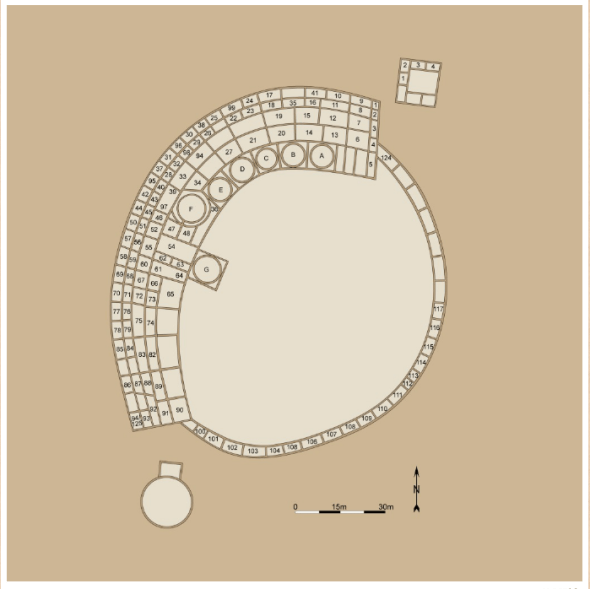
It was three stories tall and had 300 rooms. Construction had begun by the 900s, so before the appearance of the supernovas of the 1000s.
The structure was laid out with some thought to north-south alignment, as most Chaco sites seem to have been. To me it does suggest something like an astronomical theater:
On the day I was there I was the only person around, which is a spooky feeling.
The site reminded me of Irish monastic sites from the same era:
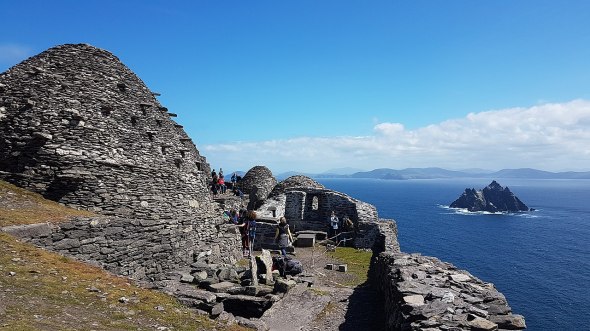
Certainly whoever was hanging around Peñasco Blanco was interested in the sky.
The park service is not shy about identifying this pictoglyph as depicting a super-nova:
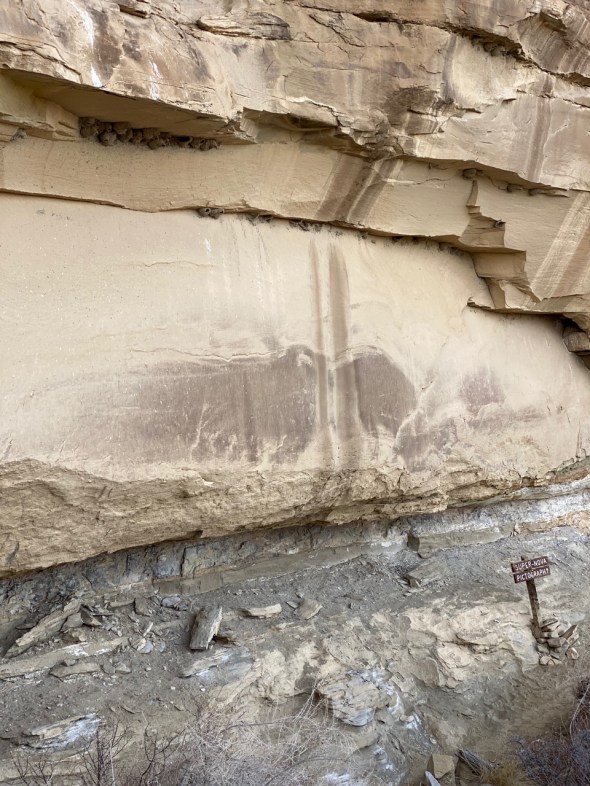
Note the sign, bottom right. But I’m just not sure the evidence is there.
Krupp’s investigations have ultimately caused him to dismiss all of the connections between Southwest cave paintings and the Crab supernova. “I am certain that star-crescent combos have absolutely nothing to do with the 1054 A.D. event,” he said. While some may indeed be celestial symbols, “their meaning varies with culture and time.”
from a 2014 Scientific American piece, “‘Supernova’ Cave Art Myth Debunked,” by Clara Moskowitz.
On the other hand:
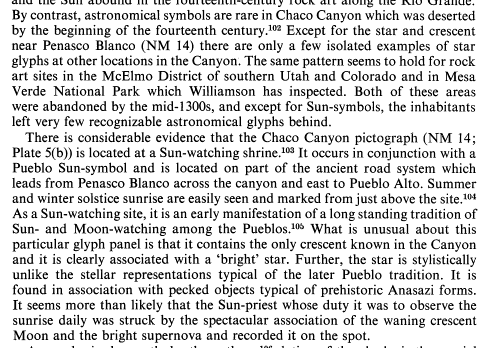
from a 1979 paper, “The 1054 Supernova and Native American Rock Art,” by Brandt, J. C. & Williamson, R. A. in the Journal for the History of Astronomy, Archaeoastronomy Supplement, Vol. 10, p.S1
There’s no way to reliably date a work like this. Chaco Canyon was occupied or had at least semi-frequent visitors around 1054 AD, and these visitors were absolutely interested in sky events. The dating of the pictograph is usually attributed to nearby pottery shards. You can still find ancient pottery lying around all over the place.
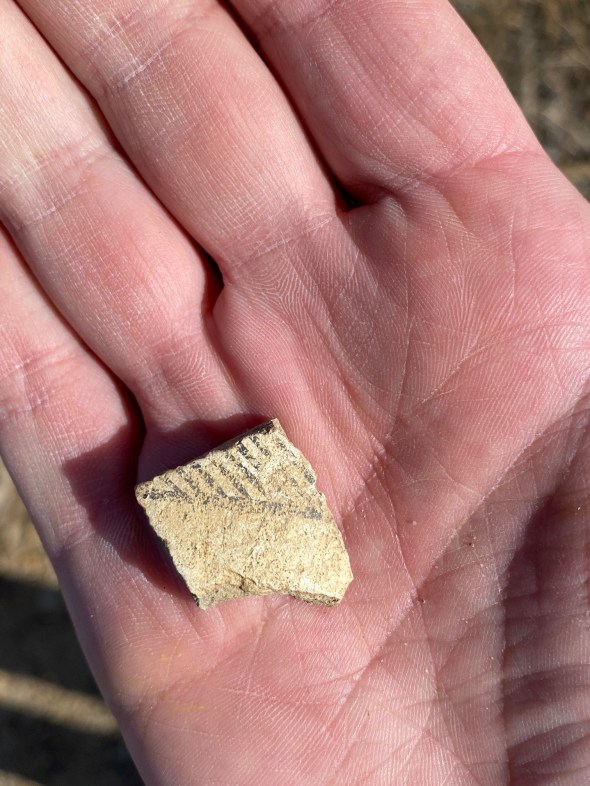
obviously reader I left this where I found it.
One thing is clear: if these people had a message they wanted to leave for us from one thousand plus years ago, it is “hand – crescent – star.”
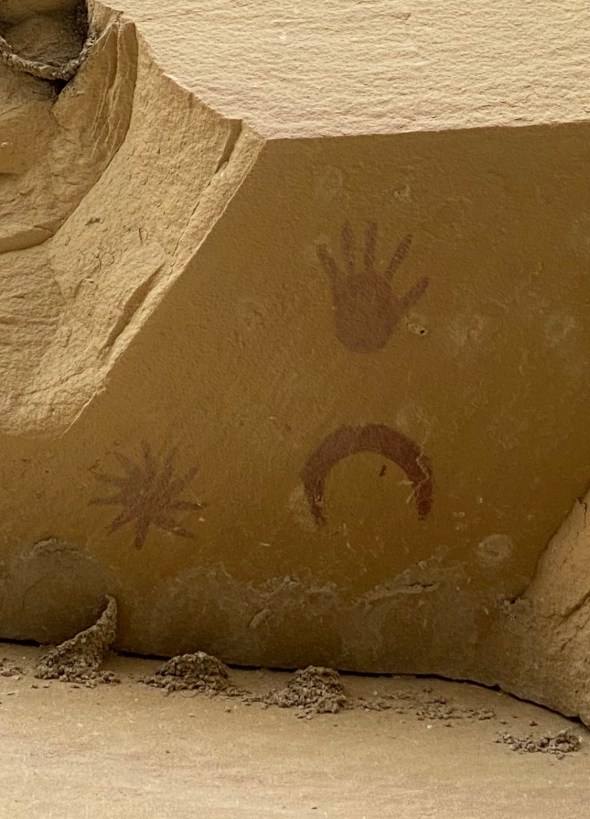
A day before visiting this site I had lunch with a friend of mine who works on shooting lasers at rocks on Mars to determine their chemical makeup. We’re still OBSESSED with the sky!
Raphael Cartoons
Posted: November 25, 2019 Filed under: art history Leave a comment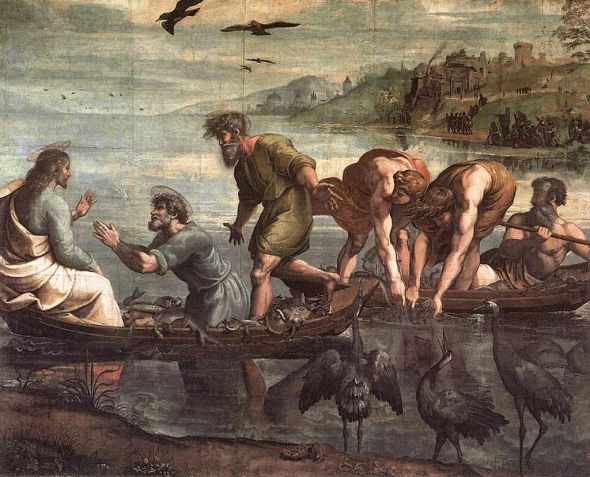
Cartoons in the sense of “designs for tapestries.” The Miraculous Draught of Fishes.
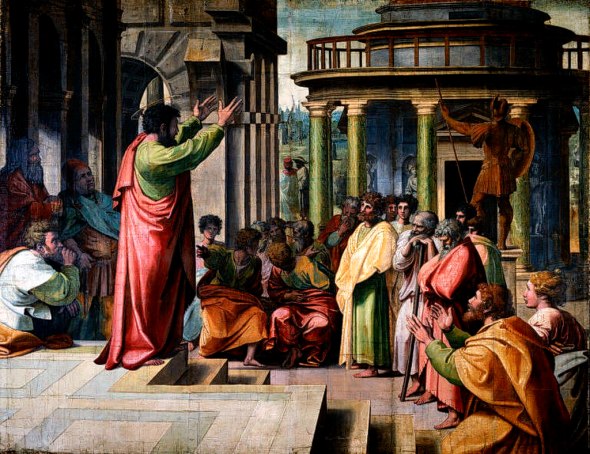
St. Paul Preaching in Athens.
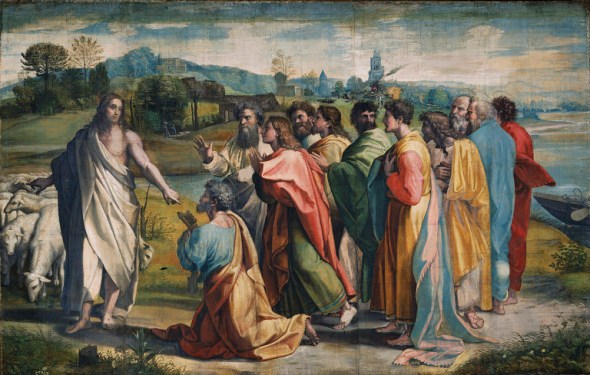
Christ’s Charge to Peter.
Loved this, from the Wikipedia page:
Raphael—whom Michelangelo greatly disliked—was highly conscious that his work would be seen beside the Sistine Chapel ceiling, which had been finished only two years before, and took great care perfecting his designs, which are among his largest and most complicated. Originally the set was intended to include 16 tapestries. Raphael was paid twice by Leo, in June 1515 and December 1516, the last payment apparently being upon completion of the work. Tapestries retained their Late Gothic prestige during the Renaissance. Most of the expense was in the manufacture: although the creation of the tapestries in Brussels cost 15,000 ducats, Raphael was paid only 1,000.
King Charles I of England, who had a pretty good eye for art, bought them while he was still a prince.
In Charles’ day these were stored in wooden boxes in the Banqueting House, Whitehall. They were one of the few items in the Royal Collection withheld from sale by Oliver Cromwell after Charles’ execution.

The first “cartoon”?
many things on the internet
Posted: October 19, 2019 Filed under: America Since 1945, art history Leave a commentremind me of this one:

from:
Amsterdam
Posted: September 23, 2019 Filed under: Amsterdam, art history Leave a comment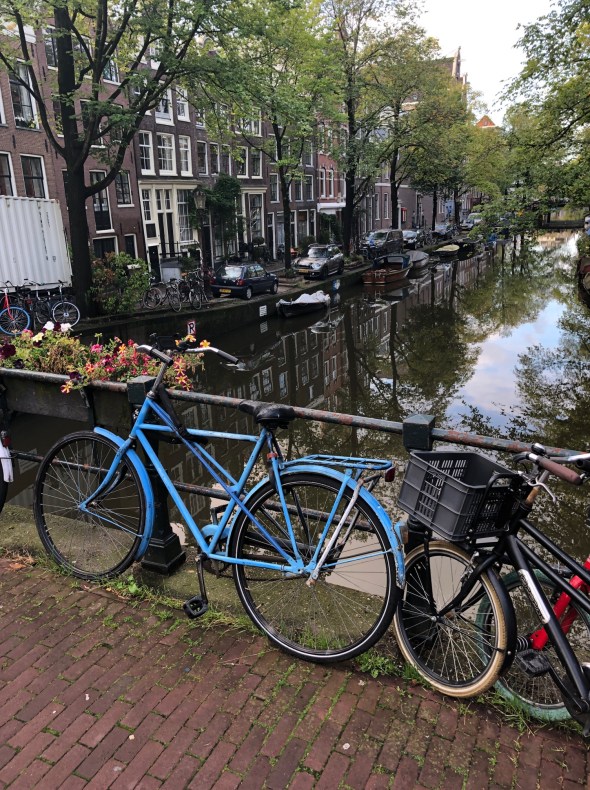
some cities are like a theme park of themselves.

Amsterdam: a water park? Blessed with an unusually bright day. You think of the history.

Took a reading on my altimeter:

The Netherlands.
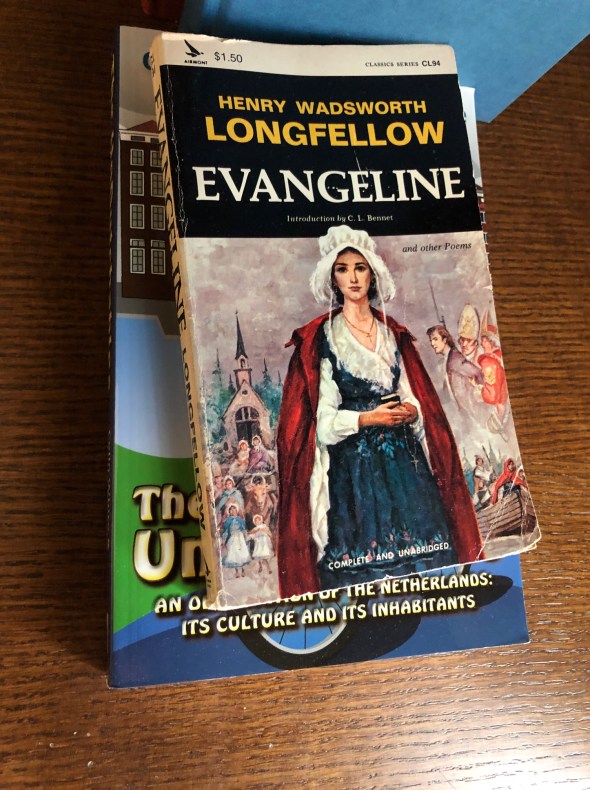
Books avail at hotel. At the Rijksmuseum they have Jan Willem Pieneman’s enormous painting of Waterloo.
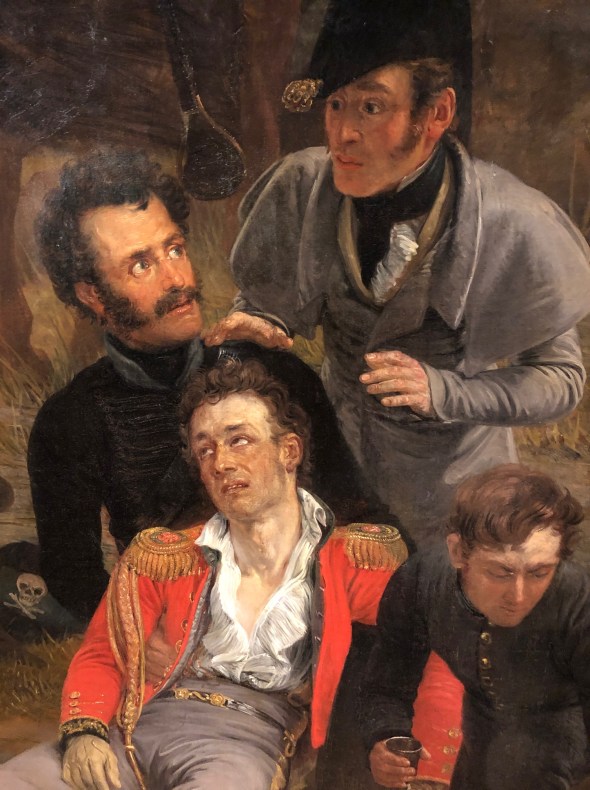
Detail.

Northern Renaissance Art by Susie Nash
Posted: August 24, 2019 Filed under: art history Leave a comment
I, Albrect Dürer of Nuremberg painted myself thus, with undying color, at the age of twenty-eight years.
So says the writing on this one. Whether the color is “undying” we’ll see*. The painting is five hundred and eighteen years old.
What was going on with Northern Renaissance art? After a visit to the San Diego Art Museum, decided to buy myself a book about what SDMA calls “early Netherlandish art.”

This is the book that I got, and I love it and recommend it. Beautiful, readable, dense, one of the best art history books I’ve ever gotten into. Susie Nash is an expert on the Well of Moses, or Great Cross, at Dijon.

simonsara for Wiki
The Well of Moses was commissioned by Philip the Bold, who through his “brilliant marriage to the heiress Margaret of Flanders” brought that region into Duchy of Burgundy. Claus Sluter, the sculptor made the pleurants, “the Mourners of Dijon,” for the tomb of Philip. I saw these when they came through the Met years ago.

jean de la huerta for wikipedia
By the time Philip the Bold’s grandson, Philip the Good, was Duke of Burgundy, the Burgundian chunks of the Netherlands, Belgium, Luxembourg and northern France were rich, full of prospering towns with craftsmen of all kinds, and fledgling networks of banking and trade, and ancient churches and castles.
The gem may have been Bruges, kind of an international banking/trade center, the Hong Kong of its day(?)
in Bruges a clause in the carpenters’ and sculptors’ guild by-laws allowed craftsmen to work at night when “a sale or contract has been made with a merchant (whose) ship is there ready to sail.”
Gheeraert’s map of Bruges:

Between The Hundred Years’ War and a mad King, France was suffering. Paris had kind of gone to shit around 1420.
There were all kinds of wonderful and wild things being made in the Northern Renaissance: tapestries, illuminated books, glass and brass. Statues of the Christ Child with jointed arms. Says Nash:
The ability to dress sculpture and adapt it in various ways was also key to the popularity of life-size carved and painted Christ Child figures, which might have jointed arms and their own set of clothes, some of which survive today. These figures could be used for more intimate devotional activities. Textual sources from female convent communities concern the part played by these and similar figures of the Christ Child with its crib in contemplative and richly imaginative activities, during which the nun was encouraged to pick up the child, suckle it, and so on.
And so on.
Nash places a lot of this work in the context of a tradition of contemplation. You were supposed to really be staring at and contemplating, say, Christ on the cross.

How about the works of Master W with Key?

As for the Dukes of Burgundy, the drama of their lives becomes vivid from even a barebones review of major incidents. John the Fearless, murdered on the bridge at Montereau, the monk presenting his skull to the King of France: “Sire, this is the hole through which England entered France.” Charles The Bold, lost in the freezing cold at Nancy, killed by Swiss mercenaries, his body found in a frozen river. Mary the Rich, and Margaret of Austria, killed by a shard of broken glass.

Jean Hay painted Margaret of Austria, age ten
Dramatic centuries followed for this part of the world. So much of early Netherlandish // Northern Renaissance art was lost or destroyed. “A wave of iconoclasm swept the Netherlands,” and that was just the beginning. Nash has a great picture I can’t find online of the city gate of Berne, chopped up for firewood in 1865. The town halls of Brussels and Paris were both burnt, Tournai and Ypres were bombed and shelled. The Allies found the Ghent altarpiece in a salt mine.

Last one, from a prayer book made for Margaret Tudor, wife of James IV.

This is not Margaret receiving an actual vision of the Virgin – she was not known as a visionary and indeed was note even particularly devout, if her contemporary reputation is true: she famously requested, on her sickbed, to contemplate a parade of her best dresses instead of a crucifix.
The Northern Renaissance – they’re just like us!
* some controversy over the translation here. My Latin is rusty but I like “undying” or “everlasting” better than “appropriate.”
Jan Van Eyck
Posted: July 30, 2019 Filed under: art history Leave a comment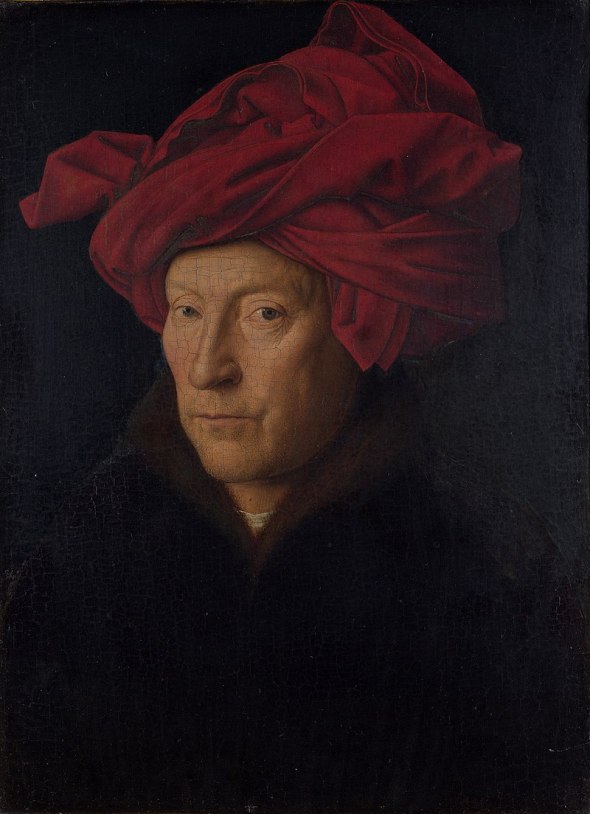
a self-portrait?
The first extant record of his life comes from the court of John of Bavaria at The Hague where, between 1422 and 1424, payments were made to Meyster Jan den malre (Master Jan the painter) who was then a court painter with the rank of valet de chambre, with at first one and then two assistants.

Did he have help from his older brother Hubert on this one?

The notes on his preparatory drawing for Portrait of Cardinal Niccolò Albergati are written in the Maasland dialect.
Hmm.
His motto, one of the first and still most distinctive signatures in art history, ALS IK KAN (“AS I CAN”), a pun on his name,
Secret commissions:
Van Eyck undertook a number of journeys on Philip the Duke of Burgundy’s behalf between 1426 and 1429, described in records as “secret” commissions, for which he was paid multiples of his annual salary. Their precise nature is still unknown, but they seem to involve his acting as envoy of the court. In 1426 he departed for “certain distant lands”, possibly to the Holy Land, a theory given weight by the topographical accuracy of Jerusalem in The Three Marys at the Tomb, a painting completed by members of his workshop c. 1440.
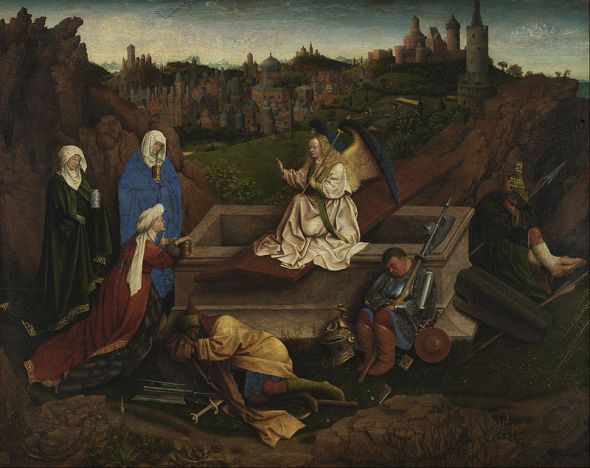
Though now some attribute this one to Hubert. (I dunno, not astounded myself by the topographical accuracy here.)
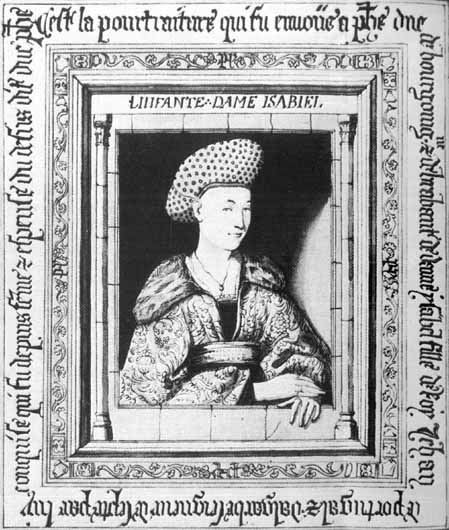
A better documented commission was the journey to Lisbon along with a group intended to prepare the ground for the Duke’s wedding to Isabella of Portugal. Van Eyck’s was tasked with painting the bride, so that the Duke could visualise her before their marriage. Because Portugal was ridden with plague, their court was itinerant and the Dutch party met them at the out of the way castle of Avis. Van Eyck spent nine months there, returning to the Netherlands with Isabella as a bride to be; the couple married on Christmas Day of 1429. The princess was probably not particularly attractive, and that is exactly how Van Eyck conveyed her in the now lost portrait.
Eyck’s own wife:
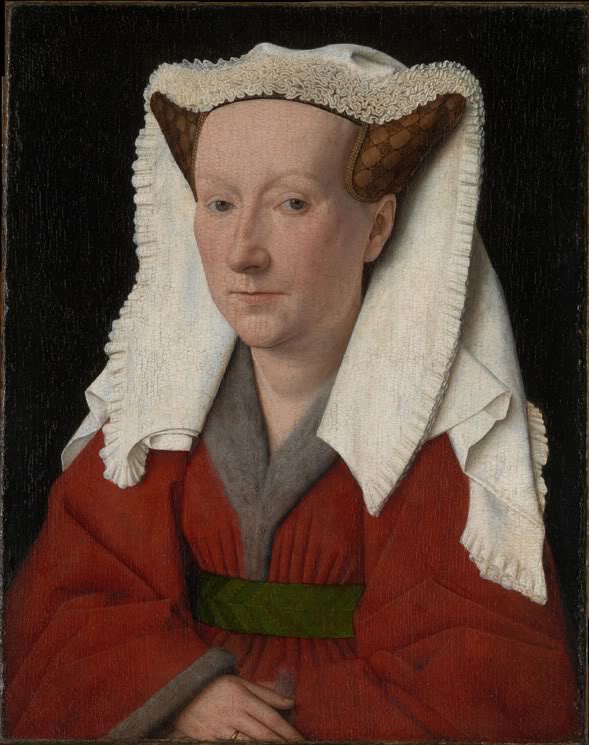
Margaret.
I was looking into Van Eyck because I was wondering, who did Hieronymous Bosch learn from?
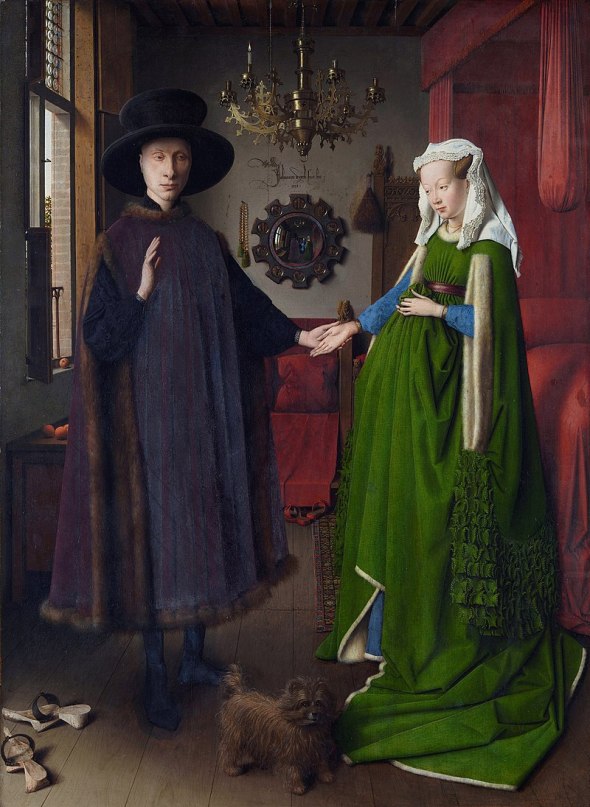
That dog!
A visit to the San Diego Museum of Art
Posted: July 28, 2019 Filed under: art history, the California Condition Leave a comment “What’re they gonna have at the San Diego Museum of Art?” I said, sneering. “A statue of a fish taco? An exhibit of craft IPA labels? A fluorescent Jeep Wrangler? A Tony Gwynn jersey?*”
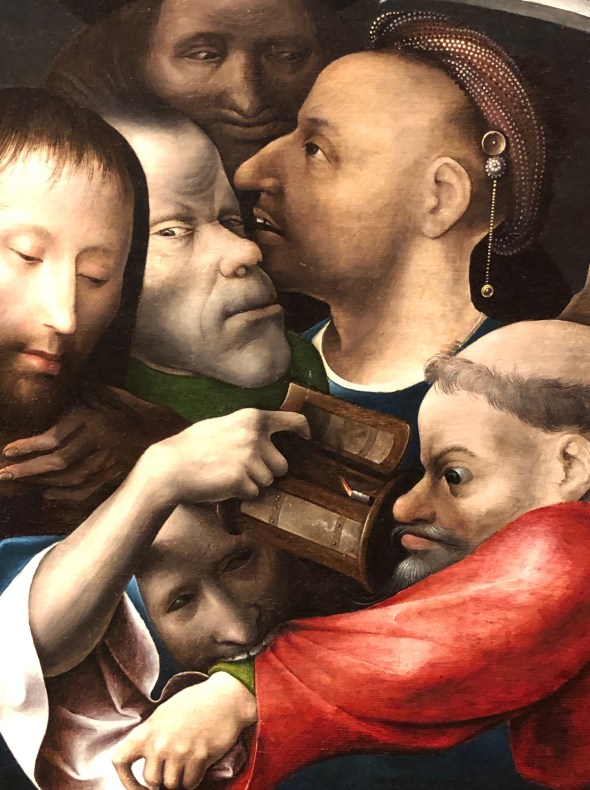
This had been my scoffer’s attitude. But on the website of SDMA I learnt that they have a painting by Hieronymous Bosch, The Arrest of Christ.
Seeing a close to 500 year old painting by a weirdo master seemed worth a short Uber.

I was really impressed with SDMA! Small, but packed with wonders. Something good everywhere. There was an exhibit of “Golden Age of Spain” art that I didn’t even bother with. (Usually I find I like the art that came right before the golden age?)
The wall placard attributes Christ Arrested to the Workshop of Hieronymous Bosch, not Bosch himself. And how about Madonna of the Roses, by Pseudo-Pier Francesco Fiorentino?

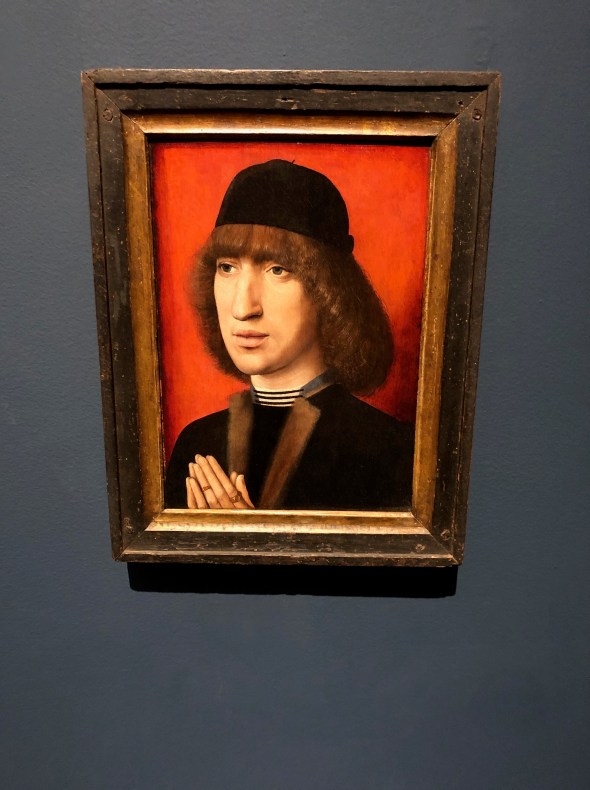
Or Portrait of a Man by an unknown Flemish artist (once attributed to Hans Memling):
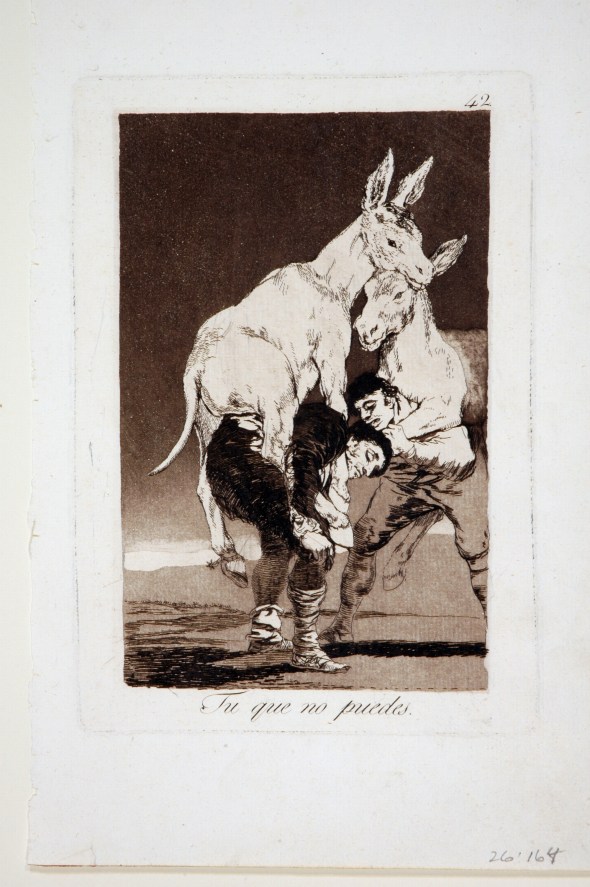
Goya, You Who Cannot. (They must have a bunch more Goyas in storage).
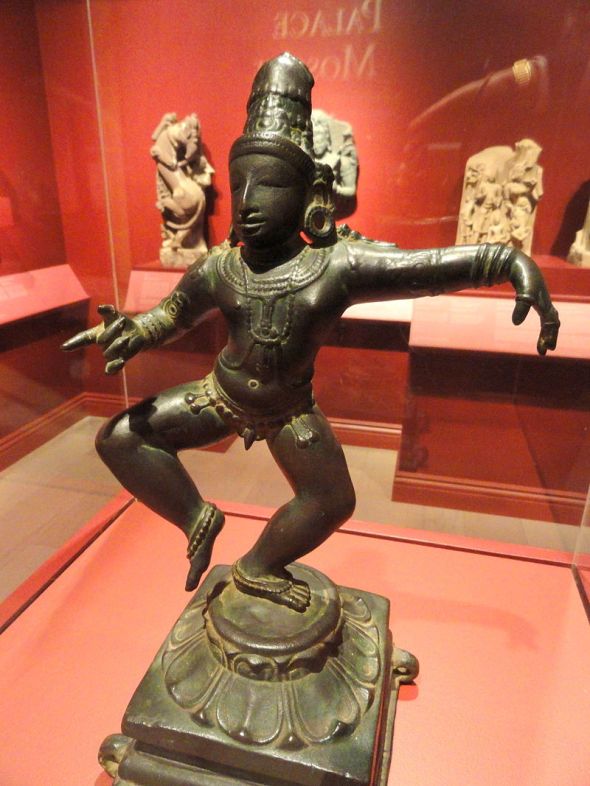
11th century Sambander.
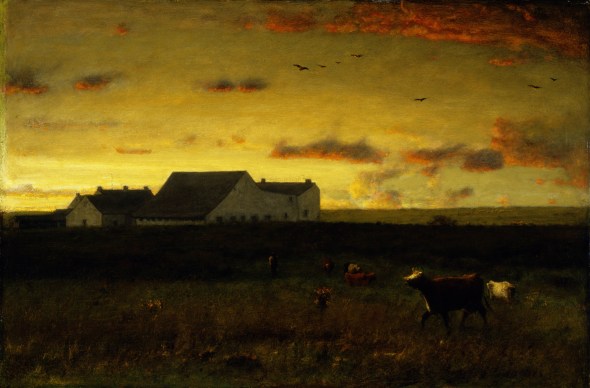
George Inness, Farm Landscape, Cattle in Pasture—Sunset, Nantucket
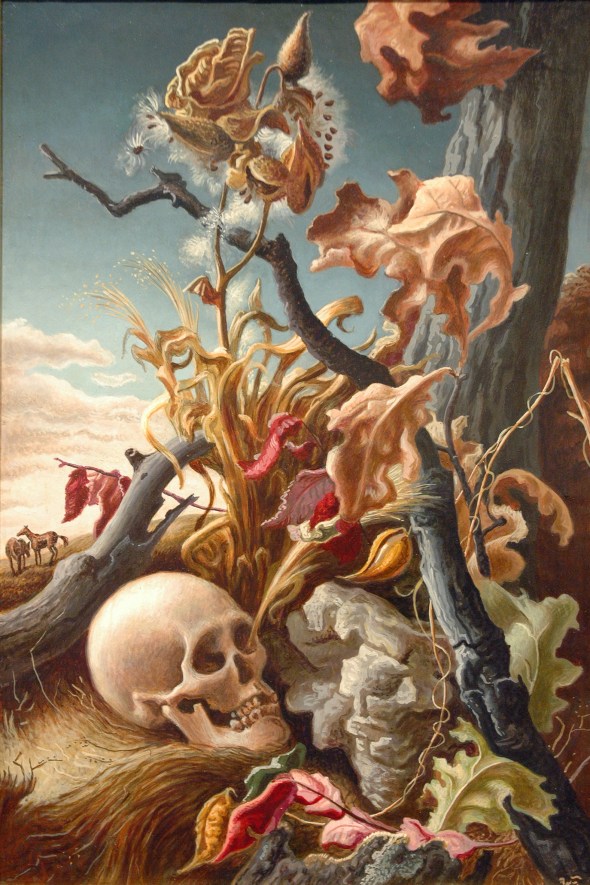
Thomas Hart Benton, After Many Days.
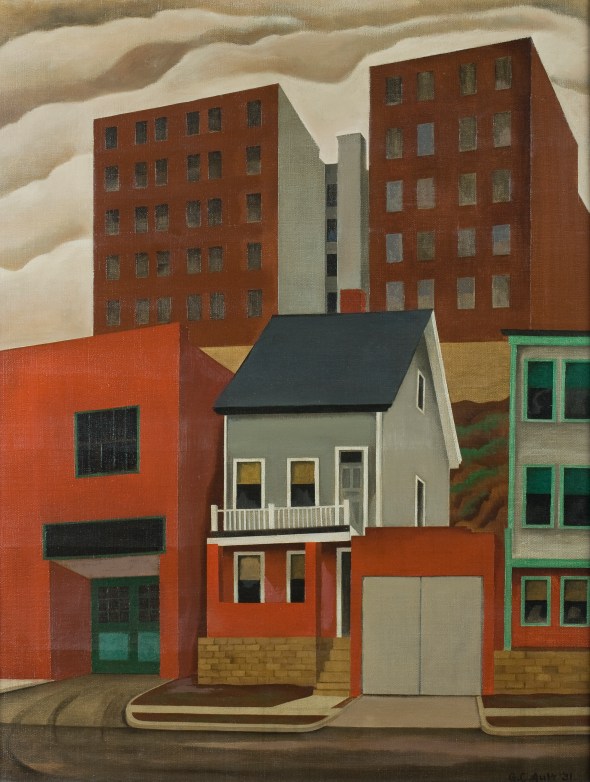
An untitled work by George Copeland Ault.
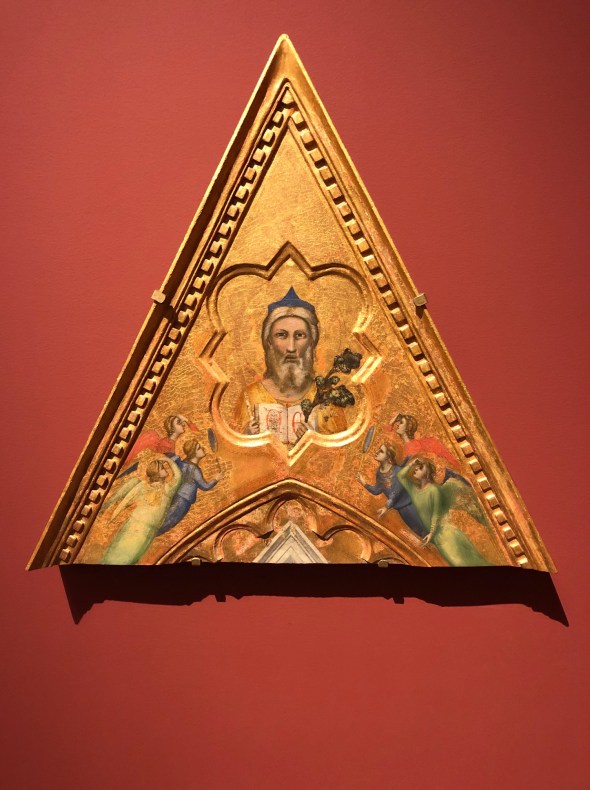
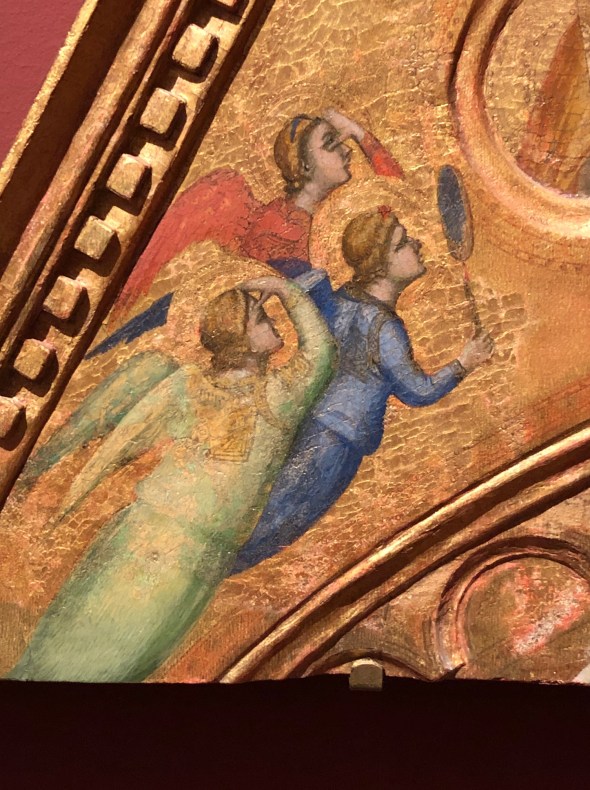
Giotto, God The Father with Angels.
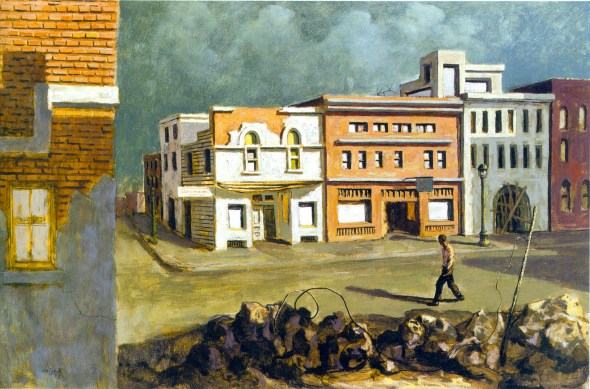
Sunday Afternoon, Hughie Lee Smith.

In The Patio by Georgia O’Keefe.
Anyway. This was all a nice break from Comic-Con.

At Comic-Con I heard that the X-Men are coming back.
* cheers to Jeff K. for this last punchline.
Claiming a vaudeville / DJ name for possible future use
Posted: July 25, 2019 Filed under: art history Leave a comment
Art Celebrator.
How much would you pay for this painting?
Posted: June 27, 2019 Filed under: art history, money 1 Comment
Basquiat’s “Pink Elephant with Fire Engine,” depicting cartoonish images on yolk-colored background, hammered at 2.2 million pounds, falling short of the low estimate of 3 million pounds.
The Glorious First of June
Posted: June 1, 2019 Filed under: art history Leave a comment
painted here by Philip James de Loutherbourg, who sounds cool as shit:
a Franco-British painter who became known for his large naval works, his elaborate set designs for London theatres, and his invention of a mechanical theatre called the “Eidophusikon”. He also had an interest in faith-healing and the occult and was a companion of the confidence-trickster Cagliostro.

Vivian Maier
Posted: December 2, 2018 Filed under: America Since 1945, art history, photography Leave a comment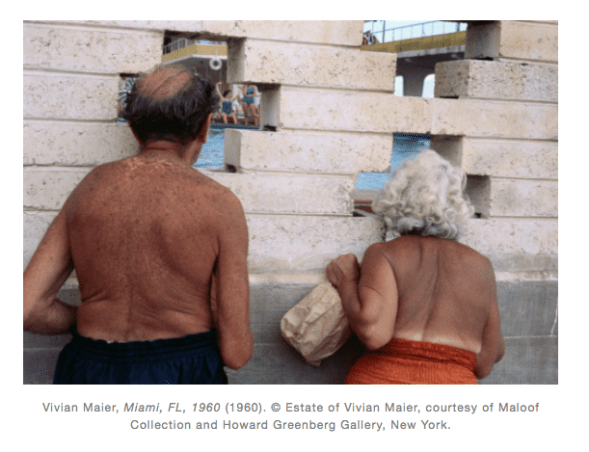
stole that straight from Artnet.
The tale of who owns Vivian Maier’s work is interesting. Through some twists, John Maloof, the Chicago real estate developer (?) who found and bought most of the physical photos at a storage auction, does not at present own the copyright:
Until those heirs are determined, the Cook County Administrator will continue to serve as the supervisor of the Maier Estate.
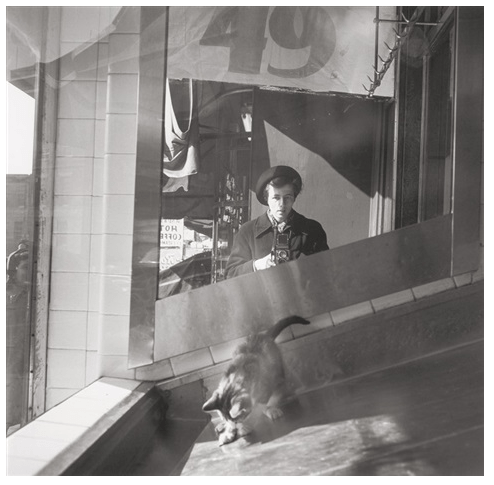
Go Inside
Posted: December 1, 2018 Filed under: art history, the California Condition Leave a comment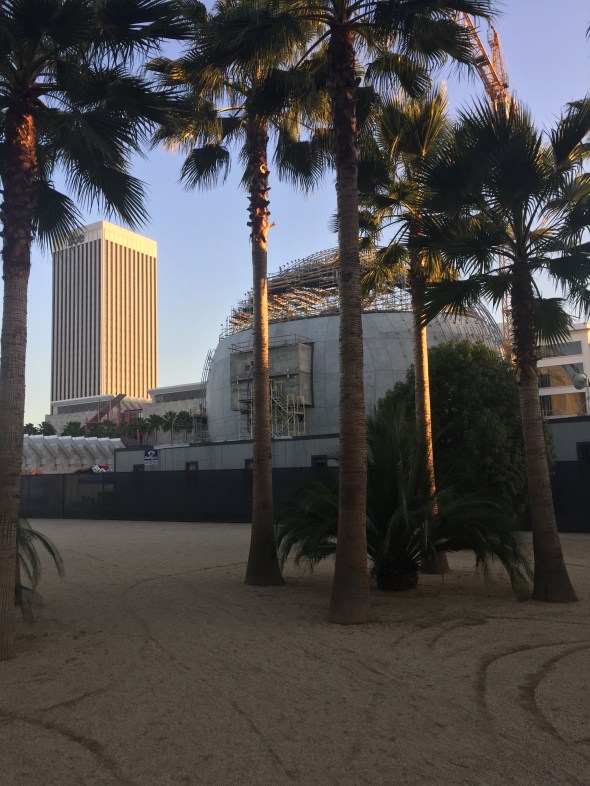
They’re making progress on the dome/orb that will one day hold the Academy Museum (motto: Go Inside The Movies).
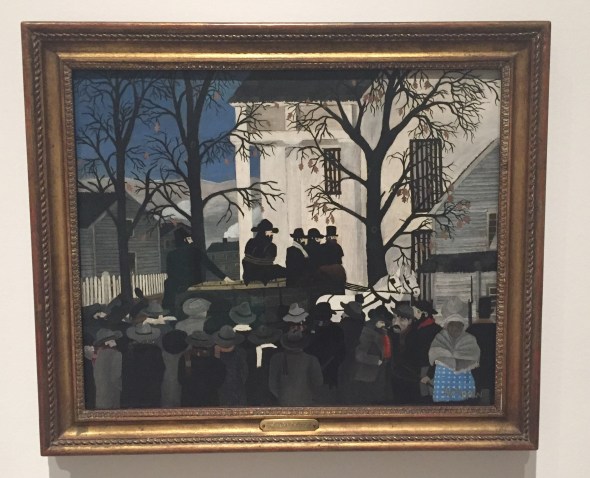
At neighboring LACMA the American Outliers exhibit is terrific.
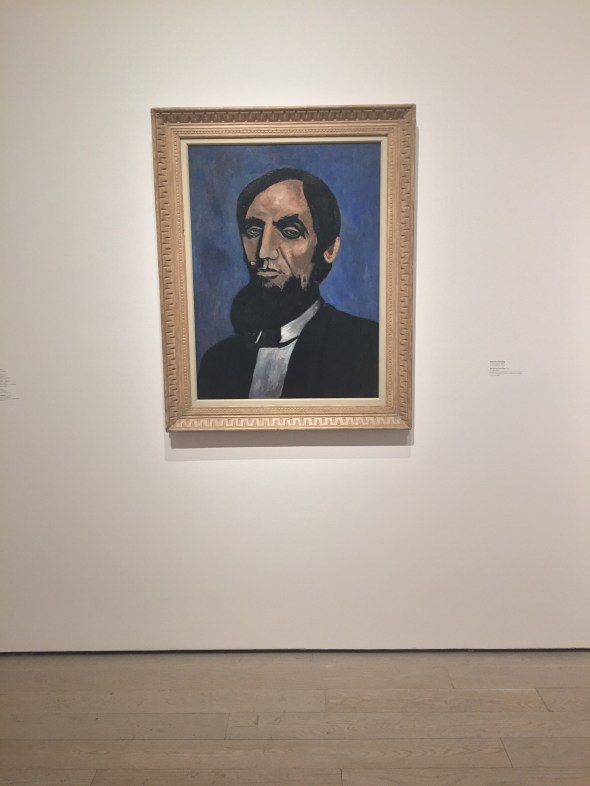
The Great Good Man by Marsden Hartley of Lewiston, Maine.
Struck by Horace Pippin’s John Brown Going To His Hanging:
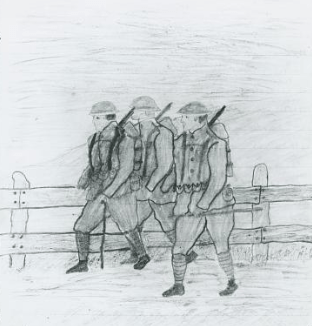
Pippin served in K Company, 3rd Battalion of the 369th infantry, the famous Harlem Hellfighters, in Europe during World War I, where he lost the use of his right arm after being shot by a sniper. He said of his combat experience:
I did not care what or where I went. I asked God to help me, and he did so. And that is the way I came through that terrible and Hellish place. For the whole entire battlefield was hell, so it was no place for any human being to be.
While in the trenches, Pippin kept an illustrated journal which gave an account of his military service.
How about this one, Miss Van Alen:
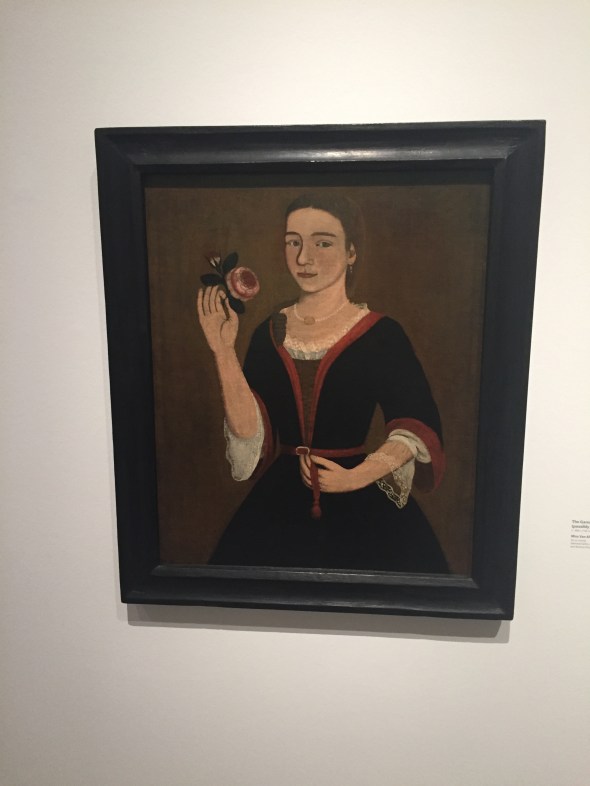
attributed to “The Ganesvoort Limner (possibly Pieter Vanderlyn).”
Generally untrained and itinerant, limners were a class of artists who helped shape the image of colonial Americans, securing the social status of their middle-class sitters in portraits that convey an air of refinement.
says The National Gallery.
Proposed motto for LACMA: Go Inside The Art.

Sunday Scrapbasket
Posted: October 28, 2018 Filed under: America Since 1945, art history, baseball, sports, writing Leave a comment- Work by Ai Weiwei at Marciano Foundation:


- down the docks, San Pedro:

- Good illustration of Satan in the Wikipedia page for him:
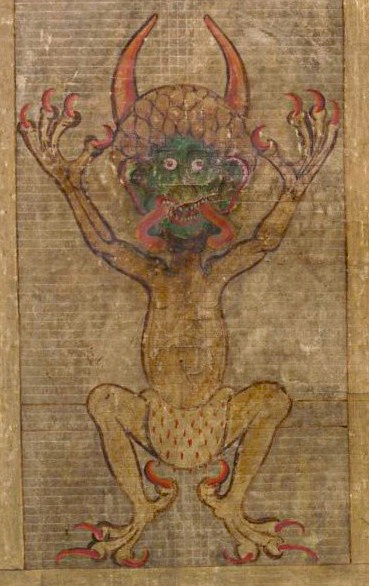

from Strange Tales From A Chinese Studio (1740) by Pu Songling
- Looking into the history of the USA and Chile, found this.
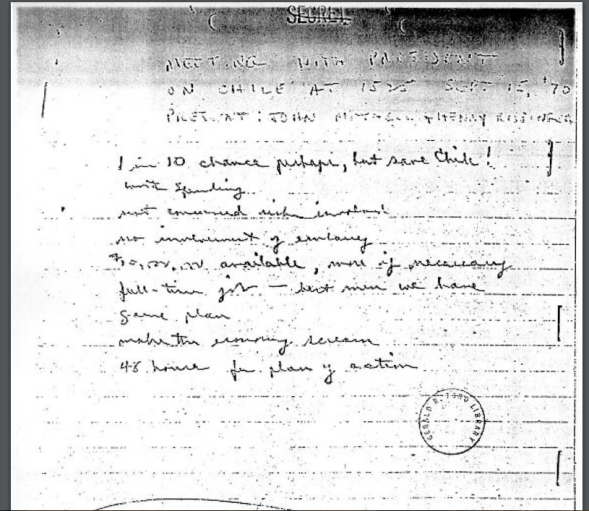 Declassified notes Richard Helms, CIA director, took at a September 15, 1970 meeting at the White House
game plan
make the economy scream
- This is a take I didn’t know I had until I saw it expressed:

of course. these rascals hired her and they knew who she was. it didn’t work for them like it did for Fox so they threw her under the bus, but they’re no more principled than she is.
- moving books around:


- happy fate to be in attendance at the longest World Series game ever played. Beginning:

End:
Thalia
Posted: October 18, 2018 Filed under: art history, comedy, the California Condition Leave a comment
Whenever I need a boost in either comedy or idyllic poetry I just call upon the muse Thalia
Gods of the Modern World and the Cartoon History Of The Universe
Posted: September 24, 2018 Filed under: America Since 1945, art history, California, comedy, comics Leave a comment
José Clemente Orozco painted these crazy frescos at Dartmouth around 1933. My pal Larry Gonick sends a vivid closeup:

photo: Larry Gonick
Gotta check these out. If you haven’t read Larry Gonick’s Cartoon History Of The Universe:

Strongest recommend! Epic achievements in bringing history to life by both artists.
The Tinder King
Posted: August 12, 2018 Filed under: art history, Hans Holbein, painting, pictures Leave a comment
It’s 1539. Henry VIII is 48 years old and single. Wife 1 didn’t work out, Wife 2 got beheaded, Wife 3 died. The Hunt For Wife 4 is on:
King Henry VIII of England was considering a royal marriage with Cleves, so following negotiations with the duchy, Hans Holbein the Younger, Henry’s court painter, was dispatched to paint Amalia and Anne, both of whom were possible candidates, for the freshly widowed king in August 1539.[2] After seeing both paintings, Henry chose Anne.
Anne:

There is a tradition that Holbein’s portrait flattered Anne, derived from the testimony of Sir Anthony Browne.
Is this Amalia?:

Wikipedia says so but the Royal Collection won’t admit it.
When he met Anne in person Henry was bummed:

succinctly put in: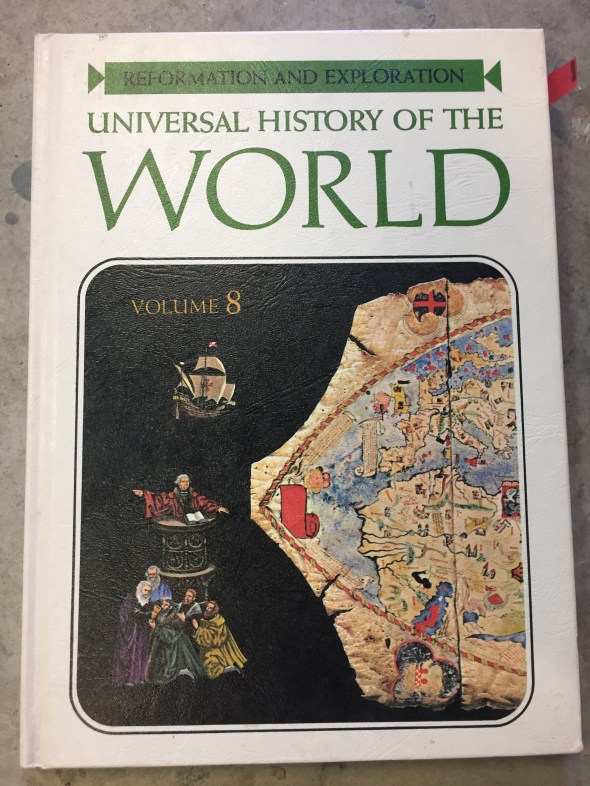
Beloved Woman of Justice
Posted: July 11, 2018 Filed under: America Since 1945, art history Leave a comment
Cool statue I came upon in Knoxville, TN a few months back. 
The Hockney thing at LACMA
Posted: June 2, 2018 Filed under: art history, museum, the California Condition Leave a comment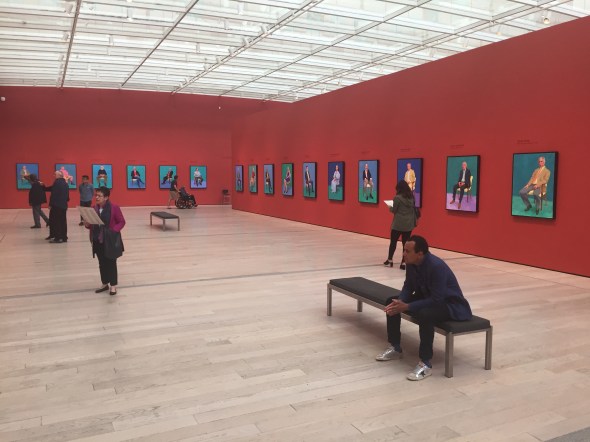
is cool. Eighty-two portraits in one room, creates a neat effect. Worth a visit if you’re in the area. 
 Helytimes


#/media/File:Durer_self_portarit_1500_sig_crop.jpg)

#/media/File:Portrait_of_Isabella_of_Portugal_van_Eyck.jpg)

_01.jpg)

