Breaking The Maya Code
Posted: April 8, 2015 Filed under: trips Leave a comment
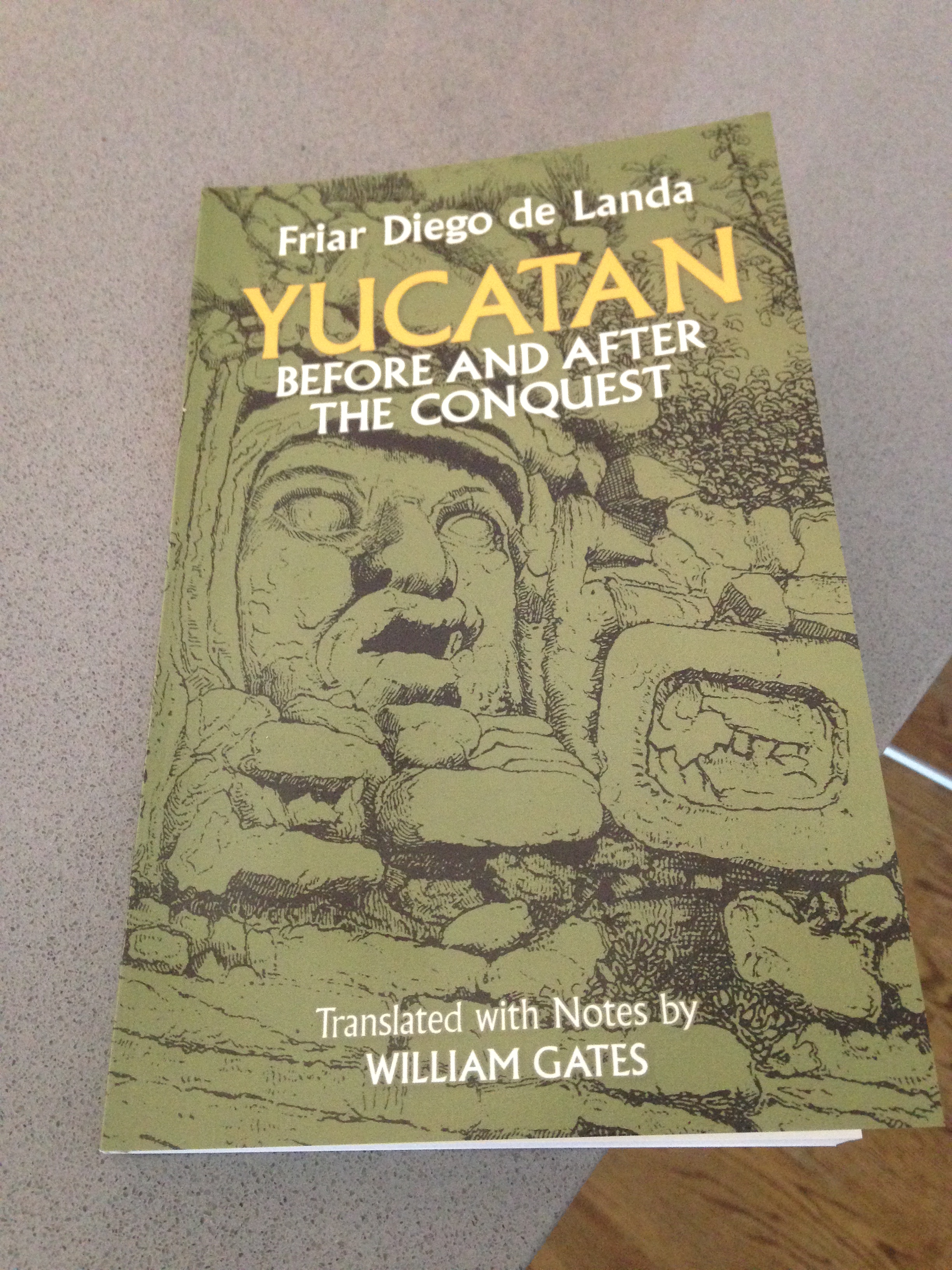
Franciscan monk Diego de Landa arrived in the Yucatan in the year 1541. He wrote up a description of the Mayan people he found there. He says:
These people also used certain characters or letters, with which they wrote in their books about the antiquities and their sciences; with these, and with figures, and certain signs in the figures, they understood their matter, made them know, and taught them. We found a great number of books in these letters.
So: what did he do next?
Do you guess made put together a fantastic collection for posterity?
The answer is:
Since they contained nothing but superstitions and falsehoods of the devil we burned them all, which they took most grievously, and which gave them great pain.
What kind of jackass shows up in a place and the first thing he does is burn all the books? Even fellow missionaries thought de Landa was a little much.
To look at it from his perspective though? Just for one second? In his mind he was in a jungle where every single person was worshipping idols or demons or maybe even the Devil himself and bound for fiery Hell unless by a miracle their souls could be saved.
Supposedly — who knows if this is true, but this is a story — on like his first day in the Yucatan he was walking out in the sticks when he interrupted a human sacrifice, and the whole thing freaked him out.
Anyway: the total number of Mayan books that survived – codices is the more accurate word, I’m told, because they’re not bound like books exactly — the total number of Mayan codices is three. Maybe four. Dresden, Madrid, Paris, named for the city that had the dusty library where they were found. Maybe Grolier is authentic too, I refuse to weigh in, Grolier is named for a private club of book-collectors in Manhattan where it was exhibited after it was, allegedly, found in a cave in the 1970s.
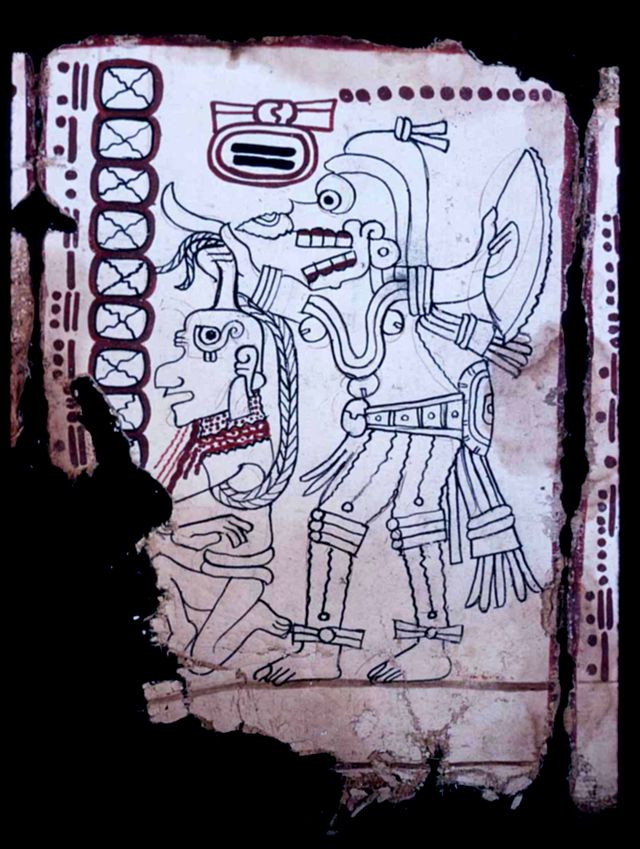
The Grolier Codex. Suspicious.
Each of the codices has some amazing backstory. The Dresden Codex was underwater for awhile.
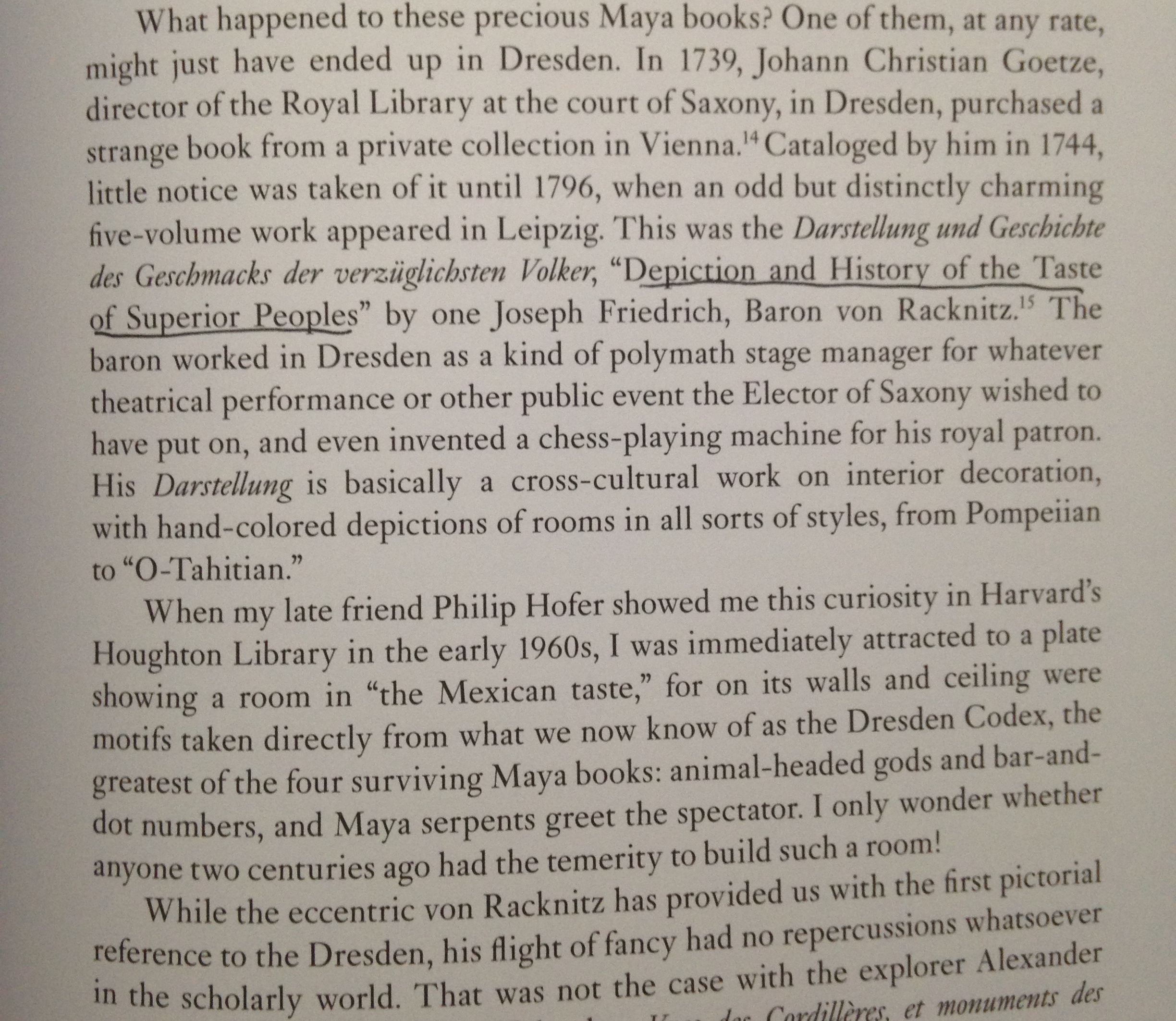
The story of how they figured out how to read Mayan is great. A bunch of wacky geniuses take on the world’s hardest crossword puzzle, where new clues are hidden in the jungle might be the logline.

The story is well told in this book.
Virtually everybody involved was some kind of lunatic: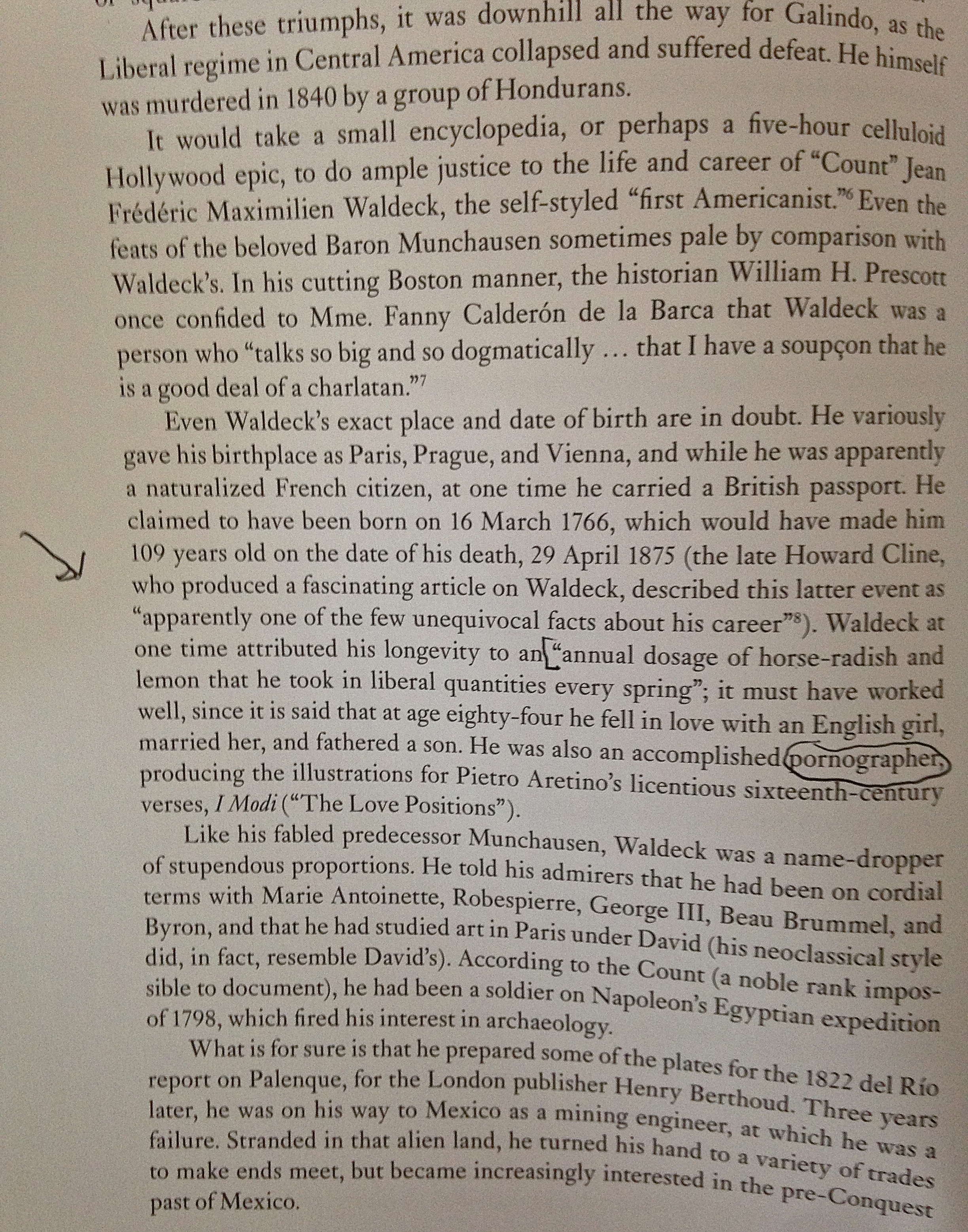

Now that’s the way to go!
How about Cyrus Thomas?
Or amateur linguist Benjamin Whorf?:
(Don’t think for one second, by the way, that Whorf was letting all this distracting from his insurance work. From wiki:
He was particularly good at the job and was highly commended by his employers. His job required him to travel to production facilities throughout New England to be inspected. In one anecdote his arrival at a chemical plant is described in which he was denied access by the director because he would not allow anyone to see the production procedure which was a trade secret. Having been told what the plant produced, Whorf wrote a chemical formula on a piece of paper, saying to the director: “I think this is what you’re doing”. The surprised director asked Whorf how he knew about the secret procedure, and he simply answered: “You couldn’t do it in any other way.”
Another famous anecdote from his job was used by Whorf to argue that language use affects habitual behavior. Whorf described a workplace in which full gasoline drums were stored in one room and empty ones in another; he said that because of flammable vapor the “empty” drums were more dangerous than those that were full, although workers handled them less carefully to the point that they smoked in the room with “empty” drums, but not in the room with full ones. Whorf explained that by habitually speaking of the vapor-filled drums as empty and by extension as inert, the workers were oblivious to the risk posed by smoking near the “empty drums”
Whorf got himself mixed up in the Hopi Time Controversy, a dispute about whether the Hopi language suggests a whole other way of conceiving/perceiving time, whether the Hopi walked around in some tripped-out timeless cognitive condition.
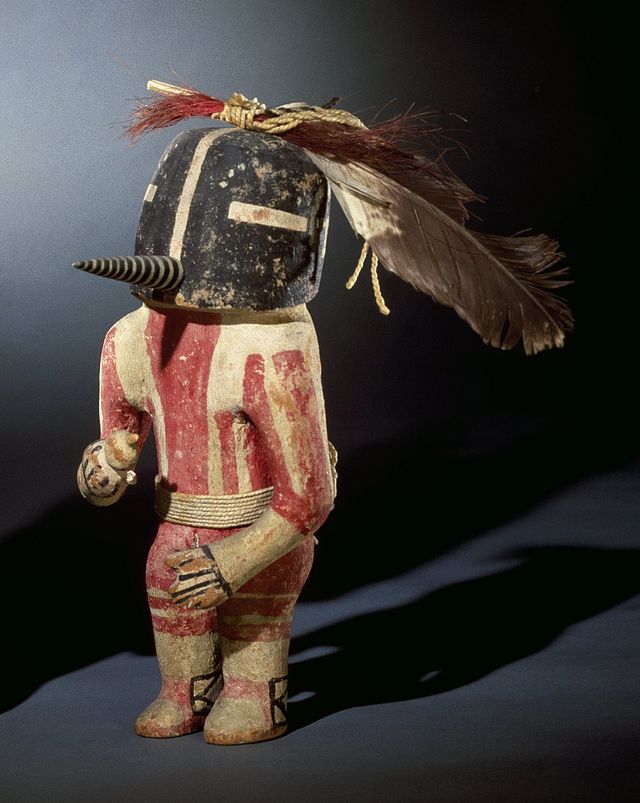
As I know many Helytimes readers are quite tired of that subject let’s just agree it’s pretty badass to have your own law in Uto-Aztecan linguistics and go back to Coe.
How about another enthusiastic amateur, John Teeple, who used to work out the Mayan calendar on his commute?
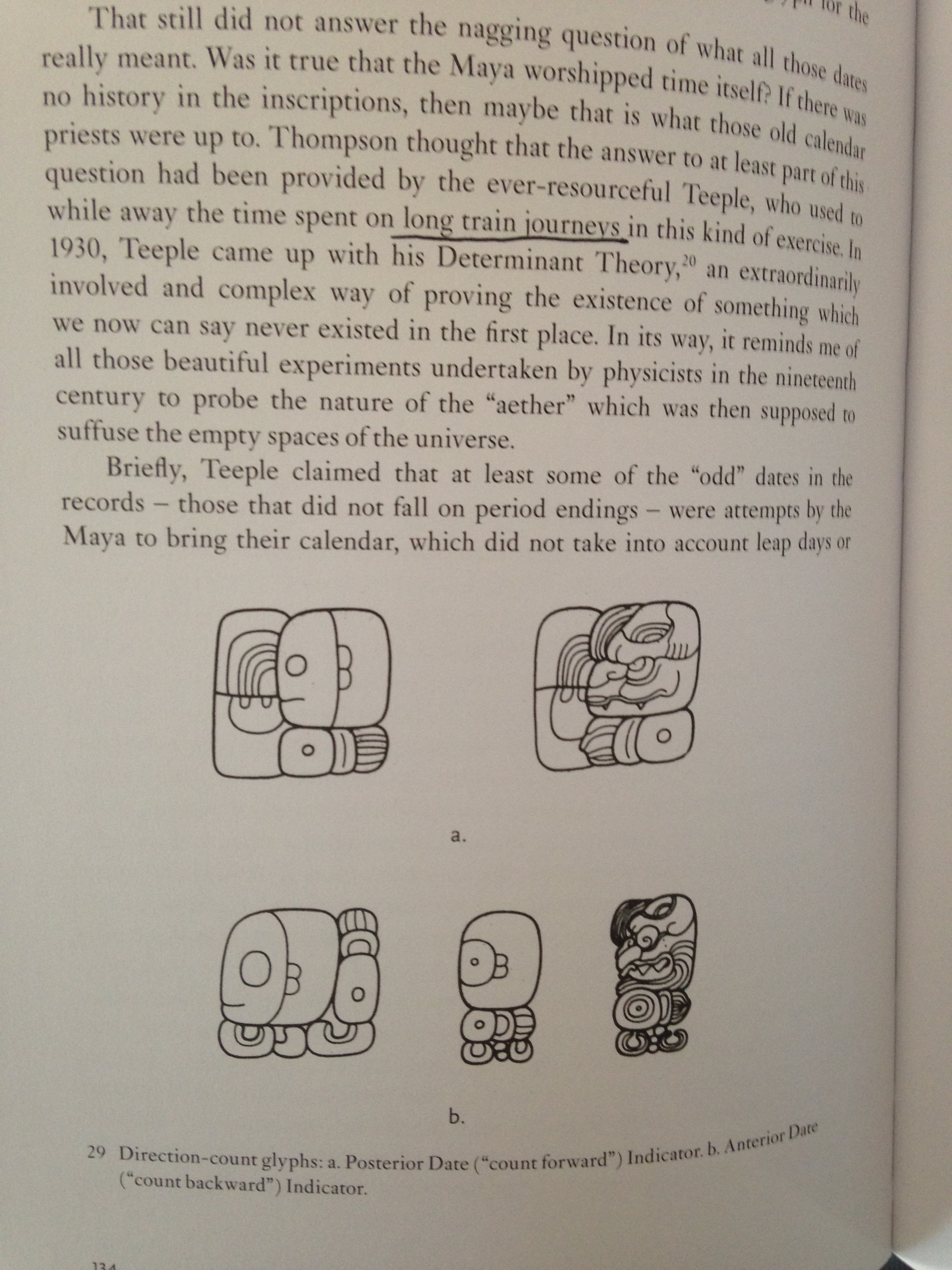
And what do we learn from all this reading? That the Mayans were deeply wack:


Recommended.
Almonds and water
Posted: April 6, 2015 Filed under: California, the California Condition Leave a comment
Written about California water before. If I had ten hours to spare for the round trip I’d drive up to Bishop and retake this photo:

Taken about this time three years ago, I bet there’d be no snow in it now.
This article by Helaine Olsen on The Baffler seemed insightful to me:
Barely mentioned was the fact that the clueless wealthy might just as well go ahead and turn on the taps—let ten thousand golf course bougainvillea bloom. They aren’t the problem, or not much of the problem.
Listen up: California’s agricultural sector uses about 80 percent of the state’s water. As Mother Jonesreported, it takes one gallon of water to grow a single almond, and nearly five gallons to make a walnut edible.
But, hey, Governor Brown says those almonds and other produce grown in California aren’t living large. That’s why agriculture was all but excused from his edict. “They’re not watering their lawn or taking long showers,” Brown told ABC’s This Week, of the farmers. “They’re providing much of the fruits and vegetables of America.”
Nuts: Too tasty to fail?
The ritual shaming of the public, in which politicians blame us for their failures, seems like democratic politics in reverse. And the bigger the crisis, the greater the gall. For example, as we all know but few care to remember, the United States recently went through a financial crisis. Banks made massively leveraged bets that didn’t pay off. Complicated, risky financial innovations were presented as safe by people and institutions all of who should have known better. Subprime mortgages were pushed and promoted, often under false pretenses. Credit was offered up to Americans, many of whom took it because they were told it is was a good idea, and cheap, and, anyway, their incomes weren’t keeping up with the cost of housing, healthcare, and education and they needed to get money from somewhere, dammit.
Alex Tabarrok saying similar things on Marginal Revolution:
The NYTimes has an article on California’s extreme water drought with the usual apocalyptic imagery (see the video especially):
California is facing a punishing fourth year of drought. Temperatures in Southern California soared to record-high levels over the weekend, approaching 100 degrees in some places. Reservoirs are low. Landscapes are parched and blighted with fields of dead or dormant orange trees.
The apocalyptic scenario needs to be leavened with some basic facts.
California has plenty of water…just not enough to satisfy every possible use of water that people can imagine when the price is close to zero. As David Zetland points out in an excellent interview with Russ Roberts, people in San Diego county use around 150 gallons of water a day. Meanwhile in Sydney Australia, with a roughly comparable climate and standard of living, people use about half that amount. Trust me, no one in Sydney is going thirsty.
So how much are people in San Diego paying for their daily use of 150 gallons of water? About 78 cents. As Matt Kahn puts it:
Where in the Constitution does it say that the people of California have the right to pay .5 cents per gallon of water?
Water is such a small share of most people’s budgets that it could double in price and the effect on income would still be low. Moreover, we don’t even have to increase the price of water for residential or industrial uses. As The Economist points out:
Agriculture accounts for 80% of water consumption in California, for example, but only 2% of economic activity.
What that means is that if agriculture used 12.5% less water we could increase the amount available for every residential and industrial use by 50%–grow those lawns, fill those swimming pools, manufacture those chips!–and the cost would be minimal even if we simply shut down 12.5% of all farms.
Moreover, we don’t have to shut down that many farms, we just have to shut down the least valuable farms and use water more efficiently. If you think water is cheap for San Diego residents it’s much cheaper for
farmers. Again from The Economist:
Farmers flood the land to grow rice, alfalfa and other thirsty crops….If water were priced properly, it is a safe bet that they would waste far less of it, and the effects of California’s drought—its worst in recorded history—would not be so severe.
Even today a lot of CA agriculture uses the least efficient flood irrigation system.
According to data from the state Department of Water Resources, 43 percent of California farmland in 2010 used some form of gravity irrigation, an imprecise method that uses relatively large amounts of fresh water and represents a big opportunity for water conservation.
The NYTimes article is worried about farm loss:
“I’m going to fallow two acres of my land immediately,” said Geoffrey C. Galloway, who has a citrus grove on his ranch near Porterville, in the Central Valley. “Depending on how the season goes, we may let another four go.”
…Last year, at least 400,000 acres went unplanted, and farmers reported losses of $2.2 billion, said Mr. Wenger, the head of the farm bureau, who owns a farm in Modesto. “This year we could see easily 50 percent more,” he said. “We are probably going to be looking at well over a million acres.”
California has approximately 25 million acres of farmland. And while our bodily fluids might be precious not every acre of farmland is. A few less acres of farmland producing low value crops in return for a lot more water is a very acceptable tradeoff.
Addendum: Low prices are not always wasteful. David Zetland’s short primer on water policy is available for free as pdf. Matt Kahn’s Fundamentals of Environmental and Urban Economics is on Amazon for Kindle for just $1. Both are very good.
I have a personal, untested theory of a major factor in the California water problem:

The boom in almond milk consumption. Almond milk is made of 1) water and 2) water intensive almonds.
Think Piece About Mad Men
Posted: April 6, 2015 Filed under: America Since 1945, writing 1 Comment
Mad Men is great.
The writing is great.
The directing is great.
The actors are good.
The set decorating is great. Really colorful.
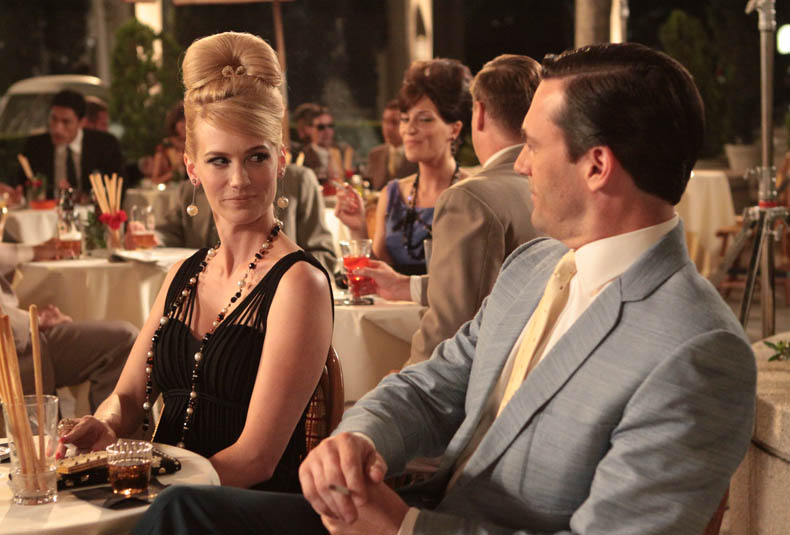
The main guy is cool and I like the stuff he does.
The other guys are funny.
The girls are hot and wear cool clothes.

There’s good stories, with surprises.
Sometimes I don’t know what’s happening but usually I figure it out or I just kinda go along.
So, I think, Mad Men is great.
How big was Mexico City in 1519?
Posted: April 5, 2015 Filed under: trips Leave a comment
Another possible interpretation is that “she” represents the Aztec main temple, the Templo Mayor. In Mesoamerican literature, the temple is often referred to as “she,” since both men and women were sacrificed there and a considerable part of the main temple was dedicated to the Aztec rain god, who is often described as a female. The temple was uncovered in 1978 (three years after the album was released) after being buried beneath Mexico City for nearly 500 years.
On a more cynical note, in Jimmy McDonough’s biography of Young, entitled Shakey, the author asked Neil if his songs were autobiographical. Young replied, “What the fuck am I doing writing about Aztecs in “Cortez the Killer” like I was there, wandering around? ‘Cause I only read about it in a few books. A lotta shit I just made up because it came to me.”[1]
Reader Amanda W. in Connecticut writes:
Much as I enjoyed your post about A Bachelor’s Mexico I think we’re all wondering: why did you need the letters of Cortes?
Great question Amanda. I needed them because I was writing about Mexico City. And I was trying to figure out the size of the city that was there before, Tenochtitlan.
I got distracted reading the incredible recollections of Cortes expedition veteran Bernal Diaz, but let’s pick up:
Tenochtitlan:

from the mural at the Museo Nacional de Antropologia
Tenochtitlan was the great city of the… well, Aztec is not the preferred nomenclature anymore. The great Charles Mann calls the people in charge of Tenochtitlan “the Triple Alliance.” They might’ve called themselves “Mexica.”
In the middle of a fifty-some square mile lake, there was this massive city.

Here’s Diego Rivera’s mural of it, which is in the Palacio National I think. Stole this photo from http://culturacolectiva.com/influencias-prehispanicas-en-la-obra-de-diego-rivera/
How many people lived in Tenochtitlan?
212,500, says Professor Michael E. Smith of SUNY Albany in this article in the Journal Of Urban Studies.
But even he counsels cautious. He takes awhile to pause and talk about rank-size analysis:
In the 1950s and 1960s, geographers developed the technique of rank-size analysis to study the sizes of cities within nation-states.33 An empirical pattern was observed in a number of areas of the world in which the second-largest city has roughly one-half the population of the largest city, the third-largest city has one-third the population, and so on down the size scale. This distribution, known as the log-normal distribution, is illustrated by plotting city size (Y axis) against rank (X axis). When these variables are graphed using logarithmic scales, the log-normal distribution is expressed as a declining straight line. Two major kinds of deviations from the log-normal pattern have been noted for various nations and regions: primate distributions (in which the largest city is “too large” for the log-normal pattern) and convex distributions (in which there are “too many” very large cities). Much of the literature on rank-size analysis is devoted to exploring the causes and implications of deviations from log-normal distributions.34 Archaeologists seized on rank-size analysis as a potentially useful tool for analyzing settlement patterns, and they joined the discussion of the determinants of the various rank-size distributions. Most applications by archaeologists have been conducted on a regional scale, such as the Valley of Oaxaca and the Basin of Mexico, or the plains of Mesopotamia.35 A number of archaeologists went beyond the limits of the method to address the distribution of the sizes of tiny settlements that were not central places.36 To summarize the findings of geographers, anthropologists, and archaeologists, log-normal distributions tend to be found in large urban systems with a long history of commercial and demographic interaction among central places.
The great Charles Mann again:
Tenochtitlan dazzled its invaders – it was bigger than Paris, Europe’s greatest metropolis. The Spaniards gawped like yokels at the wide streets, ornately carved buildings, and markets bright with goods from hundreds of miles away. Boats flitted like butterflies around the three grand causeways that linked Tenochtitlan to the mainland. Long Aqueducts conveyed water from the distant mountains across the lake and into the city. Even more astounding than the great temples and immense banners and colorful promenades were the botanical gardens — none existed in Europe. The same novelty attended the force of a thousand men that kept the crowded streets immaculate. (Streets that weren’t ankle-deep in sewage! The conquistadors had never conceived of such a thing.)

Open-air model of Tenochtitlan, in the Zocalo of Mexico City, so what was once more or less dead center on this model. found at http://www.mexicolore.co.uk/aztecs/home/aztecs-have-been-called-many-things
Cortes himself said:
The great city of Texmixitan is built on the salt lake, and from the mainland to the city is a distance of two leagues.
(a Spanish league at that time was 2.6 miles, the word originally meant the distance a man could walk in an hour).
The city is as large as Cordoba or Seville.

16th century Seville painted by Alonso Sanchez Coello maybe?
Cortes and his guys arrived in Tenochtitlan in 1519. Two years later the whole place was destroyed.
Brief Digression about William Prescott:
The first American — talking United States American here — to really write a history of Cortes and the conquest of Tenochtitlan was William Prescott.

Prescott’s eyes were fucked up because he got hit with a crust of bread in the eyeball during a food fight when he was at Harvard. As far as I can tell he never went to Mexico. But he had been to Spain, he was pals with aristocratic Spaniards who sent him “eight thousand sheets of manuscript beautifully copied from the Spanish archives, all the original documents, diaries, letters, never yet published, never seven seen.”
So says Van Wyck Brooks, who describes Prescott like this:
He had an extravagant love of jolly parties. He talked with a joyous abandon, running over with animal spirits, laughing at his own inconsequences, with always some new joke or witty sally. He could be happy in more ways, in spite of his defective eyes, and happier in every one of them, than anyone else his friends had ever seen. One met him in the street, with his rosy air, with his gay blue satin waistcoat, tall, graceful, with light brown hair and a clear and ruddy complexion… One of his relatives, meeting him on the street, not long before his book appeared, urged him to undertake some serious task. It would be so good for him. It would be more respectable than leading this unprofitable life.
… He did not like to get up in the morning, and had to instruct his servant, the faithful Nathan, to pull away his bed-clothes. He did not like to work. He had to make bets with his secretary that he would write a certain number of pages or carry out some other resolution… When he broke too many resolutions, he introduced into his reckoning sets of fixed exceptions, amendments on amendments; then he scored them all off and opened a new account. By this means, and others, he made himself a causist, able to comprehend the Spanish mind.
Anyway. Prescott wrote a monster History of Ferdinand and Isabella, and then he took on the History Of The Conquest of Mexico.
 Here’s what Prescott has to say about Tenoch, which gives a pretty good sense of his vibe:


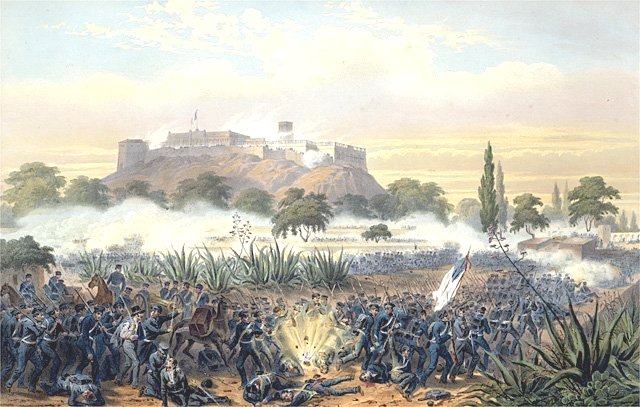
Prescott’s history came out in 1843. When the US Army stormed Mexico City three years later a bunch of the officers had copies with them.
I prefer Bernal Diaz:
who rode with Cortes and saw Tenochtitlan with his own eyes in 1519. Fifty years or so later he dictated what he remembered.

Here’s what Bernal Diaz says he saw when they crossed the causeway into Tenochtitlan:
 At first things were groovy. Montezuma took them to a banquet:

Mexican food:

In Tenochtitlan, they had their own Hollywood:

What really impressed Diaz though was the shopping:

One unique item:

Montezuma took them to the top of the temple for a view:

Well, things went downhill from there.
If you pull out some illustrations from the Florentine Codex, you can read it like a comic book.
Things fall apart, basically:

Montezuma gets killed — Diaz says by his own people while he was trying to give a speech:

They chucked his body:

Cortes and his guys got driven out of the city.

The Spanish are driven out into the cactus lands:
 But they round up allies:
 Meanwhile, the Aztecs get smallpox and everybody dies:


Diaz says:

There was a guy, Diaz says, who claimed to Cortes that he knew how to build a catapult. Turns out he didn’t. Cortes was piiiiiiiiiiiiissed.
More battles.

Maybe ninety days of continuous fighting, Diaz says.

This sounds horrifying:


Geez. Even Diaz, who’d seen plenty already, says he came pretty close to losing it:


In the end, Diaz’s team won. The aftermath:

Why did Bernal Diaz write this book? I don’t know enough about 16th century Spanish or Latin American publishing to speak to that. He says at the beginning that he’s poor and maybe he can leave something to his descendants this way. Maybe it was a like a pop war hero bestseller like American Sniper or Lone Survivor.
Here’s what he says happened to Cortes:

Very last words in the book:

I wonder if he was.
That’s the story of Tenochtitlan. On its ruins arose Mexico City. The big cathedral is right on top of where the rubble of the Templo Mayor was buried.

The cathedral’s off-center, sinking, because the ground underneath is soft. There was a fifty mile lake around it once.

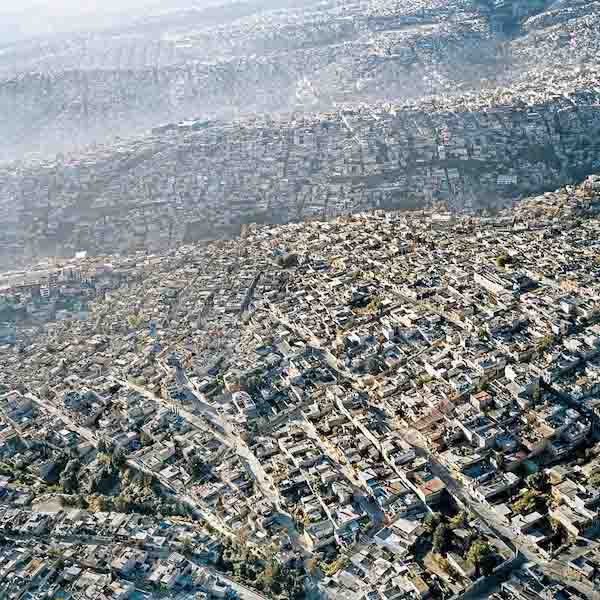
Mexico City by Pablo Lopez Luz, found here: http://discoveringice.com/travels/north-america-mexico/41-fun-and-interesting-facts-about-mexico-city.html
Thanks for writing, Amanda!
(I have no idea if I’m allowed to put up whole chunks of books like this without permission. The Florentine Codex is online and free here, and if there are any descendants of Bernal Diaz out there lemme know, I’ll paypal you a couple bucks.)
If you are jonesin’ for Game Of Thrones
Posted: March 26, 2015 Filed under: trips Leave a commentmay I recommend:

Never read the Game Of Thrones books. Don’t know why, that specific kind of nerddom is not my kind. I bet George RR Martin has read this book. It is fucking incredible.
You are very busy so let me summarize it for you. I’m reading the translation by JM Cohen:

(I’m about to quote pretty generously from it. If any of the attorneys who read Helytimes could advise me on the legality of that, it’d be great. I think it’s ok, because I’m not making any money from this, and the whole point is to encourage you to buy this book.)
Bernal Diaz was eighty-four, blind, on an estate in Guatemala when he decided to dictate what he remembered from when he was twenty-seven, in 1519, when he went along with Hernan Cortés on an expedition to the interior of Mexico.
This is the best source, as far as I can tell, for what happened. Cortés wrote letters to the king of Spain, but if you read them you won’t come away with the impression you can trust him.
There exists also a sort of “Aztec” (not the preferred nomenclature) source: the Florentine Codex:
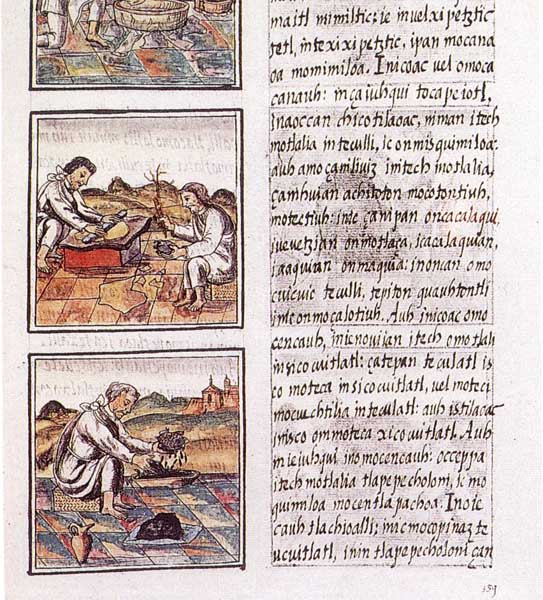 which has its own insane story, it was written by a Franciscan friar who learned Nahautal and went around listening to and summarizing oral histories. So this is written by a Spanish guy, too, history is written by the winners, but at least he was asking around.
I’m gonna steal from the drawings inked into the codex. If you want you can look at it yourself here or here:

Diaz says, when they landed:
There were five hundred and eight not counting the ships’ captains, pilots, and sailors, who amounted to a hundred,
and
sixteen horeses or mares, the latter all fit to be used for sport or as chargers.
Some Campeche Indians saw them and shouted castilan! castilan!
Like, “Castilian”? What the fuck? How did they know where they were from?

The natives communicated somehow that there were other Spanish people there.
So Cortés wrote down a letter, and bribed the natives with beads to bring it to them.
Some days later there arrived a man in a canoe:
As he leapt ashore, [he] exclaimed in inarticulate and clumsy Spanish: “God and the blessed Mary of Seville!”
This was Jeronimo de Aguilar. He was a Franciscan friar and he had survived a shipwreck, eight years before. Maybe fifteen other people had survived, too, including two women:
He, his companions, and the two women had then got into the ship’s boat, thinking they could reach Cuba or Jamaica. But the currents were so strong that they were thrown ashore in this country, where the Calachiones of the district had divided them up, sacrificing many of his companions to their idols. Some too had died of disease, and the two women only recently of overwork, for they had been made to grind corn. The Indians had intended to sacrifice him, but one night he had escaped and fled to that Cacique with whom he had been living ever since. Now, he said, the only survivors were himself and a certain Gonzalo Guerrero.

When Aguilar got Cortes’ letter he was ecstatic. He sent a letter to Guerrero, who lived several villages away.
Guerroro wrote back (paraphrasing): I have a face tattoo now. I have an Indian wife, and half-Indian kids. I’m with these guys now.
Aguilar says this is true, Guerroro was actually famously respected for his courage. Aguilar wrote him again, saying like “but what about your Christian soul?” Guerrero didn’t write back to that.
When Cortés heard this he exclaimed: “I wish I could get my hands on him. For it will never do to leave him here.”
Years later, it’s said, the dead body of Guerrero was found after a battle in Honduras. He got shot fighting with the local tribes against the Spanish.
Aguilar was happy to go with his countrymen. He told them how he had been entirely true to his vow of chastity even despite the local chief tempting him:

So says Washington Irving.
Aguilar could translate the local languages. The Spanish unloaded their ships:
When the horses came ashore they were very stiff and afraid to move, for they had been on board for some time. Next day, however, they moved quite freely… The best horses and riders were chosen to form the cavalry and little bells were attached to the horses’ breastplates. The horsemen were ordered not to stop and spear those who were down, but to aim their lances at the faces of the enemy.

Down the coast, they were spied on and then attacked by, says Diaz, the locals. This built into a massive battle:
I remember that whenever we fired our guns, the Indians gave great shouts and whistles, and threw up straw and earth so that we could not see what harm we had done them. They sounded their trumpets and drums, and shouted and whistled, and cried “Alala! Alala!”*
Just at this moment we caught sight of our horsemen. But the great host of Indians was so crazed by their attack that they did not at once see them approaching behind their backs…
When it was over, we bandaged our wounded with cloths, for this was all we had, and sealed the wounds of our horses with fat from the corpse of an Indian that we had cut up for this purpose. We then went to look at the dead that were lying about the field, and found more than eight hundred, most of whom had been killed by sword-thrusts, and the rest by cannon, muskets, or crossbows.
On the Spanish went.

On the morning of March 15, 1519 [Cohen says this date is incorrect, but that’s what Diaz says]:
many Caciques and important persons came from Tabasco and the neighboring towns and paid us great respect. They brought a present of gold, consisting of four diadems, some ornaments in the form of lizards, two shaped like little dogs and five like ducks, also some earrings, two masks of Indian faces.
These gifts were nothing, however, compared to the twenty women whom they gave us.
Among these women was one who ended up with the name Dona Marina. Diaz says you could tell just by looking at her that she was a princess and a “mistress of vassals,” though he doesn’t explain that.
Cortés doled these women out to his top officers. He gave Dona Marina to Alonso Hernandez Puertocarrero, but when he went back to Spain, Cortés himself impregnated her.
Dona Marina could speak several of the local languages, including one Jeronimo Aguilar understood, so between them they could translate. Over and over again she warned Cortés about traps he was going to fall into, plots he wasn’t seeing. Diaz says he’s sure he and all the rest of the Spanish would’ve been killed without her.

Cortes asked them where they procured their gold and jewels, and they answered from the direction of the sunset, saying “Culua” and “Mexico.”
Onward they go. A scout reports unsettling discoveries:


Some Indians come up to them to more or less surrender, and offer their allegiance. They’d decided Cortés, and the new guys, must be better than the man who was boss for five hundred miles, Montezuma:


Some of Cortés’ guys wanted to get back on the ships and go back to Cuba. “We’ve done enough!” was more or less their argument.
Cortés says, “Fine. Go ahead. Get on a ship. I’m not stopping anybody.” They’re kinda confused. Nervously a few of them get on a ship. They start getting ready, and are just about to leave, when Cortés drags them all back. Cortes is like “you assholes. You’re not going anywhere.” Just to make sure, says Diaz:

It’s time to go. Cortes gives a final speech, and he rounds up 200 of his new allies to help:

Time to go inland:


Along the way, they meet the locals, who all tell them more about Montezuma:

Scary warnings:


Different methods of religious conversion are discussed, and the terrifying hound:

Another battle:

Strange discoveries, the bones of a giant:
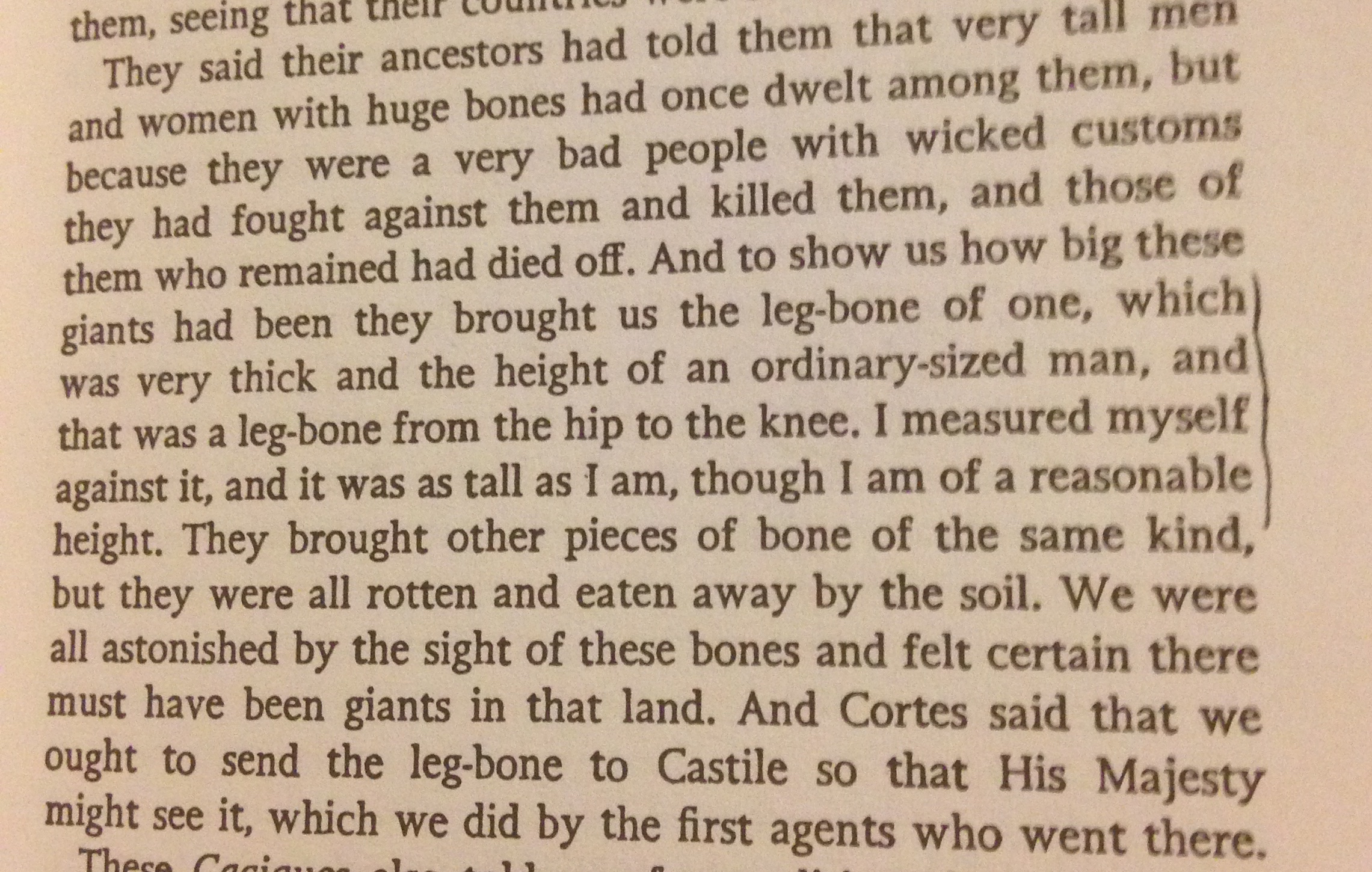 Some of Cortes guys’ want to quit. To which he says, basically, “we ain’t going back”:


Montezuma, meanwhile, was freaking out:
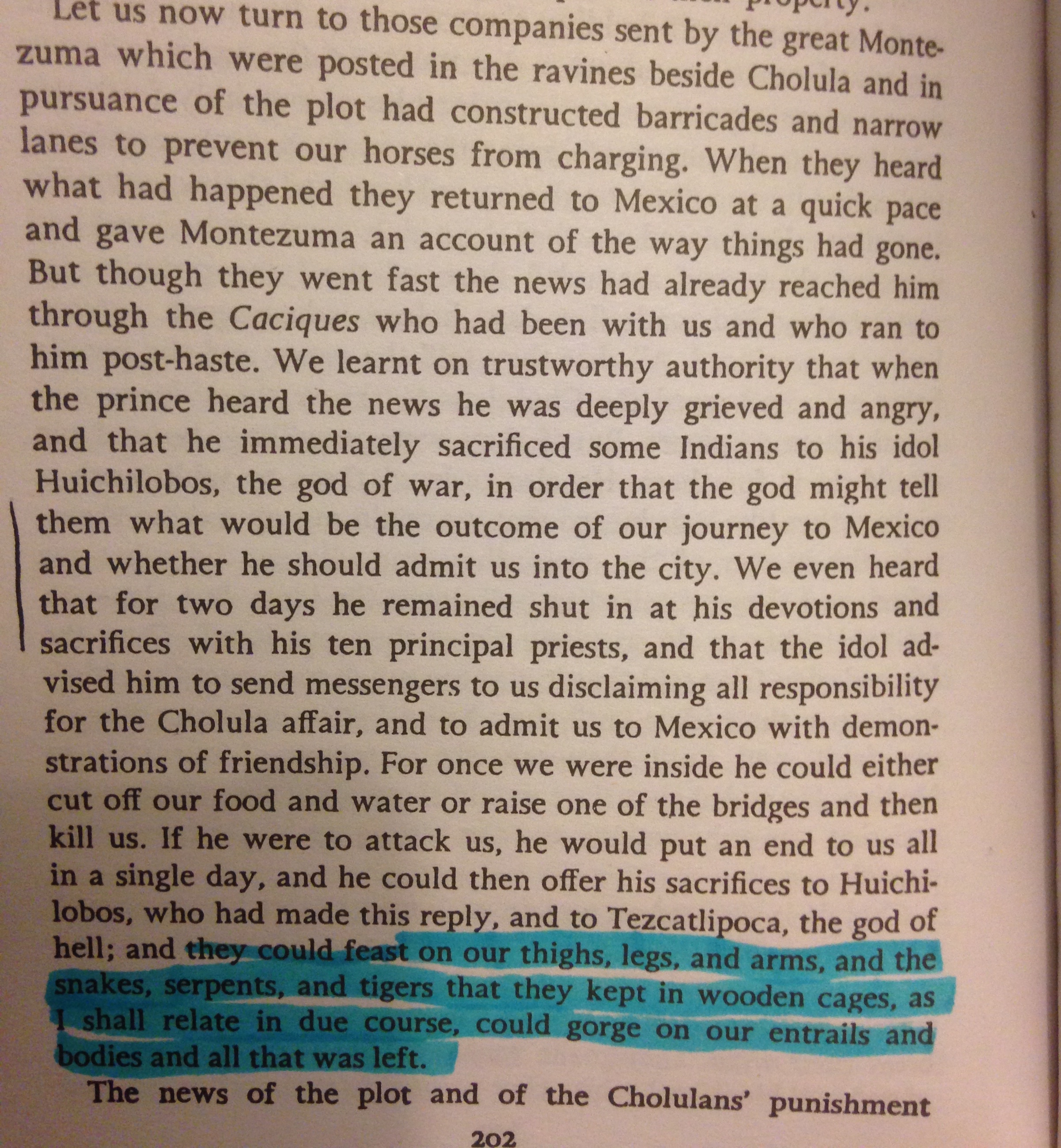

Diaz says they got to the town of Cholula – maybe twenty thousand people, who are not sure what to make of what’s happening. The Spanish round up the nobility of the town in the central square, and then, on the signal of a gunshot, they start massacring them all.

Diaz says this was all justified:


On the Spanish go. By now they have a growing mob of natives with them.
They come to a fork in the road. One side is blocked by pine trees. That’s the road that leads to Montezuma’s capital.

The Spanish climb over the ridge. And when they saw what was down there, Diaz says:
We were astounded… Indeed, some of our soldiers asked whether it was not a dream… it was all so wonderful that I do not know how to describe this first glimpse of things never heard of, seen or dreamed of before.
Next time on helytimes: the city of Tenochtitlan.

*Several times in his letters Cortés describes native temples as “mosques,” mezquilas. Kind of interesting. The Spanish had been fighting the Islamic Moors of North Africa for seven hundred years. Recent historians of all this consider this “Reconquista” important context for how Cortés and his guys did their thinking.
Bachelor’s Mexico
Posted: March 22, 2015 Filed under: Mexico, South America, trips Leave a comment
Helytimes readers – hey guys – will no doubt have noticed a decline in the quantity (but not quality?) of posts here lately. That’s because the deadline for my book keeps creeping up on the calendar.
That project’s got me pretty well busy, among other things with research. Today, for instance, I stopped by the Central Library in downtown LA to get my hands on a copy of Hernan Cortes’ letters to the Spanish king.
While I was in the “history of Mexico” section, a colorful volume attracted my eye:

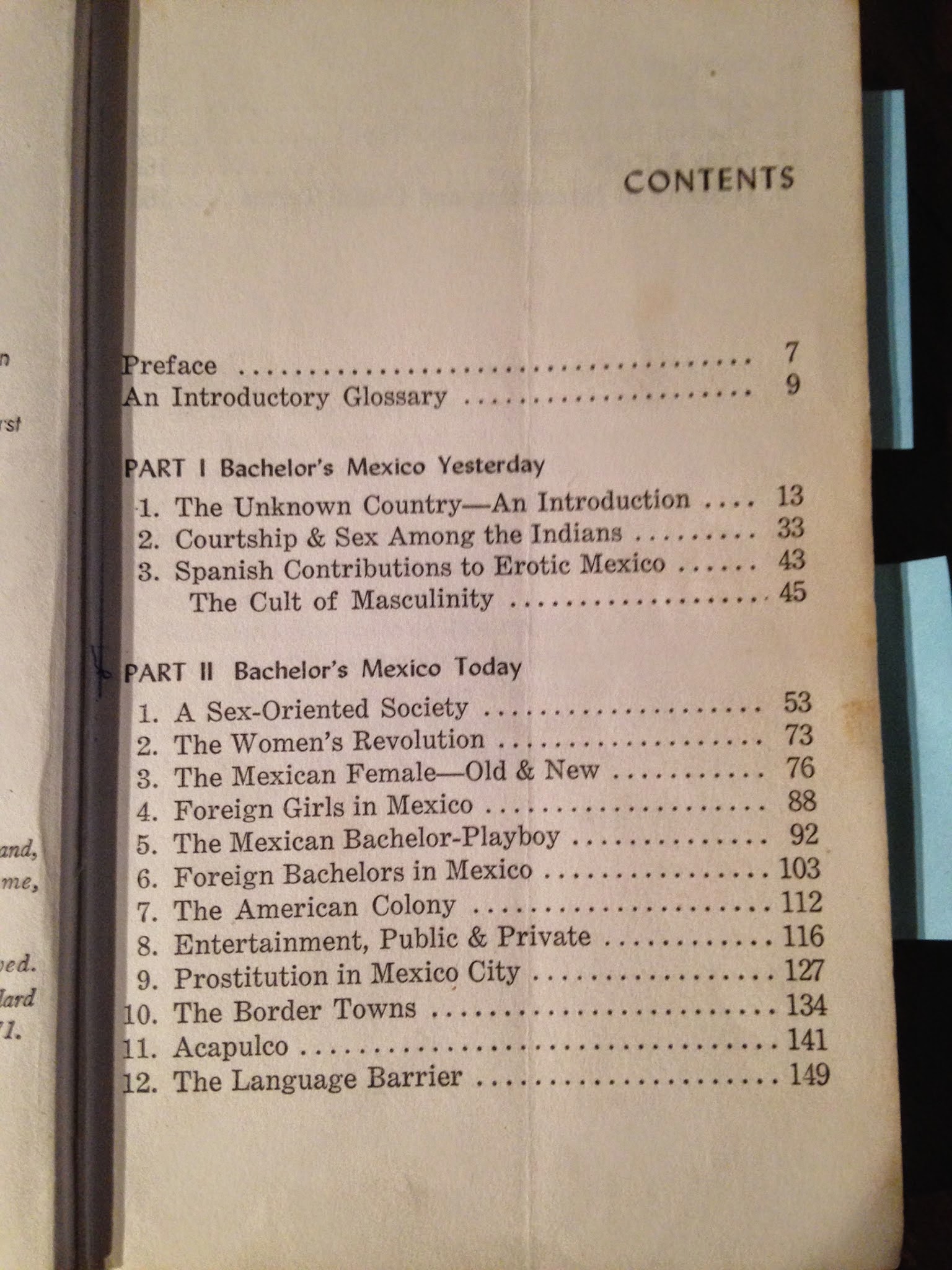
Most interesting might be the handwritten edit I found inside:

Other books by Boye de Mente:

From his wikipedia page:

De Mente with Ben Carlin during their crossing of the Pacific Ocean by amphibious vehicle in the late 1950s.
The Ragged Antique Phonograph Program
Posted: March 18, 2015 Filed under: music Leave a commentReading this article about The Best Show:
Like WFMU itself, which takes pride in its esotericism (the lead-in to The Best Show for years was The Ragged Antique Phonograph Program, which played only 78s or cylinders on period equipment), The Best Show is a cult phenomenon. Its most hard-core listeners can literally become card-carrying fans: “Friends of Tom” are issued membership cards signed by Scharpling. For years, finding out about the show took some digging. Chicagoans who wanted to hear it had to visit the tristate area or find one of five CDs that Scharpling and Wurster self-released between 2002 and 2007. That finally changed in 2008, when they added a podcast.
and was like “haha what a hilarious gag from Scharpling and Wurster. That’s just the kind of well-observed satire of the excesses of eccentric fandom they specialize at.”
But no, apparently, that really was the lead-in. Here’s a photo of the hosts from their website, where you can listen to probably over a hundred episodes.

This world is truly amazing. I wonder if there’s a big future in documentary or “reality” comedy, that’s not making anything up but just observing and capturing the absurdities of what exists, the way all my friends watch documentaries now? The trouble there might be it’s very difficult to construct a documentary that is purely funny without a strong dose of some pathetic sadness or hopefulness or something — you can’t get undiluted laughs out of unconstructed reality? If the goal is simply, “watch something that makes me laugh” might be hard to capture.
Anyway, best of luck to Scharpling in continuing Best Show:
James Joyce: hot or not?
Posted: March 15, 2015 Filed under: Ireland, writing Leave a comment
Talking the artist as a young man, not the old blind guy. And, of course, bae (rnacle):

How about this eerie family portrait? bottom left is daughter Lucia, who got dance lessons from Isadora Duncan, fell in love with Samuel Beckett, and had Jung for a shrink (lotta good it did her):
 Top right is son Giorgio. “He spent his days in an alcoholic haze,” says The New Yorker.
Book I’m always recommending
Posted: March 11, 2015 Filed under: America Since 1945, writing 2 Comments
Bill James you may know, if you read Moneyball or follow baseball. In the 1970s, while working as a nighttime security guard at a Van Camp’s pork and bean factory in Kansas, he spent his spare time researching interesting questions about baseball, writing them up, and self-publishing them:
A typical James piece posed a question (e.g.,“Which pitchers and catchers allow runners to steal the most bases?”), and then presented data and analysis written in a lively, insightful, and witty style that offered an answer.
Editors considered James’s pieces so unusual that few believed them suitable for their readers. In an effort to reach a wider audience, James self-published an annual book titled The Bill James Baseball Abstract beginning in 1977. The first edition of the book presented 80 pages of in-depth statistics compiled from James’s study of box scores from the preceding season and was offered for sale through a small advertisement in The Sporting News.

Bill James was also the last person from Kansas to be sent to Vietnam — that’s just the kind of trivia he likes to uncover, turn over, and then decide is interesting but irrelevant.

Bill James’ other passion is reading true crime books. In Popular Crime, he rounds up, summarizes, muses on what he’s learned from reading, he says, over a thousand true crime books.
This book has a fantastic table of contents, allowing you to skip about to the crimes that pique your particular interest:


It’s also written in a terrific, casual style, that trusts the reader’s common sense and intelligence. Here Bill James talking about how serial killers get caught, and a fact he’s concluded about serial killers:


Here’s an excerpt on the OJ case – chose this more or less at random to show his style:

A James question from me: why isn’t this book more popular? I think everyone I’ve recommended it to loves it, yet no one seems to have heard of it.
I’ve genuinely considered getting more into baseball just so I could read more of Bill James’ writings. It wouldn’t be right to call his style “amateurish,” but there’s something about it that’s free from professional stiffness, though I suspect it takes years of practice to sound this natural. It’s refreshing, and surprisingly rare. He’s not trying to sound like anything except himself.
Here’s an interview with James on the book conducted by Chuck Klosterman.
Poignant Message
Posted: March 7, 2015 Filed under: Texas 2 Commentson the website of texasindians.com  We found your site very helpful and wish you all the best! Let us know if we can help!
Mountaineering movies on Netflix Instant, ranked.
Posted: March 3, 2015 Filed under: film, mountains 3 Comments
I like watching movies about mountain climbing, and I think I’ve seen all the ones avail on Netflix Instant.
1) Touching The Void
See Touching The Void. One of the best documentaries, period. Incredible story, great twists, so intense but also there’s a lovable semi-schlub who got caught up in things.
2) Beyond The Edge 
Very cool. Doc/reenactment about the first successful Everest ascent. Worth watching just for the fashion, the style on these guys was rad.
 A great story of internal competition as well, as the team members were vying to be the guy who got to make the final ascent. The brash New Zealanders against the stuffy English public school guys. Edmund Hillary and Tenzing such cool examples of calm badassery. Hadn’t occurred to me that Hillary, who in his old age was usually portrayed as a kindly old hero, was also of course an extremely intense, driven, and competitive athlete, more Kobe than Dalai Lama.
There’s lots too on the great John Hunt, who organized the expedition.
Also has some of the clearest visualizations of Everest’s geography I’ve seen. You can really wrap your head finally around, like, where the Khumbu ice fall is.

3) Nordwand/Northface
Some great shots of old school climbing. But it’s set in 1936, it’s in German, and the characters are not not Nazis enough to really get behind.
4) The Summit
Compelling characters, a good story, kind of frustratingly told. Odd editing choices botch a compelling narrative of how fuckup x fuckup x fuckup + misfortune = catastrophe.
5) Everest IMAX
Some cool shots I guess but this is elementary stuff. We’re past this.
Would most like to have on Netflix:
Valley Uprising
The Blue Light
K2. What is this movie? It started as a play?
British House Of Cards
Posted: March 2, 2015 Filed under: actors Leave a comment
I have to credit my bud and debate partner Dave King* with putting me on to the British House Of Cards. Just watch the first two minutes — so wonderfully, insanely British.
* not to be confused with South African businessman, fraudster, Rangers football club shareholder, and sometime golf caddy Dave King

When was the last time somebody got killed by a wild bear in Los Angeles?
Posted: February 28, 2015 Filed under: animals, the California Condition Leave a comment
Prompted by a recent conversation about the movie Grizzly Man. (Forgot that Timothy Treadwell named one of the bears Mr. Chocolate.)
Andy Sublette, 46.
An experienced bear hunter who hunted and killed many bears, Sublette shot and wounded a bear after being separated from his hunting party near present-day Santa Monica in 1854. He was then mauled but stabbed the bear to death with his knife and with the help of his dog. His dog survived, but Sublette died seven days later due to his injuries.
So says Wikipedia citing Gary Brown’s The Bear Almanac. I wonder if they mean, like, Santa Monica Santa Monica or the Santa Monica mountains (even, like, Malibu).
Anyway. Heard it took the bear an hour and a half to drive back to Silverlake — the 10 was a nightmare!
Gay Hobo Slang
Posted: February 27, 2015 Filed under: America, sexuality, the American West Leave a commentAt Helytimes we love to get submissions for our roving correspondents. Longtime friend of the blog Mat W. sends in this item:
A good many years ago, I was a pretty faithful reader of Alex Ross’s blog The Rest Is Noise (title later cannibalized for his book, which got him a MacArthur Genius Grant). In those days I had a pretty boring job and would read almost anything on the internet that made it through the security filter of the company where I worked. A lot of what Ross had to say made little sense since I didn’t (and still don’t) know much about music, but I would still skim the posts and found a few good bits and bobs.
One day, I came across this post:
http://www.therestisnoise.com/2004/10/interesting_pie.html“Gay hobo subculture”!? WHA?! Of course long-time readers of Hely Times may recall Smokestack Adrian, but I was intrigued. At the time, searches of the internet didn’t turn up much. I did learn a little bit more about it in George Chauncey’s great Gay New York, but it offers a pretty light treatment, though the subject of the book, I suppose, required only a glancing discussion.
However, I recently found a great book, called Gay Talk: A (Sometimes Outrageous) Dictionary of Gay Slang. It’s by a guy named Bruce Rodgers, and was published in 1972 (under a different title, I believe). It is GREAT and really reaches back into the pre-Stonewall era for lots of verbal treasures. Guess what a Veronica’s Veil is, you guys!
AND while paging through I found a whole entry on the hobo! Rather than type up the highlights, I’ll just include a picture of the entry for all you candy kids out there.


The (sexy) Epic Of Gilgamesh
Posted: February 26, 2015 Filed under: women, writing Leave a comment

Gilgamesh is crushing it, basically:
Gilgamesh the tall, magnificent and terrible;
who opened passes in the mountains,
who dug wells on the slopes of the uplands,
and crossed the ocean, the wide sea to the sunrise;
who scoured the world ever searching for life,
and reached through sheer force Uta-napishti the Distant;
who restored the cult-centres destroyed by the Deluge;
and set in place for the people the rites of the cosmos.
Who is there can rival his kingly standing,
and say like Gilgamesh, ‘It is I am the king’?
Gilgamesh was his name from teh day he was born,
two-thirds of him god and one third human.
But his dominance is getting to be a problem:
Though he is their shepherd and their protector,
powerful, pre-eminent, expert and mighty,
Gilgamesh lets no girl go free to her bridegroom.
So complain ‘the warrior’s daughter, the young man’s bride’ to the goddesses. So the goddess Aruru makes a man who will be a match for Gilgamesh.
In the wild she created Enkidu, the hero,
offspring of silence, knit strong by Ninurta.
All his body is matted with hair,
he bears long tresses like those of a woman:
the hair of his head grows thickly as barley,
he knows not a people, nor even a country.
Coated in hair like the god of the animals,
with the gazelles he grazes on grasses.
Joining the throng with the game at the water-hole,
his heart delighting with the beasts in the water.

Enkidu scares a hunter, who goes to Gilgamesh. Gilgamesh says “ok, go get Shamhat the temple prostitute and go tempt Enkidu”:
Then Shamhat saw him, the child of nature,
the savage man from the midst of the wild.
‘This is he, Shamhat! Uncradle your bosom,
bare your sex, let him take in your charms!
Do not recoil, but take in his scent:
he will see you, and will approach you.
Spread your clothing so he may lie on you,
do for the man the work of a woman!
Let his passion caress and embrace you,
his herd will spurn him, though he grew up amongst it.’
Shamhat unfastened the cloth of her loins,
she bared her sex and he took in her charms.
She did not recoil, she took in his scent:
she spread her clothing and he lay upon her.
She did for the man the work of a woman,
his passion caressed and embraced her.
For six days and seven nights
Enkidu was erect, as he coupled with Shamhat.
When with her delights he was fully sated,
he turned his gaze to the his herd.
The gazelles saw Enkidu, they started to run,
the beasts of the field shied away from his presence.
Enkidu had defiled his body so pure,
his legs stood still, though his herd was in motion.
Enkidu was weakened, could not run as before,
but now he had reason, and wide understanding.
Wild man fucks prostitute, loses his gazelle friends — oldest story in the world.
That’s all on Tablet One, by the way. Remember the old rule: by Tablet Two, you should have established your characters and relationships.
What happens next is Gilgamesh and Enkidu become best friends and decide to go to the Cedar Forest to kill the monster Humbaba.
Helytimes Mailbag
Posted: February 25, 2015 Filed under: America Since 1945, movies Leave a comment
Lots of readers wrote to me to the effect “You got Wild completely wrong, this is a great movie.” A sample:
The fact that she can quit and has no reason to walk is what I liked. I don’t see it as a motivation problem. I like that we don’t know what she means to accomplish almost precisely because she doesn’t know what she wants. She just knows that the noise in her head telling her to act out and hurt herself and it’s turning her into a person who is different than the person she thought her mom wanted her to be. So that’s why she heads into nature. She never “arrives” so to speak, she just feels differently about herself by the time she gets to Ashland
Terrific! Thanks for writing. Like I said I thought it was pretty good.

Lots of incoming fire also came my way re: Selma. (Funny to do an image search for “Selma”). Let me quote from one:
Helytimes, I have a bone to pick with you. Selma was a great movie. I wept. I may not know everything about LBJ but this was a powerful movie and I don’t get why you were being so hard on it.
Another:
Why were you so hard on Selma without taking any shots at an even more historically inaccurate movie, The Imitation Game, which misrepresents Alan Turing’s character, is similarly “all over the place” and is just a mess?
Well what can I tell you: I didn’t think it was that good. It’s not an easy movie to make, surely. Should it get points for difficulty? Maybe! If you liked Selma, that’s terrific. I want you to have as many things to like as possible.
As for The Imitation Game — whatever, I can’t pay attention to everything! It seemed to me that movie took place in a kind of bizarro reality so whatever historical crimes were extra- beside the point. The Wikipedia folks seem to have it covered too:
Turing’s surviving niece Payne thought that Knightley was inappropriately cast as Clarke, whom she described as “rather plain”.

Harsh. I did wonder why the character played by Tywin Lanister was such an asshole to Alan Turing:

Was that real? Tywin is playing Alastair Denniston. Got this book:

and looked up every time Denniston appears, which is six times. He’s never once a jerk to Turing. This is the closest he comes:

Maybe Andrew Hodges just left that part out. Is it unfair to real-life person Denniston to make him out that way?:
Libby Buchanan, Denniston’s 91-year-old niece and god-daughter, said she recalled a “quiet, dignified” man who was devoted to his work.
Judith Finch, his granddaughter, added: “He is completely misrepresented. They needed a baddy and they’ve put him in there without researching the truth about the contribution he made.”
The film’s writer, Graham Moore, and producers said: “Cdr Denniston was one of the great heroes of Bletchley Park.
“As such, he had the perhaps unenviable position of being a layman overseeing the work of some of the century’s finest mathematicians and academics — a situation bound to result in conflict as to how best to get the job done.
“I would say that this is the natural conflict of people working extremely hard under unimaginable pressure with the fate of the war resting on their heroic shoulders.”
The part of Imitation Game I found most interesting was the idea that once they broke the code, Turing and the boys and Kiera Knightley worked out a system to use the information they had in a statistically measured way. Looked into this and couldn’t find much more about it. Seems like actually the way it worked is they limited access to the Enigma info to a small pool of top military commanders, and even that they were haphazard and bad at. This seemed like a decent article on that:
According to Gordon Welchman, who served at Bletchley Park for most of the war, We developed a very friendly feeling for a German officer who sat in the Qattara Depression in North Africa for quite a long time reporting every day with the utmost regularity that he had nothing to report.

Qattara Depression. Wonder what happened to that guy.
Anyway: I love getting mail, thanks for taking the time, keep it coming – helphely at gmail is the way.
World’s oldest wombat
Posted: February 23, 2015 Filed under: animals, Australia Leave a commentSwam into my Internet ken a picture of the world’s oldest wombat:

I wondered how old Patrick was, and quickly found the answer:

The name ‘wombat’ comes from the now nearly extinct Darug language spoken by the Aboriginal Darug people who originally inhabited the Sydney area. It was first recorded in January 1798, when John Price and James Wilson, a white man who had adopted Aboriginal ways, visited the area of what is now Bargo, New South Wales. Price wrote: ‘We saw several sorts of dung of different animals, one of which Wilson called a Whom-batt, which is an animal about 20 inches high, with short legs and a thick body with a large head, round ears, and very small eyes; is very fat, and has much the appearance of a badger.

He loves his wheelbarrow.
Happy Birthday Patrick the Wombat! This 29 year old is the world’s oldest living wombat. Given that Patrick has never had children, or any partners in general, probably makes him the oldest living wombat virgin as well! Congrats mate!


(stealing these pictures from Buzzfeed and on backwards through Internet eternity to Tourism Australia)
Some favs
Posted: February 20, 2015 Filed under: America Since 1945, the California Condition Leave a commentLittle Orphan Annie
Posted: February 19, 2015 Filed under: comedy Leave a commentReally enjoyed this comedy bit from last year on Seth Meyers starring writer/comedian Michelle Wolf:
Helytimes reader Mat W. informs us that in the original Little Orphan Annie comic, Daddy Warbucks is married:
his wife (a plumber’s daughter) is a snobbish, gossiping nouveau riche who derides her husband’s affection for Annie. When Warbucks is suddenly called to Siberia on business, his wife spitefully sends Annie back to the orphanage.

Harold Gray
In November 1932 Franklin Delano Roosevelt was elected President and proposed his New Deal. Many, including Gray, saw this and other programs as government interference in private enterprise. Gray railed against Roosevelt and his programs. (Gray even killed Daddy Warbucks off in 1945, believing that Warbucks could not coexist in the world with FDR. But following FDR’s death, Gary resurrected Warbucks, who said to Annie, “Somehow I feel that the climate here has changed since I went away.”
More:
Gray was especially critical of the justice system, which he saw as not doing enough to deal with criminals. Thus, some of his storylines featured people taking the law into their own hands. This happened as early as 1927 in an adventure named “The Haunted House”. Annie is kidnapped by a gangster called Mister Mack. Warbucks rescues her and takes Mack and his gang into custody. He then contacts a local senator who owes him a favor. Warbucks persuades the politician to use his influence with the judge and make sure that the trial goes their way and that Mack and his men get their just desserts. Annie questions the use of such methods but concludes, “With all th’ crooks usin’ pull an’ money to get off, I guess ’bout th’ only way to get ’em punished is for honest police like Daddy to use pull an’ money an’ gun-men, too, an’ beat them at their own game.”
Warbucks became much more ruthless in later years. After catching yet another gang of Annie kidnappers he announced that he “wouldn’t think of troubling the police with you boys”, implying that while he and Annie celebrated their reunion, the Asp and his men took the kidnappers away to be lynched.
![ANN_annie~sandy_shoulders_c [Converted]](https://stevehely.com/wp-content/uploads/2015/02/annie.jpg)
Gray reported in 1952 that Annie’s origin lay in a chance meeting he had with a ragamuffin while wandering the streets of Chicago looking for cartooning ideas. “I talked to this little kid and liked her right away,” Gray said, “She had common sense, knew how to take care of herself. She had to. Her name was Annie. At the time some 40 strips were using boys as the main characters; only three were using girls. I chose Annie for mine, and made her an orphan, so she’d have no family, no tangling alliances, but freedom to go where she pleased.”
 Helytimes
