Cornel West and Peter Thiel
Posted: March 25, 2019 Filed under: America Since 1945 Leave a comment
This isn’t content for everybody but watching Cornel West and Peter Thiel in convo is appealing to me.
Had a class with Professor Unger and what I most remember is him describing an infantilization he was perceiving among young people. Perhaps old people always think that the next crop of young people is infantile.
Same
Posted: March 9, 2019 Filed under: music Leave a commentLost Horizons is the second studio album from the British electronic duo Lemon Jelly, released on 7 October 2002. Released by XL Recordings and produced by Nick Franglen, the album generated two charting singles in the UK, “Space Walk” and “Nice Weather for Ducks”; the latter has often been called the album’s stand-out track. The album, which is built around a mix of organic instrumentation and idiosyncratic samples, was met with largely positive reviews by music critics, although it was somewhat criticised due to its near-constant mellowness.
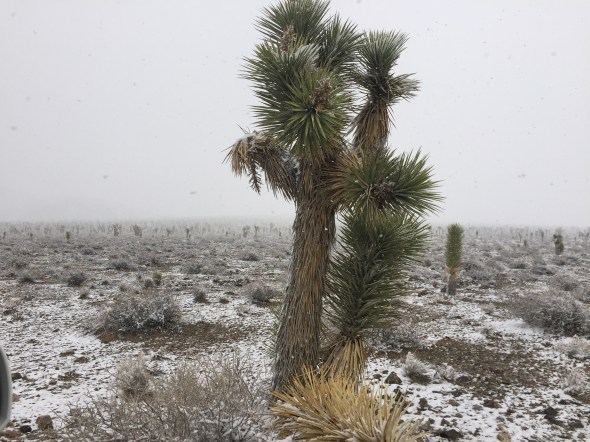
Alien Space Helmet Discovered in Joshua Tree National Park!
Posted: March 6, 2019 Filed under: desert 5 Comments
Theories that aliens of about two feet in height have visited Earth in spacecrafts have long been considered serious, but now at last there is proof.

Helmet experts were reluctant to say much about what materials the helmet is made of or where it came from, beyond confirming that it is an alien space helmet. 
Whether the helmet is ancient or recent is unknown at this time, and specialists discourage speculation until we gather more evidence. For now we can only say it is a space alien helmet.
How to tell Bruce Springsteen bad news
Posted: February 21, 2019 Filed under: America Since 1945, business, music Leave a comment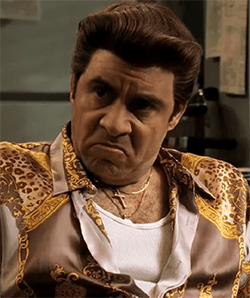
DEADLINE: What parallels were there between Silvio and Miami Steve? You can see the affection between you and Springsteen onstage, and in the stories Bruce tells between songs about the old days.
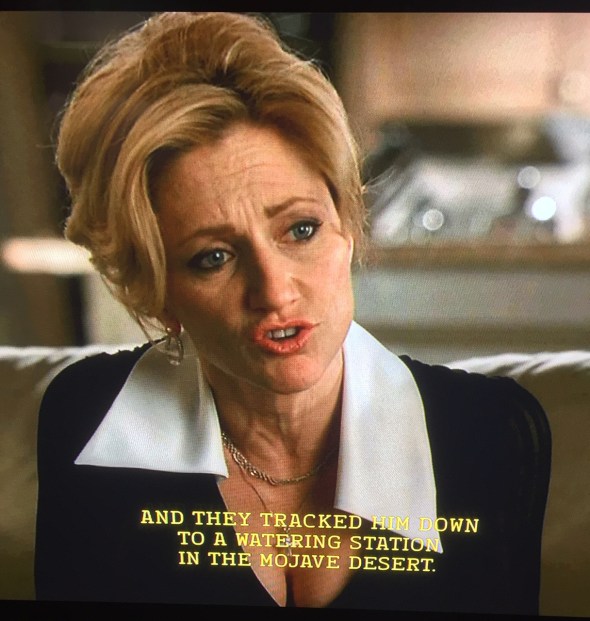
VAN ZANDT: The common dynamic is, as a best friend you have an obligation to tell the truth and you’ve got to know when to do that and how to do that, and it’s never going to be easy when it’s bad news. But once in a while, hopefully rarely, but once in a while you’ve got to be the one to bring the bad news because nobody else is going to do it, so you’re obligated. That’s your responsibility as a best friend. Sometimes they will get mad at you and then, as happened on the show, you see occasionally Jimmy will be screaming at me over something and that’s how it is in real life.
It’s just one of those things that goes with that job, that relationship, in being the only one who’s not afraid of the boss because you grew up together and that puts you in a special category that is very, very useful and very helpful to that boss whether they like it or not. No boss likes to hear bad news or hear they made a mistake. You can’t do it every day or even that often, but when it’s really, really important, you pick your moment and you’ve got to take the consequences and you just have to live with that. That’s the job. And ironically, right after we filmed, Bruce decides to put the band back together that same year.
from this Deadline oral history of The Sopranos.
Rude!
Posted: February 21, 2019 Filed under: Ireland Leave a comment
We usually have very fine commenters here at HelyTimes but occasionally some bore tries to ruin the party. This one regards my post where I suggested Ireland should take in two million refugees. (Seems fair enough to me, the rest of the world took in two million Irish).
Hey, as long as we’re starting a conversation.
John Wayne
Posted: February 20, 2019 Filed under: America Since 1945, writing 1 Comment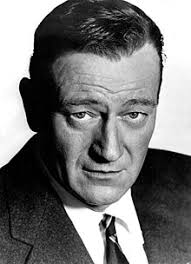
some recent Twitter stir about John Wayne’s unwoke Playboy interview from the ’70s got me looking up a phrase that stuck in my craw since I read it. It’s Charles Portis, author of True Grit, telling his impression of seeing Wayne on a movie set.
What impressions do you have of John Wayne from the film?
“Wayne was a bigger man than I expected. He was actually bigger than his image on screen, both in stature and presence. One icy morning, very early, before sunrise, we were all having breakfast in a motel…. A tourist came over to speak. Wayne rose to greet her. He stood there, not fidgeting and just hearing her out, but actively listening, and chatting with her in an easy way, as his fried eggs congealed on the plate. I took this to be no more than his nature. A gentleman at four o’clock on a cold morning is indeed a gentleman.”
Found that here on the Fort Smith National Historic Site website.
Aptly named places
Posted: February 20, 2019 Filed under: the California Condition Leave a comment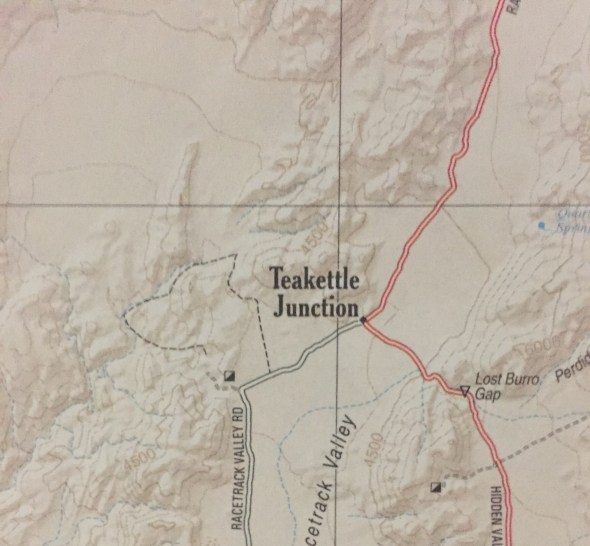
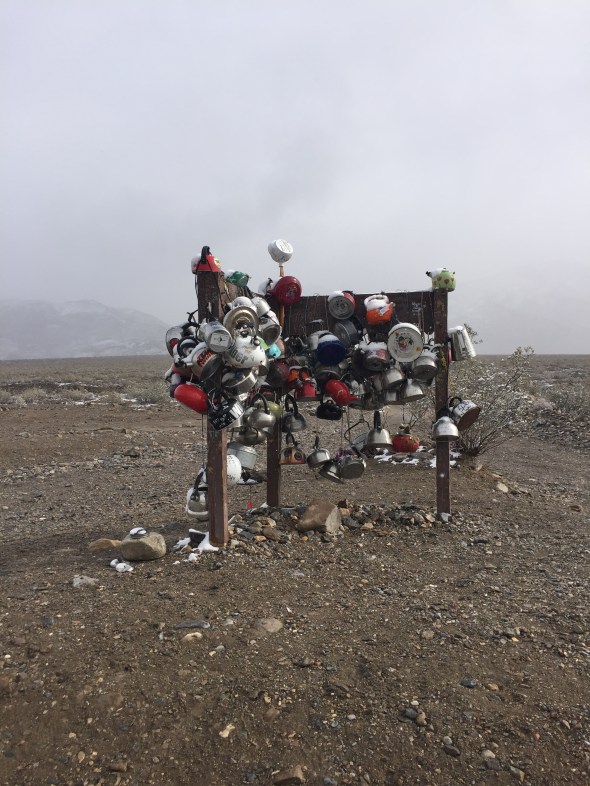
Cool to see snow in that part of the world.
Munger speaks
Posted: February 15, 2019 Filed under: America Since 1945, business Leave a comment
Looking forward to getting a transcript of Charlie Munger yesterday at the Daily Journal shareholders’ conference. Here the 95 year old former meteorologist and HelyTimes Hero talks to CNBC’s Becky Quick:
BECKY QUICK: Anything that rises to your radar screen now that may be under the radar for other people?
CHARLIE MUNGER: Well, nobody knows how much of this money printing we can do. And of course we have politicians who like– and are in both parties, who like to believe that it doesn’t matter how much you do. That we can ignore the whole subject and just print money as convenient. Well, that’s the way the Roman Empire behaved, then it was ruined. And that’s the way the Weimar Republic was ruined. And– it’s– there is a point where it’s dangerous. You know, and of course, my attitude when something is big and dangerous is to stay a long way away from it. Other people want to come as close as possible without going in. That’s too tricky for me. I don’t like it.
BECKY QUICK: In terms of possibly getting sucked up into it?
CHARLIE MUNGER: Yes. I– I– if there’s a big whirlpool in the river, I stay a long way away from it. There were a bunch of canoeists once that tried to– to run the Aaron Rapids. I think they were from Scandinavia. And– and the fact that the whirlpools were so big made them very eager to tackle this huge challenge. The death rate was 100%. I regard that as a normal result.
Are we in The Great Stagnation?
CHARLIE MUNGER: The opportunities that we all remember came from a demoralized period when about 90% of the natural stock buyers got very discouraged with stocks. That’s what created the opportunity for these fabulous records that my generation had. And that was a rare opportunity that came to a rare group of people of whom I was one. And Warren was another.
BECKY QUICK: So you’re talking–
CHARLIE MUNGER: And people who start now have a much less– they have lower opportunity.
BECKY QUICK: Do you think we saw a generational low after 2008, beginning of 2009?
CHARLIE MUNGER: Generational? Maybe.
Life advice:
BECKY QUICK: Charlie, so many of the people who come here come because they’re looking for advice not on business or investments as much as they’re looking for just advice on life. There were a lot of questions today, people trying to figure out what the secret to life is, to a long and happy life. And– and I just wonder, if you were–
CHARLIE MUNGER: Now that is easy, because it’s so simple.
BECKY QUICK: What is it?
CHARLIE MUNGER: You don’t have a lot of envy, you don’t have a lot of resentment, you don’t overspend your income, you stay cheerful in spite of your troubles. You deal with reliable people and you do what you’re supposed to do. And all these simple rules work so well to make your life better. And they’re so trite.
BECKY QUICK: How old were you when you figured this out?
CHARLIE MUNGER: About seven. I could tell that some of my older people were a little bonkers. I’ve always been able to recognize that other people were a little bonkers. And it helped me because there’s so much irrationality in the world. And I’ve been thinking about it for a long time, its causes and its preventions, and so forth, that I– sure it’s helped me.
I noticed a glitch in the transcript, btw. It’s written as follows:
BECKY QUICK: Do you think we saw a generational low after 2008, beginning of 2009?
CHARLIE MUNGER: Generational? Maybe.
BECKY QUICK: We–
CHARLIE MUNGER: Yeah, I don’t think the market is going to be cheaper.
But if you listen closely it’s pretty clear Munger says “I don’t think Bank of America is going to be cheaper.” Almost exactly nine years ago today, Feb 2009, BAC was trading at $5.57. Today it’s at $29.12.
On Tactics by B. A. Friedman
Posted: February 15, 2019 Filed under: America Since 1945, war, writing Leave a comment This book is an excellent size and weight. Small, portable, yet solid. It’s published by the Naval Institute Press, they who took a chance on an unknown insurance man named Tom Clancy who’d written a thriller called The Hunt For Red October.
Amazon suggested this book to me as I was browsing translations of Sun Tzu. Military history has interested me since I was a boy, maybe because 1) the stakes are so high and 2) the stories are so vivid. Metaphors and similes drawn from famous war events are powerful and stark. Consider for example Friedman’s description of the Battle of the Bulge:
… Although the Germans had caught the Allies at their culminating point, the Germans reached their own far too early. Newly created infantry units were filled with hastily trained and inexperienced conscripts. These green units could not effectively hold the territory gained by the leading panzer units. On 22 December the fog cleared and Allied air units hammered the German formations from the skies. Despite the prestaged fuel reserves, panzer units still ran out of fuel, just when they needed it to escape the Allied aerial counterattack.
Buried in there is a tactical lesson, and also an intense story about some poor children getting blown up right before Christmas.
The author was a second lieutenant in the Marine Corps. If I understand right, might make this book the equivalent of a book called like Writing A Hit TV Show by a staff writer. But Friedman seems like he’s gone deep on the knowledge, and there’s a quote from Gen. Anthony Zinni on the back. Good enough for me.
Alexander The Great would not be in the least bit perplexed by the enemy that we face right now in Iraq, and our leaders going into this fight do their troops a disservice by not studying — studying, vice just reading – the men who have gone before us. We have been fighting on this planet for 5,000 years and we should take advantage of their experience.
So goes a quote from James Mattis that opens this book. Friedman cites the example of Cortes in 1520 CE, referring to written accounts of Alexander’s battle at Gaugamela eighteen hundred years before to design his tactics against the Mexica/Aztec.
What is strategy? What is tactics? Where do they divide? Friedman summarizes Clausewitz:
Clausewitz divided warfare into tactics, actual combat between opposed military forces, and strategy, the latter being the overarching plan for using tactical engagements to achieve the ends as set forth by policy… The strategy acts as a bridge between the tactical actors (military forces) and the desired political end state of the entity those forces serve.
Much of this book is summaries of Clausewitz, really and Sun Tzu as well. How could it not be?
What I thought I remembered most of all from Clausewitz is the concept of Fingerspitzengefühl, fingertips-feel, a sensing of what’s going on, and where. But I don’t have my copy of Vom Kriege at hand, and searching for fingerspitzengefühl it seems possible the term may be of later origin. Maybe it was discussed in the introduction.
Clausewitz is very concerned with will, the imposing of one’s will on the enemy, breaking the will of the enemy. Given the time and place where Clausewitz was coming from, 1800s what’s now-Germany, I can’t help but think this idea of will was connected to other philosophers like Kant who were pondering the meanings and dimensions of will around then.
Friedman picks up on the idea of will, or what he refers to as moral cohesion. He digs in on the idea of destroying the enemy’s moral cohesion.
Clausewitz defined the destruction of an enemy as “they must be put in such a condition that they can no longer carry on the fight” (emphasis added). This does not mean that the enemy force must be totally destroyed. Indeed, he went on to say, “when we speak of destroying the enemy’s forces we must emphasize that nothing obliges us to limit this idea to physical forces: the moral element must be considered. In other words, breaking the moral cohesion of the opposing force is destruction of that force as an effective unit and the true goal of tactics.
In a whole chapter on moral cohesion, Friedman quotes Marine Major Earl “Pete” Ellis speaking of how important it was to marines fighting insurgents in the Philippines to believe that the United States was acting from “purely altruistic motives.” Jim Storr’s The Human Face of War is quoted as well: “In general, defeat occurs when the enemy believes he is beaten… Defeat is a psychological state.”
Friedman brings out Clausewitz’s concept of “the center of gravity,” too, and points out, in a thought-provoking way that it’s not totally clear what Clausewitz meant or understood by “gravity,” and what Clausewitz understood about physics. Clausewitz died in 1831 — have we even figured out gravity now? Clausewitz noted that the center of gravity could be a capital city, an ally, the shared interests of an alliance, particular leaders, or popular opinion. The North Vietnamese correctly located the center of gravity of the US in the Vietnam War as American political will. They destroyed our moral cohesion.
Friedman is tough on the U.S war in Iraq, which he says is “a glaring example of tactics, strategy, and policy in disarray.” We need to maintain our sense of moral cohesion. It’s slipping away from us.
We get some Boyd, too, a favorite here at HelyTimes. As a bottom line lesson on tactics, this is pretty clear and cool:
Boyd says if you move and decide faster than your enemy, you will win.
Friedman concludes by pointing out that tactics are subordinate to strategy.
The tactician employs tactics that will best serve the strategy, but he must also know when a flawed strategy cannot be achieved with reasonable tactics. Duty might still demand that he try to accomplish the mission, but he will need to inform the strategist that his aims are improbable.
Taking on a big concept like tactics and attempting to codify and create a short, comprehensible theory or unified system is a nobel mission. I found On Tactics profitable to read and full of stimulating ideas and examples.
Lying politicians
Posted: February 12, 2019 Filed under: America Since 1945, writing Leave a comment
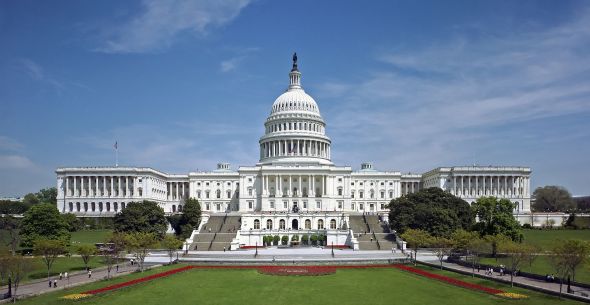
Sometimes, for instance watching Trump talk about the wall, I wonder how much of politics is just people enjoying and wallowing in different kinds of lies. Reminds me of this passage from Mark Helprin’s novel A Winter’s Tale. A mayoral election is going on in New York:
He never talked about garbage, electricity, or police. He only talked about winter, horses and the countryside. He spoke almost hypnotically about love, loyalty, and esthetics … He promised them love affairs and sleigh races, cross-country skiing on the main thoroughfares, and the transfixing blizzards that howled outside and made the heart dance.
They thought, or so it was generally stated at the time, that if they were going to be lied to, they might as well pick the liar who did it best.
Looking for this quote in my old files I found F. Scott Fitzgerald, in The Beautiful and the Damned, talking about Congress:
he tried to imagine himself in Congress rooting around in the litter of that incredible pigsty with the narrow and porcine brows he saw pictured sometimes in the rotogravure sections of the Sunday newspapers, those glorified proletarians babbling blandly to the nation the ideas of high school seniors! Little men with copy-book ambitions who by mediocrity had thought to emerge from mediocrity into the lustreless and unromantic heaven of a government by the people – and the best, the dozen shrewd men at the top, egotistic and cynical, were content to lead this choir of white ties and wire collar-buttons in a discordant and amazing hymn, compounded of a vague confusion between wealth as a reward of virtue and wealth as a proof of vice, and continued cheers for God, the Constitution, and the Rocky Mountains!
Proust’s coffee
Posted: February 10, 2019 Filed under: books, coffee, comedy, writing Leave a comment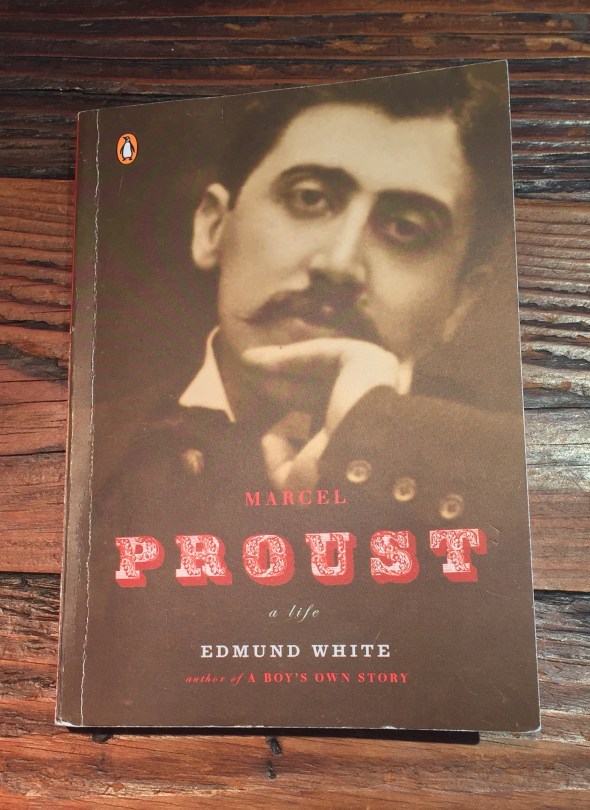
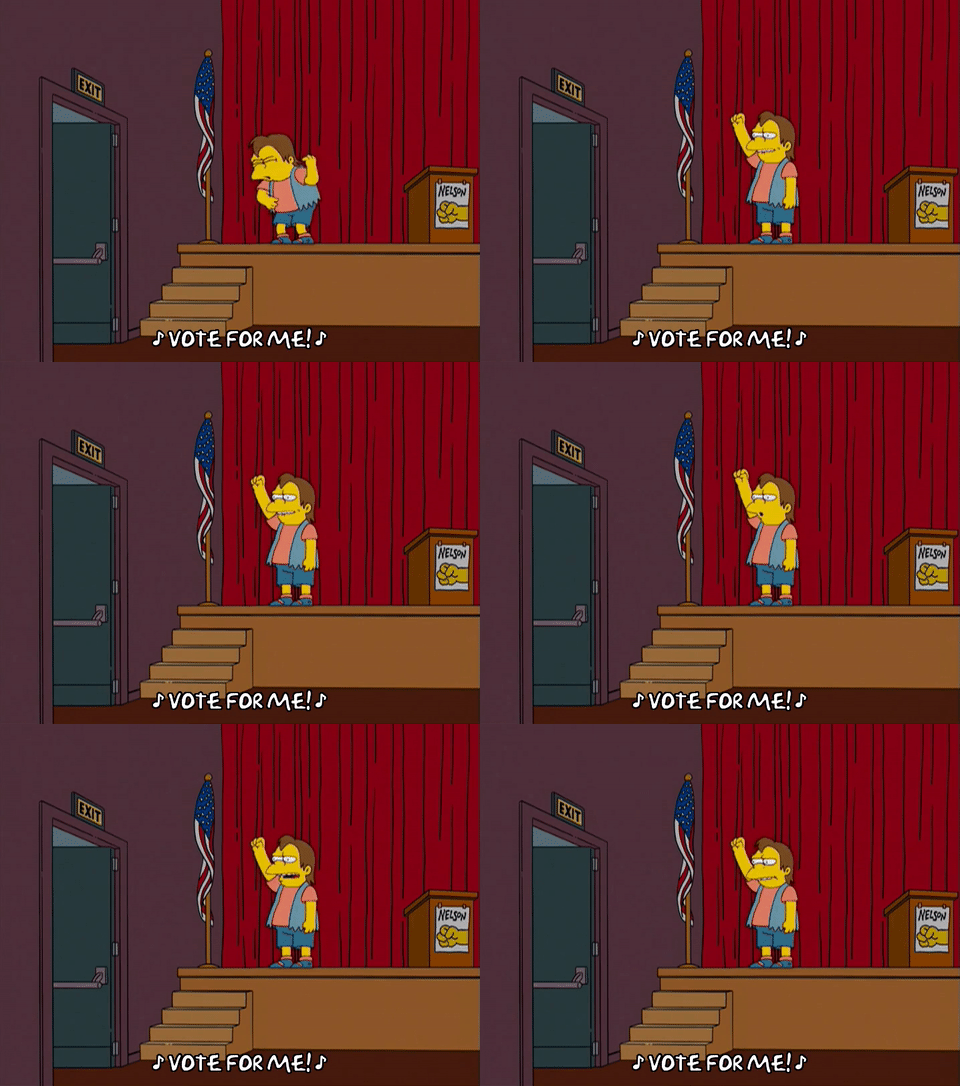
Although fifteen years later [Marcel Proust] would recall his year as a soldier with total delight, as “a paradise,” at the time he complained bitterly and his mother had to write him consoling, babying letters, telling him to think of the twelve months as twelve chocolate squares.
Imagine the guys in the barracks finding your letters from your mom telling you to think about your year as twelve chocolate squares.
In his short biography of Custer, Larry McMurtry mentions a few other short biographies he judges fine, including with a characteristic lack of false modesty his own biography of Crazy Horse, and this Edmund White biography of Proust.
So, I got it and read it. Wonderful act of compression. Thoughtful, succinct, at times funny, human, gentle, this book is a great guide to the man and artist, what his work meant and what he was after.
Thought this was wild:
In 1911 Proust became a subscriber to Théàtrophone, a service that held a telephone receiver up at a concert, which allowed people to stay at home and hear live music on their receivers.
The few hundred pages of Remembrance of Things Past I was supposed to read in college (“Proust, Joyce and Modernism”: a class I chose to take!) were tough going for me. Proust won’t be hurried. This guy didn’t even get a job until he was in his thirties. This was an unpaid job, as a librarian, and eventually he got fired for being out sick too much. Proust is not interested in going at anyone’s pace except the languid pace of a man lying in bed, leisurely following the meandering paths of his own memory.
Proust always claimed that he had a bad memory and that, besides, a carefully reconstructed recollection, prompted by photos or shared reminiscences, was invariably colorless, Only an involuntary memory, triggered by a taste or smell or other sensation, could erase the passage of time and restore a past experience in its first, full effulgence.
Proust’s world was pretentious and can seem ridiculous. Proust himself was a great mimic, reducing people to fits of laughter with his impressions. He loved collecting anecdotes and gossip, grilling waiters for details (Proust was an extravagant tipper.) White says that Georg D. Painter’s Marcel Proust: A Biography, the one-volume edition, is
so amusing that it could be used as a source for a stand-up comic.
I’ll be looking into this claim.
How about Proust’s maid, Céleste?
Céleste’s great anxiety was Proust’s morning (or afternoon) coffee. It had to be ready the moment he rang for it, but the preparation took at least half an hour, since he liked the water to be dripped, drop by drop, through the grounds in order to produce the thickest, strongest possible “essence” of coffee. Nor could he bear for it to be reheated…
This is after Céleste had been standing up for hours listening to Proust recount gossip he’d collected on “rare midnight sorties,” Proust waiting til midnight to go out because he was so afraid of dust. Well, White tells us we read Proust because he knows that
only the gnarled knowledge that suffering brings us is of any real use.
Maybe Céleste pondered that while she remade the coffee.
Leaving the house was a challenge for Proust, but near the end of his life he made an outing to see Vermeer’s View of Delft:
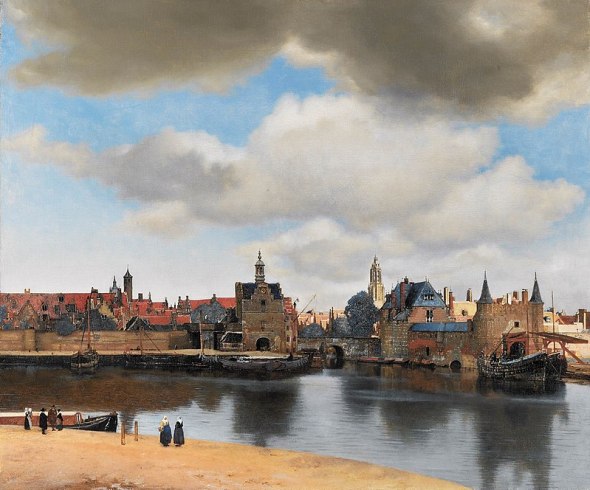
On the night before he died Proust dictated a last sentence: “There is a Chinese patience in Vermeer’s craft.”
White tells us. Man Ray took a picture of Proust right after the author died, you can see it here if you’re so inclined. I’m told by the Met that Cocteau wrote of the scene:
Those who have seen this profile of calm, of order, of plenitude, will never forget the spectacle of an unbelievable recording device come to a stop, becoming an art object: a masterpiece of repose next to a heap of notebooks where our friend’s genius continues to live on like the wristwatch of a dead soldier.
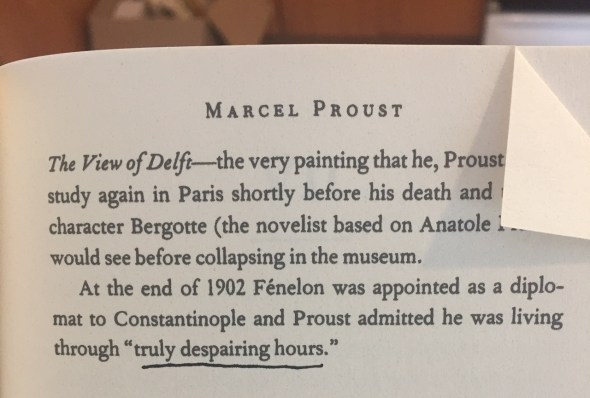
True despair hours:
Coaches
Posted: February 2, 2019 Filed under: sports Leave a comment
Jaguars at Redskins 9/14/14
Reader Tabitha in Marin County, CA writes:
Always love your writeups on the Super Bowl coaches. What do you think of Boy Wonder Sean McVay?
Thanks for writing Tabitha! Most of what little I have to say about Sean McVay I got out on this week’s Great Debates feat. Mina Kimes. To be honest, much like the Rams themselves, McVay seems to be: good but not interesting. A sense of his vibe in this NFL.com article by Michael Silver:
As he greeted McVay in a room that would soon be vacated by Demoff, Snead and the other Rams officials present, Goff didn’t know what to expect.
“They left us alone for half an hour, maybe a little longer,” Goff recalls. “Afterward, I remember texting my dad, ‘If they decide to hire him, I’m all in.’ ”
Goff also texted an NFL Network analyst who, nearly a year later, would write a very long feature story about the league’s leading Coach of the Year candidate: “Loved him. Mini Gruden haha. Everything revolves around the QB… If McVay is the guy I’d be fired up”
Full disclosure: A few minutes later, I also got a text from McVay (who, incidentally, is not a huge fan of punctuation): “I loved him bro he is awesome”
This WashPo article compares him to other young leaders (profitlessly imo).
McVay’s grandfather John coached the New York Football Giants in the ’70s.

McVay’s girlfriend is Ukrainian model Veronika Khomyn, but a quick scan of her Instagram reveals no real insights into coaching philosophy.
Gonna give the edge here to Belichick, a special, unique weirdo. We predict a decisive Patriots win.
Let’s hope both teams control their A. P. E.s
For philosophical consideration of the Super Bowl, we return once again to the remarks of Deadwood creator David Milch on the Super Bowl and Kierkegaard:
nothing but good news
Posted: February 1, 2019 Filed under: business Leave a comment
in Bloomberg today!
Water in the Mojave
Posted: February 1, 2019 Filed under: the California Condition, water Leave a comment
High in the rocks water was collecting from the recent rains
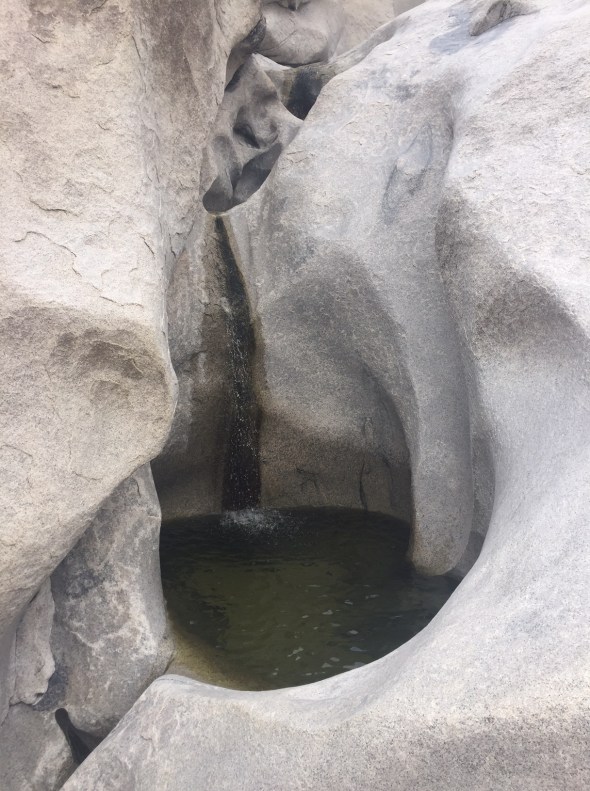
Splashing down, pooling in the natural tanks
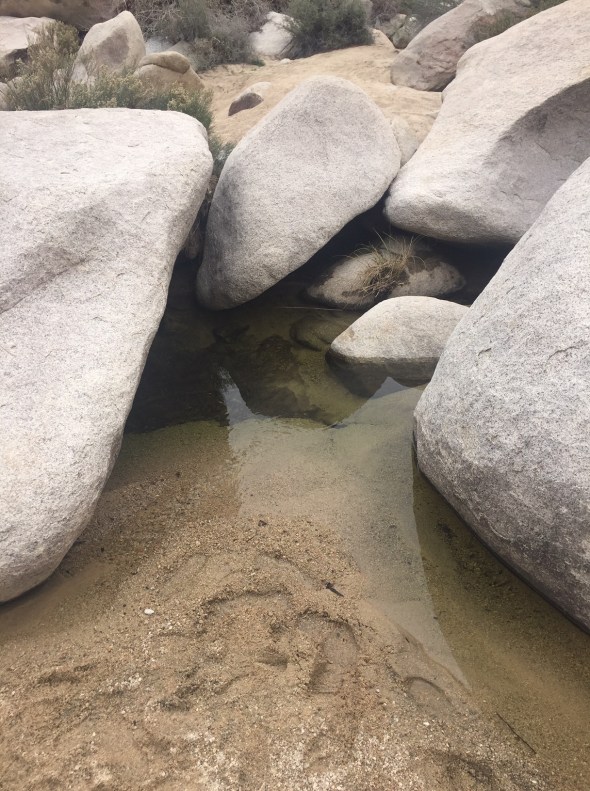
Saw a frog (California tree frog?) in this one.
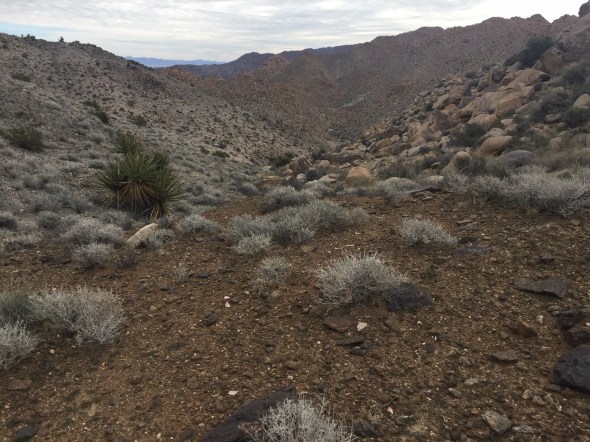
Some of the plants out there flower in ways that seem monstrous, almost obscene

Is this a natural formation in the rock, or an ancient ruin?
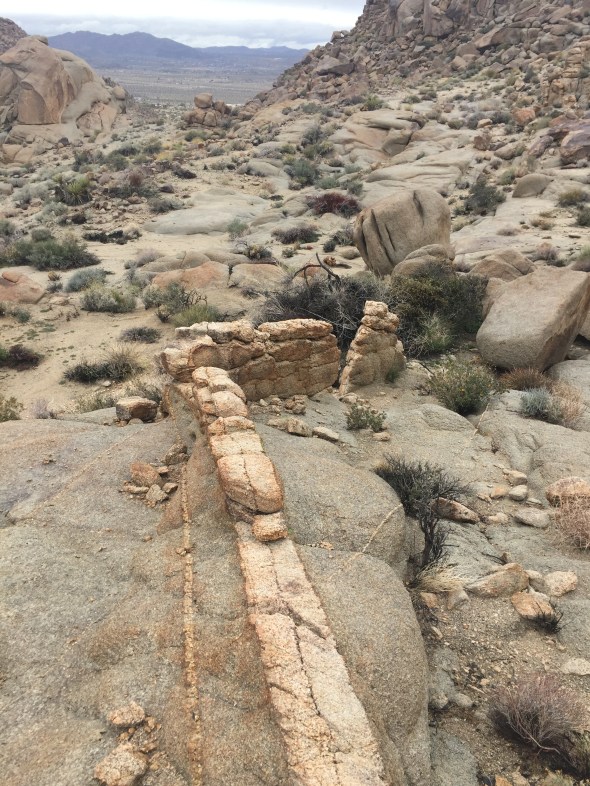 More archaeology will be needed at this site.
Oceanfront property for sale!
Posted: January 29, 2019 Filed under: the California Condition Leave a comment
This property was listed for sale in Malibu.

I dunno it looks like it already fell into the ocean? Anyway it’s listed for one point five million dollars. 
could be good if wet rocks become the new currency.
Headlines and stocks
Posted: January 29, 2019 Filed under: business Leave a comment
From Bloomberg, today. What are these four contradicting claims meant to mean? Whoever composed them and put them together doesn’t know which narrative thread to follow (or invent?)
The game of trying to translate “news” into predictions about stock price movement seems fun and confusing. Maybe the best investors come close to ignoring headlines. But even Warren Buffett turns CNBC on when he arrives at his office after going to McDonald’s. (Or so he says — be careful with Buffett, he didn’t become a millionaire by not being crafty.)
Sometimes I wonder whether stock market forecasting is any improvement on the ancient Mesopotamians divining the future from sheep livers.

(image from Larry Gonick’s incredible Cartoon History of the Universe series, hope you don’t mind that I used that Larry!)
To continue my amateur studies of this topic – stock market understanding, not sheep liver reading – I started a podcast, Stocks Let’s Talk:

click to listen, six episodes so far, we are very much still in beta and trying to find what it is we are, exactly, figure ten episodes at least to get there, but each of these six has a fabulously interesting guest. Try it, let us know what you think!
What to make of Beto?
Posted: January 25, 2019 Filed under: America Since 1945 1 Comment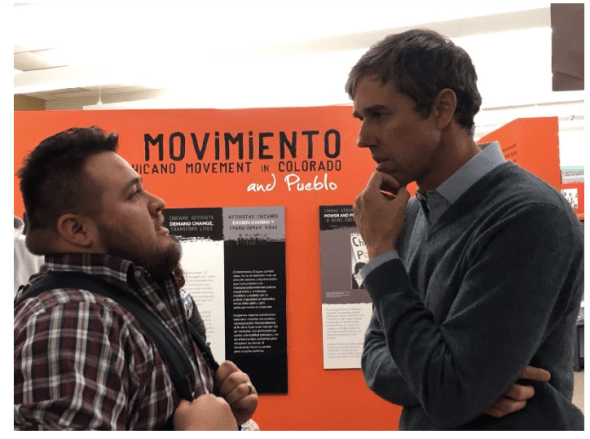
credit: Beto?
Jeff and I talked about immigration, about his travels in the U.S. and then about Isaac Asimov’s Foundation series. He had just read it again after finding it for a dollar at a used book shop. I told him I read it as a kid and really liked it, and wondered if it held up. Surprisingly well he said. He then moved down to the other side of the table, I think to make sure that the students could more freely engage in the conversation.
Reading some of the former Texas congressman’s travel dispatches. He was just where I was, Taos pueblo:
We walked further into the village where I was struck by the magnificent beauty of the adobe homes, built next to and on top of one another. The Pueblo was established in the 15th century, had these homes been here that long? Men were shoveling snow off of the roofs against the backdrop of the breathtaking Taos mountains in the distance. As we walked, Tina shared with me history, of the Taos people and of her family. She talked about the role of the Catholic church and of the religion of the Taos pueblo. We talked about family, the village home she had just inherited from her mother, about the role of dance in her life, about her hopes for her community and her children.

In my grandparents’ time, Debbie said after a long while, we were not allowed to go into those mountains. When Teddy Roosevelt created the national forest, he took those mountains away from us. They are sacred mountains, so you can imagine what that felt like. We had to get special permission, a pass, to go beyond the fence line into what had been our home for centuries. It was only until Richard Nixon’s administration that those lands were opened up to us again. So, she said with a laugh, while most people admire Roosevelt and detest Nixon, we feel just the opposite.
The combo of hipster travel writing and political engagement. (Is travel writing always political?) The work to demonstrate you are listening, not proclaiming. Obama’s rise was partly due to his skill as a writer, the acclaim for his self-revelatory memoirs, why shouldn’t Beto’s?
A hazard of this kind of writing, of writing your life in close sync with living it, is becoming a character you’re trying to create on the page, of enacting scenes that you might imagine will become good copy. The danger then becomes manipulating what you really thought, and felt, of trying to pilot the course of your explorations a little too much. That doesn’t work, as writing or life, it’s inauthentic, you get yourself spun around and caught in whirlpools that way.
That’s always a danger when you’re a presidential candidate. Your soul’s at hazard. Somehow it feels extra tough though when your way of getting yourself there is your show of authenticity.
When you claim to report your very thoughts, almost in realtime, you need either an extreme level of mental self-control, or to have your actual self and your presentational self in some very real and genuine and hard-earned harmony. Maybe you need both. The first is terrifying to ponder. The second is rare, difficult both technically and at like a soul level. And scary to practice for any long amount of time, like walking a mountain ledge. If you fall you will suffer, somewhere from being revealed as a phony to breaking mentally and morally.
I know we can do it. I can’t prove it, but I feel it and hear it and see it in the people I meet and talk with. I saw it all over Texas these last two years, I see it every day in El Paso. It’s in Kansas and Oklahoma. Colorado and New Mexico too. It’s not going to be easy to take the decency and kindness we find in our lives and our communities and apply it to our politics, to all the very real challenges we face. And as Tina says, it’s complicated. But a big part of it has got to be just listening to one another, learning each other’s stories, thinking “whatever affects this person, affects me.”
We’re in this together, like it or not. The alternative is to be in this apart, and that would be hell.
A way to defend against inauthenticity when you’re writing/living is to make yourself the fool of your story when you really were a fool, and everyone’s a fool sometimes. But it’s tempting to exaggerate that direction, too. Writers can make themselves look foolish but maybe presidential candidates can’t.
I left the Pueblo heading south toward Chimayo, aiming to be back in El Paso by bedtime. Snow was starting to fall. I thought about all of the places I’d seen over the last week, all of the people I’d met. Communities within communities. Nations within nations.
Would it be terrible to hear, every once in awhile, like:
I could feel horrible diarrhea coming over me coming down the 291. I was so relieved when I saw a Wendy’s in Espanola. But also troubled. I thought, ‘what if they recognize me, racing into the toilet at Wendy’s? Do I have to stop and buy something? What if buying something is when they recognize me? What if they recognize me buying something at Wendy’s and that becomes a thing, like ‘Beto O’Rourke skips local New Mexico food for corporate Frostie’? Well expedience trumped discretion in this case, I made it to the blissfully clean Wendy’s toilet a second ahead of a bottomside avalanche. I left without buying anything. Or apologizing. How could I? Should I have? I’d wonder that, on the road back to El Paso.
Good news bad news kinda thing: nobody at Wendy’s recognized me.
I can hear the Peggy Noonans groaning, that’s just what we need, to hear about candidates’ bowel movements! OK, sure, and Donald J. Trump is the president. Any candidate who wants to get the votes of anyone under forty will need to project authenticity. For anyone truly authentic, that’s not hard. Among the schemers, where will the quest for that end?
Anyway as for Beto good luck to him.
Spinning Ice Disk
Posted: January 25, 2019 Filed under: New England, water Leave a comment
Nothing to worry about, we’re told.
Monumental
Posted: January 17, 2019 Filed under: New Mexico Leave a comment
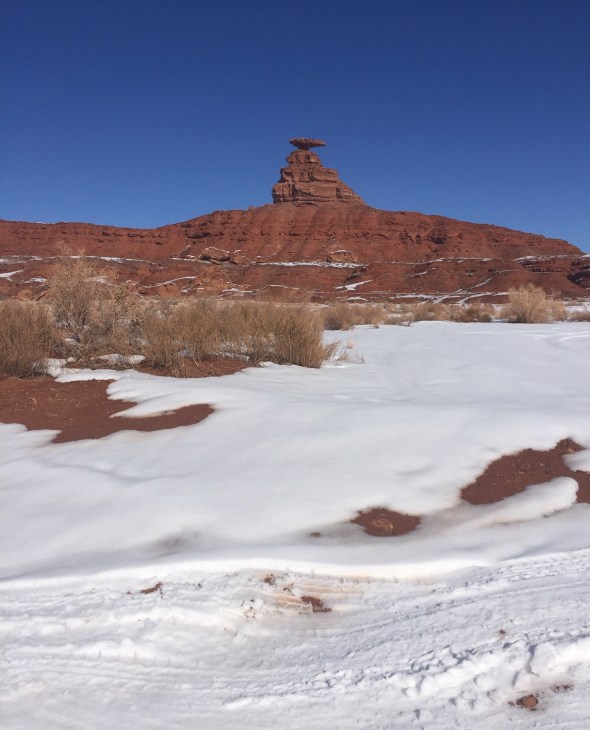
See if you can guess the name of this feature

Watching this mesa melt away

Hello!

Why take pictures of Monument Valley? Someone’s taken better pictures of it. Why take pictures on vacation at all? To show someone else how incredible it is? In a way I felt dumb driving around, stopping, taking pictures. The park is really geared towards taking pictures, even steering you to particular viewpoints (“John Ford’s Point” for example). You become part of a parade of people taking pictures. It gets to feel kinda silly. Aren’t I taking myself out of the moment of experience when I snap away? Couldn’t there be some more meaningful or meditative way to experience this?
When you see something staggering, there’s a need to engage somehow, to do something to mark the occasion, and I guess taking pictures can be an act of acknowledgement.
The act of taking the pictures, too, framing them and composing them, can help you focus on what it is, exactly, that’s giving you the emotion. Hemingway:
Watch what happens today. If we get into a fish see exact it is that everyone does. If you get a kick out of it while he is jumping remember back until you see exactly what the action was that gave you that emotion. Whether it was the rising of the line from the water and the way it tightened like a fiddle string until drops started from it, or the way he smashed and threw water when he jumped. Remember what the noises were and what was said. Find what gave you the emotion, what the action was that gave you the excitement. Then write it down making it clear so the reader will see it too and have the same feeling you had. Thatʼs a five finger exercise.
Similarly, while the landscapes that I have photographed in Yosemite are recognized by most people and, of course, the subject is an important part of the pictures, they are not “realistic.” Instead, they are an imprint of my visualization. All of my pictures are optically very accurate–I use pretty good lenses–but they are quite unrealistic in terms of values. A more realistic simple snapshot captures the image but misses everything else. I want a picture to reflect not only the forms but what I had seen and felt at the moment of exposure.
Looking at my photos later maybe what I was chasing was how the fallen snow revealed the depths of the landscape. Where snow had fallen, where it had stayed, where it was melting. And the way the shadows moved, making a movie out of time, light, place.
Snow, water, mud, sand, rock. Different degrees of permanent but all of it in a process of melting away.
Monument Valley is so epic it feels “timeless” but you are watching temporary freak abnormalities wash and erode back to dust.
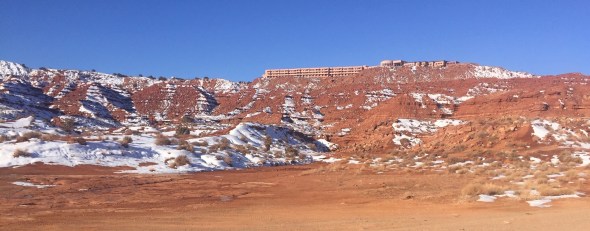
Spontaneous Helytimes Travel Prize to The View Hotel, a Navajo-owned property with a one of the best in all planet Earth location. Look at how the building is set into the landscape.
(Note to readers with mild to severe alcohol dependency: there is no alcohol served at the hotel.)
WARNING in three photos there will be a photo of a dead horse


Catching up on New Mexico politics
Posted: January 16, 2019 Filed under: New Mexico Leave a comment
Thom Cole in the Santa Fe New Mexican reports one. Governor Susanna Martinez was given a necklace that ended up at the state museum. Who owns it?
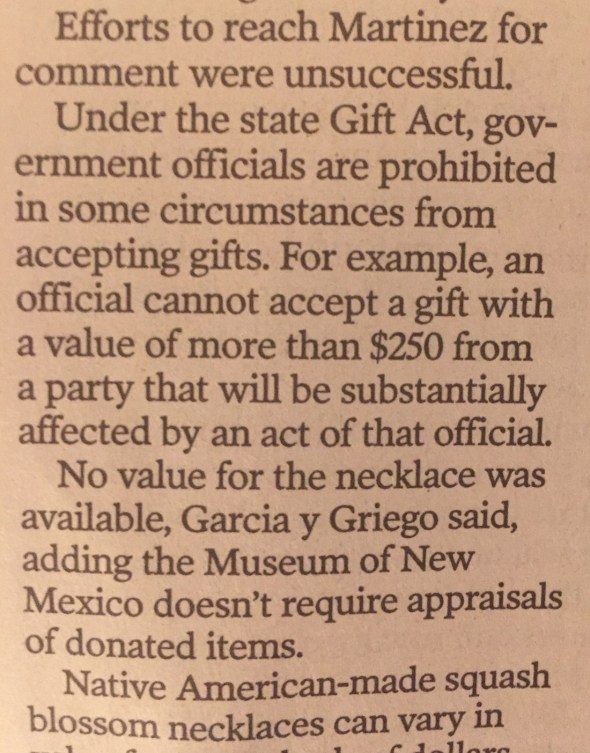
As long as it’s not connected to any act by that official. 
A stressful New Year’s Eve:

I made the mistake of looking directly at the sunset in Santa Fe, which is intense. It really did look like the New Mexico state flag:


 Helytimes