John Major
Posted: December 13, 2019 Filed under: UK Leave a comment
stolen and cropped from Major’s wikipedia page, credit Chatham House I guess.
For whatever reason around May 2, 1997 I happened to see John Major on TV after the UK election. Maybe it was on the nightly news. At that time John Major was the Prime Minister, but he and his Conservative Party had just been handed a crushing defeat.
Major appeared outside the Conservative Campaign Office at 32 Smith Square the morning after the election.

via Google. The building is now, ironically, Europe House.
I couldn’t find video of his statement, but at Johnmajorarchive.com I did find text of it. Here’s the part that struck me as a teen:
Tonight we have suffered a very bad defeat, let us not pretend to ourselves that it was anything other than what it was. Unless we accept it for what it was, and look at it, we will be less able to put it right.
We’ve lost some very good servants of the party, people who have devoted a huge amount of their life to the service of this country and to the service of this party.
We have lost, temporarily I hope, some colleagues, both senior and not so senior, who still have a lot of service to give this country and this party, and will I hope be back where they should be in the House of Commons, serving us all.
[applause]
And they lost, from what I saw of it, with a dignity which made me proud of this party.
We now have a job to do, all of us.
[phone rings in background]
They told me the technological age was a good thing
Now, John Major may not be an especially healthy figure to admire, especially for a then-17 year old American boy, I’m not saying I wasn’t unusual. But in this particular moment, there was a dignity and something admirable in Major’s ability and willingness to not round down the magnitude of the defeat. In his (seeming) preparedness to look what had happened in the face, and state it clearly.
Just a performance, perhaps, but sometimes the performance counts. Maybe John Major’s a complete turd, I don’t know enough about UK politics to weigh in on his character. All I know is I remembered the moment, maybe because being blunt about how bad things are is pretty rare from a politician. It felt refreshing.
Charlie Rose Memories
Posted: December 11, 2019 Filed under: America Since 1945, writing Leave a comment
 There was a period when I was working on a novel, not working a steady job, and I figured, “I should make sure I at least hear an hour of human conversation a day.” That was the time in my life when I watched the most Charlie Rose.
The Charlie Rose Show website used to be elegantly organized. It’s still good, but there was a neat way it used to be indexed, there was section called like “writers on writing” I appreciated.
Charlie Rose has now been banished for his crimes which sound bad enough. Sometimes in the wake of what’s (perhaps unfortunately) called “the MeToo movement” I hear like “well what about due process?!” or arguments along those lines. But shouldn’t our public media gatekeeper/narrative shapers be not just merely not sex pests, but in fact above reproach? Couldn’t we have higher standards for our public broadcasters?
This got me riled about about Brett Kavanaugh as well — like, can’t we find someone for the Supreme Court who can’t be credibly accused of anything? I believe it is possible!
Anyway. Here are some memories of moments on Charlie Rose that stuck in my craw:
- The Franzen/DFW/Mark Leyner “Future of Fiction” episode
- When John Grisham was on, and Charlie asked him “what advice would you give to an aspiring writer?” Grisham said, “figure out where you’re going to get your paycheck from.”
- Charlie needling David McCullough about selling the rights to John Adams to Tom Hanks. McCullough was going on about how Hanks came to him with the book all marked up and noted, and how THAT was what convinced him. Charlie: “But surely some money changed hands, David.”
- Charlie would often say to a guest, who was just back from Iraq or whatever, “take me there.” (In fact, I think Charlie himself even called attention to this technique.
- Charlie referencing his “girlfriend”
- In a Remembering John Updike episode, David Remnick (or maybe Updike’s editor, or both) noting that Updike wanted to “get it all down.” Like, all of life, his every thought. Is this a good instinct?
- Charlie saying “c’mon, Toby” to Tobias Scheeman’s bullshit justification about why he had sex with a Papua New Guinean tribesman in Keep The River On Your Right
Annoying
Posted: December 9, 2019 Filed under: America Since 1945 Leave a comment
I had a thought about human nature. It has to do with people who are “annoying.”
When a person perceives they are failing to win someone over, or not connecting, often their reaction is to double down on trying to ingratiate.
They become desperate to find connection, shared humor, to offer something of value, anything, to try and repair this.
But this, to the annoyed party, only makes them more annoying.
In their fear and insecurity, the annoyer make the problem worse.
If you think you’re annoying to someone, you should back off. This is what the annoyed wants, and it offers the best hope of eventual repair.
There might be a larger meaning here, that our frantic solutions to problems often make them worse. When we perceive we’re causing a problem, maybe our first move should be to stop doing anything. Withdraw, pull back, cool out, consider. It takes great discipline to do this though, it’s very rare.
This perception comes from being on both sides, both finding someone annoying and feeling they kinda knew it and watching them overreact, and feeling more annoyed. And from cases where I suspected I myself was found annoying, and how my urge was to “turn on the charm”!
I used Fran Drescher as a gif here because I feel like “annoying” was kind of part of her brand, but let me be clear, I don’t find Fran Drescher annoying, I think she’s cool, and one of the most gifable stars out there.
Lizzo
Posted: December 7, 2019 Filed under: America Since 1945 Leave a comment
Lennon Photography for Wikipedia
My friend CB was visiting the other week. He lives on a small island in Canada and, it turns out, had never heard of LIzzo. This came up because in three Uber rides in a row here in Los Angeles, Lizzo’s “Truth Hurts” played from the radio. On the third hearing we were discussing it, and the female Uber driver asked us if we’d ever considered the lyrics.
We contemplated them together.
Why men great ’til they gotta be great?
WooI just took a DNA test, turns out I’m 100% that bitch
Even when I’m crying crazy
Yeah, I got boy problems, that’s the human in me
Bling bling, then I solve ’em, that’s the goddess in me
You coulda had a bad bitch, non-committal
Help you with your career just a little
You’re ‘posed to hold me down, but you’re holding me back
And that’s the sound of me not calling you backWhy men great ’til they gotta be great?
Don’t text me, tell it straight to my face
Best friend sat me down in the salon chair
Shampoo press, get you out of my hair
Fresh photos with the bomb lighting
New man on the Minnesota Vikings
Truth hurts, needed something more exciting
Bom bom bi dom bi dum bum bay
You tried to break my heart?
Oh, that breaks my heart
That you thought you ever had it
No, you ain’t from the start
Hey, I’m glad you’re back with your bitch
I mean who would wanna hide this?
I will never, ever, ever, ever, ever be your side chick
I put the sing in single
Ain’t worried ’bout a ring on my finger
So you can tell your friend, “shoot your shot” when you see ’em
It’s OK, he already in my DMsWhy men great ’til they gotta be great?
Don’t text me, tell it straight to my face
Best friend sat me down in the salon chair
Shampoo press, get you out of my hair
Fresh photos with the bomb lighting
New man on the Minnesota Vikings
Truth hurts, needed something more exciting
Bom bom bi bom bi dum bum bayI’ma hit you back in a minute
I don’t play tag, bitch, I been it
We don’t fuck with lies, we don’t do goodbyes
We just keep it pushing like aye yi yi
I’ma hit you back in a minute
I don’t play tag, bitch, I been it
We don’t fuck with lies, we don’t do goodbyes
We just keep it pushing like aye yi yiWhy men great ’til they gotta be great?
Don’t text me, tell it straight to my face
Best friend sat me down in the salon chair
Shampoo press, get you out of my hair
Fresh photos with the bomb lighting
New man on the Minnesota Vikings
Truth hurts, needed something more exciting
Bom bom bi bom bi dum bum bay
On October 15, 2019 Lizzo revealed at her concert in Denver, Colorado that she lived in Aurora, Colorado for 1 year, and worked at King Soopers

photo by Plazak for Wikipedia
Pasta, Zen
Posted: December 4, 2019 Filed under: food Leave a comment
Going through some photos on my phone. Some delicious pasta I had downtown.
How about a Zen story?

from Zen Flesh, Zen Bones.

Raphael Cartoons
Posted: November 25, 2019 Filed under: art history Leave a comment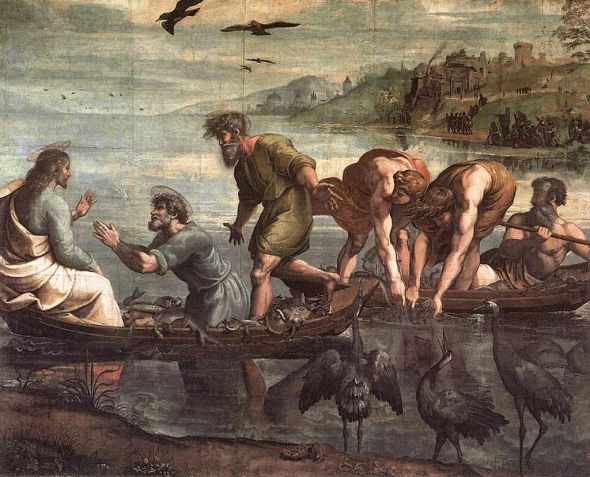
Cartoons in the sense of “designs for tapestries.” The Miraculous Draught of Fishes.
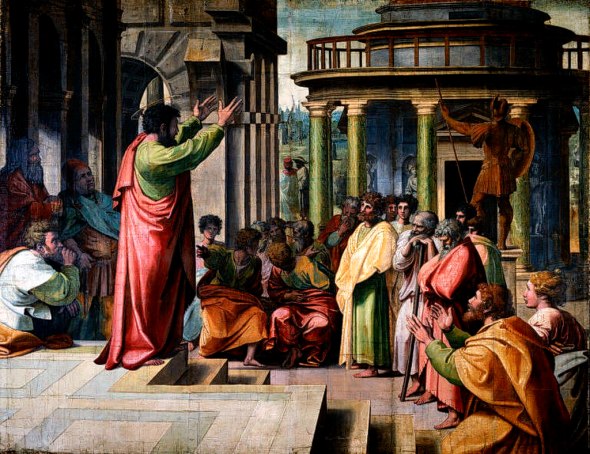
St. Paul Preaching in Athens.
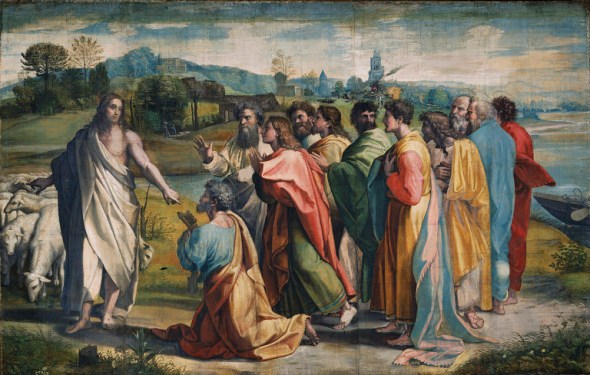
Christ’s Charge to Peter.
Loved this, from the Wikipedia page:
Raphael—whom Michelangelo greatly disliked—was highly conscious that his work would be seen beside the Sistine Chapel ceiling, which had been finished only two years before, and took great care perfecting his designs, which are among his largest and most complicated. Originally the set was intended to include 16 tapestries. Raphael was paid twice by Leo, in June 1515 and December 1516, the last payment apparently being upon completion of the work. Tapestries retained their Late Gothic prestige during the Renaissance. Most of the expense was in the manufacture: although the creation of the tapestries in Brussels cost 15,000 ducats, Raphael was paid only 1,000.
King Charles I of England, who had a pretty good eye for art, bought them while he was still a prince.
In Charles’ day these were stored in wooden boxes in the Banqueting House, Whitehall. They were one of the few items in the Royal Collection withheld from sale by Oliver Cromwell after Charles’ execution.

The first “cartoon”?
Mohave / Mojave people
Posted: November 17, 2019 Filed under: the California Condition Leave a comment
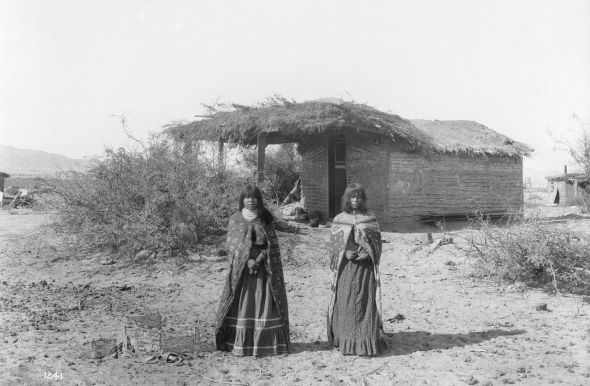
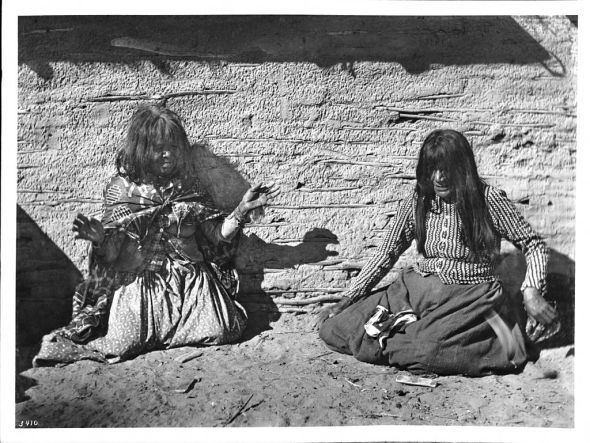
source. Photographer is CC Pierce.
Two Mojave Indian women playing a game (fortune-telling with bones?), ca.1900:
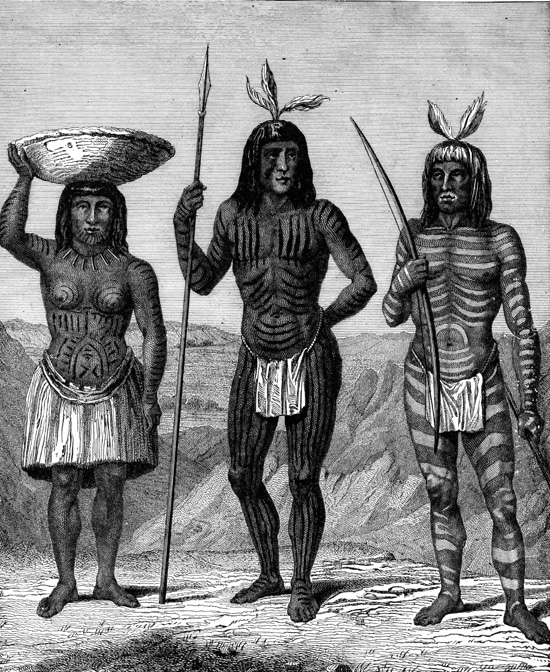
More, by Molhansen, 1856:
Timothy O’Sullivan photographed these guys:
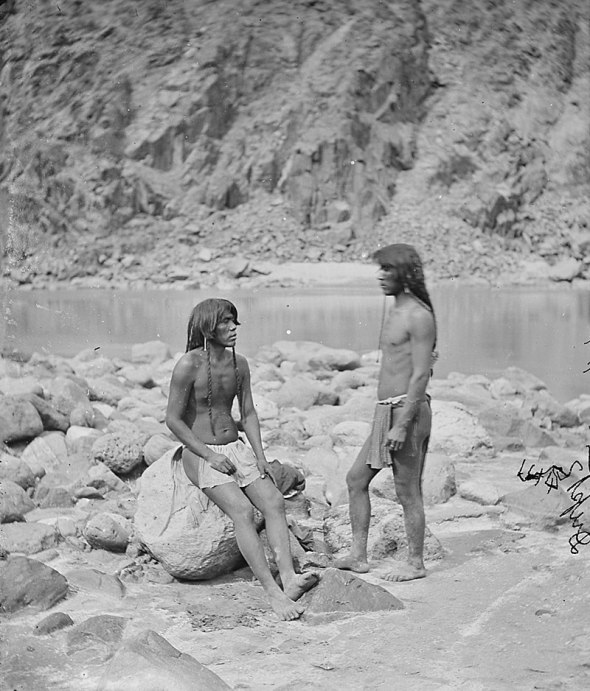
Panambona and Mitiwara are these guys names, apparently.
WSJ with content I CRAVE!
Posted: November 16, 2019 Filed under: America Since 1945 Leave a comment
This detail!
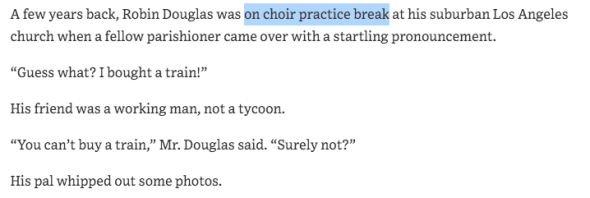 Ken Wells with the byline there. How about this?:

link. Sam Walker the writer here:

More from Grant’s Memoirs
Posted: November 16, 2019 Filed under: war Leave a comment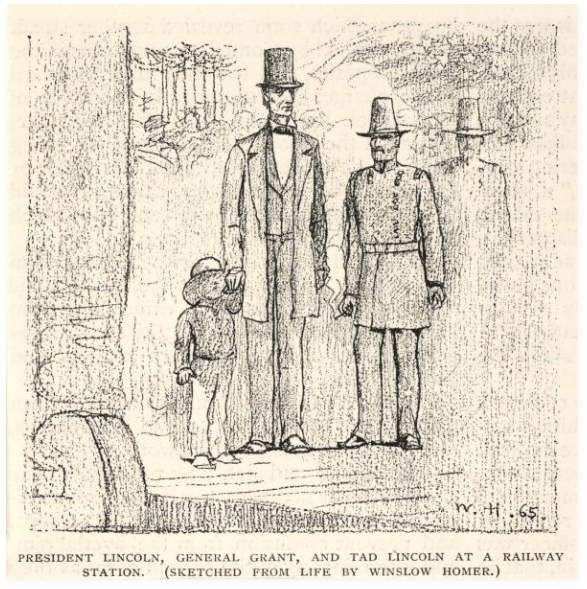
source. far as I know Grant and Lincoln were never photographed together
Any time Grant meets Lincoln it’s tremendous.
I explained to him that it was necessary to have a great number of troops to guard and hold the territory we had captures, and to prevent intrusions into the Northern States. These troops could perform that service just as well by advancing as by remaining still; and by advancing they would compel the enemy to keep detachments to hold them back, or else lay his own territory open to invasion. His answer was “Oh yes! I see that. As we say out West if a man can’t skin he must hold a leg while somebody else does.”
Later:
Mr. Lincoln, supposing I was asking for instructions, said, in reply to that part of Governor Smith’s letter which inquired whether he with a few friends would be permitted to leave the country unmolested, that his position was like that of a certain Irishman (giving the name) he knew in Springfield who was very popular with the people, a man of considerable promise, and very much liked. Unfortunately he had acquired the habit of drinking, and his friends could see the habit was growing on him. These friends determined to make an effort to save him, and to do this they drew up a pledge to abstain from all alcoholic drinks. They asked Pat to join them in signing the pledge, and he consented. He had been so long out of the habit of using plain water as a beverage that he resorted to soda-water a substitute. After a few days this began to grow distasteful to him. So holding the glass behind him, he said, “Doctor, couldn’t you drop a bit of brandy in that unbeknownst to myself?”
An interesting detail: after Spottsylvania and the Wilderness, Grant is convinced the Union has more artillery than could ever be brought into action at any given time. The extra artillery was serving only to clog the roads. The North had so many guns they couldn’t use them all – that was the situation in the Civil War.
Grant is forever on the move. He is either attacking or maneuvering to attack. Moving on the enemy, that is his goal. Putting the enemy where he wants him and then moving upon him. Investing his towns.
The role of Sheridan in taking the initiative in the Shenandoah Valley comes through in this book. (Sheridan, more than the equal of Stonewall Jackson? A question for the real military historians).
Grant’s regrets:
I have always regretted that the last assault at Cold Harbor was ever made. I might say the same thing of the assault of the 22nd of May, 1863, at Vicksburg.

Cold Harbor. Source.
I didn’t know that Grant, when president, attempted to buy what’s now the Dominican Republic with the idea of repatriating black Americans there.


The proposal (I read on Wikipedia) was stopped by Charles Sumner.

The memoirs don’t cover Grant’s presidency, so we don’t get much more about that. What would’ve happened if the plan had gone through, and there’d been a mass resettlement of African Americans to Santo Domingo? An alt-history collab for Junot Diaz and Colson Whitehead –> limited series on HBO starring Rihanna?
Safari
Posted: November 12, 2019 Filed under: Africa 1 Comment
Learned from Paul Theroux that safari in Swahili just means “journey.” When you drive to work in a way you’re on safari.
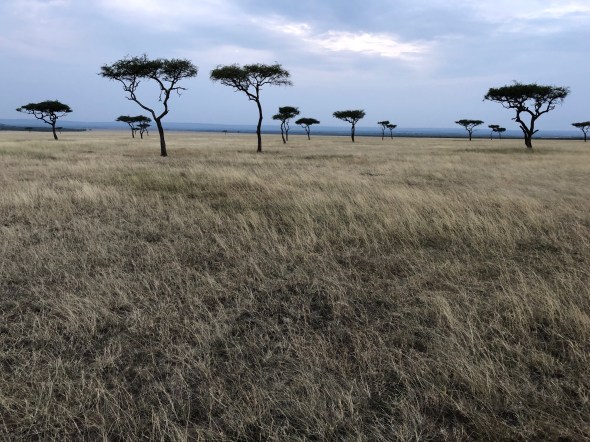
Learned from a guide that “mara” as in Masai Mara National Park means “spotted,” like spotted with thorn trees.
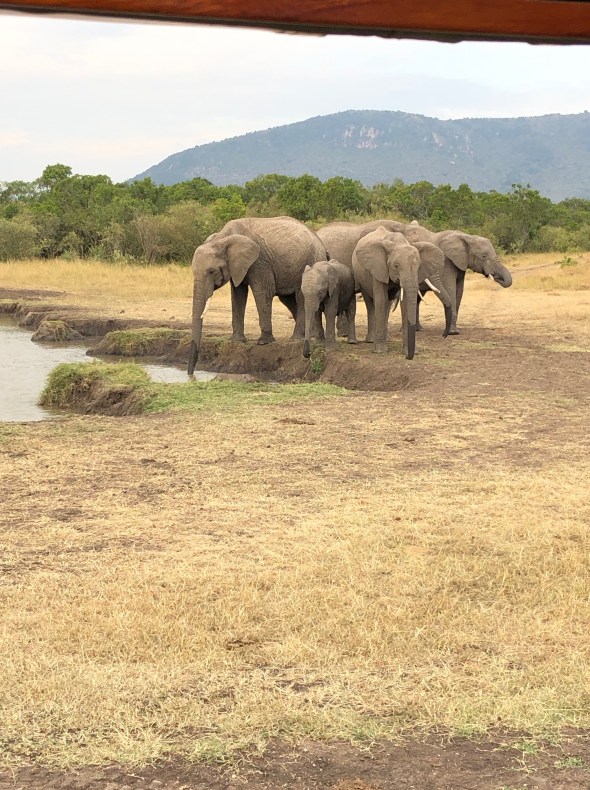
One thing we saw: a mother cheetah had killed an impala, minutes or so before. The mother cheetah crouched over the dead impala. Waiting. Scanning. Watching. She probably waited twenty minutes before she ripped into her breakfast. She’d expended a lot of energy, she was spent. And what if somebody else smelled the blood and came along to get in on it (and maybe you in the process)? I wondered if this pause before eating is at all connected to the idea of saying grace before meals. Primal need to have a pause and a lookaround before tucking in?
Then she chirped, and, eventually, found her six cubs and brought them over. You feel sad for the gazelle but to see the six cubs playing around and licking blood onto their faces is… cute?
Distant view of the lost city of Qattara
Posted: November 10, 2019 Filed under: adventures, architecture, the California Condition 2 Comments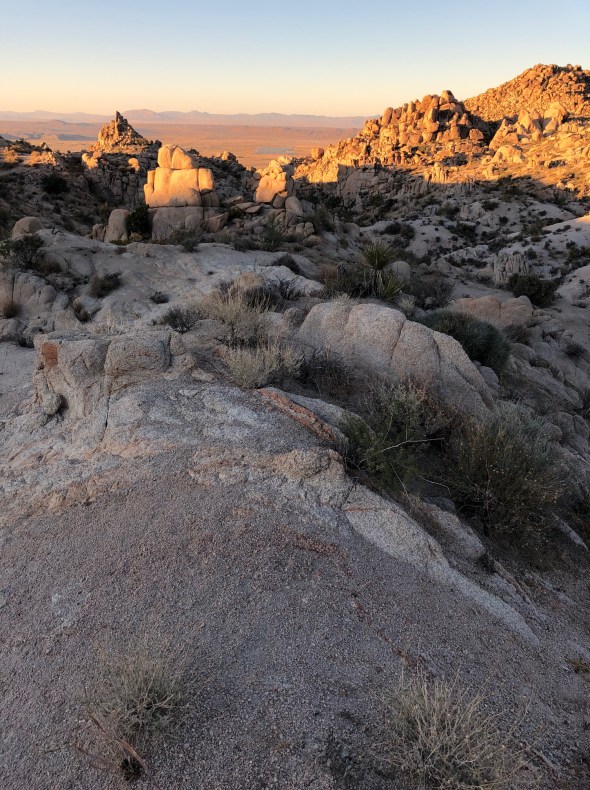
The inhabitants known for their bloodthirstiness would’ve killed me if I approached any further than the Unholy Gate.
Rules for Investment Success by Sir John Templeton
Posted: November 8, 2019 Filed under: business Leave a comment
Quality is a company strongly entrenched as the sales leader in a growing market. Quality is a company that’s the technological leader in a field that depends on technical innovation. Quality is a strong management team with a proven track record. Quality is a well-capitalized company that is among the first in a new market. Quality is a well-known trusted brand for a high-profit-margin consumer product.
The hunt for quality. That’s what’s cool about investing. Hidden quality.
It can’t be all Warren Buffett all the time. Sir John Templeton has been getting my attention.
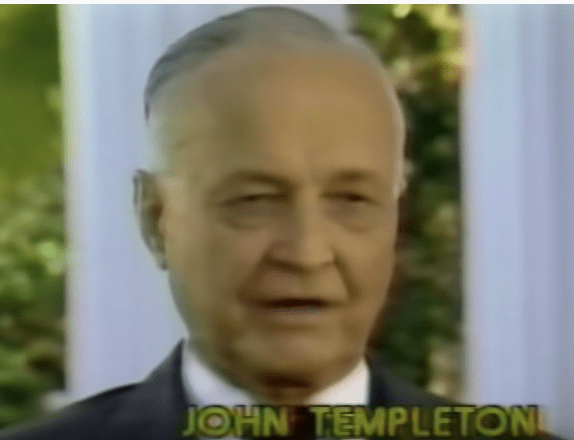
The hunt for points of maximum pessimism. Templeton worked above a grocery store in the Bahamas. His grand-niece keeping the flame. An interview from circa 1985. Later in life he devoted himself to spiritual searching.
Remember, in most cases, you are buying either earnings or assets.
The only reason to sell stocks now is to buy others, more attractive stocks. If you can’t find more attractive stocks, hold on to what you have.
Santa Anita, you had one job!
Posted: November 4, 2019 Filed under: horses, the California Condition Leave a comment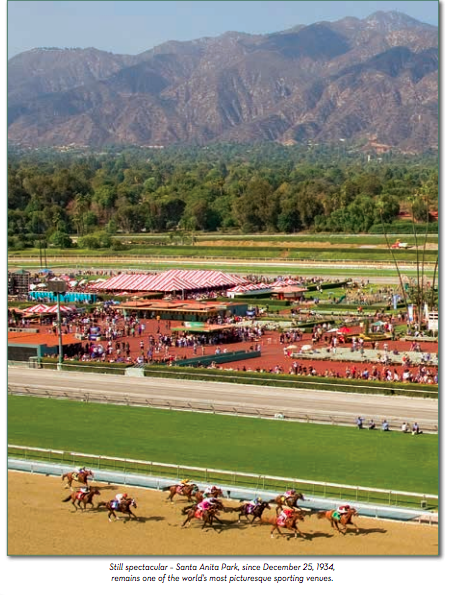
Santa Anita racetrack is a beautiful place. There’s history. Seabiscuit raced there, a statue honors him. It’s good to sit in the stands, look at the mountains, and drink a beer, watch the horses race. Read the little horse newspaper.
Santa Anita’s been having problems though. Horses keep dying there.
Since December 36 (!) horses have died.
On Saturday at Santa Anita they had the Breeders’ Cup, a nationally televised race.
Santa Anita! This is your big moment. All eyes on you. You’re on TV, time to shine.
Please.
Don’t let any horses die.

They had ONE job. And what happened?
A green screen was rushed onto the track to block Mongolian Groom from the view of 67,811 fans and a prime-time television audience. He was loaded onto an equine ambulance and taken to a hospital on the backstretch.
Cup officials said in a statement about two hours after the race that Mongolian Groom had been euthanized after suffering a serious fracture to his left hind leg.
Guys!
Couldn’t we pretend we were giving him tender care? euthanize him later?!
I’ll be sad if Santa Anita closes down. It’s like some enchanted time capsule of southern California. But, if you’re in the horse business, you can’t get me excited about horses and then keep killing them.

Start of the Juvenile Sprint by Jlvsclrk for Wiki
Around LA
Posted: November 3, 2019 Filed under: the California Condition Leave a comment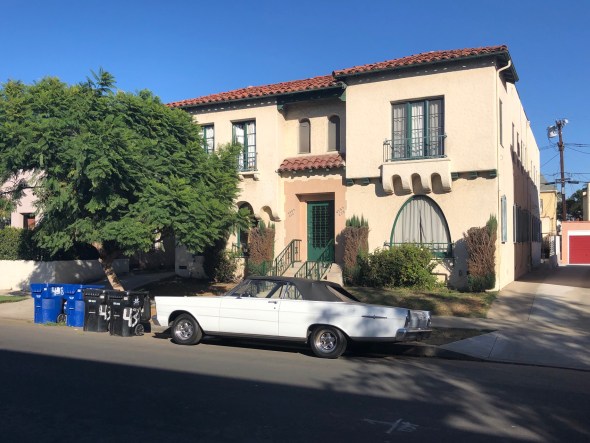
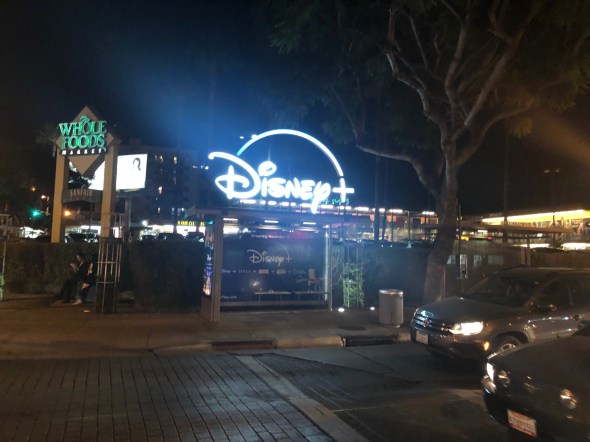
Just a small street scene. I like when cities look like themselves.

Grant’s Memoirs
Posted: November 3, 2019 Filed under: America, war Leave a comment
This picture of Grant at City Point, VA 1864 was taken by Egbert Guy Fowx
“Man proposes and God disposes.” There are but few important events in the affairs of men brought about by their own choice.
So Grant begins his memoirs. Grant’s voice is clear and unashamed and humble. The role of chance, fate, circumstance, God in determining the course of events, and the much smaller role played by character or our actions, is a key theme.
Grant never would’ve gotten to West Point if not for what happened to young Bartlett Bailey:
Finding before the January examination following that he could not pass, he resigned and went to a private school, and remained there until the following year when he was reappointed. Before the next examination he was dismissed. Dr. Bailey [his father] was a proud and sensitive man, and felt the failure of his son so keenly that he forbade his return home. There were no telegraphs in those days to disseminate news rapidly, no railroads west of the Alleghenies, and but few east; and above all, there were no reporters prying into other people’s private affairs. Consequently it did not become generally known that there was a vacancy at West Point from our district until I was appointed. I presume Mrs. Bailey confided to my mother the fact that Bartlett had been dismissed, and that the doctor had forbidden his son’s return home.
Grant later notes:
Major Bailey was the cadet who had preceded me at West Point. He was killed in West Virginia, in his first engagement.
A poignant family story between these lines.
Maybe it’s no surprise that Grant is an excellent, understated writer. Much of his job as a general was to communicate clear, succinct orders and directives under stressful conditions. Many written orders are included in the book. Compact expression of clear meaning must’ve been a key skill to a Civil War general. Probably a military commander in any era.
Then again I tried to read Sherman’s memoirs and can’t recommend them.

a thick book, as well. almost twice as long as Grant’s?
Grant didn’t really want to be a soldier.
Going to West Point would give me the opportunity of visiting the two great cities of the continent, Philadelphia and New York. This was enough.
Later he mentions:
a military life had no charms for me, and I had not the faintest idea of staying in the army even I should be graduated, which I did not expect.
Grant says at this time, he hoped to become a math professor.
The Mexican War breaks out. Grant doesn’t approve, but there he is. He rides from Corpus Christi to San Antonio without seeing a single person until he’s within thirty miles of San Antonio. He joins the expedition to Mexico City.
Considering in tranquility some movements during the Mexican War:
It has always seemed to me that this northern route to the City of Mexico would have been the better one to have taken. But my later experience has taught me two lessons: first, that things are seen plainer after the events have occurred; second, that the most confident critics are generally those who know the least about the matter criticised.
Occupying Mexico City he sees a bullfight:
The sight to me was sickening. I could not see how human beings could enjoy the sufferings of beasts, and often of men, as they seemed to do on these occasions.
Grant is sent to California:
Many of the real scenes in early California life exceed in strangeness and interest any of the mere products of the brain of the novelist. Those early days in California brought out character.
He leaves the army. But the Civil War is approaching:
The great bulk of the legal voters of the South were men who owned no slaves; their homes were generally in the hills and poor country; their facilities for educating their children, even up to the point of reading and writing, were very limited; their interest in the contest was very meagre… Under the old regime they were looked down upon by those who controlled all the affairs in the interest of slave owners, as poor white trash who were allowed the ballot so long as they cast it according to direction.
Grant, quickly, is elevated to command, and starts marching down the Tennessee River, taking Forts Henry and Donelson along the way. But his army is almost driven back into the river on the first day at Shiloh.
Shiloh, as you’ve probably heard, was not a good scene. Two big armies ran into each other and murdered each other for pretty much an entire day. The night after the first day, Grant tries to sleep under a tree in pouring rain:
Some time after midnight, growing restive under the storm and the continuous pain, I moved back to the log-house under the bank. This had been taken as a hospital, and all night wounded men were being brought in, their wounds dressed, a leg or an arm amputated as the case might require, and everything being done to save life or alleviate suffering. The sight was more unendurable than encountering the enemy’s fire, and I returned to my tree in the rain.
Yet, he’s confident:
So confident was I before firing had ceased on the 6th that the next day would bring victory to our arms if we could only take the initiative, that I visited each division commander in person before any reinforcements had reached the field. I directed them to throw out heavy lines of skirmishers in the morning as soon as they could see, and push them forward until they found the enemy… To Sherman I told the story of the assault at Fort Donelson, and said the same tactics would win at Shiloh.
After day two:
I saw an open field, in our possession on the second day, over which the Confederates had made repeated charges the day before, so covered with dead that it would have been possible to walk across the clearing, in any direction, stepping on dead bodies, without a foot touching the ground.
Jason Robards read the Grant parts in Ken Burns Civil War

Robards, from Wikipedia
On promotions:
Every one has his superstitions. One of mine is that in positions of a great responsibility every one should do his duty to the best of his ability where assigned by competent authority, without application or use of influence to change his position.
After Vicksburg fell, Grant was almost killed in New Orleans by a horse that was scared by a locomotive and fell on him. But he makes it out, though he’s on crutches for a bit. Imagine all the times when Grant could’ve been killed, and it was a spooked horse in occupied New Orleans that almost got him.
During the movements around Chattanooga, Grant pauses to consider:
There was no time during the rebellion when I did not think, and often say, that the South was more to be benefited by its defeat than the North. The latter had the people, the institutions, and the territory to make a great and prosperous nation. The former was burdened with an institution abhorrent to all civilized people not brought up under it, and one which degraded labor, kept it in ignorance, and enervated the governing class. With the outside world at war with this institution, they could not have extended their territory. The labor of the country was not skilled, nor allowed to become so. The whites could not toil without becoming degraded, and those who did were denominated “poor white trash.” The system of labor would have soon exhausted the soil and left the people poor. The non-slaveholders would have left the country, and the small slaveholder must have sold out to his more fortunate neighbor. Soon the slaves would have outnumbered the masters, and, not being in sympathy with them, would have risen in their might and exterminated them. The was was expensive to the South as well as to the North, both in blood and treasure, but it was worth all the cost.
That’s enough of Grant’s memoirs for now.
Santa Ana Winds
Posted: October 27, 2019 Filed under: the California Condition Leave a comment
“ There was a desert wind blowing that night. It was one of those hot dry Santa Anas that come down through the mountain passes and curl your hair and make your nerves jump and your skin itch. On nights like that every booze party ends in a fight. Meek little wives feel the edge of the carving knife and study their husbands’ necks. Anything can happen. You can even get a full glass of beer at a cocktail lounge. ” — Raymond Chandler, “Red Wind”
|
|
|
|
|
||
If you’re a reader of Helytimes you’ve probably come across these quotes about the dry, spooky winds that originate in the desert and blow into Los Angeles.
The definition of these winds in common use gets kind of loose. Any wind that’s blowing not the cooling, perfume air of the Pacifc, but the dry, harsh air off the desert, can get counted as a Santa Ana wind.
One of the oldest references to the Santa Ana winds appears to be in a January, 1943 issue of California Folklore Quarterly. Luckily we have that issue handy, and present it here for any interested California scholars.


Maybe next week we’ll look into The Vanishing Hitchhiker
Daily (?)
Posted: October 27, 2019 Filed under: bible Leave a comment
If you had a Catholic or any sort of Christian upbringing, you’ll know this one:
Our Father who art in heaven,
Hallowed be thy name.
Thy kingdom come.
Thy will be done
on earth as it is in heaven.
Give us this day our daily bread,
and forgive us our trespasses,
as we forgive those who trespass against us,
and lead us not into temptation,
but deliver us from evil.
The most famous prayer in the world? Maybe. But what about “daily” there? While reading a list of hapex legomenon,
a word that occurs only once within a context, either in the written record of an entire language, in the works of an author, or in a single text.
I learned that “daily” in this case is an ancient Greek hapex legomenon.
Epiousios, translated into English as ″daily″ in the Lord’s Prayer in Matthew 6:11 and Luke 11:3, occurs nowhere else in all of the known ancient Greek literature, and is thus a hapax legomenon in the strongest sense.

So, this word, that’s only used once, epiousios, what exactly did it mean? Wikipedia:
The difficulty in understanding epiousios goes at least as far back as AD 382… At that time, St. Jerome was commissioned by Pope Damasus I to renew and consolidate the various collections of biblical texts in the Vetus Latina (“Old Latin”) then in use by the Church. Jerome accomplished this by going back to the original Greek of the New Testament and translating it into Latin; his translation came to be known as the Vulgate. In the identical contexts of Matthew and Luke—that is, reporting the Lord’s Prayer—Jerome translated epiousios in two different ways: by morphological analysis as ‘supersubstantial’ (supersubstantialem) in Matthew 6:11, but retaining ‘daily’ (quotidianum) in Luke 11:3.
The modern Catholic Catechism holds that there are several ways of understanding epiousios, including the traditional ‘daily’, but most literally as ‘supersubstantial’ or ‘superessential’, based on its morphological components. Alternative theories are that—aside from the etymology of ousia, meaning ‘substance’—it may be derived from either of the verbs einai (εἶναι), meaning “to be”, or ienai (ἰέναι), meaning both “to come” and “to go”.
Other ideas:
Kenneth E. Bailey, a professor of theology and linguistics, proposed “give us today the bread that doesn’t run out” as the correct translation. The Syriac versions of the Bible were some of the first translations of the Gospels from the Greek into another language. Syriac is also close to Jesus’ own Aramaic, and the translators close in time and language to Jesus should thus have had considerable insight into his original meanings. In Syriac epiousios is translated as anemo, meaning lasting or perpetual.
Wrote to my friend BVZ who’s a pastor out in Oklahoma, he sent me some Biblical commentaries that suggest a connection with words that meant “ration.”
Today’s? Every day’s? Tomorrow’s? A day’s worth of? Earned? Special? Sacred? Eternal? Magic? Holy? Sustaining? Nutritious?
What did epiousios mean?
Maybe the prayer should go:
give us this day, our wonder bread.
Will the future be primitive?
Posted: October 20, 2019 Filed under: the California Condition Leave a comment Down in Manhattan Beach on a small mission, I stopped into Brothers Burritos, recommended as a Beach Cities lunch spot by Travis of El Segundo / Hood River. “You get two mini burritos.” Sold.
At Brothers, the Pacific just a few streets down, they have a rack of old issues of surfing mags, including Surfer’s Journal. This magazine has gripped me before, it’s really impressive, almost as much a journal of travel and philosophy as it is of waves.

In this issue was a piece by Jamie Brisick where he walks a stretch of Hawaii’s North Shore, “from Velzyland to Log Cabins,” a stretch he’s visited and lived in, on and off, for something like thirty-five years. He remembers legends, has encounters, studies the changes to the beach, shares memories.
This struck me:

Blacksmiths. Yvon Chouinard of Patagonia began as a blacksmith. How about Primitive Technologies guy?
Primitive technology is a hobby where you make things in the wild completely from scratch using no modern tools or materials. This is the strict rule. If you want a fire- use fire sticks, an axe- pick up a stone and shape it, a hut- build one from trees, mud, rocks etc. The challenge is seeing how far you can go without modern technology. If this hobby interests you then this blog might be what you are looking for.
Also It should be noted that I don’t live in the wild but just practice this as a hobby. I live in a modern house and eat modern food. I just like to see how people in ancient times built and made things. It is a good hobby that keeps you fit and doesn’t cost anything apart from time and effort.
from his website.
Out in the Mojave there are pockets of people into permaculture, imagining perhaps that the future may be primitive.
I’m not sure how primitive the future will be. Some skills and trades are ancient and seem to endure. The future may not be as futuristic as we once, collectively, seemed to dream. Maybe the primitive sense is just an adjustment of expectation. Does technology have to move forward all the time? The primitive future. Could there be a world where the past seems futuristic? The language of backwards and forwards almost suggests a direction History moves. But History also tells of times when life became more primitive, even for centuries. How dark were the Dark Ages is a good debate, too big for this space. Leave that out and there are still times where civilizations dissolve or collapse or just kinda retreat or fade out.
No matter how primitive the future gets, there’s something soothing about practicing ancient arts and crafts and trades. Simple, without being primitive — could that be a future to hope for?
Very satisfying burritos. I’ve since been to the Brothers in Hermosa Beach, which I also liked but just not quite as much.
The Manhattan Beach Public Library has got to be, real estate wise, one of the best public libraries in the nation. You can sit in a nice chair and stare at the ocean.

many things on the internet
Posted: October 19, 2019 Filed under: America Since 1945, art history Leave a commentremind me of this one:

from:
this scene from Newsradio
Posted: October 19, 2019 Filed under: comedy, TV Leave a comment
(for when YouTube removes the link, it is a scene where Matthew and Joe bet on whether the next song on the radio will be good or not. The song that comes up is “Wichita Lineman.”)
Some things I like about the scene: the idea that depending on the circumstances you could believe this was a good or bad song. Matthew trying to sell it. Also Matthew’s honesty.
This may have been the first time I heard this song?


.jpg)
.jpg)
,_ca.1900_(CHS-3410).jpg)


