The Hockney thing at LACMA
Posted: June 2, 2018 Filed under: art history, museum, the California Condition Leave a comment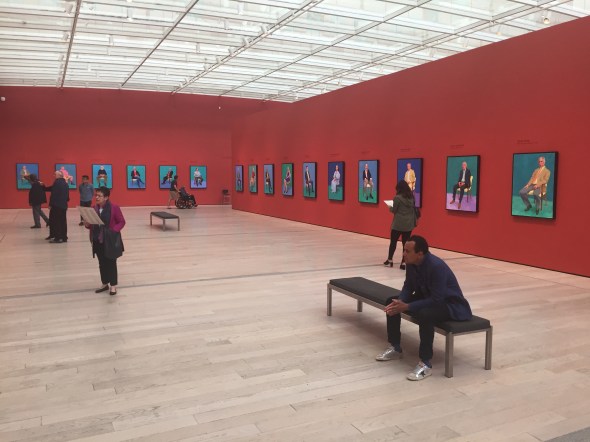
is cool. Eighty-two portraits in one room, creates a neat effect. Worth a visit if you’re in the area. 
Stars of the National Gallery of Ireland
Posted: May 26, 2018 Filed under: art history, Ireland 3 Comments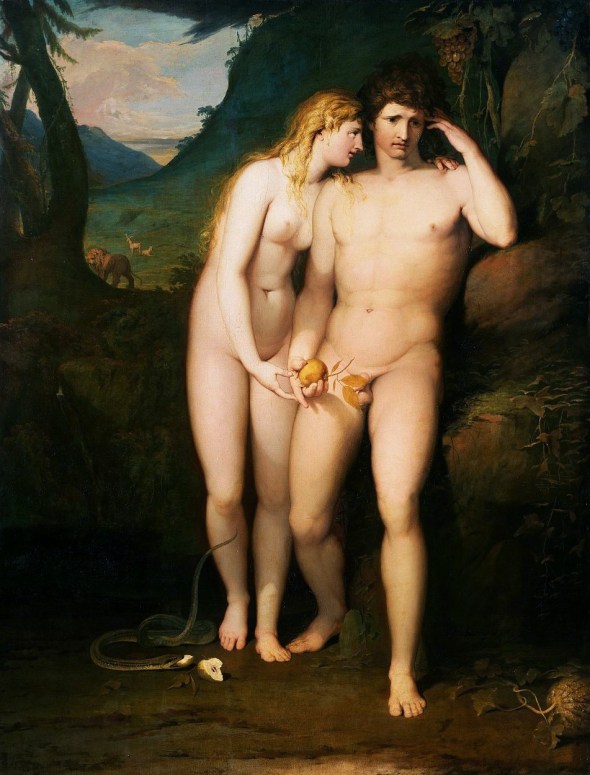
source
“Pwease Adam? One bite? You’ll like it I promise!”
The Temptation of Adam, by James Barry.
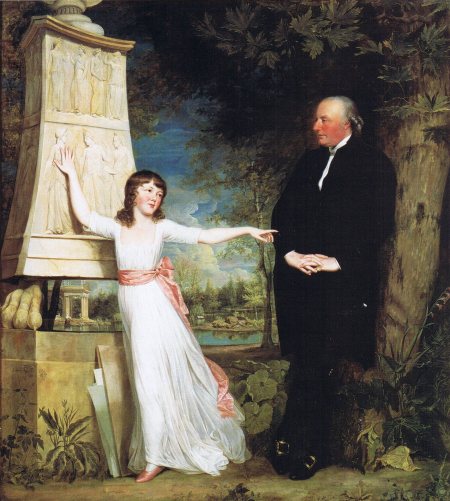
Look grandfather, I am but a nymph!
Lady Caroline Crichton and her grandpa?
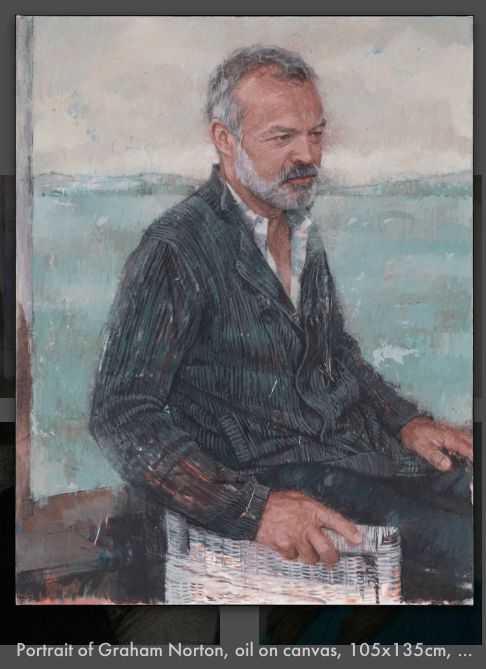
Gareth Reid, Graham Norton (from Gareth Reid’s website)
In 1992, Norton’s stand-up comedy drag act as a tea-towel clad Mother Teresa of Calcutta in the Edinburgh Festival Fringe made the press when Scottish Television’s religious affairs department mistakenly thought he represented the real Mother Teresa.
This one by Paul Henry, A Connemara Village, is under some serious copyright I guess.
Robert Ballagh’s portrait of Neil Brown “communicates the resolute character for which he was known.” I’ll say! Copyright plus reproductions don’t do it justice. Worth seeing if you’re in Dublin.
Also good:
John Kindness, Gay Byrne

The Liffey Swim by Jack Yeats (W. B’s brother) won Ireland’s first Olympic medal, a silver in 1924 in the category Painting. (Jean Jacoby took gold).
Stars of the National Portrait Gallery, London
Posted: May 12, 2018 Filed under: art history Leave a comment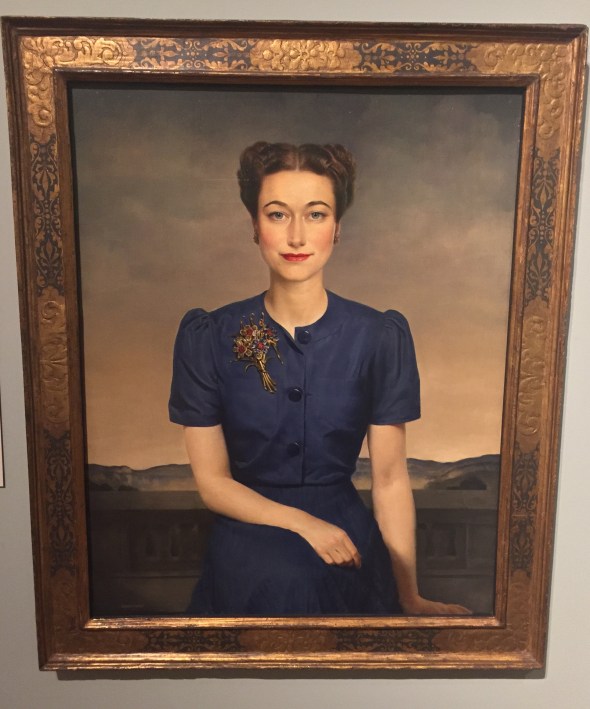
Mrs. Simpson, who caused so much trouble, by Gerald Brockhurst.
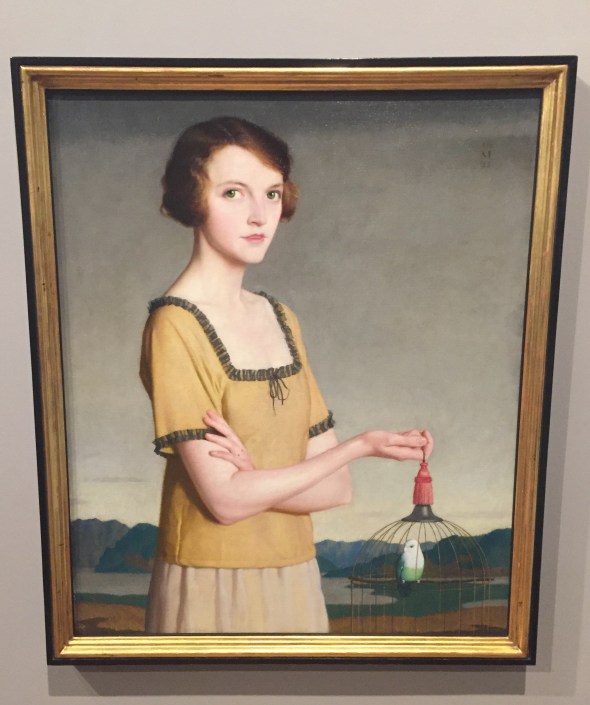
Winifred Radford by Meredith Frampton.
She became a specialist in French mélodie

Ken Dodd:

Ayuba Suleimain Diallo (Job ben Solomon)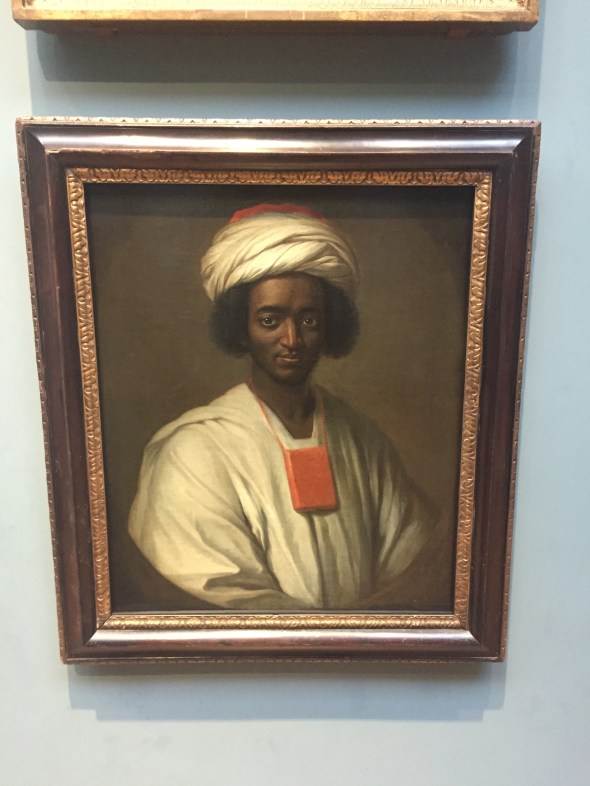
Recognized as a deeply pious and educated man, in England Diallo mixed with high and intellectual society, was introduced at Court and was bought out of slavery by public appeal
Joseph Collet

was away in China so long he had Amoy Chinqua make a statue of him out of clay to send home.
Here we have Margaret “Peg” Woffington:

source
says the caption on her:
she was known for her bitter rivalries with other actresses (she stabbed Mrs. Bellamy during a performance)
The winner though is Daniel Lambert as painted by Benjamin Marshall:
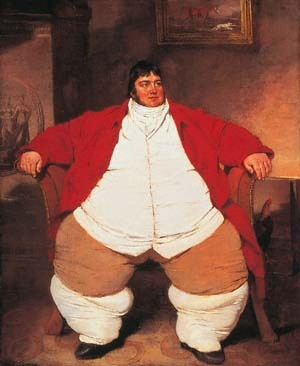
Welp time to look for lunch!
The Generals, John Singer Sargent, 1922
Posted: May 4, 2018 Filed under: art history, museum Leave a comment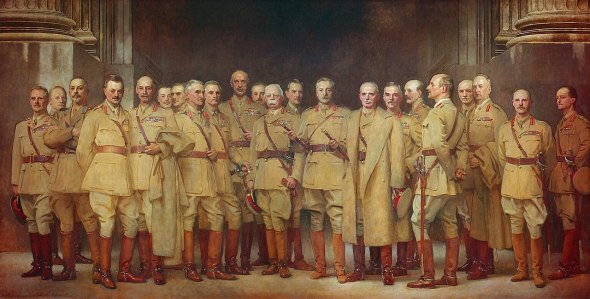
“I just don’t get it guys, why do we keep losing?”

Source and appropriate epic size, it’s at the National Portrait Gallery in London.
Said Sargent, while working on it:
the Generals loom before me like a nightmare… I curse God and man for having weakly said I would do them, for I have no ideas about it and I foresee a horrible failure
Hunters In The Snow
Posted: March 16, 2018 Filed under: art history Leave a comment
Always thought this picture was cool but only just learned it was one of a series of six (or maybe twelve?). Five survive.
Hunters in the Snow shows December-January.

The Gloomy Day shows February or March.
Here one is missing?

Hay Harvest shows June / July.

The Harvesters is for August / September.
Return of the Herd shows October / November.
Michael Frayn, in his novel Headlong, imagines a lost panel from the 1565 Months series resurfacing unrecognised, which triggers a mad conflict between an art (and money) lover and the boor who possesses it. Much thought is spent on Bruegel’s secret motives for painting it.
Cool.
Symbology
Posted: February 16, 2018 Filed under: art history, the California Condition Leave a comment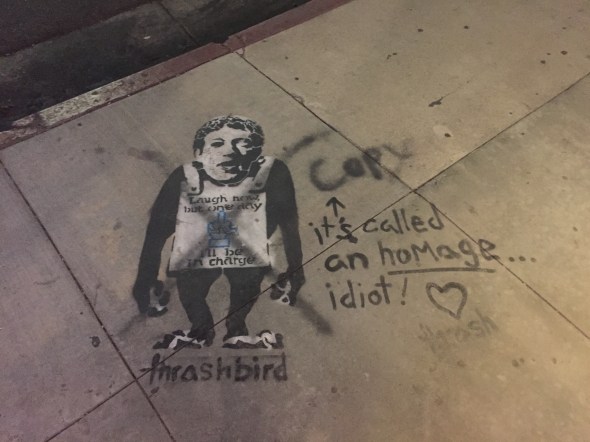
I’d like to ask Dr. Robert Langdon, Harvard professor of Symbology, about some of the things going on in this local street art.
How much do you think this shitty painting by JFK sold for?
Posted: December 4, 2017 Filed under: art history Leave a comment
relevant to our discussion of George W. paintings.
You can find out the answer here at ArtNet in a piece by Sarah Cascone.
What An Unbranded Cow Has Cost
Posted: November 28, 2017 Filed under: art history Leave a comment
Shoutout to jrdfrnk on Instagram, whom I don’t know I don’t think, but whom put some closeups of this painting on his Instastory:

a different coloration in the Wikiart version?
reminding me to take more looks at Frederic Remington
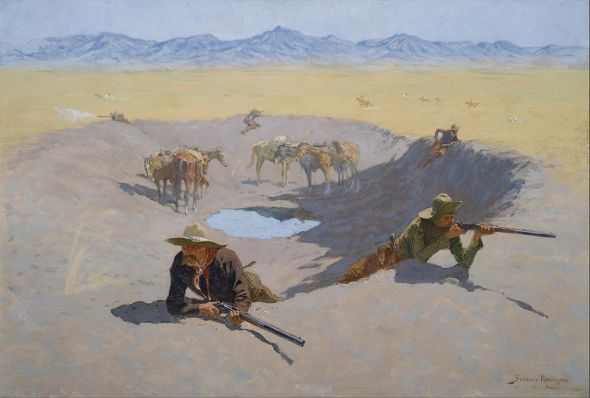
How cool was Frederic Remington?

The Scream Of Shrapnel on San Juan Hill:


The guy’s first sculpture was this:


The Revolution eats its children
Posted: November 16, 2017 Filed under: art history 2 Comments
[Jaques Mallet du Pan] is known for coining the adage “like Saturn, the Revolution devours its children,” which originally appeared as “A l’exemple de Saturne, la révolution dévore ses enfants” in his widely circulated 1793 essay Considérations sur la nature de la Révolution de France, et sur les causes qui en prolongent la durée.
Goya’s painting above. Wikipedia tells me Goya had this painting in his dining room.
Rubens on same theme:

Will a painting by George W. Bush increase or decrease in value?
Posted: November 14, 2017 Filed under: art history, presidents 1 Comment
Vote by corresponding with Helytimes, please make only clear, considered arguments.
From The Hill, 2013 re a W. Christmas ornament for sale:
The former White House resident, 67, told Jay Leno in a Tuesday “Tonight Show” appearance that he takes weekly painting lessons, telling an instructor, “There’s a Rembrandt trapped in this body — your job is to find it.”
So hard to wrap your head around that someone (most presidents?) can be simultaneously a psychopath and a goofball.
Water Dreaming at Kalipinya
Posted: November 2, 2017 Filed under: art history, Australia Leave a comment
Says the 2001 NYTimes obituary of painter Johnny Warangkua Tjupurrula:
He died a penniless alcoholic. In 1997 one of his paintings, ”Water Dreaming at Kalipinya,” which he had sold in 1972 for $75, changed hands at a Sotheby’s auction in Melbourne for $263,145, setting a record for any Aboriginal work of art. Mr. Tjupurrula’s request for 4 percent of the sale price was refused by both seller and buyer.
Not cool! From a 2010 Smithsonian article by Arthur Lubow:
The Wilkersons’ costliest board was the 1972 painting Water Dreaming at Kalipinypa, a dazzling patchwork of stippled, dotted and crosshatched shapes, bought in 2000 for some $220,000—more than twice the price it had been auctioned for only three years earlier. The painting was done by Johnny Warangkula Tjupurrula, an original member of the Papunya cooperative and one of its most celebrated. Sadly, the artist himself had long been overlooked; in 1997, an Australian journalist found Warangkula, by then old and homeless, sleeping along with other Aboriginal people in a dry riverbed near Alice Springs. Though he reportedly received less than $150 for his best-known painting, the publicity surrounding the 1997 sale revived his career somewhat and he soon resumed painting. Warangkula died in a nursing home in 2001.
Here’s his 1972 painting Potato Dreaming:
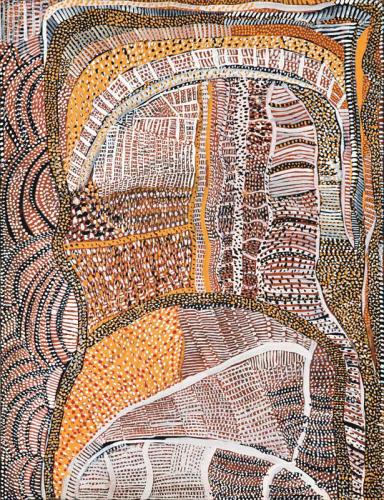

Considering John Kelly
Posted: October 31, 2017 Filed under: America Since 1945, art history, heroes, history, statues 2 Comments
Compelled by John Kelly, Boston Marine turned Trump babysitter / White House chief of staff.
John Kelly, like Robert E. Lee, is brave, self-sacrificing, dignified, and wrong.
It’s possible to be noble and admirable and honorable and really wrong. Like, a force for wrongness.
Watched his entire press conference re: presidential respect for fallen soldiers. Found it very moving. He mentions walking for hours in Arlington National Cemetery to collect his thoughts. Maybe he should send the president.

In one of the infinite amazing connections of American history Arlington National Cemetery was built on the grounds of Lee’s wife’s house.
INTERVIEWER
What about General Robert E. Lee?
FOOTE
The single greatest mistake of the war by any general on either side was made by Robert E. Lee at Gettysburg, when he sent Pickett’s and Pettigrew’s divisions across that open field, nearly a mile wide, against guns placed on a high ridge and troops down below them, with skirmishers out front. There was no chance it would succeed. Longstreet told him that beforehand and Lee proceeded to prove him right. Having made this greatest of all mistakes, Lee rode out on the field and met those men coming back across the field— casualties were well over fifty percent—and said, It’s all my fault. He said it then on the field; he said it afterwards, after he’d gotten across the Potomac; he said it in his official report a month later. He said, I may have asked more of my men than men should be asked to give. He’s a noble man, noble beyond comparison.
(from the Paris Review interview with Shelby Foote)

Henry Lee, Robert E.’s father
Why did people love Robert E. Lee so much? He was handsome, for one thing. Here’s Elizabeth Brown Pryor going off in her Six Encounters With Lincoln:

“Matinee-idol looks.”
They liked Lee too because he reminded of them of George Washington.

Is this interesting?: two of the most prominent American slaveholders, Washington and Lee, only owned slaves because they’d married rich women.
Lee’s wife was Martha Washington’s great granddaughter.

Anyway: whatever, it’s time for some new statues!

John Kelly made his most recent remarks about Lee on The Ingraham Angle on Fox News.
During that appearance, Kelly says something not true, that the events in the indictment came from well before Manafort knew Donald Trump. Not true, if we believe Slate’s helpful timeline. Manafort and Trump have known each other since the ’80s.
Didn’t Manafort live in Trump Tower off the money he made as a lobbyist for dictators?

Kelly also says that the part about where got wrong what Fredrica Wilson said at the FBI dedication, that part “we should just let that go.”
Also brooooo! What is American history up to the Civil War but a history of compromises?

Happened to read an interview in PRISM, a publication of the Center For Complex Operations, with John Kelly yesterday. He’s talking about his career leading the Southern Command, ie Central and South America.

This was not my experience talking to Latin Americans. More than one South American has pointed out to me that in their countries, “the troops” are not assumed to be good guys or on your side.
Didn’t love this:

We need more Marine generals like Smedley Butler:

I wish John Kelly would also remember the time Henry Lee put himself in harm’s way to defend the freedom of the press.
During the civil unrest in Baltimore, Maryland in 1812, Lee received grave injuries while helping to resist an attack on his friend, Alexander Contee Hanson, editor of the Baltimore newspaper, The Federal Republican on July 27, 1812.
Hanson was attacked by a Democratic-Republican mob because his paper opposed the War of 1812. Lee and Hanson and two dozen other Federalists had taken refuge in the offices of the paper. The group surrendered to Baltimore city officials the next day and were jailed.
Laborer George Woolslager led a mob that forced its way into the jail, removed the Federalists, beating and torturing them over the next three hours. All were severely injured, and one Federalist, James Lingan, died.
Lee suffered extensive internal injuries as well as head and face wounds, and even his speech was affected. His observed symptoms were consistent with what is now called post-traumatic stress disorder.
Need to learn more about this!
Maybe a statue of James Lingan, outside Prospect House?:

source: wiki, photo by AgnosticPreachersKid
One last bit from Shelby Foote:

Bud, history always has bias! You don’t think this guy
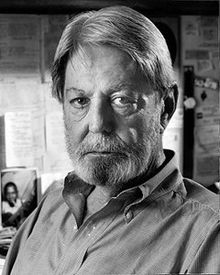
thought Lee was cool, if only because they looked alike?


Does Ta-Nahesi Coates get tired of having to say the same stuff over and over?:

“History’s history,” says John Kelly on The Ingraham Angle. Is it?
Personally, when I think about John Kelly’s life, I’m prepared to cut him some slack, but man. I can’t say he “gets it.”
Thomas Ricks, as always, has the take:
 A must read.
The comment of Kelly’s that hasn’t gotten the attention it deserves is when he half-jokingly suggests (around 26:41)
that they’re gonna replace the Washington Monument with Andy Warhol.

Critics on critics on critics
Posted: October 17, 2017 Filed under: America Since 1945, art history, books, writing Leave a comment
This review in the New York Times, by Vivan Gornick of Adam Gopnik’s “At The Strangers’ Gate” caught my attention.
Critics have taken aim on Adam Gopnik before. To which New Yorker editor David Remnick says:
‘The day any of these people write anything even remotely as fine and intelligent as Adam Gopnik will be a cold day in hell.'”
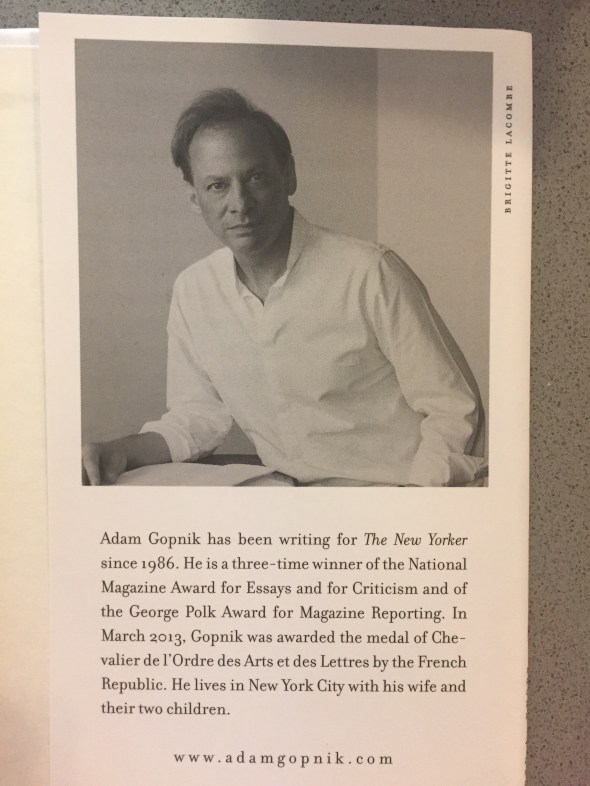
The key to this memoir might be when the author reveals he graduated high school at age fourteen. He’s a boy genius.
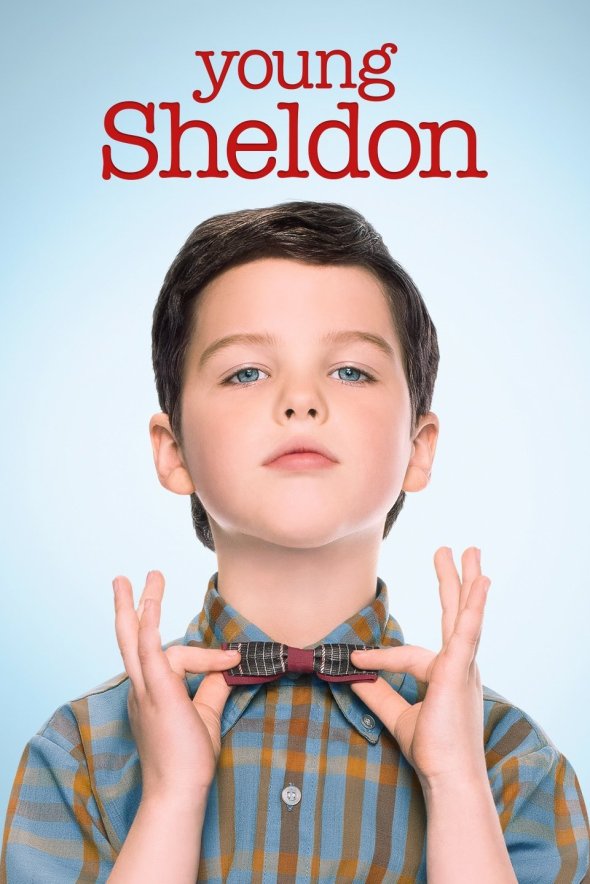
This is kind of Young Sheldon the book.

The book has some good stories in it. Adam Gopnik tells about how a guy who came to one of his lectures on Van Gogh. This guy had an axe to grind and it was this: why did Vincent never paint his brother Theo?

My favorite part of the book was Gopnik’s discussion of Jeff Koons. Gopnik is illuminating on the topic of Jeff Koons. Here is Koons talking to Gopnik at a party.

(I added the potato because while it may not be strictly legal to electronically reproduce pages of books, if I include them in an original work of art, that’s gotta be allowed, right?)

Hieronymus Bosch
Posted: September 25, 2017 Filed under: art history Leave a comment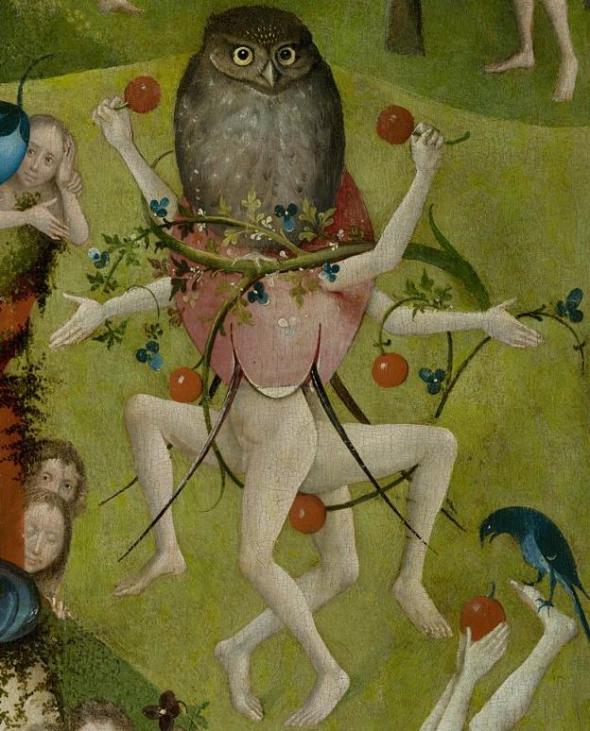
Hard not to conclude something weird up with this guy.
Interested by this essay I saw on AL Daily in Hyperallergic by Forrest Muelrath about ergotism, St. Anthony, apothecaries, and paintings of the Bosch era. Learned a lot I didn’t know:
The illness is contracted by ingesting ergot fungus, which appears on cereal grains when the growing conditions are right — most commonly on rye. The last known severe outbreak occurred in the French village of Pont-Saint-Espirit in 1951. The outbreak was documented in the British Medical Journal, which describes symptoms such as nausea, depression, agitation, insomnia, a delirium that includes feelings of self-accusation or mysticism, and hallucinations that commonly include animals and fire. A non-fiction book about the 1951 outbreak, written by American author John G. Fuller, titled, The Day of Saint Anthony’s Fire, describes specific ergot-related psychotic episodes. For example, there is the afflicted man who thought he was an airplane and jumped out the asylum’s second floor window with outstretched arms expecting to fly, telescoped both his legs upon landing, and then ran 50 meters at full speed on shattered bones before being wrestled to the ground by eight other men.
(I’d never heard of Hyperallergic and now it’s my favorite magazine?)
First read about erogotism when trying to work out what the hell was going on with the Salem Witch Trials. Erogitsm is a suggested cause there too. Maybe it did have something to do with it, as did living in a nightmare war zone where Indians you imagined were demonic could kill you at any second plus an extreme religious ideology plus sexual tension plus whatever pharmacology Tituba was cooking up.
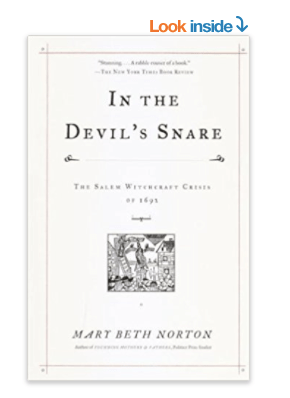
To me, semi-medical explanations of historical art or historical behavior can be very stimulating, but also tend to look for an easy out. There’s all kinds of reasons and ways why people go insane or make wildly inventive works. We can’t even sort these questions about people who are alive now. Imagine declaring an answer to what combo of fame, genius, drugs, talent, mental illness, etc make Kanye West. Who can say? How could we hope for answers like that for a 15th-16th century Dutch (?) painter?
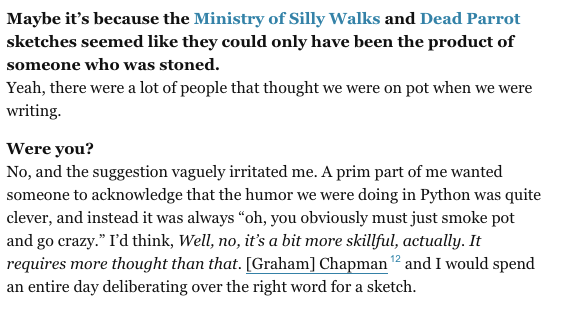
Reminded me of a bit from this recent John Cleese interview in Vulture about the influence of drugs on Monty Python:
Not the world’s premiere Bosch expert, but I did read this book about him:
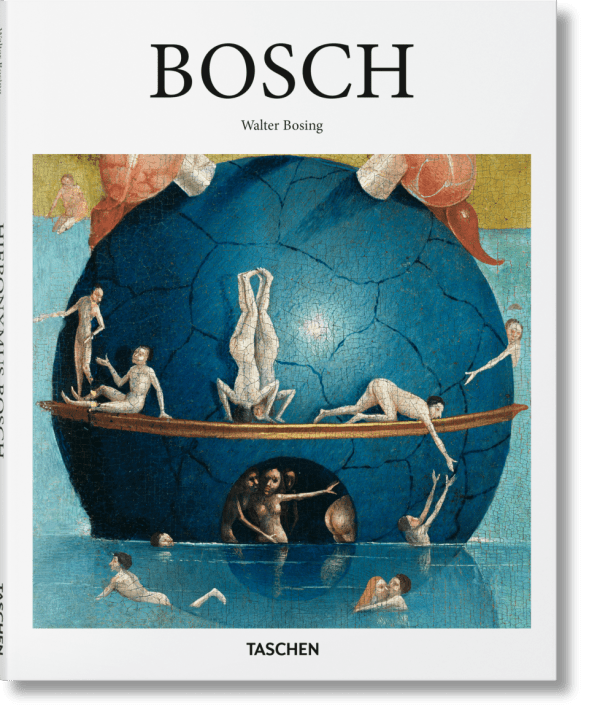
There’s a lot that can never be known about a guy who was dead by 1516. But what struck me in Bosch reading is that he was in something called the Brotherhood Of Our Lady. The “austerely devout lay brotherhood,” said Time magazine in 1947. The other members were like magistrates and stuff.
From the scraps of evidence you could surmise this was a respected citizen who lived a long and productive life and appears to have never bothered anybody.
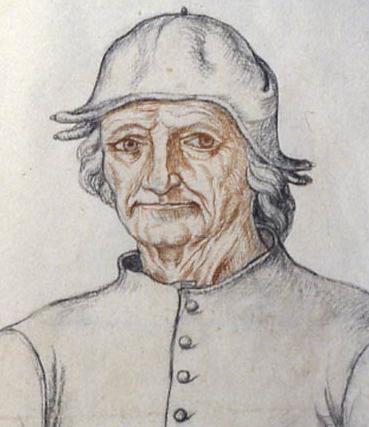
Is Bosch more interesting if he was essentially freaking out on mushrooms, or if he was a diligent, level-headed craftsman?

Can he be both?
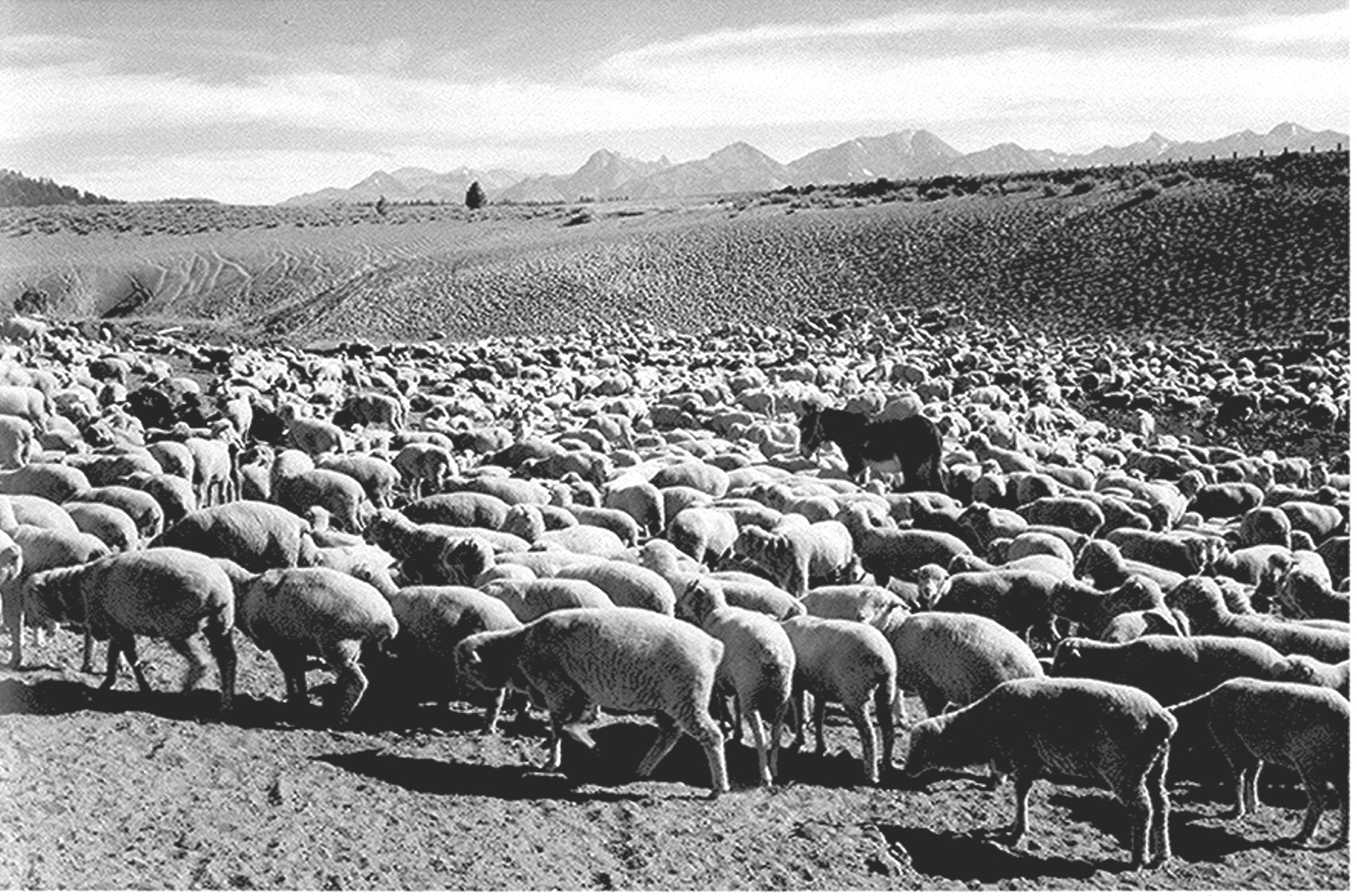
Ansel in Playboy
Posted: July 20, 2017 Filed under: art history, photography, the American West, the California Condition Leave a comment
I’ll explain it this way: Both William Henry Jackson and Edward Weston photographed the American West extensively. But in my opinion, only Weston’s photographs qualify as art. Jackson, for all his devotion to the subject, was recording the scene. Weston, on the other hand, was actually creating something new. In his work, subject is of secondary importance to the total photograph. Similarly, while the landscapes that I have photographed in Yosemite are recognized by most people and, of course, the subject is an important part of the pictures, they are not “realistic.” Instead, they are an imprint of my visualization. All of my pictures are optically very accurate–I use pretty good lenses–but they are quite unrealistic in terms of values. A more realistic simple snapshot captures the image but misses everything else. I want a picture to reflect not only the forms but what I had seen and felt at the moment of exposure.
Playboy: Give us an example.Adams: My Moonrise, Hernandez, New Mexico has the emotion and the feeling that the experience of seeing the actual moonrise created in me, but it is not at all realistic. Merely clicking the camera and making a simple print from the negative would have created a wholly different–and ordinary–photograph. People have asked me why the sky is so dark, thinking exactly in terms of the literal. But the dark sky is how it felt.

When photographer Alfred Stieglitz was asked by some skeptic, rather scornfully, “How do you make a creative photograph?” he answered, “I go out into the world with my camera and come across something that excites me emotionally, spiritually or aesthetically. I see the image in my mind’s eye. I make the photograph and print it as the equivalent of what I saw and felt.” That describes it well. What he called seeing in the mind’s eye, I call visualization. In my mind’s eye, I am visualizing how a particular revelation of sight and feeling will appear on a print. If I am looking at you, I can continue to see you as a person, but I am also in the habit of shifting from that consciously dimensional presence to a photograph, relating you in your surroundings to an image in my mind. If what I see in my mind excites me, there is a good chance it will make a good photograph. It is an intuitive sense and also an ability that comes from a lot of practice. Some people never can get it.

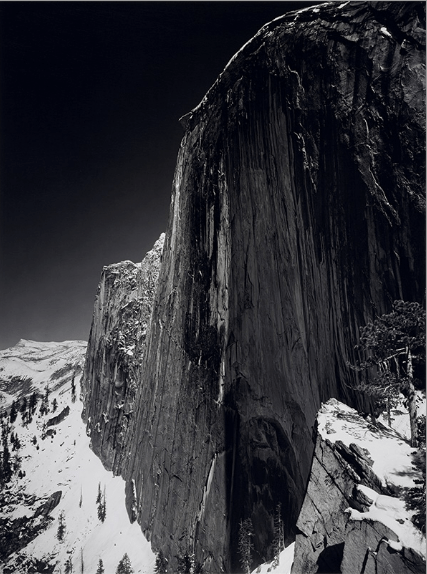
Playboy: When did you know you could accomplish it?Adams: I had my first visualization while photographing Half Dome in Yosemite in 1927. It was a remarkable experience. After a long day with my camera, I had only two photographic plates left. I found myself staring at Half Dome, facing the monolith, seeing and feeling things that only the photograph itself can tell you. I took the first exposure and, somehow, I knew it was inadequate. It did not capture what I was feeling. It was not going to reflect the tremendous experience. Then, to use Stieglitz’ expression, I saw in my mind’s eye what the picture should look like and I realized how I must get it. I put on a red filter and figured out the exposure correctly, and I succeeded! When I made the prints, it proved my concept was correct. The first exposure came out just all right. It was a good photograph, but it in no way had the spirit and excitement I had felt. The second was Monolith, the Face of Half Dome, which speaks for itself.
More:
They were the ones Weston called the fuzzy-wuzzies. They would go out into the street and find some old bum with a matted beard, and they’d get a tablet of Braille and make the old man put his fingers on the Braille. They would place him in an old chair, looking up through a cloud of cigarette smoke that was illuminated by a spotlight. The title would be Mine Eyes Have Seen the Glory. That must have been done a thousand times. There were also slimy nudes.

I am an Ansel Democrat:
Playboy: You said that earlier. We assumed you were speaking rhetorically. Weren’t you?Adams: Definitely not. We are on a disaster course. A revolution may happen first; and, of course, that may be a disaster anyway. I don’t say it would be a Soviet revolution, but it could very well result in a different order of society. It could be a socialist setup that might work for a while. We don’t know. The point is, I think there may be a revolution if there is not greater equality given to all citizens. We have consistently considered the employer, especially the large corporations, as the most valuable part of the American society. We have consistently overlooked the enormous importance of the farmer, the technician, the educator, the artist, the laborer. I’m not calling for a revolution; I’m calling for greater equality to all citizens. If that doesn’t happen, something will.You see, I believe in a Federalism under which you would pay your taxes to a properly elected and conducted central Government that would, in turn, provide essential services–which would include medical care and other essentials–to the population. I do think there is a basic obligation for everyone to make his maximum contribution to society, but we talk about opportunity for everyone, and the fact is that it is perfectly obvious that equal opportunity does not exist. It’s about time we woke to that fact and clarified the whole social-political structure. Or we’ll be awakened.Remember, ten percent unemployment, no matter how high that is, is an average. There are places and segments of the population with much higher unemployment. People will not continue to tolerate those conditions. What we need is a new set of political commandments that call to attention some of the basic provisions of the Constitution that are often overlooked by our contemporary leaders. There are inalienable rights that are supposed to be guaranteed. It is absolutely criminal that our Government has consistently supported rightist governments that deny citizens’ rights while being paranoid about any liberal concept, which is the concept upon which our country was founded. But, remember, it took a revolution here.

And finally, his martini recipe:
Playboy: While we’re on the subject, that is some strong martini we’ve sampled. Will you share your recipe with us?Adams: The martini I am drinking now is simply diluted–that way, I can have several. But the ones you’re sipping come from a Hotel Sonesta bartender in Cambridge. You take a good-sized glass and fill it with fine vermouth. Then you marinate some big lemon peels in there for days. As the vermouth evaporates or is used up, replenish it. All you need is a glass, ice, vodka and a lemon peel. Rub the lemon peel around the rim of the glass, drop it in, and you have a very dry martini.


Star Axis
Posted: April 18, 2017 Filed under: architecture, art history Leave a comment

When completed it will be eleven stories high and one-fifth of a mile long. (Star Axis by Charles Ross, not Vali)
Star Axis was begun in 1971. The Star Tunnel is the central element of Star Axis. It frames our north star, Polaris. The Star Tunnel is precisely aligned with the earth’s axis. Within it a stairway rises 10 stories toward a circular opening at the top that frames all of the orbits of Polaris throughout the ages. As you climb the stairway toward the circular opening you see larger and larger views of the sky. The view from each stair frames an orbit of Polaris for a particular time in the 26,000 year cycle called precession. The smallest orbit of Polaris, viewed from the bottom stair, is about the size of a dime held at arms length. The largest orbit of Polaris, viewed from the top stair, encompasses your entire field of vision.


The War Between Mochi and Sake
Posted: March 30, 2017 Filed under: art history, food, Japan, war Leave a comment


George Bellows
Posted: March 14, 2017 Filed under: art history, New York, the California Condition Leave a comment

 Helytimes


_-_Google_Art_Project.jpg)
.jpg)
#/media/File:Prospect_House,_Georgetown.jpg)