A Visit To LACMA
Posted: December 2, 2016 Filed under: LACMA, the California Condition Leave a comment
This bro is from Egypt in the late 3rd-4th century
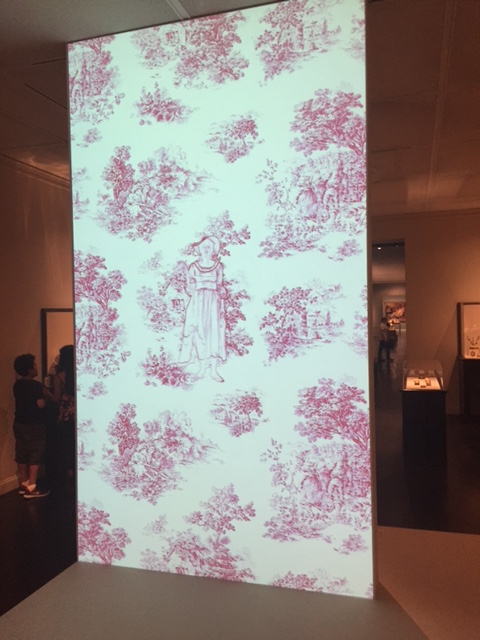
Very cool video installation by Brigitte Zieger called Shooting Wallpaper:
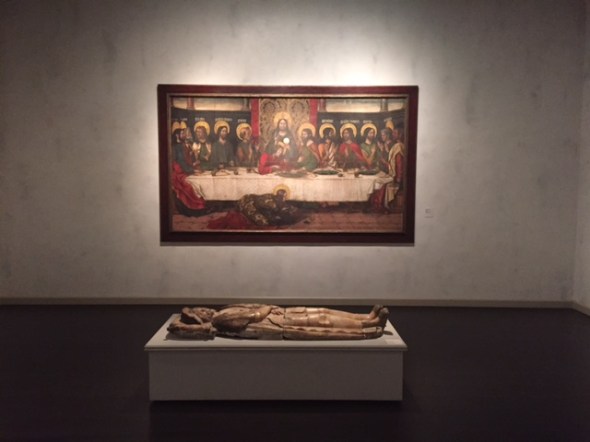
Here is No-Tin:

painted by Henry Inman around 1832.

Henry Inman
I’ve always thought this one is kind of cool:

Frans Post of the Netherlands painting Brazil in 1655. The frame feels wrong.
Take a look at this one:

Then learn the story:


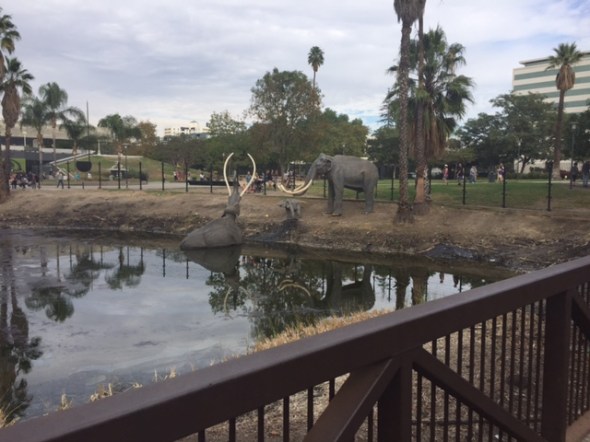
Sometimes, don’t you feel like this mammoth?
Learn more about California in:
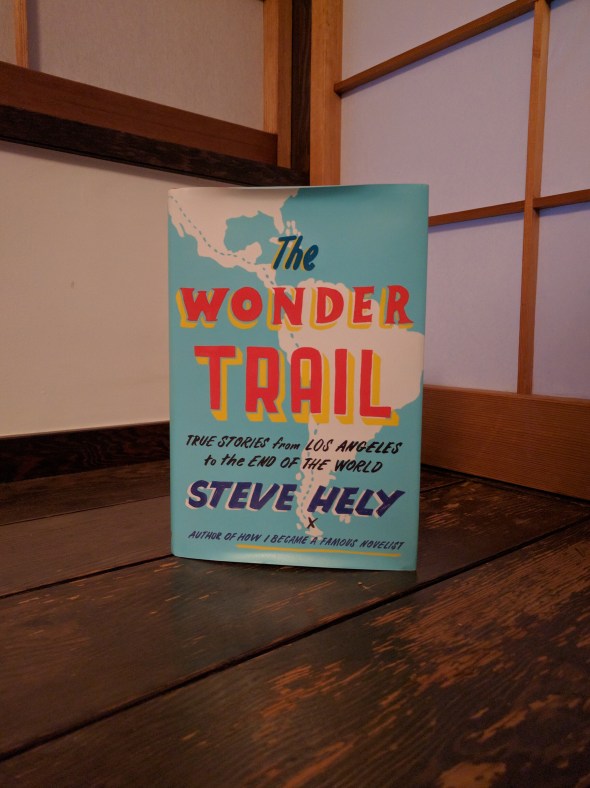
Available at Amazon or your local indie bookstore.
good poem
Posted: November 5, 2016 Filed under: baseball, the California Condition Leave a comment
by:
Huell
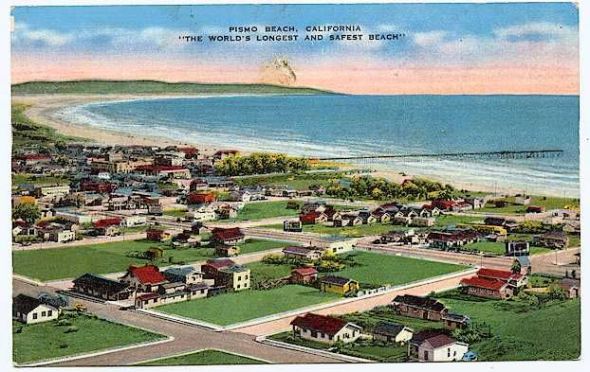
Posted: October 25, 2016 Filed under: the California Condition Leave a commentCaught a few minutes of the late great Huell Howser, up to Pismo to learn about clams.
found here
Lady Xoc
Posted: October 18, 2016 Filed under: Mexico, the California Condition, Wonder Trail Leave a comment
from wikicommons, photo by Michel Wai
The ruler, Shield Jaguar, holds a torch while his consort, Lady Xoc, pulls a rope studded with what are now believed to be obsidian shards through her tongue in order to conjure a vision serpent.
says Wiki about Lintel 24 from Yaxchilan, a site in far southern Mexico, along the Usumacinta River, the border to Guatemala.
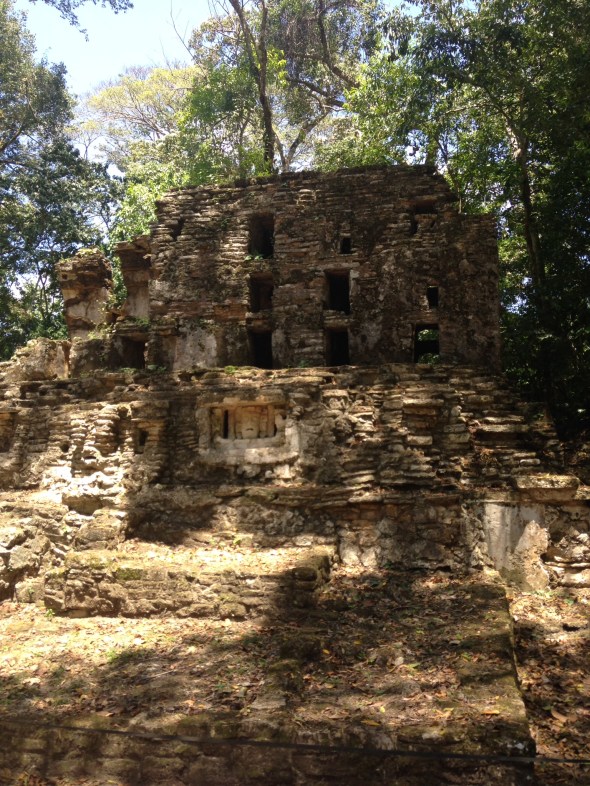
photo by me, Helytimes
Yaxchilan is not easy to get to. You have to take a boat like this:
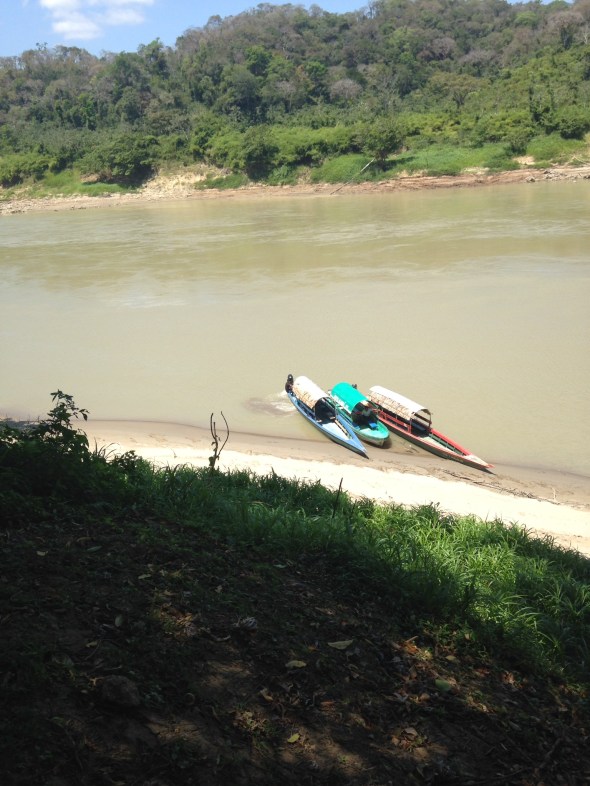
Helytimes!
In the river there are crocodiles, in the towers of the ruins there are bats, everywhere there are spiders.
You won’t find Lintel 24 there though. It’s at the British Museum in London. It was cut out and sent there by Alfred Maudslay.
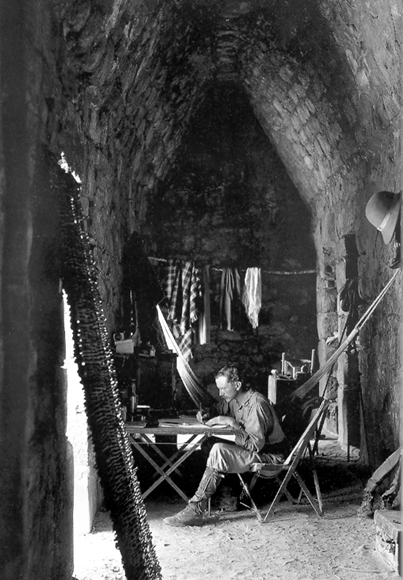
Slay.
What the hell was up with Lady Xoc? She appears on another lintel, Lintel 25:

Sailko
her obsidian tongue piercing rope worked, and now she’s seeing the Vision Serpent as she bleeds into a bowl.

Michel wal again
Read more about Yaxchilan, Bonampak, how we figured out how to read Mayan inscriptions, and the mysteries of what the hell Lady Xoc and her friends were up to in my book:
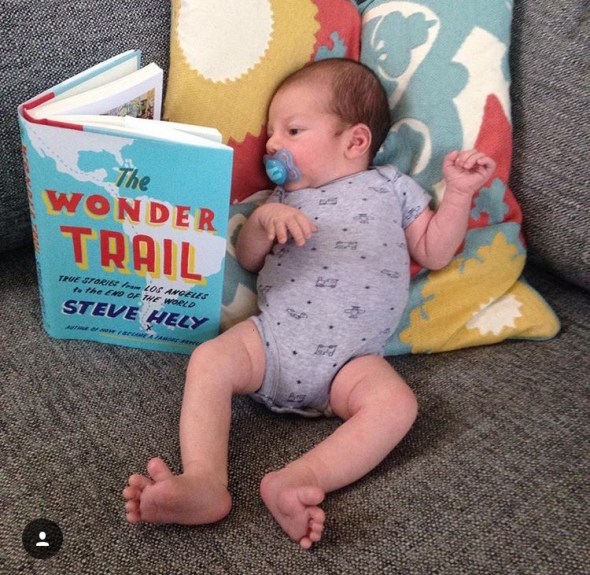
I believe you’ll enjoy it as much as this baby does. Amazon or your local indie bookstore, perhaps, for instance, at Spellbinder Books, way up in Bishop, CA.
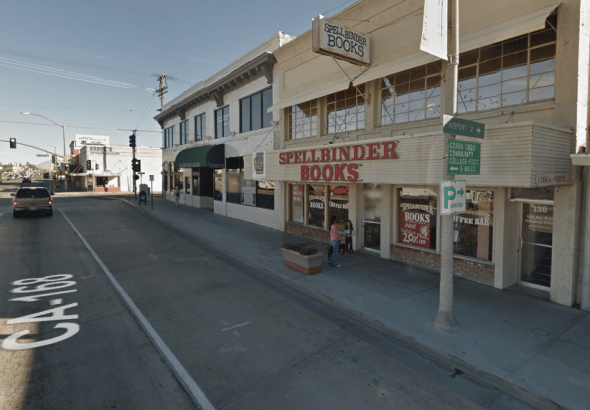
this one from google maps
There’s a lot to like about Bishop.
Yang-Na
Posted: October 10, 2016 Filed under: the California Condition 1 Comment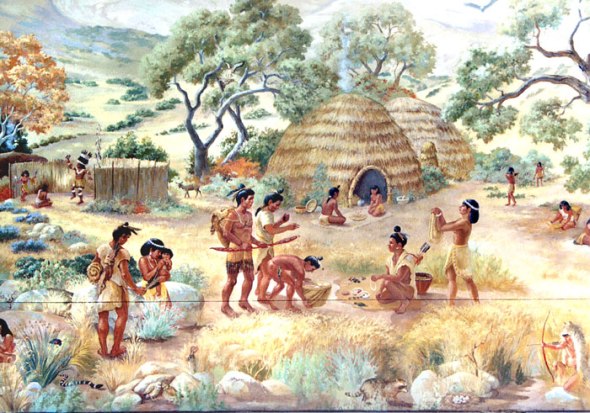
Santa Paula, CA Chumash mural
Petition this Columbus Day to return LA back to its original name of Yang-Na:
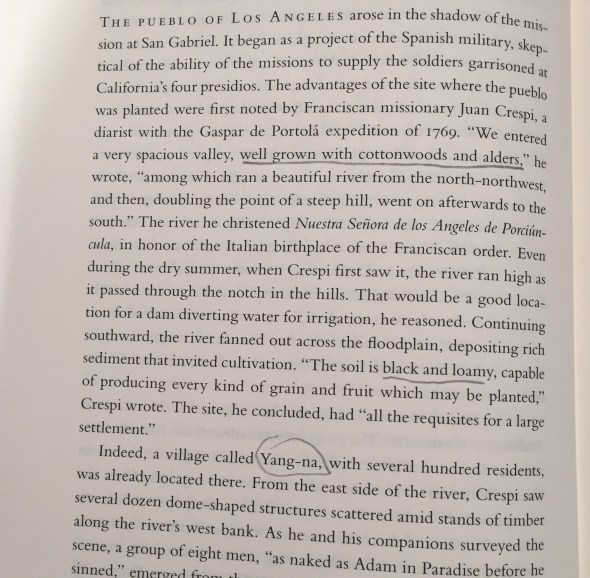
from: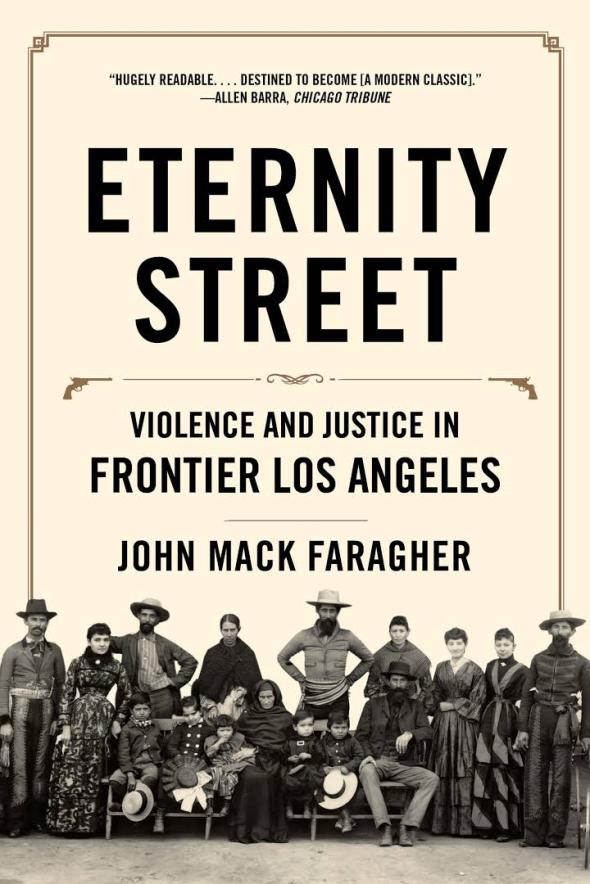
A Description Of Distant Roads
Posted: October 9, 2016 Filed under: Boston, New England, the California Condition Leave a comment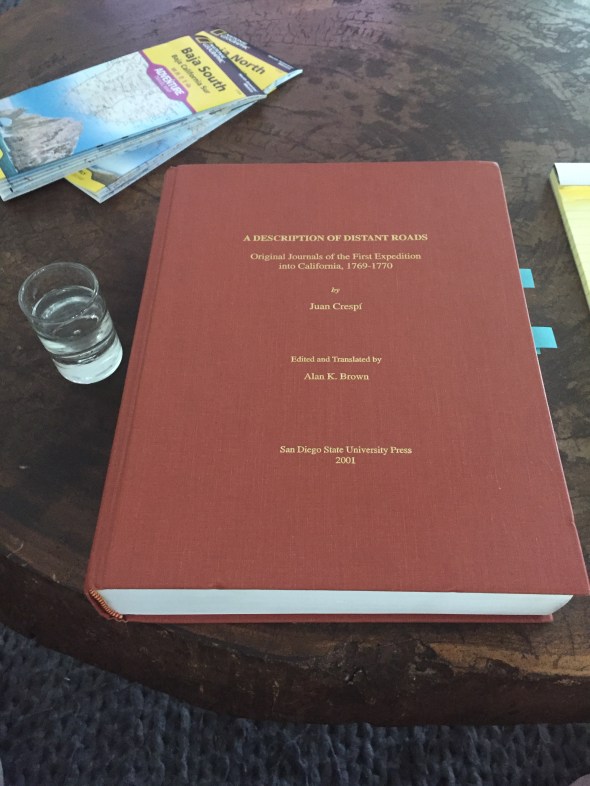
Another incredible title for a travel book. This one from the missionary Juan Crespí, who in 1769 took a walk from Baja California to San Francisco and back.
Really appreciate the translation with careful annotations by Alan K. Brown. Here’s Crespí on the origin of the name Carpinteria.
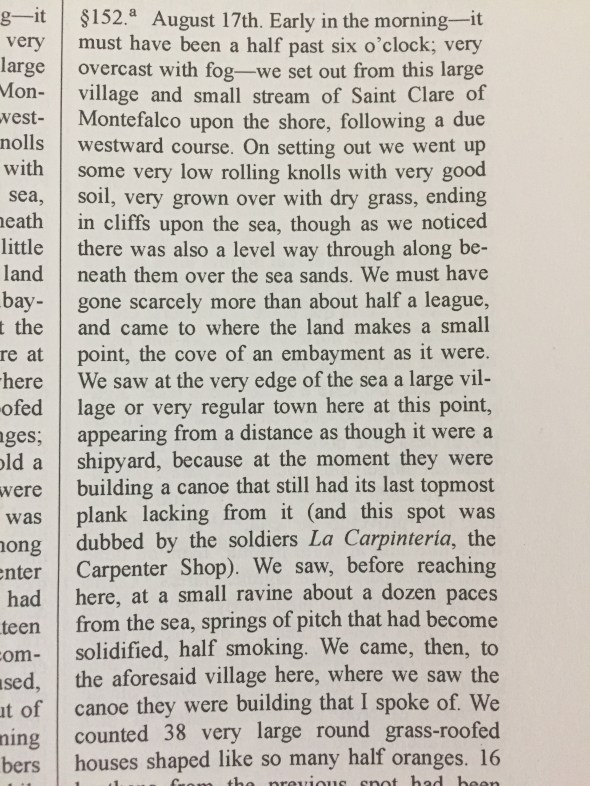

Carpinteria
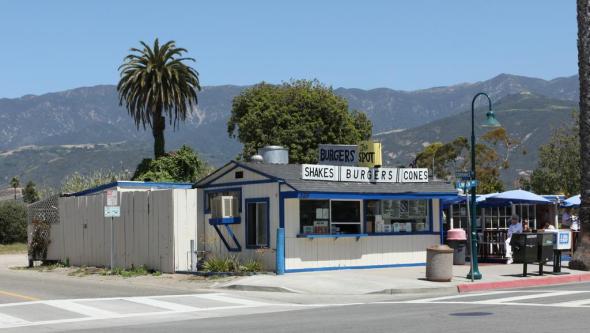
I wonder if he stopped to get a burger at The Spot.
My favorite part of the book so far though is this poem.

I found it a soothing pastime late one evening to make a map of Crepsí’s trip.
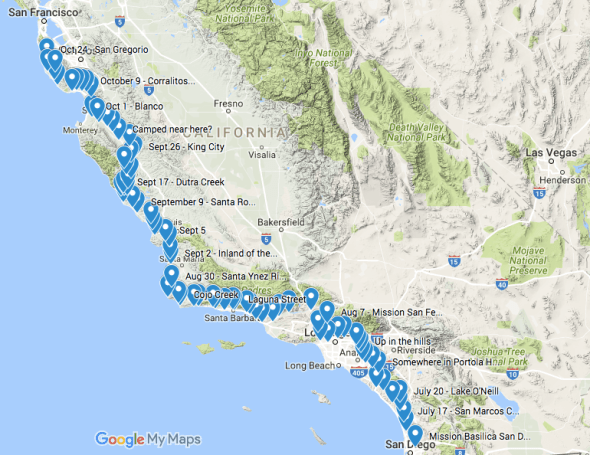
He must’ve seen some interesting stuff.
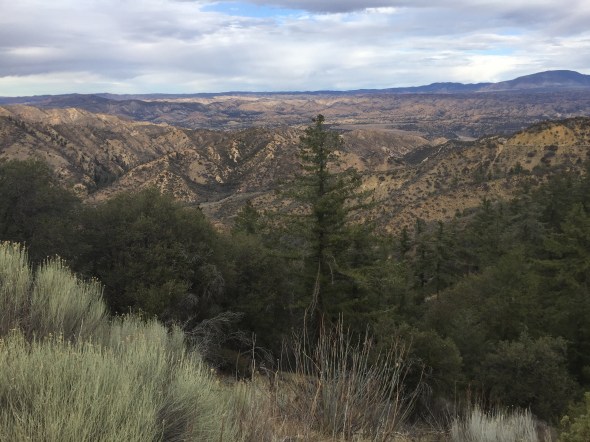
Much boring stuff as well:
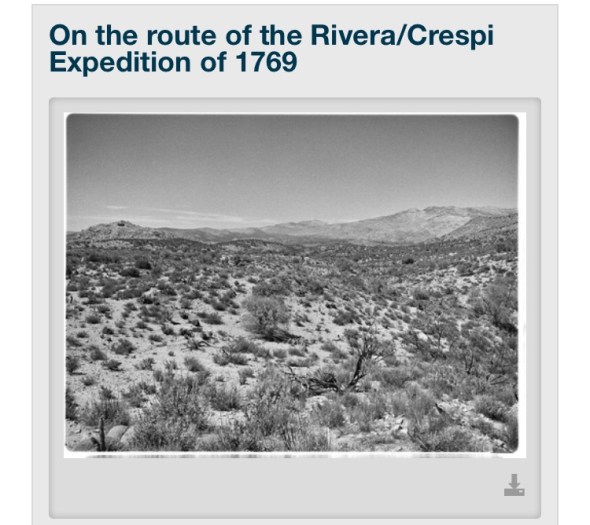
That photo from the collection of Harry Crosby, who photo’g’d much of Crespí’s trail in Baja California.
Not to be confused with the other Harry Crosby:
But he yearned to escape the rigidity of everyday life in Boston. His experience in France made it unbearable to live among what he called “dreary, drearier, dreariest Boston” and to put up with “Boston virgins who are brought up among sexless surroundings, who wear canvas drawers and flat-heeled shoes.” He wanted to escape “the horrors of Boston and particularly of Boston virgins.” Any sense of propriety was wiped out by a lust for living in the moment, forgetting all risks and possible consequences.
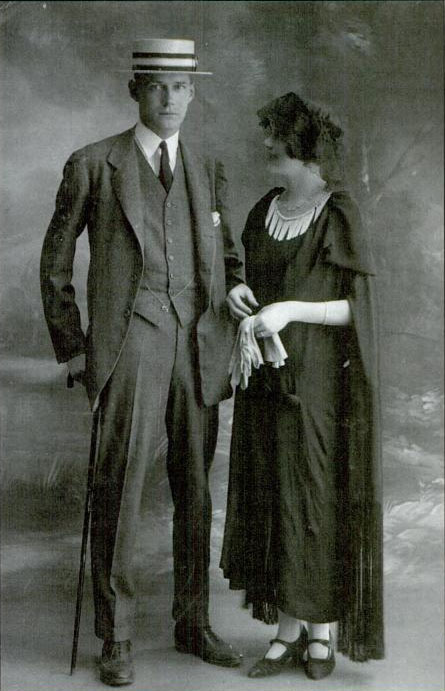
The Fire Princess
On July 9, 1928, Crosby met 20-year-old Josephine Noyes Rotch, the daughter of Arthur and Helen Ludington Rotch in Boston. Ten years his junior, they met while she was shopping inVenice at the Lido for her wedding trousseau… “She was dark and intense… since the season of her coming out in 1926-7, she had been known around Boston as fast, a ‘bad egg’…with a good deal of sex appeal.”
They met for sex as often as her eight days in Venice would allow.
Pitt
Posted: September 20, 2016 Filed under: America Since 1945, celebrity, the California Condition Leave a comment

“It’s very difficult to cast a movie star as an ordinary person, and Brad can really only play extraordinary people. The other thing about Brad is he’s someone you never really feel like you know on screen. I don’t think, in any movie of his I’ve ever seen, I’ve identified with him, in the sense that he retains that sort of essential mystery like those old-time movie stars where you don’t really feel like you know him. And that seemed to be a really good thing for Jesse.”
from this interview with Assassination of Jesse James director Andrew Dominik.

How big are places compared to other places?
Posted: September 9, 2016 Filed under: Australia, maps, New Zealand, the California Condition, the ocean, the world around us Leave a comment
Traveling across the South Island of New Zealand by train, I was trying to work out for myself how big exactly the country is.

It looked big
With the help of OverlapMaps, here’s a comparison of New Zealand to California:

The total land area of New Zealand, says Google, is 103,483 mi²
In US state terms, that makes it just smaller than Colorado, at 104,185 mi².


Colorado has about 1 million more people.
Colorado: 5.356 million (2014)
New Zealand: 4.5 million
Pop wise New Zealand is about the size of Kentucky or Louisiana.

The folks at Brilliant Maps do fantastic work in this field. Here are some of my favorites:
Los Angeles and other cities overlaid on The Netherlands:

Not sure I totally understand what’s going on here.


Map by Chris Stephens, from naturalearthdata.com

Created by: reddit user Tom1099
US in China by population:

How the US population fits into China by reddit user jackblack2323
OR:
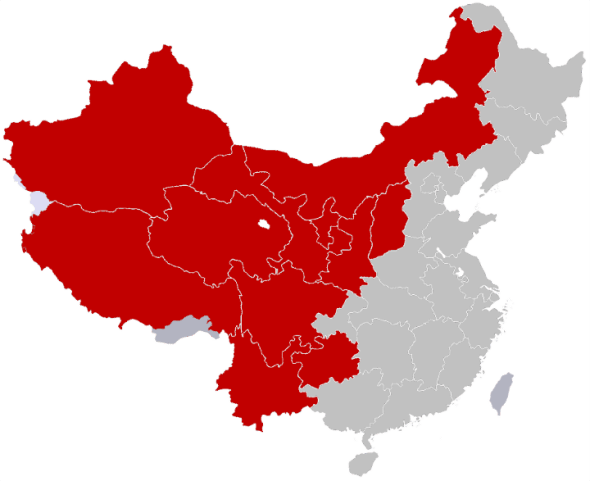
Map by reddit user gotrees

The relative size of the 24 largest islands in the world, map by reddit user evening_raga
And The Circle:

Map created by reddit user valeriepieris
Here’s one more for you, from OverlandMaps:

Australia’s population is 23.13 million or so, so it’s about three million people bigger than Florida (20.2 mill) and smaller than Texas (27.46 mill). Whole lotta room down there. About as many people as Illinois and Pennsylvania put together, in a land area (2.97 million square miles) that’s about as big as 51 Illinoises.

one of Australia’s more densely populated areas.
At the fights
Posted: June 6, 2016 Filed under: the California Condition Leave a comment
In an entertaining ten round middleweight slugfest, Gabriel Rosado edged out a wildly unpopular unanimous decision victory over Antonio Gutierrez (21-2-1, 9 KOs). Gutierrez dropped Rosado hard in the fourth round with a solid one-two combo and was the more aggressive fighter, often chasing a back-peddling or sidestepping Rosado. It was a slugfest, throughout, and a very evenly matched fight. Gutierrez is the hard luck loser while Rosado builds off his recent victory over Joshua Clottey. Judges scored the bout 95-94, 96-93 and 95-94, all in favor of Rosado.
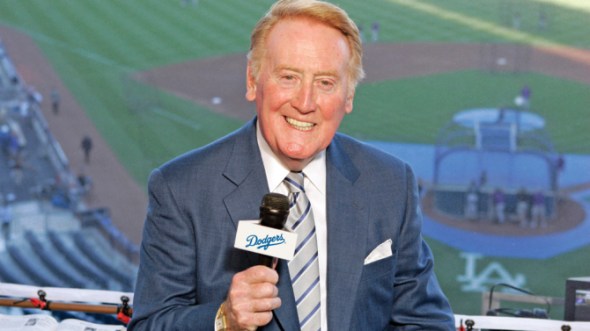
Trivia: who is the second-longest tenured baseball announcer?
Posted: June 2, 2016 Filed under: baseball, the California Condition Leave a comment
Bryce Duffy/Corbis Outline from http://www.aarp.org/politics-society/history/info-2016/vin-scully-voice-of-the-dodgers.html
First place is Vin Scully of the LA Dodgers.

As a Boston transplant who doesn’t care about the Dodgers, it took me a long time to join the Cult of Scully. The tales of his greatness and my own listens didn’t rank him above Red Sox announcer Sean McDonough, in my opinion.

But I’ve come around. Some milestones on my journey: Karina Longworth citing Vin as an influence (along with Elvira! and two others I forget) in this Longform interview.

Co-worker Joe talking up Scully, in particular his 1965 Sandy Koufax perfect game call.
Vin Scully has been in the Baseball Hall of Fame since 1982.
Really enjoyed this SB Nation profile of Scully by Cee Angi. So much goodness:
Scully’s work is researched, but never rehearsed. There are all those index cards, but none of them are filled with grandiose soliloquies; his fear is that such preparation would cheapen the moment and cause him to say something disingenuous. “I never do that,” Scully said in a recent interview on New York’s WFAN radio. Referring to his call of Hank Aaron’s record-breaking 715th home run in 1974. “I really concentrate on the moment… I’m afraid that if I tried to prepare, I’d be so eager to get my marvelous words out onto the air [that] I might do it prematurely and be wrong.”
Check it out at the source, great photos as well.
How about Giants announcer John Miller doing Vin Scully in Japanese?
Anyway, the second-longest tenured MLB announcer is ALSO at the Dodgers!

It is Jaime Jarrín, who’s been doing the Spanish language broadcasts for 54 years.
When the Dodgers moved to Los Angeles in 1958, KWKW, where Jarrin was the news and sports director, picked up the Spanish language rights for the games. The original broadcast team included Rene Cardenas, Miguel Alonso and Rodolfo Hoyos Jr. and they were joined by Jarrin in 1959. For the first six years, they did not travel with the team but would recreate the games on radio while listening to the English-language broadcast in a studio. In 1973, after 14 years with the Dodgers, Jarrín became the club’s number-one Spanish-language broadcaster.
Architecture of Downtown Los Angeles
Posted: May 27, 2016 Filed under: architecture, the California Condition Leave a commentAnnual tradition: a day of architectural touring with Craig D.

The restaurant Otium, with the Broad Museum to the right and some building to the left.
Craigs’s house is beautiful.
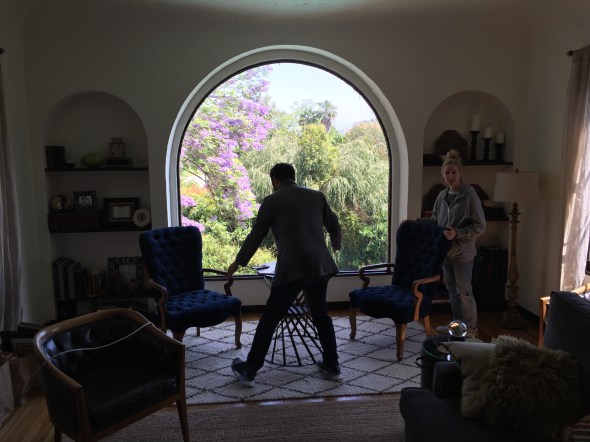
Craig helping wife Abby
First stop: LA’s Cathedral.
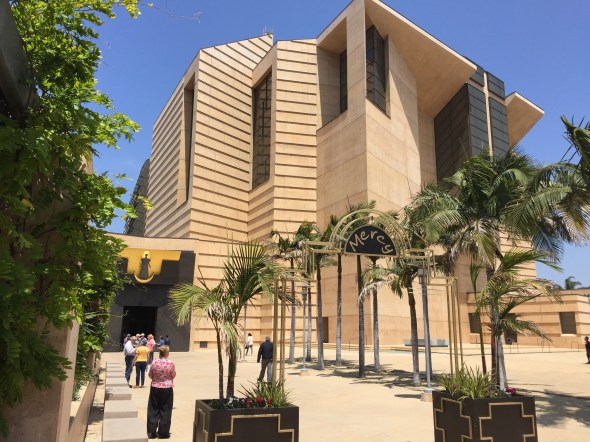
The cathedral was designed by the Pritzker Prize-winning Spanish architect Rafael Moneo. Using elements of postmodern architecture, the church and the Cathedral Center feature a series of acute and obtuse angles while avoiding right angles.

Rafael Moneo
Cardinal Roger Mahony’s decision to rebuild the Los Angeles Cathedral in such elaborate and postmodern architecture has drawn great criticism. Many argued that a church of that size and expense was unnecessary, overly-elaborate and money could have been better spent on social programs. Many felt that either St. Vincent Church on West Adams Boulevard or St. Basil Church on South Kingsley Drive could easily perform the functions required of a cathedral with minimal additional cost. Our Lady of the Angels Cathedral was also criticized for its departure from historical California Mission-style architecture and aesthetics.
Had been reading this book:
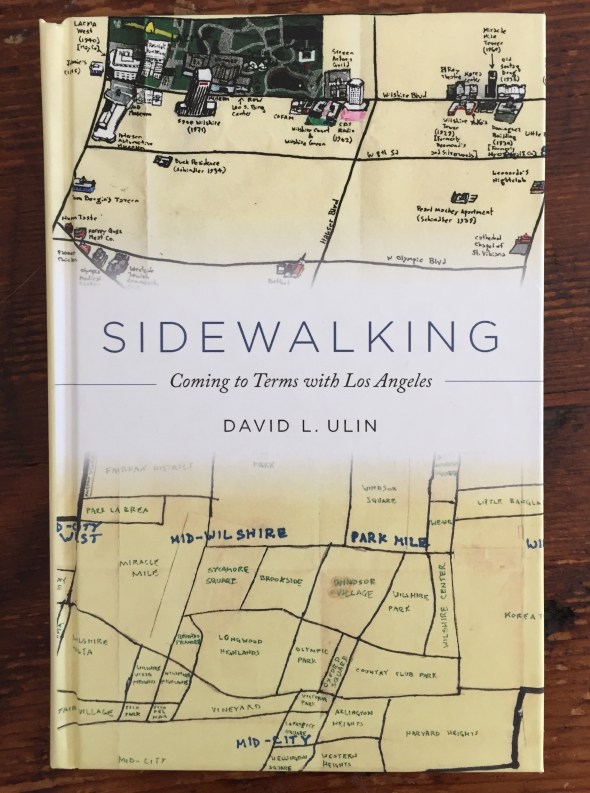
which talks a lot about why LA feels so odd to the pedestrian, and the ways LA’s public buildings have of shutting off the street:
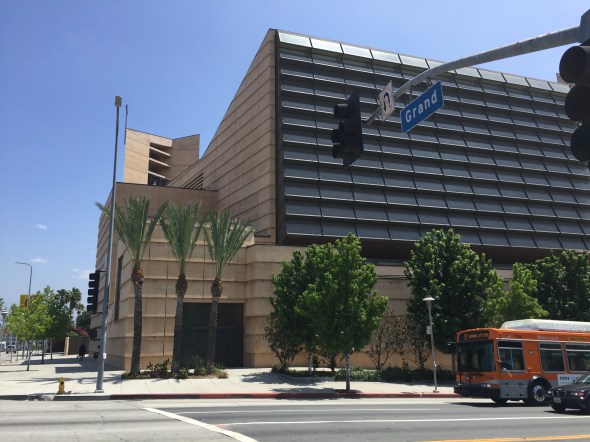
I’ll say:

LA’s cathedral, finished in 2002, seemed a bit ’90s to me:
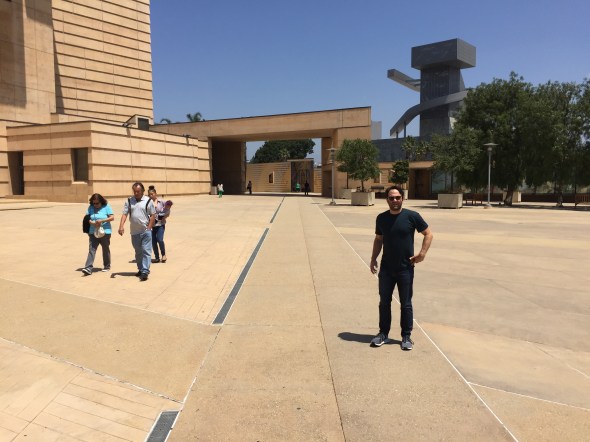
That’s the Grand Arts School / Ramon C. Cortines School of Visual and Performing Arts behind Craig.
 Disaster waiting to happen at the mausoleum?
Quick tour through Grand Central Market:
 A walk past the retired Angels’ Flight:
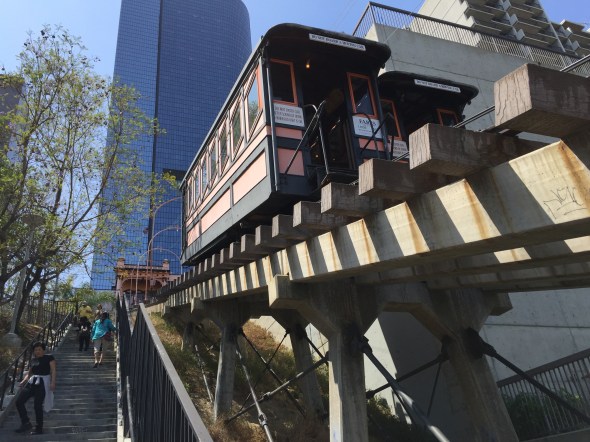
On February 1, 2001, Angels Flight had a serious accident that killed a passenger, Leon Praport (age 83), and injured seven others, including Praport’s wife, Lola. The accident occurred when car Sinai, approaching the upper station, reversed direction and accelerated downhill in an uncontrolled fashion to strike car Olivet near the lower terminus.
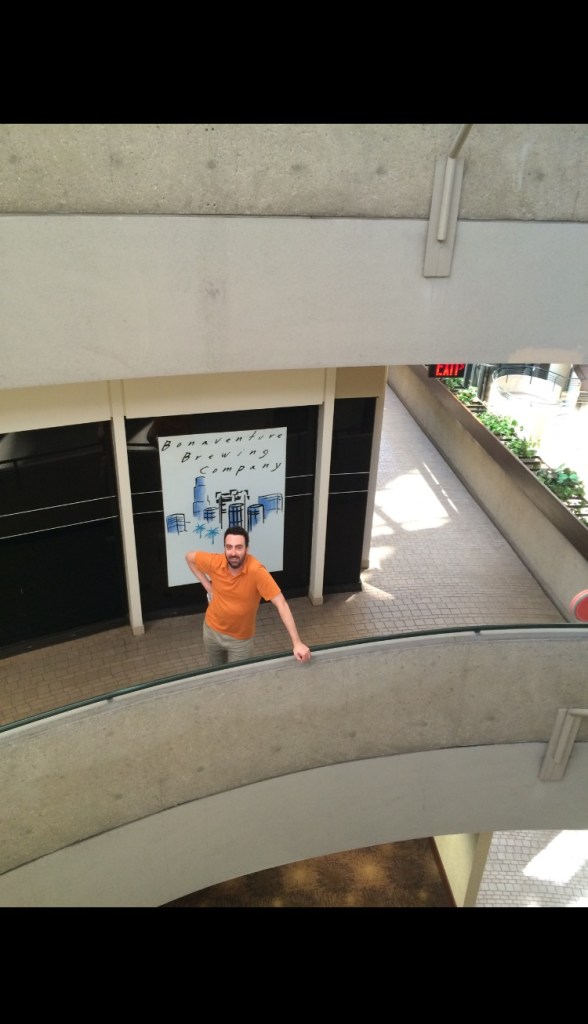
On to the truly bizarre angles of the Bonaventure Hotel designed by John C. Portman, Jr.
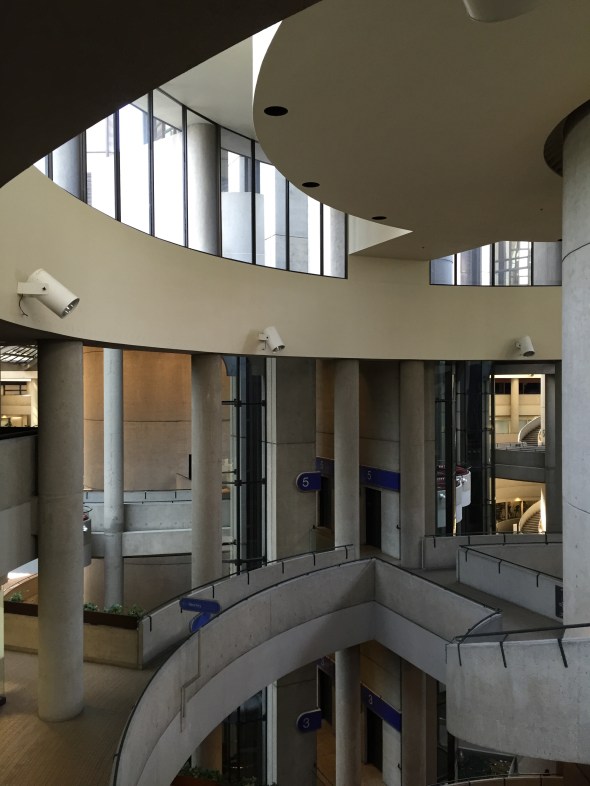 I mean what is going on here?:
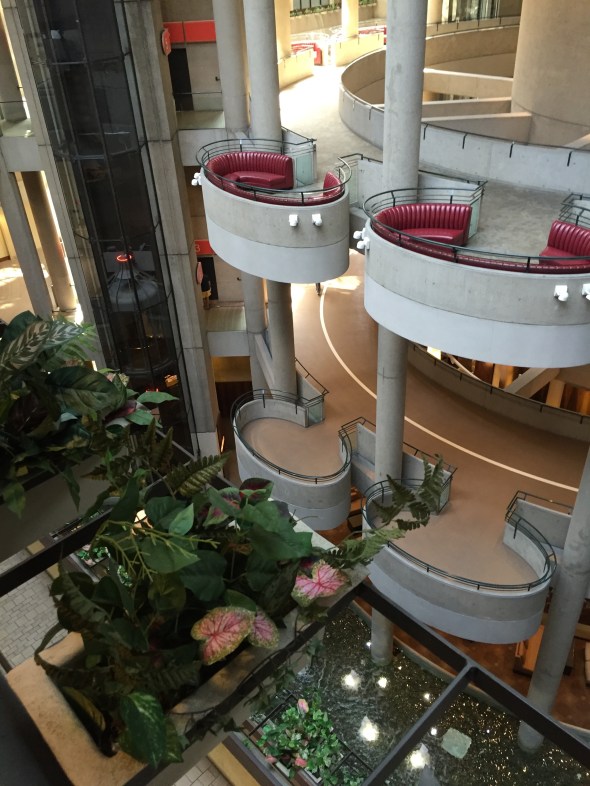
In his book Postmodern Geographies: The Reassertion of Space in Critical Social Theory (1989), Edward Soja describes the hotel as
a concentrated representation of the restructured spatiality of the late capitalist city: fragmented and fragmenting, homogeneous and homogenizing, divertingly packaged yet curiously incomprehensible, seemingly open in presenting itself to view but constantly pressing to enclose, to compartmentalize, to circumscribe, to incarcerate. Everything imaginable appears to be available in this micro-urb but real places are difficult to find, its spaces confuse an effective cognitive mapping, its pastiche of superficial reflections bewilder co-ordination and encourage submission instead. Entry by land is forbidding to those who carelessly walk but entrance is nevertheless encouraged at many different levels. Once inside, however, it becomes daunting to get out again without bureaucratic assistance. In so many ways, its architecture recapitulates and reflects the sprawling manufactured spaces of Los Angeles
You said it, pal.
Nestle
Posted: May 19, 2016 Filed under: business, the California Condition, water Leave a comment
In the Swabian dialect, “Nestle” is a small bird’s nest.
So says the Wiki for Henri Nestle. I was reading about Nestle because I was trying to learn who owns the spring sources for the major bottled waters in the United States.
Here are our popular waters, by sales in billions of $$:
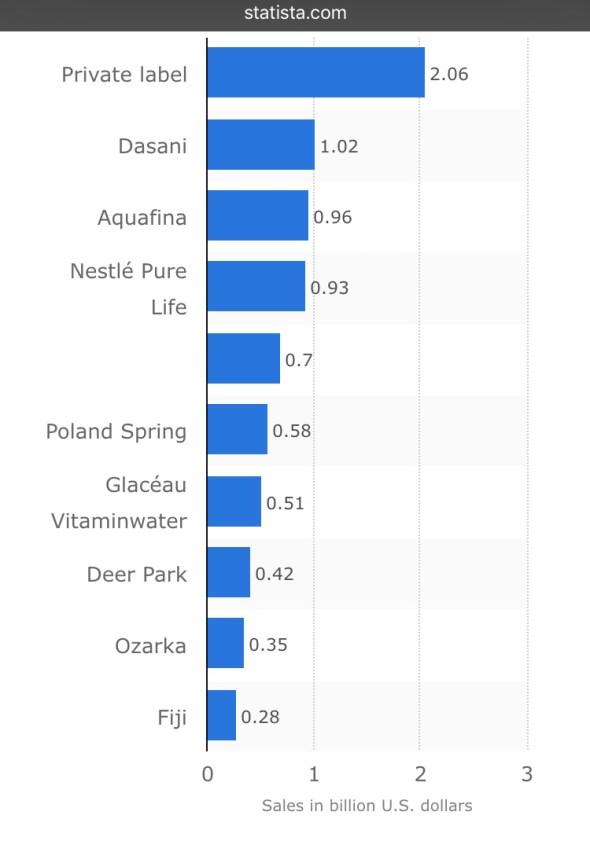
Dasani and Aquafina are literally just purified municipal tap water with salt added:
Dasani uses tap water from local municipal water supplies, filters it using the process of reverse osmosis, and adds trace amounts of minerals, including magnesium sulfate (Epsom salt), potassium chloride and table salt (sodium chloride).
Nestle Pure Life as I understand it comes from springs in Canada:
Nestlé’s Aberfoyle Springs plant currently bottles two different waters: the on-site Aberfoyle spring water, and spring water tankered in from Cedar Valley Spring in Erin, Ontario. In addition, spring water is botted on-site in Hope, British Columbia. In the United States, Nestlé Pure Life is a purified (filtered) water.
Next is Poland Spring, owned by Nestle. Vitaminwater I don’t care about.
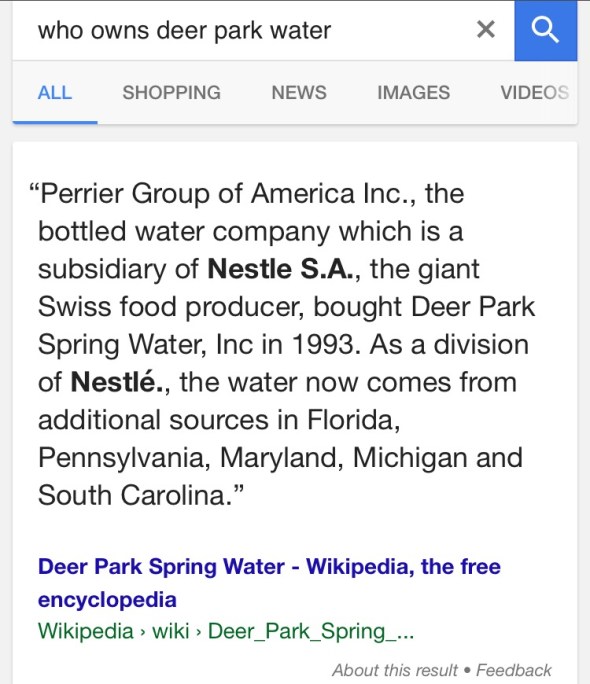
and:
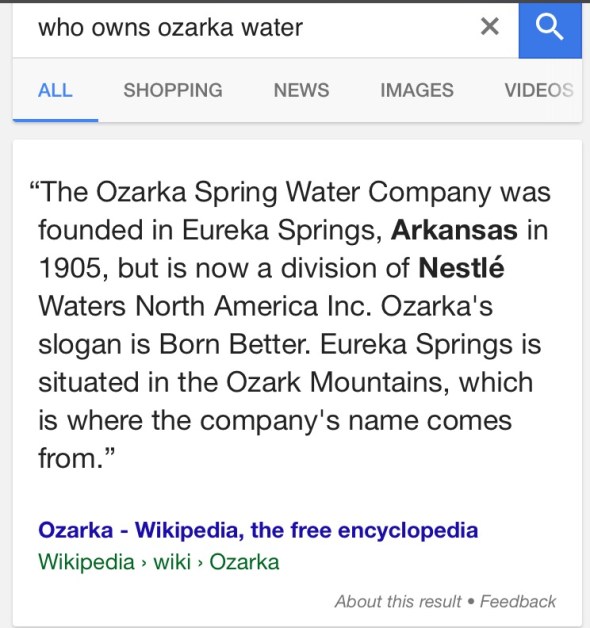
Fiji water is owned by David Brooks’ buddies:
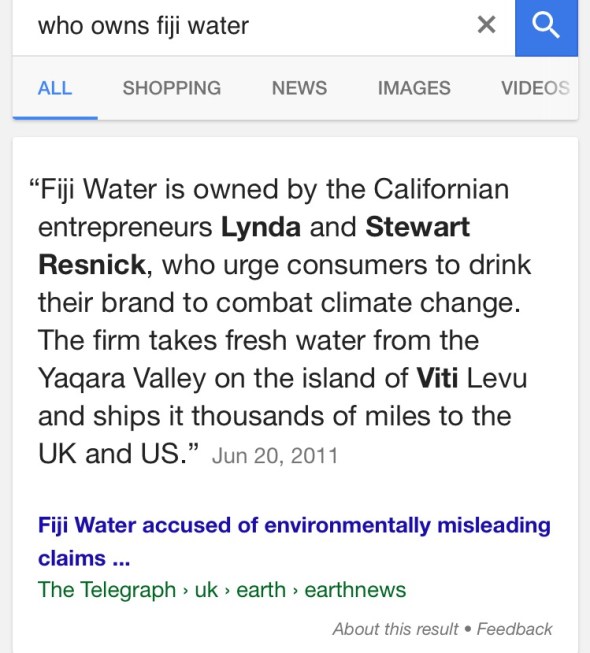
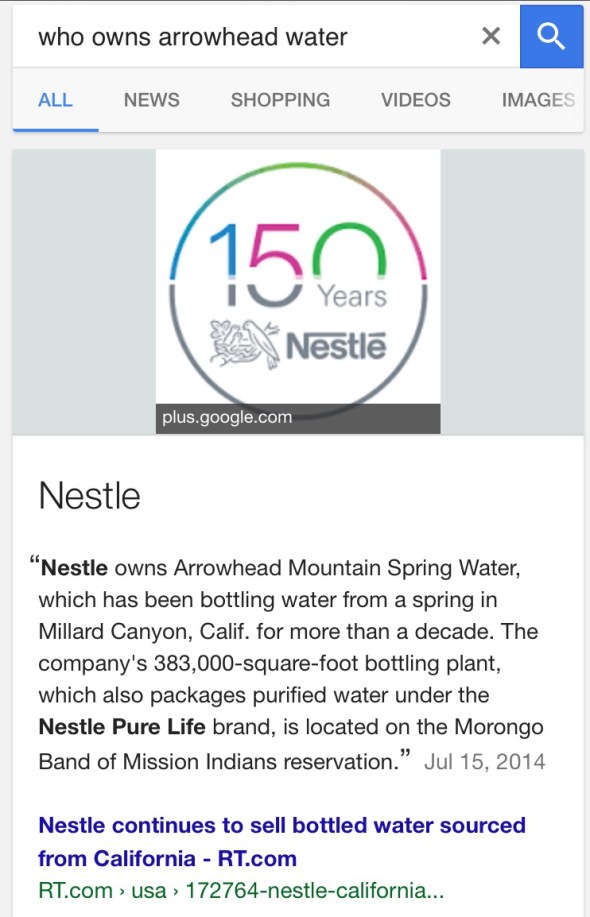
How about local SoCal water sources, like Arrowhead?:

Nestle again!
Here’s an interesting one: Crystal Geyser, the source of which is up on the 395, in bleak country near the Owens Lake, source of LA tap water:

The owner there is:

We had to check in with Anonymous Investor on that one:
I never heard of Otsuka before, but just browsed through their 2015 annual report.
Lots of interesting stuff here. Most of their business (67%) is pharmaceuticals. And the lion’s share of that came from Abilify. When Abilify went generic in 2015, their earnings dropped off a cliff, although they still managed to stay profitable.Crystal Geyser is a tiny sliver of their business. It’s part of their “consumer products” segment. An honor it shares with “Bon Curry,” a line of instant curries–
http://www.amazon.com/Bon-Curry-Gold-180g-pieces/dp/B00BXW9SAM
–and a Gatorade knockoff called “Match”.
http://www.amazon.com/Otsuka-Foods-MATCH-1-5LPETX8-pieces/dp/B010S5VRNK
All together, the consumer products division comprises only 2.8% of the company’s total sales.
So if you buy the stock, what you are getting is mostly the drug business.
Anyway. If you wish to own fresh springs, the way to do it seems to be to buy Nestle stock, as Joshua Kennon enthusiastically advises. Nestle also owns Perrier, whose slim cans I’m getting into.

You should never buy a stock though without looking at a picture of the company’s CEO. What do we think of Paul Bulcke?
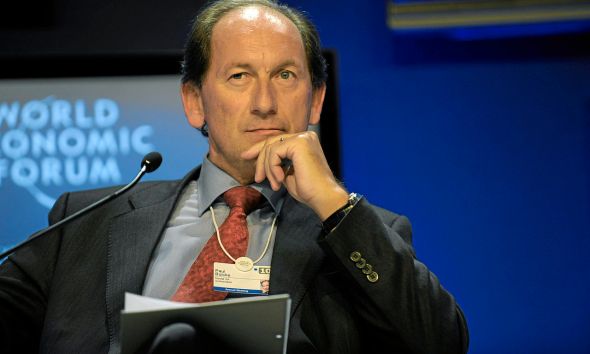
On August 30, 2012, Bulcke claimed that water is not a human right and should be privatized. He was quoted as saying “”If something isn’t given a value, people tend to waste it. Water is our most useful resource, but those using it often don’t even cover the costs of its infrastructure. Fresh water is being massively overused at nature’s expense, but it seems only a global crisis will make us realise the importance of the issue. What is environmentally unsustainable today will become socially unsustainable in the future,
(hmm, that quote is sourced on wiki to this article:
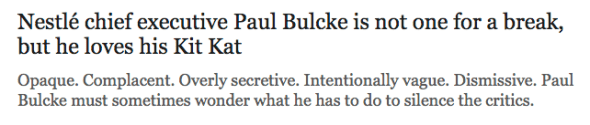
but I don’t see it).
File this under our ongoing interest in “sources.”
Off We Go
Posted: May 15, 2016 Filed under: America Since 1945, explorers, heroes, history, people, the California Condition Leave a comment
Captain Ted W. Lawson of the Ruptured Duck
Watching Trumbo –> reading about 30 Seconds Over Tokyo
Before I knew it I was looking at the US Air Force’s photo archive specifically photos tagged “history.”

Several of the mission’s 16 B-25B bombers are lined up on the deck of the USS Hornet (CV-8). In the foreground is tail No. 40-2261, which was mission plane No. 7, piloted by 2nd Lt. Ted W. Lawson. The next plane is tail No. 40-2242, mission plane No. 8, piloted by Capt. Edward J. York. Both aircraft attacked targets in the Tokyo area. Lt. Lawson later wrote the book “Thirty Seconds over Tokyo.”
Note searchlight at left. (U.S. Navy photo)
Aviation history has never been a passion of mine but let’s just browse some of the highlights. Pearl Harbor:

A report entitled “7 December 1941: The Air Force Story” compiled by the Pacific Air Forces Office of History obtained this photo of Wheeler Air Field taken by a Japanese Empire pilot to record the battle damage to the U.S. Air Forces Dec. 7, 1941.
Homeward bound:

Newly freed prisoners of war celebrate as their C-141A aircraft lifts off from Hanoi, North Vietnam, on Feb. 12, 1973, during Operation Homecoming. The mission included 54 C-141 flights between Feb. 12 and April 4, 1973, returning 591 POWs to American soil. (U.S. Air Force photo)
Captain Mary T. Klinker:

Capt. Klinker was 27-years-old when she died April 4, 1975 when the first aircraft supporting Operation Babylife crashed. Klinker was the last nurse and the only member of the Air Force Nurse Corps to be killed in Vietnam. Capt. Mary T. Klinker was posthumously awarded the Airman’s Medal for Heroism and the Meritorious Service Medal.
Father and son:

Staff Sgt. Shaun Meadows shares a laugh with his son after completing his jump June 14, 2010. Sergeant Meadows is assigned to the 22nd Special Tactics Squadron at Joint Base Lewis-McChord, Wash. (U.S. Air Force photo/Airman Leah Young)
Fire retardant:

Approximately 3,000 gallons of fire retardant is deployed Oct. 25 over the Poomacha fire in North San Diego County, Calif. The C-130 Hercules and crew are assigned to the 302nd Airlift Wing from Peterson Air Force Base, Colo. The aircraft launched from Channel Islands Air National Guard Station, Calif. (U.S. Air Force photo/Tech. Sgt. Roy A. Santana)
Water:

On June 21, 1921, U.S. Army Air Service pilots bombed the captured German battleship Ostfriesland to demonstrate the effectiveness of aerial bombing on warships. At the time, the ship was one of the world’s largest war vessels.
An explosion 95 years ago:

An MB-2 hits its target, the obsolete battleship USS Alabama during tests. On Sep. 27, 1921, still operating with Mitchell’s provisional air brigade, the group’s MB-2 aircraft bombed and sank the ex-U.S. Navy battleship Alabama (BB-08) in Tangier Bay, Chesapeake Bay, Md.
Basic:

Basic cadets from the first Air Force Academy class line up for physical training here, the temporary location for the academy while permanent facilities were being constructed in Colorado Springs. (U.S. Air Force photo)
The Starlifter:

1970’s — MARCH 1978 — 3/4 front view of a C-141 Starlifter assigned to the 710th Military Airlift Squadron (AFRES), 60th Military Airlift Wing, in flight over the San Francisco Bay en route to Travis AFB, CA. (Photo by Ken Hackman)
How about Betty Gillies?:

Mrs. Betty Gillies was the first woman pilot to be “flight checked” and accepted by the Women’s Auxiliary Ferring Squadron. Mrs. Gillies 33 years of age, has been flying since 1928 and received her commercial license in 1930. She has logged in excess of 1400 hours flying time and is qualified to fly single and multi-engined aircraft. Mrs. Gillies is a member of the Aviation Country Club of Hicksville L.I. and is a charter member of ’99, an international club of women flyers formed by Amelia Earhardt in 1929. (U.S. Air Force photo)
Cool. Here is My Girl, 1945.

1940’s — A North American P-51 takes off from Iwo Jima, in the Bonin Islands. From this hard-won base our fighters escorted the B-29s on bombing missions to Japan, and also attacked the Empire on their own. (U.S. Air Force photo)
Goddard:

EARLY YEARS — Robert H. Goddard besides 1926 liquid- fueled rocket. The rocket is on top, receiving its fuel by two lines from the tank at the bottom. Goddard’s rockets made little impression upon government officials at the time. (U.S. Air Force photo)
That must be in New England someplace, believe it is near Auburn, MA:

Look, I’m not saying these Air Force photos are any Record Group 80: Series: General Photographic File of the Navy, 1939-1945, the Air Force wasn’t around yet. But some of them are great. I mean:
Dr. John Paul Stapp, the fastest man on Earth:

1950’s — Dr. John Paul Stapp was not only the “fastest human on earth;” he was the quickest to stop. In 1954, America’s original Rocketman attained a then-world record land speed of 632 mph, going from a standstill to a speed faster than a .45 bullet in five seconds on an especially-designed rocket sled, and then screeched to a dead stop in 1.4 seconds, sustaining more than 40g’s of thrust, all in the interest of safety.
The Hop A Long to the Rescue:

1950’s — An UH-19B Chickasaw at the Air Force Museum. Courtesy photo.
Can’t help but think of:

Connecting:

1960s — U.S. Air Force Sgt. Suzann K. Harry, of Wildwood, N.J., operates a switchboard in the underground command post at Strategic Air Command headquarters, Offutt Air Force Base, Neb., in 1967. (U.S. Air Force photo)
Found
Posted: May 14, 2016 Filed under: the California Condition Leave a commenton a bookshelf

can’t remember origin story
Can any friends in Humboldt County
Posted: May 12, 2016 Filed under: family, the California Condition Leave a comment
check this out for me? Thanks!
Feels like a fake name
Posted: May 3, 2016 Filed under: the California Condition, Uncategorized Leave a comment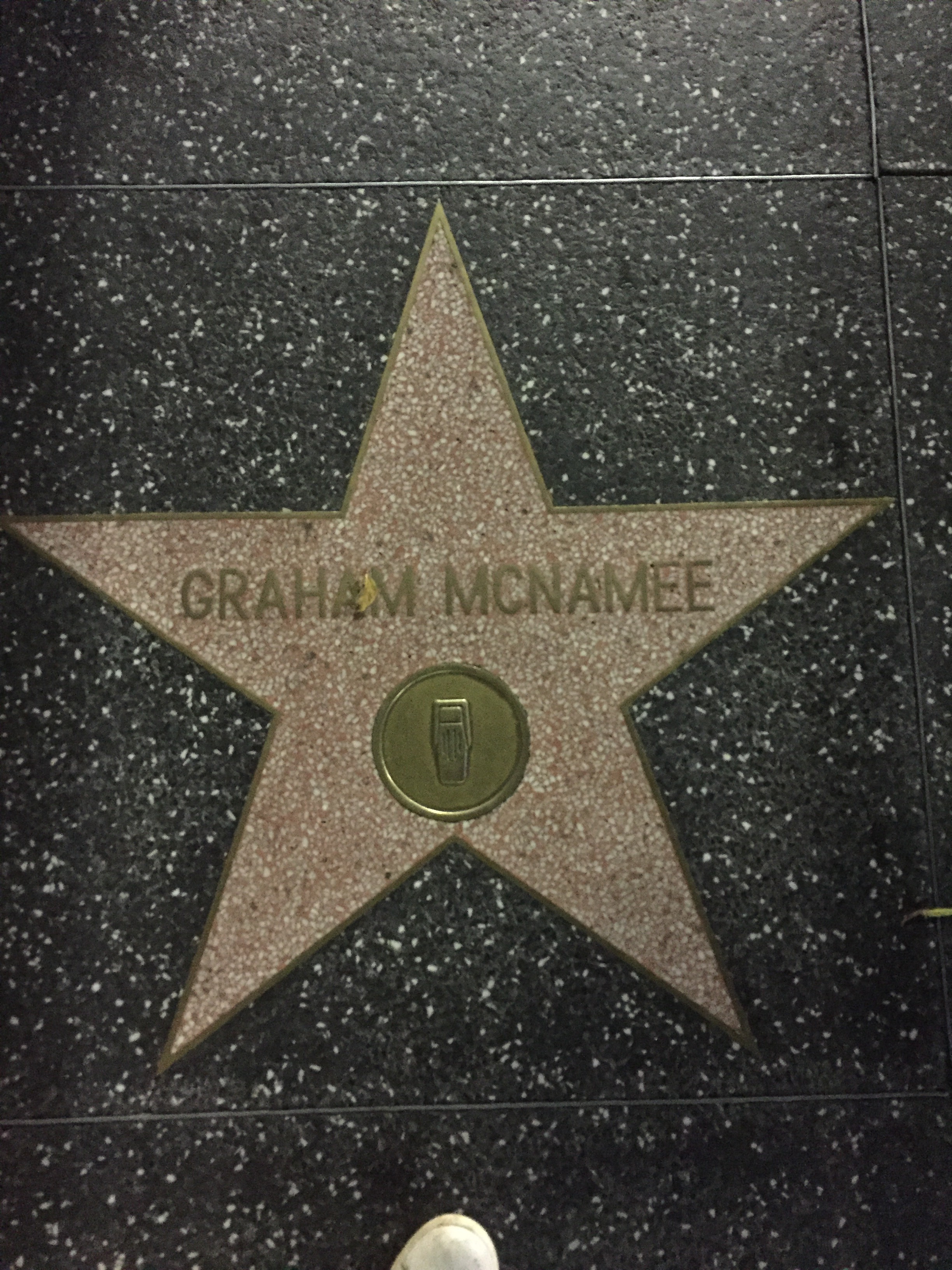
It’s not tho.
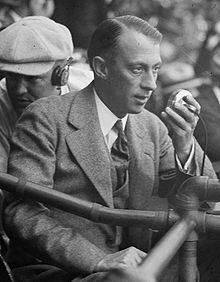
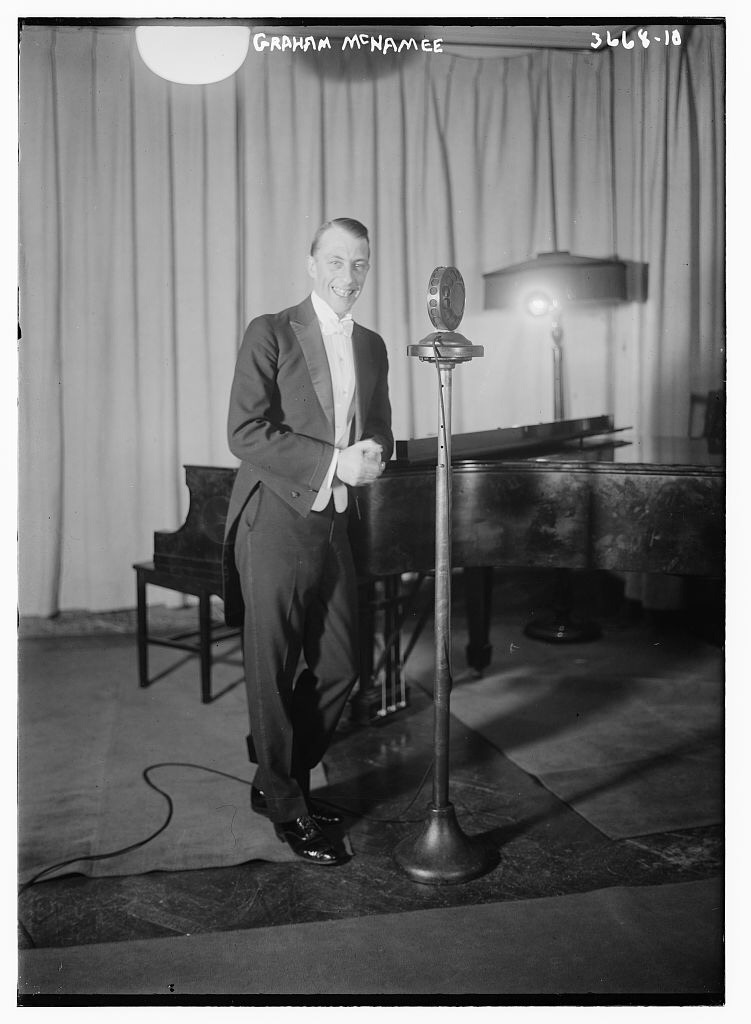
A play by play man and newscaster who made the cover of Time and died 1942 at St. Luke’s at the age of 53.
Fault Fun
Posted: April 20, 2016 Filed under: books, the California Condition Leave a comment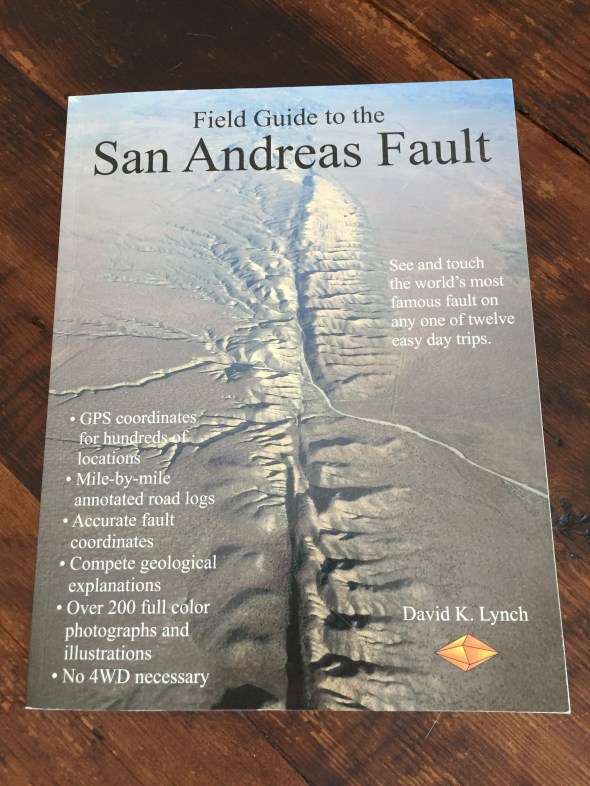
Very happy with this purchase of David K. Lynch’s Field Guide To The San Andreas Fault.
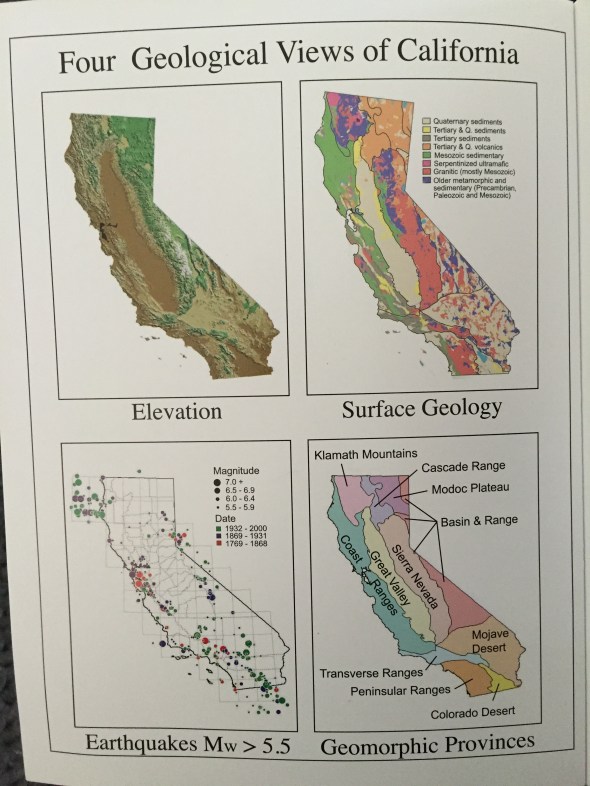
Good charts. 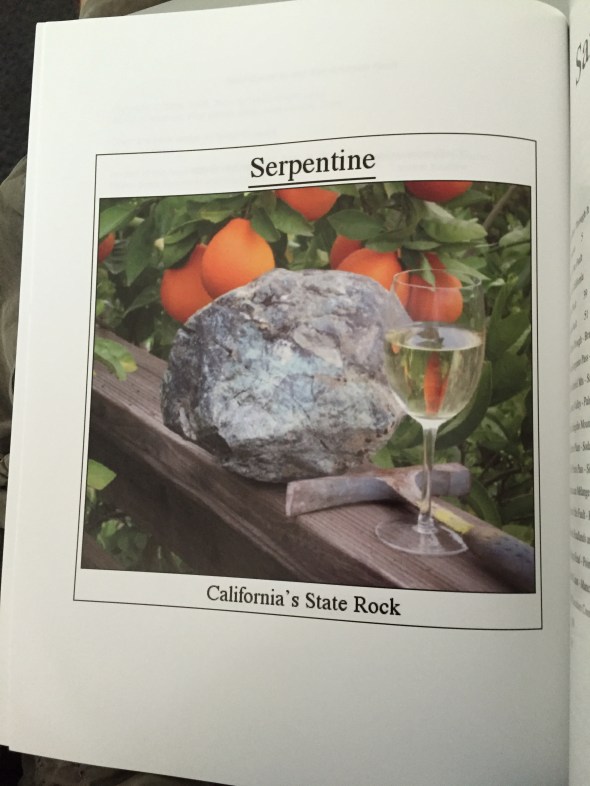
Plus, fun style.
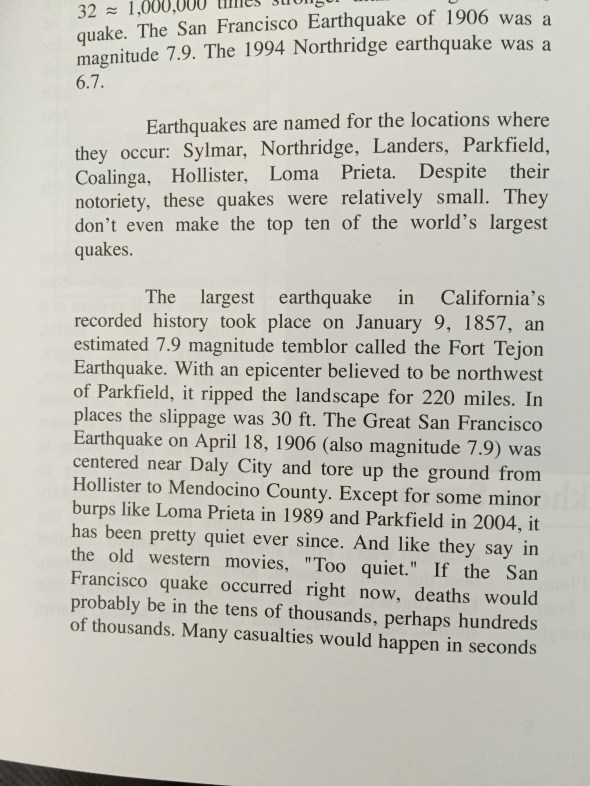
Didn’t know we barely nick the top ten ever in the US!
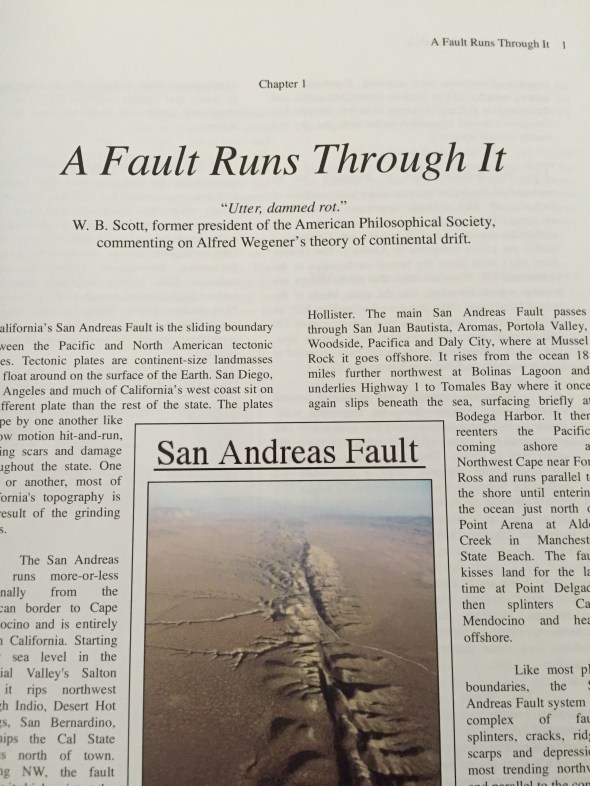
Reading up on author David K. Lynch I am delighted to learn:
Back in the 70’s, he was proclaimed “Frisbee Immortal” by the Wham-O company. Dave’s recreational activities include playing the fiddle in assorted southern California bands, camping, collecting rocks and rattlesnakes and reading the New Yorker.
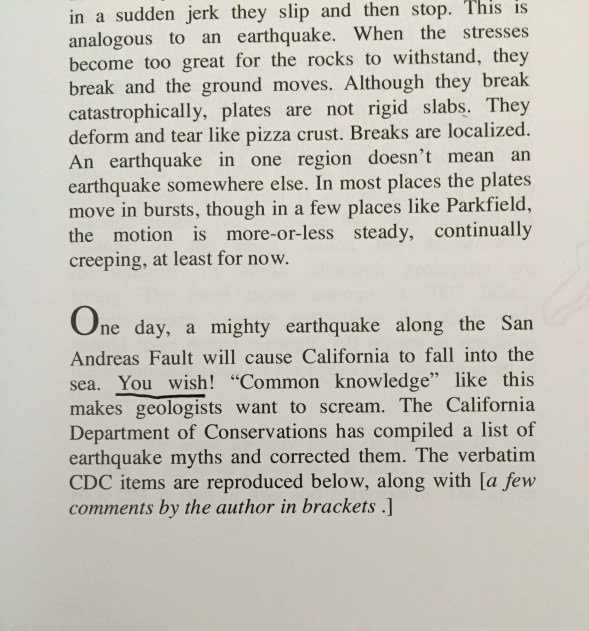
You wish! Can’t wait to hit the road and start looking for scarps. 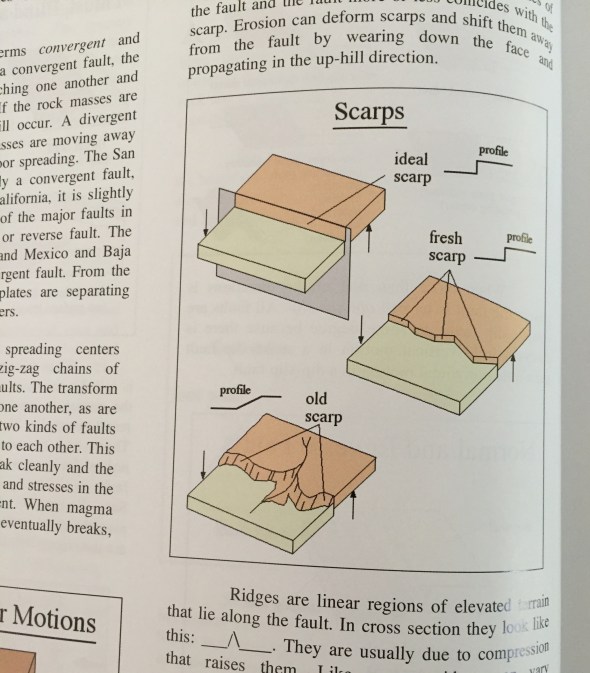
Will definitely check out Lynch’s Color and Light In Nature.

The California Condition
Posted: April 7, 2016 Filed under: the California Condition Leave a comment
Deep California sentence in this Vulture interview with Marcia Clark:
When you look at an old photo of a boxing match
Posted: April 4, 2016 Filed under: the California Condition Leave a comment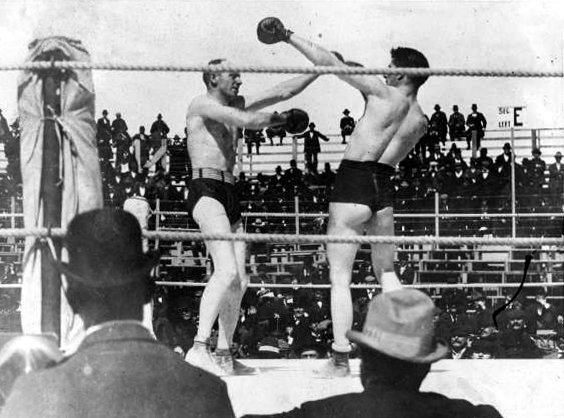
It’s like what the hell is going on?
Came upon the Fitzsimmons Corbett fight while reading about local history. The film of the fight is sometimes said to be the world’s first feature film. Thomas Edison himself said Corbett was the first film star (which is extra interesting because spoiler alert guess who is the winner and who the loser?)
You can watch it yourself on YouTube, I can’t say it gripped me completely:
This movie was directed by Enoch Rector. Should not all documentarians honor their forbearer? Yet there is little to read of this man online. Let me share some choice things then from his NY Times obituary when he left this Earth-existence on January 27, 1957 at age 94:
Born near Parkersburg, W. Va., Mr. Rector attended the University of West Virginia, but an urge to travel caused him to leave before graduation. He qualified as a transit theodolite operator and worked with a surveying crew on the transcontinental right of way for the Northern Pacific Railroad.
Mr. Rector arrived in Seattle with $200 and invested $150 in passage on a sailing ship that took him around Cape Horn. Landing at Buenos Aires he became engineer in charge of surveys for a railroad that runs through Bolivia.His inventions included a kerosene carburetor that was used successfully on Fifth Avenue buses but was abandoned for economic reasons.Surviving are a daughter, Mrs. Anne Rector Duffy, wife of Edmund Duffy, a political cartoonist.
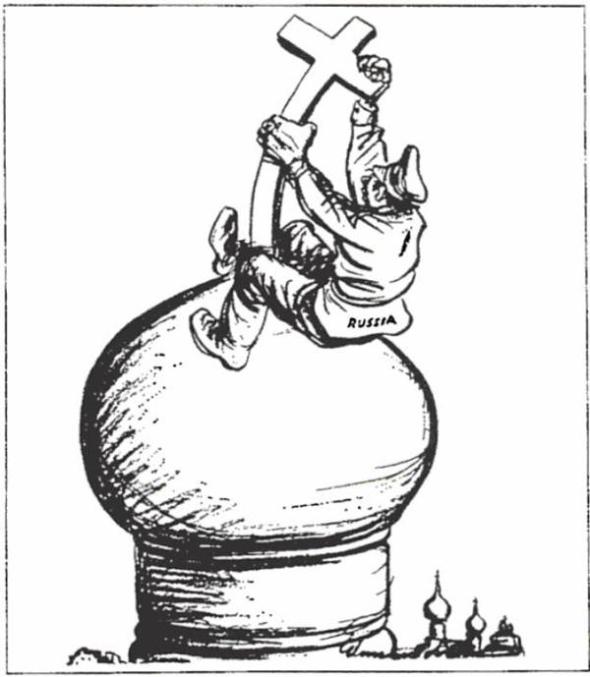
You’re gosh-darn right I’m gonna show you the work of Edmund Duffy! Let’s see the three times he won the Pulitzer Prize:
An Old Struggle Still Going On (1931):
California Points With Pride (1934):
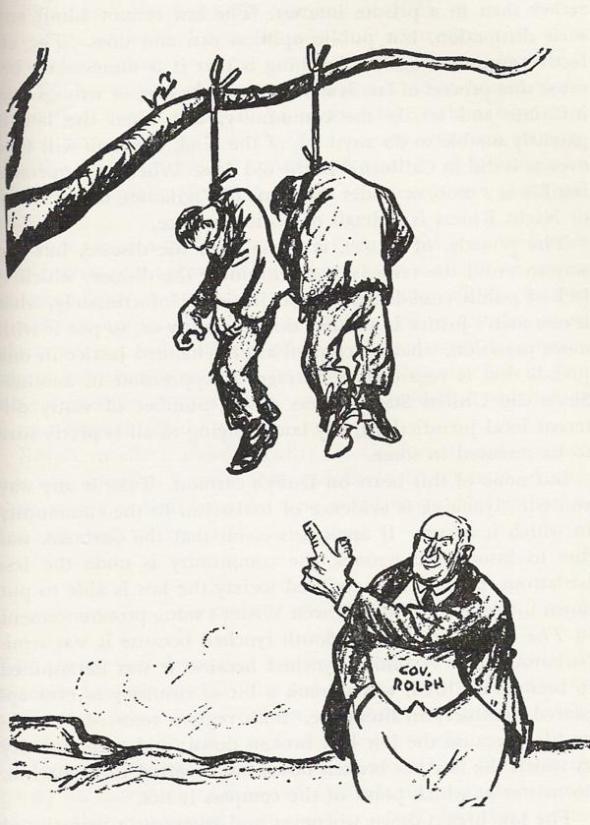
The Outstretched Hand (1940):
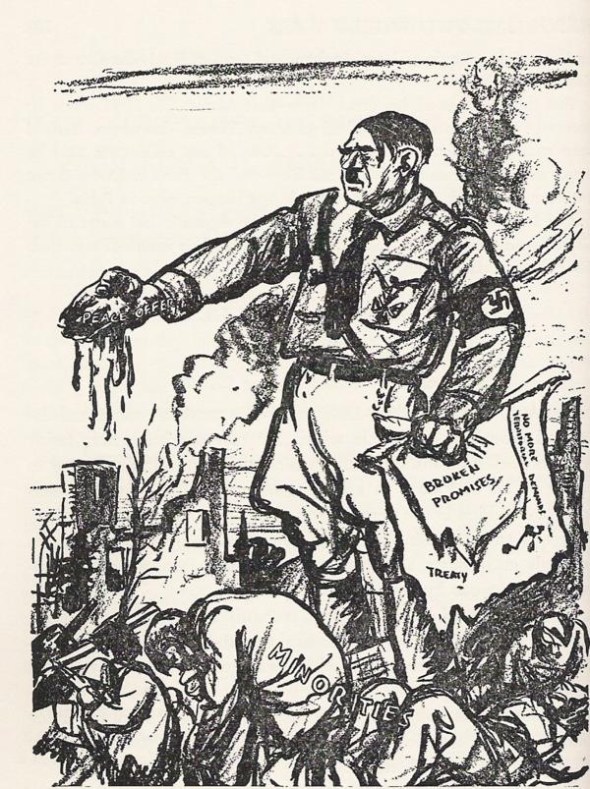
Huge props to Brian Cronin over there at Comic Book Resources for writing up about those Duffy cartoons. I hope he doesn’t mind that I reuse here as long as I credit him and thank him.
Incredible story on the middle one in particular, which depicts the lynching of two (white) kidnap-murderers in St. James Park in San Jose:
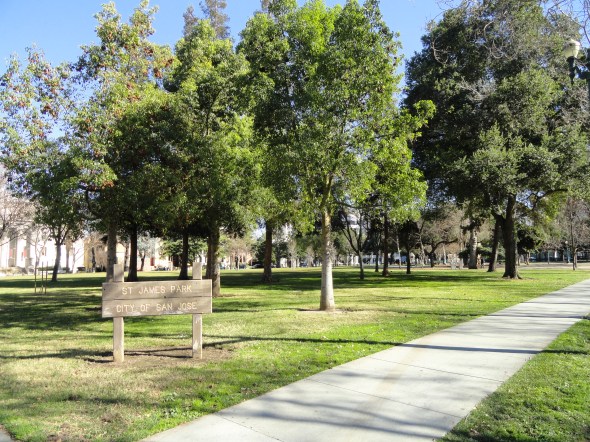
Oh and what’s that? Jackie Coogan was one of the lynchers? You mean this guy?:

(that day did he look more like this guy?)
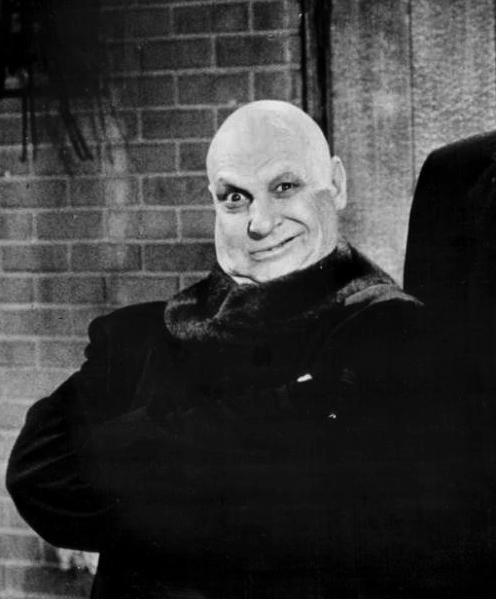
California man. Always interesting.
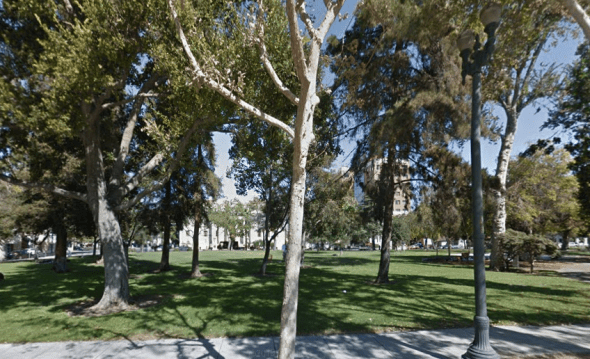
Kudos to Lawry’s
Posted: April 3, 2016 Filed under: good work, the California Condition Leave a comment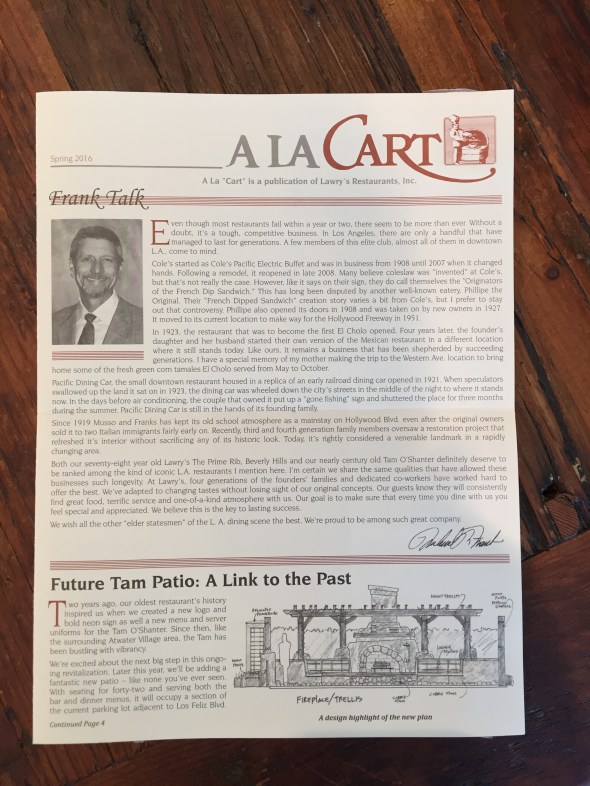
One of the finer restaurant newsletters in the game. 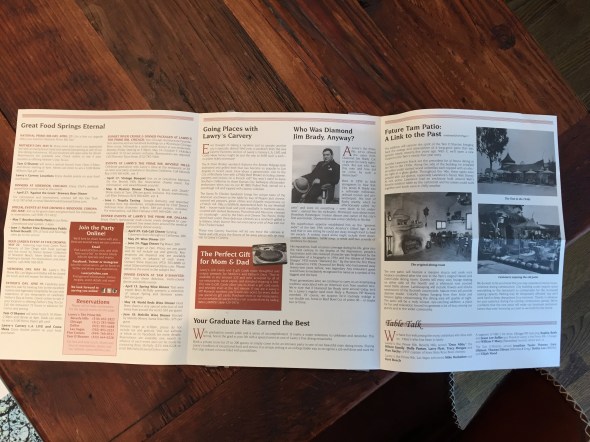
Damn if I’m not gonna learn everything I’ll ever know about Diamond Jim Brady from a steakhouse newsletter.
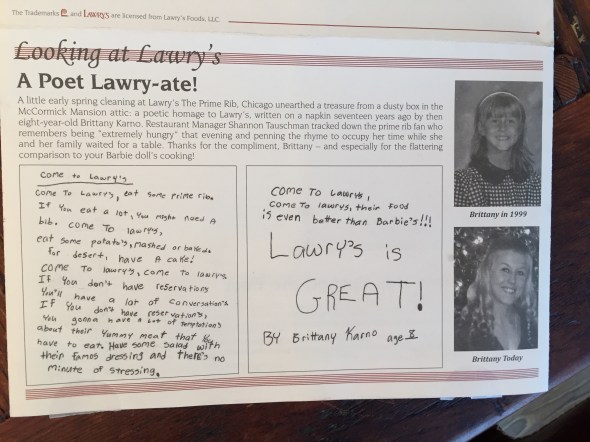
 Helytimes