De Longpre Avenue, Los Angeles, CA
Posted: December 13, 2012 Filed under: the California Condition Leave a comment
The artist Paul de Longpre settled in Hollywood in 1889. On arriving in Hollywood, he had traded three flower paintings for three acres of land near what is now the corner of Hollywood Boulevard and Cahuenga.
– so says Carey McWilliams in Southern California: An Island on the Land
“You can’t help but say hats off to them”
Posted: December 12, 2012 Filed under: heroes, history, New England, writing Leave a comment
When I read Abigail’s letters, I wonder how she ever hat time to write them. She was raising a family with four children, running the farm without her husband there; it was nip and tuck whether she could make a go of it financially; she had sickness to contend with, plagues, waves of smallpox and epidemic dysentery that swept through Braintree. How did John Adams have time to write his letters and keep the diaries? If they’d done nothing else, you’d say to yourself, how did they do it? And remember, they were writing by candlelight with a quill pen, they probably had their teeth hurting because there was no dentistry as we know it. They were probably getting over some recent attack of jaundice or whatever else was epidemic at the time. It’s very humbling. You can’t help but say hats off to them.

Southern California Country
Posted: December 12, 2012 Filed under: the California Condition Leave a comment
In Pershing Square in downtown Los Angeles, there’s a monument with this very long quote carved on it. It’s from journalist Carey McWilliams’ 1946 book, Southern California Country (1946):
My feeling about this weirdly inflated village in which I had come to make my home (haunted by memories of a boyhood spent in the beautiful mountain parks, the timberline country, of northwestern Colorado), suddenly changed after I had lived in Los Angeles for seven long years of exile. I have never been able to discover any apparent reason for this swift and startling conversion, but I do associate it with a particular occasion.
I had spent an extremely active evening in Hollywood and had been deposited toward morning, by some kind soul, in a room at the Biltmore Hotel. Emerging next day from the hotel into the painfully bright sunlight, I started the rocky pilgrimage through Pershing Square to my office in a state of miserable decrepitude. In front of the hotel newsboys were shouting the headlines of the hour: an awful trunk-murder had just been committed; Aimee Semple McPherson had once again stood the town on its ear by some spectacular caper; a University of Southern California football star had been caught robbing a bank; a love-mart had been discovered in the Los Feliz Hills; a motion-picture producer had just wired the Egyptian government a fancy offer for permission to illuminate the pyramids to advertise a forthcoming production; and, in the intervals between these revelations, there was news about another prophet, fresh from the desert, who had predicted the doom of the city, a prediction for which I was morbidly grateful.
In the center of the park, a little self-conscious of my evening clothes, I stopped to watch a typical Pershing Square divertissement: an aged and frowsy blonde, skirts held high above her knees, cheered by a crowd of grimacing and leering old goats, was singing a gospel hymn as she danced gaily around the fountain.
Then it suddenly occurred to me that, in all the world, there neither was nor would ever be another place like this City of the Angels. Here the American people were erupting, like lava from a volcano; here, indeed, was the place for me – a ringside seat at the circus.
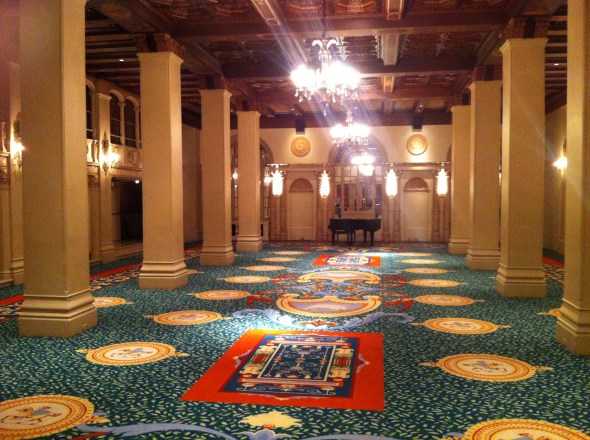 (Biltmore Hotel ballroom by SCH)
Bummer Headlines
Posted: December 9, 2012 Filed under: Uncategorized Leave a commentRacetrack Drugs Put Europe Off U.S. Horse Meat
The picture, by Christinne Muschi, is appropriately grim:

Ways of describing horsemanship
Posted: December 7, 2012 Filed under: writing Leave a comment
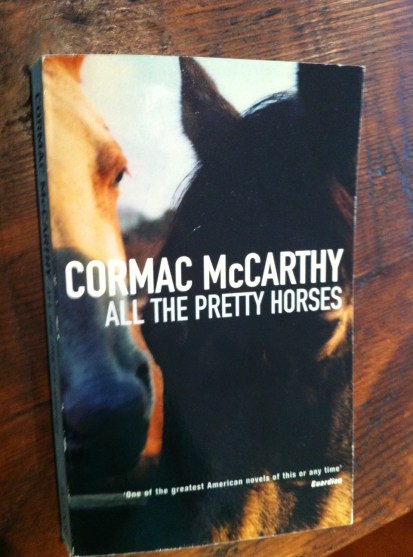
He looked natural on a horse.
That might be one way. Gets the point across. But, just in case, let’s try another way:
The boy who rode on slightly before him sat a horse not only as if he’d been born to it which he was but as if were he begot by malice or mischance into some queer land where horses never were he would have found them anyway. Would have known that there was something missing for the world to be right or he right in it and would have set forth to wander wherever it was needed for as long as it took until he came upon one and he would have known that that was what he sought and it would have been.
(theory: all great writers are comedy writers? “Cracker Cowboys of Florida” by Frederick Remington, 1895)
a little too casual for me
Posted: December 6, 2012 Filed under: politics Leave a comment
On the city’s police website, spokesman Jonah Spangenthal-Lee said: “The department’s going to give you a generous grace period to help you adjust to this brave, new, and maybe kinda stoned world we live in.”
He added: “The police department believes that, under state law, you may responsibly get baked, order some pizzas and enjoy a Lord of the Rings marathon in the privacy of your own home, if you want to.”
The department also posted a picture of actor Jeff Bridges as the cannabis-smoking character “The Dude” from the comedy film “The Big Lebowski”.
Encouraging indoor cannabis smoking, it carried the caption: “The Dude abides, and says, ‘take it inside!”
from here. the UK’s Telegraph, where you can also learn about:
- ‘Kiss the Girls’ actress Ashley Judd mulls Senate bid
- Scottish ‘madam’ Anna Gristina to name clients on Dr Phil TV showNasa unveils ‘black marble’ images of the world
(photo from wikipedia)
Scenes from the life of Marie Antoinette
Posted: December 6, 2012 Filed under: film, history, writing Leave a comment
1) An angry mob tries to show her the head of her best friend.
She’s being held captive by revolutionaries. Outside, she hears an angry mob yelling and shouting. She asked what it was. Nobody would tell her. Antonia Fraser tells us
“…the municipal officers had had the decency to close the shutters and the commissioners kept them away from the windows…
One of these officers told the King “they are trying to show you the head of Madame de Lamballe.”
Mercifully, the Queen then fainted away”.
2) She and her family try to make a run for the border, in disguise, but they are recognized by the local postmaster.
Or possibly by a tavern-keeper who recognized the king’s face from a coin.
3) Her husband is taken from her and executed.
4) Her eight year old son is taken away from her.
He was given to be raised by a cobbler. The revolutionaries tried to trick him into accusing his mother of sexually abusing him.
5) Then at last her hair is cut off, and she’s wheeled in a cart through the streets of Paris. When they led her up to the scaffold, she steps on the executioner’s foot by accident. So she apologizes. “Pardon me, sir, I did not mean to do it.”
None of these scenes (I got from a quick read of wikipedia) were in this movie:
There were some other good scenes.
People didn’t like to waste time back then.
Posted: December 5, 2012 Filed under: music, the California Condition Leave a comment
Intending to work with his father on their ranch, Brubeck entered the College of the Pacific in Stockton, California, (now the University of the Pacific) studying veterinary science, but transferred on the urging of the head of zoology, Dr. Arnold, who told him “Brubeck, your mind’s not here. It’s across the lawn in the conservatory. Please go there. Stop wasting my time and yours”.
(from It’s About Time: The Dave Brubeck Story by Fred M. Hall, quoted in Wikipedia).
Laugh Kills Lonesome (1925)
Posted: December 5, 2012 Filed under: adventures, America, comedy, painting, pictures Leave a comment
When Charles Russell died (a year after finishing this painting), all the kids in Great Falls, Montana, were let out of school to watch the funeral procession.
Factory Girls by Leslie T. Chang
Posted: December 3, 2012 Filed under: food, writing Leave a comment
The stories of migrant women shared certain features. The arrival in the city was blurry and confused and often involved being tricked in some way. Young women often said they had gone out alone, though in fact they usually traveled with others; they just felt alone. They quickly forgot the names of factories, but certain dates were branded in their minds, like they day they left home or quit a bad factory forever. What a factory actually made was never important; what mattered was the hardship or opportunity that came with working there. the turning point in a migrant’s fortunes always came when she challenged her boss. At the moment she risked everything, she emerged from the crowd and forced the world to see her as an individual.
Best sentence:
I would have liked to spend more time with Big Sister Sun, minus the interpretive commentary; it was unendurable to watch one woman cry while another compared her to seaweed.
Highly recommend this excellent, enlightening, moving book. I had heard amazing things about it, but figured it would be either dull or depressing or both. I found it instead to be incredibly compelling. There is a modesty and openness in the way Leslie Chang writes that is very rare in even the best nonfiction. The description of the man who invented “Assembly Line English” is a genuine if somewhat tragic LOL.
I trailed Mr. Wu around the room. I thought he was going to introduce me to some students, but he walked me over to one of the machines instead. “These are so much more unwieldy than my new machines,” he said. “It takes two people to carry one.”
By now it was early evening, and I commented that it was getting a little dark to read without light.
“That’s not bad for the eyes,” he said. “Bright sunshine is bad for the eyes.”
“I’m not saying bright sunshine is good for the eyes,” I said. “I’m just saying it’s not good to read in the dark.”
“That’s not true,” he said heatedly. “That’s only if your eyeballs are not moving. If your eyeballs are moving, it doesn’t matter how dark it is.”
One small complaint. There is a description of the village girl Min going to McDonald’s for the first time. “She brought her face down close to her Big Mac and ate her way through the sandwich one layer at a time.” I could not exactly picture how this worked (like, was she descending on the bun part from the top? did she remove each layer?) and would’ve liked more clarity.

Steve Wozniak
Posted: December 1, 2012 Filed under: the California Condition 1 Comment
Seen here with Joey Slotnick, he built the first computer where the letters you typed on a keyboard appeared on a screen. So far he is my favorite character in the Steve Jobs biography. From Wikipedia:
His favorite video game is Tetris. In the 1990s he submitted so many high scores for the game to Nintendo Power that they would no longer print his scores, so he started sending them in under the alphabetically reversed “Evets Kainzow”
Wozniak is no longer dating Kathy Griffin.
This sounds like a sad story, Slate.
Posted: November 30, 2012 Filed under: Uncategorized 1 Comment Help! How Can I Tell My Infertile Asian Wife I Want All-White Babies?
Massive insurance…
Posted: November 29, 2012 Filed under: film Leave a commentbut not even one HelyTimes reader should miss this, from Time’s interview with Egyptian president Mohamed Morsi:
On the lessons of Planet of the Apes: I remember a movie. Which one? Planet of the Apes. The old version, not the new one. There is a new one. Which is different. Not so good. It [does] not [express] the reality as it was the first one. But at the end, I still remember, this is the conclusion: When the big monkey, he was head of the Supreme Court I think — in the movie! — and there was a big scientist working for him, cleaning things, [who] has been chained there. And it was the planet of the apes after the destructive act of a big war and atomic bombs and whatever in the movie. And the scientist was asking him to do something … “Don’t forget you are a monkey,” [the man] tells [the ape]. “Don’t ask me about this dirty work.” What did the big ape, the monkey, say? He said, “You’re human. You did it [to] yourself.” That’s the conclusion. Can we do something better for ourselves
?

Bill Murray Hall Of Fame Speech
Posted: November 28, 2012 Filed under: America, baseball, comedy Leave a commentWay over my three minute limit, but 2:20-3:45 is pretty great.
HT today’s NY Times interview:
Q. Did you ever think that the lessons you first learned on the stage of an improv comedy theater in Chicago would pay off later in life?
A. It pays off in your life when you’re in an elevator and people are uncomfortable. You can just say, “That’s a beautiful scarf.” It’s just thinking about making someone else feel comfortable. You don’t worry about yourself, because we’re vibrating together. If I can make yours just a little bit groovier, it’ll affect me. It comes back, somehow.
“Find where the dogs sleep…”
Posted: November 27, 2012 Filed under: travel, Vivien Kent, writing 1 Comment
Whenever I travel, I look for the place where the wild dogs sleep. Never have I been disappointed. It is always some odd corner, some makeshift shelter, some unvisited ruin.
– Viven Kent, How To Travel (1947)
(photo of the Dutch cemetery in Kochi, India by me)
Ya burnt!
Posted: November 26, 2012 Filed under: comedy, writing Leave a comment
Matters of doctrinal dispute, too, give rise to the occasional sly squib. The early Irish Church had its differences with Rome, for example on the thorny question of the dating of Easter, which led to a “great dispute” and a resulting Irish hostility towards St Peter, the founder of the Roman Church… Thus on the recto of folio 180, a line of text referring to Peter’s denial of Christ incorporates the figure of a hare, an animal known for its timidity.
From John Banville’s article about the Book of Kells in the Financial Times. Above is Lindisfarne, from Wikipedia.
Point Conception, California
Posted: November 11, 2012 Filed under: the California Condition Leave a comment
(from wikipedia)
Petraeus
Posted: November 10, 2012 Filed under: America, heroes, news Leave a comment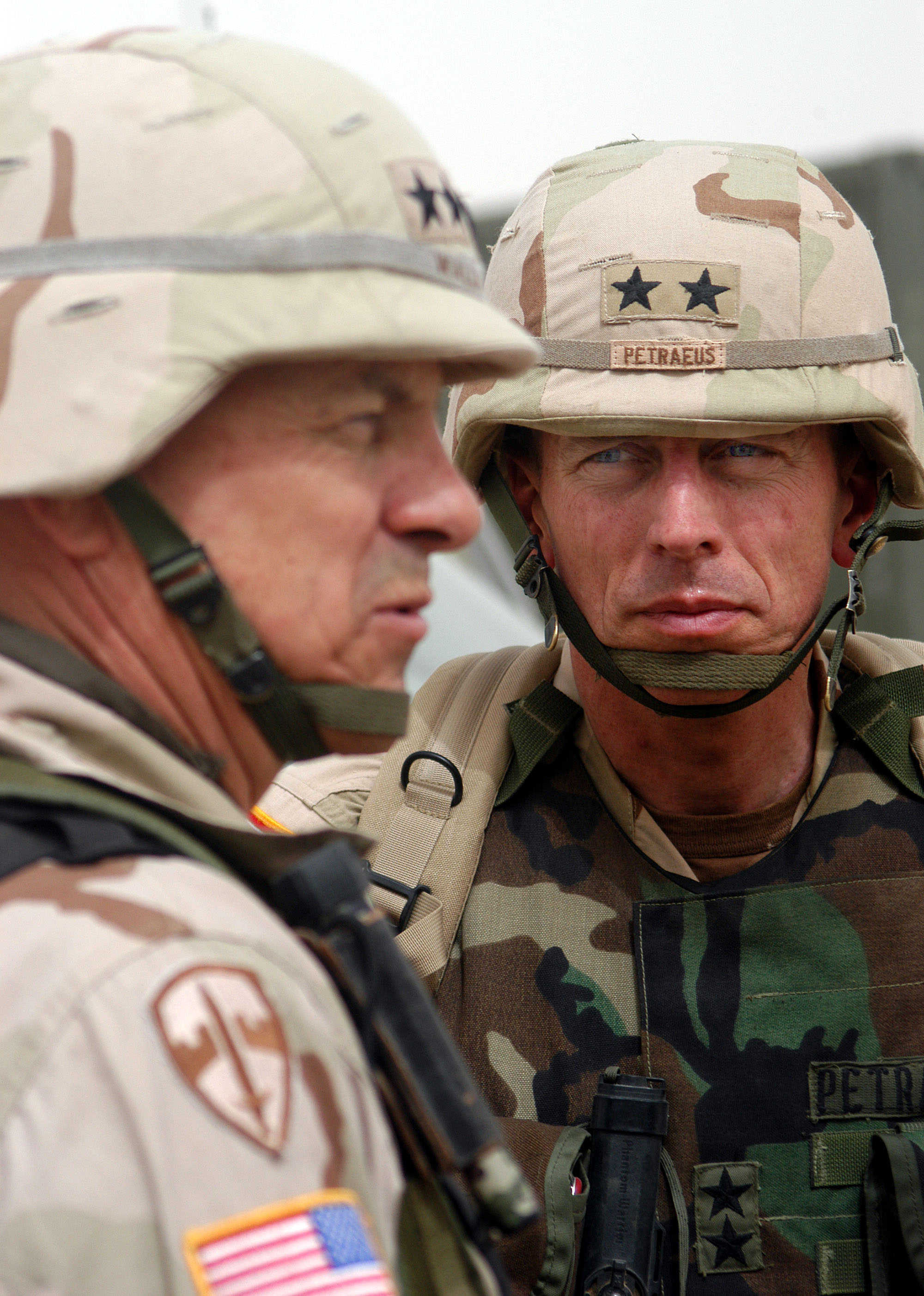
What a great, tragic name. I guessed it was Greek but in fact his father was “Sixtus Petraeus, a sea captain from Franeker, Netherlands.”
Two stories, first from Wikipedia:
Upon promotion to lieutenant colonel, Petraeus moved … to Fort Campbell, Kentucky, where he commanded the 101st Airborne Division (Air Assault)’s 3rd Battalion 187th Infantry Regiment, known as the “Iron Rakkasans”, from 1991–1993. During this period, he suffered one of the more dramatic incidents in his career; in 1991 he was accidentally shot in the chest with an M-16assault rifle during a live-fire exercise when a soldier tripped and his rifle discharged. He was taken to Vanderbilt University Medical Center,Nashville, Tennessee, where he was operated on by future U.S. SenatorBill Frist. The hospital released him early after he did fifty push-ups without resting, just a few days after the accident.
The other one I heard Rick Atkinson tell on NPR: Apparently Petraeus got into a joking interaction with a private on a dock in Kuwait City in 1991. Petraeus challenged the soldier to a push-up contrast. The private tapped out at 27. Petraeus did 20 more, and then told the private he could write that off on his tax returns, because it was an education.
Airplane Travel
Posted: November 9, 2012 Filed under: art, painting, travel Leave a comment
Mural painted by Allen Tupper True in 1937 for The Brown Palace Hotel in Denver. Not sure if it’s still there, somebody in Denver have a look!
 Helytimes