Amsterdam
Posted: September 23, 2019 Filed under: Amsterdam, art history Leave a comment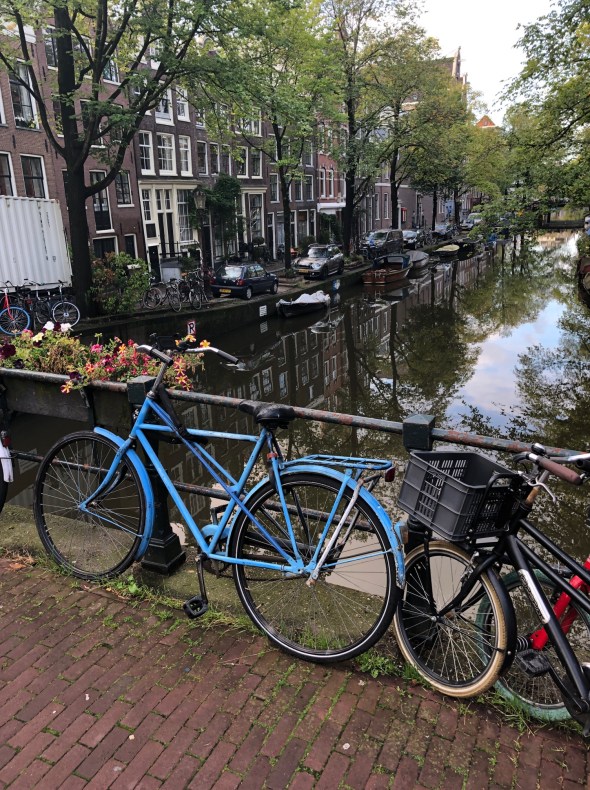
some cities are like a theme park of themselves.

Amsterdam: a water park? Blessed with an unusually bright day. You think of the history.

Took a reading on my altimeter:

The Netherlands.
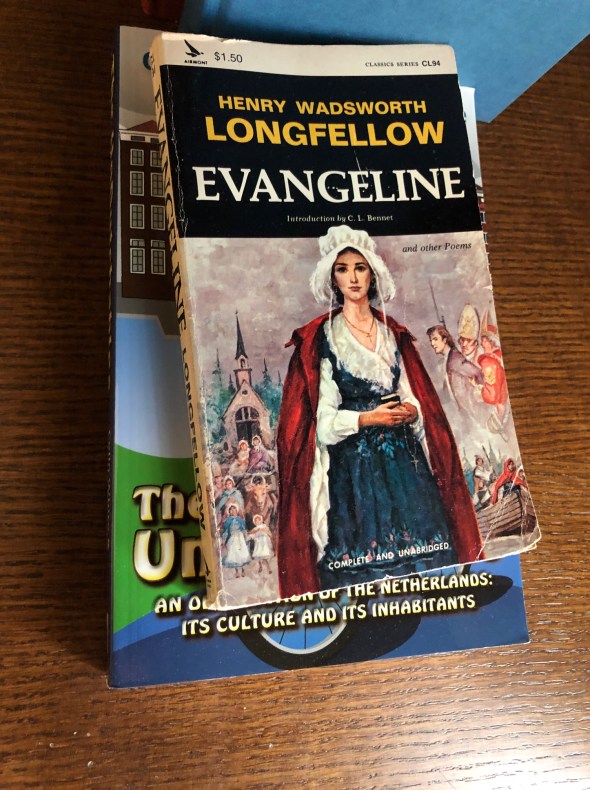
Books avail at hotel. At the Rijksmuseum they have Jan Willem Pieneman’s enormous painting of Waterloo.
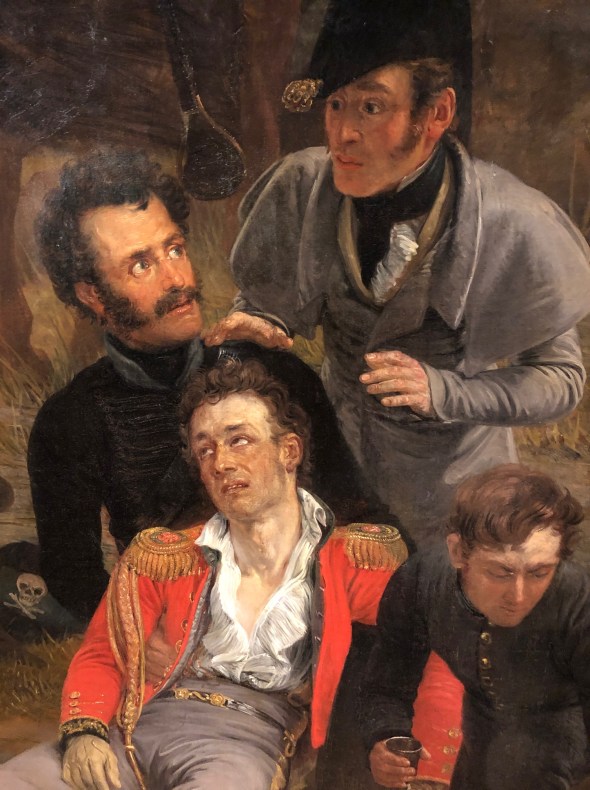
Detail.

Dispatch from Nairobi
Posted: September 18, 2019 Filed under: Africa, America Since 1945 Leave a comment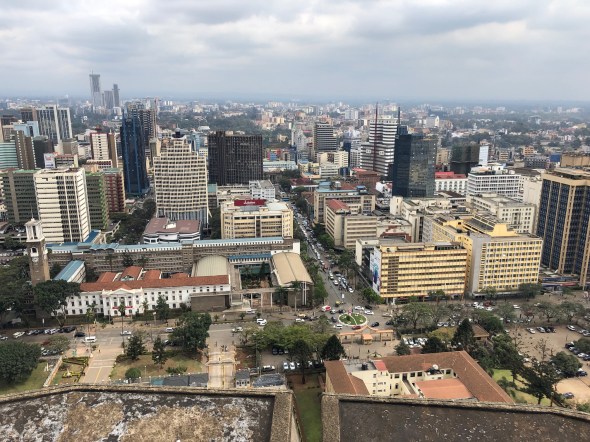
A friend was having a 40th birthday party in Nairobi, an excuse to see what’s up in Africa.
Top down view
On the first morning I was in Nairobi I walked over to the KICC building and went up to the top, 33rd story I believe, where you can stand outside on the exposed helipad.
Going to the top of a tall building at the start of a trip is a tactic I got from Neomarxisme. He recommends this for first-timers in Tokyo. Go somewhere high, and take in the vastness of what you’re dealing with in Tokyo. Then you can begin to appreciate what’s going on.
Nairobi is not as vast as Tokyo. Nairobi’s population can be estimated at somewhere around 4.5 million people, higher or lower maybe, if we’re counting commuters and outlying areas. Roughly equivalent to LA.
From the top of the KICC you can see the grasslands of Nairobi National Park. For LA residents, imagine if Griffith Park had free-ranging giraffe and zebras wandering around.
There is also a dense forest in Nairobi, Karura Forest. On the fringes of this forest I saw two fairly chill monkeys lolling about. I believe they were Sykes monkeys. The embassies, the Muthaiga Country Club, impressive and secure houses are along the edges of this forest.
The only other sightseer on the top of the KICC was an African girl younger than me who had me take her picture on an Nikkon camera and also filmed several jubilant videos of herself talking into her phone. I say she was African because her skin was very dark and her English accented but maybe her home was France or the Netherlands for all I know. My guess would be she was a tourist or a student from somewhere else.
From the KICC you can see the railyards. Nairobi was originally a railway town, founded in 1899 to service the British-run Uganda Railway. The train still runs to Mombasa on the coast but I was told it wasn’t running to Uganda anymore. “We’re not there yet.”
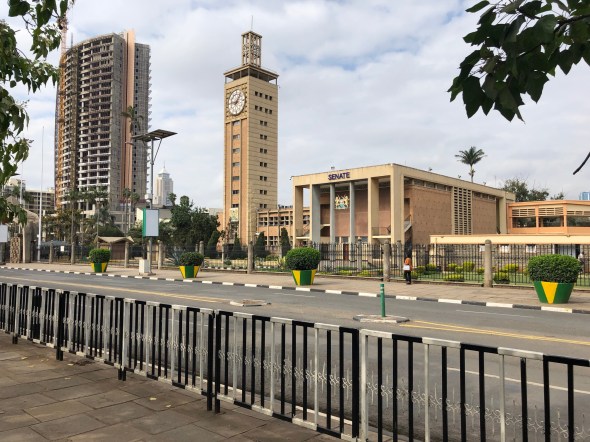
The KICC building is near Kenya’s Senate and Supreme Court. In this area, near the CBD (Central Business District) you pass a lot of security checkpoints. To get near these buildings, you’ll have to talk to someone with a gun. But none of the people with the guns seemed too anxious. This is good, I guess? In Kenya they’re obsessed with having you write down your name in a ledger when you go anywhere. But supervision of this process always seems indifferent. What are they ever gonna do with these ledgers, I wonder, with scribbled signatures? I wonder if there’s some kind of witch doctor / voodoo priestess who would pay for books of signatures for use in rituals, perhaps burning them while drawing on the power of these spirits. Gotta look into that.
Kenya is in a sort of war with Al-Shabaab and stateless actors in neighboring Somalia (maybe even Somalia itself if we consider that a functioning state with that name). There have been several dramatic,, extreme acts of terrorism in Nairobi. The bombing of the US Embassy in 1998 killed two hundred and thirteen people. Osama bin Laden was in on that one, and maybe we shouldn’t have allowed him to keep living for thirteen more years? In 2013 four gunmen shot up the Westlands Mall, an upscale shopping place. Seventy-one people dead. Maybe ghastliest of all was the killing of one hundred forty eight mostly university students in 2015. That happened outside of Nairobi, at Garissa University.
This article, by Katherine Petrich, about how al-Shabaab and Kenyan slum-dwelling sex workers do business together, I found illuminating.
Given this deeply conservative position inside Somalia, its willingness to cooperate with and reward sex work in Nairobi, where the group is more constrained in its activities, suggests al-Shabaab is a limited, rational organization with concrete territorial aims. It is not a maximalist extremist group prioritizing ideological principles over tangible benefits, and because the group has a state-based goal, it is comfortable supporting or at least engaging with activities that contravene sharia law. An informant remarked wryly, “Al-Shabaab likes [that group of sex workers] very much. They are worth many sins.”
If you’re from the US, can you really criticize another country for its mass shootings? An Uber driver taunted me that Nairobi is safer than US cities like Chicago. Uber works well in Nairobi, the drivers were good and showed up when it said. There seemed to be pretty reliable 3G service to communicate with them.
The columnist / travel writer cliché of quoting the cab driver is well-documented. I’ve noticed even Paul Theroux does it. But what’re you gonna do, you know? These are the Kenyans I ended up spending the most time with. There we were, may as well get their story. Traffic can be horrific in Kenya. Coming into/out of the city in rhythm with regular work hours could leave you crawling for an hour or two. The grind of that life must be immiserating. It’s also a sign of a boom, I guess. Nairobi is exploding. My host explained to me that it is the NGO/government/development/banking/energy/international business capital for East Africa. If you’re doing business in Rwanda, Burundi, Tanzania, Ethiopia you might have an office in Nairobi.
From the KICC I could see a particularly crowded and chaotic street where it looked like the road itself was fully occupied by stalls and stopped minibuses. This was the area where Tom Mboya* Road meets Accra Street, and it was full of matutus, private competing independently operated (I think? maybe there’s some kind of informal union?) minibuses that might go as far as Mombasa, plus surrounding businesses. Around here I popped into a textbook store. The desire of learning in Kenya seemed intense to me, I went by many stalls selling books on business topics, and schools and colleges. Even in Kibera slum the kids are wearing school uniforms, and the desire to make money to pay school fees was several times expressed as one of life’s drives.

Karen
In Nairobi there’s a neighborhood called Karen, named after Karen Blixen, real name of author Isak Dinesen, who wrote Out of Africa. Meryl Streep played her in the movie.
Karen is around where Karen Blixen’s farm was (in fact I sometimes heard the neighborhood called Karenblixenfarm). It’s funny to me that there’s a neighborhood called Karen, partly becomes of the meme-ing of the name, partly that it’s just cool that a neighborhood is somebody’s first name. How great would it be if after I’m dead my neighborhood is called Steve? I remembered reading somewhere that late in life Karen Blixen ate nothing but oysters and champagne, but she also died of malnutrition. Karen’s farm can be visited, a guide will sit you down and recite some of her biography, and then they’ll show you things like her old wooden toilet. They don’t let you use that toilet.
The first line of Out of Africa the book, intoned in the movie by Meryl, is “I had a farm in Africa, at the foot of the Ngong Hills.” The Ngong Hills where Karen tried to grow her coffee are now spotted with windmills.
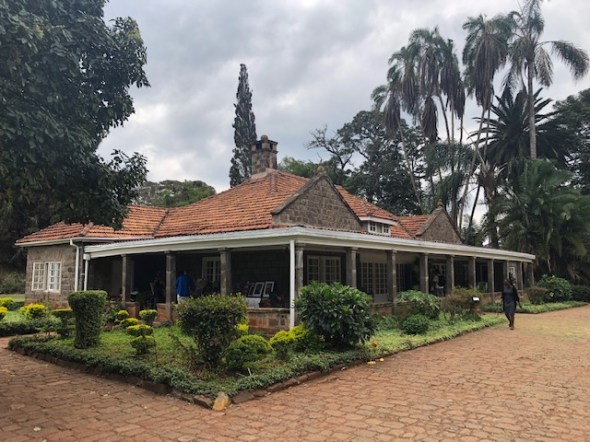
Karen’s place
Karen Blixen’s farm was one of the sites on a little tour a Stanley Hotel-recommended driver took me on. The elephant orphanage was next. Be advised you can only see the elephants between 11am and noon, unless you pay extra to adopt one I believe. It’s kind of fun to see young elephants doing their thing but the idea of an elephant orphanage is so sad, and the crowded circle of humans around them kind of unpleasant, so I bailed pretty fast on that.

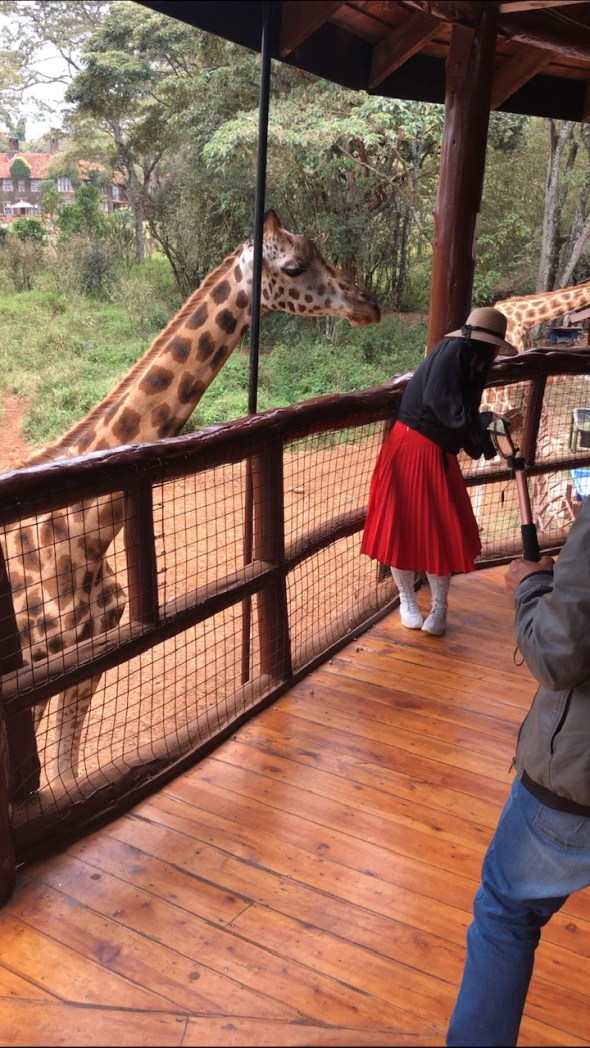
Next is the giraffe center, where they give you a little bag of molasses-based giraffe treats and you can feed them and feel their rough tongue. But you can do that in San Diego too. Across the grass of the giraffe center is Giraffe Manor, where you can stay (pricey) and the giraffes will poke their heads in the window apparently.
Last stop was some kind of depressing zoo where they did have some good venomous snakes but the vibe isn’t very cheery, it’s next to a dreary, unused amusement park. The girl leading me around, Valentine, asked me if I wanted to hold a snake. No thanks. Had she ever used the anti-venom? Yes, once. On a snake-handler.

It was about three in the afternoon. I asked my driver what was next and he said “that’s it.”
The City Outside
On the streets of Nairobi I encountered no more people asking for money than I would in downtown Los Angeles or West Hollywood. Surprised, before I went, not to find a Tyler Cowen snapshot/bleg for Nairobi. There’s an active street market scene at most busy corners. You will find vendors selling boiled eggs served with salsa and small chicken sausages. None of the street food looked too appealing to me, but around the Nairobi Railway Museum there were some makeshift restaurants that looked like they served goat stews and stuff that I might’ve liked to try if I’d had more time. Always a challenge when traveling and especially in non-Western places is like figuring out the system, how you order, what the deal is with the line, etc. This can be kind of fun and always interesting but when you’re traveling you’re often pressed for time or you find yourself kind of exhausted and suddenly very hungry, the cognitive and sensory overload is too high and the fuse is too short to deal. There’s rarely a time I pass a McDonald’s in a busy foreign city and am not at least a LITTLE tempted by the freedom and temporary mental break offered by the dependability there.
Buying, selling, marketing, cooking, eating, sitting, life being lived outside is a striking part of Nairobi, if you’re coming from an American city. But I can’t declare this especially African or Kenyan, you see this in the cities of Central and South America too.
For two of the nights I was in Nairobi I was in the care of a friend, an American semi-resident. We ate a dinner at a Peruvian Japanese kind of fusion place on a high floor of shopping structure catering to expats and wealthy Africans. The following night I was part of a group dinner at 45 Degrees, which my host said made a strong case for being the best restaurant in Nairobi. The roast pumpkin soup was excellent, and the setting, in what I was told was the owner/proprietor’s own house in an almost country-seeming neighborhood was pleasing. On the one night I was on my own I ate at Nyama Mama, now a chain with a few locations. Chicken stew with chapati, totally fine, if I were in Nairobi again I might try Wasp & Sprout.
Got a lot out of Vogue’s Kenyan Cool Girls Guide to Nairobi:
Local style: “It’s in our culture to dress up on Friday, not knowing what kind of party we’ll go to, but the whole crew has to look fresh.”
Gladys Macaria:
Go explore: “My favorite part of the city is downtown. I am lucky as a majority of the stone merchants and gold smiths I work with are based there. There is lots of quirky buildings and you see the real hustlers of Nairobi. Watching them go about their work inspires anyone.”
Muthoni Drummer Queen recommends:
Her spot: “The Nairobi Railway Museum. It’s smack in the middle of downtown. All the old trains no longer in use transport me back to an imaginary time. Its also super cool that a lot of these carriages are now occupied by visual artists with great studios and galleries.”
I missed this gallery area, if it’s still there, though there is a lot of rich street art around the area. What I found at the Nairobi Railway Museum was rooms full of old train lanterns and the chair Queen Elizabeth sat in, and then old engines parked outside.
Several times in my life I’ve found myself, as I did at the Nairobi Railway Museum, the only customer at the place, sort of dragging out my time and staying longer than my interest would hold because I don’t want to offend the guy who took my ticket by bailing after five minutes without really inspecting the old printed out articles about the man-eaters of Tsavo.

Rift Valley
If you have time for a day trip out of Nairobi, you can pretty quickly be at a vantage point where you can see the Rift Valley. Something like 35 million years ago the continent of Africa nearly ripped apart along here**. The African Great Lakes are along this continental cut, and some of the oldest fossil humans and pre-human ancestral primates have been found here too.
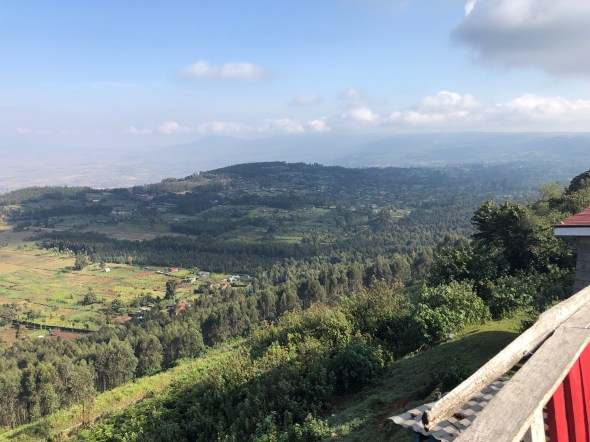
One problem I have as a casual iPhone photographer is capturing depth of field, I’m not saying I’m satisfied with this photo, but maybe you can see how quickly and dramatically and how across a vast area the elevation drops along this part of Kenya.
My driver, Samuel, took us out to Hell’s Gate National Park, where you can see zebras and so on. What was most impressive to Samuel is the immense geothermal workings at Hell’s Gate. Jonathan Franzen seems sad about the “green” (quotation marks his) energy in Kenya’s national parks in his latest New Yorker piece. But to Samuel this construction was a miracle. Samuel kept saying that “they should feature the power plant!” He several times recalled that he’d once taken around an engineer who could explain all the different parts of the geothermal plant. Maybe he was disappointed that I couldn’t explain anything about it. It appears I didn’t even take any pictures of it.
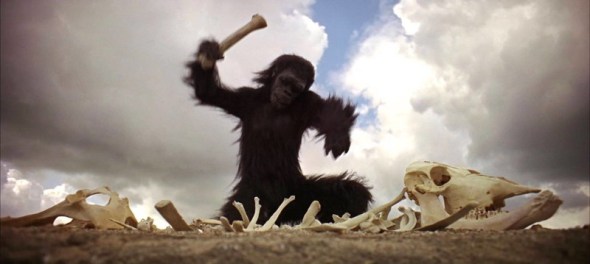
In Hell’s Gate there are chunks of obsidian rock lying around everywhere, blown out by the eruptions of Mount Longonot (last one was apparently in the 1860s). Couldn’t help wondering if our millions-ago ancestors used this stuff for tools. Made me think of 2001.
On the shores of Lake Naivasha we got some fish. Samuel told us he’d once been out on a boat on the lake. You have to pay more if you want a guy with a gun to protect you from hippos. I passed on a boat ride.

It’s well-known in Kenya that people of Obama’s tribe, the Luo, are very smart because they live on the shore of the lake and eat so much fish.
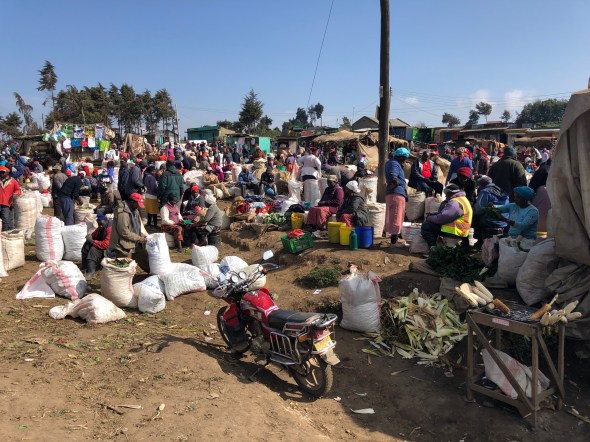
Here is a roadside vegetable market. I was told this is called Foolish Market, because the prices are so low. A bag of potatoes seemed to cost about 100 Ks (a dollar or so).
If I’d had the time to get all the way out to Lake Victoria, would’ve really enjoyed that. Would’ve required about eight hours of driving. Instead I lounged by the pool of the Muthaiga Country Club and then took a guided tour of Kibera.
Kibera
Kibera is an enormous slum, supposedly the largest in Africa, a sprawling ramshackle area of shared toilets and tin houses, originally given as a kind of grant by the British to Nubian soldiers in their army. This might be where you end up if you move to Nairobi from a rural area, renting a small room with a tin roof for $30 a month.
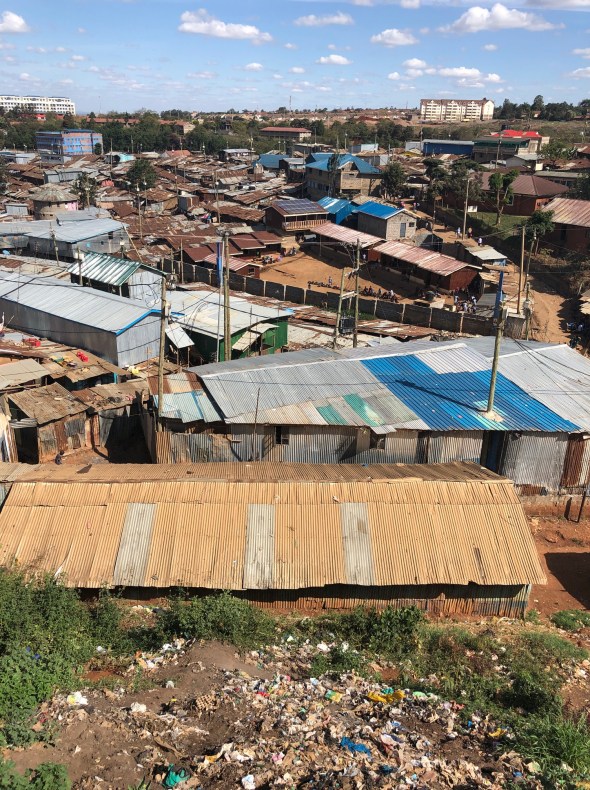
Moses was my guide there, by way of Experience Kibera. He suggested I bring two bags of rice or sugar as a donation to local single moms, many of whom are HIV positive.
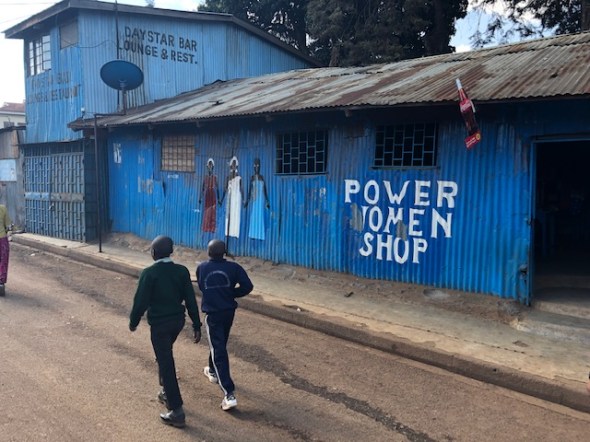
Was sorta bracing myself for this experience, the trash and open sewer scene, leaky roofs, survival-level subsistence is pretty tough but there did seem to be a positive kind of community spirit to be seen in Kibera. Moses’ sense of potential for the future and improvement over a past noted for election-related violence, sexual assault and general bad times was contagious.
Kibera is the largest slum in Nairobi, and the largest urban slum in Africa. The 2009 Kenya Population and Housing Census reports Kibera’s population as 170,070, contrary to previous estimates of one or two million people.
says Wikipedia. No one seemed to think in a white guy walking through with his guide was worth staring at, although quite a few kids wanted to say “howareyou” — I asked Moses about this and he said various NGO type people come through all the time, it’s not much of a novelty.
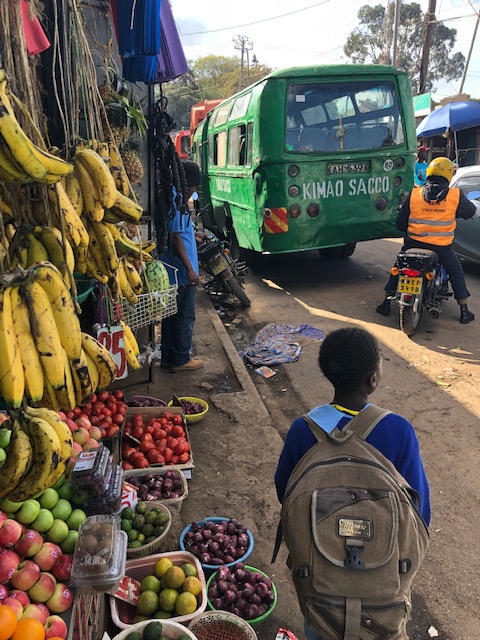 When I’ve been describing Nairobi to Americans they often seem interested to hear there’s a Cold Stone Creamery in one of the malls.
Kenyan English, like the English in India, is full of suprisingly rich phrases and constructions. I noted a few down:
- re: some bikers who’d died in a flash flood in Hell’s Gate: “these young chaps were still taking selfies”
- Samuel suggesting that Chinese road loans could be predatory, always qualified with “according to my observation.”
- Churches called “First Born Of The Holy Spirit” and “Bride of the Messiah”
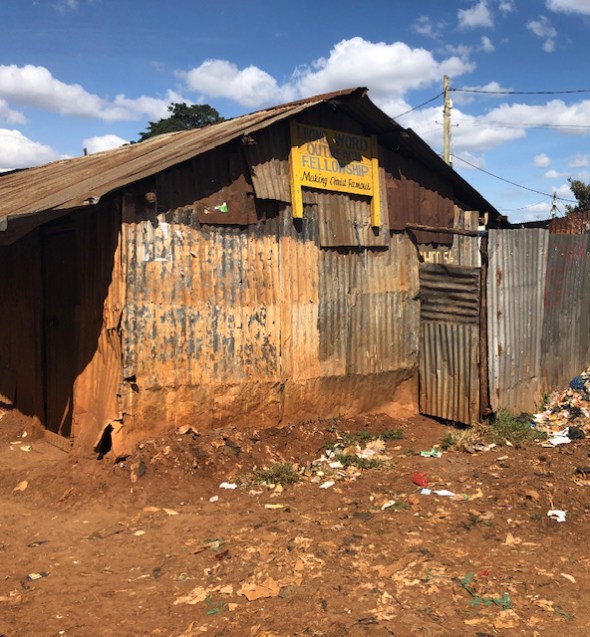
With the signs of growth everywhere, and the potential for the region, I think real estate in Nairobi would not be a crazy investment, although I don’t think I myself will bother getting involved. There was much talk of oil discovery in the remote Turkana region, where many of the early man fossils were found. There are huge gains, it would appear to me, to be made in infrastructure and transportation development both in Nairobi and around the countryside.
Here is a bus themed after Dr. Ben Carson.

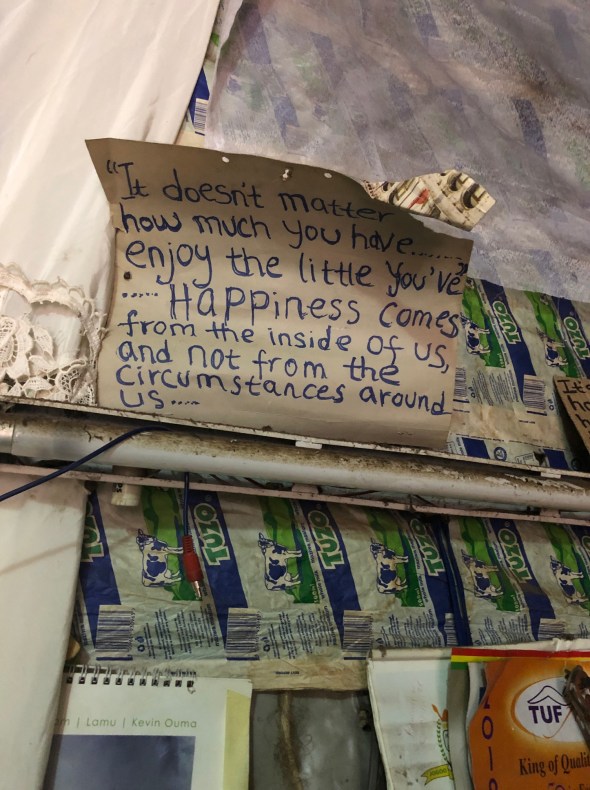

* Tom Mboya‘s work with JFK allowed African students in the ’50s and ’60s to study in the US — without him, would Barry Obama have been born?
** this statement not strictly geologically accurate, or at least a geologist would quibble, but for our purposes it’s approximately right I think
Maine and Texas
Posted: September 17, 2019 Filed under: America Since 1945, food, New England, Texas Leave a comment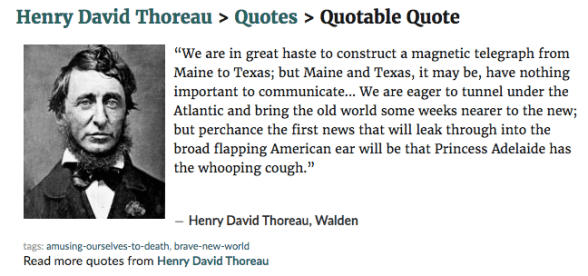
This one came up on Succession, a fave show. (Had to look it up because I wondered if they were doing a double joke where the guy was attributing Emerson to Thoreau)
Usually I’ll approach with tentative openness the pastoralist, simpler times, “trad” adjacent arguments of weirdbeards but Thoreau here WAY off. Maine and Texas had TONS to communicate! Who isn’t happy Maine and Texas can check in? (Saying this as a Maine fan whose wife is from Texas, fond of both states and happy for their commerce and exchange). Plus, if Princess Adelaide has the whooping cough, I WANT to hear that, that’s interesting goss!
The “broad flapping American ear” there — a snooty New England/aristocrat attitude we haven’t heard the last of. These guys are the original elites. There’s really two classes in America: Americans, and The People Who Think They’re Better Than Americans. Though they’re a tiny minority the second group wields outside power and influence over the first group. I’m a proud member of the first group though I admit I have second group tendencies due to my youthful indoctrination in the headquarters of these Concord Extremist Radicals, in fact at their head madrassa.
When you hear America assessed by Better Thans / eggheads, wait for the feint toward fatshaming. It’s always in there somewhere. American Better Thans adopted this from Europeans, whom they slavishly ape. It’s a twisted attitude, designed to take blame away from the Better Thans and their friends in the ownership.
As if it’s Americans fault that they’ve been raised associating corn-based treats with love and goodness! Or that corn-fatted meat is the easiest accessed protein on offer! You think that’s more the Americans fault, or the fault of the Better Thans, who manipulate our food system with their only goal creating shareholder value?
Is it the fault of the American that a cold soda is the best cheap pleasure in the hot and dusty interior where they don’t all have Walden Pond as a personal spa?
Thoreau. Guy makes me sick.
In researching this article I learn about Maine-ly Sandwiches, of Houston.

Simple desert survival rule
Posted: September 1, 2019 Filed under: desert Leave a comment
Every summer a hiker or two dies in the California desert. I pay attention to these stories, and I’ve noticed a common link between them. Almost every case of someone dying happens when the temperature is over 100 degree Fahrenheit.
At over 100 degrees, some people are just going to drop dead. It’s like the death zone at high altitude.
Let’s just make 100 degrees a cutoff.
Don’t go for a hike if it’s over 100 degrees. This seems like a simple rule, but obviously people are not paying attention. I think it should be on a sign at Amboy Crater, and Death Valley. Maybe I’ll write the Secretary of the Interior, David Bernhardt.
A possible danger is that Europeans, who love the desert and are perhaps at greater risk there, reckon their temperature in Celsius instead of the logical system where 100 is too hot. For them, we should spread the word don’t go on a hike if it’s over 37 degrees.
WE NEED OTHER ANALOGIES!
Posted: August 30, 2019 Filed under: history Leave a commentbesides Hitler and Munich and stuff! A lot of other things happened in the history of the world!
Bungaree
Posted: August 30, 2019 Filed under: Australia Leave a comment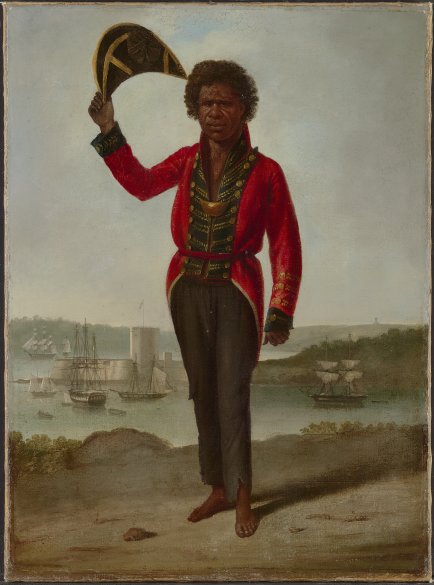
Bungaree, by Augustus Earle
Although in 1801-2 Bungaree had accompanied Flinders on his circumnavigation of Australia, he was best known in Sydney in the 1820s for his extravagant mimicry of successive colonial governors. Earle dpecits Bungaree in a parodic gesture of welcome, wearing his characteristic dress (cast off uniform)…
from The Oxford History of Art series volume on Australian Art by Andrew Sayers.

I got a used one from a library.

What’s going on up there at Cogswell College?
Cogswell specializes in digital animation and video game design. Its computer graphics degree program is the longest-running in the Bay Area. It includes Project X, an invitation-only animated film production course that approximates the experience of interning in the industry.
Are you kidding me?! Those people most need to know about Bungaree!
Have a great Labor Day weekend everybody.

Group of girl workers at the gate of the American Tobacco Co. Young girls obviously under 14 years of age, who work about 10 hours every day except Saturday, May 1910 source
how tall is…
Posted: August 25, 2019 Filed under: America Since 1945 Leave a comment
a friend told me out that when he typed “how tall is”into Google it autofilled will “how tall is peppa pig”
Northern Renaissance Art by Susie Nash
Posted: August 24, 2019 Filed under: art history Leave a comment
I, Albrect Dürer of Nuremberg painted myself thus, with undying color, at the age of twenty-eight years.
So says the writing on this one. Whether the color is “undying” we’ll see*. The painting is five hundred and eighteen years old.
What was going on with Northern Renaissance art? After a visit to the San Diego Art Museum, decided to buy myself a book about what SDMA calls “early Netherlandish art.”

This is the book that I got, and I love it and recommend it. Beautiful, readable, dense, one of the best art history books I’ve ever gotten into. Susie Nash is an expert on the Well of Moses, or Great Cross, at Dijon.

simonsara for Wiki
The Well of Moses was commissioned by Philip the Bold, who through his “brilliant marriage to the heiress Margaret of Flanders” brought that region into Duchy of Burgundy. Claus Sluter, the sculptor made the pleurants, “the Mourners of Dijon,” for the tomb of Philip. I saw these when they came through the Met years ago.

jean de la huerta for wikipedia
By the time Philip the Bold’s grandson, Philip the Good, was Duke of Burgundy, the Burgundian chunks of the Netherlands, Belgium, Luxembourg and northern France were rich, full of prospering towns with craftsmen of all kinds, and fledgling networks of banking and trade, and ancient churches and castles.
The gem may have been Bruges, kind of an international banking/trade center, the Hong Kong of its day(?)
in Bruges a clause in the carpenters’ and sculptors’ guild by-laws allowed craftsmen to work at night when “a sale or contract has been made with a merchant (whose) ship is there ready to sail.”
Gheeraert’s map of Bruges:

Between The Hundred Years’ War and a mad King, France was suffering. Paris had kind of gone to shit around 1420.
There were all kinds of wonderful and wild things being made in the Northern Renaissance: tapestries, illuminated books, glass and brass. Statues of the Christ Child with jointed arms. Says Nash:
The ability to dress sculpture and adapt it in various ways was also key to the popularity of life-size carved and painted Christ Child figures, which might have jointed arms and their own set of clothes, some of which survive today. These figures could be used for more intimate devotional activities. Textual sources from female convent communities concern the part played by these and similar figures of the Christ Child with its crib in contemplative and richly imaginative activities, during which the nun was encouraged to pick up the child, suckle it, and so on.
And so on.
Nash places a lot of this work in the context of a tradition of contemplation. You were supposed to really be staring at and contemplating, say, Christ on the cross.

How about the works of Master W with Key?

As for the Dukes of Burgundy, the drama of their lives becomes vivid from even a barebones review of major incidents. John the Fearless, murdered on the bridge at Montereau, the monk presenting his skull to the King of France: “Sire, this is the hole through which England entered France.” Charles The Bold, lost in the freezing cold at Nancy, killed by Swiss mercenaries, his body found in a frozen river. Mary the Rich, and Margaret of Austria, killed by a shard of broken glass.

Jean Hay painted Margaret of Austria, age ten
Dramatic centuries followed for this part of the world. So much of early Netherlandish // Northern Renaissance art was lost or destroyed. “A wave of iconoclasm swept the Netherlands,” and that was just the beginning. Nash has a great picture I can’t find online of the city gate of Berne, chopped up for firewood in 1865. The town halls of Brussels and Paris were both burnt, Tournai and Ypres were bombed and shelled. The Allies found the Ghent altarpiece in a salt mine.

Last one, from a prayer book made for Margaret Tudor, wife of James IV.

This is not Margaret receiving an actual vision of the Virgin – she was not known as a visionary and indeed was note even particularly devout, if her contemporary reputation is true: she famously requested, on her sickbed, to contemplate a parade of her best dresses instead of a crucifix.
The Northern Renaissance – they’re just like us!
* some controversy over the translation here. My Latin is rusty but I like “undying” or “everlasting” better than “appropriate.”
Augusts
Posted: August 23, 2019 Filed under: America Since 1945 Leave a comment
August is often a contemplative month over here. A leisurely month sometimes, and thus a fruitful time at Helytimes.
Here’s a gathering notes and thoughts from previous Augusts.
We hope all Helytimes readers and enthusiasts are having a relaxing and refreshing August. We appreciate you.
August 2012
selling the Aga cooker, Lon Chaney.
August 2013
Athletes, sharks, showrunners, executioners, painters.
August 2014
August 2015
John Quincy Adams, Julie London.
August 2016
I was down in New Zealand and Australia.
August 2017
August 2018.
Taleb, Warren Buffett, the Ten Day MBA, and what is a story?

These are your only options
Posted: August 21, 2019 Filed under: America Since 1945, politics Leave a comment
Shouldn’t you be allowed to vote for whoever you want?
I remember the anger at the people who voted for Ralph Nader in 2000. I get it. I voted for Al Gore, I loved Al Gore, Al Gore is like my dream politician (boring experienced intellectual veteran centrist conservationist globalist). But the people who voted for Nader get to vote for Nader! Al Gore didn’t earn their vote. They don’t owe Al Gore a rotten fig. You can’t be mad at the people who voted for someone else for not cynically falling into line to vote for an establishment centrist they didn’t prefer.
Same deal with Susan Sarandon! She can vote for whomever she wants, cool for her for having interesting choices. You’re gonna blame her for Trump? Blame the woman who had an absolute slam dunk layup election on her hands, who had many advantages, enormous amounts of money, her husband was a very popular President of the United States two Presidents ago, for failing to convince enough voters to vote for her.
Dr. Jill Biden, in New Hampshire, says:
You have to swallow a little bit and say, ok, I personally like so and so better, but your bottom line has to be that we have to beat Trump.
If you check out the video you can also see Joe Biden’s first campaign ad, which highlights how “all the polls agree” Joe Biden is the best candidate to beat Trump.
Quit your thinkin’, voter, this one’s been decided for you. Who’re you gonna believe, your judgment or some polls we pulled together?
The whole premise of the Biden campaign makes me sick. This is a guy who was a weak, confused candidate who couldn’t stop himself from making stuff up and plagiarizing not just speeches but the family histories of other politicians when he was in his prime! And now he is… guess how old Joe Biden is.
Did you guess 72? 74?
Joe Biden is seventy-six years old! He will be seventy-eight if he takes the oath of office in Jan 2021. Eighty-two at the end of his first term.
What has Joe Biden done with his life? I get that he was Obama’s pretend best friend, but really, who is a person who in Joe Biden’s thirty-eight some years of public life he really helped? Uplifted?
(skimming his Wikipedia page)
OK I guess he did stand up for Delaware’s chicken farmers, Delaware’s banks, and in many ways benefitted the people of Delaware (by getting them federal taxpayer money). He was an advocate for Delaware, a state with a population of about one-quarter of the city of Los Angeles.
Where has he been on the big issues? He voted against the “good” Iraq War, the one we won, and for the bad one, the one that was a stupid, deceitful, horrible disaster from start to… finish? I guess it’s over? For us?
(Oh no wait we still have five thousand troops there.)
Joe Biden is sometimes said to know a lot about foreign policy but he was exactly wrong on the biggest American disaster of my lifetime.
Biden has said, “I consider the Violence Against Women Act the single most significant legislation that I’ve crafted during my 35-year tenure in the Senate.”[119]
OK, well that is cool, but didn’t the same bill also eliminate higher education for inmates and create new death penalty offenses?
The argument I hear for Joe Biden is that white Rust Belt working class men, who are alleged to have cost Hillary Clinton the election in Wisconsin, Ohio, etc, like him. Well, I don’t know if that’s true, I am not a white Rust Belt working class man.
I do think that:
1) the group credited with “swinging” the last election is never the group credited with swinging the next one
2) it’s not my job as a voter to put myself in the hypothetical mindset of some possible swing voter in another state and attempt to pander to their whims in order to take out the current whim-panderer.
It’s my job to choose the candidate who I try and suss out has the best character, judgment, and policy understandings and preferences to be the President of the United States.
For a campaign to suggest anything else, to suggest five months before the first primary/caucus that voters should shut up and get in line, that this is your only option, is so insulting I can scarcely believe it.
We try not to be all negative at Helytimes, so in the interest of saying something nice about Joe Biden he does have a great smile.

The evils of private planes
Posted: August 18, 2019 Filed under: America Since 1945, aviation Leave a comment
from Wikipedia, Boeing 727
Once I was told a story about a world famous celebrity. This celebrity, the story went, was in a new-ish religion. This celebrity had some sexual desires and proclivities that he was ashamed of. Maybe the religion made him feel bad about it. But in the theology of this religion, what you did at say 30,000 feet of altitude wasn’t technically on Earth or something and thus was bound by different rules, or maybe no rules at all. So the celebrity would fly up in a plane and fulfill these desires up there between here and space.
Whether that story is true I dunno. It wasn’t told to me very reliably. Pure gossip and alleged. But doesn’t it ring kind of true? Mythologically if not actually?
There’s something evil about private planes.
What plane did Jeffrey Epstein even have? I went looking for a photo of it, and couldn’t find one I felt came from a reliable source. Christopher Maag, writing in the North Jersey Record (is that a good newspaper? I don’t know!):
His planes, which ranged from a Cessna to a Gulf Stream jet to a Boeing 727, recorded at least 730 flights to and from Teterboro between 1995 and 2013, according to flight logs contained in documents unsealed last week by a federal court in a lawsuit brought by one of Epstein’s alleged victims against one of his close associates.
Look for a photo of Epstein’s plane, if you have idle Internet time. See if you find one that you’re pretty confident is a confirmed, legit photo of his plane.
Making sense of his flight logs is beyond my expertise.

Did Epstein own these planes outright? Did he pay the bills on the gas and stuff? The hanger? He had a 727?
Gladwell, Malcolm: Writer.
“I was invited to the TED conference in maybe 2000 (I can’t remember), and they promised to buy me a plane ticket to California,” Gladwell says now. “Then at the last minute they said, ‘We found you a ride on a private plane instead.’ As I recall, there were maybe two dozen TED conferencegoers onboard. I don’t remember much else, except being slightly baffled as to who this Epstein guy was and why we were all on his plane.”
You and me both, buddy! From NY Mag’s roundup of everyone who knew this guy.

found this here at the Museum of Flying, kind of hard to find a photo of the Caroline, and I can’t figure out who took this one
When John Kennedy was running for President his father Joe Kennedy bought a plane. Other candidates had chartered planes, but unless I’m mistaken he was the first candidate to own his own plane.
The President has use of a plane, Air Force One. Supposedly JFK helped pick the colors.

Cecil Stoughton photo of Air Force One in 1962 from the JFK Library.
But it’s not his (her) plane. It’s our plane, the people’s plane. Once you leave office, it’s not yours any more.
For eight years Bill Clinton had Air Force One. But then he left office, and he wasn’t rich enough to buy his own plane. What was he supposed to do, fly commercial? Of course not! He called his friends who were rich enough to have private planes, and got rides from them.
Some of these guys were bad guys.
That level where you have a private plane. Where you can fly anywhere you want, any time you want.
You can be kinda rich, where you’re not really worried about money, you can eat fancy dinners and live somewhere you like*. Then let’s say you get twenty million more dollars. Might feel very nice, maybe you buy a fancier house, or worry even less about money, or start a small foundation or take care of more people around you or something. But have you really jumped a level?
I don’t know, I don’t have $20 million dollars, but I don’t think so. What if after the twenty million you get ten million more? Is anything improved?
But then there’s the private plane.
That plane isn’t just comfort, it’s power. It’s access, it’s freedom, it’s being on another level. Above it all.
What will people do to get to that level? To stay there?
Who is that important that they need a private plane? No one. Richard Branson loves it, Warren Buffett admits he likes his (he doesn’t own it, I believe Berkshire does). No doubt it saves them time and hassle, no doubt they can get to deals quicker and the power compounds. And if you believe in capitalism don’t you believe you should be able to buy what you can afford, the market has determined efficiency, and what’s better than freedom, etc.
But isn’t there something a little obscene about private planes? Everyone wants to fly in them, but everyone knows there’s something a little wrong about it.
From Politico:

“I’m not shocked that while thousands of volunteers braved the heat and cold to knock on doors until their fingers bled in a desperate effort to stop Donald Trump, his Royal Majesty King Bernie Sanders would only deign to leave his plush D.C. office or his brand new second home on the lake if he was flown around on a cushy private jet like a billionaire master of the universe,” said Zac Petkanas, who was the director of rapid response for the Clinton campaign.
The gall.
Radical proposal: in the wake of the Epstein case, the FAA and Congress should look into banning private planes. Everyone can fly commercial for awhile. (Exception if you are yourself at the controls as pilot.)
They turned the cat cafe into a guinea pig cafe as part of the Emmys campaign for Fleabag
Posted: August 11, 2019 Filed under: the California Condition, TV Leave a comment
Menyosi the glutton
Posted: August 8, 2019 Filed under: Africa, food Leave a commentThe King [Dingaan, of the Zulus] loved display. He surrounded himself with plump women, jesters and dwarfs. He liked to show off his famous glutton Menyosi, who could eat a whole goat in a single meal
from
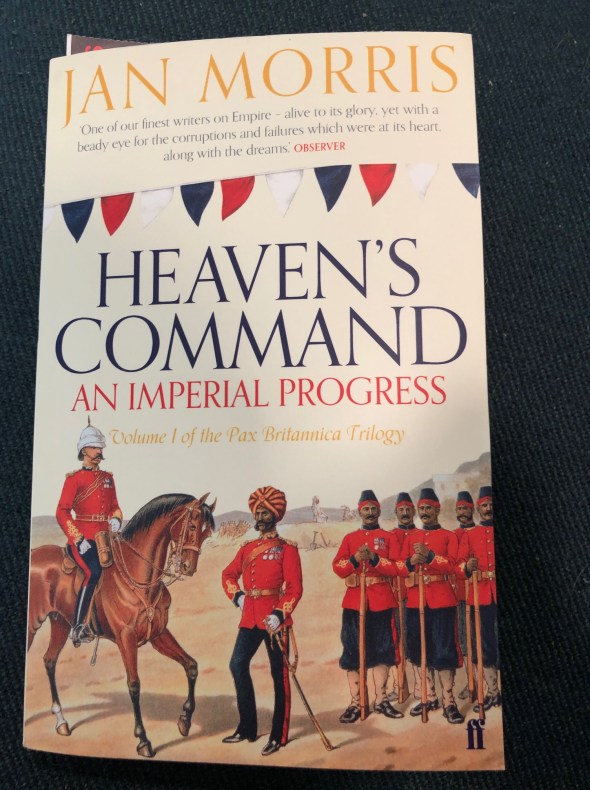
which I’m finding highly entertaining and informative. Jan Morris, what a boss.
Once Upon a Time … in Hollywood
Posted: August 5, 2019 Filed under: movies Leave a comment
Favorite line? Margot Robbie saying
I’m in the movie. I’m Sharon Tate.
Second place, the little girl actor saying “Just give me the idea of the story.”
Does any director have more fun with time shifts than Tarantino? The whole part where Brad Pitt has a fight with Bruce Lee occurs in Brad Pitt’s memory while he’s fixing Leo’s TV antenna (right?).
How about when Rick Dalton is pleading on behalf of his friend?
Hey, you could do anything you want to him. Throw him off a building, alright? Light him on fire. Hit him with a Lincoln, right? Get creative. Do whatever you want, he’s just happy for the opportunity.
Filmic recursion, movies within movies. Fun! Movies about movies: Boogie Nights, Singin’ In The Rain, even Citizen Kane starts with a movie within a movie.
Jan Van Eyck
Posted: July 30, 2019 Filed under: art history Leave a comment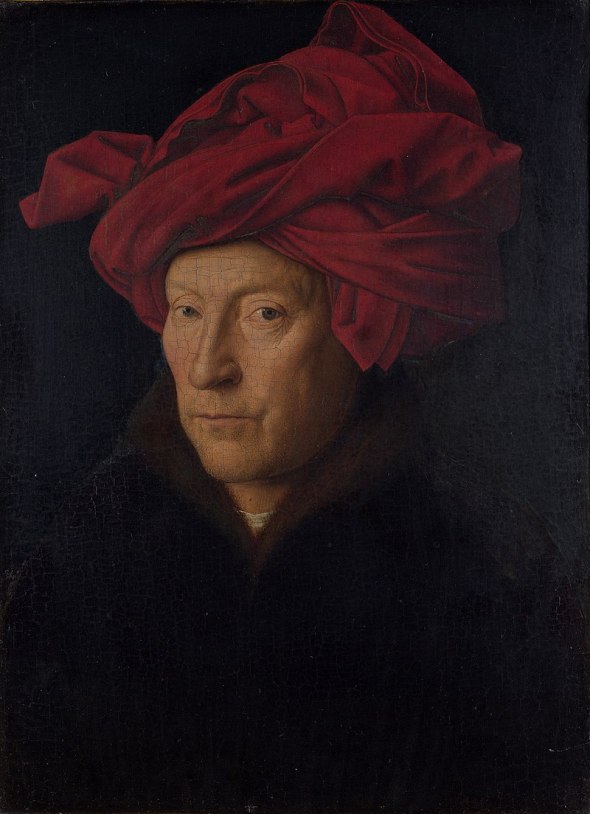
a self-portrait?
The first extant record of his life comes from the court of John of Bavaria at The Hague where, between 1422 and 1424, payments were made to Meyster Jan den malre (Master Jan the painter) who was then a court painter with the rank of valet de chambre, with at first one and then two assistants.

Did he have help from his older brother Hubert on this one?

The notes on his preparatory drawing for Portrait of Cardinal Niccolò Albergati are written in the Maasland dialect.
Hmm.
His motto, one of the first and still most distinctive signatures in art history, ALS IK KAN (“AS I CAN”), a pun on his name,
Secret commissions:
Van Eyck undertook a number of journeys on Philip the Duke of Burgundy’s behalf between 1426 and 1429, described in records as “secret” commissions, for which he was paid multiples of his annual salary. Their precise nature is still unknown, but they seem to involve his acting as envoy of the court. In 1426 he departed for “certain distant lands”, possibly to the Holy Land, a theory given weight by the topographical accuracy of Jerusalem in The Three Marys at the Tomb, a painting completed by members of his workshop c. 1440.

Though now some attribute this one to Hubert. (I dunno, not astounded myself by the topographical accuracy here.)
A better documented commission was the journey to Lisbon along with a group intended to prepare the ground for the Duke’s wedding to Isabella of Portugal. Van Eyck’s was tasked with painting the bride, so that the Duke could visualise her before their marriage. Because Portugal was ridden with plague, their court was itinerant and the Dutch party met them at the out of the way castle of Avis. Van Eyck spent nine months there, returning to the Netherlands with Isabella as a bride to be; the couple married on Christmas Day of 1429. The princess was probably not particularly attractive, and that is exactly how Van Eyck conveyed her in the now lost portrait.

Eyck’s own wife:

Margaret.
I was looking into Van Eyck because I was wondering, who did Hieronymous Bosch learn from?
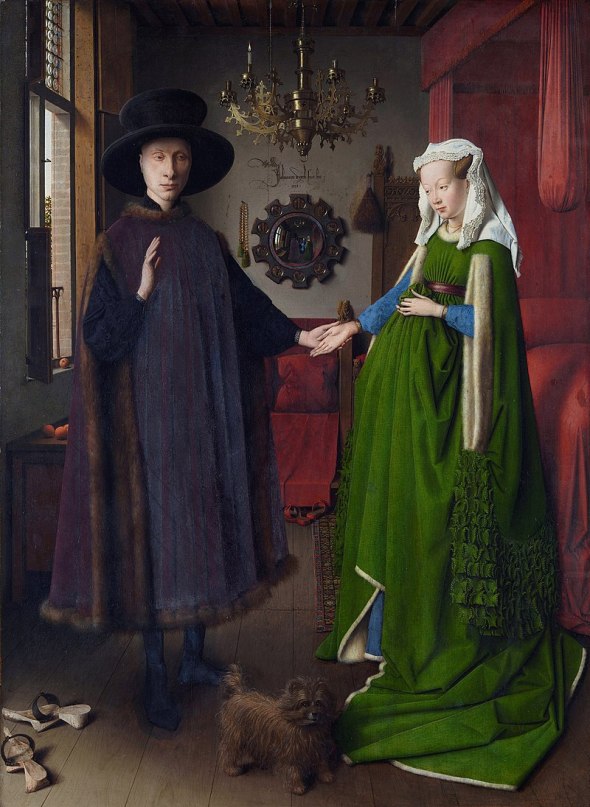
That dog!
A visit to the San Diego Museum of Art
Posted: July 28, 2019 Filed under: art history, the California Condition Leave a comment “What’re they gonna have at the San Diego Museum of Art?” I said, sneering. “A statue of a fish taco? An exhibit of craft IPA labels? A fluorescent Jeep Wrangler? A Tony Gwynn jersey?*”
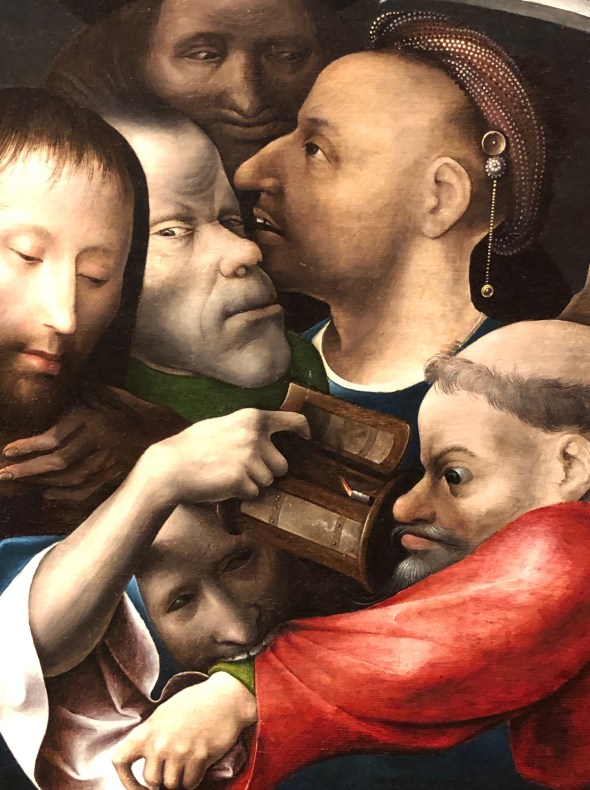
This had been my scoffer’s attitude. But on the website of SDMA I learnt that they have a painting by Hieronymous Bosch, The Arrest of Christ.
Seeing a close to 500 year old painting by a weirdo master seemed worth a short Uber.

I was really impressed with SDMA! Small, but packed with wonders. Something good everywhere. There was an exhibit of “Golden Age of Spain” art that I didn’t even bother with. (Usually I find I like the art that came right before the golden age?)
The wall placard attributes Christ Arrested to the Workshop of Hieronymous Bosch, not Bosch himself. And how about Madonna of the Roses, by Pseudo-Pier Francesco Fiorentino?

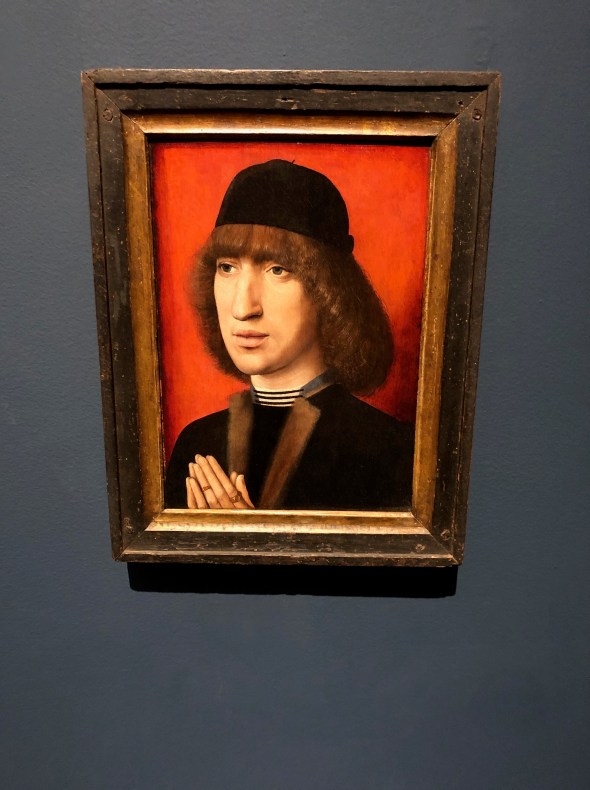
Or Portrait of a Man by an unknown Flemish artist (once attributed to Hans Memling):
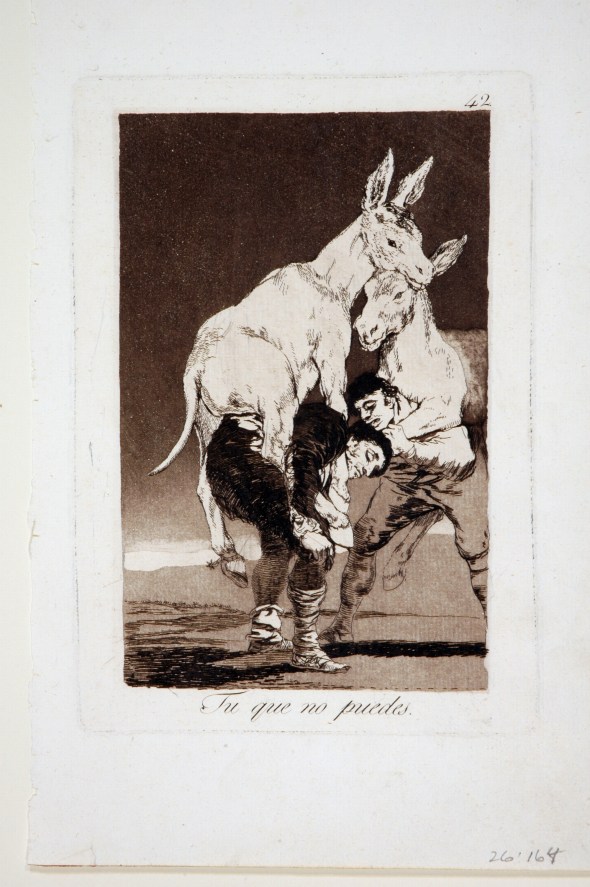
Goya, You Who Cannot. (They must have a bunch more Goyas in storage).
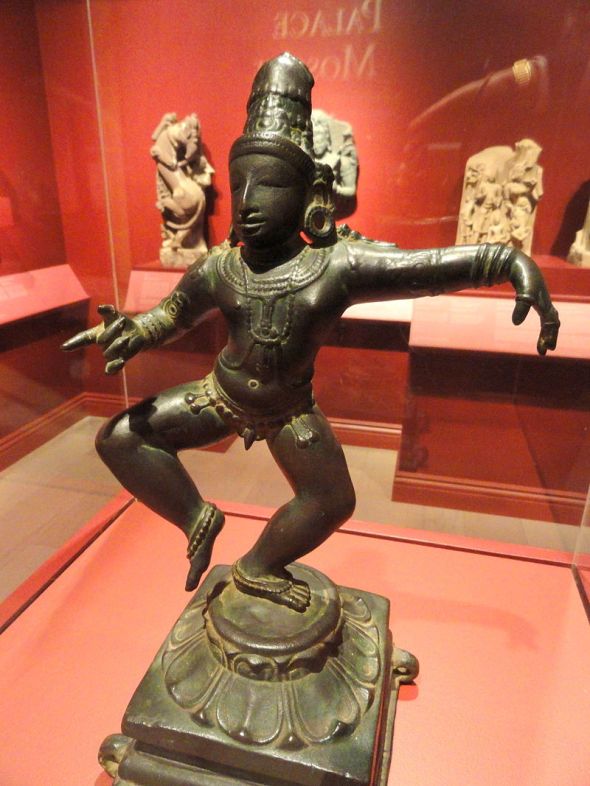
11th century Sambander.
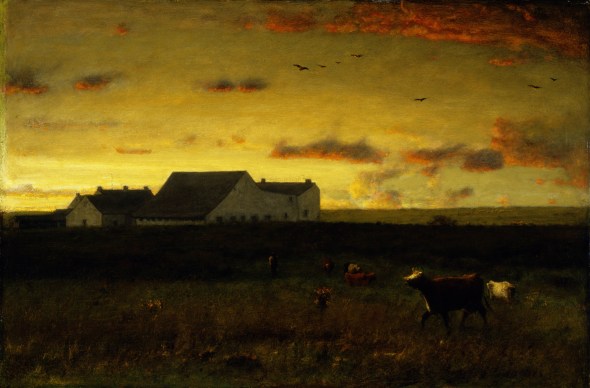
George Inness, Farm Landscape, Cattle in Pasture—Sunset, Nantucket

Thomas Hart Benton, After Many Days.

An untitled work by George Copeland Ault.

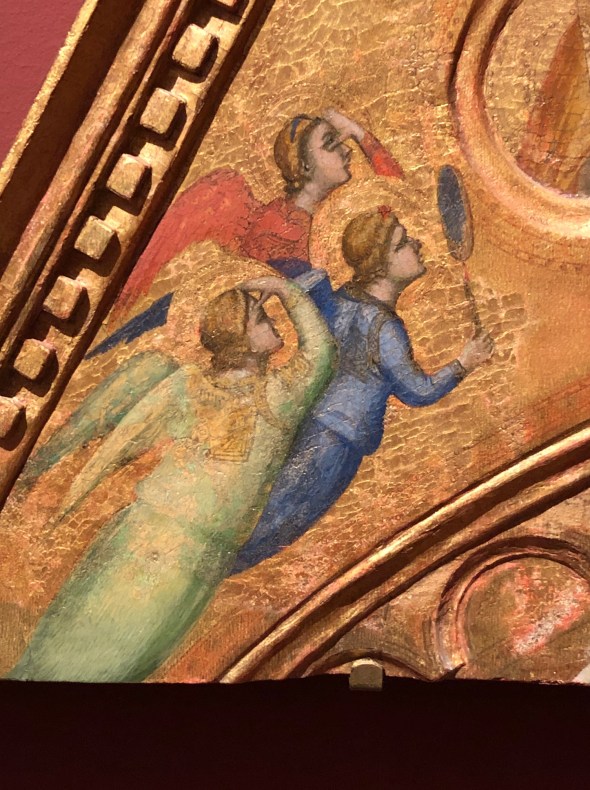
Giotto, God The Father with Angels.
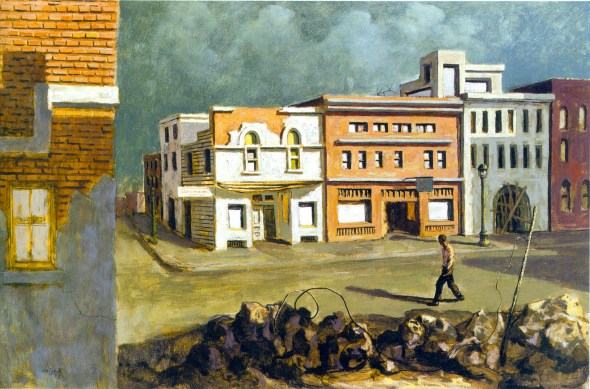
Sunday Afternoon, Hughie Lee Smith.

In The Patio by Georgia O’Keefe.
Anyway. This was all a nice break from Comic-Con.

At Comic-Con I heard that the X-Men are coming back.
* cheers to Jeff K. for this last punchline.
Brimful of Asha
Posted: July 25, 2019 Filed under: music Leave a comment
Hearing the song Brimful of Asha by Cornershop in the film Under The Silver Lake (enjoyed!) got me reading up on the meanings of the song.
This song is based on the history of film culture in India. Since their beginnings, Indian films have relied heavily on song and dance numbers. The singing is almost always performed by background singers while the actors and actresses lip sync. Asha Bhosle is a playback singer who has sung over 12,000 songs and is referred to as “Sadi rani” (Punjabi for “our queen”) at one point in the lyrics

Claiming a vaudeville / DJ name for possible future use
Posted: July 25, 2019 Filed under: art history Leave a comment
Art Celebrator.
Dried up cactus and desert plant detritus that looks like alien spores
Posted: July 24, 2019 Filed under: desert Leave a comment


is this a good photo?
Posted: July 18, 2019 Filed under: photography, the California Condition Leave a comment
was trying to capture the stark steepness of the street across the lake, and the special but unrelenting quality of afternoon sun in LA, and also how LA can look very lush and inviting while also having a kind of washed down, contained, prison-like aspect.
Thought this Vox piece about Antelope Canyon by Rebecca Jacobs was insightful on the meanings of photography in Instagram Age.

What’s the meaning of a tour where they tell you how to photograph it?
first see the rocks early the next morning with a tour group, which is the only way you are allowed to visit them. Before our guide tells us his name, which we find out is Anthony, he asks us the most crucial question of the day: “Do you all have iPhones?”
Anthony instructs all of us except the kid with the Samsung to open our camera apps, click the icon in the top right corner, and swipe to a setting called “Vivid Warm.”
 Helytimes


#/media/File:Durer_self_portarit_1500_sig_crop.jpg)

#/media/File:Portrait_of_Isabella_of_Portugal_van_Eyck.jpg)