One last chance?
Posted: December 16, 2016 Filed under: America Since 1945, heroes, politics, presidents, the California Condition Leave a comment
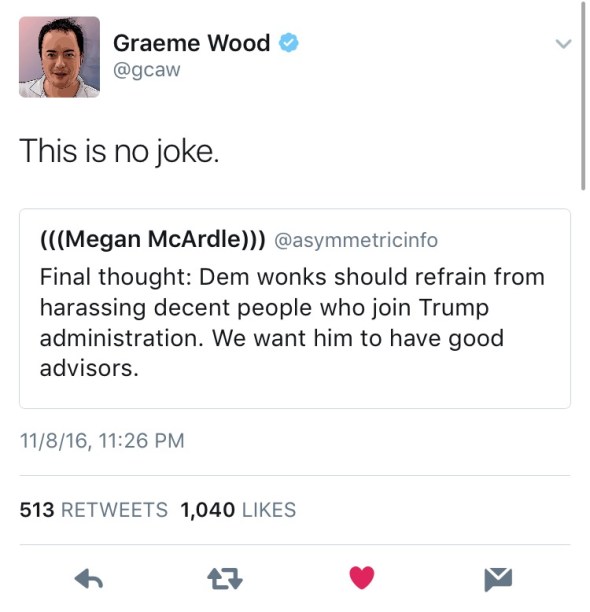
stirred the pot the other day with this tweet.
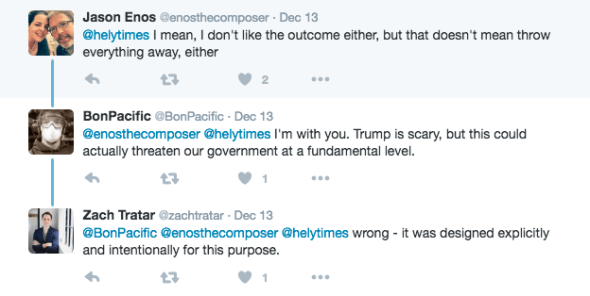


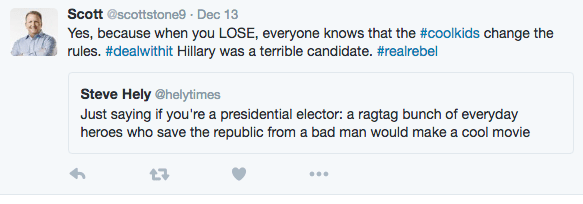
I mean, I like being lumped in with the #coolkids.
When I tweeted that, I meant what I said: it would be a cool movie. The Electoral College members are mostly, as I understand it, a bunch of ordinary schmoes. 99 times out of a hundred their job is rubber stamping, a comical bit of leftover political inanity.
But what if, one day, it wasn’t so easy?
What if, one day, these ordinary citizens were called upon to make a tough choice.
A choice that would bring them right into the line of fire.
A choice that would change history.
The idea of Trump in the White House makes me sick. 61,900,651 Americans disagree, obvs. An Electoral College revolt is a crazy fantasy. But I enjoy thinking about it!
What is right and wrong for the Electoral College to do?
Says the National Archives:
There is no Constitutional provision or Federal law that requires Electors to vote according to the results of the popular vote in their states. Some states, however, require Electors to cast their votes according to the popular vote. These pledges fall into two categories—Electors bound by state law and those bound by pledges to political parties.
The U.S. Supreme Court has held that the Constitution does not require that Electors be completely free to act as they choose and therefore, political parties may extract pledges from electors to vote for the parties’ nominees. Some state laws provide that so-called “faithless Electors” may be subject to fines or may be disqualified for casting an invalid vote and be replaced by a substitute elector. The Supreme Court has not specifically ruled on the question of whether pledges and penalties for failure to vote as pledged may be enforced under the Constitution. No Elector has ever been prosecuted for failing to vote as pledged.
Today, it is rare for Electors to disregard the popular vote by casting their electoral vote for someone other than their party’s candidate. Electors generally hold a leadership position in their party or were chosen to recognize years of loyal service to the party. Throughout our history as a nation, more than 99 percent of Electors have voted as pledged.
The National Association of Secretaries of State (NASS) has compiled a brief summary of state laws about the various procedures, which vary from state to state, for selecting slates of potential electors and for conducting the meeting of the electors. The document, Summary: State Laws Regarding Presidential Electors, can be downloaded from the NASS website.

From the NASS website, here’s how it goes down in my home state of California:
Whenever a political party submits to the Secretary of State its certified list of nominees for electors of President and Vice President of the United States, the Secretary of State shall notify each candidate for elector of his or her nomination by the party. The electors chosen shall assemble at the State Capitol at 2 o’clock in the afternoon on the first Monday after the second Wednesday in December next following their election. In case of the death or absence of any elector chosen, or if the number of electors is deficient for any other reason, the electors then present shall elect, from the citizens of the state, as many persons as will supply the deficiency. The electors, when convened, if both candidates are alive, shall vote by ballot for that person for President and that person for Vice President of the United States, who are, respectively, the candidates of the political party which they represent, one of whom, at least, is not an inhabitant of this state.
That seems pretty standard. In some states they meet in the governor’s office or the office of the secretary of state. In Massachusetts they will meet in the Governor’s office:

Barry Chin for The Boston Globe, found here.
Here’s what the good ol’ Constitution says about the EC.

Now, what is the point of all this? If you’ve read at all about the EC, you will know that Hamilton made the case for it in Federalist 68, which you can read a summary of here or the real thing here.

You’ve probably seen this quote:
Talents for low intrigue, and the little arts of popularity, may alone suffice to elevate a man to the first honors in a single State; but it will require other talents, and a different kind of merit, to establish him in the esteem and confidence of the whole Union, or of so considerable a portion of it as would be necessary to make him a successful candidate for the distinguished office of President of the United States
But to me, the more interesting one is this one:
Nothing was more to be desired than that every practicable obstacle should be opposed to cabal, intrigue, and corruption. These most deadly adversaries of republican government might naturally have been expected to make their approaches from more than one querter, but chiefly from the desire in foreign powers to gain an improper ascendant in our councils.
Wow!
Now, I hear the argument that the cool kids are always changing the rules. I don’t think I agree with the logic of this petition, which is half “Hillary won the popular vote” (who cares, that’s not the rules we were playing by) and half “Trump is unfit to serve.”
The Trump being unfit to serve bit was up to the voters. Seems very dangerous to me for the Electoral College to start making that call. That is some wonked aristocratic bullshit that the Constitution maybe intended, but which the Constitution as practiced and understood has moved away from?
But if it were proven Trump colluded with a foreign power, then I think hell yeah! If you believe, as I do, that the Constitution is a genius mechanism full of checks and failsafes, isn’t the Electoral College designed exactly to be one last chance for good old-fashioned citizens to stop a presidential candidate who allowed a foreign power to gain an improper ascendant in our councils?
I don’t think we have the proof that Trump did that. But I think the Electors are totally within their rights to think about it and decide what to do.
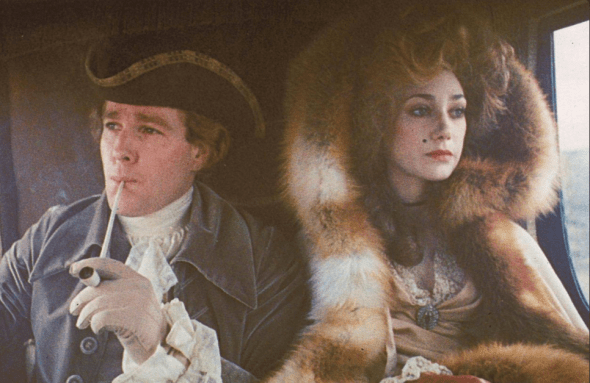
In closing my feelings are well summarized by Ben White:

The Canny Admirals
Posted: November 30, 2016 Filed under: America Since 1945, the ocean, war, water, WW2 Leave a comment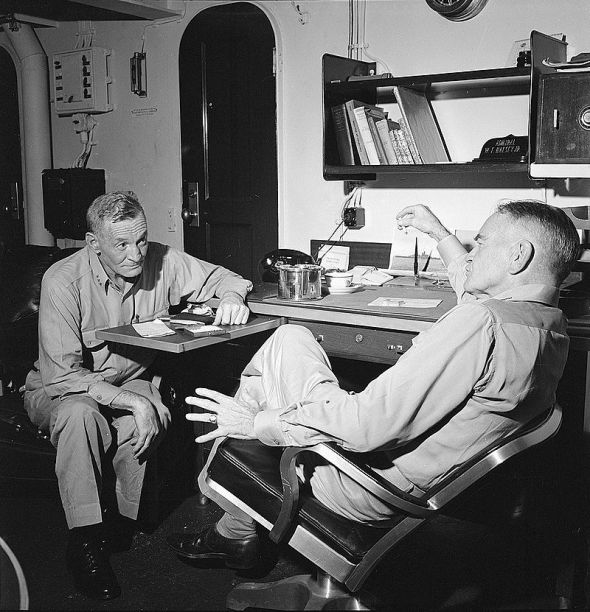
Found this picture of John McCain Sr. (the Senator’s grandfather) and William “Bull” Halsey on Wiki while looking up something or another.
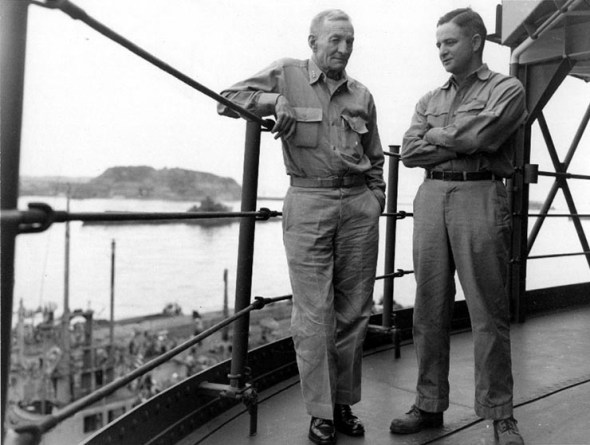
Here’s McCain Sr and Junior (the Senator’s dad) at the Japanese surrender in Tokyo Bay. McCain Sr. dropped dead four days later.
Thoughts of a Philosophical Fighter Pilot
Posted: November 20, 2016 Filed under: actors, America Since 1945, heroes, Vietnam Leave a comment
Remember this guy? For some reason or another I bought this pamphlet of a speech he gave at King’s College, London, November 1993:

Stockdale was a 38 year old naval aviator when he got sent to Stanford for two years of study. He was pretty bored until a professor handed him a copy of The Enchiridion, a collection of the teachings of Epictetus.

What does Epictetus teach?

He taught how to play the game of life with perspective:

an A-4
Five years later, this is what happened to Stockdale:

Stockdale was wrong about how long he’d be there. He was there for 7 1/2 years, much of it in solitary confinement:

How did he spend his time? Well, for one thing he constructed a sliderule in his mind from equations tapped to him in code through a concrete wall::


A bigger collection of Stockdale’s speeches and essays:

where he distills what he learned through his prison experience down to “one all-purpose idea, plus a few corollaries”:

What he has to say about public virtue is distressing as I watch the future president:

A badass:
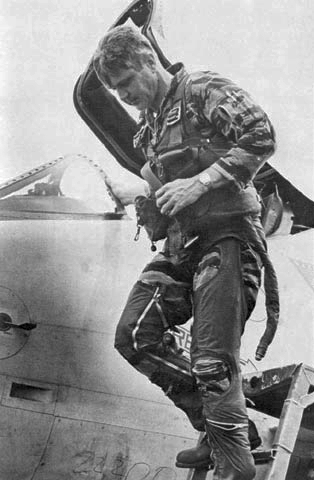
Recommend Courage Under Fire, which costs five bucks or $3.85 on Kindle. Thoughts Of A Philosophical Fighter Pilot is for the serious Stockdale student.
I think you can appreciate the greatness of Stockdale and also find this funny:
http://www.nbc.com/saturday-night-live/video/joyride-with-perot/n10313
Coverage of another philosophical fighter pilot, John Boyd, here.
http://www.hulu.com/watch/4123
Hearts & Minds
Posted: November 19, 2016 Filed under: America, America Since 1945 Leave a commentfrom the doc Hearts & Minds (1974) which was on TCM on Election Night.
Faithless electors
Posted: November 16, 2016 Filed under: America Since 1945, politics, presidents Leave a comment
Salving myself with fantasies of whole state delegations of presidential electors tossing out Trump when the Electoral College voting goes down.
The Electoral College never actually meets as one body. Electors meet in their respective state capitals (electors for the District of Columbia meet within the District) on the Monday after the second Wednesday in December, at which time they cast their electoral votes on separate ballots for president and vice president.
The history of “faithless electors” doesn’t break a five on a 1-10 scale of interesting (with 10 being reasonably interesting) but the case of the last faithless elector is kind of funny:
1 – 2004 election: An anonymous Minnesota elector, pledged for Democrats John Kerry and John Edwards, cast his or her presidential vote for John Ewards [sic],[8]rather than Kerry, presumably by accident
There’s some talk of the Electoral College in The Federalist 68, which seems a little optimistic at the moment:
The process of election affords a moral certainty, that the office of President will never fall to the lot of any man who is not in an eminent degree endowed with the requisite qualifications. Talents for low intrigue, and the little arts of popularity, may alone suffice to elevate a man to the first honors in a single State; but it will require other talents, and a different kind of merit, to establish him in the esteem and confidence of the whole Union, or of so considerable a portion of it as would be necessary to make him a successful candidate for the distinguished office of President of the United States.
Yeeeeeeesh.
Posted: November 9, 2016 Filed under: America Since 1945 Leave a comment
Need this lady in my political life at this moment.
Was it worse to experience this in horrific car crash realtime on the West Coast or to go to bed and wake up to it on the East Coast?
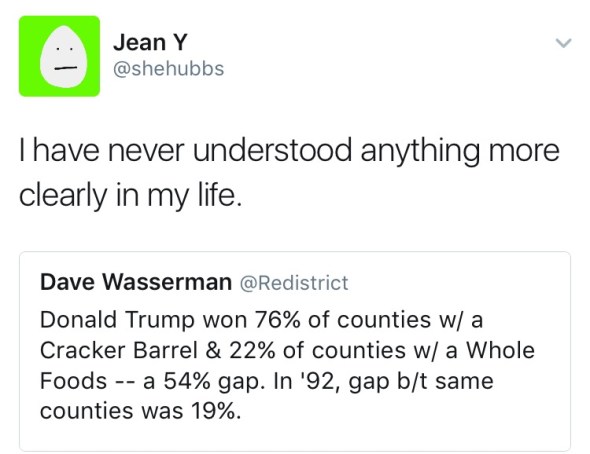

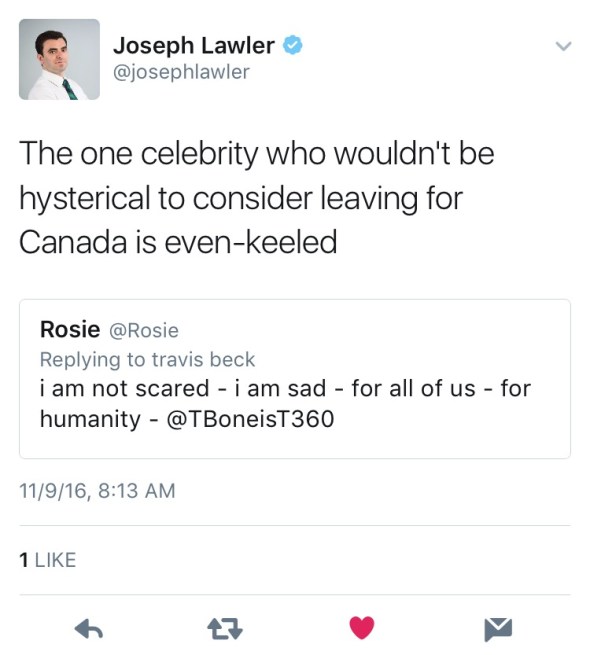
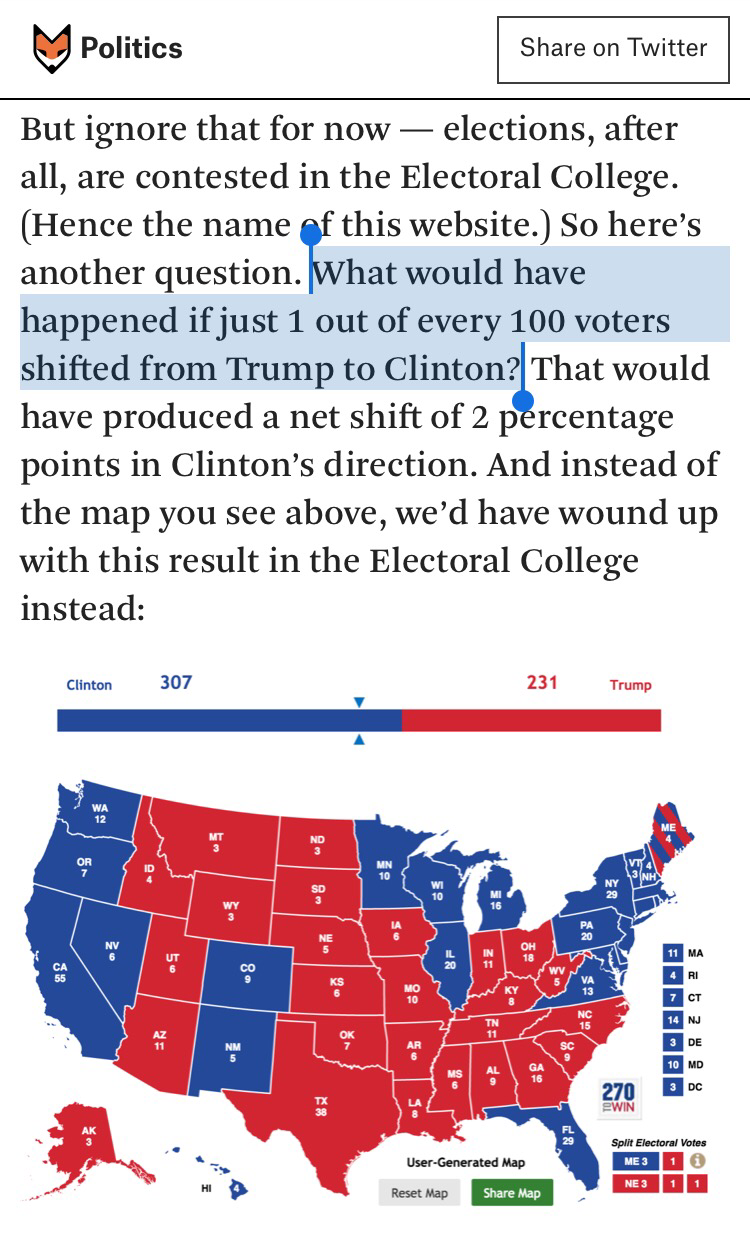
You can take this bit from Nate Silver and find it a depressing what if or a somewhat hopeful sign of how small actions can affect significant change:
Most perceptive, insightful thing I read this whole durned election was in Cracked.com, by “David Wong,” about the rural vs. urban divide.
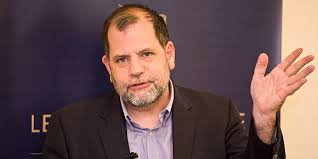
photo of TC found here
If there is any common theme to my predictions, it stems from Trump’s history in franchising his name and putting relatively little capital into many of his business deals. I think his natural instinct will be to look for some quick symbolic victories to satisfy supporters, and then pursue mass popularity with a lot of government benefits, debt and free-lunch thinking. I don’t think the Trump presidency will be recognizable as traditionally conservative or right-wing.
I also expect U.S. trade relations to worsen significantly, as I’ve already discussed in an online conversation with Robert Zoellick. I foresee Trump renegotiating the North American Free Trade Agreement, mostly picking on Mexico. Mexico would end up having to pay some kind of fee, either directly or indirectly, for continuing access to the U.S. market. That way, Trump could in fact make Mexico “pay for the wall.” It is no surprise that the peso plummeted as the tide started to turn in Trump’s favor Tuesday night.
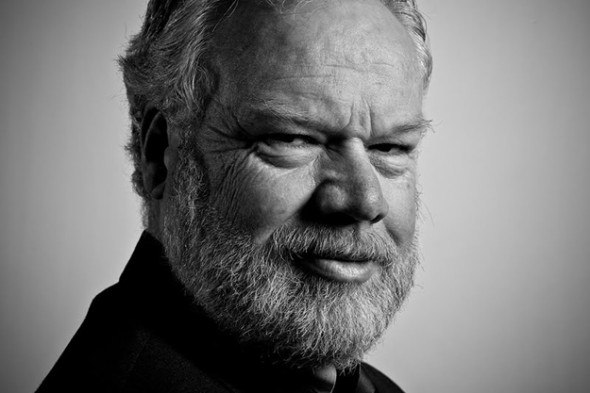
Thomas Ricks on Trump and Defense:
Second, it will be interesting to see how Trump gets along with the generals he has condemned as losers and Obama cronies. Being the chairman of the Joint Chiefs of Staff will be one of the toughest jobs around. Second toughest: Being the legal advisor to the chairman. Imagine the exchanges:
President Trump: “That’s an order.”
General: “Sir, my JAG tells me that’s an illegal order.”
President Trump: “OK, your JAG is fired. Now find someone who will help me, not throw obstacles in my way.”
Trump also might find nettlesome the generals who say things like, “OK, if we do that, what happens after that? What’s the next step?” The Obama administration didn’t like that when General Mattis did in that in discussions of Iran, and Trump will like it even less.
Distraction, diversion, tales of sub-wall countries and the politics of dictatorships can be found in this:

Available at Amazon or your local indie bookstore.
Magnum, Everyman
Posted: October 29, 2016 Filed under: America Since 1945, TV Leave a comment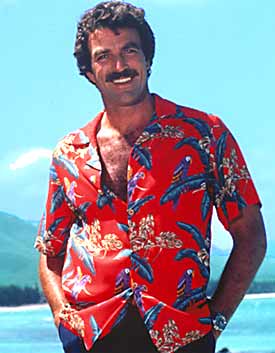
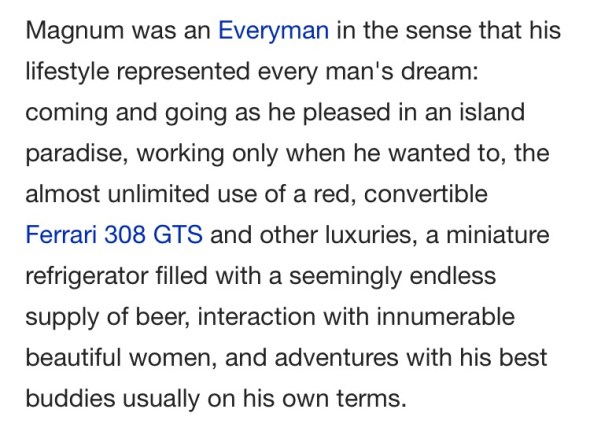
from Wiki as I prep a Halloween costume.
In real life more going for Robin Masters, “the celebrated-but-never-seen author of several dozen lurid novels.”
A recurrent theme throughout the last two seasons, starting in the episode “Paper War”, involves Magnum’s sneaking suspicion that Higgins is actually Robin Masters since he opens Robin’s mail, calls Robin’s Ferrari “his car”, etc. This suspicion is never proved or disproved, although in at least one episode – “Déjà-Vu” S06E02 – Higgins is shown alone in a room, picking up the ringing phone and talking to Robin Masters, indicating they are two different persons.
12 Takes on the Al Smith Dinner
Posted: October 23, 2016 Filed under: America Since 1945, comedy, New York, politics Leave a comment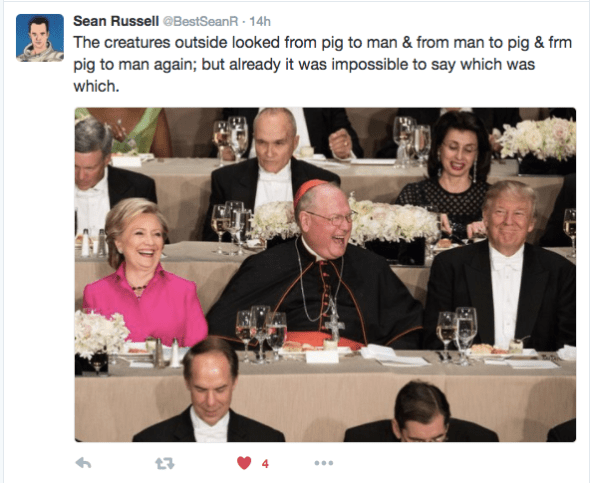
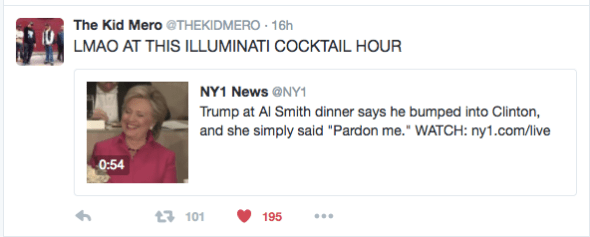
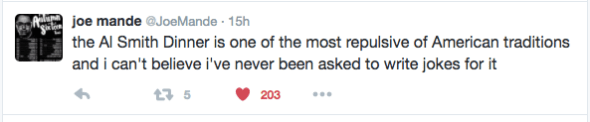
Hearing all these points about The Al Smith Dinner.
There is something grotesque about a white-tie banquet with the wealthy and powerful laughing about how they’re all on the same team. On the flip side, there’s something great about the wealth and powerful laughing about how they’re all on the same team if the team has some common, positive values.
The Al Smith Foundation raises money for the sick, the poor, and the orphans of New York. It honors a great, cheerful, positive public figure who rose up from poverty to run for president despite religious prejudice.
The dinner is an old-fashioned truce. Swallowing the noxious flavor of eating with your opponent is how societies can function and remain peaceful.
History offers many stories about how deeply fucked up things get when someone violates the tradition of a ceremonial truce:

People who jockey for political power should have to sit there and be made to at least pretend to be humble.
IMO this is a great tradition even if only for giving us this wonderful gif of Mitt Romney ironing himself.

Through a friend from my Catholic childhood, I got to go and sit up in the rafters a couple times. McCain, who must’ve known he was about to lose, gave one of the best performances I’ve ever seen.
Obama smashed too, of course.
Perhaps the two funniest candidates in American history?
Made it to the Romney/Obama one as well.
I remember a guy younger than me in the crowd was pumped, felt sure Romney was gonna win.
Watched this year’s on C-Span. Man, it was gnarly. Here are some takes:
- The #1 thing holding Donald Trump back is that he’s too sensitive. If he had a thicker skin, if he could laugh off attacks on himself, believe he could’ve won. Hillary was right about the “baited with a tweet” thing. If he had one ounce of Reagan’s ability to laugh something off Trump could’ve pulled it off.
- Al Smith’s nickname was The Happy Warrior.

Pic found here
Which candidate can be said to be more Happy Warrior? Thought Hillary did a good job of Happy Warrioring at the second debate, under very tough conditions:

and it worked for her!
- Much of the preliminary business of the Al Smith Dinner is talking about how much money has been raised for charity. As you listen to that, it’s hard not to be revolted by Trump’s total scumminess on charity. My perception was the room grew angrier and angrier at Trump as they heard this, and so were primed against him by the time he got up there. A politician is one thing, but a rich guy who gives nothing to charity? That sucks. That’s the complete opposite of the values of this dinner.
- For someone on the verge of achieving a lifelong dream she’s worked impossibly hard for, Hillary seems miserable. What is the lesson there? Is it campaign fatigue and going to bed every night with a knot in the pit of her stomach? Is it the regular reminders that a lot of people, probably a majority, just kind of don’t like her? There’s something real devil’s bargainy in the cruel twists that seem to meet Hillary’s ambitions.
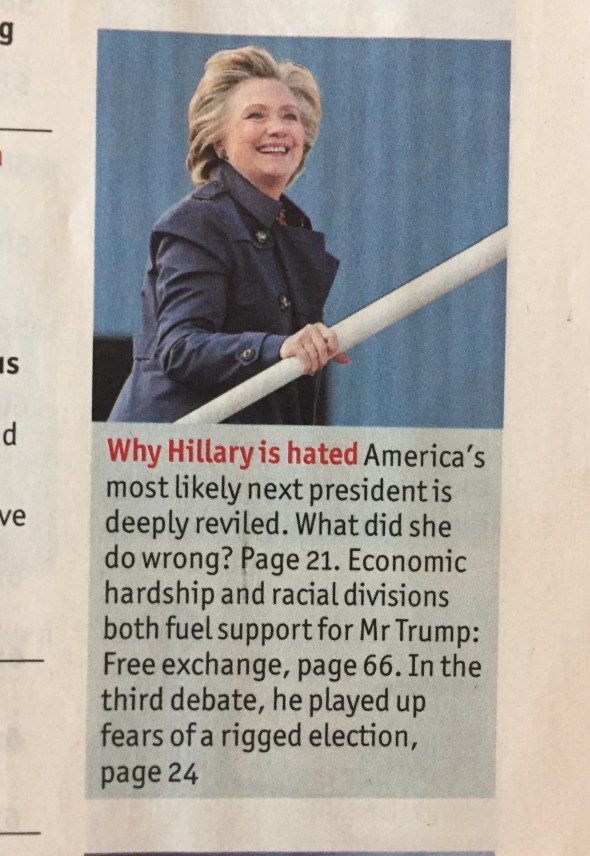
Deeply reviled.
(should admit I am 100% in the tank for Hillary. Even her soldiering on in the face of all this I admire. Will the rest of the media admit as much?)
- This event must be as close as possible to a pure nightmare for Donald. New York’s elites laughing and booing at him. In front of him and behind his back. Read anything by or about Trump: his greatest fear/source of rage is being mocked by Manhattan.

This headline would’ve appeared to Trump if he summoned the vision serpent. We are caught in a snobs vs slob death spiral. A sharp commentator points out there was a real Nelson Muntz aspect to Donald at this dinner:

Is Nelson in his way a sympathetic character? Trump’s father was a nasty piece of work, has there ever been a bully who wasn’t bullied?
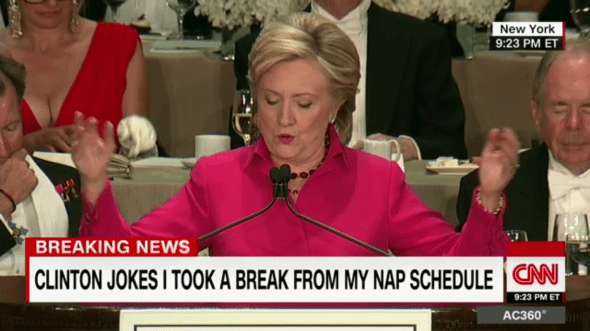
- Hillary had some great jokes but she is not great at comic delivery. Then again, who’s the best over-70 year old joke deliverer? (Gotta thank Medina for asking that one). My first picks: Mel Brooks or Bill Cosby.
- Katie Dunn’s parents would only let Al Smith marry their daughter when he promised he would never become a professional actor (per Caro’s The Power Broker, p. 117). In those days you went into politics because everybody liked you.

Katie and Al
- There’s a lot terrible about the Catholic Church, but in my experience growing up around the Catholic church I saw a lot more attention to and help for the sick, the old, the poor, the dying, the disabled, the mentally ill and the homeless than I’ve seen outside of it.
In Al Smith’s day the Catholic Church provided a social welfare system for the poor and the unfortunate and the immigrant. Other churches did the same thing. Think how many hospitals are named after saints. As far as I understand it the Mormon church still does. The Catholic Church in America is in a managed decline.
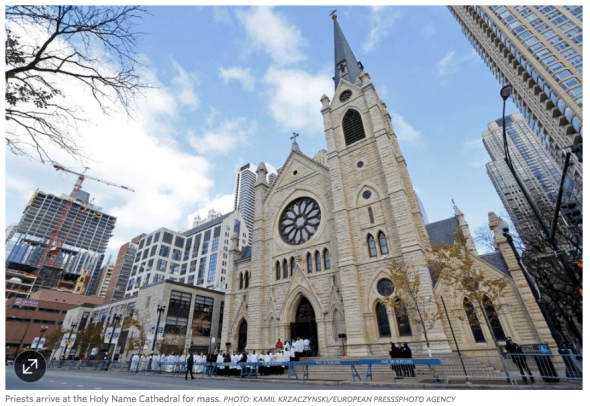
Now for Sale in Chicago: Prime Catholic Church Real Estate: Experts estimate site near Windy City’s Holy Name Cathedral could be worth $100 million. from the Wall Street J.
What will fill the social welfare vacuum? Who will take care of the poor, the sick, the immigrant, they dying? Who should?
Sometimes it seems like the domestic political argument in America is between two answers: “the government” and “nobody/family/somebody’ll handle it/I don’t know but not the government.”
Bill Clinton and George Bush both succeeded at least in pretending to find happy compromises, “the third way,” “compassionate conservatism,” etc. For awhile I felt like Paul Ryan was doing a decent job of at least pretending, too. But man when Trump came along he went the sniveling way. Is he more dangerous and more vile than Trump?
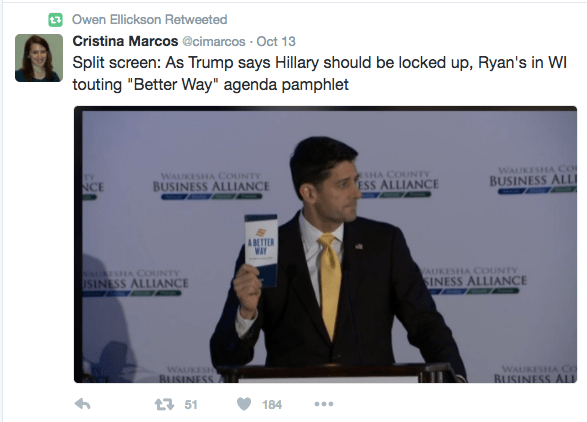
- “They’re laughing at us” might be Donald’s campaign theme. From The Washington Post:

It’s a horrible feeling to be laughed at and it takes dignity to rise above it. Watching him at the Al Smith dinner, in a way I almost felt bad for him. If I could give Donald Trump advice I would tell him to relax and return to being a clown version of a rich guy. It was a good job and he was well-compensated. But he doesn’t listen.
In a way DT feels like a dangerous, bitter, vile version of this guy:
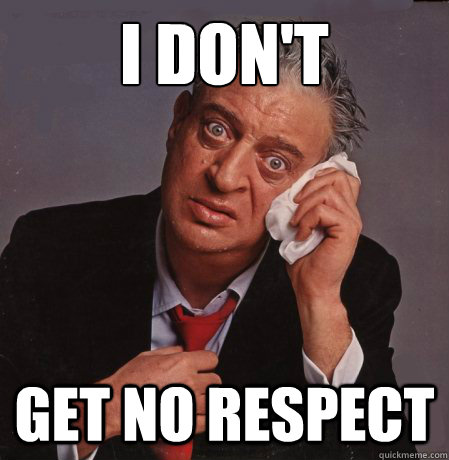
- Al Smith’s father was an immigrant. Not from Ireland though, from Italy. (Ferraro = blacksmith = smith). His mother’s parents were immigrants from Ireland. A frustrating thing about this election is we couldn’t have a serious talk about immigration. How much should we have? From where? Infinite? If not infinite how do we sort out who can come?
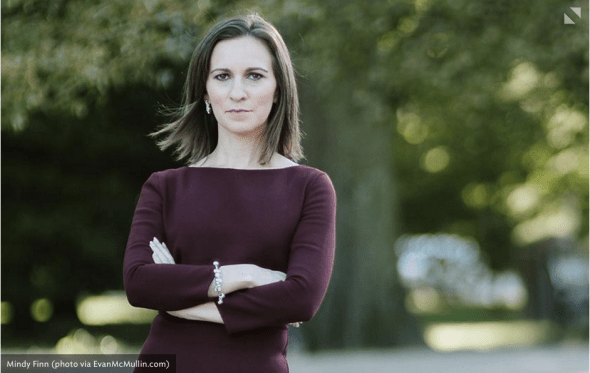
Who is this?
Posted: October 19, 2016 Filed under: America Since 1945, politics, presidents Leave a comment.jpg)
I’ll give you a hint. She is running for Vice-President of the United States.
It’s Mindy Finn! Alert reader Dave sends this our way. Ms. Finn used to work at Twitter, she’s a former reporter for the Waterbury, CT Republican-American, she’s a mother of two and she’s either 34 or 35.
Here’s a ready for primetime interview with her:
She’s running with former CIA operative Evan McMullin. I gotta say, I’m won over a bit by the homespun nature of this campaign and I wish them well.
She reports she was shocked for “a couple minutes” when she was asked to join the ticket.
Remember this?
Posted: October 19, 2016 Filed under: America Since 1945 Leave a comment
first posted here ten months ago. What a ride.
Amazing bit of mansplaining
Posted: October 13, 2016 Filed under: America Since 1945, Nobel, Sweden Leave a commentI’d heard of it, but I’m not sure I really got how infuriating”mansplaining” might be until I saw this. JCO wakes up, finds out she didn’t win the Nobel Prize, puts out some interesting thought about it, and:
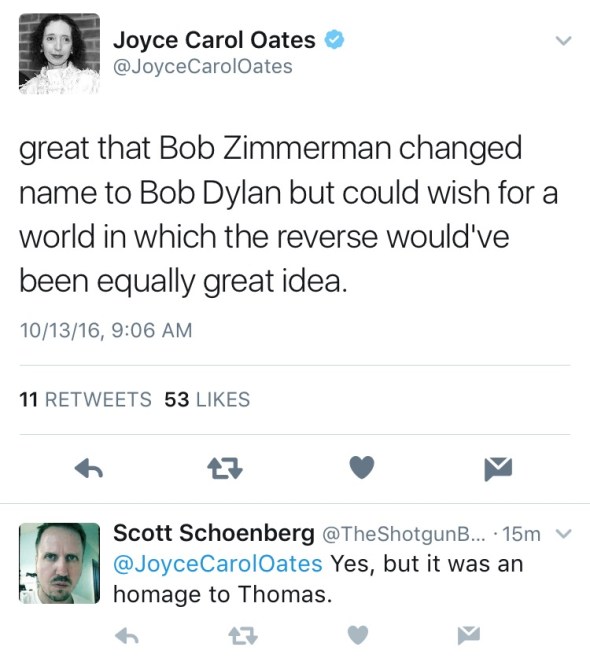
Congratulations to Mr. Dylan. Some previous coverage on Helytimes about Chronicles here and a wild Rolling Stone interview here.
Reading about the Nobel Prize leads me to the Wiki page of Harry Martinson, Swedish sailor/poet, who shared the prize in 1974. Apparently it didn’t work out so great:
The joint selection of Eyvind Johnson and Martinson for the Nobel Prize in 1974, was very controversial as both were on the Nobel panel. Graham Greene, Saul Bellow andVladimir Nabokov were the favoured candidates that year. The sensitive Martinson found it hard to cope with the criticism following his award, and committed suicide.
The source appears to be this Aftonbladet article, where Google Translate helps me out:
One of the things that upset him most was the treatment of Harry Martinson and Eyvind Johnson. When they received the Nobel Prize in 1974 started a rancorous debate.The media ran went on the cultural pages where the two Swedish authors was weighed and found to be too light in the Nobel Prize Context. Were driven to mental collapse – It broke down Harry Martinson completely.He became obsessed with the sordid and arrogant criticism. Everyone knew he was fragile, he was dependent on his ability to enchant since childhood.Johnson did better, says Lars Gyllensten.Harry Martinson was driven to a mental breakdown and committed suicide in 1978.- He killed himself, committed harakiri with a pair of scissors on the psyche of the Karolinska Hospital.Reputation flora after his death began immediately.
As good occasion as any to reread Faulkner’s 1950 banquet speech:
Ladies and gentlemen,
I feel that this award was not made to me as a man, but to my work – a life’s work in the agony and sweat of the human spirit, not for glory and least of all for profit, but to create out of the materials of the human spirit something which did not exist before. So this award is only mine in trust. It will not be difficult to find a dedication for the money part of it commensurate with the purpose and significance of its origin. But I would like to do the same with the acclaim too, by using this moment as a pinnacle from which I might be listened to by the young men and women already dedicated to the same anguish and travail, among whom is already that one who will some day stand here where I am standing.
Our tragedy today is a general and universal physical fear so long sustained by now that we can even bear it. There are no longer problems of the spirit. There is only the question: When will I be blown up? Because of this, the young man or woman writing today has forgotten the problems of the human heart in conflict with itself which alone can make good writing because only that is worth writing about, worth the agony and the sweat.
He must learn them again. He must teach himself that the basest of all things is to be afraid; and, teaching himself that, forget it forever, leaving no room in his workshop for anything but the old verities and truths of the heart, the old universal truths lacking which any story is ephemeral and doomed – love and honor and pity and pride and compassion and sacrifice. Until he does so, he labors under a curse. He writes not of love but of lust, of defeats in which nobody loses anything of value, of victories without hope and, worst of all, without pity or compassion. His griefs grieve on no universal bones, leaving no scars. He writes not of the heart but of the glands.
Until he relearns these things, he will write as though he stood among and watched the end of man. I decline to accept the end of man. It is easy enough to say that man is immortal simply because he will endure: that when the last dingdong of doom has clanged and faded from the last worthless rock hanging tideless in the last red and dying evening, that even then there will still be one more sound: that of his puny inexhaustible voice, still talking.
I refuse to accept this. I believe that man will not merely endure: he will prevail. He is immortal, not because he alone among creatures has an inexhaustible voice, but because he has a soul, a spirit capable of compassion and sacrifice and endurance. The poet’s, the writer’s, duty is to write about these things. It is his privilege to help man endure by lifting his heart, by reminding him of the courage and honor and hope and pride and compassion and pity and sacrifice which have been the glory of his past. The poet’s voice need not merely be the record of man, it can be one of the props, the pillars to help him endure and prevail.
Damn. You can also have Faulkner read it to you if you have three minutes:
Not great optics
Posted: October 11, 2016 Filed under: America Since 1945, Texas Leave a comment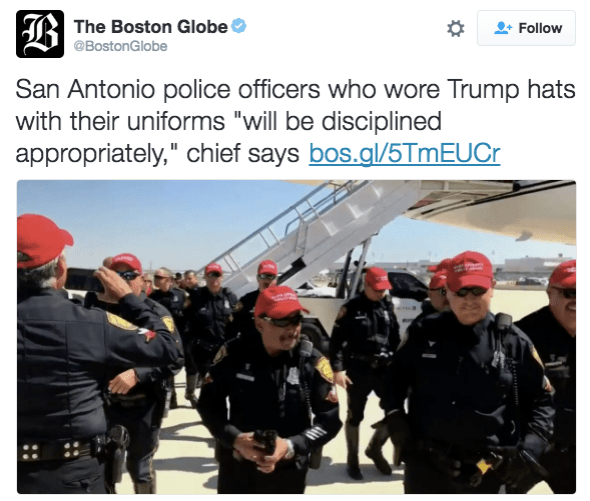
as they say. Not into this vibe AT ALL.
Taking the high road
Posted: October 6, 2016 Filed under: America Since 1945, writing Leave a comment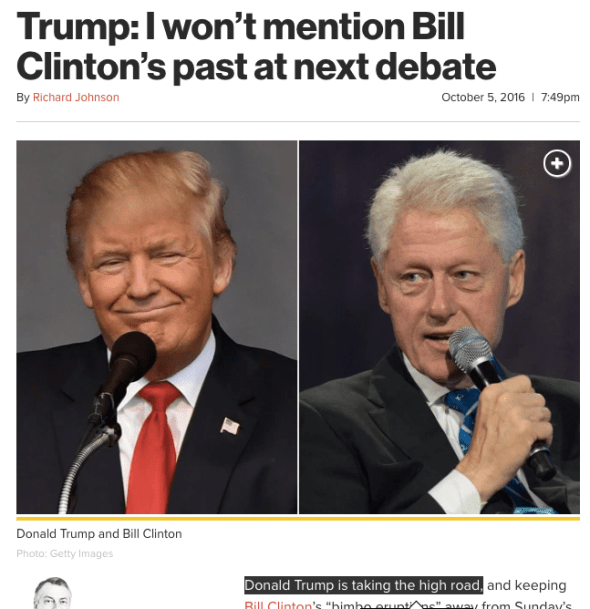
The warps and folds of reality and meaning in this election are incredible.
When was the last time two New Yorkers ran against each other for president? Was it 1940?

Thanks a lot bitch
Posted: October 6, 2016 Filed under: America Since 1945, TV Leave a comment
that some of you have not seen the thirteen second video entitled Thanks A Lot Bitch. The context is some reporters trying to interview Mark Cuban before the first presidential debate.
SUNDAY TAKE: The Economist
Posted: October 2, 2016 Filed under: America Since 1945, photography Leave a commentThe Economist

Nearly Cloudless Scotland, As Seen From the ISS
The International Space Station’s Expedition 48 Commander Jeff Williams tweeted this photo recently with the caption “We had a great view of Scotland today…very rare to not be covered with clouds.”
I’m tryna get that big picture view on things. How does it all work?

What’s going on in Bonn?
The search for answers led me to this magazine.
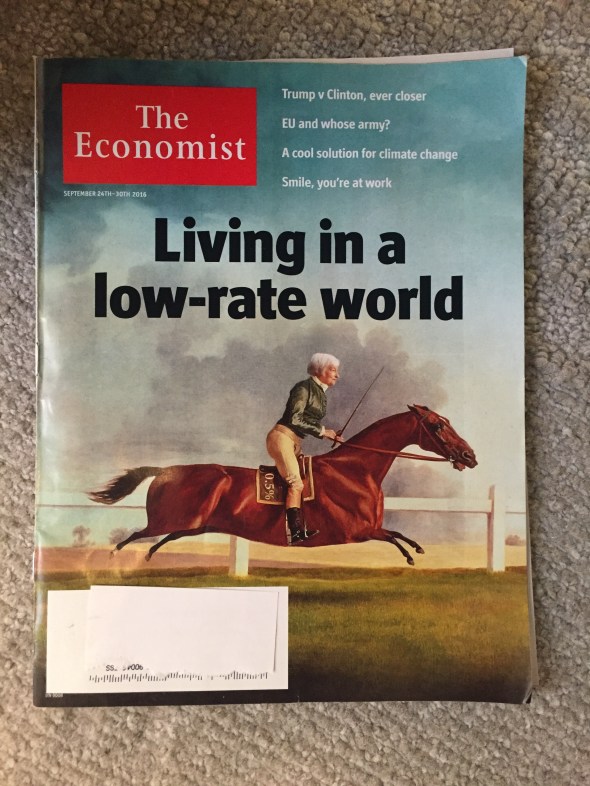
What to make a magazine that has ads like this?

Just a casual classified:

As part of my ongoing effort to become a guy who considers buying barge-mounted power plants, I became a subscriber.
The editor of The Economist is Zanny Minton Beddoes:
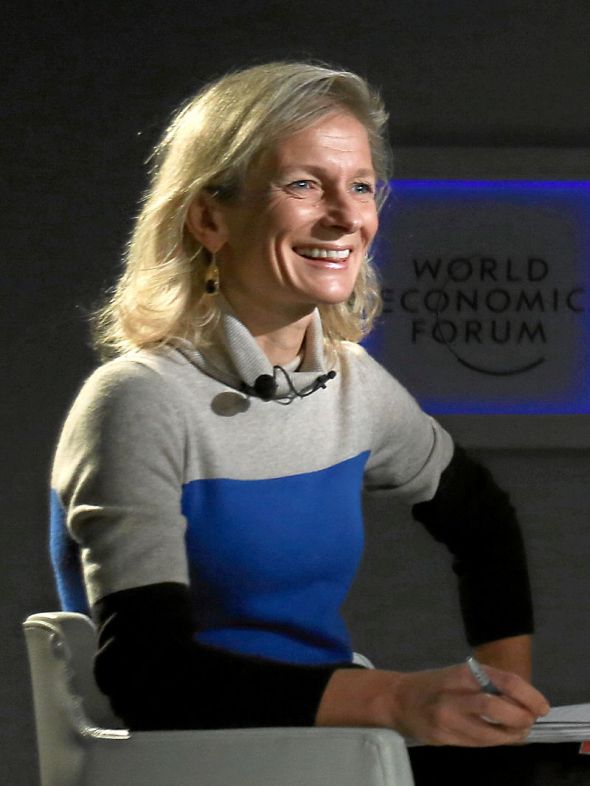
Copyright by World Economic Forum swiss-image.ch/Photo Monika Flueckiger. This was taken at Davos, duh.
The Economist states its mission on the table of contents:
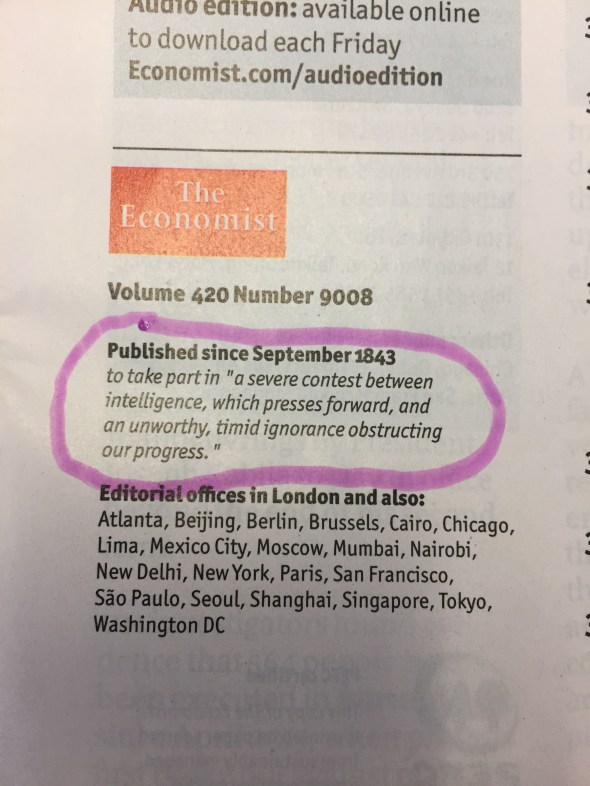
Per Wikipedia:
It takes an editorial stance of classical and economic liberalism which is supportive of free trade, globalisation, free immigration and cultural liberalism (such as supporting legal recognition for same-sex marriage or drug liberalization).
To say it takes that stance is to put it mildly. The Economist believes in free trade and globalisation the way other people believe in gravity. For example, casual assumption what is “sensible” for Paraguay:
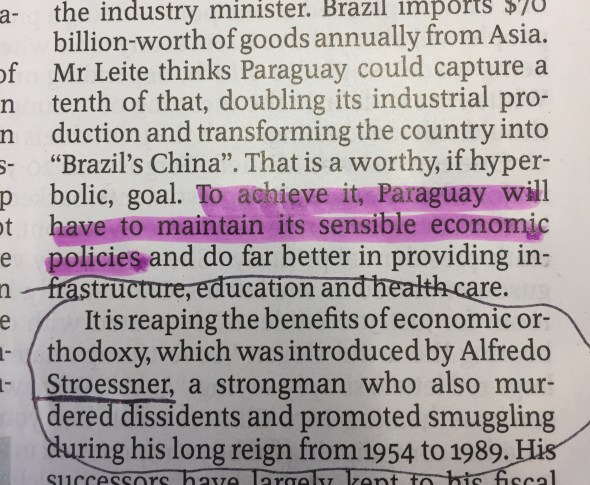
Per Wikipedia again, linking to this 1999 Andrew Sullivan snark attack:
[Andrew Sullivan] also said that The Economist is editorially constrained because so many scribes graduated from the same college at Oxford University, Magdalen College.
Not true! Zanny Minton Beddoes was in St. Hilda’s College at Oxford University!
Sullivan says:
as a weekly compost of world news and economics, it’s very hard to beat–a kind ofReader’s Digest for the overclass. It’s written in the kind of Oxbridge prose that trips felicitously into one ear and out the other, and it subtly flatters some Americans into feeling that they are sitting in on a combination of an English senior common room and a seminar at Davos. Besides, it’s hard to dislike a magazine that can run a photo of the pope meeting with Bill Clinton over the caption: “That’s 1,000 Hail Marys.”
That’s all true. The subtle flattery is what I’m paying for. Plus I love a good compost.
Sullivan has harsher criticisms, some of which still seem relevant seventeen years later. I like his take that The Economist‘s no bylines policy is suspiciously socialist. He’s criticizing The Economist for not being free markety enough!
More from Wiki’s “Criticism, accusation and praise“:
The Guardian wrote that “its writers rarely see a political or economic problem that cannot be solved by the trusted three-card trick of privatisation, deregulation and liberalisation”
To which The Economist might respond, “and where are we wrong?”
True to their hero, Adam Smith, The Economist hovers between brilliant and goofy.

Here are some things I’ve learned from reading The Economist in the last three weeks:
- “global internet traffic will surpass one zettabyte for the first time this year, the equivalent of 152m years of high-definition video”
- Under Emperor Augustus, military wages and pensions absorbed half of all Rome’s tax revenues.
- Norway’s sovereign wealth fund owns more than 2% of all listed shares in Europe and over 1% globally. Its largest holdings are in Alphabet, Apple, Microsoft and Nestlé. The fund is worth $882 billion.
- The United Arab Emirates recently started a Ministry of Happiness
- There’s so much cannabis grown in Albania that in 2014 it might’ve had a value equal to half of the country’s GDP
- bluefin tuna are down 97% from their peak in the early 1960s
- Japanese people are obsessed with Portland
How about this take: reporting on the Russian elections, where only 48% of people bothered to vote on the selected candidates they were allowed to, here’s how The Economist sees the problem:
Mr Putin’s latest victory turns the Duma into more of a sham. As a result, he risks becoming detached. In the view of Gleb Pavlovsky, a political analyst and former adviser to Mr Putin, Russia’s leaders are like pilots flying in heavy turbulence with the cockpit dials all painted over.
What a take! Like: democracy is meaningful mainly as a source of information for dictatorial technomanagers!
Wonder if I would’ve been smarter if instead of classes in college I read this magazine cover to cover every week, as Bill Gates says he does.
A distressing vision
Posted: September 28, 2016 Filed under: America Since 1945, presidents Leave a commentfrom FRONTLINE’s doc The Choice 2016 which I watched on my PBS app last night. Recommended viewing, though it won’t make you feel good!
I wonder if Michiko Kakutani has any parallels in mind as she reviews Hitler: Ascent 1889-1939 by Volker Ullrich
• Hitler was known, among colleagues, for a “bottomless mendacity” that would later be magnified by a slick propaganda machine that used the latest technology (radio, gramophone records, film) to spread his message. A former finance minister wrote that Hitler “was so thoroughly untruthful that he could no longer recognize the difference between lies and truth” and editors of one edition of “Mein Kampf” described it as a “swamp of lies, distortions, innuendoes, half-truths and real facts.”
The fun twist is f you read The Art Of The Deal or anything about Trump you see maybe his #1 enemy is The New York Times. The more they scorn him the more he seems to thrive, he puts them down as out of touch and elitist (can you imagine?) and corrupt.
Plus, according to Roger Stone and Omarosa, the whole reason Trump is doing this is because the snobs made fun of him!
Quite a pickle!
Key factor in the rise of Hitler: post-Versailles Germans felt humiliated?
One to watch for at the next debate: will Trump bring up Hillary failing to pass the DC bar exam, which FRONTLINE suggests was a real turning point in her life?
Experience vs. Incompetence
Posted: September 26, 2016 Filed under: America Since 1945, politics, presidents Leave a comment Recommend investing the considerable mental energy required to read this Tyler Cowen post, entitled “Are lies better than hypocracy? with special reference to some current events.” An excerpt:
You are more worried about the hypocrite when you see bigger decisions and announcements down the road than what is being faced now. You are more worried about the hypocrite when you fear disappointment, and have experienced disappointment repeatedly in the past. You are more worried about the hypocrite when you fear it is all lies anyway. Lies, in a way, give you a chance to try out “the liar relationship,” whereas hypocrisy does not. You thus fear that hypocrisy may lead to a worse outcome down the road or at the very least more anxiety along the way.
But note: for a more institutional and distanced principal-agent relationship, it is often incorrect, and indeed dangerous, to rely on your intuitions from personalized principal-agent problems.
When it comes to how the agent speaks to allies and enemies, you almost always should prefer hypocrisy to bald-faced lies. The history and practice of diplomacy show this. Allies and enemies, especially from other cultures, don’t know how to process the lies the way you can process the blatant lies of your children, friends, and spouse. They will think some of these lies are mere hypocrisy and that can greatly increase uncertainty and maybe lead to open conflict. North Korea aside, the prevailing international equilibrium is “hypocrisy only,” and those are the signals everyone has decades of experience in reading.
The Wheelchair President
Posted: September 21, 2016 Filed under: America Since 1945, presidents 1 Comment
This is what a documentary about FDR would be called in a Simpsons episode.
Pitt
Posted: September 20, 2016 Filed under: America Since 1945, celebrity, the California Condition Leave a comment

“It’s very difficult to cast a movie star as an ordinary person, and Brad can really only play extraordinary people. The other thing about Brad is he’s someone you never really feel like you know on screen. I don’t think, in any movie of his I’ve ever seen, I’ve identified with him, in the sense that he retains that sort of essential mystery like those old-time movie stars where you don’t really feel like you know him. And that seemed to be a really good thing for Jesse.”
from this interview with Assassination of Jesse James director Andrew Dominik.


