The greatest generation
Posted: August 6, 2014 Filed under: America Since 1945 2 Comments
Two images I wanted to post that came up re: Warren Bennis, yesterday. This top one, and this one:
Both these pictures I’m getting from here, they’re credited to the National Archives, and I’m prepared to take them at their word.

These pictures, combined with this article in the NYT about the upcoming Brad Pitt movie “Fury” made me think about how the dudes that won World War II weren’t all like, mature men who knew exactly the risks and stakes of what they were doing, and were therefore the greatest heroes anyone has ever conceived of. Most of them were children, doing what they were told, involved in an enterprise that was fucked up and disastrously executed in every way at every turn.
Don’t take my word for it, take the word of a guy who was there:

Or this guy, who was there on the other side:

Fussell (if I remember right) talks about how, once word of the concentration camps got out, and they realized what they’d been fighting, he wasn’t even sure that made it better, he says “it might’ve made it worse.”
(The point I took away from these books is that destroying any myth around them doesn’t make them less cool. It makes them cooler still)
Warren Bennis
Posted: August 5, 2014 Filed under: America Since 1945 Leave a comment
This guy, a professor who specialized in the study of leadership, died the other day.
Once I took a class Warren Bennis co-taught with David Gergen, it was called something like “Art, Culture and The Politics Of Leadership.” I loved the class. I wrote my paper about Robert Sherwood, a playwright famed for “Abe Lincoln In Illinois,” who went on to write speeches for FDR.

Sherwood stood six feet eight inches tall. Dorothy Parker, who was five-feet four-inches, once commented that when she, Sherwood, and Robert Benchley (who was six feet tall) would walk down the street together, they looked like “a walking pipe organ.” When asked at a party how long he had known Sherwood, Robert Benchley stood on a chair, raised his hand to the ceiling, and said, “I knew Bob Sherwood back when he was only this tall.”
(Sometimes the Algonquin Round Table gang seems like they must’ve been pretty insufferable to be around.)
Anyway, I remember something Bennis used to talk about. When Bennis was 19 he was commissioned as a lieutenant in the Army and sent to Europe. It was 1945 — the troops he was sent to command were seasoned veterans already. They’d just survived the Battle Of The Bulge. He was just a kid rookie. Imagine that situation.

What he said happened was, the soldiers in his platoon “taught me how to lead them.”

What a profound thought. Will have to see if it comes up in Bennis’ autobiography:

(Badass thing to name your book).
Bennis also co-authored this book:

which is full of interesting stuff. There’s a story about Walt Disney, after he decided to make a feature length animated movie, the first ever, Snow White And The Seven Dwarfs. Disney gathered 200 or so animators and artists in an auditorium, stood up on stage, and acted out the entire movie for them. The whole thing, two hours. He “did” the witch and stuff, exactly how he wanted it drawn.
That was “visionary leadership,” says Bennis.
That was the same class in which I was made to do improv games with David Gergen.

(pics from “Philip Channing” here wiki here (National Archives) here here (Google search! It’s not like I read Rand Paul forums!))
This video is insane.
Posted: August 4, 2014 Filed under: adventures, South America Leave a comment
From The Guardian:
Indigenous tribesmen living deep in the Peruvian rainforest have emerged into the outside world to seek help, after suffering a murderous attack by probable drug traffickers.
The contact took place across the border in Brazil and was recorded in a video released on Friday. The tribesmen caught a serious respiratory disease after contact, a major killer of isolated indigenous people, but have since recovered.
There’s a long version and a short version:
http://www.theguardian.com/world/video/2014/aug/01/amazon-tribe-first-contact-video
I found this video chilling and intense and fascinating.
The reporting in the article however is deeply frustrating. What language are these people speaking? When is this from, exactly? How did this come about? What’s up with the guy with the dreads?
Anyway, here’s some footage of a much less remote part of the Amazon shot by the blogger:
What I was trying to capture was the spooky creak of the metal boat.

Granville Redmond
Posted: August 1, 2014 Filed under: the California Condition Leave a comment
Granville Richard Seymour Redmond was born in Philadelphia,Pennsylvania on March 9, 1871 to a hearing family. He contracted Scarlet Fever at around 2½ to the age of 3; when he recovered, he was found to be deaf.
Granville attended the California School for the Deaf in Berkeley from 1879 to 1890 where his artistic talents were recognized and encouraged. There his teacher Theophilus d’Estrella taught him painting, drawing and pantomime.

While living in Los Angeles, he became friends with Charles Chaplin, who admired the natural expressiveness of a deaf person usingAmerican Sign Language. Chaplin asked Redmond to help him develop the techniques Chaplin later used in his silent films. Chaplin, impressed with Redmond’s skill, gave Redmond a studio on the movie lot, collected his paintings, and sponsored him in silent acting roles, including the sculptor in City Lights. Chaplin told a writer for The Silent Worker of a Redmond painting, “I could look at it for hours. It means so many things” and Chaplin’s famous The Dance of the Oceana Rolls was Redmond inspired.
During this time Redmond did not neglect his painting.

Reminds me of Liz’s awesome art. (I believe she too studied pantomime).
Granville lived for awhile in Tiburon, CA:

What’s that, Tiburon Wikipedia page? “See also Blackie The Horse“? If you say so:
Blackie was a swaybacked horse who, for twenty-eight years, was a well-known fixture in Tiburon, California. He not only stood in the same spot in a pasture at the corner of Tiburon Boulevard and Trestle Glen Road, rarely moving, day after day, but he faced in the same direction, becoming the local mascot of several generations.
On October 1, 1938, Blackie made history by swimming across the San Francisco Bay from the Marin County side to San Francisco’s Crissy Field. He swam it in 23 minutes and 15 seconds, winning a $1,000 bet for his then owner, Shorty Roberts.

Ainslie
Posted: July 31, 2014 Filed under: Ireland Leave a commentSomething put me in mind of this book the other day.

I never made it all the way through, but it’s fun to take off the shelf. I’m told by turf types this book is considered pretty good if slightly outdated as knowledge, but who cares? It’s fun to read because Ainslie has wonderful style as a writer:

Anyway, reminded me of a lyric from an Irish song I thought I remembered.
Turns out I was wrong?

Maybe this song never existed? Possible it did once exist, or better yet still does, as unGoogleable Irish ephemera, and I really did hear it once. Or something like it, something close, and between my drunkenness when I heard it and the singer’s when he sang it there was a miscommunication.
Or maybe I was just thinking of this:
Plenty to consider
Posted: July 30, 2014 Filed under: America Since 1945 Leave a comment
On the cover of just about any old issue of Life magazine.

I hardly ever even make it inside.

That’s before you even get to the back covers.

Flavor that goes with fun.

These are just issues I bought at random in a big box on eBay for maybe $25?
 (Please continue sending tips on how to photograph old magazines to helphely at gmail. Those from Lydia in Saratoga have been particularly helpful, thanks Lydia!)
Politics
Posted: July 29, 2014 Filed under: America Since 1945 Leave a commentReading this New Yorker profile of Biden threw me back to this YouTube. Master at work:
He loves it.
After [Hillary Clinton] delivered an impassioned endorsement for Obama and Biden at the Democratic National Convention, in 2008, Biden found her backstage, dropped to his knees in gratitude, and kissed her hand.
How about this?:
His friend Ted Kaufman says, “If you ask me who’s the unluckiest person I know personally, who’s had just terrible things happen to him, I’d say Joe Biden. If you asked me who is the luckiest person I know personally, who’s had things happen to him that are just absolutely incredible, I’d say Joe Biden.”
I should’ve known
Posted: July 28, 2014 Filed under: writing 1 Comment
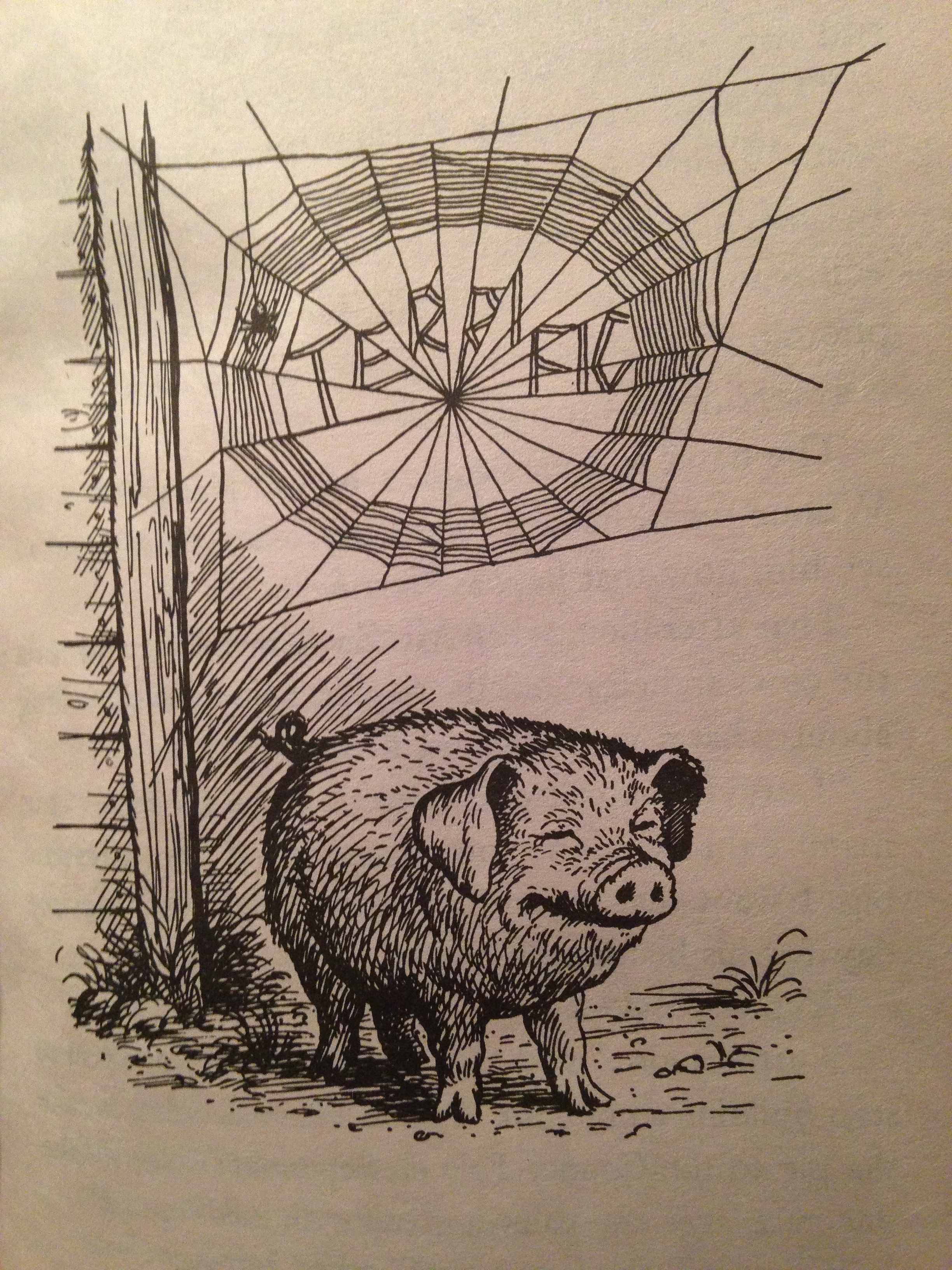
I’d find something poignant when I bought a used copy of Charlotte’s Web.

How about Wilbur’s plan for his day?
His plans for the day went something like this:
Breakfast at six-thirty. Skim milk, crusts, middlings, bits of doughnuts, wheat cakes with drops of maple syrup sticking to them, potato skins, leftover custard pudding with raisins, and bits of Shredded Wheat.
Breakfast would be finished at seven.
From seven to eight, Wilbur planned to have a talk with Templeton, the rat that lived under his trough. Talking with Templeton was not the most interesting occupation in the world but it was better than nothing.
From eight to nine, Wilbur planned to take a nap outdoors in the sun.
From nine to eleven he planned to dig a hole, or trench, and possibly find something good to eat buried in the dirt.
From eleven to twelve he planned to stand still and watch flies on the boards, watch bees in the clover, and watch swallows in the air.
Twelve o’clock – lunchtime. Middlings, warm water, apple parings, meat gravy, carrot scrapings, meat scraps, stale hominy, and the wrapper off a package of cheese. Lunch would be over at one.
From one to two, WIlbur planned to sleep.
From two to three, he planned to scratch itchy places by rubbing against the fence.
From three to four, he planned to stand perfectly still and think of what it was like to be alive, and to wait for Fern.
At four would come supper. Skim milk, provender, leftover sandwich from Lurvy’s lunchbox, prune skins, a morsel fo this, a bit of that, fried potatoes, marmalade drippings, a little more of this, a little more of that, a piece of baked apple, a scrap of upsidedown cake.
Wilbur had gone to sleep thinking about these plans. He awoke at six and saw the rain, and it seemed as though he couldn’t bear it.
The LA Natural History Museum
Posted: July 23, 2014 Filed under: the California Condition Leave a commentWorth paying a visit just to see this model of downtown LA as it was in the ’30s:
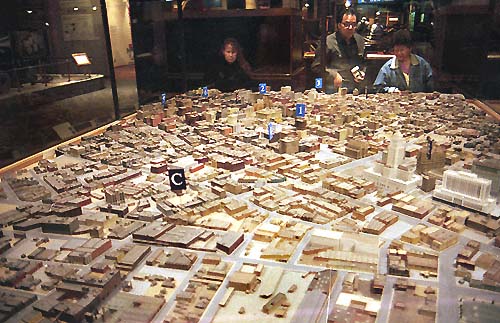
That great photo from poster “Citizen” at Archinect
While I was down in that part of the city, I saw a most interesting sight: two sports fans, standing outside the gates of the Coliseum, waiting for summer to end and college football season to start:

While there, don’t miss the sculptures of Naked Woman And Man As Athlete:
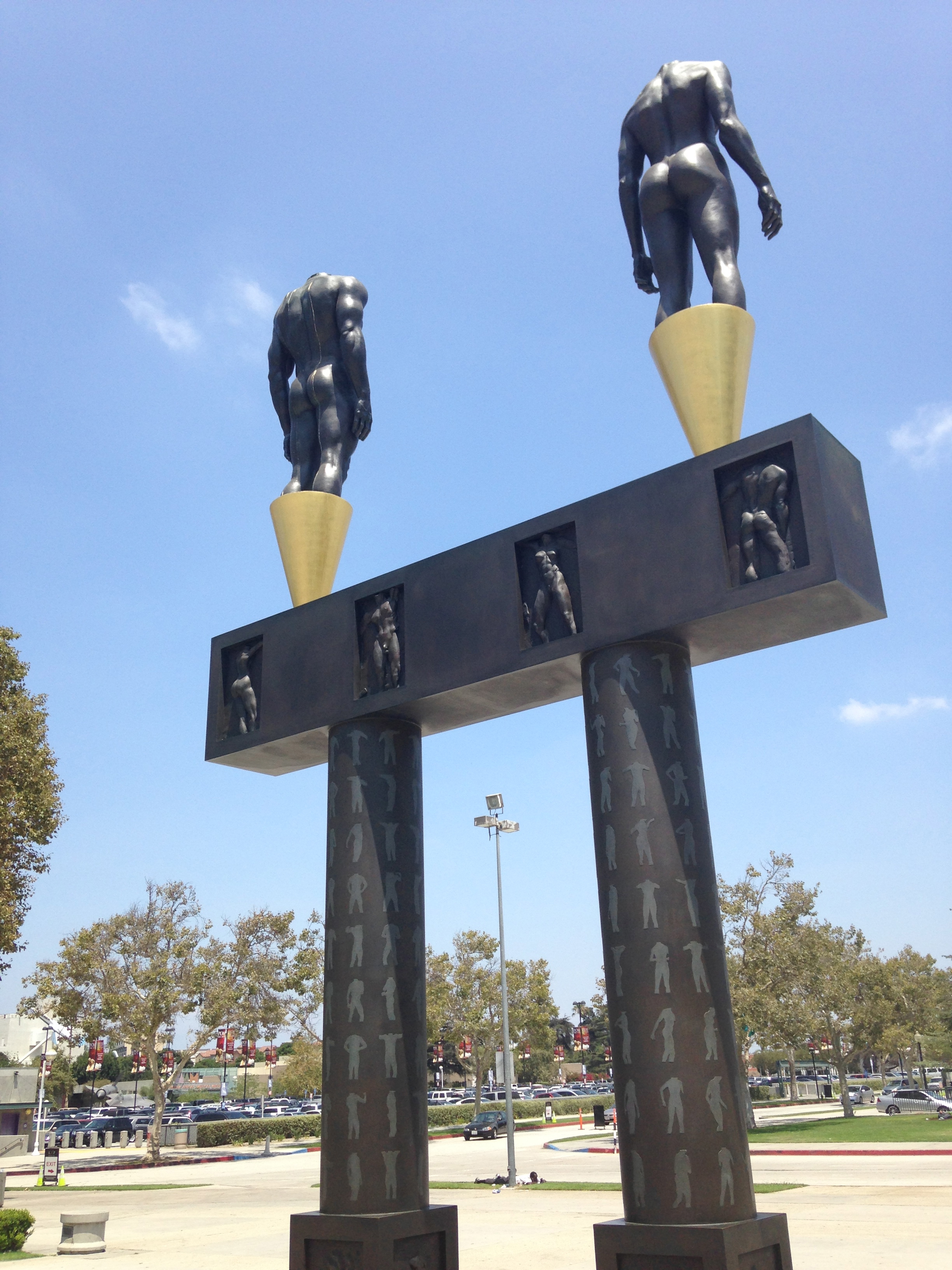
The Coliseum “served as the site of the field hockey, gymnastics, the show jumping part of the equestrian, and the track and field events along with the opening and closing ceremonies.”

The 1932 Summer Olympics, officially known as the Games of the X Olympiad, was a major world wide multi-athletic event which was celebrated in 1932 in Los Angeles, California, United States. No other cities made a bid to host these Olympics. Held during the worldwide Great Depression, many nations and athletes were unable to pay for the trip to Los Angeles. Fewer than half the participants of the 1928 Summer Olympics in Amsterdam returned to compete in 1932. Even U.S. President Herbert Hoover skipped the event.
The organizing committee put no record of the finances of the Games in their report, though contemporary newspapers reported that the Games had made a profit of US$1,000,000.
An indispensable volume no home should be without
Posted: July 22, 2014 Filed under: books Leave a comment

Nevis
Posted: July 21, 2014 Filed under: America Leave a comment
Everybody knows Alexander Hamilton was born there, but did you know this?
United States Supreme Court Justice Stephen Breyer has a vacation home on Nevis. In February 2012 he was robbed in his home at machete-point.
You just can’t beat the Natural History Museum
Posted: July 21, 2014 Filed under: museum Leave a comment


A funny book
Posted: July 18, 2014 Filed under: books Leave a comment
I recommend this book. Elif decides to get a Ph.D in Russian literature — this is her memoir of what happened next.
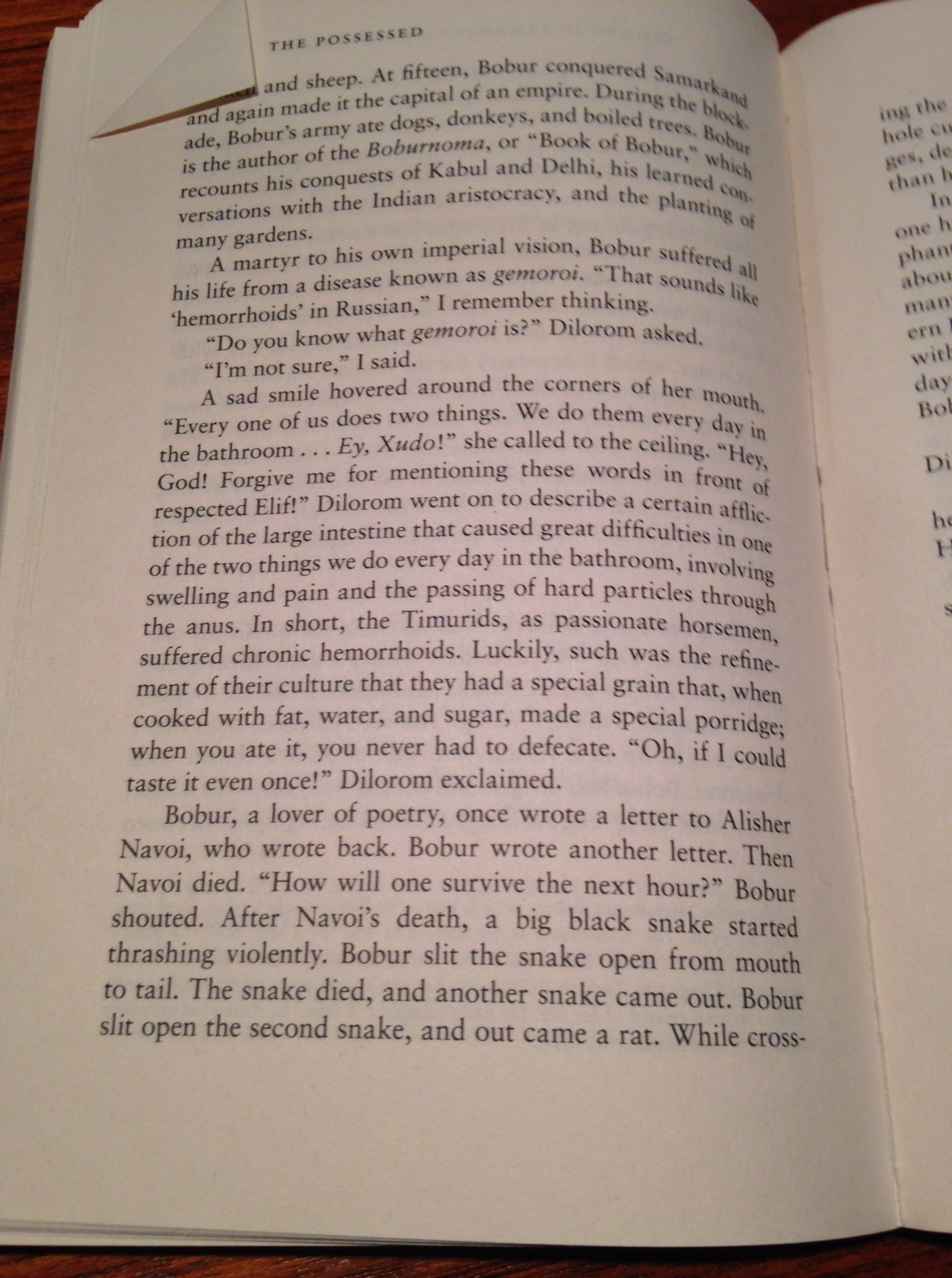

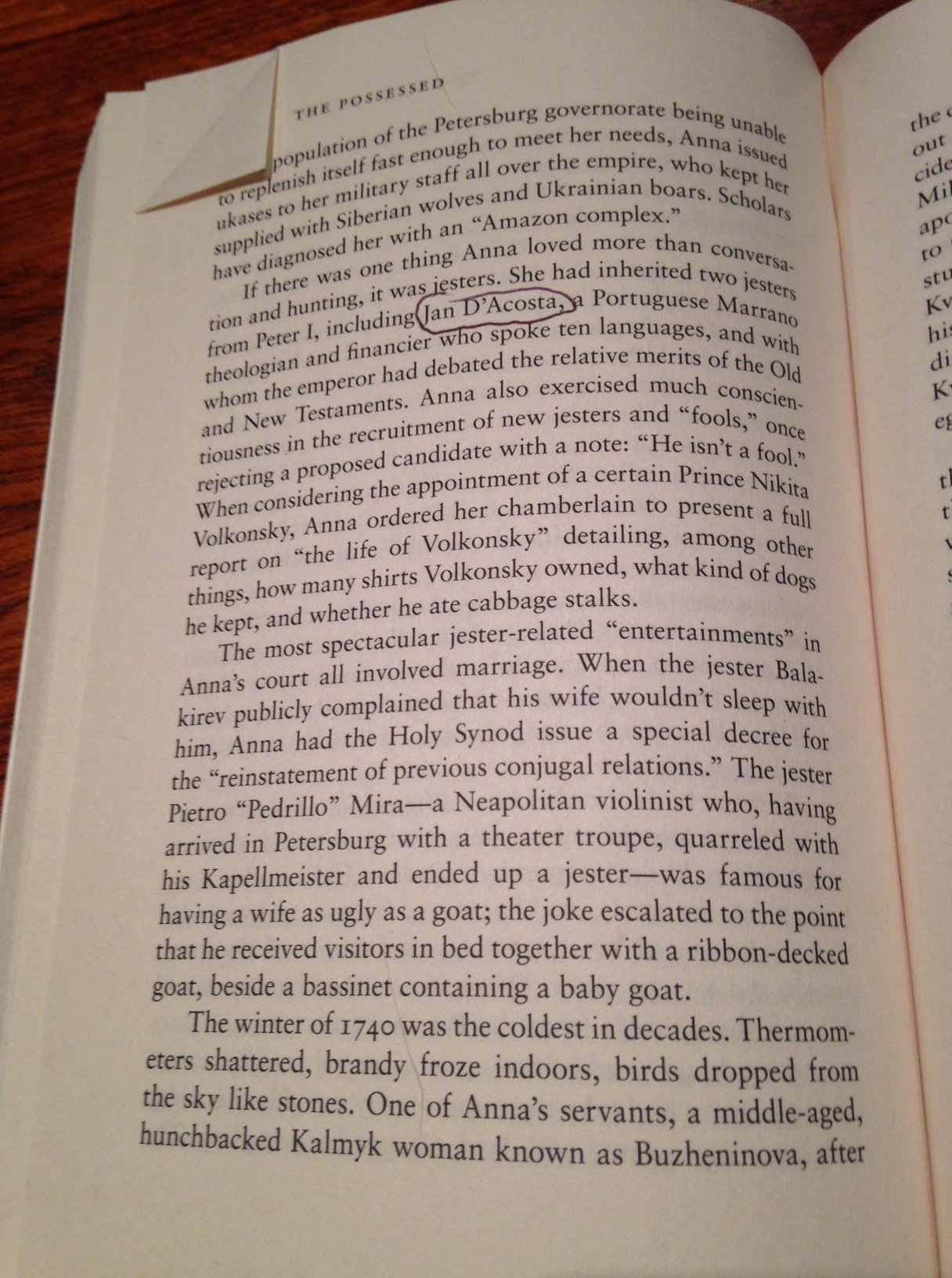
(full disclosure: after I read the book I became pals with the author; she introduced me to many of Istanbul’s best cats:)

Astronaut Scott Carpenter
Posted: July 17, 2014 Filed under: heroes Leave a comment
“The Loner Who Found Himself New Hero For Orbit”

Who drew that X on his head?
 From his Guardian obituary:
He described the combination of weightlessness and the view of “Mother Earth” as an “addictive combination of the senses.
“Conquering of fear is one of life’s greatest pleasures and it can be done a lot of different places,” Carpenter said.
Rupert Murdoch
Posted: July 16, 2014 Filed under: Australia Leave a comment
Murdoch is, in person, charming. Everyone agrees. You get a glimpse of this in the account of working for him written by Philip Townsend, who was his butler in London during the 1980s. (Townsend had a dog who died, and whom he kept in Murdoch’s freezer.) When Murdoch made the switch to living more healthily – influenced by the fact that his father died at 67 – he did so by announcing to his butler: ‘Phil, I’m into yin and yang and all that shit.’
here, from an amazing profile by the great John Lanchester, England’s Michael Lewis.
Been meaning to write for awhile now (will get to) Rupert Murdoch’s parents. Before you talk shit about Rupert Murdoch, Rupert as Mr. Burns, consider that in his head he probably remembers himself as the scared child of two of the toughest, most badass Australians who ever lived.
Rupert’s dad — like, his actual father* — was one of the most powerful forces influencing the 1919 Versailles Conference. Like: his dad was in on the end of World War I.
Every Helytimes reader should devour this book by the great Margaret MacMillan:

If you want to understand Iraq, say, or Palestine? Start here. Learn about how Ho Chi Minh desperately sought a meeting with Woodrow Wilson about the French Indochina/Vietnam situation (no luck).
(I read this book. Still don’t know anything.)
(disclosure: I am a subcontractor/essentially employee of Rupert Murdoch)
* In 1927 he [Keith Murdoch] saw a photograph of an attractive 18-year-old débutante, Elisabeth Joy Greene, in Table Talk magazine, and arranged for a friend to introduce him. [Keith Murdoch was, at that time, 42. Elisabeth is Rupert’s mom. She died two years ago in 2012.]
75 million people
Posted: July 15, 2014 Filed under: advice Leave a comment
That’s how many people speak Telugu, a language I hadn’t heard of until yesterday when correspondent J-Mac sent us this gem from his vast readings, with the following commentary:
Presented without commentary.
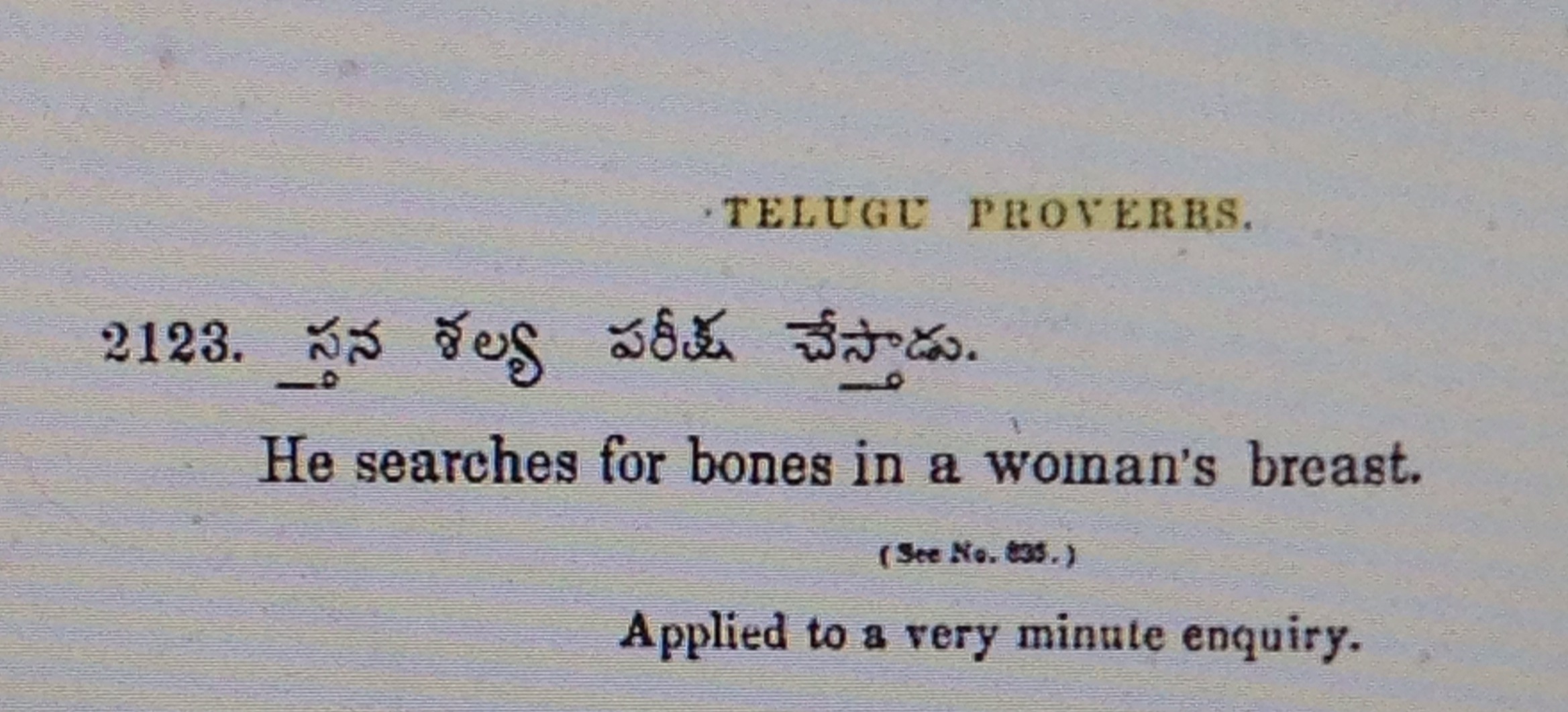 Thanks J-Mac! Among the speakers of Telugu, Wikipedia tells me, are the Sri Lankan Gypsy people:
They make their living by fortune telling, snake charming and using monkeys and dogs in performances.

India: interesting.

Now here is a lady.
Posted: July 14, 2014 Filed under: America Since 1945, music Leave a comment
Kate McGarrigle.
Her ex-father-in-law was Loudon Wainwright, Jr.:
Wainwright joined the staff of Life magazine and worked in a variety of positions over the years, including covering the Mercury astronauts. He and John Glenn listened to the inauguration speech of John F. Kennedy while riding in Glenn’s car in 1961.
John and Mrs. Glenn:

(from Lily Koppel’s extremely rad blog for her book for her (presumably) rad book The Astronaut Wives Club:

Buying that immediately. Check out the postcard she has up there now.
Loudon’s son and Kate’s ex of course is Loudon III:
The old Australian Crawl.
Happy Bastille Day!

In his later years [Jean-Pierre] Houël published two illustrated treatises on elephants. Drawings of other animals suggest he was preparing to publish further zoological works; however, his death at the age of seventy-eight cut short his plans.
Cezanne
Posted: July 11, 2014 Filed under: art history Leave a comment
Anybody who wants to tell me what Cezanne was up to has my attention. Fire away, Morgan Mies:
This holistic approach to art, where individual objects point beyond themselves, was not invented by Cézanne. Holism is an idea as old as the Pre-Socratic philosopher Parmenides in the Western tradition. And it was an idea buzzing around the French Mind quite actively in the middle and late 19th century. For example, Victor Hugo’s Les Misérables was published in 1862. In an abandoned preface to the book, Hugo had written:
This book has been composed from the inside out. The idea engenders the characters, the characters produce the drama, and this is, in effect, the law of art. … Destiny and in particular life, time and in particular this century, man and in particular the people, God and in particular the world, this is what I have tried to include in this book; it is a sort of essay on the infinite.
(No big deal, just an essay on the infinite.)
We can look at Cézanne’s still lifes in roughly the same way: “Fruits and in particular the apple, kitchens and in particular this kitchen, rooms and in particular this room, God and in particular the world, this is what I have tried to include in this painting; it is a sort of painting of the infinite.” Hugo created his essay on the infinite with words that build into stories. Cézanne was trying to do the same thing with paint that builds into visual scenes. By messing with perspective and tonal values, Cézanne created the feeling in his paintings that all the individual objects in the scene are connected and interpenetrated.
Here’s a beef: why does it take five clicks to find out who “the hanged man” is in The House Of The Hanged Man at Auvers?

Thanks to this person who seems to have looked into it:
Well, turns out I was wrong. Supposedly, the house had been owned by a Breton man named Penn’Du, which sounds like the French word for hanged man – ‘Pendu’. Hmmmmm.
Cezanne also did a print in 1873 (same year) entitled “Guillaumin with the Hanged Man”. In this image he actually has a little man hanging in the corner. I read that the tiny hanging man was the sign of an inn called ‘Le Pendu’. Well there sure are a lot of coincidences here!
Guillaumin au pendu

Oysters Grilled And Raw
Posted: July 10, 2014 Filed under: food 1 Comment
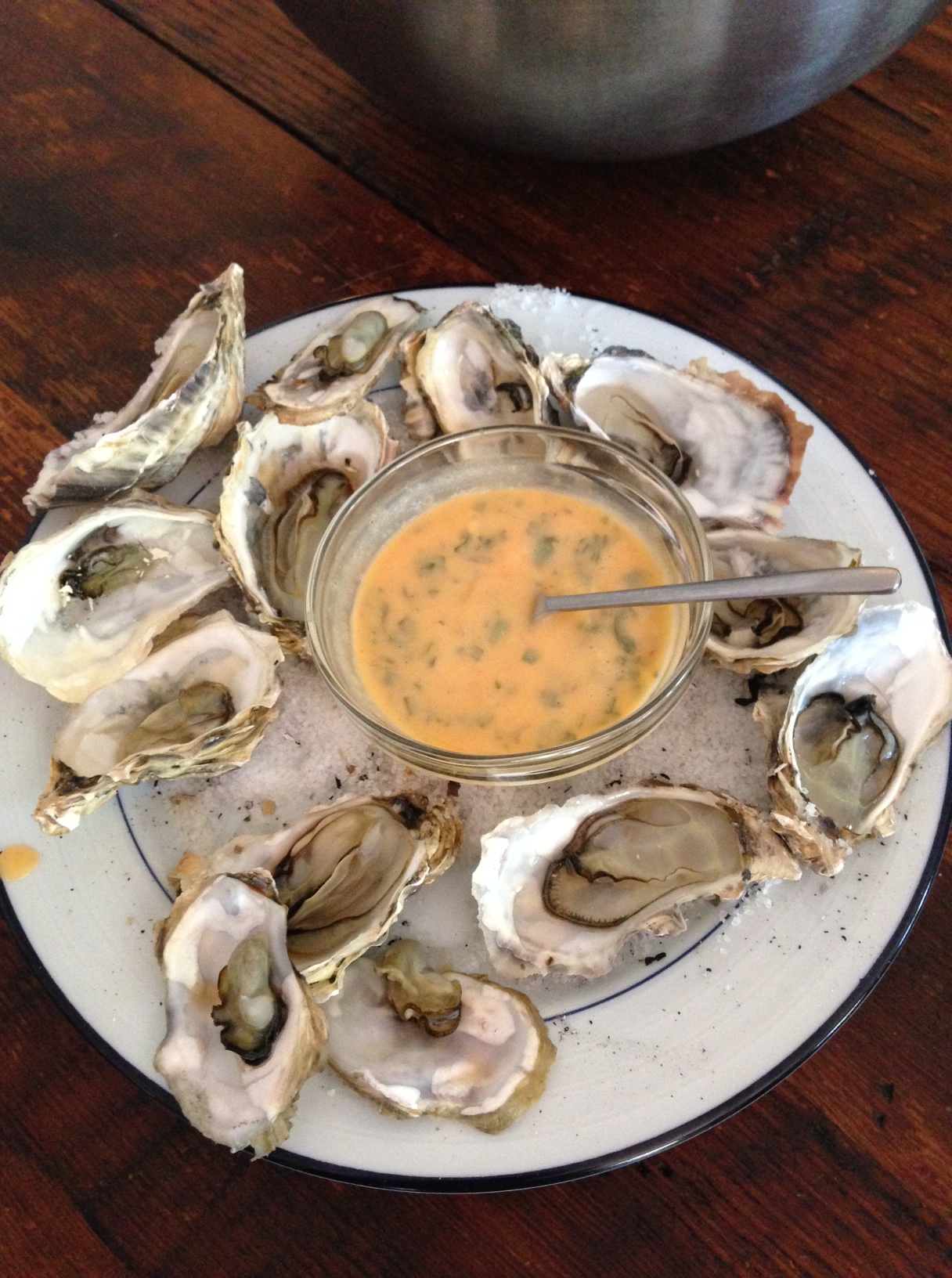
Saw Anthony Bourdain enjoying some grilled oysters in Baja California on “No Reservations,” so I fired some up for Fourth of July.
How To Grill Oysters:
Get the grill really flaming hot (I used mesquite charcoal and mesquite chips)
Put the oysters down, shell on.
(don’t be confused by that top image: the oysters should be in the shell, and the shell should be closed. If the shell’s open, chuck ’em)
In 3-4 minutes they’ll pop open.
Take ’em off (with a glove or towel because they’re hot!).
Pop ’em open with a flathead screwdriver.
For sauce, I used this recipe from Food52 (ht Wrenshall).
Let’s learn more about oysters.
The type I grilled were Pacific oysters. Maybe the most widely grown bivalve in the world.
Crassostrea gigas was named by a Swedish naturalist, Carl Peter Thunberg in 1795. It originated from Japan, where it has been cultured for hundreds of years. It is now the most widely farmed and commercially important oyster in the world, as it is very easy to grow, environmentally tolerant and is easily spread from one area to another. The most significant introductions were to the Pacific Coast of the United States in the 1920s and to France in 1966. In most places, the Pacific oyster was introduced to replace the native oyster stocks which were seriously dwindling due to overfishing or disease. In addition, this species was introduced to create an industry that was previously not available at all in that area. As well as intentional introductions, the Pacific oyster has spread through accidental introductions either through larvae in ballast water or on the hulls of ships. In some places in the world, though, it is considered by some to be an invasive species, where it is outcompeting native species, such as the Olympia oyster in Puget Sound, Washington, the rock oyster, Saccostrea commercialis in the North Island of New Zealand and the blue mussel, Mytilus edulis, in the Wadden Sea.
Specifically we had Pacific Gold and Carlsbad. Carlsbad are farmed in Carlsbad, CA:
Here’s Thomas Grimm, co-founder of Golden Shore, which owns Carlsbad Aquafarm:

What’s the history of oysters in California? Well everyone knows Jack London was an oyster pirate.

But beyond that? My research ends with the mysterious Mose Wicks.
I wanted to learn more about different types of oysters, with maps. I found this great guide on WaitersToday.com.
Since the mid-1800’s most oysters have been cultured or farmed.Clad in rubber boods and rain gear,oyster growers spend hours on blustery beaches nursing their crop.
Along with current efforts to globalize oyster stocks,the growers we use have helped to foster the interest in boutique oysters – gourmet strains,with names reflecting their bays of origin.
In the old days it was simply “Hood Canal Oysters”.Now we’ll have Hamma,Sunset Beach,Pleasent Cove,Annas Bay,Little Creek,and Dabob Bay just to name a few.All of which are Hood Canal.
Many of these oysters come from small scale farms,which like regional vineyards have proliferated in the past 20 years.
 What a helpful site! I look forward to reading more on WaitersToday.
(If you go down to Australia though? to eat the oysters there? you enter a whole new world.
Someday.)
Readers seriously interested in oysters will enjoy Mark Kurlansky’s great book on the subject.

Kurlansky tells us:
Diarist Samuel Pepys often mentioned eating, giving, or receiving oysters for breakfasts, lunches, and inners – in all he mentions oysters fifty times in his diaries. Dr. Johnson fed oysters to his cat, Hodge, buying them personally because he feared that if he sent servants, they would end up resenting the cat.
And:
William K. Brooks, the nineteenth century Maryland pioneer in the study of oysters, said, “A fresh oyster on the half-shell is no more dead than an ox that has been hamstrung.” If the oyster is opened carefully, the diner is eating an animal with a working brain, a stomach, intestines, liver, and a still-beating heart. As for the “liquor,” that watery essence of oyster flavor that all good food writers caution to save, it is mostly oyster blood.
In 1932, at a convention of the Oyster Growers Association in Atlantic City, Dr. Vera Koehring of the U.S. Bureau of Fisheries said that it was cruel and inhuman to crack open an oyster’s shell and pry the animal loose. Dr. Koehring proposed, “The oysters, before being shelled, should be given an anesthetic.”
And:
The New York of the second half of the nineteenth century was a city overtaken by oystermania. It was usual for a family to have two oyster dinners a week, one of which would be on Sunday. It was one of the few moments in culinary history when a single food, served in more or less the same preparations, was commonplace for all socioeconomic levels. It was the food of Delmonico’s and the food of the dangerous slum. The oyster remained inexpensive. Shucked oysters were sold by street vendors for twenty-five cents a quart. The poor person might eat raw oysters from a street stand or have a stew at the market – it was cheap enough – or a wealthy man might get the same raw oysters to start his meal or the same stew for a fish course at the most expensive restaurants. At Delmonico’s, a serving of six or eight oysters, depending on the size, cost twenty-five cents.
This is also just a great book about New York. Maybe the best pop history of Dutch New York after Shorto:

Here’s a good NYTimes article from 2006 about oyster varieties. First two paragraphs:
A FOOTLOOSE young American named Jon Rowley sat in a down-at-the-heels room in Paris one day in the mid-1960’s, reading “A Moveable Feast,” Ernest Hemingway’s posthumously published memoir of life in the city during the 1920’s.
One passage above all seized his attention. Hemingway had written, “As I ate the oysters with their strong taste of the sea and their faint metallic taste that the cold white wine washed away, leaving only the sea taste and the succulent texture, and as I drank their cold liquid from each shell and washed it down with the crisp taste of the wine, I lost the empty feeling and began to be happy and to make plans.”
I guess my point is, oysters are interesting! Let’s agree to meet back here and discuss oyster gender sometime.

Pacific oyster Crassostrea gigas equiped with activity electrodes to follow their daily behavior 24/7
 Helytimes