Once Upon a Time … in Hollywood
Posted: August 5, 2019 Filed under: movies Leave a comment
Favorite line? Margot Robbie saying
I’m in the movie. I’m Sharon Tate.
Second place, the little girl actor saying “Just give me the idea of the story.”
Does any director have more fun with time shifts than Tarantino? The whole part where Brad Pitt has a fight with Bruce Lee occurs in Brad Pitt’s memory while he’s fixing Leo’s TV antenna (right?).
How about when Rick Dalton is pleading on behalf of his friend?
Hey, you could do anything you want to him. Throw him off a building, alright? Light him on fire. Hit him with a Lincoln, right? Get creative. Do whatever you want, he’s just happy for the opportunity.
Filmic recursion, movies within movies. Fun! Movies about movies: Boogie Nights, Singin’ In The Rain, even Citizen Kane starts with a movie within a movie.
Jan Van Eyck
Posted: July 30, 2019 Filed under: art history Leave a comment
a self-portrait?
The first extant record of his life comes from the court of John of Bavaria at The Hague where, between 1422 and 1424, payments were made to Meyster Jan den malre (Master Jan the painter) who was then a court painter with the rank of valet de chambre, with at first one and then two assistants.

Did he have help from his older brother Hubert on this one?

The notes on his preparatory drawing for Portrait of Cardinal Niccolò Albergati are written in the Maasland dialect.
Hmm.
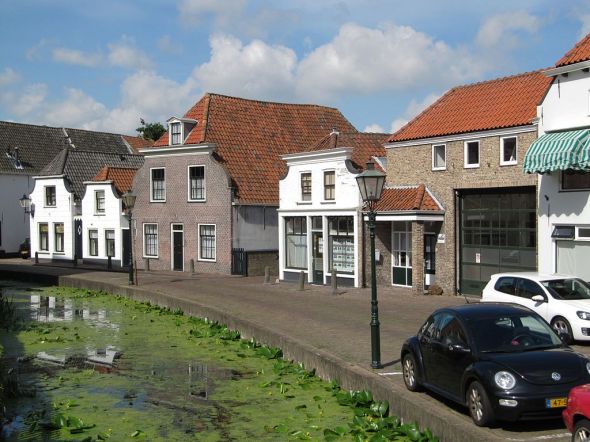
His motto, one of the first and still most distinctive signatures in art history, ALS IK KAN (“AS I CAN”), a pun on his name,
Secret commissions:
Van Eyck undertook a number of journeys on Philip the Duke of Burgundy’s behalf between 1426 and 1429, described in records as “secret” commissions, for which he was paid multiples of his annual salary. Their precise nature is still unknown, but they seem to involve his acting as envoy of the court. In 1426 he departed for “certain distant lands”, possibly to the Holy Land, a theory given weight by the topographical accuracy of Jerusalem in The Three Marys at the Tomb, a painting completed by members of his workshop c. 1440.
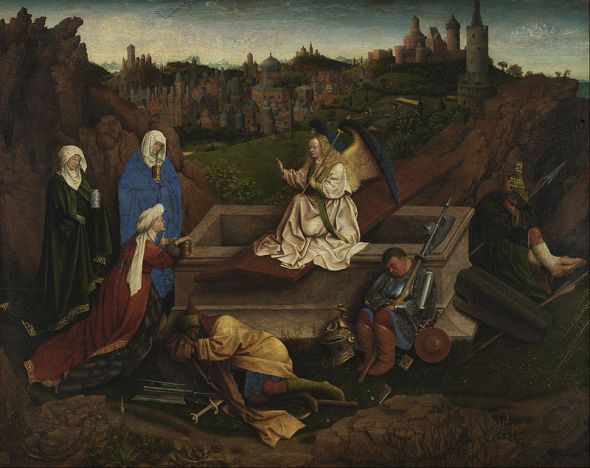
Though now some attribute this one to Hubert. (I dunno, not astounded myself by the topographical accuracy here.)
A better documented commission was the journey to Lisbon along with a group intended to prepare the ground for the Duke’s wedding to Isabella of Portugal. Van Eyck’s was tasked with painting the bride, so that the Duke could visualise her before their marriage. Because Portugal was ridden with plague, their court was itinerant and the Dutch party met them at the out of the way castle of Avis. Van Eyck spent nine months there, returning to the Netherlands with Isabella as a bride to be; the couple married on Christmas Day of 1429. The princess was probably not particularly attractive, and that is exactly how Van Eyck conveyed her in the now lost portrait.

Eyck’s own wife:

Margaret.
I was looking into Van Eyck because I was wondering, who did Hieronymous Bosch learn from?
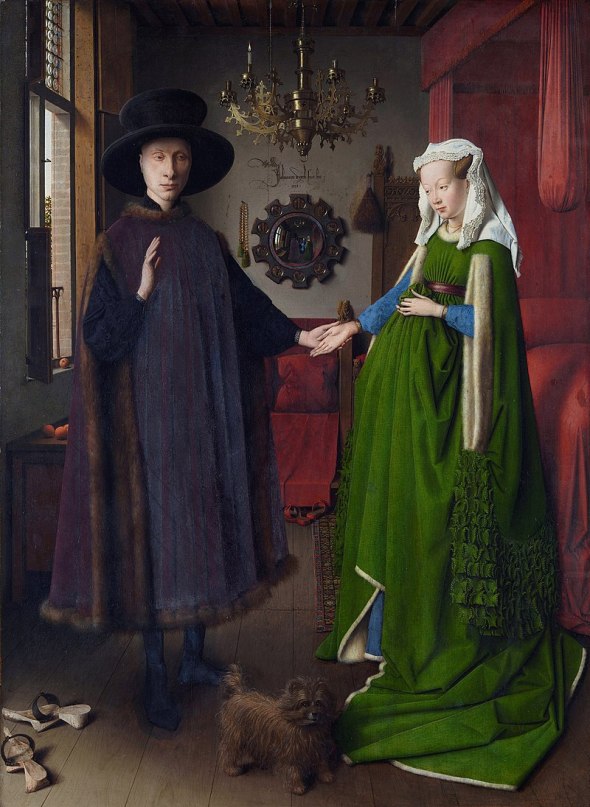
That dog!
A visit to the San Diego Museum of Art
Posted: July 28, 2019 Filed under: art history, the California Condition Leave a comment “What’re they gonna have at the San Diego Museum of Art?” I said, sneering. “A statue of a fish taco? An exhibit of craft IPA labels? A fluorescent Jeep Wrangler? A Tony Gwynn jersey?*”
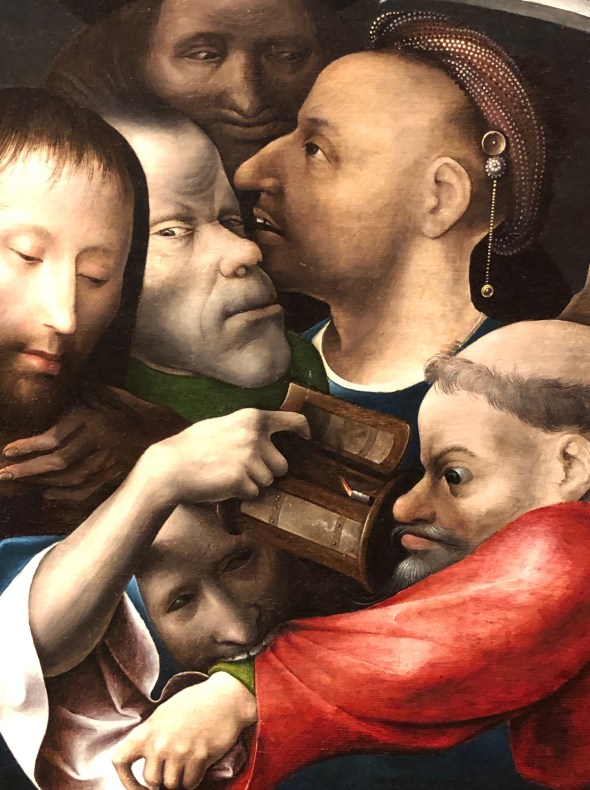
This had been my scoffer’s attitude. But on the website of SDMA I learnt that they have a painting by Hieronymous Bosch, The Arrest of Christ.
Seeing a close to 500 year old painting by a weirdo master seemed worth a short Uber.

I was really impressed with SDMA! Small, but packed with wonders. Something good everywhere. There was an exhibit of “Golden Age of Spain” art that I didn’t even bother with. (Usually I find I like the art that came right before the golden age?)
The wall placard attributes Christ Arrested to the Workshop of Hieronymous Bosch, not Bosch himself. And how about Madonna of the Roses, by Pseudo-Pier Francesco Fiorentino?

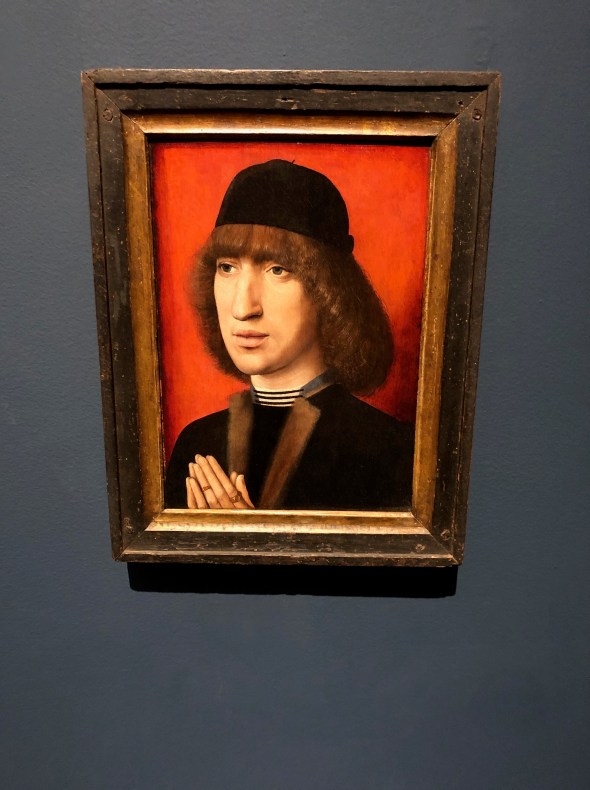
Or Portrait of a Man by an unknown Flemish artist (once attributed to Hans Memling):
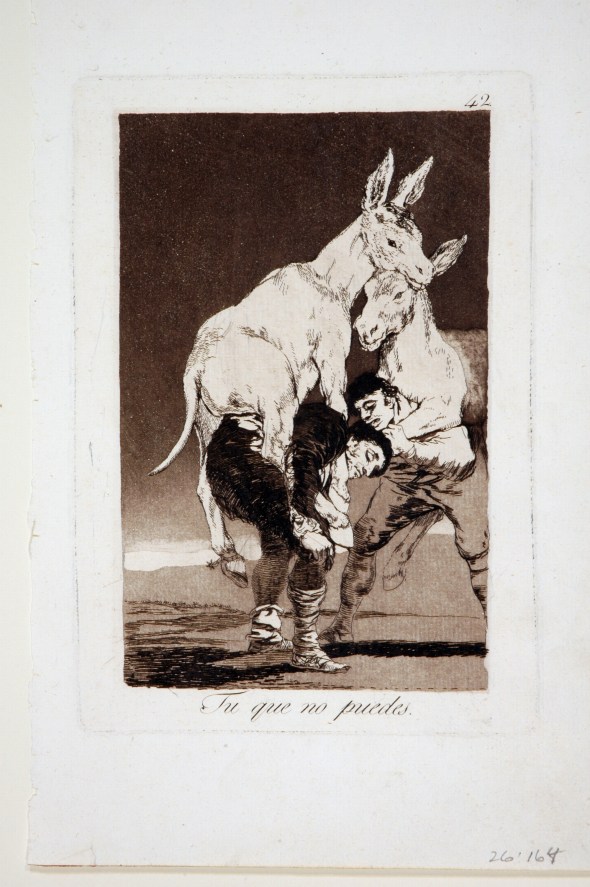
Goya, You Who Cannot. (They must have a bunch more Goyas in storage).
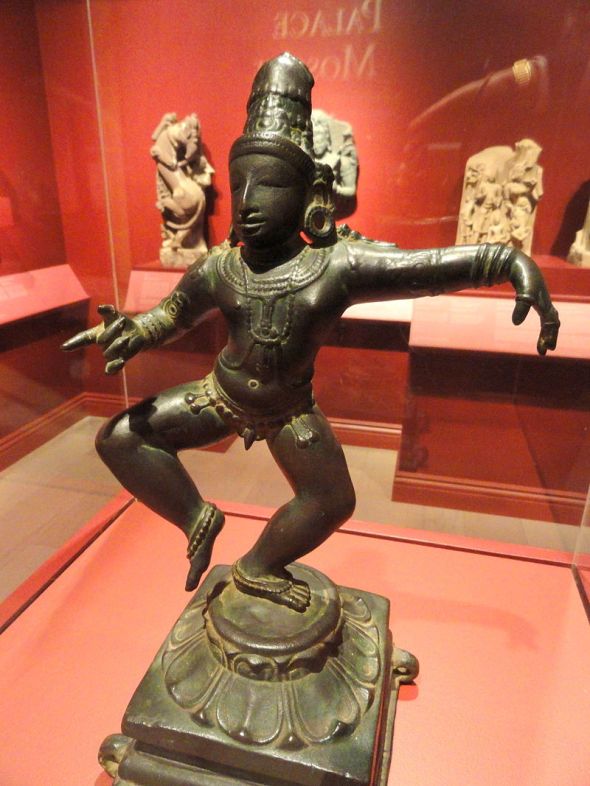
11th century Sambander.
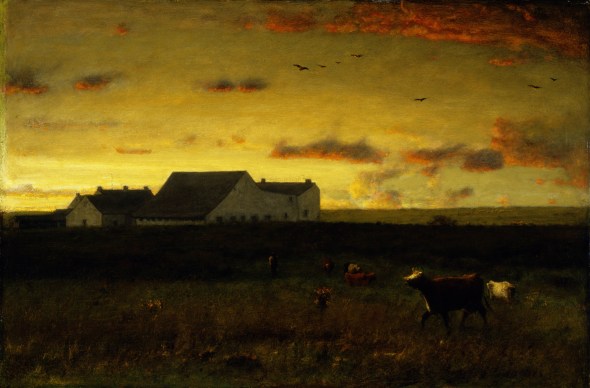
George Inness, Farm Landscape, Cattle in Pasture—Sunset, Nantucket
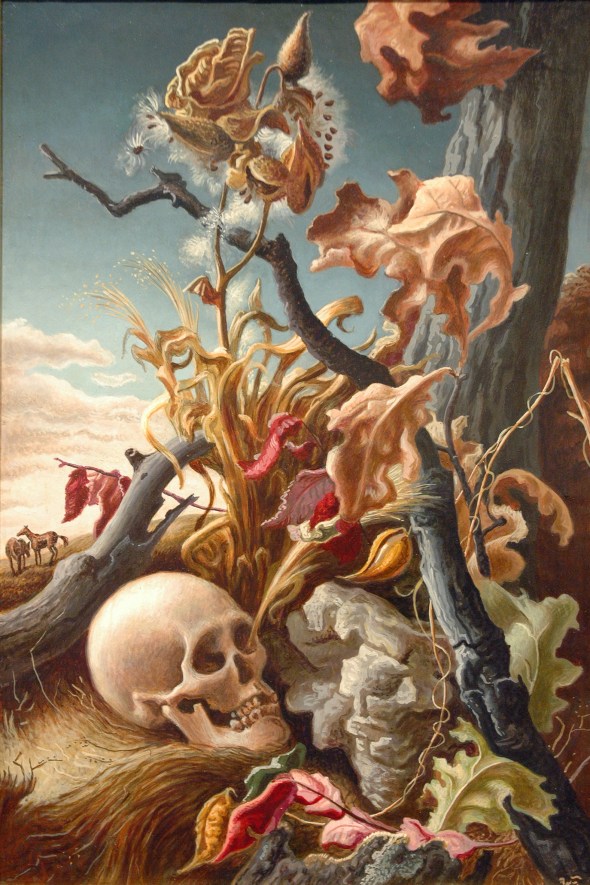
Thomas Hart Benton, After Many Days.

An untitled work by George Copeland Ault.
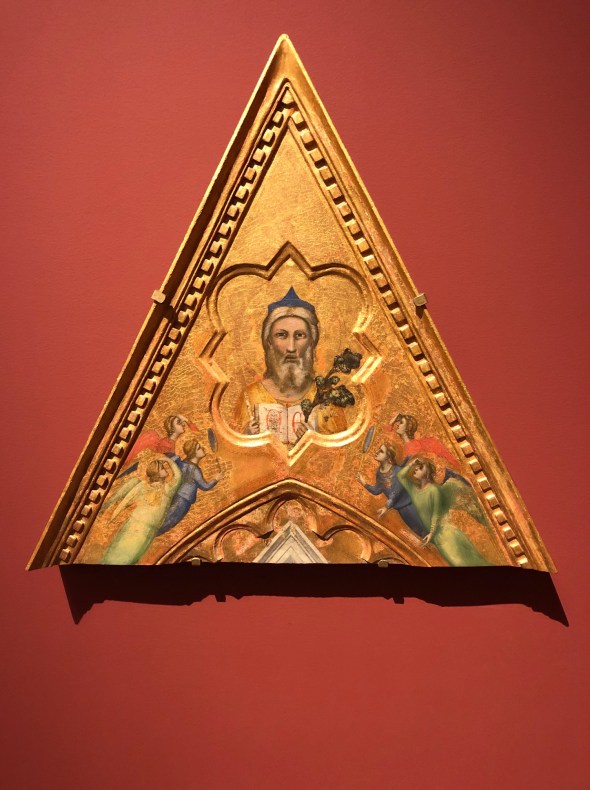
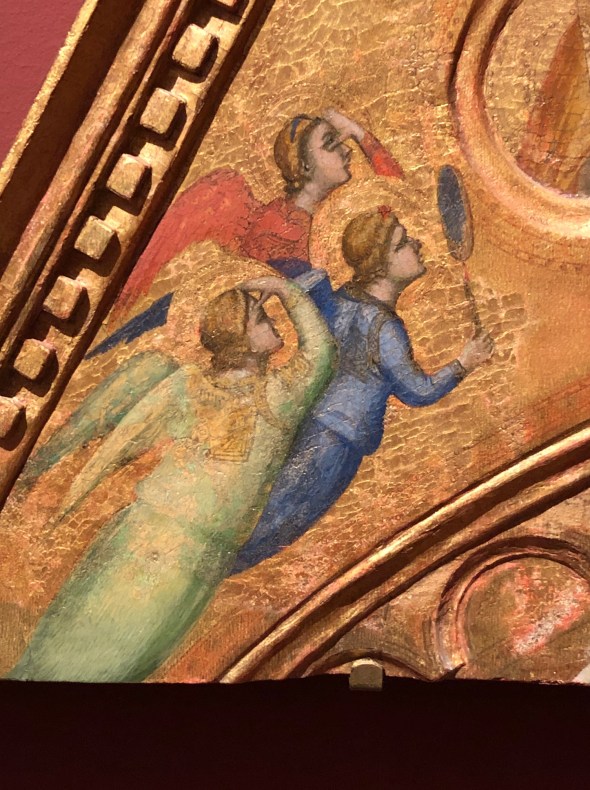
Giotto, God The Father with Angels.
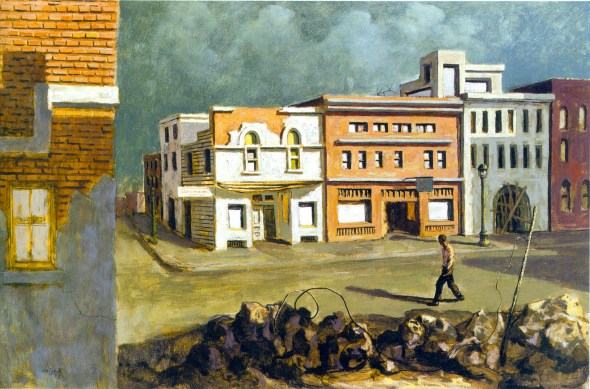
Sunday Afternoon, Hughie Lee Smith.

In The Patio by Georgia O’Keefe.
Anyway. This was all a nice break from Comic-Con.
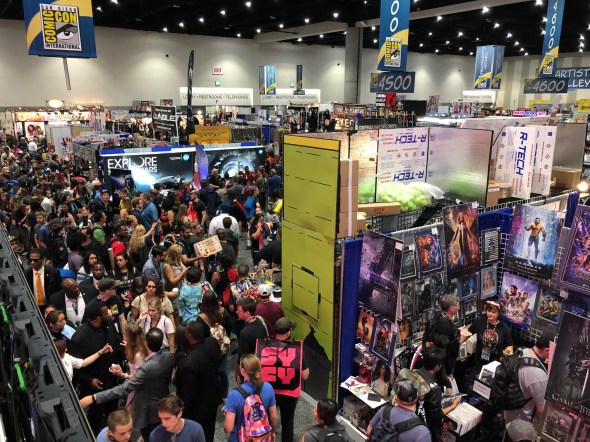
At Comic-Con I heard that the X-Men are coming back.
* cheers to Jeff K. for this last punchline.
Brimful of Asha
Posted: July 25, 2019 Filed under: music Leave a comment
Hearing the song Brimful of Asha by Cornershop in the film Under The Silver Lake (enjoyed!) got me reading up on the meanings of the song.
This song is based on the history of film culture in India. Since their beginnings, Indian films have relied heavily on song and dance numbers. The singing is almost always performed by background singers while the actors and actresses lip sync. Asha Bhosle is a playback singer who has sung over 12,000 songs and is referred to as “Sadi rani” (Punjabi for “our queen”) at one point in the lyrics

Claiming a vaudeville / DJ name for possible future use
Posted: July 25, 2019 Filed under: art history Leave a comment
Art Celebrator.
Dried up cactus and desert plant detritus that looks like alien spores
Posted: July 24, 2019 Filed under: desert Leave a comment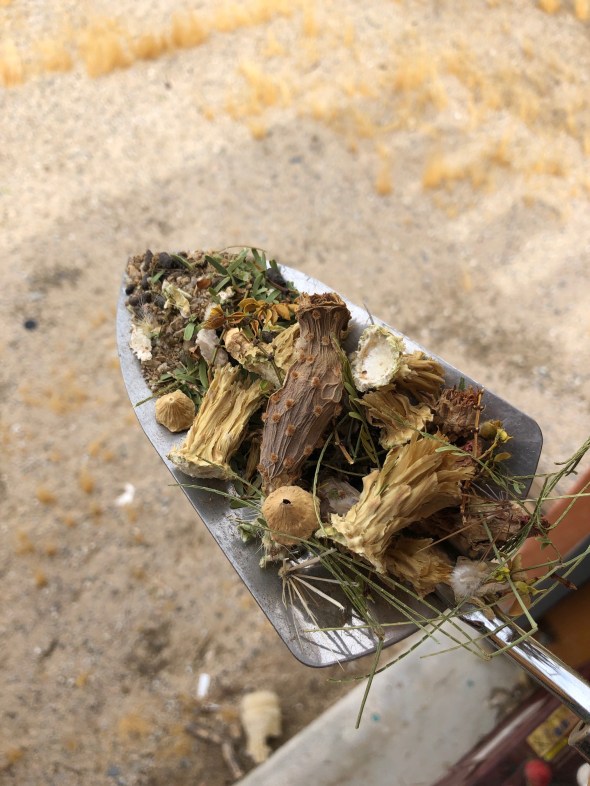
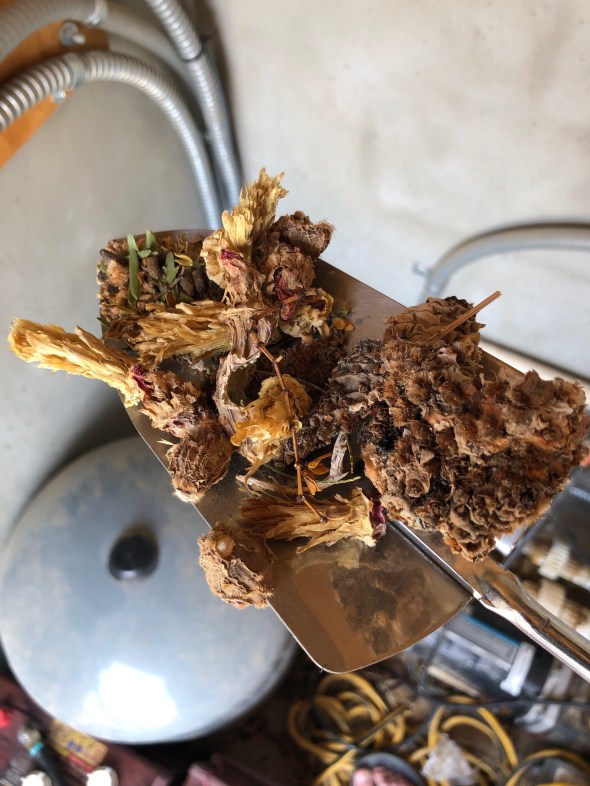
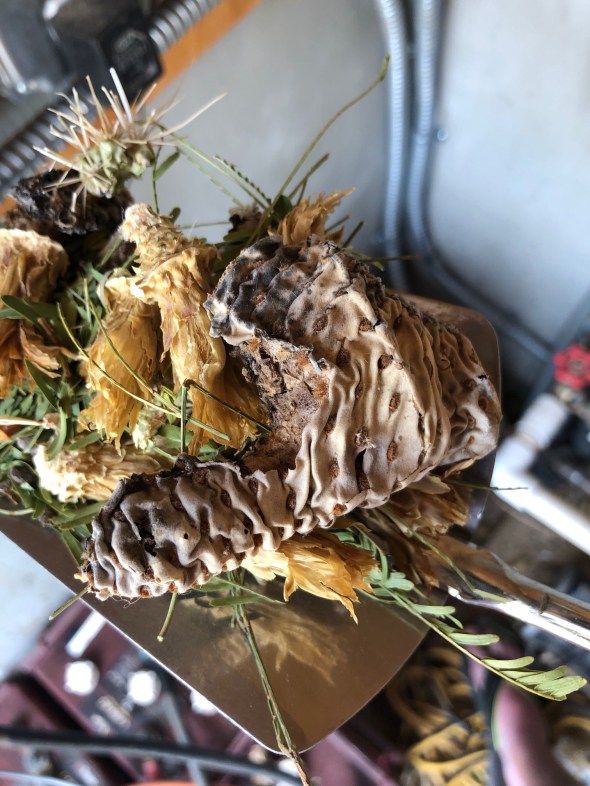
is this a good photo?
Posted: July 18, 2019 Filed under: photography, the California Condition Leave a comment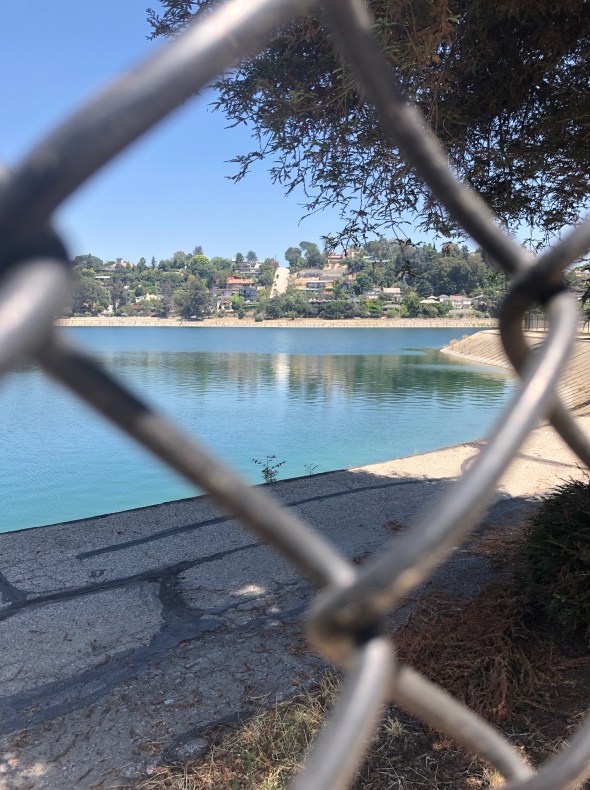
was trying to capture the stark steepness of the street across the lake, and the special but unrelenting quality of afternoon sun in LA, and also how LA can look very lush and inviting while also having a kind of washed down, contained, prison-like aspect.
Thought this Vox piece about Antelope Canyon by Rebecca Jacobs was insightful on the meanings of photography in Instagram Age.
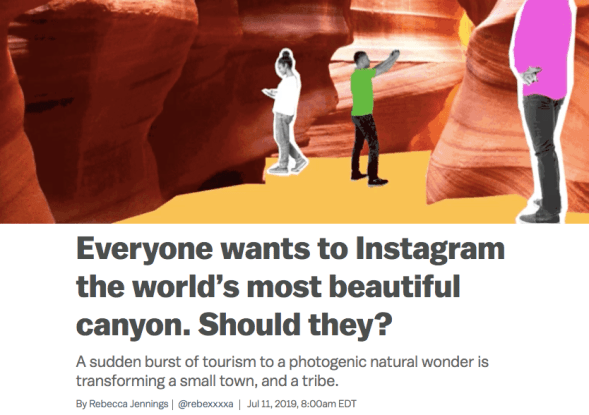
What’s the meaning of a tour where they tell you how to photograph it?
first see the rocks early the next morning with a tour group, which is the only way you are allowed to visit them. Before our guide tells us his name, which we find out is Anthony, he asks us the most crucial question of the day: “Do you all have iPhones?”
Anthony instructs all of us except the kid with the Samsung to open our camera apps, click the icon in the top right corner, and swipe to a setting called “Vivid Warm.”
Good food
Posted: July 13, 2019 Filed under: Canada, food Leave a comment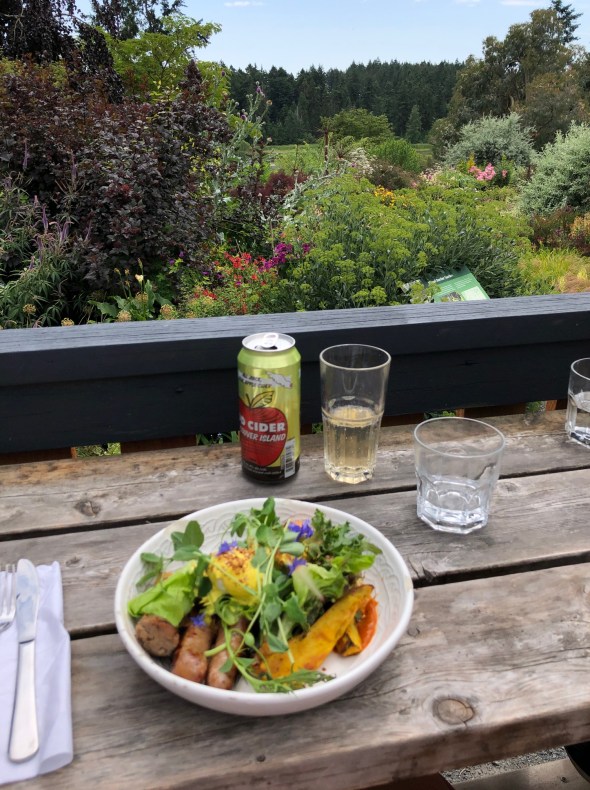
up in Canada. I’d tell you the name of the restaurant but you’d think it was a joke.
Style Icons, #11
Posted: July 3, 2019 Filed under: fashion 1 Comment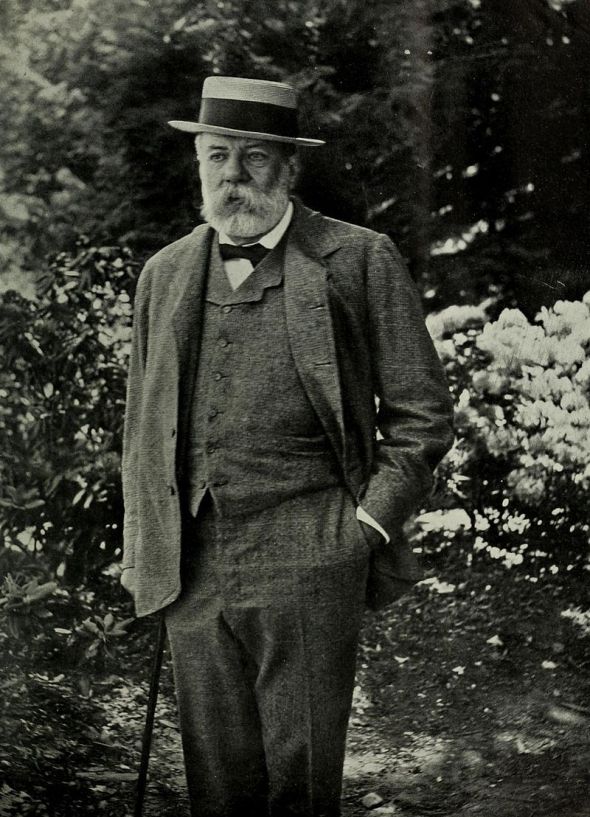
Charles Sprague Sargent, botanist.
and as long as we’re reading about the great botanists of 19th century Boston, grave goals:

Sandwich I’m still thinking about
Posted: July 1, 2019 Filed under: America Since 1945, Arkansas, food 1 Comment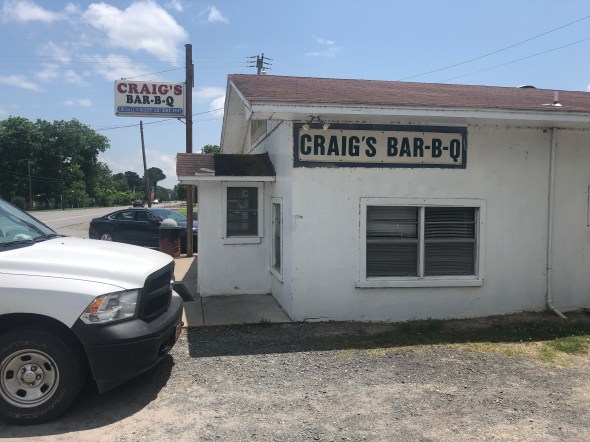
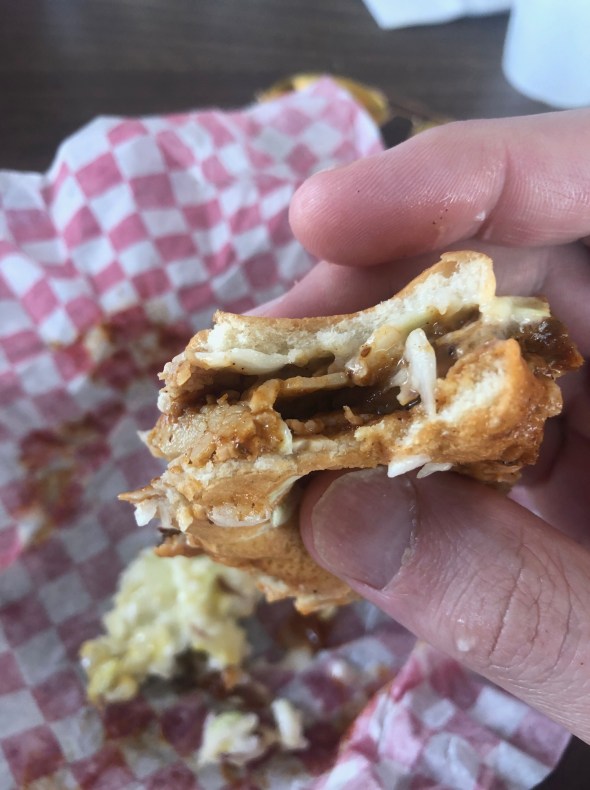
BBQ Beef:
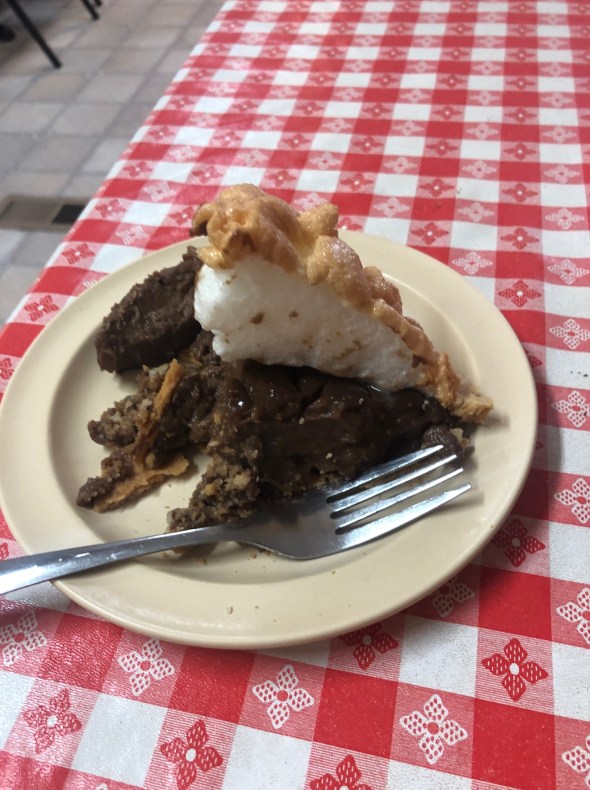
When you are at Craig’s you are on the Arkansas Pie Trail:
Lionsgate update
Posted: June 28, 2019 Filed under: business, movies Leave a comment
This is an update to a recent post about Lionsgate: kind of stunned by the crumminess of this trailer. Aren’t most of these worse versions of shots from Pearl Harbor (2001)?
Only instead of coming out in 2001 when people were feeling kinda patriotic, it’s coming out now.
Worried about Lionsgate. Maybe somebody will buy them?
How much would you pay for this painting?
Posted: June 27, 2019 Filed under: art history, money 1 Comment
Basquiat’s “Pink Elephant with Fire Engine,” depicting cartoonish images on yolk-colored background, hammered at 2.2 million pounds, falling short of the low estimate of 3 million pounds.
Tchoupitoulas
Posted: June 21, 2019 Filed under: food, music, New Orleans Leave a comment
po’boys at Domilie’s
There are many famous and intriguing streets in New Orleans – Royal, Esplanade, Canal, Basin, Magazine, St. Claude Avenue, St. Charles Avenue, Chartres – but a street that caught my interest is Tchoupitoulas.

Traveled this street while on my way back from Domilise’s, which David Chang once claimed serves the coldest beer in the world.

Could be!
Tchoupitoulas runs alongside the Mississippi. There is an enormously long, apparently vacant structure that runs along the river and the railroad tracks.

I asked a bartender at Cavan in the Irish Channel about this structure. She told me it’s a set of wharves and warehouses, many of them still privately owned. It was said, according to her, that somewhere under this place Marie Laveau had once had her voodoo church.

based on a drawing, now lost, by George Catlin
“The Wild Tchoupitoulas” were a band of Mardi Gras Indians, who in 1976, with the help of the Neville Brothers and some members of The Meters, recorded an album based on their chants.

Viewers of Treme will recall that Steve Zahn’s character and his girlfriend Annie Tee have a discussion when they move in together about whether they need to keep both of their two CDs of The Wild Tchoupitoulas.
Next time I’m on Tchoupitoulas I’m going to visit Hansen’s Sno-Bliz.

Iko Iko and Mobilian Jargon
Posted: June 19, 2019 Filed under: language, Louisiana, music, New Orleans Leave a comment
Reading up on the New Orleans classic Iko Iko, made famous by the Dixie Cups, I find myself reading about Mobilian Jargon.
Mobilian Jargon (also Mobilian trade language, Mobilian Trade Jargon, Chickasaw–Choctaw trade language, Yamá) was a pidgin used as a lingua franca among Native American groups living along the Gulf of Mexico around the time of European settlement of the region. It was the main language among Indian tribes in this area, mainly Louisiana. There is evidence indicating its existence as early as the late 17th to early 18th century. The Indian groups that are said to have used it were the Alabama, Apalachee, Biloxi, Chacato, Pakana, Pascagoula, Taensa, Tunica, Caddo, Chickasaw, Choctaw, Chitimacha, Natchez, and Ofo.

A possible meaning?:
Another possible translation interprets the third and fourth lines as:[30]
Chokma finha an dan déyè
Chokma finha ane.Chickasaw words “chokma” (“it’s good”) and “finha” (“very”), Creole “an dan déyè” from French Creole “an dans déyè” (“at the back”), and the Creole “ane” from the French “année” (“year”).
Translation:
It’s very good at the rear
It’s a very good year.
What about the possible voodoo origin?
Louisiana Voodoo practitioners would recognize many aspects of the song as being about spirit possession. The practitioner, the horse, waves a flag representing a certain god to call that god into himself or herself. Setting a flag on fire is a curse. The man in green, who either changes personality or whose appearance is deceiving, would be recognized in Voodoo as possessed by a peaceful Rada spirit, inclining to green clothes and love magic. The man in red, who is being sent to kill, would likely be possessed by a vengeful Petwo spirit.[33]
Haitian ethnologist Milo Rigaud published a transcription in 1953 of a Voodoo chant, “Crabigne Nago”[34]. This chant to invoke the Voodoo mystère Ogou Shalodeh is similar to “Iko, Iko” in both pentameter and phones.
Liki, liki ô! Liki, liki ô!
Ogou Shalodeh.
Papa Ogou Jacoumon,
Papa Ogou Shalodeh.
More on the topic can be found in an article in a 2008 issue of Southern Anthropologist – we find ourselves amidst controversy:
Right from the beginning, Galloway (2006: 225-226) belittles the amount of linguistic information available, which she evidently takes as a justifi cation for not addressing specifi c linguistic and historical data that Crawford and I have accumulated and analyzed over the years. Although Galloway (2006: 228) recognizes my book of some four hundred pages as “the most thorough study of Mobilian jargon (sic) now available,” she oddly does not use a single piece of linguistic data from it in her own essay; nor does she review the substantial amount of sociohistorical documentation that both Crawford and I assembled for what anthropologists and linguists had long thought lost. Instead, Galloway (2006: 240) has curiously drawn on a short, seven-page essay by Kennith H. York (1982) for inspiration and “the insight of a sophisticated native speaker of Choctaw,” which demands a short appraisal
The linguistic origin of the song is the subject of a 2009 Offbeat article by Drew Hinshaw, who traces it to Ghana:
One afternoon, 1965, the three Louisianan sisters/cousins who gave you “Chapel of Love,” unaware that the studio’s tapes were still rolling, recorded for posterity two minutes of delightful historical intrigue that had been circulating in oral obscurity for generations unknowable. “Iko, Iko,” they called that tune. The English chunks of the record came from an all-too-obvious source—R&B singer “Sugar Boy” Crawford who claimed he never saw “just dues” from the top 40 hit—but the cryptic refrain of the Carnival standard is of a lost language, entirely mysterious: “Eh na, Iko, Iko-ahn-dé, jaco-mo-fi-na-né.” You know these words. “Sugar Boy” said he remembered them from the Mardi Gras Indian tribes of his salad days, while the girl group said they heard it from their grandma, Which is where the song begins: “My grandmaw and yo’ grandmaw….”
Reminded me of this cool, dialogue-less scene in Twelve Years A Slave which probably tells us about as much as can be known about the earliest origins of New Orleans music:
Not sure why I bothered writing this post, as I already texted with MMW about this topic (he suggested I look into Pidgin Delaware) but the oddest topics have lured readers to Helytimes, and really, what else is this site for but
1) to peer into the past until the view becomes a crazy fantastical kaleidoscope
2) to celebrate the rich weirdness of the world, and
3) to delight that there are people out there fighting over Mobilian Jargon?
Delta
Posted: June 16, 2019 Filed under: America Since 1945, Mississippi, music Leave a comment
ruins of Windsor Plantation
Found myself, for the second time in two years, driving Highway 61 through the Mississippi Delta. I don’t feel like I intended this, exactly. Once was good. But there I was again.

This map by Raven Maps was a breakthrough in understanding the Delta, what makes this region freakish and weird and unique. The Delta is low-lying bottomland. Thinking of the Mississippi in this area as a line on a map is inaccurate, it’s more like a periodically swelling and retreating wetland, like the Amazon or the Nile. Floods are frequent, vegetation grows thick, the soil is rich and good for growing cotton. That is the curse, blessing and history of the Delta. This year Highway 61 was almost flooded below Vicksburg.

The river from the bluffs at Natchez
The Mississippi Delta begins in the lobby of the Peabody Hotel in Memphis and ends on Catfish Row in Vicksburg. The Peabody is the Paris Ritz, the Cairo Shepheard’s, the London Savoy of this section. If you stand near its fountain in the middle of the lobby, where ducks waddle and turtles drowse, ultimately you will see everybody who is anybody in the Delta and many who are on the make.
So said David Cohn in his famous essay of 1935.

It’s been awhile since I was at The Peabody.

Dave Cohn was Jewish. Shelby Foote had a Jewish grandfather. The Delta was diverse.

So says Shelby. On the Delta fondness for canned beans:
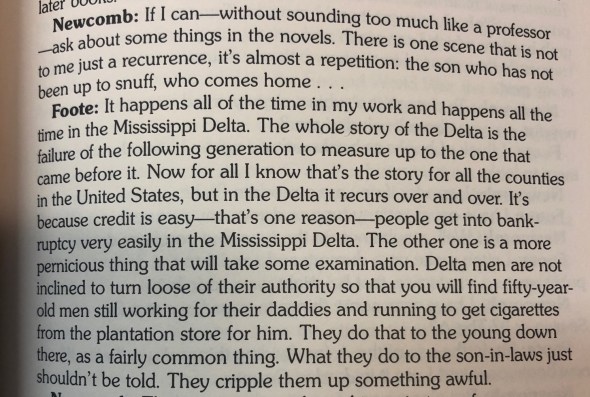
from:
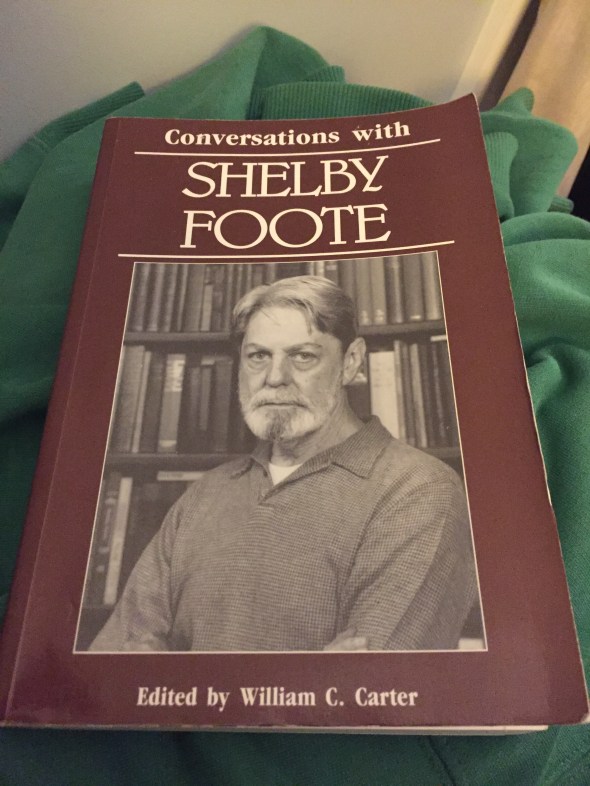
Here’s something North Mississippi Hill Country man Faulkner had to say about people in this region:
Q: Well, in the swamp, three of the men that lived in the swamp did have names – Tine and Toto and Theule, and I wonder if those names had any type of significance or were supposed to be any type of literary allusion. They’re rather colorful names, I think.
A: No, I don’t think so. They were names, you might say, indigenous to that almost unhuman class of people which live between the Mississippi River and the levee. They belong to no state, they belong to no nation. They – they’re not citizens of anything, and sometimes they behave like they don’t even belong to the human race.
Q: You have had experience with these people?
A: Yes. Yes, I remember once one of them was going to take me hunting. He invited me to come and stay with his kinfolks – whatever kin they were I never did know – a shanty boat in the river, and I remember the next morning for breakfast we had a bought chocolate cake and a cold possum and corn whiskey. They had given me the best they had. I was company. They had given me the best food they had.

The Delta is a ghost town. In 2013 The Economist reported
Between 2000 and 2010 16 Delta counties lost between 10% and 38% of their population. Since 1940, 12 of those counties have lost between 50% of 75% of their people.
Another Economist piece from the same era has a great graphic of this:
“You can’t out-poor the Delta,” says Christopher Masingill, joint head of the Delta Regional Authority, a development agency. In parts of it, he says, people have a lower life expectancy than in Tanzania; other areas do not yet have proper sanitation.
Everywhere you see abandoned buildings, rotting shacks, collapsing farmhouses. This gives the place a spooky quality. It’s like coming across the shedding shell of a cicada. There are signs of a once-rich life that is gone.

Here’s an amazing post about the sunken ruins of the plantation of Jefferson Davis.
Every town that still exists along the river of the Delta is on high ground or a bluff. Natchez, Port Gibson, Vicksburg. Once beneath these towns there were great temporary floating communities of keelboats, canoes. But the river has flooded and receded and changed its course many times. Charting the historical geography of these towns is confusing. Whole towns have disappeared, or been swallowed.
Brunswick Landing, of which nothing remains.
The first time I ever thought about the Mississippi Delta was when I came across this R. Crumb cartoon about Charley Patton, who was from Sunflower County.


Something like 2,000 people lived and worked at Dockery Plantation. It’s worth noting that this plantation was started after slavery, it was begun in 1895.
At the time, much of the Delta area was still a wilderness of cypress and gum trees, roamed by panthers and wolves and plagued with mosquitoes. The land was gradually cleared and drained for cotton cultivation, which encouraged an influx of black labourers.
In a way, the blues era, say 1900-1940 or so, was a kind of boomtime in the Delta. The blues can be presented as a music of misery and pain but what if it was also a music of prosperity? Music for Saturday night on payday, music for when recording first reached communities exploding with energy? Music from the last period of big employment before mechanization took the labor out of cotton? How much did the Sears mail order catalog help create the Delta blues?

We stopped at Hopson Commissary in Clarksdale, once the commissary of the Hopson plantation. (Once did someone run to get cigarettes from there?) Here was the first fully mechanized cotton harvest – where the boomtime peaked, and ended. If you left Mississippi around this time, you probably left on the train from Clarksdale.

If in Clarksdale I can also recommend staying at The Delta Bohemian guest house. We were company and they gave us their best.
you may need this number
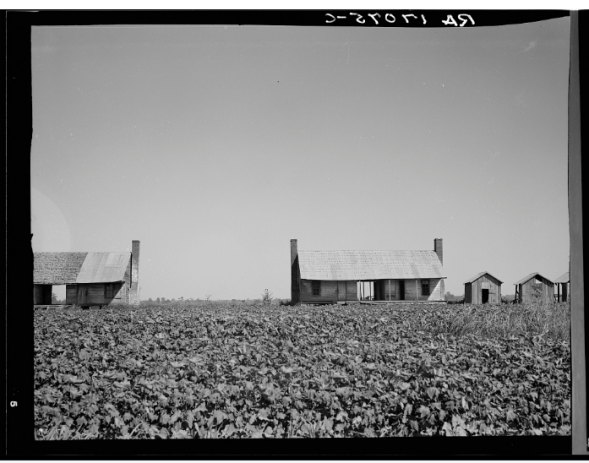
Here’s something weird we saw, near Natchez:

We listened to multiple podcasts about Robert Johnson selling his soul at the crossroads, that whole bit. The interesting part of the story (to me) is that, according to the memories of those who knew him, Robert Johnson did somehow, suddenly, get way better at the guitar. I like this take the best:
Some scholars have argued that the devil in these songs may refer not only to the Christian figure of Satan but also to the African trickster god Legba, himself associated with crossroads. Folklorist Harry M. Hyatt wrote that, during his research in the South from 1935 to 1939, when African-Americans born in the 19th or early 20th century said they or anyone else had “sold their soul to the devil at the crossroads,” they had a different meaning in mind. Hyatt claimed there was evidence indicating African religious retentions surrounding Legba and the making of a “deal” (not selling the soul in the same sense as in the Faustian tradition cited by Graves) with the so-called devil at the crossroads.
Does everybody in the music business sell their soul to the Devil, one way or another?
Is there something vaguely embarrassing about white obsession with old blues? I get the yearning to connect to a past that sounds like it’s almost disappeared, where just the barest, rawest trace echoes through time. But doesn’t all this come a little too close to taking a twisted pleasure in misery? And is there something a little gloves-on, safe remove about focusing on music from eighty years ago, when presumably somewhere out there real life people are creating vital music, right now?
I dunno, maybe there’s something cool and powerful about how lonely nerds and collectors somewhere and like tourists from Belgium connecting to the sounds of desperate emotion from long dead agricultural workers.
My favorite of the old blues songs is Dark Was The Night, Cold Was The Ground. Blind Willie Johnson wasn’t even from the Delta though, he was from Pendleton, Texas.
Alpha beta gamma
Posted: June 15, 2019 Filed under: animals Leave a comment
In small packs of mammals there’s an alpha male who gets all the females by fighting off the other males, who have to go off and live by themselves and get stronger before the next rutting season. This is a pattern for instance among sea lions, and elephant seals, and horned beasts like elk.

But nature is funny. At the Tule Elk State Natural Reserve in Buttonwillow they have an interesting piece of taxidermy. It’s two elks that got in a fight, the alpha I guess and a challenger. The one elk’s horn went in the other elk’s eye, and killed him. Which would seem like a win, except with his horn caught on a dead elk, unable to get it off, the surviving elk ended up getting weighed down and dying himself.

The rangers swore that’s what happened, anyway.
There’s all this talk about alpha and beta in advice to young men, which overlooks that our society is quite a bit more complex, there are lots of ways to distinguish yourself and make yourself attractive, and our females are not as simpleminded and docile as cow-elks.
When it comes to alpha and beta, maybe sometimes what you want is to let them two kill each other and be the Gamma Guy left standing.
Food scene in Papeete, Tahiti
Posted: June 8, 2019 Filed under: food Leave a comment
It is one of the world’s great ports of call, comparing with nostalgic and wonderful names like Rangoon, Singapore, Shanghai, Valparaiso and Acapulco. Yet it is grander than any of these, for at Papeete the ships of many seas dock right along the main street. From the stern of a Hong Kong junk to the post office is twenty yards. From the bowlines of a San Pedro yacht to the bank is one city block. Without qualification I can say that the waterfront of Papeete, with Moorea in the background, is unequaled.
Yet many visitors despite Papeete. They have no words strong enough to descrive its shanties, its poor water, the crowded alleys, honky-tonks, bootleg opium, wildcat gambling and rapacious prices. They say, “You hear about the glamorous beaches, but you can’t find one where the average yokel is allowed to swim.” Such critics leave in a hurry and complain endlessly to friends back home that “everyone who ever wrote about Tahiti from Pierre Loti to Frederick O’Brien is a liar.” As a much-disappointed frined of mine said, “Papeete? What a bust! Tia Juana without tequila.”There is much to the comparison, for Papeete does resemble a Mexican border town, not so dirty along the main streets, dirtier in the alleys. To those who insist that all picturesque towns look like Siena or Stratford-on-Avon, Papeete will be disappointing, but to others who love the world in all its variety, the town is fascinating. My own judgment: any town that wakes each morning to see Moorea is rich in beauty.
I like the cluttered streets and the neat parks, the narrow alleys and the wide verandahs, the jumbled stores each with some one unpredictable thing for sale “En Vente Ici. Dernier Arrivage. Campbell Soup.” I like the noisy poolrooms, the perfume shops, the policemen on rickety bicycles, the Chinese dress shops with sewing machines whirring like mad, the dreadful hotels, the worse ice-cream stands and the happy faces. It has been aptly said of Papeete, “It drives Englishmen, schoolteachers and efficiency experts crazy.” There is something childishly delightful about every aspect of the place. One movie house advertises the Hunchback of Notre Dame as “Supersensational, Archiformidable, Hyperprodigieux!!!!” Whereupon the competition states baldly of Rene Clair’s Le Million: “The best motion picture in the world.”


One thing I was surprised by in Papeete was how much I liked the food. The market is full of fresh, wonderful stuff.

There you can get a baquette stuffed with meat (pork or chicken) and french fries.

At night the roulettes are the place to be.

Peugot food trucks.

The staple is poisson cru, a cocoanut milk ceviche. Grilled mahi mahi seen here, too.

Further out of town you can buy a boiled breadfruit:

Nourishing but it needs a little something. Salt’s a good start.
The Glorious First of June
Posted: June 1, 2019 Filed under: art history Leave a comment
painted here by Philip James de Loutherbourg, who sounds cool as shit:
a Franco-British painter who became known for his large naval works, his elaborate set designs for London theatres, and his invention of a mechanical theatre called the “Eidophusikon”. He also had an interest in faith-healing and the occult and was a companion of the confidence-trickster Cagliostro.

Bird
Posted: May 19, 2019 Filed under: business Leave a comment
Look I like markets, but it’s enough to make a guy a socialist when you observe how easy and consequence-free it is for a company to leave plastic-and-electronic shits on the sidewalk all over the place. There’s always a grotesque euphemism:

Beyond
Posted: May 17, 2019 Filed under: business Leave a comment
Beyond Beef ($BYND) IPO’d. Unlike Uber, it has so far been a huge success.
I will disclose bought some shares of BYND once it was launched. (I didn’t, like, “get in” on the IPO, like early investor Bill Gates no doubt did, I bought them on day one as soon as I realized it’d happened).
This product is dynamite. The killer element: there is no gluten, no soy, and no GMO. Soy-based meat replacements have always seemed pretty limp to me. Beyond Beef I believe I first tried in burger form: terrific. The crumbles I’ve used to make very satisfying bolognese-style ragus. Beyond Beef uses pea protein. I love peas. Here’s Orson Welles reading an ad for peas.
“Every July, peas grow there.” I think of that whenever I think of peas.
Tyson and some powerful competitors may get in the alt-meat game. I’m not certain Beyond’s moat will hold, but I think it’s hard to make an acceptable beef substitute to a beef eater, and they have done so.
A perfect use for this product is in the junk beef realm, the world of frozen ground beef for fast food tacos and burgers, where the beef itself is of probably repulsive quality, raised under obscene conditions, and the taste is really coming from packets of flavor-enhancing additives.
Beyond’s ability to get in on this market impresses me. When I saw that Del Taco was serving Beyond tacos I tried them as soon as I could. Here was an area well within my circle of competence (fast food tacos) where I had an advantage over other investors because I live in Del Taco’s range, near their headquarters.

Del Taco originated in the Mojave Desert. The Mojave Desert may represent a possible future for the United States, and thus be on the cutting edge of trends. There’s something sci-fi about the landscape. Something prophetic. Biblical.
When pioneers reached the American desert, they remembered the desert landscapes told of in the Bible. They marveled anew at the prophetic power of the Bible on what would be faced on the way to the Promised Land.

At the Del Taco in Ontario (CA) where we stopped to try these tacos again, I asked the kid how the Beyond tacos are selling. He said they were selling ’em out every day.
Del Taco’s stock has the ticker symbol TACO. Surely Matt Levine or someone has examined how gimmick tickers tend to do.
Del Taco’s stock has never been a great winner. Last five years:

Here is the last six months:

A pretty narrow range. The Beyond taco launched April 25. Possible that ~$1 bump there in late April – May comes from the Beyond release. Or just from the stock crossing and staying beyond the legendary $10 threshold.

Whether stocks under $10 really are often ignored by big institutions or not, I haven’t investigated, I’ve seen takes on both sides and can offer no informed opinion. It does seem like, despite Malkiel, there are dumb glitches like that in markets all the time.
Is Del Taco an effective sneak way of riding the BYND wave? I don’t know. On May 6, Del Taco posted some disappointing earnings results.

source: CNBC
CEO John Cappasola had explanations though, don’t worry:
Although our quarterly results were negatively impacted by unfavorable weather in California and throughout the West as well as the anticipated three-week shift of the Lenten season
And consider his inspiring tone as he discusses the new Beyond campaign:
Last but certainly not least, we are using menu innovation to drive traffic in incremental Del Taco occasions with the exciting recent launch of the Beyond Taco and Beyond Avocado Taco, which are now available in all restaurants. As guest demand for vegan and vegetarian options continues to grow, we took the opportunity to partner with Beyond Meat, an innovative leader in plant-based proteins, to be the first Mexican QSR chain to develop a proprietary blend seasoned 100% plant-based protein.
A key objective as we developed our Beyond Taco strategy was competitive differentiation which we attack on three fronts, flavor, variety and convenient value. The team did a great job developing a proprietary and unique flavor profile that taste incredibly similar to our current ground beef, allowing us to broaden its appeal to not only attract vegans and vegetarians, but also those looking for better for you options or to reduce red meat without sacrificing flavor.
Next is variety. Our Beyond ground protein can be substituted for any other protein or added on any menu item, including burritos, nachos, bowls or salads. This provides best-in-class variety to our guests and endless future product innovation opportunities for our culinary team.
Word about the Beyond tacos is JUST getting out. I think it’s fair to say I’m close to the front lines when it comes to fast food taco news. Has the full impact been felt? Will it matter? How much of Del Taco’s consumers are recurring customers? Will they care about this new item? Will new customers be drawn in by Del Taco’s enticing campaign (advertised on signs outside every location I’ve seen in SoCal? Who is eating the Beyond taco? Cappasola:
And as expected, we are seeing some new faces as well as a lot of trial among our existing guests. So great opportunity here from a consumer standpoint. Generally, this is the type of customer that is in QSR today and QSR just is not traditionally providing them great options and we feel like we can.
It’s fun to think of the stock market as a chance to gamble on all these variables. It will be interesting if TACO stock falls below $10 again.
One problem, I’d say, is that a Beyond taco costs fully a dollar more than a regular taco.
The pendulum seems like it’s swung in the USA national mood from feeling pretty optimistic about the future, as I think we all did in say 2009, to feeling pretty grim. Maybe that’s just me getting older or my narrow bubble, but it feels like there’s less talk of wonderful possibilities for the near future. Eliminating or reducing industrial meat-farming, improving our diets, making more and better food options available even in the cheap fast food space seems to me like it could be a great development of a blossoming future.
The future’s so bright I gotta wear shades, or as John Cappasola puts it:
Our operational efforts are paying off with early guest experience measurement survey results showing a high level of guest satisfaction for Beyond Tacos, even higher than the very successful Del Taco following its launch.
For me as a consumer, I will say, when I left Del Taco after trying the Beyonds for a second time, I felt, “now here’s brand that can deliver a value-oriented QSR-Plus position.” Which, it turns out, is just what Del Taco was aiming for!
(Disclosure: I am nothing more than an enthusiastic amateur and I do not offer investment or financial advice. I do not own shares of TACO at this time but I’m thinkin’ bout it!
Other Helytimes posts on business
 Helytimes

#/media/File:Portrait_of_Isabella_of_Portugal_van_Eyck.jpg)


