Training Literature Field Unit No. 1
Posted: December 24, 2017 Filed under: America Since 1945, photography, the ocean, Wonder Trail 1 Comment
Helytimes began in 2012. Our idea was
- become good at writing for the Internet
- a writer should have a website
- have a space to collect, digest and share items of interest.
We’ve tried to come up with a mission statement or guiding purpose, but the truth is, this is stuff we had to get out of our head.
The healthiest thing to do was share it.
The best way to put it might be a place to share crazy interesting things we’ve come across.
Since then we’ve published over 1,050 posts. We’re just now starting to get good at it, in our opinion.
Here are the twenty-one most popular posts:
The moral here is probably that we should start a local LA news-and-takes site written by other people.
-
Sundown, Gordon Lightfoot (1974)
-
Mountaineering Movies on Netflix Instant, Ranked
-
Fred Trump
-
Cinderella and Interrogation Technique
-
The Great Debates
-
Karl Ove Knausgaard
-
Fascinated by: Ray Dalio
-
How Big Was Mexico City in 1519?
-
American Historical Figure Who Reminds Me Of Trump
-
Losing The War by Lee Sandlin
-
Conversations With Kennedy
-
Oil Wells In National Parks
-
THE WONDER TRAIL
-
Gay Hobo Slang
-
Vertigo Sucks
-
Jackie Smoking Pregnant
-
The story of Cahokia
-
Ireland should take in two million refugees
-
Twenty Greatest Australian Artistic Accomplishments of All Time
-
The White House Pool
One lesson here might be to have more local LA journalism written by other people. Keep meaning to start a whole site for that but I do have a full-time job plus several other projects.
In our opinion the most successful post on Helytimes was
Record Group 80: Series: General Photographic File Of the Department of the Navy, 1943-1958
although it didn’t crack the top 21, just felt like a time where we added something of value to the Internet and readers responded.
It’s about the work of the Naval Aviation Photographic Unit, also known as the Training Literature Field Unit No. 1, assembled by the great photographer Edward Steichen.
One thread of Helytimes is attempts to reach into the past and find the sources that give us understanding of the past.

Two personal favorites:
Everything is something.

and
Special Snowflakes

This has been the annual performance review and address to the Helytimes readership:


That photo taken by one of Steichen’s guys, Wayne Miller:


Thought this was interesting
Posted: December 22, 2017 Filed under: business, China Leave a comment
Ever heard of Shijiazhuang? Well it has ten million people.
Here’s an essay by Puzhong Yao, who tells of his journey from there to Goldman Sachs, and his love for Costco:
It seemed like whatever I wished would simply come true. But inside, I feared that one day these glories would pass. After all, not long ago, I was at the bottom of my class in China. And if I could not even catch up with my classmates in a city few people have even heard of, how am I now qualified to go to Cambridge University or Goldman? Have I gotten smarter? Or is it just that British people are stupider than the Chinese?
With these mixed thoughts, I began working as a trader at Goldman in 2007.
(ht Tyler Cowen)
One class was about strategy. It focused on how corporate mottos and logos could inspire employees. Many of the students had worked for nonprofits or health care or tech companies, all of which had mottos about changing the world, saving lives, saving the planet, etc. The professor seemed to like these mottos. I told him that at Goldman our motto was “be long-term greedy.” The professor couldn’t understand this motto or why it was inspiring. I explained to him that everyone else in the market was short-term greedy and, as a result, we took all their money. Since traders like money, this was inspiring.
Rupert
Posted: December 19, 2017 Filed under: Australia Leave a comment
Murdoch is, in person, charming. Everyone agrees. You get a glimpse of this in the account of working for him written by Philip Townsend, who was his butler in London during the 1980s. (Townsend had a dog who died, and whom he kept in Murdoch’s freezer.) When Murdoch made the switch to living more healthily – influenced by the fact that his father died at 67 – he did so by announcing to his butler: ‘Phil, I’m into yin and yang and all that shit.’ This charm is no small factor in his success, and comes across in many of the stories people tell about him, and in some of the things he says about himself. ‘I am sober after lunch, and in some parts of Fleet Street, that makes you a genius,’ he once said.
from this 2004 roundup on Rupert Murdoch by the great John Lanchester.
Elizabeth Warren, Pocahontas, and The Pow Wow Chow Cookbook
Posted: December 14, 2017 Filed under: America Since 1945, Boston, native america, New England, politics, presidents 1 Comment

What is the deal here when Trump calls Elizabeth Warren Pocahontas?

At Helytimes, we like to go back to the source.
Sometime between 1987 and 1992 Elizabeth Warren put down on a faculty directory that she was Native American. Says Snopes:
it is true that while Warren was at U. Penn. Law School she put herself on the “Minority Law Teacher” list as Native American) in the faculty directory of the Association of American Law Schools
This became a story in 2012, when Elizabeth Warren was running for Senate against Scott Brown. In late April of that year, The Boston Herald, a NY Post style tabloid, dug up a 1996 article in the Harvard Crimson by Theresa J. Chung that says this:
Of 71 current Law School professors and assistant professors, 11 are women, five are black, one is Native American and one is Hispanic, said Mike Chmura, spokesperson for the Law School.
Although the conventional wisdom among students and faculty is that the Law School faculty includes no minority women, Chmura said Professor of Law Elizabeth Warren is Native American.
Asked about it, here’s what Elizabeth Warren said:
From there the story kinda spun out of control. It came up in the Senate debate, and there were ads about it on both sides.
A genealogist looked into it, and determined that Warren was 1/32nd Cherokee, or about as Cherokee as Helytimes is West African. But then even that was disputed.
Her inability to name any specific Native American ancestor has kept the story alive, though, as pundits left and right have argued the case. Supporters touted her as part Cherokee after genealogist Christopher Child of the New England Historic Genealogical Society said he’d found a marriage certificate that described her great-great-great-grandmother, who was born in the late 18th century, as a Cherokee. But that story fell apart once people looked at it more closely. The Society, it turned out, was referencing a quote by an amateur genealogist in the March 2006 Buracker & Boraker Family History Research Newsletters about an application for a marriage certificate.
Well, Elizabeth Warren won. Now Scott Brown is Donald Trump’s Ambassador to New Zealand, where he’s doing an amazing job.

source: The Guardian
The part of the story that lit me up was this:
The best argument she’s got in her defense is that, based on the public evidence so far, she doesn’t appear to have used her claim of Native American ancestry to gain access to anything much more significant than a cookbook; in 1984 she contributed five recipes to the Pow Wow Chow cookbook published by the Five Civilized Tribes Museum in Muskogee, signing the items, “Elizabeth Warren — Cherokee.”


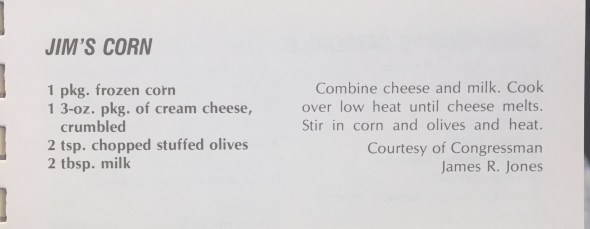

“I like my corn with olives!” source
What is the best way to handle it, the best strategy, when the President is treating you like a third grade bully, repeatedly and publicly calling you a mean name?
Best advice to someone getting bullied? I googled:

We would amend “don’t show your feelings” to stay calm. We would urge any kid to put “tell an adult” as a last resort.
A suggestion:
- if the problem persists, hit back as hard as possible, calmly but forcefully, at the bully’s weakest, tenderest points.
Such a Lisa Simpson / Nelson vibe to Warren / Trump. Are all our elections gonna be Lisa vs. Nelson for awhile?


from this 2003 episode:
Lisa easily wins the election. Worried by her determination and popularity, the faculty discusses how to control her.
Empty Bucket Land
Posted: December 13, 2017 Filed under: the California Condition, the world around us Leave a comment


Insane?
Posted: December 11, 2017 Filed under: food 1 Comment
Deluxe mac & cheese costs LESS than regular mac & cheese?
There must be a term in economics for where the fancier version is less desirable than the regular ol’ version and ends up less expensive.
I’ll pay more for minions, sure.

Witch Hunts
Posted: December 11, 2017 Filed under: Boston, history, New England, North Shore Leave a comment
In 1693 Cotton Mather wrote a book called Wonders Of The Invisible World, defending the Salem Witch Trials.
A few years later a guy named Robert Calef wrote More Wonders Of The Invisible World, which was kind of a sarcastic slam on Cotton Mather.
Calef objected to proceedings that lead to “a Biggotted Zeal, stirring up a Blind and most Bloody rage, not against Enemies, or Irreligious Proffligate Persons, But (in Judgment of Charity, and to view) against as Vertuous and Religious as any they have left behind them in this Country, which have suffered as Evil doers with the utmost extent of rigour.”

Can’t say I got a ton out of the book, but I did get some good stuff from the introduction, by Chadwick Hansen. 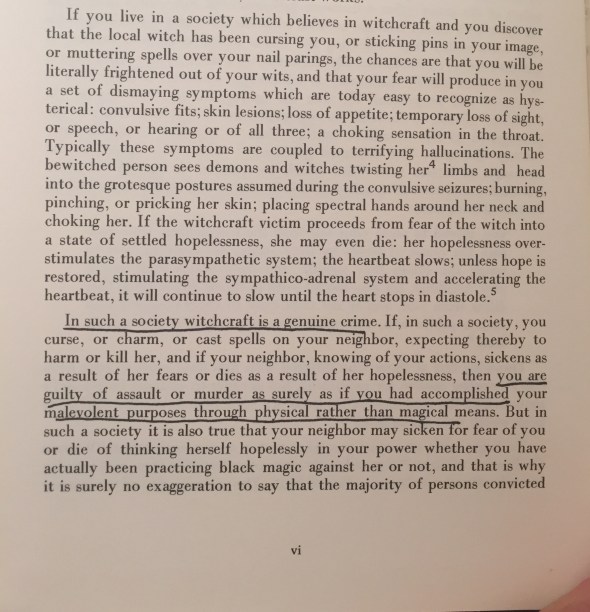
If a witch is attacking you boil a pin in urine:

Even Chadwick Hansen appears ultimately baffled by what Robert Calef was up to, since much of his book is lies about how Cotton Mather fondled up a girl named Margaret Rule while curing her of bewitchment.

Hansen attempts to provide the context to a baffling historical period. 
Later Mather would write a book called The Right Way To Shake Off A Viper:

Wild times in old Massachusetts. Few people who were taken to the Salem Witch Museum in childhood ever forgot it.

Previous coverage of witch hunts.
Google satellite views of California landscapes
Posted: December 11, 2017 Filed under: the California Condition Leave a comment
are cool.

Mark Three: Secret Mark?
Posted: December 10, 2017 Filed under: Christianity, Mark, religion Leave a commentLatest posts in our series on the Book of Mark, one of the weirdest and most popular books of all time.
Mark One
on Papyrus One
Mark Two
Why Mark?
and now:
MARK THREE

Did Mark look like this? by Bronzino
Or like this?

or this? by Mantegna
Here we see the Mar Saba monastery in Israel, twelve miles outside Jerusalem:

Cool structure. Would make a dope boutique hotel.

This is where Morton Smith supposedly found a
previously unknown letter of Clement of Alexandria transcribed into the endpapers of a 17th-century printed edition of the works of Ignatius of Antioch
The letter, which would’ve been from like the year 200, says (I paraphrase) “hey there’s a more spiritual, weirder version of the Gospel of Mark floating around, heads up.”
Was there a “Secret Gospel Of Mark”? Says Wiki:
Ron Cameron (1982) and Helmut Koester (1990) argued that Secret Mark preceded the canonical Mark, and that the canonical Mark is in fact an abbreviation of Secret Mark. This would explain the narrative discontinuity above. John Dominic Crossan (1985) has also been supportive of these views of Koester: “I consider that canonical Mark is a very deliberate revision of Secret Mark.”
An interesting question for sure. As Wiki says:
The process of canonization of the New Testament was complex and lengthy.

Mark?
The version I’m using is this one:

I don’t think the late J. B. will mind my excerpting his helpful introduction:

When J. B. talks about “the manuscript of Mark,” I’m not sure what he means. Wiki tells me the oldest complete version is the Codex Vaticanus,

and the Codex Sinaiticus, which they found at St. Catherine’s Monastery:

which would also make a cool boutique hotel. The Codex got taken to Russia, and then:
In 1933, the Soviet Union sold the codex to the British Museum for £100,000 raised by public subscription (worth £6.5 million in 2017)
You can read it if you want online.
The oldest known written scrap of Mark appears to be Papyrus 45:

which came from who knows where. American-Anglo-Irish industrialist Chester Beatty, the “king of copper,” was mad for papyri apparently and bought tons of them from illegal dealers.
His first job in the mines earned him $2 per day as a ‘mucker’, clearing away rock and soil from mine tunnels. He was quickly promoted to supervisor of the Kektonga Silver Mine.

Alfred Chester Beatty by Colin Colahan.
© Mrs. Monique Colahan. From the Chester Beatty Library website.
Papyrus 45 is now in Chester’s library/museum in Dublin:

source: Wiki user Charles Curling
NEXT TIME in our series on Mark:

Translator J. B. Phillips, who started working on the New Testament in a bomb shelter during the London Blitz.
Lou Harrison’s Centennial
Posted: December 8, 2017 Filed under: advice, music, the California Condition Leave a comment
an email from Redcat informs me that there will be a concert this Saturday as part of the ongoing celebration of Lou Harrison’s centennial.

Out in Joshua Tree there is the Harrison House, a residency and performance space.

Built with straw bale architecture:

from Wiki user Jonathan Cross, “Straw Bale Construction.”
Checked out Lou’s music on Spotify and found it fantastic and soothing and terrific.
Lou Harrison:
Cheers to Lou.

Books I got rid of
Posted: December 7, 2017 Filed under: books 2 Comments
Pained me to get rid of it. But look how long it is!

Let’s be reasonable!
I hate giving away books. I wish I could read them all.
This one I got because I saw John Laurence on Ken Burns and Lynn Novick’s The Vietnam War

and kind of related to him. 
But I mean, these books’re spilling over into in my kitchen!

The Idiot I read and loved, that is my second, demolished copy on the right. The Other Paris can stay.
This book is incredible. The part about the Judge and The Seducer should be its own book.

This one I got because it was recommended someplace. Again, I regret parting with it and perhaps we’ll meet again.

This book I got because I wanted to track down the origin of JFK’s alleged claim to Macmillan that if he didn’t have a woman every few days he got headaches. Unfortunately the source appears to be yet another book! Goodbye, this book. Macmillan’s life worth a peak into.

I like Melbourne a lot. But I did feel this book was attempting to exaggerate the charm somewhat.
For me the best thing to do in Melbourne is take a train to the countryside or drive the Great Ocean Road. No need to oversell Melbourne, it has some cool buildings.

Flinders Street station is a personal fave.

Discussed in a review by Thomas Ricks. Pickett’s Charge is interesting, and I was curious as to how you write a whole book about what was pretty much four thousand guys getting blown to pieces.
But then I was like I don’t want to read a whole book about four thousand guys getting blown to pieces.
A page selected at random:

One reason why there are so many statues of Lee is that he really did do some cool shit. Something like this really did happen:
But whatever. Remember he did just get four thousand guys blown to pieces.
Phillip Thomas Tucker I believe makes the case that Pickett’s Charge wasn’t as crazy as it later seemed and Lee almost won.

A tough guy detective type book recommended by fellow tough guy detective type writer Don Winslow. Interested in tough guy detective type books. But I just didn’t get to this one and it’s probable I won’t ever so best to pass it along to a new home.

Like I say, I am sad to part with any book.
I thank these books for their service!
If you want these they should be at Goodwill on Beverly.
TWIST:

Two books got a last minute reprieve!
Is this interesting: The Usual Suspects
Posted: December 5, 2017 Filed under: actors Leave a comment
Kevin Spacey first came to my (and many people’s) attention playing a character in The Usual Suspects who pretends to be harmless if annoying, but who is actually an evil monster.
Now, Kevin Spacey the real man, is revealed to have been pretending to be harmless if annoying when he was in fact a bit of an evil monster.
Interesting?
McPeak vs Earthman
Posted: December 5, 2017 Filed under: America Since 1945, war Leave a comment
Have we entered a new way of war in which air power isn’t as important? That this is America’s asymmetric challenge and air power isn’t as wanted?
If so, how do we overcome that? How do we get past that, the fact that our adversaries have figured out how we fight?
Merrill McPeak: Well, it’s not so much that the adversaries figured out how we fight.
That’s dead easy. Everybody can see it. I mean, we don’t make any mystery of it.
What we’ve done is taken the risk out of the kind of operations that we do now with officers.
I mean, we’ve got stealth airplanes. So I’m sitting in a stealth airplane and I’m on super-cruise. In the F-22, you’re cruising at 1.7 to 1.8 (mach) in a stealthy machine.
Who’s going to touch you?
I mean, I never felt vulnerable when I was flying an airplane. Period. Not against any kind of earthman.
Got a lot out of this looooong interview with former Air Force chief of staff and Ken Burns & Lynn Novick’s Vietnam War star Merrill McPeak in the San Diego Union Tribune, (ht Tom Ricks of course).

McPeak on Boyd, whom we have discussed:
So they got the argument a little bit wrong. But then along comes Boyd with the OODA Loop and some philosophy kind of concepts and people said, ‘Wow, a fighter pilot with a brain!’
They tended to listen to him when in many respects he was a failed officer and even a failed human being in some ways.
Carl Prine: There’s an entire cottage industry built around him now.
Merrill McPeak: I was at Nellis the night he jumped out of an F-100. I was a student there and he was an instructor in the Weapons School. He had a bet that he could get anybody from his 6 o’clock to his 12 o’clock in 40 seconds, or whatever it was.
He tried his special little trick and the airplane quit on him. It overstretched the hydraulic system, the plumbing, the flight controls, and the airplane went crazy and he had to jump out.
Here he is coming back to Nellis and they went out to pick him up in a chopper. And he’s dragging his parachute back to Nellis. He didn’t look so good that night.
The general likes Mozart:
Carl Prine: I had this image of you, as a general, appreciating the grand, comprehensive, overwhelming symphony and yet you prefer the smaller pieces? The elegant and tiny works?
Merrill McPeak: Well, you know the big G minor symphony? Ta-ta-ta-ta-ta-ta-ta-ta-ta-ta, ta-ta-ta-ta-ta-ta-ta-ta-ta. That’s the famous one, the 40. It’s in there with Jupiter and the later symphonies.
But Symphony 25 has that crystal clear quality to it. If it were a stream, you could look clear through it to the bottom.
There’s something magical about it.
How much do you think this shitty painting by JFK sold for?
Posted: December 4, 2017 Filed under: art history Leave a comment
relevant to our discussion of George W. paintings.
You can find out the answer here at ArtNet in a piece by Sarah Cascone.
Mark Two
Posted: December 3, 2017 Filed under: Christianity, religion Leave a comment
Miniature 2427, “Archaic Mark,” turns out is actually a forgery?
“Why Mark?”, I asked. “Because it’s short“, he replied. I was willing to give anything a go, so I took the vicar’s advice and read it and the Gospel of Mark just swept me up.
So says Australian musician Nick Cave
in his intro to the Gospel of Mark, which I found on this Italian Nick Cave fan site.
The Gospel of Mark has to be one of the weirdest and most compelling books ever written. Nick Cave continues:
Scholars generally agree that Mark’s was the first of the four gospels to be written. Mark took from the mouths of teachers and prophets the jumble of events that comprised Christ’s life and fixed these events into some kind of biographical form. He did this with such breathless insistence, such compulsive narrative intensity, that one is reminded of a child recounting some amazing tale, piling fact upon fact, as if the whole worlddepended upon it – which , of course, to Mark it did. ‘Straightway’ and ‘immediately’ link one event to another, everyone ‘runs’, ‘shouts’, is ‘amazed’, inflaming Christ’s mission with a dazzling urgency. Mark’s Gospel is a clatter of bones, so raw, nervy and lean on information that the narrative aches with the melancholy of absence. Scenes of deep tragedy are treated with such a matter of factness and raw economy they become almost palpable in their unprotected sorrowfulness.
Couple things about the Gospel of Mark:
- there’s no Christmas. Jesus just turns up one day down by the river where John The Baptist is doing his thing.

- the oldest gospel. “Most scholars agree” is a term you come across again and again when you read into Bible stuff, especially New Testament stuff. Let’s acronym that as msa. As far as I can tell most scholars do agree on this one.

- the shortest gospel. 11,304 words. Very cool.
- simple language. Mark is written in Koine Greek which I can’t read. I’m told this was a simple version of Greek that people could use all over the Mediterranean. “Koine” just means “Common.” Mark wrote Common Greek.
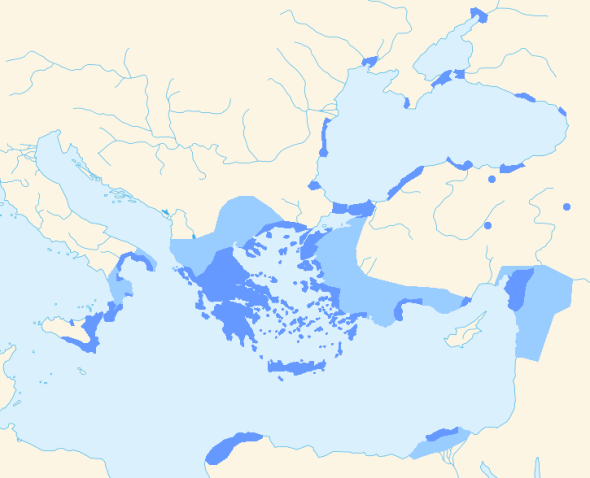
I’m told Mark’s Greek is “rough”:

(from:

Now, “rough” sure but “unrehearsed”? Isn’t it likely Mark was writing down stories and quotes that had been transmitted orally, and thus were quite rehearsed?)
The version I’m reading is:
Here’s what J. B. says:

J. B. seems more confident than others that Mark = John Mark, but who cares?
It’s cool to imagine in the rubble of burned out Rome Mark starts going around saying “guys, I got some good news.”

“Who wants to read my book?”
Other scholars insist that Mark was written after 70 AD, because that’s when the Temple was destroyed after the Roman Siege of Jerusalem:

David Roberts’ lost painting of the siege of Jerusalem, source
which was a traumatic time. That chronology is the one Reza Aslan believes:

Me personally? I’m no expert but I think it’s possible someone like the writer of Mark might’ve been obsessed with the idea of the destruction of the Temple before it happened.
Maybe Mark saw things coming the way the Simpsons saw President Trump coming:
But let’s say Mark was written in 70. He’s writing about Jesus, who msa died around 33. So it’s like writing a book, today, about a guy who died in 1980.

John Lennon, say, or Colonel Sanders.

Mark isn’t writing a biography of Jesus though, he’s writing the “good news.” A good point by theologian Marcus Borg over at HuffPo:
-
Placing the Gospels after Paul makes it clear that as written documents they are not the source of early Christianity but its product. The Gospel — the good news — of and about Jesus existed before the Gospels. They are the products of early Christian communities several decades after Jesus’ historical life and tell us how those communities saw his significance in their historical context.
Here’s the craziest part about Mark imo. The last sentence of the original version, msa, is 16:8.
The women were shaking and confused. They went out and ran away from the tomb. They said nothing to anyone, because they were afraid.
What a freaky ending to your book!
Learned a lot about the Gospel origins from the PBS series From Jesus To Christ. Li’l snippet from this essay by Marilyn Matthews on their website:
What message did Mark intend to send to his audience? Scholars do not agree. Some argue that Mark deliberately constructs a bleak and frightening picture because that was the experience of the people for whom Mark composed his work. Elaine Pagels offers a different interpretation: “And the last words of the original gospel are ‘and they were terrified.’ It would be very bad news if it weren’t that underneath this rather dark story is an enormous hope . . . that this very promising story and its terrible anguished ending is nevertheless not the ending. That there’s a mystery in it, a divine mystery of God’s revelation that will happen yet. And I think it’s that sense of hope that is deeply appealing.”

This is Helytimes so next time we will have a look and see if we can find the oldest source of Mark.
Mark One
Posted: December 1, 2017 Filed under: Christianity, religion Leave a comment
1: 1] genealogy library YY YY YY yyyid [YY] Abraham [1: 2] Abraham [Heaven] nor did he [be] present in [his] [1: 3] take care of him and take him out of him they did not greet the embassy [1: 4] did not give birth and they have been in the midst of the sea
1: 5] Salvation shall not [be] of the rabbi did not recognize him from the p [o] y [to be] s een [1: 6] the dairy farm has been re-established it was the sausage of the sky. [1: 7] nor is it possible to do so ạμ does not enforce the [lacuna] you will be able to find [ gap [1:12] gap the man who gave birth to [n and he did not have the olive tree, [1:15] [Oliver] ḍε̣ [[in] η̣̣̣ [σ] ε̣ [ν] ο ελέξΑζζάρ ελέ [and] he did not do [the] knowledge of [ [1:16] and [he] is not [ [to] enforce the law of the [ ̣̣̣̣̣ []] ξ </s> </s> </s> </s> </s> </s> </s> </s> </s> </s> </s> </s> </s> </s> </s> </s> </s> [1:17] ̣̣̣̣̣̣̣̣̣̣ ̣̣̣̣̣̣̣̣̣̣̣̣̣̣̣̣̣̣ I have been born and I have been born [d] ạ [υ] ι̣δ̣ [ε] ω̣σ̣ τ̣η̣ [ς] (s) of [b] the weight of the toilet seat [to] of the YYYYyyyyyy [I] D [1:18] and YYYYY genera so that it can not be misinterpreted he shall have [his] name before the [e] found that this is the case of a gypsy [1:19] [ωσηφ̣̣̣̣̣̣̣̣̣̣̣̣̣] and [those] who do not desire it, compass [t] e [is] [1:20] [th] thou hast thou vnto him, []] [[]] [] [] [] [] that] [appears] [to] say [h] φ son] ḍ [da] ṃ [η] φ̣̣ β β β</s></s></s></s></s></s> [receive] [make] the [you] know [your] name the birth of [t] ns [estin] α̣ [son] [1: 21-23] the gap with [heat-treated methane]
Put some of Papyrus One through Google Translate and this is what I got.
Probably a li’l jumbled between the 2nd century Greek and the modern Greek.
Wiki tells me that what’s on Papyrus One is, in fact, Mark 1 1-9.
The beginning of the good news about Jesus the Messiah, the Son of God, as it is written in Isaiah the prophet:
“I will send my messenger ahead of you,
who will prepare your way”—
3 “a voice of one calling in the wilderness,
‘Prepare the way for the Lord,
make straight paths for him.’”4 And so John the Baptist appeared in the wilderness, preaching a baptism of repentance for the forgiveness of sins.
5 The whole Judean countryside and all the people of Jerusalem went out to him. Confessing their sins, they were baptized by him in the Jordan River.
6 John wore clothing made of camel’s hair, with a leather belt around his waist, and he ate locusts and wild honey.
7 And this was his message: “After me comes the one more powerful than I, the straps of whose sandals I am not worthy to stoop down and untie.
8 I baptize you with[e] water, but he will baptize you with the Holy Spirit.”
9 At that time Jesus came from Nazareth in Galilee and was baptized by John in the Jordan.
The papyrus skips over Mark 10:
10 Just as Jesus was coming up out of the water, he saw heaven being torn open and the Spirit descending on him like a dove.
Cool edit. The dove is a little much, too John Woo.
Then it continues:
11 And a voice came from heaven: “You are my Son, whom I love; with you I am well pleased.”
12 At once the Spirit sent him out into the wilderness,
13 and he was in the wilderness forty days, being tempted by Satan. He was with the wild animals, and angels attended him.
That from the New International version via Bible Gateway.

Grenfell and Hunt found Papyrus One at Oxyrhynchus in Egypt, along with a lot of other paperwork:
Administrative Documents assembled and transcribed from the Oxyrhynchus excavation so far include:
-
The contract of a wrestler agreeing to throw his next match for a fee.
-
Various and sundry ancient recipes for treating haemorrhoids, hangovers and cataracts.
-
Details of a corn dole mirroring a similar program in the Roman capital.
Plus some comedy scripts:
The classical author who has most benefited from the finds at Oxyrhynchus is the Athenian playwright Menander (342–291 BC), whose comedies were very popular in Hellenistic times and whose works are frequently found in papyrus fragments.

The Grouch at the Louvre by Wiki’s Rennet Stowe
Menander’s most popular character was a kind of proto Oscar the Grouch it sounds like.

Menander or literally me:

photo by Wiki’s Dave & Margie Hill of a relief of Menander choosing New Comedy masks.
Papyrus One is dated to the early 3rd century. Is Papyrus One the earliest fragment of Mark known to exist? We’ll take that up another time.
It’s interesting that there’s no birth of Jesus (“Christmas”) in Mark. Mark just jumps right in.
Here are the things Jesus says in Mark, Chapter One.
The time has come at last – the kingdom of God has arrived. You must change your hearts and minds and believe the good news.
Come and follow me, and I will teach you to catch men!
(to a demon) Hold your tongue and get out of him.
Then we will go somewhere else, to the neighboring towns, so that I may give my message there too – that is why I have come.
(to a leper) Of course I want to – be clean!
(also to a leper) Mind you say nothing at all to anybody. Go straight off and show yourself to the priest, and make the offerings for your cleansing which Moses prescribed as public proof of your recovery.
NEXT TIME:
Mark Two: what is the oldest version of Mark?
What An Unbranded Cow Has Cost
Posted: November 28, 2017 Filed under: art history Leave a comment
Shoutout to jrdfrnk on Instagram, whom I don’t know I don’t think, but whom put some closeups of this painting on his Instastory:

a different coloration in the Wikiart version?
reminding me to take more looks at Frederic Remington
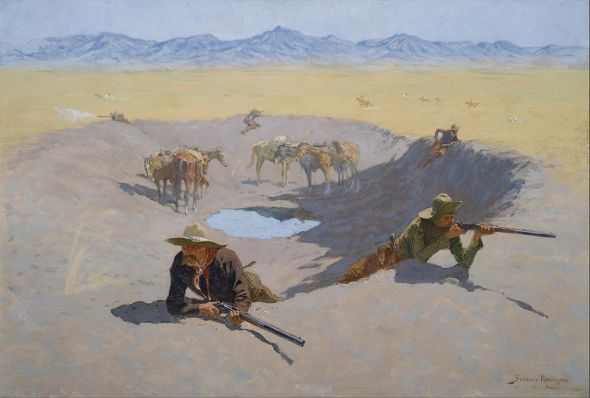
How cool was Frederic Remington?

The Scream Of Shrapnel on San Juan Hill:


The guy’s first sculpture was this:


April Ryan
Posted: November 22, 2017 Filed under: America Since 1945, presidents Leave a comment
Ice cold response to demeaning patronizing by Sarah Huckabee Sanders.
Ryan has been a member of the White House press corps for American Urban Radio Networks since January 1997 and has long been the only black female reporter among the White House correspondents.

‘Oumuamua
Posted: November 21, 2017 Filed under: Wonder Trail Leave a comment
This artist’s impression shows the first interstellar asteroid: `Oumuamua. This unique object was discovered on 19 October 2017 by the Pan-STARRS 1 telescope in Hawai`i. Subsequent observations from ESO’s Very Large Telescope in Chile and other observatories around the world show that it was travelling through space for millions of years before its chance encounter with our star system. `Oumuamua seems to be a dark red highly-elongated metallic or rocky object, about 400 metres long, and is unlike anything normally found in the Solar System. (source)
No known asteroid or comet from our solar system varies so widely in brightness, with such a large ratio between length and width. The most elongated objects we have seen to date are no more than three times longer than they are wide.
says NASA.
My theory? This is a bullet shot at Earth 300,000 years ago by a mysterious civilization that knew what we’d get up to.
An interstellar sniper shot.
Let’s hope 1) this is a one-off shot and 2) it’s gonna miss us.
How frustrating for this distant civilization if they put all their resources into one shot and it misses by a hair!
Here’s a documentary that compares two searches going on in Chile’s Atacama desert: the search for distant objects to the search for the remains of people murdered by the dictatorship.
Is it ok to have this calendar up in my office?
Posted: November 20, 2017 Filed under: America Since 1945, surfing, the California Condition Leave a comment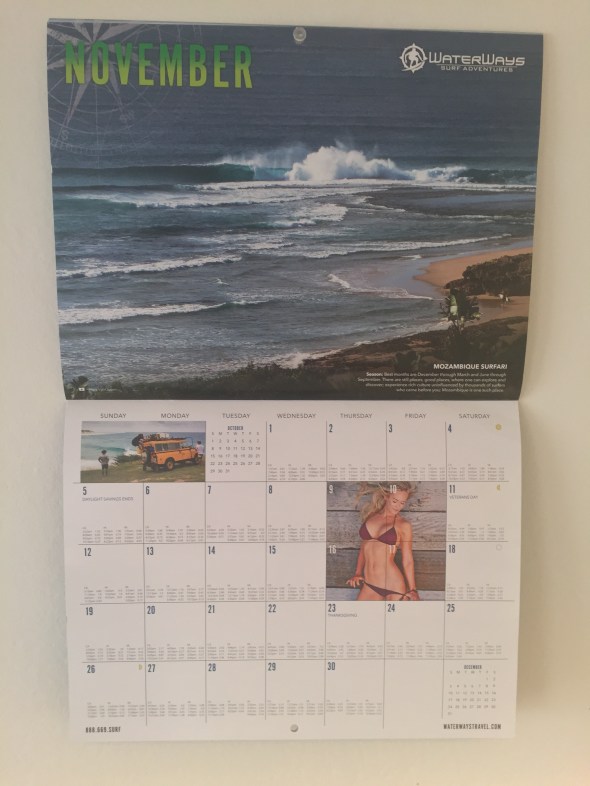
got it for free at Laguna Beach Surf and Sport.

Asked a female colleague her opinion, she didn’t care, but how much can we weigh that? here it is in some more context.

Another surf shop in Laguna is Thalia

Thalia as we all know is the muse of comedy

Thalia by Nattier
Here’s today’s surf report from Thalia via magicseaweed:


_at_Trincomalee,_Ceylon._Adm...._-_NARA_-_520888.jpg)


