fast and decisive adjustments
Posted: March 12, 2020 Filed under: America Since 1945, business Leave a comment
This struck home, read it in a Sequoia Capital memo someone Twittered.
Also in the category of: clear writing from people in the world of VC/tech financing, an anecdote retold by Morgan Housel
The Battle of Stalingrad was the largest battle in history. With it came equally superlative stories of how people dealt with risk.
One came in late 1942, when a German tank unit sat in reserve on grasslands outside the city. When tanks were desperately needed on the front lines, something happened that surprised everyone: Almost none of the them worked.
Out of 104 tanks in the unit, fewer than 20 were operable. Engineers quickly found the issue, which, if I didn’t read this in a reputable history book, would defy belief. Historian William Craig writes: “During the weeks of inactivity behind the front lines, field mice had nested inside the vehicles and eaten away insulation covering the electrical systems.”
The Germans had the most sophisticated equipment in the world. Yet there they were, defeated by mice.
How Will You Measure Your Life?
Posted: January 27, 2020 Filed under: business, food Leave a comment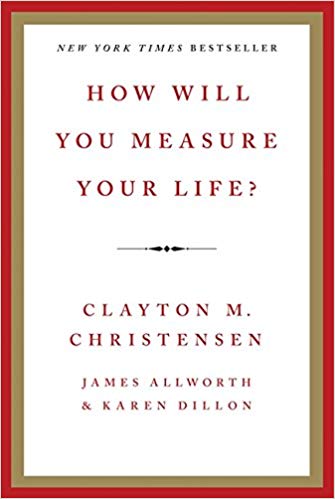
Some books give value just with their title. I’d say I think about the title of Clayton Christensen’s book about once every two weeks or so. Most of what’s in the book can be found in Christensen’s 2010 speech on that theme.
This theory addresses the third question I discuss with my students—how to live a life of integrity (stay out of jail). Unconsciously, we often employ the marginal cost doctrine in our personal lives when we choose between right and wrong. A voice in our head says, “Look, I know that as a general rule, most people shouldn’t do this. But in this particular extenuating circumstance, just this once, it’s OK.” The marginal cost of doing something wrong “just this once” always seems alluringly low. It suckers you in, and you don’t ever look at where that path ultimately is headed and at the full costs that the choice entails. Justification for infidelity and dishonesty in all their manifestations lies in the marginal cost economics of “just this once.”
I also find myself often thinking of an anecdote about milkshake purchases Christensen describes in the book:
The company then enlisted the help of one of Christensen’s fellow researchers, who approached the situation by trying to deduce the “job” that customers were “hiring” a milkshake to do. First, he spent a full day in one of the chain’s restaurants, carefully documenting who was buying milkshakes, when they bought them, and whether they drank them on the premises. He discovered that 40 percent of the milkshakes were purchased first thing in the morning, by commuters who ordered them to go.
The next morning, he returned to the restaurant and interviewed customers who left with milkshake in hand, asking them what job they had hired the milkshake to do. Christensen details the findings in a recent teaching note, “Integrating Around the Job to be Done.”
“Most of them, it turned out, bought [the milkshake] to do a similar job,” he writes. “They faced a long, boring commute and needed something to keep that extra hand busy and to make the commute more interesting. They weren’t yet hungry, but knew that they’d be hungry by 10 a.m.; they wanted to consume something now that would stave off hunger until noon. And they faced constraints: They were in a hurry, they were wearing work clothes, and they had (at most) one free hand.”
The milkshake was hired in lieu of a bagel or doughnut because it was relatively tidy and appetite-quenching, and because trying to suck a thick liquid through a thin straw gave customers something to do with their boring commute.
Something illuminating about food as something to do.
Understanding the job to be done, the company could then respond by creating a morning milkshake that was even thicker (to last through a long commute) and more interesting (with chunks of fruit) than its predecessor. The chain could also respond to a separate job that customers needed milkshakes to do: serve as a special treat for young children—without making the parents wait a half hour as the children tried to work the milkshake through a straw. In that case, a different, thinner milkshake was in order.
In the book, Christensen also goes on about how parents have to say no very often, and a milkshake is a relatively easy “yes.”
Rules for Investment Success by Sir John Templeton
Posted: November 8, 2019 Filed under: business Leave a comment
Quality is a company strongly entrenched as the sales leader in a growing market. Quality is a company that’s the technological leader in a field that depends on technical innovation. Quality is a strong management team with a proven track record. Quality is a well-capitalized company that is among the first in a new market. Quality is a well-known trusted brand for a high-profit-margin consumer product.
The hunt for quality. That’s what’s cool about investing. Hidden quality.
It can’t be all Warren Buffett all the time. Sir John Templeton has been getting my attention.
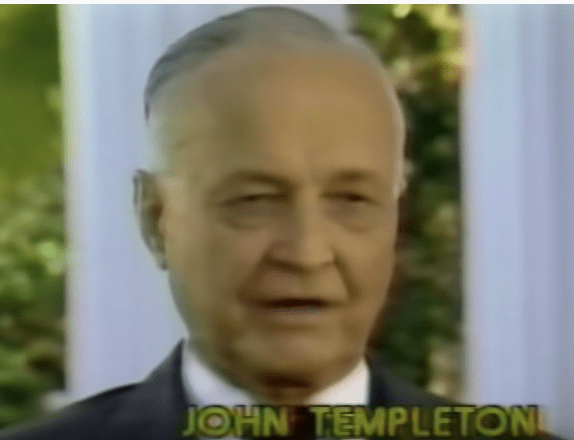
The hunt for points of maximum pessimism. Templeton worked above a grocery store in the Bahamas. His grand-niece keeping the flame. An interview from circa 1985. Later in life he devoted himself to spiritual searching.
Remember, in most cases, you are buying either earnings or assets.
The only reason to sell stocks now is to buy others, more attractive stocks. If you can’t find more attractive stocks, hold on to what you have.
Lionsgate update
Posted: June 28, 2019 Filed under: business, movies Leave a comment
This is an update to a recent post about Lionsgate: kind of stunned by the crumminess of this trailer. Aren’t most of these worse versions of shots from Pearl Harbor (2001)?
Only instead of coming out in 2001 when people were feeling kinda patriotic, it’s coming out now.
Worried about Lionsgate. Maybe somebody will buy them?
Bird
Posted: May 19, 2019 Filed under: business Leave a comment
Look I like markets, but it’s enough to make a guy a socialist when you observe how easy and consequence-free it is for a company to leave plastic-and-electronic shits on the sidewalk all over the place. There’s always a grotesque euphemism:

Beyond
Posted: May 17, 2019 Filed under: business Leave a comment
Beyond Beef ($BYND) IPO’d. Unlike Uber, it has so far been a huge success.
I will disclose bought some shares of BYND once it was launched. (I didn’t, like, “get in” on the IPO, like early investor Bill Gates no doubt did, I bought them on day one as soon as I realized it’d happened).
This product is dynamite. The killer element: there is no gluten, no soy, and no GMO. Soy-based meat replacements have always seemed pretty limp to me. Beyond Beef I believe I first tried in burger form: terrific. The crumbles I’ve used to make very satisfying bolognese-style ragus. Beyond Beef uses pea protein. I love peas. Here’s Orson Welles reading an ad for peas.
“Every July, peas grow there.” I think of that whenever I think of peas.
Tyson and some powerful competitors may get in the alt-meat game. I’m not certain Beyond’s moat will hold, but I think it’s hard to make an acceptable beef substitute to a beef eater, and they have done so.
A perfect use for this product is in the junk beef realm, the world of frozen ground beef for fast food tacos and burgers, where the beef itself is of probably repulsive quality, raised under obscene conditions, and the taste is really coming from packets of flavor-enhancing additives.
Beyond’s ability to get in on this market impresses me. When I saw that Del Taco was serving Beyond tacos I tried them as soon as I could. Here was an area well within my circle of competence (fast food tacos) where I had an advantage over other investors because I live in Del Taco’s range, near their headquarters.

Del Taco originated in the Mojave Desert. The Mojave Desert may represent a possible future for the United States, and thus be on the cutting edge of trends. There’s something sci-fi about the landscape. Something prophetic. Biblical.
When pioneers reached the American desert, they remembered the desert landscapes told of in the Bible. They marveled anew at the prophetic power of the Bible on what would be faced on the way to the Promised Land.

At the Del Taco in Ontario (CA) where we stopped to try these tacos again, I asked the kid how the Beyond tacos are selling. He said they were selling ’em out every day.
Del Taco’s stock has the ticker symbol TACO. Surely Matt Levine or someone has examined how gimmick tickers tend to do.
Del Taco’s stock has never been a great winner. Last five years:

Here is the last six months:

A pretty narrow range. The Beyond taco launched April 25. Possible that ~$1 bump there in late April – May comes from the Beyond release. Or just from the stock crossing and staying beyond the legendary $10 threshold.

Whether stocks under $10 really are often ignored by big institutions or not, I haven’t investigated, I’ve seen takes on both sides and can offer no informed opinion. It does seem like, despite Malkiel, there are dumb glitches like that in markets all the time.
Is Del Taco an effective sneak way of riding the BYND wave? I don’t know. On May 6, Del Taco posted some disappointing earnings results.

source: CNBC
CEO John Cappasola had explanations though, don’t worry:
Although our quarterly results were negatively impacted by unfavorable weather in California and throughout the West as well as the anticipated three-week shift of the Lenten season
And consider his inspiring tone as he discusses the new Beyond campaign:
Last but certainly not least, we are using menu innovation to drive traffic in incremental Del Taco occasions with the exciting recent launch of the Beyond Taco and Beyond Avocado Taco, which are now available in all restaurants. As guest demand for vegan and vegetarian options continues to grow, we took the opportunity to partner with Beyond Meat, an innovative leader in plant-based proteins, to be the first Mexican QSR chain to develop a proprietary blend seasoned 100% plant-based protein.
A key objective as we developed our Beyond Taco strategy was competitive differentiation which we attack on three fronts, flavor, variety and convenient value. The team did a great job developing a proprietary and unique flavor profile that taste incredibly similar to our current ground beef, allowing us to broaden its appeal to not only attract vegans and vegetarians, but also those looking for better for you options or to reduce red meat without sacrificing flavor.
Next is variety. Our Beyond ground protein can be substituted for any other protein or added on any menu item, including burritos, nachos, bowls or salads. This provides best-in-class variety to our guests and endless future product innovation opportunities for our culinary team.
Word about the Beyond tacos is JUST getting out. I think it’s fair to say I’m close to the front lines when it comes to fast food taco news. Has the full impact been felt? Will it matter? How much of Del Taco’s consumers are recurring customers? Will they care about this new item? Will new customers be drawn in by Del Taco’s enticing campaign (advertised on signs outside every location I’ve seen in SoCal? Who is eating the Beyond taco? Cappasola:
And as expected, we are seeing some new faces as well as a lot of trial among our existing guests. So great opportunity here from a consumer standpoint. Generally, this is the type of customer that is in QSR today and QSR just is not traditionally providing them great options and we feel like we can.
It’s fun to think of the stock market as a chance to gamble on all these variables. It will be interesting if TACO stock falls below $10 again.
One problem, I’d say, is that a Beyond taco costs fully a dollar more than a regular taco.
The pendulum seems like it’s swung in the USA national mood from feeling pretty optimistic about the future, as I think we all did in say 2009, to feeling pretty grim. Maybe that’s just me getting older or my narrow bubble, but it feels like there’s less talk of wonderful possibilities for the near future. Eliminating or reducing industrial meat-farming, improving our diets, making more and better food options available even in the cheap fast food space seems to me like it could be a great development of a blossoming future.
The future’s so bright I gotta wear shades, or as John Cappasola puts it:
Our operational efforts are paying off with early guest experience measurement survey results showing a high level of guest satisfaction for Beyond Tacos, even higher than the very successful Del Taco following its launch.
For me as a consumer, I will say, when I left Del Taco after trying the Beyonds for a second time, I felt, “now here’s brand that can deliver a value-oriented QSR-Plus position.” Which, it turns out, is just what Del Taco was aiming for!
(Disclosure: I am nothing more than an enthusiastic amateur and I do not offer investment or financial advice. I do not own shares of TACO at this time but I’m thinkin’ bout it!
Other Helytimes posts on business
Lionsgate
Posted: May 10, 2019 Filed under: business Leave a comment
Lionsgate continues to grow into a vertically integrated global content platform of increasing diversity, reach and scale. The Company’s portfolio of assets includes one of the largest independent television businesses in the world, a 17,000-title film and television library, a world-class film business and an expanding global distribution footprint.
says their investor website. What is Lionsgate? How do we value an entertainment company?
I’m interested in Lionsgate, because they have a majority ownership of 3 Arts

The management company where I am represented. In a way, I work for them?
Here’s a brief history of Lionsgate – which is not very old – from this recent LA Times article by Ryan Faughnder, entitled
Founded in 1997 in Vancouver, Canada, the company became known early on for edgy indie and horror films such as “American Psycho” and “Saw.” Lionsgate grew its firepower and boosted its stock price through acquisitions, catapulting itself into the big leagues with its 2012 purchase of “Twilight Saga” studio Summit Entertainment and the release of the first “Hunger Games.” The four-movie apocalyptic “Hunger Games” series grossed $2.97 billion. It impressed investors with its tactic of offsetting the risk of producing movies by pre-selling foreign distribution rights and bringing in co-financiers.
Then they had some busts:
“Gods of Egypt,” a $140-million mythological epic released in 2016, flopped after it was slammed by critics and accused of whitewashing its cast. A reboot of billionaire Haim Saban’s “Power Rangers” franchise disappointed after Feltheimer said on an earnings call that the company could produce multiple films based on the kids series.The studio’s decision to turn the third book in the “Divergent” series into two movies backfired when “Allegiant” flopped. A planned fourth installment was never produced.
That LA Times article is entitled Lionsgate, the studio behind ‘Hunger Games’ movies, struggles in shifting Hollywood currents.
The Wall Street Journal had a whack, too, a few days later:
Management Tension, Mounting Competition Sink Lions Gate’s Stock
As rivals grow larger, studio struggles to find box-office hits and synergies with pay-TV network
Lions Gate’s movie business has lost ground since ‘The Hunger Games’ series ended in 2015. PHOTO: LIONS GATE/EVERETT COLLECTION

Apparently they are, at the moment, attempting to salvage a huge and expensive turd:
Lions Gate faces a major challenge called “Chaos Walking.” The first of several planned adaptations of a series of young-adult science fiction novels cost around $100 million to produce but turned out so poorly it was deemed unreleasable by executives who watched initial cuts last year, according to current and former employees.
A scalding take:
I’m not sure how much Wall Street has built the disaster here into the stock’s price.
Sir John Templeton taught us to look for points of maximum pessimism. Is Lionsgate an opportunity? How should we value an entertainment company, which is liable to have big swings and misses?
First, what does Lionsgate own?
Over the course of its life, Lionsgate scooped up a bunch of film companies, in the process acquiring a library. They swallowed up:
- International Media Group
don’t know what their big movies were
- Sterling Home Entertainment
- Trimark Holdings
Their biggest franchise might be Leprechaun
- Modern Times Group
- Roadside Attractions
They produced, among others, Supersize Me, Manchester By The Sea, Mystery Team, Winter’s Bone, Mud
- Mandate Pictures
Juno, This Is The End
- Summit Entertainment
Hurt Locker, Red, Hellboy, John Wick, American Pie, Ender’s Game
- Artisan Entertainment
Blair Witch Project, Ninth Gate, House of the Dead, Step Into Liquid
From that library I have to imagine Lionsgate will continue to make some kind of money. Some of these films are things people will want to see and resee or rediscover, and it’s a good business to keep selling something that’s already made. All told, according to their 2018 investor letter, Lionsgate has something like 17,000 films in its library.
I was surprised by this fact:
In fiscal 2018, we shipped approximately 65 million DVD/Blu-ray finished units.
The Lionsgate investor page highlights some of their big ones:
MOTION PICTURE GROUP
Lionsgate’s Motion Picture Group encompasses eight film labels and more than 40 feature film releases a year, including 15-20 wide releases from the Lionsgate and Summit Entertainment mainstream commercial labels. Lionsgate’s film slate has grossed nearly $10 billion at the global box office over the past five years, and films from Lionsgate and its predecessor companies have earned 122 Academy Award® nominations and 30 Oscar® wins.

As well as some of their TV productions and co-productions:
TELEVISION GROUP
The Lionsgate’s Television Group has carved out a unique position as a leading supplier of premium scripted content to streaming platforms, cable channels and broadcast networks alike. One of the largest independent television businesses in the world with nearly 90 series on 40 different networks, Lionsgate’s premium quality programming includes the ground-breaking Orange is the New Black, fan favorite Nashville, the hit dramedy Casual, the critically-acclaimed Dear White People and the breakout success Greenleaf. The Company continues to build on its legacy of award-winning premium series that include the iconic multiple Emmy Award-winning Mad Men, one of the best reviewed series of all time, Weeds and Nurse Jackie.
The Company’s development and production slate includes a number of high-profile premium properties including The Rook (Starz), a Lionsgate/Liberty Global coproduction executive produced by Twilight creator Stephenie Meyer with acclaimed producer Stephen Garrett serving as showrunner, The Kingkiller Chronicle (Showtime), Step Up: High Water (YouTube Red), Get Christie Love! (ABC) and American Lion (HBO).

As they note:
many of the titles in our library are not presently distributed and generate substantially no revenue. Additionally, our rights to the titles in our library vary; in some cases, we have only the right to distribute titles in certain media and territories for a limited term.
Coming down the pike are some high-risk, potential high-reward titles. From the LA Times:
Lionsgate could rebound this year with the release of movies including “Long Shot” and a third “John Wick” movie, analysts said. But otherwise, the schedule includes few obvious hits. Upcoming films include “Angel Has Fallen,” the third installment in the “Olympus Has Fallen” series, “Rambo V: Last Blood” and a Roland Emmerich remake of “Midway.”
How much do people want to see an expensive movie about the Battle of Midway, I wonder?

All told:
the Company’s consolidated revenues from its reporting segments included Motion Pictures 44.1%, Television Production 19.5% and Media Networks 37.1%
The big engine at Lionsgate in Media Networks is Starz, the premium network.

Home to Outlander, Power, Ash vs Evil Dead, a bunch of costume-y looking shows. Starz produces a lot of the profits:
Starz has performed well financially, with revenue increasing 4% to $366.8 million and profits up nearly 10% to $134.1 million in the fiscal third quarter ended Dec. 31. It added just over one million subscribers in 2018.
There was a writeup of Lionsgate in a recent issue of Graham and Doddsville, “an investment newsletter from the students at Columbia Business School.” You can read it free, here. Amit Bushan, Bruce Kim, and Stephanie Moroney won 1st place at the CSIMA Stock Pick Challenge with their case.

Above-consensus subs projection results in a 12% above-consensus NTM adj. EBITDA. Given the FCF stability of the subscriptionbased business, we are applying a premium over movie studios (~10x). Note that 12x multiple is 12% lower than Starz’s recent average (13.7x). Catalysts: 1) higherthan-consensus OTT subs growth in the next few quarters; 2) increased visibility on the impact of the international expansion; 3) M&A.
Not sure I agree with this assessment. But there are a couple points I think are interesting about Lionsgate.
- Starz is easy to add on to your Amazon Prime. In addition to being its own channel, it’s like an add-on to your Amazon. To me as a customer, that makes it very accessible.
- 3 Arts is cool, and represents a lot of top tier talent. It’s kind of hard to find a list of their clients if you don’t have IMDb pro, but here’s the top ranked by “Star Meter”
|
7
|
|
|
|
60
|
|
|
|
78
|
|
|
|
256
|
|
|
|
357
|
|
|
|
379
|
|
|
|
604
|
|
|
|
721
|
|
|
|
786
|
|
|
|
820
|
|
|
|
1,025
|
|
|
|
1,043
|
|
|
|
1,047
|
|
|
|
1,081
|
|
|
|
1,128
|
|
|
|
1,270
|
|
|
|
1,311
|
|
|
|
1,319
|
|
|
|
1,347
|
|
|
|
1,353
|
|
|
|
1,464
|
|
|
|
1,481
|
|
|
|
1,483
|
|
|
|
1,550
|
|
|
|
1,620
|
||
|
1,682
|
|
|
|
1,816
|
|
|
|
1,823
|
|
|
|
1,881
|
|
|
|
1,882
|
|
|
|
1,903
|
|
|
|
1,961
|
|
|
|
1,966
|
|
|
|
2,136
|
|
|
|
2,157
|
|
|


What impact that will really have on 3 Arts’ bottom line, I’m not sure. But they do have access and potential synergies with some pretty explosive entertainers and creators.
- The company has been profitable over the last four years:
| Net Income | 473,600 | 14,800 | 50,200 | 181,800 |
As always around here, we like to look at a picture of the company’s CEO:

Here is John Feltheimer. He gets paid a lot of money.
Is this company worth $2.8 billion dollars?
I’ll be interested to hear their fourth quarter earnings report on May 23.
Thank you for joining us on a continued journey to learn about business and entertainment.
Jobs
Posted: April 8, 2019 Filed under: business, the California Condition 2 Comments
from:

Kondo’ing some books. Picking up Walter Isaacson’s bio of Steve Jobs does not spark joy, but I did take another look at several passages I’d noted.
Here’re some previous Helytimes posts related to Steve Jobs.
Marijuana and psychosis
Posted: March 26, 2019 Filed under: America Since 1945, business, coffee Leave a comment
This was in today’s Economist newsletter, and I’ve seen it elsewhere too. Scary! But then again, what is the definition of psychosis?

Isn’t getting your thought and emotions so impaired that you lose contact with external reality the point of high THC content marijuana? Is this a feature not a bug? External reality can be rough.
The study, in The Lancet, used the ICD-10 Criteria (F20-33), so schizophrenia and manic/bipolar episodes. The study compared people hospitalized for that kind of thing versus a control general population. Here’s how the study worked:
We included patients aged 18–64 years who presented to psychiatric services in 11 sites across Europe and Brazil with first-episode psychosis and recruited controls representative of the local populations.
Then this part:
We applied adjusted logistic regression models to the data to estimate which patterns of cannabis use carried the highest odds for psychotic disorder. Using Europe-wide and national data on the expected concentration of Δ9-tetrahydrocannabinol (THC) in the different types of cannabis available across the sites, we divided the types of cannabis used by participants into two categories: low potency (THC <10%) and high potency (THC ≥10%). Assuming causality, we calculated the population attributable fractions (PAFs) for the patterns of cannabis use associated with the highest odds of psychosis and the correlation between such patterns and the incidence rates for psychotic disorder across the study sites.
“expected” and “assuming” are two words that do a lot of work here, but I don’t have time to read the whole study, I have to write cartoons.
In my neighborhood the most booming new shops sell either marijuana or cold brew coffee. Personally I wonder if drinking huge amounts of highly caffeinated cold brew might be more crazy-making than marijuana.
There is certainly ample psychosis in Los Angeles, so much so that it might be necessary to induce mild psychosis just so you can understand what’s going on with everybody. The chicken and egg, correlation and causation on psychosis / drug use is a tough one to unravel, as the study’s authors acknowledge. The study also notes that patients presenting with psychosis were more likely to have smoked ten or more cigarettes a day.
How to tell Bruce Springsteen bad news
Posted: February 21, 2019 Filed under: America Since 1945, business, music Leave a comment
DEADLINE: What parallels were there between Silvio and Miami Steve? You can see the affection between you and Springsteen onstage, and in the stories Bruce tells between songs about the old days.
VAN ZANDT: The common dynamic is, as a best friend you have an obligation to tell the truth and you’ve got to know when to do that and how to do that, and it’s never going to be easy when it’s bad news. But once in a while, hopefully rarely, but once in a while you’ve got to be the one to bring the bad news because nobody else is going to do it, so you’re obligated. That’s your responsibility as a best friend. Sometimes they will get mad at you and then, as happened on the show, you see occasionally Jimmy will be screaming at me over something and that’s how it is in real life.
It’s just one of those things that goes with that job, that relationship, in being the only one who’s not afraid of the boss because you grew up together and that puts you in a special category that is very, very useful and very helpful to that boss whether they like it or not. No boss likes to hear bad news or hear they made a mistake. You can’t do it every day or even that often, but when it’s really, really important, you pick your moment and you’ve got to take the consequences and you just have to live with that. That’s the job. And ironically, right after we filmed, Bruce decides to put the band back together that same year.
from this Deadline oral history of The Sopranos.
Munger speaks
Posted: February 15, 2019 Filed under: America Since 1945, business Leave a comment
Looking forward to getting a transcript of Charlie Munger yesterday at the Daily Journal shareholders’ conference. Here the 95 year old former meteorologist and HelyTimes Hero talks to CNBC’s Becky Quick:
BECKY QUICK: Anything that rises to your radar screen now that may be under the radar for other people?
CHARLIE MUNGER: Well, nobody knows how much of this money printing we can do. And of course we have politicians who like– and are in both parties, who like to believe that it doesn’t matter how much you do. That we can ignore the whole subject and just print money as convenient. Well, that’s the way the Roman Empire behaved, then it was ruined. And that’s the way the Weimar Republic was ruined. And– it’s– there is a point where it’s dangerous. You know, and of course, my attitude when something is big and dangerous is to stay a long way away from it. Other people want to come as close as possible without going in. That’s too tricky for me. I don’t like it.
BECKY QUICK: In terms of possibly getting sucked up into it?
CHARLIE MUNGER: Yes. I– I– if there’s a big whirlpool in the river, I stay a long way away from it. There were a bunch of canoeists once that tried to– to run the Aaron Rapids. I think they were from Scandinavia. And– and the fact that the whirlpools were so big made them very eager to tackle this huge challenge. The death rate was 100%. I regard that as a normal result.
Are we in The Great Stagnation?
CHARLIE MUNGER: The opportunities that we all remember came from a demoralized period when about 90% of the natural stock buyers got very discouraged with stocks. That’s what created the opportunity for these fabulous records that my generation had. And that was a rare opportunity that came to a rare group of people of whom I was one. And Warren was another.
BECKY QUICK: So you’re talking–
CHARLIE MUNGER: And people who start now have a much less– they have lower opportunity.
BECKY QUICK: Do you think we saw a generational low after 2008, beginning of 2009?
CHARLIE MUNGER: Generational? Maybe.
Life advice:
BECKY QUICK: Charlie, so many of the people who come here come because they’re looking for advice not on business or investments as much as they’re looking for just advice on life. There were a lot of questions today, people trying to figure out what the secret to life is, to a long and happy life. And– and I just wonder, if you were–
CHARLIE MUNGER: Now that is easy, because it’s so simple.
BECKY QUICK: What is it?
CHARLIE MUNGER: You don’t have a lot of envy, you don’t have a lot of resentment, you don’t overspend your income, you stay cheerful in spite of your troubles. You deal with reliable people and you do what you’re supposed to do. And all these simple rules work so well to make your life better. And they’re so trite.
BECKY QUICK: How old were you when you figured this out?
CHARLIE MUNGER: About seven. I could tell that some of my older people were a little bonkers. I’ve always been able to recognize that other people were a little bonkers. And it helped me because there’s so much irrationality in the world. And I’ve been thinking about it for a long time, its causes and its preventions, and so forth, that I– sure it’s helped me.
I noticed a glitch in the transcript, btw. It’s written as follows:
BECKY QUICK: Do you think we saw a generational low after 2008, beginning of 2009?
CHARLIE MUNGER: Generational? Maybe.
BECKY QUICK: We–
CHARLIE MUNGER: Yeah, I don’t think the market is going to be cheaper.
But if you listen closely it’s pretty clear Munger says “I don’t think Bank of America is going to be cheaper.” Almost exactly nine years ago today, Feb 2009, BAC was trading at $5.57. Today it’s at $29.12.
nothing but good news
Posted: February 1, 2019 Filed under: business Leave a comment
in Bloomberg today!
Headlines and stocks
Posted: January 29, 2019 Filed under: business Leave a comment
From Bloomberg, today. What are these four contradicting claims meant to mean? Whoever composed them and put them together doesn’t know which narrative thread to follow (or invent?)
The game of trying to translate “news” into predictions about stock price movement seems fun and confusing. Maybe the best investors come close to ignoring headlines. But even Warren Buffett turns CNBC on when he arrives at his office after going to McDonald’s. (Or so he says — be careful with Buffett, he didn’t become a millionaire by not being crafty.)
Sometimes I wonder whether stock market forecasting is any improvement on the ancient Mesopotamians divining the future from sheep livers.

(image from Larry Gonick’s incredible Cartoon History of the Universe series, hope you don’t mind that I used that Larry!)
To continue my amateur studies of this topic – stock market understanding, not sheep liver reading – I started a podcast, Stocks Let’s Talk:

click to listen, six episodes so far, we are very much still in beta and trying to find what it is we are, exactly, figure ten episodes at least to get there, but each of these six has a fabulously interesting guest. Try it, let us know what you think!
Key Takeaways from the Year of Business
Posted: January 2, 2019 Filed under: business Leave a commentEverybody wants one of a few things in this country. They’re willing to pay to lose weight. They’re willing to pay to grow hair. They’re willing to pay to have sex. And they’re willing to pay to learn how to get rich.
If you buy something because it’s undervalued, then you have to think about selling it when it approaches your calculation of its intrinsic value. That’s hard. But if you buy a few great companies, then you can sit on your ass. That’s a good thing.
– Charlie Munger.

When I was a kid I played this Nintendo game. It was kind of just a bells-and-whistles version of Dopewars.
One significant flaw in the game as a practice tool for the individual investor is it does not account for the effect of capital gains taxes, which would make the rapid fire buying and selling of this game pure madness.
In 2018, my New Year’s Resolution this will be the Year of Business.
Hope and greed vs sound business reasoning
On the speculative side are the individual investors and many mutual funds buying not on the basis of sound business reasoning but on the basis of hope and greed.
So says Mary Buffett and David Clark in Buffetology: The Previously Unexplained Techniques That Have Made Warren Buffett The World’s Most Famous Investor.
By nature I’m a real speculative, hope and greed kinda guy. My mind is speculative, what can I say? Most people’s are, I’d wager. I don’t even really know what “sound business reasoning” means.
The year of business was about teaching myself a new mental model of reasoning and thinking.
Where to begin?
Finally, when young people who “want to help mankind” come to me, asking: “What should I do? I want to reduce poverty, save the world” and similar noble aspirations at the macro-level. My suggestion is:
1) never engage in virtue signaling;
2) never engage in rent seeking;
3) you must start a business. Take risks, start a business.
Yes, take risk, and if you get rich (what is optional) spend your money generously on others. We need people to take (bounded) risks. The entire idea is to move these kids away from the macro, away from abstract universal aims, that social engineering that bring tail risks to society. Doing business will always help; institutions may help but they are equally likely to harm (I am being optimistic; I am certain that except for a few most do end up harming).
so says Taleb in Skin In The Game.
Taleb’s books hit my sweet spot this year, I was entertained and stimulated by them. They raised intriguing ideas not just about probability, prediction and hazard, but also about how to live your life, what is noble and honorable in a world of risk.
Do you agree with the statement “starting a business is a good way to help the world”? It’s a proposition that might divide people along interesting lines. For example, Mitt Romney would probably agree, while Barack Obama I’m guessing would agree only with some qualifications.
I doubt most of my friends, colleagues and family would agree, or at least it’s not the first answer they might come up with. Among younger people, I sense a discomfort with business, an assumption that capitalism is itself kind of bad, somehow.
But could most of those who disagree come up with a clearer answer for how to help mankind?
As an experiment I started thinking about businesses I could start.
My best idea for a business
Selling supplements online seems like a business to start, I remembered Tim Ferriss laying out the steps in Four Hour Work Week, but it wasn’t really calling my name.

My best idea for a business was to buy a 1955 Spartan trailer and set it up by the south side of the 62 Highway heading into Joshua Tree. There’s some vacant land there, and many people arrive there (as I have often myself) needing a break, food, a sandwich, beer, firewood and other essentials for a desert trip.
The point itself – arrival marker of the town of Joshua Tree – is already a point of pilgrimage for many and a natural place to stop, while also being a place to get supplies.
Setting up a small, simple business like that would have reasonable startup cost, aside from my time, and maybe I could employ some people in an economically underdeveloped area.
However, selling sandwiches is not my passion. It’s not why I get out of bed in the morning.
Starting a business is so hard is requires absolute passion. I had a lack of passion.
Further, there was at least one big obstacle I could predict: regulatory hurdles.
Setting up a business that sold food in San Bernadino County would involve forms, permits, regulations.
What’s more, there’d probably be all kinds of rules about what sort of bathrooms I’d need.
This seemed like a time and bureaucracy challenge beyond my capacity.
Work, in other words. I wanted to get rich sitting on my ass, you see, not working.
Plus, I have a small business, supplying stories and jokes, and for most of the Year of Business my business was sub-contracted to HBO (AT&T).
That was more lucrative than selling PB&Js in the Mojave so I suspended this plan pending further review.
Time to pause, since I had to pause anyway.
What can you learn about “business” from books and the Internet?
No way you can learn more from reading than from starting a business, far from it. But in the spare minutes I had that’s what I could do: learn from the business experience of others.
First up,

Excellent. We’ve discussed Munger at length. Most of his interviews and speeches are avail for free online
You’ve got to have models in your head. And you’ve got to array your experience—both vicarious and direct—on this latticework of models. You may have noticed students who just try to remember and pound back what is remembered. Well, they fail in school and in life. You’ve got to hang experience on a latticework of models in your head.
What are the models? Well, the first rule is that you’ve got to have multiple models—because if you just have one or two that you’re using, the nature of human psychology is such that you’ll torture reality so that it fits your models, or at least you’ll think it does. You become the equivalent of a chiropractor who, of course, is the great boob in medicine.
It’s like the old saying, “To the man with only a hammer, every problem looks like a nail.” And of course, that’s the way the chiropractor goes about practicing medicine. But that’s a perfectly disastrous way to think and a perfectly disastrous way to operate in the world. So you’ve got to have multiple models.
And the models have to come from multiple disciplines—because all the wisdom of the world is not to be found in one little academic department.
Next:

The Ten Day MBA: A Step By Step Guide To Mastering Skills Taught In America’s Top Business Schools by Steven A. Silbiger.
Fantastic book, it was recommended to me by an MBA grad. Reviewed at length over here, a great cheat sheet and friendly intro to basic concepts of sound business reasoning.
The most important concept it got be thinking about was discounted cash flow analysis. How to calculate the present and future values of money. How much you should pay for a machine that will last eight years and print 60 ten dollar bills a day and cost $20 a day to maintain?
That’s a key question underlying sound business reasoning. How do you value an investment, a purchase, a property, a plant, a factory, or an entire business using sound business reasoning? The prevailing and seemingly best answer is discounted cash flow analysis.
However, the more one learns these concepts, the clearer it becomes that there’s an element of art to all these calculations.
A discounted cash flow analysis depends on assumptions and predictions and estimates that require an element of guessing. Intuition and a feel for things enter into these calculations. They’re not perfect.
A few more things I took away from this book:
- I’d do best in marketing
- Ethics is by far the shortest chapter
- A lot of MBA learning is just knowing code words and signifiers, how to throw around terms like EBITDA, that don’t actually make you wiser and smarter. Consider that George W. Bush and Steve Bannon are both graduates of Harvard Business School.
- To really understand business, you have to understand the language of accounting.
Accounting is an ancient science and a difficult one. You must be rigorous and ethical. Many a business catastrophe could’ve been prevented by more careful or ethical accounting. Accounting is almost sacred, I can see why DFW became obsessed with it.

The Reckoning: Financial Accountability and the Rise and Fall of Nations by MacArthur winner Jacob Soll was full of interesting stuff about the early days of double entry accounting. The image of a dreary Florentine looking forward to his kale and bread soup stood out. There are somewhat dark implications for the American nation-state, I fear, if we take the conclusions of this book — that financial accountability keeps nations alive.
However I got very busy at the time I picked up this book and lost my way with it.
Perhaps a more practical focus could draw my attention?

Warren Buffett and the Interpretation of Financial Statements: The Search for the Company with a Durable Competitive Advantage by Mary Buffett and David Clark was real good, and way over my level, which is how I like them.
The key concept here is how to find, by scouring the balance sheets, income statements, and so on, which public companies have to tell you and are available for free, which companies have a durable competitive advantage.
The Little Book That Builds Wealth: The Knockout Formula for Finding Great Investments by Pat Dorsey
and
The Most Important Thing: Uncommon Sense For The Thoughtful Investor by Howard Marks.
are the two that my friend Anonymous Investor recommended, and they pick up the durable competitive advantage idea. Both books have a central understanding the fact that capitalism is brutal competition, don’t think otherwise. To prosper, you need a “moat,” a barrier competitors can’t cross. A patent, a powerful brand, a known degree of quality people will pay more for, some kind of regulatory capture, a monopoly or at least and part of an oligarchy, these can be moats.
What we’re talking about now is not starting a business, but buying into a business.
Buying Businesses
There are about 4,000 publicly traded companies on the major exchanges in the US, and another 15,000 you can buy shares of OTC (over the counter, basically by calling up a broker). You can buy into any of these businesses.
Charlie and I hope that you do not think of yourself as merely owning a piece of paper whose price wiggles around daily and that is a candidate for sale when some economic or political event makes you nervous. We hope you instead visualize yourself as a part owner of a business that you expect to stay with indefinitely, much as you might if you owned a farm or apartment house in partnership with members of your family.
so says Buffett. Oft repeated by him in many forms, I find it here on a post called “Buy The Business Not The Stock.”
But how do you determine what price to pay for a share of a business?
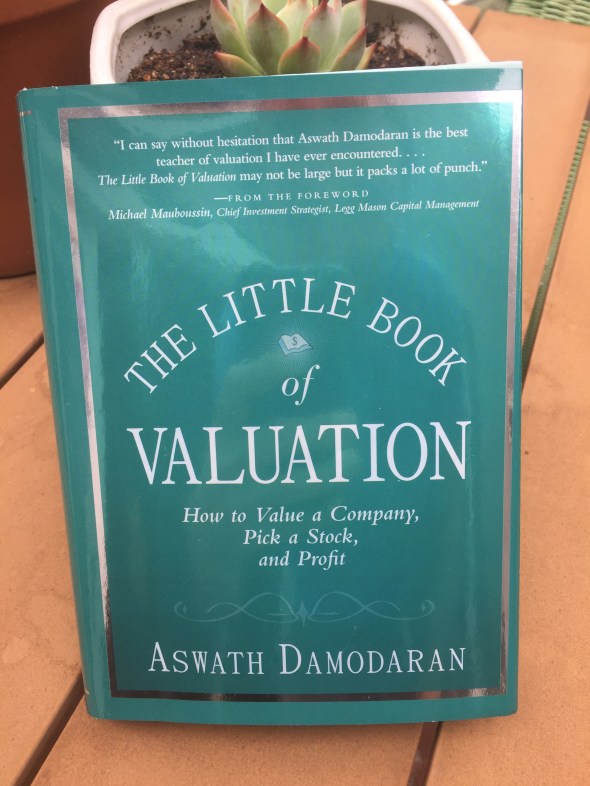
Aswath Damodaran has a website with a lot of great information. Mostly it convinced me that deep valuation is not for me.
Extremely Basic Valuation
Always remember that investing is simply price calculations. Your job is to calculate accurate prices for a bevy of assets. When the prices you’ve calculated are sufficiently far from market prices, you take action. There is no “good stock” or “bad stock” or “good company”. There’s just delta from your price and their price. Read this over and over again if you have to and never forget it. Your job is to calculate the price of things and then buy those things for the best price you can. Your calculations should model the real world as thoroughly as possible and be conservative in nature.
Martin Shkreli on his blog (from prison), 8/1/18
The simplest way to determine whether the price of a company is worth it might be to divide the price of a share of a company by the company’s earnings, P/E.
Today, on December 29, 2018:
Apple’s P/E is 13.16.
Google’s (GOOGL): 39.42.
Netflix (NFLX): 91.43.
Union Pacific Railroad (UNP): 8.99.
This suggests UNP is the cheapest of these companies (you get the most earnings per share) while NFLX is the most “expensive” – you get the least earnings).
But: we’re also betting on or estimating future earnings. These numbers change as companies report their earnings, and the stock price goes up and down. Two variables that are often connected and often not connected.
Now you are making predictions.
The most intriguing and enormous field in the world on which to play predictions is the stock market.
What is the stock market?
The stock market is a set of predictions.
Buying into businesses on the stock market can be a form of gambling. Or, if you use sound business reasoning, it can be investing.
What is investing?
Investing is often described as the process of laying out money now in the expectation of receiving more money in the future. At Berkshire we take a more demanding approach, defining investing as the transfer to others of purchasing power now with the reasoned expectation of receiving more purchasing power – after taxes have been paid on nominal gains – in the future.
More succinctly, investing is forgoing consumption now in order to have the ability to consume more at a later date.
Warren B., in Berkshire’s 2011 Letter To Shareholders.
A great thing about investing is you can learn all about it for the price of an Internet connection. All of Buffett’s letters are free.
How to assess a public company as an investment with sound business reasoning

In researching a specific company, Buffett gathers these resources:
- most recent 10-Ks and 10-Qs
- The annual reports
- News and financial information from many sources
The authors said he wants to see the most recent news stories and at least a decade’s worth of financial data. This allows him to build up a picture of
-
The companies historical annual return on capital and equity
-
Earnings
-
Debt load
-
Share repurchases
-
Management’s record in allocating capital
(from The New Buffetology, Mary Buffett and David Clark).
Cheap stocks (using simple ratios like price-to-book or price-to-sales) tend to outperform expensive stocks. But they also tend to be “worse” companies – companies with less exciting prospects and more problems. Portfolio managers who own the expensive subset of stocks can be perceived as prudent while those who own the cheap ones seem rash. Nope, the data say otherwise.
(from “Pulling The Goalie: Hockey and Investment Implications” by Clifford Asness and Aaron Brown.
This sounds too hard
Correct. Most people shouldn’t bother. You should just buy a low cost index fund that tracks “the market.”
What can we we expect “the stock market” to return?

The VTSAX, the Vanguard Total Stock Market Index, has had an average annual return of 7.01% since inception in 1992. (Source)

10% is the average, says Nerd Wallet.

9.8% is the average annual return of the S&P 500, says Investopedia.
Now, whether the S&P 500 is “the market” is a good question. We’ll return to that.
O’Shaughnessy has thought a lot about the question, it’s pretty much the main thing he’s thought about for the last twenty years or so as far as I can tell, and comes in at around 9%.
Some interesting data from here.
Munger cautions against assuming history repeats itself, in 2005:
(source)
Why Bother Trying To Beat The Market?
A good thing about the Buffettology book is they give you little problems for a specific calculator:

The Texas Instruments BA-35, which it looks like they don’t even really make anymore,. You can get one for $100 over on Amazon.
This calculator is just nifty for working out future values of compounding principal over time.
One concept that must be mashed hard into your head if you’re trying to learn business is the power of compounding.
Let’s say you have $10,000. A good amount of money. How much money can it be in the future?
9% interest, compounded annually, $10,000 principal, 20 years = $61,621
15% interest, compounded annually, $10,000 principal, 20 years= $175,447
9% interest, compounded annually, $1,000 principal, 30 years= $13,731
15% interest, compounded annually, $1,000 principal, 30 years= $86,541
9% interest, $10,000 principal, 40 years= $314,094.2
A significant difference.
Any edge over time adds up.
Let’s say the stock market’s gonna earn 7% over the next years and you have $10,000 to invest. In twenty years you’ll have $38,696.
But if you can get that up to just 8%, you’ll have $46,609.57.
A difference of $8,000.
Is it worth it? Eh, it’s a lotta work to beat the market, maybe not.
Still, you can see why people try it once we’re talking about $1,000,000, and the difference is $80,000, or the edge is 2%, and so on.
Plus there’s something fun just about beating the system.
Lessons from the race track

This book appeals to the same instinct — how to beat the house, what’s the system?

Both Buffett and Munger are interested in race tracks. Here is Munger:

This might be the single most important lesson of the Year of Business. Buffett and Munger repeat it in their speeches and letters. You wait for the right opportunity and you load up.
“The stock market is a no-called-strike game. You don’t have to swing at everything – you can wait for your pitch. The problem when you’re a money manager is that your fans keep yelling, ‘swing, you bum!'”
“Ted Williams described in his book, ‘The Science of Hitting,’ that the most important thing – for a hitter – is to wait for the right pitch. And that’s exactly the philosophy I have about investing – wait for the right pitch, and wait for the right deal. And it will come… It’s the key to investing.”
says Buffett.
“If you find three wonderful businesses in your life, you’ll get very rich. And if you understand them — bad things aren’t going to happen to those three. I mean, that’s the characteristic of it.”
OK but don’t you need money in the first place to make money buying into businesses?
Yes, this is kind of the trick of capitalism. Even Munger acknowledges that the hard part is getting some money in the first place.
“The first $100,000 is a bitch, but you gotta do it. I don’t care what you have to do—if it means walking everywhere and not eating anything that wasn’t purchased with a coupon, find a way to get your hands on $100,000. After that, you can ease off the gas a little bit.”
The Unknown and Unknowable

One of the best papers I read all year was “Investing in the Unknown and Unknowable,” by Richard Zeckhauser.
David Ricardo made a fortune buying bonds from the British government four days in advance of the Battle of Waterloo. He was not a military analyst, and even if he were, he had no basis to compute the odds of Napoleon’s defeat or victory, or hard-to-identify ambiguous outcomes. Thus, he was investing in the unknown and the unknowable. Still, he knew that competition was thin, that the seller was eager, and that his windfall pounds should Napoleon lose would be worth much more than the pounds he’d lose should Napoleon win. Ricardo knew a good bet when he saw it.1
This essay discusses how to identify good investments when the level of uncertainty is well beyond that considered in traditional models of finance.
Zeckhauser, in talking about how we make predictions about the Unknown and Unknowable, gets to an almost Zen level. There’s a suggestion that in making predictions about something truly Unknowable, the amateur might almost have an edge over the professional. This is deep stuff.
“Beating the market”
When we talk about “beating the market,” what’re we talking about?
If you’re talking about outperforming a total stock market index like VTSAX over a long time period, that seems to be a lot of work to pull off something nearly impossible.
Yes, people do it, but it’s so hard to do we, like, know the names of the people who’ve consistently done it.

There’s something cool about Peter Lynch’s idea that the average consumer can have an edge, but even he says you gotta follow that up with a lot of homework.

Lynch, O’Shaughnessy – it’s like a Boston law firm around here. I really enjoyed Jim O’Shaughnessy’s Twitter and his Google talk.
Sometimes when there’s talk of “beating the market,” the S&P 500 is used interchangeably with “the market.” As O’Shaughnessy points out though, the S&P 500 is itself a strategy. Couldn’t there be a better strategy?

is full of backtesting and research, much of it summarized in this article. Small caps, low P/S, is my four word takeaway.
Narrative investing
Jim: Sure. So when I was a teenager, I was fascinated because my parents and some of my uncles were very involved in investing in the stock market, and they used to argue about it all the time. And generally speaking, the argument went, which CEO did they feel was better, or which company had better prospects. And I kind of felt that that wasn’t the right question, or questions to ask. I felt it was far more useful, or, I believed at the time that it would be far more useful to look at the underlying numbers and valuations of companies that you were considering buying, and find if there was a way to sort of systematically identify companies that would go on to do well, and identify those that would go on to do poorly. And so I did a lot of research, and ultimately came up…
says O’Shaughnessy in an interview with GuruFocus. I’m not sure I agree.
Narrative can be a powerful tool in business. If you can see where a story is going, there could be an edge.

would you bet on this woman’s business?
I like assessing companies based on a Google image search of the CEO, for instance.
O’Shaughnessy suggests cutting all that out, getting down to just the numbers. But do you want to invest in, I dunno, RCI Hospitality Holdings ($RICK) (a company that runs a bunch of Hooters-type places called Bombshells) or PetMed Express ($PETS) just because they’re small caps with low p/s ratios and other solid indicators?
Actually those both might be great investments.
I will concede that narrative investing is not systematic. I will continue to ruminate on it.
GuruFocus
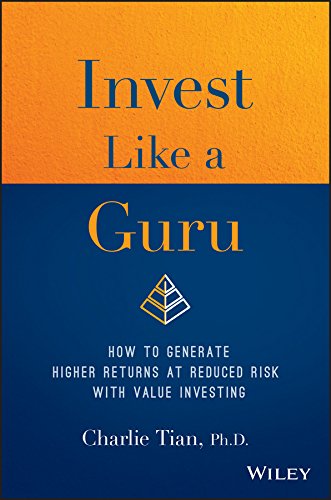
Charlie Tian’s book is dense but I found it a great compression of a lot of investing principles. It’s also just like a cool immigrant story.

The service that Charlie Tian built, GuruFocus, is a fantastic resource.
Premium membership costs $449 for a year, which is a lot, but I’d say I got way more than that in value and education from it.
J. R. Collins
His book is great, his Google talk is great.
Templeton
Investing doesn’t have to be all Munger and Buffett. Towards the end of the Year of Business I got into Sir John Templeton.
His thing was finding the point of maximum pessimism. Australian real estate is down? South American mining companies are getting crushed? Look for an opportunity there.
This guy worked above a grocery store in the Bahamas.
Great-niece Lauren carrying on the legacy.

Thought this was a cool chart from her talk demonstrating irrational Mr. Market at work even while long term trends may be “rational.”
Why bother, again?
At some point if you study this stuff it’s like, if you’re not indexing, shouldn’t you just buy Berkshire and have Buffett handle your money for you? You can have the greatest investor who ever lived making money for you just as easily as buying any other stock.
It seems to me that there are 3 qualities of great investors that are rarely discussed:
1. They have a strong memory;
2. They are extremely numerate;
3. They have what Warren calls a “money mind,” an instinctive commercial sense.
Alice Schroeder, his biographer, talking about Warren Buffett. I don’t have any of these.
Even Munger says all his family’s money is in Costco, Berkshire, Li Lu’s (private) fund and that’s it.
In the United States, a person or institution with almost all wealth invested, long term, in just three fine domestic corporations is securely rich. And why should such an owner care if at any time most other investors are faring somewhat better or worse. And particularly so when he rationally believes, like Berkshire, that his long-term results will be superior by reason of his lower costs, required emphasis on long-term effects, and concentration in his most preferred choices.
I go even further. I think it can be a rational choice, in some situations, for a family or a foundation to remain 90% concentrated in one equity. Indeed, I hope the Mungers follow roughly this course.
The answer is it’s fun and stimulates the mind.
A thing to remember about Buffett:
More than 2,000 books are dedicated to how Warren Buffett built his fortune. Many of them are wonderful.
But few pay enough attention to the simplest fact: Buffett’s fortune isn’t due to just being a good investor, but being a good investor since he was literally a child.
The writings of Morgan Housel are incredible.
You can read about Buffett all day, and it’s fun because Buffett is an amazing writer and storyteller and character as well as businessman. But studying geniuses isn’t necessarily that helpful for the average apprentice. Again, it’s like studying LeBron to learn how to dribble and hit a layup.
Can Capitalism Survive Itself?

The title of this book is vaguely embarrassing imo but Yvon Chouinard is a hero and his book is fantastic. Starting with blacksmithing rock climbing pitons he built Patagonia.

They make salmon now?
Towards the end of his book Chouinard wonders whether our economy, which depends on growth, is sustainable. He suggests it might destroy us all, which he doesn’t seem all that upset about (he mentions Zen a lot).


The last liberal art

Have yet to finish this book but I love the premise. Investing combines so many disciplines and models, that’s what makes it such a rich subject. So far I’m interested in Hagstrom’s connections to physics. Stocks are subject to some kind of law of gravity. Netflix will not have a P/E of 95 for forever.
Compare perception to results:
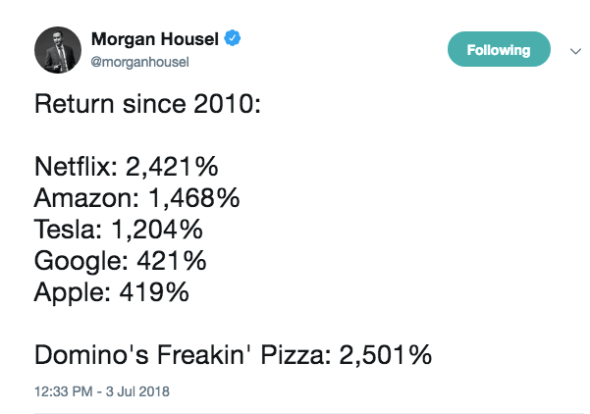

Dominos, Amazon, Berkshire, and VTSAX since 2005.


Stocks Let’s Talk

The stock market is interesting and absurd. The stock market is not “business,” but it’s made of business, you know?
The truth is the most I’ve learned about business has come from conversation.
To continue the conversation, I started a podcast, Stocks Let’s Talk. You can find all six episodes here, each with an interesting guest bringing intriguing perspective.

I intend to continue it and would appreciate it if you rate us on iTunes.
Key Takeaways:
- you can get rich sitting on your ass
- business is hard and brutal and competitive
- you need a durable competitive advantage
- if you are unethical it will catch up to you
- we’re gonna need to get sustainable
- the works of Tian, Lynch, O’Shaughnessy, Templeton, Chouinard, and Munger are worth study
- accounting is crucial and must be done right, even then you can be fooled
- I’m too whimsical for business really but it’s good to learn different models

Case Study in Business Journalism
Posted: September 13, 2018 Filed under: America Since 1945, business Leave a commentAs part of my Year of Business I’ve been reading some business articles. Often I find that the headlines are incredibly misleading, often close to opposite of accurate. Take this example:

Read the article, and the source is a Vanguard study which you can read here. Here’s page one with an abstract:

A more accurate headline would be “A Small Minority of Millennials Are Sitting Out The Bull Market, While Most Of Them Are Doing Exactly What Everybody Else Does” which is kind of interesting. The truth is well put in a footnote to the article:

Wouldn’t another, perhaps more accurate headline be: “Despite Lessons Of Their Youth, Millennials Follow Traditional Investing Path”?
But consider: we’re only talking about a sample of 4 million Vanguard investors. So: a self-selected sample of people with 1) money to invest and 2) choosing a conservative investment company! I would guess the “typical millennial household” has no equity at all?
Buried in the Vanguard study is a story that’s almost more interesting, namely that older generations are taking more investment risk than most advisors would think is wise:
Why this greater-than-expected taste for equity market risk among older investors? It’s worth noting that many current retirees hold traditional pensions, allowing, all other things equal, for more equity risk-taking. Other possible drivers of risk appetite among older investors include concerns over health care costs, low bond yields, and a desire to fund bequests for heirs. And beyond these financial factors are the shared generational experience of investing—both cohorts enjoyed the positive results of the great equity bull market from 1982–2000.
Even the Vanguard study itself contains strange, generational based assumptions:

Who is wiser, the 1/5 of millennials who witnessed 2008 and make the choice to have a “conservative” investment strategy relative to conventional wisdom, or the Baby Boomers who are still operating on 1980s assumptions?
My point here is not to criticize, it’s just to note ongoing observations:
- headlines can be very misleading
- when you go to the source of a story, it always gets deeper and more interesting
- small inaccuracies of language, shorthands, and misleads can compound until we have a distorted picture of reality. Was this not itself one of the causes of 2008 crisis?
The Gambler (2014)
Posted: September 12, 2018 Filed under: business, film, money, movies, screenwriting, shakespeare, writing 1 Comment
Saw this clip on some retweet of this fellow’s Twitter.
I was struck by
- the bluntness and concision of the advice
- the fact that the advice contains a very specific investment strategy down to what funds you should be in (80% VTSAX, 20% VBTLX)
- the compelling performance of an actor I’d never seen opposite Wahlberg (although I’d say it drops off at “that’s your base, get me?”)
It appeared this was from the 2014 film The Gambler

The film is interesting. Mark Wahlberg plays a compulsive gambler and English professor. There are some extended scenes of Wahlberg lecturing his college undergrads on Shakespeare, Camus, and his own self-absorbed theories of literature, failure, and life. The character is obnoxious, self-pitying, logorrheic and somewhat unlikeable as a hero. Nevertheless his most attractive student falls in love with him. William Monahan, who won an Oscar for The Departed, wrote the screenplay. The film itself is a remake of 1974 movie directed by James Toback, in which James Caan plays the Mark Wahlberg role.
Here’s the interesting thing. Watching the 2016 version, I realized the speech I’d seen on Twitter that first caught my attention is different. The actor’s different — in the movie I watched it’s John Goodman.
What happened here? Had they recast the actor or something? The twitterer who put it up is from South Africa, did they release a different version of the movie there?
Did some investigating and found the version I saw was made by this guy, JL Collins, a financial blogger.
Here’s a roundup of his nine basic points for financial independence.
He did a pretty good job as an actor I think! I believe the scene in the movie would be strengthened from the specificity of his advice. And the line about every stiff from the factory stiff to the CEO is working to make you richer is cool, maybe an improvement on the script as filmed. I’ll have to get this guy’s book.
It would make a good commercial for Vanguard.

VTSAX vs S&P 500:

Readers, what does the one to one comparison of JL Collins and John Goodman teach us about acting?
What Will Trigger The Next Crisis?
Posted: September 9, 2018 Filed under: America Since 1945, business, Italy Leave a comment


What Will Trigger The Next Crisis? is a subtext of many a Wall Street Journal article, but this week that was the headline on what I found to be an unusually succinct and comprehensible roundup of possible catalysts.
Interest Rates Jump
Bad-Loan Boom
China Cracks
Supply-Chain Disruptions
were four of the possibilities, but the one that caught me was
Italy Dumps The Euro
But Italy may be wavering. Italian bond yields spiked in May after two parties with anti-euro leanings tried to form a new government. The crisis could escalate again once politicians return from holidays. Some 59% of Italians want to keep the common currency, official surveys show—the slimmest majority in the eurozone.
I like the idea that a bunch of Italian politicians coming back from vacation is a global financial crisis waiting to happen.

La grande bellezza
In this same issue of the WSJ:

Tilray, Canopy, and The Canadian Marijuana Gold Rush
Posted: September 3, 2018 Filed under: business, drugs Leave a comment
As part of my Year of Business I’ve been reading lots of investing websites. An area of insane hype at the moment is Canadian marijuana stocks.

(The picks and shovels play here might be stock images of marijuana leaves).
Recreational marijuana will be legal in Canada in October, and unlike the United States, where federal regulation of the plant makes doing anything on the national level very difficult, it’s all good up there in Justin Trudeau land.

Once Constellation Brands, makers of Corona beer, made a $4 billion deal with Canopy Growth (traded on the New York Stock Exchange as CGC) it was off to the races.

I did not invest in Canopy Growth because a quick image search of CEO Bruce Linton did not inspire confidence.

An interesting aspect of Canada’s marijuana rules are that the packaging has to adhere to very strict regulation, with very little advertising. This, it seems to me, presents kind of a Zen marketing challenge. How will one brand distinguish itself from another?
 Blessedly I have kind of a Peter Lynch advantage here. From watching lots of Trailer Park Boys, I know that “BC Hydro” and marijuana from British Columbia is highly prized by the Canadian consumer. Even a low information Canadian marijuana consumer might know to ask for weed from British Columbia.

Tilray, traded on the NASDAQ as TLRY, is a respected marijuana grower based in Naniamo, British Columbia. Here is their respectable looking management team.
A few more observations:
- It is worth remembering our Charlie Munger here. Here he is talking in 2014 about why Berkshire Hathaway, the original textile company, was doomed:
The other rare example, of course, is Berkshire Hathaway. Berkshire started with three failing companies: a textile business in New England that was totally doomed because textiles are congealed electricity and the power rates were way higher in New England than they were down in TVA country in Georgia. A totally doomed, certain-to-fail business.
In a way, marijuana itself is congealed electricity. I’m told power rates are cheapest in Ontario, where Canopy is based. And of course Medicine Hat, Alberta, is the sunniest city in Canada.

Echodale Park in Medicine Hat, by Michael Ireland on Wikipedia
- I find it interesting and a testament to the world’s absurdity that if you had eight ounces of marijuana in New York City, the minimum jail sentence is three years, while down the street billions of dollars of shares of marijuana growers are being traded. Maybe Governor Cynthia Nixon will correct that imbalance. (Since I first discussed this on Twitter, Tilray’s stock went up 67%)
- If the President of the USA really cared about us defeating Canada, wouldn’t he work towards legalizing marijuana immediately, so that US companies could compete without Canada getting a jump on us?
- At first I thought legalized marijuana would end up being just like any commodity, like corn or something. But the technical know-how to extract and present CBD or THC as an oil or in something like a Dosist pen might give an advantage to companies with good processes. Note this picture of a laboratory on Tilray’s website:

- It’s my casual observation that a lot of very dumb bros, like guys who are too dumb to be in tech, are in the marijuana business. There’s something great about a field where many of your competitors will be dumb. (There are also many very, very smart people in this field.)
Charlie Munger Deep Cuts
Posted: September 2, 2018 Filed under: advice, business 1 Comment
In 2011 Warren Buffett and Charlie Munger came to visit The Office to film a video for the Berkshire Hathaway annual meeting. I hadn’t heard of Charlie Munger. From the Internet I learned that he was a brilliant dude in his own right, as well as a guy Warren Buffett trusted, learned from, and considered his closest partner.
At lunchtime, everyone was huddled around the more famous Buffett, while Charlie Munger was sitting by himself. In this way I ended up having lunch with Charlie Munger.
From his Wikipedia page I knew he’d been a meteorologist in World War II, so I asked him about that. His job was hand drawing weather maps to make predictions as the US was sending planes over the Bering Strait to our then-ally the Soviet Union.
Ever since this encounter I’ve read everything I can find by Charlie Munger.
This is a good place to start.

In my hunt for Munger deep cuts, came across this speech he gave in October 1998 at the Santa Monica Miramar Hotel to a group of institutional investors. Stunningly blunt and direct advice on how to invest:
In the United States, a person or institution with almost all wealth invested, long term, in just three fine domestic corporations is securely rich. And why should such an owner care if at any time most other investors are faring somewhat better or worse. And particularly so when he rationally believes, like Berkshire, that his long-term results will be superior by reason of his lower costs, required emphasis on long-term effects, and concentration in his most preferred choices.
I go even further. I think it can be a rational choice, in some situations, for a family or a foundation to remain 90% concentrated in one equity. Indeed, I hope the Mungers follow roughly this course. And I note that the Woodruff foundations have, so far, proven extremely wise to retain an approximately 90% concentration in the founder’s Coca-Cola stock. It would be interesting to calculate just how all American foundations would have fared if they had never sold a share of founder’s stock. Very many, I think, would now be much better off. But, you may say, the diversifiers simply took out insurance against a catastrophe that didn’t occur. And I reply: there are worse things than some foundation’s losing relative clout in the world, and rich institutions, like rich individuals, should do a lot of self insurance if they want to maximize long-term results.
If only stupid Harvard had listened!
More:
My controversial argument is an additional consideration weighing against the complex, high-cost investment modalities becoming ever more popular at foundations. Even if, contrary to my suspicions, such modalities should turn out to work pretty well, most of the money-making activity would contain profoundly antisocial effects. This would be so because the activity would exacerbate the current, harmful trend in which ever more of the nation’s ethical young brainpower is attracted into lucrative money-management and its attendant modern frictions, as distinguished from work providing much more value to others. Money management does not create the right examples. Early Charlie Munger is a horrible career model for the young, because not enough was delivered to civilization in return for what was wrested from capitalism. And other similar career models are even worse.
More Munger deep cuts from the 2017 Shareholders Meeting of Daily Journal Co., (I found here on the wonderful Mine Safety Disclosures website but it’s in a couple places). Daily Journal Co is a business that, as I understand it, exists on the fact that companies have to publish legal notices somewhere, and this company more or less has a monopoly on the business.
Munger gets real:
the Mungers have three stocks: we have a block of Berkshire, we have a block of Costco, we have a block of Li Lu’s Fund, and the rest is dribs and drabs. So am I comfortable? Am I securely rich? You’re damn right I am.
Could other people be just as comfortable as I who didn’t have a vast portfolio with a lot of names in it, many of whom neither they nor their advisors understand? Of course they’d be better off if they did what I did. And are three stocks enough? What are the chances that Costco’s going to fail? What are the chances that Berkshire Hathaway’s going to fail? What are the chances that Li Lu’s portfolio in China is going to fail? The chances that any one of those things happening is almost zero, the chances that all three of them are going to fail.
That’s one of the good ideas I had when I was young. When I started investing my little piddly savings as a lawyer, I tried to figure out how much diversification I would need if I had a 10 percentage advantage every year over stocks generally. I just worked it out. I didn’t have any formula. I just worked it out with my high school algebra, and I realized that if I was going to be there for 30 or 40 years, I’d be about 99% sure that it would be just fine if I never owned more than three stocks and my average holding period is three or four years.
Once I had done that with my little pencil, I just…I never for a moment believed this balderdash they teach about. Why diversification? Diversification is a rule for those who don’t know anything. Warren calls them “know-nothing investors”. If you’re a know-nothing investor, of course you’re going to own the average. But if you’re not a know-nothing —if you’re actually capable of figuring out something that will work better—you’re just hurting yourselves looking for 50 when three will suffice. Hell, one will suffice if you do it right. One. If you have one cinch, what else do you need in life?
Li Lu is himself a super interesting character.

A student leader in the Tiananmen Square protests, escapes China (with the help of Western intelligence?) ends up penniless at Columbia, hears about a lecture by Warren Buffett and misunderstands that this has something to do with a “buffet” and becomes of the most successful investors in the world?

More from Munger on a range of topics:
on Lee Kuan Yew and the history of Singapore:
Lee Kuan Yew may have been the best nation builder that ever lived. He took over a malarial swamp with no assets, no natural resources, nothing, surrounded by a bunch of Muslims who hated him, hated him. In fact, he was being spat out by the Muslim country. They didn’t want a bunch of damn Chinese in their country. That’s how Singapore was formed as a country—the Muslims spat it out. And so here he is, no assets, no money, no nothing. People were dying of malaria, lots of corruption—and he creates in a very short time, by historical standards, modern Singapore. It was a huge, huge, huge success. It was such a success, there is no other precedent in the history of the world that is any stronger.
Now China’s more important because there are more Chinese, but you can give Lee Kuan
Yew a lot of the credit for creating modern China because a lot of those pragmatic communist leaders—they saw a bunch of Chinese that were rich when they were poor and they said, “to hell with this”. Remember the old communist said, “I don’t care whether the cat is black or white, I care whether he catches mice”. He wanted some of the success that Singapore got and he copied the playbook. So I think the communist leadership that copied Lee Kuan Yew was right. I think Lee Kuan Yew was right. And of course, I have two busts of somebody else in my house. One is Benjamin Franklin, and the other is Lee Kuan Yew. So, that’s what I think of him.
on real estate:
MUNGER: Real estate?
Q: Yeah, real estate.
MUNGER: The trouble with real estate is that everybody else understands it and the people who you are dealing with and the competing with, they specialized in a little 12 blocks in a little industry. They know more about the industry than you do. And you got a lot of bullshitters and liars and brokers. So it’s not that easy. It’s not a bit easy.
Your trouble is if it’s easy—all these people, a whole bunch of ethnics that love real estate,. You know, Asians, Hasidic Jews, Indians from India, they all love real estate; they’re smart people and they know everybody and they know the tricks. And the thing is you don’t even see the good offers in real estate. They show the big investors and dealers. It’s not an easy game to play from a beginners point of view; whereas with stocks, you’re equal with everybody if you’re smart. In real estate, you don’t even see the opportunities when you’re a young person starting out. They go to others. The stock market’s always open, except venture capital. Sequoia sees the good stuff. You can open an office—Joe Shmo Venture Capitalist—startups come to me. You’d starve to death.
You’ve gotta figure out what your competitive position is in what you’re choosing. Real estate has a lot of difficulties. And those Patels from India that buy all the motels, they know more about motels than you do. They live in a god damn motel. They pay no income taxes. They don’t pay much in worker’s compensation and every dime they get, they fix up the thing to buy another motel. Do you want to compete with the Patels? Not I.
on Sumner Redstone:
Well, I never knew Sumner Redstone but I followed him because he was a little ahead of me in Law School, but Sumner Redstone is a very peculiar man. Almost nobody has ever liked him. He’s a very hard-driven, tough tomato, and basically almost nobody has ever liked him, including his wives and his children. And he’s just gone through life. There’s an old saying, “Screw them all except six and save those for pallbearers.” And that is the way Sumner Redstone went through life. And I think he was in to the pallbearers because he lived so long. So I’ve used Sumner Redstone all my life as an example of what not to do.
He started with some money, and he’s very shrewd and hard-driven. You know he saved his life by hanging while the fire was up in his hands. He’s a very determined, high IQ maniac, but nobody likes him and nobody ever did. And though he paid for sex in his old age, cheated him, you know always had one right after another.
That’s not a life you want to admire. I used Sumner Redstone all my life as an example of what I don’t want to be. But for sheer talent, drive and shrewdness, you would hardly find anybody stronger than Sumner. He didn’t care if people liked him. I don’t care if 95% of you don’t like me, but I really need the other 5%. Sumner just…
on the movie business:
And the movie business I don’t like either because it’s been a bad business-—crooked labor unions, crazy agents, crazy screaming lawyers, idiosyncratic stars taking cocaine-—it’s just not my field. I just don’t want to be in it.
on copying other investors:
Q: On the topic of cloning, do you really believe that Mohnish said that if investors look at the 13Fs of super investors, that they can beat the market by picking their spots? And we’ll add spinoffs.
MUNGER: It’s a very plausible idea and I’d encourage one young man to look at it, so I can hardly say that it has no merit. Of course it’s useful if I were you people to look at what other—what you regard as great—investors are doing for ideas. The trouble with it is that if you’d pick people as late in the game as Berkshire Hathaway, you’re buying our limitations caused by size. You really need to do it from some guy that’s operating in smaller places and finding places with more advantage. And of course, it’s hard to identify the people in the small game, but it’s not an idea that won’t work.
If I were you people, of course I would do that. I would want to know exactly what the shrewd people were doing and I would look at every one of them, of course. That would be a no-brainer for me.
on Li Lu:
I got to tell you a story about Li Lu that you will like. Now General Electric was famous for always negotiating down to the wire and just before they were at close, they’ll add one final twist. And, of course, it always worked, the other guy was all invested, so everybody feels robbed and cheated and mad, but they get their way in that last final twist.
So, Li Lu made a couple of venture investments and he made this one with this guy. The guy made us a lot of money in a previous deal and we’re now going in with him again on another—a very high-grade guy and smart and so forth.
Now we come to the General Electric moment. Li Lu said, “I have to make one change in this investment.” It sounds just like General Electric just about to close. I didn’t tell Li Lu to do it; he did it himself. He said, “You know, this is a small amount of money to us and you got your whole net worth in it. I cannot sign this thing if you won’t let me put in a clause saying if it all goes to hell we’ll give you your money back.” That was the change he wanted. Now, you can imagine how likely we were to see the next venture capital investment. Nobody has to tell Li Lu to do that stuff. Some of these people, it’s in their gene power. It’s just such a smart thing to do. It looks generous and it is generous, but there’s huge self-interest in it.
on Al Gore:
Oh, I got another story for you that you’ll like.
Yeah get that thing (peanut brittle out of here or I’ll eat it all).
Al Gore has come into you fella’s business. Al Gore, he has made $300 or $400 million in your business and he is not very smart. He smoked a lot of pot. He coasted through Harvard with a Gentlemen’s C. But he had one obsessive idea that global warming was a terrible thing and he understandably predicted the world for it. So his idea when he went into investment counseling is he was not going to put any CO2 in the air. So he found some partner to go into investment counseling with and he says, “we are not going to have any CO2”. But this partner is a value investor. And a good one.
So what they did was Gore hired his staff to find people who didn’t put CO2 in the air. And of course, that put him into services-—Microsoft and all these service companies that were just ideally located. And this value investor picked the best service companies. So all of a sudden the clients are making hundreds of millions of dollars and they’re paying part of it to Al Gore, and now Al Gore has hundreds of millions of dollars in your profession. And he’s an idiot. It’s an interesting story and a true one.
Warren Buffetts, real and fake
Posted: September 1, 2018 Filed under: business, heroes Leave a comment
These dudes started a fake Warren Buffett account on a bet, and within a few days it was retweeted by Peggy Noonan, Kanye, etc.

Impressed with how generic and bland the advice was.

The worship of Buffett as an oracle is not just a US phenomenon. If anything it may be stronger in Asia. In Korea in 2007, I saw subway vending machines selling biographies of Warren Buffett. In this video, being interviewed by a Chinese magazine, you can see Warren Buffett’s partner, Charlie Munger, attempt to explain why he thinks he and Buffett are so popular in China. He suggests that it’s because much of their advice is very Confucian:
Actual Warren Buffett’s advice is free and very available. You can read all of Berkshire Hathaway’s letters to shareholders, which are funny and interesting at times (the better you are at skimming the boring parts, the more enjoyment you will get out of them). You can see everything he invests in — he legally has to tell you!
Investing is simple, but not easy
is a quote often attributed to Buffett, though I myself cannot find the original source for it.
Buffett himself was asked about the fake account on CNBC:
QUICK: BUT THERE WAS A FAKE TWITTER ACCOUNT, A FAKE WARREN BUFFETT TWITTER ACCOUNT THAT WENT FROM 20,000 FOLLOWERS TO 200,000 FOLLOWERS IN 24 HOURS BY TWEETING OUT ALL KINDS OF PITHY SORT OF SOUND ADVICE, THINGS THAT FOLKSY SAYINGS THAT SOUNDED LIKE IT COULD HAVE COME FROM YOU. WHY DON’T YOU TWEET MORE OFTEN?
BUFFETT: WELL I JUST DON’T SEE A REASON TO. I PUT OUT AN ANNUAL REPORT, AND I DO NOT HAVE A DAILY VIEW ON ALL KINDS OF THINGS. AND, AND MAYBE I’VE GOT A GUY IN THIS COPYCAT OR IMITATOR, MAYBE HE’S PUTTING OUT BETTER STUFF THAN I WOULD. SO IF HE PUTS OUT GOOD ADVICE, I’LL TAKE CREDIT FOR IT.
QUICK: WE HAVE SEEN SOME CEOs WHO LIKE TO TWEET VERY FREQUENTLY, INCLUDING ELON MUSK.
BUFFETT: YES.
QUICK: HE’S CERTAINLY SOMEBODY WHO TWEETED A LOT. WHAT DO YOU THINK ABOUT PEOPLE WHO TWEET A LOT?
BUFFETT: I DON’T THINK IT’S HELPED HIM A LOT. NO, I THINK IT’S — WELL, IT’D BE PARTICULARLY DANGEROUS TO START COMMENTING ON BERKSHIRE DAILY, WHICH I NEVER WOULD DO. I WON’T DO IT WITH YOU. BUT I THINK THERE’S OTHER THINGS IN LIFE I WANT TO DO THAN TWEET. I MEAN, I’M NOT THAT DESPERATE FOR SOMEBODY TO HEAR MY OPINION ON THIS.
This aspect of Buffett is much celebrated:

It’s sometimes forgotten or overlooked that he also owns a $7.9 million house in Laguna Beach.

Though in fairness he bought it in 1971 for $150,000.
 Helytimes
