Peter Thiel on pitching
Posted: May 8, 2012 Filed under: advice, business, screenwriting 1 CommentDefinite crossover with movie/TV pitching:
One of the most important things to understand is that, like all people, VCs are different people at different times of day. It helps to pitch as early as possible in the day. This is not a throwaway point. Disregard it at your peril. A study of judges in Israel doing parole hearings showed prisoners had a two-thirds chance of getting parole if their hearing was early in the day. Those odds decreased with time. There was a brief uptick after lunch—presumably because the judges were happily rested. By the end of the day people had virtually no chance of being paroled. Like everyone, VCs make poorer decisions as they get tired. Come afternoon, all they want to do is go home. It does indeed suck to have to wake up early to go pitch. But that is what you must do. Insist that you get on the calendar early.
A related point: It’s also important not to provide too much choice. Contrary to the standard microeconomics literature which extols the virtues of choice, empirical studies show people are actually made unhappy by a lot of choice. Too many choices makes for Costco Syndrome and mental encumbrance. By the end of the day, the VCs have had a lot of choices. So in addition to getting to them early in the day (before they’ve had to make a lot of choices), you should keep your proposition simple. When you make your ask, don’t give them tons of different financing options or packages or other attempts at optimization. That will burden them with a cognitive load that will make them unhappy. Keep it simple.
Whole thing is interesting. HT Tyler Cowen.
Nuns at Tatsang, 1931
Posted: May 7, 2012 Filed under: adventures, mountains, photography, pictures, Tibet, travel Leave a comment
Wish I had a larger version of this. The photographer is Frank Smythe, who went on the 1938 Shipton-Tilman Everest expedition. My source is the Royal Geographic Society.
In 1949, in Delhi, [Smythe] was taken ill with food poisoning; then a succession of malaria attacks took their toll and he died on June 27, 1949 two weeks before his 49th birthday.
Jamsetjee Jejeebhoy, by George Chinnery
Posted: May 6, 2012 Filed under: art, George Chinnery, painting, pictures Leave a comment
And here’s Chinnery himself, done by himself:

Let me tell you some quick facts about William Jardine
Posted: May 5, 2012 Filed under: business, family, from wikipedia, history, Hong Kong Leave a comment
He became a surgeon’s mate on a ship at age 18
His lifelong friend was named Jamsetjee Jejeebhoy
An early business partner was named Hollingworth Magniac
His rival was named Lancelot Dent
He started a business in Hong Kong importing, among other things, opium to China. His partner was James Matheson:
William C. Hunter, a contemporary of Jardine who worked for the American firm Russell & Co., wrote of him, “He was a gentleman of great strength of character and of unbounded generosity.” Hunter’s description of Matheson was, “He was a gentleman of great suavity of manner and the impersonation of benevolence.”
“He was nicknamed by the locals “The Iron-headed Old Rat” after being hit on the head by a club in Guangzhou.”
When the Chinese tried to ban the importation of opium, he gave the foreign secretary a detailed plan on how to attack China, which the British went ahead and did.
His farewell dinner when he left Hong Kong was legendary. FDR’s grandfather was there.
A bachelor, when he died he left his fortune to his nephews and siblings.
Jardine Matheson Group, still run by members of his family, is today – all of this is according to wikipedia – the second-largest employer in Hong Kong.

One more Jack Delano
Posted: May 3, 2012 Filed under: adventures, photography, pictures Leave a commentBorn in the Ukraine in 1923, “he travelled to Puerto Rico in 1941 as a part of the FSA project. This trip had such a profound influence on him that he settled there permanently in 1946.” Died 1997.

More Jack Delano
Posted: May 2, 2012 Filed under: Chicago, machines, photography Leave a commentChicago Railyards, 1942

Poster for a side show at the Vermont State Fair, Rutland, 1941 by Jack Delano
Posted: May 2, 2012 Filed under: New England, photography, Vermont Leave a comment
Tatjana Veiled Head
Posted: May 1, 2012 Filed under: MFA Boston, museum, photography, pictures Leave a commentHerb Ritts, 1988, from the MFA.
The British Entering Concord, Amos Doolittle (1775)
Posted: May 1, 2012 Filed under: heroes, history, New England Leave a comment
I killed a bee with this egregious New Yorker
Posted: April 30, 2012 Filed under: adventures Leave a comment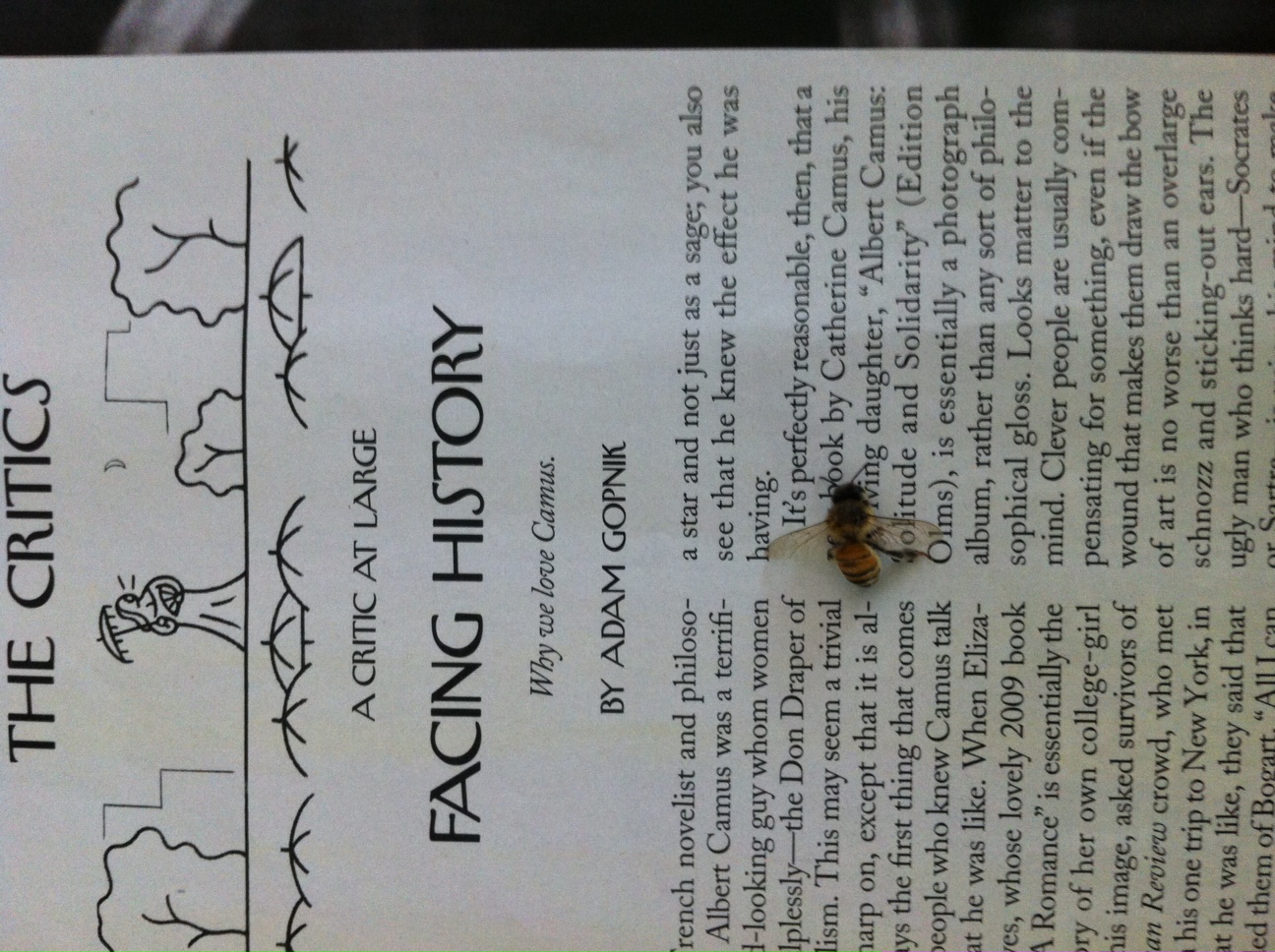
More Celia Johnson
Posted: April 30, 2012 Filed under: adventures, film, Future Mrs. Hely, heroes, how to live, women Leave a commenttubechopped her speech from Noel Coward’s “In Which We Serve” (1942).

Fact (?) I learned in college: Goebbels was constantly infuriated and impressed by how much better and subtler American and English propaganda films were.
[Celia Johnson] later recalled her choice of an acting career with the comment, “I thought I’d rather like it. It was the only thing I was good at. And I thought it might be rather wicked.”
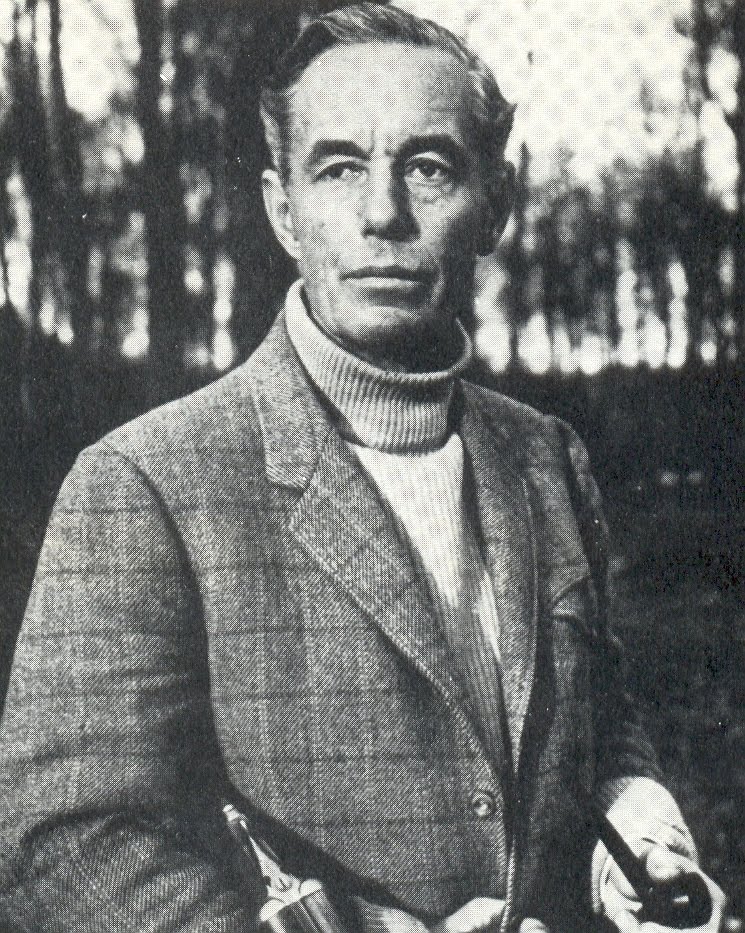
She was married to Peter Fleming, brother of Ian. He held his own in the adventuring department:
In April 1932 Fleming replied to an advertisement in the personal columns of The Times: “Exploring and sporting expedition, under experienced guidance, leaving England June to explore rivers central Brazil, if possible ascertain fate Colonel Percy Fawcett; abundant game, big and small; exceptional fishing; ROOM TWO MORE GUNS; highest references expected and given.”
The expedition, organised by Richard Churchyard, travelled to São Paulo, then overland to the rivers Araguaia and Tapirapé, heading towards the likely last-known position of the Fawcett expedition. During the inward journey, the expedition was riven by increasing internal disagreements as to its objectives and plans, centred particularly on its local leader, ‘Major Pingle’ (a pseudonym).
Here is a picture of him from this intriguing blog:
Sometimes you learn a fact from history that gives perspective
Posted: April 30, 2012 Filed under: history, Vietnam Leave a comment
Ho Chi Minh’s brother, according to wikipedia, was a geomancer.
Geomancy ( Greek: γεωμαντεία, “earth divination”) is a method of divination that interprets markings on the ground or the patterns formed by tossed handfuls ofsoil, rocks, or sand. The most prevalent form of divinatory geomancy involves interpreting a series of 16 figures formed by a randomized process that involves recursion followed by analyzing them, often augmented with astrological interpretations.
Celia Johnson
Posted: April 29, 2012 Filed under: film, Future Mrs. Hely, heroes, women Leave a commentis cool:
North Shore Homesick?
Posted: April 29, 2012 Filed under: art, Childe Hassam, Fitzhugh Lane, Met, museum, New England, North Shore, painting, pictures, Winslow Homer Leave a commentSometimes my friends from the North Shore of Massachusetts who live in New York get homesick and call me up, desperate for a solution. Always I tell them the same thing! “Go to the 760 galleries on the second floor of the Met!”
There you can see Childe Hassam’s “The Church at Gloucester”:

Then you can see Winslow Homer’s “Eagle Head, Manchester, Massachusetts (High Tide):

Then you can see “Stage Fort Across Gloucester Harbor” by our boy FHL:

“Thanks Hely!” they say.
VACATION!
Posted: April 27, 2012 Filed under: how to live 1 Comment
ht the great FK for the photo, from the wikipedia entry for “Shorts”
Paloma Faith
Posted: April 22, 2012 Filed under: music Leave a commentGotta admit, like what she’s up to. Who can make an introduction? Coming in just ahead of this blog’s firm three minute rule:
The Head of John The Baptist on a Charger
Posted: April 22, 2012 Filed under: art, beheadings, Christianity, Met, MFA Boston, museum, painting, pictures, religion Leave a commentWe here at The Hely Times are shameless about catering to our readers. We’ve discovered that pictures depicting beheadings are among our most popular subjects. So, today, a review of one of the great themes in Western Art, John the Baptist’s head on a charger. NOTE: some other day we’ll do actual action-shot beheadings of John the Baptist. Today, we’re just dealing with the paintings that include the charger as well.
Caravaggio did it twice. There’s the National Gallery, London:

And the Palacio Real, Madrid:

Met has a good one by Aelbert Bouts:

MFA has one by Bernardo Luini:

Lucas Cranach the Elder, now hanging in the Museum of Fine Arts in Budapest:

That’s enough.
Last stop on the Hemingway/Lillian Ross tour of the Met
Posted: April 21, 2012 Filed under: art, Cezanne, Hemingway, Met, museum, painting, pictures Leave a comment
We came to El Greco’s green “View of Toledo” and stood looking at it a long time. “This is the best picture in the Museum for me, and Christ knows there are some lovely ones,” Hemingway said.

After we reached the Cezannes and Degases and the other Impressionists, Hemingway became more and more excited, and discoursed on what each artist could do and how and what he had learned from each. Patrick listened respectfully and didn’t seem to want to talk about painting techniques any more. Hemingway spent several minutes looking at Cezanne’s “Rocks – Forest of Fontainebleu.” “This is what we try to do in writing, this and this, and the woods, and the rocks we have to climb over,” he said. “Cezanne is my painter, after the early painters. Wonder, wonder painter…
As we walked along, Hemingway said to me, “I can make a landscape like Mr. Paul Cezanne. I learned how to make a landscape from Mr. Paul Cezanne by walking through the Luxembourg Museum a thousand times with an empty gut, and I am pretty sure that if Mr. Paul was around, he would like the way I make them and be happy that I learned it from him.”
Wiki, close out Cezanne for us:
One day, Cézanne was caught in a storm while working in the field. Only after working for two hours under a downpour did he decide to go home; but on the way he collapsed. He was taken home by a passing driver. His old housekeeper rubbed his arms and legs to restore the circulation; as a result, he regained consciousness. On the following day, he intended to continue working, but later on he fainted; the model with whom he was working called for help; he was put to bed, and he never left it again. He died a few days later, on 22nd October 1906. He died of pneumonia and was buried at the old cemetery in his beloved hometown of Aix-en-Provence.
Captain George K. H. Coussmaker (Joshua Reynolds, 1782)
Posted: April 20, 2012 Filed under: art, Hemingway, Joshua Reynolds, Met, museum, painting, pictures, writing Leave a comment
“What the hell!” Hemingway said suddenly. “I don’t want to be an art critic. I just want to look at pictures and be happy with them and learn from them. Now, this for me is a damn good picture.” He stood back and peered at a Reynolds entitled “Colonel George Coussmaker,” which shows the Colonel leaning against a tree and holding his horse’s bridle. “Now, this Colonel is a son of a bitch who was willing to pay money to the best portrait painter of his day just to have himself painted,” Hemingway said, and gave a short laugh. “Look at the man’s arrogance and the strength in the neck of the horse and the way the man’s legs hang. He’s so arrogant he can afford to lean against a tree.”
remembers Miss Ross.
Coussmaker sat for Reynolds 21 times and his horse 8 times between February 9 and April 16, 1782 – an exceptional number of times.

