Will Kempe, Will Shakespeare, and Falstaff
Posted: June 7, 2018 Filed under: actors, shakespeare, writing 1 Comment
In Shakespeare’s time, there was a comic actor who was more famous than any playwright. His name was Will Kempe. His most popular bit was morris dancing from London to Norwich.
In February and March 1600, he undertook what he would later call his “Nine Days Wonder”, in which he morris danced from London to Norwich (a distance of over a hundred miles) in a journey which took him nine days spread over several weeks, often amid cheering crowds. Later that year he published a description of the event to prove to doubters that it was true.
Perhaps Kempe originated the part of Falstaff in Shakespeare’s plays.
Kempe’s whereabouts in the later 1580s are not known, but that his fame as a performer was growing during this period is indicated by Thomas Nashe’s An Almond for a Parrot (1590).
An Almond for a Parrot is a great title.

Perhaps he was the Will Ferrell of his day.
Although he had been a sharer in the plans to construct the Globe Theatre, he appeared in no productions in the new theatre, which was open by mid-1599, and evidence from Shakespeare’s Henry V, in which there is no promised continued role for Falstaff, and Hamlet, containing its famous complaint at improvisational clowning (Act 3, Scene 2), indicates some of the circumstances in which Kempe may have been dropped
The lines in question:
HAMLET
O, reform it altogether! And let those that play your clowns speak no more than is set down for them, for there be of them that will themselves laugh to set on some quantity of barren spectators to laugh too, though in the meantime some necessary question of the play be then to be considered. That’s villainous, and shows a most pitiful ambition in the fool that uses it. Go, make you ready.

“Just say the lines dude.”
In real life Will Kempe was the Shakespearean clown who was the superstar of his day.
Audiences would flock for miles around to watch the great man perform his Falstaff or famous jig at the Globe theatre after one of the plays by the great darling of the stage – and the age – Will Shakespeare.
And in Upstart Crow, Ben Elton’s BBC2 comedy reimagining of the life of the great poet and dramatist, Kempe is presented as… a cocky C16th Ricky Gervais.
California Voter Suggestions
Posted: June 4, 2018 Filed under: the California Condition 3 CommentsGovernor:

Look, Gavin Newsom and Villaraigosa are both kind of repulsive and uninspiring individuals. (Savage takedown of Newsom). Newsom will probably win which sucks.
John Chiang is a nerd who probably won’t win, but far as I can see he’s a man of integrity. The LA Times main knock on him is that he didn’t suggest easy answers to everything and suggested he might think and reflect before making decisions.
A text from the Newsom campaign cheesed me off:
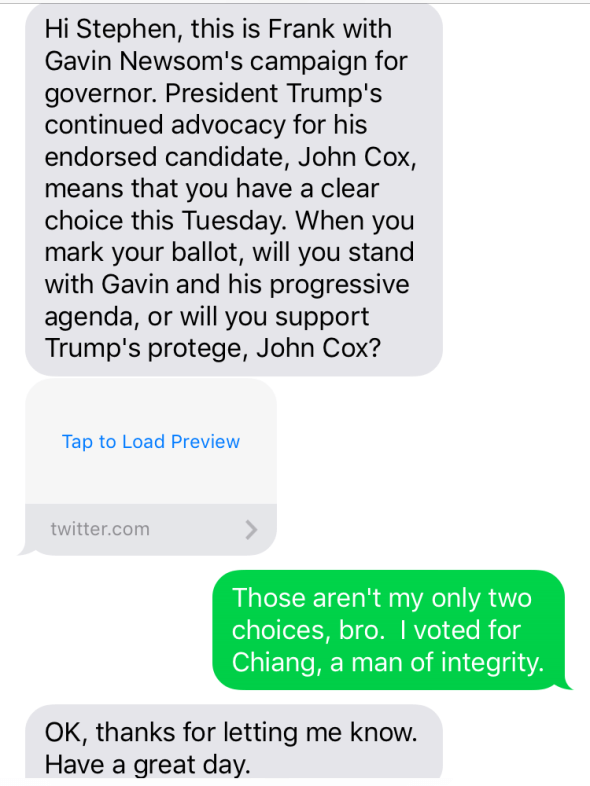
lol progressive agenda. Homeboy’s ex wife is a Fox news personality who was almost Trump’s press secretary:

Texting with a friend about why on Earth LA Times endorsed sorry-ass Villaraigosa:
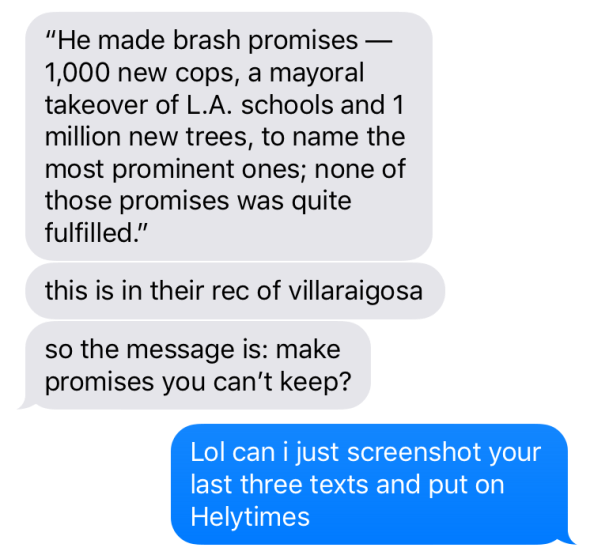
CHIANG for governor. (There’s like 30 candidates).
I’ll miss Jerry Brown.
SENATE:
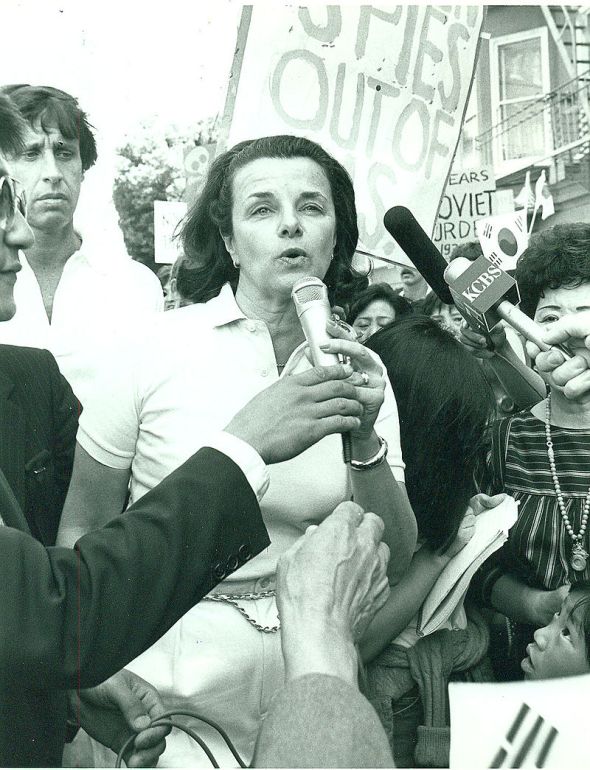
source: Nancy Wong on Wiki
At the last second, early voting, I went for Dianne Feinstein. INSANE that we have an 86 year old Senator, I get primarying Lady D, but Kevin De Leon took money from Cadiz, an evil water company out in the desert that’s trying to drink our national preserve’s milkshake.
Dianne’s career has been at least a little heroic.
Treasurer:

Believe Fiona Ma will join our fine tradition of state treasurers. Well briefed on this one, plus I’ve followed her on Twitter for awhile and I admire how reasonable and boring she is!
Have we forgotten that boring, calm, careful, honest, reasonable, prudent, balanced, patient, informed, these are qualities we want in our elected officials?
Congress:
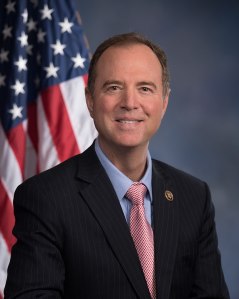
very happy with my own congressman Adam Schiff, who believes in holding the executive branch accountable to the people. Seriously, even if you’re into Trump, ask what he’s done for your district. The answer, spoiler alert, is nothing or worse. (Have been happy with Schiff since a chipper and bright and positive young man from his office gave me, a constituent with a request, a tour of the Capitol in 2015. All politics is local.)
For everything else I’m not well informed enough and deferred to LA Times:
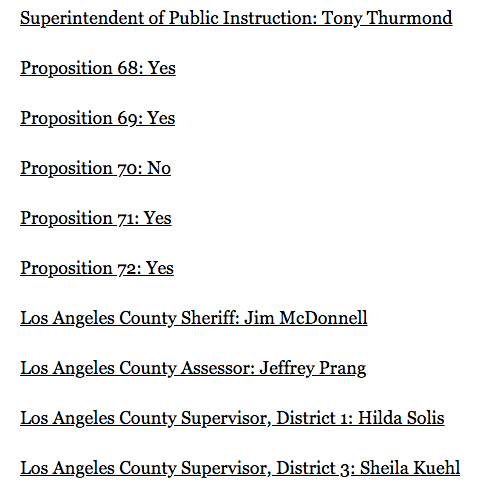
though I kind of think it’s a cool move to vote NO on every ballot initiative as a kind of protest.
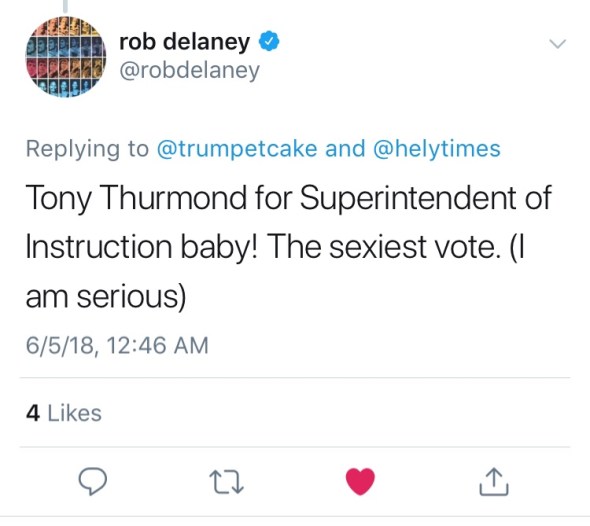
Hearing some love for Tony Thurmond for the supervisor of instruction.
Ridiculous that we have to vote for judges. I hope Governor Chiang moves to make this an appointed office. 
Good luck to all the candidates, and I’m open to having my mind changed if you’re knowledgable!
UPDATE: Owen’s take:
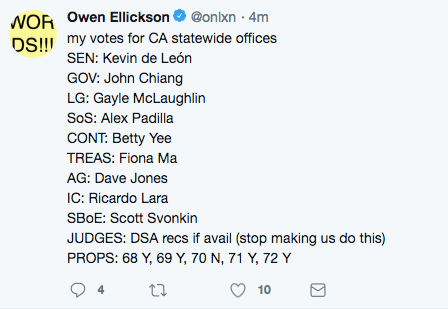
A good citizen and a good man.

UPDATE: if I figure out how I will link to Kara Vallow’s thorough guide. Here she is on the ballot measures:
STATE BALLOT MEASURES
Before we start with candidates, here’s a quick list on ballot measures.
68: YES – $4.1 billion in state bonds for a variety of environmental and climate change needs, drought, flood protection, and coastal protection programs/what government is supposed to do.
69: YES – Ensures certain new transportation revenues – based on a 2017 Jerry Brown law – be dedicated for transportation uses, rather than being diverted elsewhere when other budgetary needs are looking for pots of money.
70: NO – Republicans dreamed this horrible bullshit up to be able to dictate cap and trade reserve fund uses post 2024.
71: YES – The most significant measure on the June ballot. This constitutional amendment states that any law enacted by voters through a proposition only takes effect once the final votes are tallied statewide and the election is certified. Some shenanigans – you may remember – have taken place in the past with too-close-to-call races election night.
72: YES – This is a drought measure that allows you to put a rain capture system on your house without incurring additional taxes when your home is assessed. Duh.
UPDATE: The comments are already lit with takes!
Conan on Hans Gruber
Posted: June 4, 2018 Filed under: America Since 1945, TV Leave a comment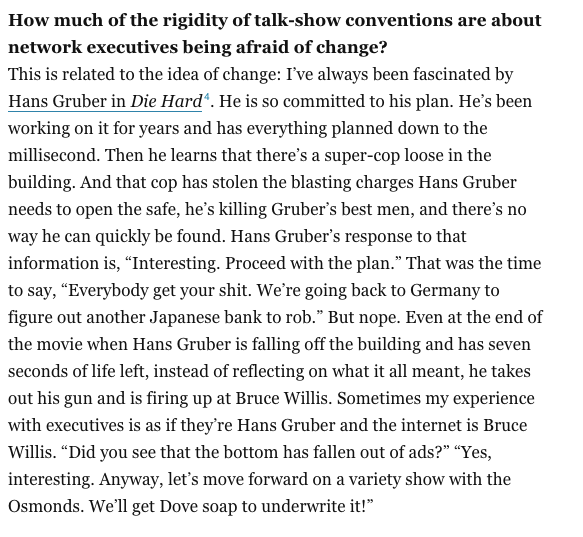
from this Vulture interview

Smerwick harbor
Posted: June 4, 2018 Filed under: Ireland Leave a comment

Poke into the history of just about any place in Ireland and sooner or later you’ll find an event of such violence and sorrow as to be almost ridiculous. Take Smerwick harbor. Here in 1580 six hundred luckless Italian and Spanish soldiers got massacred:
According to Grey de Wilton’s account, contained in a despatch to Elizabeth I of England dated 11 November 1580, he rejected an approach made by the besieged Spanish and Italian forces to agree terms of a conditional surrender in which they would cede the fort and leave. Lord Grey de Wilton claimed that he insisted that they surrender without preconditions and put themselves at his mercy, and that he subsequently rejected a request for a ceasefire. An agreement (according to Grey de Wilton) was finally made for an unconditional surrender the next morning, with hostages being taken by English forces to ensure compliance. The following morning, an English force entered the fort to secure and guard armaments and supplies. Grey de Wilton’s account in his despatch says “Then put I in certain bands, who straight fell to execution. There were six hundred slain.“
Shannon Luxton on Wiki took this photo of the massacre site:

According to the folklore of the area, the execution of the captives took two days,
Ask yourself — would you rather be beheaded day one, or day two?
with many of the captives being beheaded in a field known locally in Irish as Gort a Ghearradh(the Field of the Cutting); their bodies later being thrown into the sea. The veracity of these accounts was long disputed, until a local field known as Gort na gCeann (the Field of the Heads) was investigated by 21st-century archaeologists and found to be full of 16th-century skulls.
The Field of the Cutting. Jeezus, Ireland. And how about this monument to the heads?

Dáibhí Ó Bruadair on Wiki
Even for the time the Smerwick mass beheading was considered a bit much. Sir Walter Raleigh was in on it. Later his involvement was used against him.

Behead and ye shall be beheaded: eventually it was his turn:
Raleigh was beheaded in the Old Palace Yard at the Palace of Westminster on 29 October 1618. “Let us dispatch”, he said to his executioner. “At this hour my ague comes upon me. I would not have my enemies think I quaked from fear.” After he was allowed to see the axe that would be used to behead him, he mused: “This is a sharp Medicine, but it is a Physician for all diseases and miseries.” According to biographers, Raleigh’s last words (as he lay ready for the axe to fall) were: “Strike, man, strike!”
Some four hundred thirty-eight years post Smerwick, the Spanish, Italians and Irish are on the verge of an England-less European Union. That my friends is called winning the long game.
facepalm
Posted: June 3, 2018 Filed under: America Since 1945, food, Wonder Trail 6 Comments the article that set me off was:

which caused my eyes to roll out of my head. I was just in Portland, and the food was awesome! It’s a “foodie paradise” because it’s in the Willamette Valley, on the Columbia River, near the North Pacific Ocean, one of the most bountiful regions on planet Earth, plus it’s prosperous and full of creative and interesting and diverse people.

Seemed hysterical to me to claim it had been ruined.

you’re telling me this place is ruined?
When I first heard the headline version of the story of the Portland Taco Cart Willamette Week Interview Fiasco, I thought “well that’s silly, how far are we taking this idea of cultural appropriation? of course you can make tacos.” But when I heard the details it was like oh ok that’s not very cool.

There was good discussion of it on “Good Food” with Evan Kleiman.

Following which I drove around for an hour or so doing my errands and thinking about it. Sometime later it comes up, shot my Twitter mouth off and RIP my mentions.
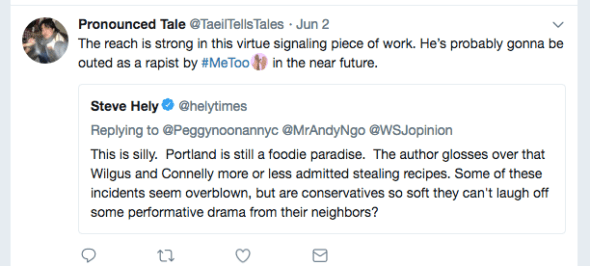
Twitter user put my response to McArdle better than I could:

Also gave me more to think about. I myself took advantage of the easygoing legal rules on map copying in my book, and used Google Maps as the basis for my hand-drawn maps. It felt fine, although I was surprised nobody protects cartographers.

Because there’s no legal protection for Mexican ladies making burritos who are trying to keep their recipe secret, that’s why it made people so mad. Kinda think Connelly and Wingus crossed the line, but whatever, maybe they just made an unfortunate remark in an interview. They don’t deserve death threats for heaven’s sake. Let’s wish them well and hope they make some cool new kind of burrito in the future that everyone can eat joyfully and without compunction.

Like Austin Kleon points out, there’s stealing and stealing.
The Hockney thing at LACMA
Posted: June 2, 2018 Filed under: art history, museum, the California Condition Leave a comment
is cool. Eighty-two portraits in one room, creates a neat effect. Worth a visit if you’re in the area. 
Picture Dostoyevsky
Posted: June 1, 2018 Filed under: Russia, writing 1 Comment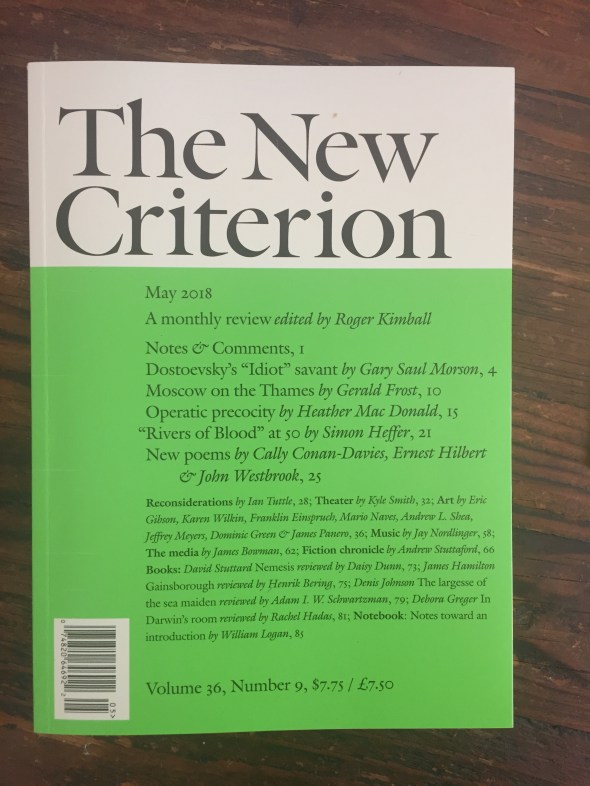
A crazy scene described:

by Gary Saul Morson. Reminded me of Sophia:
The virus
Posted: May 31, 2018 Filed under: America Since 1945 Leave a comment
from the wikipedia page for virus
There are names I could write here of people you’re probably heard of who are professional trolls. They say things which are designed to offend and provoke and irritate and outrage. Then those things (and the person’s name) are spread by people outraged and irritated and provoked and offended.
The Twitter-era disease of spreading bad stuff in order to roast/be outraged by it. It’s like a virus that spreads every time you complain you are sick.
This is not really a profound or insightful observation. But every day I see smart people who I like filling my Twitter timeline or my Internet with sickness and poison in their effort to combat sickness and poison.
Hey, I’m as guilty of this as anyone. (Feels like even discussing this could form part of the problem). The President himself is one of these characters, which makes this problem almost too baffling to contemplate.
There are many lesser demons however where I don’t understand why I’m constantly being exposed to their bad takes, even if it’s in the context of making fun of them or “destroying” them.
It seems like an Internet specific problem. I don’t feel like people used to seek out unusually dumb editorials just to light them up. Maybe they did. Harder, though. The free instant worldwide publishing era was bound to have diseases as well as benefits.
Cable news is a whole other category of this, one big sewer of this disease, far as I can tell.
An unhealthy sitch! I don’t know what the solution is, except some self-discipline to ignore and keep moving.

The hardest part is just getting it out
Posted: May 31, 2018 Filed under: writing, writing advice from other people 1 Comment I consider myself a Sierra Ornelas fan but I would’ve missed this interview with her in Creative Independent had I not caught it over at Bookbinderlocal455

source
Similar advice is given at the beginning of this book:
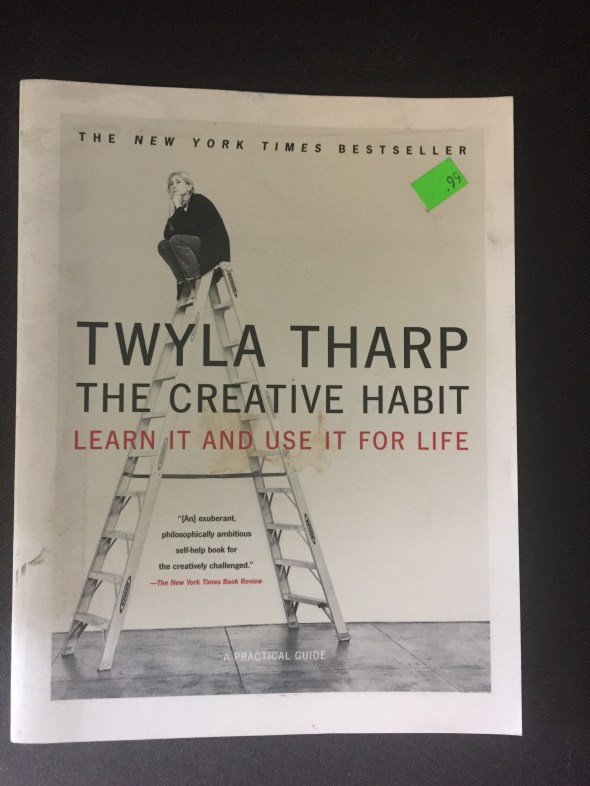
which I found really helpful. The jist being: make it as easy as possible, even automatic, to start creative work.
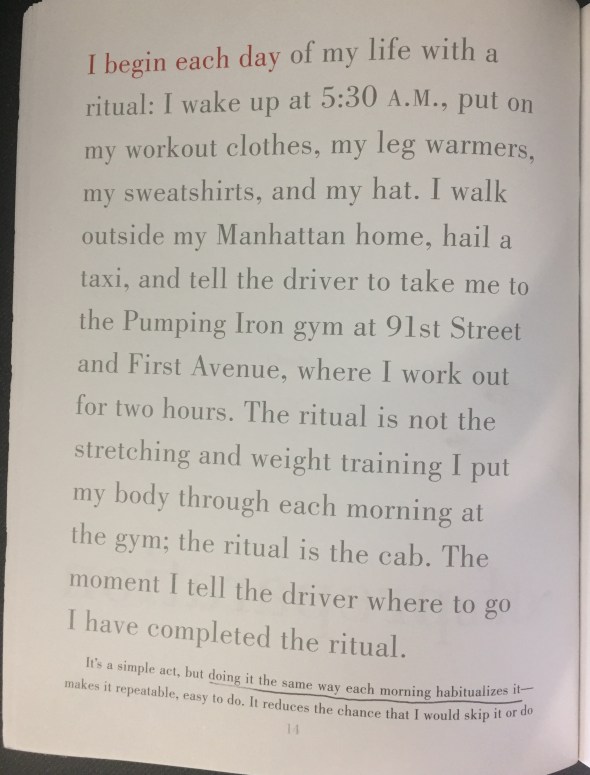
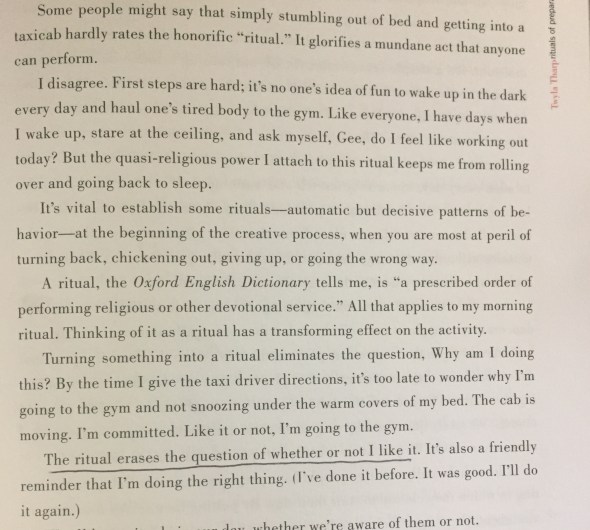
The starting is the hard part.
Henry IV, Part One (and Richard II)
Posted: May 28, 2018 Filed under: actors, plays, shakespeare, writing Leave a comment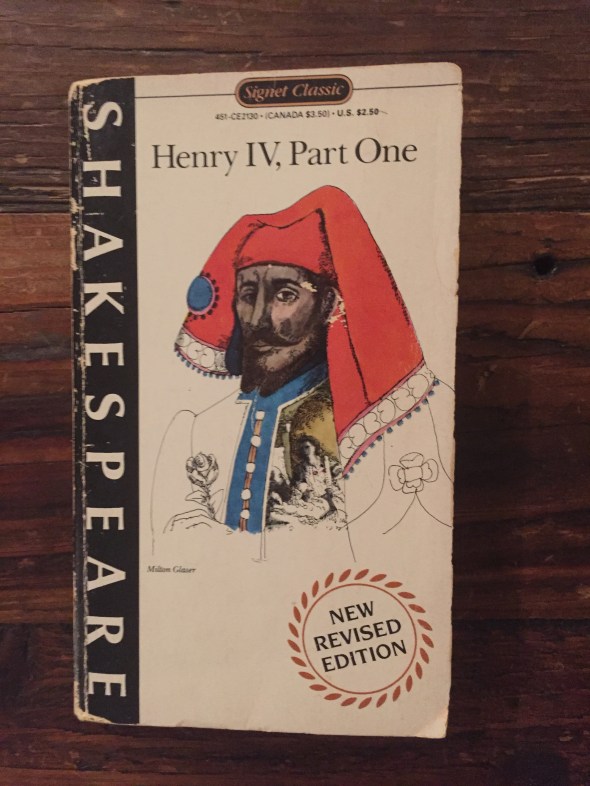
Time to read Henry IV: Part One. Let’s just dive right in. 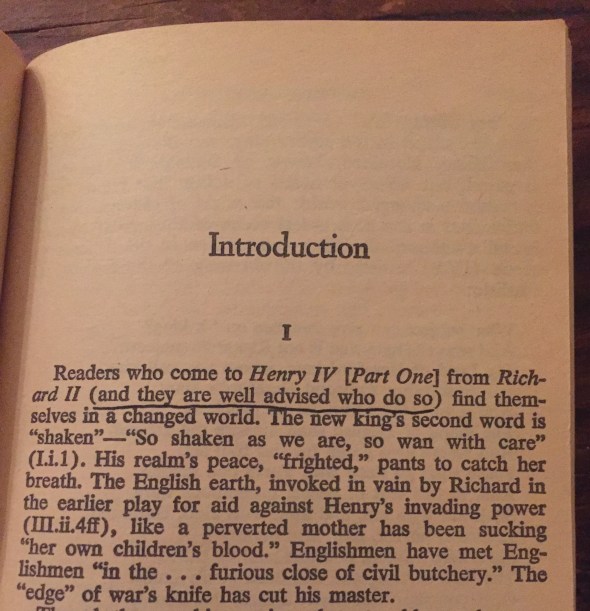
Dammit! Fine.
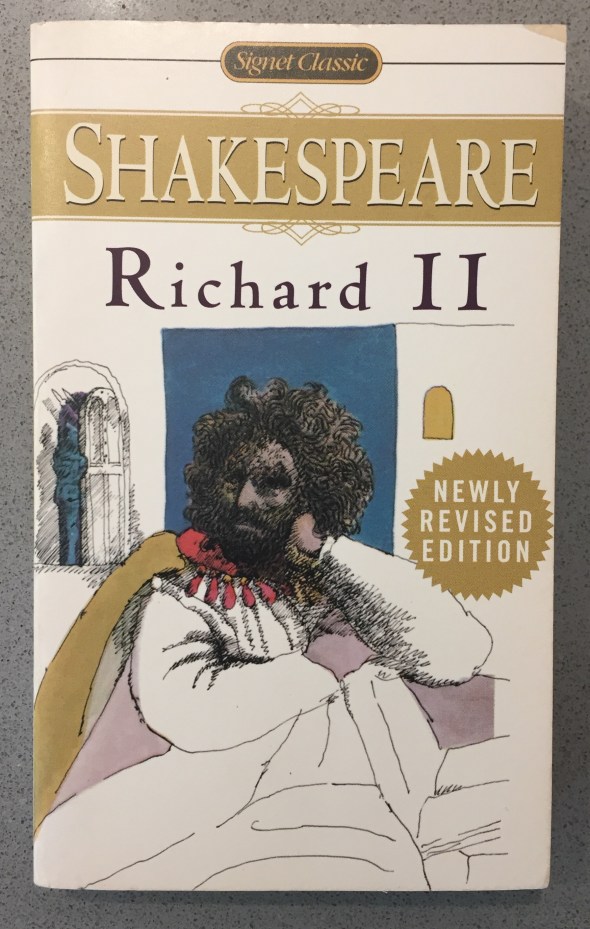
Didn’t get a ton out of Richard II, to be honest with you. Professor McHugh tells me I’ll appreciate it if I read:
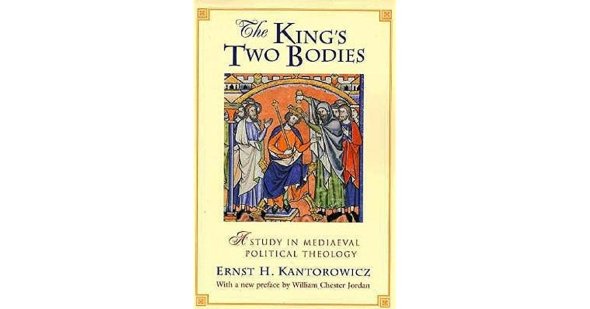
It’s all about how weird and hard it is for frail, weak Richard to be king. He’s got his actual human body, which sucks, trying to rise up to be the Body Politic, the kingly body. Or something.
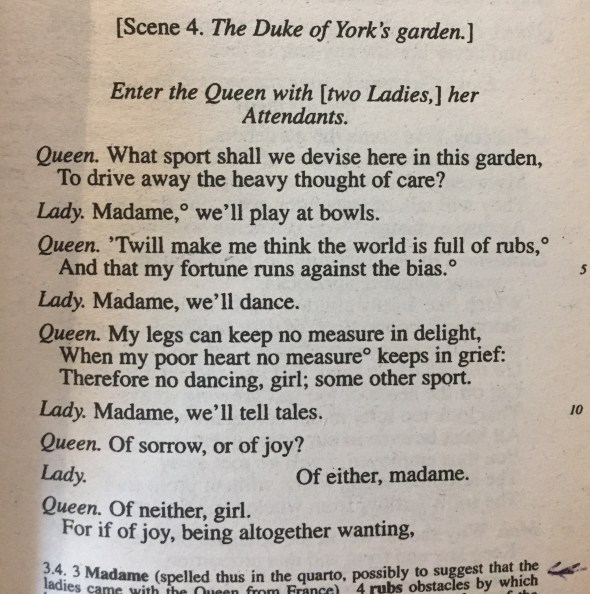
I appear to have marked this for some reason. 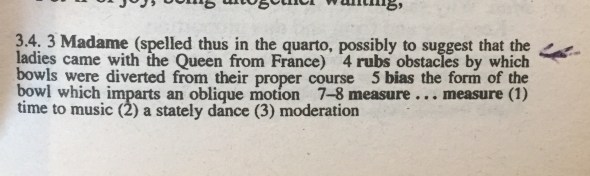
Anyway.
The play is mainly about a king waffling and reversing himself and causing problems. Much of the play is people introducing themselves at a long tournament scene.
We do meet Henry Bolingbroke, who has a son whose thing is prostitutes and being a wastrel:
HENRY BOLINGBROKE
Can no man tell me of my unthrifty son?
‘Tis full three months since I did see him last;
If any plague hang over us, ’tis he.
I would to God, my lords, he might be found:
Inquire at London, ‘mongst the taverns there,
For there, they say, he daily doth frequent,
With unrestrained loose companions,
Even such, they say, as stand in narrow lanes,
And beat our watch, and rob our passengers;
Which he, young wanton and effeminate boy,
Takes on the point of honour to support
So dissolute a crew.HENRY PERCY
My lord, some two days since I saw the prince,
And told him of those triumphs held at Oxford.HENRY BOLINGBROKE
And what said the gallant?
HENRY PERCY
His answer was, he would unto the stews,
And from the common’st creature pluck a glove,
And wear it as a favour; and with that
He would unhorse the lustiest challenger.
That’s really gonna be the problem for the next couple plays: Henry Bolingbrook trying to get help from his son who would rather be unto the stews.
Without his unthrifty son, Bolingbroke still manages to depose Richard.

I got deposed
This makes him King Henry IV, but it’s kind of an unsteady position.
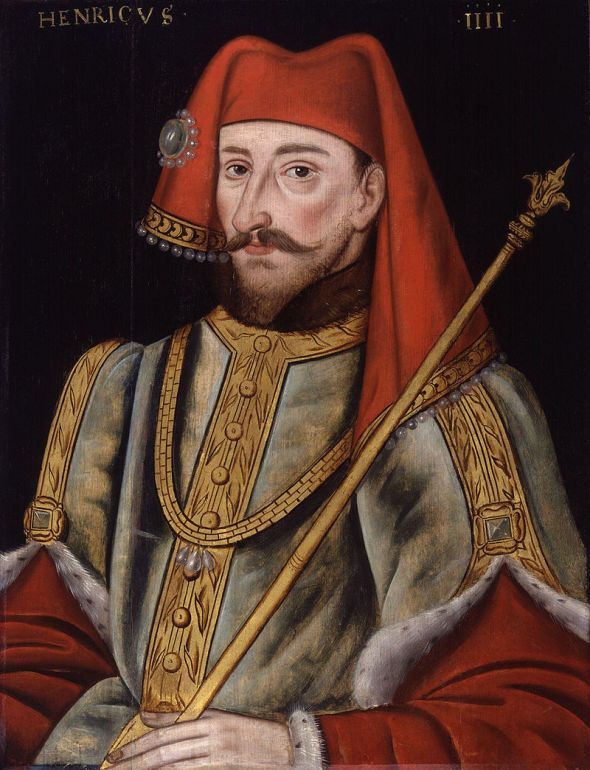
Henry IV feels bad when Richard ends up murdered, so he promises to go on a crusade to Jerusalem:
I’ll make a voyage to the Holy Land
To wash this blood off from my guilty hand.
March sadly after; grace my mournings here,
In weeping after this untimely bier.
And with that we:
FINIS
OK. We’re ready for:
Now, listen. Is reading Shakespeare even a worthwhile thing to do?
The plays were written to be heard, not read.
Right.
When Ben Jonson published his first folio, he was considered uppity for imagining that his plays were worthy of consideration. They were sketches for a whorehouse. You have to imagine Shakespeare’s plays being written between strippers carrying on.
so says Mark Rylance in this New Yorker profile.
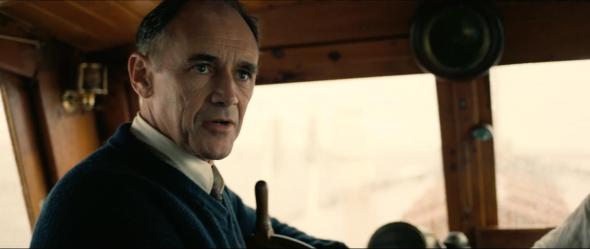
Somewhere I can’t find now — the playbill for Jerusalem? — I read an interview with Rylance where he said something like.
In Shakespeare’s day you wouldn’t say have you seen Hamlet, you’d say have you heard Hamlet. In that sense it was something more like a concert.
(Not an exact quote but close-ish). More from Rylance, in The Telegraph:
He believes that Shakespeare “did not write literature”, claiming it is as bizarre to read his work on paper as it would be to study the Rolling Stones as poets.
“To take a song like Honky Tonk Woman and study it for its literature is fair enough, but if you’re going to then revere it as literature I think you’re doing a disservice to Mick Jagger and Keith Richards who would like it to be revered as a great rock and roll song,” he says.
Cool take.
Is reading Shakespeare as foolish as like, reading Nas raps written down?
So stay civilized, time flies. Though incarcerated your mind dies, I hate it when your moms cries. It kinda makes me want to murder, for real a/I even got a mask and gloves to bust slugs but one love
Both are bursts of verbal exuberance from a chaotic, semi-criminal urban world of blended culture and language.

illustrating a Smithsonian article, “William Shakespeare, Gangster?“
How much was Shakespeare’s Southwark like Crown Heights?
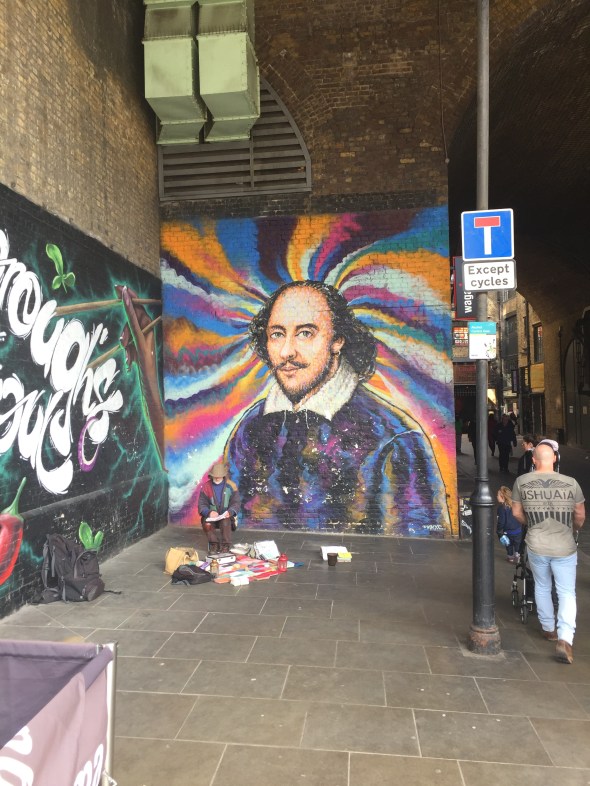
There are some powerful phrases in Henry IV, Part One. I like when Sir Walter Blunt arrives, and the King says he is
Stained with the variation of each soil
Betwixt that Holmedon and this seat of ours.
The story of this play is that Henry (The King) is having a hard time with rebellious Henry Percy, aka Hotspur. Not helping him is his son, Prince Hal, who just likes to party and drink with his pal Falstaff.
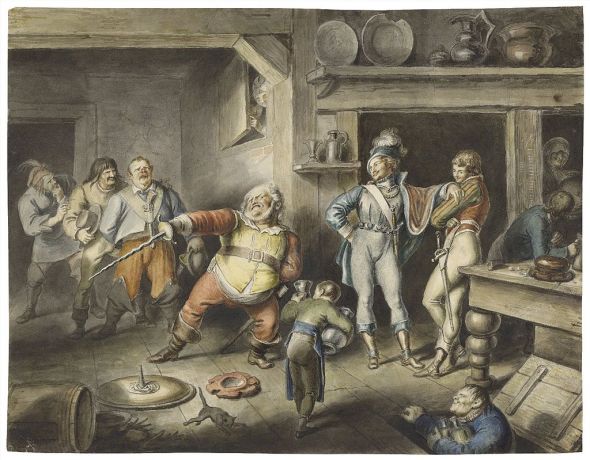
An 1829 watercolor by Johann Heinrich Ramberg of Act II, Scene iv: Falstaff enacts the part of the king.
Hotspur the rebel is a better, more viral example than his own son, and Henry knows it! Driving him nuts.
Spoiler alert: by the end of the play Prince Hal gets his act together somewhat.
He and Hotspur face off at the battle of Shrewsbury.
Hal kills Hotspur.
Hotspur. O Harry, thou hast robbed me of my youth!
I better brook the loss of brittle life
Than those proud title thou hast won of me.
They wound my thoughts worse than thy sword my flesh.
But thought, the slaves of life, and life, time’s fool,
And time, that takes survey of all the world,
Must have a stop. O, I could prophesy,
But that the earthy and cold hand of death
Lies on my tongue. No, Percy, thou art dust,
And food for —
[Dies]
The big star of Henry IV, Part One, the guy who gets a lot of stage time for his clowning, is Falstaff.
Falstaff. Why, there it is! Come, sing me a bawdy song, make me merry. I was as virtuously given as a gentleman need to be, virtuous enough: swore little, diced not above seven times a week, went to a bawdy house not above once in a quarter of an hour, paid money that I borrowed three or four times, lived well, and in good compass, and now I live out of all order, out of all compass.
Are you laughing your ass off yet?
Look, we’ll have more to say about Falstaff

Orson Welles as Falstaff
who will soon be played, right here in Los Angeles in a limited run next month, at the Japanese Garden of the West Los Angeles VA Healthcenter, by Tom Hanks.

(I believe tickets are free to veterans).

We intend to file a dispatch.

Just when one is about to give up on the whole project of reading the Henriad, you get to Henry IV, Part II.
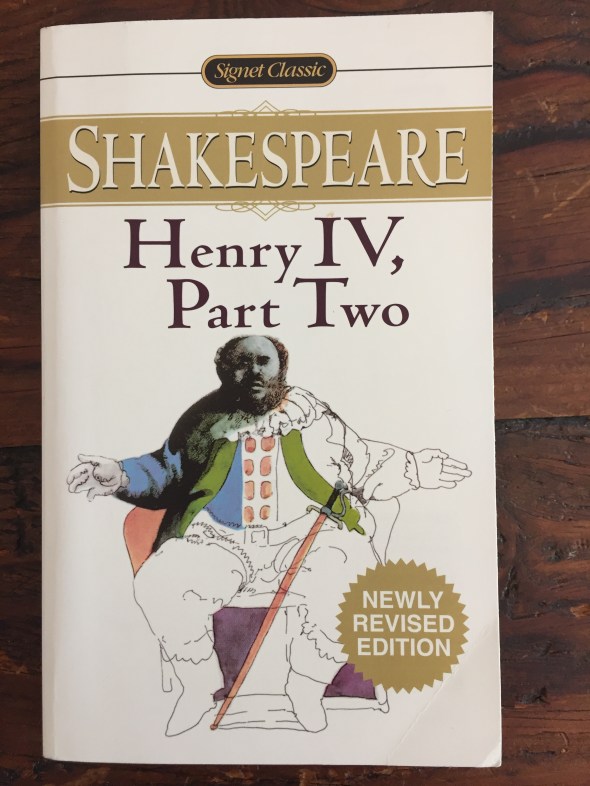
which starts off with a friggin bang:
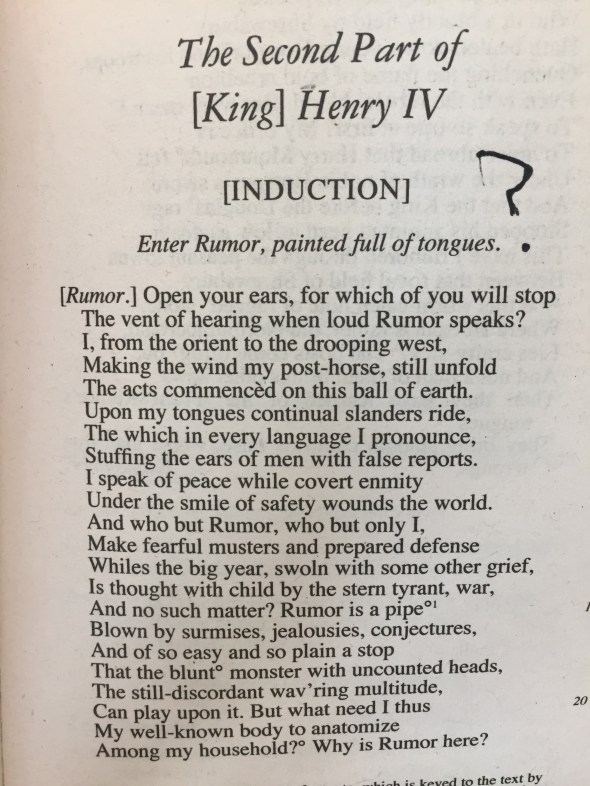
for which of you will stop
The vent of hearing when loud Rumor speaks?
Now we’re getting somewhere.

Will Kempe
Let’s pick up there next time! Thanks for joining Henry IV study buddies!
Great Blasket Island
Posted: May 27, 2018 Filed under: architecture, Ireland Leave a comment
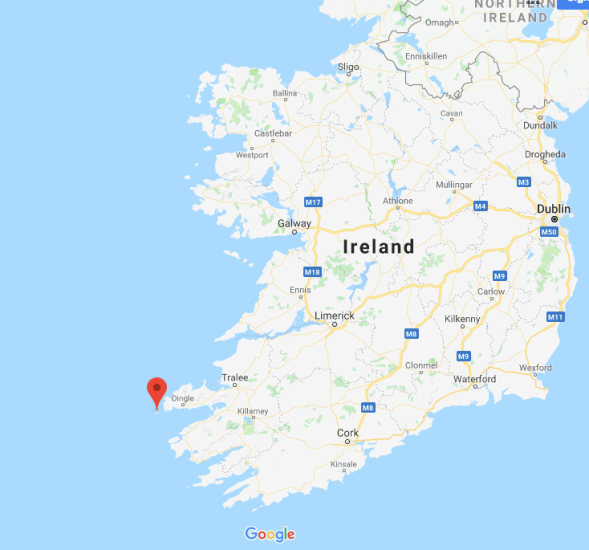
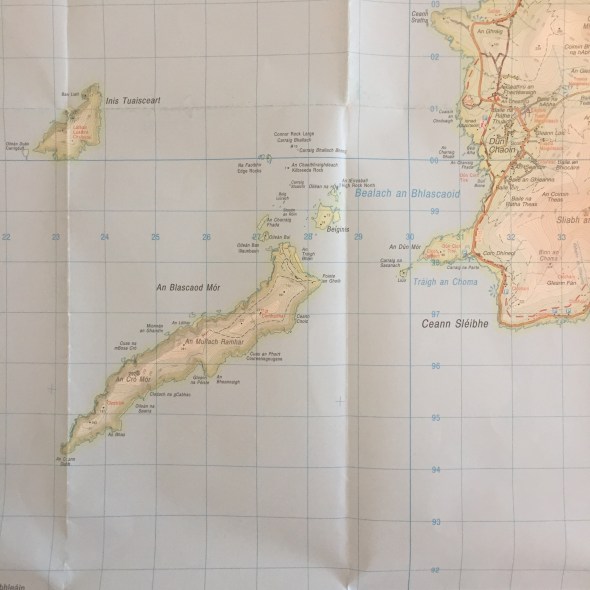
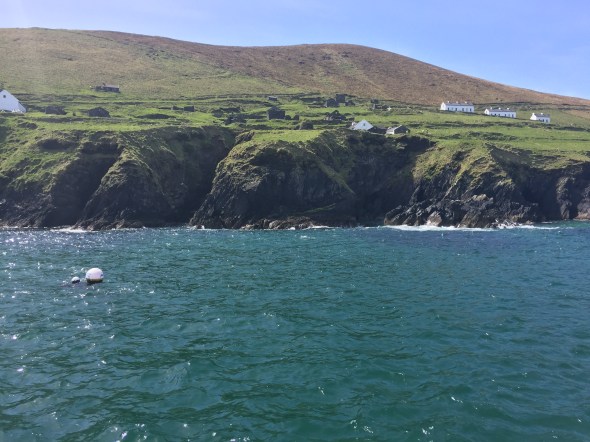
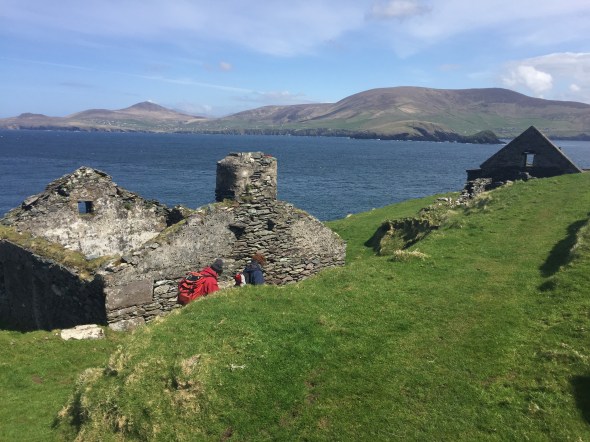
Not easy to get there:
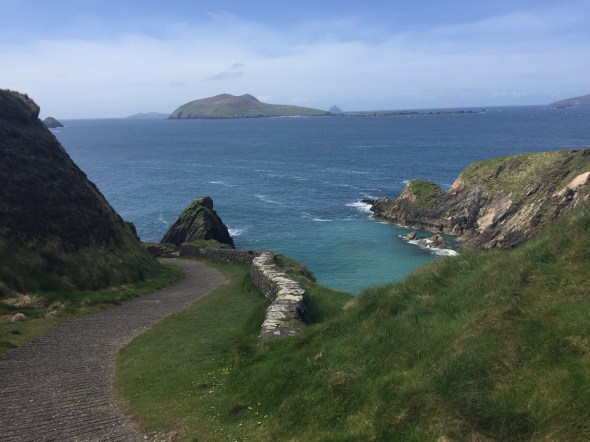
Lucky weather on this particular day.

What we might call in the USA a ghost town. The last inhabitants were evacuated in 1953:

In 1907 Norwegian linguist Carl Marstander went there to learn Irish from this local:
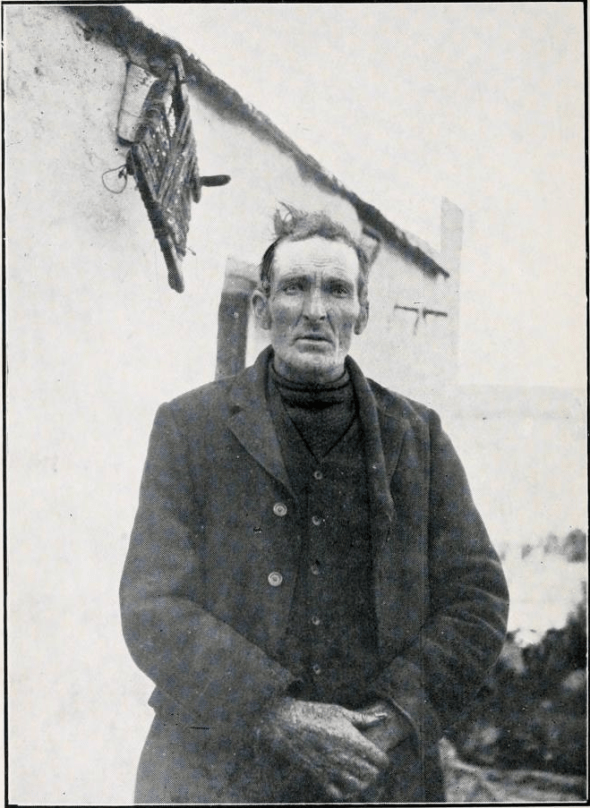
Tomás Ó Chriomhthain, who later wrote a book about his life there.

source
Some other islanders wrote, or dictated, their own tales of their hard and primitive lives on this island:
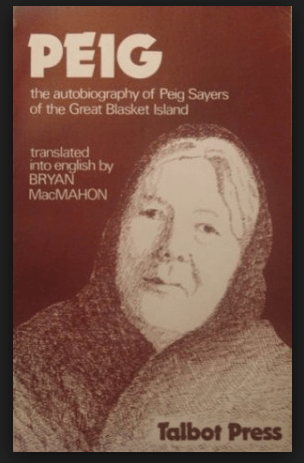
As a girl Peig Sayers was supposed to go join a friend in America, but the friend had an accident and couldn’t send the money. She gave birth to eleven children. Five died.

Peig’s book was (I’m told, by the excellent tour guide) forced on generations of Irish schoolchildren. In 1941 this genre of rural Irish poverty literature was parodied by Flann O’Brien / Brian O’Nolan / Myles na gCopaleen:
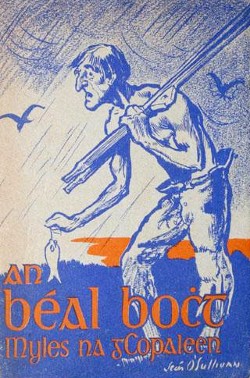
An Béal Bocht is set in Corca Dhorcha, (Corkadoragha, Corkadorkey), a remote region of Ireland where it never stops raining and everyone lives in desperate poverty (and always will) while talking in “the learned smooth Gaelic”.
 Blasket life does seem rough.
This was my second visit, and both times I’ve been blown away by the Blasket Center / Ionad Blaiscoid Mhór.

The architecture and design and use of landscape on this building is just very cool:

Here’s it from afar:

Couldn’t find online who the architect was, so I emailed them, and they wrote back and told me:
The architect of the centre was Ciaran O’Connor, who is the State architect nowadays.
State architect. Cool.

Really impressed with the Irish OPW. They take care of their treasures, Ireland.
Let’s wish him well!
Stars of the National Gallery of Ireland
Posted: May 26, 2018 Filed under: art history, Ireland 3 Comments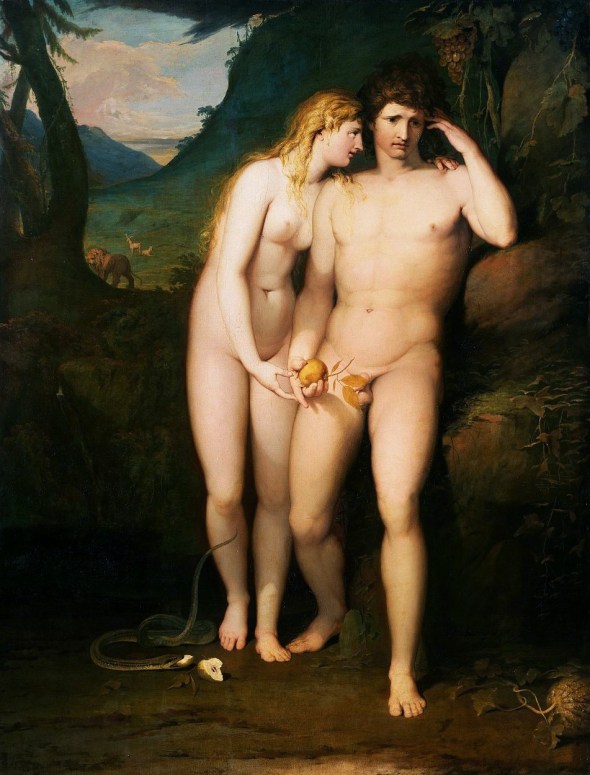
source
“Pwease Adam? One bite? You’ll like it I promise!”
The Temptation of Adam, by James Barry.
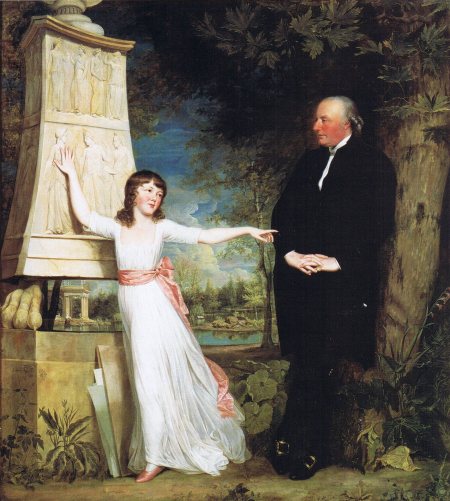
Look grandfather, I am but a nymph!
Lady Caroline Crichton and her grandpa?

Gareth Reid, Graham Norton (from Gareth Reid’s website)
In 1992, Norton’s stand-up comedy drag act as a tea-towel clad Mother Teresa of Calcutta in the Edinburgh Festival Fringe made the press when Scottish Television’s religious affairs department mistakenly thought he represented the real Mother Teresa.
This one by Paul Henry, A Connemara Village, is under some serious copyright I guess.
Robert Ballagh’s portrait of Neil Brown “communicates the resolute character for which he was known.” I’ll say! Copyright plus reproductions don’t do it justice. Worth seeing if you’re in Dublin.
Also good:
John Kindness, Gay Byrne

The Liffey Swim by Jack Yeats (W. B’s brother) won Ireland’s first Olympic medal, a silver in 1924 in the category Painting. (Jean Jacoby took gold).
Irish Abortion
Posted: May 23, 2018 Filed under: Ireland 2 Comments
The Irish are having a referendum on whether to repeal the 8th amendment to their constitution, which bans abortion.

Struck by the bluntness of the campaigning. 
Feel the experience of growing up around Catholic anti-abortion people helps explain things that seem incomprehensible to some liberal pals, like how people could vote for Roy Moore (or Donald Trump).
People hate abortion protesters. ‘They’re so shrill and awful.’ But they think babies are being murdered. What are they supposed to be (saying)? ‘Well, hmmm … that’s not cool.
(Don’t ask who said that.)
Is anyone convincing anyone on this one?

Not easy to find “new” arguments on the abortion issue but Irish novelist Sally Rooney made a point I hadn’t heard stated so cleanly before:
Yes. Pregnancy, entered into willingly, is an act of generosity, a commitment to share the resources of life with another incipient being. Such generosity is in no other circumstances required by law. No matter how much you need a kidney donation, the law will not force another person to give you one. Consent, in the form of a donor card, is required even to remove organs from a dead body. If the foetus is a person, it is a person with a vastly expanded set of legal rights, rights available to no other class of citizen: the foetus may make free, non-consensual use of another living person’s uterus and blood supply, and cause permanent, unwanted changes to another person’s body. In the relationship between foetus and woman, the woman is granted fewer rights than a corpse. But it’s possible that the ban on abortion has less to do with the rights of the unborn child than with the threat to social order represented by women in control of their reproductive lives.
(Don’t like how they spell fetus as foetus. One of many upsetting aspects.)
Anyway, let’s see who wins! The vote goes down Friday.
Fairy Fort
Posted: May 23, 2018 Filed under: Ireland Leave a comment

My assistant shows us the height of the walls.

This part of the fort was too well defended to explore.
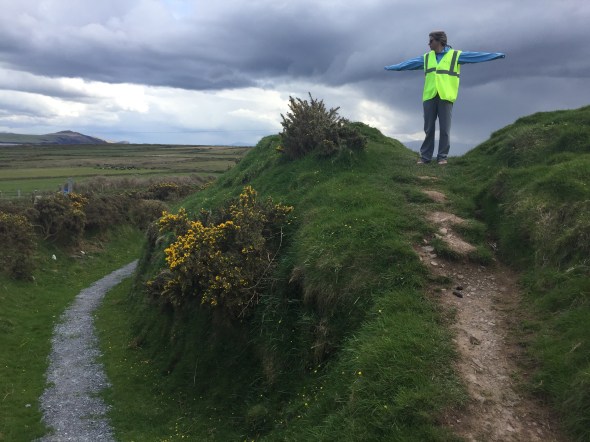
Note the width of the walls. This suggests fairies of significant size. Not inconceivable that these fairies stood as high as five or even six apples.

The inhabitants of the fort wallow in safety.
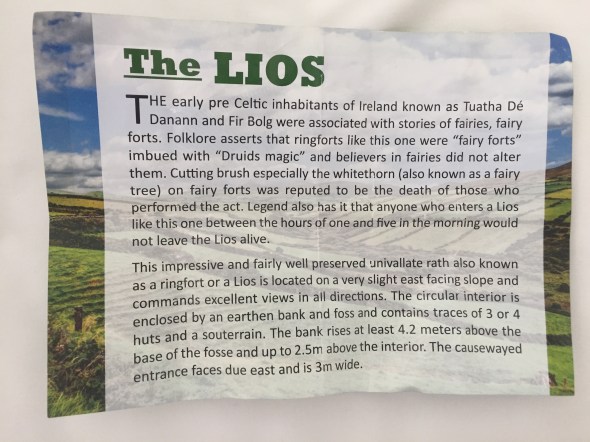
Many forts like this can be found in Ireland, sometimes billed as “Iron Age forts.” When was the Iron Age?
The Iron Age is taken to end, also by convention, with the beginning of the historiographical record. This usually does not represent a clear break in the archaeological record; for the Ancient Near East the establishment of the Achaemenid Empire c. 550 BC (considered historical by virtue of the record by Herodotus) is usually taken as a cut-off date, in Central and Western Europe the Roman conquests of the 1st century BC. The Germanic Iron Age of Scandinavia is taken to end c. AD 800, with the beginning Viking Age.
The distant and mysterious past, in other words. 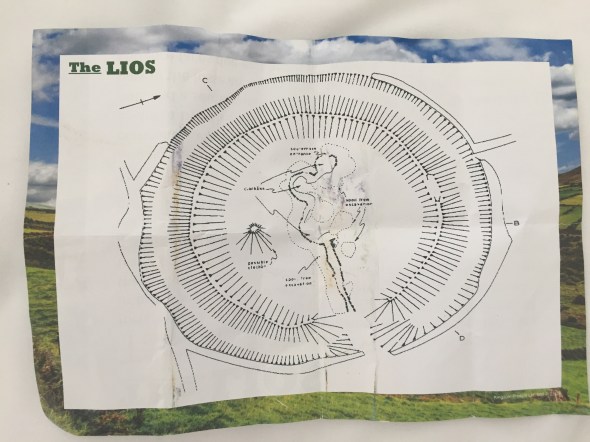
Insight into the “crazed Wisconsin” period of Irish history.

Queens Elizabeth
Posted: May 21, 2018 Filed under: beheadings, Ireland, war, women Leave a comment
O’Byrne’s corpse was butchered and for months the head and quarters hung on pike staffs on the wall over Dublin Castle drawbridge. Several months later the pickled head was presented to the council secretary at London by an English adventurer, who was disappointed to find that the head-silver due on O’Byrne* had already been paid in Ireland. The queen was angered that, “the head of such a base Robin Hood was brought solemnly into England“.
Read enough Irish history and you gain a grudging respect for Queen Elizabeth I. She’s always delivering withering remarks and savage putdowns to people giving her bad news.
In 1603, Elizabeth had seemed a foolish old woman, as men looked expectantly to a Stuart king. By 1630, when Stuart kings had proved rather a disappointment, she had become the paragon of all princely virtues.
-
Christopher Haigh,The Golden Age of Queen Elizabeth I—Myth or Reality? Awake! magazine, 2010, 1/10 pp. 19-22.
At this remove, who can say if Elizabeth was a foolish old woman or one of history’s canniest power players, but I’m team power player. She managed to survive rebellions, armadas, assassination attempts, plagues, you name it!

Just surviving as a queen is tough.

The (current) Queen did not seem that into the wedding. The Crown may have fooled us into thinking the Queen is more woke than she is.
* was reading about O’Byrne after seeing convo on Tom Ricks’ twitter about the origin of “firebrand”
This guy Jordan Peterson
Posted: May 20, 2018 Filed under: heroes, writing Leave a comment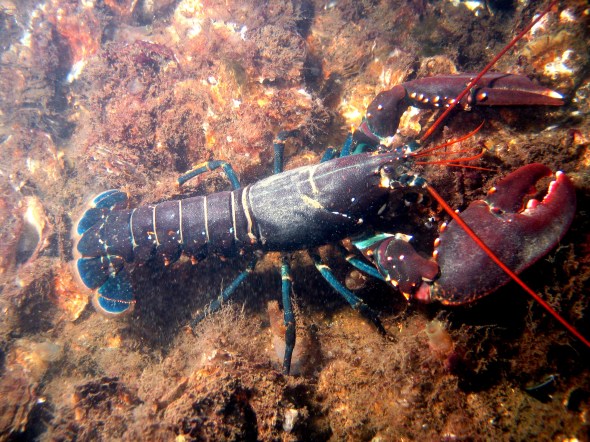
The first piece of advice in his book
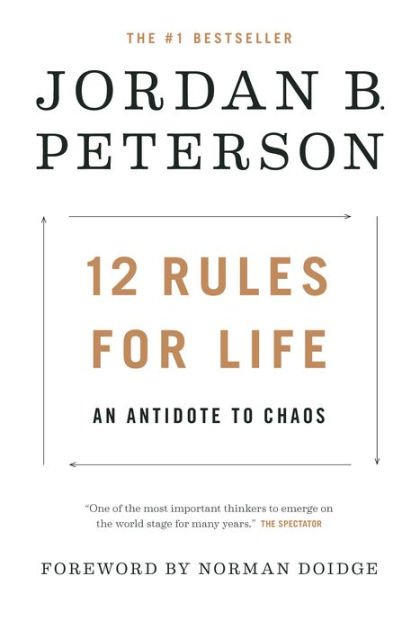
is
stand up straight with your shoulders back, as a lobster does.
(paraphrase)
That’s as far as I think I will get in the book, partly because I seem to have misplaced my copy.
Stand up straight with your shoulders back is good, valuable advice, a reminder we could all use, maybe even worth the price of the book.
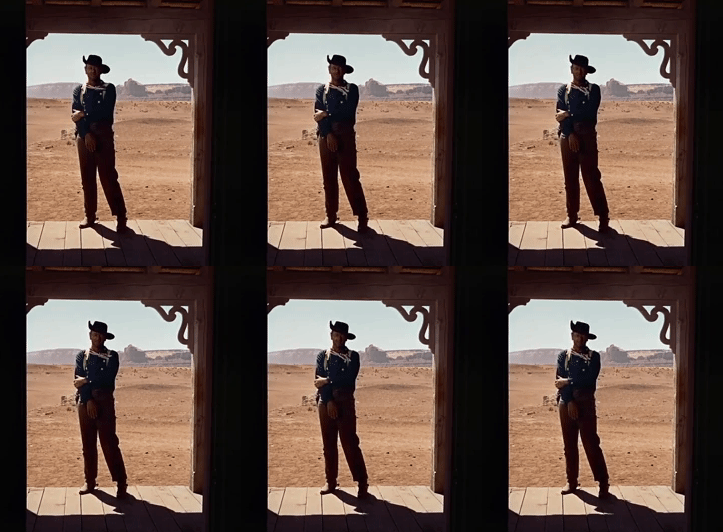
(Surely Joan Didion and Jordan Peterson could agree on John Wayne?)
Is it funny that stand up straight with your shoulders back is literally the opposite advice of :

(reminded of course of:
) Greaney once claimed the secret to life is posture. He’s rarely 100% wrong.
Is Jordan Peterson just a less chill Joseph Campbell?
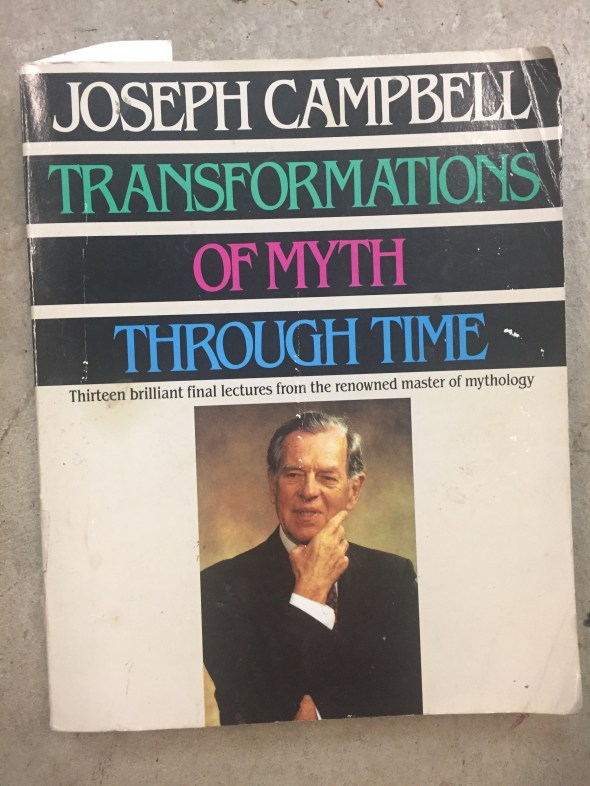
If you are a lost young man may I suggest Joe Campbell will let you into a lot of the same insights in a way that may be less likely to prove distasteful to women you are trying to get with?
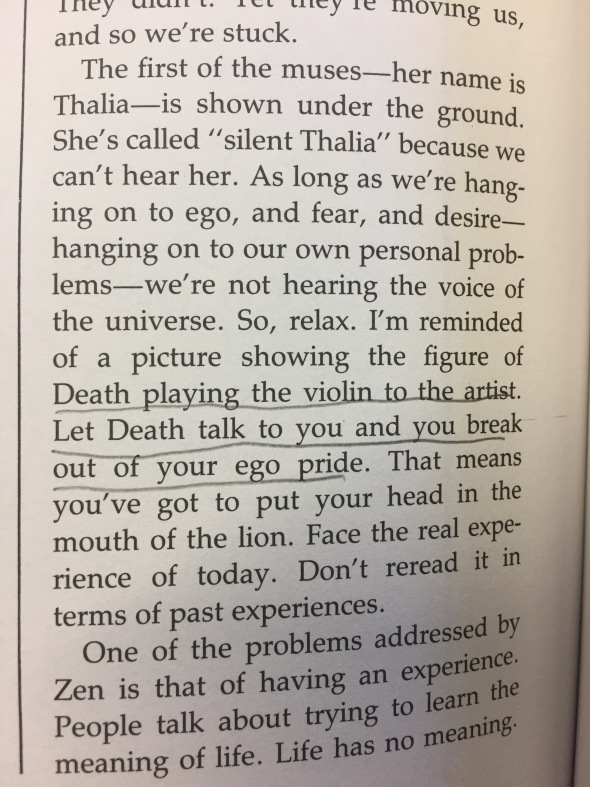
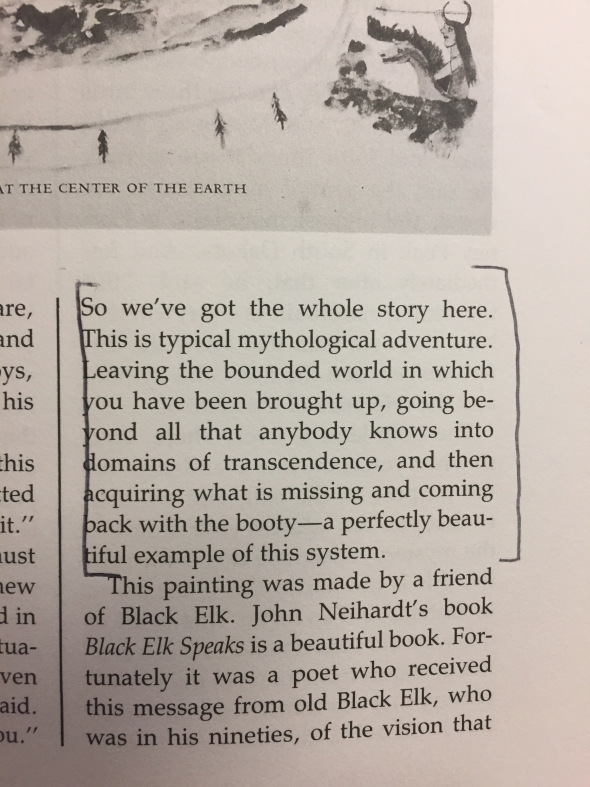
Very YouTubable and less into being aggro.
Tom Wolfe observation
Posted: May 18, 2018 Filed under: America, America Since 1945, writing Leave a comment
There are, of course, all sorts of gradations of status, of power, of wealth, influence and comfort, but it is impossible to break America down into classes in the old European sense. “But there is a … dividing line, and above that line are those who have bachelor degrees or better from a four-year college or university. Below that are the people who don’t. That line is becoming a gulf that grows wider and wider. “Like the rest of the West, we live in a highly bureaucratic world and it’s impossible today to advance to the heights of ambition without that bachelor’s degree, without being a part of what Vance Packard used to call ‘the diploma elite.'”
Had to go looking for the source of that one, it was in a 2005 Duke commencement speech. How about this?:
For the last four years, you have been trained to be the leaders of an extraordinary nation. There has never been anything like it. … It is the only country I know of in which immigrants with a totally different culture, a totally different language, can in one-half of a generation, if they have the numbers and a modicum of organization, take over politically a metropolis as large as, say, Miami.
As a Tom Wolfe (Ph.d) superfan, kind of disappointed by the tributes and obituaries. Most of them seemed pretty limp. Maybe because so many journalists were so in awe of him, they seemed to sputter on about the same stuff and barely touch on the vastness of Wolfe’s interests and insights.
Best one imo was Louis Menand. (Update: lol whoops hadn’t seen Friend of Helytimes’ Graeme Wood’s.)
Felt literary world scoffed at

but how many 74 year olds would take on a seven hundred page book about college, rap, hookup culture, basketball, and attempts to get in the head of (among others) a nineteen year old female virgin? A little crazy but I thought it was cool! Also came pretty close to predicting the Duke lacrosse scandal.

If you hunger for Wolfe at full Wolfeness might I recommend his 2006 Jefferson Lecture?:
According to Korean War lore, a Navy fighter pilot began shouting out over the combat radio network, “I’ve got a Mig at zero! A Mig at zero! I’ve got a Mig at zero!” A Mig at zero meant a Soviet supersonic fighter plane was squarely on his tail and could blow him out of the sky at any moment. Another voice, according to legend, broke in and said, “Shut up and die like an aviator.” Such “chatter,” such useless talk on the radio during combat, was forbidden. The term “aviator” was the final, exquisite touch of status sensitivity. Navy pilots always called themselves aviators. Marine and Air Force fliers were merely pilots. The reward for reaching the top of the ziggurat was not money, not power, not even military rank. The reward was status honor, the reputation of being a warrior with ultimate skill and courage–a word, by the way, strictly taboo among the pilots themselves. The same notion of status honor motivates virtually every police and fire fighting force in the world.
Wolfe wrote about what was amusing. Even in say crime or war he found the amusement. A serious writer who was also funny. Not enough of those.
Gotta see if I can find this somewhere:

Weird London landmark
Posted: May 16, 2018 Filed under: beer, London Leave a comment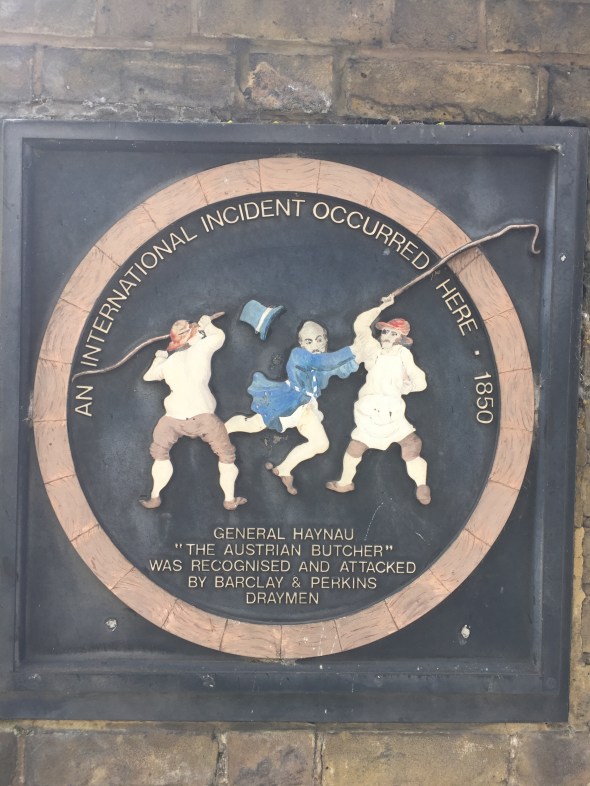
Sounds like he had it coming!
Julius Jacob von Haynau (14 October 1786 – 14 March 1853) was an Austrian general who was prominent in suppressing insurrectionary movements in Italy and Hungary in 1848 and later. While a hugely effective military leader, he also gained renown as an aggressive and ruthless commander. His soldiers called him the “Habsburg Tiger”; those opponents who suffered from his brutality called him the “Hyena of Brescia” and the “Hangman of Arad”.
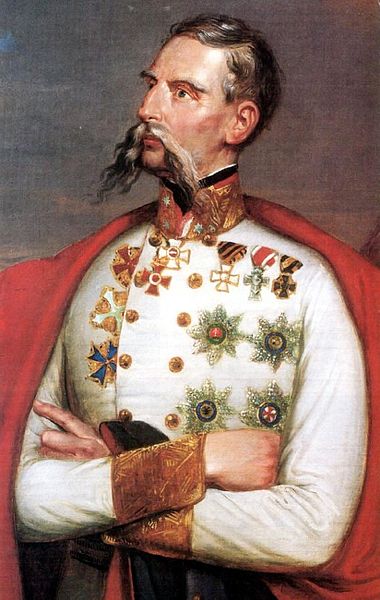
I hope they mashed him good! The mashers were from the Anchor brewery. They should make Courage beer again.

Ominous remark from Charlie Munger
Posted: May 14, 2018 Filed under: business Leave a comment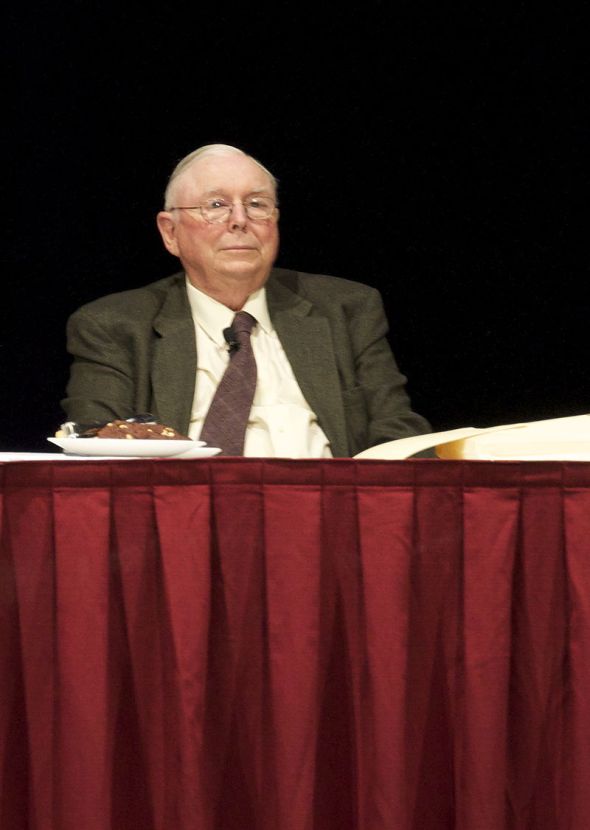
Nick on Wikipedia. Thanks Nick!
Andy Serwer, editor in chief of Yahoo Finance, reports on our favorite former weatherman:
Finally, I asked Munger about Trump and reminded him he had previously said that the president’s behavior exhibited a form of “sickness.”
“I’ve mellowed because I consider it counterproductive to hate as much as both parties now hate, and I have disciplined myself,” Munger said. “I now regard all politicians higher than I used to. I did that as a matter of self-preservation.” He said that he had re-read “The Decline and Fall of the Roman Empire,” and it made him “feel a lot better about the current political scene. We’re way ahead of the Romans at the end.”
That’s a pretty low bar, I pointed out.
“It’s very helpful — I suggest you try it,” Munger replied. “Politicians are never so bad that you don’t live to want them back. There will come a time when the people who hate Trump will wish that he was back
Summertime
Posted: May 14, 2018 Filed under: music 1 Comment
As Long June approaches, gravitating towards songs with Summertime in the title.
Six years after this song came out and I’m ready to be into it! Love that Lana Del Rey used to perform as Lizzie Grant before reinventing as Lana Del Rey, love that she went to Fordham, love the idea of Summertime Sadness, love “feeling alive” as an idea, love Calvin Harris etc remixes, love it all!
 Helytimes


.jpg)


