Tennessee Williams -> Dr. Feelgood -> Mark Shaw
Posted: January 6, 2015 Filed under: America Since 1945, Florida, Kennedy-Nixon, writing 1 Comment
Tennessee Williams in Key West
Strewn around the apartment of a friend this weekend were a few biographies of Tennessee Williams.
I don’t know much about Tennessee Williams. The most I ever thought about him was when I was briefly in Key West, where there’s some stuff named after him. He jockeys with Hemingway for local literary mascot top honors.
Looking into it, I found this stupefying article about TW in Key West from People Magazine, 1979, entitled “In His Beloved Key West, Tennessee Williams Is Center Stage In A Furor Over Gays.” Tough reading, on the one hand. On the other maybe we can find some optimism in how far things have come?:
Some of Williams’ friends are less sanguine—notably Rader (whom some Key West sympathizers find faintly hysterical on the subject). “It has been terrible,” he said in the aftermath. “Tenn won’t talk about it, but it has been really frightening what’s happening in Key West and in this house. The worst was the night they stood outside his front porch and threw beer cans, shouting, ‘Come on out, faggot.’ When they set off the firecrackers, I remember thinking, ‘God, this is it. We’re under attack. They’ve started shooting.’ ”
Williams’ imperturbability springs both from a matter of principle (he once defined gallantry as “the grace with which one survives appalling experiences”) and from a diminished interest in the Key West gay scene. “I’ve retired from the field of homosexuality at present,” he explains, “because of age. I have no desires—isn’t that strange? I have dreams, but no waking interest.” The thought does not cheer him. “I’ve always found life unsatisfactory,” he says. “It’s unsatisfactory now, especially since I’ve given up sex.” His own problems seem far more pressing to him than the city’s. “I suspect I’ll only live another two years,” says Williams, 68, who tipples white wine from morning on and complains of heart and pancreas disorders. “I’ve been working like a son of a bitch since 1969 to make an artistic comeback. I don’t care about the money, but I can’t give up art—there’s no release short of death. It’s quite painful. I’ll be dictating on my deathbed. I want people to say, ‘Yes, this man is still an artist.’ They haven’t been saying it much lately.”
As a consummate prober of human passions, Williams does have theories on why his adopted hometown is under siege. “There are punks here,” he explains. “That’s because a couple of gay magazines publicized this place as if it were the Fire Island of Florida. It isn’t. One Fire Island is quite enough. But it attracted the wrong sort of people here: the predators who are looking for homosexuals. I think the violence will be gone by next year.”
Other residents seem less willing to wait. The leader of the anti-gay forces, the Reverend Wright, says Anita Bryant has promised to come to Key West to help his crusade. Recalling nostalgically the days when “female impersonators and queers were loaded into a deputy’s automobile and shipped to the county line,” Wright warns: “We’ll either have a revival of our society or the homosexuals will take it over in five years.”
Mamet On Williams
This morning happened to pick up in my garage this book by David Mamet:
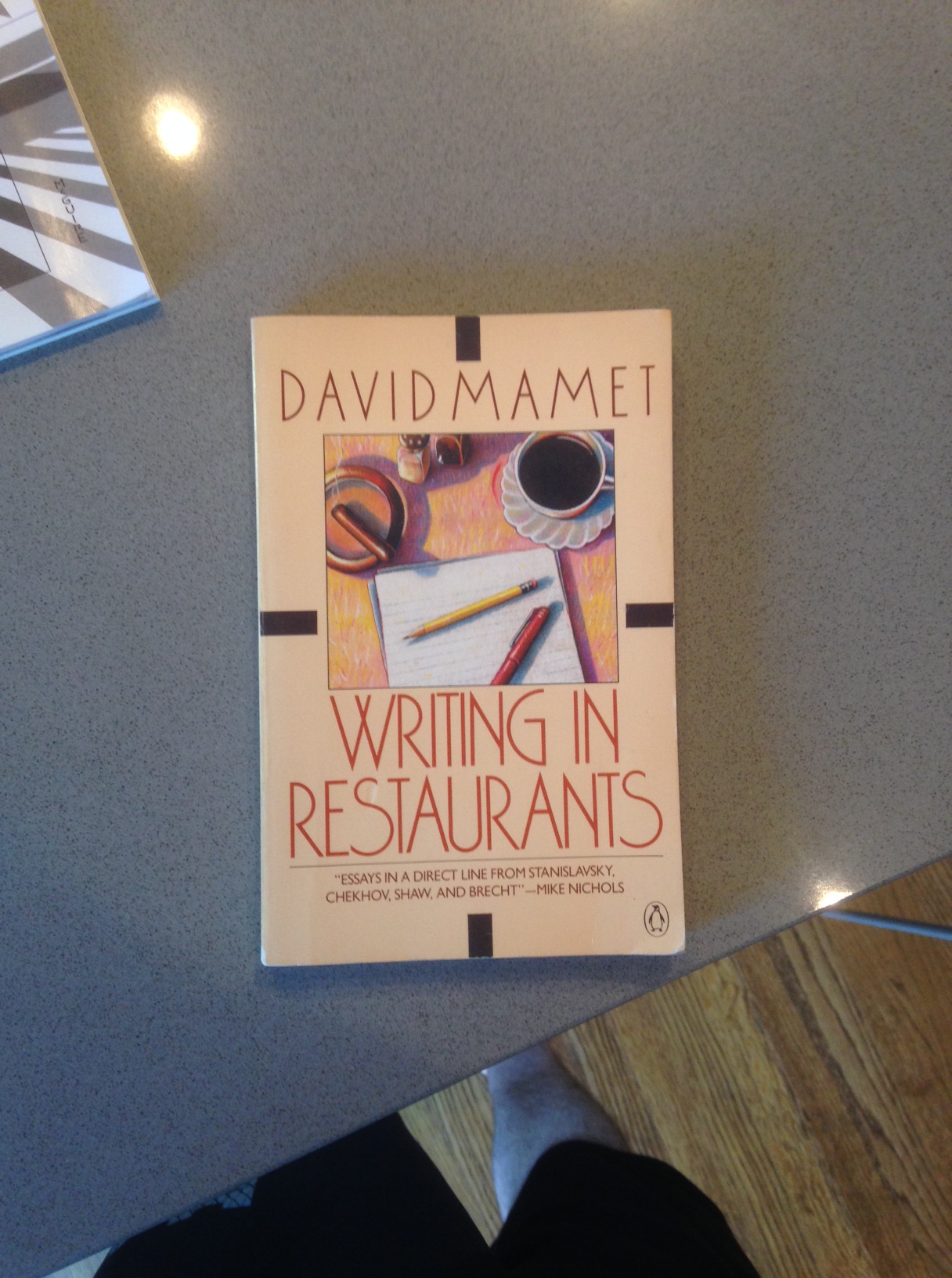
Highly recommend this book as well as Three Uses Of The Knife, True And False: Heresy And Common Sense For The Actor, and On Directing Film by Mamet. All short, all tight, all good. (His subsequent nonfiction seems to me to be a bit… deranged?)
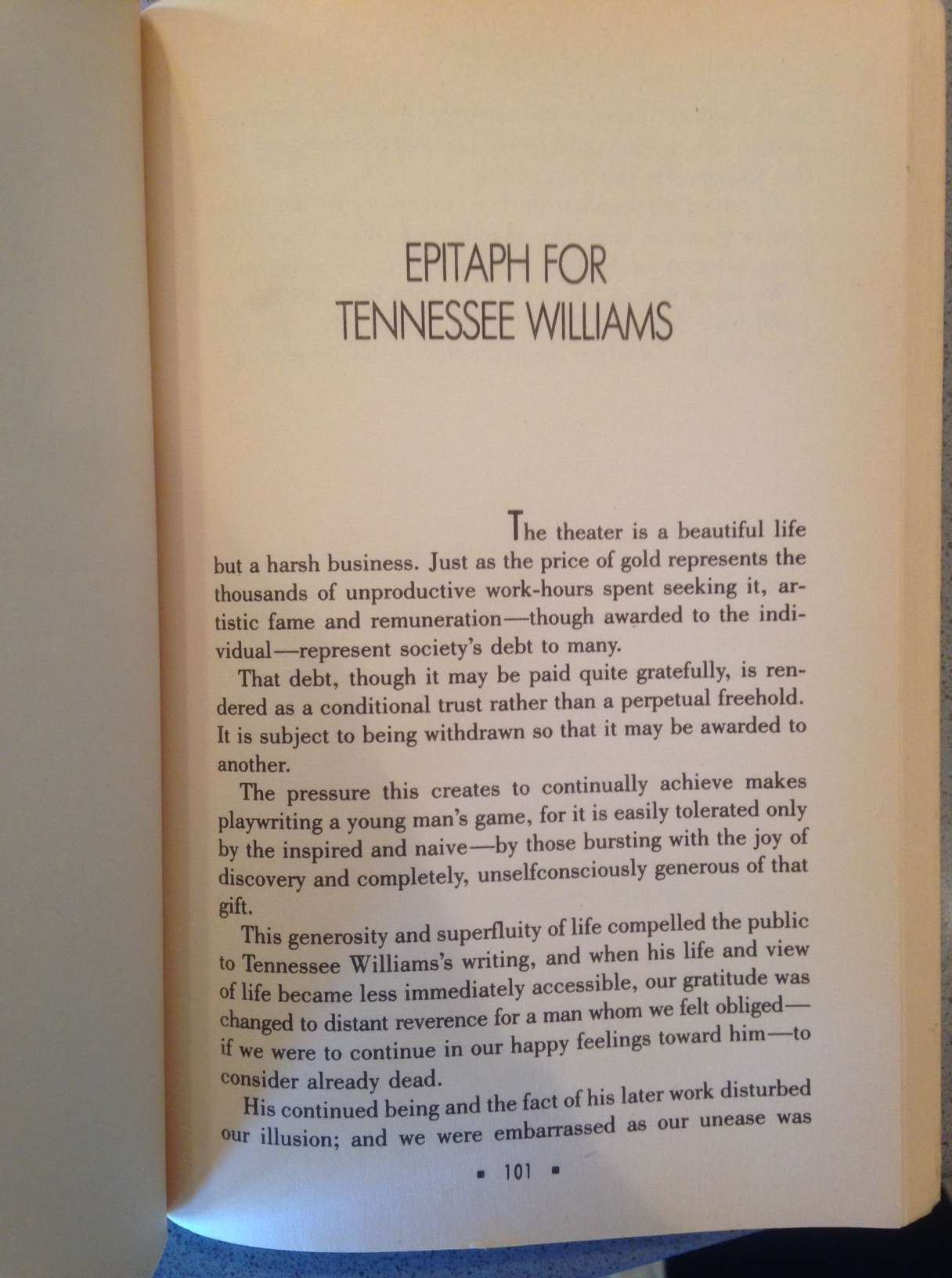
Found this, and thought it was great:

Wikipedia Hole
Reading about Tennessee on Wikipedia, I learn:
As he had feared, in the years following Merlo’s death Williams was plunged into a period of nearly catatonic depression and increasing drug use resulting in several hospitalizations and commitments to mental health facilities. He submitted to injections by Dr. Max Jacobson – known popularly as Dr. Feelgood – who used increasing amounts of amphetamines to overcome his depression and combined these with prescriptions for the sedative Seconal to relieve his insomnia. Williams appeared several times in interviews in a nearly incoherent state, and his reputation both as a playwright and as a public personality suffered.[citation needed] He was never truly able to recoup his earlier success, or to entirely overcome his dependence on prescription drugs.
Let’s learn about Dr. Feelgood, who was also screwing up Elvis and everybody else cool back then:
John F. Kennedy first visited Jacobson in September 1960, shortly before the 1960 presidential election debates.[9] Jacobson was part of the Presidential entourage at the Vienna summit in 1961, where he administered injections to combat severe back pain. Some of the potential side effects included hyperactivity, impaired judgment, nervousness, and wild mood swings. Kennedy, however, was untroubled by FDA reports on the contents of Jacobson’s injections and proclaimed: “I don’t care if it’s horse piss. It works.”[10] Jacobson was used for the most severe bouts of back pain.[11] By May 1962, Jacobson had visited the White House to treat the President thirty-four times.[12][13]
By the late 1960s, Jacobson’s behavior became increasingly erratic as his own amphetamine usage increased. He began working 24-hour days and was seeing up to 30 patients per day. In 1969, one of Jacobson’s clients, former Presidential photographer Mark Shaw, died at the age of 47. An autopsy showed that Shaw had died of “acute and chronic intravenous amphetamine poisoning.”
Well, that takes us to
Mark Shaw
Born Mark Schlossman on the Lower East Side, a pilot on the India/China Hump in World War II, he became a freelance photographer for life:
In 1953, probably because of his fashion experience, Shaw was assigned to photograph the young actress Audrey Hepburn during the filming of Paramount’s Sabrina. Evasive at first, Hepburn became comfortable with Shaw’s presence over a two-week period and allowed him to record many of her casual and private moments.


He married singer Pat Suzuki, “who is best known for her role in the original Broadway production of the musical Flower Drum Song, and her performance of the song “I Enjoy Being a Girl” in the show”:

In 1959, Life chose Shaw to photograph Jacqueline Kennedy while her husband, Senator John F. Kennedy, was running for President.[8] This assignment was the beginning of an enduring working relationship and personal friendship with the Kennedys that would eventually lead to Shaw’s acceptance as the Kennedys’ de facto “family photographer”. He visited them at theWhite House and at Hyannisport; during this time he produced his most famous photographs, portraying the couple and their children in both official and casual settings. In 1964, Shaw published a collection of these images in his book The John F. Kennedys: A Family Album, which was very successful.
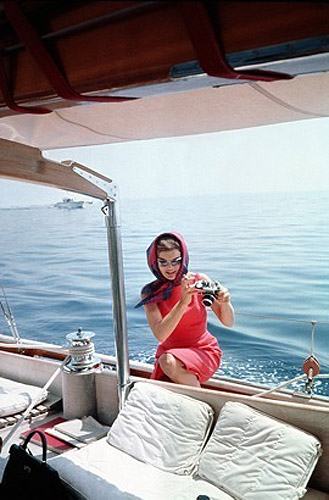

A bunch of even better ones can be found here, at the tragically disorganized website of the Monroe Gallery, they’re stamped “No Reproduction Without Permission” so whatever. Don’t miss this one.
Here’s another famous Jackie Mark photo’d:

And finally:

St. Vincent
Posted: January 5, 2015 Filed under: America Since 1945, music, women 3 Comments
photo by Tod Seelie.
What red-blooded American hasn’t considered suicide?
HIGHEST recommendation to Marc Maron’s interview with St. Vincent. A truly fantastic interview with a person who can’t seem to say anything except in some intriguing, innovative way. Super cool.
A fun twist in my listening experience: I was skipping over the first ten minutes as is my way with WTF Podcast, but because there’s a mini-interview or teaser at the beginning, I listened to about five minutes of Andrea Martin, thinking she was St. Vincent:
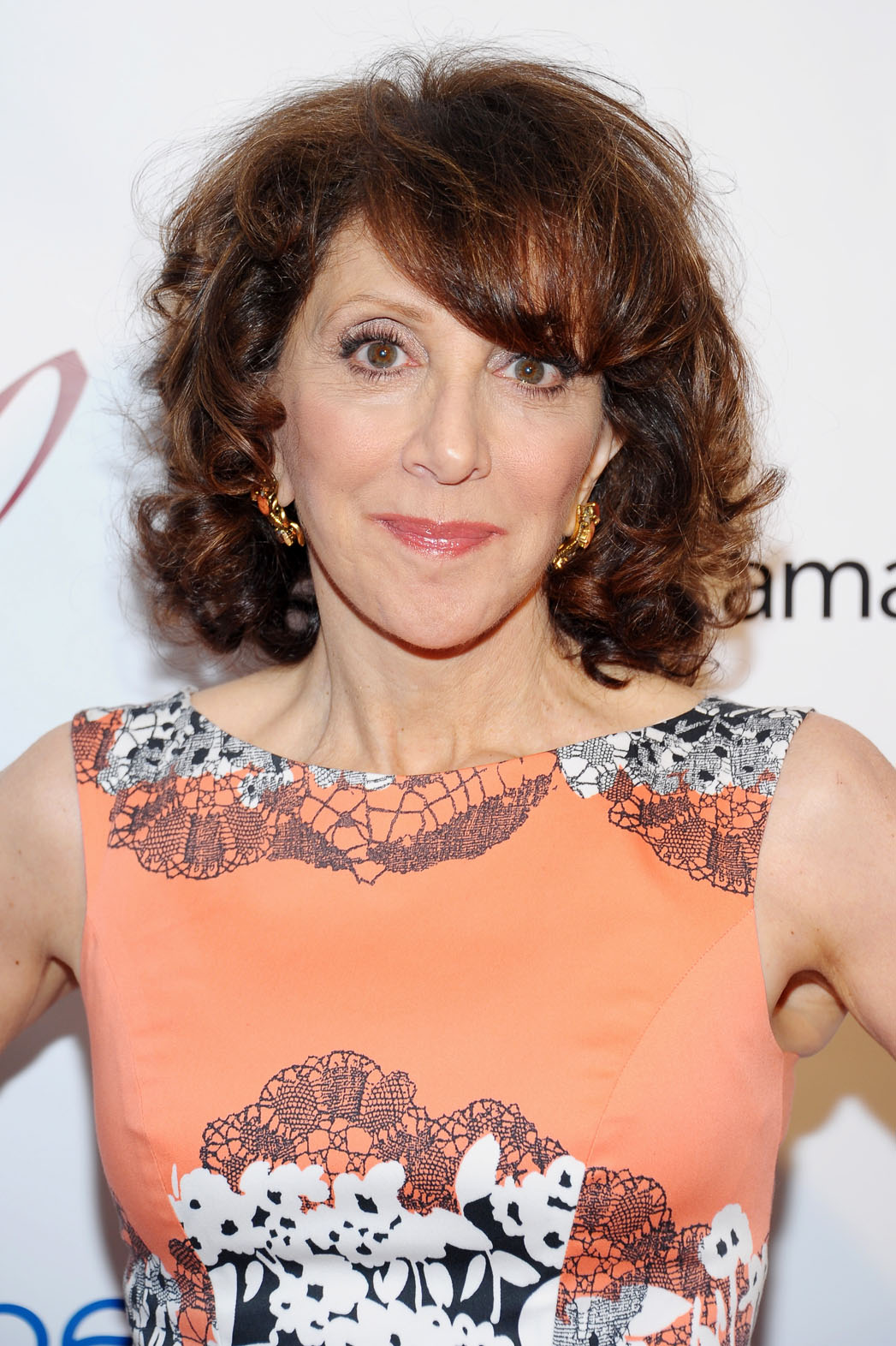
Getty images.
A trippy misunderstanding.
One thing St. Vincent said is that, as a kind of resolution, she’s stopped reading the Internet, and she’s found — whether it’s causation or correlation — that she’s been more present, has more interesting conversations with people she comes across.
Unachievable goal for me, but I am gonna continue to think about this, she’s onto something here.
Today I looked at Drudge Report, as I so often do, and was like “what the fuck am I doing looking at this garbage?” Some headlines from Drudge today, punctuation is sic:
Students slam Michelle O lunch rules: Mayo banned
‘SEX SLAVE’ MET QUEEN
PAPER: Unending Anxiety of ‘ICYMI’ World…
Man posts bail — with sneakers…
BABIES WITH ‘THREE PARENTS’ TO BE LEGAL WITHIN WEEKS…
RISE OF THE MACHINES: ROBOTS LEARN WATCHING YOUTUBE!
Al Qaeda warns of new ‘undetectable’ bombs to be used against US…
Egypt defence lawyers challenge police in gay bathhouse case…
Do I need this garbage in my life?
(Hey serious q: if any HelyTimes readers know some best practices for using photos from the internet on your non-profit blog please lemme know. Can’t find a source for that St. Vincent photo, not sure how hard I should try/worry about that)
Donna Douglas Dies
Posted: January 3, 2015 Filed under: actors, America Since 1945, TV 2 Comments
Had a slight crush on Elly May from The Beverly Hillbillies (pictured, left, above) which was on TV somehow in my youth.

The Beverly Hillbillies was more influential than people give it credit for. At one time I looked into remaking it but the rights situation made it unfeasible for me. Also, we might already have that story on TV in other forms. Watching funny rubes who have a lots of money but aren’t “high class” fills a lot of TV hours.
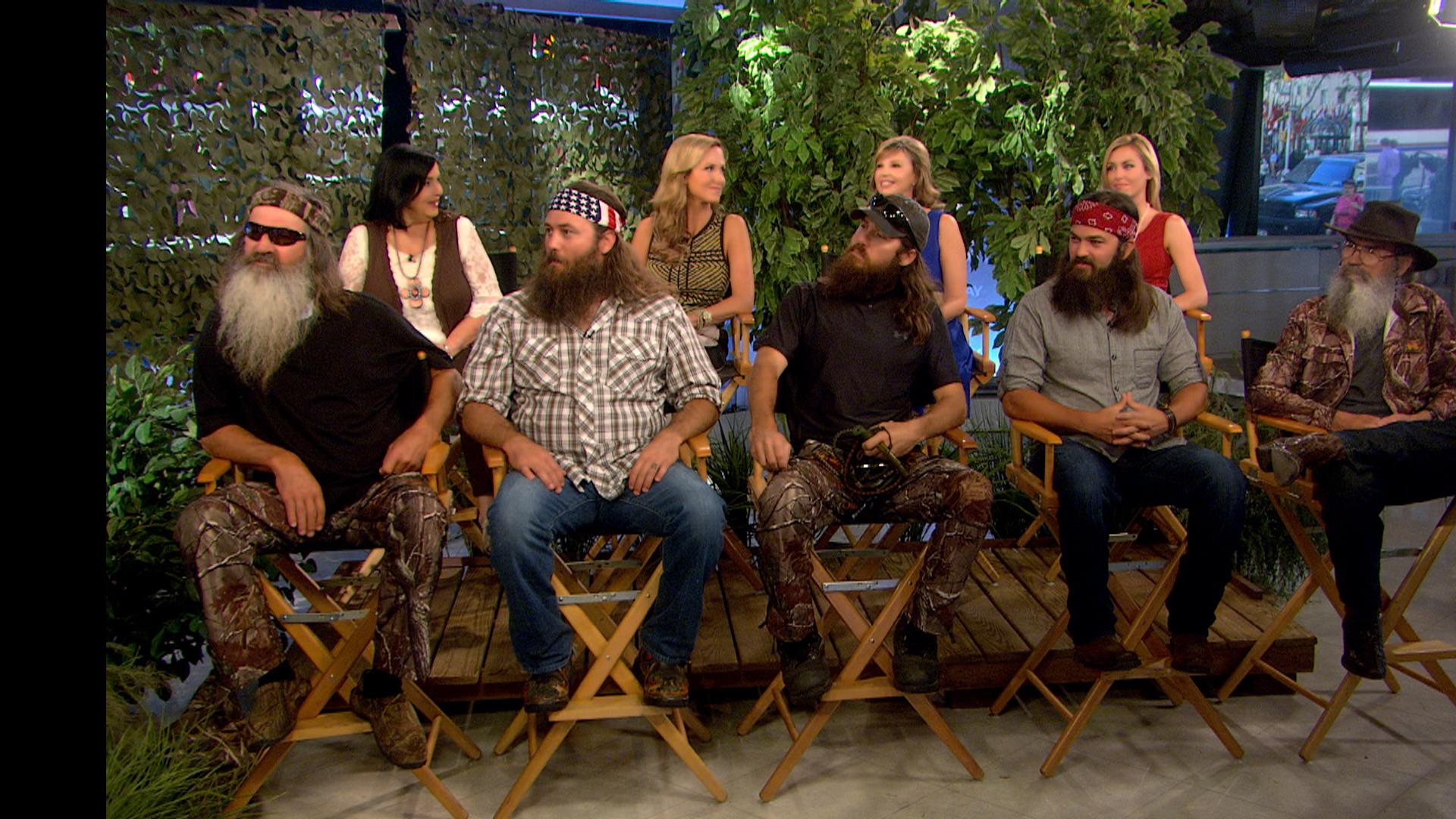
Newer versions though often forget to include a well-meaning, restraining if stodgy character like Mr. Drysdale, the banker:

and his loyal secretarial assistant, Miss Jane Hathaway, whom Wikipedia describes as “the love-starved bird-watching perennial spinster”:
 Here she is enjoying a cigarette… perhaps too much?:
The actress who played Miss Hathaway, Nancy Kulp, seems pretty interesting:
Kulp received a bachelor’s degree in journalism from the Florida State University in 1943, then known as the Florida State College for Women, and she started pursuing a master’s degree in English and French at the University of Miami. Early in the 1940s she worked as a feature writer for the Miami Beach Tropics newspaper, writing profiles of celebrities, including Clark Gable and the Duke and Duchess of Windsor.[6][7]
In 1944 Kulp left the University of Miami to volunteer for service in the US Naval Reserve during World War II. As a member of theWAVES (Women Accepted for Volunteer Emergency Service), Ltjg. Kulp received several decorations, including the American Campaign Medal,
Kulp moved to Hollywood, California, not long after she married Charles Malcolm Dacus (in April 1951), to work in a studio publicitydepartment, where director George Cukor convinced her that she should work in front of a camera.
She later ran for as a Democrat for Congress in Pennsylvania’s 9th District:
To her dismay, Hillbillies co-star Buddy Ebsen called the Shuster campaign and volunteered to make a radio campaign ad in which he called Kulp ” too liberal.” Kulp said of Ebsen, “‘He’s not the kindly old Jed Clampett that you saw on the show… It’s none of his business and he should have stayed out of it.‘ She said she and Ebsen ‘didn’t get along because I found him difficult to work with. But I never would have done something like this to him.'” Garnering 59,449 votes, or just 33.6% to Shuster’s 117,203 votes and 66.4%, she lost.
The life of Raymond Bailey, who played Mr. Drysdale, seems pretty interesting too:
Having no success getting any kind of movie roles, Bailey then went to New York where he had no better success getting roles in theatre. Eventually he became a crewman on a freighter and began sailing to various parts of the world, including China, Japan, the Philippines and the Mediterranean. While docked in Hawaii, he worked on a pineapple plantation, acted at the community theatre and sang on a local radio program.
In 1938, he decided to try Hollywood again. His luck changed for the better when he actually began getting some bit parts in movies, but after the United States entered World War II he joined the Merchant Marine and went back to sea. When the war was over he returned to Hollywood and eventually began getting bigger character roles.
Buddy Ebsen also spent time at sea:
Ebsen served as damage control officer and later as executive officer on the Coast Guard-manned Navyfrigate USS Pocatello, which recorded weather at its “weather station” 1,500 miles west of Seattle, Washington. These patrols consisted of 30 days at sea, followed by 10 days in port at Seattle.
Rest in p Donna D. We’ll always remember you for your classic Twilight Zone episode as well:

(CBS)
Coaches
Posted: January 1, 2015 Filed under: America Since 1945, sports, the California Condition 1 Comment
A Chance Encounter With Pete Carroll
One Sunday afternoon, a few years ago, I was drinking in a bar on Hermosa Beach (I believe but am not certain it was The Poop Deck) when I saw USC Trojans head football coach Pete Carroll ride by the front door on a bike.
He was with a handsome woman, his wife I guessed, and as they rode along saw somebody they appeared to know. Pete and his wife stopped to talk to him.
From where I was in the dark of the bar, the sunlight in the doorway framed Coach Carroll perfectly, it was like the last shot of The Searchers.

We couldn’t hear what Coach was saying. But watching him talk was mesmerizing. Engaged, upbeat, demonstrative: I couldn’t look away. The whole scene was compelling. Who was this chilled out beach boardwalk motivator? What was his life?

The Inner Game
Some time after that I found a copy of The Inner Game Of Tennis by Timothy Gallwey at my friend’s house. The only times I’ve ever played tennis I embarrassed myself, but I like “inner games,” and reading about tennis, so I read it.
The book blasted my head open.
Here is a very crude summary of Gallwey’s ideas as I understood them: when you do something like play tennis, sometimes you can split into a self that’s doing the actions, and a self that’s observing, judging, intellectually assessing: critical. That second self can easily slip into becoming abusive. You screw up a shot and you’re like “dammit, so STUPID!”
When that happens, Gallwey asks, who is yelling at who? What’s going on here?
This struck me re: writing. (Or really, any creative work.)
You’ve got your creator self, and your critical self. You need them both: all one and you’ll write stream of consciousness garbage, all the other and you’ll never write anything. But how do you get them to work together?
Gallwey says: we will improve (and have more fun) when we get these two selves aligned. When the critical self isn’t pissed at the performing self, but instead simply, non-brutally observes what is happening.

She instilled in me a great curiosity about how the world works, along with an overall sense of optimism and possibility. She used to say: “Something good is just about to happen.” I still believe that today.


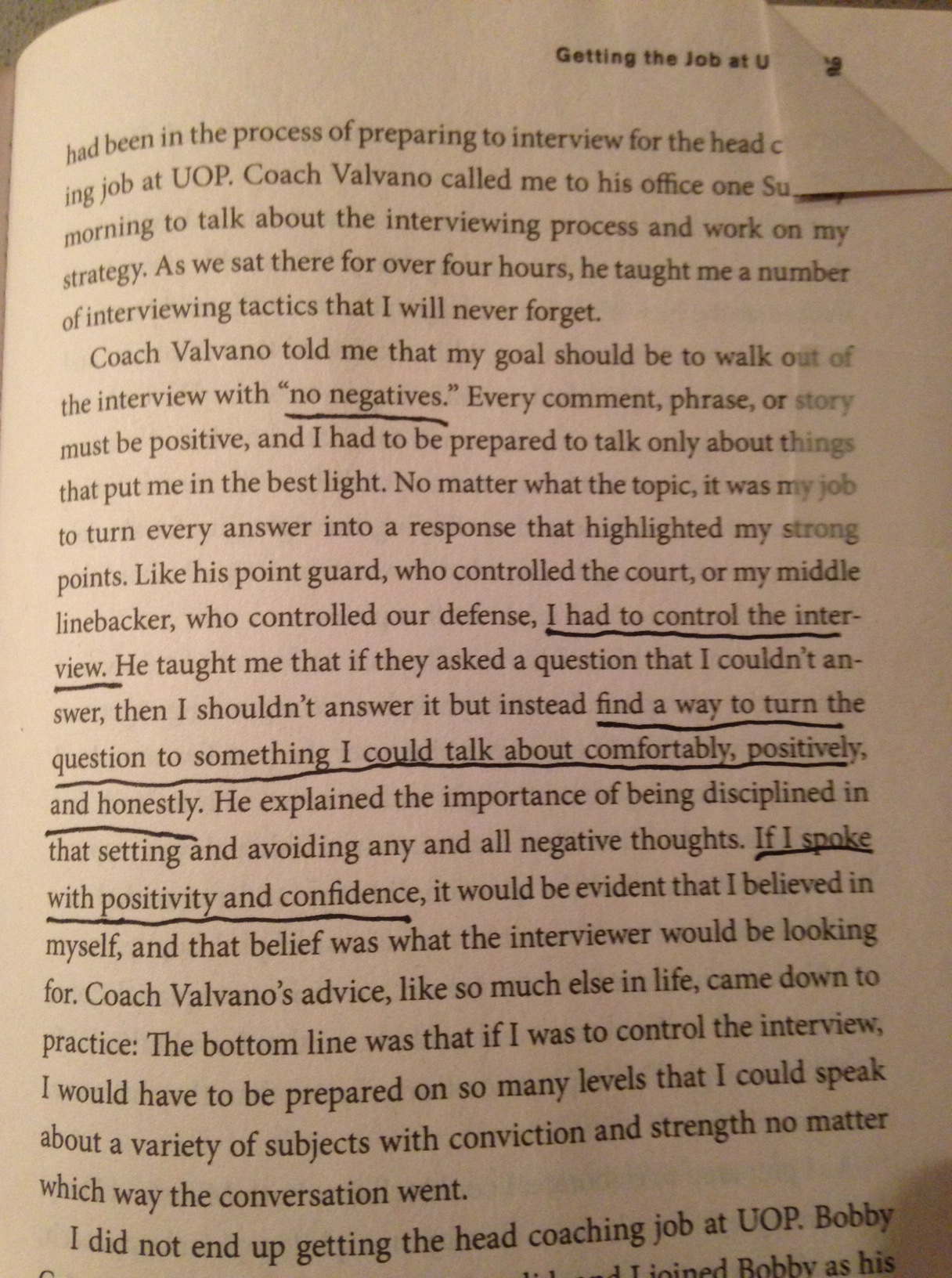
For breakfast, he eats two Little Debbie Oatmeal Creme Pies; for lunch, a salad of iceberg lettuce, turkey, and tomatoes. The regular menu, he says, saves him the time of deciding what to eat each day, and speaks to a broader tendency to habituate his behaviors. Saban comes to this system by instinct rather than by adherence to some productivity guru’s system. When I try to engage him in a discussion of the latest research on habit formation, he hits me with a look his assistants call the bug zapper, for its ability to fry all who encounter it; he has no idea what I’m talking about.




The site of the first Father’s Day on July 5, 1908, originally celebrated in honor of the more than 200 fathers lost in the Monongah Mining disaster several months earlier.
The inability to clear the mine of gases transformed the rescue effort into a recovery effort. Only one man, a Hungarian by the name of John Tomko, was rescued from the mine. The official death toll stood at 362, but it is possible the number is much higher since mining companies at the time did not keep accurate records of their workers.
When they were teenagers, an explosion at the mine where Saban’s grandfather worked killed 78. (His grandfather was spared because he was off-shift.) It was a place where you knew not to complain; someone always had it worse.


Big Nick, the son of Croatian immigrants, also had a sense of fairness unusual for the place and the times. He took heat from some locals for treating black customers the same as whites at his Dairy Queen. And when he learned that an African-American player on the Black Diamonds named Kerry Marbury didn’t have a father around, Big Nick took him in. Marbury, who went on to become a star running back at West Virginia, says he was accepted so completely by the Sabans that he was effectively shielded from racism as a child. “I was very confused when I got out in the world and found out how much prejudice there really was,” he tells me.
Marbury and Saban became close friends as kids, and later, each served as the other’s best man. In the ’80s, after football, Marbury was busted for drugs, and went to prison for two and a half years for probation violation. The day he got out of jail, he said, Saban called and sent money to help him get a fresh start. Marbury went on to get his master’s degree and now serves as an administrator of public safety at a small West Virginia university. “I got where I am all as a result of him caring about me when no one else did.”
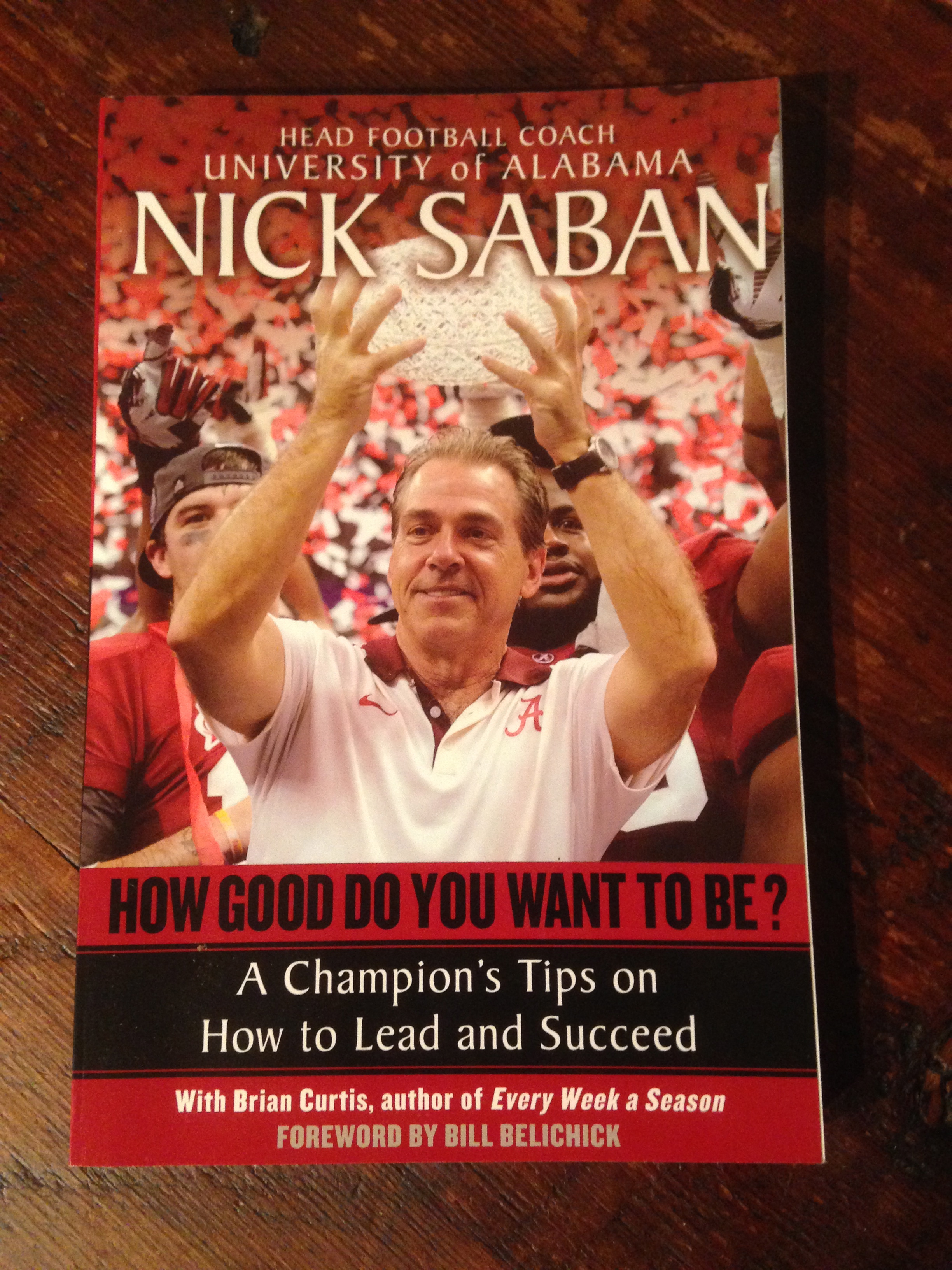
Respect for the man. Feel he is underserved by his book.
But maybe: that’s the point. Pete Carroll’s book is compelling because it’s about a guy wondering if there’s another way to do this, if he can adapt himself and his mentality to football success. He’s excited by the idea, he tells how he came up with it, and he pulls it off.
The point of Saban’s book might be: there is no secret. There is no trick. Discipline, hard work, drilling things again and again until you can do them the right way, focusing on doing everything right and not on results — it ain’t easy but it’s simple.
Good to think about.
Apologies if I made any football errors in this post, don’t let me fool you into thinking I know shit about the game compared to serious fans. With that said, here’s my picks for the BCS:

will defeat:

Alabama will then play:

who will defeat

(Oregon coach Mark Helfrich doesn’t seem that interesting, although it’s cool he’s from Oregon. Unless this actually is his memoir I don’t think I’ll read it. Can’t say I’m all that curious about Urban Meyer either, although it is interesting that both he and Saban are Catholic. Also interesting that Urban Meyer is the only of these coaches to be coaching his alma mater.
I did take a look at this Kindle book:

where the fact that Saban and Meyer both seem to “enjoy” coaching football or at least hate not doing it is described under the chapter heading “Hedonism.” I don’t think that’s an appropriate word for these mens’ lives.
I’d love to read Jimbo Fisher’s memoir. If I didn’t mishear, once watched him say Jameis Winston’s ability to not worry at all about how he’d been charged with sexual assault was a testament to his character.
Fisher earned the nickname Slim Jimbo because of his affinity for meat snacks. He has mentioned in numerous interviews that he wishes to launch an organic beef jerky company after he retires from coaching. The company would feature jerky made from animals native to both the Deep South and his native West Virginia, such as alligator, muskrat, and wild boar.)
Then at the national championship game on Jan. 12:
will defeat
Puzzle: given that this is close to a random guess, although I factored in these odds (plus my feeling from reading Saban’s book) what are the odds I picked this right? 12.5%? I could be proven completely wrong in a few hours.)
In the Super Bowl:


Sensory Enthnography Lab
Posted: December 31, 2014 Filed under: movies Leave a comment
First heard about what was going on at this place from this Vulture article:
The most exciting documentary films being made today come not from a brand-name auteur or even some up-and-coming, Sundance-anointed visionary. Rather, they come from a place called the Harvard Sensory Ethnography Lab, which sounds more like somewhere an ophthalmologist might send you than a source of great filmmaking.
Less a lab and more a collection of like-minded individuals, the Sensory Ethnography Lab’s (SEL) first widely distributed release was the experimental documentary Sweetgrass, an observational, immersive, quietly lyrical portrait of a 150-mile journey involving a group of Montana cowboys and a massive herd of sheep, directed by Lucien Castaing-Taylor and Ilisa Barbash. The film didn’t contextualize; it didn’t feature talking heads; it didn’t try to inform, as so many nonfiction films try to do. Rather, it just let us soak in the experience of this grueling, majestic journey.
Reading The Boston Globe while back home, all the movie critics included Manakamana on their top tens:
On the one hand, grateful they called my attention to this movie. On the other: kind of bullshit to get me excited about a movie that it’s not exactly easy to see. Serves me right I guess for not following the ethnographic documentary scene a little more closely. Maybe I never shudda left Cambridge at all.
Stumbling in the direction of a solution
Posted: December 30, 2014 Filed under: America Since 1945, New York Leave a comment
Inspector Timothy Dowd, right, at work in July 1977, told reporters that his job as the leader of the special task force hunting the Son of Sam serial killer was “to prepare to be lucky.” Credit Marilynn K. Yee/The New York Times
NY Times obituary of Timothy Dowd, the detective in charge of finding Son Of Sam:
Ms. Begg said in an interview on Monday that her father had disdained television dramas about the police because they were unrealistic about police work — all except one, she said: “Columbo.” That series, especially popular in the 1970s, starred Peter Falk as an untidy, seemingly distracted detective in Los Angeles who solved cases by poking around in a practiced but random fashion and stumbling in the direction of a solution.
“That’s how it’s done,” she said her father explained to her.
In the biggest case of his career, when he finally came face to face with the killer, Inspector Dowd said he knew he would be able to discuss the crimes with him.
“I told him we had never abused him or criticized him in the press, and he agreed,” Inspector Dowd said at the time.
And Mr. Berkowitz’s first words to him?
“Inspector, you finally got me. I guess this is the end of the trail.”
Kon-Tiki
Posted: December 29, 2014 Filed under: adventures, film, heroes, movies, the ocean 6 Comments
Who was it who recommended this to me? Hayes? Thanks! It’s on Netflix Instant.
Heyerdahl’s third wife was Miss France 1954:

Glamour
Posted: December 29, 2014 Filed under: America Since 1945 Leave a comment
Kids in the midwest only get to see even modest levels of glamour if they happen to be on school trips to one or another of the midwestern cities: K.C., Omaha, St. Louis, the Twin Cities. In some, clearly, this lack of glamour festers. Charles Starkweather, in speaking about his motive for killing all those people, had this to say: “I never ate in a high-class restaurant, I never seen the New York Yankees play, I never been to Los Angeles…”
from:

Roads by Larry McMurtry
Posted: December 28, 2014 Filed under: America Since 1945, the California Condition, travel, writing Leave a comment
I can’t get enough of these Larry McMurtry non-fiction books, as I’ve discussed before and another time and one other time. In this book, McMurtry drives American highways, writing down anything that occurs to him or seems interesting:
The most interesting thing that ever happened to me in southern Oklahoma happened when I was a boy. My backwoods uncle Jeff Dobbs took me deep in the woods, to the cabin of an aged Choctaw preacher, an old man said to have the power to draw out tumors. In his small cabin there were long rows of Mason jars, each containing a tumor that had been drown out. It was dim in the cabin. I couldn’t see what was in the jars very clearly, but it definitely wasn’t string beans or pickled peaches. I was very impressed and not a little frightened. Uncle Jeff knew a few words of Choctaw — listening to him talk to the old man was when I first realized there were languages other than English.
More than fifty years after I peered at them in the gloom of the old preacher’s cabin, the shelves of tumors reappeared in Pretty Boy Floyd, the first of two novels I wrote with Diana Ossana. This time “the cancers,” as they are referred to, appear as decoration in a backwoods honky-tonk.
He muses on how the great travel writers tend be into only one type of landscape (McMurtry’s is the plains):
Charles Doughty lived almost his whole life in a wet country but wrote his great book about the desert – the same deserts would later draw the best out of Wilfred Thesiger, St. John Philby, T. E. Lawrence, Gertrude Bell, and Freya Stark. Aurel Stein, Sven Hedin, Charles Marvin, Mildred Cable and Francesca French (the nuns of the Gobi), Curzon, and Ney Elias returned again and again to central Asia. Humboldt, Alfred Russell Wallace, and Henry Bates took their genius to the Amazon; while Mr. Darwin looked hard wherever he went. Certainly, when it came to those finches in the Galapagos, he looked every bit as hard as Picasso looked at Matisse.

Charles Doughty
But even the ocean interests McMurtry, an epic reader:
My drives across the American land had taken me far enough that I had begun to feel a vague urge to try a different mode of travel. For the past month or so I had been reading the leisurely, tolerant travel books of the English zoologist F. D. Ommanney, a man who knows a lot about fish, and a lot, also, about the world’s oceans and the people who live beside them – particularly the island peoples of the Indian Ocean and the South Pacific. F. D. Ommanney was a fish finder, a man who, in the years after World War II, puttered around in remote oceans attempting to estimate whether a given stretch of ocean contained fish enough to make commercial fishing profitable. I think, though, that what he cared about was the sea, not the fishing. In books such as A Draught of Fishes, The Shoals of Capricorn, Eastern Windows, and South Latitude, he describes his journeys through the seas and islands so appealingly that a landlocked person such as myself begins to feel that he has really been missing something: that is, the world’s oceans, along whose trade routes – invisible highways – the great ships proceed.
The appeal of F. D. Ommanney’s books – fairly popular in the 1950s but mostly forgotten now – is their intimacy with the sea and its ways, and also with the ways of people whose lives are bound to the sea. Conrad and Melville wrote powerfully of the oceans, but their works don’t exactly bring one into an intimacy with the world of waters. In Conrad and also in Melville the sea is too powerful, too often the environment of crisis, to be merely appealing. Though these great writers see the ocean’s beauty they rarely allow the reader to be unaware that this beauty comes with a threat, moral or physical or both.
Ommanney is not a novelist – he is just a man with a deep interest in the natural world, particularly with the world of the ocean; through many travels he preserves a fond curiosity about the lives of peoples of the islands, people who can scarcely imagine a life apart from the sea.

While driving in Arizona, this occurs to McMurtry:
Near Wilcox there’s a famous tourist stop advertising THE THING – in fact an Anasazi mummy.
(actually this article seems to suggest it’s a fake made by a well-known maker of sideshow artifacts)

McMurtry gets going on the Plains Indians wars, and Ranald Mackenzie:
Mackenzie was a highly effective officer, one of the most skilled and determined to fight on the plains frontier. But he was not a happy man. Juste before he was to marry, in 1883, he went crazy and spent the remaining six years of his life in an insane asylum in New York State. Ranald Mackenzie’s insanity is one of the strange, haunting mysteries thrown up by the frontier conflicts. Many pioneer women went crazy, and it was not hard to see why; the women were not necessarily overdelicate, either. The living conditions were just too bleak, too isolating. But the insanity of Ranald Mackenzie, one of the most disciplined and succesful officers to participate in the campaigns of the plains frontier, is evidence that the price of winning the west was not simple and not low, even for the winners, not when one considers that Ranald Mackenzie, the soldier who took the surrender of Quanah Parker and the Kwahadi Comanches, ended his days in a nuthouse, in 1889, not long before the massacre at Wounded Knee.

Wikipedi tells us: “He bought a Texas ranch and was engaged to be married; however, he began to demonstrate odd behavior which was attributed to a fall from a wagon at Fort Sill, Oklahoma, in which he injured his head. Showing signs of mental instability, he was retired from the Army on March 24, 1884 for “general paresis of the insane”.[5]”
The studio executives I would go and talk to about one project or another were seldom even half my age. Now they were only a little more than a third my age. I was in my sixties, the were in their twenties. SOme of them seemed puzzled that an older person would still be writing screenplays. If I happened to mention, by way of illustration, a movie made as long ago as the 1950s – twenty years before any of them were born – they looked blank and, in some cases, a little disdainful. I might as well have been talking about the Dead Sea scrolls. There is always a listener (the executive) and a note taker at these meetings. If I mentioned Touch of Evil or Roman Holiday the note taker would dutifully take a note.
I don’t know why this age gap surprised me. Hollywood, as I said, has always been about beauty and desire, neither of which is entirely comfortable with age. Garbo was not wrong to retire.

Near Acoma, New Mexico:
Coronado came past these pueblos as he sought the cities of gold, which means that the Indians of this region have experienced an unusually long colonial oppresion. Acoma, the sky city built on top of a 365-foot bluff, revolted in 1599 and killed a party of tax collectors sent by Governor Juan de Onate, who proved to be a revengeful man. He overwhelmed the Acomas, took several hundred prisoners, and cut one foot off any male over twenty years old, probably raking in a lot of seventeen- and eighteen-year old feet in the process…
I’ve been to Acoma many times, where the concessionaires are – to put it mildly – not friendly; and I’ve visited, at one time or another, most of the pueblos near Albuquerque. I’m not comfortable there and am even less comfortable in the communities north of Santa Fe. These are all places where the troubles are old and the troubles are deep. The plains below the Sangre de Christo may be supremely attractive visually, as they were to Miss O’Keefe, but socially they are very uncomfortable – the result of that long oppression. North of Santa Fe is where the toughest of the Indians and of the Spaniards survived. It’s not a good place to have a car break down – not if you’re an Anglo.

Merry Christmas
Posted: December 24, 2014 Filed under: children, music, musicals Leave a comment
Esther [Judy Garland] finally gets to meet John properly when he is a guest at the Smiths’ house party, although her chances of romancing him don’t go to plan when, after all the guests are gone and he is helping her turn off the gas lamps throughout the house, he tells her she uses the same perfume as his grandmother and that she has “a mighty strong grip for a girl”…
At the ball, Esther fills up a visiting girl’s (Lucille Ballard, played by June Lockhart) dance card with losers because she thinks Lucille is a rival of Rose’s. But when Lucille turns out to be interested in Lon, Esther switches her dance card with Lucille’s and instead dances herself with the clumsy and awkward partners. After being rescued by Grandpa, she is overwhelmed when John unexpectedly turns up after somehow managing to obtain a tuxedo, and the pair dance together for the rest of the evening. Later on, John proposes to Esther and she accepts.
Esther returns home to an upset Tootie. She is soothed by the poignant “Have Yourself a Merry Little Christmas.” Tootie, however, becomes more upset at the prospect of the family’s move and runs downstairs, out into the cold to destroy the snowmen they have made. Mr. Smith sees his daughter’s upsetting outburst from an upstairs window.
Remember to let your kids smoke a cigarette.
Stand up for The Interview (as a movie)
Posted: December 22, 2014 Filed under: film, the California Condition Leave a comment
There’s a strain I’ve noticed in pieces about The Interview of offhandedly dismissing the movie itself.
Here’s Ross Douthat, for example:
But if you care about the movies, then what’s happened to Seth Rogen and James Franco’s comedy is also related to the depressing story that Harris has to tell. Not because a coarse comedy about two idiot celebrities assassinating the North Korean dictator represents some kind of brilliant alternative to the sameness of sequels, but because its fate will become (already has become, in fact) a cautionary tale in an industry that’s already so risk-averse, so fearful of political controversy, so determined to make movies that sell equally well in every overseas market, that the North Koreans themselves were one the last available real-world villains for its blockbusters.
Or Clooney:
This was a dumb comedy that was about to come out. With the First Amendment, you’re never protecting Jefferson; it’s usually protecting some guy who’s burning a flag or doing something stupid. This is a silly comedy, but the truth is, what it now says about us is a whole lot.

I already took this fight to Twitter, vs. The National Review Online’s AJ Delgado:
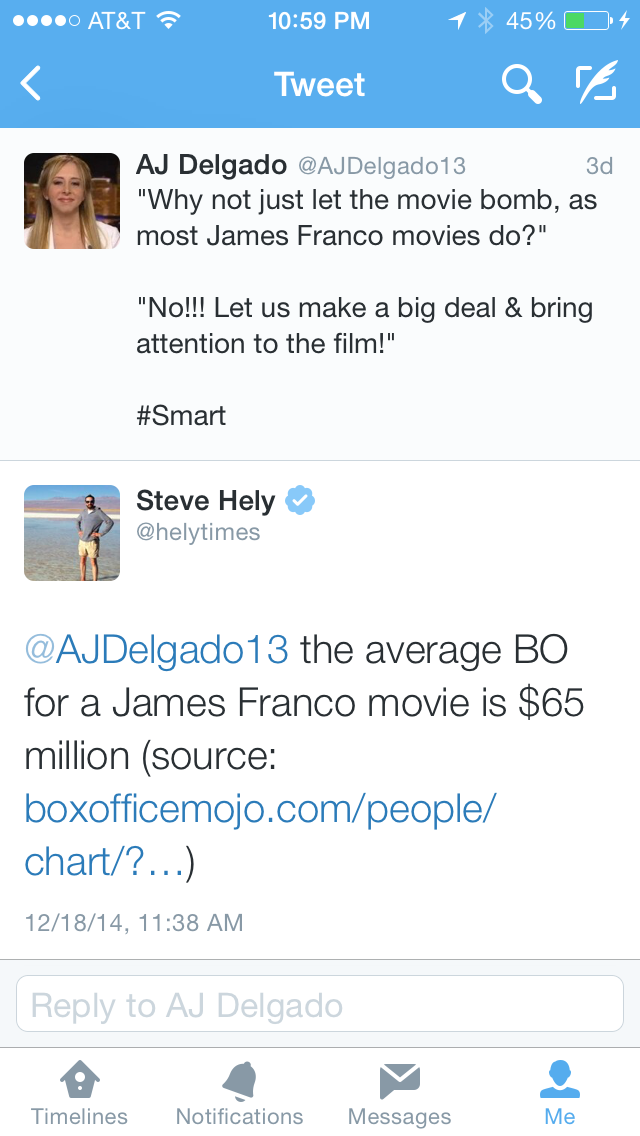
(source is Box Office Mojo)
I don’t get it.
I have a clear bias here: I have never met but like Franco and Rogen and I like people involved in The Interview. But I don’t think that’s what got me steamed.
The Interview, to me, seems like a bold, interesting movie starring two actors who’ve been making cool, interesting choices for over a decade.
Yeah, it’s easy to make fun of James Franco’s pretentiousness (and what were you like at 22?). But you know what? a) he’s done it better than you and b) fuck you. Here’s a dude who’s using his fame to explore whatever art or avenue engages his curiosity. What do you want from the guy? He’s spending his time and energy experimenting, exploring, and improving himself.
And Rogen? Here is a consistently positive, jolly presence in American public life who’s sharp and self-effacing and honest. Watch him speak bluntly to Letterman about smoking weed:
Are you as open about your habits, crutches, and pleasures?
These guys are both terrific actors, they are smart, and they are entrepreneurial.
They made a bold, risky movie. Yeah, it’s got dumb jokes in it. All successful movie comedies have dumb jokes in them. All comedy that’s worth anything risks being silly.
But these guys are making what they love. Franco and Rogen are unabashed about their love of dumb fun laughs. Along the way, the movie they made also appears to be about fame, global politics, the intersection of news and entertainment, friendship, male insecurity — how many A list actors with the clout to make stuff are consistently picking projects as inventive as these guys?
Look, I haven’t seen the movie. Maybe it’s terrible. Maybe it’s amazing. Probably, like 90% of movies, it’s in between. But I don’t like a knee jerk critical reaction that it’s dumb. (I don’t really like critics at all, to be honest.) If you think The Interview sucks, then you star in one of the best TV shows ever, go on to make cool, fun, talked-about and also wildly profitable comedies, or win an Oscar for single handedly carrying a pretty experimental movie that not only was a huge hit but also cinematically daring and innovative, and build the clout to create your own $44 million projects on the strength of your talent and very perceptive grasp of what stories an audience of millions wants to see.
(I guess Clooney has done all that. OK, Clooney gets a pass.)
But of course, you can’t think The Interview sucks because you haven’t gotten to see it!
What cheesed me off, of course, is that I think all this shows a snobbish, lazy, kneejerk, snarky lack of respect for comedy, and how hard it is to make comedy.
In these distressing times, we should be honoring our comedians. Even if they do make a lot of dick jokes.
Nothing will detect and respond to the reality of fear as swiftly as a market
Posted: December 20, 2014 Filed under: America Since 1945, the California Condition Leave a comment
On The Interview, Stephen Carter’s take worth reading:
Despite all the calls for Sony to stand up to the blackmail in the name of artistic freedom, it seems to me that the criticism is misdirected. Nothing will detect and respond to the reality of fear as swiftly as a market, and here the market has spoken. The relevant market actors are moviegoers. Theater owners are guessing that with “The Interview” in their multiplexes, holiday audiences will stay away in droves. From everything.
I’d like to think the owners are mistaken. I’d like to think that were “The Interview” in the theaters, millions of us would flock to the mutiplex and watch a movie — any movie — as an act of protest, to show the world we aren’t afraid. But I can’t say that in predicting the opposite the theater owners have made a wrong call. And if they’re right, so is Sony.
(ht Andrew Sullivan, where the guest editors are doing a great job imo. Journalistic bias: guy who wrote The Interview Dan Stirling is former co-worker/friend, I root for him to get rich from this funny movie.)
Wild
Posted: December 20, 2014 Filed under: America Since 1945, movies, nature, screenwriting, the California Condition, women, writing Leave a comment
Contains WILD spoilers!
1) This movie has a high degree of difficulty.
I read 2/3s of the book Wild – abandoned it before I finished, but I did the same thing with Eat Pray Love and then years later started over and found it very impressive. Perhaps a similar fate awaits Wild & me.
At least two top-notch women I know swear by Tiny Beautiful Things. I like reading interviews with Cheryl Strayed, she seems like the real deal.
In books you can get into somebody’s head. That is their killer advantage, and why I don’t think books are going anywhere anytime soon. You just can’t do that in a movie. Wild the movie does a pretty good job of this, but it’s sort of just doomed, imo. This is a story about a person’s journey from one mental state to another, with most of the work done internally. Very hard to dramatize.
While there are good tricks towards doing that in this movie, it comes up a little short on the radical innovations needed to tell that story in a movie. Nick Hornby wrote the screenplay: a dude who is good at this kind of thing, his books make excellent movies, but maybe a true writer-director could’ve worked the solutions even tighter?
[One particular note: it seemed to me like all the cutaways should’ve cut a few beats earlier. You’re always like, “ok, here we go, we’re about to cutaway to Cheryl’s childhood.”]
2) The story has a motivation problem.
Cheryl decided to do this, herself. No one made her, asked her, even cares if she accomplishes her goal. So when she faces difficulty or problems, it easy to think “well, you’re the one who decided to hike the PCT, dumdum. Why should I care about this?”
In a story, a person sets out to do something and arrives at a win/lose/draw (thanks to John Gardner for articulating that for me). What would count as a win in this story? Getting to Ashland? No, who cares about Ashland, nothing but hippies in Ashland. The goal of this story is: Cheryl restoring herself (whether or not she knows that’s the goal at the start).
But: that’s an internal goal, how will you show it in a movie? It’s easier to answer these questions in a book, where Cheryl can articulate her reasons and get you with her and make you see that this particular journey is important even if nothing tangible’s at stake.
3) Still, pretty good movie.
Despite all that I thought the ending was pretty satisfying. It’s hard to make a pretty good movie. When Reese Witherspoon yells “FUCK YOU BITCH!” I thought that was good acting.
Sometimes I think all the hugely successful actresses [Reese, Anne Hathaway, etc.] are such intense people that when they act like normal people their instinct is to be way too intense. I would argue Julianne Moore might be the best at not doing this. Think how hard that must be: to act intense but not at your full-bore intense because you somehow intuitively understand that your own “full bore” is too strong for the screen. Acting is crazy hard.
Like all criticism should, let this come with a disclaimer: it’s easy to be a critic hard to make a thing, makers > critics x1000!
4) Interesting sex stuff in this movie.
I do remember in the book being jarred by the period of sexual degradation and heroin, hadn’t realized that was part of the tale. It was new territory, I felt, in exploring a woman’s sexual… could we call it addiction? self-punishment? Cheryl’s not not in control at that point, right? But she also isn’t having a great time. It’s fucked up, she knows it’s fucked up. But it’s not fucked up because she’s a slut, it’s fucked up because she’s not being the woman she wants to be (right?).
Whatever, it made me think/was also slightly titillating/made me feel kind of bad for the husband she was compulsively cheating on. What are the nice guy husbands of America to make of Eat Pray Love and Wild, two biggest women’s memoirs of the last ten years, that both start with a woman leaving her nice guy husband for sexual adventuring?
How often in a movie do you see sex that is intended to be not rape but also not fun?
5) The music in this movie is kind of good but also kind of sucks.
That’s my take anyway. What if I told you that in 2014 we were making an epic movie about a woman’s adventure across America? Would you say that scattered samples of Simon & Garfunkel is the best we could do? Fuck no! Why didn’t they get some awesome woman to make a badass score like Eddie Vedder did for the man-equivalent, Into The Wild?
6) There’s a weird shoutout to REI in this movie.
Where Reese calls them to get new boots and is like “you’re my favorite company ever.” Maybe Cheryl really felt that way. I have a bunch of stuff from REI, but sometimes I think their business model is based on making you think going outdoors is more expensive and complicated than it really is to sell you more junk. Which, weirdly: in the same scene where Cheryl learns about REI’s return policy, the dude is like “you don’t need all this shit.”
Former REI CEO Sally Jewell is Secretary of the Interior.

Strikes me as a very Obama kind of pick: on the one hand, kind of hip and modern and innovative, but on the other hand she was still the CEO of a huge corporation.
7) Wild and Eat Pray Love are in long American literary tradition of spiritual narrative.
If I were a grad student at Yale I’d write my Ph. D. on this, trace it all back through Emerson and Puritan religious narratives and captive narratives of 18th century New England and I’d be the smartest boy in the seminar. Since I’m not in grad school though I can make my point in one sentence which is that things that seem radical and new are often just new versions of an old tradition, we’re not so different from the past or as wildly inventive as we think we are, etc.
8) Is this how women go through life? Constantly having to wonder if a random dude is a rapist?
Damn, that might be the most important aspect of Wild, seeing the world through a woman’s eyes, showing that tension of life. When I walk around at 11pm or so in my neighborhood and I see women walking their dogs it always feels very tense. My instinct to somehow indicate I am not a rapist usually just seems to make the problem worse.
ANYWAY: one reason I was excited to see Wild is I’ve been to many of the settings along the Pacific Crest Trail on fishing trips. Here, for example, is a photo of Kennedy Meadows:

Kennedy Meadows is like a plateau high up in the Sierras. To get there you drive up a crazy 27-mile twisty road up from the 395. If you find yourself there, be sure to stop at The Grumpy Bear:

They’re happy to teach you about jerking meat:

Don’t get it confused with the other Kennedy Meadows up in Sonora.

While I was up there I crossed the PCT and wondered if it would be interesting to film a couple seconds of walking on it:
If you’d like to see Wild, but only have ten seconds, my film gets at similar themes but with more nauseating camerawork.
Australia forever
Posted: December 18, 2014 Filed under: Australia Leave a comment
From Vulture’s* timeline of “How The Interview Got Made”:
October 27, 2014
Clark sends an even-more-toned-down version of the ending to the film’s international distributors. Most take the softer cut, but the Australian distributor requests the unedited version, saying it would prefer to “sock it to ’em.”
* yes in general I agree it’s wrong to read these private emails
“What Happened When Marissa Mayers Tried To Be Steve Jobs”
Posted: December 18, 2014 Filed under: America Since 1945, business, writing Leave a comment
This article, by Nicholas Carlson in the upcoming NY Times magazine, is one of the best business articles I’ve ever read (note: I don’t read that many business articles).
Here’s where the story really begins:
But as Alibaba’s stock soared, Yahoo’s dropped, an indication that the market seemed to concur with Jackson’s analysis: Yahoo’s core business was worth less than zero dollars.
That’s bad. Next sentences:
A week later, Smith published an open letter calling for Yahoo to divest itself of its Alibaba assets, return the money to its shareholders and then merge with AOL. Redundancies could be eliminated, thousands of people could be fired and two former Internet superpowers would be downsized into a single and steady (if uninspiring) entity that sold ads against its collective online properties — news, blogs and Web products like email, maps and weather. “We trust the board and management will do the right thing for shareholders, even if this may mean accepting AOL as the surviving entity,” Smith wrote.
(Note that “could be fired” — non-business readers like me often gotta remind themselves that in business articles it’s often assumed that firing people is positive.)
The article goes on with punchy, succinct, clear explanations the challenges of tech companies, and specifically the challenge Mayers faced, and I don’t envy her:
Previous Yahoo C.E.O.s had underinvested in mobile-app development, plowing money into advertising technology and web tools instead. A couple of days into the job, Mayer was having lunch at URL’s when an employee walked up to her and introduced himself as Tony. “I’m a mobile engineer,” Tony said. “I’m on the mobile team.”
Mayer responded to Tony, “Great, how big is our mobile team?” After some back and forth, Tony replied that there were “maybe 60” engineers. Mayer was dumbfounded. Facebook, for instance, had a couple of thousand people working on mobile. When she queried the engineering management department, it responded that Yahoo had roughly 100. “Like an actual hundred,” Mayer responded, “or like 60 rounded up to 100 to make me feel better?” The department responded that it was more like 60.
But then it starts to unravel:
Mayer subsequently immersed herself in the redesign. Months into her tenure, she was meeting with Sharma’s team regularly in a conference room that started to look more like a design studio: projectors hung from the ceiling, rendering screens displayed on the wall. All around, dozens of foam core boards were pinned with ideas. Mayer would regularly interrogate designers about the minutest details of display and user experience. By early December, one day before Yahoo Mail was set to release, she convened a meeting at Phish Food, a conference room in the executive building of Yahoo’s campus, to talk about the product’s color. For months, the team had settled on blue and gray. If users were going to read emails on their phones all day long, the thinking went, it was best to choose the most subtly contrasting hues. But now, Mayer explained, she wanted to change the colors to various shades of purple, which she believed better suited Yahoo’s brand.
Well, see, purple sucks? More great detail:
During a breakfast with Anna Wintour, the editor in chief of Vogue, Mayer asked if there might be any partnership opportunities between the magazine and Shine, Yahoo’s site for women. According to Mayer’s own telling of the story to top Yahoo executives, Wintour lookedappalled.
I bet she did!

Reuters photo stolen from NY Post article “Anna Wintour Has A Sense Of Humor Over Drag Parody Show” http://pagesix.com/2014/08/12/anna-wintour-has-sense-of-humor-over-drag-parody-show-about-her/
Bad to worse:
Yahoo Tech would sometimes go weeks without running a single ad.
Don’t know much about this, but that sounds terrible.
This delinquency eventually became a problem outside Yahoo. At a major advertising event in the South of France, Mayer sat for an interview with Martin Sorrell, the C.E.O. of WPP, one of the world’s largest agencies. In front of a filled auditorium, Sorrell asked Mayer why she did not return his emails. Sheryl Sandberg, he said, always got back to him. Later, Mayer was scheduled for dinner with executives from the ad agency IPG. The 8:30 p.m. meal was inconvenient for the firm’s C.E.O., Michael Roth, but he shuffled his calendar so he could accommodate it. Mayer didn’t show up until 10.
Fuck that. Worse:
Mayer’s largest management problem, however, related to the start-up culture she had tried to instill. Early on, she banned working from home. This policy affected only 164 employees, but it was initiated months after she constructed an elaborate nursery in her office suite so that her son, Macallister, and his nanny could accompany her to work each day. Mayer also favored a system of quarterly performance reviews, or Q.P.R.s, that required every Yahoo employee, on every team, be ranked from 1 to 5. The system was meant to encourage hard work and weed out underperformers, but it soon produced the exact opposite. Because only so many 4s and 5s could be allotted, talented people no longer wanted to work together; strategic goals were sacrificed, as employees did not want to change projects and leave themselves open to a lower score.
This got ugly:
During the revamping of Yahoo Mail, for instance, Kathy Savitt, the C.M.O., noted that Vivek Sharma was bothering her. “He just annoys me,” she said during the meeting. “I don’t want to be around him.” Sharma’s rating was reduced. Shortly after Yahoo Mail went live, he departed for Disney. (Savitt disputes this account.)

Then this part is deeply weird:
As concerns with Q.P.R.s escalated, employees asked if an entire F.Y.I. could be devoted to anonymous questions on the topic. One November afternoon, Mayer took the stage at URL’s as hundreds of Yahoo employees packed the cafeteria. Mayer explained that she had sifted through the various questions on the internal network, but she wanted to begin instead with something else. Mayer composed herself and began reading from a book, “Bobbie Had a Nickel,” about a little boy who gets a nickel and considers all the ways he can spend it.
“Bobbie had a nickel all his very own,” Mayer read. “Should he buy some candy or an ice cream cone?”
Mayer paused to show everyone the illustrations of a little boy in red hair and blue shorts choosing between ice cream and candy. “Should he buy a bubble pipe?” she continued. “Or a boat of wood?” At the end of the book, Bobby decides to spend his nickel on a carousel ride. Mayer would later explain that the book symbolized how much she valued her roving experiences thus far at Yahoo. But few in the room seemed to understand the connection.
Strange. But man, what great writing in this article.
Let’s give the last word to Aswath Damodaran:
Aswath Damodaran, a professor at N.Y.U.’s Stern School of Business, has long argued about the danger of companies that try to return to the growth stage of their life cycle. These technology companies, he said, are run by people afflicted with something he calls the Steve Jobs syndrome. “We have created an incentive structure where C.E.O.s want to be stars,” Damodaran explained. “To be a star, you’ve got to be the next Steve Jobs — somebody who has actually grown a company to be a massive, large-market cap company.” But, he went on, “it’s extremely dangerous at companies when you focus on the exception rather than the rule.” He pointed out that “for every Apple, there are a hundred companies that tried to do what Apple did and fell flat on their faces.”

from New York University’s beautifully done website: http://people.stern.nyu.edu/adamodar/
Friends
Posted: December 16, 2014 Filed under: the California Condition Leave a comment
Credit Suzanne Hanover/Columbia Pictures
Great detail from this NY Times interview with Franco and Rogen:
Did you know you’d be friends right away when you met on “Freaks and Geeks”?
FRANCO I was just writing some poems about it. It sounds silly, but I think they’re actually pretty good. There was a period where Seth, Jason [Segel] and I all went to Jason’s house, and they would sit at one end of the room and smoke weed.
ROGEN He literally would sit in the corner.
More:
Did that camaraderie continue after the show?
FRANCO There was a point where most people on the show didn’t like me, because I took myself too seriously. I thought I was Marlon Brando or something. Then I pushed Busy [Philipps, a co-star] over, by accident. So everybody didn’t like me, I think, except for Seth.
ROGEN When the show ended, I didn’t talk to you for years. We kind of went our separate ways, for a long time.
FRANCO I ran into Judd [Apatow] at this film festival in Austin. He’s like, “Why don’t you come back to the comedy world?” And I was like, “Yes. I need to change something, because I’m miserable.” I was not happy as an actor, and I went and did “Pineapple Express,” and it was like, Oh, it’s Seth, and I know Seth. I could take huge swings. That made all the difference
Fist City
Posted: December 16, 2014 Filed under: America Since 1945, music, women Leave a comment
Loretta has such an admirable way of getting right to the point.
Bulletproof
Posted: December 15, 2014 Filed under: America Since 1945, food, the California Condition, Tibet Leave a comment
NYTimes article about “Bulletproof,” a fad/product:
The recipe — a riff on the yak butter tea Mr. Asprey found restorative while hiking in Tibet — calls for low-mold coffee beans; at least two tablespoons of unsalted butter (grass-fed, which is higher in Omega 3s and vitamins); and one to two tablespoons of medium-chain triglyceride (MCT) oil, a type of easily digestible fat.
and this sticks out:
Being Bulletproof means never traveling light. After a MacGyver attempt to make coffee in a Chicago hotel room, Brandon Routh, who plays the superhero The Atom on the CW show “Arrow,” now carries ground beans, containers of clarified butter, a silicone squeeze bottle of MCT oil, plus a hand blender and Aeropress filter.
“My energy levels are through the roof compared to what they used to be,” said Mr. Routh, who learned of the drink at a bachelor party, of all places. He added: “My lines just kind of sink in and they’re there when I need them.”

Here’s the thing about my human brain: Routh’s endorsement will end up “counting,” in my brain, certainly sticking way longer, than any carefully researched, cautiously presented bit of scientific evidence.
Already I’m like “well, who’s to argue with Routh? Why would he lie? Am I so arrogant as to not TRY butter coffee?”
(Separate thing: what is with our infatuation with the spiritual powers of Tibet? A strong case could be made that Tibet is a violent, backwards, cruel theocracy historically run by puppet child-monks under control of death-obsessed masters.)

© Joseph F. Rock / National Geographic Image Collection.
Pope News [updated]
Posted: December 12, 2014 Filed under: animals, Christianity, religion 1 Comment
photo found here by googling “cute dogs” http://pichost.me/1457531/
From USA Today:
Pope Francis continues to show he’s anything but traditional. During a recent public appearance, Francis comforted a boy whose dog had died, noting, “One day, we will see our animals again in the eternity of Christ. Paradise is open to all of God’s creatures.”
Theologians say Francis—who took his papal name from the patron saint of animals, St. Francis of Assisi—was only speaking conversationally.
If that’s how the Pope speaks conversationally that’s rad.
** UPDATE **
Apparently, not true.
How great is the Washington Post’s photo for this story?:

In this photo provided by Vatican newspaper L’Osservatore Romano, Pope Francis meets members of the Italian national council for the blind and visually impaired, at the Vatican on Saturday. (AP)
 Helytimes