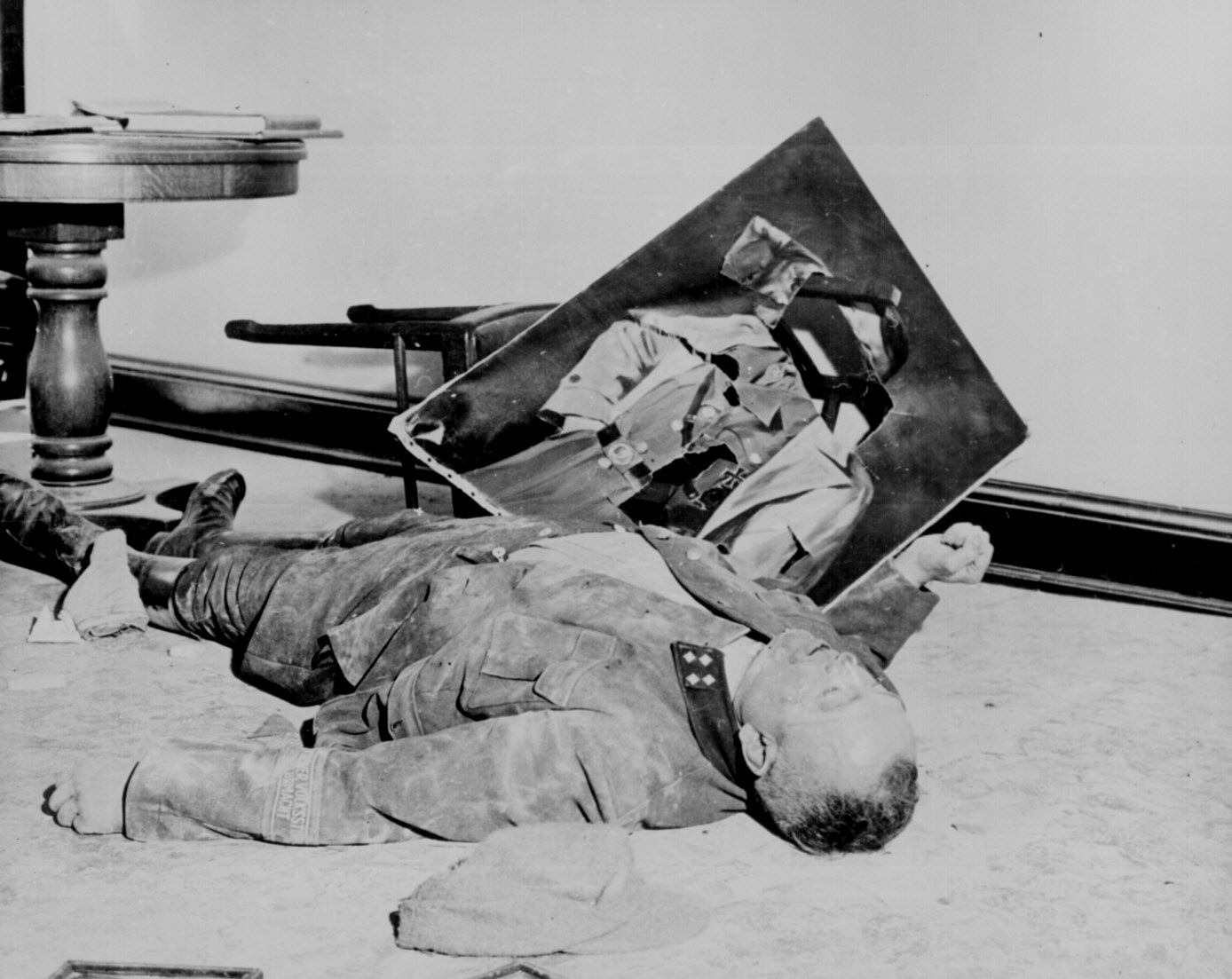
When was the last time somebody got killed by a wild bear in Los Angeles?
Posted: February 28, 2015 Filed under: animals, the California Condition Leave a comment
Prompted by a recent conversation about the movie Grizzly Man. (Forgot that Timothy Treadwell named one of the bears Mr. Chocolate.)
Andy Sublette, 46.
An experienced bear hunter who hunted and killed many bears, Sublette shot and wounded a bear after being separated from his hunting party near present-day Santa Monica in 1854. He was then mauled but stabbed the bear to death with his knife and with the help of his dog. His dog survived, but Sublette died seven days later due to his injuries.
So says Wikipedia citing Gary Brown’s The Bear Almanac. I wonder if they mean, like, Santa Monica Santa Monica or the Santa Monica mountains (even, like, Malibu).
Anyway. Heard it took the bear an hour and a half to drive back to Silverlake — the 10 was a nightmare!
Gay Hobo Slang
Posted: February 27, 2015 Filed under: America, sexuality, the American West Leave a commentAt Helytimes we love to get submissions for our roving correspondents. Longtime friend of the blog Mat W. sends in this item:
A good many years ago, I was a pretty faithful reader of Alex Ross’s blog The Rest Is Noise (title later cannibalized for his book, which got him a MacArthur Genius Grant). In those days I had a pretty boring job and would read almost anything on the internet that made it through the security filter of the company where I worked. A lot of what Ross had to say made little sense since I didn’t (and still don’t) know much about music, but I would still skim the posts and found a few good bits and bobs.
One day, I came across this post:
http://www.therestisnoise.com/2004/10/interesting_pie.html“Gay hobo subculture”!? WHA?! Of course long-time readers of Hely Times may recall Smokestack Adrian, but I was intrigued. At the time, searches of the internet didn’t turn up much. I did learn a little bit more about it in George Chauncey’s great Gay New York, but it offers a pretty light treatment, though the subject of the book, I suppose, required only a glancing discussion.
However, I recently found a great book, called Gay Talk: A (Sometimes Outrageous) Dictionary of Gay Slang. It’s by a guy named Bruce Rodgers, and was published in 1972 (under a different title, I believe). It is GREAT and really reaches back into the pre-Stonewall era for lots of verbal treasures. Guess what a Veronica’s Veil is, you guys!
AND while paging through I found a whole entry on the hobo! Rather than type up the highlights, I’ll just include a picture of the entry for all you candy kids out there.


The (sexy) Epic Of Gilgamesh
Posted: February 26, 2015 Filed under: women, writing Leave a comment

Gilgamesh is crushing it, basically:
Gilgamesh the tall, magnificent and terrible;
who opened passes in the mountains,
who dug wells on the slopes of the uplands,
and crossed the ocean, the wide sea to the sunrise;
who scoured the world ever searching for life,
and reached through sheer force Uta-napishti the Distant;
who restored the cult-centres destroyed by the Deluge;
and set in place for the people the rites of the cosmos.
Who is there can rival his kingly standing,
and say like Gilgamesh, ‘It is I am the king’?
Gilgamesh was his name from teh day he was born,
two-thirds of him god and one third human.
But his dominance is getting to be a problem:
Though he is their shepherd and their protector,
powerful, pre-eminent, expert and mighty,
Gilgamesh lets no girl go free to her bridegroom.
So complain ‘the warrior’s daughter, the young man’s bride’ to the goddesses. So the goddess Aruru makes a man who will be a match for Gilgamesh.
In the wild she created Enkidu, the hero,
offspring of silence, knit strong by Ninurta.
All his body is matted with hair,
he bears long tresses like those of a woman:
the hair of his head grows thickly as barley,
he knows not a people, nor even a country.
Coated in hair like the god of the animals,
with the gazelles he grazes on grasses.
Joining the throng with the game at the water-hole,
his heart delighting with the beasts in the water.

Enkidu scares a hunter, who goes to Gilgamesh. Gilgamesh says “ok, go get Shamhat the temple prostitute and go tempt Enkidu”:
Then Shamhat saw him, the child of nature,
the savage man from the midst of the wild.
‘This is he, Shamhat! Uncradle your bosom,
bare your sex, let him take in your charms!
Do not recoil, but take in his scent:
he will see you, and will approach you.
Spread your clothing so he may lie on you,
do for the man the work of a woman!
Let his passion caress and embrace you,
his herd will spurn him, though he grew up amongst it.’
Shamhat unfastened the cloth of her loins,
she bared her sex and he took in her charms.
She did not recoil, she took in his scent:
she spread her clothing and he lay upon her.
She did for the man the work of a woman,
his passion caressed and embraced her.
For six days and seven nights
Enkidu was erect, as he coupled with Shamhat.
When with her delights he was fully sated,
he turned his gaze to the his herd.
The gazelles saw Enkidu, they started to run,
the beasts of the field shied away from his presence.
Enkidu had defiled his body so pure,
his legs stood still, though his herd was in motion.
Enkidu was weakened, could not run as before,
but now he had reason, and wide understanding.
Wild man fucks prostitute, loses his gazelle friends — oldest story in the world.
That’s all on Tablet One, by the way. Remember the old rule: by Tablet Two, you should have established your characters and relationships.
What happens next is Gilgamesh and Enkidu become best friends and decide to go to the Cedar Forest to kill the monster Humbaba.
Helytimes Mailbag
Posted: February 25, 2015 Filed under: America Since 1945, movies Leave a comment
Lots of readers wrote to me to the effect “You got Wild completely wrong, this is a great movie.” A sample:
The fact that she can quit and has no reason to walk is what I liked. I don’t see it as a motivation problem. I like that we don’t know what she means to accomplish almost precisely because she doesn’t know what she wants. She just knows that the noise in her head telling her to act out and hurt herself and it’s turning her into a person who is different than the person she thought her mom wanted her to be. So that’s why she heads into nature. She never “arrives” so to speak, she just feels differently about herself by the time she gets to Ashland
Terrific! Thanks for writing. Like I said I thought it was pretty good.

Lots of incoming fire also came my way re: Selma. (Funny to do an image search for “Selma”). Let me quote from one:
Helytimes, I have a bone to pick with you. Selma was a great movie. I wept. I may not know everything about LBJ but this was a powerful movie and I don’t get why you were being so hard on it.
Another:
Why were you so hard on Selma without taking any shots at an even more historically inaccurate movie, The Imitation Game, which misrepresents Alan Turing’s character, is similarly “all over the place” and is just a mess?
Well what can I tell you: I didn’t think it was that good. It’s not an easy movie to make, surely. Should it get points for difficulty? Maybe! If you liked Selma, that’s terrific. I want you to have as many things to like as possible.
As for The Imitation Game — whatever, I can’t pay attention to everything! It seemed to me that movie took place in a kind of bizarro reality so whatever historical crimes were extra- beside the point. The Wikipedia folks seem to have it covered too:
Turing’s surviving niece Payne thought that Knightley was inappropriately cast as Clarke, whom she described as “rather plain”.

Harsh. I did wonder why the character played by Tywin Lanister was such an asshole to Alan Turing:

Was that real? Tywin is playing Alastair Denniston. Got this book:

and looked up every time Denniston appears, which is six times. He’s never once a jerk to Turing. This is the closest he comes:

Maybe Andrew Hodges just left that part out. Is it unfair to real-life person Denniston to make him out that way?:
Libby Buchanan, Denniston’s 91-year-old niece and god-daughter, said she recalled a “quiet, dignified” man who was devoted to his work.
Judith Finch, his granddaughter, added: “He is completely misrepresented. They needed a baddy and they’ve put him in there without researching the truth about the contribution he made.”
The film’s writer, Graham Moore, and producers said: “Cdr Denniston was one of the great heroes of Bletchley Park.
“As such, he had the perhaps unenviable position of being a layman overseeing the work of some of the century’s finest mathematicians and academics — a situation bound to result in conflict as to how best to get the job done.
“I would say that this is the natural conflict of people working extremely hard under unimaginable pressure with the fate of the war resting on their heroic shoulders.”
The part of Imitation Game I found most interesting was the idea that once they broke the code, Turing and the boys and Kiera Knightley worked out a system to use the information they had in a statistically measured way. Looked into this and couldn’t find much more about it. Seems like actually the way it worked is they limited access to the Enigma info to a small pool of top military commanders, and even that they were haphazard and bad at. This seemed like a decent article on that:
According to Gordon Welchman, who served at Bletchley Park for most of the war, We developed a very friendly feeling for a German officer who sat in the Qattara Depression in North Africa for quite a long time reporting every day with the utmost regularity that he had nothing to report.

Qattara Depression. Wonder what happened to that guy.
Anyway: I love getting mail, thanks for taking the time, keep it coming – helphely at gmail is the way.
World’s oldest wombat
Posted: February 23, 2015 Filed under: animals, Australia Leave a commentSwam into my Internet ken a picture of the world’s oldest wombat:

I wondered how old Patrick was, and quickly found the answer:

The name ‘wombat’ comes from the now nearly extinct Darug language spoken by the Aboriginal Darug people who originally inhabited the Sydney area. It was first recorded in January 1798, when John Price and James Wilson, a white man who had adopted Aboriginal ways, visited the area of what is now Bargo, New South Wales. Price wrote: ‘We saw several sorts of dung of different animals, one of which Wilson called a Whom-batt, which is an animal about 20 inches high, with short legs and a thick body with a large head, round ears, and very small eyes; is very fat, and has much the appearance of a badger.

He loves his wheelbarrow.
Happy Birthday Patrick the Wombat! This 29 year old is the world’s oldest living wombat. Given that Patrick has never had children, or any partners in general, probably makes him the oldest living wombat virgin as well! Congrats mate!


(stealing these pictures from Buzzfeed and on backwards through Internet eternity to Tourism Australia)
Some favs
Posted: February 20, 2015 Filed under: America Since 1945, the California Condition Leave a commentLittle Orphan Annie
Posted: February 19, 2015 Filed under: comedy Leave a commentReally enjoyed this comedy bit from last year on Seth Meyers starring writer/comedian Michelle Wolf:
Helytimes reader Mat W. informs us that in the original Little Orphan Annie comic, Daddy Warbucks is married:
his wife (a plumber’s daughter) is a snobbish, gossiping nouveau riche who derides her husband’s affection for Annie. When Warbucks is suddenly called to Siberia on business, his wife spitefully sends Annie back to the orphanage.

Harold Gray
In November 1932 Franklin Delano Roosevelt was elected President and proposed his New Deal. Many, including Gray, saw this and other programs as government interference in private enterprise. Gray railed against Roosevelt and his programs. (Gray even killed Daddy Warbucks off in 1945, believing that Warbucks could not coexist in the world with FDR. But following FDR’s death, Gary resurrected Warbucks, who said to Annie, “Somehow I feel that the climate here has changed since I went away.”
More:
Gray was especially critical of the justice system, which he saw as not doing enough to deal with criminals. Thus, some of his storylines featured people taking the law into their own hands. This happened as early as 1927 in an adventure named “The Haunted House”. Annie is kidnapped by a gangster called Mister Mack. Warbucks rescues her and takes Mack and his gang into custody. He then contacts a local senator who owes him a favor. Warbucks persuades the politician to use his influence with the judge and make sure that the trial goes their way and that Mack and his men get their just desserts. Annie questions the use of such methods but concludes, “With all th’ crooks usin’ pull an’ money to get off, I guess ’bout th’ only way to get ’em punished is for honest police like Daddy to use pull an’ money an’ gun-men, too, an’ beat them at their own game.”
Warbucks became much more ruthless in later years. After catching yet another gang of Annie kidnappers he announced that he “wouldn’t think of troubling the police with you boys”, implying that while he and Annie celebrated their reunion, the Asp and his men took the kidnappers away to be lynched.
![ANN_annie~sandy_shoulders_c [Converted]](https://stevehely.com/wp-content/uploads/2015/02/annie.jpg)
Gray reported in 1952 that Annie’s origin lay in a chance meeting he had with a ragamuffin while wandering the streets of Chicago looking for cartooning ideas. “I talked to this little kid and liked her right away,” Gray said, “She had common sense, knew how to take care of herself. She had to. Her name was Annie. At the time some 40 strips were using boys as the main characters; only three were using girls. I chose Annie for mine, and made her an orphan, so she’d have no family, no tangling alliances, but freedom to go where she pleased.”
Mournbrag
Posted: February 13, 2015 Filed under: advice, America Since 1945, death Leave a commentLook, the nature of grieving is weird, how are you gonna judge how somebody grieves? (but the typo?!)
This book:

first got me to really thinking about this.
George HW and Barbara Bush lost a daughter to pediatric leukemia when she was four years old. Cramer says that something like half of all couples that lose a child split up, because the ways that two people grieve can be so divergent and impossible, even offensive, for the other person to deal with. The Bushes were determined not to let that happen to them (and they didn’t).
The instinct on Twitter to make someone’s death an opportunity for backhanded aggrandizement sets my nerves on edge. I’m not sure why that particular thing gnaws at me so much. Maybe because the whole point of the death of a noble guy, or death at all, might be to remind us how unimportant we are, or to encourage us to be better?
(Hardly a perfect model here: when SDB died I both wanted to talk about him and myself and also at the same time never talk about it.)
This dude David Carr was incredible, his death was shocking, the number of people he seemed to have touched directly is staggering. In New York in 2009 I was talking to a girl who told me more or less unprompted about truly moving kindnesses and generosity David Carr had extended to her just out of excellence of character and goodness of spirit.
I’ll miss reading the guy’s stuff. I was just reading his thing about Brian Williams because I’m sure he’d have something to say worth hearing.
Now this is a tribute:
If you can only have one sentence of writing advice, go with this:
“Keep typing until it turns into writing”
If you are prepared for an intense experience on the subject of death and grieving, might I recommend the American Experience “Death And The Civil War”?
If you’re rushed for time, allow me to summarize: the Civil War was a tremendous bummer.
Plan to redeem Brian Williams
Posted: February 12, 2015 Filed under: America Since 1945, TV Leave a comment
Think this is a legitimately good plan:
Brian Williams announces he will buy a beer for every single American who’s ever actually been shot at in a military helicopter.
Ten city tour. If you were once on a shot-at helicopter, go to the most convenient stop (they’ll be bars or VFW halls or something) and Brian Williams will buy you a beer and shake your hand. You can tell him your story which will be good for him as a reporter.
In this way this beloved public figure can do serious penance and redeem himself and show he’s solid.
If he wants to provide pizza, that’s ok. If he’s asking for my advice I’d say also go ahead and get pizza. And good root beer for anyone who’s sober.
Learned an interesting bit of trivia about newsman Bob Schieffer the other day:

Shortly after President Kennedy was shot in Dallas, while in the Star-Telegram office, he received a telephone call from a woman in search of a ride to Dallas. The woman was Marguerite Oswald, Lee Harvey Oswald’s mother, whom he accompanied to the Dallas police station. He then spent the next several hours there pretending to be a detective (the first of many deceptions during his career), enabling him to have access to an office with a phone. In the company of Oswald’s mother Marguerite and his wife, Marina, he was able to use the phone to call in dispatches from other Star-Telegram reporters in the building. This enabled the Star Telegram to create four “Extra” editions on the day of the assassination.
Trips
Posted: February 4, 2015 Filed under: children, the California Condition 8 Comments
from this New Yorker article by Michael Pollan about psilocybin:
Carhart-Harris doesn’t romanticize psychedelics, and he has little patience for the sort of “magical thinking” and “metaphysics” they promote. In his view, the forms of consciousness that psychedelics unleash are regressions to a more “primitive style of cognition.” Following Freud, he says that the mystical experience—whatever its source—returns us to the psychological condition of the infant, who has yet to develop a sense of himself as a bounded individual. The pinnacle of human development is the achievement of the ego, which imposes order on the anarchy of a primitive mind buffeted by magical thinking. (The developmental psychologist Alison Gopnik has speculated that the way young children perceive the world has much in common with the psychedelic experience. As she puts it, “They’re basically tripping all the time.”)
This article gives a lot of ammo to hippies:
He said that the N.I.M.H would need to see “a path to development” and suspects that “it would be very difficult to get a pharmaceutical company interested in developing this drug, since it cannot be patented.” It’s also unlikely that Big Pharma would have any interest in a drug that is administered only once or twice in the course of treatment. “There’s not a lot of money here when you can be cured with one session,” Bossis pointed out.
Interesting talking about psychoactive drugs in medicine: pretty fast you hit the boundaries of science:
PATIENT: What does this drug do?
DOCTOR: Well, medically, nothing, but it might… make you feel like your ego died and you’ve come into harmony with the great spirit of the cosmos?
We’re at the limit of medicine here, crossing over to religion or at least social anthropology.
If you’re taking mushrooms in a lab in a New York hospital, under medical supervision, that’s gonna affect your experience. If you take them after traveling to southern Mexico, in the house of a curandera, and you’re open to the idea that a curandera might have some kind of power, you’re gonna have another kind of experience:
In 1955, after years spent chasing down reports of the clandestine use of magic mushrooms among indigenous Mexicans, Wasson was introduced to them by María Sabina, a curandera—a healer, or shaman—in southern Mexico. Wasson’s awed first-person account of his psychedelic journey during a nocturnal mushroom ceremony inspired several scientists, including Timothy Leary, a well-regarded psychologist doing personality research at Harvard, to take up the study of psilocybin. After trying magic mushrooms in Cuernavaca, in 1960, Leary conceived the Harvard Psilocybin Project, to study the therapeutic potential of hallucinogens. His involvement with LSD came a few years later.
In the wake of Wasson’s research, Albert Hofmann experimented with magic mushrooms in 1957. “Thirty minutes after my taking the mushrooms, the exterior world began to undergo a strange transformation,” he wrote. “Everything assumed a Mexican character.”
(would they have assumed a “Mexican character” if Hofmann thought they came from Cambodia?)
If you get mushrooms from your college buddy, and the point is to clown around in the park, you’re gonna have another kind of experience. If you’re a true hippie open to the idea that mushroom spores traveled to Earth as a kind of message from some distant galaxy, that’s gonna affect your experience.
What about this context?:
In a double-blind experiment, twenty divinity students received a capsule of white powder right before a Good Friday service at Marsh Chapel, on the Boston University campus; ten contained psilocybin, ten an active placebo (nicotinic acid). Eight of the ten students receiving psilocybin reported a mystical experience, while only one in the control group experienced a feeling of “sacredness” and a “sense of peace.” (Telling the subjects apart was not difficult, rendering the double-blind a somewhat hollow conceit: those on the placebo sat sedately in their pews while the others lay down or wandered around the chapel, muttering things like “God is everywhere” and “Oh, the glory!”) Pahnke concluded that the experiences of eight who received the psilocybin were “indistinguishable from, if not identical with,” the classic mystical experiences reported in the literature by William James, Walter Stace, and others.
That ain’t exactly laboratory conditions – there’s lots going on here. I get that there’s a double-blind, but do you measure: who cared more about Good Friday going in? Who was further along on some kind of spiritual journey?
My own thinking on this much affected by ideas of Helytimes favorite Wade Davis. Got more interested re: ayahuasca. It’s one thing to take ayahuasca at a rented house in Malibu. Another thing to go to the Amazon, where your surroundings are halfway a hallucination before you drink a thing. Big difference how you feel here:

Vs. here:

Old advisor at college, a wonderful eccentric woman, used to say she thought all pre-meds should be anthropology majors.
Well I hope you’re wrong, Leslie Gelb!
Posted: February 2, 2015 Filed under: America Since 1945 Leave a comment
from this roundup of predictions for “The World in 2030” from Politico Magazine:
No breakthroughs for the better
By Leslie Gelb, president emeritus and board senior fellow at the Council on Foreign Relations
The world of 2030 will be an ugly place, littered with rebellion and repression. Societies will be deeply fragmented and overwhelmed by irreconcilable religious and political groups, by disparities in wealth, by ignorant citizenry and by states’ impotence to fix problems. This world will resemble today’s, only almost everything will be more difficult to manage and solve.
Advances in technology and science won’t save us. Technology will both decentralize power and increase the power of central authorities. Social media will be able to prompt mass demonstrations in public squares, even occasionally overturning governments as in Hosni Mubarak’s Egypt, but oligarchs and dictators will have the force and power to prevail as they did in Cairo. Almost certainly, science and politics won’t be up to checking global warming, which will soon overwhelm us.
Muslims will be the principal disruptive factor, whether in the Islamic world, where repression, bad governance and economic underperformance have sparked revolt, or abroad, where they are increasingly unhappy and distained by rulers and peoples. In America, blacks will become less tolerant of their marginalization, as will other persecuted minorities around the world. These groups will challenge authority, and authority will slam back with enough force to deeply wound, but not destroy, these rebellions.
A long period of worldwide economic stagnation and even decline will reinforce these trends. There will be sustained economic gulfs between rich and poor. And the rich will be increasingly willing to use government power to maintain their advantages.
Unfortunately, the next years will see a reversal of the hopes for better government and for effective democracies that loomed so large at the end of the Cold War.
Conversational fodder for your Super Bowl party
Posted: February 1, 2015 Filed under: Christianity, mysticism, religion, sports, writing 1 CommentThrowback to an old classic. Milch spins Super Bowl –> Kierkegaard. Starts around 0:41, meanders away by 3:40, pretty interesting again by 9:20 or so.
Good luck to both the Seahawks and the Patriots in returning to the spirit which gave them rise. Stand by my Super Bowl pick.
Coaches, Part 2: Belichick
Posted: January 29, 2015 Filed under: America Since 1945, New England, sports Leave a comment
(Part One, about Pete Carroll and Nick Saban’s memoirs, is here)
The most interesting character in this book isn’t Belichick, it’s Ernie Adams.

Photo by Stu Rosner from this Northwestern magazine article: http://www.northwestern.edu/magazine/winter2008/feature/adams.html
Ernie Adams, it should be noted, was a coach even before entering Andover. he had gone to elementary and junior high at the Dexter School, a private school in the Boston area (where John F. Kennedy had gone), and being more passionate about football than the teacher who had been drafted to coach the intramural team there, he had ended up giving that teacher more suggestions than the teacher wanted to hear. Finally the teacher, in desperation, had turned to Ernie and said, “Well, if you know so much, why don’t you coach?” That was an offer Ernie Adams could not turn down, and he ended up coaching the Dexter team quite successfully.
At Andover he had already befriended another football-crazed classmate, Evan Bonds, with whom he talked constantly and with whom he diagrammed endless football plays and with whom he jointly did the senior project breaking down and analyzing all of Andover’s plays from the their senior season…
Bonds felt that although his own life revolved completely around football, Adams was already a good deal more advanced in his football obsessions, going off on his own to coaching clinics where everyone else was at least ten years older, collecting every book written by every coach on the game, the more technical the better, and collecting films of important games: “Ernie already had an exceptional football film collection, sixteen-millimeter stuff, the great Packer-Cowboy games, Raiders-Jets, films like that, which he somehow found out about through sports magazines, had sent away for, and for which he had enough primitive equipment that he could show the films,” Bonds said. “It’s hard to explain just how football crazed we were, but the year before Bill arrived, when we were in the eleventh grade, and it was spring, the two of us went down to Nickerson Field, the old Boston University field, because BU was having an intra-squad spring game. We were up there in the stands, taking notes, these two seventeen-year-olds – can you believe it? – scouting an intra-squad game at BU on our own, and I still have no earthly idea what we would have done with the notes. Anyway, pretty soon a BU assistant coach came up looking for us, to find what we were doing, and why we were doing it. So we said we were from Northeastern, as if that would give us extra legitimacy, and the coach said what we were doing was illegal, and we had to get out then and there.”
And then at Andover arrived young Bill Belichick, doing a post-graduate year, a kind of bonus senior year after graduating from Annapolis High, in the hopes of getting into a better college:
Adams was already as advanced a football junkie as Belichick: he had an exceptional collection of books on coaching, including Football Scouting Methods ($5.00 a copy, published by the Ronald Press of New York City, and featuring jacket quotes from, among others, the legendary Paul Brown: “Scouting is essential to successful football coaching.”), the only book written by one Steve Belichick, assistant coach of the Naval Academy. The book was not exactly a best seller – the author himself estimated that it sold at most four hundred copies – nor was it filled with juicy, inside tidbits about the private lives of football players. Instead it was a very serious, very dry description of how to scout an opponent, and, being chockful of diagrams of complicated plays, it was probably bought only by other scouts and the fourteen-year-old Ernie Adams.
That year, just as the first football practice was about to start at Andover, Coach Steve Sorota posted the list of the new players trying out for the varsity, including the usual number of PGS – the list included the name Bill Belichick, and Ernie Adams was thrilled. That first day Adams looked at the young man with a strip of tape that Belichick on his helmet, and asked if he was from Annapolis, Maryland, and if he was related to the famed writer-coach-scout Steve Belichick, and Bill said yes, he was his son. Thus were the beginnings of a lifetime friendship and association sown…
..”Because we were such football nerds, it was absolutely amazing that Bill had come to play at Andover, because we were probably the only two people in the entire state of Massachusetts who had read his father’s book,” Bonds said years later.
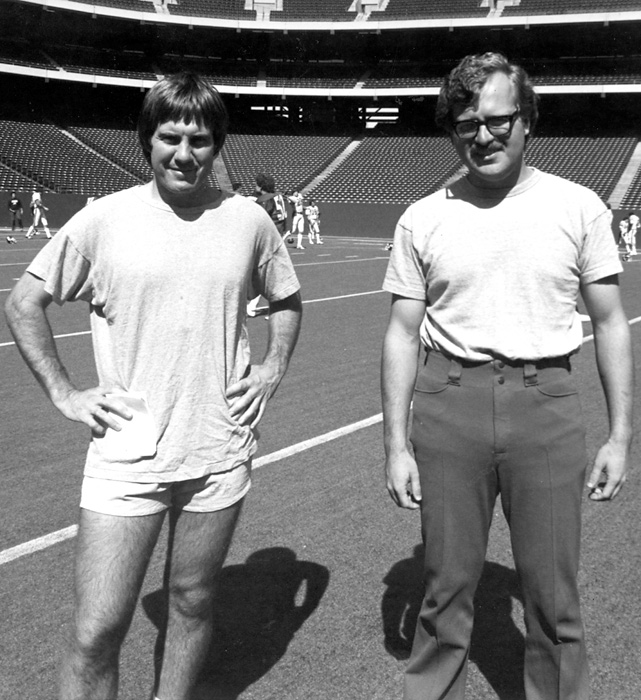
Belichick and Adams, traceable through http://www.patsfans.com/new-england-patriots/messageboard/threads/rare-photos-of-bill-belichick.813505/
Adams has more or less been at Belichick’s side ever since, “Belichick’s Belichick,” aside from interludes on Wall Street. Here’s a good profile on him, with quotes from Andover classmate Buzz Bissinger. (Apparently Jeb Bush was in that class too).
So you can never really tell what is going on in his head. But I did get Carlisle to call Adams on Monday and ask for his five favorite books, hoping to get a window into the places a man like him goes for inspiration. Here is the list:
- “The Best and the Brightest,” by David Halberstam
- “The Money Masters of Our Time,” by John Train
- Robert Caro’s three-volume biography of Lyndon B. Johnson
- Robert Massie’s biography of Peter the Great
- William Manchester’s two-part biography of Winston Churchill
…
Adams also seems to enjoy not only watching greatness work, but also seeing it fail. Carlisle thinks the central message of Halberstam’s Vietnam classic appeals to Adams: that people incredibly well-educated and well-intentioned could be so flat-out wrong about something. It’s a helpful notion to keep in mind about the conventional-wisdom-obsessed world of football, where pedigree and tradition dictate many overly conservative decisions. Indeed, when Adams agreed to participate in Halberstam’s Belichick book, he did so with this caveat: For every two questions the journalist got to ask Adams about football, Adams got to ask one back about Vietnam. Did that trait allow Adams to make sure the mistakes of Belichick in Cleveland were not repeated? Maybe.
Most articles on Adams will include this detail:
When Belichick and Adams were together when the coach was in Cleveland, Browns owner Art Modell once said, “I’ll pay anyone here $10,000 if they can tell me what Ernie Adams does.”
Or:
A few years back, during a team film session, the Patriots players put up a slide of Adams. The caption read: “What does this man do?” Everyone cracked up. But no one knew.
Mysterious, rigorous, intense, scholarly dissection of football — that seems to be the Belichick way. “Unadorned,” as Halberstam puts it:


Belichick doesn’t seem like the kind of dude to write a book, least of all a peppy all-purpose motivational paperback like Pete Carroll’s. This is the closest thing, a kind of biography starting with the arrival of Bill Belichick’s grandparents in America. They came, like Belichick apprentice Nick Saban’s grandparents and Pete Carroll’s maternal grandparents, from Croatia:
 Bill Belichick grew up in football. His dad, Steve Belichick, spent the bulk of his career (33 years) as an assistant coach at the Naval Academy. (As a young guy, a fellow coach advised him to get a tenure-track job as an associate professor of physical education, so he had job security even as eight head coaches passed through.) Belichick’s mom seems like a great lady — she’d done graduate work in languages at Middlebury, and during the war she translated military maps. She learned Croatian so she could speak to her in-laws more easily.
Though he never worked at Oakland, Belichick apparently picked up several things from the way Al Davis ran the Raiders:
There were important things that [assistant coach Rich] McCabe told Belichick about the Davis system that would one day serve Belichick well. The first thing was that Oakland looked only for size and speed. Their players had to be big and fast. That was a rule. If you weren’t big and fast, Oakland wasn’t interested. The other thing was about the constancy of player evaluation. Most coaches stopped serious evaluation of their personnel on draft day – they chose their people, and that was that. But Davis never stopped evaluating his people, what they could do, what you could teach them, and what you couldn’t teach them. He made his coaches rate the players every day. Were they improving? Were they slipping? Who had practiced well? Who had gone ahead of whom in practice? The jobs the starters had were not held in perpetuity.
This is similar to stuff Carroll talks about — everyone is competing every practice. After a stint in Denver:
That summer [Belichick] came home and visited with his boyhood friend Mark Fredland and told him he had found the key to success: It was in being organized; the more organized you were at all times, the more you knew at every minute what you were doing and why you were doing it, the less time you wasted and the better coach you were.
Halberstam likes Belichick, obviously. They had become friendly because they both had houses on Nantucket, and Halberstam suggests that the gruff Belichick we see is part presentational strategy:
That persona – the Belichick who had never been young – was one he had either created for the NFL or had evolved because of the game’s needs. Part of the design was more or less deliberate, and part of it was who he was. For when he had first entered the League, he had been a young man teaching older men, and he had needed to prove to them he was an authority figure. Thus, he believed, he had been forced to be more aloof and more authoritarian than most coaches or teachers working their first jobs.
Compare this to the young guy at Wesleyan with his frat brothers, sneaking a case of beer into a showing of Gone With The Wind (why that movie? even Halberstam is baffled) under his parka.
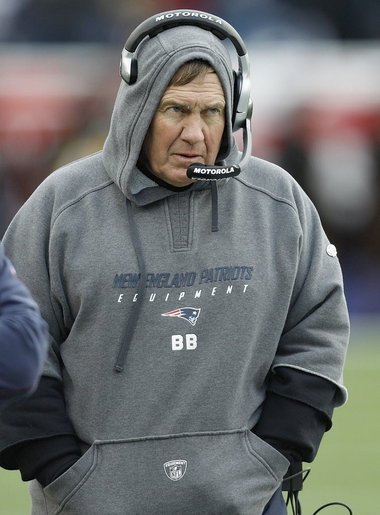
The best parts of this book are about Belichick’s relationship with Bill Parcells, when they were at the Giants. The biggest issue there was how to handle Lawrence Taylor, who was supremely excellent at football, but semi-out of control on drugs and women, prone to nodding off in meetings though he would somehow intuitively understand what he had to do in complex plays. A great anecdote — LT has injured his ankle:
So on his own, without telling the coaches, he went to a nearby racetrack and somehow managed to find someone there who was an expert in horse medicine, who had some kind of pill – a horse pill – and he took it and played well.
Belichick’s takeaway from dealing with LT was, apparently, never to bend the rules for anyone.
Parcells and Belichick needed each other, but they weren’t friends exactly:
There was one terrible moment, during a game, when Belichick called a blitz, and Parcells seemed to oppose it. They went ahead with it and the blitz worked – the other team did what Belichick had expected, not what Parcells had – but Parcells was furious, and over the open microphones in the middle of a game, he let go: “Yeah, you’re a genius, everybody knows it, a goddamn genius, but that’s why you failed as a head coach – that’s why you’ll never be a head coach… some genius.” It was deeply shocking to everyone who heard it; they were the cruelest words imaginable.
Not true, though. Belichick got to be head coach at Cleveland, where he didn’t really get on with owner Art Modell or QB Bernie Kosar and had a tough time, going 36-44 there. Halberstam almost seems to admire how bad/stubborn/unhelpful Belichick was with the media there.
And then he got to New England (taking over for the fired Pete Carroll).
As his friend Ernie Adams said, “The number one criteria for being a genius in this business is to have a great quarterback, and in New England he had one, and in Cleveland he did not.”
The stuff in Halberstam’s book about Belichick’s decision to go with Brady over Drew Bledsoe is pretty great:
But among those most impressed by Belichick’s decision to go with Brady was his father. Steve Belichick thought it was a very gutsy call, perhaps the most critical call his son had ever made, because the world of coaching is very conservative, and the traditional call would be the conservative one, to go with the more experienced player in so big a game. The way you were protected if it didn’t work out, because you had gone with tradition and experience, and no one could criticze you. That was the call most coaches would have made, he said, under the CYA or Cover Your Ass theory of coaching. Many of his old friends disagreed with what his sone was doing, he knew, but he was comfortable with it himself. When friends who were puzzled called him about it, he told them that Bill was right in what he was doing. “He’s the smart one in the family, and I’m the dumb one,” he would say.

Brady seems like he earned it, surely, and he had the special thing Belichick needed:
There were some quarterbacks who were very smart, who knew the playbook cold, but who were not kinetic wonders, and could not make the instaneous read. That was the rarest of abilities, the so-called Montana Factor: the eye perceiving, and then even as the eye perceives, transferring the signal, eye to brain, and then in the same instant, making the additional transfer from brain to the requisite muscles. The NFL was filled with coaches with weak arms themselves, who could see things quickly on the field but who were doomed to work with quarterbacks who had great arms, but whose ability to read the defense was less impressive. What Brady might have, they began to suspect, was that marvelous ability that sets the truly great athletes apart from the very good ones. Or as one of the assistants said, it was like having Belichick himself out there if only Belichick had had a great arm. In the 2001 training camp Brady would come off the field after an offensive series, and Belichick would question him about each play, and it was quite remarkable: Brady would be able to tell his coach what every receiver was doing on each play, what the defensive backs were doing, and explain why he had chosen to throw where he had. It was as if there were a camera secreted away in his brain. Afterward, Belichick would go back and run the film on those same plays and would find that everything Brady had said was borne out by the film.
There’s no secret in this book. Belichick is obsessed with analyzing football, has been since he was at least seventeen, probably younger. Even with that intensity it took luck and circumstance to get him five Super Bowl rings. A lesson from the coaching careers of Carroll and Belichick might be perseverance, but I don’t think that’s even the word for this — it’s not like it’s any kind of choice with these guys, it’s nature.
I read one other Halberstam sports book a few years ago, The Amateurs, about Harvard rowing. The theme of that book is similar: obsessive characters irresistibly driven, almost forced by their nature to be completely devoted, single-minded, unrelenting. There was no end of it. “The kind of guys whose idea of a day off is to drive up to New Hampshire and cross-country ski until you couldn’t stand up,” as a rowing coach put it.

Most of us (me) aren’t this kind of guy, certainly not about football or rowing. The compelling thing about the Pete Carroll book is that he seems semi-human. He seems to find joy and fun in this pursuit. Not that he’s any less competitive than Belichick, and who knows what eats him up in private. But he can explain what he’s doing to others in a way that seems born out of enthusiasm and positivity rather than just some incomprehensible inner nature. Just being willing to try to explain it is something.
That’s not typical:
“Don’t do it, don’t go into coaching,” the famed Bear Bryant had counseled young acolytes who were thinking of following him into the profession, “unless you absolutely can’t live without it.”
There was a constant loneliness to the job, a sense that no one else understood the pressures you faced. Each year, before the season began, Belichick would tell his team that no one else would understand the pressure on them, not even the closest members of their families. The person in football who knew him best and longest, Ernie Adams, thought Belichick had remained remarkably true to the person he had been as a young man. Adams was a serious amateur historian, and he was not a coach who threw the word “warrior” around to describe football players, because they were football players, not warriors, and the other side did not carry Kalashnikovs. Nonetheless, he thought the intensity under which the game was now played and the degree to which that intensity separated players and coaches from everyone else, even those dear to them, was, in some way, like combat, in that you simply could not explain it to anyone who had not actually participated. It was not a profession that offered a lot in the way of tranquility. “My wife has a question she asked me every year for ten years,” Bill Parcells said back in 1993 when he was still married, “and she always worded it the same way: ‘Explain to me why you must continue to do this. Because the times when you are happy are so few.’ She has no concept.”
(A good roundup of Belichick stories here.)
Sarah Paulson
Posted: January 28, 2015 Filed under: actors, film, screenwriting, Sorkin, TV 1 Comment
Ryan Murphy sees Sarah Paulson and says, “that woman should be in every season of my show American Horror Story. A witch, a freak, a tortured soul — if it’s horrifying, she’s the one.”

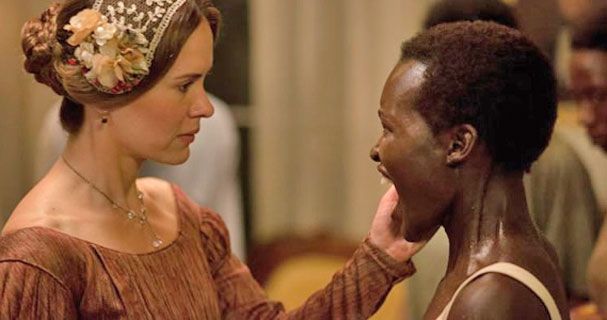
Steve McQueen sees Sarah Paulson and says, “that woman should play the worst, meanest, southern plantation woman ever seen in film.”

“Truly, I’ve found the actress who can make the everyday cruelty of a slaveowner’s wife comprehensible.”
Aaron Sorkin sees Sarah Paulson and says:
“That’s the funniest woman in America.”
Like some…
Posted: January 27, 2015 Filed under: Texas, the American West, the California Condition, writing Leave a comment
He lives in a room above a courtyard behind a tavern and he comes down at night like some fairybook beast to fight with the sailors. (5)
The sun was just down and to the west lay reefs of bloodred clouds up out of which rose little desert nighthawks like fugitives from some great fire at the earth’s end. (23)
Then he waded out into the river like some wholly wretched baptismal candidate. (29)
The ground where he’d lain was soaked with blood and with urine from the voided bladders of animals and he went forth stained and stinking like some reeking issue of the incarnate dam of war herself. (58)
He found a clay jar of beans and some dried tortillas and he took them to a house at the end of the street where the embers of the roof were still smoldering and he warmed the food in the ashes and ate, squatting there like some deserter scavenging the ruins of a city he’d fled. (63)
Itinerant degenerates bleeding westward like some heliotropic plague. (82)
The judge sat upwind from the fire naked to the waist, himself like some pale deity, and when the black’s eyes reached his he smiled. (97)
He looked like some loutish knight beriddled by a troll. (107)
The nearest man to him was Tobin and when the black stepped out of the darkness bearing the bowieknife in both hands like some instrument of ceremony Tobin started to rise. (112)
They crossed before the sun and vanished one by one and reappeared again and they were black in the sun and they rode out of that vanished sea like burnt phantoms with the legs of the animals kicking up the spume that was not real and they were lost in the sun and lost in the lake and they shimmered and slurred together and separated again and they augmented by planes in lurid avatars and began to coalesce and there began to appear above them in the dawn-broached sky a hellish likeness of their ranks riding huge and inverted and the horses’ legs incredibly elongate trampling down the high thin cirrus and the howling antiwarriors pendant from their mounts immense and chimeric and the high wild cries carrying that flat and barren pan like the cries of souls broke through some misweave in the weft of things into the world below. (115)
Far out on the desert to the north dustspouts rose wobbling and augered the earth and some said they’d heard of pilgrims born aloft like dervishes in those mindless coils to be dropped broken and bleeding upon the desert again and there perhaps to watch the thing that had destroyed them lurch onward like some drunken djinn and resolve itself once more in the elements from which it sprang. (117)
They had but two animals and one of these had been snakebit in the desert and this thing now stood in the compound with its head enormously swollen and grotesque like some fabled equine ideation out of an Attic tragedy. (121)
The squatters stood about the dead boy with their wretched firearms at rest like some tatterdemalion guard of honor. (125)
Like some ignis fatuus belated upon the road behind them which all could see and of which none spoke. (126)
Under a gibbous moon horse and rider spanceled to their shadows on the snowblue ground and in each flare of lightning as the storm advanced those selfsame forms rearing with a terrible redundancy behind them like some third aspect of their presence hammered out black and wild upon the naked grounds. (157-8)
The dead lay awash in the shallows like the victims of some disaster at sea and they were strewn along the salt foreshore in a havoc of blood and entrails. (163)
One of the Delawares passed with a collection of heads like some strange vendor bound for market, the hair twisted about his wrist and the heads dangling and turning together. (163)
Glanton was first to reach the dying man and he knelt with that alien and barbarous head cradled between his thighs like some reeking outland nurse and dared off the savages with his revolver. (165)
All about her the dead lay with their peeled skulls like polyps bluely wet or luminescent melons cooling on some mesa of the moon. (181-2)
They passed along the ruinous walls of the cemetery where the dead were trestled up in niches and the grounds strewn with bones and skulls and broken pots like some more ancient ossuary. (182)
It was raining again and they rose slouched under slickers hacked from greasy iralfcured hides and so cowled in these primitive skins before the gray and driving rain they looked like wardens of some dim sect sent forth to proselytize among the very beasts of the land. (195)
The riders pushed between them and the rock and methodically rode them from the escarpment, the animals dropping silently as martyrs, turning sedately in the empty air and exploding on the rocks below in startling bursts of blood and silver as the flasks broke open and the mercury loomed wobbling in the air in great sheets and lobes and small trembling satellites and all its forms grouping below and racing in the stone arroyos like the imbreachment of some ultimate alchemic work decocted from out the secret dark of the earth’s heart, the fleeing stag of the ancients fugitive on the mountainside and bright and quick in the dry path of the storm channels and shaping out the sockets in the rock and hurrying from ledge to ledge down the slope shimmering and eft as eels. (203)
A mile further and he came upon a strange blackened mass in the trail like a burnt carcass of some ungodly beast. (225)
He too had lost his hat and he rode with a woven wreath of desert scrub about his head like some egregious saltland hard and he looked down upon the refugee with the same smile, as if the world were pleasing to him alone. (228)
The other heads glared blindly out of their wrinkled eyes like fellows of some righteous initiate given up to vows of silence and of death. (230)
The judge was standing on the rise in silhouette like some great balden archirnandrite. (285)
The judge in the floor of the well likewise rose and he adjusted his hat and gripped the valise under his arm like some immense and naked barrister whom the country had crazed. (296)
The idiot squatted on all fours and leaned into the lead like some naked species of lemur. (298)
When he raised his head to look out he saw the expriest stumbling among the bones and holding aloft a cross he’d fashioned out of the shins of a ram and he’d lashed them together with strips of hide and he was holding the thing before him like some mad dowser in the bleak of desert and calling out in a tongue both alien and extinct. (302)
This troubled sect traversed slowly the ground under the bluff where the watcher stood and made their way over the broken scree of a fan washed out of the draw above them and wailing and piping and clanging they passed between the granite walls into the upper valley and disappeared in the coming darkness like heralds of some unspeakable calamity leaving only bloody footprints on the stone. (326)
The candles sputtered and the great hairy mound of the bear dead in its crinoline lay like some monster slain in the commission of unnatural acts. (340)
Been re-reading this in audiobook format, blowing my mind like some mind that’s getting blown. Those page numbers, from Google books, are from the hardcover, not that paperback. (And don’t think I’m braggin’ with all those post-its on my copy — that’s the condition in which the book was returned to me after being loaned to a scholarly friend.)
Don’t miss Mills on the topic. Always worth rewatching:
Removing fish from an abandoned Thai shopping mall
Posted: January 20, 2015 Filed under: adventures, marine biology, the ocean Leave a comment
HT to Tyler Cowen for the link to this, no doubt of interest to Helytimes readers.

Score.
Posted: January 14, 2015 Filed under: Canada, native america, writing Leave a commentSweet! A package arrived!

Let’s see what I got…

Oh, it’s Kayak Full Of Ghosts: Eskimo Tales, gathered and retold by Lawrence Millman. Let’s hear what Millman is up to:
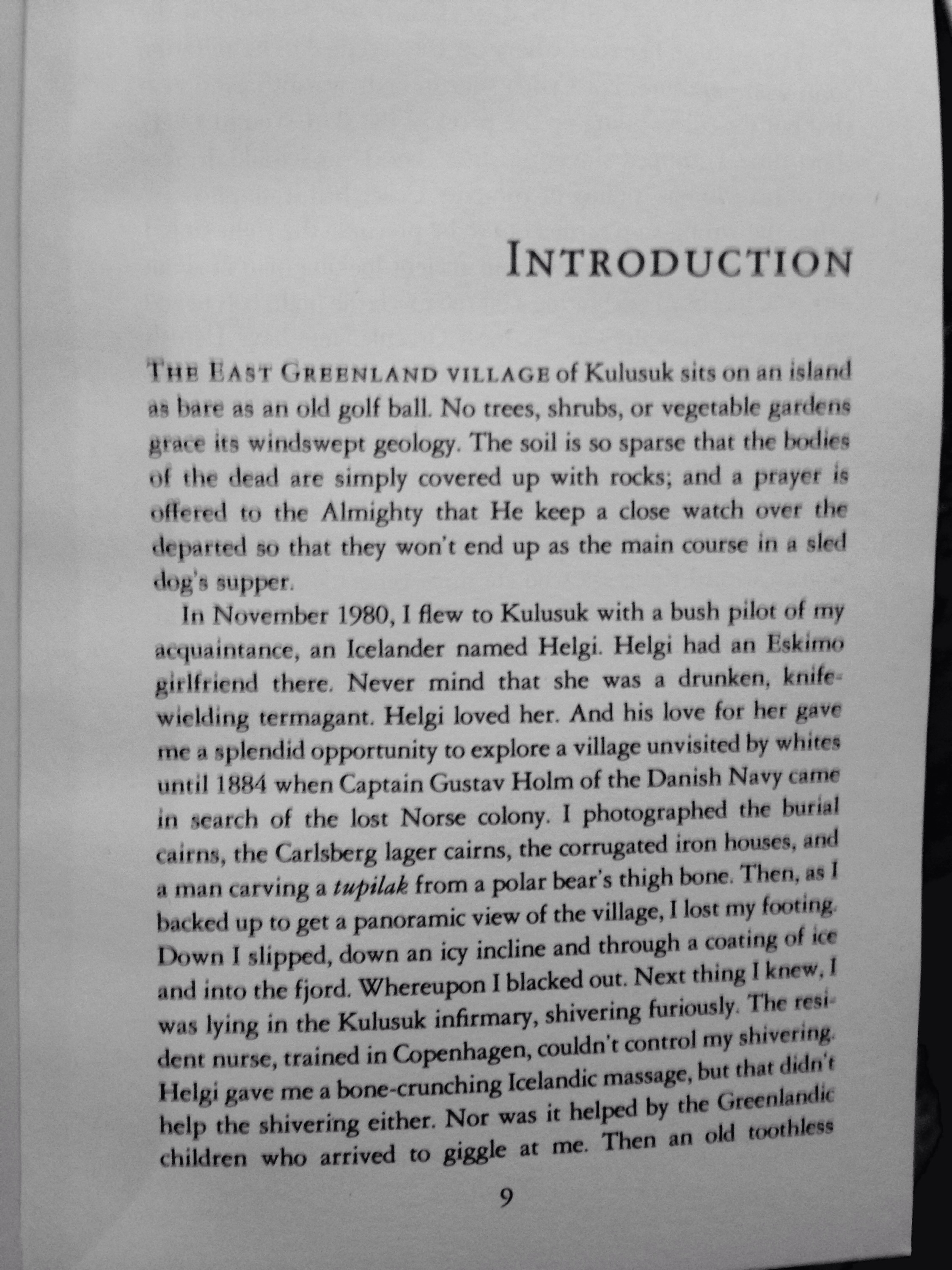
You know what, let’s just jump right in and read one of the stories:

Ok…

Well, lots to think about. Thanks to Dan Vebber for putting me on to Millman.
Losing The War by Lee Sandlin
Posted: January 13, 2015 Filed under: America Since 1945, writing, WW2 1 Comment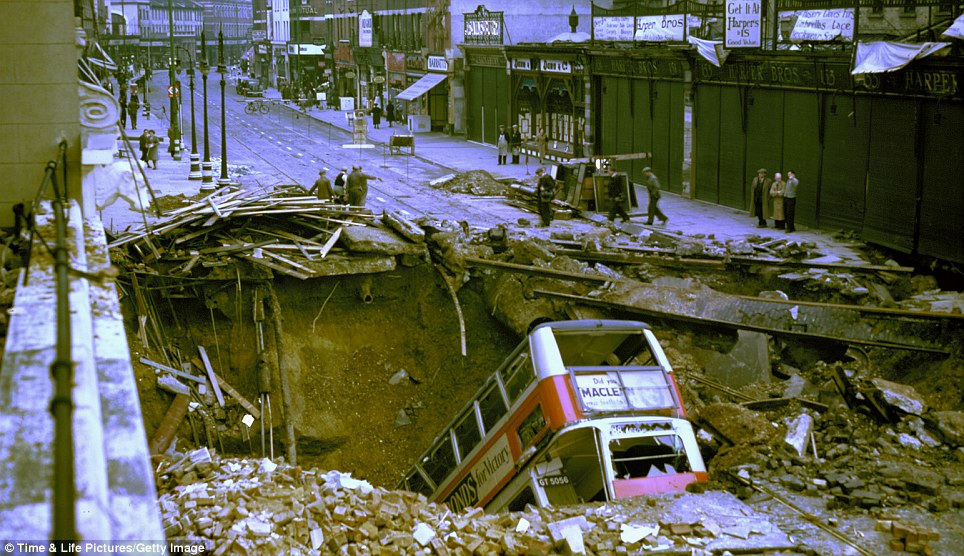
Time/Life photo found here: http://www.dailymail.co.uk/news/article-2016667/Colour-pictures-revealed-London-blitz-Nazi-bombers-World-War-II.html
I don’t know how I came across this essay, which was published in Chicago Review in 1999, but it’s by Lee Sandlin, an author I’d never heard of, and it was one of the best things I read in 2014.
One of the best things I’ve read about World War II ever. Insightful on government, history, human nature, memory, language. Would make this on mandatory reading for citizens, if somebody asked me. Though it’s very long (40 pages), I recommend it to you.
Hard even to pull out favorite parts but let me try:
The Greeks of Homer’s time, for instance, saw war as the one enduring constant underlying the petty affairs of humanity, as routine and all-consuming as the cycle of the seasons: grim and squalid in many ways, but still the essential time when the motives and powers of the gods are most manifest. To the Greeks, peace was nothing but a fluke, an irrelevance, an arbitrary delay brought on when bad weather forced the spring campaign to be canceled, or a back-room deal kept the troops at home until after harvest time. Any of Homer’s heroes would see the peaceful life of the average American as some bizarre aberration, like a garden mysteriously cultivated for decades on the slopes of an avalanche-haunted mountain.

found this here: http://maggiesfarm.anotherdotcom.com/index.php?url=archives/12640-Hitler-in-color.html&serendipity%5Bcview%5D=linear
One of the reasons behind the Japanese attack on Pearl Harbor—apart from the obvious military necessity of taking out the American fleet so that the Japanese military could conquer the western Pacific unopposed—was the unshakable conviction that Americans would collectively fold at the first sign of trouble; one big, nasty attack would be enough to get a negotiated settlement, on whatever terms the Japanese would care to name. In the same way Hitler and his inner circle were blithely sure that America would go to any lengths to stay out of the fight. Hitler’s catastrophic decision to declare war on America three days after Pearl Harbor was made almost in passing, as a diplomatic courtesy to the Japanese. To the end he professed himself baffled that America was in the war at all; he would have thought that if Americans really wanted to fight, they’d join with him against their traditional enemies, the British. But evidently they were too much under the thumb of Roosevelt—whom Hitler was positive was a Jew named Rosenfeldt, part of the same evil cabal that controlled Stalin.
As fanciful as that was, it shows the average wartime grasp of the real motives of the enemy. It was at least on a par with the American Left’s conviction that Hitler was an irrelevant puppet in the hands of the world’s leading industrialists. Throughout the war all sides regarded one another with blank incomprehension: the course of the war was distinguished by a striking absence of one of the favorite sentimental cliches of the battlefield (which was afterward said to have marked World War I)—the touching scene in the trenches where soldiers on opposed sides surreptitiously acknowledge their common humanity. For the soldiers, for the citizens at large, and for all those churning out oceans of propaganda, the enemy was a featureless mass of inscrutable, dishonorable malignity.
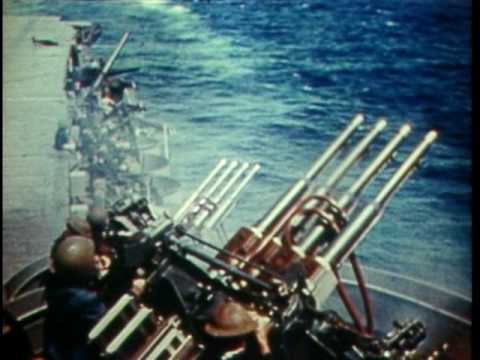
footage from John Ford’s documentary shot during Midway
Here, Lee Sandlin describes the Battle of Midway, drawing on “survivors’ accounts, and from a small library of academic and military histories, ranging in scope and style from Walter Lord’s epic Miracle at Midway to John Keegan’s brilliant tactical analysis in The Price of Admiralty: The Evolution of Naval Warfare”
But the sailors on board the Japanese fleet saw things differently. They didn’t meet any American ships on June 4. That day, as on all the other days of their voyage, they saw nothing from horizon to horizon but the immensity of the Pacific. Somewhere beyond the horizon line, shortly after dawn, Japanese pilots from the carriers had discovered the presence of the American fleet, but for the Japanese sailors, the only indications of anything unusual that morning were two brief flyovers by American fighter squadrons. Both had made ineffectual attacks and flown off again. Coming on toward 10:30 AM, with no further sign of enemy activity anywhere near, the commanders ordered the crews on the aircraft carriers to prepare for the final assault on the island, which wasn’t yet visible on the horizon.
That was when a squadron of American dive-bombers came out of the clouds overhead. They’d got lost earlier that morning and were trying to make their way back to base. In the empty ocean below they spotted a fading wake—one of the Japanese escort ships had been diverted from the convoy to drop a depth charge on a suspected American submarine. The squadron followed it just to see where it might lead. A few minutes later they cleared a cloud deck and discovered themselves directly above the single largest “target of opportunity,” as the military saying goes, that any American bomber had ever been offered.
When we try to imagine what happened next we’re likely to get an image out of Star Wars—daring attack planes, as graceful as swallows, darting among the ponderously churning cannons of some behemoth of a Death Star. But the sci-fi trappings of Star Wars disguise an archaic and sluggish idea of battle. What happened instead was this: the American squadron commander gave the order to attack, the planes came hurtling down from around 12,000 feet and released their bombs, and then they pulled out of their dives and were gone. That was all. Most of the Japanese sailors didn’t even see them.
The aircraft carriers were in a frenzy just then. Dozens of planes were being refueled and rearmed on the hangar decks, and elevators were raising them to the flight decks, where other planes were already revving up for takeoff. The noise was deafening, and the warning sirens were inaudible. Only the sudden, shattering bass thunder of the big guns going off underneath the bedlam alerted the sailors that anything was wrong. That was when they looked up. By then the planes were already soaring out of sight, and the black blobs of the bombs were already descending from the brilliant sky in a languorous glide.
One bomb fell on the flight deck of the Akagi, the flagship of the fleet, and exploded amidships near the elevator. The concussion wave of the blast roared through the open shaft to the hangar deck below, where it detonated a stack of torpedoes. The explosion that followed was so powerful it ruptured the flight deck; a fireball flashed like a volcano through the blast crater and swallowed up the midsection of the ship. Sailors were killed instantly by the fierce heat, by hydrostatic shock from the concussion wave, by flying shards of steel; they were hurled overboard unconscious and drowned. The sailors in the engine room were killed by flames drawn through the ventilating system. Two hundred died in all. Then came more explosions rumbling up from below decks as the fuel reserves ignited. That was when the captain, still frozen in shock and disbelief, collected his wits sufficiently to recognize that the ship had to be abandoned.
Meanwhile another carrier, the Kaga, was hit by a bomb that exploded directly on the hangar deck. The deck was strewn with live artillery shells, and open fuel lines snaked everywhere. Within seconds, explosions were going off in cascading chain reactions, and uncontrollable fuel fires were breaking out all along the length of the ship. Eight hundred sailors died. On the flight deck a fuel truck exploded and began shooting wide fans of ignited fuel in all directions; the captain and the rest of the senior officers, watching in horror from the bridge, were caught in the spray, and they all burned to death.
Less than five minutes had passed since the American planes had first appeared overhead. The Akagi and the Kaga were breaking up. Billowing columns of smoke towered above the horizon line. These attracted another American bomber squadron, which immediately launched an attack on a third aircraft carrier, the Soryu. These bombs were less effective—they set off fuel fires all over the ship, but the desperate crew managed to get them under control. Still, the Soryu was so badly damaged it was helpless. Shortly afterward it was targeted by an American submarine (the same one the escort ship had earlier tried to drop a depth charge on). American subs in those days were a byword for military ineffectiveness; they were notorious for their faulty and unpredictable torpedoes. But the crew of this particular sub had a large stationary target to fire at point-blank. The Soryu was blasted apart by repeated direct hits. Seven hundred sailors died.
The last of the carriers, the Hiryu, managed to escape untouched, but later that afternoon it was located and attacked by another flight of American bombers. One bomb set off an explosion so strong it blew the elevator assembly into the bridge. More than 400 died, and the crippled ship had to be scuttled a few hours later to keep it from being captured.
Now there was nothing left of the Japanese attack force except a scattering of escort ships and the planes still in the air. The pilots were the final casualties of the battle; with the aircraft carriers gone, and with Midway still in American hands, they had nowhere to land. They were doomed to circle helplessly above the sinking debris, the floating bodies, and the burning oil slicks until their fuel ran out.
This was the Battle of Midway. As John Keegan writes, it was “the most stunning and decisive blow in the history of naval warfare.” Its consequences were instant, permanent and devastating. It gutted Japan’s navy and broke its strategy for the Pacific war. The Japanese would never complete their perimeter around their new empire; instead they were thrown back on the defensive, against an increasingly large and better-organized American force, which grew surgingly confident after its spectacular victory. After Midway, as the Japanese scrambled to rebuild their shattered fleet, the Americans went on the attack. In August 1942 they began landing a marine force on the small island of Guadalcanal (it’s in the Solomons, near New Guinea) and inexorably forced a breach in the perimeter in the southern Pacific. From there American forces began fanning out into the outer reaches of the empire, cutting supply lines and isolating the strongest garrisons. From Midway till the end of the war the Japanese didn’t win a single substantial engagement against the Americans. They had “lost the initiative,” as the bland military saying goes, and they never got it back.
But it seems somehow paltry and wrong to call what happened at Midway a “battle.” It had nothing to do with battles the way they were pictured in the popular imagination. There were no last-gasp gestures of transcendent heroism, no brilliant counterstrategies that saved the day. It was more like an industrial accident. It was a clash not between armies, but between TNT and ignited petroleum and drop-forged steel. The thousands who died there weren’t warriors but bystanders—the workers at the factory who happened to draw the shift when the boiler exploded…

Akagi. There’s an interesting note here on this Navy website about why there are so few photos of the Japanese ships: http://www.history.navy.mil/photos/events/wwii-pac/midway/mid-4k.htm
Re: American war reporting:
What were they supposed to say about what they were seeing? At Kasserine American soldiers were blown apart into shreds of flesh scattered among the smoking ruins of exploded tanks. Ernie Pyle called this “disappointing.” Well, why not? There were no other words to describe the thing that had happened there. The truth was, the only language that seemed to register the appalling strangeness of the war was supernatural: the ghost story where nightmarish powers erupt out of nothingness, the glimpse into the occult void where human beings would be destroyed by unearthly forces they couldn’t hope to comprehend. Even the most routine event of the war, the firing of an artillery shell, seemed somehow uncanny. The launch of a shell and its explosive arrival were so far apart in space and time you could hardly believe they were part of the same event, and for those in the middle there was only the creepy whisper of its passage, from nowhere to nowhere, like a rip in the fabric of causality.
On the bureaucracy of the war:
There’s another military phrase: “in harm’s way.” That’s what everybody assumes going to war means—putting yourself in danger. But the truth is that for most soldiers war is no more inherently dangerous than any other line of work. Modern warfare has grown so complicated and requires such immense movements of men and materiel over so vast an expanse of territory that an ever-increasing proportion of every army is given over to supply, tactical support, and logistics. Only about one in five of the soldiers who took part in World War II was in a combat unit (by the time of Vietnam the ratio in the American armed forces was down to around one in seven). The rest were construction workers, accountants, drivers, technicians, cooks, file clerks, repairmen, warehouse managers—the war was essentially a self-contained economic system that swelled up out of nothing and covered the globe.
For most soldiers the dominant memory they had of the war was of that vast structure arching up unimaginably high overhead. It’s no coincidence that two of the most widely read and memorable American novels of the war, Joseph Heller’s Catch-22 and Thomas Pynchon’s Gravity’s Rainbow, are almost wholly about the cosmic scale of the American military’s corporate bureaucracy and mention Hitler and the Nazis only in passing. Actual combat could seem like almost an incidental side product of the immense project of military industrialization. A battle for most soldiers was something that happened up the road, or on the fogbound islands edging the horizon, or in the silhouettes of remote hilltops lit up at night by silent flickering, which they mistook at first for summer lightning. And when reporters traveled through the vast territories under military occupation looking for some evidence of real fighting, what they were more likely to find instead was a scene like what Martha Gellhorn, covering the war for Collier’s, discovered in the depths of the Italian countryside: “The road signs were fantastic….The routes themselves, renamed for this operation, were marked with the symbols of their names, a painted animal or a painted object. There were the code numbers of every outfit, road warnings—bridge blown, crater mines, bad bends—indications of first-aid posts, gasoline dumps, repair stations, prisoner-of-war cages, and finally a marvelous Polish sign urging the troops to notice that this was a malarial area: this sign was a large green death’s-head with a mosquito sitting on it.”
That was the war: omnipresent, weedlike tendrils of contingency and code spreading over a landscape where the battle had long since passed.
It was much the same in the U.S. The bureaucracy of war became an overpowering presence in people’s lives, even though the reality of battle was impossibly remote. Prices were controlled by war-related government departments, nonessential nonmilitary construction required a nightmare of paperwork, food and gas were rationed—any long-distance car travel that wasn’t for war business meant a special hearing before a ration board, and almost every train snaking through the depths of the heartland had been commandeered for classified military transport. The necessities of war even broke up the conventional proprieties of marriage: the universal inevitability of military service meant that young couples got married quickly, sometimes at first meeting—and often only so the women could get the military paycheck and the ration stamps.
The war was the single dominant fact in the world, saturating every radio show and newspaper. Every pennant race was described on the sports pages in the metaphor of battle; every car wreck and hotel fire was compared to the air raids that everyone was still expecting to hit the blacked-out cities on the coasts.
But who was controlling the growth of this fantastic edifice? Nobody could say. People who went to Washington during those years found a desperately overcrowded town caught up in a kind of diffuse bureaucratic riot. New agencies and administrations overflowed from labyrinthine warrens of temporary office space. People came to expect that the simplest problem would lead to hours or days of wandering down featureless corridors, passing door after closed door spattered by uncrackable alphabetic codes: OPA, OWI, OSS. Nor could you expect any help or sympathy once you found the right office: if the swarms of new government workers weren’t focused on the latest crisis in the Pacific, they were distracted by the hopeless task of finding an apartment or a boarding house or a cot in a spare room. Either way, they didn’t give a damn about solving your little squabble about petroleum rationing.
It might have been some consolation to know that people around the world were stuck with exactly the same problems—particularly people on the enemy side. There was a myth (it still persists) that the Nazi state was a model of efficiency; the truth was that it was a bureaucratic shambles. The military functioned well—Hitler gave it a blank check—but civilian life was made a misery by countless competing agencies and new ministries, all claiming absolute power over every detail of German life. Any task, from getting repairs in an apartment building to requisitioning office equipment, required running a gauntlet of contradictory regulations. One historian later described Nazi Germany as “authoritarian anarchy.”
But then everything about the war was ad hoc and provisional. The British set up secret installations in country estates; Stalin had his supreme military headquarters in a commandeered Moscow subway station. Nobody cared about making the system logical, because everything only needed to happen once. Every battle was unrepeatable, every campaign was a special case. The people who were actually making the decisions in the war—for the most part, senior staff officers and civil service workers who hid behind anonymous doors and unsigned briefing papers—lurched from one improvisation to the next, with no sense of how much the limitless powers they were mustering were remaking the world.
But there was one constant. From the summer of 1942 on, the whole Allied war effort, the immensity of its armies and its industries, were focused on a single overriding goal: the destruction of the German army in Europe. Allied strategists had concluded that the global structure of the Axis would fall apart if the main military strength of the German Reich could be broken. But that task looked to be unimaginably difficult. It meant building up an overwhelmingly large army of their own, somehow getting it on the ground in Europe, and confronting the German army at point-blank range. How could this possibly be accomplished? The plan was worked out at endless briefings and diplomatic meetings and strategy sessions held during the first half of 1942. The Soviet Red Army would have to break through the Russian front and move into Germany from the east. Meanwhile, a new Allied army would get across the English Channel and land in France, and the two armies would converge on Berlin.
The plan set the true clock time of the war. No matter what the surface play of battle was in Africa or the South Seas, the underlying dynamic never changed: every hour, every day the Allies were preparing for the invasion of Europe. They were stockpiling thousands of landing craft, tens of thousands of tanks, millions upon millions of rifles and mortars and howitzers, oceans of bullets and bombs and artillery shells—the united power of the American and Russian economies was slowly building up a military force large enough to overrun a continent. The sheer bulk of the armaments involved would have been unimaginable a few years earlier. One number may suggest the scale. Before the war began the entire German Luftwaffe consisted of 4,000 planes; by the time of the Normandy invasion American factories were turning out 4,000 new planes every two weeks.

Kursk tanks, found here: http://www.battleofkursk.org/Battle-of-Kursk-Tanks.html
On how much crazier the Eastern Front was:
In August 1943, for instance, in the hilly countryside around the town of Kursk (about 200 miles south of Moscow), the German and Soviet armies collided in an uncontrolled slaughter: more than four million men and thousands of tanks desperately maneuvered through miles of densely packed minefields and horizon-filling networks of artillery fire. It may have been the single largest battle fought in human history, and it ended—like all the battles on the eastern front—in a draw.

On an uncanny force driving war through history:
In the First Book of Maccabees it’s written that Alexander the Great “made many wars, and won many strongholds, and slew the kings of the earth, and went through to the ends of the earth, and took spoils of many nations, insomuch that the earth was quiet before him.” Uncharacteristically for the Bible, there is no moral judgment offered on the way Alexander chose to pass his time. Maybe this is because there couldn’t be. There are certain people whose lives are so vastly out of scale with the rest of humanity, whether for good or evil, that the conventional verdicts seem foolish. Alexander, like Genghis Khan or Napoleon, was born to be a world wrecker. He single-handedly brought down the timeless empires of pagan antiquity and turned names like Babylon and Persia into exotic, dim legends. His influence was so dramatic and pervasive that people were still talking about him as the dominant force in the world centuries after he was dead. The writers of the Apocrypha knew that he was somehow responsible for the circumstances that led to the Maccabean revolt, even though he’d never set foot in Judea. The Romans knew that their empire was possible only because it was built out of the wreckage Alexander had left behind him in the Middle East. We know that Western civilization is arranged the way it is in large part because Alexander destroyed the civilizations that came before it.
But why had he done it? The author of Maccabees received no divine insight on that score. Nobody did. Even the people who actually knew Alexander were baffled by him. According to all the biographies and versified epics about him that have survived from the ancient world, his friends and subordinates found him almost impossible to read. He never talked about what he wanted or whether there was any conquest that would finally satisfy him; he never revealed the cause of the unappeasable sense of grievance that led him to take on the kings of the earth. Yet his peculiar manner led a lot of people in his entourage to think that he was somehow in touch with divine forces. He frequently had an air of trancelike distraction, as though his brilliant military strategies were dictated by some mysterious inner voice, and he had a habit of staring not quite at people but just over their shoulder, as though he were picking up some ethereal presence in the room invisible to everybody else. But even without these signs, people were bound to think that he was fulfilling a god’s unknowable whims. After all, what he was doing made no sense in human terms: it was global destruction for its own sake, and what mortal could possibly want that?
“Pilots pleased over their victory during the Marshall Islands attack, grin across the tail of an F6F Hellcat on board the USS LEXINGTON, after shooting down 17 out of 20 Japanese planes heading for Tarawa.” Comdr. Edward Steichen, November 1943. 80-G-470985. (ww2_75.jpg, National Archives)

How about this, on the Old Norse vocabulary of war:
Another Viking term was “fey.” People now understand it to mean effeminate. Previously it meant odd, and before that uncanny, fairylike. That was back when fairyland was the most sinister place people could imagine. The Old Norse word meant “doomed.” It was used to refer to an eerie mood that would come over people in battle, a kind of transcendent despair. The state was described vividly by an American reporter, Tom Lea, in the midst of the desperate Battle of Peleliu in the South Pacific. He felt something inside of himself, some instinctive psychic urge to keep himself alive, finally collapse at the sight of one more dead soldier in the ruins of a tropical jungle: “He seemed so quiet and empty and past all the small things a man could love or hate. I suddenly knew I no longer had to defend my beating heart against the stillness of death. There was no defense.”
There was no defense—that’s fey. People go through battle willing the bullet to miss, the shelling to stop, the heart to go on beating—and then they feel something in their soul surrender, and they give in to everything they’ve been most afraid of. It’s like a glimpse of eternity. Whether the battle is lost or won, it will never end; it has wholly taken over the soul. Sometimes men say afterward that the most terrifying moment of any battle is seeing a fey look on the faces of the soldiers standing next to them.
But the fey becomes accessible to civilians in a war too—if the war goes on long enough and its psychic effects become sufficiently pervasive. World War II went on so long that both soldiers and civilians began to think of feyness as a universal condition. They surrendered to that eternity of dread: the inevitable, shattering resumption of an artillery barrage; the implacable cruelty of an occupying army; the panic, never to be overcome despite a thousand false alarms, at an unexpected knock on the door, or a telegram, or the sight out the front window of an unfamiliar car pulling to a halt. They got so used to the war they reached a state of acquiescence, certain they wouldn’t stop being scared until they were dead.
It was in a fey mood that, in the depths of the German invasion, Russian literary scholar Mikhail Bakhtin took the only copy of his life’s work, a study of Goethe, and ripped it up, page by page and day by day, for that unobtainable commodity, cigarette paper.

“USS SHAW exploding during the Japanese raid on Pearl Harbor.” December 7, 1941. 80-G-16871. From the National Archives
A feyness of bureaucracy:
A rational calculation of the odds is a calculation by the logic of peace. War has a different logic. A kind of vast feyness can infect a military bureaucracy when it’s losing a war, a collective slippage of the sense of objective truth in the face of approaching disaster. In the later years of World War II the bureaucracies of the Axis—partially in Germany, almost wholly in Japan—gave up any pretense of realism about their situation. Their armies were fighting all over the world with desperate berserker fury, savagely contesting every inch of terrain, hurling countless suicide raids against Allied battalions (kamikaze attacks on American ships at Okinawa came in waves of a hundred planes at a time)—while the bureaucrats behind the lines gradually retreated into a dreamy paper war where they were on the brink of a triumphant reversal of fortune.
They had the evidence. Officers in the field, unable to face or admit the imminence of defeat, routinely submitted false reports up the chain of command. Commanders up the line were increasingly prone to believe them, or to pretend to believe them. And so, as the final catastrophe approached, strategists in both Berlin and Tokyo could be heard solemnly discussing the immense weight of paper that documented the latest round of imaginary victories, the long-overrun positions that they still claimed to hold, and the Allied armies and fleets that had just been conclusively destroyed—even though the real-world Allied equivalents had crashed through the lines and were advancing toward the homeland.

“Two bewildered old ladies stand amid the leveled ruins of the almshouse which was Home; until Jerry dropped his bombs. Total war knows no bounds. Almshouse bombed Feb. 10, Newbury, Berks., England.” Naccarata, February 11, 1943. 111-SC-178801.
The logic of the end of the war, fall ’44 onward:
That was when the Allies changed their strategy. They set out to make an Axis surrender irrelevant.
From that winter into the next spring the civilians of Germany and Japan were helpless before a new Allied campaign of systematic aerial bombardment. The air forces and air defense systems of the Axis were in ruins by then. Allied planes flew where they pleased, day or night—500 at a time, then 1,000 at a time, indiscriminately dumping avalanches of bombs on every city and town in Axis territory that had a military installation or a railroad yard or a factory. By the end of the winter most of Germany’s industrial base had been bombed repeatedly in saturation attacks; by the end of the following spring Allied firebombing raids had burned more than 60 percent of Japan’s urban surface area to the ground.
…
This is the dreadful logic that comes to control a lot of wars. (The American Civil War is another example.) The losers prolong their agony as much as possible, because they’re convinced the alternative is worse. Meanwhile the winners, who might earlier have accepted a compromise peace, become so maddened by the refusal of their enemies to stop fighting that they see no reason to settle for anything less than absolute victory. In this sense the later course of World War II was typical: it kept on escalating, no matter what the strategic situation was, and it grew progressively more violent and uncontrollable long after the outcome was a foregone conclusion. The difference was that no other war had ever had such deep reserves of violence to draw upon.
The Vikings would have understood it anyway. They didn’t have a word for the prolongation of war long past any rational goal—they just knew that’s what always happened. It’s the subject of their longest and greatest saga, the Brennu-njalasaga, or The Saga of Njal Burned Alive. The saga describes a trivial feud in backcountry Iceland that keeps escalating for reasons nobody can understand or resolve until it engulfs the whole of northern Europe.
[amazing digression on that]
…But another, even stronger pressure worked against those who understood how hopeless the situation really was: they knew that defeat meant accountability.

“Photograph made from B-17 Flying Fortress of the 8th AAF Bomber Command on 31 Dec. when they attacked the vital CAM ball- bearing plant and the nearby Hispano Suiza aircraft engine repair depot in Paris.” France, 1943. 208-EX-249A-27.
Sandlin’s discussion of the decision to drop the atomic bombs is one of the best I’ve ever read. Here’s how he warms up to it:
We forget now just how pervasive the atmosphere of classified activity was, but there was hardly anybody, in all of the war’s military bureaucracies, who could honestly claim to know everything that was going on. The best information—whole Mississippis of debriefings and intelligence assessments and field reports and rumors—went up the line and vanished. And what returned, from some unimaginable bureaucratic firmament, were orders—taciturn, uncommunicative instructions, raining down ceaselessly, specifying mysterious troop movements, baffling supply requisitions, unexplained production quotas, and senseless rationing goals. Everywhere were odd networks of power and covert channels of communication. No matter how well placed you were, you were still excluded from incessant meetings, streams of memos were routed around your office, old friends grew vague when you asked what department they worked in (a “special” department, they always said—nobody liked coming out and saying “secret”). Everybody was doing something hush-hush; nobody blinked at the most imponderable mysteries.
So there was barely a ripple when, in the spring of 1943, all the leading physicists in America disappeared.
The end of the war, in the US:
That was the message that flashed around the world in the summer of 1945: the war is over, the war is over. Huge cheering crowds greeted the announcement in cities across America and Europe. A spectacular clamor of church bells rang out across the heartland. Wails of car horns and sirens soared up from isolated desert towns, mystifying travelers who’d been on the road all night and hadn’t heard the news. People pounded on doors in hushed apartment buildings, they came out from their houses and laughed and cheered and hugged one another, they swarmed in the streets all through the summer night telling strangers how frightened they’d been and how glad they were it had finally ended. No one could stop talking; every new face that appeared in the crowd was an excuse to ask if they’d heard and then start telling their stories all over again.

“Jubilant American soldier hugs motherly English woman and victory smiles light the faces of happy service men and civilians at Piccadilly Circus, London, celebrating Germany’s unconditional surrender.” Pfc. Melvin Weiss, England, May 7, 1945. 111-SC-205398.
Read the whole thing, is my suggestion.

At the White House, President Truman announces Japan’s surrender. Abbie Rowe, Washington, DC, August 14, 1945. 79-AR-508Q.
I was thinking about this article over Christmas, and resolved that in 2015 I would write Lee Sandlin a note telling him how much it blew my head off. Too late, though. Lee Sandlin died on Dec. 14, 2014 – that’s why, I guess, it was reposted and reached me.

Found that photo on his website, which seems like a great memorial to the man. A list of some of his favorite stuff. And from his section “Rationals:”
I’m just a guy who writes about stuff that happened. But at least there’s a long tradition of this kind of writing. My model has always been William Hazlitt, who two hundred years ago wrote essays, reviews, travel writings, memoirs, celebrity profiles, sports reporting — each piece was simply about what happened, and yet each piece, no matter what the subject, reads like an act of total moral engagement. Hazlitt brought everything he knew, and everything he was, to the task of writing about what happened.
And back beyond that, way back, twenty five hundred years ago, the grandest and airiest work of philosophical speculation ever written begins as a plain report of what happened. In fact, it might easily be mistaken for a review:
Yesterday I went down to the Piraeus with Glaucon the Ariston, to make an offering to the Goddess, and also to see their Festival, which they were putting on for the first time this year. I liked the procession, but I think the procession at Thrace is more beautiful…
Found most of those photos at the National Archives. Here is a ghastly one of a Nazi general who committed suicide, and here are four more amazing ones:

“Dynamic static. The motion of its props causes an `aura’ to form around this F6F on USS YORKTOWN. Rotating with blades, halo moves aft, giving depth and perspective.” November 1943. 80-G-204747A.

“Marines of the 5th Division inch their way up a slope on Red Beach No. 1 toward Surbachi Yama as the smoke of the battle drifts about them.” Dreyfuss, Iwo Jima, February 19, 1945.

“The Yanks mop up on Bougainville. At night the Japs would infiltrate American lines. At Dawn, the doughboys went out and killed them. This photo shows tank going forward, infantrymen following in its cover.” March 1944. 111-SC-189099.

“Dust storm at this War Relocation Authority center where evacuees of Japanese ancestry are spending the duration.” Dorothea Lange, Manzanar, CA, July 3, 1942. 210-G-10C-839.
Bao Bao’s first snow day
Posted: January 7, 2015 Filed under: Uncategorized Leave a commentInsurance:
How big is the universe?
Posted: January 7, 2015 Filed under: adventures, science Leave a commentDevoted ten minutes to the puzzle, after discovering I myself had no idea really.
Let’s start with basics.

stealing this from an apparently abandoned online toy store somewhere in the EU
One problem is it’s hard to render these distances on any map. Take just sun to Earth, for instance.
Sun to Earth
93 million miles.
The earth’s diameter is 7,918 miles. The sun’s diameter is 864,327 miles. So if we made a map, where the Earth was one inch, the sun would have to be nine feet tall and 978 feet away.
Another way: if Earth is a golf ball (1.68 inches diameter) the sun is a 15.26′ ball, five and half football fields away.
OK, how about to the edge of our solar system?
Well, what’s the edge? Neptune’s the most distant planet, right (after that unpleasant Pluto business)?
Sun to Neptune
4.18 light hours (or .00047684 light years)
But the real edge of our solar system, people seem to think, is way crazy farther past even Pluto.
It’s in a place that is still mostly just a theory, a sphere of wandering ice comets called the Oort Cloud:

from NASA found here: http://arstechnica.com/science/2014/03/new-dwarf-planet-found-sneaking-through-the-inner-oort-cloud/
Very difficult to render how far away the Oort Cloud is, at this level the scaling is so ridiculous that a 2D map with like dots on it becomes pretty irrelevant.
From the sun to the Oort Cloud – the edge of the solar system – is something like 1.87 light years.

Oort.
The next solar system over, Alpha Centauri, is 4.37 light years from the sun.

VERY good chart, thanks so much NASA/Penn and also for putting that map in the public domain, although I guess as a federal taxpayer I do own it kind of.
You can see Alpha Centauri with your naked eye, I believe, I think our excellent friend Jeff even pointed it out to us once. From Earth it appears to the eye as a single object even though it’s a two-star system:

Us and Alpha Centauri are in the Milky Way. You can see the Milky Way from Earth, even though we’re in it, because it’s a spiral, and we’re in the spiral:

The laser in this picture is pointing toward the Galactic Center, which is 27,000 light-years away from the sun.
The Milky Way is 100,000-120,000 light years in diameter.
How many stars are in there? Maybe: 100-400 million stars they think. These numbers are much revised over history and expect will be revised many times again.

The Andromeda Galaxy as seen by NASA’s Wide-field Infrared Survey Explorer
The closest galaxy over is Andromeda, which is 2.5 million light-years from Earth.
It is in our (comically named) “Local Group,” which has more than 54 galaxies in it.
Comically named I say because the diameter of the Local Group is 10 million lightyears.
From Earth to the edge observable universe in any direction is 46 billion lightyears.
What’s that you say? How can that be? Back up.
Does the universe have a center? Are we the center?
If we’re the center then… what? If not then… what?

Universe in an expanding sphere. The galaxies farthest away are moving fastest and hence experience length contraction and so become smaller to an observer in the centre. (says Drschwarz on Wikipedia)
Well at this point, I’m afraid I’ve lost comprehension for now and more reading would be necessary to even begin to wrap a desperate brain-finger around the most basic essays into this fathomless question.
From the wikipedia article “Observable Universe” section “Size,” subsection “Misconceptions:
Many secondary sources have reported a wide variety of incorrect figures for the size of the visible universe. Some of these figures are listed below, with brief descriptions of possible reasons for misconceptions about them.
-
13.8 billion light-years
-
The age of the universe is estimated to be 13.8 billion years. While it is commonly understood that nothing can accelerate to velocities equal to or greater than that of light, it is a common misconception that the radius of the observable universe must therefore amount to only 13.8 billion light-years. This reasoning would only make sense if the flat, static Minkowski spacetimeconception under special relativity were correct. In the real universe, spacetime is curved in a way that corresponds to the expansion of space, as evidenced by Hubble’s law. Distances obtained as the speed of light multiplied by a cosmological time interval have no direct physical significance.[23]
- 15.8 billion light-years
- This is obtained in the same way as the 13.8 billion light year figure, but starting from an incorrect age of the universe that the popular press reported in mid-2006.[24][25] For an analysis of this claim and the paper that prompted it, see the following reference at the end of this article.[26]
- 27.6 billion light-years
- This is a diameter obtained from the (incorrect) radius of 13.8 billion light-years.
- 78 billion light-years
- In 2003, Cornish et al.[27] found this lower bound for the diameter of the whole universe (not just the observable part), if we postulate that the universe is finite in size due to its having a nontrivial topology,[28][29] with this lower bound based on the estimated current distance between points that we can see on opposite sides of the cosmic microwave background radiation(CMBR). If the whole universe is smaller than this sphere, then light has had time to circumnavigate it since the big bang, producing multiple images of distant points in the CMBR, which would show up as patterns of repeating circles.[30] Cornish et al. looked for such an effect at scales of up to 24 gigaparsecs (78 Gly or 7.4×1026 m) and failed to find it, and suggested that if they could extend their search to all possible orientations, they would then “be able to exclude the possibility that we live in a universe smaller than 24 Gpc in diameter”. The authors also estimated that with “lower noise and higher resolution CMB maps (from WMAP’s extended mission and from Planck), we will be able to search for smaller circles and extend the limit to ~28 Gpc.”[27] This estimate of the maximum lower bound that can be established by future observations corresponds to a radius of 14 gigaparsecs, or around 46 billion light years, about the same as the figure for the radius of the visible universe (whose radius is defined by the CMBR sphere) given in the opening section. A 2012 preprint by most of the same authors as the Cornish et al. paper has extended the current lower bound to a diameter of 98.5% the diameter of the CMBR sphere, or about 26 Gpc.[31]
- 156 billion light-years
- This figure was obtained by doubling 78 billion light-years on the assumption that it is a radius.[32] Since 78 billion light-years is already a diameter (the original paper by Cornish et al. says, “By extending the search to all possible orientations, we will be able to exclude the possibility that we live in a universe smaller than 24 Gpc in diameter,” and 24 Gpc is 78 billion light years),[27] the doubled figure is incorrect. This figure was very widely reported.[32][33][34] A press release from Montana State University – Bozeman, where Cornish works as an astrophysicist, noted the error when discussing a story that had appeared in Discover magazine, saying “Discover mistakenly reported that the universe was 156 billion light-years wide, thinking that 78 billion was the radius of the universe instead of its diameter.”[35]
-
180 billion light-years
-
This estimate combines the erroneous 156 billion light-year figure with evidence that the M33 Galaxy is actually fifteen percent farther away than previous estimates and that, therefore, the Hubble constant is fifteen percent smaller.[36] The 180 billion figure is obtained by adding 15% to 156 billion light years.
OK, friend, you lost me. You’re on your own.
I guess the point is whether or not I do, today, finally remember to buy paper towels is not super important.
 Helytimes