Karl Ove Knausgaard
Posted: March 5, 2014 Filed under: writing 2 Comments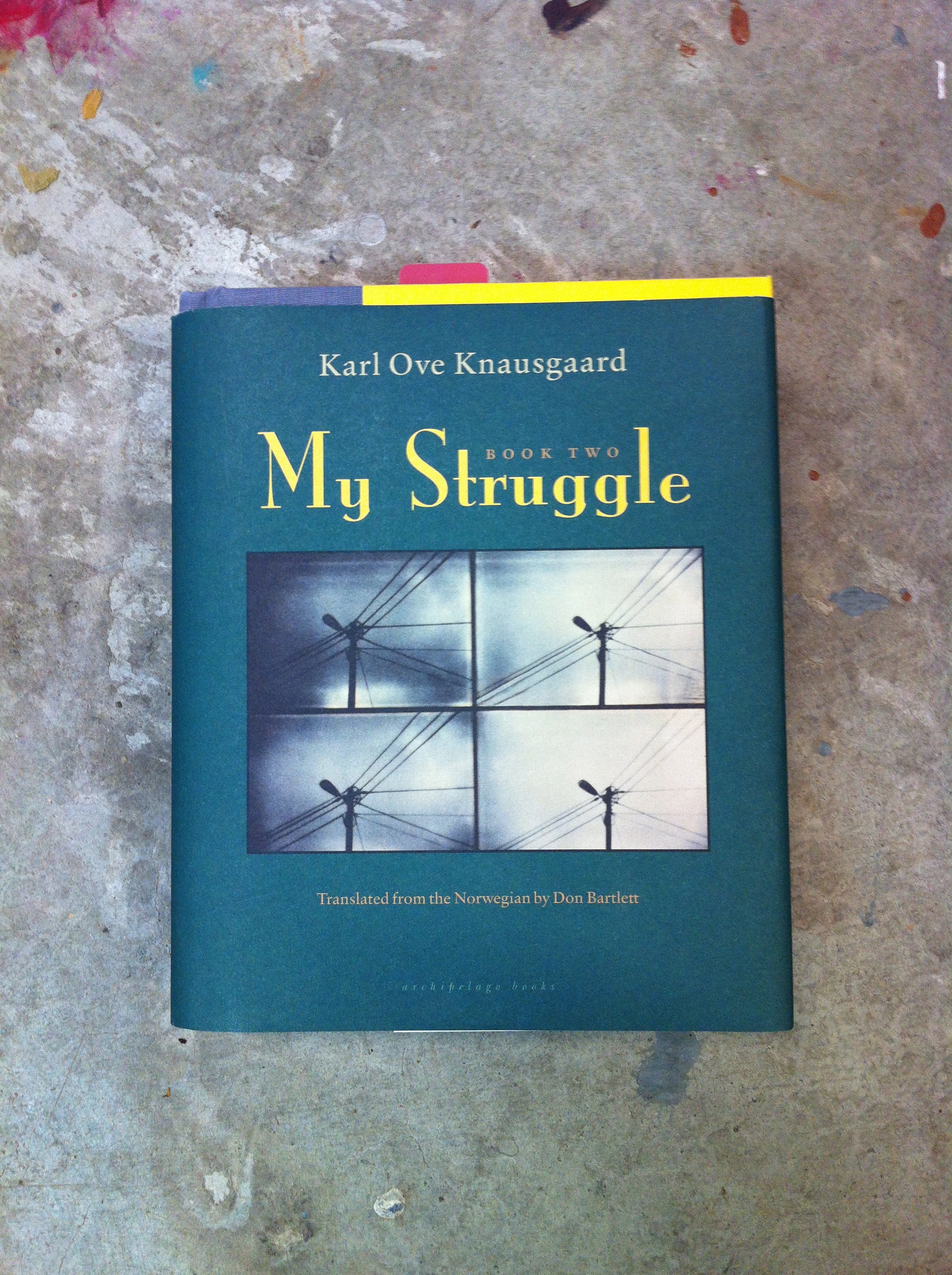
Came to my attention that some HelyTimes readers are not following the book world’s frenzy over Karl Ove Knausgaard’s My Struggle.

Some facts:
* Norwegian writer Karl Ove Knausgaard has been publishing a six volume book that recounts the minute details of his life, or at least the life of a man named Karl Ove Knausgaard the details of which match the actual details of the author’s life to an almost* exact degree.
* We’re only up to Volume 2 in English. Here is my copy pictured next to a coffee mug for scale:

* One out of every ten Norwegians has bought at least one of the volumes.
The level of obsession around this literaryGesamtkunstwerk has been so intense that some Norwegian workplaces have reportedly instituted “Knausgaard-free days”, when staff are forbidden to talk about the books.
* Reviews have been rapturous. Tyler Cowen:
I would put this among the greatest Continental novels of the last fifty years and not at the bottom of that tier. It is not often that one discovers such books.
*
His wife had agreed to be included, telling him only: “Don’t make me boring,” and he gave her the manuscript to read on a long train journey. Having finished it, she called him three times. The first time she said she thought it was OK, but that she didn’t like it. The second time, she told him that their life could never be romantic again. Finally, she called him and wept.
“I was so frustrated that I didn’t foresee the consequences,” Knausgaard has said. “I thought, if the consequences are that she’s leaving me, then OK, she can go. That was how it was. There was a certain desperation that made it possible. I couldn’t do it now.”
Nonetheless, their marriage survived. Last year, Knausgaard admitted that he felt guilt, “for almost everything around this book. I was kind of autistic […] I was saying, ‘My book is more important than your life.'”

(Linda with cat, from here, a site of artists and cats)
* The kind of stuff that’s in the book:
A teenage mission to procure beer for a New Year’s Eve party, for example, occupies about 70 pages in book one.
* I’ve only read about 20 pages, at random, which were about Karl going to gymnastics with his kid and being frustrated that the attractive young teacher can only see him as an emasculated dad.
* I flipped to another section, which was musing about “what would it have been like to live in a world where everything was made from the power of your hands, the wind, or water?” It was pretty engaging.
* The title’s provocative, obviously. KOK says:
For two years, I worked as a kind of adviser on a team that translated the Bible to Norwegian. It was there I learned to read. The gap between the two languages was a shock, and made it possible to experience, not only to recognize, the gap between language and the world, the arbitrariness everybody talked about in the eighties was all of a sudden visible for me.
Another lesson was that in the Old Testament, everything is concrete, nothing is abstract. God is concrete, the angels are concrete, and everything else has to do with bodies in motion, what they say, what they do, but never what they think. No speculations, no reflections. Even the metaphors are connected to bodies. I became especially interested in the story of Cain and Abel, when Cain’s countenance falls and God says, “Why is your countenance fallen? Lift up!” Cain doesn’t look anyone in the eyes, and no one looks in his. This is to hide from the world and from the other. And that is dangerous.
In the sixth book of Min Kamp, I wrote four hundred pages on Adolf Hitler’s Mein Kampf. Hitler was a man who lived a year without seeing anyone, just sitting in his room reading, and when he left that room, never let anyone close, and stayed that way, intransigent, through the rest of his life, and one characteristic thing with his book, is that there is an “I,” and a “we,” but no “you.” And while I was writing about Hitler, a young Norwegian who had stayed some two years all by himself, and written a manifesto with a strong “I” and a “we,” also without a “you,” massacred sixty-nine youths on an island. In other words, his countenance fell.
* I’m told by a Scandinavian friend that the last volume was so long it couldn’t be bound into a book, so Karl took it home and cut it down until it was the EXACT length that could fit into a binding.
* I’d highly recommend reading this short take on it by Sophia Pinkham at n+1, which points out that what might strike an American writer is “how come this guy isn’t worried about money?”
* Karl himself:
“The critical reading of the texts always resulted in parts being deleted. So that was what I did. My writing became more and more minimalist. In the end, I couldn’t write at all. For seven or eight years, I hardly wrote. But then I had a revelation. What if I did the opposite? What if, when a sentence or a scene was bad, I expanded it, and poured in more and more? After I started to do that, I became free in my writing. Fuck quality, fuck perfection, fuck minimalism. My world isn’t minimalist; my world isn’t perfect, so why on earth should my writing be?”
Or this, from The Guardian:
“Concealing what is shameful to you,” he’s said, “will never lead to anything of value.” And the most indelible moments tend to involve his own humiliation. In book two, A Man in Love, for example, he describes getting drunk, breaking a glass and slicing up his own face, when the woman he loves rejects him. Even more abject and embarrassing are book three’s boyhood recollections, including an unhappy appraisal of his own penis, “like a little cork. Or a kind of spring, because it quivered when you flicked it lightly.”
Well, I’m glad it exists I guess.
Is art just the turning of yourself into “art” until you, yourself, are indistinguishable?
Is the cost always that your wife will be crying?
Is it “worth” it?
Should we honor a person like this or figure out what meds he needs?
Is this the logical end of writing?
Is it criminal to do this to your children/relatives? Or worth it for the art?
How good does the art have to be to justify the cost?
Would we feel differently if Karl Ove did this and almost NO Norwegians bought it?
Do we have to respect his balls at least?
Is his desire for us to respect his balls part of this project?
If part of his motive is our respect, does that change it?
Do I actually have to read this or is it enough that it exists?
Is this admirable, like a kid doing an awesome trick on a playground, or just kind of horrifying or troubled, like a kid taking out his little cork on the playground?
What about this, the very first exchange in KOK’s Paris Review interview?:
Did you keep diaries when you were young?
Yes, I did, but I burned them when I was twenty-five or twenty-six.
Why?
I was so embarrassed, I couldn’t stand it. It’s the same with Min Kamp, I can’t stand it. If I could I would burn that, too, but there are too many prints, so it’s impossible.
Life develops, changes, is in motion. The forms of literature are not. So if you want the writing to be as close to life as possible—I do not mean this in any way as an apology for realism—but if you want to write close to life, you have to break the forms you’ve used, which means that you constantly have the feeling of writing the first novel, for the first time, which means that you do not know how to write. All good writers have that in common, they do not know how to write.
Anyway, here’s another picture from the Cultural Cat website:

* behind a paywall, but in her review Sheila Heti finds herself disappointed at a detail Karl admitted to her he made up or at least may not have remembered exactly.


The Painter of Light
Posted: February 27, 2014 Filed under: art, painting, pictures Leave a comment
The Times further reported that [Thomas Kinkade] openly groped a woman’s breasts at a South Bend, Indiana, sales event, and mentioned his proclivity for ritual territory marking through urination, once relieving himself on a Winnie the Pooh figure at the Disneyland Hotel in Anaheim while saying “This one’s for you, Walt.”[37][38]
In 2006, John Dandois, Media Arts Group executive, recounted a story that on one occasion six years previous, Kinkade became drunk at a Siegfried & Roy magic show in Las Vegas and began shouting “Codpiece! Codpiece!” at the performers. Eventually he was calmed by his mother.[37]
Newspapers are funny
Posted: February 25, 2014 Filed under: actors, comedy Leave a comment
Correction: February 25, 2014
This article has been revised to reflect the following correction: An earlier version of this obituary incorrectly described a scene from the movie “Caddyshack.” In it, a clergyman is struck by lightning when he curses after missing a putt during the best golf game of his life, not when he thanks God.
Helytimes Trivia: the Harold Ramis profile in the New Yorker is the source for the first ever post on Helytimes
Another death yesterday:
What “broke the cycle,” he said, was when he spoke at Omaha Beach, telling of how he had waved to Roland as they prepared to board their ships to cross the English Channel. “My knees were trembling when I stood before the audience that day, with 14,000 vets and 17 heads of state,” he said. “But after that, the nightmares went away. I came to grips with his death. They say when you talk about something you finally let it out.”
California
Posted: February 20, 2014 Filed under: the California Condition 1 Comment
Was reading about missions in California, came across this wonderful tidbit about the mission of San Antonio de Padua:
In popular culture
-
The 1965 horror film Incubus was partly filmed at the Mission. The writer and director, Leslie Stevens, concerned that the Mission authorities would not allow the film to be shot there because of the subject matter, concocted a cover story that the film was calledReligious Leaders of Old Monterey, and presented a script that was about monks and farmers. He was helped in this deception by the fact that the film was shot entirely in Esperanto.[12]
Ellen Page
Posted: February 15, 2014 Filed under: actors Leave a commentA good chance to revisit Trailer Park Boys:
Treena Leahy never really broke out as a character, no fault of Miss Page’s I say.
RIP Shirley Temple Black, former US Ambassador to Ghana
Posted: February 13, 2014 Filed under: actors Leave a comment
Amazing paragraph from the NYT obituary:
Mr. Black, who was dropped from the San Francisco Social Register for marrying an actress, told a reporter in 1988: “Over 38 years I have participated in her life 24 hours a day through thick and thin, traumatic situations, exultant situations, and I feel she has only one personality. She would be catastrophic for the psychiatric profession. You can wake her up in the middle of the night and she has the same personality everybody knows. What everybody has seen for 60 years is the bedrock.”
Title of an early film series: “Baby Burlesque.”
(photo)
Rookie Mag.
Posted: February 12, 2014 Filed under: how to live Leave a comment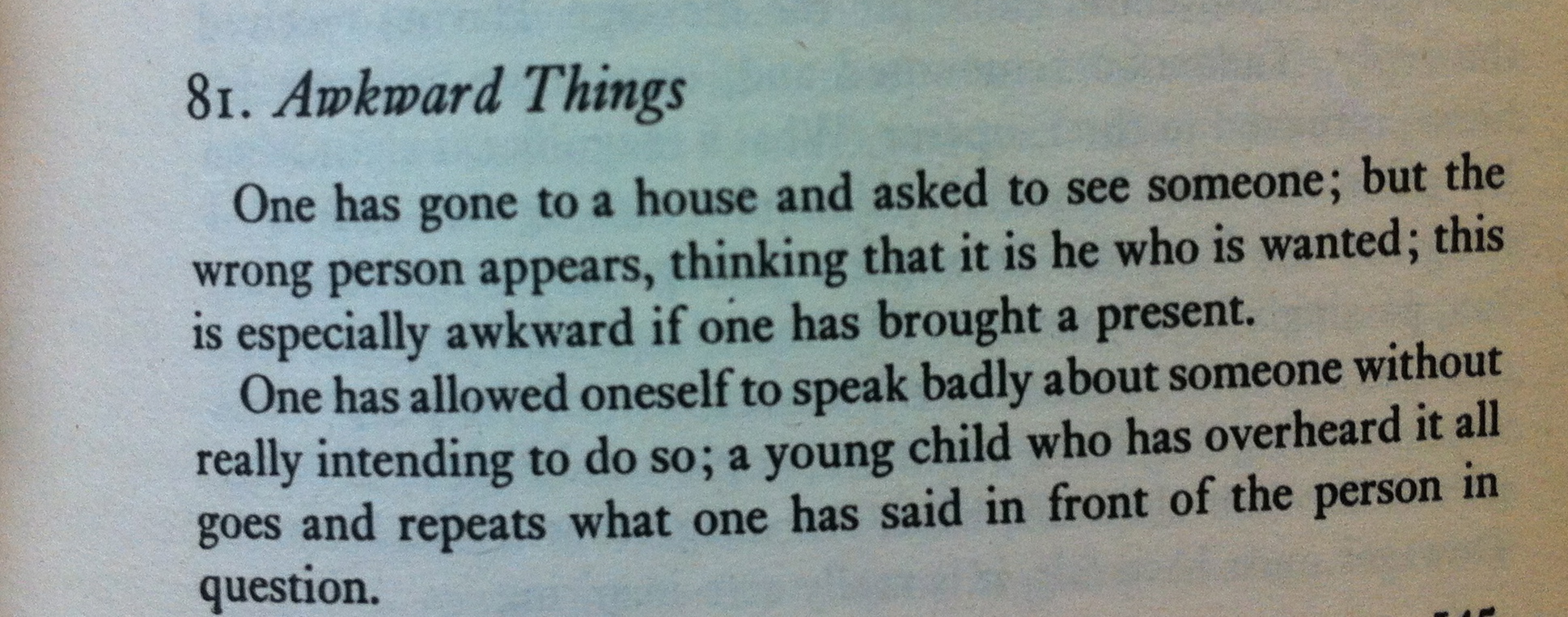
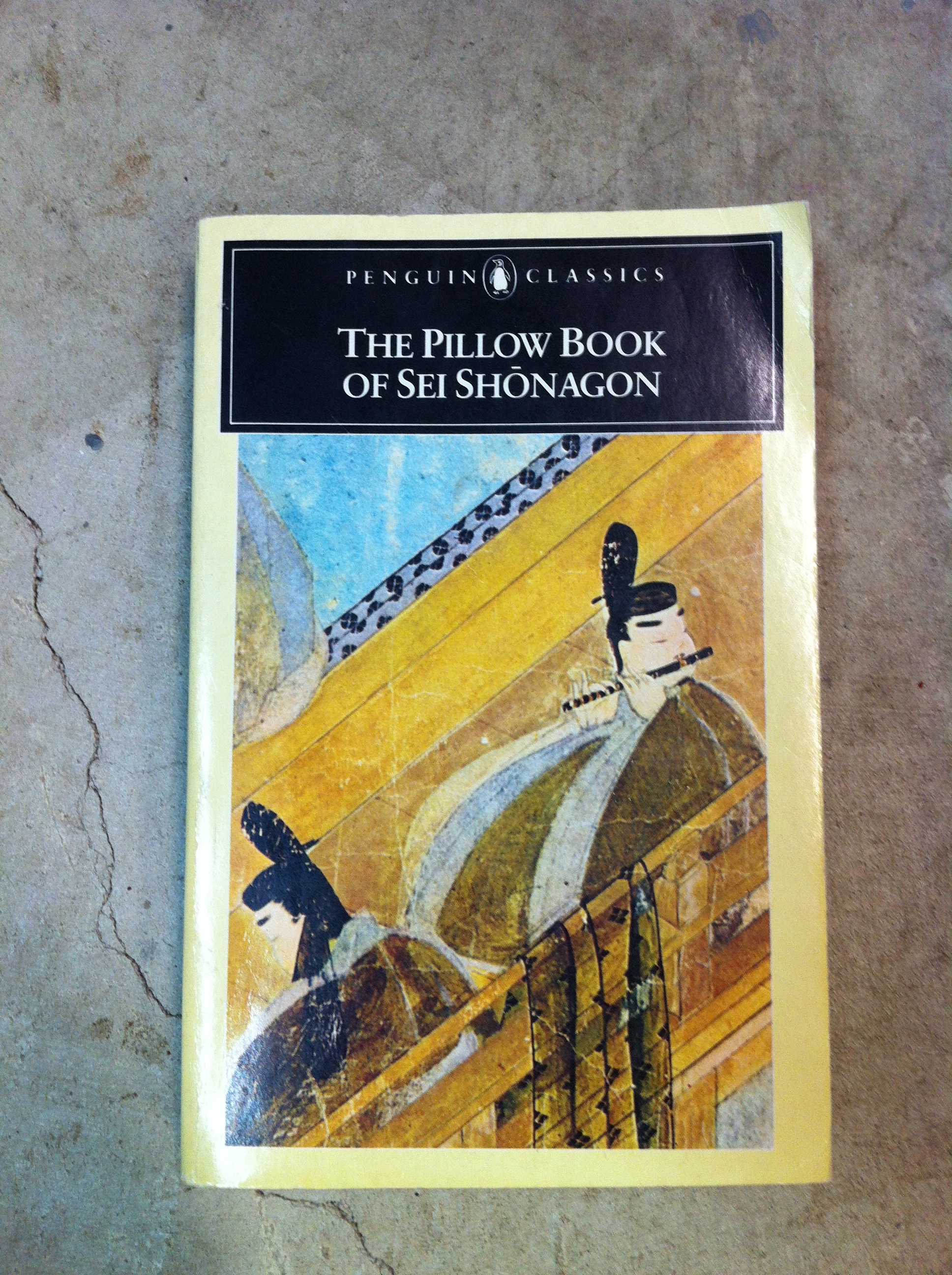
My friend Sei Shonagon should write for Rookie.
Dance of the Californians
Posted: February 6, 2014 Filed under: the California Condition Leave a comment
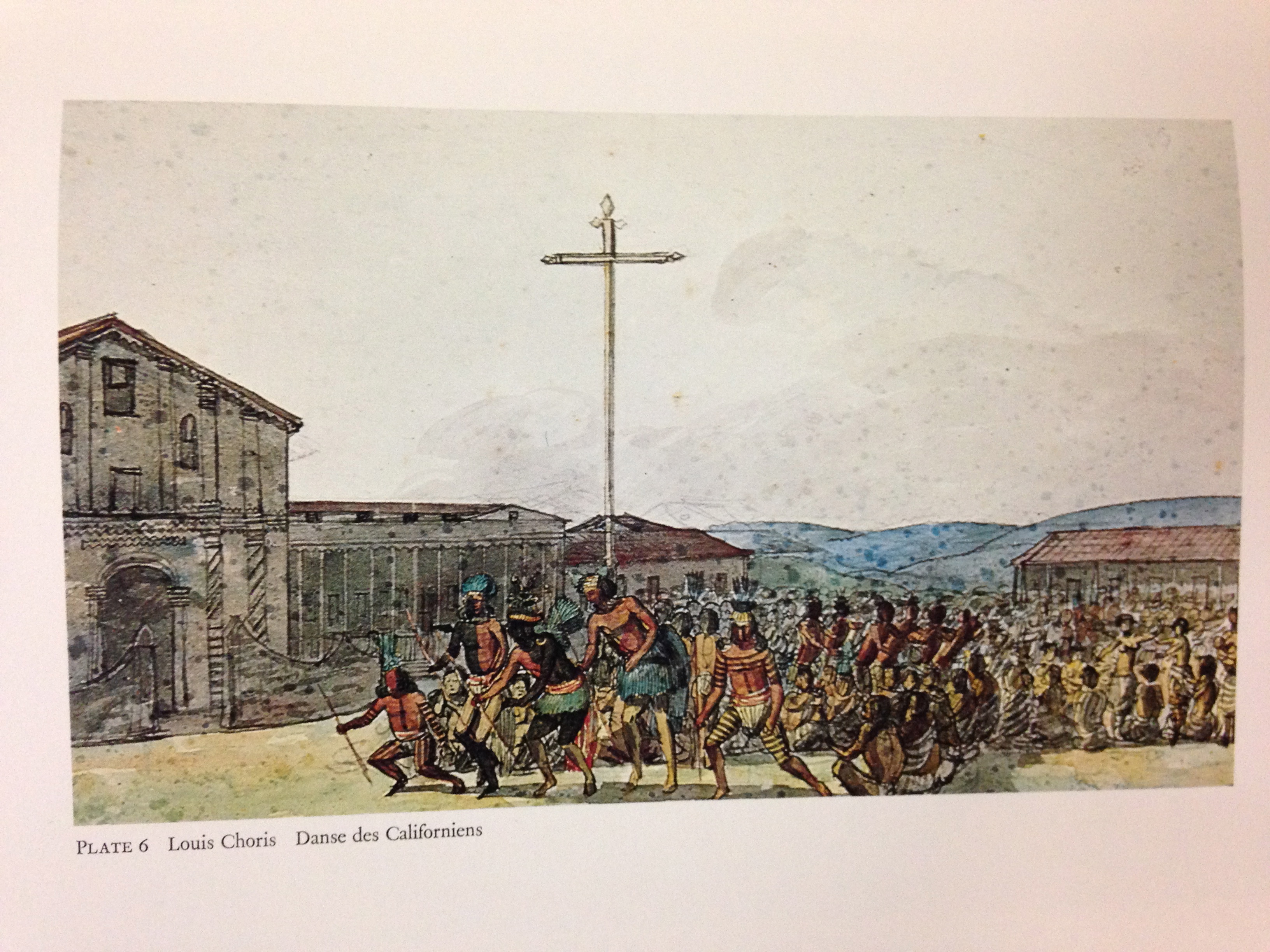
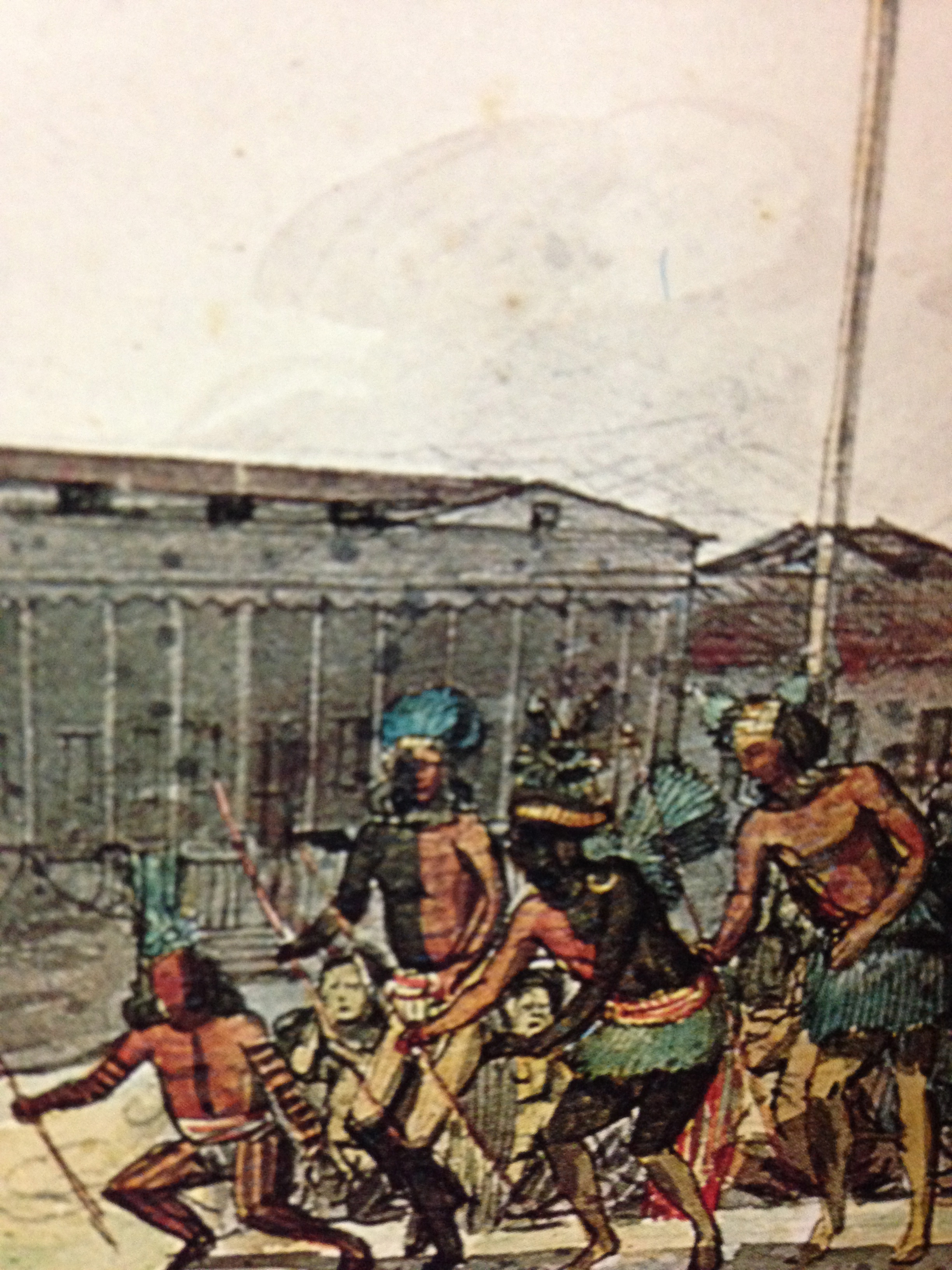
Seized by an irresistible craving for adventure, [Louis Choris] left France in 1827 for South America. He met his end when he was murdered by robbers on March 22, 1828, en route to Vera Cruz, Mexico
Inside Hollywood
Posted: February 3, 2014 Filed under: writing 1 Comment
From this profile of Beau Willimon and the writing staff of “House Of Cards”:
Meanwhile, Willimon stood in front of a table full of writers and spoke, while the writers, many of them playwrights whose work he admired, sat and listened and occasionally chimed in. One writer, whose back was toward me, idly surfed the Internet: He researched a plane ticket, then checked out an Airbnb listing for a tropical getaway for $99 a night, then bought some camping gear, then browsed an article with the headline “The Top Five Regrets of the Dying.”
(An excellent detail although why did reporter Adam Sternbergh include it I wonder? Photo by Ruddy Roye.)
Complex Magazine Presents: Desus vs. Mero
Posted: January 29, 2014 Filed under: comedy Leave a comment
Q: What is the oldest joke in America?
A: it’s a person of one race imitating a person of another race.
Probably (after initial terror) Columbus guys back on the Pinta cracked each other up by “doing” Arawaks.
No doubt the top Arawak comedians could do killer imitations of Columbus-guys, which helped them forget the pain of smallpox etc.
I think through @chelseaperetti I started reading @thekidmero’s tweets. For a long time I did not follow him (he has tweeted upwards of 59,000 times) but I would look through his feed sometimes.
The Kid Mero lives in the Bronx. I think the only times I ever went to the Bronx were 1) to eat an Irish toastie at Mary’s Celtic Kitchen with Boyland or 2) to go to Yankee Stadium.
But apparently there are non-white areas of the Bronx.
The Kid Mero has a podcast with another guy from the Bronx called Desus. The podcast, “Complex Magazine Presents: Desus vs. Mero,” can be found for free on iTunes and “Skitcher” (??). It is hilarious. Both dudes are super funny.
One topic that comes up in episode 3 is the enthusiasm of white people for apples, also for cheese.
Here is another topic that comes up:
Anyway: recommended.
(photo of multi-cultural Irish step dancing troupe from the Bronx)
Silent movie.
Posted: January 28, 2014 Filed under: animals Leave a commentIt is called “Pasadena Bear Encounter.”
Himalayan Marmot
Posted: January 27, 2014 Filed under: animals Leave a comment
In an effort to juice my stats before this blog’s valuation next month by Standard & Poor’s, I’m getting into the cute animal game.

Simpler and better.
Posted: January 24, 2014 Filed under: America Leave a commentJohn Ehrlichman, from the doc “Our Nixon” (avail on Netflix Instant). I’d say this doc is “fascinating” but I’m already super interested in Nixon so please, be aware of my bias.
Following his release from prison, Ehrlichman held a number of jobs, first for a quality control firm, then writer, artist and commentator. Ehrlichman wrote several novels, including The Company, which served as the basis for the 1977 television miniseries Washington: Behind Closed Doors. He served as the executive vice-president of an Atlanta hazardous materials firm. In a 1981 interview, Ehrlichman referred to Nixon as “a very pathetic figure in American history.” His experiences in the Nixon administration were published in his 1982 book, Witness To Power. The book portrays Nixon in a very negative light, and is considered to be the culmination of his frustration at not being pardoned by Nixon prior to his own 1974 resignation. Shortly before his death, Ehrlichman teamed with best-selling novelist Tom Clancy to write, produce, and co-host a three-hour Watergate documentary, John Ehrlichman: In the Eye of the Storm.
(Idea occurred to me watching “Our Nixon”: JFK hired people who were extremely confident, raised in/part of “the establishment.” Nixon hired people who were extremely insecure, embittered and aggrieved with “the establishment.” Danger with both.)
Dustin Van Wechel, “Headstrong”
Posted: January 23, 2014 Filed under: painting, the American West, the California Condition 1 Comment
Reader “Matt M.” in La Jolla writes:
Dear Helytimes,
I know you’ve been accused of being “Headstrong” so I thought you might enjoy DVW’s image of the same name, which I saw on the Autry Museum’s Pinterest page.
Love the site!
– Matt M.
Right you are, Matt. Thanks for reading. That painting is oil on linen. Van Wechel is truly one of our finest living buffalo painters.
You can write to HelyTimes Mailbag at helphely at gmail, subject line “Mailbag.”
I don’t think this is a good name.
Posted: January 15, 2014 Filed under: the California Condition Leave a comment
Reading this Dana Goodyear article about valley fever:
“The impact of valley fever on its endemic populations is equal to the impact of polio or chicken pox before the vaccines,” John Galgiani, an infectious-disease physician who directs the Valley Fever Center for Excellence, at the University of Arizona in Tucson, says. “But chicken pox and polio were worldwide.”

Holy shit!
Posted: January 13, 2014 Filed under: Africa Leave a comment
Archaeologists Identify Tomb of Sobekhotep I!
Egyptologists have been pumped for this moment ever since the discovery of the Kahun Papyri.

That’s of course in the collection of Flinders Petrie.

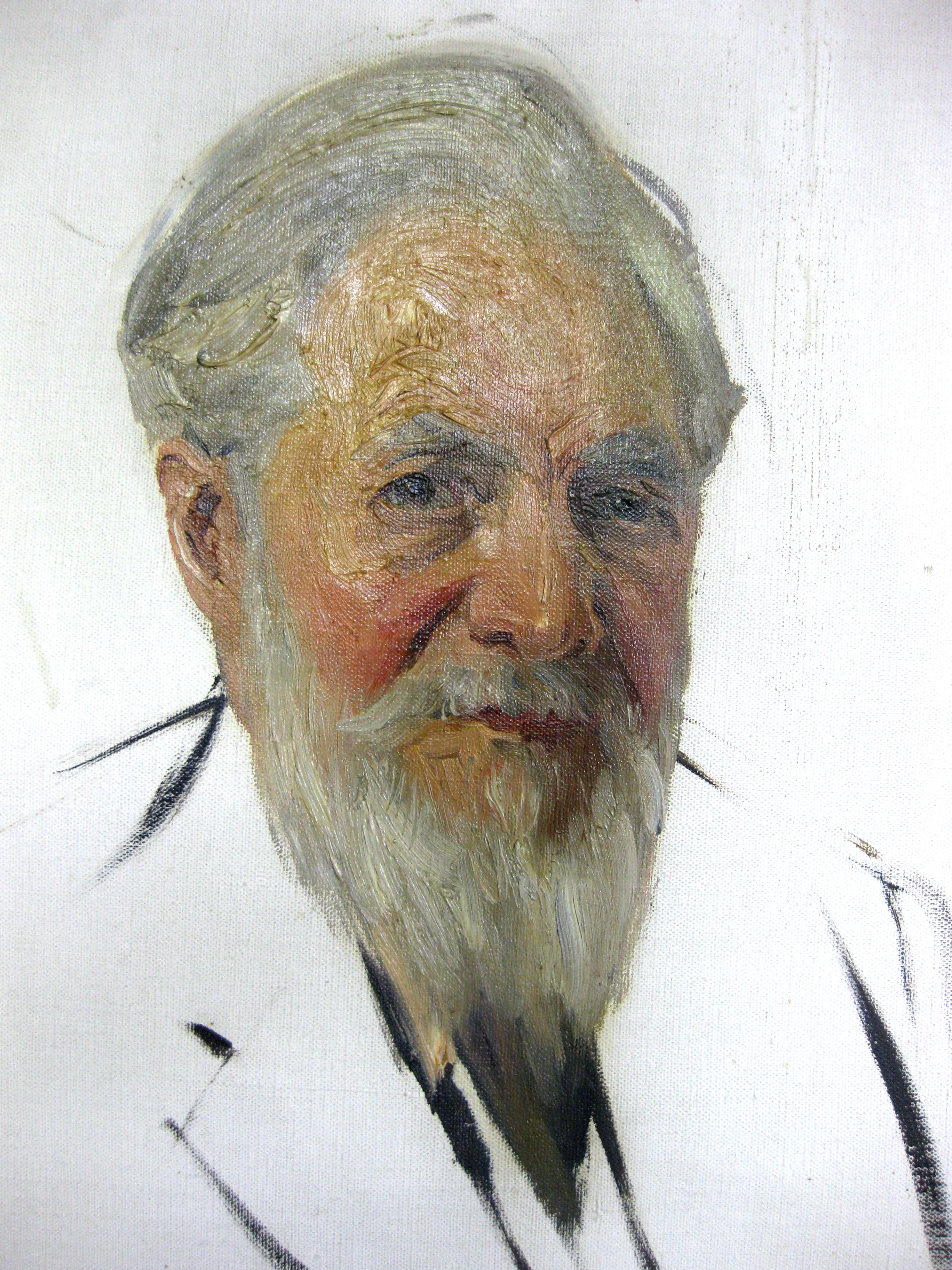
He described Egypt as “a house on fire, so rapid was the destruction” and felt his duty to be that of a “salvage man, to get all I could, as quickly as possible and then, when I was 60, I would sit and write it all.”
And what happened to Flinders’ head, you wonder?
When he died in 1942, Petrie donated his head (and thus his brain) to the Royal College of Surgeons of London while his body was interred in the Protestant Cemetery on Mt. Zion. World War II was then at its height, and the head was delayed in transit. After being stored in a jar in the college basement, its label fell off and no one knew who the head belonged to.[10] It was identified however, and is now stored, but not displayed, at the Royal College of Surgeons of London.
Was Flinders related to Australia explorer Captain Matthew Flinders, you wonder? Yes, is the answer, he was his grandson.
Please please Wikipedia tell me Flinders was an unambiguous hero I can get behind without reservations:
Petrie remains a controversial figure for his pro-eugenics views and opinions on other social topics…
Petrie was a dedicated follower of eugenics, believing that there was no such thing as cultural or social innovation in human society, but rather that all social change is the result of biological change, such as migration and foreign conquest resulting in interbreeding. Petrie claimed that his “Dynastic Race”, in which he never ceased to believe, was a “fine” Caucasian race that entered Egypt from the south in latepredynastic times, conquered the “inferior” and “exhausted” “mulatto” race then inhabiting Egypt, and slowly introduced the finer Dynastic civilization as they interbred with the inferior indigenous people. Petrie, who was also affiliated with a variety of far right-wing groups and anti-democratic thought in England and was a dedicated believer in the superiority of the Northern peoples over the Latinate and Southern peoples, derided Budge’s belief that the ancient Egyptians were an African people with roots in eastern Africa as impossible and “unscientific”, as did his followers.
Oh well. I doubt Sobekhotep was a peach either.

“There’s gonna be a lotta days when you lay your guts on the line and come away empty-handed”
Posted: January 9, 2014 Filed under: advice Leave a commentGood advice.
(h/t HelyTimes correspondent “Rob C.” in Auburn)
Timeless Art?
Posted: January 8, 2014 Filed under: music Leave a commentIf you haven’t watched this in awhile, I think you will find it’s still good:
 Helytimes