RIP Stanley Cavell
Posted: June 20, 2018 Filed under: America Since 1945, film, writing 1 Comment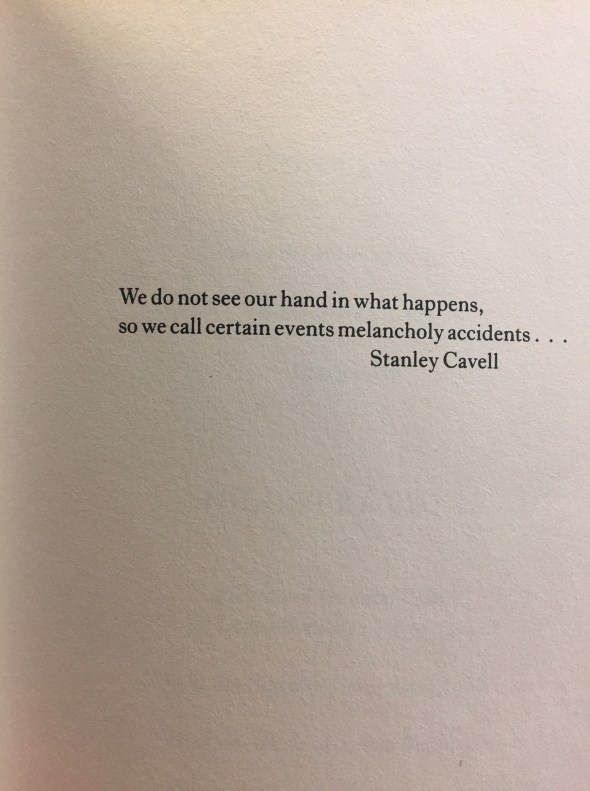
Here is an obituary of the Harvard philosopher, who has left this Earth. To be honest with you, most of Cavell’s work is over my head. Much of it seems to deal with the ultimate breakdown of language and the difficulty of meaning anything.
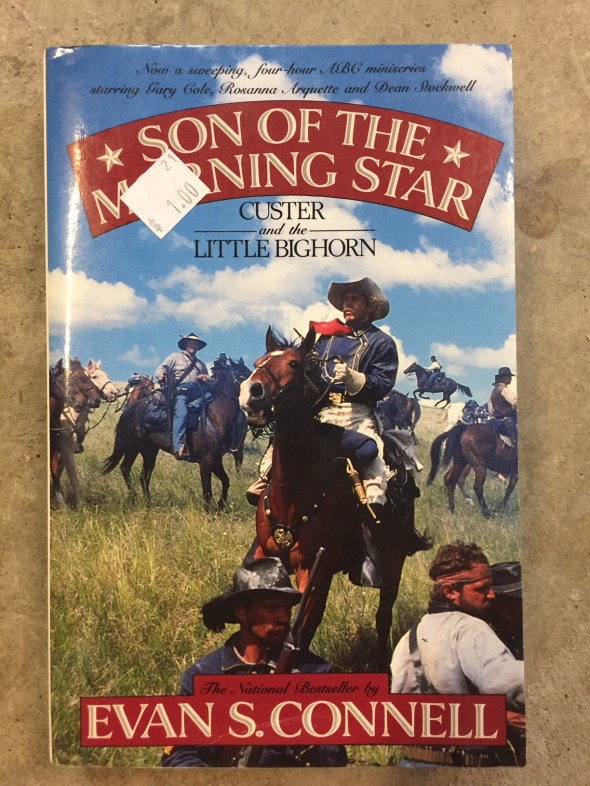
Cavell wrote the epigraph for my favorite book:
and at some point, somebody (Etan?) recommended I check out:
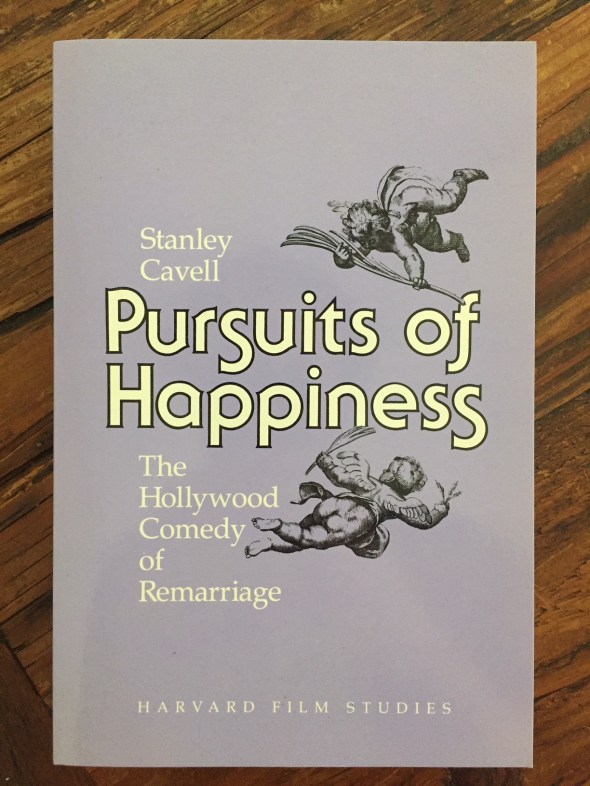
which meant a lot to me.
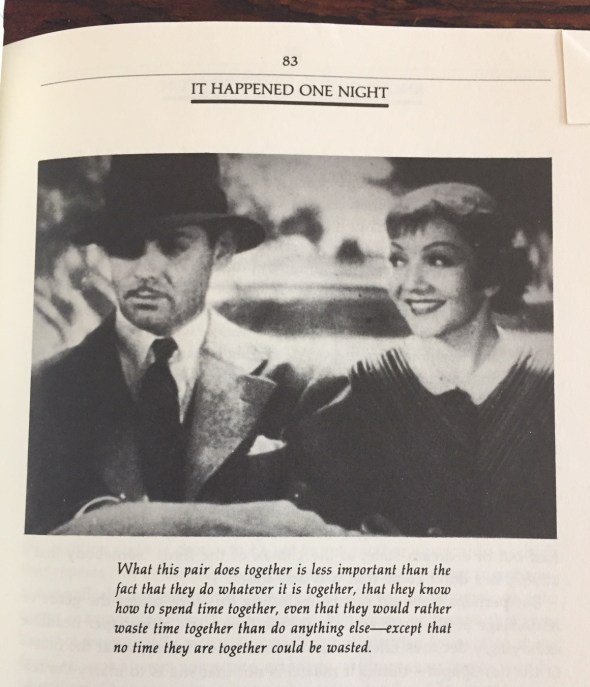
This book is a study of seven screwball comedies:
The Lady Eve
It Happened One Night
Bringing Up Baby
The Philadelphia Story
His Girl Friday
Adam’s Rib
The Awful Truth
These Cavell calls comedies of remarriage. They’re stories (mostly) where the main characters have a history, and the plots involve the tangles as they struggle, fight, and reconnect.
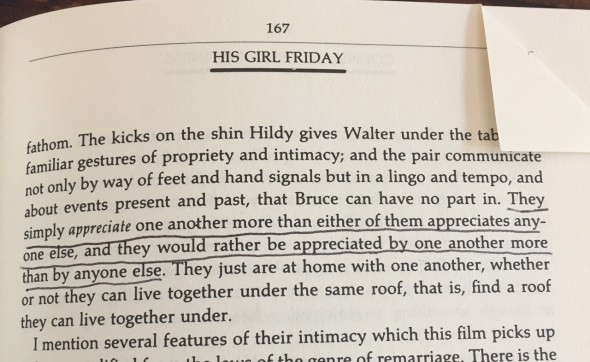
What the book really gets it is: what is revealed about us or our society when we look at what we find pleasing and appropriate in romantic comedies? Why do we root for Cary Grant instead of Jimmy Stewart in The Philadelphia Story for instance?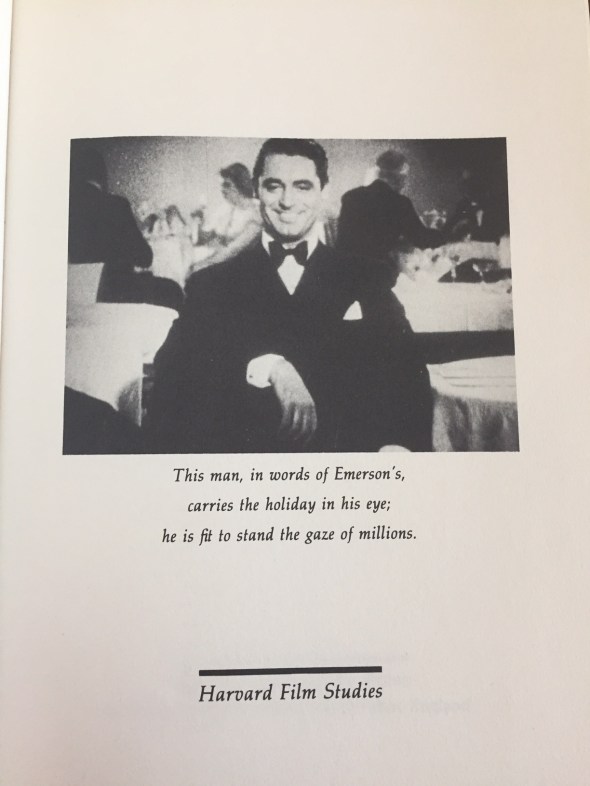
It’s fun to watch these movies and read this book. 
It’s dense for sure. I read it before the Age of Phones, not sure how I’d fair today. But I still think about insights from it.

At one point Cavell says (in a parenthetical!):
I do not wish, in trying for a moment to resist, or scrutinize, the power of Spencer Tracy’s playfulness, to deny that I sometimes feel Katherine Hepburn to lack a certain humor about herself, to count the till a little too often. But then I think of how often I have cast the world I want to live in as one in which my capacities for playfulness and for seriousness are not used against one another, so against me. I am the lady they always want to saw in half.
Cool phrase.
RIP to a real one!
Things I learned reading The Economist this week
Posted: June 18, 2018 Filed under: America Since 1945, world Leave a comment
- If you invest $100,000 in the island nation of Saint Lucia, they’ll make you a citizen.
- South Africa has an unemployment rate of 26%.
- Bernard Henri-Levy has been performing a one-man show about Brexit at Cadogan Hall in Chelsea.
Pattern
Posted: June 18, 2018 Filed under: desert Leave a comment
The wind moves the arms of this plant back and forth and it sweeps this pattern on the sand. 
Did Jesus have a brother?
Posted: June 17, 2018 Filed under: Christianity, religion Leave a comment
My take? Yes! Definitely, sounds like he had some sisters too!
This isn’t that hard. Mark 6:
6 Jesus left there and went to his hometown, accompanied by his disciples.2 When the Sabbath came, he began to teach in the synagogue, and many who heard him were amazed.
“Where did this man get these things?” they asked. “What’s this wisdom that has been given him? What are these remarkable miracles he is performing? 3 Isn’t this the carpenter? Isn’t this Mary’s son and the brother of James, Joseph,[a] Judas and Simon? Aren’t his sisters here with us?” And they took offense at him.
4 Jesus said to them, “A prophet is not without honor except in his own town, among his relatives and in his own home.” 5 He could not do any miracles there, except lay his hands on a few sick people and heal them. 6 He was amazed at their lack of faith.
We’ve been talking about Mark, and how the evidence is compelling that it is probably the oldest record we have of a guy who lived and taught sometime around years now marked 1-30 AD named Jesus.
Mark says that guy had brothers and sisters.
So do all the other Gospel writers! Matthew, 13:55-56. Luke, 8:19. They all got him having brothers. I’m not even gonna get into it with the sisters. John’s pretty straightforward about it too.
The Greek word used is (I’m told) adelphos.
In Paul’s Letters, written sometime after this Jesus was executed, he mentions Jesus’ brother.
In a number of other early Christian sources, there are discussions of Jesus’ brothers.
Why is it a problem that Jesus had brothers, maybe sisters too?
It’s not.
Unless having brothers and sisters like a human of his time screws up what you think you’re supposed to believe about Jesus God status.
The Catholic and Orthodox churches are determined to insist that Mary was a perpetual virgin who never had sex.
Why?
That seems twisted and conjured up out of nowhere. When I hear that I’m like ok I think maybe you guys are a little weird about sex.
You can ponder and explore for yourself why the theologians cooked up that one. I’m sure there’s whole shelves in the Catholic libraries about it. It matters enough that you find scholars twisting themselves into pretzels about the meanings of different words for brother in 1st century Greek and Aramaic.
But hey, maybe they really were his cousins!
Who cares?
Well, if you are trying to get back to primary sources about a historical Jesus, and what that guy actually said, and what he was like, and possible brothers, or cousins so close they used the same word to describe them, that’s something.
Of the brothers, James comes up the most in early Christian history. What this James believed Jesus was up to is too big a question for us today.
What I can tell you about James’ views is that he and Paul did not see eye to eye.
Interesting to me, because it suggests you could be a Jesusist without being a Paulist.

Attorney General Jeff Sessions cites Romans 13.

Check out The Brick Bible.( I hope Elbe Spurling doesn’t mind me using this screenshot)
Jesus, it’s easy to forget, was arrested and executed for causing trouble for the authorities.
Discussion question for brunch:
Which characters in the New Testament remind you most of the Attorney General and the President? Do you like those characters?
Have a joyful Sunday everyone! (We welcome your letters btw! I know we got some Bible scholars out there who can school me!)
Sir Garfield Sobers, by Mighty Sparrow
Posted: June 15, 2018 Filed under: Caribbean, music, sports 1 Comment
Two cool names. From the 1966 album This Is Sparrow.
Context:
Michelle Wolf, Peter Schweitzer, and DC/media as pro wrestling
Posted: June 14, 2018 Filed under: America Since 1945, politics Leave a comment Michelle Wolf says that in this Vulture profile by Amy Larocca.
A very similar complaint voiced by Clinton Cash author Peter Schweitzer in the Devil’s Bargain book about Trump and Bannon: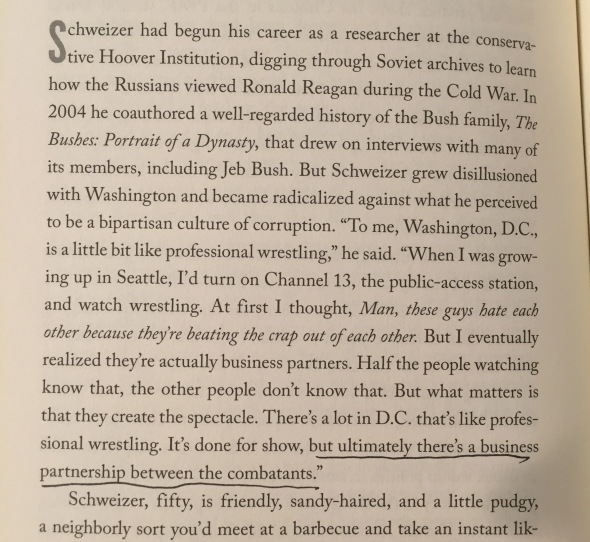
Pull it, switch it, top it
Posted: June 13, 2018 Filed under: writing Leave a commentINTERVIEWER
But there are devices one can use to set up a story, aren’t there? Such as the love rack, or the algebraic analysis of a story.
CAIN
Devices, yes. Like the old switcheroo. I used quite a few in my book called Past All Dishonor. It’s about Virginia City in the Civil War days of the big whorehouses. It’s about a boy who fell for a girl who worked in a house. Every guy in town could have her for ten bucks except him, and the reason was that she half-loved him. This was a very nice situation, and I was able to do something with it. I was able to top it, and that’s always what you try to do when you have a situation: You pull it, you switch it, you top it, which is the old Hollywood formula for a running gag.
James M. Cain in the Paris Review.
INTERVIEWER
Do you have any memory of the origins of The Postman Always Rings Twice?
CAIN
Oh yes, I can remember the beginning of The Postman. It was based on the Snyder-Gray case, which was in the papers about then. You ever hear of it? Well, Grey and this woman Snyder killed her husband for the insurance money. Walter Lippmann went to that trial one day and she brushed by him, what was her name? Lee Snyder.* Walter said it seemed very odd to be inhaling the perfume or being brushed by the dress of a woman he knew was going to be electrocuted. So the Snyder-Grey case provided the basis. The big influence in how I wrote The Postman Always Rings Twice was this strange guy, Vincent Lawrence, who had more effect on my writing than anyone else. He had a device which he thought was so important—the “love rack” he called it. I have never yet, as I sit here, figured out how this goddamn rack was spelled . . . whether it was wrack, or rack, or what dictionary connection could be found between the word and his concept. What he meant by the “love rack” was the poetic situation whereby the audience felt the love between the characters. He called this the “one, the two and the three.” Someone, I think it was Phil Goodman, the producer and another great influence, once reminded him that this one, two, and three was nothing more than Aristotle’s beginning, middle, and end. “Okay, Goody,” Lawrence said, “who the hell was Aristotle, and who did he lick?” I always thought that was the perfect Philistinism.
INTERVIEWER
How did it work?
CAIN
Lawrence would explain what he meant with an illustration, say a picture like Susan Lenox, where Garbo was an ill-abused Swedish farm girl who jumped into a wagon and brought the whip down over the horses and went galloping away and ended up in front of this farmhouse which Clark Gable, who was an engineer, had rented. And he takes her in. He’s very honorable with her, doesn’t do anything, gives her a place to sleep, puts her horses away and feeds them . . . He didn’t have any horses himself, but he did have two dozen ears of corn to feed hers. Well, the next day he takes the day off and the two of them go fishing. He’s still very honorable, and she’s very self-conscious and standoffish. She reels in a fish (they used a live fish—must have had it in a bucket). She says, I’ll cook him for your supper. And with that she gave herself away; his arms went around her. This fish, this live fish, was what Lawrence meant by a “love rack”; the audience suddenly felt what the characters felt. Before Lawrence got to Hollywood, they had simpler effects, created by what was called the mixmaster system. You know, he’d look at her through the forest window, looking over the lilies, and this was thought to be the way to do it; then they’d go down to the amusement park together and go through the what do you call it? Shoot de chute?
Perspective on Bitcoin
Posted: June 12, 2018 Filed under: business, money Leave a comment
Eric Guinthier put this on Wikipedia.
was thinking about this as I tried to remember some login or another: there’s no way in Hell all these numbnutses are gonna remember all their blockchain passwords and cryptokeys and what have you. The panicked runs on cryptocurrencies are gonna be crazy.
Maybe I should start a dump or an ewaste junkyard, eight bucks to throw away your old hard drive, and wait around for some panicked nerd to come screaming that he threw away seventeen million dollars in unharvested Ripple or whatnot.
that picture above is of Yap stone money. When someone tries to explain the history of money, sooner or later they’ll mention the stone money of Yap, usually avoiding an opinion on whether or not using enormous stone wheels as money is completely ridiculous.
Because these stones are too large to move, buying an item with one simply involves agreeing that the ownership has changed. As long as the transaction is recorded in the oral history, it will now be owned by the person it is passed on to and no physical movement of the stone is required.[citation needed]
(lol at citation needed. God bless Wikipedia. You try and write up Yap money in your spare time and someone comes along demanding footnotes).

Beades on Wikipedia took this picture of a rai stone at the Bank of Canada Currency Museum in Ottawa. How much do you think they paid for it?
Wild
Posted: June 11, 2018 Filed under: America Since 1945 Leave a comment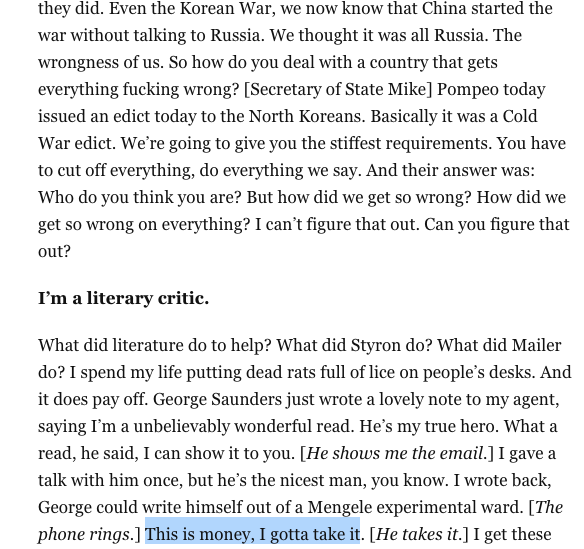
Wild interview of Christian Lorentzen and Seymour Hersh in NY Mag.
Henry IV
Posted: June 11, 2018 Filed under: plays, writing Leave a comment
source: Variety
Agree with Rivers:

Saw Malis at the show, here was his review:
I thought Hamish Linklater was really good. A very easy, relaxed, natural way of delivering Shakespeare.Hanks was Hanksing it up, but fun.It’s interesting how jokes written in the 1500s can still make people laugh.

How quickly nature falls into revoltWhen gold becomes her object!For this the foolish overcareful fathers,Have broke their sleep with thoughts,Their brains with care, their bones with industryFor this they have engrossed and piled upThe cank’red heaps of strange-achieved gold;For this they have been thoughtful to invest,Their sons with arts and martial exercises.When, like the bee, culling from every flowerThe virtuous sweets, our thighs packed with wax,Our mouths with honey, we bring it to the hive,And, like the bees, are murdered for our pains.
I know thee not, old man. Fall to they prayers.How ill white hairs becomes a fool a jester!I have long dreamt of such a kind of man,So surfeit-swelled, so old, and so profane,But, being awakened, I do despise my dream.But, being awaked, I do despise my dream.Make less they body hence, and more thy grace.Leave gormandizing. Know the grave doth gapeFor thee thrice wider than for other men.
China Racing Club
Posted: June 11, 2018 Filed under: horses 1 Comment
Was wondering why Justify / Mike Smith’s silks looked like the Chinese flag. Turns out the horse is part owned by China Horse Club.
The China Horse Club has about 200 members, according to its vice president, Eden Harrington. Membership costs a minimum of $1 million, according to some reports, but Mr. Harrington said the club offered different tiers of investment and that the fee was a credit that went toward the purchase of horses. He declined to give a range, and the club does not disclose the identities of members, who include wealthy citizens from China’s mainland and beyond.
Hmmm. From this NYT article by Melissa Hoppert and Alexandra Stevenson.
Mr. Harrington said the club kept its membership private to shield members from potential public scrutiny amid a Chinese government led anti-corruption campaign which has “created a culture of fear where people didn’t want to be seen to be spending money in a way that may be seen as excessive.”
Rob Delaney / Christopher Logue
Posted: June 8, 2018 Filed under: writing 1 Comment(The topic here is depression and suicide, if you’re in no mood, but I found these brief stories valuable.)
1)
Rob Delaney is such a joyful presence. I’ve thought many times about something he says in this Tumblr post about depression

What a good preserver to hang on to.
If no one else wants to do this to me, why would I do it to me?
Not sure it can help you if you’re at wit’s end but seemed to me a thought worth filing away for an emergency.
I’m really glad Rob Delaney’s alive!
2)

Saw this story linked on someone’s Twitter. It comes from
That was the year that was
Tariq Ali talks to David Edgar
on the LRB. I don’t know who those people are really but I know Christopher Logue is some kind of master.
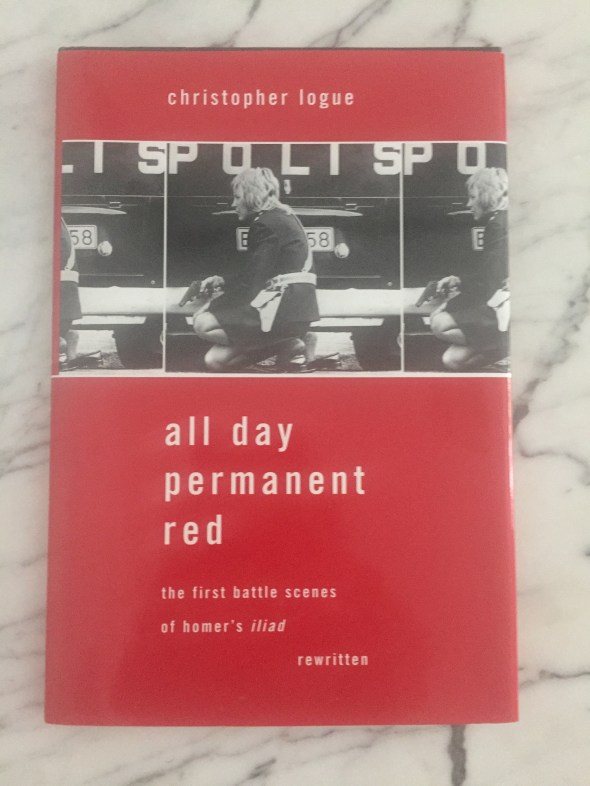
Don’t be silly. Come on – we’ll sit down and rid of this nonsense that’s in your head.
How cool and compassionate.
Glad they’re all alive. (Well, were alive, in Logue’s case.)
And I’m glad you’re alive too, Reader!

Will Kempe, Will Shakespeare, and Falstaff
Posted: June 7, 2018 Filed under: actors, shakespeare, writing 1 Comment
In Shakespeare’s time, there was a comic actor who was more famous than any playwright. His name was Will Kempe. His most popular bit was morris dancing from London to Norwich.
In February and March 1600, he undertook what he would later call his “Nine Days Wonder”, in which he morris danced from London to Norwich (a distance of over a hundred miles) in a journey which took him nine days spread over several weeks, often amid cheering crowds. Later that year he published a description of the event to prove to doubters that it was true.
Perhaps Kempe originated the part of Falstaff in Shakespeare’s plays.
Kempe’s whereabouts in the later 1580s are not known, but that his fame as a performer was growing during this period is indicated by Thomas Nashe’s An Almond for a Parrot (1590).
An Almond for a Parrot is a great title.

Perhaps he was the Will Ferrell of his day.
Although he had been a sharer in the plans to construct the Globe Theatre, he appeared in no productions in the new theatre, which was open by mid-1599, and evidence from Shakespeare’s Henry V, in which there is no promised continued role for Falstaff, and Hamlet, containing its famous complaint at improvisational clowning (Act 3, Scene 2), indicates some of the circumstances in which Kempe may have been dropped
The lines in question:
HAMLET
O, reform it altogether! And let those that play your clowns speak no more than is set down for them, for there be of them that will themselves laugh to set on some quantity of barren spectators to laugh too, though in the meantime some necessary question of the play be then to be considered. That’s villainous, and shows a most pitiful ambition in the fool that uses it. Go, make you ready.

“Just say the lines dude.”
In real life Will Kempe was the Shakespearean clown who was the superstar of his day.
Audiences would flock for miles around to watch the great man perform his Falstaff or famous jig at the Globe theatre after one of the plays by the great darling of the stage – and the age – Will Shakespeare.
And in Upstart Crow, Ben Elton’s BBC2 comedy reimagining of the life of the great poet and dramatist, Kempe is presented as… a cocky C16th Ricky Gervais.
California Voter Suggestions
Posted: June 4, 2018 Filed under: the California Condition 3 CommentsGovernor:

Look, Gavin Newsom and Villaraigosa are both kind of repulsive and uninspiring individuals. (Savage takedown of Newsom). Newsom will probably win which sucks.
John Chiang is a nerd who probably won’t win, but far as I can see he’s a man of integrity. The LA Times main knock on him is that he didn’t suggest easy answers to everything and suggested he might think and reflect before making decisions.
A text from the Newsom campaign cheesed me off:
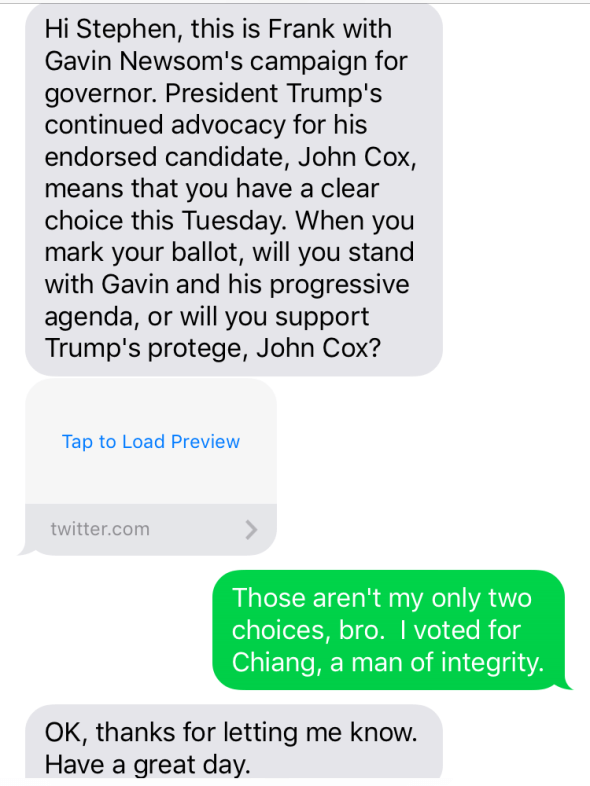
lol progressive agenda. Homeboy’s ex wife is a Fox news personality who was almost Trump’s press secretary:

Texting with a friend about why on Earth LA Times endorsed sorry-ass Villaraigosa:
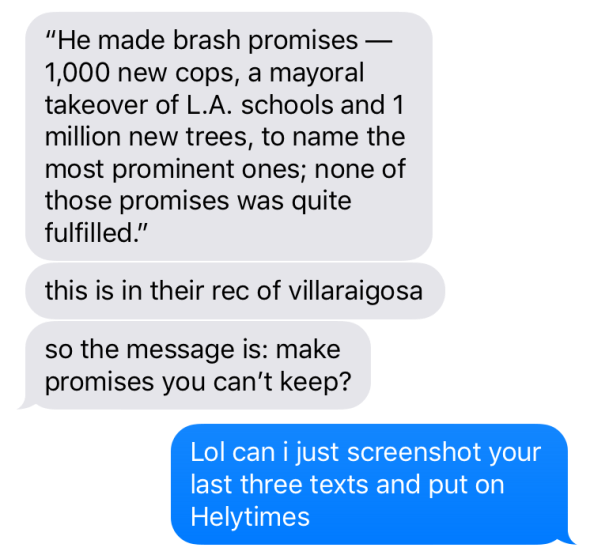
CHIANG for governor. (There’s like 30 candidates).
I’ll miss Jerry Brown.
SENATE:

source: Nancy Wong on Wiki
At the last second, early voting, I went for Dianne Feinstein. INSANE that we have an 86 year old Senator, I get primarying Lady D, but Kevin De Leon took money from Cadiz, an evil water company out in the desert that’s trying to drink our national preserve’s milkshake.
Dianne’s career has been at least a little heroic.
Treasurer:

Believe Fiona Ma will join our fine tradition of state treasurers. Well briefed on this one, plus I’ve followed her on Twitter for awhile and I admire how reasonable and boring she is!
Have we forgotten that boring, calm, careful, honest, reasonable, prudent, balanced, patient, informed, these are qualities we want in our elected officials?
Congress:

very happy with my own congressman Adam Schiff, who believes in holding the executive branch accountable to the people. Seriously, even if you’re into Trump, ask what he’s done for your district. The answer, spoiler alert, is nothing or worse. (Have been happy with Schiff since a chipper and bright and positive young man from his office gave me, a constituent with a request, a tour of the Capitol in 2015. All politics is local.)
For everything else I’m not well informed enough and deferred to LA Times:
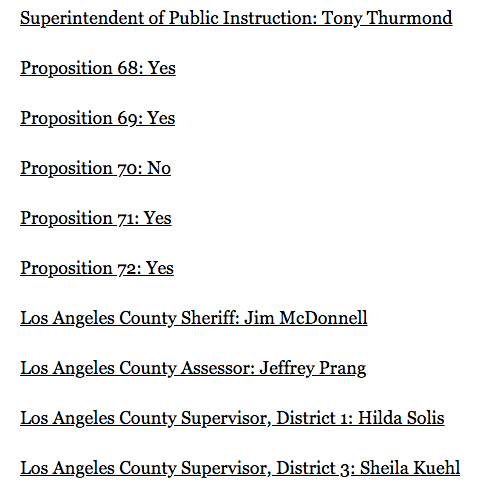
though I kind of think it’s a cool move to vote NO on every ballot initiative as a kind of protest.
Hearing some love for Tony Thurmond for the supervisor of instruction.
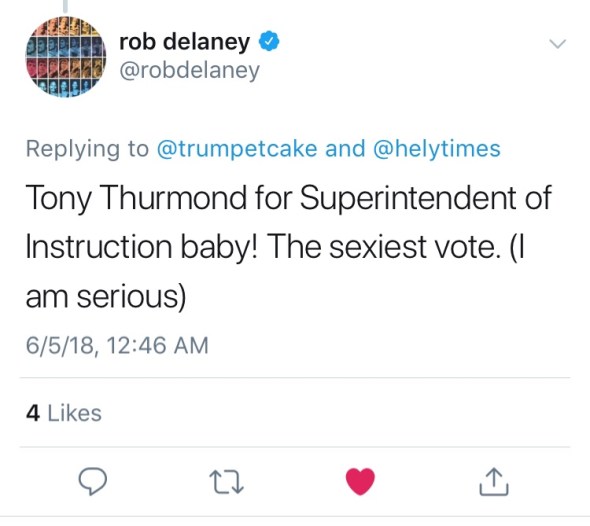
Ridiculous that we have to vote for judges. I hope Governor Chiang moves to make this an appointed office. 
Good luck to all the candidates, and I’m open to having my mind changed if you’re knowledgable!
UPDATE: Owen’s take:
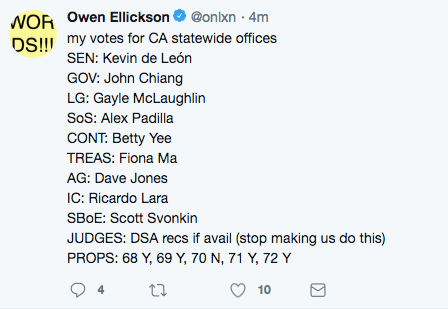
A good citizen and a good man.

UPDATE: if I figure out how I will link to Kara Vallow’s thorough guide. Here she is on the ballot measures:
STATE BALLOT MEASURES
Before we start with candidates, here’s a quick list on ballot measures.
68: YES – $4.1 billion in state bonds for a variety of environmental and climate change needs, drought, flood protection, and coastal protection programs/what government is supposed to do.
69: YES – Ensures certain new transportation revenues – based on a 2017 Jerry Brown law – be dedicated for transportation uses, rather than being diverted elsewhere when other budgetary needs are looking for pots of money.
70: NO – Republicans dreamed this horrible bullshit up to be able to dictate cap and trade reserve fund uses post 2024.
71: YES – The most significant measure on the June ballot. This constitutional amendment states that any law enacted by voters through a proposition only takes effect once the final votes are tallied statewide and the election is certified. Some shenanigans – you may remember – have taken place in the past with too-close-to-call races election night.
72: YES – This is a drought measure that allows you to put a rain capture system on your house without incurring additional taxes when your home is assessed. Duh.
UPDATE: The comments are already lit with takes!
Conan on Hans Gruber
Posted: June 4, 2018 Filed under: America Since 1945, TV Leave a comment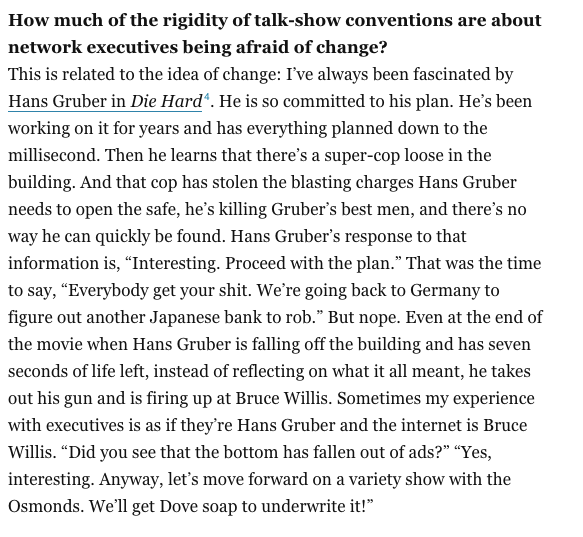
from this Vulture interview

Smerwick harbor
Posted: June 4, 2018 Filed under: Ireland Leave a comment

Poke into the history of just about any place in Ireland and sooner or later you’ll find an event of such violence and sorrow as to be almost ridiculous. Take Smerwick harbor. Here in 1580 six hundred luckless Italian and Spanish soldiers got massacred:
According to Grey de Wilton’s account, contained in a despatch to Elizabeth I of England dated 11 November 1580, he rejected an approach made by the besieged Spanish and Italian forces to agree terms of a conditional surrender in which they would cede the fort and leave. Lord Grey de Wilton claimed that he insisted that they surrender without preconditions and put themselves at his mercy, and that he subsequently rejected a request for a ceasefire. An agreement (according to Grey de Wilton) was finally made for an unconditional surrender the next morning, with hostages being taken by English forces to ensure compliance. The following morning, an English force entered the fort to secure and guard armaments and supplies. Grey de Wilton’s account in his despatch says “Then put I in certain bands, who straight fell to execution. There were six hundred slain.“
Shannon Luxton on Wiki took this photo of the massacre site:

According to the folklore of the area, the execution of the captives took two days,
Ask yourself — would you rather be beheaded day one, or day two?
with many of the captives being beheaded in a field known locally in Irish as Gort a Ghearradh(the Field of the Cutting); their bodies later being thrown into the sea. The veracity of these accounts was long disputed, until a local field known as Gort na gCeann (the Field of the Heads) was investigated by 21st-century archaeologists and found to be full of 16th-century skulls.
The Field of the Cutting. Jeezus, Ireland. And how about this monument to the heads?

Dáibhí Ó Bruadair on Wiki
Even for the time the Smerwick mass beheading was considered a bit much. Sir Walter Raleigh was in on it. Later his involvement was used against him.

Behead and ye shall be beheaded: eventually it was his turn:
Raleigh was beheaded in the Old Palace Yard at the Palace of Westminster on 29 October 1618. “Let us dispatch”, he said to his executioner. “At this hour my ague comes upon me. I would not have my enemies think I quaked from fear.” After he was allowed to see the axe that would be used to behead him, he mused: “This is a sharp Medicine, but it is a Physician for all diseases and miseries.” According to biographers, Raleigh’s last words (as he lay ready for the axe to fall) were: “Strike, man, strike!”
Some four hundred thirty-eight years post Smerwick, the Spanish, Italians and Irish are on the verge of an England-less European Union. That my friends is called winning the long game.
facepalm
Posted: June 3, 2018 Filed under: America Since 1945, food, Wonder Trail 6 Comments the article that set me off was:

which caused my eyes to roll out of my head. I was just in Portland, and the food was awesome! It’s a “foodie paradise” because it’s in the Willamette Valley, on the Columbia River, near the North Pacific Ocean, one of the most bountiful regions on planet Earth, plus it’s prosperous and full of creative and interesting and diverse people.

Seemed hysterical to me to claim it had been ruined.

you’re telling me this place is ruined?
When I first heard the headline version of the story of the Portland Taco Cart Willamette Week Interview Fiasco, I thought “well that’s silly, how far are we taking this idea of cultural appropriation? of course you can make tacos.” But when I heard the details it was like oh ok that’s not very cool.

There was good discussion of it on “Good Food” with Evan Kleiman.

Following which I drove around for an hour or so doing my errands and thinking about it. Sometime later it comes up, shot my Twitter mouth off and RIP my mentions.
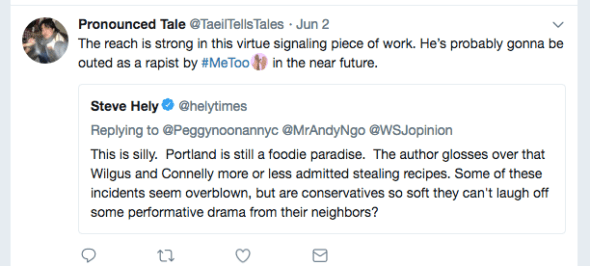
Twitter user put my response to McArdle better than I could:

Also gave me more to think about. I myself took advantage of the easygoing legal rules on map copying in my book, and used Google Maps as the basis for my hand-drawn maps. It felt fine, although I was surprised nobody protects cartographers.

Because there’s no legal protection for Mexican ladies making burritos who are trying to keep their recipe secret, that’s why it made people so mad. Kinda think Connelly and Wingus crossed the line, but whatever, maybe they just made an unfortunate remark in an interview. They don’t deserve death threats for heaven’s sake. Let’s wish them well and hope they make some cool new kind of burrito in the future that everyone can eat joyfully and without compunction.

Like Austin Kleon points out, there’s stealing and stealing.
The Hockney thing at LACMA
Posted: June 2, 2018 Filed under: art history, museum, the California Condition Leave a comment
is cool. Eighty-two portraits in one room, creates a neat effect. Worth a visit if you’re in the area. 
Picture Dostoyevsky
Posted: June 1, 2018 Filed under: Russia, writing 1 Comment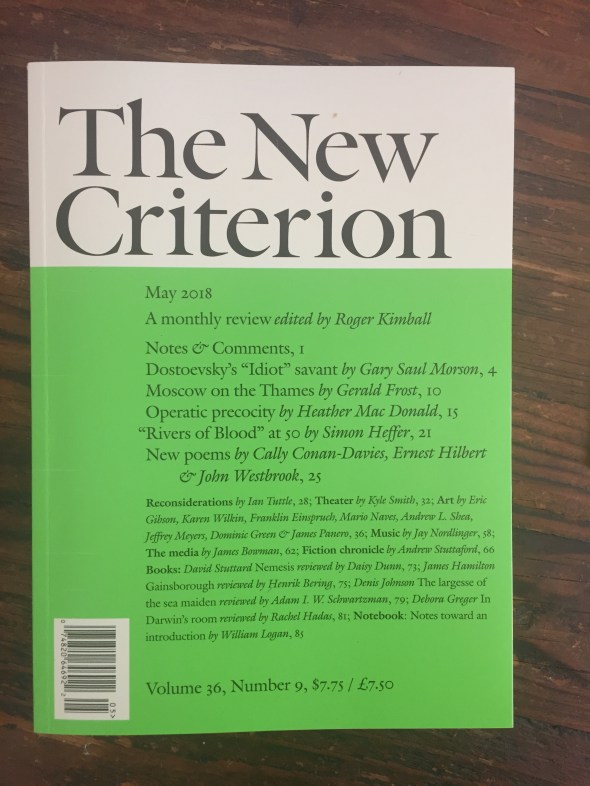
A crazy scene described:

by Gary Saul Morson. Reminded me of Sophia: