Hunters In The Snow
Posted: March 16, 2018 Filed under: art history Leave a comment
Always thought this picture was cool but only just learned it was one of a series of six (or maybe twelve?). Five survive.
Hunters in the Snow shows December-January.

The Gloomy Day shows February or March.
Here one is missing?

Hay Harvest shows June / July.

The Harvesters is for August / September.
Return of the Herd shows October / November.
Michael Frayn, in his novel Headlong, imagines a lost panel from the 1565 Months series resurfacing unrecognised, which triggers a mad conflict between an art (and money) lover and the boor who possesses it. Much thought is spent on Bruegel’s secret motives for painting it.
Cool.
Loved this comparison
Posted: March 15, 2018 Filed under: comedy, TV Leave a comment
As Zinoman puts it, “His smirking tone was so consistently knowing that he seemed as if he must know something.” This was an attitude fit for the cynical mood of the 1980s, and Zinoman emphasizes Letterman’s significance as an avatar of cool noncommitment, a figure of his time. In that, Letterman resembled that other pop-cultural phenomenon of the era, Jim Davis’s Garfield – the rotund cartoon feline also riven by self-doubt and haunted by grandiose fantasies of domination while projecting an aloofness that often verged on the cruel.
from Naomi Fry’s review of Jason Zinoman’s Letterman: The Last Giant of Late Night in the Summer 2017 issue of BookForum. (A little behind on my Bookforum).

Hallucinogens and Shamanism (1973)
Posted: March 12, 2018 Filed under: adventures, explorers, history, women Leave a comment
This collection of essays from 1973 gets an A+ on cover alone.
Undoubtedly one of the major reasons that anthropologists for so long underestimated the importance of hallucinogenic substances in shamanism and religious experience was that very few had partaken themselves of the native psychotropic materials (other than peyote) or had undergone the resulting subjective experiences so critical, perhaps paradoxically, to an empirical understanding of their meaning to the peoples they studied. Most, although not all, of the authors in the present book are an exception…
I’ll say! From Michael J. Harner’s essay “The Sound Of Rushing Water”:
When I first undertook research among the Jívaro in 1956-57, I did not fully appreciate the psychological impact of the Banisteriopsis drink upon the native view of reality, but in 1961 I had occasion to drink the hallucinogen in the course of field work with another Upper Amazon Basin tribe. For several hours after drinking the brew, I found myself, although awake, in a world literally beyond my wildest dreams. I met bird-headed people, as well as dragon-like creatures who explained that they were the true gods of this world. I enlisted the services of other spirit helpers in attempting to fly through the far reaches of the Galaxy. Transported into a trance where the supernatural seemed natural, I realized that anthropologists, including myself, had profoundly underestimated the importance of the drug in affecting native ideology. Therefore, in 1964 I returned to the Jívaro to give particular attention to the drug’s use by the Jívaro shaman.
South American shamanism and hallucinogens is one of the topics explored in

Yet the essay our reader found of most interest in this volume was was “The Role of Hallucinogenic Plants in European Witchcraft,” also by Harner. The topic of witchcraft, European and American, has been of great interest to Helytimes.

What was going on with the wild bursts of witchcraft persecution in medieval Europe and early colonial America?
A prevalent attitude among present-day historians and scholars of religion (e.g. Henningsen, 1969: 105-6; Trevor-Roper, 1969:90, 192) is that late medieval and Renaissance witchcraft was essentially a fiction created by the Church.
says Harner. But what this essay presupposes is: what if it wasn’t?
Probably the single most important group of plants used by mankind to contact the supernatural belongs to the order Solanacæe (the potato family)… each of these plants contains varying quantities of atropine and the other closely related tropane alkaloids hyoscyamine and scopolomine, all of which have hallucinogenic effects (Claus and Tyler, 1965: 273-85; Henry, ,1949: 64092; Hoffer and Osmund, 1967:525-28; Lewin, 1964: 129-140; Sollmann, 1957: 381-98).
From here, Harner goes on to suggest:
As is familiar to every child in our culture, the witch is fantasized as flying through the air on a broomstick. This symbol actually represents a very serious and central aspect of European witchcraft, involving the use of solanceaous hallucinogenic plants. The European witches rubbed their bodies with a hallucinogenic ointment containing such plants as Atropa belladonna, Mandragora, and henbane, whose content of atropine was absorbable through the skin. The witch then indeed took a “trip”: the witch on the broomstick is a representation of that imagined aerial journey to a rendezvous with spirits and demons, which was called a Sabbat.
Wild claim! More:
The use of a staff or broom was undoubtedly more than a symbolic Freudian act, serving as an applicator for the atropine-containing plant to the sensitive vaginal membranes as well as providing the suggestion of riding on a steed
Historical evidence seems thin. Harner presents a case from 1325, when a Lady Alice Kyteler was investigated in Ireland:
…in rifleing the closet of the ladie, they found a Pile of oyntment, wherewith she greased a staffe, upon the which she ambled and galloped through thick and thin, when and in what manner she listed.
Kyteler fled the country, but her servant was flogged and burned to death. Her house is now a pub:

We ran this idea by one of our female editors, who pointed out that if you were going to apply some salve to your vaginal membranes, you’d probably use something a little softer than a broomstick, perhaps a vegetable. The biodegradable nature of such an applicator perhaps explains why archaeological evidence is so scant.
Thought-provoking, in any case.

Highlights from Warren Buffett’s 2018 letter
Posted: February 24, 2018 Filed under: business, money Leave a comment
Another good one drops from Warren Buffett and the Berkshire Hathaway team.
In America, equity investors have the wind at their back.
We’ve learned a great deal here at Helytimes from studying Buffett’s writings. Here’s a writeup on the 2017 letter and on the 2016 letter and from a book of quotes from his letter.
A highlight from this year, worth noting:
The $65 billion gain is nonetheless real – rest assured of that. But only $36 billion came from Berkshire’s operations. The remaining $29 billion was delivered to us in December when Congress rewrote the U.S. Tax Code.
Did not know about the stake in Pilot Flying J:

How did Warren Buffett get so rich? Some answers he will tell you.
- By gathering money, eventually including the enormous pools of money (“float”) collected by insurance companies like GEICO
- Using the money to buy shares of businesses with a durable competitive advantage (here’s a critical take on what that can mean)
- Never selling anything so that he’s never taxed on the gains and the results compound and compound.
For the last 53 years, the company has built value by reinvesting its earnings and letting compound interest work its magic.
(Also he just seems to have an intuitive and unusually focused mind for business:
As a teenager, he took odd jobs, from washing cars to delivering newspapers, using his savings to purchase several pinball machines that he placed in local businesses.
Also he did some arbitrage things I don’t understand.)
In this letter, he discusses the result of a bet he made that an unmanaged index fund would beat selected hedge funds over a ten year period:
I made the bet for two reasons: (1) to leverage my outlay of $318,250 into a disproportionately larger sum that – if things turned out as I expected – would be distributed in early 2018 to Girls Inc. of Omaha; and (2) to publicize my conviction that my pick – a virtually cost-free investment in an unmanaged S&P 500 index fund – would, over time, deliver better results than those achieved by most investment professionals, however well-regarded and incentivized those “helpers” may be.
Addressing this question is of enormous importance. American investors pay staggering sums annually to advisors, often incurring several layers of consequential costs. In the aggregate, do these investors get their money’s worth? Indeed, again in the aggregate, do investors get anything for their outlays?
More:
A final lesson from our bet: Stick with big, “easy” decisions and eschew activity. During the ten-year bet, the 200-plus hedge-fund managers that were involved almost certainly made tens of thousands of buy and sell decisions. Most of those managers undoubtedly thought hard about their decisions, each of which they believed would prove advantageous. In the process of investing, they studied 10-Ks, interviewed managements, read trade journals and conferred with Wall Street analysts. 13 Protégé and I, meanwhile, leaning neither on research, insights nor brilliance, made only one investment decision during the ten years. We simply decided to sell our bond investment at a price of more than 100 times earnings (95.7 sale price/.88 yield), those being “earnings” that could not increase during the ensuing five years. We made the sale in order to move our money into a single security – Berkshire – that, in turn, owned a diversified group of solid businesses. Fueled by retained earnings, Berkshire’s growth in value was unlikely to be less than 8% annually, even if we were to experience a so-so economy.
Fewer good jokes this year, in our opinion, but also fewer dire warnings.
Daytona
Posted: February 20, 2018 Filed under: love, sports, war 2 CommentsHappened to catch the end of the Daytona 500 – super dramatic! That is Austin Dillon’s dad. Dawned on me that a reason men love sports is the emotions are so intense inhibitions break down and they can express love and tenderness for each other. (War too?)

source: Al Chang for the US Army, 1950.
(Talking cis-straight men here, friends and fathers and sons and comrades and teammates, gay male affection a different topic)
Reviews of different milks (ongoing series)
Posted: February 19, 2018 Filed under: food, milks Leave a comment
2/5 udders. Weak, watery milk. Love the labeling, and “Forager Project” is powerful branding for these times. But I taste no evidence that God intended for us to milk the cashew. 
A surprising 4/5 udders to filmjölk! I despise yoghurt, from its name to its texture to its sour bite it repulses me, but a shot of siggi’s filmjölk in the morning has been invigorating and probably good for my guts.
Would love to find some chestnut milk, which Charles C. Mann describes as “ambrosial”!

A Confederate General from Big Sur by Richard Brautigan
Posted: February 18, 2018 Filed under: Steinbeck, the California Condition, writing Leave a comment
It was during the second day of the Battle of the Wilderness. A. P. Hill’s brave but exhausted confederate troops had been hit at daybreak by Union General Hancock’s II Corps of 30,000 men. A. P. Hill’s troops were shattered by the attack and fell back in defeat and confusion along the Orange Plank Road.
Twenty-eight-year-old Colonel William Poague, the South’s fine artillery man, waited with sixteen guns in one of the few clearings in the Wilderness, Widow Tapp’s farm. Colonel Poague had his guns loaded with antipersonnel ammunition and opened fire as soon as A. P. Hill’s men had barely fled the Orange Plank Road.
The Union assault funneled itself right into a vision of scupltured artillery fire, and the Union troops suddenly found pieces of flying marble breaking their centers and breaking their edges. At the instant of contact, history transformed their bodies into statues. They didn’t like it, and the assault began to back up along the Orange Plank Road. What a nice name for a road.
On title alone this book had me. I’d never read Brautigan, cult hero of the age when the Army was giving LSD to draftees. This one came out in 1964.
Most of the book tells the story of the narrator living rough in Big Sur with Lee Mellon, who is convinced he’s descended from a Confederate general.
I met Mellon five years ago in San Francisco. It was spring. He had just “hitch-hiked” up from Big Sur. Along the way a rich queer stopped and picked Lee Mellon up in a sports car. The rich queer offered Lee Mellon ten dollars to commit an act of oral outrage.
Lee Mellon said all right and they stopped at some lonely place where there were trees leading back into the mountains, joining up with a forest way back in there, and then the forest went over the top of the mountains.
“After you,” Lee Mellon said, and they walked back into the trees, the rich queer leading the way. Lee Mellon picked up a rock and bashed the rich queer in the head with it.
At times reading this book felt like talking to a person who is on drugs when you yourself are not on drugs. By the end of this short book it felt little tedious. The semi-jokes seemed more like dodges.

Still, Brautigan has an infectious style.


Mallley says:
Like much of Brautigan’s work, Confederate General belongs, at least partly, to a broad category of American literature – stories dealing with a man going off alone (or two men going off together), away from the complex problems and frustrations of society into a simpler world closer to nature, whether in the woods, in the mountains, on the river, wherever.
For a more satisfying read on men going off away from the complex problems and frustrations of society in the same region, I might recommend:

or

but it’s short and alive. The few short passages about the Civil War were my favorite.
We left with the muscatel and went up to the Ina Coolbrith Park on Vallejo Street. She was a poet contemporary of Mark Twain and Brett Harte during that great San Francisco literary renaissance of the 1860s.
Then Ina Coolbrith was an Oakland librarian for thirty-two years and first delivered books into the hands of the child Jack London. She was born in 1841 and died in 1928: “Loved Laurel-Crowned Poet of California,” and she was the same woman whose husband took a shot at her with a rifle in 1861. He missed.
“Here’s to General Augustus Mellon, Flower of Southern Chivalry and Lion of the Battlefield!” Lee Mellon said, taking the cap off four pounds of muscatel.
We drank the four pounds of muscatel in the Ina Coolbrith Park, looking down Vallejo Street to San Francisco Bay and how the sunny morning was upon it and a barge of railroad cars going across to Marin County.
“What a warrior,” Lee Mellon said, putting the last 1/3 ounce of muscatel, “the corner,” in his mouth.
As for Brautigan:
According to Michael Caines, writing in the Times Literary Supplement, the story that Brautigan left a suicide note that simply read: “Messy, isn’t it?” is apocryphal.

They’re at it again in Australia
Posted: February 17, 2018 Filed under: Australia Leave a comment

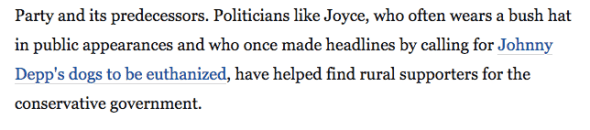

Sent via our Australian department via the Washington Post. It seems deputy PM Barnaby Joyce knocked up his staffer:
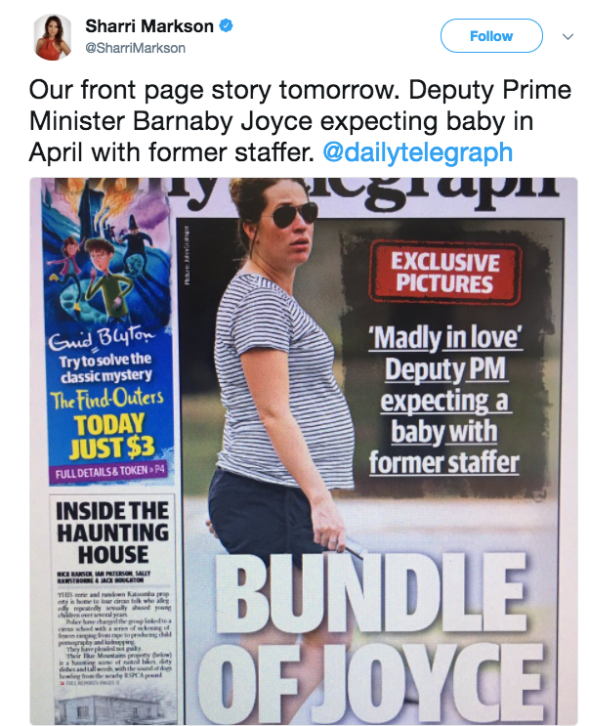
Joyce responded by calling his sometime ally the PM “inept.”
Skiing
Posted: February 16, 2018 Filed under: Hemingway, Hemingway, sports, winter, women, writing Leave a comment
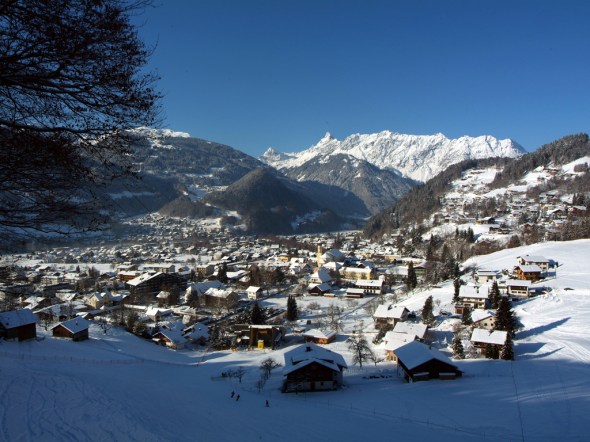
There were no ski lifts from Schruns and no funiculars; but there were logging trails and cattle trails that led up different mountain valleys to the high mountain country. You climbed on foot carrying your skis and higher up, where the snow was too deep, you climbed on seal skins that you attached to the bottoms of the skis. At the tops of mountain valleys there were the big Alpine Club huts for summer climbers where you could sleep and leave payment for any wood you used. In some you had to pack up your own wood, or if you were going on a long tour in the high mountains and the glaciers, you hired someone to pack wood and supplies up with you, and established a base. The most famous of these high base huts were the Lindauer-Hütte, the Madlener-Hause and the Wiesbadener-Hütte.
So says Hemingway in A Moveable Feast, “Winters in Schruns”
Skiing was not the way it is now, the spiral fracture had not become common then, and no one could afford a broken leg. There were no ski patrols. Anything you ran down from, you had to climb up to first, and you could run down only as often as you could climb up. That made you have legs that were fit to run down with.
And what did you eat, Hemingway?
We were always hungry and every meal time was a great event. We drank light or dark beer and new wines and wines that were a year old sometimes. The white wines were the best. For other drinks there was wonderful kirsch made in the valley and Enzian Schnapps distilled from mountain gentian. Sometimes for dinner there would be jugged hare with a rich red wine sauce, and sometimes venison with chestnut sauce. We would drink red wine with these even though it was more expensive than white wine, and the very best cost twenty cents a liter. Ordinary red wine was much cheaper and we packed it up in kegs to the Madlener-Haus.
What was the worst thing you remember?
The worst thing I remember of that avalanche winter was one man who was dug out. He had squatted down and made a box with his arms in front of his head, as we had been taught to do, so that there would be air to breathe as the snow rose up over you. It was a huge avalanche and it took a long time to dig everyone out, and this man was the last to be found. He had not been dead long and his neck was worn through so that the tendons and the bones were visible. He had been turning his head from side to side against the pressure of the snow. In this avalanche there must have been some old, packed snow mixed in with the new light snow that had slipped. We could not decide whether he had done it on purpose or if he had been out of his head. But there was no problem because he was refused burial in consecrated ground by the local priest anyway; since there was no proof he was a Catholic.
What else do you remember?
I remember the smell of the pines and the sleeping on the mattresses of beech leaves in the woodcutters’ huts and the skiing through the forest following the tracks of hares and of foxes. In the high mountains above the tree line I remember following the track of a fox until I came in sight of him and watching him stand with his forefoot raised and then go on carefully to sop and then pounce, and the whiteness and the clutter of a ptarmigan bursting out of the snow and flying away and over the ridge.
And, did you, btw, sleep with your wife’s best friend?
The last year in the mountains new people came deep into our lives and nothing was ever the same again. The winter of the avalanches was like a happy and innocent winter in childhood compared to that winter and the murderous summer that was to follow. Hadley and I had become too confident in each other and careless in our confidence and pride. In the mechanics of how this was penetrated I have never tried to apportion the blame, except my own part, and that was clearer all my life. The bulldozing of three people’s hearts to destroy one happiness and build another and the love and the good work and all that came out of it is not part of this book. I wrote it and left it out. It is a complicated, valuable, instructive story. How it all ended, finally, has nothing to do with this either. Any blame in that was mine to take and possess and understand. The only one, Hadley, who had no possible blame, ever, came well out of it finally and married a much finer man that I ever was or could hope to be and is happy and deserves it and that was one good and lasting thing that came out of that year.
Google, show me Schruns:
Symbology
Posted: February 16, 2018 Filed under: art history, the California Condition Leave a comment
I’d like to ask Dr. Robert Langdon, Harvard professor of Symbology, about some of the things going on in this local street art.
RIP Robert Hely
Posted: February 9, 2018 Filed under: hely, heroes 2 Comments
From The Telegraph, behind a paywall. To my knowledge not a relative but sounds cool:
He established himself in the early 1960s just as celebrity “crimpers” were emerging from the salons to become arbiters of style, and the client list of the Hely Hair Studio included many eminent Glaswegians including footballers, models, the star of Gregory’s Girl, Clare Grogan, and the television presenter Ross King.
JAB Holdings
Posted: February 8, 2018 Filed under: America Since 1945, business Leave a comment





and soon:
 and
and
are all controlled by JAB Holdings.
Owned by Germany’s Reimann family, 95% of JAB Holding belongs to four of the late Albert Reimann Jr.’s nine adopted children. They are descendants of chemist Ludwig Reimann, who, in 1828, joined with Johann Adam Benckiser (founder of the namesake chemical company).
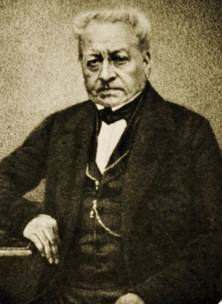
Allegedly, the heirs take an oath never to discuss their business publicly?
Quincy
Posted: February 8, 2018 Filed under: America Since 1945, music Leave a comment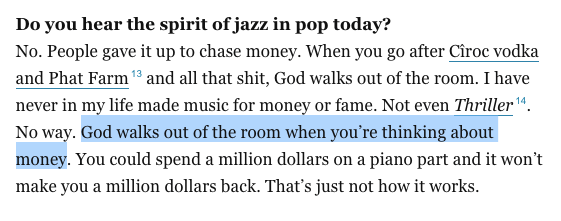
Devouring this Quincy Jones Vulture interview like everyone else on my feed. Graeme Wood has a good take:

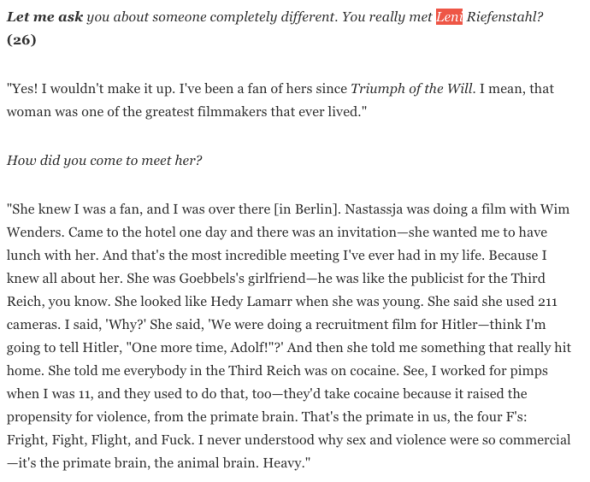
There was also, as Icecubetray points out, an interview in GQ recently where QJ goes similarly wild:


Coaching Matchup: Super Bowl LII
Posted: February 4, 2018 Filed under: sports Leave a comment
Beginning with a 2015 look at the positivist philosophies of Pete Carroll , we’ve written some on top-level football coaches and coaching philosophy here at Helytimes.
Our Reader found less charm in Nick Saban’s book:

but did learn what Nick Saban eats for breakfast.

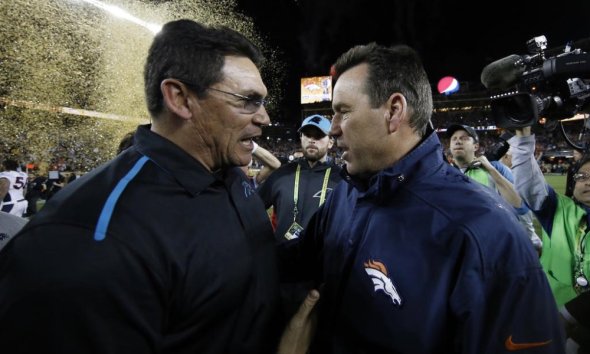
The Super Bowl matchup between Ron Rivera and Gary Kubiak proved one of the least charismatic coaching duels in memory but Our Correspondent found some points of interest in Rivera’s Control Your APE philosophy
King of Coaches is Bill Belichick. We reviewed the best book on him back in 2015.

Last year’s Dan Quinn / Belichick matchup provided a political contrast, noted by Our Correspondent.

Jan 19, 2016; Philadelphia, PA, USA; Philadelphia Eagles new head coach Doug Pederson is introduced to the media at the NovaCare Complex . Mandatory Credit: Bill Streicher-USA TODAY Sports
This year Belichick faces goofball Doug Pederson, who once had his jaw broken while playing as Brett Favre’s backup:
Pederson never started a game with the Packers and threw for only three touchdowns in his seven seasons. Two of them came against the Vikings on Oct. 5, 1998, when he replaced Favre in a blowout loss. On the second of his two touchdown passes, Pederson suffered a broken jaw thanks to a hit from corner Corey Fuller.
He would need his jaw wired shut after the game, but he still took the field for the next play because he was Longwell’s holder on extra points.
“He kind of mumbled, ‘Something’s wrong with my jaw,’ but he got the hold down, and we made the kick,” Longwell said.
so reports Rob Demovsky at ESPN.
Can’t find too much of interest in the Doug Pederson literature, but I do think it’s cool that ten years ago he was coaching high school:
The former Louisiana Monroe graduate retired in March of 2005 and accepted a job as head football coach at Calvary Baptist Academy in Shreveport, La., which has 900 students in the K-12 school.
“I thoroughly love it,” Pederson said. “I get a chance to share my faith with these guys and teach them things on and off the field.”
(from this Packers.com story by Jeff Fedotin)

Good luck to both coaches!

Drop the mic!
Posted: February 2, 2018 Filed under: America Since 1945, politics 1 Comment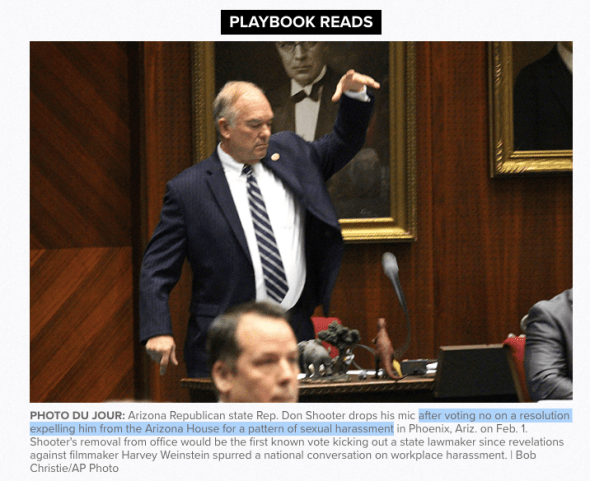
from Politico
In A Narrow Grave
Posted: January 28, 2018 Filed under: Texas Leave a comment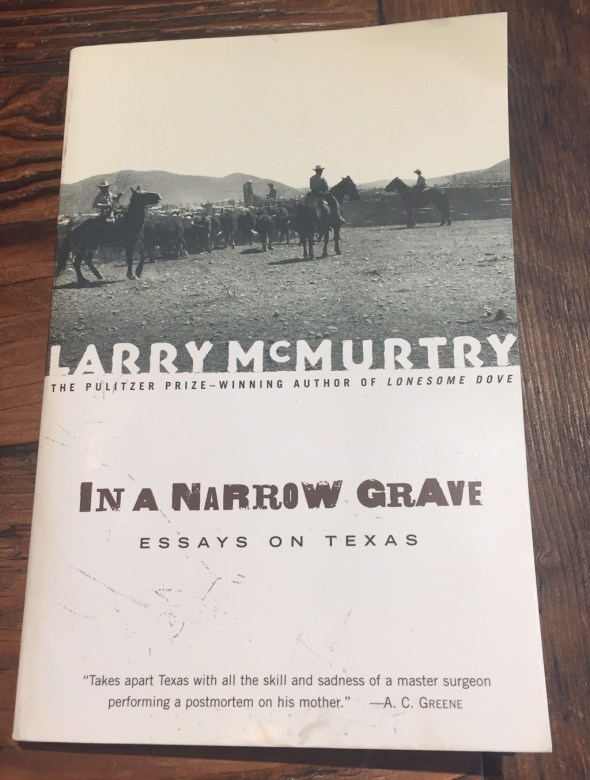
In anticipation of a trip to Texas, I got this one off the shelf. Neither McMurtry’s best (that would be Walter Benjamin at the Dairy Queen, in which he gives a recipe for lime Dr. Pepper) or his worst (that would be Paradise, where he proves his point that Tahiti is boring), in this fan’s opinion.
McMurtry’s essay on the sexual attitudes of the post-frontier Texas of his youth is pretty interesting:
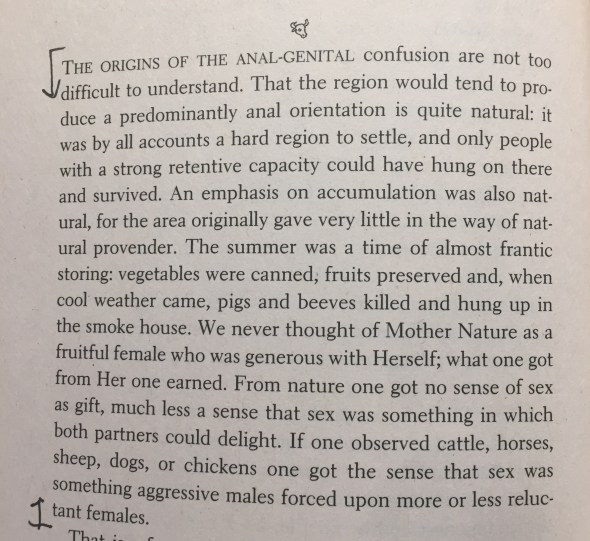
He also says it wasn’t a big deal in his youth for a young man to have sex with a cow or pig.
Machiavelli
Posted: January 27, 2018 Filed under: America Since 1945 Leave a comment
That’s from this study in the Swiss Journal of Psychology. Happened to see that on Twitter somehow.
Was struck when I actually read The Prince and realized Donald Rumsfeld and Dick Cheney either hadn’t read it or hadn’t taken some of its blunter advice.
foxes, being foxlike

from the piles of Rumsefeld memos you can read online.
On about page six of this book (haven’t finished) he says don’t invade countries where you don’t know the language.

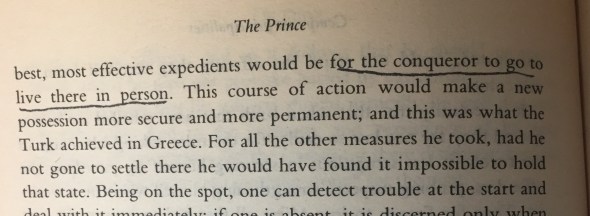
Maybe a new rule should be that when we invade a country, the President or at least the Secretary of Defense should have to live there:
Dictionary of National Biography
Posted: January 27, 2018 Filed under: books, food Leave a comment
When you come across this book, it’s fun to take it down and open it at random and read about some guy. For instance, Caleb Jeacocke, debater and roll-maker:

The Crown’s JFK
Posted: January 24, 2018 Filed under: America Since 1945 Leave a comment
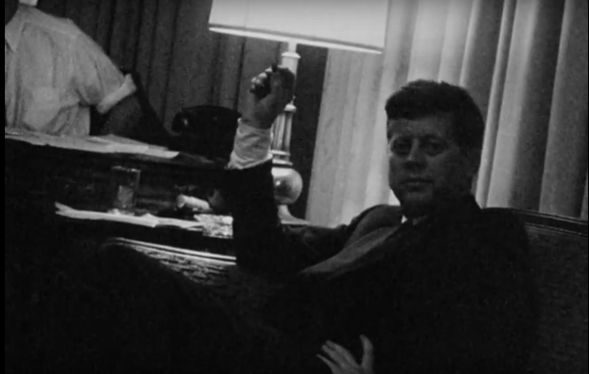
Peggy Noonan raises concern about the depiction of JFK on episode 8, season 2 of The Crown on Netflix:
There is nothing—literally nothing—to support the assertion in “The Crown” that after the trip JFK, in a rage at being upstaged by his wife, drank, threw things and lunged at her. There is no historical evidence that he ever got rapey with his wife.
(what a sentence!)
Also he didn’t smoke cigarettes.
All of this, and more, is so vulgar, dumb and careless. It is disrespectful not only of real human beings but of history itself.
Interesting points. JFK did at least sometimes smoke small stubby cigarillo things, as we can see in Primary.
He famously got himself a bunch of Cuban cigars before announcing the embargo (a story that’s told as a funny, cute anecdote rather than an example of small but representative corruption).
JFK was rapey with other young women in his employ, if we believe Mimi Alford.
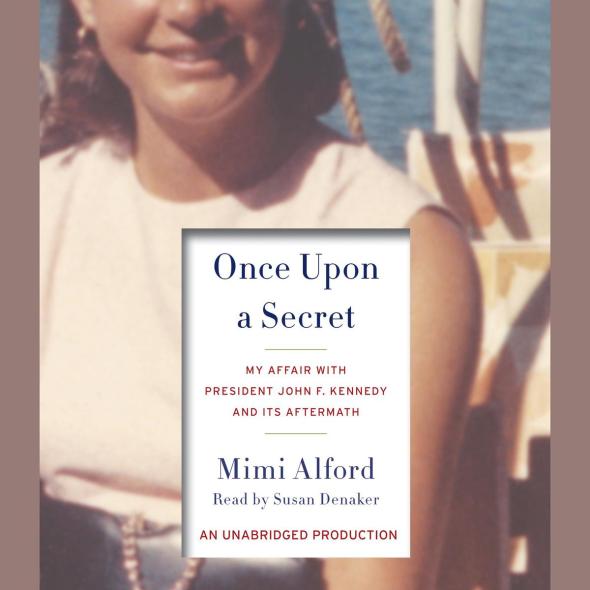
Caitlin Flanagan points to more evidence.
I loved The Crown’s version of JFK. His psychopathic side. A worthwhile distinction: the way the story is told in The Crown, what we see is Jackie’s perception of JFK. That could be different than like historical truth.
Consider what Errol Morris says here (talking Wormwood) about “reenactments”:
Well, I noticed that even with the scripted elements of Wormwood, people call them “reenactments,” but they’re not reenacting anything, properly speaking. I got so tired of it that. First of all, reenactments came out of a sort of see-and-say type of stuff. You’d have an interview, the person would go, “Blah blah blah,” and then you’d illustrate them with the subsequent reenactment.
“On the night of June 4, 1973, I went to the store and bought a pack of cigarettes,” and you cut to an actor in a wide-lapel shirt and bell bottoms walking into a store and buying a pack of cigarettes.
That’s correct. So I pointed out like, “What exactly am I reenacting?” Am I reenacting truth? No. Am I reenacting belief? More often than not, I’m reenacting claims of what people saw or didn’t see. A version of events, a belief about what transpired, rather than what actually transpired. And I got in the habit — out of annoyance, I would say — of pointing out how consciousness is a reenactment of reality inside of our skulls. This idea that we have some immediate and privileged access to the world around us? Excuuuse me! We do not!
If we’re seeing Jackie’s reality, as imagined by The Crown, is that wrong?
But I’m a sucker for this kinda thing. I loved Dennis Quaid as Bill Clinton in The Special Relationship. I felt he showed the alpha dog side of Bill Clinton that must be present.
Hope Davis as Hillary also. Chilling.
To see the past in all its complexity is impossible and compelling. A key theme of Helytimes.
Eleven Tweets
Posted: January 21, 2018 Filed under: tweets Leave a comment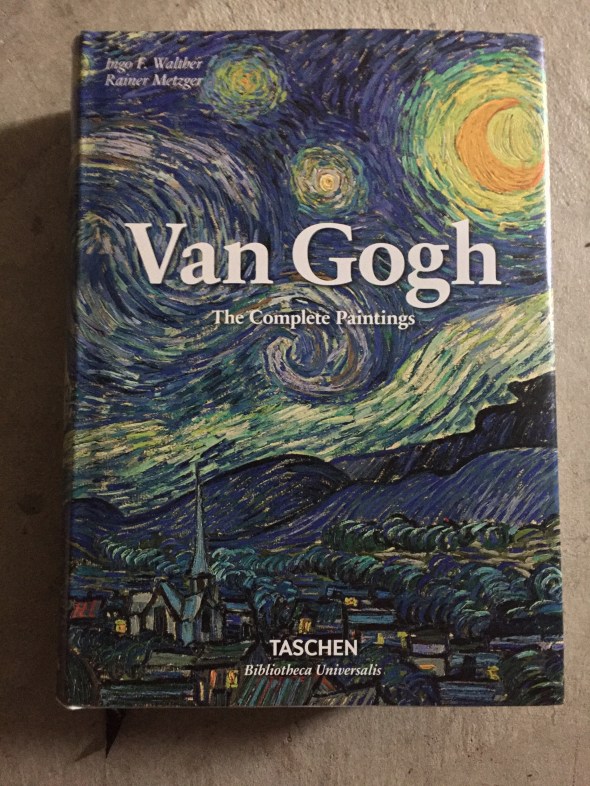
getting pretty into Van Gogh since I bought this book for $19.99 at the Taschen store
Feel like a sucker writing for free from @jack’s website, but I love Twitter, so I am experimenting with putting my Twitter length thoughts over here on Sundays.
so easy to get people’s credit card numbers. all you have to do is be a store
Nervous I will be blamed for the government shutdown
Saw a girl wearing a bright orange sweater yesterday. She looked great!
Aziz wanted to start a conversation about Modern Romance and my god mission accomplished!
THEORY: bc of energy drinks and coffee chains, people have too much energy, they burn it off fighting about the news
The timeline equivalent of Paul writing about Jesus is somebody writing about a guy who died in 1997
A comedy can get away with not being funny if it’s so unfunny it becomes critically acclaimed. Like shooting the moon in Hearts.
Not sarcastic: I love all memes and can’t get enough of them.
I for one don’t want to be lumped in with other white people
Journalists are so horny about “ledes”
Theory: AI has begun conquest of Earth with help of autistic human allies (Thiel, Dorsey, Musk) who find computer rule more rational
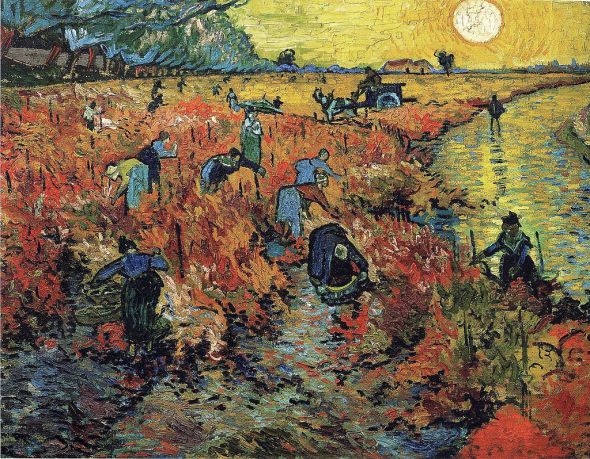
The Red Vineyard, allegedly the only painting VVG sold in his lifetime. I’d argue: one of his worst and tackiest ones! Source.
 Helytimes
_-_Google_Art_Project.jpg)
.jpg)