Henry IV, Part One (and Richard II)
Posted: May 28, 2018 Filed under: actors, plays, shakespeare, writing Leave a comment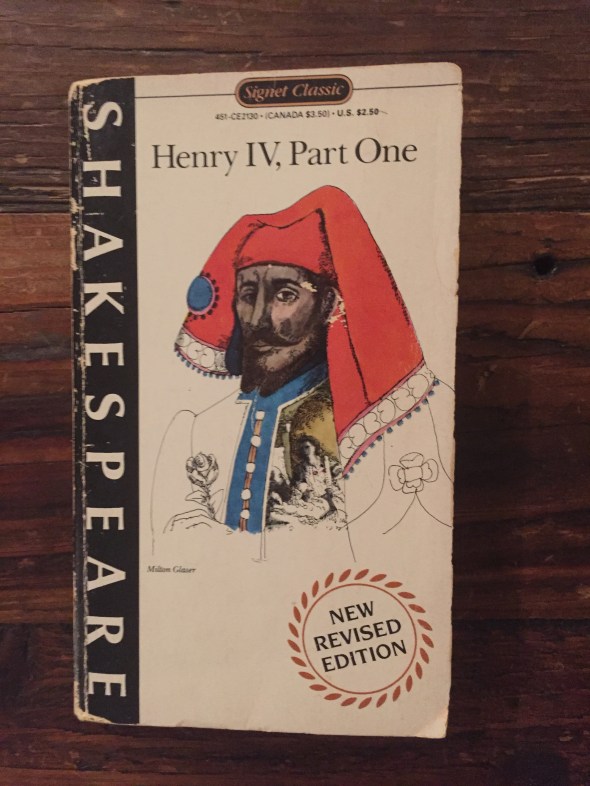
Time to read Henry IV: Part One. Let’s just dive right in. 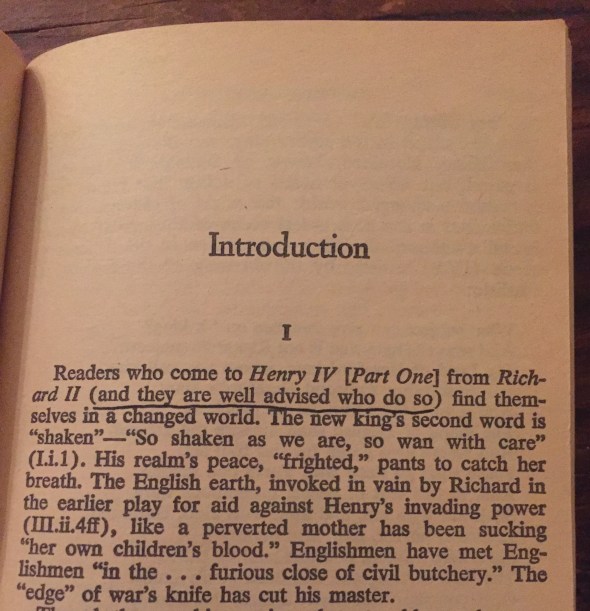
Dammit! Fine.
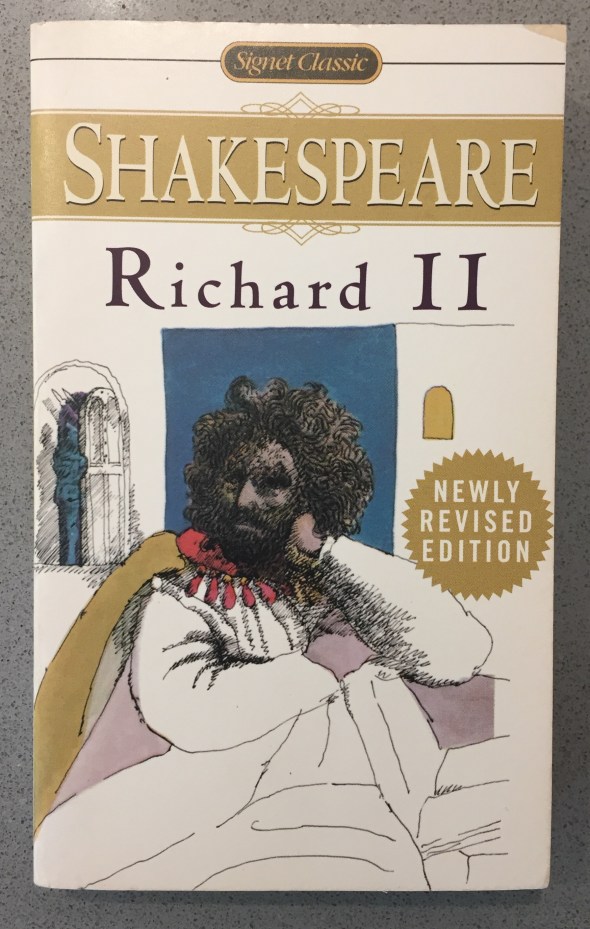
Didn’t get a ton out of Richard II, to be honest with you. Professor McHugh tells me I’ll appreciate it if I read:
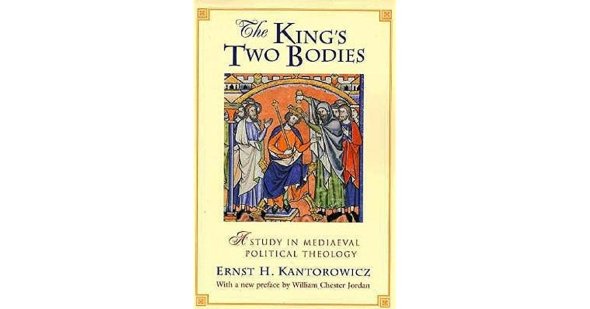
It’s all about how weird and hard it is for frail, weak Richard to be king. He’s got his actual human body, which sucks, trying to rise up to be the Body Politic, the kingly body. Or something.
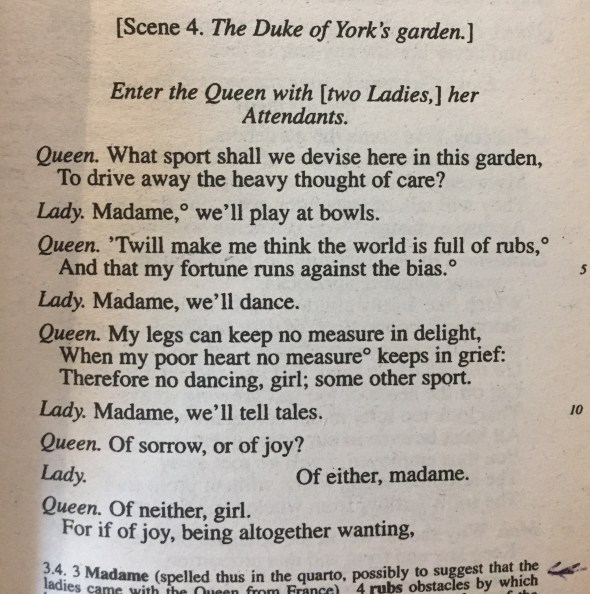
I appear to have marked this for some reason. 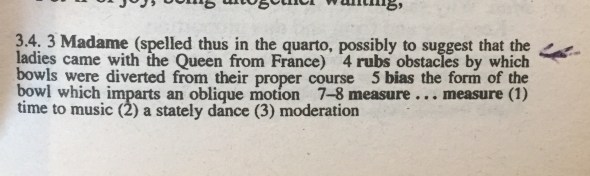
Anyway.
The play is mainly about a king waffling and reversing himself and causing problems. Much of the play is people introducing themselves at a long tournament scene.
We do meet Henry Bolingbroke, who has a son whose thing is prostitutes and being a wastrel:
HENRY BOLINGBROKE
Can no man tell me of my unthrifty son?
‘Tis full three months since I did see him last;
If any plague hang over us, ’tis he.
I would to God, my lords, he might be found:
Inquire at London, ‘mongst the taverns there,
For there, they say, he daily doth frequent,
With unrestrained loose companions,
Even such, they say, as stand in narrow lanes,
And beat our watch, and rob our passengers;
Which he, young wanton and effeminate boy,
Takes on the point of honour to support
So dissolute a crew.HENRY PERCY
My lord, some two days since I saw the prince,
And told him of those triumphs held at Oxford.HENRY BOLINGBROKE
And what said the gallant?
HENRY PERCY
His answer was, he would unto the stews,
And from the common’st creature pluck a glove,
And wear it as a favour; and with that
He would unhorse the lustiest challenger.
That’s really gonna be the problem for the next couple plays: Henry Bolingbrook trying to get help from his son who would rather be unto the stews.
Without his unthrifty son, Bolingbroke still manages to depose Richard.
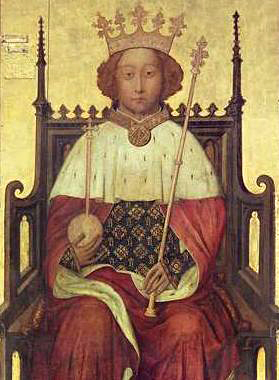
I got deposed
This makes him King Henry IV, but it’s kind of an unsteady position.
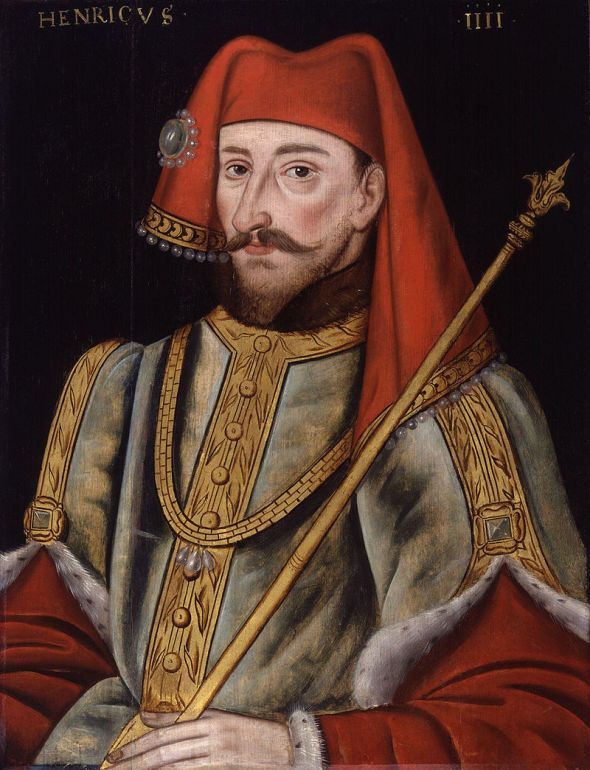
Henry IV feels bad when Richard ends up murdered, so he promises to go on a crusade to Jerusalem:
I’ll make a voyage to the Holy Land
To wash this blood off from my guilty hand.
March sadly after; grace my mournings here,
In weeping after this untimely bier.
And with that we:
FINIS
OK. We’re ready for:
Now, listen. Is reading Shakespeare even a worthwhile thing to do?
The plays were written to be heard, not read.
Right.
When Ben Jonson published his first folio, he was considered uppity for imagining that his plays were worthy of consideration. They were sketches for a whorehouse. You have to imagine Shakespeare’s plays being written between strippers carrying on.
so says Mark Rylance in this New Yorker profile.
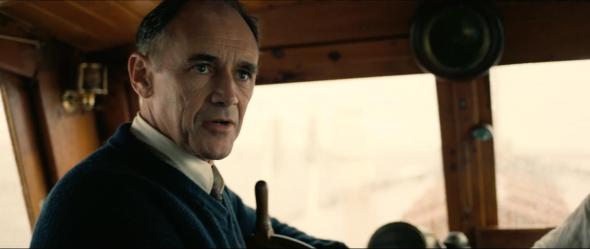
Somewhere I can’t find now — the playbill for Jerusalem? — I read an interview with Rylance where he said something like.
In Shakespeare’s day you wouldn’t say have you seen Hamlet, you’d say have you heard Hamlet. In that sense it was something more like a concert.
(Not an exact quote but close-ish). More from Rylance, in The Telegraph:
He believes that Shakespeare “did not write literature”, claiming it is as bizarre to read his work on paper as it would be to study the Rolling Stones as poets.
“To take a song like Honky Tonk Woman and study it for its literature is fair enough, but if you’re going to then revere it as literature I think you’re doing a disservice to Mick Jagger and Keith Richards who would like it to be revered as a great rock and roll song,” he says.
Cool take.
Is reading Shakespeare as foolish as like, reading Nas raps written down?
So stay civilized, time flies. Though incarcerated your mind dies, I hate it when your moms cries. It kinda makes me want to murder, for real a/I even got a mask and gloves to bust slugs but one love
Both are bursts of verbal exuberance from a chaotic, semi-criminal urban world of blended culture and language.

illustrating a Smithsonian article, “William Shakespeare, Gangster?“
How much was Shakespeare’s Southwark like Crown Heights?
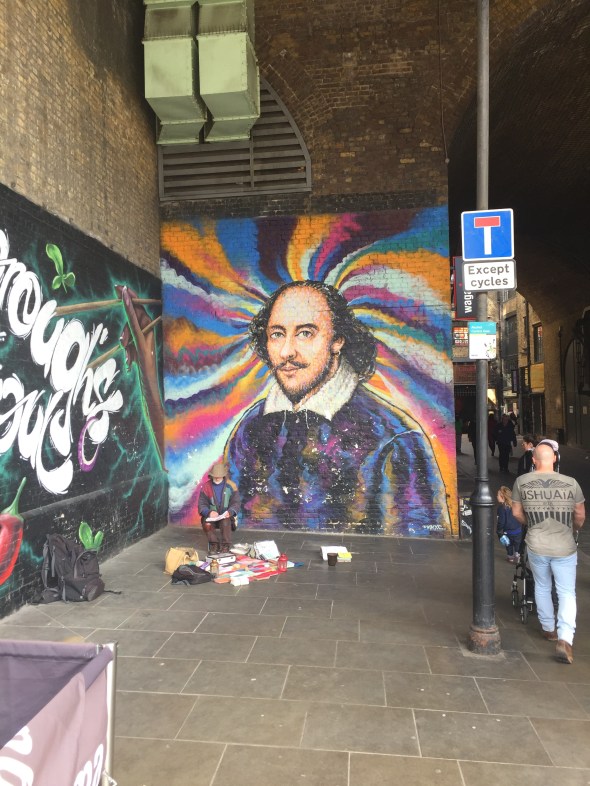
There are some powerful phrases in Henry IV, Part One. I like when Sir Walter Blunt arrives, and the King says he is
Stained with the variation of each soil
Betwixt that Holmedon and this seat of ours.
The story of this play is that Henry (The King) is having a hard time with rebellious Henry Percy, aka Hotspur. Not helping him is his son, Prince Hal, who just likes to party and drink with his pal Falstaff.
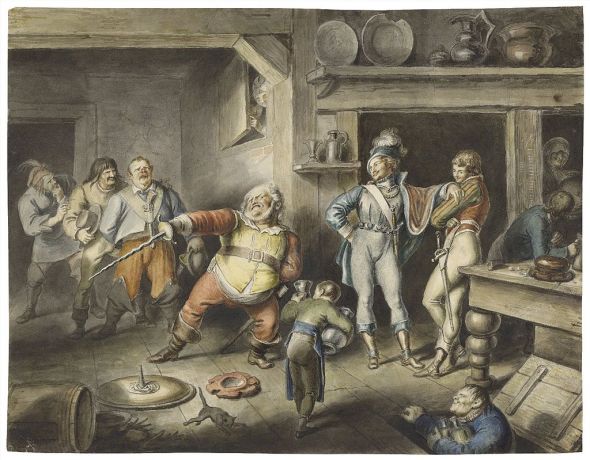
An 1829 watercolor by Johann Heinrich Ramberg of Act II, Scene iv: Falstaff enacts the part of the king.
Hotspur the rebel is a better, more viral example than his own son, and Henry knows it! Driving him nuts.
Spoiler alert: by the end of the play Prince Hal gets his act together somewhat.
He and Hotspur face off at the battle of Shrewsbury.
Hal kills Hotspur.
Hotspur. O Harry, thou hast robbed me of my youth!
I better brook the loss of brittle life
Than those proud title thou hast won of me.
They wound my thoughts worse than thy sword my flesh.
But thought, the slaves of life, and life, time’s fool,
And time, that takes survey of all the world,
Must have a stop. O, I could prophesy,
But that the earthy and cold hand of death
Lies on my tongue. No, Percy, thou art dust,
And food for —
[Dies]
The big star of Henry IV, Part One, the guy who gets a lot of stage time for his clowning, is Falstaff.
Falstaff. Why, there it is! Come, sing me a bawdy song, make me merry. I was as virtuously given as a gentleman need to be, virtuous enough: swore little, diced not above seven times a week, went to a bawdy house not above once in a quarter of an hour, paid money that I borrowed three or four times, lived well, and in good compass, and now I live out of all order, out of all compass.
Are you laughing your ass off yet?
Look, we’ll have more to say about Falstaff

Orson Welles as Falstaff
who will soon be played, right here in Los Angeles in a limited run next month, at the Japanese Garden of the West Los Angeles VA Healthcenter, by Tom Hanks.

(I believe tickets are free to veterans).

We intend to file a dispatch.

Just when one is about to give up on the whole project of reading the Henriad, you get to Henry IV, Part II.
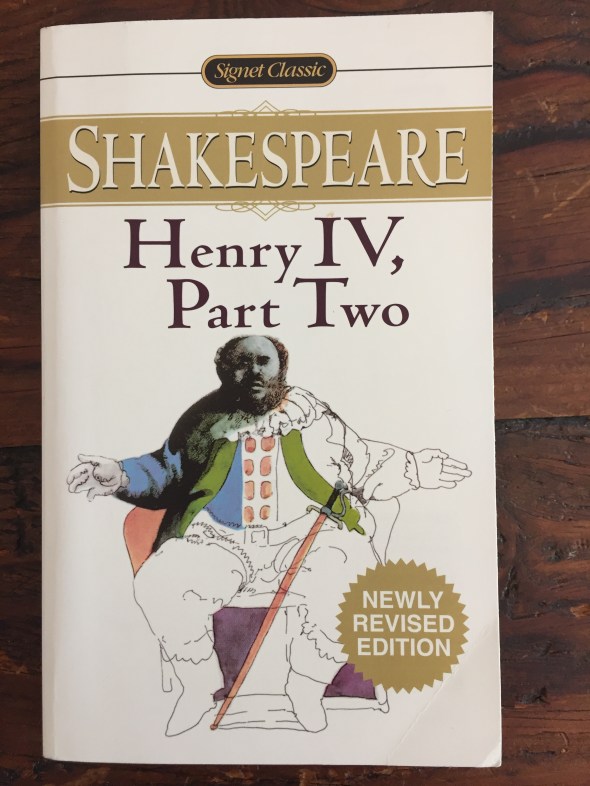
which starts off with a friggin bang:
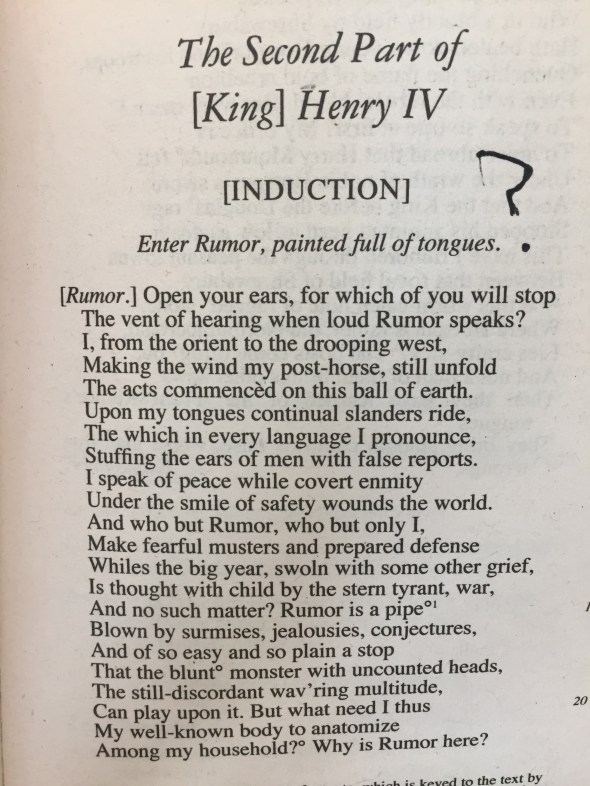
for which of you will stop
The vent of hearing when loud Rumor speaks?
Now we’re getting somewhere.

Will Kempe
Let’s pick up there next time! Thanks for joining Henry IV study buddies!
Great Blasket Island
Posted: May 27, 2018 Filed under: architecture, Ireland Leave a comment
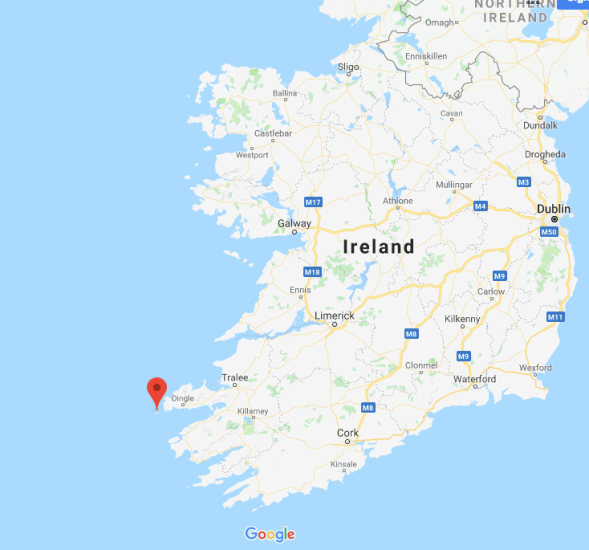
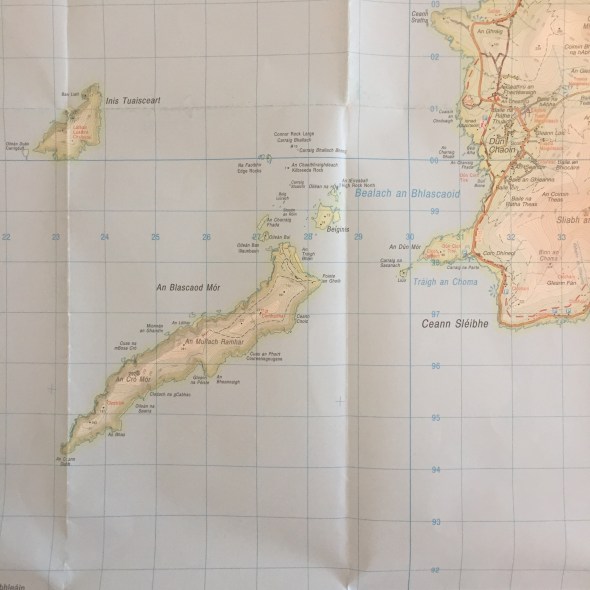
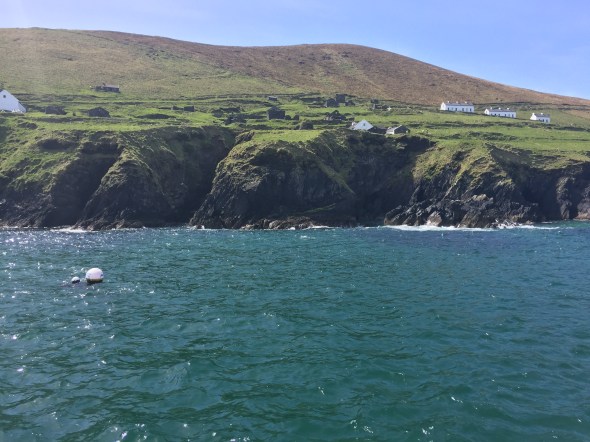
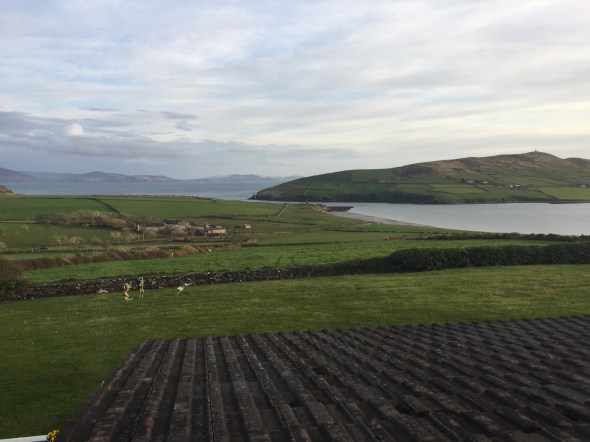
Not easy to get there:

Lucky weather on this particular day.

What we might call in the USA a ghost town. The last inhabitants were evacuated in 1953:

In 1907 Norwegian linguist Carl Marstander went there to learn Irish from this local:
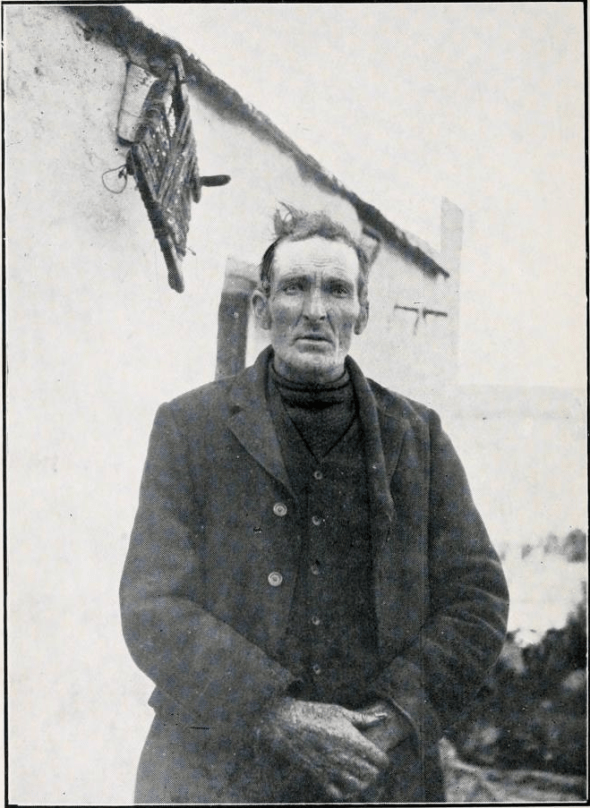
Tomás Ó Chriomhthain, who later wrote a book about his life there.

source
Some other islanders wrote, or dictated, their own tales of their hard and primitive lives on this island:
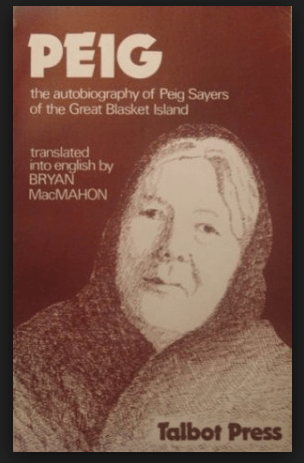
As a girl Peig Sayers was supposed to go join a friend in America, but the friend had an accident and couldn’t send the money. She gave birth to eleven children. Five died.

Peig’s book was (I’m told, by the excellent tour guide) forced on generations of Irish schoolchildren. In 1941 this genre of rural Irish poverty literature was parodied by Flann O’Brien / Brian O’Nolan / Myles na gCopaleen:
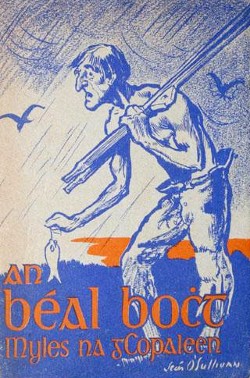
An Béal Bocht is set in Corca Dhorcha, (Corkadoragha, Corkadorkey), a remote region of Ireland where it never stops raining and everyone lives in desperate poverty (and always will) while talking in “the learned smooth Gaelic”.
 Blasket life does seem rough.
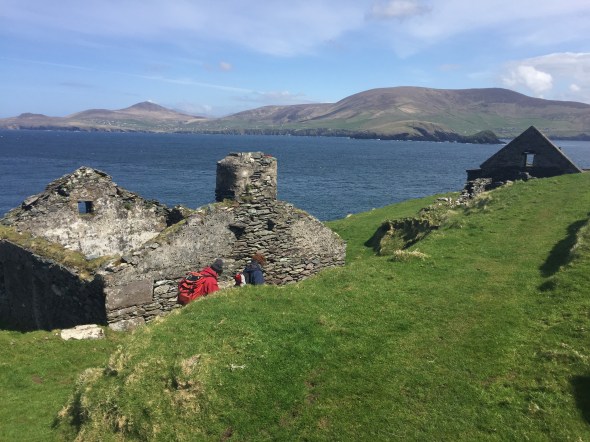
This was my second visit, and both times I’ve been blown away by the Blasket Center / Ionad Blaiscoid Mhór.

The architecture and design and use of landscape on this building is just very cool:

Here’s it from afar:

Couldn’t find online who the architect was, so I emailed them, and they wrote back and told me:
The architect of the centre was Ciaran O’Connor, who is the State architect nowadays.
State architect. Cool.

Really impressed with the Irish OPW. They take care of their treasures, Ireland.
Let’s wish him well!
Stars of the National Gallery of Ireland
Posted: May 26, 2018 Filed under: art history, Ireland 3 Comments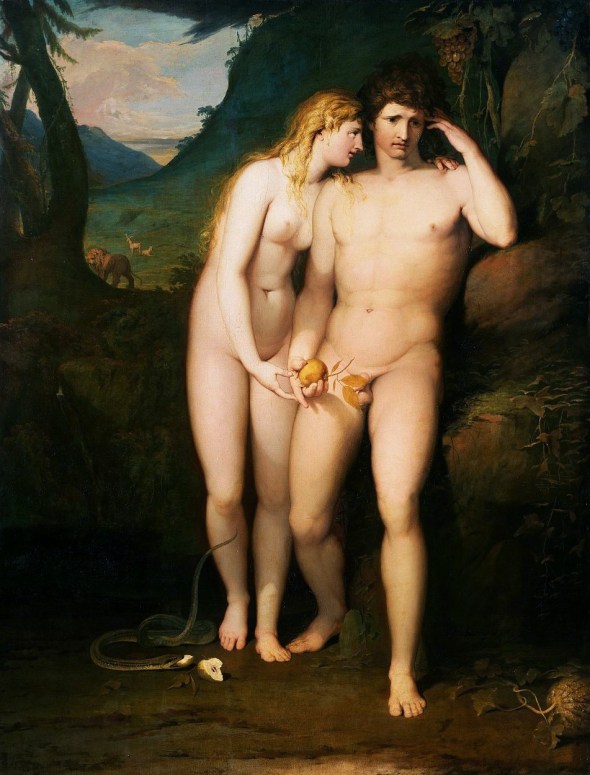
source
“Pwease Adam? One bite? You’ll like it I promise!”
The Temptation of Adam, by James Barry.
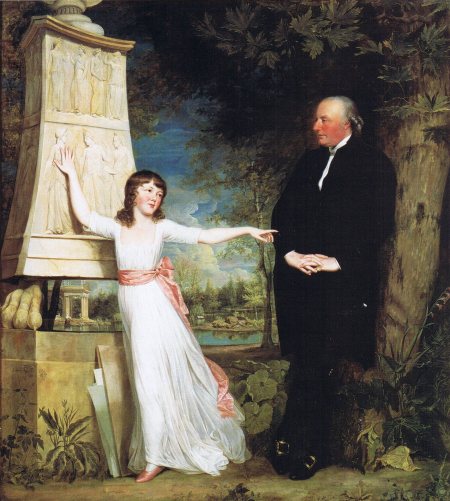
Look grandfather, I am but a nymph!
Lady Caroline Crichton and her grandpa?

Gareth Reid, Graham Norton (from Gareth Reid’s website)
In 1992, Norton’s stand-up comedy drag act as a tea-towel clad Mother Teresa of Calcutta in the Edinburgh Festival Fringe made the press when Scottish Television’s religious affairs department mistakenly thought he represented the real Mother Teresa.
This one by Paul Henry, A Connemara Village, is under some serious copyright I guess.
Robert Ballagh’s portrait of Neil Brown “communicates the resolute character for which he was known.” I’ll say! Copyright plus reproductions don’t do it justice. Worth seeing if you’re in Dublin.
Also good:
John Kindness, Gay Byrne

The Liffey Swim by Jack Yeats (W. B’s brother) won Ireland’s first Olympic medal, a silver in 1924 in the category Painting. (Jean Jacoby took gold).
Irish Abortion
Posted: May 23, 2018 Filed under: Ireland 2 Comments
The Irish are having a referendum on whether to repeal the 8th amendment to their constitution, which bans abortion.

Struck by the bluntness of the campaigning. 
Feel the experience of growing up around Catholic anti-abortion people helps explain things that seem incomprehensible to some liberal pals, like how people could vote for Roy Moore (or Donald Trump).
People hate abortion protesters. ‘They’re so shrill and awful.’ But they think babies are being murdered. What are they supposed to be (saying)? ‘Well, hmmm … that’s not cool.
(Don’t ask who said that.)
Is anyone convincing anyone on this one?

Not easy to find “new” arguments on the abortion issue but Irish novelist Sally Rooney made a point I hadn’t heard stated so cleanly before:
Yes. Pregnancy, entered into willingly, is an act of generosity, a commitment to share the resources of life with another incipient being. Such generosity is in no other circumstances required by law. No matter how much you need a kidney donation, the law will not force another person to give you one. Consent, in the form of a donor card, is required even to remove organs from a dead body. If the foetus is a person, it is a person with a vastly expanded set of legal rights, rights available to no other class of citizen: the foetus may make free, non-consensual use of another living person’s uterus and blood supply, and cause permanent, unwanted changes to another person’s body. In the relationship between foetus and woman, the woman is granted fewer rights than a corpse. But it’s possible that the ban on abortion has less to do with the rights of the unborn child than with the threat to social order represented by women in control of their reproductive lives.
(Don’t like how they spell fetus as foetus. One of many upsetting aspects.)
Anyway, let’s see who wins! The vote goes down Friday.
Fairy Fort
Posted: May 23, 2018 Filed under: Ireland Leave a comment

My assistant shows us the height of the walls.

This part of the fort was too well defended to explore.

Note the width of the walls. This suggests fairies of significant size. Not inconceivable that these fairies stood as high as five or even six apples.

The inhabitants of the fort wallow in safety.
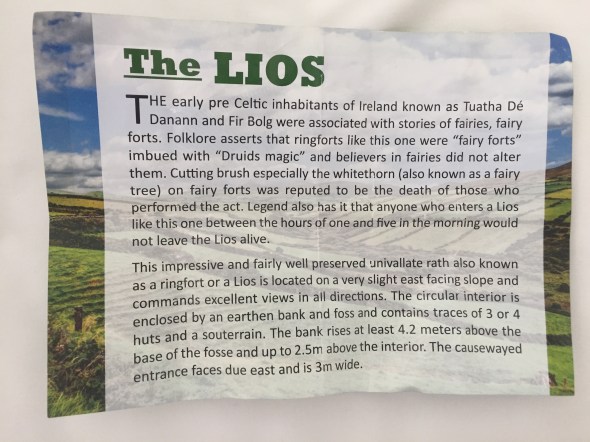
Many forts like this can be found in Ireland, sometimes billed as “Iron Age forts.” When was the Iron Age?
The Iron Age is taken to end, also by convention, with the beginning of the historiographical record. This usually does not represent a clear break in the archaeological record; for the Ancient Near East the establishment of the Achaemenid Empire c. 550 BC (considered historical by virtue of the record by Herodotus) is usually taken as a cut-off date, in Central and Western Europe the Roman conquests of the 1st century BC. The Germanic Iron Age of Scandinavia is taken to end c. AD 800, with the beginning Viking Age.
The distant and mysterious past, in other words. 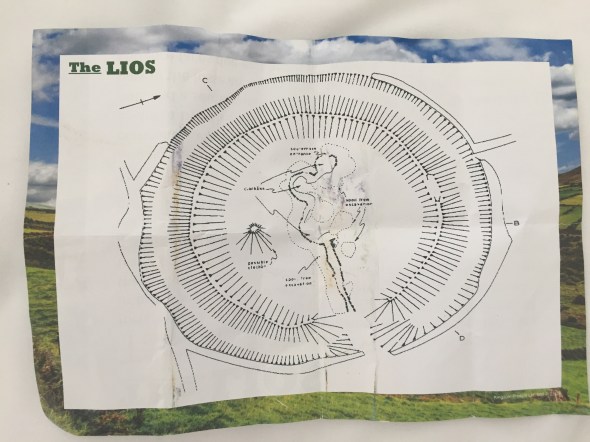
Insight into the “crazed Wisconsin” period of Irish history.

Queens Elizabeth
Posted: May 21, 2018 Filed under: beheadings, Ireland, war, women Leave a comment
O’Byrne’s corpse was butchered and for months the head and quarters hung on pike staffs on the wall over Dublin Castle drawbridge. Several months later the pickled head was presented to the council secretary at London by an English adventurer, who was disappointed to find that the head-silver due on O’Byrne* had already been paid in Ireland. The queen was angered that, “the head of such a base Robin Hood was brought solemnly into England“.
Read enough Irish history and you gain a grudging respect for Queen Elizabeth I. She’s always delivering withering remarks and savage putdowns to people giving her bad news.
In 1603, Elizabeth had seemed a foolish old woman, as men looked expectantly to a Stuart king. By 1630, when Stuart kings had proved rather a disappointment, she had become the paragon of all princely virtues.
-
Christopher Haigh,The Golden Age of Queen Elizabeth I—Myth or Reality? Awake! magazine, 2010, 1/10 pp. 19-22.
At this remove, who can say if Elizabeth was a foolish old woman or one of history’s canniest power players, but I’m team power player. She managed to survive rebellions, armadas, assassination attempts, plagues, you name it!

Just surviving as a queen is tough.

The (current) Queen did not seem that into the wedding. The Crown may have fooled us into thinking the Queen is more woke than she is.
* was reading about O’Byrne after seeing convo on Tom Ricks’ twitter about the origin of “firebrand”
This guy Jordan Peterson
Posted: May 20, 2018 Filed under: heroes, writing Leave a comment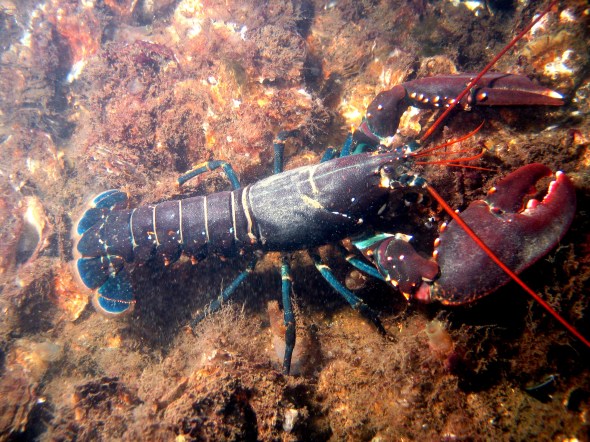
The first piece of advice in his book
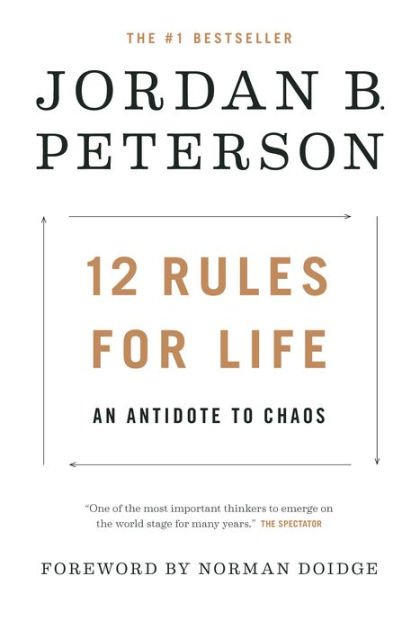
is
stand up straight with your shoulders back, as a lobster does.
(paraphrase)
That’s as far as I think I will get in the book, partly because I seem to have misplaced my copy.
Stand up straight with your shoulders back is good, valuable advice, a reminder we could all use, maybe even worth the price of the book.

(Surely Joan Didion and Jordan Peterson could agree on John Wayne?)
Is it funny that stand up straight with your shoulders back is literally the opposite advice of :

(reminded of course of:
) Greaney once claimed the secret to life is posture. He’s rarely 100% wrong.
Is Jordan Peterson just a less chill Joseph Campbell?
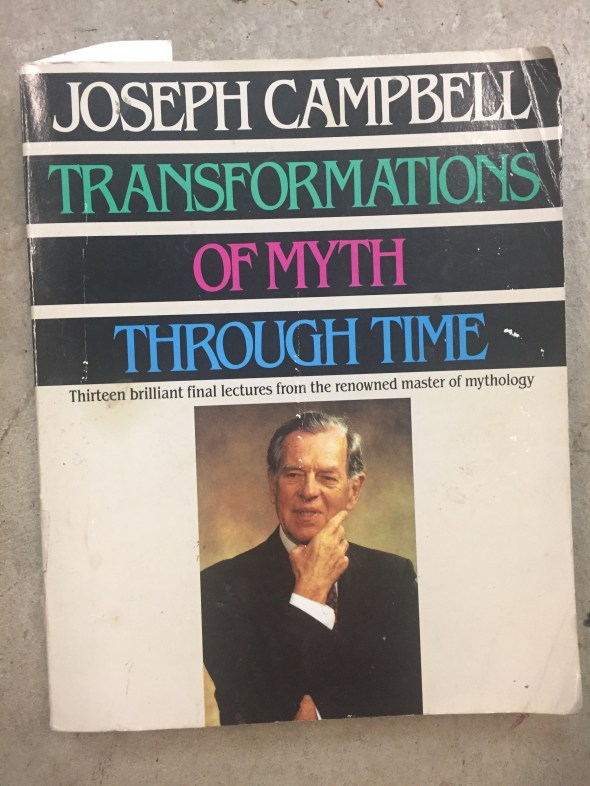
If you are a lost young man may I suggest Joe Campbell will let you into a lot of the same insights in a way that may be less likely to prove distasteful to women you are trying to get with?
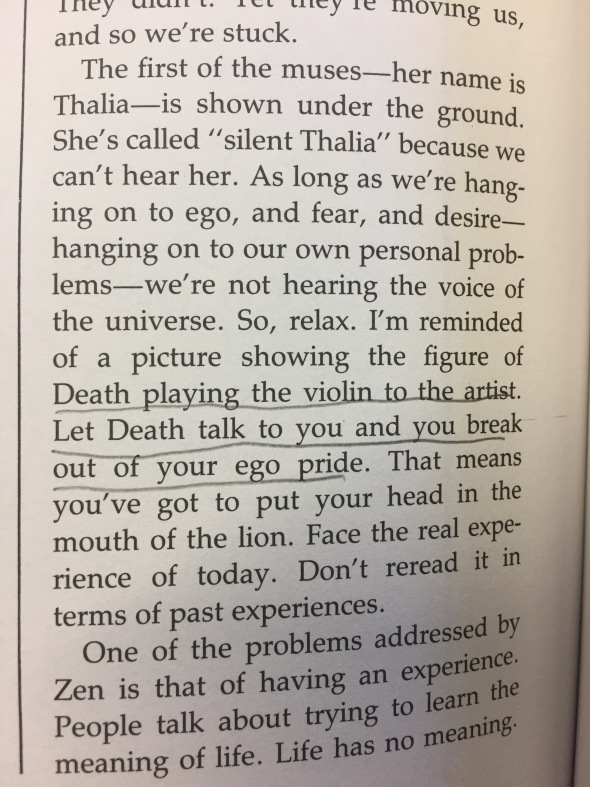
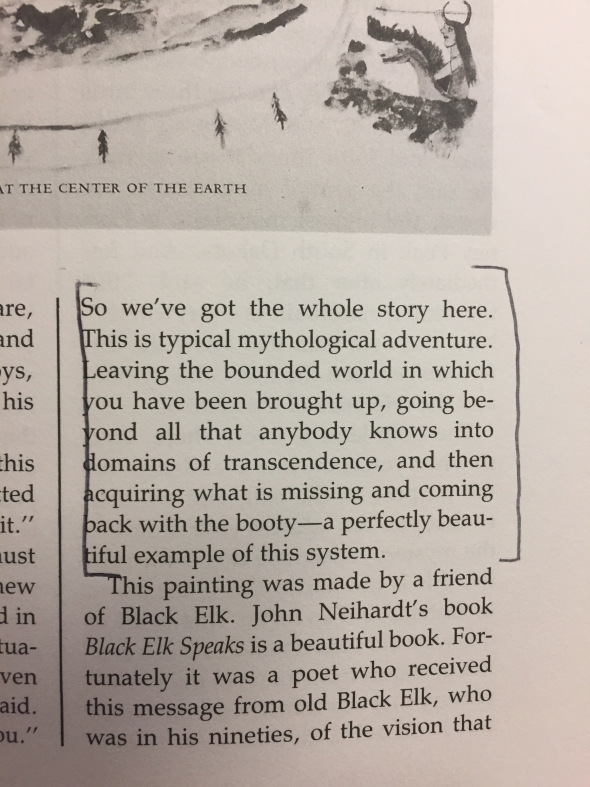
Very YouTubable and less into being aggro.
Tom Wolfe observation
Posted: May 18, 2018 Filed under: America, America Since 1945, writing Leave a comment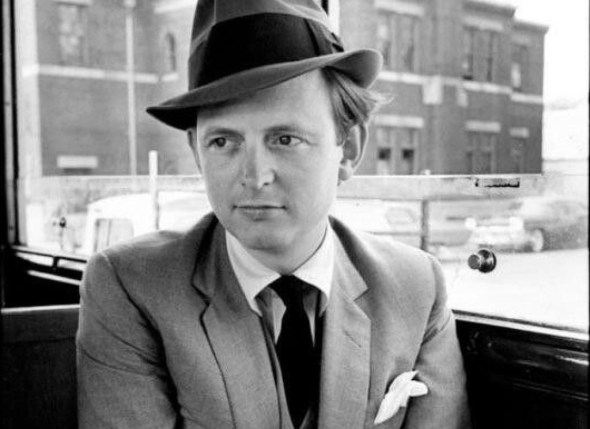
There are, of course, all sorts of gradations of status, of power, of wealth, influence and comfort, but it is impossible to break America down into classes in the old European sense. “But there is a … dividing line, and above that line are those who have bachelor degrees or better from a four-year college or university. Below that are the people who don’t. That line is becoming a gulf that grows wider and wider. “Like the rest of the West, we live in a highly bureaucratic world and it’s impossible today to advance to the heights of ambition without that bachelor’s degree, without being a part of what Vance Packard used to call ‘the diploma elite.'”
Had to go looking for the source of that one, it was in a 2005 Duke commencement speech. How about this?:
For the last four years, you have been trained to be the leaders of an extraordinary nation. There has never been anything like it. … It is the only country I know of in which immigrants with a totally different culture, a totally different language, can in one-half of a generation, if they have the numbers and a modicum of organization, take over politically a metropolis as large as, say, Miami.
As a Tom Wolfe (Ph.d) superfan, kind of disappointed by the tributes and obituaries. Most of them seemed pretty limp. Maybe because so many journalists were so in awe of him, they seemed to sputter on about the same stuff and barely touch on the vastness of Wolfe’s interests and insights.
Best one imo was Louis Menand. (Update: lol whoops hadn’t seen Friend of Helytimes’ Graeme Wood’s.)
Felt literary world scoffed at

but how many 74 year olds would take on a seven hundred page book about college, rap, hookup culture, basketball, and attempts to get in the head of (among others) a nineteen year old female virgin? A little crazy but I thought it was cool! Also came pretty close to predicting the Duke lacrosse scandal.

If you hunger for Wolfe at full Wolfeness might I recommend his 2006 Jefferson Lecture?:
According to Korean War lore, a Navy fighter pilot began shouting out over the combat radio network, “I’ve got a Mig at zero! A Mig at zero! I’ve got a Mig at zero!” A Mig at zero meant a Soviet supersonic fighter plane was squarely on his tail and could blow him out of the sky at any moment. Another voice, according to legend, broke in and said, “Shut up and die like an aviator.” Such “chatter,” such useless talk on the radio during combat, was forbidden. The term “aviator” was the final, exquisite touch of status sensitivity. Navy pilots always called themselves aviators. Marine and Air Force fliers were merely pilots. The reward for reaching the top of the ziggurat was not money, not power, not even military rank. The reward was status honor, the reputation of being a warrior with ultimate skill and courage–a word, by the way, strictly taboo among the pilots themselves. The same notion of status honor motivates virtually every police and fire fighting force in the world.
Wolfe wrote about what was amusing. Even in say crime or war he found the amusement. A serious writer who was also funny. Not enough of those.
Gotta see if I can find this somewhere:

Weird London landmark
Posted: May 16, 2018 Filed under: beer, London Leave a comment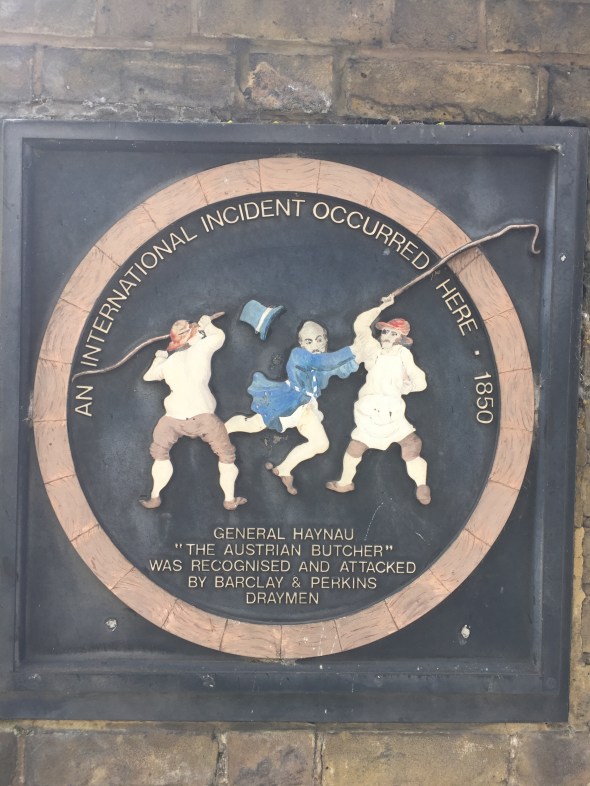
Sounds like he had it coming!
Julius Jacob von Haynau (14 October 1786 – 14 March 1853) was an Austrian general who was prominent in suppressing insurrectionary movements in Italy and Hungary in 1848 and later. While a hugely effective military leader, he also gained renown as an aggressive and ruthless commander. His soldiers called him the “Habsburg Tiger”; those opponents who suffered from his brutality called him the “Hyena of Brescia” and the “Hangman of Arad”.
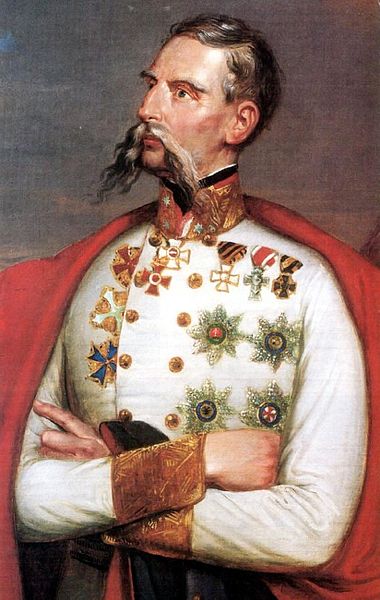
I hope they mashed him good! The mashers were from the Anchor brewery. They should make Courage beer again.

Ominous remark from Charlie Munger
Posted: May 14, 2018 Filed under: business Leave a comment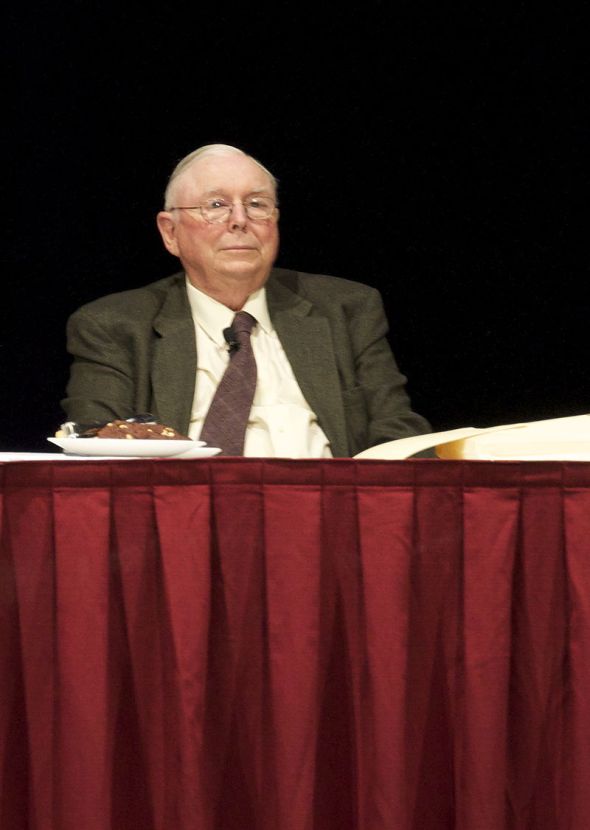
Nick on Wikipedia. Thanks Nick!
Andy Serwer, editor in chief of Yahoo Finance, reports on our favorite former weatherman:
Finally, I asked Munger about Trump and reminded him he had previously said that the president’s behavior exhibited a form of “sickness.”
“I’ve mellowed because I consider it counterproductive to hate as much as both parties now hate, and I have disciplined myself,” Munger said. “I now regard all politicians higher than I used to. I did that as a matter of self-preservation.” He said that he had re-read “The Decline and Fall of the Roman Empire,” and it made him “feel a lot better about the current political scene. We’re way ahead of the Romans at the end.”
That’s a pretty low bar, I pointed out.
“It’s very helpful — I suggest you try it,” Munger replied. “Politicians are never so bad that you don’t live to want them back. There will come a time when the people who hate Trump will wish that he was back
Summertime
Posted: May 14, 2018 Filed under: music 1 Comment
As Long June approaches, gravitating towards songs with Summertime in the title.
Six years after this song came out and I’m ready to be into it! Love that Lana Del Rey used to perform as Lizzie Grant before reinventing as Lana Del Rey, love that she went to Fordham, love the idea of Summertime Sadness, love “feeling alive” as an idea, love Calvin Harris etc remixes, love it all!

Mysterious Antiquities of Ireland
Posted: May 13, 2018 Filed under: Ireland Leave a comment
Way out there in the Dingle peninsula they’ve got the Gallarus / Gallros / Ghallrois:
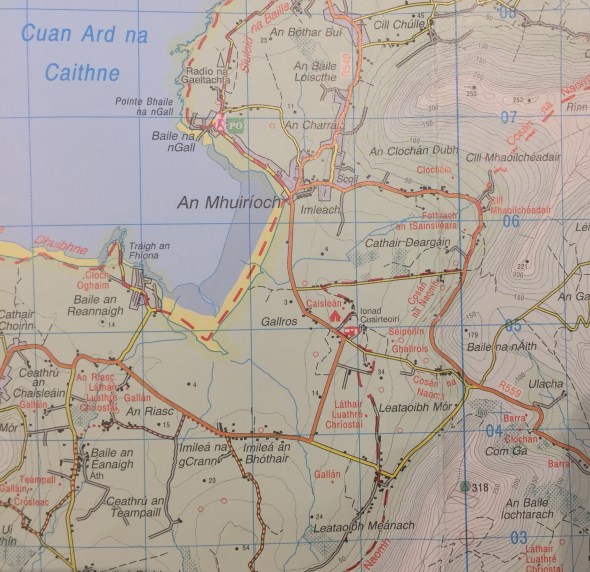
What is it?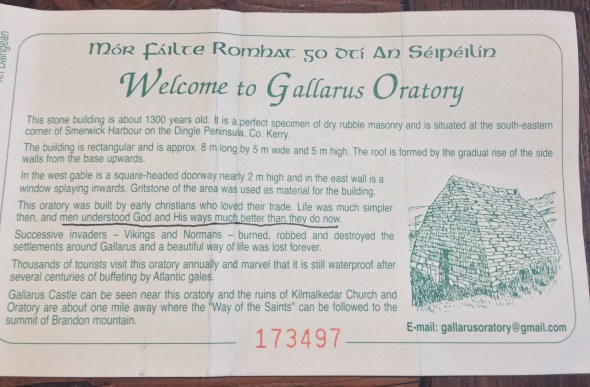
The oratory was built by early christians who loved their trade. Life was much simpler then, and men understood God and His ways much better than they do now

The construction is impressive. 
Wikipedia only adds to the mystery:
Dates and uses
Minor trial cuttings carried out at Gallarus in November 1970 yielded no finds or evidence of features or activity which might shed light on the period of construction and use of the oratory.
An early Irish stone church
Antiquarian Charles Smith[7] is the originator of the claim that the building is an early Irish stone church although no historical information is available prior to 1756 regarding its use.
Gotcha. It more or less “appears” in written history in 1756? This area, while beautiful, is remote. People still speak Irish there now, can only imagine what it was like in 1756
A Romanesque Church
In 1970, archaeologist Peter Harbison argued that the oratory might have been built as late as the 12th century for a number of reasons, mainly because the east window has a rounded top made of two carved stones (not a true arch).
Hmm! Arch evidence.
A private funerary chapel
Harbison also produced some evidence pointing to a later date and a different use: a letter by English traveller Richard Pococke who visited the oratory in 1758, two years after it was discovered by Charles Smith:[10] “Near this building they show a grave with a head at the cross of it and call it the tomb of the Giant; the tradition is that Griffith More was buried there, & as they call’d [it] a chapel, so probably it was built by him or his family at their burial place.”
A tomb for giants? I love this!
A shelter for pilgrims
In 1994 and 1995, Peter Harbison gave up the hypothesis of a 12th-century church and claimed that the placename Gallarus meant “the house or shelter of foreigner(s)” (Gall Aras), the said “foreigner(s)” being pilgrims from outside the peninsula.[12] However, this does not accord with lexicologist Padraig O Siochfhradha’s translation of the name as “rocky headland” (Gall-iorrus).
I remember the word aras in Irish because Bus Aras is where you catch the bus. The bus house.
Gall:
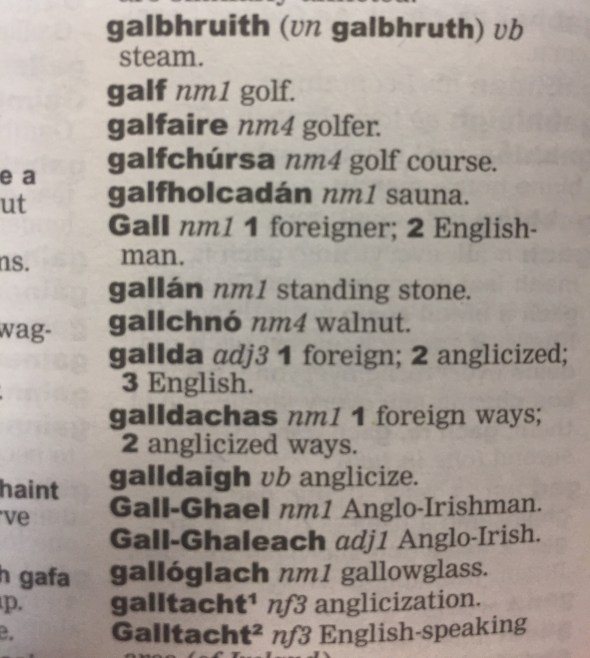
A steam bath? The English house? The walnut place?
Killer location, anyway.
Do ASRM people like Shelby Foote?
Posted: May 12, 2018 Filed under: voice Leave a comment
mesmerizing voice.
for the true Foote-heads the post-Ken Burns interviews are most compelling. Foote slower, more tired, perhaps exhausted by celebrity, but ever courtly.
just watch that second one until Foote tells about Maugham’s stammer.
Nobel / Pulitzer
Posted: May 12, 2018 Filed under: writing 1 Comment
Both the Nobel

and the Pulitzer Prize committees investigating sexual* abuse charges. Is this because:
- literature is full of creeps
- arts and letters communities are especially sensitive / responsive to charges like this
- unusually weird status imbalances and games in these communities
- lots of occasions for sin: alcohol, parties, conferences, etc
- culture of bad behavior semi-tolerated in the arts
- people with power will always take things too far
- all, none, other?
* kind of unfair for Katarina Frostenson to be blamed for her husband’s crimes imo, but I don’t know the deets. the betting tips is another matter. almost funny.
Stars of the National Portrait Gallery, London
Posted: May 12, 2018 Filed under: art history Leave a comment
Mrs. Simpson, who caused so much trouble, by Gerald Brockhurst.

Winifred Radford by Meredith Frampton.
She became a specialist in French mélodie

Ken Dodd:

Ayuba Suleimain Diallo (Job ben Solomon)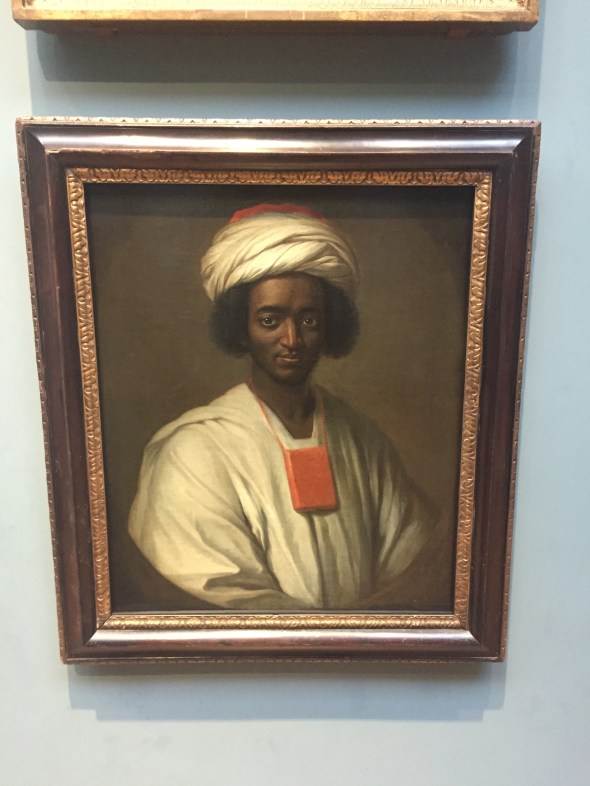
Recognized as a deeply pious and educated man, in England Diallo mixed with high and intellectual society, was introduced at Court and was bought out of slavery by public appeal
Joseph Collet

was away in China so long he had Amoy Chinqua make a statue of him out of clay to send home.
Here we have Margaret “Peg” Woffington:

source
says the caption on her:
she was known for her bitter rivalries with other actresses (she stabbed Mrs. Bellamy during a performance)
The winner though is Daniel Lambert as painted by Benjamin Marshall:
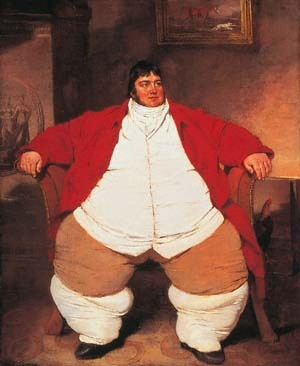
Welp time to look for lunch!
Thrice worry
Posted: May 10, 2018 Filed under: United Kingdom Leave a commentMoment I happened to see on British TV that stuck in my craw, occurs between :45-:55:
When Prince William says “thrice worry” about his children.
Is Prince William not a throwback fantasy of conservative manhood? (suspect Jordan Peterson, a Canadian, may be a secret monarchist). Even the graceful acceptance of the balding.
Longers for the past vs yearners for change, are these the main political groups? The rare few who can find the balance.
The comparison to the UK’s elected politicians at the moment:
Let Commons do the actual work, maybe that’s the trick. You just handle the fairy tale.
The endurance of the royal family. Incredible.
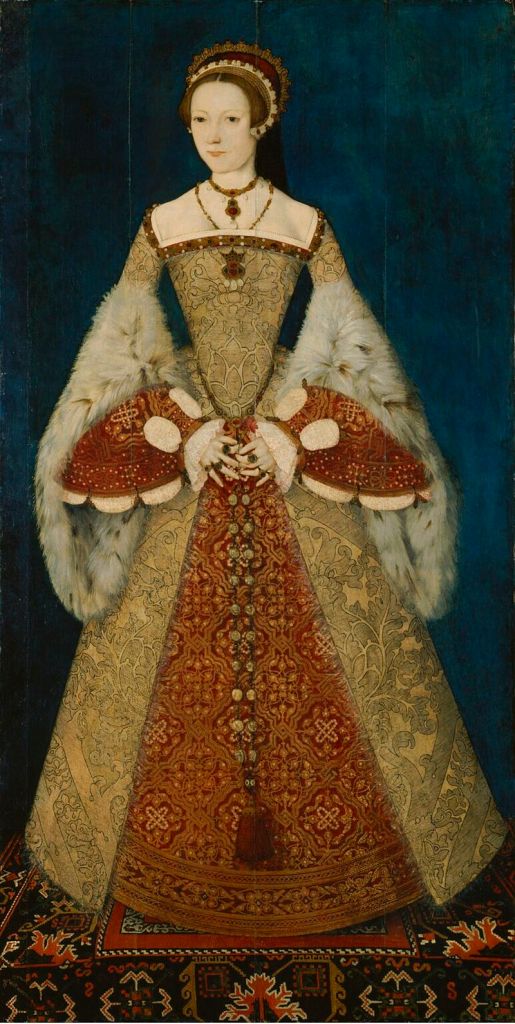
This portrait originally and now identified as Catherine Parr was wrongly identified as Lady Jane Grey for decades. (Master John for the National Portrait Gallery, from wiki)
“donned lewdly by Rihanna”
Posted: May 9, 2018 Filed under: religion Leave a comment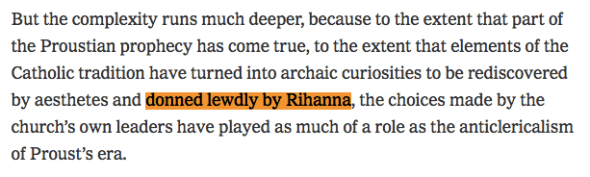
lol Ross Douthat are you doing a bit?
(h/t the Wrensh)

Update on Kentucky Derby times
Posted: May 7, 2018 Filed under: horses, sports Leave a comment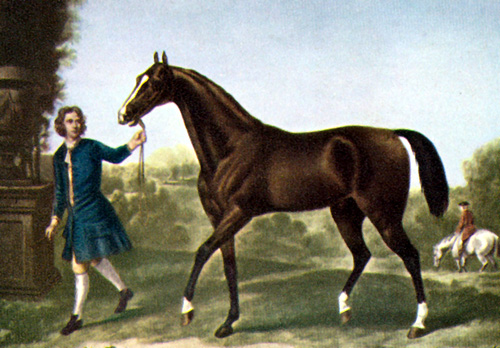
The Darley Arabian
Much stimulating discussion ensued after Saturday’s post about why Kentucky Derby winners aren’t getting much faster.
https://twitter.com/JimmySparkles/status/993380387521875968
Reader Avin D. sends us this 2014 Deadspin piece by Roger Pielke Jr. which has much better stats and looks at whether we’ve neared peak speeds in animal races:
One possibility, advanced by Denny and others, is that thoroughbred race times may have leveled off because the narrow genetic diversity of racehorses limits the genetic diversity in the pool of potential thoroughbred champions. Modern thoroughbreds are descendants of a small number of horses (less than 30 in the 18th century), and 95 percent are thought to trace their ancestry to a single horse, The Darley Arabian. Today, there are fewer than 25,000 thoroughbreds born each year in the United States. Compare that with the more than 7 billion people worldwide.3 The size of the human population may simply lead to a greater number of potential athletes with extreme speed.
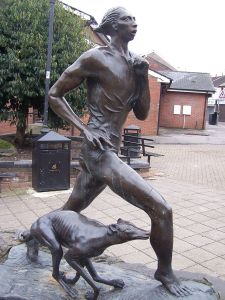
Very cool. Imagine if every current human runner was descended from, like, Guto Nyth Bran.
The Darley Arabian sired Flying Childers:
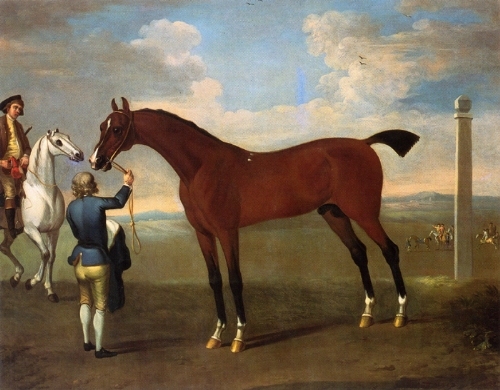
It is said he completed this race, over the Round Course at Newmarket, in 6 minutes, 40 seconds and that he reached a speed of 82 1/2 feet per second or 1 mile per minute. This was claimed to make Flying Childers the only horse on record as having matched the top speed of the unbeaten Eclipse. By way of comparison, this would be nearly 40 seconds faster than the unbeaten Frankel ran the Newmarket Rowley Mile in his famous 2,000 Guineas victory of 2011, over 30 seconds faster than the current mile track record and very close to the five furlong track record set by Lochsong in 1994.
As for Eclipse:
Eclipse is still remembered in the phrase “Eclipse first and the rest nowhere”, snowcloned as “[name of competitor] first and the rest nowhere,” referring to any dominating victory. This phrase is occasionally seen in American print media (most often in newspaper sport sections) but is more common in Britain.
A new one to me. If Flying Childers could keep his alleged top speed of 82.5 feet per second he’d finish the Kentucky Derby in a minute twenty.
Why aren’t horse races longer anymore, the way they were in the Stewball era?
Anyway, congrats to Justify:
Why haven’t winning Kentucky Derby times improved more?
Posted: May 5, 2018 Filed under: sports Leave a comment
is it interesting that the winner’s time on average hasn’t improved that much over 121 runnings at the current length?
The winner of the 1896 Kentucky Derby, the first run at the current length, was Ben Brush. He ran in 2:07.75. Only 4.16 seconds off the most recent winner, Always Dreaming.
Always Dreaming ran in 2:03.59. Crummy conditions, it’s true, but in 2015, on a nice day, American Pharaoh’s still only at 2:03.02.
Four seconds ahead of 1896. Would’ve lost to 1931’s Twenty Grand.
Twenty Grand finished in 2:01.8, which would stay the record until 1941, when Whirlaway shaved off .2, coming in at 2:01.40.
Whirlaway’s 1941 time that would’ve beaten 62 of the 76 winners since then.
Whirlaway and the great Barbaro in 2006, champions from sixty years apart, put in times less than .05 seconds off from each other.

source: KYbluegrass on Wiki
The winning time for the Kentucky Derby has hovered around 2:02 for sixty years.
In 1973 Secretariat broke the two-minute barrier. A special horse. It’s still the record. Monarchos cracked two minutes in 2001.
In the Kentucky Derby, the top ten all time fastest finishers represent six different decades.

Compare to humans:
A world champion human mile runner from 1941 could not hang with any serious Olympic miler of the current era. Champion human mile times have improved by about thirty seconds.
Maybe that’s the wrong comparison. The Kentucky Derby is a sprint and tiny differences are significant.
OK. Say like the 100 meter dash?
Usain Bolt would beat any 100 meter dasher from the 1940s. He’s a special case, the best ever, but even the sixth place finisher at the 2016 finals would’ve been breaking the world record from ten years before. Nobody from the ’80s would’ve come close, let alone anyone from the ’40s.
The world record holder in the 100 meter dash from the 1940s wouldn’t even make the finals at the 2016 Olympics.
You have to go down into the 200s of fastest Olympic times before anyone from before 1990 shows up:

Olympic gold medal times have improved by about 10% on what they were in the early 1900s. That’s in a race that lasts around ten seconds.
The human race that timewise is the closest to the derby, around two minutes, is the 800 meter dash.
Again let’s use the Olympics. Edwin Flack of Australia won in 1896 with a time of 2:11. By the 1930s he would’ve been smoked. By then, Tommy Hampson could run 1:49.7.
By the 1980s Hampson would’ve barely made the finals. By 2016 David Rudisha of Kenya is finishing at 1:42.15, a 29 second improvement over Flack.
Rudisha is very special of course. But even Yiech Biel of the Refugee Olympic Team, last finisher in his early heat, put up a time of 1:54.67, a healthy 17 seconds ahead of Flack.
Maybe that’s the wrong comparison. The Kentucky Derby isn’t a world record, it’s a specific race under changing conditions that can be favorable or unfavorable.
Fair point but aren’t Olympic finals conditions variable?
But the Kentucky Derby’s a one-off, you only run it once (when you are three years old)
That might be interesting but also so what? Shouldn’t that mean even more variance?
More: the Derby-length (1 1/4 mile) world record run by a horse hasn’t broken 1:57. Closest was in 1980.
The world record time for a horse running this distance hasn’t improved in thirty-eight years. Meanwhile human 100 meter dash times progress pretty neatly.
So here’s my question:
Has human running improved more than horse running?
Why?
One theory: horse racing reached peak times quickly and stayed there because there’s more money in it.
Are my assumptions wrong? Very open to that, maybe average racehorse times have improved, I don’t know and I’m not sure I’m gonna bother finding out!
Please, weigh in if you have a take.
Here’s my second question:
is this interesting?
The Generals, John Singer Sargent, 1922
Posted: May 4, 2018 Filed under: art history, museum Leave a comment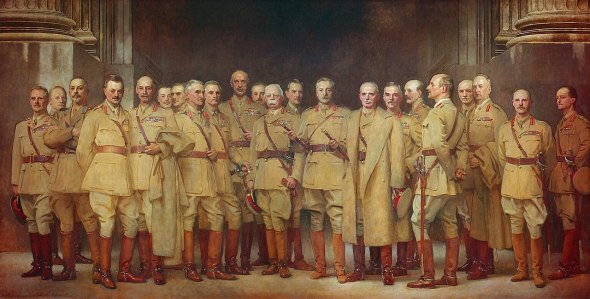
“I just don’t get it guys, why do we keep losing?”

Source and appropriate epic size, it’s at the National Portrait Gallery in London.
Said Sargent, while working on it:
the Generals loom before me like a nightmare… I curse God and man for having weakly said I would do them, for I have no ideas about it and I foresee a horrible failure


.jpg)


.jpg)
.jpg)

