The Bakersfield-based company did not invent the so-called baby carrot, which starts as a mature root that is given a severe makeover through peeling and downsizing. But the tiny product helped transform the company into one of the largest carrot producers in the world.
Grimmway has been recognized for boosting sales of the baby carrot by positioning it as a healthful snack and packaging it in ways that make it easy to pop into sack lunches or serve on airplanes.
Always get a weird vibe
Posted: November 21, 2015 Filed under: the California Condition Leave a comment
when I find myself in Mojave, California.

Although I gotta say everybody in McDonald’s was in a good mood.
A Trip To Mars
Posted: September 28, 2015 Filed under: the American West, the California Condition Leave a comment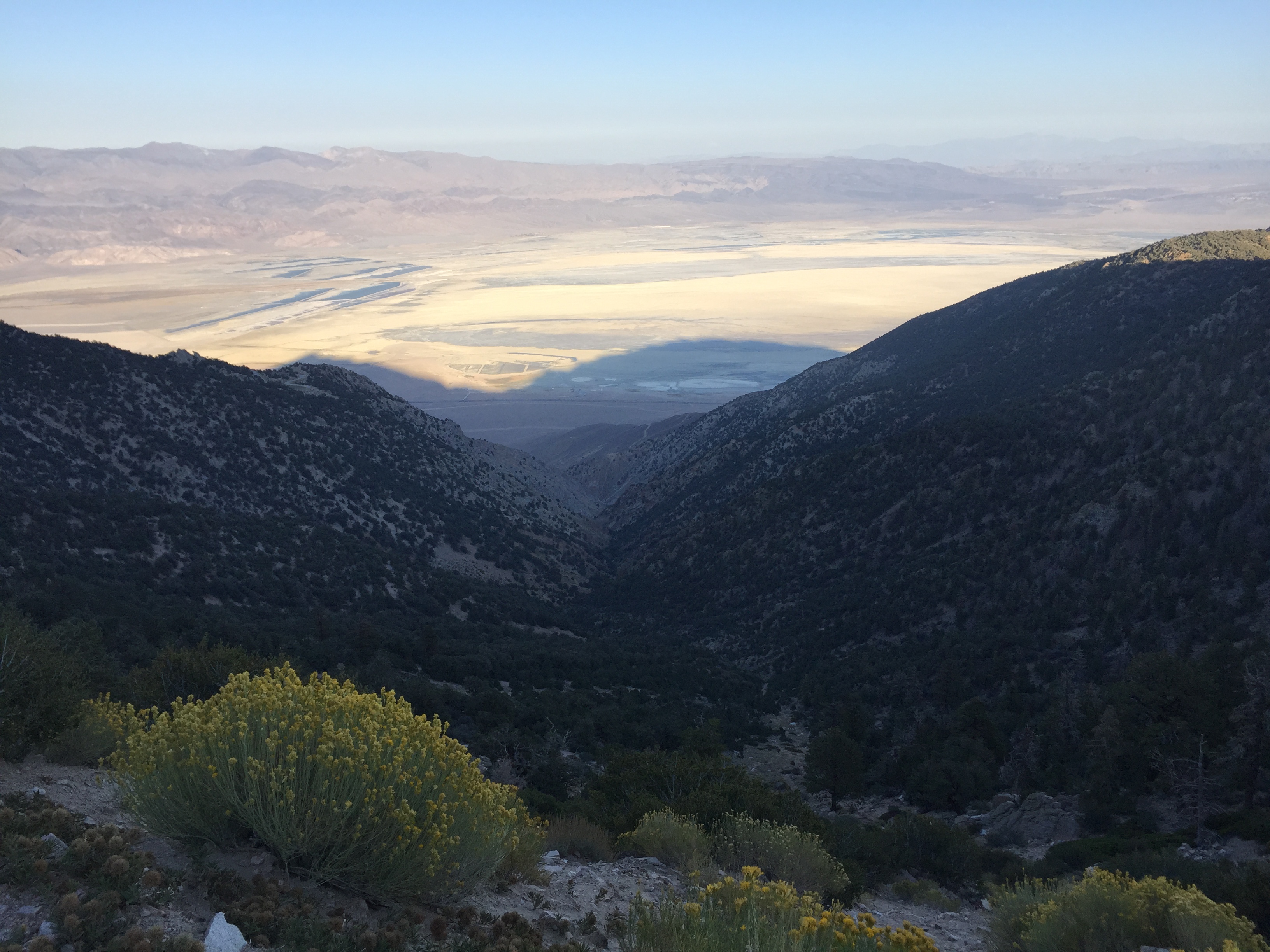
Just kidding, it’s the Owens Valley where LA gets its water!

There’s more water up in the lakes behind the mountains:

California is amazing.

The Alabama Hills:

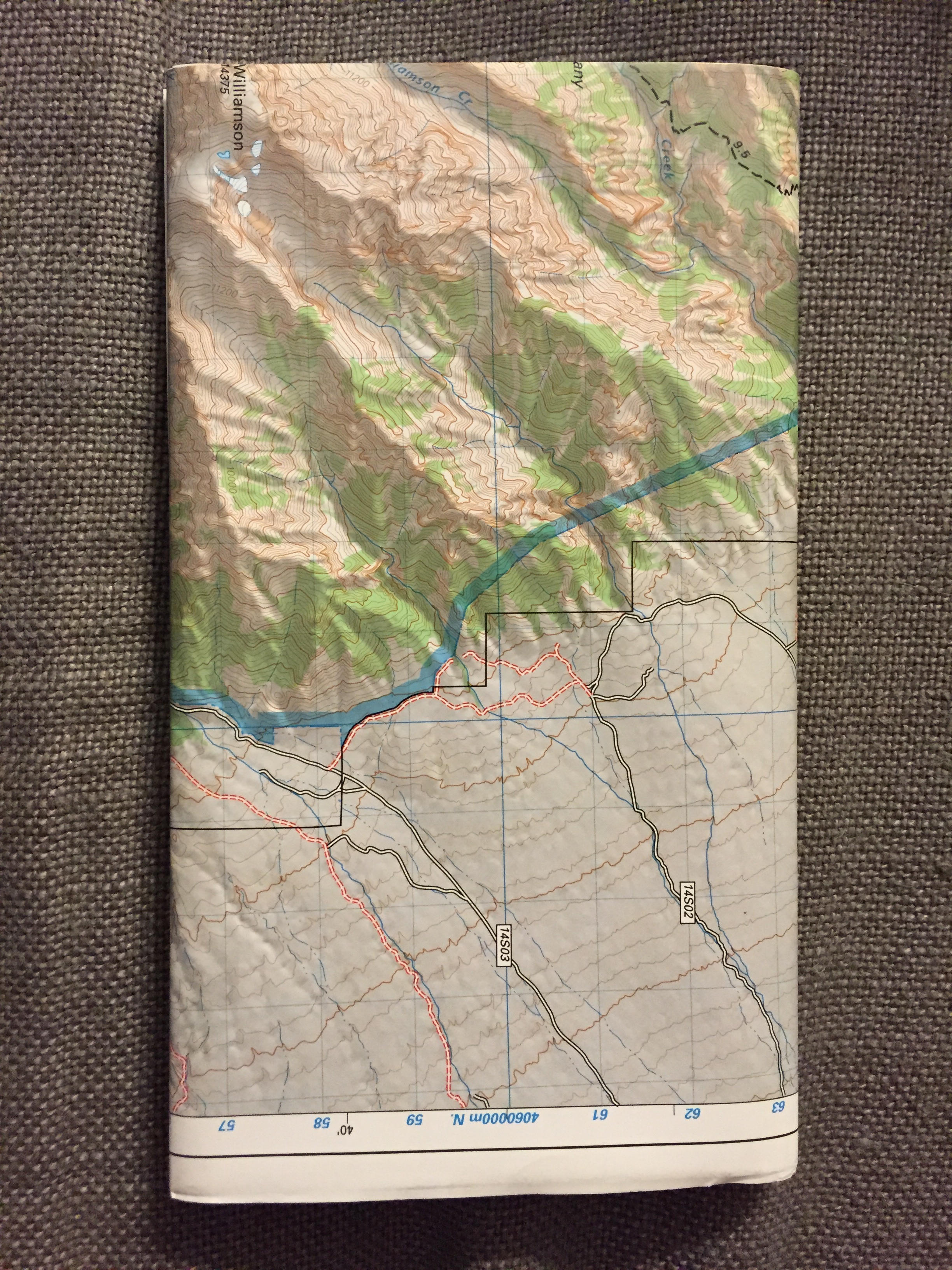
How great are these Tom Harrison topo maps?:
Baby Carrots In American Politics
Posted: September 27, 2015 Filed under: politics, the California Condition 1 Comment
From an article called Why Baby Carrots Are A Nutritious Lie, click for link.
The first time the reality of baby carrots really settled in on me was in the back of a cab in New York City. The driver, a Romanian, was telling me that before New York he’d lived in Bakersfield.
“Bakersfield!” I said, because I’m pretty interested in Bakersfield.
Bakersfield has its own country music scene:
and it has Basque cuisine:

Photo used without permission from Jordano’s Restaurant Supply, click for link.
and it has lots of almond farms.
What astounded the Romanian though was the carrots. He had worked in a plant that processed carrots into baby carrots. Until then I hadn’t thought much about baby carrots but I guess I just assumed they were small carrots. Wrong. Big carrots, sometimes deformed, are shaved down into baby carrots. The shaved stubs (the driver told me) are then run through UV light to kill bacteria and packaged. The shavings are put into bagged salads.
Huh, I thought, as the driver told me all this. What he really couldn’t get over, the driver told me, was how many carrots came to Bakersfield.
“Twenty four hours a day, every day, there were truckloads of carrots.” Then he changed the subject to his move to Orlando (“Why Orlando?” “Because I met a bitch who ruined my life”) and we reached our destination and that was the end of that.

(Mark Wilson / Getty Images)
Today I was reading about Rep. Kevin McCarthy, Republican of Bakersfield who might become the House Speaker. Here’s a list about him from Time magazine, “5 Things You Need To Know About Kevin McCarthy,” published in June:
and here’s “11 Things About Kevin McCarthy You Need To Know, Or Might As Well Know”, a list about him from Huffington Post, published yesterday.
Here’s my smush of both lists:
- Kevin Spacey shadowed McCarthy to learn about being a whip for House Of Cards
- McCarthy is said to be cheery and affable
- He opened a sandwich place with $5,000 from a lottery ticket
- He once showed Republicans this scene from The Town before asking them for something:
- He’s been running for office since he was like 20.
OK great, but what is he for? For instance: since he’s from Bakersfield (I thought hopefully) maybe he will push for trains in California.
Nope, probably not, it turns out. He also has a strong take on the drought.
Even as McCarthy was speaking, U.S. Department of the Interior Secretary Sally Jewell was in Sacramento holding a press conference with Gov. Jerry Brown announcing a $50 million drought response program for the Western states, with the lion’s share headed for California.
McCarthy responded to the secretary’s visit, “Until the administration recognizes the underlying problem of federal and state regulations preventing our communities from getting the water we desperately need, no amount of spending will solve our crisis. … I hope that, while Secretary Jewell is in the Valley, she will spend some time with our farmers who have been devastated by regulations that put fish over people.”
And, yes, the majority leader is still opposed to the high-speed rail project. When asked for an alternative transportation plan, McCarthy suggested California consult with Elon Musk.
(I think what he’s talking about there re: fish is how water flow from northern California to the southern part of the Central Valley is sometimes restricted by rules to protect the delta smelt, of which there are apparently only six, and steelhead trout. I can see how that can seem ridiculous. But the fish are kind of a distraction, the real problem is there’s not enough water for every farmer who wants it.)
As far as I can tell what Kevin McCarthy is for is lower taxes.
Here are his top five campaign contributors, from OpenSecret.com:

Zurich Financial is as far as I can tell commercial insurance. California Resources is, duh, oil and gas:

Blackstone is Blackstone. Who is this Grimmway Farms?

Looked around their website:

Maybe someday I will try the recipe for Easy Carrots.
The 2-inch vegetable is considered one of the American food industry’s success stories: Carrot consumption grew by 33% throughout the 1990s, according to the American Marketing Assn.
When supermarket chains began clamoring for the product in the late 1980s, the business opportunity seemed too good to pass up, Grimm later recalled.
“Sometimes you just have to go on instinct,” he said in 2000.
That from an obituary of Rob Grimmway.
Discussing some of this via email with longtime reader GC., who reports:
Grimmway Farm is a disgusting organization. Their mascot is a SUPER-SUPER-HOT RABBIT who is about to give a CARROT a BLOWJOB!!!!!

Blog I Endorse
Posted: September 21, 2015 Filed under: America Since 1945, animals, art history, film, the California Condition Leave a comment

He turned to animated television commercials, most notably the Raid commercials of the 1960s and 1970s (in which cartoon insects, confronted by the bug killer, screamed “RAID!” and died flamboyantly) and Frito-Lay’s controversial mascot, the Frito Bandito.

Frito Bandito

A Fuck You Ode To Flowers
Posted: August 28, 2015 Filed under: the California Condition Leave a comment
Walking down the street in the crazy heat recently I stopped into this spot to get some shade. A beautiful place! Here’s what was going on inside:
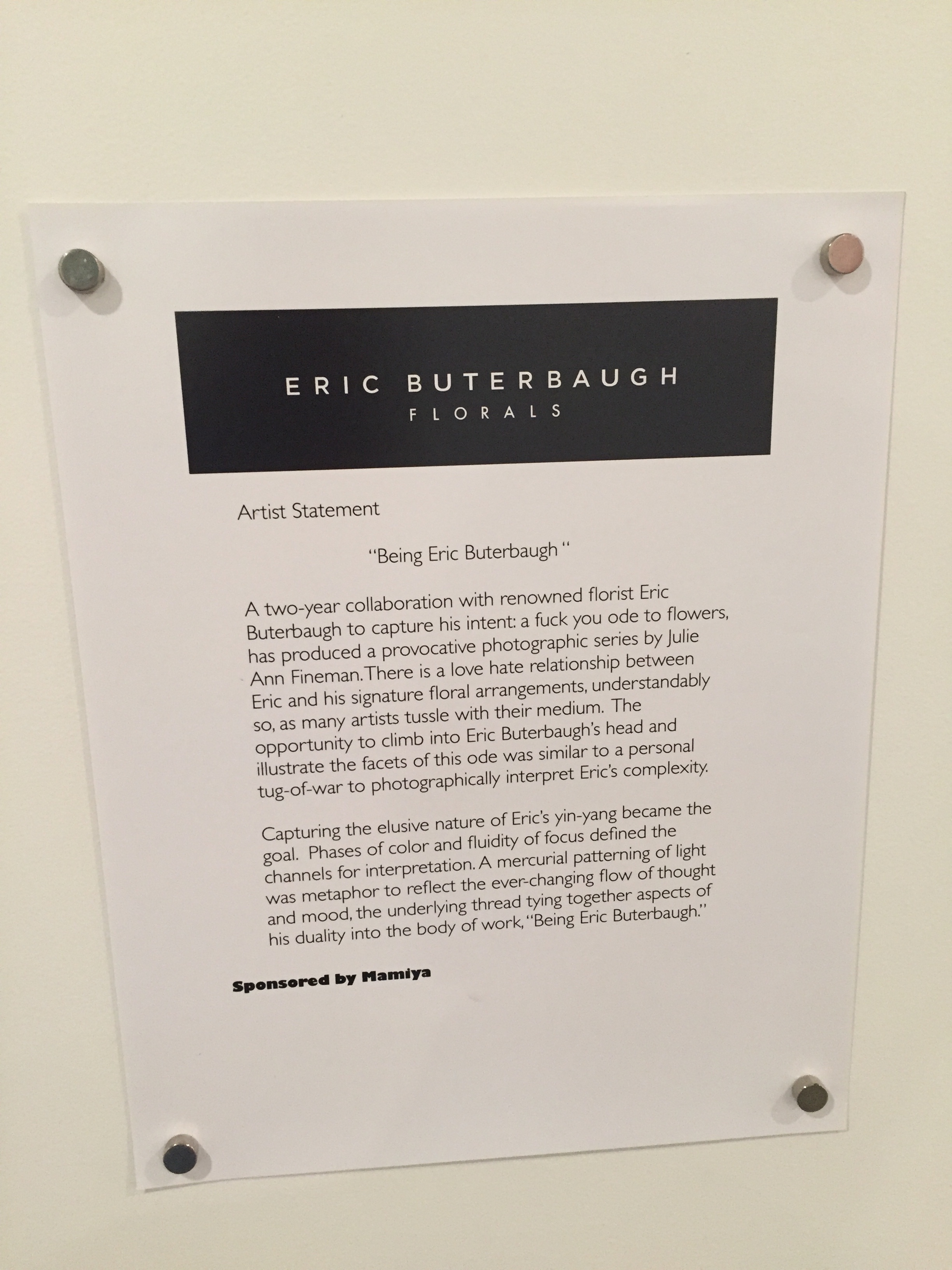
What do you guys think? Was it a successful fuck you ode?:

Let’s Go Hiking!
Posted: August 10, 2015 Filed under: the American West, the California Condition Leave a comment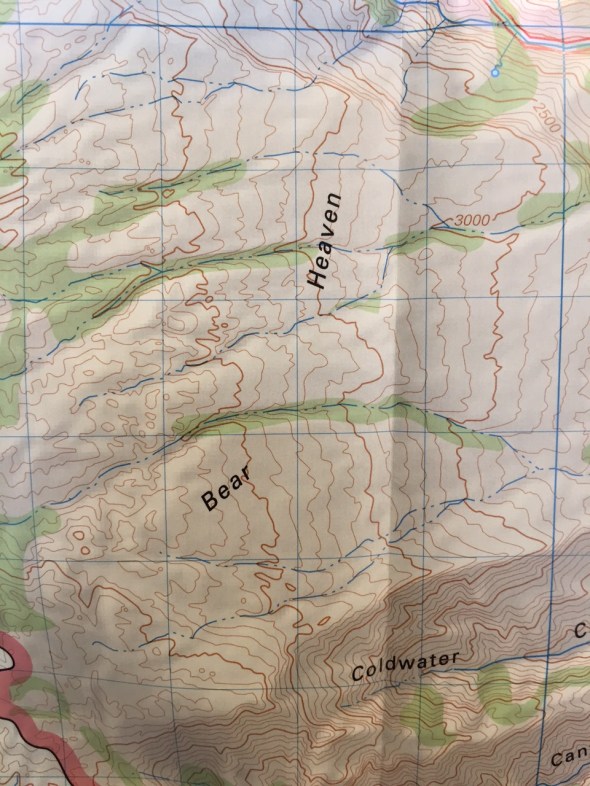
That’s a Tom Harrison map of course: http://www.tomharrisonmaps.com/
(check out this great photo of Bear Heaven on Mr. David Stillman’s blog)
 But be careful, you don’t want to get partially consumed.
Reader Matt W. writes: “Bear Heaven is people hell!”
Good things about True Detective
Posted: August 10, 2015 Filed under: actors, America Since 1945, the California Condition Leave a commentSomething was cheesing me off last night about critics on Twitter piling on to this show. I mean, I guess that can be fun, I’ve been guilty of it myself. But, also, what the hell? You try making a TV show.
Sure, it didn’t make all the sense in the world. But it’s hard to make good stuff. I guess it’s worthwhile to explore why something doesn’t land, so you can think about how to make better stuff. But what’s the point of ongoing negative criticism, especially when attention is at such a scarcity relative to content? There’s so much TV out there, if you don’t like something shouldn’t you just skip it and talk about something you do like?
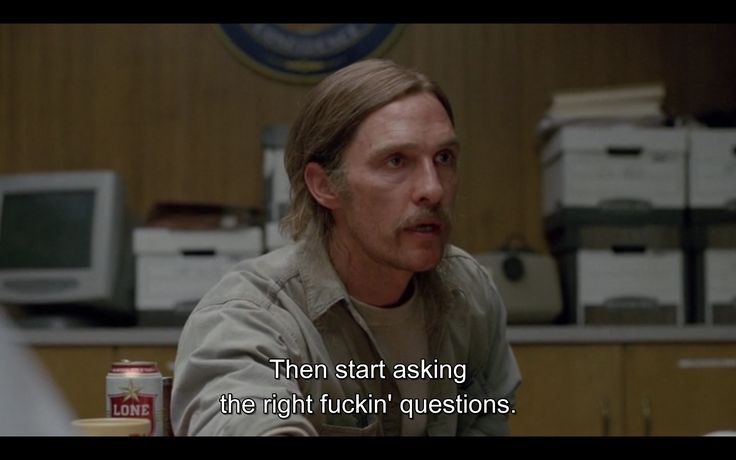
Anyway, I watched every episode of the show and here are some things I enjoyed. 
- Rachel McAdams wears very comfortable-looking hoodies/sweatshirt
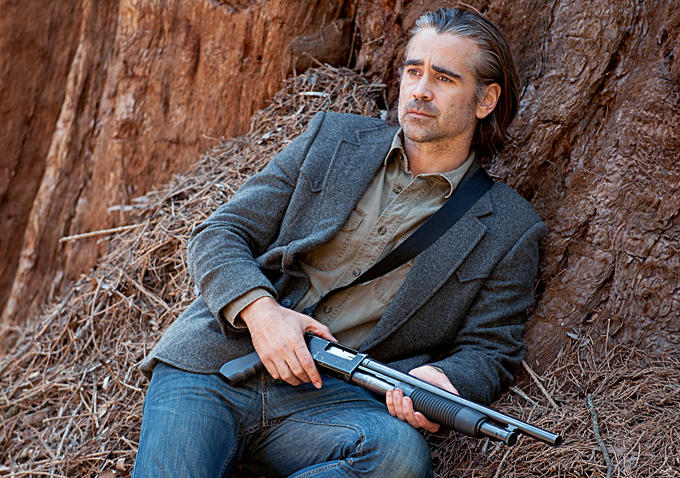
 Colin Farrell did a very good job I thought.
- I liked seeing the redwoods
- It was big and ambitious
- It was about secret evil/darkness/power/corruption at the heart of southern California, which is worth thinking about
- It was so unrelentingly bleak in a way that had to be a kind of pulpy choice, which is an interesting thing to do.
- I liked the way the girls were dancing in the shots of Venezuela
- The aerial footage of California was cool.
Julie London
Posted: August 7, 2015 Filed under: actors, America Since 1945, music, the California Condition, women Leave a comment
came up on my Spotify. One great sentence after another on her wiki page:
In 1947, London married actor Jack Webb (of Dragnet fame). This pairing arose from their common love of jazz.

Her widely regarded beauty and poise (she was a pin-up girl prized by GIs during World War II) contrasted strongly with her pedestrian appearance and streetwise acting technique (much parodied by impersonators).

London and Troup appeared as panelists on the game show Tattletales several times in the 1970s. In the 1950s, London appeared in an advertisement for Marlboro cigarettes singing the “Marlboro Song” and in 1978 appeared in television advertisements for Rose Milk Skin Care Cream.

A private and introverted lady,[13] London suffered a stroke in 1995 and was in poor health until her death on October 18, 2000 (the day her husband, Bobby Troup, would have been 82), in Encino, California, at age 74.
In an interview, Mantooth claimed London “was not impish nor a diva. She was a soul, kind of mother. She was the kindest person I have ever known.” He also added, “I don’t know if it was up to her, but Kevin and I were both kept calm by her personality, when we were shooting in the hospital. Only Bobby Troup knew who she was…she was just like Julie! She made us laugh!”
Summer
Posted: June 29, 2015 Filed under: America Since 1945, California, the California Condition 1 Comment
Wait! You can’t be shut down for summer! I need my Helytimes!
writes reader Melanie in Nashville. Aw, thanks! Don’t worry, there’s tons to read… in the archive!

There have been over 560 posts on Helytimes. Here are the ten most popular:
1) Sundown by Gordon Lightfoot
Off the charts most popular post, because of people googling supposed inspiration/John Belushi partyfriend Cathy Smith
Those’ll keep coming over the summer!
3) Cinderella and Interrogation Technique
Disney + Nazis will bring ’em in.
A personal passion
5) What was up with European witch trials?
Feel like this is my wheelhouse, summarizing dense history of the general reader, but it’s a lot of work to write posts like this.
6) Ships’ Cats
I mean, for Convoy alone.
The “it man” of Norwegian literature!
Just a real great story.
9) Losing The War by Lee Sandlin
This blew my mind, some of the best writing I’ve ever read on WWII.
10) Coaches, parts 1 and 2.
About Pete Carroll, Nick Saban, and Bill Belichick
Now, here are just some personal favorites:
– Record Group 80: Series: General Photographic File Of the Department of the Navy, 1943-1958
Here’s stuff related to a current project:
– The Conquest Of New Spain by Bernal Diaz
Here is some backstory on Donald Trump, lately in the news:
You can also browse yourself by category. Probably the deepest holes are
– Music
See you later!
Writers in Hollywood
Posted: June 12, 2015 Filed under: actors, fscottfitzgerald, Hollywood, screenwriting, Steinbeck, the California Condition, TV, writing 1 Comment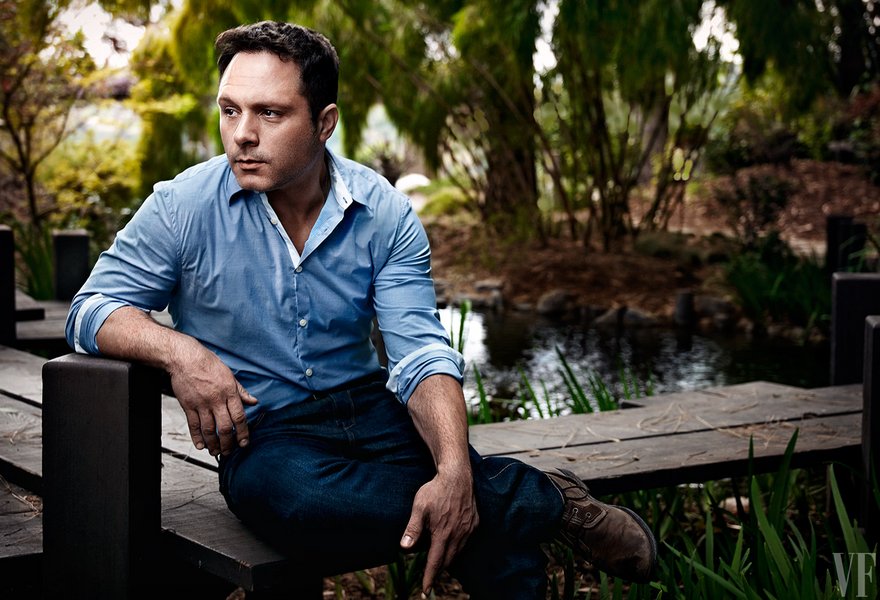
I spent the ensuing weeks across a table from Nic, hashing out plotlines. It gave me a chance to study him at close quarters. No one was more vehement about character and motivation than Nic. Now and then, he’d do the voices or act out a scene, turning his wrist to demonstrate the pop-pop of gunplay. He was 37 but somehow ageless. He could’ve stepped out of a novel by Steinbeck. The writer as crusader, chronicler of love and depravity. His shirt was rumpled, his hair mussed, his manner that of a man who’d just hiked along the railroad tracks or rolled out from under a box. He is fine-featured, with fierce eyes a little too small for his face. It gives him the aura of a bear or some other species of dangerous animal. When I was a boy and dreamed of literature, this is how I imagined a writer—a kind of outlaw, always ready to fight or go on a spree. After a few drinks, you realize the night will culminate with pledges of undying friendship or the two of you on the floor, trying to gouge each other’s eyes out.
I love True Detective and I loved, loved reading this profile of Nic Pizzolatto in Vanity Fair (from which I steal the above photo, credited to Art Streiber).
I did have a quibble, though.
Here’s what profile writer Rich Cohen says about F. Scott Fitzgerald in Hollywood:
Early in the history of film, when the big-time writers of the day, Fitzgerald most famously, were offered a role in the movies, they decided to write for the cash, forswearing deeper participation in a medium they considered second-rate. Perhaps as a result of this decision, the author came to be the forgotten figure in Hollywood, well paid but disregarded. According to the old joke, “the actress was so stupid she slept with the writer.”
Later:
Credit and power are shared. But by tossing out that first season and beginning again, Nic has a chance to finally undo the early error of Fitzgerald and the rest. If he fails and the show tanks, he’ll be just another writer with one great big freakish hit. But if he succeeds, he will have generated a model in which the stars and the stories come and go but the writer remains as guru and king.
Not sure this is totally accurate. I’ve read a decent amount about F. Scott Fitzgerald in Hollywood. The more you read, the more it seems like Fitzgerald really loved Hollywood, and tried really hard to be good at writing movies, and was distressed by his failures. Fitzgerald loved movies:
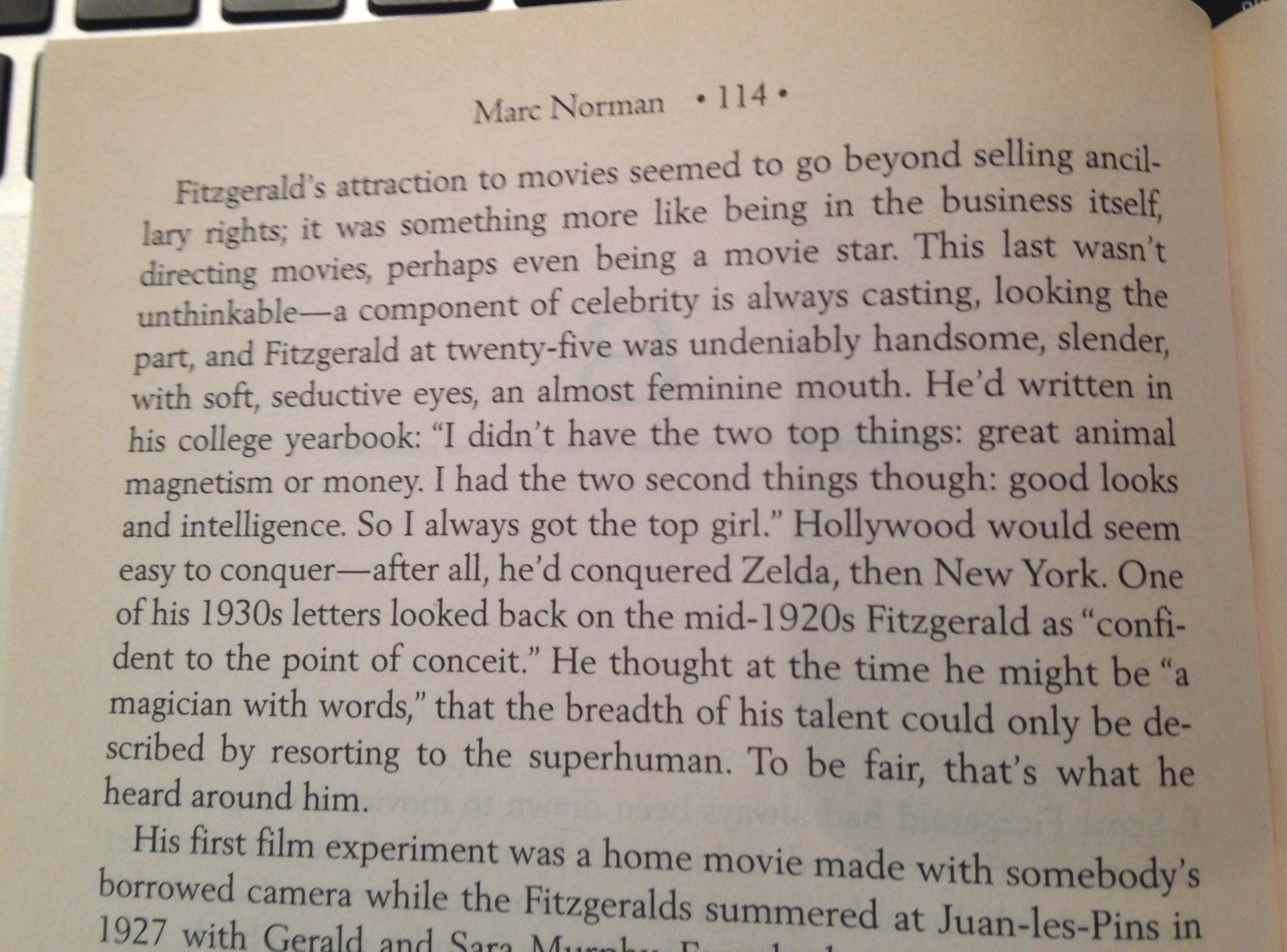
When Fitzgerald worked on movies, it seems like he worked hard, was hurt when he was (frequently) fired, which sent him into tailspins that made things worse. But he was trying:
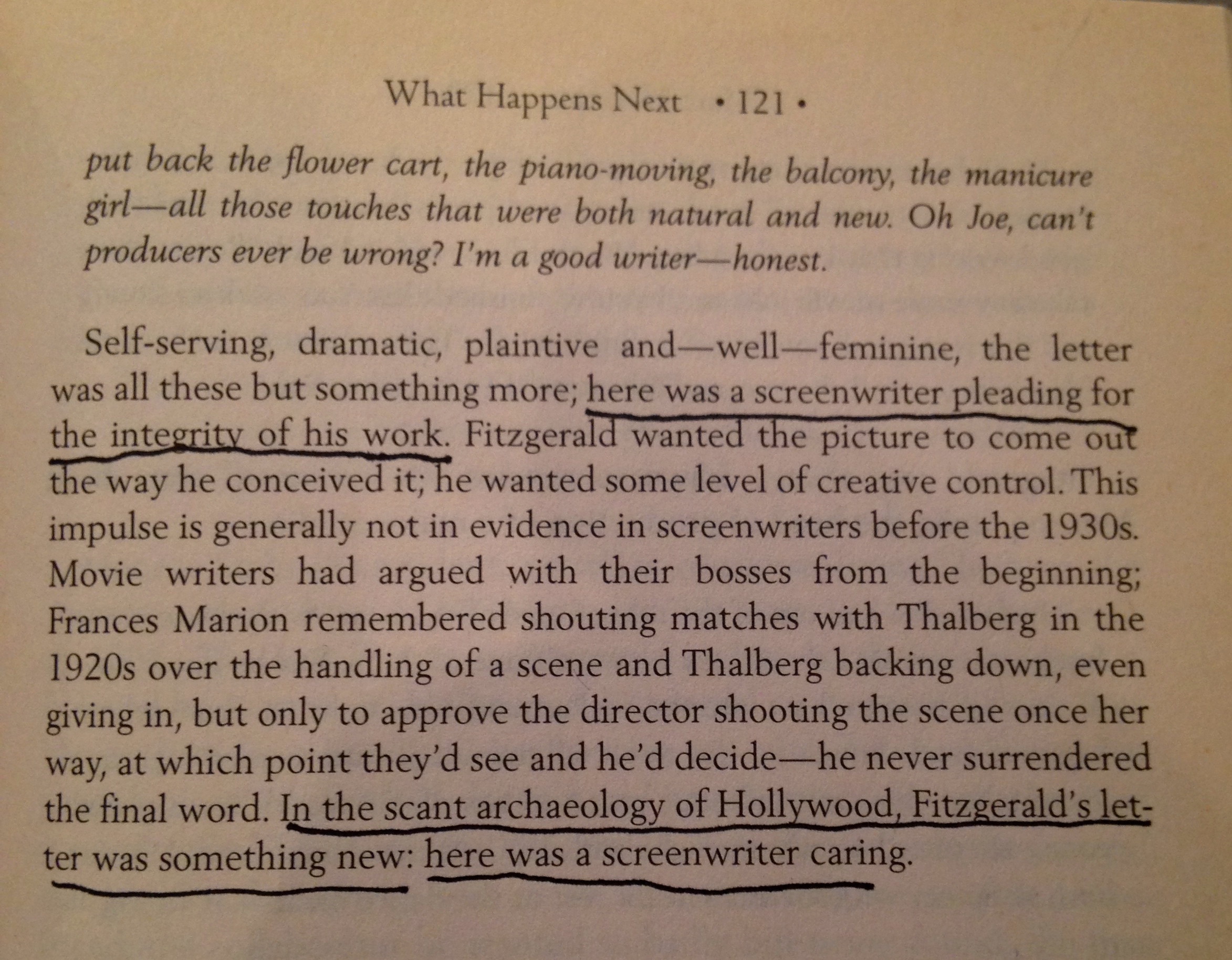
Those are from the great Marc Norman’s book, highly recommended:
Or how about this?:
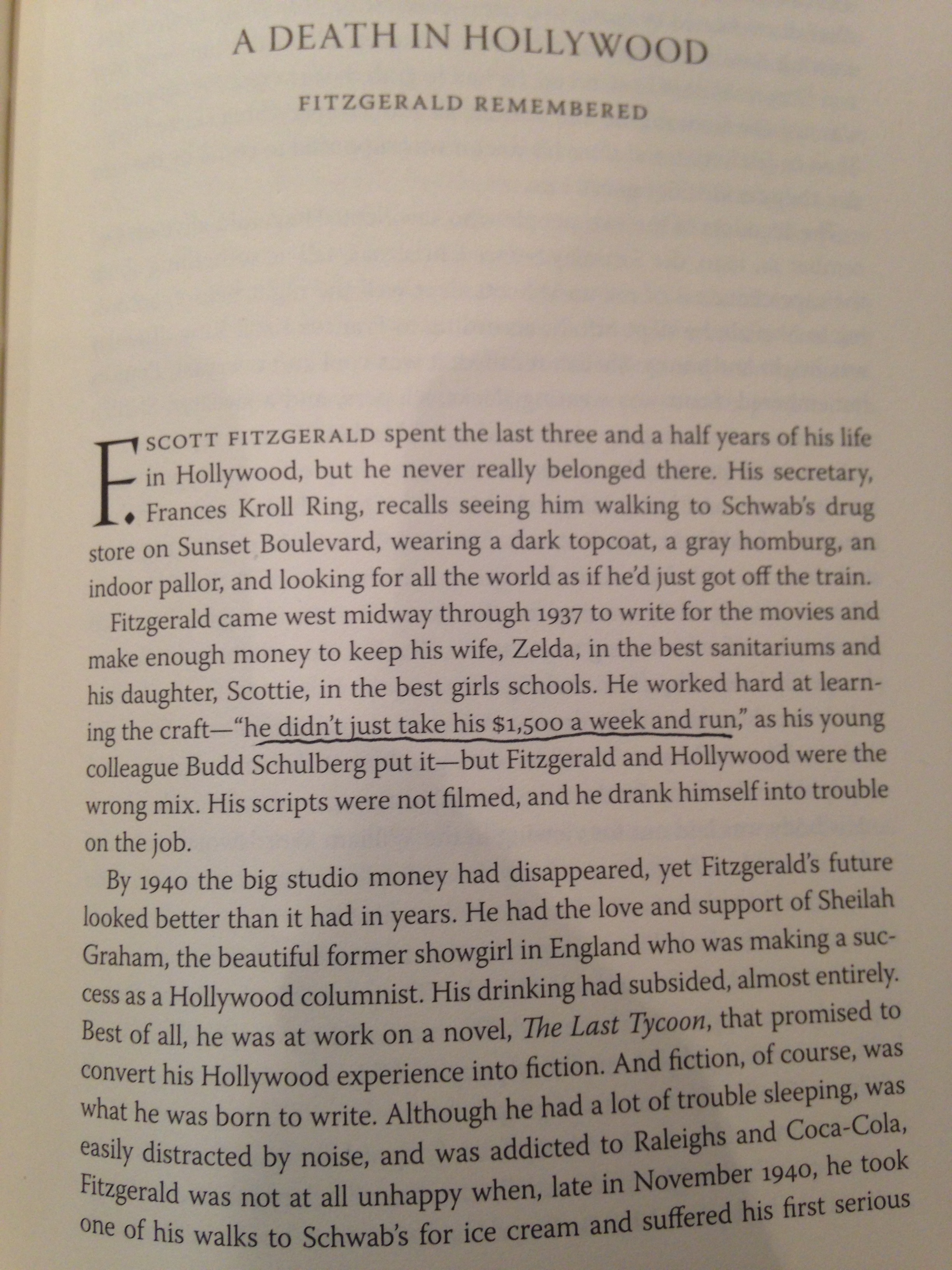
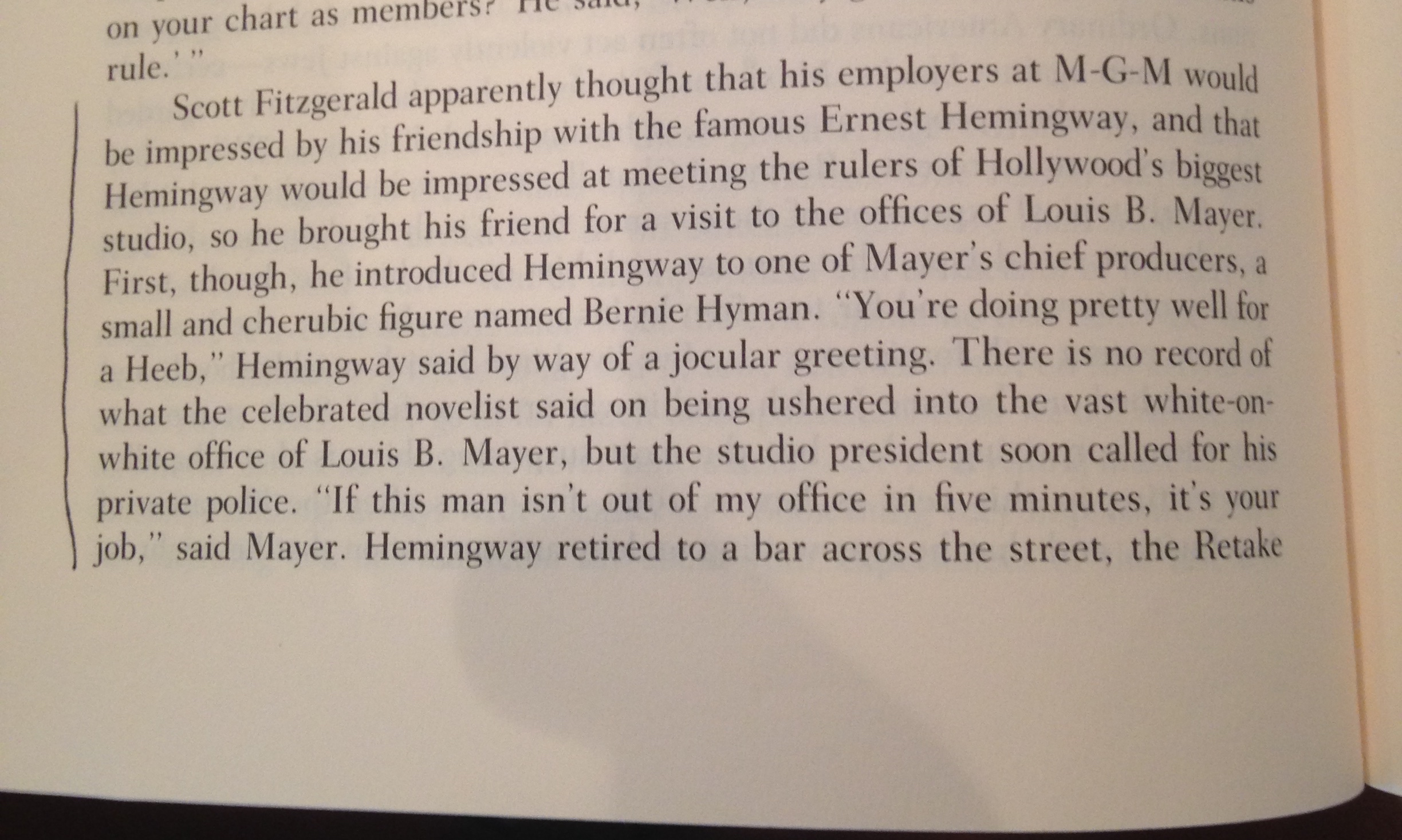
That’s from this great one, by Scott Donaldson:
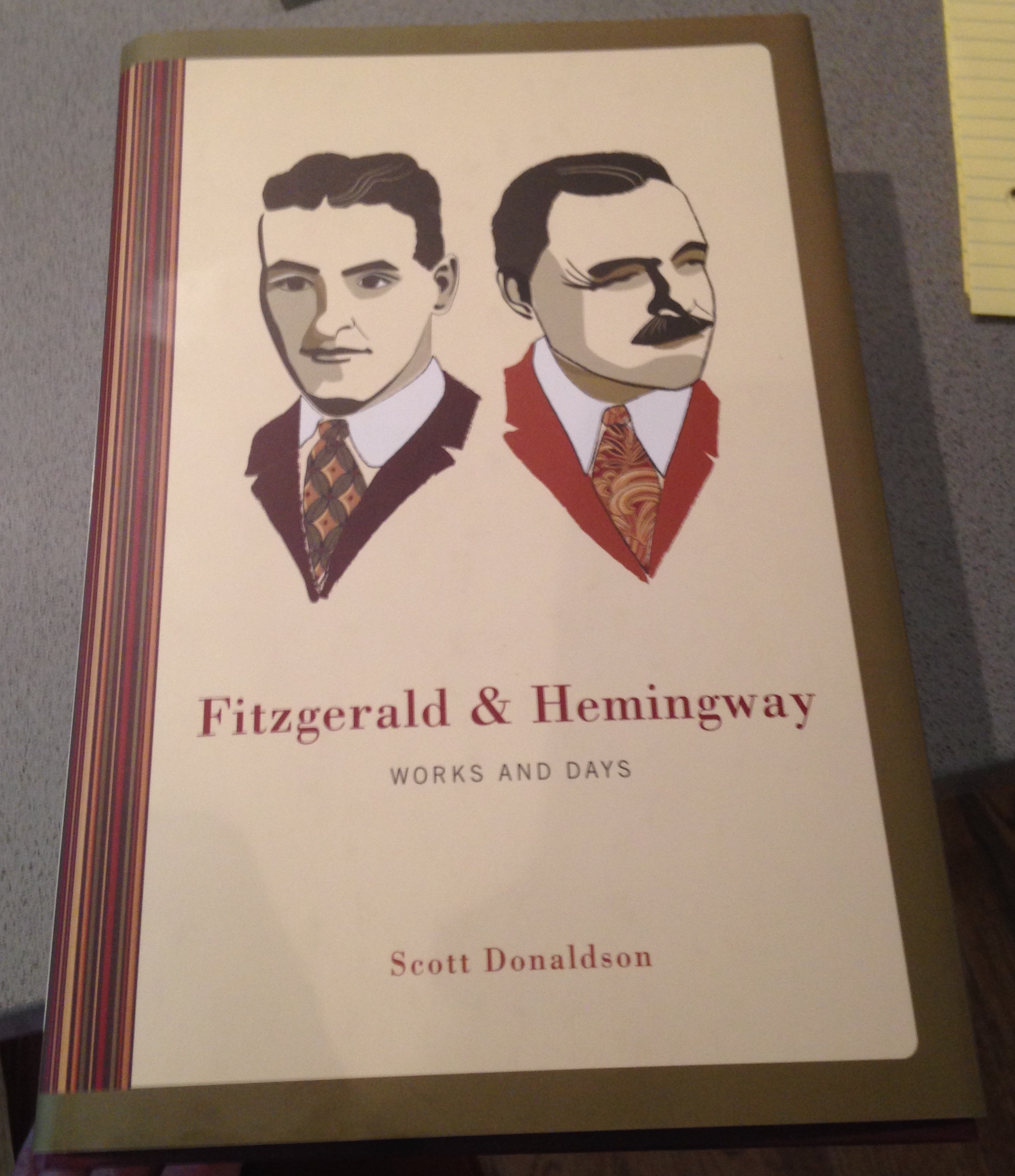
Now, that’s not to say that Fitzgerald always did everything perfectly:
(from this one, very entertaining read:
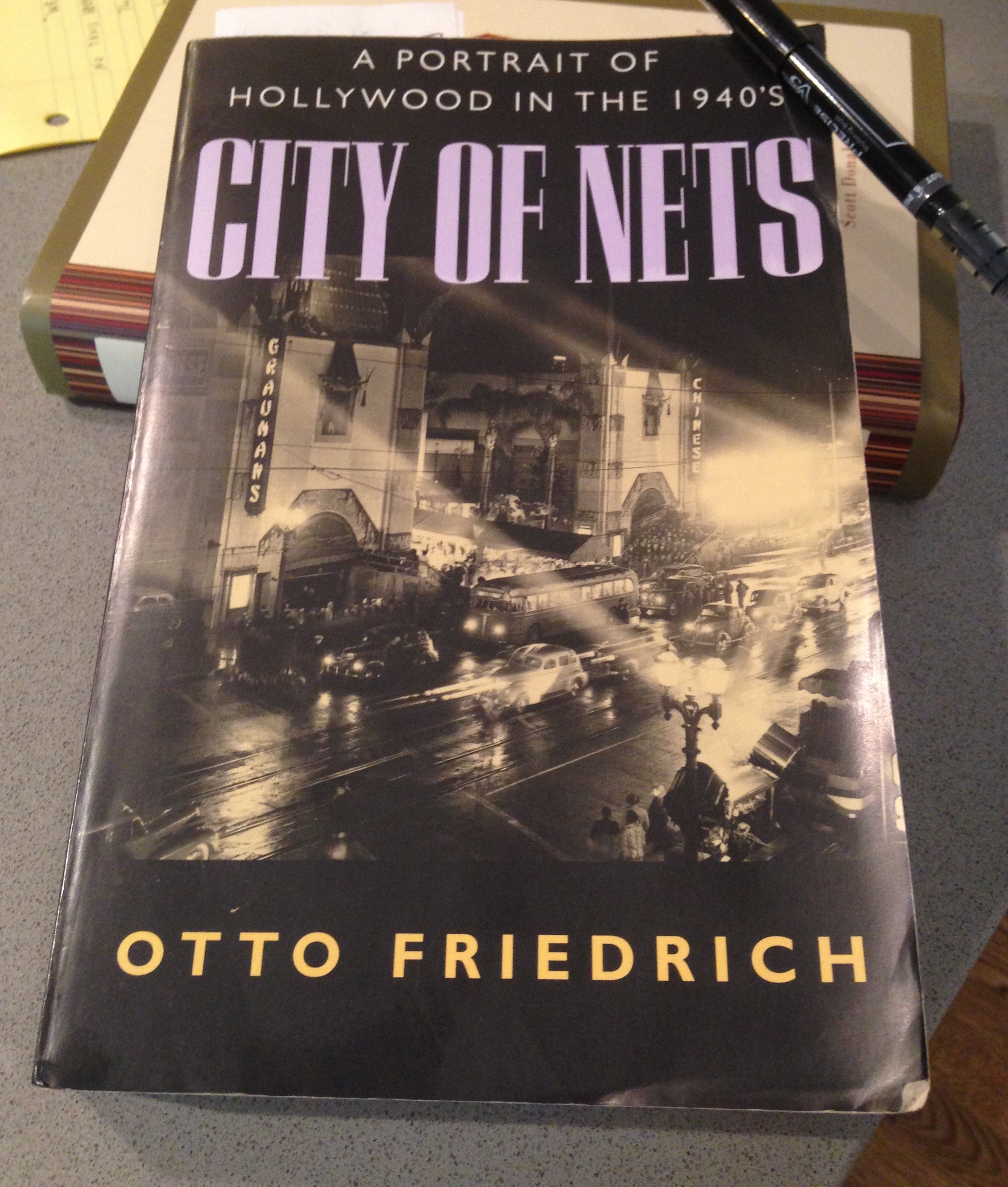
).
On the other hand, William Faulkner did well in Hollywood. He’s credited on at least two movies — The Big Sleep and To Have And Have Not, that you’d have to put in the all-time good list. If he’d never written a single book, you could look at those credits and call Faulkner a pretty successful screenwriter.
What did Faulkner do differently than Fitzgerald? Possibly, his secret was caring less:
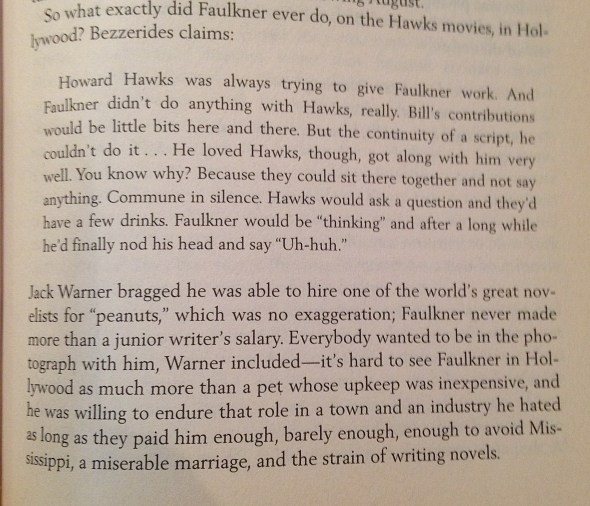 More, from Norman:
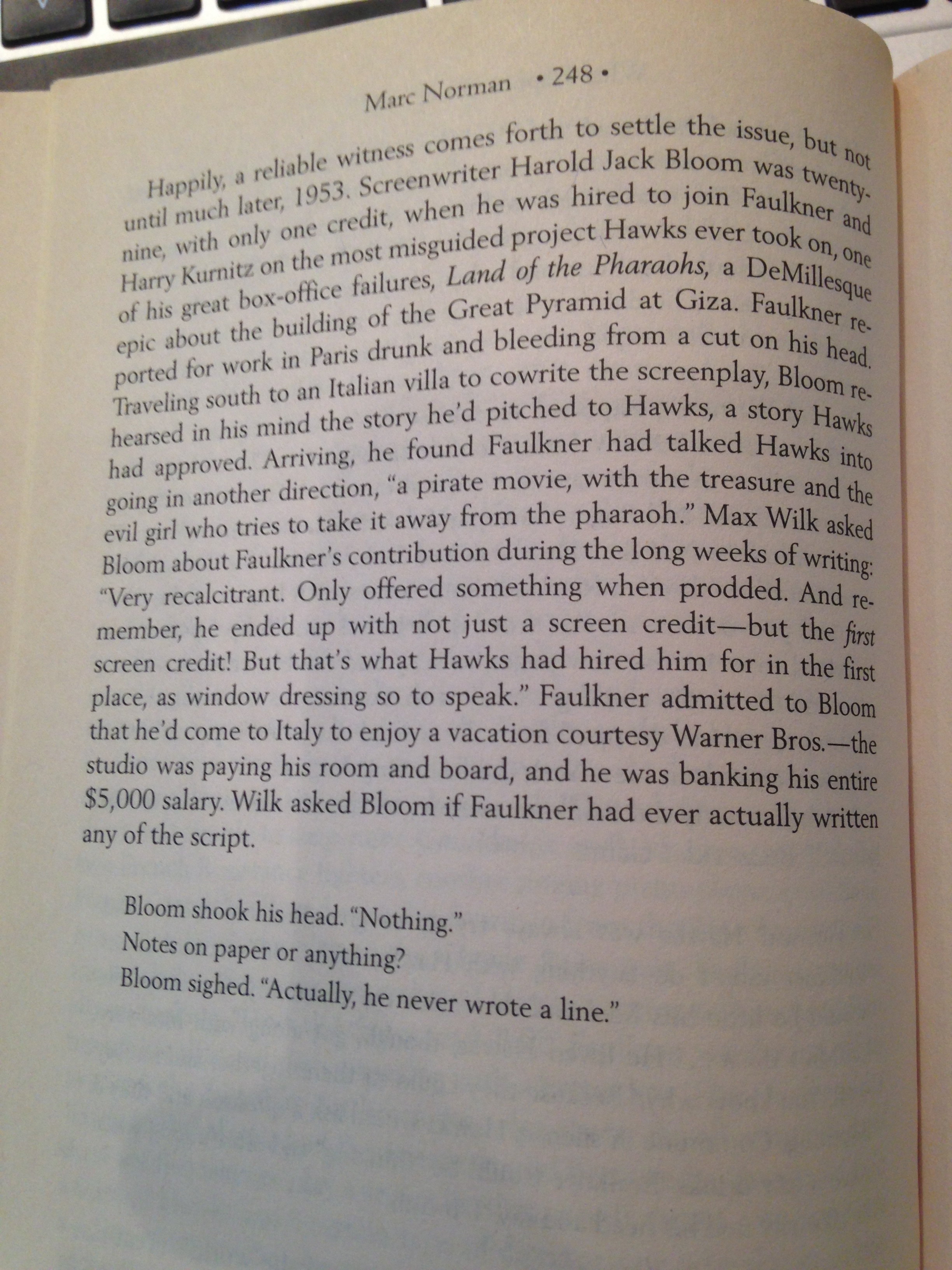
Murky, to be sure.
But you might say: the big difference in the Hollywood careers of Fitzgerald and Faulkner is that Faulkner teamed with a great director, Howard Hawks, who liked him and liked working with him.
That’s what Pizzolatto did too. He teamed up with Cary Fukunaga. Cary Fukunaga directed all eight episodes of season one of True Detective (and a bunch of other things worth seeing).
Fukunaga’s not mentioned once in that Vanity Fair article. That’s crazy.
Anyway. I’m excited for season two, it sounds super interesting.
“Lesser” McConaughey, or, On The Subject Of Great Acting
Posted: May 21, 2015 Filed under: actors, America Since 1945, movies, Texas, the California Condition Leave a comment
1995. I got my first big paycheck as an actor. I think it was 150 grand. The film was Boys on the Side and we’re shooting in Tucson, AZ and I have this sweet little adobe guest house on the edge of the Saguaro National Park. The house came with a maid. My first maid. It was awesome. So, I’ve got a friend over one Friday night and we’re having a good time and I’m telling her about how happy I am with my set up . The house. The maid. Especially, the maid. I’m telling her, “she cleans the place after I go to work, washes my clothes, the dishes, puts fresh water by my bed, leaves me cooked meals sometimes, and SHE EVEN PRESSES MY JEANS!” My friend, she smiles at me, happy for my genuine excitement over this “luxury service” I’m getting, and she says, “Well…that’s great…if you like your jeans pressed.”
I kind of looked at her, kind of stuttered without saying anything, you know, that dumb ass look you can get, and it hit me…
I hate that line going down my jeans! And it was then, for the first time, that I noticed…I’ve never thought about NOT liking that starched line down the front of my jeans!! Because I’d never had a maid to iron my jeans before!! And since she did, now, for the first time in my life, I just liked it because Icould get it, I never thought about if I really wanted it there. Well, I did NOT want it there. That line… and that night I learned something.
Just because you CAN?… Nah… It’s not a good enough reason to do something. Even when it means having more, be discerning, choose it, because you WANT it, DO IT because you WANT to.
I’ve never had my jeans pressed since.
I have been a McConaughey enthusiast for awhile. Proof: I saw Sahara and The Lincoln Lawyer* in the theater.
Here is a thing I admired then and continue to admire about McConaughey:
He treated ridiculous movies with utmost seriousness.
I don’t believe he treated Sahara with any less respect than True Detective, even though Sahara is crazy.
He brought pride and his fullest effort to those movies, the same as he would to any other movie. Failure To Launch, for example.
This is the mark of a true professional who practices his craft with great honor and seriousness
(but: could it also be the mark of someone who doesn’t know when something is ridiculous?)
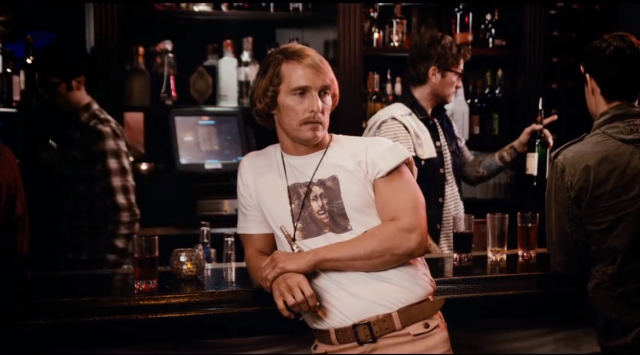
The director, Richard Linklater, kept inviting me back to set each night, putting me in more scenes which led to more lines all of which I happily said YES to. I was having a blast. People said I was good at it, they were writing me a check for $325 a day. I mean hell yeah, give me more scenes, I love this!! And by the end of the shoot those 3 lines had turned into over 3 weeks work and “it was Wooderson’s ’70 Chevelle we went to get Aerosmith tickets in.” Bad ass.
Well, a few years ago I was watching the film again and I noticed two scenes that I really shouldn’t have been in. In one of the scenes, I exited screen left to head somewhere, then re-entered the screen to “double check” if any of the other characters wanted to go with me. Now, in rewatching the film, (and you’ll agree if you know Wooderson), he was not a guy who would ever say, “later,” and then COME BACK to “see if you were sure you didn’t wanna come with him..” No, when Wooderson leaves, Wooderson’s gone, he doesn’t stutter step, flinch, rewind, ask twice, or solicit, right? He just “likes those high school girls cus he gets older and they stay the same age.”
My point is, I should NOT have been in THAT scene, I should have exited screen left and never come back.
Matthew McConaughey is a truly great actor.
From a description of an interview with Cary Fukunaga:
Fukunaga took one of these opportunities to share a story about directing Matthew McConaughey, a health-nut and non-smoker, in an early scene where he takes long, audible drags of a cigarette. Fukunaga describes saying, “‘don’t make it look like a middle school girl smoking for the first time.’ And McConaughey went in the opposite direction, just Cheech and Chong-ing it.”
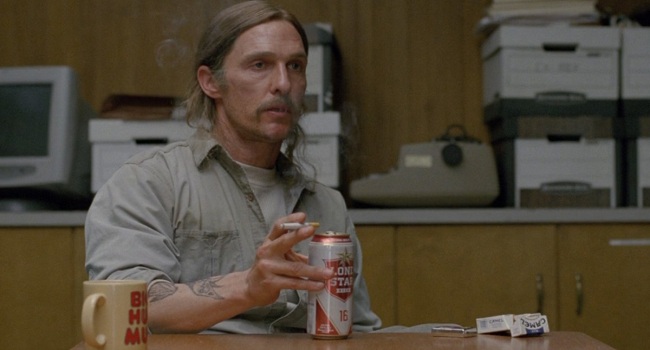
Bo Jackson ran over the goal line, through the end zone and up the tunnel — the greatest snipers and marksmen in the world don’t aim at the target, they aim on the other side of it.
We do our best when our destinations are beyond the “measurement,” when our reach continually exceeds our grasp, when we have immortal finish lines.
When we do this, the race is never over. The journey has no port. The adventure never ends because we are always on our way. Do this, and let them tap us on the shoulder and say, “hey, you scored.” Let them tell you “You won.” Let them come tell you, “you can go home now.” Let them say “I love you too.” Let them say “thank you.”
These quotes are from his amazing commencement speech at University of Houston:
The late and great University of Texas football coach Daryl Royal was a friend of mine and a good friend to many. A lot of people looked up to him. One was a musician named “Larry.” Now at this time in his life Larry was in the prime of his country music career, had #1 hits and his life was rollin’. He had picked up a habit snortin’ “the white stuff” somewhere along the line and at one particular party after a “bathroom break,” Larry went confidently up to his mentor Daryl and he started telling Coach a story. Coach listened as he always had and when Larry finished his story and was about to walk away, Coach Royal put a gentle hand on his shoulder and very discreetly said, “Larry, you got something on your nose there bud.” Larry immediately hurried to the bathroom mirror where he saw some white powder he hadn’t cleaned off his nose. He was ashamed. He was embarrassed. As much because he felt so disrespectful to Coach Royal, and as much because he’d obviously gotten too comfortable with the drug to even hide as well as he should.
Well, the next day Larry went to coach’s house, rang the doorbell, Coach answered and he said, “Coach, I need to talk to you.” Daryl said, “sure, c’mon in.”
Larry confessed. He purged his sins to Coach. He told him how embarrassed he was, and how he’s “lost his way” in the midst of all the fame and fortune and towards the end of an hour, Larry, in tears, asked Coach, “What do you think I should do?” Now, Coach, being a man of few words, just looked at him and calmly confessed himself. He said, “Larry, I have never had any trouble turning the page in the book of my life.” Larry got sober that day and he has been for the last 40 years.
Now: I loved reading this speech. Many important reminders about life:
Mom and dad teach us things as children. Teachers, mentors, the government and laws all give us guidelines to navigate life, rules to abide by in the name of accountability.
I’m not talking about those obligations. I’m talking about the ones we make with ourselves, with our God, with our own consciousness. I’m talking about the YOU versus YOU obligations. We have to have them. Again, these are not societal laws and expectations that we acknowledge and endow for anyone other than ourselves. These are FAITH based OBLIGATIONS that we make on our own.
Not the lowered insurance rate for a good driving record, you will not be fined or put in jail if you do not gratify the obligations I speak of — no one else governs these but you.
They’re secrets with yourself, private council, personal protocols, and while nobody throws you a party when you abide by them, no one will arrest you when you break them either. Except yourself. Or, some cops who got a “disturbing the peace” call at 2:30 in the morning because you were playing bongos in your birthday suit.
Entertainment Tonight called this speech “bonkers.”
That’s not fair.
Maybe a fourteenth lesson that McConaughey only hints at in his speech is: to achieve greatness you must dance along the edge of bonkers. To do anything worthwhile you must risk appearing ridiculous. On your journey, at many points, you will appear ridiculous. The fear of appearing ridiculous stops all too many from achieving their potential.
You know these No Fear t-shirts? I don’t get em. Hell, I try to scare myself at least once a day. I get butterflies every morning before I go to work. I was nervous before I got here to speak tonight. I think fear is a good thing. Why? Because it increases our NEED to overcome that fear.
Say your obstacle is fear of rejection. You want to ask her out but you fear she may say “no.” You want to ask for that promotion but you’re scared your boss will think you’re overstepping your bounds.
Well, instead of denying these fears, declare them, say them out loud, admit them, give them the credit they deserve. Don’t get all macho and act like they’re no big deal, and don’t get paralyzed by denying they exist and therefore abandoning your need to overcome them. I mean, I’d subscribe to the belief that we’re all destined to have to do the thing we fear the most anyway.
So, you give your obstacles credit and you will one. Find the courage to overcome them or see clearly that they are not really worth prevailing over.
Here is what McConaughey looked like giving his speech.

Here is a great actor whose greatest role is himself.
* The Lincoln Lawyer spoke to a real fantasy I can’t be alone in having in Los Angeles: someone driving you everywhere in comfortable quiet. Since then Uber has come close to making that a reality.
The hero with a thousand faces
Posted: May 20, 2015 Filed under: America Since 1945, heroes, the California Condition 1 CommentThis

makes me think of this

Aquarium Drunkard
Posted: April 22, 2015 Filed under: America Since 1945, music, the California Condition Leave a comment
Picked this one up from listening to Aquarium Drunkard‘s playlists on Spotify.

Don’t know anything about Aquarium Drunkard except passed-down oral legend and intend to keep it that way but I’m not the first to discover him — the guy is brightening my life with his (?) music curating.
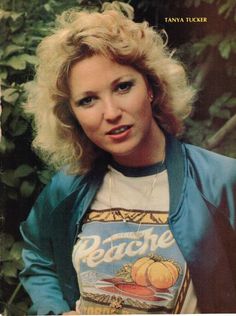
Sherrill initially planned to have Tucker record “The Happiest Girl In the Whole USA,” but she passed on the tune to Donna Fargo, choosing “Delta Dawn” — a song she heardBette Midler sing on The Tonight Show — instead. Released in the spring of 1972, the song became a hit, peaking at number six on the country charts and scraping the bottom of the pop charts. At first, Columbia Records tried to downplay Tucker’s age, but soon word leaked out and she became a sensation. A year later, Australian singer Helen Reddy would score a No. 1 U.S. pop hit with her version of “Delta Dawn.”
She had begun drinking in her late teens, and she explained how it started: “You send your ass out on the road doing two gigs a night and after all that adoration go back to empty hotel rooms. Loneliness got me into it.” In 1978 Tucker moved to Los Angeles, California, to try, unsuccessfully, to broaden her appeal to pop audiences, and was quickly captivated by the city’s nightlife. She also said that she “was the wildest thing out there. I could stay up longer, drink more and kick the biggest ass in town. I was on the ragged edge.”
Worth having a look at Bette’s version if only for her outfit:
Almonds and water
Posted: April 6, 2015 Filed under: California, the California Condition Leave a comment
Written about California water before. If I had ten hours to spare for the round trip I’d drive up to Bishop and retake this photo:

Taken about this time three years ago, I bet there’d be no snow in it now.
This article by Helaine Olsen on The Baffler seemed insightful to me:
Barely mentioned was the fact that the clueless wealthy might just as well go ahead and turn on the taps—let ten thousand golf course bougainvillea bloom. They aren’t the problem, or not much of the problem.
Listen up: California’s agricultural sector uses about 80 percent of the state’s water. As Mother Jonesreported, it takes one gallon of water to grow a single almond, and nearly five gallons to make a walnut edible.
But, hey, Governor Brown says those almonds and other produce grown in California aren’t living large. That’s why agriculture was all but excused from his edict. “They’re not watering their lawn or taking long showers,” Brown told ABC’s This Week, of the farmers. “They’re providing much of the fruits and vegetables of America.”
Nuts: Too tasty to fail?
The ritual shaming of the public, in which politicians blame us for their failures, seems like democratic politics in reverse. And the bigger the crisis, the greater the gall. For example, as we all know but few care to remember, the United States recently went through a financial crisis. Banks made massively leveraged bets that didn’t pay off. Complicated, risky financial innovations were presented as safe by people and institutions all of who should have known better. Subprime mortgages were pushed and promoted, often under false pretenses. Credit was offered up to Americans, many of whom took it because they were told it is was a good idea, and cheap, and, anyway, their incomes weren’t keeping up with the cost of housing, healthcare, and education and they needed to get money from somewhere, dammit.
Alex Tabarrok saying similar things on Marginal Revolution:
The NYTimes has an article on California’s extreme water drought with the usual apocalyptic imagery (see the video especially):
California is facing a punishing fourth year of drought. Temperatures in Southern California soared to record-high levels over the weekend, approaching 100 degrees in some places. Reservoirs are low. Landscapes are parched and blighted with fields of dead or dormant orange trees.
The apocalyptic scenario needs to be leavened with some basic facts.
California has plenty of water…just not enough to satisfy every possible use of water that people can imagine when the price is close to zero. As David Zetland points out in an excellent interview with Russ Roberts, people in San Diego county use around 150 gallons of water a day. Meanwhile in Sydney Australia, with a roughly comparable climate and standard of living, people use about half that amount. Trust me, no one in Sydney is going thirsty.
So how much are people in San Diego paying for their daily use of 150 gallons of water? About 78 cents. As Matt Kahn puts it:
Where in the Constitution does it say that the people of California have the right to pay .5 cents per gallon of water?
Water is such a small share of most people’s budgets that it could double in price and the effect on income would still be low. Moreover, we don’t even have to increase the price of water for residential or industrial uses. As The Economist points out:
Agriculture accounts for 80% of water consumption in California, for example, but only 2% of economic activity.
What that means is that if agriculture used 12.5% less water we could increase the amount available for every residential and industrial use by 50%–grow those lawns, fill those swimming pools, manufacture those chips!–and the cost would be minimal even if we simply shut down 12.5% of all farms.
Moreover, we don’t have to shut down that many farms, we just have to shut down the least valuable farms and use water more efficiently. If you think water is cheap for San Diego residents it’s much cheaper for
farmers. Again from The Economist:
Farmers flood the land to grow rice, alfalfa and other thirsty crops….If water were priced properly, it is a safe bet that they would waste far less of it, and the effects of California’s drought—its worst in recorded history—would not be so severe.
Even today a lot of CA agriculture uses the least efficient flood irrigation system.
According to data from the state Department of Water Resources, 43 percent of California farmland in 2010 used some form of gravity irrigation, an imprecise method that uses relatively large amounts of fresh water and represents a big opportunity for water conservation.
The NYTimes article is worried about farm loss:
“I’m going to fallow two acres of my land immediately,” said Geoffrey C. Galloway, who has a citrus grove on his ranch near Porterville, in the Central Valley. “Depending on how the season goes, we may let another four go.”
…Last year, at least 400,000 acres went unplanted, and farmers reported losses of $2.2 billion, said Mr. Wenger, the head of the farm bureau, who owns a farm in Modesto. “This year we could see easily 50 percent more,” he said. “We are probably going to be looking at well over a million acres.”
California has approximately 25 million acres of farmland. And while our bodily fluids might be precious not every acre of farmland is. A few less acres of farmland producing low value crops in return for a lot more water is a very acceptable tradeoff.
Addendum: Low prices are not always wasteful. David Zetland’s short primer on water policy is available for free as pdf. Matt Kahn’s Fundamentals of Environmental and Urban Economics is on Amazon for Kindle for just $1. Both are very good.
I have a personal, untested theory of a major factor in the California water problem:

The boom in almond milk consumption. Almond milk is made of 1) water and 2) water intensive almonds.
When was the last time somebody got killed by a wild bear in Los Angeles?
Posted: February 28, 2015 Filed under: animals, the California Condition Leave a comment
Prompted by a recent conversation about the movie Grizzly Man. (Forgot that Timothy Treadwell named one of the bears Mr. Chocolate.)
Andy Sublette, 46.
An experienced bear hunter who hunted and killed many bears, Sublette shot and wounded a bear after being separated from his hunting party near present-day Santa Monica in 1854. He was then mauled but stabbed the bear to death with his knife and with the help of his dog. His dog survived, but Sublette died seven days later due to his injuries.
So says Wikipedia citing Gary Brown’s The Bear Almanac. I wonder if they mean, like, Santa Monica Santa Monica or the Santa Monica mountains (even, like, Malibu).
Anyway. Heard it took the bear an hour and a half to drive back to Silverlake — the 10 was a nightmare!
Some favs
Posted: February 20, 2015 Filed under: America Since 1945, the California Condition Leave a commentTrips
Posted: February 4, 2015 Filed under: children, the California Condition 8 Comments
from this New Yorker article by Michael Pollan about psilocybin:
Carhart-Harris doesn’t romanticize psychedelics, and he has little patience for the sort of “magical thinking” and “metaphysics” they promote. In his view, the forms of consciousness that psychedelics unleash are regressions to a more “primitive style of cognition.” Following Freud, he says that the mystical experience—whatever its source—returns us to the psychological condition of the infant, who has yet to develop a sense of himself as a bounded individual. The pinnacle of human development is the achievement of the ego, which imposes order on the anarchy of a primitive mind buffeted by magical thinking. (The developmental psychologist Alison Gopnik has speculated that the way young children perceive the world has much in common with the psychedelic experience. As she puts it, “They’re basically tripping all the time.”)
This article gives a lot of ammo to hippies:
He said that the N.I.M.H would need to see “a path to development” and suspects that “it would be very difficult to get a pharmaceutical company interested in developing this drug, since it cannot be patented.” It’s also unlikely that Big Pharma would have any interest in a drug that is administered only once or twice in the course of treatment. “There’s not a lot of money here when you can be cured with one session,” Bossis pointed out.
Interesting talking about psychoactive drugs in medicine: pretty fast you hit the boundaries of science:
PATIENT: What does this drug do?
DOCTOR: Well, medically, nothing, but it might… make you feel like your ego died and you’ve come into harmony with the great spirit of the cosmos?
We’re at the limit of medicine here, crossing over to religion or at least social anthropology.
If you’re taking mushrooms in a lab in a New York hospital, under medical supervision, that’s gonna affect your experience. If you take them after traveling to southern Mexico, in the house of a curandera, and you’re open to the idea that a curandera might have some kind of power, you’re gonna have another kind of experience:
In 1955, after years spent chasing down reports of the clandestine use of magic mushrooms among indigenous Mexicans, Wasson was introduced to them by María Sabina, a curandera—a healer, or shaman—in southern Mexico. Wasson’s awed first-person account of his psychedelic journey during a nocturnal mushroom ceremony inspired several scientists, including Timothy Leary, a well-regarded psychologist doing personality research at Harvard, to take up the study of psilocybin. After trying magic mushrooms in Cuernavaca, in 1960, Leary conceived the Harvard Psilocybin Project, to study the therapeutic potential of hallucinogens. His involvement with LSD came a few years later.
In the wake of Wasson’s research, Albert Hofmann experimented with magic mushrooms in 1957. “Thirty minutes after my taking the mushrooms, the exterior world began to undergo a strange transformation,” he wrote. “Everything assumed a Mexican character.”
(would they have assumed a “Mexican character” if Hofmann thought they came from Cambodia?)
If you get mushrooms from your college buddy, and the point is to clown around in the park, you’re gonna have another kind of experience. If you’re a true hippie open to the idea that mushroom spores traveled to Earth as a kind of message from some distant galaxy, that’s gonna affect your experience.
What about this context?:
In a double-blind experiment, twenty divinity students received a capsule of white powder right before a Good Friday service at Marsh Chapel, on the Boston University campus; ten contained psilocybin, ten an active placebo (nicotinic acid). Eight of the ten students receiving psilocybin reported a mystical experience, while only one in the control group experienced a feeling of “sacredness” and a “sense of peace.” (Telling the subjects apart was not difficult, rendering the double-blind a somewhat hollow conceit: those on the placebo sat sedately in their pews while the others lay down or wandered around the chapel, muttering things like “God is everywhere” and “Oh, the glory!”) Pahnke concluded that the experiences of eight who received the psilocybin were “indistinguishable from, if not identical with,” the classic mystical experiences reported in the literature by William James, Walter Stace, and others.
That ain’t exactly laboratory conditions – there’s lots going on here. I get that there’s a double-blind, but do you measure: who cared more about Good Friday going in? Who was further along on some kind of spiritual journey?
My own thinking on this much affected by ideas of Helytimes favorite Wade Davis. Got more interested re: ayahuasca. It’s one thing to take ayahuasca at a rented house in Malibu. Another thing to go to the Amazon, where your surroundings are halfway a hallucination before you drink a thing. Big difference how you feel here:

Vs. here:

Old advisor at college, a wonderful eccentric woman, used to say she thought all pre-meds should be anthropology majors.
Like some…
Posted: January 27, 2015 Filed under: Texas, the American West, the California Condition, writing Leave a comment
He lives in a room above a courtyard behind a tavern and he comes down at night like some fairybook beast to fight with the sailors. (5)
The sun was just down and to the west lay reefs of bloodred clouds up out of which rose little desert nighthawks like fugitives from some great fire at the earth’s end. (23)
Then he waded out into the river like some wholly wretched baptismal candidate. (29)
The ground where he’d lain was soaked with blood and with urine from the voided bladders of animals and he went forth stained and stinking like some reeking issue of the incarnate dam of war herself. (58)
He found a clay jar of beans and some dried tortillas and he took them to a house at the end of the street where the embers of the roof were still smoldering and he warmed the food in the ashes and ate, squatting there like some deserter scavenging the ruins of a city he’d fled. (63)
Itinerant degenerates bleeding westward like some heliotropic plague. (82)
The judge sat upwind from the fire naked to the waist, himself like some pale deity, and when the black’s eyes reached his he smiled. (97)
He looked like some loutish knight beriddled by a troll. (107)
The nearest man to him was Tobin and when the black stepped out of the darkness bearing the bowieknife in both hands like some instrument of ceremony Tobin started to rise. (112)
They crossed before the sun and vanished one by one and reappeared again and they were black in the sun and they rode out of that vanished sea like burnt phantoms with the legs of the animals kicking up the spume that was not real and they were lost in the sun and lost in the lake and they shimmered and slurred together and separated again and they augmented by planes in lurid avatars and began to coalesce and there began to appear above them in the dawn-broached sky a hellish likeness of their ranks riding huge and inverted and the horses’ legs incredibly elongate trampling down the high thin cirrus and the howling antiwarriors pendant from their mounts immense and chimeric and the high wild cries carrying that flat and barren pan like the cries of souls broke through some misweave in the weft of things into the world below. (115)
Far out on the desert to the north dustspouts rose wobbling and augered the earth and some said they’d heard of pilgrims born aloft like dervishes in those mindless coils to be dropped broken and bleeding upon the desert again and there perhaps to watch the thing that had destroyed them lurch onward like some drunken djinn and resolve itself once more in the elements from which it sprang. (117)
They had but two animals and one of these had been snakebit in the desert and this thing now stood in the compound with its head enormously swollen and grotesque like some fabled equine ideation out of an Attic tragedy. (121)
The squatters stood about the dead boy with their wretched firearms at rest like some tatterdemalion guard of honor. (125)
Like some ignis fatuus belated upon the road behind them which all could see and of which none spoke. (126)
Under a gibbous moon horse and rider spanceled to their shadows on the snowblue ground and in each flare of lightning as the storm advanced those selfsame forms rearing with a terrible redundancy behind them like some third aspect of their presence hammered out black and wild upon the naked grounds. (157-8)
The dead lay awash in the shallows like the victims of some disaster at sea and they were strewn along the salt foreshore in a havoc of blood and entrails. (163)
One of the Delawares passed with a collection of heads like some strange vendor bound for market, the hair twisted about his wrist and the heads dangling and turning together. (163)
Glanton was first to reach the dying man and he knelt with that alien and barbarous head cradled between his thighs like some reeking outland nurse and dared off the savages with his revolver. (165)
All about her the dead lay with their peeled skulls like polyps bluely wet or luminescent melons cooling on some mesa of the moon. (181-2)
They passed along the ruinous walls of the cemetery where the dead were trestled up in niches and the grounds strewn with bones and skulls and broken pots like some more ancient ossuary. (182)
It was raining again and they rose slouched under slickers hacked from greasy iralfcured hides and so cowled in these primitive skins before the gray and driving rain they looked like wardens of some dim sect sent forth to proselytize among the very beasts of the land. (195)
The riders pushed between them and the rock and methodically rode them from the escarpment, the animals dropping silently as martyrs, turning sedately in the empty air and exploding on the rocks below in startling bursts of blood and silver as the flasks broke open and the mercury loomed wobbling in the air in great sheets and lobes and small trembling satellites and all its forms grouping below and racing in the stone arroyos like the imbreachment of some ultimate alchemic work decocted from out the secret dark of the earth’s heart, the fleeing stag of the ancients fugitive on the mountainside and bright and quick in the dry path of the storm channels and shaping out the sockets in the rock and hurrying from ledge to ledge down the slope shimmering and eft as eels. (203)
A mile further and he came upon a strange blackened mass in the trail like a burnt carcass of some ungodly beast. (225)
He too had lost his hat and he rode with a woven wreath of desert scrub about his head like some egregious saltland hard and he looked down upon the refugee with the same smile, as if the world were pleasing to him alone. (228)
The other heads glared blindly out of their wrinkled eyes like fellows of some righteous initiate given up to vows of silence and of death. (230)
The judge was standing on the rise in silhouette like some great balden archirnandrite. (285)
The judge in the floor of the well likewise rose and he adjusted his hat and gripped the valise under his arm like some immense and naked barrister whom the country had crazed. (296)
The idiot squatted on all fours and leaned into the lead like some naked species of lemur. (298)
When he raised his head to look out he saw the expriest stumbling among the bones and holding aloft a cross he’d fashioned out of the shins of a ram and he’d lashed them together with strips of hide and he was holding the thing before him like some mad dowser in the bleak of desert and calling out in a tongue both alien and extinct. (302)
This troubled sect traversed slowly the ground under the bluff where the watcher stood and made their way over the broken scree of a fan washed out of the draw above them and wailing and piping and clanging they passed between the granite walls into the upper valley and disappeared in the coming darkness like heralds of some unspeakable calamity leaving only bloody footprints on the stone. (326)
The candles sputtered and the great hairy mound of the bear dead in its crinoline lay like some monster slain in the commission of unnatural acts. (340)
Been re-reading this in audiobook format, blowing my mind like some mind that’s getting blown. Those page numbers, from Google books, are from the hardcover, not that paperback. (And don’t think I’m braggin’ with all those post-its on my copy — that’s the condition in which the book was returned to me after being loaned to a scholarly friend.)
Don’t miss Mills on the topic. Always worth rewatching:
Coaches
Posted: January 1, 2015 Filed under: America Since 1945, sports, the California Condition 1 Comment
A Chance Encounter With Pete Carroll
One Sunday afternoon, a few years ago, I was drinking in a bar on Hermosa Beach (I believe but am not certain it was The Poop Deck) when I saw USC Trojans head football coach Pete Carroll ride by the front door on a bike.
He was with a handsome woman, his wife I guessed, and as they rode along saw somebody they appeared to know. Pete and his wife stopped to talk to him.
From where I was in the dark of the bar, the sunlight in the doorway framed Coach Carroll perfectly, it was like the last shot of The Searchers.

We couldn’t hear what Coach was saying. But watching him talk was mesmerizing. Engaged, upbeat, demonstrative: I couldn’t look away. The whole scene was compelling. Who was this chilled out beach boardwalk motivator? What was his life?

The Inner Game
Some time after that I found a copy of The Inner Game Of Tennis by Timothy Gallwey at my friend’s house. The only times I’ve ever played tennis I embarrassed myself, but I like “inner games,” and reading about tennis, so I read it.
The book blasted my head open.
Here is a very crude summary of Gallwey’s ideas as I understood them: when you do something like play tennis, sometimes you can split into a self that’s doing the actions, and a self that’s observing, judging, intellectually assessing: critical. That second self can easily slip into becoming abusive. You screw up a shot and you’re like “dammit, so STUPID!”
When that happens, Gallwey asks, who is yelling at who? What’s going on here?
This struck me re: writing. (Or really, any creative work.)
You’ve got your creator self, and your critical self. You need them both: all one and you’ll write stream of consciousness garbage, all the other and you’ll never write anything. But how do you get them to work together?
Gallwey says: we will improve (and have more fun) when we get these two selves aligned. When the critical self isn’t pissed at the performing self, but instead simply, non-brutally observes what is happening.
When that happens, you enter a harmony.
You find your performance self makes adjustments unconsciously.
You don’t overtighten. You find a flow.
’70s California New Age to the max, but it struck me. I told my friend how into this book I was. He told me Peter Carroll had given a copy to every player on the Seattle Seahawks.
Here is Marshawn Lynch telling Coach Carroll he just read it:
That year the Seahawks won the Super Bowl.
That’s it, I thought, I’ve got to know everything about sunny, tripped out, California Zen NFL head coach Pete Carroll, so I went and bought his book Win Forever.

Win Forever
What’s most amazing to me about Pete Carroll is that he’s cheerful. He’s optimistic. Don’t take my word for it. Talking about his mother Carroll says:
She instilled in me a great curiosity about how the world works, along with an overall sense of optimism and possibility. She used to say: “Something good is just about to happen.” I still believe that today.
This seemed to me to be a kind of new attitude in a football coach. Again, no expert on football history. But what other successful coach is as chipper as Pete Carroll? I like that in him, because I’m cheerful myself. Remember that Jesus Christ himself told his followers “in this world ye will have tribulation, but be of good cheer.”
This is not the most popular Bible verse in New England. Pete Carroll’s deal did not fly there, he did not succeed at the Patriots. Maybe he has to be in a sunny climate. Or barring that: in the weed-legal, interesting thinking, Jimi Hendrix country of Seattle.
His biggest inspiration, I think he’d agree, is John Wooden of UCLA:

Look who else he’s into:

“That cool reply stuck in my head.” And, of course:

Pete Carroll says that after his lack of success with the Patriots, he realized he wouldn’t succeed unless he found a system that was in line with his attitudes and values. Once he found that, once he had a philosophy so clear he could write it up in under 25 words, he would “win forever.”
Now, I am not sure I understand all parts of Pete Carroll’s system:

But there’s a lot in this book that made sense to me. On language:


He believes his main job is “orchestrating a mentality”:

The Pete Carroll mentality is: positivity and confidence.
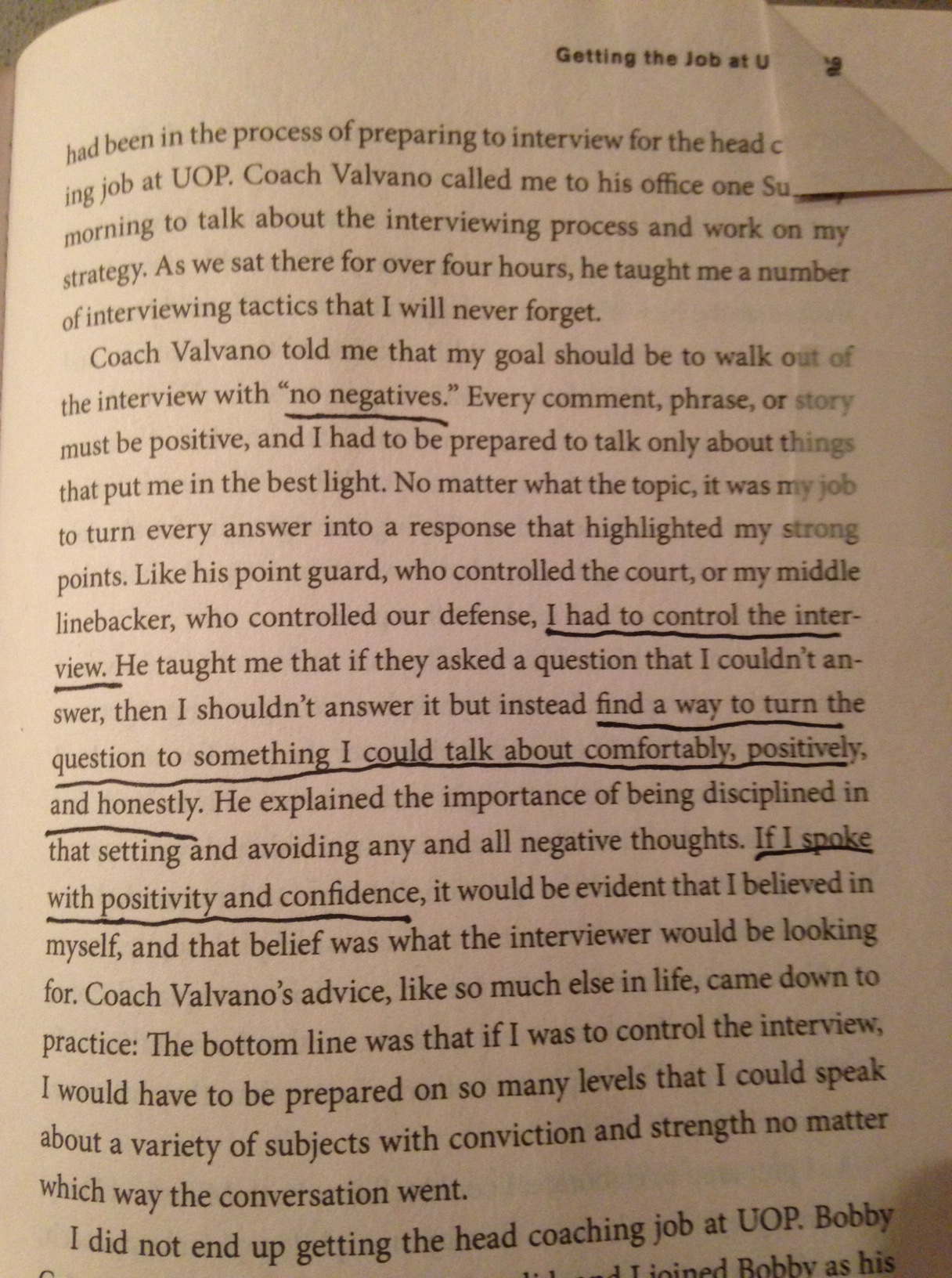
Now, I do not know everything about Pete Carroll. At Helytimes we don’t traffic in rumors. But I dug this book, a voice with a clear vision rang through to me, and I understood it.
Coach Satan
I knew that people hated Nick Saban, but I didn’t really follow why (except that he kept winning). My view may have been tainted by too much exposure to Auburn fans.
If you don’t know much about Nick Saban, I recommend this GQ profile by Warren St. John, which I found well-written, apparently fair, and full of the kind of detail about food habits I want in my profiles:
For breakfast, he eats two Little Debbie Oatmeal Creme Pies; for lunch, a salad of iceberg lettuce, turkey, and tomatoes. The regular menu, he says, saves him the time of deciding what to eat each day, and speaks to a broader tendency to habituate his behaviors. Saban comes to this system by instinct rather than by adherence to some productivity guru’s system. When I try to engage him in a discussion of the latest research on habit formation, he hits me with a look his assistants call the bug zapper, for its ability to fry all who encounter it; he has no idea what I’m talking about.

Weirdly I read this only after I read Nick Saban’s book.
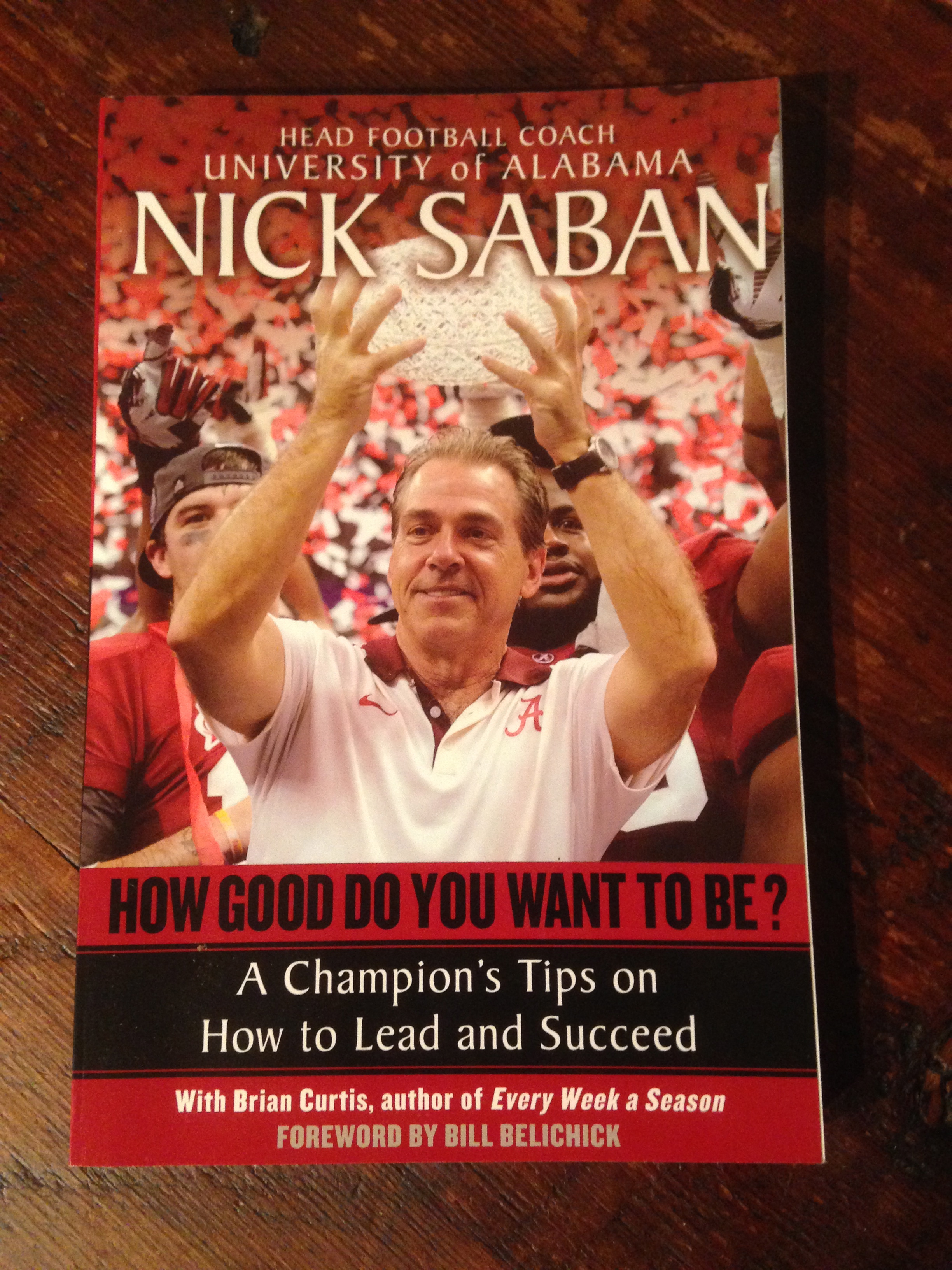
Compared to Win Forever, this book is garbage.
Even the physical size of it is wrong.
Large parts of it appear to be pasted together out of generic clippings from a folder marked “Inspirational”:
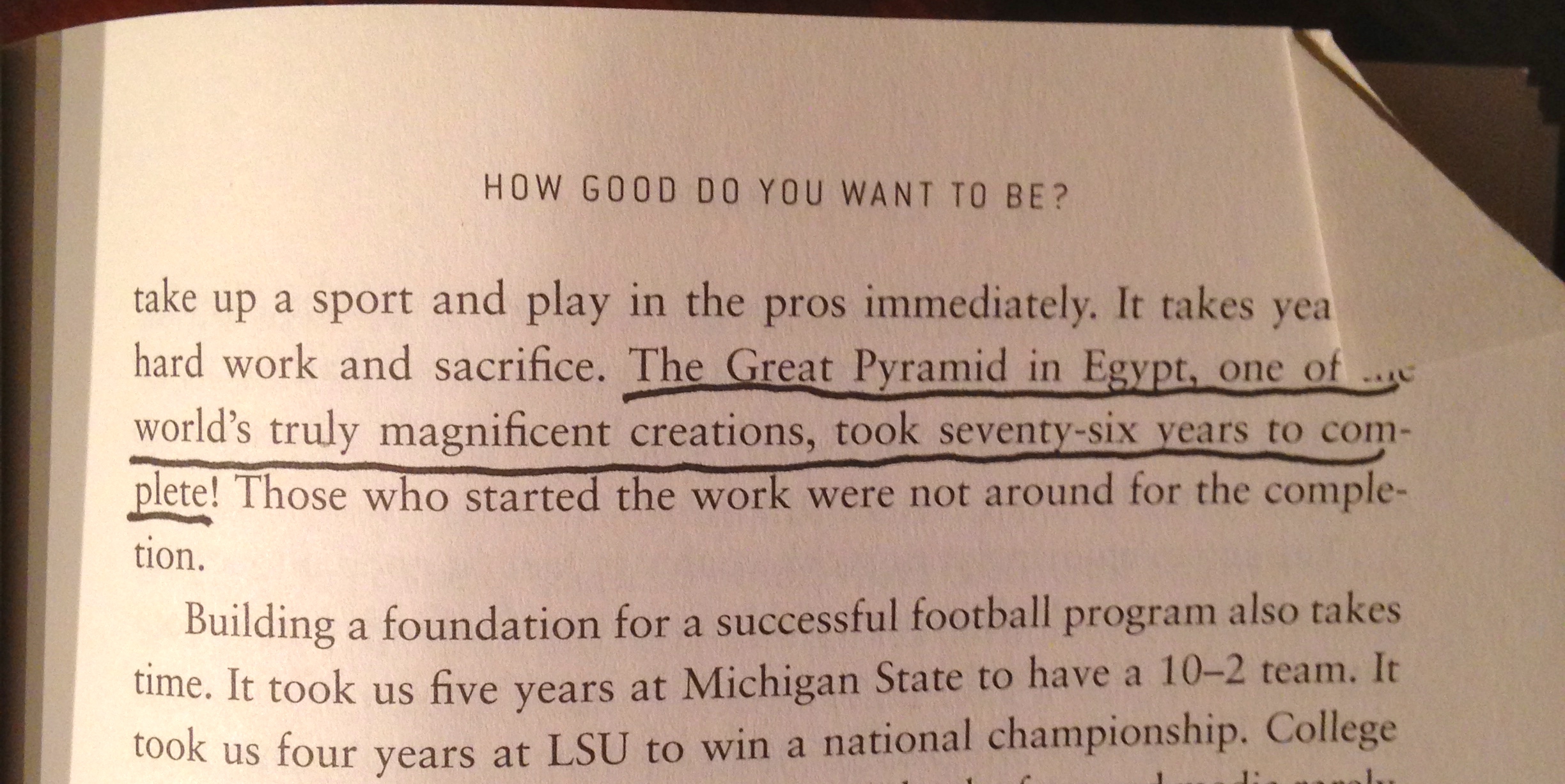
What? Or:

This part I was like “what are you talking about Nick Saban?”:

For a guy who’s determined to achieve excellence, I can only imagine that Nick Saban didn’t consider book writing to be a field truly worthy of his effort. One way or another, he is responsible for a not good book. That’s either lacking off, disrespect for the reader, incompetence/inability to assess how good a book is, or just inattention. None of those are excusable.
That may seem harsh, but the way Nick Saban talks in this book, I assume he would expect nothing less:
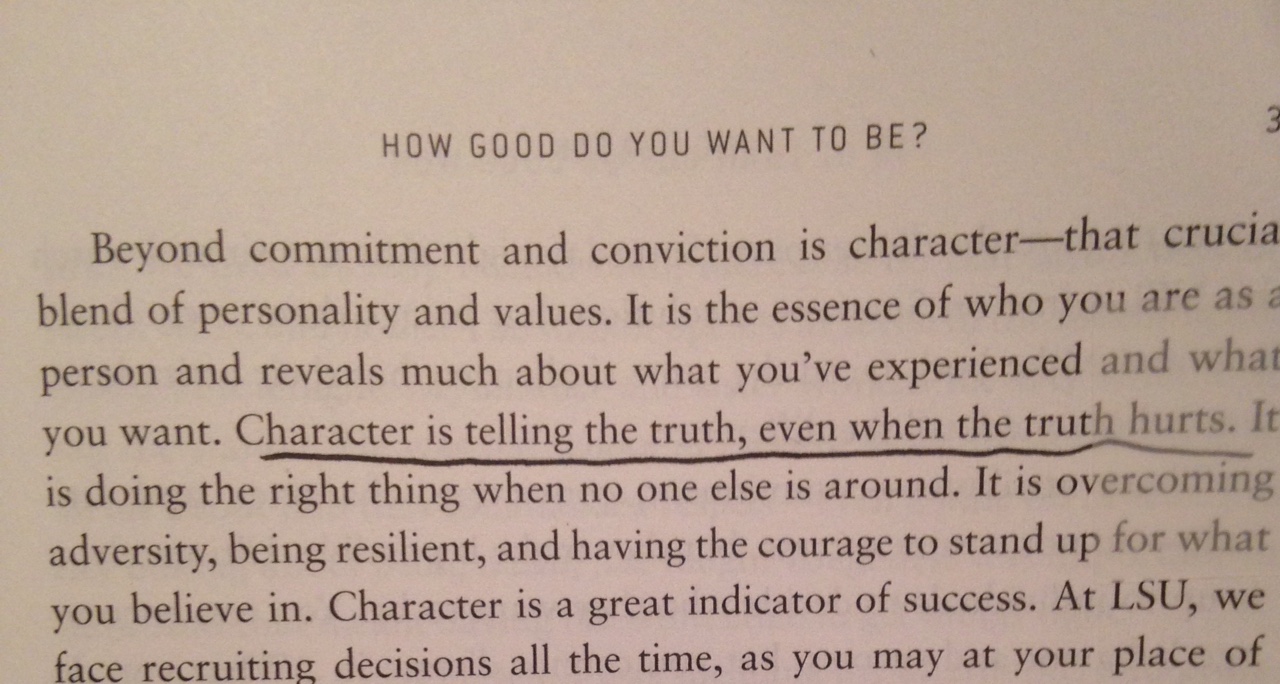
To offer an example that seems to tell you what kind of judgment Nick Saban has about values and standards, these are two companies he cites as excellent. Both these companies have to be acknowledged to be “good,” I guess, at business, but do you like either Starbucks or Delta?:
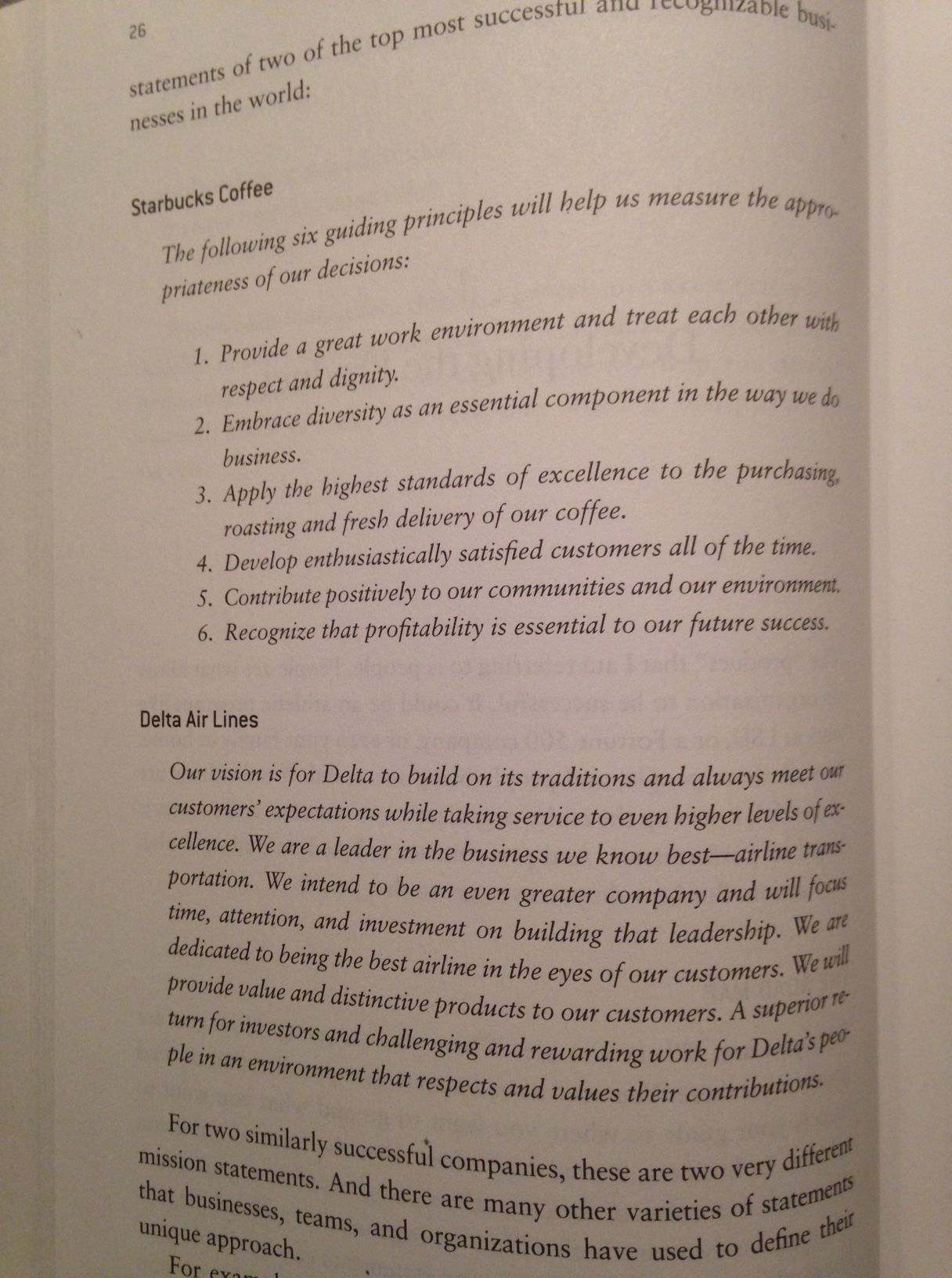
When people say Nick Saban is the devil, which they do, I think they mean it in the same way you might say Starbucks is the devil.
Meaning: sure, it does its mission, of giving people a stimulant effectively. That’s cool, I guess, but at what cost does it do it? Does it do it with no soul, no integrity, no humanity?
What kind of soulless robot looks for examples of success and comes up with Starbucks and Delta Airlines?

Nick Saban has a harsh, stern mentality. Can we be surprised? Nick Saban is from Fairmont, West Virginia. Here’s something Wikipedia says about that town:
The site of the first Father’s Day on July 5, 1908, originally celebrated in honor of the more than 200 fathers lost in the Monongah Mining disaster several months earlier.
About that disaster:
The inability to clear the mine of gases transformed the rescue effort into a recovery effort. Only one man, a Hungarian by the name of John Tomko, was rescued from the mine. The official death toll stood at 362, but it is possible the number is much higher since mining companies at the time did not keep accurate records of their workers.
Here is a list of everyone who died, organized by ethnicity, including Slavish and Negro. That monument to the disaster, pictured above in a photo from Wikipedia, is, I believe, in Italy. (Saban is Croatian).
But that’s not all, Warren St. John reminds us:
When they were teenagers, an explosion at the mine where Saban’s grandfather worked killed 78. (His grandfather was spared because he was off-shift.) It was a place where you knew not to complain; someone always had it worse.
Perhaps more challenging than Pete Carroll’s boyhood in Marin County, groovin’ out to the Grateful Dead with his mom always reminding him something terrific was about to happen. A student athlete at Kent State (after a tough decision not to go the US Naval Academy) Nick Saban just missed witnessing the 1970 massacre by the National Guard (an event I have to say he seems to describe with great balance and genuine reflection).
The hard edge of Saban’s book doesn’t mean it’s not full of wisdom. For whatever reason this hit me:

(Whether working out in writing my thoughts about two football coach memoirs is “spending” or “investing” I can’t say for sure but I tend to think the latter.)
This part of Nick Saban’s book seemed to sum it up in flinty style:

That was the part of the book that rang truest to me. It seemed like one of the few times when I was hearing the real guy.
And I have no question that this real guy deserves a tremendous amount of my respect. Nick Saban struck me as an extremely tough coach. I bet he nodded along to JK Simmons speech in Whiplash.
Lord knows what it’s like to have him as your dad:

But tally it all up. Those kids of his are adopted, a fact I think I learned from the article, not the book. People with adopted kids are heroes. An example he got from his dad, maybe, whom Saban describes throughout his book as the big influence in his life. St. John again:
Big Nick, the son of Croatian immigrants, also had a sense of fairness unusual for the place and the times. He took heat from some locals for treating black customers the same as whites at his Dairy Queen. And when he learned that an African-American player on the Black Diamonds named Kerry Marbury didn’t have a father around, Big Nick took him in. Marbury, who went on to become a star running back at West Virginia, says he was accepted so completely by the Sabans that he was effectively shielded from racism as a child. “I was very confused when I got out in the world and found out how much prejudice there really was,” he tells me.
Marbury and Saban became close friends as kids, and later, each served as the other’s best man. In the ’80s, after football, Marbury was busted for drugs, and went to prison for two and a half years for probation violation. The day he got out of jail, he said, Saban called and sent money to help him get a fresh start. Marbury went on to get his master’s degree and now serves as an administrator of public safety at a small West Virginia university. “I got where I am all as a result of him caring about me when no one else did.”
Respect for the man. Feel he is underserved by his book.
But maybe: that’s the point. Pete Carroll’s book is compelling because it’s about a guy wondering if there’s another way to do this, if he can adapt himself and his mentality to football success. He’s excited by the idea, he tells how he came up with it, and he pulls it off.
The point of Saban’s book might be: there is no secret. There is no trick. Discipline, hard work, drilling things again and again until you can do them the right way, focusing on doing everything right and not on results — it ain’t easy but it’s simple.
Good to think about.
Apologies if I made any football errors in this post, don’t let me fool you into thinking I know shit about the game compared to serious fans. With that said, here’s my picks for the BCS:

will defeat:

Alabama will then play:

who will defeat

(Oregon coach Mark Helfrich doesn’t seem that interesting, although it’s cool he’s from Oregon. Unless this actually is his memoir I don’t think I’ll read it. Can’t say I’m all that curious about Urban Meyer either, although it is interesting that both he and Saban are Catholic. Also interesting that Urban Meyer is the only of these coaches to be coaching his alma mater.
I did take a look at this Kindle book:

where the fact that Saban and Meyer both seem to “enjoy” coaching football or at least hate not doing it is described under the chapter heading “Hedonism.” I don’t think that’s an appropriate word for these mens’ lives.
I’d love to read Jimbo Fisher’s memoir. If I didn’t mishear, once watched him say Jameis Winston’s ability to not worry at all about how he’d been charged with sexual assault was a testament to his character.
Fisher earned the nickname Slim Jimbo because of his affinity for meat snacks. He has mentioned in numerous interviews that he wishes to launch an organic beef jerky company after he retires from coaching. The company would feature jerky made from animals native to both the Deep South and his native West Virginia, such as alligator, muskrat, and wild boar.)
Then at the national championship game on Jan. 12:
will defeat
Puzzle: given that this is close to a random guess, although I factored in these odds (plus my feeling from reading Saban’s book) what are the odds I picked this right? 12.5%? I could be proven completely wrong in a few hours.)
In the Super Bowl:

will defeat

(Puzzle Two: what’s the probability of just randomly picking this one right?
What about the probability if you weight it with these odds?
Any math whizzes who submit a right-seeming guest to helphely at gmail will receive a Helytimes tote bag).
Roads by Larry McMurtry
Posted: December 28, 2014 Filed under: America Since 1945, the California Condition, travel, writing Leave a comment
I can’t get enough of these Larry McMurtry non-fiction books, as I’ve discussed before and another time and one other time. In this book, McMurtry drives American highways, writing down anything that occurs to him or seems interesting:
The most interesting thing that ever happened to me in southern Oklahoma happened when I was a boy. My backwoods uncle Jeff Dobbs took me deep in the woods, to the cabin of an aged Choctaw preacher, an old man said to have the power to draw out tumors. In his small cabin there were long rows of Mason jars, each containing a tumor that had been drown out. It was dim in the cabin. I couldn’t see what was in the jars very clearly, but it definitely wasn’t string beans or pickled peaches. I was very impressed and not a little frightened. Uncle Jeff knew a few words of Choctaw — listening to him talk to the old man was when I first realized there were languages other than English.
More than fifty years after I peered at them in the gloom of the old preacher’s cabin, the shelves of tumors reappeared in Pretty Boy Floyd, the first of two novels I wrote with Diana Ossana. This time “the cancers,” as they are referred to, appear as decoration in a backwoods honky-tonk.
He muses on how the great travel writers tend be into only one type of landscape (McMurtry’s is the plains):
Charles Doughty lived almost his whole life in a wet country but wrote his great book about the desert – the same deserts would later draw the best out of Wilfred Thesiger, St. John Philby, T. E. Lawrence, Gertrude Bell, and Freya Stark. Aurel Stein, Sven Hedin, Charles Marvin, Mildred Cable and Francesca French (the nuns of the Gobi), Curzon, and Ney Elias returned again and again to central Asia. Humboldt, Alfred Russell Wallace, and Henry Bates took their genius to the Amazon; while Mr. Darwin looked hard wherever he went. Certainly, when it came to those finches in the Galapagos, he looked every bit as hard as Picasso looked at Matisse.

Charles Doughty
But even the ocean interests McMurtry, an epic reader:
My drives across the American land had taken me far enough that I had begun to feel a vague urge to try a different mode of travel. For the past month or so I had been reading the leisurely, tolerant travel books of the English zoologist F. D. Ommanney, a man who knows a lot about fish, and a lot, also, about the world’s oceans and the people who live beside them – particularly the island peoples of the Indian Ocean and the South Pacific. F. D. Ommanney was a fish finder, a man who, in the years after World War II, puttered around in remote oceans attempting to estimate whether a given stretch of ocean contained fish enough to make commercial fishing profitable. I think, though, that what he cared about was the sea, not the fishing. In books such as A Draught of Fishes, The Shoals of Capricorn, Eastern Windows, and South Latitude, he describes his journeys through the seas and islands so appealingly that a landlocked person such as myself begins to feel that he has really been missing something: that is, the world’s oceans, along whose trade routes – invisible highways – the great ships proceed.
The appeal of F. D. Ommanney’s books – fairly popular in the 1950s but mostly forgotten now – is their intimacy with the sea and its ways, and also with the ways of people whose lives are bound to the sea. Conrad and Melville wrote powerfully of the oceans, but their works don’t exactly bring one into an intimacy with the world of waters. In Conrad and also in Melville the sea is too powerful, too often the environment of crisis, to be merely appealing. Though these great writers see the ocean’s beauty they rarely allow the reader to be unaware that this beauty comes with a threat, moral or physical or both.
Ommanney is not a novelist – he is just a man with a deep interest in the natural world, particularly with the world of the ocean; through many travels he preserves a fond curiosity about the lives of peoples of the islands, people who can scarcely imagine a life apart from the sea.

While driving in Arizona, this occurs to McMurtry:
Near Wilcox there’s a famous tourist stop advertising THE THING – in fact an Anasazi mummy.
(actually this article seems to suggest it’s a fake made by a well-known maker of sideshow artifacts)

McMurtry gets going on the Plains Indians wars, and Ranald Mackenzie:
Mackenzie was a highly effective officer, one of the most skilled and determined to fight on the plains frontier. But he was not a happy man. Juste before he was to marry, in 1883, he went crazy and spent the remaining six years of his life in an insane asylum in New York State. Ranald Mackenzie’s insanity is one of the strange, haunting mysteries thrown up by the frontier conflicts. Many pioneer women went crazy, and it was not hard to see why; the women were not necessarily overdelicate, either. The living conditions were just too bleak, too isolating. But the insanity of Ranald Mackenzie, one of the most disciplined and succesful officers to participate in the campaigns of the plains frontier, is evidence that the price of winning the west was not simple and not low, even for the winners, not when one considers that Ranald Mackenzie, the soldier who took the surrender of Quanah Parker and the Kwahadi Comanches, ended his days in a nuthouse, in 1889, not long before the massacre at Wounded Knee.

Wikipedi tells us: “He bought a Texas ranch and was engaged to be married; however, he began to demonstrate odd behavior which was attributed to a fall from a wagon at Fort Sill, Oklahoma, in which he injured his head. Showing signs of mental instability, he was retired from the Army on March 24, 1884 for “general paresis of the insane”.[5]”
The studio executives I would go and talk to about one project or another were seldom even half my age. Now they were only a little more than a third my age. I was in my sixties, the were in their twenties. SOme of them seemed puzzled that an older person would still be writing screenplays. If I happened to mention, by way of illustration, a movie made as long ago as the 1950s – twenty years before any of them were born – they looked blank and, in some cases, a little disdainful. I might as well have been talking about the Dead Sea scrolls. There is always a listener (the executive) and a note taker at these meetings. If I mentioned Touch of Evil or Roman Holiday the note taker would dutifully take a note.
I don’t know why this age gap surprised me. Hollywood, as I said, has always been about beauty and desire, neither of which is entirely comfortable with age. Garbo was not wrong to retire.

Near Acoma, New Mexico:
Coronado came past these pueblos as he sought the cities of gold, which means that the Indians of this region have experienced an unusually long colonial oppresion. Acoma, the sky city built on top of a 365-foot bluff, revolted in 1599 and killed a party of tax collectors sent by Governor Juan de Onate, who proved to be a revengeful man. He overwhelmed the Acomas, took several hundred prisoners, and cut one foot off any male over twenty years old, probably raking in a lot of seventeen- and eighteen-year old feet in the process…
I’ve been to Acoma many times, where the concessionaires are – to put it mildly – not friendly; and I’ve visited, at one time or another, most of the pueblos near Albuquerque. I’m not comfortable there and am even less comfortable in the communities north of Santa Fe. These are all places where the troubles are old and the troubles are deep. The plains below the Sangre de Christo may be supremely attractive visually, as they were to Miss O’Keefe, but socially they are very uncomfortable – the result of that long oppression. North of Santa Fe is where the toughest of the Indians and of the Spaniards survived. It’s not a good place to have a car break down – not if you’re an Anglo.

 Helytimes